Blog

  • Boko Haram: Nigeria’s growing new headache

    The following article from the International Institute for Strategic Studies’ Strategic Comments focuses on the threat posed to Nigerian security by the Boko Haram Islamist group.  By placing Boko Haram in a religious context, both historical and geographical, the author examines its recent emergence as an ideological player in Nigerian society.  However, while articulating its vision through an Islamist framework, the group is largely focused on local issues of economic and religious marginalisation in the north, where 75% of the population live in poverty, compared with 27% in the south. The article also touches on conflict in the Niger Delta over control of resources, in a wider reference to the troubles facing the government in Abuja.


    Boko Haram: Nigeria’s growing new headache

    With a suicide car-bombing of the United Nations building in the Nigerian capital, Abuja, in August, and recent deadly attacks in the northeastern states of Yobe and Borno, Islamist group Boko Haram has announced its return to the stage, two years after it was supposed to have been defeated. The radical group, which used to confine itself to drive-by shootings, is more violent than ever, adding to the pressures on Nigeria’s security forces. Faced with the sect’s calls for an Islamic caliphate and increasingly sophisticated guerrilla tactics, Defence Minister Bello Halliru Mohammed recently compared Nigeria’s current position to ‘the United States … after 9/11’.

    In a series of high-profile attacks this year, Boko Haram has also burnt down a hotel in its headquarters city of Maiduguri, assassinated a candidate in the race to become governor of Borno, and bombed the national police headquarters in Abuja. More than 100 people died in the Yobe and Borno attacks earlier this month. Although the group draws its inspiration from a broader Islamist agenda, it is also motivated by local economic and religious grievances,

    Boko Haram’s activities are one of several factors behind Nigeria’s largest military deployment since the 1967–70 Civil War. Following repeated outbreaks of violence in the country’s north and centre troops have been stationed in about ten states, including Borno, Kaduna, Plateau and Bauchi. Meanwhile, the country’s immigration authorities, in conjunction with a military task force, have tightened control along the borders with Chad, Cameroon and Niger, because of suspicion that some Boko Haram members come from neighbouring countries, taking advantage of porous borders.

    Islamic extremism in Nigeria
    The small religious sect that formed in 2002 is officially called Jama’atu Ahlus-Sunnah Lidda’Awati Wal Jihad, or ‘People Committed to the Prophet’s Teachings for Propagation and Jihad’. However, it has become known by the name given to it by locals: Boko Haram, which in the Hausa language means ‘Western education is unlawful’. It is not northern Nigeria’s first extremist Islamic movement; these first appeared in the early nineteenth century when Islam in the area was dominated by the Sokoto caliphate (whose sultan currently remains the key spiritual leader for Nigerian Muslims). They spread across all northern states through the so-called Sokoto jihad. Under British rule the state’s authority was challenged by the Islamist, anti-colonial trans-Saharan Mahadist movement, which opposed foreign presence and the unification of the northern and southern protectorates.

    Since independence in 1960, power has shifted from the Muslim north to the Christian south. The Iranian revolution of 1979 resulted in growing demand for sharia law to be adopted across Nigeria. In addition, Saudi-sponsored missionaries from Saudi Arabia, Sudan, Syria, Libya, Pakistan and other countries began in the 1990s to promote Wahhabi doctrine and orthodoxy. This helped lead to the adoption of sharia law in 12 northern states between 1999 and 2001.

    In the 1980s Islamist militants belonging to the Maitastine movement became prominent in Kano and other northern states and were at the centre of violent disputes with government forces. Maitastine extremists, rejecting Muslims who had, in their eyes, gone astray, lived in secluded areas to avoid mixing with mainstream Muslims, and rejected material wealth on the grounds that it was associated with Western values. The government believed it had repressed the movement in the 1980s but it re-emerged in Kano and Jigawa in 2005, and is now present in almost all northern states.

    Common factors among militant groups have included vocal criticism of the country’s leadership as corrupt, unjust and unable to deal with social and economic problems; and rejection of Western values that, in their view, caused society and some clerics to abandon the tenets of Islam and to embrace secularism.One such group, the Muslim Brothers, attracted educated young people in the 1970s amidst economic and social crisis and high unemployment. An internal fracture between Sunnis and Shiites led the latter to establish the militant Islamic Movement of Nigeria (IMN), which did not recognise the Nigerian state and engaged in violent clashes with government forces until 1999. Later it renounced violence and became part of the national government.

    Over the past decade, new groups of militant Islamists have grounded their ideology more firmly in deteriorating socio-economic conditions, especially in the northern areas. Among this new wave was Muhajirun, whose upper and middle-class leaders from northeast Nigeria and recruited young unemployed to its cell-based network. In 2003 the group launched its first attack in Maiduguri, capital of Borno state, and soon began attacking government officials and police, often seizing weapons and ammunitions. It carried the Afghan flag and was later known as the ‘Nigerian Taliban’ even though it appeared to have no actual link with the Afghan Taliban.

    Boko Haram emerges
    Boko Haram developed out of Muhajirun. The introduction of sharia law in the north was not enough for its members, who wanted the adoption of Islamic rule across the country. Statements issued by the group also indicated an attempt to align the Nigerian struggle to jihad in Palestine, Afghanistan and Iraq.

    Nigeria lies on the so-called ‘tenth parallel’ and its persistent divide between Christian south and Muslim north has also been blamed for Boko Haram’s rise. The pastoral nomadic north has traditionally lagged behind the farming south in terms of economic development. In the Middle Belt of the country, where these two different ways of life meet, competition over land usage, exacerbated by religious, ethnic and political divisions, has resulted in intense violence with central states suffering over 10,000 deaths in the last ten years. Plateau state and its capital Jos witnessed some of the deadliest outbreaks in 2010. This stark polarisation – 75% of northerners live in poverty compared with 27% of those in the south – is a factor behind local insurrections such as that of Boko Haram. According to former federal minister Nasir Ahmad El-Rufai, ‘most of the apparent ethnic and religious crises in the north, and the youth violence and criminality in the south, can be linked to increasing economic inequality.’

    From the outset the group was led by Mohammmed Yusuf, who had previously been associated with the IMN and had been part of the committee implementing sharia law in Borno state. Yusuf’s third arrest for incitement to violence and support of terrorism in 2009 led to days of violence between his followers and the police, and resulted in his death under unclear circumstances while in police custody. His deputy, Abubakar bin Muhammad Shekau (also known as Abu Muhammad) is now believed to be the group’s leader.

    The group has mainly engaged in small-scale attacks against government and security targets, but first made international headlines in July 2009 when five days of intense attacks against ‘Westernised’ clerics and elites left more than 700 people dead in Maiduguri and forced 5,000 to flee. The extent of the violence showed that Boko Haram was capable of mobilising thousands of people and was better trained and armed than government forces had thought. Boko Haram also appeared to be strengthened – and sought to adopt the new name – following a prison break in 2010 in which 700 convicts escaped.

    Boko Haram draws its membership from unemployed and marginalised youth. There have been rumours of splits within the movement since 2009, but in 2011 internal differences became more evident as some elements including the Yusufiyya Islamic Movement (YIM) condemned the targeting of civilians and distanced themselves from attacks against places of worship.

    Escalation of the group’s attacks was seen on 24 December 2010, Christmas Eve, when two churches were attacked in Maiduguri, and in the series of incidents in 2011. These indicate that the group has become more sophisticated, that its confidence is growing and that it is no longer simply a local problem but a threat to national security.

    Official reaction
    The government has reacted by deploying troops to the region from 2004 onwards. In recent weeks, house-to-house armed searches by the Joint Task Force (JTF) in Maiduguri have prompted Boko Haram to relocate its base to Damaturu, capital of Yobo state, to which, in turn, additional forces have been deployed to strengthen an already substantial military presence. The federal government has approved the establishment of permanent operational bases for JTFs in the states of Bauchi, Yobe, Borno, Gombe, Taraba and Adamawa. While the overall size of the military contingent is unclear, local reports indicate that troops returning from peacekeeping operations in Kaduna (north-central Nigeria) and elements of the Army’s 1st Division, also deployed in Kaduna, have been put on stand-by to join the JTFs. In addition, some of the 2,400 troops engaged in Darfur, Sudan, under the United Nations, due to return to Nigeria in mid-late November, will be assigned to operations in the northeast.

    The Nigerian Army has a long-standing relation with its American counterparts which includes the provision of training. There has been speculation that some 300 Nigerian soldiers were sent to the United States to receive counter-insurgency, counter-terrorism and bomb-disposal training specifically aimed at fighting Boko Haram. However, Nigerian Army sources were reported as denying this. US officials would not comment on whether such activities were linked to Boko Haram.

    Use of the military can be problematic. Former American Ambassador to Nigeria John Campbell recently noted that the military and the police in Nigeria are national forces, not local. This means that troops operating in the north are unlikely to share ethnic and cultural background with the local population. Human-rights abuses have been reported following army deployments in the north and some Boko Haram attacks have been carried out in response to the actions of government forces.

    A further problem is that rampant corruption weakens the judicial system. Early arrests showed that some Boko Haram militants were the children of the affluent upper class. In subsequent investigations, tardiness, absence of transparency and lack of convictions suggested a willingness to protect some of those detained.

    A 2008 diplomatic cable from the American embassyin Abuja, published by the Wikileaks website, highlighted another problem: it was common practice for Islamist terrorist suspects to be released from jail and handed over to imams for re-education.  According to the cable, the imams ‘contended that the so-called de-radicalization efforts of the State Security Service were not only ill-conceived, but also ineffective, counter-productive, and unimpressive.’

    The increased sophistication of Boko Haram’s attacks may be partly explained by growing foreign support. There has been speculation – though without hard evidence – about interaction with al-Shabaab, the al-Qaeda affiliate in Somalia, including possible training of Nigerians. In August 2011 General Carter Ham, Commander of the US Africa Command (AFRICOM), said it was likely that Boko Haram had established contacts with al-Qaeda in the Islamic Maghreb (AQIM) and with al-Shabaab. He described this as, if confirmed, ‘the most dangerous thing to happen not only to the Africans, but to us as well’.In November, Algerian Deputy Foreign Minister Abdelkader Messahel said he had ‘no doubts that coordination exists between Boko Haram and al-Qaeda’, citing intelligence reports and common operating methods.

    Intersection with other groups
    Boko Haram is just one of the many security challenges confronting President Goodluck Jonathan’s administration. For the past 15 years Nigerian forces have been combating ethno-nationalist rebels, as well as militia groups which oppose foreign exploitation of resources in the oil-rich Niger Delta. The most prominent of these are the Movement for the Emancipation of the Niger Delta (MEND), the Niger Delta People’s Volunteer Force (NDPVF) and the Niger Delta Vigilantes (NDV).

    Such groups do not view Boko Haram favourably, since it has stolen the limelight and attracted government attention and resources. MEND and other Delta groups, which had gone relatively quiet since a 2009 amnesty, are determined to shift back the official focus and have threatened to resume attacks against oil installations. The Niger Delta groups tend to dismiss Boko Haram as irrelevant to Nigeria’s future, and to condemn its tactics. They have declared themselves ready to employ their most violent armed wings, such as NDV’s ‘Icelanders’, if Boko Haram were to shift its operations further south. They would see such a move as an attempt to negotiate a lucrative deal with the government similar to that which the Delta regions rebels have enjoyed as a result of the amnesty.

    Serious threat
    Boko Haram is now believed to consist of 300 fighters with a wide network of supporters numbering in the thousands. It receives some foreign financial support and, following the attacks it launched over the past 12 months, has made itself known outside Nigeria. However, it would be premature to label Boko Haram as another branch of the al-Qaeda franchise alongside organisations such as AQIM and al-Qaeda in the Arabian Peninsula. The group certainly draws part of its inspiration from the wider Islamist agenda but even the attack against the UN building in Abuja appears to have been motivated by domestic grievances – the UN is seen as aligned with the Nigerian government. There is nothing to indicate that Boko Haram will not remain a domestic, inward-looking movement.

    However, the group does represent a serious threat. In an already highly polarised country of 150 million people and nearly 350 ethnic groups speaking 250 languages, where about 50% of the population is Muslim and 40% Christian, and where nearly three-quarters of the people live on less than $1.25 a day, the potential for inter-ethnic and religious violence remains high. Poverty and unemployment in the north, coupled with population increase and government’s inability to deal effectively with non-state groups, can turn northern states into an ideal recruitment ground for extremists and a springboard from which they could expand into the rest of the country. The Abuja attacks suggest that this is already occurring.

    Article Source: International Institute for Strategic Studies

    Image Source: pjotter05

  • Sustainable Security

  • Sustainable Security

  • Sustainable Security

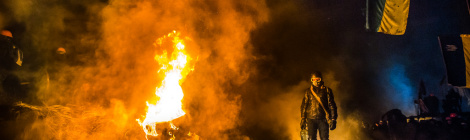
    The Ukraine conflict’s legacy of environmental damage and pollutants

    One year after violent conflict began, information is now emerging on the specific environmental impact of war in Ukraine’s highly industrialised Donbas region. Although obtaining accurate data is difficult, indications are that the conflict has resulted in a number of civilian health risks, and potentially long-term damage to its environment. In order to mitigate these long-term risks, international and domestic agencies will have to find ways to coordinate their efforts on documenting, assessing and addressing the damage.

    Read Article →

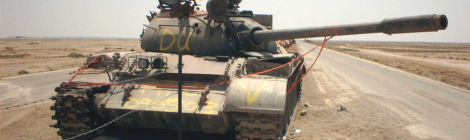
    DU-turn? The changing political environment around toxic munitions

    Is the US backpedalling on its use of depleted uranium (DU) rounds? There are indications that the use of these highly toxic munitions could increasingly be a political liability for the US, with countries affected by DU, like Iraq, other UN Member States, and populations in contaminated areas all expressing concerns over its use and impact. But stigmatisation, although important, is not enough on its own – in order to make sustained progress on accountability and in reducing civilian harm, a broader framework that addresses all toxic remnants of war is needed.

    Read Article →

    Breaking the silence: Protecting civilians from toxic remnants of war

    Toxic remnants of war and their legacy of civilian harm is seriously under-explored as an area of conflict. There is a growing consensus that the current legal framework governing conflict and the environment is not fit for purpose – so how could new international norms that merge environmental protection with civilian protection come into effect?

    Read Article →

  • Global militarisation

    The recently held  Indian Defexpo 2010 (described as “Asia’s biggest arms bazaar”) illustrates the increasing levels of militarisation both in India but also globally writes Nitasha Kaul.


    Read more »

  • Sustainable Security

    The United States, Niger & Jamaica: Food (In)Security & Violence in a Globalised World

    due to a complex range of interconnected issues from climate change to misguided economic policies, political failure and social marginalisation, over 2 billion people across the world live in constant food insecurity. Anna Alissa hitzemann takes a sustainable security approach to look at the importance of “physical and economic access to basic food” by exploring the links between food insecurity and violence.

    Read Article →

    The Global Land Rush: Catalyst for Resource-Driven Conflict?

    Michael Kugelman of the Woodrow Wilson International Center, argues that the factors that first sparked many of the land acquisitions during the global food crisis of 2007-08 — population growth, high food prices, unpredictable commodities markets, water shortages, and above all a plummeting supply of arable land — remain firmly in place today. He writes that land-lusting nations and investors are driven by immediate needs, and they have neither the incentive nor the obligation to slow down and adjust their investments in response to the wishes of distant international bureaucrats. This, he argues, has serious consequences for global security.

    Read Article →

  • Competition over resources

    To browse a list of all of the articles EXCLUSIVELY written for sustainablesecurity.org – follow this link

    Read more »

  • Sustainable Security

    This article was originally published on openSecurity’s monthly Sustainable Security column on 7 August 2014. Every month, a rotating network of experts from Oxford Research Group’s Sustainable Security programme explore pertinent issues of global and regional insecurity.

    RC_long_logo_small_4webThis article is part of the Remote Control Warfare series, a collaboration with Remote Control, a project of the Network for Social Change hosted by Oxford Research Group.

    Obama USAfrica Summit

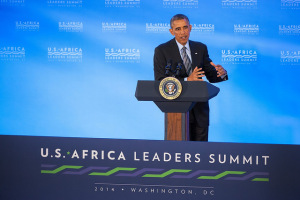
    President Obama Holds a News Conference at Conclusion of U.S.-Africa Leaders Summit. Source: US State Department (Flickr)

    This week, Africa’s leaders have congregated in Washington, D.C. for the first US-Africa Leaders Summit, with talks on trade, investment and security aimed at establishing stronger ties between the US and countries across the continent. President Obama has been widely criticised for the late timing of this summit, 14 years after China started holding its regular Africa summits, and his failure to prioritise the continent earlier in his presidency. In the eyes of many commentators, this is Obama’s attempt to etch out a legacy in Africa.

    But, as African leaders sit down to discuss peace and stability, the Obama administration need not fear a lack of a legacy. Indeed, as a recent report from Oxford Research Group and the Remote Control project shows, for all the talk of the US lacking engagement with Africa, military forces under the new US Africa Command (AFRICOM, a legacy of the late Bush administration) have been pursuing a quiet but sustained “pivot to Africa” under the Obama administration. In the wake of recurrent security crises in the region this decade, the remote Sahel-Sahara region of northwest Africa has become the laboratory for experiments that will define counter-terrorism operations in the 21st century.

    The global ‘war on terror’ has come to the Sahel, but not with the lengthy, embedded military campaigns we have seen in Iraq and Afghanistan. Instead, AFRICOM and its allies are testing an open-ended, “light-touch” approach, with few boots-on-the-ground and a reliance on special forces, drones and private military companies.  This emphasis on covert and deniable operations makes it inherently difficult to gauge the full extent of the war in the Sahel-Sahara. It also raises many questions about its effectiveness in countering violent extremism and what the long-term impact will be on regional stability.

    The Quiet Pivot to Africa

    SusSec_cover-image_2_darker

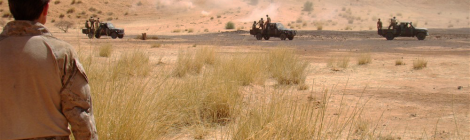
    A U.S. Navy SEAL advisor watches a Malian special operations vehicle unit run through immediate action drills for counter-terrorism missions during training, February 26, 2010 near Gao, Mali. Source: Max R. Blumenfeld, Joint Special Operations Task Force Trans-Sahara, via AFRICOM.

    The evolving importance of the Sahel-Sahara in the counter-terrorism strategies of the US, France and other western states cannot be understated. Following the 2011 Arab uprisings, NATO-assisted overthrow of Libya’s Gaddafi regime and 2012-13 Mali crisis, the Sahel-Sahara has become the “new frontier” in global counter-terrorism operations. With three main active jihadist groups – Al-Qaida in the Islamic Maghreb (AQIM), Boko Haram and Ansar al-Shari’a – it has risen high in US priorities.

    September 11 is the key date for US engagement in the Sahel-Sahara, but 2012 not 2001. This was the date that jihadist militants stormed US diplomatic compounds in Benghazi, Libya, killing the US Ambassador and three other citizens. The result of Benghazi has been a battle over blame in the US Congress and a profound rethinking of crisis response capabilities in remoter, high threat parts of the world. Called the “New Normal”, the new US concept calls for heavily armed air-mobile Marines to be able to deploy anywhere within hours to respond to threats to US citizens and interests.

    US Marines already operate out of bases in Spain, Italy and Djibouti but, since Africa is a vast continent with scores of “high risk” US facilities, more bases will be needed to support the “New Normal”. Recent visits by Marines in their MV-22 Osprey vertical landing aircraft to Senegal and Ghana were part of this base-scouting process.

    The US is also likely to seek more facilities to operate its intelligence, surveillance and reconnaissance (ISR) drones in the Sahel-Sahara, both to track terrorists and to support the “New Normal”. Its one drone base in Niamey, Niger can cover most of West Africa – and North Africa is covered by drones operating from Sicily – but there are gaps, notably around Senegal and Chad. Responding to the humanitarian outcry over Boko Haram’s kidnapping of schoolgirls from Chibok, Nigeria, has already seen US drones deployed from Chad. A web of drone bases in and off the Horn of Africa already surrounds Somalia.

    Covert Operations

    These are the kind of current and future operations that we can broadly expect to know about because their bases and impacts are highly visible. The “New Normal” has already been tested in embassy evacuations in South Sudan (December 2013) and Libya (late July). But there is much more happening beneath the radar. Covert operations using Special Operations Forces appear to be an increasing feature of the US approach in the Sahel-Sahara. Several hundred are believed to be present in the region on undisclosed “contingency operations”.

    Increased ISR capabilities have also depended on use of private military and security contractors (PMSCs), who have run key elements of AFRICOM’s covert counter-terrorism operations in the region. Using unmarked, civilian-registered aircraft, they provide ISR operations, transport special operations forces, and provide medical evacuation and search and rescue capacities.

    Partnerships and Alliances

    Finally, US influence on counter-terrorism in the region extends to training regional security forces under AFRICOM’s Trans-Sahara Counterterrorism Partnership (TSCTP) and is likely to be expanded significantly under the Counterterrorism Partnerships Fund, announced by Obama in May, and as more Special Operations Forces are released from duty in Afghanistan. The EU, Canada and a number of more controversial US allies like Israel, Colombia and Morocco are also increasingly involved in counter-terrorism training programmes in the Sahel.

    But it is France – the old colonial power, Saharan gendarme or legionnaire – that has most at stake in the Sahel-Sahara and on which the US so-far depends. Last week, France formally redeployed its military forces under Opération Barkhane, which sees French land, air and special forces establish an indefinite regional presence at eight bases and several other forward operating locations across five or more Sahel states. US forces and aircraft have a presence at least three of these bases (Niamey, N’Djamena and Ouagadougou) and probably use several others for “contingencies”.

    Barkhane and the recently renewed mandate of the UN Multidimensional Stabilization Mission in Mali (MINUSMA) entrench the presence of over 9,000 external security forces in the Sahel-Sahara with mission and mandate to combat terrorist groups. Remarkably, Dutch special forces and intelligence agents are embedded in MINUSMA with responsibility to track jihadist groups. UN-mandated French forces have carte blanche to seek and destroy whomever they decide is a threat to security in Mali. Not surprisingly, AQIM and its allies rarely distinguish in their targets between France and the UN.

    Repercussions

    Just as there is little mention of this rapidly expanding presence, so too is there little discussion of the effectiveness this new approach to counterterrorism and the impact it will have on stability, governance, and accountability in a fragile region.

    The 2013 French and African intervention in Mali stopped the southwards advance of jihadist groups and returned control of much of the north to the Malian government. However, this displaced AQIM and its allies into Libya, Niger and possibly Nigeria, threatening wider regional stability. Moreover, the intervention has done little to address the political and social nature of Mali’s northern rebellion and French and African forces have limited ability to protect civilians against a terrorist rather than insurgent threat. The heightened visibility of US and French forces in the Sahel-Sahara and the strengthening of Islamist militia during the Libyan civil war have significantly increased the profile and activity of jihadist groups. As the foreign militarisation of the region continues, the motivation for retaliatory attacks is likely to increase.

    While AFRICOM and Washington have established a regular military presence in all regional countries through its TSCTP, there is little recognition of the often toxic nature of these partnerships. The US has made sure this week not to be seen to engage with selected authoritarian African regimes, withholding invitations to Sudan’s ICC indicted Omar el Bashir, Zimbabwe’s Robert Mugabe and Eritrea’s Somalia-meddling Isaias Afewerki. Yet, in a nod to similarly uncritical alliances of the Cold War era, its expanding military engagement across Africa has depended on relationships with similarly dubious governments. Djibouti, Uganda and Ethiopia, the increasingly undemocratic pillars of US campaigns against Somalia’s al-Qaida franchise, are the most blatant examples.

    In the Sahel-Sahara, the US and, to a larger extent, France, rely hugely on Chad’s authoritarian government for basing and combat support. Military-based governments in Algeria and Mauritania have also been able to normalise their international relations, including arms imports, as crucial partners in Saharan counter-terrorism operations. To be fair, the US is choosier than France where it locates its overt bases – Niger and, potentially, Senegal and Ghana are among the best ruled West African states – but its covert operations and military-to-military partnerships span every country in the region.

    Perceived international protection may discourage some regional governments from seeking internal political settlements. The elected Malian government seems to have interpreted its post-2013 French and UN guarantees of security enforcement as reason not to pursue a peace process with northern separatists. Similarly, Côte d’Ivoire’s President Alassane Ouattara has shown no urgency in seeking reconciliation with supporters of the former regime since French and UN troops helped him to power in 2011. Governance, human rights and non-military solutions to existing conflict are thus considerably undermined by the securitisation of policy in the Sahel-Sahara.

    A lasting legacy

    With all of this in mind, US outreach efforts at this week’s Summit seem readily undermined by the lack of ability to monitor – and thus hold accountable – its military expansion across Africa. While President Obama has stated that partnership with Africa must be ‘grounded in mutual responsibility and mutual respect’, his willingness to leave a legacy of low accountability and low-key military support for undemocratic regimes suggests that this responsibility and respect is not intended for the people of Africa.

    Outside of the limits of this week’s Summit, the trend towards covert or “plausibly deniable” counter-terrorism – PMSCs, drones, rapid reaction special forces – and barely restrained mandates to wage war is indicative of the real and increasing power over Africa policy exercised by Defense departments in both Washington and Paris. In turn, securitisation of approaches to the region will undermine non-military approaches to insecurity and conflict resolution, moving regional autocrats further from domestic accountability and buoying the extremist ideology it seeks to discredit. For all the west may seek to tread lightly, there is a large footprint in the sands of the Sahara – one which will not be erased any time soon.

    Richard Reeve and Zoë Pelter are authors of From New Frontier to New Normal: Counter-terrorism in the Sahel-Sahara, released on 5 August.

    Zoë Pelter is the Research Officer of the Sustainable Security Programme at Oxford Research Group. Previously, she worked with the International Security Research Department at Chatham House and the Associate Parliamentary Group for Sudan and South Sudan in the UK Parliament.

    Richard Reeve is Director of the Sustainable Security Programme at Oxford Research Group. He has worked as an analyst of conflict and security issues in Africa since 2000, including for Jane’s Information Group, Chatham House, King’s College London and as Head of Research at International Alert. He has worked on conflict prevention, warning and management systems with ECOWAS, the African Union, the Arab League and many local organisations.

  • Sustainable Security

    Donald Trump’s victory in the US presidential elections has raised serious questions about whether the Joint Comprehensive Plan of Action, a landmark nuclear accord signed in July 2015, has a future.

    The election of Donald Trump as US President potentially means very uncertain times for the future of US-Iranian relations. For example, during his presidential campaign trail, Trump declared—“My number one priority is to dismantle the disastrous deal with Iran”. If the Trump administration acts on his campaign rhetoric, there is a distinct possibility that it will be overwhelmed by multiple contradictions and problems.

    The Iran Nuclear Deal

    The deal, formally known as the Joint Comprehensive Plan of Action (JCPOA), stripped Iran of the ability to develop a nuclear weapon system into the next decade in exchange for the gradual lifting of crippling sanctions.  The deal holds Iran to agree to cap enrichment levels of uranium at 3.67 percent for the next fifteen years, which will cut the Iranian enrichment capacity by two-thirds. Under the agreement, Iran ended up shipping the lion’s share of its 20 percent enriched uranium abroad. The deal also provided for more intrusive monitoring by the International Atomic Energy Agency (IAEA), the UN’s nuclear watchdog, and for the heavy water reactor at Arak to not produce weapons grade plutonium. On November 20th 2016, as a gesture of good will, Iran shipped its remaining heavy water abroad as well. Thus, the breakout capability of Iran to potentially make a nuclear bomb was noticeably extended from two-months to a year, giving further assurance to the international community that the Islamic Republic will not be closer to making a bomb any time soon.

    In exchange, Iran would be relieved from the nuclear-related sanctions, and if it violates the agreement, the sanctions will be re-imposed through a snap-back mechanism built in to the agreement.  Since the signing of the agreement, all the reports by the monitoring agencies, including the IAEA, indicate that Iran has abided by its end of the bargain. Seen in this context, it is easy to understand the expression of concern and apprehension surrounding Trump’s ascent to power among many members of Iran’s ruling elite.

    What President Trump could mean for US-Iran relations

    Two very different futures in US-Iran relations may lie ahead.

    • Withdrawal
    trump

    Image by Matt Johnson/Flickr.

    First, the Trump administration may decide to withdraw from the nuclear deal, impose further sanctions on, and try to isolate Iran.  Trump may seek better ties with Russia and tolerate the Assad regime in Syria in an attempt to defeat and dismantle the Islamic State in Iraq and Syria (ISIS). Trump has declared the defeat of ISIS to be his number one priority in the Middle East and seeks to partner with the anti-ISIS coalition. Yet Iran has been actively involved in the war against ISIS in Syria in alliance with Russia.. It thus remains to be seen how the Trump administration could resolve this contradiction if it tries to defeat ISIS whilst simultaneously escalating tensions with Iran.

    Since the Republicans currently control both houses of Congress and many of their members were opposed to the deal when it was signed, bolstered by their electoral victory, they may introduce new bills demanding the renegotiation of the agreement, or prevent sanctions relief, and propose the imposition of new US unilateral sanctions on Iran. In November 2017, the US Senate passed a bill with a vote of 99 to 0 to extend the Iran sanctions for another decade, and the Obama administration—which previously had threatened to veto such a bill— has stated that the president is not likely to veto it. In addition, the Trump foreign policy team has stated that they plan to impose new sets of sanctions on Iran for its missile defense system. These new political developments are certain to evoke a reaction from Tehran in kind. If such an escalation of the anti-Iran campaign in Washington continues, despite the Islamic Republic fulfilling its obligations under the nuclear deal, absent new diplomatic breakthroughs between Tehran and Washington, in all likelihood, the deal as we know it now would be dead and Washington’s tensions with Tehran would grow. If this outcome materializes, it would undermine the Rouhani administration and the moderates and would strengthen the position of hardliners in Iran’s factional politics.

    President-elect Trump, who identified the nuclear pact as “disastrous” and “the worst deal ever” and labeled the Islamic Republic as “the foremost terrorist state” is less likely to oppose further congressional sanctions on Iran. Hence, while the newly appointed Secretary of Defense, General James Matthis, has stated that he would not be inclined to scrap the nuclear deal, he has also stated publically that it is not ISIS but Iran that is the single most critical security threat to the United States. dditionally, the powerful pro-Israeli lobby group, the American Israel Public Affairs Committee, the neo-conservatives and influential foreign policy voices on the right—like the National Security Adviser, General Michael Flynn, John Bolton, James Woolsey, and Newt Gingrich— have been pushing hard for further containment of and confrontation with Iran.

    From the Netanyahu administration’s standpoint, discarding the nuclear deal would have a dual impact. On the one hand, such an initiative would prevent the Islamic Republic from reaping the benefit of sanctions relief, thus allowing it to expand its economic and political influence in the region- an undesirable outcome for the Israeli leadership.–On the other hand, unilaterally tearing up the deal would remove all the inhibitions on the part of Iranian leaders to develop a nuclear arsenal, another undesirable outcome for Israel. To prevent this from happening, US/Israeli cyberattacks on Iran’s nuclear program, using sophisticated worms such as Stuxnet, or even military strikes, could be ordered in future.

    The Israeli leadership would therefore most likely favor an option in which the current nuclear agreement would stand, but with a new interpretation which would prevent Iran from receiving the full economic and political benefit of sanctions relief. In other words, the nuclear agreement should not lead to normalization of relations with Tehran and the policy of containment of the Islamic Republic with the ultimate goal of regime change should persist. It is also important to note that, since Trump’s cabinet is so far is dominated by hard-liners, they are likely to be in favor of accelerating pressure on Tehran and ensuring that it does not reap the benefit of sanctions relief and expand its regional power.

    • Limited Rapprochement

    The second option offers a different outlook, one that serves both countries’ national interests, whereby the Trump administration could consider seeking a limited rapprochement with Iran, holding out the prospect of future diplomatic—if not commercial—ties between the two countries.  This option uses the nuclear deal as a way to ease tensions between Tehran and Washington on other longstanding problems. This approach will also render Iran more responsive to cooperation on specific issues of regional conflict such as the fight against ISIS and the Taliban while at the same time making progress toward possible venues for cooperation, such as shaping the future of Syria, Iraq, Yemen, and Afghanistan.

    The advantages of this approach will outweigh its costs, as Tehran and Washington are likely to find several overlaps in pursuit of their foreign policy interests. Moreover, this approach would allow Washington to build up a new momentum to accommodate Tehran’s emerging economic interests while also using its leverage over the country’s regional role to mitigate the negative impact of instability in the Middle East. The challenge is to recognize that building trust and sustainable cooperation between Tehran and Washington is the key first step to reversing the troubled and tumultuous status quo of tensions and enmity between the two nations.

    While Trump may not seek a new sanctions regime against Iran so long as the latter abides by its obligations, the influence of neo-conservatives in his administration probably means that the removal of first-order sanctions, imposed by the US, is unlikely to happen any time soon.

    Tehran’s Reaction

    Iran’s President Hassan Rouhani has noted that the election of Donald Trump as the US president will have no effect on Iran’s foreign policy conduct. Rouhani has also stated that the nuclear deal is independent of the new US administrations’ decision and cannot be rescinded by the government’s change in Washington. “Iran’s sagacity,” Rouhani has asserted, “was in having the nuclear deal endorsed as a resolution by the UN Security Council and not just an agreement with a single country or administration, so it cannot be changed by decisions of one government,”.  A recent US Senate vote to extend the sanctions on Iran for ten more years is likely to undermine Rouhani’s position, who sees that his chances of getting re-elected in May 2017 are quickly vanishing under the threat of further sanctions by the United States.  Sensing that, given these sanctions, he cannot ultimately make good on his promise of an economic renaissance after the nuclear deal, Rouhani was emphatic: “If the Iran Sanction Act is carried out, it will be a clear and obvious violation of the [nuclear] agreement and will be met with a very harsh response from us.”  The Obama administration has said that the new round of sanctions did not violate the nuclear agreement.

    The United States, one observer notes, cannot unilaterally unravel or amend the agreement without violating international law. Any attempt to directly undermine the deal or even renegotiate it will isolate the United States- not Iran.  Beyond Iran, pulling out of the deal would also risk intensifying tensions in the region, most notably in Syria, Yemen, Iraq, and Afghanistan, countries in which Iran has played a significant role. This choice is equally fraught with difficulties in part because several key nations have signed off on this agreement. Thus, unilaterally negating or sabotaging the nuclear agreement is likely to have serious international implications beyond the region. The United States is likely to emerge out of step with the UN resolution and all the signatories to this agreement.

    Furthermore, such a policy is imbued with so many deep uncertainties that it may backfire.  The real question is, then, what exactly can the United States do if Iran continues to abide by its obligations under the nuclear deal and continue its rapprochement with the European Union by simply deepening their commercial and trade ties with those countries?  Cognizant of the unpredictability surrounding the future of US policy toward Iran, the Islamic Republic has kept the option of walking away from the deal open, while not abandoning its “Eastern Strategy” that is predicated on maintaining its extensive bilateral ties with Beijing and Moscow. The Islamic Republic is likely to continue to maintain these ties as an insurance policy against the possible continuation or escalation of Washington’s policy of containment and confrontation. Along the same lines, should Trump adopt hostile policies toward Iran, this will likely empower the Islamic Republic’s hardliners, creating more political pressure on the moderates there, thus complicating their chances of winning the 2017 presidential elections. Should this scenario materialize, Tehran is likely to assume a more aggressive regional policy posture in response to Washington’s belligerence.

     The Future: which option will Trump take?

    In an interview with CNN in September of 2015, Trump the businessman revealed his concern about America being shot out of the Iranian market, while the Chinese, the Russians and the Europeans have expanded their trade and commercial ties with Iran since the signing of the agreement in July of 2015. Trump should know that the US cannot hope to emerge as a major economic partner for Iran by imposing a new set of sanctions or ratcheting up political pressure on Tehran. It may turn out that Trump, like his Republican predecessors, would conclude that US bilateral trade, military and political ties with its Arab Gulf Cooperation Council (GCC) allies are much more significant than Iran.

    It is also likely that Trump, the candidate of the Republican Party, who had to appeal to that conservative constituency, would turn out to be different from the Trump the president. He may find it necessary to move ideologically to the center and heed the centrist logic of power politics. His past record as a businessman, who regularly funded the political campaigns of both Democrat and Republican politicians, and repeatedly changed his position on political issues during the presidential campaign, may predispose him toward adopting an erratic as well as a pragmatic course with no clear political vision. This may lead to a foreign policy style that would be more transactional rather than ideological.

    However, having won the presidency as a Republican candidate, he could be captured by the very party establishment that he derided during his campaign.  So far his campaign promise of “draining the swamp” has turned out, in practice, to involve filling his administration with hawks from the Republican Party, Washington insiders and the Wall Street establishment. Therefore, it is possible that he will decide to outsource his Iran policy to a cabinet dominated by conservative hardliners. In that case, the anti-Iran agenda discussed above would become ascendant. In the past, many Republican politicians have stated that the complete political capitulation of Tehran is the only acceptable outcome that they would support. However, if he chooses to play an active role in formulating his administration’s Iran policy, then Trump the pragmatist may have the sway.

    While the early signs are not promising, it is simply too early to know which option the Trump administration will choose and what the details of his future policies might be, but there is no reason to believe that things will improve beyond present conditions, and more than likely, there is reason to believe that Trump may be a far better ally to Israeli Prime Minister Netanyahu and the Saudi Royal family than was the Obama administration, a realistic possibility for which Tehran has surely a contingency. How these emerging realities will play out in coming months and years remains to be seen. The choice for the Trump administration—engaging or isolating Iran—couldn’t be more stark and profound.

    Mahmood Monshipouri, PhD, teaches Middle Eastern Politics at San Francisco State University and the University of California at Berkeley.  He is the editor, most recently, of Inside the Islamic Republic: Social Change in the Post-Khomeini Iran.

    Manochehr Dorraj, PhD, is professor of International Affairs and Middle Eastern Studies at Texas Christian University (TCU).  He is the author of From Zarathustra to Khomeini: Populism and Dissent in Iran and coeditor of Iran Today: An Encyclopedia of Life in the Islamic Republic.

  • Sustainable Security

    Author’s Note: This contribution is a shorter version of the article “Resilience and environmental security: towards joint application in peacebuilding” by Schilling et al. 2017

    Resilience is a widely used concept among development, environmental, security and peacebuilding organisations. However, it has rarely been applied together with the concept of environmental security, despite the obvious ways in which the concepts complement each other. These concepts can be jointly applied in the peacebuilding sector. Environmental security sharpens the scope of resilience, while resilience allows for taking issues into account that a traditional environmental security perspective might miss.

    ‘Resilient communities’, ‘climate-resilient pathways’, ‘resilient future’, ‘resilient planet’: there are hardly any key terms in the development, climate change, security, and peacebuilding sectors that have not been combined with ‘resilience’. Due to the malleability of and enthusiasm for this concept, it has been depicted as the ‘new superhero in town’ replacing sustainability as the key guiding concept and buzzword in the international development community.

    Less prominent but still widely used, at least implicitly, is the concept of environmental security. The term can relate to the absence of risks posed by environmental changes or events to individuals, groups or nations. But it can also focus on the environment itself and how human behaviour, including conflict, affects the security and integrity of the environment.

    Several international organisations, including International Alert, adelphi, and the United States Agency for International Development (USAID) are working on combined approaches to environment, conflict and security issues. However, resilience has hardly ever been applied in conjunction with the concept of environmental security, despite their potential complementarity. Particularly in the peacebuilding sector, joint application of the concepts is promising because it could help to create an understanding of the extent to which people are at risk due to environmental factors (environmental security), and the extent to which people are able to adapt to environmental risks (resilience).  Further, a joint application could help to understand the impacts of environmental factors on conflict dynamics and vice versa. Against this background, develop a framework which allows non-governmental organisations (NGOs) working to implement peacebuilding projects in developing countries to jointly apply resilience and environmental security.

    Joint framework for environmental security and resilience in peacebuilding

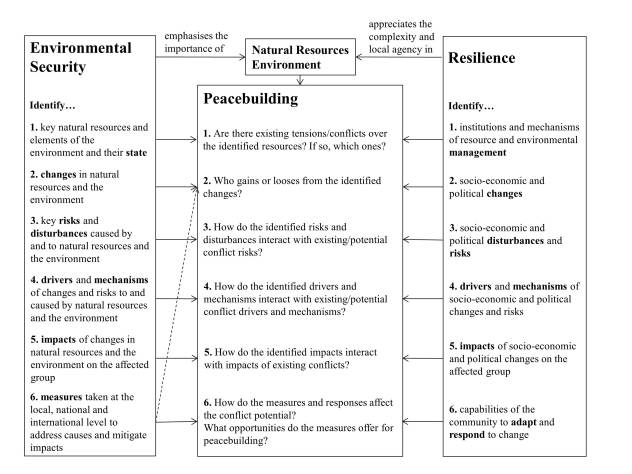
    Natural resources and the environment are the key elements linking environmental security and resilience to peacebuilding (see figure). Based on a six-step process, we combine the key strength of environmental security, its emphasis on the importance of the environment, and the key strength of resilience, namely the appreciation of complexity and local agency. The purpose of the process is to identify the states, changes, risks and disturbances, drivers and mechanisms, impacts, and measures and responses from an environmental security and resilience perspective to gain a better understanding of conflict dynamics and identify entry points for peacebuilding.

    Figure 1 – Framework for Environmental Security and Resilience in Peacebuilding.

    In step one we use the environmental security perspective to determine the key elements of the environment and natural resources that are important to a specific community or group of people, while the resilience perspective identifies how and by whom natural resources and the environment are managed. Together the environmental security and resilience perspectives help to answer the question of whether tensions or conflicts over the identified resources exist.

    In step two, we determine changes in natural resources and the environment before identifying the losers and winners of these changes. The resilience perspective allows us to take the overall complexity of the socio-economic and political context into account.

    The objective of step three is to understand the interaction of different risks. The environmental security perspective pays particular attention to risks to the environment as well as risks caused by the environment. The resilience perspective adds socio-economic and political considerations, such as strong increases in food prices, regime changes and social instability.

    Step four aims to identify the key drivers and mechanisms of the changes and risks, identified under step 2 and 3. For example, if a reduction of rainfall is identified under step 2 and in step 3 an increased drought risk is noted, then step 4 explores whether the reduction of rainfall and drought risk can be attributed to global climate change or local factors such as deforestation.

    Step five focuses on impacts. For example, one can ask whether the droughts and loss of harvest identified on the environmental security side and/or the increases in food prices identified on the resilience side, lead to hunger and how hunger in turn interacts with impacts of existing conflicts identified in the peacebuilding column.

    Step six is particularly important because at that point we consider the actual measures and responses to environmental, socio-economic and political changes at different scales in order to determine the effects on conflict potential as well as to identify entry points for peacebuilding.

    For example, if we identify hunger as a key impact under step five, the government could invest into irrigation schemes or (temporarily) subsidise staple food. This could reduce the conflict potential and strengthen the social contract between the government and the affected communities. However, for each measure taken, consideration must be given to who is affected, either positively or negatively (see dashed arrow connecting step six and two). On the resilience side, the capabilities (including knowledge, technology, networks and financial assets) and responses of the communities strongly depend on the social capital of the group concerned. For example, a loss of harvest might not result in hunger because the affected community might receive remittances from family members living outside the drought affected area. Our framework enables peacebuilding organisations and other stakeholders from development organisations and humanitarian assistance to identify core risks to environmental security without losing sight of the wider political and cultural structures into which these insecurities are embedded.

    In Practice: Palestine’s Good Water Neighbor’s Project

    The Good Water Neighbors (GWN) project in Palestine shows the advantages of combining a resilience and an environmental security perspective in peacebuilding. Palestine suffers from a number of environmental insecurities, most of which are related to water scarcity and pollution. But these insecurities are embedded in and interact with wider political contexts, such as the Israeli occupation of the West Bank, tensions between various Palestinian groups, and dominance of technocratic, liberal peacebuilding approaches. In order to address this complex reality, GWN facilitates cooperation on environmental issues between Israeli and various Palestinian groups, thus increasing resilience to socio-political and environmental shocks simultaneously. Examples of such activities include transnational environmental education, establishing water infrastructure shared between both sides, and common protests against environmentally harmful infrastructure (such as the Israeli separation barrier).

    Conclusion

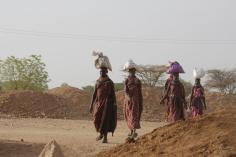
    Image credit: Traynor Tumwa.

    Overall, the framework offers a possibility for environmental security to sharpen the scope of resilience, while resilience allows for taking issues such as governance into account that a traditional environmental security perspective might miss. The framework helps identifying the states, changes, risks and disturbances, drivers and mechanisms, impacts, and measures and responses from an environmental security and resilience perspective to gain a better understanding of conflict dynamics. However, when applying the framework continuous attention should be also paid to ambivalent effect of depoliticisation which is a risk both concepts entail.

    On the one hand, steering away from contentious political debates, such as those related to the wider Israeli-Palestinian conflict, provides an entry point for peacebuilding projects. Social groups and even official actors can be involved without taking a stance on contentious political questions. On the other hand, avoiding discussions on structural inequalities means that some root causes of environmental insecurities, such as the unequal distribution of water resources between Israel and Palestine, are difficult to address. When applying the framework further attention needs to be paid to other pitfalls of resilience and environmental security, namely the redistribution of responsibility to the local level and potentially justifying external intervention. If these issues are kept in mind, the framework can be a useful tool, especially when analysing conflicts where natural resources and the environment play key roles.

    Rebecca Froese is a PhD candidate in the Department of Earth System Sciences at the University of Hamburg and a member of the research group Climate Change and Security (CLISEC) at the University of Hamburg. Her research focuses on development cooperation and the role of non-party stakeholders in implementing and financing climate action.

    Janpeter Schilling holds a Klaus Töpfer Junior Professorship for Landuse Conflicts at the University of Koblenz-Landau. He is an associated researcher at the research group Climate Change and Security (CLISEC) at the University of Hamburg, the peacebuilding organisation International Alert in London and the Peace Academy Rhineland-Palatinate in Landau. His research focuses on environmental security, conflict and resilience.  

    Tobias Ide is head of the Research Field Peace and Conflict at the Georg Eckert Institute and currently a visiting researcher at the School of Geography, University of Melbourne. He is an associated researcher with the reserach group Climate Change and Security (CLISEC) at the University of Hamburg. He works on environmental conflicts, climate security, environmental peacebuilding, and the representation of peace and conflict, especially in school textbooks.

    Sarah Louise Nash is a 2016/17 Mercator-IPC fellow at Istanbul Policy Center, Sabanci University and an associated researcher with the research group Climate Change and Security (CLISEC) at the University of Hamburg. Her research focuses on the politics of climate change and human mobility.

    Jürgen Scheffran is professor of geography and head of the Research Group Climate Change and Security (CLISEC) at the University of Hamburg, Cluster of Excellence ‘Integrated Climate System Analysis and Prediction (CliSAP) and the Center for Earth System Research and Sustainability (CEN). His research specialities are climate and conflict research, sustainability science, resilience and energy and human security.