Return to reading The Ukraine Conflict’s Legacy of Environmental Damage and Pollutants
 Exclusively written for sustainablesecurity.org
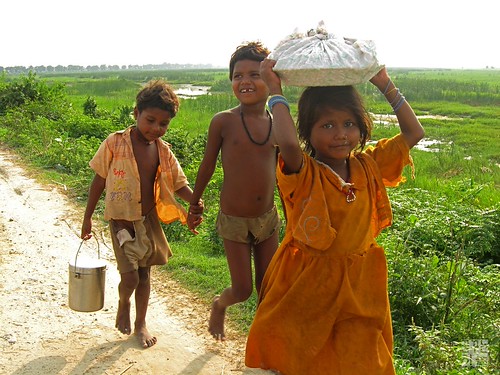
During a recent field trip to mid-monsoon Nepal, stories of floods affecting vulnerable communities across the country dominated the daily headlines. At the same time, international donors are pouring in funds in an attempt to help the vulnerable cope with the impacts of climate change we are already feeling. Last week, the Adaptation Fund, a fund set up by the UN to help poor countries cope with the impact of climate change, became operational. But are these funds helping – or are they contributing to the problem?
With less than two months to go until the next global summit on climate change in Mexico, the issues for agreement are about reducing carbon emissions and – more importantly for poor countries – how much money the developed countries, who have the main responsibility for global warming, will put on the negotiating table to help people in poorer countries cope with the consequences. But these are not the only important issues.
One issue that is barely acknowledged is the heightened risk of political instability and conflict related to climate change. Factors linking climate change to an increased potential for instability and conflict include water scarcity, accelerated land degradation, decreased food production, and indeed the management of the climate funds themselves.
The risk will be greatest where governance is weak. Nobody will dispute that this is the case in Nepal.
‘A Climate of Conflict’, a report by International Alert, estimates that just under three billion people live in 56 conflict-affected countries, where climate change could increase the risk of political instability. Nepal is one of the 56 at risk.
Climate policy makers, however, are largely silent on the matter. International Alert’s latest research finds that new funds, already coming into the country’s coffers with more still in the pipeline, could make the situation worse if they don’t take account of the complex linkages between environmental change, security and governance.
What should inform climate responses?
Responses to climate change have to respond to the political and social realities of fragile contexts such as Nepal or they will not work.
Climate change is not only a climate issue. Climate change will affect political stability, development, government, equity, trade and the national economy. And these issues all affect the ability of people and the governments to respond constructively to the challenges climate change generates. The problems are interlinked, so the responses must be too.
At a meeting of the South Asia Network on Security and Climate Change (SANSaC) co-hosted by International Alert and the EU on 3rd September, SANSaC recommended that in post-conflict situations like Nepal, adaptation strategies should address the broader dimensions of community resilience.
Resilience is multi-dimensional.
Adaptation strategies should be defined not only by the nature of the natural hazard that is faced, but also on the basis of understanding the systems of governance and power. This must involve a deep understanding of the local context, and avoid pitting groups against each other. They must also address broader risks to resilience such as security. For example, a new Government of Nepal pilot project to address energy security and reduce deforestation through promotion of biogas plants is being rolled out in nine districts. The switch to biogas aims to curb deforestation for fuel wood thereby decreasing risks of soil erosion and landslides. But the pilot implementation was halted in three districts – Saptari, Udayapur and Siraha – due to the security situation in those places. Such decisions leave these communities doubly vulnerable: to the lack of sustainable energy sources, and to pre-existing insecurity.
Who are the ‘most vulnerable’?
Donors often speak about targeting the ‘poorest and most marginalised’ but base their programming on a generalised conception of who these people are. Speak to people in the villages and they’ll tell you. ‘A poor person is a poor person, regardless of whether he is Brahmin or Janjati. Ethnicity is a political construct. The local context is socially and culturally complex. It is social and cultural factors that determine economic activity – not ethnicity’ a local from Sunsari explained. ‘It’s not so simple that because you are a Brahmin you have all the resources and rights, and because you are a janjati you don’t’. Local organisations must understand the local reality and they must make central governments and international actors aware of this complex reality.
A further problem already giving rise to local community level grievances is a culture of dependence on funds. ‘Everyone’s happy to get funds from donors but when they run out of donor funding, they come back to local government’ stated a local municipality employee in Dhankuta. This dependence on donor assistance usurps local authorities’ roles and responsibilities and undermines the social contract between communities and local government. This relationship between government and the governed is already fraught and may not be able to take the strain of well intended but ill-advised interventions.
Likewise, peace and reconstruction efforts need to be climate-proofed by paying attention to the availability of resources for livelihoods such as agriculture or returning ex-combatants or people displaced by conflict. These could be under pressure because of climate change. For example, possible future plans to reintegrate ex-combatants from cantonments into villages where they may hope to make a living from agriculture could cause and face future problems. Farmers struggling with changing rainfall patterns and only getting one harvest per year rather than two are seeing their rice yields falling. The prospect arises of returned fighters becoming resentful unemployed farmers, and thus potential recruits, with their combat experience, in instability.
More broadly, direct access to large-scale adaptation funding combined with low capacity and high corruption within government will limit the ability to effective use it. It is highly likely that funds will be diverted into the hands and pockets of one faction or another in the political elite. With public awareness of these funds coming in, people’s expectations for support – for example compensation for flood victims – are rising, and where they are not met, we are likely to see an increase in protests and political instability. In Nepal’s Koshi basin, recent experience shows that community protests are easily hijacked by political and criminal gangs who promote violence for their own ends. Misuse of funds may thus be the primary factor exacerbating instability.
If responses to climate change take account of the broad dimensions of what makes people resilient – not just drought-resistant crops and embankments to protect them from floods – but also the interlinked factors of livelihoods options, good infrastructure, social inclusion and effective governance, there’s a good chance that responses to climate change could yield a double dividend: increasing resilience to both climate change and conflict.
Failure to take account of the linkages however could result in the billions of dollars of funding for adaptation actually becoming part of the problem.
Janani Vivekananda is a senior advisor on climate change and security at international peacebuilding organisation International Alert
Image Source: TheDreamSky
 Delicious
 Digg
Digg StumbleUpon
 Reddit
The new British Defence Secretary, Dr Liam Fox, has now announced the beginning of the long-awaited Strategic Defence Review and the indications are that the process will be completed before the end of 2010. Given Britain’s role in the European Union and NATO, and its close links with the United States, the outcome of the review will be watched with interest in many countries.
The incoming Conservative-Liberal-Democrat coalition government believes that a Strategic Defence Review is urgently required for a number of reasons, including
The new government has also set up a cross-departmental National Security Council that will further develop the trend to a national security strategy established by the Labour government. While this is a welcome move, it comes in the context of recent programme decisions made ahead of the review that, if not reversed, will direct the defence posture in such a narrow manner that a wider and much-needed reappraisal of Britain’s security will prove impossible. Instead, questions need to be asked about what is needed to limit conflict and create a more peaceful environment in an era of new global security challenges.
The two most significant programmes are:
These are very substantial in terms of costs, but their greater importance is in the manner in which they will dictate a particular role for the UK defence posture – what is in effect a scaled down version of the much larger US global power projection capability. Essentially, they will determine a role for Britain in international security which is out of date and more related to the Cold War, bearing little relation to the issues of global insecurity and conflict, which will be dominant in the next two to three decades.
In the last two years of the Labour government, some interesting attempts were made to inject some new thinking into UK defence policy. The first was the National Security Strategy of March 2008, and more recently, there was a Defence Green Paper published earlier this year. Following the Green Paper, the Conservative Party, then in opposition, published its own national security Green Paper, A Resilient Nation.
While the National Security Strategy of 2008 was published in an environment in which the war on terror, Iraq and Afghanistan were hugely prominent, it did seek to look well beyond the immediate circumstances:
“The Cold War threat has been replaced by a diverse but interconnected set of threats and risks, which affect the United Kingdom directly and also have the potential to undermine wider international stability. They include international terrorism, weapons of mass destruction, conflicts and failed states, pandemics and transnational crime. These and other threats and risks are driven by a diverse and interconnected set of underlying factors, including climate change, competition for energy, poverty and poor governance, demographic change and globalisation.” (NSS para 1.3)
This wider approach with its recognition of the underlying trends of climate change, marginalisation and energy insecurity, also comes through to a more limited extent in the recent Green Papers, albeit with more of an emphasis on national security in the Conservative contribution. It goes some way towards the analysis of global challenges, developed in recent years by Oxford Research Group and other organisations that see the need for a radical re-thinking of the approaches of countries such as Britain to international security (see Global Security After the War on Terror).
While ORG is not arguing against the maintenance of defence forces per se, it places much more emphasis on long-term conflict-prevention. It argues that the more substantive problems that will be faced in the coming decades, stem from a dangerous combination of severe environmental constraints, especially climate change and energy shortages, and an increasingly divided world community in which the benefits of globalised economic growth have been excessively concentrated in about one-fifth of the global population. In such circumstances there is the very strong risk of societal breakdown as well as desperate responses from within the majority of the world’s people who are marginalised and will be under increasing environmental constraints.
There is the further risk that the main emphasis for security policies will be on suppressing such actions and maintaining the status quo, rather than responding to the underlying drivers of insecurity. ORG has long argued that the much more appropriate response is to embark on a transition to low carbon economies to combat the fundamental problem of climate change, while developing a socio-economic system that acts to reverse the dangerous trend towards the marginalisation of the majority of the world’s people. It also argues the need to shift resources to the development of conflict resolution techniques to deal with radical disagreement.
What is significant about some of the thinking in the National Security Strategy and the two Green Papers is that the analysis of future dangers, implicit in an environmentally constrained and economically divided world, is present and the risks are acknowledged. What is not done, however, is to follow this through in terms of what it means for an integrated strategy, involving major aspects of economic and environmental policy. Moreover, the timing of two major military projects that are in the early yet crucial stages of their development means that unless decisions are reversed, the possibility of entering into a genuinely far-sighted strategic security review is greatly diminished, if not rendered impossible.
The first project is the planned replacement of the Trident nuclear force with a broadly similar system and the second is the building of two very large new aircraft carriers deployed with a maritime variant of the US-produced F-35 strike aircraft. The carriers will be the largest warships ever to see service with the Royal Navy and will give the UK a global strike capability that it has not had for close to forty years, harking back almost to the days of Empire.
The sheer scale of the two projects – the planned nuclear force replacement and the carrier procurement – will inevitably determine the UK defence posture. In essence, the UK’s ability to intervene in conflicts in the Persian Gulf and elsewhere will be much increased, and it will have a nuclear strike capability that could, in extreme circumstances, be available in support of operations in overseas theatres.
However, the cost of constructing and deploying such systems will be so high, especially at a time of financial stringency, that there will be relatively little left for other programmes. What is more, the whole tenor of the defence posture will be one of maintaining control in a fragile and uncertain world, rather than addressing the underlying trends likely to result in that fragility and uncertainty – a matter of keeping the lid on problems or “liddism” as it has been termed.
Britain’s current nuclear force comprises four Vanguard-class ballistic missile submarines, each capable of deploying with 16 missiles. While these are usually fitted with three independently-targetable warheads of about 100 kilotons of explosive power (8x the Hiroshima bomb), some are deployed with a much smaller single warhead for what has variably been called tactical or sub-strategic use. Neither term is now used, not least as they give the impression of a willingness to use nuclear weapons in less than extreme circumstances of national survival. – UK governments prefer to avoid acknowledging this aspect of the UK nuclear posture.
Britain maintains its nuclear force with at least one missile submarine at sea at any one time – what is termed “continuous at-sea deterrence” or CASD.
The Trident system is due for renewal by the 2020s and current plans involve a broadly like-for-like replacement. Given that the Aldermaston/Burghfield nuclear weapons development and production complex in Berkshire costs around £1 billion a year, and given the cost of the new submarines and the high cost of deploying them with numerous support facilities, the likely life-time cost of replacing Trident will approach £100 billion, much of it front-loaded to the next 10-15 years. The intention of the previous Labour government was to exclude the Trident replacement programme from a post-election Strategic Defence Review. That was also the intention of the Conservatives when in opposition and is likely to remain the case, in spite of some Liberal-Democrat concerns over the Trident replacement issue.
Given the commitment of significant world political figures, including President Obama, to the idea of moving towards a nuclear-free world, there are major steps that the British government could take to further progress in that direction. They include:
Such moves do not in themselves involve the UK giving up its nuclear forces in the short term but they would signal a strong commitment to substantially lower nuclear forces while also leaving open the possibility of going further, should the international and domestic political environments allow. They would also make it easier to have a comprehensive security review which would not be possible if the nuclear question is excluded.
The second major issue is the carrier programme. The two new carriers, the 65,000-tonne Queen Elizabeth-class ships, each nearly three times the size of the current Invincible-class ships, are large vessels capable of a range of uses, but the reality is that they are intended as force-projection warships equipped with an extremely expensive new strike aircraft. The combined total order for the carriers and the RAF is expected to be 130 planes at a cost per plane of £94 million, although this cost continues to rise. Along with escorts and support ships, maintaining and deploying the carriers will dominate naval capabilities for the lifetime of the ships.
The Lockheed F-35, in particular, is already a greatly troubled project with substantial cost overruns and long delays. In some ways, the problems facing this project are reminiscent of the Eurofighter project, a Cold War-era plane that should have been cancelled in the early 1990s but had built up too much momentum for politicians to take such a decision. Famously described in 1997 by a former defence minister, Alan Clark, as “essentially flawed and out of date”, he commented on its role in job creation thus: “we must find a less extravagant way of paying people to make buckets with holes in them”. Eurofighter survived – as the Typhoon – in smaller numbers than planned, and was eventually adapted at great cost, to fulfil some new roles. at great cost, to fulfil some new roles. It was, though, very much an example of a project overtaken by events. The US F-35 programme is also essentially a project of the 1990s.
The planned British purchase of F35 strike aircraft in combination with the carrier programme will be more of an imperial throwback than a real contribution to Britain’s security.
The entire UK carrier/F-35 programme should be cancelled. Replacements might include two much smaller sea control ships utilising the rapidly developing UCAV (drone) technologies, with a much scaled-down purchase of one of the F-35 alternatives currently available.
The real problem here is that a serious review of Britain’s security cannot be done if the future defence posture is already dictated by Trident replacement and the carrier/F-35 programme. The right option therefore is to scale down the existing Trident force, review its replacement and cancel the carrier/F-35 programme before much more money is wasted.
Perhaps the most serious financial issue facing the Ministry of Defence is the persistent failure to control the cost of individual programmes. Among current programmes that have hugely overrun their original estimates, the most extreme is the replacement of the Nimrod MR2 maritime patrol and surveillance aircraft with the Nimrod MRA4. This was due to be deployed in 2003, was subject to innumerable delays and cost increases and will not now enter service until 2012. Only 9 aircraft will be procured instead of the original 21, largely because of the huge cost increases currently estimated at around £400 million per aircraft.
Because of many problems with the current MR2, including concerns over airworthiness, these planes were withdrawn from service two months ago, leaving the RAF to try to fill the gap with a mix of other aircraft and helicopters, none of them remotely comparable in the maritime role to the MR2. The MR2/MRA4 saga is one of many examples of delayed programmes and cost overruns that have plagued defence procurement for many years.
Successive governments have sought to bring costs and programmes under control but with very little success, mainly because of the nature of what was described by President Eisenhower, more than fifty years ago, as the military industrial complex. For Britain, one of the key issues is that the complex is essentially self-organising but not self-regulating. Very few companies operate in the advanced defence sector, and there is little competition as well as a pervasive climate of mutual interest. Thus, senior civil servants and senior military, especially those concerned with procurement, are frequently able to acquire lucrative consultancies not long after they retire, and independent oversight of large programmes is effectively absent. Successive defence select committees have had little impact and the National Audit Office concentrates on individual programmes and is liable to be constrained by issues of secrecy and restricted terms of reference.
Any serious defence/security review has to address the procurement issue, even though it will be singularly difficult to come up with any effective measure of oversight. At the same time, there are lessons to be learnt from the evolution of the Police Complaints Authority and, perhaps more significantly, the Financial Services Authority, especially as the latter has recently shown itself willing to take on major financial institutions.
A viable option would be to establish a Defence Procurement Authority, outside of the control of the Ministry of Defence, which would provide the continuing scrutiny of defence procurement as a whole which has been so singularly lacking in the past.
Britain is beginning to embrace the idea of looking at international security in a manner that goes beyond a traditional defence review, with the National Security Strategy, the Green Papers and the new National Security Council being evidence of this. In the face of current financial constraints and the carrier/Trident issue, though, there is every sign that the forthcoming defence review will be very limited in its remit, and therefore fundamentally inadequate.
Instead:
www.oxfordresearchgroup.org.uk
Delicious Digg StumbleUpon RedditThe European Union (EU) has recently emerged as an international peace meditator, but emerging challenges, including the potential exit of the UK from the EU, may prevent it from strengthening its ability to mediate conflicts.
Mediation is an instrument of international conflict management through which third parties seek to contribute to a peaceful resolution of (violent) conflicts. While states are the dominant and most frequent providers of mediation, international organizations are not far behind. Recently, the European Union (EU) has emerged as a relatively new player in the field, acting both as a mediator itself and as a member of collective coordination mechanisms to support peace processes such as UN Contact Groups and Groups of Friends. Current initiatives such as the EU-facilitated dialogue between Belgrade and Pristina have demonstrated the EU’s potential as peace mediator.
However, external and internal crises may prevent the EU from further strengthening its institutional capacities and resources for mediation. Externally, challenges to European security such as the civil war in Syria, the threat posed by the so-called Islamic State and the armed conflict in Eastern Ukraine in the context of rising tensions between NATO and Russia could lead to a shift in the EU’s foreign and security policy back towards a more traditional, “hard security” approach that focuses on the development of military instruments and defence cooperation. Internally, the results of the UK referendum on 23 June 2016 and a potential exit of the UK would certainly open up a debate on the future of EU foreign and security policy without one of its most influential member states. The fact that the EU’s long-awaited Global Strategy on Foreign and Security Policy will be published a week or two after the UK referendum suggests that the EU is well prepared to take the potential effects of a ‘Leave’ vote on this policy field swiftly into account. However, it is nevertheless plausible to assume that a ‘Brexit’ would push the EU towards a decisive crossroads as regards to the future development of its foreign and security policy, also potentially affecting its engagement in the field of peace mediation.
The EU’s track record in peace mediation
Image by Rock Cohen via Flickr.
Although the number of EU mediation efforts is still relatively marginal compared to UN mediation involvement, the EU has nevertheless established a considerable track record as mediator in the past ten to fifteen years. During High Representative (HR) Javier Solana’s terms of office, mediation became an increasingly important element of the EU’s foreign and security policy toolbox. For example, in August 2001 the EU together with the US managed to broker the Ohrid Framework Agreement settling the conflict between the Macedonian government and the Albanian minority in 2001. A few months later, the High Representative and his team became involved in a mediation process between Serbia and Montenegro, which led to the Belgrade Agreement on the formation of a state union in March 2002. While the Western Balkans certainly remained one of HR Solana’s key priorities, the EU also played an important role in the multilateral effort to mediate the political crisis in Ukraine in the context of the country’s ‘Orange Revolution’ in 2003 and was a key supporter of the efforts by the Finnish NGO Crisis Management Initiative (CMI) to broker a peace agreement to the conflict in Aceh, Indonesia in 2004-5.
While the EU had already been very active in the field of mediation when Javier Solana served as High Representative (1999-2009), it sustained its mediation activities during HR Catherine Ashton’s term of office (2009-2014) and continues to be involved in mediation processes since HR Federica Mogherini has taken over. In particular, the EU-facilitated dialogue between Belgrade and Pristina stands out as the most prominent example of EU mediation. Less publicly recognized are the EU’s efforts as co-mediator in the Geneva International Discussions (GID) on Georgia’s Territorial Conflicts that were initiated in October 2008 following the EU Special Representative for the South Caucasus and Crisis in Georgia together with OSCE and UN Special Representatives/Envoys serving as co-chair in the talks between representatives of Georgia, South Ossetia, Abkhazia, Russia and the US. Apart from its direct involvement as mediator, EU actors have been engaged in a number of mediation support initiatives, often been less visible to a wider public. Examples include the EEAS Mediation Support Team’s efforts to assist Myanmar democratic transition and the EU Delegation’s organizational and financial support to the National Dialogue Conference in Yemen.
The EU’s institutional framework for mediation
The increase in EU mediation activities has been accompanied by the evolution of a more strategic and systematic EU approach to mediation, particularly in terms of policy development and capacity-building. A key development in this regard has been the adoption of the Concept on Strengthening EU Mediation and Dialogue Capacities. In this document, the EU formulated the plan to systematically enhance its existing mediation capacities and to strengthen its overall ability to engage in non-military conflict prevention and crisis management missions. It also spells out different roles and guiding principles of EU mediation, thereby addressing the need for greater internal coherence and closer cooperation with its international partners. A major role in mediation is ascribed to the EU Special Representatives, whose mandates often include mediation-related activities and which are often the key EU actors on the ground in the conflict region.
To implement the Concept and to promote a more systematic approach to mediation, the Mediation Support Team (MST) within the EEAS was established in 2011 and has become a key hub of mediation knowledge and expertise. However, the MST is not the only institutional innovation that followed-up on the 2009 Concept. The establishment of the European Parliament Mediation Support Service to assist mediation initiatives undertaken by Members of the European Parliament and the creation of the European Institute of Peace illustrate that mediation remains a vibrant field of EU foreign policy.
Is the EU an effective mediator?
To what extent the EU is effective in its mediation efforts is an issue which still has to be comprehensively addressed in peace and conflict studies research. The answer to the question of EU effectiveness also depends on how one conceptualizes effectiveness and success in international mediation. A brief comparison of the EU-facilitated dialogue between Kosovo and Serbia with the EU’s role as co-chair in the Geneva International Discussions on the conflicts over South Ossetia and Abkhazia may illustrate this. In terms of conflict settlement, the EU-facilitated dialogue between Kosovo and Serbia has been relatively effective, given that it has led to several agreements between the parties, including compromises on previously heavily contested issues such as Kosovo’s participation in regional fora, freedom of movement and trade, and the governance of Northern Kosovo. Most importantly, the EU brokered the First Agreement of Principles Governing the Normalization of Relations in April 2013 that has been widely applauded as ground-breaking and historic. Although the parties are lagging behind when it comes to the implementation of some agreements, the Belgrade-Pristina dialogue still is a success story which can, at least partly, be attributed to the EU’s leverage vis-à-vis with the conflict parties due to their aspirations for EU accession and its mediation strategy that draws on this leverage to move parties toward agreement through the use of positive incentives.
In case of the Geneva International Discussions, the EUSR and his team have been considerably less effective in brokering agreements between the parties compared to the Kosovo-Serbia case. Apart from the establishment of Incident Prevention and Response Mechanisms to facilitate exchange of information on security incidents at the administrative boundary line (ABL) between South Ossetia/Abkhazia and Georgia proper, the discussions have not resulted in any tangible results yet. However, a focus on conflict settlement alone would not be sufficient to make a comprehensive judgement on the EU’s effectiveness as a co-mediator in this case. The fact that the EU has managed to keep the parties at the negotiation table and stay committed to the mediation process is in itself an achievement, given the fact that the space for compromise between the parties seems to be very limited. In addition to the EU’s effort to stabilize the security situation on the ground through the EU Monitoring Mission (EUMM), the EU’s leading role in the GID has contributed to a stabilization of a conflict which was prone to escalation not that many years ago.
What can we learn from this comparison about EU effectiveness in mediation? There are at least two lessons that could be drawn here. First, the Kosovo-Serbia case illustrates the great potential of the EU as a mediator in contexts where EU memberships serves as a huge incentive for compromise solutions. Second, the EU’s involvement in the Geneva International Discussions demonstrates that in less favourable contexts – due to a lack of EU leverage or a limited willingness to compromise from the conflict parties – the EU may not be able to achieve more than preserving the status quo and committing the parties to confront one another peacefully in negotiations rather than through violent means. Thus, there may be certain limits to what the EU is able to achieve, but this does not mean automatically that the EU is ineffective. Rather, the main task for the EU will be to fully exploit the potential it has, given the specific circumstances and context of the conflict in which it decides to engage.
If the EU is able to further strengthen its profile as an international mediator, it will depend on the political will of the Member States. Although EU mediators such as EU Special Representatives enjoy a certain degree of leeway, it is the EU member states who decide on their mandates and the EU’s approach towards a particular conflict more generally. Moreover, individual Member States may provide EU mediation efforts with additional weight. In the Kosovo-Serbia case, for example, the UK and Germany have played a key role in moving Belgrade to compromise in the dialogue with Pristina by making it a condition for further progress on its path towards EU accession. While Germany has been the key driver behind the efforts of putting more pressure on Serbia to move forward in the implementation of agreements reached in the context of the EU-facilitated dialogue at different levels, the UK has played a key role in backing this policy publicly and through diplomatic channels. Given that the UK has been a firm supporter of the EU’s further enlargement, one potential effect of a ‘Brexit’ could be that in cases where enlargement is the key ‘carrot’ the EU can offer to conflict parties, there might be more reluctance to draw on this leverage due to a change to the EU’s internal balance between enlargement supporters and skeptics among the Member States. Thus, although a potential ‘Brexit’ may not inevitably affect and change the EU’s approach to mediation, it may have a long-term negative impact on the EU’s ability to use both pressure and political/economic incentives to spur agreement between conflict parties.
Julian Bergmann is a research fellow with the Chair of International Politics at the Johannes Gutenberg University Mainz, working on a PhD thesis on the EU’s effectiveness as a peace mediator in secessionist conflicts. Together with Arne Niemann, he is also conducting a research project entitled “A Peacemaker in the Making? The European Union as an Actor in International Mediation”, funded by the German Foundation for Peace Research. Recent publications include Mediating International Conflicts: the European Union as an Effective Peacemaker? (Journal of Common Market Studies 2015, with Arne Niemann) and Reputation, Credibility and Manipulative Negotiation Style – Attributes of Successful Peacemakers? (Zeitschrift für Friedens- und Konfliktforschung 2014; in German).
 Climate-related displacement is one of the key challenges facing South Asia in the coming decades. Although there is considerable debate about the salience of the term ‘climate refugees’ and extent to which climate change is a primary cause of forced displacement, there is no doubt that large numbers of people are already having to cope with the impact of environmental changes on their livelihoods and everyday life.
Image source: planet a
Working paper source: La Trobe University
Delicious Digg StumbleUpon Reddit
 “As the price of oil goes down, the pace of freedom goes up… As the price of oil goes up, the pace of freedom goes down…” So says New York Times columnist Thomas Friedman, who argues that the first law of ‘petropolitics’ is that the price of oil and the pace of freedom are inversely correlated in countries “totally dependent on oil” for economic growth. Friedman’s attempt to link economic oil dependency and political freedom is an interesting one, which could go some way towards explaining why many of the world’s top oil-exporting countries are governed by heavy-handed authoritarian regimes. However, the correlation between recent oil price spikes and anti-authoritarian action – particularly in the Arab Spring – challenges Friedman’s assessment.
Rather than being driven by drops in oil revenues for authoritarian regimes, popular unrest and armed resistance in countries such as Libya may in fact be correlated with the price of oil remaining high. Inward pressure caused by oil price spikes on petroleum-fuelled supply chains for basic commodities can exacerbate already harsh living conditions, galvanising rebel factions to form a unified anti-authoritarian front against a regime that can no longer ensure price stability for essential goods. This seems true of the 2011 uprising in Egypt (the world’s largest wheat importer), as bread prices rose drastically following the doubling of global wheat prices between June 2010 and February 2011. The impact of high oil prices on the production, shipping and distribution of staple commodities such as corn and wheat – both of which saw severe price escalations of near 40% in 2008 – can lead to social unrest and, in the case of Egypt, the toppling of an authoritarian regime.
Since December 2010, when mass protests began gathering steam in Tunisia, oil prices have remained consistently high, hovering at $82 per barrel. Is it a coincidence that in September 2011, when rebels overtook the coastal town of Bani Walid, one of Colonel Gaddafi’s last strongholds, oil was just above $82 per barrel and the FAO food price index had reached a ten-year high? While oil revenues may be a temporary source of political stability for some authoritarian regimes, the pressure of increasing price volatility on supply chains, due to scarcity in supply, can convert to instability downstream as oil prices have a compounding impact on food prices. Indeed, in December 2010 just a week before the self-immolation of Tunisian food vendor Mohamed Bouazizi, New England Complex Systems Institute a Cambridge-based organisation comprised of faculty from Harvard, MIT and Brandeis, warned the US government that global food prices were about to cross a socially dangerous threshold. If anti-authoritarian action is any indication of freedom ‘on the rise’ then high oil prices in oil-dependent states are at least one major factor.
Of those countries mentioned in the International Energy Agency’s 2011 list of top oil exporters, ten out of fifteen are classed by Freedom House as ‘Not Free’. Freedom House, ‘an independent watchdog organisation dedicated to the expansion of freedom around the world’, base their rankings on two broad categories: political rights and civil liberties. The former they define by a country’s electoral process, degree of political pluralism and level of participation/ functioning of government; the latter by degree of freedom of expression and belief, associational and organisational rights, rule of law, and personal autonomy and individual rights. The irony, according to Friedman, is that Western dependence on oil imports from countries which are ‘Not Free’ has channelled revenues to authoritarian regimes that oppose freedom. This paradox undermines Western credibility as champions of democracy. In a post-9/11 world, where militant extremists reportedly seek safe harbour in oil-exporting states like Saudi Arabia, the consequences of Western oil dependency undermine the West’s long-term security goals. But, when it comes to Friedman’s equation for ‘petropolitics’, the reverse may actually be true. Recent events such as the Arab Spring demonstrate that as the price of oil rises, impacting staple commodity prices, so too does the need for change – change that is blocked by Western dependence on remaining regimes.
Western countries reliant on fossil fuel imports from nations ruled by authoritarian regimes are suffering from a crisis of legitimacy – a crisis which could render us more insecure in the long term. In Algeria, where the Arab Spring has not resulted in full on revolution, violent extremists recently made their presence felt at the ‘In Amenas’ gas plant, brutally murdering 37 expatriate workers. The plant, which is jointly operated by BP, Norway’s Statoil and Algerian state oil and gas company Sonatrach, is a major supply source for Western markets. Algeria is responsible for roughly 12.2 billion barrels of crude oil reserves. 85% of Algeria’s oil exports are destined for European and North American markets. Under the leadership of Abdelaziz Bouteflika, whose five year executive terms are renewable indefinitely, Algeria certainly does not rate highly on the list of Freedom House ‘Freedom Ratings’. Military and intelligence services strictly monitor and interfere with open elections. But the Arab Spring may not ever reach Algeria precisely because of the stability brought to the country by a Western-funded heavy-handed regime, which goes to great lengths to protect the general population from militant Islamist extremists and pro-democracy activists alike. Saudi Arabia and UAE are governed by similarly oppressive regimes; regimes which subvert democracy in favour of ‘stability’. Both supply oil and gas to the West. Both benefit from revenues gained through Western dependence in spite of their heavy-handedness.
The Arab Spring has been full of unfortunate surprises linking former and current administrations to corrupt leaders. Photos of a smiling Tony Blair, getting up close and personal with much maligned Colonel Gaddafi, were a hit in the mainstream press as well as online following the collapse of his regime. Not long before that, the Bush Family’s close ties to the Saudi royal family did little to lend credence to their Middle East pro-democracy campaigns in the early 90s and 2000s.
Germany is in a similarly awkward position as the the largest energy consumer in Europe, with oil making up 38% of Europe’s overall consumption in 2011. Germany is Russian state-controlled energy giant Gazprom’s biggest European customer with 34% of total sales volume of Russian ‘blue fuel’ destined for German markets last year. There was therefore more than a hint of hypocrisy in Angela Merkel’s recent remarks during a visit by Vladimir Putin to a trade fair in Hanover that Russia ‘needs more NGOs’. The statement was made in regards to a Russian law passed last year requiring all NGOs that receive overseas funding to register as ‘foreign agents’. Topless Ukrainian activists from the pro women’s rights group ‘Femen’ made their presence felt at the trade fair, drawing attention to Russia’s crackdown on civil society groups and independent media organisations. Russia’s authoritarianism is a key element of the Putin government, but the issue arguably receives little mainstream coverage in the West compared to the Middle East.
Germany and, by extension, Europe’s de facto dependence on Gazprom to meet their energy needs provides yet another example of why Western countries need to seek develop a more sustainable energy security strategy. It is difficult to legitimately champion broad concerns about upholding civil protections, when some of your largest business partners engage in the shadowy practice of denying basic freedoms to their own citizens.
In light of the above we can welcome new approaches to energy security, which are aimed at reducing dependence on fossil fuel imports from authoritarian states. The Obama Administration’s ‘All of the Above’ energy strategy, as well as the pragmatism which the European Union, led by Germany, has shown in pushing forward a low carbon agenda are both steps in the right direction. Obama has pledged to double American energy efficiency by 2030, setting aside $2 billion over 10 years to support research into ‘a range of cost-effective technologies’, including electric vehicles, domestically-sourced biofuels, fuel cells, and domestically-produced natural gas. The plan also includes scope for reducing oil imports, while boosting renewable electricity generation from wind, solar and geothermal sources. Although Obama’s plan is far from low carbon, it shows promise. By comparison the UK Government, which at one time pledged to be the ‘greenest government ever’, has attempted to push forward its nationwide low carbon transition through the establishment of a Green Investment Bank. However, fairly recent public squabbles in the UK between Ed Davey, Secretary of State for Energy and Climate Change and Chancellor George Osborne the UK’s finance minister, have called that agenda into question.
Friedman’s claim of an inverse correlation between high oil prices and authoritarianism is flawed. But his point about ‘petropolitics’ is still crucial to security, not only because he tries to link oil price fluctuations to authoritarian politics, but also because he highlights how Western dependence on foreign oil provides significant revenue streams on which remaining authoritarian governments can rely. It is also important to point out that as the global price of oil becomes more volatile due to price instability (see: ‘peaky behaviour’) the economic stability of authoritarian regimes that have consolidated their power bases around fossil fuels will almost certainly erode. Moreover, as the impact of oil prices continue to destabilise staple commodity prices, authoritarian regimes will almost certainly come under increasing pressure from their own populations to step down. Western countries that have formed dubious partnerships with these regimes in order to meet their energy security needs will risk further embarrassment when these regimes are toppled by the inevitable anti-authoritarian movements. Western leaders might then stand by and wait to pick a winner – a dubious strategy at best – in order to ensure that supply shipments are not further destabilised. But is this sustainable?
Renewable energy is not the most obvious factor for bolstering the strength of nations. But it is fast becoming clear that Western dependency on fossil fuel imports from countries governed by heavy-handed regimes cannot go on. The International Energy Agency has recently announced that power generation from renewable sources worldwide will exceed that from gas and be twice that from nuclear by 2016. That’s a positive sign. As for oil, we will have to wait and see. But if the restoration of Western legitimacy as champions of the “free world” is a top priority for Western leaders, then more support for domestic renewable energy growth is essential.
Phillip Bruner is Founder of the Green Investment Forum and a guest lecturer in global political economy at the University of Edinburgh
Image source: United Nations Photo
Despite being strictly prohibited in international humanitarian law, child soldiering remains a serious global problem. How effective has the international community’s response to this phenomenon been?
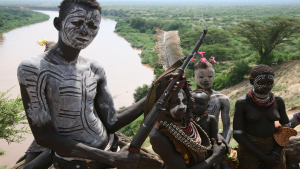
Constituting one of the most egregious child rights violations, many children are currently actively involved in violent conflict as members of armed organizations, states and non-state actors. They can be found on every continent, but sub-Saharan Africa is the epicenter of the phenomenon. These recruited children perform a range of different tasks; they participate in combat, lay mines and explosives, are scouting, spying, and acting as decoys, couriers or guards. Others are used for logistics and supporting functions such as cooking and cleaning.
The 1977 Additional Protocols to the Geneva Conventions were the first international treaties to try and tackle the problem of child soldiering. They prohibit the recruitment and participation in hostilities of children under the age of 15. The 1989 Convention on the Rights of the Child, which has achieved almost universal ratification, also included the 15 age limit. An optional protocol to this Convention, in May 2000, lifted the age to 18. It insisted that armed groups should not use children under 18 in any circumstances and called on states to criminalize such practices. However, although the use of children by armed groups is prohibited and defined as a war crime, child soldiering remains a pressing global issue.
A “time bomb”?
Child soldiers in Ethiopia. Image by Vittorio Bianchi via Flickr.
The most commonly cited figure for the number of children involved in conflicts is 300,000. This estimate is, however, not necessarily the most accurate one as information on child soldier usage is difficult to obtain. Children are often employed in remote conflict zones away from public view and the media, no record is kept of their number and ages, and those who employ them often deny their existence or claim that these were isolated cases. Besides, they often ‘vanish’ after the conflict ends; they are rarely as visible among the demobilised troops as they were among the combatants at the height of hostilities.
The number of children active in armed groups is clearly nominal when compared to the millions of children who do not participate directly as soldiers but are profoundly affected by war. Nonetheless, this group is a tangible, visible, and dramatic example of the deprivation of the human rights of children. It has been empirical proven that using children as active participants in armed conflict has severe consequences not only for the child and their family, but also for society in general. For instance, at a recent Paris conference on child soldiering, the keynote speaker, the former French foreign minister Philippe Douste-Blazy, warned that the use of child soldiers is “a time bomb that threatens stability and growth in Africa and beyond.” They are “lost children,” he argued, “lost for peace and lost for the development of their countries”. Also, a New York Times editorial stated: “They are walking ghosts, damaged, uneducated pariahs.” Ultimately, if subscribing to these statements, child soldiering may be thought to contribute to the well-known ‘conflict trap’, i.e. they might increase the likelihood that conflict recurs.
There are at least two avenues that link former child soldiers to conflict recurrence. First, it is argued that former child soldiers have often limited skills besides killing and being able to fieldstrip weapons after the conflict has ceased. This is primarily due to the fact that they experience little to no education while being in the bush. This lack of education impedes their labour market success: they earn less and are less likely to be engaged in skilled work in comparison to those that were not recruited by armed groups. This may significantly raise the willingness to rejoin armed groups again, which might assure them of at least the basic necessities, such as food and perhaps even a bit of money.
Second, although child soldiers are far from the only ones who are affected as a result of their experiences in war, they suffer the most and have the least capacity to recover. Typically former child soldiers have witnessed, experienced and/or perpetrated shocking and disturbing violent actions during their time with the armed group. This can create great difficulties both for the children and their interface with society. It can lead to both physical symptoms, such as headaches, stomach pains, sleep disorders, and mental symptoms, like depression, anxiety, and extreme levels of pessimism.
One of the most worrying symptoms connected to children’s war participation is a supposed increase in the child’s level of aggression. Due to the fact that they often do not have the capacities and experiences to disengage themselves from these violent and aggressive behavioral norms established during their time in the armed groups, difficulties arise when peace is restored. For instance, they often display on-going aggressiveness within their families and communities: they also often use physical violence to resolve conflicts, reflecting an absence of adequate social skills.
These skills are not easily acquired by former child soldiers since they often encounter broken families once they are back that could have provided a better regulation of the use of violence. Hence, some scholars have argued that the phenomenon of child soldiers feeds upon itself: each round of fighting creates a new cohort, traumatized by the war and bereft of economical skills, who then become a potential pool and catalyst for the next spate of violence. Or as Wessells describes it: “A society that mobilizes and trains its young for war weaves violence into the fabric of life, increasing the likelihood that violence and war will be its future. Children who have been robbed of education and taught to kill often contribute to further militarization, lawlessness, and violence”.
International response
The response of the international community to counter child recruitment falls usually in two categories: (1) punishing perpetrators by ‘naming and shaming’ practices and by prosecution; and (2) mitigating some of the damage done to children once they leave the armed group by implementing child-centred Disarmament Demobilization and Reintegration (DDR) programs.
Concerning the ‘naming and shaming’ policies, the United Nations often publishes reports mentioning particular governments and non-state actors that use children. Some have argued that this has an effect, especially on governments, although there is little empirical evidence to back this up. The largest degree of child recruitment is, however, carried out by non-state actors and it seems that media exposure, public pressure, and pressure of international organizations and governments have little to no effect, with perhaps the exception of rebel groups who strive for secession.
Besides ‘naming and shaming’ campaigns, the international community has also started to shift its focus to the criminalization of child soldier recruitment. Thomas Lubanga Dyilo, a warlord from the Democratic Republic of the Congo who led the Union of Congolese Patriots, was the first rebel leader convicted by the International Criminal Court for the use of children in military operations. More recently, Charles Taylor, the former president of Liberia, was found guilty of conscripting and enlisting children. It is, however, unclear whether this criminalization has a deterrent effect on child soldier recruitment.
Once children are out of the armed groups, the international community attempts to mitigate the damage done to them and the potential consequences for society by implementing DDR programs. Initially children were often excluded from these programs, as it was argued that they did not pose a post-conflict threat. Moreover, since children cannot be legally recruited, child-centered DDR program elements were not viewed as a routine component of peacemaking. Fortunately, this has changed in recent times, and most DDR programs now have their own imperatives focused on rehabilitating former child soldiers. Usually these programs consist of three components.
First, former child soldiers are gathered at pick-up points, moved to disarmaments sites, and, whenever necessary, disarmed. During the demobilization part of the program, eligibility for the DDR program is determined through a screening process in which they receive identity and discharge documents. Reintegration is the third component of the DDR program, which starts at care centers – transit facilities which help prepare former child soldiers for going home and give non-governmental organizations time for the preparation of families and communities to receive the children. During their time at the center, emphasis is placed on educational activities, recreational activities, psychological support and counselling, and several different life skills trainings. Once the parents or extended family members are traced, the children will be taken home to their family and will join an appropriate educational program.
The effectiveness of these programs in reducing recidivism and establishing post-conflict stability is, however, not always affirmed. Some scholars conclude that these programs are generally inefficient at disarming ex-combatants, reducing the likelihood of recidivism, and addressing their economic and security concerns. This lack of supporting evidence might be due to conceptual and operational problems with defining the outcome of these programs (and how to measure this), and a lack of information on the existing DDR programs (money, personnel, mission statements, etc.). But it might also be due to the content of these programs and how they approach child soldiering. Many of these child-centered DDR programs, for instance, are put in place under enormous time pressure, are often disconnected from the perception of local communities, and are based on a one approach fits all children principle. Consequently, some scholars have called for more flexibility within these programs to enhance is effectiveness. Only then can efforts to promote social reconstruction bear its fruits.
Roos Haer (PhD, University of Konstanz, Germany) is a postdoctoral researcher at the University of Konstanz at the chair of International Relations and Conflict Management. Her current research interests include the role of children in conflict, child soldier recruitment by state and non-state actors, Disarmament Demobilisation and Reintegration programs, and survey methodology in less developed (conflict) countries. Her research is often based on quantitative field research conducted in Africa. She has published in (a.o) the European Journal of International Relations, Conflict Management and Peace Science, Third World Quarterly, and has published a book with Routledge publisher.
The structure of Libyan society under the Qadhafi regime, as well as during its demise and aftermath, was and remains peculiarly fragmented. The former dictator deliberately kept state institutions weak (in particular the army) in order to prevent the formation of an organised opposition and to create a cult of leadership centred on himself and his family. The consequence for the nature of the uprising was that rebel forces were fragmented, their control over the country was acquired piecemeal, and the internationally recognised National Transitional Council has had tenuous legitimacy outside its base in Benghazi and the east.
Now that the regime has fallen, the process of rebuilding should be underway; but Libya has many autonomous, disconnected and heavily armed militias, all of whom have independent claims on their country’s liberation as well as the fire power to back those claims. The following Crisis Group Report examines the tricky path that the authorities must navigate in order to successfully disarm, demobilise and reintegrate into society Libya’s rebel fighters, without plunging the country back into violence. Many of the young men who took up arms and joined the rebellion found in it a dignity long denied them by lack of economic and employment opportunities. So while the number of weapons in circulation must be dramatically reduced, the status that they bestow needs to be met by other means.
Executive Summary and Recommendations
As the recent upsurge of violence dramatically illustrates, the militias that were decisive in ousting Qadhafi’s regime are becoming a significant problem now that it is gone. Their number is a mystery: 100 according to some; three times that others say. Over 125,000 Libyans are said to be armed. The groups do not see themselves as serving a central authority; they have separate procedures to register members and weapons, arrest and detain suspects; they repeatedly have clashed. Rebuilding Libya requires addressing their fate, yet haste would be as perilous as apathy. The uprising was highly decentralised; although they recognise it, the local military and civilian councils are sceptical of the National Transitional Council (NTC), the largely self-appointed body leading the transition. They feel they need weapons to defend their interests and address their security fears.
A top-down disarmament and demobilisation effort by an executive lacking legitimacy would backfire. For now the NTC should work with local authorities and militias – and encourage them to work with each other – to agree on operational standards and pave the way for restructured police, military and civilian institutions. Qadhafi centralised power without building a central state. His successors must do the reverse.
A dual legacy burdens Libya’s new authorities. The first was bequeathed by Qadhafi in the form of a regime centred on himself and his family; that played neighbourhoods and groups against one another; failed to develop genuine national institutions; and deliberately kept the national army weak to prevent the emergence of would-be challengers. The second legacy stems from the way in which he was toppled: through the piecemeal and variegated liberation of different parts of the country. A large number of local forces and militias volunteered to take part in this fight. After Qadhafi’s fall, all could legitimately claim to have sacrificed blood and treasure for the cause, and all could consider themselves national liberators.
To much of the world, the NTC was the face of the uprising. It was formed early, spoke with authority and swiftly achieved broad international recognition. On the ground, the picture was different. The NTC was headquartered in the eastern city of Benghazi, a traditional base of anti-regime activity that provided army defectors a relatively secure area of operations, particularly after NATO’s involvement. The eastern rebellion was built around a strong kernel of experienced opposition and commanders who found friendly territory in which to defect at relatively low cost and personal risk. But it could only encourage western cities and towns to rise up, not adequately support them. At key times, army components that defected, stuck on the eastern frontlines, by and large became passive observers of what occurred in the rest of the country. In the eyes of many, the rebel army looked increasingly like an eastern, not a truly national force. As for the NTC, focused on obtaining vital international support, it never fully led the uprising, nor could it establish a substantial physical presence in much of the rest of the country.
In the west, rebels formed militias and military brigades that were essentially autonomous, self-armed and self-trained, benefiting in most instances from limited NTC and foreign government support. Some had a military background, but most were civilians – accountants, lawyers, students or labourers. When and where they prevailed, they assumed security and civilian responsibility under the authority of local military councils. As a result, most of the militias are geographically rooted, identified with specific neighbourhoods, towns and cities – such as Zintan and Misrata – rather than joined by ideology, tribal membership or ethnicity; they seldom possess a clear political agenda beyond securing their area.
The situation in Tripoli was different and uniquely dangerous. There, victory over Qadhafi forces reflected the combined efforts of local residents and various militias from across the country. The outcome was a series of parallel, at times uncoordinated chains of command. The presence of multiple militias has led to armed clashes as they overlap and compete for power.
The NTC’s desire to bring the militias under central control is wholly understandable; to build a stable Libya, it also is necessary. But obstacles are great. By now, they have developed vested interests they will be loath to relinquish. They also have become increasingly entrenched. Militias mimic the organisation of a regular military and enjoy parallel chains of command; they have separate weapons and vehicle registration procedures; supply identification cards; conduct investigations; issue warrants; arrest and detain suspects; and conduct security operations, sometimes at substantial cost to communities subject to discrimination and collective punishment.
They also have advantages that the NTC and the National Army lack, notably superior local knowledge and connections, relatively strong leaderships and revolutionary legitimacy. In contrast, the NTC has had to struggle with internal divisions, a credibility deficit and questions surrounding its effectiveness. It has had to deal with ministries still in the process of reorganisation and whose employees – most of them former regime holdovers – have yet to cast off the ingrained habit of referring any decision to the ministerial level.
But the heart of the matter is political. The security landscape’s fragmentation – and militias’ unwillingness to give up arms – reflects distrust and uncertainty regarding who has the legitimacy to lead during the transition. While the NTC and reconstituted National Army can point out they were among the first to rebel or defect and were crucial in obtaining international support, others see things differently. Some considered them too eastern-dominated and blamed them for playing a marginal role in liberating the west. Civilians who took up arms and who had been powerless or persecuted under Qadhafi resent ex-senior officials who defected from the army and members of the regime’s elite who shifted allegiances and now purport to rule. Although they are represented on the council, many Islamists consider the NTC overly secular and out of touch with ordinary Libyans. Above all else, militias – notably those in Tripoli, Zintan and Misrata – have their own narrative to justify their legitimacy: that they spearheaded the revolution in the west, did the most to free the capital or suffered most from Qadhafi’s repression.
Formation of a new cabinet was supposed to curb militia-on-militia violence as well as defiance of the National Army; it has done nothing of the kind. Instead, violence in the capital if anything has escalated, with armed clashes occurring almost nightly. Regional suspicion of the central authority remains high as does disagreement over which of the many new revolutionary groups and personalities ought to be entrusted with power.
The problem posed by militias is intimately related to deeper, longer-term structural issues: Qadhafi’s neglect of the army along with other institutions; regional friction and societal divisions (between regions, between Islamist-leaning and secularist-leaning camps, as well as between representatives of the old and new orders); the uprising’s geographically uneven and uncoordinated development; the surplus of weapons and deficit in trust; the absence of a strong, fully representative and effective executive authority; and widespread feeling among many armed fighters that the existing national army lacks both relevance and legitimacy.
Until a more legitimate governing body is formed – which likely means until elections are held – and until more credible national institutions are developed, notably in the areas of defence, policing and vital service delivery, Libyans are likely to be suspicious of the political process, while insisting on both retaining their weapons and preserving the current structure of irregular armed brigades. To try to force a different outcome would be to play with fire, and with poor odds.
But that does not mean nothing can be done. Some of the most worrying features of the security patchwork should be addressed cooperatively between the NTC and local military as well as civilian councils. At the top of the list should be developing and enforcing clear standards to prevent abuses of detainees or discrimination against entire communities, the uncontrolled possession, display or use especially of heavy weapons and inter-militia clashes. The NTC also should begin working on longer-term steps to demobilise the militias and reintegrate their fighters in coordination with local actors. This will require restructuring the police and military, but also providing economic opportunities for former fighters – vocational training, jobs as well as basic social services – which in turn will require meeting minimum expectations of good government. Even as it takes a relatively hands-off approach, the international community has much to offer in this respect – and Libyans appear eager for such help.
Ultimately, successfully dealing with the proliferation of militias will entail a delicate balancing act: central authorities must take action, but not at the expense of local counterparts; disarmament and demobilisation should proceed deliberately, but neither too quickly nor too abruptly; and international players should weigh the need not to overly interfere in Libya’s affairs against the obligation not to become overly complacent about its promising but still fragile future.
RECOMMENDATIONS
To the Transitional National Council (NTC):
1. Strengthen the legitimacy of central authorities by ensuring greater transparency in decision-making and in identifying and selecting Council representatives and members of the executive.
2. Ensure all decisions relating to disarmament, demobilisation and reintegration (DDR) are taken in close consultation with local military councils and militias, by appointing a credible personality to liaise and coordinate with such local bodies.
3. Enhance opportunity for involvement by community and religious leaders in sponsoring and supporting DDR initiatives.
4. Back local DDR initiatives financially in cooperation with local councils, including weapons registration, improvement of detention facilities and support for young fighters.
To the Revolutionary Brigades, Local Military Councils and Local Civilian Councils:
5. Seek to reintegrate armed rebels, notably the youngest among them, inter alia by identifying and registering those who wish to pursue careers in the police and military; offering alternative civilian employment; and sponsoring civic improvement initiatives with city funds.
6. Disclose all sources of funding.
7. Agree on and enforce codes of conduct and mechanisms for dispute resolution, especially where several militias operate in the same area.
To the NTC, Revolutionary Brigades, Local Military Councils and Local Civilian Councils:
8. Agree on and enforce a common set of rules and behaviour for all armed fighters; implement a single procedure for weapons registrations; and ban the display of heavy weapons in town centres and the bearing of arms at checkpoints and key installations.
9. Transfer as quickly as possible responsibility for detainees to central authority and, in the meantime, ensure respect for rule of law and international standards in arrest and detention procedures; release persons whose detention is not consistent with such practices; and bring to justice, speedily and in accordance with international law, those accused of criminal acts.
10. Agree on a process for NTC inspection of arms depots, detention centres, border posts, checkpoints and other militia-controlled facilities.
11. Implement initial steps toward DDR by:
a) focusing at first on heavy weapons;
b) through a joint effort by the government and local councils, providing support for young fighters in particular;
c) establishing an NTC-funded mandatory training program covering rules of engagement and discipline for militia members who wish to pursue careers in the military or policing; and
d) providing vocational training for militia fighters as well as necessary financial incentives.
12. Establish and implement criteria for appointment to senior posts within the defence ministry and army on an inclusive basis.
13. Create at both the central and local levels a non-partisan, inclusive committee to review and refer candidates for recruitment into the police and national army.
14. Institute an appeals procedure for rejected candidates.
To the UN Support Mission in Libya and other International Stakeholders, including Arab countries, the European Union and the U.S.:
15. Offer the NTC assistance in, inter alia:
a) undertaking quick assessments of security, DDR, and related needs;
b) police training, including possibly establishment of a gendarmerie function;
c) security force professionalisation, including specifically on human rights and civilian oversight; and
d) border control.
Tripoli/Brussels
Article Source: Crisis Group. To read the full Report, click here
Image Source: United Nations
Delicious Digg StumbleUpon RedditA gap continues to exist between the international community’s rhetoric about conflict prevention and its responsibility to protect people from severe human rights violations. The record of human misery caused by violent conflict is testimony to the chronic lack of political will to respond collectively to newand emerging threats to peace. The ineffectiveness of many global efforts at preventive diplomacy is evidence that traditional diplomatic approaches, including the use of force, simply may not work.
Article source: East West Institute
Image source: AfghanistanMatters
 The consequences of climate change for human security are profound, but much of the last decade has been lost in avoiding those consequences. The implications for human security are serious. Today, with the consequences of climate change being increasingly recognised by military analysts, there is a risk of the “securitising” of the climate change agenda leading simply to military responses rather than a more preventative course of a rapid shift to a low-carbon society.
A World Blowing Cold and Hot
In 2009-10, the United Kingdom and much of the rest of north-west Europe experienced one of the coldest and most prolonged winters for several decades. In the minds of many people this seemed to confirm the view that the evidence for global warming was limited at best, and that the views of climate change sceptics were to be taken seriously. Furthermore, the winter’s experience came after the Copenhagen climate negotiations made little progress, and was also in the aftermath of a major controversy concerning climate change research at the University of East Anglia in the UK.
In this context- of suspicion over the reality of climate change – many people in Western Europe found it difficult to believe that the month of January 2010 was actually one of the warmest on record. This was the case when expressed in global rather than European terms – while the north-east Atlantic had been experiencing severe cold, parts of North America had warmer than average winters, and temperatures were high in many other parts of the world.
As 2010 progressed, two other weather events and one oceanic development added further to a sense of uncertainty. For much of the mid-summer period, Russia experienced exceptionally high temperatures which, in the case of the greater Moscow region, resulted in numerous forest fires leading to smog over the city. At the same time, further south in Central Europe, there was widespread flooding across 8 countries. In addition to this, there were appalling floods in Pakistan as the monsoon season was marked by some of the heaviest rainfall in decades. The full scale of the losses in Pakistan is still not clear.
Few climate scientists sought to claim that these weather events were direct indicators of climate change, but an indirect connection was certainly suggested. While it may be a common mistake to confuse “short-term weather” with “long-term climate”, it has been widely predicted that as the atmosphere of the entire planet slowly heats up, then weather systems should be expected to become more energetic, leading to extremes of weather events such as intense tropical storms, exceptional monsoons or continental heat waves. The experiences in Russia and Pakistan could be no more than equivalent to some of the extreme events that have been witnessed in the past, but their conjuncture at least reminded many people of other aspects of climate change.
The final element for 2010 was not a weather event as such, but a report that the Artic Ocean was experiencing one of the most substantial losses of mid-year sea ice on record. What seemed particularly surprising was that this should be happening within a matter of months of such a severe winter in the north-east Atlantic. In fact, the loss of sea ice was within the predictions that climate change models have produced in recent years. The overall impact of the loss of sea ice and the extreme weather experienced in Russia and Pakistan meant that by early September there was a widespread sense, once again, that climate change should be taken seriously.
Climate Change in Context
The possible impact of increased carbon dioxide levels in the atmosphere was well recognised over 40 years ago, and by the end of the 1980s there was serious concern that there would be substantial changes in the planet’s climate if carbon emissions were not curbed. Although not directly related to climate change, the potential destruction of the ozone layer through the release of CFC pollutants was recognised in the mid-1980s as being the first clear example of human activity having an impact on the entire global ecosystem. The ozone problem was relatively easy to counter, since CFCs could be replaced, and phasing them out through the Montreal Convention was agreed in 1987. Partly because of the sudden and serious nature of the CFC issue, climate change research was attracting far more attention by 1990.
At the same time, there was one aspect that limited the extent of the concern. This was that studies of natural climate change in prehistoric times have indicated that most of the impact was in the north and south temperate latitudes. If this was repeated with human-induced climate change then at least the countries most likely to be affected would be wealthy enough to be able to adapt. With the tropics and sub-tropics buffered against excessive impacts, poorer people across the world might have less to contend with.
By the early 1990s, advances in climate change science showed that the pattern of natural climate change would not be repeated by human-induced change, and that those parts of the world least able to cope would be seriously affected. By the early part of the 2000s, further work was actually showing that there would be an asymmetric impact. In broad terms, large parts of Antarctica, the southern oceans and the southernmost parts of the continental land masses would experience the smallest increases in temperature, whereas the Arctic region and most northern, sub-tropical and tropical land masses would experience above-average increases. There were also indications that rainfall would tend to increase over the oceans and Polar Regions but decrease over the tropical and sub-tropical land masses.
The implications of this more recent understanding are profound, since those populations and societies least able to cope with the impact of climate change will have to contend with substantial changes. Decreases in crop yields and consequent food availability will be among the factors likely to make societies much more fragile and unstable, one effect being very substantial increases in migratory pressures, with these being strongly resisted by wealthier countries. When seen in combination with the persistent socio-economic divisions that already exist across the world, the potential for serious social unrest and political instability is considerable.
The Recent Politics of Climate Change
Among those resisting the implications of climate change have been large trans-national oil companies and oil-exporting countries. The former have funded policy institutes and others to promote critiques of climate change research and the latter have been deeply reluctant to support international protocols limiting carbon emissions. Beyond these forces, which may be powerful and well-funded, a much more serious issue in the first decade of the 21st century was that the world’s largest emitter of carbon, the United States, had an administration in power that was deeply suspicious of climate change. The United States withdrew from the Kyoto Climate Change Protocol within months of George W Bush assuming office in 2001, and throughout the next eight years, the United States played little part in climate change negotiations.
While this altered with the election of Barack Obama in 2008, by the middle of this year, part of the opposition to his administration was coming from the Tea Party Movement and other right-wing elements in the Republican Party, one feature of their outlook being a deep suspicion of climate change combined with strong opposition to any limits on carbon emissions. November’s mid-term elections to Congress may determine whether these views solidify in Congress, – a major risk, if the Democrats lose control of either house.
Climate Change and the Military
We are at a point where a combination of factors, including the attitude of the Obama administration, means that the risks emanating from climate change are being more generally recognised. This coincides with a significant change in attitude among military planners. In military planning units and security think tanks across the western world climate change is now seen as one of the key future drivers of insecurity. It is an outlook that stems partly from a tendency for military analysts to look long-term. Unlike most political and commercial institutions that tend to focus on 4-10 year time spans, military planning is frequently much longer term, to a certain extent because military forces depend partly on the development of systems involving development and procurement processes that stretch over decades.
Much of the analysis on climate change coming from military sources produces results that coincide with the ideas of radical environmental analysts, pointing to the social and political consequences, the risks of state failure and the rise of radical oppositional movements. However, when it comes to responses, the primary military focus is on maintaining the security of the state, either on its own or in alliance with others. This is to be expected and is legitimate from the perspective of a military organisation – its reason for being is to keep the state secure. Thus, the emphasis may be on increased border security and the patrolling of potential migratory routes, and the intervention capabilities necessary to stabilise failing states and ungoverned space that may be a consequence of the impact of climate change. What this almost never involves, is advocating the primary preventative measure that is required for responding to climate change – a rapid move towards an ultra-low carbon economy.
The Military Complication
Discussions with military analysts, including those who are engaging with Oxford Research Group’s Sustainable Security Programme, frequently focus on issues concerning climate change and security. There is sometimes recognition by some in the military that there should be a role for senior military officers in advocating a low carbon transition as part of a process of conflict prevention. The complication is that the loss of a decade at the start of the current century means that there will inevitably be numerous impacts of climate change, even if a low carbon transition can be achieved in the next two decades. From a military perspective it can therefore seem reasonable and legitimate to plan for security consequences. The problem is that this can have the negative effect of providing a political excuse to slow down the rate of transition. If “we”, in a rich country, can maintain our well-being by protecting ourselves from the security impacts of climate change, then engaging in the huge changes involved in a low carbon transition can assume a lesser political priority. This is an attractive proposition for most politicians given the likely electoral unpopularity of the transition.
The response to this “securitising” of climate change is that some adaptation is undoubtedly going to be required, but that little of this has to do with the military. There will need to be a far greater focus on issues such as improving water management across the tropics and sub-tropics, breeding more drought-tolerant crops, preparing for more severe storms and protecting low-lying regions, but these are not the ultimate answer to climate change. That involves addressing the problem at root – controlling and minimising carbon emissions.
A substantial element of Oxford Research Group’s Sustainable Security approach is the recognition that conflict prevention is at the root of society’s response to climate change, and that the next five years are crucial in moving towards a more emancipated and environmentally sustainable world. Where there is much work to do is in convincing those in the international security community that it is essential to prevent climate change and that responding to it by protecting elite societies is fundamentally inadequate. It is a huge task but it is at least aided by the manner in which military analysts do have the ability and willingness to think long-term. That is a welcome asset in difficult circumstances.
Author: Oxford Research Group’s Security Consultant Paul Rogers
Image Source: DVIDSHUB
Delicious Digg StumbleUpon Reddit