 By Oxford Research Group’s Sustainable Security Programme Manager Ben Zala
Attach PDF:
By Oxford Research Group’s Sustainable Security Programme Manager Ben Zala

The recent announcement that the so-called Geneva II conference would finally convene on 22 January 2014 is overdue but good news. What are the chances of it bringing peace? With an interim deal signed on Iran’s nuclear programme, Richard Reeve discusses what chance the great powers, Middle Eastern diplomats and the mediators of Geneva have as they turn their attention to ending the war in Syria.
In the UK, the Conservative-Liberal Democrat coalition government continues to pursue the renewal of Britain’s Trident nuclear weapon system amidst criticism of the opacity of the procurement process and concerns over the substantial and increasing costs of the project. Adding fuel to public anger over widespread government cuts, the Defence Secretary Liam Fox’s long overdue announcement in May 2011 that the Initial Gate for the project had been approved was accompanied by the revelation that when inflation is taken into account the price tag for just the new submarines (excluding missiles, warheads and running costs) is likely to be £25 billion, as opposed to the £11-14 billion announced in 2006. With the defence budget already curtailed by the October 2010 Comprehensive Spending Review (CSR) and under strain on account of a projected deficit of £36 billion over the next 10 years, these latest figures have prompted further concerns that Trident is being replaced at the expense of conventional military capabilities. Moreover as the Ministry of Defence (MoD) is now locked in yet another battle with the Treasury pressing questions are being asked about the costs, benefits, priority and opportunity costs of Trident replacement as compared with other areas of government expenditure. On 3 August, the Defence Select Committee – a cross-party committee of MPs -criticised the government over its “rushed” and “badly done” Strategic Defence and Security Review (SDSR). Responding, Jim Murphy, the UK’s Shadow Defence Secretary said “events have exposed the mismatch between policy ambition and the resources provided by ministers”.
Originally scheduled for September 2009 the Initial Gate announcement, which gave the green light for the next stages of procurement to be undertaken (up to 15% of the budget), had been postponed numerous times whilst decisions were made regarding design, particularly over which type of nuclear reactor to use in the new submarines. The Defence Secretary’s Initial Gate statement in the Commons revealed that the new PWR3 reactor would be used, which will increase costs further. The decision to install the PWR3 instead of the currently used PWR2 reactor in the new subs was based on the results of a safety assessment which was accidentally made public by the MoD when anunredacted version of the report was posted on the internet. This led to criticisms of the MoD as well as of Parliamentary Under Secretary of State for Defence Equipment, Support and Technology, Peter Luff, who contradicted the report in Parliament. Anxieties over safety were amplified when an MoD report was published that assessed that government funding cuts are likely to jeopardise the safety of the UK’s nuclear weapons. Likewise, an official inquiry into the August 2010 fire at Aldermaston Atomic Weapons Establishment (AWE) contained strong criticism of the private management consortium (AWE plc, comprising US arms dealer Lockheed Martin, SERCO and Jacobs Engineering) that runs this publicly-funded nuclear weapons plant, particularly with regard to fire prevention and response. The report led the government’s Health and Safety Executive to investigate whether to take legal action against the AWE Management group. Nonetheless, despite a catalogue of problems associated with private sector management of AWE and other UK nuclear sites, in May the Scottish Herald revealed that the nuclear warhead storage base at Coulport is to be sold off to a consortium of private companies also led by, Lockheed Martin.
The statement on the Initial Gate was accompanied by the publication of areport describing work on the Trident renewal programme to date, the decisions taken at Initial Gate and around £3 billion of work scheduled to take place in advance of the Main Gate. Dr Fox also identified spending on long lead items that would cost a further £500 million. Alongside the announcement came the news that, in line with the Coalition Agreement under which it was agreed that the Liberal Democrats could continue to make the case for alternatives, an18-month study to review the “costs, feasibility and credibility of alternative systems and postures” would be undertaken. The study will be conducted by the Cabinet Office and overseen by Armed Forces Minister and Liberal Democrat Nick Harvey who is more open to exploring alternatives to Tridentthan his senior colleague, Conservative Defence Minister Liam Fox, who hasmade it clear that he is absolutely opposed to change. By way of compromise, the study will consider only nuclear weapons options for replacing the role assigned to Trident in the UK’s nuclear deterrence posture, with no consideration of non-nuclear options for deterrence and security. In Scotland meanwhile, following the May 2011 elections which gave the Scottish National Party (SNP) a strong working majority in the Scottish Parliament, a resolution is to be tabled calling for the removal of UK nuclear weapons from Scottish territory. If successful, such a resolution could have far-reaching implications for the storage of nuclear warheads at Coulport and the deployment of Trident, currently homeported at the MoD’s naval base at Faslane.
In spite of his unswerving commitment to replacing Trident, Liam Fox was keen to stress the UK’s disarmament credentials on the occasion of the ‘P5 follow-on meeting to the 2010 NPT Review Conference’, using the opportunity to confirm that part of the warhead reduction announced by the UK’s most recent Strategic Defence and Security Review (SDSR) has been completed. Not long afterwards, former UK Foreign Secretary Margaret Beckett reignited the debate over the policy of Continuous-at-sea-deterrence (CASD) when she raised the possibility of “not necessarily needing four boats”.
Article source: The Acronym Institute
Image source: UK Parliament
 Delicious
 Digg
Digg StumbleUpon
 Reddit
This article was originally published on openSecurity’s monthly Sustainable Security column on 15 August 2014. Every month, a rotating network of experts from Oxford Research Group’s Sustainable Security programme explore pertinent issues of global and regional insecurity.
Control of water, including navigation rights, resource extraction and the exploitation of shared watercourses is at the heart of today’s geopolitical tensions in Asia. China’s recent actions in the South China Sea and Himalayas have given rise to further—and at times violent—conflict over the region’s natural resources. So will water insecurity lead to greater partnership in Asia? Or will it lead to a revival of China’s traditional sense of regional dominance and undercut efforts to build a rules-based approach to growing resource conflicts?
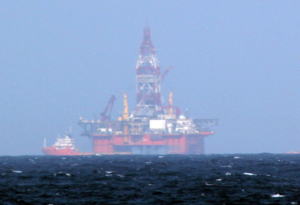
China National Petroleum Corporation’s Haiyang Shiyou-981 oil rig is situated close to the Paracel Islands, which Vietnam claims fall inside its exclusive economic zone. Source: East Asia Forum
On 15 July, a month earlier than scheduled, the China National Petroleum Corporation (CNPC) announced that it was removing its Haiyang Shiyou-981 oil rig—40 storeys high and worth an estimated $1 billion—from waters close to the Paracel Islands which Vietnam claims fall inside its exclusive economic zone.
There were four possible explanations. The first was the one the CNPC offered: the rig had completed its work early. The second was the approach of Typhoon Rammasun, signalling an early start to the region’s storm season. A third was that the US-China Strategic Dialogue the previous week had put pressure on China to lower the temperature in the South China Sea and China had taken the opportunity to demonstrate that it was a responsible international player.
The fourth interpretation was that the rig had accomplished its purpose—not prospecting for hydrocarbons but promoting a steady advance of Chinese claims on the South China Sea through a series of assertive steps, none so provocative as to bring in outside players. With each little step, this story goes, China is building its case for singular rights to navigation and resource extraction there.
The other players on the regional chessboard—the Philippines, Vietnam, Brunei, Taiwan, Indonesia and Malaysia—have grown increasingly agitated. With the memory of violent clashes between Vietnam and China over the Paracel Islands in 1974 and 1988, the installation of the oil rig in May provoked outbreaks of violence in Vietnam against Chinese citizens and businesses. Vietnamese fishing boats and Chinese ships harassed each other throughout the drilling.
It is a dangerous ploy, but China calculates that the dangers are containable. If ethnic Chinese or Chinese citizens suffer harm in the backlash, the host country is to blame. If two ships collide in the course of the hazardous games of “chicken” that have become routine in this contest, Chinese citizens can be mobilised to shout their indignation against the “aggressor”.
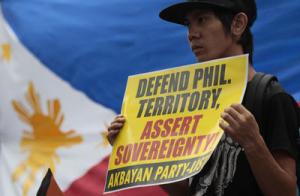
A Fililipino protester holds a slogan beside a Philippine flag during a rally outside the Chinese Consulate in suburban Makati, south of Manila, Philippines on Tuesday June 11, 2013. Source: East Asia Forum
The waters to which China lays claim are divided under the United Nations Convention on the Law of the Sea (UNCLOS) into exclusive economic zones for Brunei, Indonesia, Malaysia and Taiwan, each of which argues it has been adversely affected by China’s oil rig and claims of sovereignty. The zones, running 200 nautical miles into the South China Sea, allow these states special rights of exploration and exploitation of marine resources in specific areas.
The sea is a major shipping route and fishing area, accounting for around one-tenth of the global fish catch and believed to have substantial untapped natural resources. Notably, China’s claims (outlined in a map in 1947) overlap a large portion of these zones. Malaysia also lays claim to a small number of islands in the Spratlys archipelago. With such a concentration of multifaceted and overlapping claims, China’s oil-rig foray heightened tensions and raised fears.
In an attempt to settle its resource conflict with China peacefully , the Philippines has filed a case before the UN Permanent Court of Arbitration in The Hague on its own exclusive economic zone. However, even if, , as Manila expects, the court rules in its favour, China will ignore this—preferring to use its superior weight in bilateral negotiations rather than submit to third-party or multilateral processes where it is the rules that count. Diplomatic efforts by the Philippines to co-ordinate other claimants to take a common position vis-à-vis China have so far met little success.
China’s behaviour has made its smaller neighbours, including Vietnam, reach out to the US for reassurance. But what can it really offer?
For the US, the fading Pacific power, the disputes in the South and East China Sea pose a particular dilemma. In the East China Sea, China and Japan have overlapping territorial claims, including to the Diaoyu/Senkaku Islands which Japan controls and does not recognise as contested. The US has maintained neutrality on the islands but has a treaty commitment to defend Japan as the quid pro quo for its post-war pacifism.
China might be uncertain about the depth of US enthusiasm for that commitment today but limits its provocation, nevertheless, to such moves as the declaration in November 2013, without consultation, of an “air defence identification zone” which covers territory claimed by its neighbours. International flights are now required to report their identity and flight plans to China when crossing the zone, at risk of “defensive emergency measures”.
The strengths and limitations of the US position were clear in May, at the Shangri-La Dialogue in Singapore, the region’s annual multilateral “track two” security summit, where the US retains the power to mobilise a chorus of allies to uphold rules and laws and to criticise China’s behaviour. A series of speakers, including the Japanese prime minister, Shinzo Abe, and the US defence secretary, Chuck Hagel, condemned the use of muscle to enforce claims to the China seas, calling instead for freedom of navigation and overflight and a system based on international rules.
General Wang Guanzhong, leader of the Chinese delegation, accused the US and Japan of ganging up on China. He was not sufficiently moved to answer pertinent questions on the rules of engagement for Chinese patrol vessels in the East China Sea, but he did make it clear that China saw no place for the US in 21st-century Asia.
China is by far the largest trading partner of all the ASEAN members, which are caught in the small-neighbour dilemma, somewhere between the fear that China will come to rule their lives and consume their resources and the fear of giving offence to the region’s most important economic power. For them, the game is to try to stay on good terms with both sides.
The dilemma is also evident among a different set of China’s neighbours—those that depend on the rivers that rise in the mountains and on the high plateau of Tibet. China’s largest downstream neighbour is, of course, India. India-China relations are bedevilled by unsettled borders-status rivalries, the subject of relatively recent skirmishes, but their most intractable potential conflict is over the shared resource of the Himalayan watershed.
In its eagerness to promote new Asian alliances, Beijing dispatched the foreign minister, Wang Yi, to Delhi in June, to reach out early to the administration of the newly-elected Narendra Modi. Wang presented himself as the personal envoy of China’s president, Xi Jinping, and startled the Indian press by claiming that the two countries were ready to settle their long-running border dispute. The announcement was however short on detail—and, since the Indian state of Arunachal Pradesh is claimed by China while China’s Aksai Chin is claimed by India, details matter.
There has been no further hint of an imminent deal but India, like all of China’s downstream neighbours, is more concerned by the impact Chinese activities are having on the quality and quantity of water that crosses its borders than the exact position of the borders themselves. The Himalayan cryosphere contains the largest store of fresh water outside the two polar regions and is a significant influence on the region’s climate, including its monsoons. As in the polar regions, rising temperatures are affecting the glaciers and snow fields that give birth to Asia’s rivers and future impacts on monsoons, though hard to predict, are highly likely.
In the shorter term, China’s expansion of development westward is affecting the Qinghai Tibet plateau and everything that flows from it. Increased mineral extraction in Tibet and a renewed frenzy of big-hydro construction on trans-boundary rivers are changing Asia’s water flows for ever. There is increasing awareness of the risk of the downstream disasters that could result from building mega-dams in one of the world’s most active earthquake zones.
There are no trans-boundary agreements between China and any lower riparian country on the shared use of Asia’s great rivers, even though 1.6 billion people depend on them and China is building dams on all their head waters. For India, dams and threatened water diversions on the Brahmaputra are a particular concern. For the countries of the Mekong, China’s dam-building upstream poses a series of potential dangers. Meanwhile, India and others are running to catch up in the dam race, fearful of allowing de facto rights to be created unchallenged.
There has been no source-to-sink assessment of the impact on river ecosystems of any single dam—let alone of the massive cascades planned or under construction—and there are no mechanisms for resolving disputes. China has refused to enter into discussions with lower riparian countries, beyond agreeing to share limited water-flow data with India.
But, as in the South China Sea, limited bilateral discussions are not enough to ensure that the ecosystems of the watershed are protected and the legitimate interests of all those whose livelihoods depend on the rivers are recognised. From the high Himalaya to the teeming deltas, life will be affected.
If ever there was a case for clear rules and co-operation, it can be found in the South China Sea and the Himalayan watershed. Both raise the essential question of whether the region’s resource conflicts will be settled by arbitration and law or by force. China’s challenge to US influence is also a challenge to an international order that values arbitration as a way of defending the weak against abuse by the strong.
Isabel Hilton is the editor of chinadialogue.net, and Advisor to Oxford Research Group’s Sustainable Security Programme. She is a journalist, broadcaster, writer and commentator
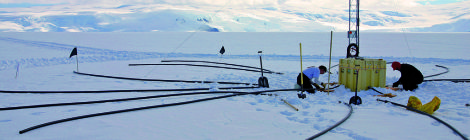
Despite not yet entering into force, the 1996 Comprehensive Test Ban Treaty has succeeded in almost eliminating nuclear weapons testing and in establishing a robust international monitoring and verification system. A breakthrough in its ratification by the few hold-out states could have important positive repercussions for the Nuclear Non-Proliferation Treaty or nuclear disarmament in the Middle East.
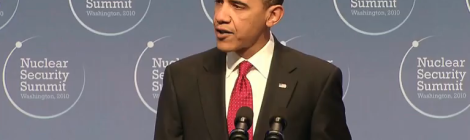
The recent walkout by Egyptian negotiators at UN talks have demonstrated that, like a building with rotten foundations, the nuclear non-proliferation regime is far less stable than many believe it to be. Egypt’s actions make clear that anything less than a regime specifically geared towards addressing the reasons why some states seek nuclear weapons is a regime existing on borrowed time.

The Bay of Bengal is uniquely vulnerable to a changing climate because of a combination of rising sea levels, changing weather patterns, and uncertain transboundary river flows. These problems combine with already existing social problems like religious strife, poverty, political uncertainty, high population density, and rapid urbanization to create a very dangerous cocktail of already security threats. Andrew Holland argues that foresight about its impacts can help the region’s leaders work together to solve a problem that knows no boundaries.
Author’s Note: This contribution is a shorter version of the article “Assessment of Transboundary River Basins for Potential Hydro-political Tensions” by De Stefano et al. 2017.
The impacts of new dams and diversions are felt across borders, and the development of new water infrastructure can increase political tensions in transboundary river basins. International water treaties and river basin organizations serve as a framework to potentially deescalate hydro-political tensions across borders.
The availability of freshwater in the right quantity and quality at the right times for dependent systems is required for human security, environmental security, and economic growth. As populations and economies have grown, water has become scarcer and more variable in certain locations, leading to concerns over how water may lead to conflict. Though violent conflicts over water occur more often at the local level, disputes over water are also possible at the international level, particularly as impacts of water use spill across international borders.
Dams and other water infrastructure help manage water variability—providing water in times of drought and dampening the effects of floods. With these benefits come ecological impacts as large-scale water infrastructure effects the hydrologic function of the basin in which they are built. This includes altering the timing and/or magnitude of flows, altering aquatic migratory patterns, and preventing sediments from moving downstream. Thus, the construction of large-scale water infrastructure such as dams and water diversions can become significant sources of tension between countries sharing a river basin.
The significance of new dams and water diversions is increasing across the world as many countries have begun construction on large infrastructure projects in internationally shared river basins. This is evident in places such as the Nile Basin, where the Ethiopian government’s construction of the Grand Ethiopian Renaissance Dam has been occurring without an agreement with downstream Egypt, and the news of its construction has been met with violent protests and strong rhetoric from Egyptian politicians. Water diversions are not the only factor potentially creating tension between countries over shared waters. Other factors including high population growth, urbanization, increasing water pollution, over-abstraction of groundwater, climate change and water-related disasters can contribute to tensions.
Building institutional capacity (treaties and river basin organizations) is a crucial factor in decreasing the likelihood of conflict over shared waters – particularly if the agreements contain mechanisms that reduce uncertainty and increase flexibility in water management. Past research suggests that a basin will be more resilient to conflict if a basin has international mechanisms able to manage effects of rapid or extreme physical or institutional change. However, the mere presence of institutions does not necessarily indicate that a basin is resilient, nor does it indicate that water-related conflict will be absent.
Countries can exploit treaties since they are not easily enforceable. Treaties can also be structured in a way that exploits (or worsens) already-existing inequities between countries. Treaties can not only solidify power imbalances, but can also lock out public participation or even become a source of conflict themselves. This can lead to a lack of participating by some countries.
Previous studies in analyzing potential future conflict in river basins at a global scale have identified basins at future risk through predictive and forecasting methods, treaty analysis, and climate change. Our recent study aims to contribute to those types of analyses through examining multiple issues – stressors on political relationships due to the development of dams and water diversions, how treaties/river basin organizations can mitigate these stresses, and external socio-environmental factors that could exacerbate these tensions in the near future. We integrate these multi-faceted data to map the risk of potential tensions regarding water and politics in transboundary basins across the globe.
We found several basins to be vulnerable to tensions over water, particularly in Southeast Asia, South Asia, Central America, the northern part of the South American continent, the southern Balkans as well as different parts of Africa (Table 1). New dams and diversions is ongoing or planned in at least 57 basins worldwide. The new dams are highly concentrated in very few geographic areas, including regions in Nepal, Brazil, and India. Most international river basins were found to have a moderate risk of tensions over water (see Figure 1). Twenty-two basins were classified as having a very high risk, and 14 basins were classified as having a high risk of tensions. Many basins of higher risk are concentrated in Sub-Saharan Africa and in Central and Southeast Asia. These basins at higher risk are experiencing a combination of factors lending them vulnerable to conflict, including high rates of dam development, limited, weak, or nonexistent treaty coverage, high water variability, and low gross national income per capita.
The indicator-based analysis (Figure 1) uses a combination of environmental, political, and economic metrics, including high or increased climate-driven water variability, presence of armed conflicts, and low gross national income per capita, to identify vulnerability and resilience to tensions brought forth by water resources development in international watersheds at a global scale. The development of new dams and water diversions is very unevenly distributed.
Certain basins will be much more impacted than others. Most of the new water infrastructure is in upstream portions of river basins, with many dams being built in emerging or developing economies that require increased hydropower and water regulation to sustain their economic development. Many of these areas still lack well-developed instruments and institutions that would contribute towards transboundary cooperation.
The ability to understand when (and where) these variables combine to potentially create conflict is critical to managing and transforming future conflict in transboundary basins. Understanding where conflict might occur can contribute towards guiding policy interventions, focusing capacity-building efforts where needed, and actualizing worldwide initiatives of integrated water resources management. This includes achieving the United Nations’ Sustainable Development Goal Target 6.5 (“By 2030, implement integrated water resources management at all levels, including through transboundary cooperation as appropriate.”).
Jacob D. Petersen-Perlman is a Research Analyst at the University of Arizona Water Resources Research Center. His research areas of interest include transboundary water conflict and cooperation, water security, and water governance.
Lucia De Stefano is Deputy Director of the Water Observatory of the Botín Foundation and Associate Professor at Complutense University of Madrid (Spain). Her main fields of interest are multilevel water planning, drought management, groundwater governance, transboundary waters, and the assessment of good governance attributes from different disciplinary perspectives.
Eric Sproles is a hydrologist at the Centro de Estudios Avanzados en Zonas Áridas in La Serena, Chile and a Courtesy faculty member at Oregon State University. His research areas of interest include climate change impacts on hydrology, particularly on mountain snowpack and streamflow, and remote sensing of terrestrial water storage.
Aaron T. Wolf is a professor of geography in the College of Earth, Ocean, and Atmospheric Sciences at Oregon State University and directs the Program in Water Conflict Management and Transformation, through which he has offered workshops, facilitations, and mediation in basins throughout the world. His research focuses on issues relating transboundary water resources to political conflict and cooperation.
Water managers in the Indus Basin will have to overcome a host of overlapping socio-economic, environmental, and policy pressures as they strive to fulfill their society’s future water needs. The Indus sustains some 200 million people and nourishes the breadbaskets of both India and Pakistan, countries where the agricultural sector provides almost a fifth of national GDP and employs roughly half the labor force. But demands on the river have risen to the point that it no longer reaches the sea year round. Nearly 90 percent of the Indus’s resources are already allocated to supply the subcontinent’s growing populations and expanding economies, with little to no capacity to spare.
Even as they increasingly exploit the Indus, India and Pakistan also are draining their underground aquifers. Water tables have plummeted throughout the region as overdrafts exceed rates of recharge. Satellite data indicate the Indus Basin lost 10 billion cubic meters of groundwater annually between 2002 and 2008, a yearly depletion equivalent to half the available water storage in all the reservoirs of Pakistan.[1]
Consequently, numerous studies foresee increasing water scarcity there. The consulting firm McKinsey and the International Finance Corporation project supply deficits will top 50 percent on the Indian side of the Indus Basin by 2030. The situation is equally alarming across the border. The World Bank figures Pakistan already has hit the limit of its available resources, yet will require 30 percent more water by 2025 to meet rising agricultural, domestic, and industrial needs.
Climate change will exert additional, chronic pressures on freshwater supplies in the region. The Indus headwaters rise in the Himalayan range where snow and glacial melt contribute some 45-60 percent of the river’s annual flow. In recent decades, glaciers worldwide have retreated as global average temperatures have warmed. Initially, greater glacier melting will boost river runoff, increasing the danger of seasonal flooding. As de-glaciation continues, however, melt water flows will subsequently wane, diminishing downstream supplies. According to one study, receding glaciers could pare water supply in the upper Indus more than eight percent by 2065. Reverberating through irrigation demands and crop yields, this drop could ultimately reduce the number of people that basin resources could feed by 23 to 30 million.[2]
Left unaddressed, such strains could sow increasing competition over dwindling water supplies, potentially fueling destabilizing international tensions. Water has been a consistent flash point between India and Pakistan since their partition. The international boundary that set the two nations apart also set them at odds over water. As the downstream neighbor, Pakistan feared Indian withdrawals or diversions could deprive it of its water supply, throttling its agriculture and undermining its food security. Up-river, India worried that according all flows to Pakistan would curtail possibilities for developing the Indus for its own benefit.
Since 1960, the river has been governed by the Indus Waters Treaty (IWT). The IWT physically divided the Indus, allocating use of the three western tributaries that feed the main river entirely to Pakistan and the three eastern tributaries to India, while also controlling the type and features of projects that India can establish on its portion of the Indus. The IWT has stood through three wars and countless clashes. But the accord has no provisions for how the parties should respond to variations in water flow that climate change could engender. Nor does it address water pollution, though deteriorating quality cuts into available quantities as sources become too degraded for many uses. And while consumers across the basin rely on groundwater to supplement or substitute for surface water, there is no agreement for sharing supply or even sharing data on shared groundwater resources. Finally, though the Indus in fact begins in China and receives 10 percent of its discharge from Afghanistan’s Kabul River, the ITW includes neither of these other two riparians.
Indeed, the IWT may now hinder India and Pakistan’s abilities to face emerging realities. Both countries, for instance, lack adequate water storage capacity – a serious vulnerability as climate change threatens to disrupt future water availability. Both also suffer significant power shortages. New dam construction could potentially furnish them with reservoirs to buffer prospective shortfalls, flood control against the projected rise in extreme monsoon events, and hydropower to reduce their carbon emissions. Developing such projects, though, would heighten the need for enhanced cooperation as the ends of irrigation, electricity generation, flood protection, and ecosystem maintenance do not necessarily coincide. Multiple works on the same river cannot be effectively managed in isolation; the operations of those upstream also affect those downstream. But the IWT restricts the types of dams, and caps the amount of storage India can install on its tributaries, thereby limiting the type and amount of benefits – flood protection, hydropower – that more coordinated management of the river could offer.
In the wake of continuing controversies, voices in both countries have suggested revisiting the IWT terms – or even scrapping the accord and starting over. Ultimately, some mutually agreed alterations to the IWT might improve the scope for effective international cooperation and integrated resource management across the basin. Presently, though, moves to renegotiate the IWT would almost certainly prove more contentious than current confidence levels between the parties could bear. Before seeking to revise or reconstruct the accord, India and Pakistan could make better use of collaborative mechanisms it already offers. Article VII requires the countries to share hydrological data, but neither India nor Pakistan publish information on the Indus’s flows, making it that much more difficult for public interest groups, academic analysts, local stakeholders, or even decision-makers in other policy departments in either country to constructively participate or contribute to policy formation. Similarly, Article VII expressly envisages the two states could undertake cooperative engineering works, a possibility they have never pursued.
Under the IWT, “East is East and West is West.” Contra the poem of Rudyard Kipling, however, the ‘twain must meet if they are to effectively manage their shared water resources.
[1] V.M. Tiwari, J. Wahr, and S. Swenson, “Dwindling groundwater resources in northern India, from satellite gravity observations,” Geophysical Research Letters 36, L18401 (2009).
[2] Walter W. Immerzeel, Ludovicus P.H. van Beek, and Marc P.F. Bierkens, “Climate Change Will Affect the Asian Water Towers,” Science 328, no.5984 (2010).
This article originally appeared on Stimson Center’s website.
Delicious Digg StumbleUpon Reddit
Acclaimed military historian Dr. Mark Moyar discusses the history and current use of US special operations forces, America’s most elite soldiers.
This interview was originally conducted for the Remote Control project.
Q. Your book Oppose Any Foe was recently published. The book examines the history of U.S. special operations forces. What are the origins of America’s special operations forces and why were they created?
Most of America’s special operations forces trace their roots to World War II. The Army Rangers were created in 1942 as a means of collaborating with the British Commandos, at a time when the Commandos were a central element of Winston Churchill’s raiding strategy. The Rangers were disbanded after World War II and again after the Korean War, but they were reincarnated in the 1970s and have been a part of the US Army ever since. President Franklin Roosevelt created the US Marine Corps Raiders in 1942 because his son, who was enamored with commando-type forces, convinced him to form Marine special operations forces despite objections from the head of the Marine Corps. Marine special operations forces were dissolved in 1944, not to be reconstituted until 2006, and eventually the new organization took on the Raider name.
The US Navy fielded Frogmen in WWII as a means of clearing channels for amphibious landings, and retained some of the units after the war. In 1961, some of the Frogmen were converted into members of Sea, Air, Land Teams (SEALs). The Office of Strategic Services, the primary US intelligence agency during World War II, created special operations forces such as the Jedburghs and Operational Groups, which in the 1950s became the model for the US Army Special Forces.
Q. In the early years, how strategically effective were US special operations forces?
During both World War II and the Korean War, the United States formed special operations forces for the purpose of raids on enemy “soft spots.” In both cases, the Americans soon discovered that opportunities for such missions were few and far between. Given the need for regular infantry in these wars of grinding attrition, the special operations units were routinely employed in conventional infantry missions. For the purposes of stealth and speed, these units carried less heavy equipment than other line units, which proved to be a major handicap in conventional combat.
The heavy losses sustained in battle led to the dissolution of most special operations units prior to the ends of both World War II and the Korean War. The special units of the Office of Strategic Services were somewhat more effective in their role of supporting resistance movements behind enemy lines, but for the most part they had little impact on the tide of battle, and they too were disbanded after the war. The US Navy Frogmen were a notable exception to the general trend, as their performance in clearing obstacles prior to amphibious landings was deemed so successful that they were retained after war’s end.
Q. In your book, you describe how the future of special operations forces at the end of the 1950s looked bleak, but that the Vietnam War seemed to mark a turning point. What roles were US special operations forces used for during the Vietnam campaign and how did this experience effect their organisational structure and future use?
President John F. Kennedy was more interested in special operations forces than any other US President, before or since. He enlarged the Army Special Forces and created new units in order to counter insurgencies in Vietnam and other third-world countries. The largest Special Forces program, the Civilian Irregular Defense Groups (CIDGs), performed both guerrilla and counterguerrilla missions, as they shifted from defending their villages to attacking infiltrating North Vietnamese Army units.
In addition, the Special Forces attempted to insert intelligence collectors and saboteurs into North Vietnam, but most of the people they sent were compromised or killed. Special operations units also carried out reconnaissance missions in Laos and Cambodia, advised paramilitary forces, and conducted raids. After the war, conventional forces and special operations forces blamed each other for failures in Vietnam, based largely on inaccurate perceptions of the war, and those accusations would remain a source of friction for decades to come. Because conventional officers had greater clout, the special operations forces suffered the greater loss in resources after the war.
Q. In the post-Vietnam era, there was a rise in hostage taking by Islamic terrorists which created the need for soldiers who could take out terrorists quickly and effectively without harm coming to hostages. How did this demand change U.S. special operations forces?
In the post-Vietnam era, as in other post-conflict eras, special operations forces sought new missions to keep them occupied and demonstrate their worth. An upsurge in hostage taking by Islamic terrorists in the early 1970s led to the reconstitution of the US Army Rangers in 1974 and the formation of Delta Force in 1977 and SEAL Team Six in 1980. The Delta Force mission to rescue US hostages in Tehran in April 1980 failed spectacularly, but it led to a series of reforms with far-reaching implications for special operations forces.
In the aftermath of the abortive raid, the US government formed the Joint Special Operations Command to alleviate the command problems that arose during the operation, as well as the 160th Special Operations Aviation Battalion to prevent recurrence of aviation mishaps. The Iran calamity also gave impetus to the reforms of 1986, which included creation of Special Operations Command, appointment of an Assistant Secretary of Defense for Special Operations, and authorization of a separate funding line for special operations forces. The inception of Delta Force and SEAL Team Six gave special operations forces permanent raiding capabilities, which would be used for different ends in the early twenty-first century.
Q. Moving into the twenty-first century, the post-9/11 era has seen a significant increase in the use and numbers of US special operations forces. During the Afghanistan campaign, U.S. special operations forces played an important role in the overthrow of the Taliban. How much did the Afghanistan experience and its perceived successes influence the strategic thinking behind the U.S. military campaigns which would follow?
The Northern Alliance militias defeated the much larger Taliban armed forces in 2001 thanks to US Special Forces advisers, whose chief task was the guiding of precision munitions onto Taliban targets. It was the first time that American SOF played a role that could be characterized as strategically decisive, and thus encouraged the view that SOF were a strategic instrument. That view in turn fueled decisions to enlarge SOF and employ them in isolation from conventional forces. Efforts to rely primarily or solely on SOF, however, did not yield the anticipated successes.
The use of SOF to support local actors failed twice in Afghanistan shortly after the fall of the Taliban- at Tora Bora at the end of 2001 and in Operation Anaconda in early 2002. SOF would also come up short when the Obama administration charged them with the task of building an army of Syrian rebels. Both George W. Bush and Barack Obama attempted to achieve strategic success through SOF surgical strike operations against the leaders of insurgent and terrorist organizations, but the elimination of large numbers of leaders failed to destroy these organizations.
Q. What were some of the reasons for these failures you mention?
SOF did not achieve their objectives at Tora Bora because their Afghan partners were not as competent or reliable as the Northern Alliance had been. The Afghan militiamen at Tora Bora failed to pursue Bin Laden aggressively, ensuring that he would escape. In Operation Anaconda, the Afghan partners panicked at the first setback and abandoned the battlefield. In the case of Syria, American special operators were unable to recruit substantial numbers of rebels because the White House put unrealistic constraints on recruitment and because most of the moderate rebels had been wiped out by the time the United States was prepared to back them.
The many tactical achievements of surgical strike operations did not produce strategic success because the enemy was able to replace lost personnel with competent individuals, in part as the result of popular dissatisfaction with the surgical strikes.
Q. As you previously mentioned, US special operations forces have expanded much since 9/11. Do you think the US is over-reliant on special operations forces and, if so, why has the US become so dependent on them?
After 9/11, the Bush administration built up special operations forces for “manhunting” operations against extremist leaders, in the hope that extremist organizations could be destroyed through decapitation. Those organizations proved capable of withstanding the precision strikes, which led the United States to the use of special operations forces against lower levels of insurgent groups. Whereas the Bush administration sought to employ the special operators in concert with conventional forces in Iraq and Afghanistan, the Obama administration began seeking ways to use them as low-cost substitutes for large conventional forces.
The Obama administration also decided to send more special operations forces into failed and failing states such as Somalia, Yemen, and Iraq to support friendly governments or insurgents. There is now general recognition in the US SOF community that the operators have more work than they can handle with their existing manpower base, and hence some of their work must be shifted to other military forces or civilian agencies.
Since 9/11, the demands for SOF have exceeded the supply, which explains why the stresses on the forces have become unsustainable. Rectifying the problem will require reducing the deployment pace of special operations forces, which means that some tasks will either have to be performed by other forces, or not performed at all. US conventional forces have the capacity to perform some of those tasks, so the best solution is to shift duties to the conventional forces.
Q. How much transparency and accountability has there been regarding the use of special operations forces in the US?
From their inception, US special operations forces have functioned under conditions of greater secrecy than other military forces. The primary reason has been the need to conceal their activities from the enemy–the more that was known about them, the better the enemy could combat them. Secrecy, though, has also shielded special operations forces from the scrutiny of the American public, media, and Congress
Lack of transparency has at times made it more difficult to hold special operations forces accountable. Congress, which for decades held special operations forces in high esteem, turned against Special Operations Command in the latter part of the Obama administration as a result of the command’s unwillingness to share information with Congress. Ultimately, Congress used its authority over funding to compel greater transparency.
Q. One of the many interesting things about your book is that it highlights how important certain presidents were in deciding the types of roles that special operations forces were used for. Thus far, has the use of special operations forces under Trump differed from their use under Obama?
It is too early to tell how the use of special operations forces will differ under the Trump administration. The Defense Department is still fleshing out strategy, and has yet to fill key positions. Given the heavy involvement of special operations forces in a multitude of pressing tasks, a certain amount of continuity is inevitable.
About the interviewee
Mark Moyar is director of the Project on Military and Diplomatic History at CSIS. The author of six books and dozens of articles, he has worked in and out of government on national security affairs, international development, foreign aid, and capacity building. Dr. Moyar’s newest book is Oppose Any Foe: The Rise of America’s Special Operations Forces (Basic Books, 2017), the first comprehensive history of U.S. special operations forces. He is currently writing the sequel to his book Triumph Forsaken: The Vietnam War, 1954-1965. Moyar has served as a professor at the US Marine Corps University and a senior fellow at the Joint Special Operations University and has advised the senior leadership of several US military commands. He holds a BA summa cum laude from Harvard and a PhD from Cambridge.
Climate change is high on both domestic and international political agendas as countries face up to the huge environmental challenges the world now faces. Whilst this attention is welcome, less energy is being focused on the inevitable impact climate change will have on security issues.
The well-documented physical effects of climate change will have knock-on socio-economic impacts, such as loss of infrastructure, resource scarcity and the mass displacement of peoples. These in turn could produce serious security consequences that will present new challenges to governments trying to maintain stability. Indeed, the United Kingdom Ministry of Defence’s report ‘Global Strategic Trends – Out to 2040’ highlights climate change as a “ring road issue” – a “driver that is so pervasive in nature and influence that it will affect the life of everyone on the planet over the next 30 years”. When the increased instability of this humanitarian challenge (such as food insecurity) is combined with persistent socio-economic divisions, the potential for social unrest and political instability is considerable. As well as generating new conflicts, climate change acts as a threat multiplier – exacerbating existing tensions and divisions – especially in already fragile situations.
The ‘securitisation’ of climate change – treating the issue as a matter of local, national or global security – need not mean an automatic ‘militarisation’ of the issue – the adoption of military responses based on the threat or use of force to a changing climate. Such an overly pessimistic view ignores the potential we still have for tempering the most dramatic effects of climate change, and may decrease the chances of us embracing a more preventative approach, promoting a low-carbon transition.

Environmental changes in the Arctic are making the region more accessible which many believe will lead to competition and conflict over its resources. But is this really the case? The […]

In the Arctic, Indigenous peoples are increasingly seeing their own survival as threatened by environmental change. In this respect, the small Inuit community of Clyde River, Nunavut in Canada represents an […]

The Anthropocene denotes the current geological age, in which human activity has had a significant impact on climate and the environment. The pressing issue of this epoch is whether the […]

Carefully planned interventions in the water sector can be an integral part to all stages of a successful post-conflict process, from the end of conflict, through recovery and rebuilding, to […]

Climate change and human migration are often presented as threats to national and international security. But what is the actual link between these phenomena and conflict? Author’s Note: This commentary […]

Droughts can potentially help escalate conflicts, but empirical evidence from the Sahel suggests that the root causes of land disputes are more historical and political than climate driven. The climate-conflict […]
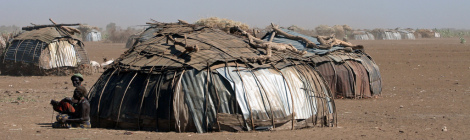
Violence between nomads and sedentary populations has become widespread across the globe and there is an urgent need to address the root causes of this escalation of violence. Conflicts between […]

The environment has often taken a backseat in discussions about conflict, but an increasing amount of evidence suggests that environmental and wildlife conservation could and should be very useful to […]

Introduction The international community is currently underperforming when it comes to integrating the environment into matters of peace and security. Climate change and contemporary armed conflicts are forcing a re-evaluation […]

In 2008, media outlets declared that a new Cold War was unfolding in the Arctic. This story was centred on a small, titanium Russian flag, fixed to the seabed below […]

Like its neighbours in the northern triangle (El Salvador, Honduras and Guatemala), Belize has a high murder rate that is closely connected to the strong presence of gangs. But the character of gang activity in Belize is quite different from its Central American neighbours. Belize has pioneered some innovative solutions to the problem it is facing. But it will need to overcome the challenges of internal resistance and an acute lack of resources in order to address the political, economic and social issues that marginalise Belize’s large youth population.

Facing a myriad of public security challenges that have provoked some of the highest indices of crime and violence in the world, authorities in Central America have followed a variety of different responses, ranging from repressive and reactive policies to grass roots prevention. Of these approaches, the Nicaraguan National Police’s Proactive Community Policing model stands out due to the results it has achieved. In the second of our two-part discussion, ‘Countering Militarisation of Public Security in Latin America’, Matt Budd explores the lessons that Latin American countries can extract from Nicaragua’s unique approach to public security.
