Blog

  • Sustainable Security

    A version of this article was originally published on openSecurity’s monthly Sustainable Security column on 18 November 2014. Every month, a rotating network of experts from Oxford Research Group’s Sustainable Security programme explore pertinent issues of global and regional insecurity.

    RC_long_logo_small_4webThis article is part of the Remote Control Warfare series, a collaboration with Remote Control, a project of the Network for Social Change hosted by Oxford Research Group.

    While the world’s attention has been focused on the US-led military interventions in Iraq and Syria a quieter build-up of military assets has been ongoing along the newer, western front of the War on Terror as the security crises in Libya and northeast Nigeria escalate and the conflict in northern Mali proves to be far from over. In the face of revolutionary change in Burkina Faso, the efforts of outsiders to enforce an authoritarian and exclusionary status quo across the Sahel-Sahara look increasingly fragile and misdirected.

    The New Frontier

    In early August, coinciding with the restructuring of French military operations in the Sahel and the US-Africa Leaders Summit, Oxford Research Group and the Remote Control Project published a comprehensive assessment of counter-terrorist operations targeting jihadist groups in the Sahel-Sahara region of north-west Africa. That report found extensive and growing evidence of combat, intelligence, surveillance and reconnaissance (ISR), training and equipment, abduction and rendition programmes on this new frontier. While France and the US were easily the most active foreign actors, the UK, Canada, the Netherlands and several other NATO states were also found to be increasingly involved in special forces and ISR operations.

    The launch coincided with the onset of air attacks on Islamic State targets, initially by the US in northern Iraq and latterly by a broad coalition of Western and Arab states in Iraq and Syria. In a context of worsening security crises in Libya, Nigeria and northern Mali and Niger since, US and UK ISR activity is increasing, French deployments in Mali have been reinforced, a new configuration of Arab states has provided impetus for foreign intervention in Libya’s civil war and a “black spring” backlash is emerging against the west’s authoritarian allies in the region.

    Libya on the frontline

    Libya is at the core of the security crisis in the Sahel-Sahara. Since the NATO-led military intervention which overthrew the Qaddafi regime in 2011, Libya has become a security and political vacuum and a major exporter of weapons and insecurity in the region. This has included the return home to the Sahel of hundreds of combatants formerly given refuge or employment by the Libyan state.

    Libya’s civil war reignited in May with the launch of “Operation Dignity” by secular forces from eastern Cyrenaica, seeking to wrest control of Benghazi and Tripoli, the two main cities, from Islamist militia. This has been largely a failure. Most diplomatic missions evacuated Libya in late July and Tripoli and its burnt-out international airport fell to militia from Misrata (Libya’s third city) and allied Islamist groups on 23 August. Benghazi has fallen increasingly into the hands of Salafist groups and the nearby city of Derna is run as an Islamic emirate by Ansar al-Shari’a. Much of the rest of Libya is dominated by local tribal leaders or armed factions, beyond any state control.
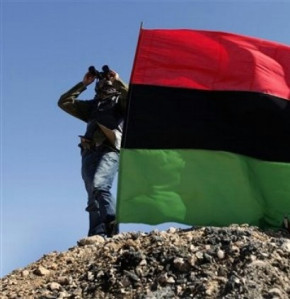
    Anti-Gaddafi rebel looks to the sky in the oil town of Ras Lanouf, eastern Libya, Sunday, March 6, 2011. Source: Cropped version of BRQ Network image (via Flickr)

    Anti-Gaddafi rebel looks to the sky in the oil town of Ras Lanouf, eastern Libya, March 6, 2011. Source: cropped version of BRQ Network image (via Flickr)

    Indeed, there are now two rival, elected Libyan governments. The one recognised internationally meets in a Tobruk hotel. It controls little beyond this Egyptian border outpost and its electoral mandate was recently invalidated by the Tripoli-based Supreme Court. The revived General National Council in Tripoli governs the capital and north-west and is dominated by an affiliate of the Muslim Brotherhood and other Islamist factions.

    Libya has thus become a new frontline in the proxy war between the international proponents and opponents of the brotherhood. Qatar and the United Arab Emirates (UAE) were the two main Arab sponsors of the anti-Qaddafi rebellion and contributed to the air attacks on Qaddafi’s forces. They now find themselves backing different sides in Libya. On 17 and 23 August, days after the Tobruk parliament called for foreign military intervention, Emirati aircraft based in and refuelled from Egypt launched unclaimed attacks on pro-Islamist militia around Tripoli airport.

    Despite official denials, it appears that air attacks on Salafist groups in Benghazi in mid-October were launched by Egyptian aircraft. Egypt and the UAE accuse Qatar, the primary sponsor of the brotherhood in Egypt, and Sudan, long ruled by a military affiliate of the brotherhood, of funnelling arms to the various Libyan Islamist militias.

    While the US has condemned all post-2011 foreign intervention in Libya, it is likely that it was aware of the movement of UAE aircraft to Egypt, given that fighters presumably left from Al-Dhafra air base in Abu Dhabi, which is shared by US and French squadrons. Emirati refuelling aircraft are based at Al-Minhad in Dubai, where the UK Royal Air Force (RAF) has an expeditionary wing. These aircraft presumably were cleared by Saudi Arabia (another great opponent of the brotherhood) to overfly its territory. The aircraft and weapons used were supplied by the US and/or France.

    France stands apart among Western allies in its advocacy of, and preparedness for, renewed military intervention in Libya. Since the fall of Tripoli, its defence minister, Jean-Yves Le Drian, has several times advocated a UN mandate for intervention against Islamist groups in Libya and hinted that France may need to act unilaterally sooner or later. Whereas Egypt is most concerned about Salafist groups in Derna and Benghazi, France is focused on al-Qaida affiliates in south-west Libya. Already this year it has opened bases near the Niger-Libya and Chad-Libya borders and revived ISR operations from its air base at Faya-Largeau in northern Chad.

    Northern Mali and Niger

    France cares about southern Libya primarily because of its security commitments to Mali, Burkina Faso, Chad and Niger, the latter hosting multi-billion-euro French investments in uranium production. Since France reorganised its forces in the Sahel from the Mali-focused Opération Serval to the pan-Sahel deployments of Opération Barkhane in mid-2014, security in northern Mali has worsened significantly. This relates partly to the decline in French troop numbers there but also to the reorganisation of regional jihadist groups and the deterioration in relations between the Malian state and local armed separatists. Twenty UN peacekeepers from the Multidimensional Integrated Stabilisation Mission in Mali (MINUSMA) have been killed in at least five jihadist attacks in the north of the country since September. In response, France has had to reinforce its deployments in Kidal district, pulling in troops and equipment from its base in Côte d’Ivoire.

    On 9 October, French forces under Barkhane mounted their first publicly acknowledged offensive action outside of Mali, attacking a convoy supposedly transporting militants and weapons from Libya through Niger towards the country. Militants apparently moving from north-eastern Mali attacked Nigerien security forces in Ouallam three weeks later, freeing dozens of Islamist prisoners and attacking a refugee camp. Citing increased activity, the huge Algerian military is also reported to have moved thousands of troops to its borders with Niger and Mali since last month.

    The US has also sought to extend its own ISR deployment in Niger, announcing in early September that it would be moving its two MQ-9 Reaper unmanned aerial vehicles from Niamey airport, where they have been deployed since early 2013, to Agadez, the main town in the desert north. As with French redeployments in 2014, the objective appears to be to bring more of southern Libya into range of ISR assets.

    Humanitarian opportunity
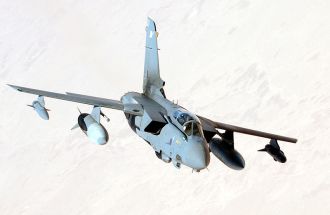
    RAF Panavia Tornado GR4 fighter over Iraq during a combat mission in support of Operation

    RAF Panavia Tornado GR4 fighter over Iraq during a combat mission in support of Operation “Iraqi Freedom”, on 16 August 2004. Source: SSgt. Lee O. Tucker – Official U.S. Air Force Photo no. DF-SD-07-05791 (via Wikipedia)

    Perhaps least analysed of recent military deployments to west Africa have been those associated ostensibly with humanitarian, rather than security, crises. In late August, following Boko Haram’s seizure of territory and declaration of its own caliphate in northern Nigeria, the RAF deployed a number (three is reported) of Tornado GR4 aircraft from the UK to the French air base in N’Djamena, Chad. This base is also used by US drones.

    Unusually, the Ministry of Defence issued almost no comment on this and refuses to disclose how many aircraft were involved, where they operated from or exactly when and why they were deployed. Officially, they were on an ISR mission in support of attempts to locate the more than 200 girls abducted by Boko Haram from a boarding school in Chibok in north-eastern Nigeria in April. All aircraft had officially returned to the UK by 15 October. While the Tornado GR4 is often deployed as a reconnaissance aircraft, it is dual use and its primary role—for example, in Iraq—is as a medium-range strike aircraft.

    Also very little reported was the US Marine Corps’ establishment during September of three new “co-operative security locations” in Senegal, Ghana and Gabon, along the west African coast. These are to be bases permanently prepared and supplied, but not necessarily manned, to support US interventions under the Obama administration’s “New Normal” doctrine, which facilitates defence or evacuation of US interests and citizens under (terrorist) attack in any country. While marines and their V-22 Osprey aircraft may continue to be based in Spain, Italy and Djibouti, these new west African bases are specifically launch pads for future US military interventions. US military contractors have been stockpiling aviation fuel at these and many other African airports for several years.

    Interestingly, the Senegal facility has been specifically referred to as an “interim staging base”—the usual terminology for a Special Purpose Marine Air-Ground Task Force base—in the context of the US military’s humanitarian mission to control the Ebola epidemic in Liberia. As with previous Obama-era deployments against the Lord’s Resistance Army in and around Uganda and in support of the Chibok abductees, the escalation of a US military presence appears to have been achieved under the cover of humanitarian imperatives and initiatives.

    Towards a Black Spring?

    All this matters because if there is one thing that we should have learned since 2001 it is that Western military interventions to oppose terrorism on foreign soil do not work: they tend to destroy the “host” country while amplifying the threat to the “far enemy”. And proxy wars between the Arab states so lavishly armed by the US, France, the UK and Russia tend to end in something worse than tears. Neither the “war on terror” nor the “Arab spring” (counter-)revolution has yet run its course.
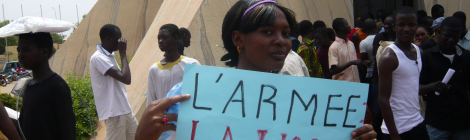
    “The Army: National Shame” caption held by protester in Mali against the 2012 coup. Source: Wikipedia

    The political crisis in Burkina Faso, in which the authoritarian president of 27 years, Blaise Compaoré, was overthrown in a popular uprising turned military coup on 31 October, provides ample warning of the toxic relationships Western states are forging in the Sahel-Sahara in the name of counter-terrorism. As in Mali in 2012, the coup leader in Burkina was an ambitious, US-trained officer. French and US special-operations forces will probably retain their semi-secret bases but their political masters have again been embarrassed by their own role as props to the hated old regime.

    Protesters in Burkina Faso—a remarkably civil, peaceful, articulate and internationalist society that belies the Sahel’s reputation for isolation—have talked up the precedent of their revolution for a “black spring” that would sweep away the Western-armed and educated tyrants whose misrule blights the south of the Sahara. They have chosen a very different path to the eschatological nihilism of Boko Haram but their hunger for change is similarly derived from generations of stultifying and systematic marginalisation under a corrupt, militarised and foreign-sponsored elite.

    Like Tunisia before it, Burkina Faso may be the clear-sighted vanguard that has the self-belief and self-discipline to manage a successful transition from autocracy. It is hard to hold such hope for the supposedly firmer pillars of western Sahel strategy, Chad and Mauritania, which have known almost nothing but rule by armed clans. Nor for Algeria—where the “printemps noir” epithet was coined during a forgotten 2001 Berber uprising—the last of whose mid-century revolutionary leaders yo-yos, paralysed and dying, between Algiers and French clinics.

    Sahara bores are wont to remind outsiders that the great desert is a crossroads, not a cul-de-sac, composed far more of enduring rock than shifting sands. The opposite can perhaps be said of the region’s militaries. Viewed within fragile states, military institutions may look rock-strong but they are built on sand and bound to fickle alliances. As in Burkina, it is society that is the bedrock with the power and permanence to anchor a sustainable strategy for peace and stability.

    Trying to contain a revolution in the Sahel-Sahara is not a long-term option but channelling it may be. Change is coming, one way or another.

    Richard Reeve is the Director of Oxford Research Group’s Sustainable Security programme. He has researched African peace and security issues since 2000, including work with ECOWAS, the AU and the Arab League.
  • Sustainable Security

    The Costs of Security Sector Reform: Questions of Affordability and Purpose

    In considering security sector reform, questions of affordability have often been subordinated to questions of effectiveness and expediency. A recent series of reviews of security expenditures by the World Bank and other actors in Liberia, Mali, Niger and Somalia has highlighted several emerging issues around the (re)construction of security institutions in fragile and conflict-affected states.

    Read Article →

  • Climate science: a peace studies lesson

    The doubters of global warming are emboldened by their new ability – as in the “climategate” affair – to put climate researchers on the defensive. But the experience of comparable assaults on the discipline of peace studies in the 1980s suggests that hostile scrutiny can have longer-term benefits for the target.

    The articles in this series try to throw light on recent or current developments in international security. Just occasionally an element of personal experience creeps in. This is one of those.

    The last weeks of 2009 were difficult for the public face of scientific research into global warming. The failure of the climate-change conference in Copenhagen, the identification of minor flaws in the International Panel on Climate Change (IPCC’s) published documentation, and the exposure of email exchanges centred on the Climatic Research Unit (CRU) at England’s University of East Anglia – all raised doubts about those charged with presenting scientific evidence about climate change and renewing efforts to address the phenomenon. In the case of the email affair – given an extra conspiratorial frisson by being called “climategate” – the careful selection of damaging details by an evidently well-resourced group made it possible to erect a narrative of deception that found an uncritical welcome among climate “sceptics” and “deniers”.

    Soon after the furore, Associated Press tasked a team to examine 1,073 emails from the CRU material in order to provide an independent view of what had happened. The result showed no evidence that climate change was faked (see “’ClimateGate’ Doesn’t Show Global Warming Was Faked, AP Reports”, Huffington Post, 12 December 2009); but amid a deluge of negative comment this attracted little attention, and the impression persists that the whole case for human-induced climate change has been severely hit.

    For many of the researchers involved, the period of late 2009-early 2010 has been traumatic; they may have had to contend with controversy over the years, but this is something outside their experience.

    The intensity of the coverage, and the zealotry of many sceptics in pressing their case, stem in part from changing global circumstances. There has long been deep opposition to any international move towards a low-carbon economy, from reasons both ideological (free-market true-believers) and commercial (the more retrograde transnational corporations, especially fossil-fuel companies). There was no great risk of such a move as long as George W Bush was in the White House; but the election of Barack Obama and the prospect of Copenhagen agreeing a successor to the Kyoto protocol made 2009 potentially a dangerous year. In this context, “climategate” has been a gift.

    The peace benefit

    The lesson of my own experience in the 1980s suggests that the longer-term impact might be rather different from what the architects of this affair intend. I got into working in the field of international security from teaching environmental science and resource-conflict at Huddersfield Polytechnic, west Yorkshire, in the early 1970s (and recently came across some of my thirty-five-year-old lecture notes dealing with rising atmospheric CO² levels!). I moved to Bradford’s department of peace studies at the end of the decade, just as the cold war was entering a particularly tense period; from around 1980 onwards, several of us there saw the need for independent research and writing on nuclear issues.

    An early outcome (with co-authors Malcolm Dando and Peter van den Dungen) was a book about the risks and consequences of nuclear war: As Lambs to the Slaughter: The Facts About Nuclear War (1981). It struck a chord; 25,000 copies were sold in a few weeks, and that year around 500,000 people purchased an accompanying leaflet published by the environment group Ecoropa.

    As Lambs... was part of a wider body of writings, much of it for an academic rather a general readership. This was the case with A Guide to Nuclear Weapons (1981) which ran to several editions and led eventually to a reference work: The Directory of Nuclear, Biological and Chemical Arms and Disarmament 1990. The core purpose of this writing was to be as accurate as possible; this meant (for example) always analysing Soviet as well as western systems and postures, and having a particular focus on the actual consequences of a nuclear war.

    What strikes me in retrospect – and when thinking about the problems that climate scientists now face – is how widely varied were the reactions to our work. Military officers, for example, were actually very interested in it and very ready to engage in intensive debates. I was first invited to lecture at the Royal Air Force staff college in 1982 and have continued frequently to lecture at defence colleges to the present day. Senior civil servants in Britain’s ministry of defence were also willing to discuss our work.

    The reaction on the political right – then very much in the ascendancy during Margaret Thatcher’s long premiership (1979-1990) – was very different; it was bitter and sustained opposition to what we were doing. In the Thatcherite view of the world, peace studies was “appeasement studies”, indulgent to official enemies and undermining of the nation’s moral fibre. Many articles and pamphlets were written about the Bradford department’s dangerous and subversive nature; one noble member of the House of Lords (the upper chamber of Britain’s parliament) even described us as a “rest home for urban guerrillas”. Some critics preferred a more personal touch: I was called “Dr Death”, and we regularly got abusive mail (which, on one or two occasions, went as far as death-threats).

    It was known that Margaret Thatcher wished “something to be done” about peace studies; but this was politically difficult, since universities still retained considerably more independence (a situation that subsequent governments have done much to redress) than now. But the University Grants Committee (UGC) came under pressure to investigate us and to its credit agreed to do so only if Bradford’s vice-chancellor allowed it; he too was prepared to say yes, but – also to his credit – only if the peace-studies staff gave their consent. We certainly would! What followed was the equivalent of today’s “subject review”. It was thorough and exacting, and the UGC made public its verdict – that the department was maintaining high standards.

    That outcome lifted the pressure off peace studies for the rest of the 1980s. With the end of the cold war by the end of the decade, much of the other work our staff and research students already did – on peacekeeping, environmental conflict, and mediation, among other issues – came to the fore; this created the foundation for an expansion of our work in the 1990s.

    The landscape after battle

    How does this relate to “climategate”? A key factor is that we were exposed to intensive criticism and persistent scrutiny of our work virtually from day one, and this in direct consequence made us hugely aware of the need for very high levels of accuracy and impeccable referencing of sources. Access to a wide range of military and defence journals, and a huge amount of information in the public domain, meant that this was actually not so difficult; but under so much external pressure we learned to be very cautious in our analysis at a time when exaggeration on the issues we addressed was common enough.Many of us now think that the experience made us better academics. If almost everything you write is going to be exposed to detailed examination by relentless and often politically-motivated critics, then you have to set unusually exacting standards for your work. The likely – and beneficial – implication is that climate researchers who have gone through their own test-by-fire will in future take even greater care over published assessments and analyses.

    In many ways we were luckier than today’s climate researchers: for there was an intense focus on our peace-studies work from the very beginning – whereas critics of climate science are able to retrieve work published a decade and more ago, when the issue was far less controversial, in order to pinpoint a minor laxity and use it to great effect to damn the whole enterprise.

    The overall effect of the setbacks to climate-science’s public face may amount to the loss of a year in the transition to a low-carbon future, but the good work being done in this area offers many grounds for optimism. The New Economic Foundation’s The Great Transition project, and Tim Jackson’s book Prosperity Without Growth: Economics for a Finite Planet (Earthscan 2009) are but two examples. Alongside the evidence that continues to emerge about the accelerating impact of climate change, the flow of impressive research and compelling argument based on even more rigorous standards will ensure that the refusenik stance will in future become harder to make.

    In the end, peace studies was made stronger by those who sought to expose it. In a similar way, the travails of climate researchers may well end up reinforcing the integrity of the science and the necessity of the low-carbon transition.

  • Sustainable Security

    Mali - Another Long War(This piece was originally published by Channel 4 News on Tuesday 22 January 2013, and is the second of two parts by Ben Zala and Anna Alissa Hitzemann)
    There is a stark warning today the western intervention strategy in Mali is “flawed”. Part two of a special paper also says France and others are likely to be involved in the conflict “for some time”

    Not unlike the United States in both Afghanistan and Iraq, the French government has begun the intervention with talk of short timelines and minimal troops on the ground before quickly changing its tune, write Anna Alissa Hitzemann and Ben Zala for the Oxford Research Group.

    The initial deployment of 800 French troops may end up numbering more than 2,500 and President François Hollande has stated France’s mission is to ensure that “when we end our intervention, Mali is safe, has legitimate  authorities, an electoral process and there are no more terrorists threatening its territory”. This does not seem to tally with the earlier statement by the French Foreign Minister that the current level of French involvement in the country would last for “a matter of weeks”.

    The latest reports are that the Islamist fighters have been preparing for this intervention by carving a network of caves and tunnels into cliff faces to house bases and supplies of fuel and ammunition. This, combined with the concerns about the roles of both the Malian security forces and a number of potential contributors to the ECOWA force in relation to the abuse of civilian populations (and the likely blowback effect of such actions), mean that stability in Mali will be almost impossible achieve with military force alone.

    It is also far from clear whether the African states that are set to join the intervention will be able commit forces for a drawn-out insurgency. After Chad, the second biggest promised contributor of troops is Nigeria, which has pledged a contingent of 900.

    Yet the Nigerian government itself is fighting its own Islamist-inspired insurgency with the Boko Haram group in the country’s north. Despite a relative decline in Boko Haram attacks in recent months and even the potential for Saudi-backed peace talks between the rebels and the government, fighting could easily intensify once more, in which case Nigeria is unlikely to remain involved in Mali in any significant way.

    Without taking serious action to address the sense of marginalisation and disenfranchisement of those who were willing to join one of the rebel groups… there are few reasons to think the current intervention will produce a durable peace in Mali.

    Not only have France and its allies underestimated the difficulty of fighting the northern rebels among civilian populations in which bombing from above is of little use, there appears to be no sign of a plan as to how the factors underlying the uprising (including the original Tuareg rebellion) can be addressed.

    Without taking serious action to address the sense of marginalisation and disenfranchisement of those who were willing to join one of the rebel groups — Tuareg, Islamist or otherwise — there are few reasons to think the current intervention will produce a durable peace in Mali.

    Ongoing conflict

    While military force is considered the only option, feelings of resentment amongst elements of the population of northern Mali are likely to increase. Not only this, it will provide ample encouragement to other anti-Western paramilitary groups across North and Sub-Saharan Africa, the Middle East, and Central, South and Southeast Asia.

    The central lesson of the western interventions and small-scale military operations (including Pakistan, Yemen, Somalia and elsewhere) of the post 9-11 era, has been that reacting to the symptoms of insecurity once they are deeply manifested, and few options other than military force remain, is a fundamentally flawed strategy for global security. This means that France and others are likely to now be involved in an ongoing conflict in Mali for some time.

    Not only do the (so far conspicuously absent) plans for a post-conflict stabilisation process need to be settled between France and its coalition partners now, a serious commitment to assisting the Malian government to going much further in addressing the marginalisation of the north will be crucial.

    Until the focus shifts from military control to working towards solving the root causes of the conflict, no viable sustainable security will be found for Mali.

    Anna Alissa Hitzemann is a  Peaceworker with Quaker Peace and Social Witness. She currently works with Oxford Research Group as a Project Officer for the Sustainable Security Programme, with a focus on our ‘Marginalisation of the Majority World’ project.

    Ben Zala is a Lecturer in International Politics at the University of Leicester.

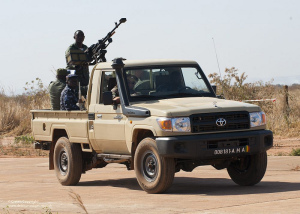
    Image source: Malian Airfield Protection Vehicle and Crew at Bamako, Mali. Source: UK Ministry of Defence.


  • Climate change

    To browse a list of all of the articles EXCLUSIVELY written for sustainablesecurity.org – follow this link

    Read more »

  • Conflict, Climate Change, and Water Security in Sub-Saharan Africa

    Climate Change and its variability is a phenomenon that cannot be pushed aside because of its potentail consequences and global scale. Its impacts have been suggested at different times by researchers to have favorable and unfavorable implications in different parts of the world.

    Sub-Saharan Africa is home to about 635.2 million people (cited in Oduaran & Nenty, 2008), and is always in the world’s news, being the hot zone of the African continent that has been noted for its volatility and instability. Some of its countries are in protracted conflict. Climate change has been implicated by many literatures to multiply these tensions.

    Natural resources are supposed to be the economic backbone of Sub-Saharan African countries. Some of these natural resources are also expected to be vulnerable to climate change. Experiments have suggested that conflict can be driven by natural resource degradation, scarcity and by competitive control of areas where resources are abundant (Myers 2004). Several researchers and authors have corroborated this position, with particular emphasis on water resources. Water is a natural resource of immense importance for every facet of life. Therefore, its potential distortion by climate change may interfere with human security, which has been proposed to be connected to water security.

    This conflict tendency of the imminent effects of climate change in the world was also supported by the statement made by United Nations Secretary General, Ban ki Moon in March 1, 2007, when he said:

    “The majority of the United Nations’ work still focuses on preventing and ending conflict, but the danger posed by war to all of humanity and to our planet is at least matched by the climate crisis and global warming… [the effects of climate change are] likely to become a major driver of war and conflict.”

    This statement shows why climate change should be given utmost research and policy consideration in every facets of our society.

    This paper identifies poverty as a threat in Sub-Saharan Africa countries that will be exacerbated by water scarcity, analyzes the conflict implications of the supposed effects of climate change on water security in Sub-Saharan Africa, and advocates for sustainable water management as an ameliorative and mitigation approach to water security in Sub-Saharan Africa.

    Poverty, Water Security and Climate Change in Sub-Sahara Africa

    Many countries and its people in Sub-Saharan Africa are regarded as poor. These poverty levels are in variations. Poverty is a threat that affects every facets of human society, including water security. Poverty and conflict are sometimes linked together by researchers, conflict having been seen as both a cause and a consequence of poverty (Brown and Crawford, 2009). At the same time, human dignity and development have at most times been hindered in Sub-Saharan Africa by continued conflict.

    The World Bank (2010) Poverty Data gives the statistical data of the Sub-Saharan Africa poverty headcount ratio in 2005 as $1.25 a day (PPP): 50.9%, and $2 a day (PPP): 72.9%. This data attetsts to the extraordiary level of poverty being witnessed in the region. The conflict atmosphere in some of the nations in the Sub-Sahara Africa has visible socio-economic implications on sustainable development and invariably exacerbates the impoverishment of the people.

    Laplante (2009) surmised that there is existing empirical evidence clearly demonstrating a positive correlation between poverty (or economic development) and the impacts of climate change. Several researchers have also interlinked poverty to climate change vulnerability and adaptation (Mckee and Suhriki, 2005 cited in Confalonieri, 2005, Watson et. al., 1997 cited in O’Brien and Leicheko 2002, AFP, 2007). This poverty and climate change nexus may have implications for water security, thereby instigating stress on the people.

    As I have argued in previous papers, “Water is practically an issue tied with the existence of life because of its importance in nearly every area of development including sustaining life on the planet earth” (Akiyode, 2010). Water security is important to environmental sustainability and paramount to the sustenance of societal peace. Therefore, the goal of human society and challenges of the world’s poor countries including Sub-Saharan Africa must be to achieve water security (Grey and Sadoff 2007).

    Read the rest of the article at peace and conflict monitor

    Image source: Abdurrahman Warsameh for the International Relations and Security Network

  • Sustainable Security

    Summary

    The dramatic recent escalation of rhetoric and military posturing on the Korean peninsula has reawakened suggestions that the United States could use relatively low-yield nuclear weapons in a limited or tactical operation to neutralise North Korea. Indeed, both the idea of nuclear ‘first strike’ and their ‘flexible’ usage on and off the ‘battlefield’ are deeply rooted in historic and current NATO and UK doctrine on nuclear weapons. Given the extraordinarily militarised nature of the inter-Korean border and, increasingly, that between NATO and Russia, the potentially cataclysmic nature of any nuclear exchange must be urgently recalled and avoided at all costs.

    Introduction

    One of the most common misunderstandings about nuclear weapons in general and Britain’s nuclear weapons in particular is that nuclear strategy is solely about deterring an opponent from attacking you by threatening that opponent with all-out destruction in response. Given the growing risk of a nuclear confrontation over North Korea it is appropriate to point out that this has never been the case. Ever since the start of the nuclear age nuclear weapons have been seen as useable weapons and appropriate in certain circumstances for fighting limited nuclear wars.

    As a member of NATO Britain retains the option of using nuclear weapons first and has the means to do so. This briefing is intended to serve as a reminder of this. It will do so by concentrating specifically on British policy, both within NATO and out-of-area, but this applies just as much to the other seven full nuclear powers and, no doubt, to North Korea as well. It applies very much to the United States in particular and its current president, Donal J Trump, who has made it clear that the United States will not allow North Korea to develop the ability to target the continental United States with nuclear weapons.

    Early history

    When Hiroshima and Nagasaki were destroyed in August 1945 these weapons were seen in air force circles as direct descendants of the mass bombing of cities with conventional weapons using a thousand bombers or more. The raids on Hamburg and Dresden and especially the firestorm raid on Tokyo each killed tens of thousands of people so the perception after Hiroshima and Nagasaki was that the primary difference between conventional and nuclear weapons was one of cities being destroyed by one atom bomb from a single plane rather than five thousand tons of high explosive bombs from many planes. Indeed the US Army Air Corps and the nuclear weapon industry had already set in motion the industrial structures to destroy two Japanese cities every month until surrender.

    By 1948 the United States had an arsenal of fifty atom bombs and was already starting to develop the far more powerful thermonuclear weapon or H-bomb. Britain came on the scene rather later. While it first tested a nuclear weapon in 1952, it was not until the late 1950s and early 1960s that it could start deploying its Valiant, Vulcan and Victor strategic bombers in large numbers. These, too, were seen in the context of the British involvement in the area bombing of German cities, but Britain was also an early adherent of the idea of fighting limited nuclear wars, an issue that was seen as particularly relevant in the Middle East and Eastern and South Eastern Asia.

    Thus there were nuclear-capable Canberra bombers and nuclear weapons deployed to RAF Akrotiri in Cyprus from 1961 to 1969 to support the Central Treaty Organisation (CENTO), the South West Asian equivalent of NATO. These were replaced by Vulcans until 1975. From the mid-1960s there were regular detachments of V-bombers to RAF Tengah in Singapore and the Royal Navy had nuclear-capable Scimitar and Buccaneer strike aircraft on aircraft carriers such as Eagle, Ark Royal, Centaur and Victorious over a 16-year period from 1962 to 1978.

    From the early days of the deployment of nuclear weapons  by states such as the Soviet Union, the United States and Britain there is ample evidence that both military and political leaders accepted the possibility of limited nuclear war. It was expressed in Britain, for example, by the then Minister of Defence, Harold Macmillan, speaking in the House of Commons in 1955:

    “…the power of interdiction upon invading columns by nuclear weapons gives a new aspect altogether to strategy, both in the Middle East and the Far East. It affords a breathing space, an interval, a short but perhaps vital opportunity for the assembly, during the battle for air supremacy, of larger conventional forces than can normally be stationed in those areas.” (Hansard, volume 568, column 2182, 2 March 1955).

    NATO and nuclear first use

    As one of the founder members of NATO, and the second to develop nuclear weapons, Britain was involved in NATO nuclear planning from the very early years of the mid-1950s. In those early years and until the late 1960s, NATO nuclear policy was codified in document MC14/2 known as the “tripwire” policy which planned a massive nuclear response to the initiation of war by the Soviet bloc.

    While the United States maintained massively greater nuclear forces, and a wide variety of weapon types, Britain also had a significant arsenal which eventually developed to include an array of strategic and tactical systems. These included the Polaris submarine-launched ballistic missiles, free-fall bombs of variable power and anti-submarine nuclear depth bombs as well as nuclear-capable 155mm and 203mm artillery and Lance short-range nuclear missiles, the last three utilising US nuclear warheads under a dual control system. Thus, for several decades, all three branches of the British Armed Forces focused their operational planning around use of forward-deployed tactical nuclear weapons.

    By the latter part of the 1960s the Soviet Union had developed its own array of tactical systems and NATO responded by modifying “tripwire” and developing “flexible response”. This was encoded in MC14/3 of 16 January 1968 and envisaged the limited use of mostly low-yield warheads early in a conflict against Warsaw Pact troops and their immediate logistic support in the belief that they might be “stopped in their tracks”. If that failed, a more general nuclear response might ensue.

    Britain was very much part of this move, its nuclear forces were normally committed to NATO and UK personnel played significant roles within the NATO Nuclear Planning Group. This move away from deterrence through massive assured destruction was rarely publicised by the British government, one exception being an exposition of the policy offered to the House of Commons Select Committee on Foreign Affairs two decades after the transition to flexible response:

    “The fundamental objective of maintaining the capability for selective sub-strategic use of theatre nuclear weapons is political – to demonstrate in advance that NATO has the capability and will to use nuclear weapons in a deliberate, politically-controlled way with the objective of inducing the aggressor to terminate the aggression and withdraw. The role of TNF [Theatre Nuclear Forces] is not to compensate for any imbalance in conventional forces. The achievement of conventional parity could have very positive consequences for the Alliance’s strategy of deterrence. But it would not, of itself, obviate the need for theatre nuclear forces.”    (Third Report of the House of Commons Select Committee on Foreign Affairs 1987-88, p.35, para. 6.)

    What was very little understood at the time in the public domain was that NATO’s flexible response approach was not just the preparedness to use nuclear weapons first in response to a conventional military attack from the Soviet bloc but to do so at an early stage in such a conflict. This was made clear by SACEUR (the Supreme Allied Commander, Europe), General Bernard Rogers, in an interview published in early 1986:

    “Before you lose the cohesiveness of the alliance – that is, before you are subject to (conventional Soviet military) penetration on a fairly broad scale – you will request, not you may, but you will request the use of nuclear weapons”. (International Defence Review, February 1986)

    NATO’s flexible response policy remains broadly in place to the present day and nuclear planning allows for many different targeting options. This also applies to the United States where such options are constantly updated to allow for changing political situations. In an interesting reflection on relative economic and political strength, Russia also sees nuclear weapons as intrinsically of greater relevance given the low capabilities of its conventional military forces compared with those of the Warsaw Pact at the height of the Cold War.

    Britain’s out-of-area operations and nuclear weapons

    Since the end of the Second World War the United Kingdom has been one of the most active countries to be involved in overseas wars. The majority of these were wars of the late colonial period, but many others have been more broadly based, from Korea through to former Yugoslavia as well as the more recent and intensive post-9/11 conflicts across the Middle East and North Africa. Throughout all this period the UK has maintained its wide-ranging tactical and strategic nuclear options, even though the size of the arsenals is smaller than thirty years ago.

    Two of the most controversial conflicts, the Falklands/Malvinas War of 1982 and the first Gulf War of 1991 have both had a nuclear connection. After Argentina occupied the Falkland Islands in early 1982 the UK government under Margaret Thatcher despatched a substantial naval task force and six days after it left Britain The Observer reported that

    “It is almost certainly carrying tactical nuclear naval weapons – atomic depth charges carried by Sea King helicopters and free-fall bombs carried by Harrier jump jets – as part of NATO equipment.” (11 April 1982)

    Later reports indicated that many of the weapons from the smaller warships were transferred en route to an auxiliary supply ship, the RFA Resource which proceeded to the South Atlantic with the rest of the fleet but was deployed away from the most intense areas of action during the subsequent war. It is not clear whether this also applied to the nuclear weapons that may have been deployed on the two aircraft carriers, HMS Invincible and Hermes and there were also multiple if unconfirmed reports that the Thatcher government was prepared to deploy a Polaris missile submarine to the mid-Atlantic to bring it within range of Argentina. (Paul Rogers, “Sub-Strategic Trident: A Slow Burning Fuse”, London Defence Papers 34, Brasseys, 1996)

    Nine years after that war the UK government committed substantial forces to a US-led multinational military coalition to evict the Iraqi forces that had invaded and occupied Kuwait in August 1990. At the time there was considerable concern that Iraq had a useable arsenal of chemical weapons and a clear indication of UK willingness to use nuclear weapons in response came in an interview with a senior army office attached to the 7th Armoured Brigade which was leaving for the Gulf. He confirmed that an Iraqi chemical attack on UK forces would be met with a tactical nuclear response. (Observer, 30 September 1990).

    Deliberate ambiguity

    During the 1990s, after the end of the Cold War, the UK government, under the leadership of the Conservative Prime Minister John Major, scaled down Britain’s nuclear arsenals in a series of unilateral moves, ceasing to deploy dual-control US nuclear artillery and missiles and withdrawing the WE.177 tactical nuclear bombs and depth bombs between 1992 and 1998. US-owned B61 tactical nuclear bombs continued to be deployed at RAF Lakenheath for another decade and still are based in Belgium, Germany, Italy, Netherlands and Turkey under enduring nuclear sharing arrangements with those host countries.

    In order to preserve a British “sub-strategic” capability, a low-yield variant of the standard high-yield Trident thermonuclear warhead has since been deployed, although terms such as “tactical Trident” or “Sub-Strategic Trident” are no longer used in government publications. Neither is there any specific reference in official publications to the UK maintaining a policy of potential first-use of nuclear weapons.

    Instead a generic description of the UK nuclear posture appears in successive defence white papers, the 2015 statement being an example:

    Only the Prime Minister can authorise the launch of nuclear weapons, which ensures

    that political control is maintained at all times. We would use our nuclear weapons only in extreme circumstances of self-defence, including the defence of our NATO Allies. While our resolve and capability to do so if necessary is beyond doubt, we will remain deliberately ambiguous about precisely when, how and at what scale we would contemplate their use, in order not to simplify the calculations of any potential aggressor. (National Security Strategy and Strategic Defence and Security Review 2015, para 4.68, page 34, November 2015)

    It should be borne in mind that, while British ambiguity on nuclear first use is echoed by its NATO allies in Washington and Paris, as well as its assumed adversary in Moscow, there is nothing intrinsic about such a posture. China has consistently maintained a policy of no first use and normally stores its warheads separately from its delivery systems to prevent any accidental or malicious usage. India and Pakistan are also formally committed to no first use.

    Conclusion

    This brief summary of elements of the UK nuclear posture is intended as a reminder that such a posture is far more complex than simply providing a last-ditch deterrence against nuclear attack. Moreover, this applies very much for the United States which has a far wider array of nuclear weapon types and has been at the forefront of NATO nuclear planning, including the first use posture.

    Should a conflict arise between the United States and North Korea it is by no means certain that Britain would be involved, given public attitudes within the UK, although a joint RAF/US Air Force/Korean Air Force exercise was held in South Korea late last year for the first time in several decades. Even so, at a time of heightened tensions over North Korea’s nuclear ambitions the concern should be that a crisis could escalate to the use of nuclear weapons, especially with an unpredictable incumbent in the White House.

    Given Britain’s propensity for considering the idea of out-of-area nuclear first use and limited nuclear war, one would hope that there is also a full understanding of the considerable dangers of such a posture. If so, what should follow is a determination to do everything possible to advise President Trump against even considering this option in the case of North Korea.


    Image credit: Neil Hinchley. 


    About the Author

    Paul Rogers is Global Security Consultant to Oxford Research Group and Professor of Peace Studies at the University of Bradford. His ‘Monthly Global Security Briefings’ are available from our website. His new book Irregular War: ISIS and the New Threats from the Margins will be published by I B Tauris in June 2016. These briefings are circulated free of charge for non-profit use, but please consider making a donation to ORG, if you are able to do so.


  • Sustainable Security

    In recent years, the Mexican government has been struggling to deal with a dramatic rise in crime and violence, with state responses largely failing to effectively resolve these problems. But there are some grounds for optimism.  

    Over the course of too many years of elevated crime and violence, the Mexican government has been visibly struggling to identify the best possible course to improve public security and a more effective administration of justice. This article examines the magnitude of Mexico’s still ongoing security crisis, as well as the measures that the Mexican government has employed to try to resolve it. Drawing from an ample body of academic and policy research, there are some clear indications of what has not worked, as well as some bright spots for Mexico moving forward.

    The State of Play in Mexico

    For the past decade, the Justice in Mexico program based at the University of San Diego has studied the proliferation of crime and violence in Mexico, the country that has seen the greatest increase in homicides among all Latin American countries. Notably, following a marked decline in violent crime from the mid-1990s to the mid-2000s, Mexico experienced a dramatic increase in homicides during the five year period from 2007 to 2011, when homicide rates rose threefold nationally, from 8.1 to 24 per 100,000 inhabitants, according to official homicide statistics. (Based on the author’s own elaboration from Mexico’s national statistical clearinghouse, the National Institute of Statistics, Geography, and Information; see here also). The net result during that period alone was a total of nearly 100,000 homicides, and the subsequent four years through 2015 added roughly 90,000 more. Many of these homicides—an estimated 30-40%—bear characteristics frequently associated with the country’s powerful drug cartels and other organized crime groups: use of high caliber weapons, mutilation and dismemberment, execution style killings, publicly displayed bodies, and chilling messages and threats authored by the perpetrators.

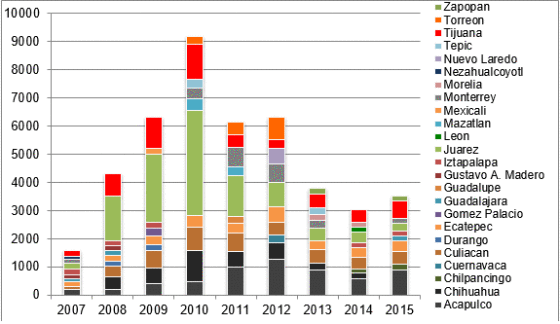
    While casual observers might assume that Mexico’s violence was widespread and pervasive throughout the country, the phenomenon was highly concentrated in certain regions and localities, primarily in the northern border region and in the country’s Pacific coastal states. In 2007, a Mexican city with more than 100 homicides could easily make it onto the country’s “top ten” list for total homicides; in fact, that same year, only Tijuana—the quintessential Mexican border city—reported more than 200 homicides (206 to be exact). Yet, just two years later, no city among the top ten most violent cities in Mexico had fewer than 200 homicides, and the top five had at least 400 homicides (as illustrated in Figure 1). Indeed, by 2010, arguably the peak of the violence, there were 18 Mexican cities with more than 200 homicides: now Mexico had many “Tijuanas.” Indeed, some of Mexico’s most violent cities—such as Acapulco, Ciudad Juárez, and Nuevo Laredo—saw rates more than triple the national homicide rate.

    Homicides Mexico data

    Figure 1: Number of Homicides in Mexico’s Top Ten Most Violent Municipalities by Year. Source INEGI.


    In a country unaccustomed to the civil wars and brutal dictatorships that plagued other parts of Latin America in the 20th century, such an explosion of violence was unexpected and previously unfathomable. The Mexican government’s apparent inability to resolve the problem triggered an international debate on the problems and limits of the Mexican state. A 2008 worst-case assessment by the U.S. Joint Forces Command named Mexico as one of two countries—along with Pakistan—that could suffer a sudden collapse into a “failed state.” Specifically, the report asserted, “In terms of worst-case scenarios for the Joint Force and indeed the world, two large and important states bear consideration for a rapid and sudden collapse: Pakistan and Mexico…”. Pronouncements by U.S. officials—including Secretary of State Hillary Clinton in 2010—asserted that Mexico’s woes were comparable to Colombia’s long-standing problems of domestic insurgency, or even on par with a civil war. Others sensationalized Mexico’s recent violence as a new hybrid threat of “criminal insurgency” or suggested that the power and infiltration of such groups had turned Mexico into a “narcostate” overrun by violence, corruption, and “narco- terrorism.”

    The merits of such assertions were quite debatable then and have proved false with time, as they tended to exaggerate and misconstrue Mexico’s current security situation. The methods and organizational forms of Mexican organized crime groups are arguably terrifying and sometimes truly mimic those of terrorists and insurgents. Yet, Mexico’s organized crime groups have shown no ambition to govern or supplant the state. They have no record or evident intention of disrupting the state’s capacity to deliver basic services. Moreover, the Mexican state maintains substantial democratic legitimacy, and has successfully deterred would-be insurgents in recent decades. Lastly, by the various measures used by the Fund for Peace to compile the Fragile States Index (formerly known as the Failed State Index), the health of the Mexican state ranks about average for Latin American countries, and its capacity is far greater than in war-torn countries like Afghanistan, Central African Republic, Iraq, Somalia, Syria, or Yemen.

    The Mexican State Response

    police mexico

    Image by Presidencia de la República Mexicana via Flickr.

    There is no doubt that Mexico’s recent security crisis presented—and continues to present—a major challenge for the Mexican state, and raises serious questions about its limits and failings. It is true that, like any other individuals who violate the law, the goal of organized crime groups is to minimize the state’s ability to detect, prevent, and/or punish their illicit activities. Yet, unlike other criminal actors, organized crime groups—and particularly drug trafficking organizations—in Mexico have demonstrated a remarkable capacity to secure protection from the state to support and sustain their criminal activities, with corrupt officials on their payrolls at all levels of government. Also, to varying degrees, such groups have at least temporarily attained a stronger presence and degree of control than the government in some limited geographic areas. Moreover, in some places, organized crime groups have capitalized on anti-government sentiments to achieve a degree of popularity or even legitimacy that seriously undermines state capacity. What, then are the sources of Mexico’s recent violence, and why have state responses failed to resolve the problem in a timely manner?

    The rise of Mexico’s most powerful organized crime groups—commonly referred to as drug trafficking organizations, or “cartels”—came amid a severe economic crisis in the 1980s. While other industries faltered, illicit drug production and trafficking enjoyed a major boom and substantial impunity, thanks in part to the complicity of government and law enforcement personnel. By the late 1990s, growing problems of crime and violence contributed to a crisis of “public insecurity,” characterized also by a feeling of widespread fear and frustration on the part of the general public due to the inability of the Mexican government to maintain order. Following a major political transition in 2000—the ouster of the PRI, Mexico’s long-time ruling party, from the presidency—the administration of Vicente Fox (2000-06) disrupted the leadership of two of the country’s four main organized crime groups.

    This tactic of arresting, extraditing, or otherwise eliminating the top leaders of major criminal organizations has been commonly referred to as the “kingpin” strategy. Fox’s successor, President Felipe Calderón (2006-12), deployed the kingpin strategy vigorously. Calderón and other proponents of the kingpin strategy argued that taking out the top leadership would help to disrupt their operations and convert a national security threat into a more localized public security problem. In some cases, at least, the government succeeded in reducing the functional capacity of some of the country’s major criminal organizations, but the unintended result was the creation of internal power vacuums and incentives for regionally based drug trafficking organizations to clash over turf and expand into rival territories. The subsequent conflicts within and among these groups were responsible for tens of thousands of organized crime-style killings that made up nearly the entire increase in homicides noted above, especially in major drug trafficking production and transit zones.

    In December 2012, a new president, Enrique Peña Nieto, took office and restored the PRI to power. His government continued to deploy the kingpin strategy, arresting high-ranking members of the Zeta and Sinaloa cartels. Remarkably, these arrests did not produce the same kind of violent aftershock that occurred under previous administrations, perhaps because of a new equilibrium among organized crime groups (there were few large cartels left standing) or perhaps more effective accommodation strategies (such as negotiations with the leaders next in line to take control of criminal operations). Whatever the reason, during 2013 and 2014, Peña Nieto’s first two full years in office, levels of homicide actually declined by around 8 and 12%, respectively (author’s own calculations from INEGI data. http://www.inegi.org.mx). However, statistics on homicide investigations for 2015 suggest that there was slight increase—about 10%—in the number of homicides nationwide, reversing the modest downward trend and provoking concerns that Mexico’s violence would ramp up again in the coming years. Final figures for 2015 likely to be released by Mexico’s national statistics agency sometime in late summer 2016, but as of mid-2016 there are troubling signs that violence is on the rise. (As this article went to press, INEGI statistics were unavailable for 2015, so the figures referenced here are Mexican law enforcement investigations into homicides tabulated by the Mexican National Public Security System – Sistema Nacional de Seguridad Pública, SNSP).

    Conclusion

    Looking toward the future, Mexico’s security situation will likely be affected by a number of important international and domestic factors. International factors could also significantly shape Mexico’s prospects. As a growing number of leaders and civic organizations push for the legally regulated production, distribution, and consumption of drugs (including the legalization of marijuana in two U.S. states in November 2012), this shift in discourse and policy could have major implications for Mexican organized crime groups. A loss of illicit revenues will likely reduce the capacity of these organizations to challenge the state, but it will also result in a painful restructuring of black market industries, pushing drug traffickers to increase exports of other drugs (like heroin) and further diversify into other violent criminal activities (e.g., kidnapping, extortion, robbery, etc.). This has already caused an abrupt increase in violence in some states, like Guerrero. In terms of drug policy, there are no quick and easy fixes to the problem of organized crime and violence in Mexico.

    However, there are some reasons for optimism in Mexico. Changing demographic trends (including a declining population of under-educated, underpaid, and underemployed young males) and an improvement of the country’s overall economic situation could facilitate a reduction of various societal ills, including both violent crime and large-scale external migration. At the same time, with the right mix of fiscal and political reforms, Mexico’s rising economic fortunes could also bolster the state’s capacity to respond more effectively to these problems, thanks to investments and reforms in the criminal justice system, as well as public education and social programs to strengthen the social fabric. Fortunately, in recent years, the Mexican government has begun to implement major economic, social and judicial sector reforms that could greatly strengthen both state and societal capacity to reduce the power of violent organized crime groups. The main question is whether these reforms will be rapid and adequate enough to substantially reduce the number of violent deaths in Mexico over the next decade.

    Dr. David A. Shirk is graduate director of the Master of Arts in International Relations program at the University of San Diego, director of Justice in Mexico, and a global fellow at the Woodrow Wilson International Center for Scholars. He is the co-author of Contemporary Mexican Politics, with Emily Edmonds-Poli.

  • Sustainable Security

    In this talk for the Food Systems Academy, Paul Rogers puts the challenges of transforming food systems in a global, human security context. He argues that food is at the centre of the third great transition humankind has to go through.

    Running order:

    Part 1. Why 1945?: 0 – 2 minutes 45 seconds

    Part 2. Proxy wars to the end of the cold war: 2 min 45 sec – 5 min 42 sec

    Part 3. The big issues: 5 min 42 sec – 20 min 45 sec

    Part 4.  The third great transition: 20 min 45 sec – 28 min 49 sec

    Part 5 – Looking ahead: 28 min 49 sec – end

    Paul Rogers is professor in the department of peace studies at Bradford University and Global Security Consultant at Oxford Research Group.  He is the author of numerous books including Why We’re Losing the War on Terror (Polity, 2007), and Losing Control: Global Security in the 21st Century (Pluto Press, 3rd edition, 2010). He is on twitter at: @ProfPRogers 

    The Food Systems Academy is an open educational resource aiming to transform our food systems. This video can also be viewed on their website.

    Featured Image: U.S. Army Huey helicopter spraying Agent Orange over Vietnamese agricultural land (Originally from U.S. Army Operations in Vietnam R.W. Trewyn, Ph.D. , (11) Huey Defoliation National Archives: 111-CC-59948, originally found in Box 1 Folder 9 of Admiral Elmo R. Zumwalt, Jr. Collection: Agent Orange Subject Files. – Item Number: VA042084; via Wikipedia)