Blog

  • Sustainable Security

    No Sustainable Peace and Security Without Women

    There will be no sustainable security if we do not equally value the needs, experiences and input of men and women. A new report published by the Institute of Development Studies (IDS), funded by ActionAid and Womankind Worldwide, examines the role women play in local community peacebuilding in Afghanistan, Liberia, Nepal, Pakistan and Sierra Leone. The report states “despite the increased international attention to women’s participation in peacebuilding, the achievements and challenges facing women building peace at the local level have been largely overlooked”.

    Read Article →

    The United States, Niger & Jamaica: Food (In)Security & Violence in a Globalised World

    due to a complex range of interconnected issues from climate change to misguided economic policies, political failure and social marginalisation, over 2 billion people across the world live in constant food insecurity. Anna Alissa hitzemann takes a sustainable security approach to look at the importance of “physical and economic access to basic food” by exploring the links between food insecurity and violence.

    Read Article →

    “Chronic Violence”: toward a new approach to 21st-century violence

    The Norwegian Peacebuilding Resource Centre (NOREF) recently published a Policy brief by Tani Marilena Adams, proposing and outlining the concept of “chronic violence” to “characterise the crisis of escalating social violence that currently affects about one-quarter of the world’s population”. The report approaches “chronic violence” from a sustainable security standpoint, arguing that violence itself should not be seen as the disease to be controlled, but rather as a symptom of many complex underlying issues that need to be addressed.

    Read Article →

    The New Insecurity in a Globalized World

    Writing exclusively for SustainableSsecurity.org, Elizabeth Wilke argues that a new conceptualization of insecurity and instability is needed in a world with greater and freer movement of goods, services and people – both legal and illicit – greater demands on weakening governments and the internationalization of local conflicts. The new insecurity is fundamentally derived from the responses of people and groups to greater uncertainty in an increasingly volatile world. Governments, and increasingly other actors need to recognize this in order to promote sustained stability in the long-term, locally and internationally.

    Read Article →

  • Competition over resources

    As the global population soars toward nine billion by 2045, this corner of Africa shows what’s at stake in the decades ahead. The Rift is rich in rainfall, deep lakes, volcanic soil, and biodiversity. It is also one of the most densely populated places on Earth. A desperate competition for land and resources—and between people and wildlife—has erupted here with unspeakable violence. How can the conflict be stopped? Will there be any room left for the wild?

    Image Source: DFID

    Read more »

  • Sustainable Security

    The fate of Colombia’s Legión del Afecto as a government-financed peacebuilding program is uncertain, but it looks to endure as an independent social movement. Its persistence is due both to its historical development and to its emphasis on affective relationships.

    Authors Note:  This material is based upon work supported by the United States National Science Foundation under Grant #1452541. Any opinions, findings, and conclusions or recommendations expressed in this material are those of the authors and do not necessarily reflect the views of the National Science Foundation.

    The Legión del Afecto – translated as the Legion of Affection – is a Colombian social network broadly mobilized around peace. It is arguably the most overlooked, yet broadest-based network, for peace in Colombia. Unlike other more-publicized movement networks like the Congreso de los Pueblos or the Marcha Patriotica, the Legión del Afecto was established as intentionally non-polarized with respect to the left/right politics that have long generated conflict in the country and across Latin America.

    Instead, the politics of the Legión del Afecto might best be described as a politics of sentir – a politics of feeling. “Ver, oir, sentir” (to see, to hear, to feel) is one of a few familiar phrases of the Legión del Afecto, which has been echoed in all corners of the country.

    The politics of “feeling”

    Image credit: Legión del Afecto.

    While recognizing and valuing social difference – especially across lines of race, ethnicity, and sexual orientation – the Legión del Afecto has emphasized the bodily capacity to sense and feel as a point of social and political convergence for the country’s youth in the face of seemingly insoluble conflicts at multiple scales; the fact that each individual feels differently (because of distinct biographies, identities, and physical experiences) should not matter as long as a politics could be build around respecting and valuing others’ bodily capacity for feeling.

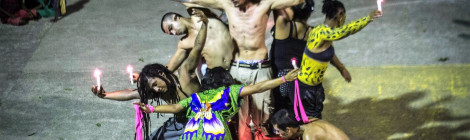
    In essence, this respect and valuing of the other is what “affection” has come to mean in the network. As a result, non-verbal means of communicating feelings have become highly valued in the Legión del Afecto. So-called ‘alternative languages’ of dance, music, theatre, clowning, acrobatics, fire-blowing and more, along with shared banquets, journeys, festivals and other shared sensorial events have been central to continued mobilization and motivation of legionarios (Legion participants), often youth between the ages of 15 and 25.

    In a country where many have been killed for simply appearing to favor one side or the other, the focus on feeling rather than on political side-taking has been crucial to the survival and thriving of both the network and the leaders within it. Because of this intentional and conspicuous lack of side-taking, the Legión del Afecto has been able to enter and intervene in location and communities across the country where others – e.g., police, military, government – were once unable to go. Of course, it would not be accurate to portray legionarios as lacking political views or direction; the opposite is true. However, as a network the Legión del Afecto has focused on creating space for dialogue and political learning rather than defining or persuading one single way of analyzing current national and global trends.

    These spaces of learning and dialogue have been particularly important as the network grew to include ex-combatants from all sides of the Colombian conflict. Intentionally setting down the conflicts associated with polarized national politics meant that the Legión del Afecto could mobilize ex-guerilla, ex-paramilitary, ex-soldiers, ex-gang members as well as many others affected by violence and by the pervasive lack of opportunity for marginalized youth.  These participants enriched the Legión del Afecto through sharing their differences in lived experience, rather than swallowing or forgetting their pasts.

    Origins and Evolution of the Legión

    The Legión del Afecto began in 2003 (under another name) as a collaboration between different ‘base’ (i.e. grassroots) groups in the city of Medellín, which had many prior years of experience in peaceful social transformation at the community level. In particular, two groups – Casa Mía, a group focused on urban youth, and La Colonia de San Luis, a group serving once-rural families who experienced violent displacement – united their expertise in the formation of the Legión del Afecto. Casa Mía was especially important as many of the Legión del Afecto’s founding antecedents – for example, the focus on afecto or affection – came from its founding leaders’ own collaborative legacy of radically innovative and daring peacebuilding in the Santander neighborhood of Medellín. The earlier peacebuilding of Casa Mia involved building trust and affection among young men pertaining to dueling gangs as well as standing up for justice and non-violence in the face of direct threats from paramilitary groups.  That such strategies were effective in the face of conflict is perhaps best evidenced by the fact that the Legión del Afecto, after first being funded by the UNDP (for methodological development), was scooped up as a government-sponsored program, housed under Acción Social (under president Uribe), and then the Departamento para la Prosperidad Social (DPS) (under Santos).

    As a government program, the Legión del Afecto grew a centralized administration, and new rules and regulations to follow, but it was never “just” a government program. As the Legión del Afecto spread from it’s origins in the city of Medellín to over 40 other cities, towns, and rural municipalities across the country, the network tapped into and drew from existing base community groups in each location. In each place, new leaders were nurtured alongside already-established community leaders who grew and gained new ideas. Existing effective ties were used to strengthen the network and bring in new participants. And in each place, the particularities and challenges of the location brought new strategies for peacebuilding that were focused on the traditions, as well as the problems, of each region: for example, a focus on traditional music (gaitas) in San Jacinto, or a focus on memory and ritual in many rural places where violent acts had occurred.

    The Legión Today

    It is often stated that there are currently “over 2000” young legionarios across the country, but the actual effect of the Legión del Afecto is much larger. behind any official count of participants, there are thousands of families and tens of thousands of friends and community members who have been affected by the peacebuilding efforts of the network. These friends, families, and community members are the ones who came to grand events – like the Carnival del Pan (2009, Cali), or Hip Hop Sin Fronteras (2010, Medellin), which mobilized massive numbers of participants. And these friends, families and community members are also the individuals who know and trust the participants in the Legión del Afecto through their small daily actions, and who therefore have been willing to work together with them in their efforts to build an ‘everyday’ peace in communities across the country.

    Today, this expanded and enduring capacity of the network is more important than ever; despite recent funding uncertainty for the Legión del Afecto as a government program, the Legión del Afecto persists as a grassroots network – a potentially powerful, motivated, and emotionally interconnected movement of young and old, who hold some very significant lessons for the development of a truly post-conflict society.

    Further Information on the Legión

    More information about the Legión del Afecto, its history, activities, and methodologies, is being made available through the grassroots website still-in-progress: www.legiondelafecto.org.

    The Legión del Afecto network is present in the following cities and regions in Colombia: La Macarena, Playa Rica (la Y), San Juan de Lozada, San Vicente del Cagüan, La Catalina, Montañita, Puerto y Florencia, Medellín, San Luis, San Fransísco y Sonsón, Samaná Florencia y Pensilvania, Soacha, Bogotá y Viota, Barrancabemerbeja, San Pablo y Puerto Wilches, Chiquinquirá y San Miguel de Sema,  Cartago, San José del Palmar, Bojayá, Quibdó, Buchadó, Pamplona, Cúcuta, Tibú, La Gabarra, Cali, Buenaventura, Armenia, La Tebaida, Manizales, Cartagena, Montes de María, Magangué y Plato, Puerto Tejada, y Villavicencio, Copey, San Juan del Cesar y Villanueva Guajira, Chibolo, Carepa, Turbo, Acandí, Ungía y Carmen del Darién y Mistrató, Tumaco, Líbano y Natagaima, Ovejas, Santa Rosa del Sur y Simití, Puerto López, El Retorno , San José del Guaviare y Mocoa.

    Allison Hayes-Conroy is an assistant professor of Geography and Urban Studies at Temple University. She has studied the Legion del Afecto as a peacebuilding initiative alongside the other two authors – both participants in the Legión – since 2011. Hayes-Conroy’s has published widely on role of the body in social movements and initiatives. Her work on peace-based social initiatives in Colombia and her work on bio-social pedagogical innovation have both been funded by the U.S. National Science Foundation.

     Cesar Buitrago Arias, is a community leader and law student. He has worked for 20 years to support the needs of displaced families like his own, who come to the city of Medellin, Colombia from rural areas due to violence.

     Alexis Saenz Montoya, is a Ph.D. Student in the Department of Geography and Urban Studies at Temple University. His research interests lie in the intersection of community-based organizations and popular education in Latin America.

  • Sustainable Security

    Too Quiet on the Western Front? The Sahel-Sahara between Arab Spring and Black Spring

    While the world’s attention has been focused on the US-led military interventions in Iraq and Syria a quieter build-up of military assets has been ongoing along the newer, western front of the War on Terror as the security crises in Libya and northeast Nigeria escalate and the conflict in northern Mali proves to be far from over. In the face of revolutionary change in Burkina Faso, the efforts of outsiders to enforce an authoritarian and exclusionary status quo across the Sahel-Sahara look increasingly fragile and misdirected.

    Read Article →

    VIDEO – Militarisation of the Sahel: An interview with Richard Reeve

    Sustainable Security programme Director Richard Reeve discusses our latest report ‘From New Frontier to New Normal: Counter-terrorism operations in the Sahel-Sahara’. The report, commissioned by the Remote Control project, finds that 2014 is a critical year for militarisation of the Sahel-Sahara and the entrenchment of foreign powers there.

    Read Article →

    Colombia and Mexico: The Wrong Lessons from the War on Drugs

    As activists around the world participate in a Global Day of Action against criminalisation of drug use, evidence from the multi-billion dollar War on Drugs in Colombia suggests that militarized suppression of production and supply has displaced millions of people as well as the problem, not least to Mexico. The wrong lessons are being exported to Central America and beyond, but a groundswell of expert and popular opinion internationally is calling for alternative approaches to regulating the use and trade in drugs.

    Read Article →

    The Costs of Security Sector Reform: Questions of Affordability and Purpose

    In considering security sector reform, questions of affordability have often been subordinated to questions of effectiveness and expediency. A recent series of reviews of security expenditures by the World Bank and other actors in Liberia, Mali, Niger and Somalia has highlighted several emerging issues around the (re)construction of security institutions in fragile and conflict-affected states.

    Read Article →

    Exporting (in)Security? Questioning Colombian Military Engagement in West Africa

    With skills and expertise in fighting insurgencies and drug trafficking networks, Colombia’s armed forces are increasingly being sought for engagement in similar security challenges in West Africa. But increasing Colombian engagement gives rise to a number of important questions – not least of which is the goal and expected outcomes of replicating militarised approaches to the war on drugs that have already failed in Latin America.

    Read Article →

  • Sustainable Security

    The Higaonon, an indigenous tribe in Northern Mindanao in the southern Philippines, have preserved an ancient system of conflict resolution which has enabled them to be a truly peaceful community. However, there is a need to ensure that this knowledge is not lost in the future.

    The Higaonon described as “people of living mountains” and “people of the wilderness” are one of the lumads (indigenous peoples) in the mountainous areas of Northern Mindanao in southern Philippines, who have resisted assimilation or acculturation, with their traditional systems, practices, beliefs remaining relatively intact (Tri-people Consortium for Peace, Progress and Development in Mindanao, 1998).

    They have continuously lived as an organized community on communally bounded and defined territory, and have, under claims of ownership since time immemorial, possessed customs, traditions and other distinctive cultural traits. They are one of the indigenous people (IPs) recognized as the true natives of the islands, who at one time occupied and controlled a substantial portion of Mindanao and Sulu archipelago (Tri-people Consortium for Peace, Progress and Development in Mindanao, 1998).

    Mercado (1998) has argued that unlike the early IPs who embraced Christianity, the lumads have retained their original primal religion because they refused to accept either Islam or Christianity at the early times of colonization. Though a Christian sect penetrated the  communities in Bukidnon in 2007 and baptized at least 50 members from a tribe in Kagahuman area, these members still practice their original religion while at the same time joining weekly worship with their Christian group.
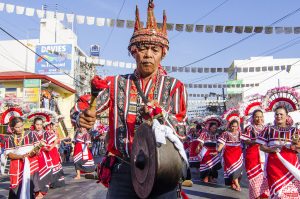
    Higaonon at Kaamulan Festiva 2016. Image credit: Costantin Agustin.

    One of the indigenous practices that the Higaonons have retained up to this day is their system of conflict resolution, locally called paghusay (meaning “to settle”). With its tribal council composed of a Supreme Datu (chieftain), 11 delegates, 3 baes (women delegates), and 25 alimaong (tribal police), they resolve all kinds of conflicts as long as they take place within their jurisdiction. Cases that reach the tribal authorities for possible resolution include thievery, fighting, murder, misunderstandings, adultery, land conflicts, contempt against rituals and conflicts involving rebels.

    The ability of the Higaonon to effectively solve internal conflicts has led to them being described as a genuinely peace loving community and the “weavers of peace“.

    Cases of Higaonon Tribal Conflicts: Adultery and Land Disputes
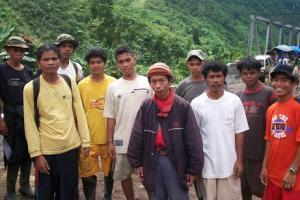
    The Alimaongs of the tribe (tribal soldiers). Image credit: Primitivo III Ragandang.

    Adultery and land disputes are the most prevalent form of conflict in the tribe and are often the root causes of other conflicts. For instance, misunderstanding, fighting, and even murder are sometimes due to adultery and disputes concerning the land.

    Concerning adultery, the tribal chieftain has said that the practice is considered a serious crime in the tribe because the Higaonons believe that it actually brings bad luck. During a wedding, the datu (the one performing religious duty as the Babaylan of the tribe), inculcates in the couple’s minds the sanctity of marriage, which would become impure when a wife or a husband practices adultery (personal communication, May 24, 2008).

    Though pagduway (or having two wives) is allowed in the tribe, the consent of the original wife is required; otherwise, the husband could not engage in duway (have two wives). A man intending to have two wives must see to it that he can afford to provide the basic needs of his wives and their children. However, the respondents revealed that there was no such case when a wife allowed her husband to have two wives; there were reported cases of adultery instead. These cases of adultery led to lido or war between families. This was due to the fact that the Higaonons are by nature protective of their family.

    Thus, in cases like this, the wrongdoers disrespect their own families and the family of the betrayed partner. The Higaonons believe that in due time, the spirits of their ancestors would punish them, thus “magabaan” (cursed). As an old Filipino remarked, “kay ang gaba muduol dili magsaba” [bad karma comes without warning]. Gaba is quite similar to the doctrine of karma in Hinduism and in Buddhism. It is also similar to the biblical doctrine of reaping what one sows and is considered a form of immanent justice (Mercado, 1993).

    As to conflicts involving lands, the Higaonons consider the soil not just their material property. It is actually regarded as their life and part of their legacy from their ancestors. They inhibited over 150 hectares of lands in Bukidnon Province with the boundaries marked by either a tree alone or by just a butig (big stone). Even if the original occupant of the land is not occupying or tilling the territory, the land can no longer be owned by anybody else.

    Today, the Higaonons do not have land titles. Fortunately, the chieftain commented that the Impahanong Amosig Higaonon Tribal Community Organization (IAHTCO) through the National Commission on Indigenous Peoples-10 (NCIP-10) is actually working towards the grant of Certificate of Ancestral Domain Title (CADT) for the Higaonons. Chapter 2, Section 3 (c) of the IPRA Law of 1997 referred CADT to a title formally recognizing the rights, possession and ownership of IPs over their ancestral domain.  The lack of clear boundary usually led to conflicts between the Higaonons in the tribe who own adjacent land. It is really a source of conflict when somebody extends his boundary.

    The Higaonon’s System of Conflict Resolution
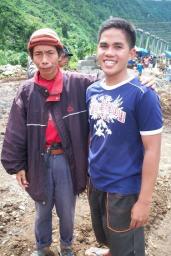
    A tribal chieftan. Image credit: Primitivo III Ragandang.

    The Higaonon tribal council inherited the procedures of resolving conflicts from their ancestors who bestowed it through stories alone. Through stories, the procedures were transferred from generation to generation. Even up to the present, they do not have any written documents about their system of resolving conflicts, yet they are assured that their tradition and culture will continue. According to one member of the tribal council, “even my four-year-old son knows what are to continue in the tribe. We told them stories of our tradition before bedtime and in the morning too. They also witness the rituals in the tribe.”

    The process of conflict resolution starts with the submission of the case to a member of the tribal council who is delegated in a particular area. A complaint may be lodged in the house of the datu or wherever the complainant meets him. Moreover, lodging a complaint can be done anytime of the week. Wherever disputes arise, especially concerning a single or a particular group of individuals only, the council waits until someone refers the case to them for possible resolution. However, in cases where the general population is involved, the council acts right away. It is a traditional practice which actually best describes the principle of motu proprio (by one’s own motion or initiative).

    Cases like rebels threatening the people and destroying their properties, or a drunkard inflicting hazard on the community requires no prior submission to the tribal council. Once a complainant has referred a case, it is considered filed. As a general requirement, a ritual must be performed at all times prior to the hearing of the case being filed. A conflict resolution session is considered legitimate only when there is a ritual. In the ritual, one or two live chickens are offered to appeal the Halangdong Magbabaya (God) and the spirits of their ancestors to arrive a good resolution of the dispute.  Therefore, the absence of a ritual in conflict resolution processes invalidates all the agreements or decisions made in that session.

    The referral of the case in the Higaonon tribe of Kagahuman is hierarchical in nature. Thus, no case is brought to the Supreme Datu prior to its hearing in the lower body. All cases must be brought first to a member of the tribal council who is delegated in a particular area. If the case is not resolved, that is, the complainant is not satisfied with the decision and therefore appeals to the higher body, the case is then forwarded to the Vice Supreme Datu.

    At this level, this higher body explores all possible alternatives in order to resolve the dispute. If the decision has been rendered and both parties are satisfied, the case is closed; otherwise, the case is brought to the highest judicial body of the tribe, the Supreme Datu. The latter will then schedule the time and place of the hearing. Once the Supreme Datu has rendered his decision, it is considered final. In case a party fails to come to the hearing scheduled, a summons is served through the assistance of the alimaong (tribal police).

    Locally known as sala, the Higaonon justice system of punishment generally varies depending on the nature, motive and incidence of the crime. Through the years, the form and nature of sala in the tribe have undergone a number of amendments already. Among others, the abolition of death penalty was agreed upon by the tribal chieftains of the eight (8) talugans (villages) during a tagulambong datu (chieftains summit) in 1969 through the initiative of Datu Indangag of Impahanong. Also, the respondents recalled that pigs were never used as payment before, until the time when the people learned to raise pigs. Penalties include payments in the form of animals, tibod, money, non- inheritance of ancestral domain and banishment from the tribe. Tibod is a special kind of jar made from clay and is believed to be plated with gold in the internal portion (Sagayna, 2007).
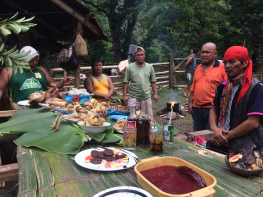
    A chieftain performing a prayer. Image credit: Primitivo III Ragandang.

    It can be inferred that the penalties imposed in the Higaonon tribe of Kiabo is restorative in nature since “the application of punitive sanctions such as death penalty would,” according to the Chieftain “make the situation worse.” This traditional system is recognized as providing a win-win situation to all parties involved. It is a condition which would best describe the theoretical point of Stewart (1990) that in the early stage of struggle, one possible outcome is the accommodated agreement between parties which may lead to both parties being satisfied. Moreover, the abolition of the death penalty in 1969 is an indication that the Higaonons cherish the value of a person’s life.

    After the ritual is performed, the hearing procedure begins. It can be inferred further that the tribal council plays a very crucial role in maintaining the peace and order of the tribe. Also, the hierarchical nature of conflict resolution can also lead to a more egalitarian practice since a case can be forwarded whenever a party is not satisfied with the decision of only one judicial entity. Also, the credence for a Divine Intervention is seen to be an important preliminary habit in a resolution process – both in the Higaonon tribal council and in the barangay as manifested in the opening ritual and prayer, respectively.

    The ritual and the whole paghusay system is so effective because the Higaonons have high regard for the spirits and it is part of their belief system. Also, in day-to-day activities – planting, harvesting, child delivery, making a house, and paghusay – they must start with a ritual for the spirits in order for the spirits to help them and bring them success in their endeavors.

    The Future of the  Higaonon’s system

    There are some serious issues with the conflict resolution system which need to be addressed. Firstly, it is desirable for a functional tribal hall within the Higaonon tribe of Kagahuman to be built. Establishing a tribal hall for conflict resolution is very necessary for two reasons: first, there is a fixed place for settling disputes; second, it actually develops the sense of justice, peace, and belongingness among the Higaonons in the tribe.

    Another important issue that needs to be addressed is gender. The female representation in the tribal council, though accounting for only 20% of the populace, is a good sign of gender-awareness and development in the tribe. However, the role of women in the resolution process is actually very limited. They must therefore have a higher role so their voices can be heard.

    Moreover, based on the observation that the tribe does not document every case being resolved, it is highly recommended that the tribal council should have a record in every paghusay. These records will contain the date, time, venue, present persons during the hearing, and also agreements or decisions made. More importantly, a secretary must be appointed to perform the recording tasks. Also, a written document on the resolution processes and penalties imposed is necessary to have clear and detailed presentation of their traditional methods of settling disputes. Penalties must be presented in a very detailed manner, especially on murder cases wherein self-defense does not warrant any penalty.

    Perhaps the most immediate concern, though, is the need to ensure that this knowledge of conflict resolution is not lost and becomes sustainable. Due to forces of modernization in the Philippines, it is very likely that not codifying this indigenous system of conflict resolution among the Higaonons will lead to extinction of this useful system. This is not impossible as the pattern of migration (especially among the younger Higaonons) is increasing, where the young leave the tribe and head towards the cities for the quest of greener pastures and opportunities. Unfortunately, maintaining the minutes of paghusay proceedings is a challenge for the tribe for two reasons.

    Firstly, the Higaonons are not used to writing. There are literate tribal members, but they are no longer staying in the tribe — they either work in the city or are busy with their own business. Secondly, they are not equipped with the basics of writing minutes of case hearings. It is in this light that the intervention of the local government and other civil society organizations is crucial in empowering the Higaonons, especially the young who are left in the tribe.

    It is important that they are taught the basics of making paghusay proceedings, codifying them for future purposes, and being able to share it with other communities who might find their system as effective for replication. Young Higaonons must preserve and continue to practice their lumad tradition and culture. To make this happen, they must put into practice the teachings and activities that are conferred to them by the older tribal members.

    The Higaonons of Bukidnon province in the Philippines are teaching us the lessons that upholding community security, respecting all members of a community and adhering to the traditions of cultural heritage are crucial to building a peace in the community.

    Some References and Suggested Additional Readings

     Abu- Nimer, M. (1999). Dialogue, conflict resolution, and change: Arab- Jewish encounter in Israel. Albany: State University of New York Press.

    Barcenas, T. B. (1985). Maranao traditional system: structure and roles. Mindanao Journal, XI: 1- 4, 113- 158.

    Indigenous Peoples Rights Act, Philippine Republic Act 8371 § Section 15.

    Mercado, L. N. (1993). Elements of Filipino philosophy. Tacloban City: Divine Word University Publications.

    Pailig Development Foundation, Inc. (2007). Rido: A traditional conflict in modern times. Iligan City: PDIF.

    Rodil, B. R. (1994). The minoritization of indigenous communities of Mindanao and the Sulu archipelago. Davao City: AFRIM.

    Starr, H. (1992). Why don’t democracies fight one another: Evaluating the theory-findings feedback loop. Jerusalem Journal of International Relations, 14 (1), 41-59.

    Stewart, J. (ed.). (1990). Bridges not walls. (5th ed.). New York City:   McGraw- Hill, Inc.

    Tri-People Consortium for Peace, Progress and Development of Mindanao (1998). Defending the land: Lumad and Moro peoples’ struggle for ancestral domain in Mindanao. Manila: TRICOM 

    Valmores, C. (2008). The Higaunon people of Northern Mindanao. Retrieved from: http://www.philippines.hvu.nl/higaunon1.htm

    Primitivo Cabanes Ragandang III is Philippine Director of Move This World, Inc and a PhD candidate in Sustainable Development Studies at Mindanao State University-Iligan Institute of Technology.

     

  • A top-down approach to sustainable security: The Arms Trade Treaty

    2012 was hailed as a potential landmark year in the push for greater regulation of the global trade in conventional arms. After more than a decade of advocacy to this end, negotiations took place throughout July towards the world’s first Arms Trade Treaty (ATT), which is intended to establish the highest possible common international standards for the transfer of conventional weapons.  However, although significant progress was made during the month of intense negotiations, the ATT is not yet open for signature. The future of possible work towards a treaty now lies with the First Committee of the UN General Assembly, as discussions continue about the possibility of a second round of negotiations. As the Committee’s session nears an end, this article explores what role a potential treaty – if reopened for further negotiation – could play in a move towards sustainable security.

    The scale of the arms trade is significant; it’s impact, devastating in many parts of the world. From 2006-10, the top five arms exporting countries – the United States, Russia, Germany, the United Kingdom and France – delivered nearly 92 million major conventional weapons* . The recipients of arms transfers include countries such as Sudan, Yemen, Egypt and Libya, where the use of government stockpiles against civilians over the past two years has been particularly abhorrent. However, even as the volume of international transfers continues to increase – by 24 per cent from 2002-2006 to 2007-2011 – there is still no overarching global regulation of the trade. Instead, there exists only a patchwork of national laws and regional agreements that fail to impose any consistent international standard of trade.

    This lack of comprehensive global standards to regulate transfers of conventional arms – which range from battle tanks, combat aircraft and missile launchers to small arms and light weapons – has allowed a flow of weapons to actors who use them in contravention of international humanitarian and human rights law, including terrorist groups and human rights abusers. This in turn prolongs conflict, undermining stabilisation and development efforts. Indeed, as 30 high-profile Oxfam and Amnesty International supporters stated in a letter to UN Secretary General Ban Ki-Moon in at the start of the July’s negotiation conference:

    “Every year an average of two bullets for every person on this planet is produced. With so few global rules governing the arms trade, no one really knows where all those bullets will end up – or whose lives they will tear apart. Under the current system, there are less global controls on the sales of ammunition and guns than on bananas and bottled water. It’s a ridiculous situation. The deadly and poorly regulated trade in arms leads to serious human rights abuses, armed violence, conflict, poverty and organized crime around the world. The lack of clear binding principles governing decisions on international arms transfers combined with patchy, diverse and poorly implemented national regulations are inadequate to deal with the increasingly globalised nature of the arms trade. As a result, irresponsible users are allowed to violate international humanitarian and human rights law.”

    If negotiated, the ATT would establish much needed internationally agreed norms of responsible state behaviour with regards to arms transfers; with criteria that aims to prevent the transfer of weapons to the aforementioned irresponsible actors.

    What would this mean in practice? An ATT would act to ensure that arms-exporting states have an obligation to conduct comprehensive risk assessments in line with international humanitarian and human rights law before approving international transfers of arms. In so doing, an ATT would provide a crucial delineation of the circumstances under which transfers should not be allowed.

    This has important implications. For example, following a government review of arms exports to the Middle East and North Africa in 2011, the United Kingdom revoked 158 licenses because the exports were found to violate two main criteria for the UK’s Consolidated Criteria for arms exports: respect of human rights and fundamental freedoms, and risk that the exported weapons might be used for internal repression. The impact of certain earlier UK export decisions had become clear in Bahrain in February 2011, when a British-supplied arsenal of crowd control weapons – including stun guns, shotguns, crowd control ammunition and canisters of teargas – was reportedly used by security forces in a brutal crackdown against popular protests**. Although some licenses were revoked, the UK has a further 600 extant licenses to countries such as Syria, Bahrain and Yemen, where rights abuses are notoriously continuing. The aim of the ATT is to ensure that exporting countries consider the dangers to civilians and human rights while deciding whether or not to transfer arms and to prevent transfers where abuse is likely. An ATT is therefore hoped to help stem the flow of arms to actors – state and non-state – who use violent action to undermine rule of law and the international humanitarian laws that seek to protect civilians and sustain security.

    The consequences of irresponsible arms transfers reverberate further than governmental misuse. For example, the 2008 Final Report of the UN Panel of Experts on Sudan stated that arms originating from the stockpiles of Sudan, Chad and Libya had been used in attacks by the Justice and Equality Movement (JEM) forces in Sudan, a militia group included in the UN Security Council arms embargo on Sudan (Darfur region) from 2005 onwards. In the case of JEM attacks on the city of Omdurman in 2008, chain-of ownership tracing by the Panel identified numerous weapons manufactured in Spain, Belgium and Bulgaria, which had originally been legitimately shipped to Libya . Although many of the weapons were formerly exported to Libya in the early 1980s, the report stood as a clear sign of the danger of legitimately transferred arms leaking into the illicit market from irresponsible end-users. By assessing the responsibility of end-users before transferring arms, the ATT might go some way towards encouraging states to stem the flow of weapons to illicit markets from the back-doors of irresponsible end-users. In turn, it is hoped that it will work against the militarisation of societies that threatens the stability of the majority of civilians. 

    Treaty negotiations keenly acknowledged the disproportionate impact of small arms and light weapons (SALW) on civilian populations during and after violent conflict and accordingly, SALW are covered in the scope of the treaty. As noted by the UN office for Disarmament Affairs (UNODA) ‘small arms are cheap, light, and easy to handle, transport and conceal. A build-up of small arms alone may not create the conflicts in which they are used, but their excessive accumulation and wide availability aggravates the tension. The violence becomes more lethal and lasts longer, and a sense of insecurity grows, which in turn lead to a greater demand for weapons…They are the weapons of choice in civil wars and for terrorism, organized crime and gang warfare.’  Including these weapons type in the treaty’s scope – and therefore extending beyond the UN Register of Conventional Arms – will increase the number of disarmament tools available to tackle the prolific spread of these weapons and their devastating impact and threat to sustained security during and following armed conflict.

    Each of these aims seeks to counter a pattern of increasing spread of arms and trend towards militarisation which, far from protecting societies, drives insecurity around the world. This is true for states – with the aforementioned trend towards increased spending for conventional arms and annual increases in world military expenditure from 1998-2010 – but also for civilian society. Around the world, millions of people face the direct and indirect consequences of increased militarisation on a daily basis, whether living under the constant threat of weapons held by local gangs or criminals, or direct trauma, injury or fatality as a result of use of weapons in conflict or terrorist action. In the face of these situations, both where the state abuses civil rights or where the state is unable to protect communities from armed non-state groups, communities often choose to seek further weapons as a means of protection, and so cycles of increased militarisation and violence continue to threaten the stability of societies. By stemming a downwards flow of weapons, and making assessments about the likelihood of irresponsible or abusive use of transferred arms, a treaty of this nature may serve to prevent violent conflict and/or help to make conflict less deadly.

    The current draft text does much towards these goals, by including provisions related to record keeping, international assistance and implementation, as well as creating a Secretariat to help signatory states implement the treaty, especially those who may lack the bureaucratic capacity to do so right away. More importantly, it clearly outlines the obligations that signatories would have to conduct comprehensive risks assessments in line with IHL and IHRL before approving transfers and effectively underlines the circumstances in which transfers should not be made.

    However, there are still a number of issues with the draft treaty, which at present leaves loopholes in regulation that would allow for on-going abuses as a result of arms transfers if it is used as a base for further negotiations. As outlined efficiently in Control Arms’ recent briefing ‘Finishing the Job: delivering a bullet-proof ATT’ , at present the draft treaty text falls short in a number of ways. Necessary improvements to the draft include: addressing the exclusion of ammunition from the scope of the treaty; the lack of a provision that requires state reports on transfers to be publically available; lack of provisions for states to consider risks that transferred arms may be diverted or used for corruption, against development or in gender-based violence; and current ambiguity about controls when dealing with states not party to the treaty. It will also be vital for key exporting nations such as the United States to be on board with the treaty for it to be effective. If negotiations are re-opened, negotiators must once again carefully navigate the need to sharpen the treaty scope and criteria with a need to have the participation from a majority of states.

    There is clearly quite some way to go before the treaty could come into force and be implemented effectively. The ATT clearly cannot act as a panacea for conflict-affected countries, nor will it hinder inter-state arms trade or domestic controls. However, if successfully negotiated and implemented, it could be an effective filter to curb the worst of irresponsible and illicit arms trading. The ATT may currently seem abstracted from the real impact of the arms trade, but in the end, as stated by the Control Arms Campaign, ‘the ATT will be judged according to its success in preventing transfers that risk contributing to or facilitating human suffering’. As UK Ambassador Jo Adamson said at the opening of the First Committee session, with the ATT ‘we have a real live example of where we can make a real difference in the real world to real people.’


    *(data on conventional weapons exports and military expenditure derived from SIPRI Yearbook 2012: http://www.sipri.org/yearbook/2012/06)
    **All information in this paragraph can be found in the UK Parliament Committees on Arms Export Controls report ‘Scrutiny of Arms Exports (2012)’  http://www.publications.parliament.uk/pa/cm201213/cmselect/cmquad/419/41902.htm 

     Image source: Oxfam


  • Competition over resources

    Over the next few decades, the increasing demand for resources and the pressures of climate change are going to force some rapid and potentially difficult decisions on the role of energy in the global economy. A useful exercise has been undertaken by the Institute for the Future in terms of exploring a number of scenarious that could come to characterise our political, social and economic systems depending on the energy choices we make today.

    Image source: Ulleskelf. 

    Read more »

  • Editors and Associate Editors

    Editor

     
    Ben Zala

    Ben Zala is the Manager of the Sustainable Security Programme at the Oxford Research Group. He is also a PhD candidate in International Relations and Graduate Teaching Assistant at the University of Birmingham and holds a Bachelor of International Relations with first class honours from La Trobe University, Melbourne. He has previously worked at Chatham House (Royal Institute of International Affairs) in the Energy, Environment and Development Programme and the La Trobe University Centre for Dialogue where he was also the editorial assistant for the scholarly journal Global Change, Peace and Security.  He has also previously worked for the Medical Association for Prevention of War (Australia). He has worked on security issues for a number of years and has published and spoken at conferences on issues of nuclear proliferation, arms control and disarmament and multilateral institutions.


    Associate Editors


    Chris Abbott

    Chris AbbottChris Abbott is a freelance writer and researcher and Executive Director of Open Briefing. He is an honorary Sustainable Security Consultant at Oxford Research Group, where he was the organisation’s Deputy Director and Director of their sustainable security programme until June 2009 (a programme he initiated in 2006 and remains on the advisory board for). During his time at ORG he founded SustainableSecurity.org and was the author or co-author of numerous sustainable security publications, including An Uncertain Future: Law Enforcement, National Security and Climate Change (ORG, 2008), Beyond Terror: The Truth About the Real Threats to Our World (Rider, 2007) and Global Responses to Global Threats: Sustainable Security for the 21st Century (ORG, 2006). Since leaving ORG he has been appointed as an Honorary Visiting Research Fellow in the Department of Peace Studies at the University of Bradford and written a second book, 21 Speeches That Shaped Our World: The People and Ideas That Changed the Way We Think (Rider, 2010).

    Paul Rogers

    Paul RogersPaul Rogers is Professor of Peace Studies at the University of Bradford and Global Security Consultant to Oxford Research Group. Much of the sustainable security analysis is based on three decades of Professor Rogers’ work in the field of international security, arms control and political violence. He lectures at universities and defence colleges in several countries and has written or edited 26 books, including Global Security and the War on Terror: Elite Power and the Illusion of Control (Routledge, 2008) and Losing Control: Global Security in the Twenty-first Century (Pluto Press, 2002). Paul is also a regular commentator on global security issues in both the national and international media, and is openDemocracy’s International Security Editor.


    John Sloboda

    John SlobodaJohn Sloboda is Director of Oxford Research Group’s Recording Casualties in Armed Conflict programme. He is also Emeritus Professor of Psychology at the University of Keele, and an Honorary Professor in the School of Politics and International Relations at Royal Holloway, University of London. Since 2003, he has been co-director of the Iraq Body Count project. He is the co-author of Beyond Terror: The Truth About the Real Threats to Our World (Rider, 2007) and Global Responses to Global Threats: Sustainable Security for the 21st Century (ORG, 2006). He undertakes regular speaking engagements, and is an occasional author for openDemocracy. In July 2004, John was elected to the Fellowship of the British Academy.

     

  • Sustainable Security

    Music and dance can be useful means to engage youth in a dialogue for peace.  Music and dance can also provide many unique insights into transforming conflicts and achieving change.


    “As a musician who works for peace, “unity” holds less interest for me than “harmony.” Unity is when we all sing the same note. Harmony is when we sing different notes, and they are beautiful together.”

    – David Lamotte, musician and peace activist

    At the same time, as David goes on to say in his book World Changing 101, “Harmony is not homogeneity.” Moreover, he says, “Of course, it is also true that many notes playing together may clearly not be in harmony with one another. Creating that confluence takes attention, patience, and work. It is a beautiful thing when we achieve it, though. And it is not achieved by eliminating difference, but instead by finding ways to work together that are mutually nourishing, that honor and reveal each other’s gifts.” (LaMotte 2014: 113).

    In these ways, artistic approaches to building peace like music and dance can offer us the means to embrace pluralism through working together to co-create knowledge rather than attempting to determine one ‘right’ way upheld by those a particular society may deem to be experts.

    On Music and Peacebuilding

    Image credit: Hernan Pinera/Flickr.

    In the research for my first book, Youth Peacebuilding: Music, Gender and Change I used qualitative case comparison to explore the use of music as a tool for engaging youth in reducing and preventing violence.  More specifically, the research for that book included participant observation and semi-structured interviews with young people involved in musical peacebuilding programs in Australia and Northern Ireland, providing a uniquely deep look at young people’s experiences of everyday violence and how they approached peacebuilding in their local cultural contexts.

    In Australia this involved a peace program in a major city engaging Indigenous, non-Indigenous, and migrant and refugee background young people in a collaborative process of music making in order to build understanding across difference, challenge racism, and create safe spaces for recovering from violence already experienced. Similarly, the program in Northern Ireland shared similar goals around addressing both racism and sectarianism in its efforts at peacebuilding through participatory music practice.

    This project contributed to theoretical and practical debates and discussions around: youth political participation, the gendered landscape of conflict environments, and creative approaches to pursuing peace. In particular, I explored how music could foster peacebuilding through offering an alternative means for dialogue, helping people create and recreate identities of themselves and others, and offering a tool that could help create safe spaces for such dialogue and identity work, often in challenging circumstances.

    While my research has taken me in many directions in the decade since I began the study that underpinned that first book, I always feel drawn to return to reflections on creative approaches to peace, especially the ways they can engage youth. At present, this has taken the form of working to further analyse and share the findings from my research on dance and peacebuilding. While my earlier work dealt with dance to a degree as part of a broader range of musical practices for peacebuilding, since then I have taken up opportunities to explore dance more specifically.

    Researching Dance and Peacebuilding

     As Nicole Krauss writes in her latest book,

    “More and more it seems to me…that when I write, what I am really trying to do is dance, and because it is impossible, because dancing is free of language, I am never satisfied with writing…to dance is to make oneself available  (for pleasure, for an explosion, for stillness)…The abstract connections it provokes in its audience, of emotion with form, and the excitement from one’s world of feelings and imagination—all of this derives from its vanishing…But writing, whose goal is to achieve a timeless meaning, has to tell itself a lie about time; in essence, it has to believe in some form of immutability…” (Krauss 2017: 136).

    While recognizing these challenges, I continue to find meaning in attempting to write about dance or perhaps to dance writing. As such, during my time as a McKenzie Research Fellow at the University of Melbourne I designed and embarked on a comparative study looking at the use of dance in peacebuilding programs across a range of contexts, including Colombia (now commonly deemed a post-conflict site); the US (in inner city locations in Washington, DC and Baltimore, MD where violence is commonly seen as widespread) and in the Philippines, which, despite a peace agreement being signed, continues to face conflict in Mindanao.

    Using ethnographically informed methods, including participant observation, interviews, and document analysis, I designed the project and methodological approach and gathered data in the US and Colombia, while a research assistant gathered the data in the Philippines case. This type of intensive data gathering, which included participating in the full global training of the trainers for the program involved, as well as months of participant observation of the programs, offered rich insights into how dance and creative movement can and does engage young people in peacebuilding across a range of diverse contexts.

    While the process of writing this into a book proposal and eventually a book is ongoing, over the past several years of working on the project some key themes have started to emerge.

    The role of dance in peacebuilding

    How, if at all, did dance function as a useful way for youth to take part in peacebuilding? Firstly, participant statements indicated, “that dance can be useful in engaging youth in peacebuilding but that it must be applied in sensitive, reflexive and culturally relevant ways to appeal to and include both young men and young women.” Most if not all participants articulated one or more ways dance had been useful for peacebuilding. Some noted, for example, that dance could serve as a nonviolent means of communication and a way to connect with one’s feelings in a peace education context. Moreover, dance was seen as something that is culturally relevant and familiar, thus many youth could relate to it, and it was also something that did not require lots of expensive equipment or training. At the same time, dance was also seen as a way to release and reduce stress, an important aspect of recovering from violence already witnessed or experienced.

    Of course, participants also noted a variety of limitations to what dance could do and how, including pointing to how short term funding cycles, which are common across global peacebuilding initiatives, can at times mean short sighted programs. They also noted that without attention to access and inclusion, efforts to engage youth in dance and creative movement for peacebuilding might overlook the needs of people with disability or people who speak a different language from the one deployed in the dance programs. Still these limitations are not inherent to dance or always present, as seen by the work of VisAbility in Sri Lanka, a country recovering from conflict and where dance programming has been used to engage people with and without disabilities in coordination with a rights empowerment initiative.

    Conclusion

    Overall, it appears music and dance, when applied in thoughtful ways, can help foster peacebuilding. This is not to say they may not also be used ineffectively or to create exclusions, but when used appropriately they can have much to offer. As one facilitator in programs using dance and creative movement for peacebuilding the Washington, DC and Baltimore programs said when speaking about stepping out of one’s comfort zone to engage within a group:

    “When one person takes a positive risk, it shows the rest of us that we can take a positive risk and encourages us to do that also.  So hopefully, after a while they will be able to see that if they can just do one thing that makes them uncomfortable or kind of step outside their comfort zone that it actually helps other people to do the same and get the most out of the experience.”

    Surely such steps can be a useful means for reflecting on ways of finding harmony in the dissonance of conflict.

    Author’s Note: The research assistant involved with the Philippines work, Erica Rose Jeffrey is a fantastic scholar and dance practitioner in her own right and will soon be awarded her PhD for her own practice-led research in Fiji and the Philippines. More on her work can be found at: http://peacemoves.org

    Lesley Pruitt is a Senior Lecturer in International Relations at Monash University and a member of the Monash GPS (Gender, Peace and Security) Centre. Lesley’s research focuses on peace and conflict studies, especially recognising and enhancing youth participation in peacebuilding and advancing gender equity in peacekeeping. A Truman Scholar and Rotary Ambassadorial Scholar, Lesley received her Masters & PhD from the University of Queensland. Lesley’s books include The Women in Blue Helmets: Gender, Policing & the UN’s First All-Female Peacekeeping Unit and Youth Peacebuilding: Music, Gender & Change. She is also an author of Young People, Citizenship and Political Participation: Combatting Civic Deficit?

  • Sustainable Security