Blog

  • Sustainable Security

    Momentum towards a nuclear weapons ban treaty: what does it mean for the UK?

    International momentum towards a treaty to ban nuclear weapons reached a milestone in the December 2014 Vienna conference. Even assuming that the UK does not initially sign up to such a treaty, it is subject to the pressures of a changing legal and political environment and could find its present position increasingly untenable – not least on the issue of Trident renewal.

    Read Article →

    Nuclear Weapons: From Comprehensive Test Ban to Disarmament

    Despite not yet entering into force, the 1996 Comprehensive Test Ban Treaty has succeeded in almost eliminating nuclear weapons testing and in establishing a robust international monitoring and verification system. A breakthrough in its ratification by the few hold-out states could have important positive repercussions for the Nuclear Non-Proliferation Treaty or nuclear disarmament in the Middle East.

    Read Article →

    Humanitarian Consequences of Nuclear Weapons: Five Reasons for the P5 to participate in Vienna

    The ‘humanitarian dimension’ initiative highlighting the consequences of nuclear weapons has evolved and consolidated itself in the non-proliferation regime since 2010. The five nuclear weapons states (NWS or P5) under the NPT – China, France, Russia, UK and US – boycotted the first two international conferences on the humanitarian consequences of nuclear weapons. A third conference will be held in Vienna on 8-9 December 2014. This article gives five reasons why the P5 should consider participating.

    Read Article →

    Building the Case for Nuclear Disarmament: The 2014 NPT PrepCom

    The humanitarian impact of nuclear weapons, highlighted by a wide-ranging, cross-grouping, multi-aim initiative which continues to consolidate itself in the non-proliferation regime, has come to the fore in the 3rd Prepatory Committe for the 2015 NPT Review Conference. Frustrated with the lack of progress towards NPT Article VI commitments to complete nuclear disarmament, the initiative has invigorated attention to the urgency of nuclear disarmament and a need for a change in the status quo. NPT member states and civil society continue to engage actively in publicizing the humanitarian consequences of nuclear weapons as an impetus to progress towards nuclear disarmament.

    Read Article →

    The Threat of Nuclear Disconnect: Engaging the Next Generation

    The dramatic decrease in public awareness and engagement in the nuclear weapons debate since the 1980s poses a risk to our future, as younger generations and future policy shapers will be less familiar with the challenges posed by nuclear weapons when they take the helm. But nuclear weapons are too dangerous a threat for an entire generation to disconnect from. BASIC’s Rachel Staley explores the ramifications of not updating the nuclear debate.

    Read Article →

    In piaffe: multilateral nuclear disarmament dialogue in the year of the horse

    Shortly after the lunar New Year, UN Secretary-General Ban Ki-moon challenged the Conference on Disarmament to run with the ‘spirit of the blue horse’ towards substantive engagement on multilateral nuclear disarmament in 2014. While the regime may not achieve this speed, there are initiatives underway this year that may well help nuclear disarmament dialogues pick up speed ahead of the 2015 NPT review conference.

    Read Article →

    Can the Nuclear Non-Proliferation Treaty outrun its double standard forever?

    The recent walkout by Egyptian negotiators at UN talks have demonstrated that, like a building with rotten foundations, the nuclear non-proliferation regime is far less stable than many believe it to be. Egypt’s actions make clear that anything less than a regime specifically geared towards addressing the reasons why some states seek nuclear weapons is a regime existing on borrowed time.

    Read Article →

  • Sustainable Security


    There will be no sustainable security if we do not equally value the needs, experiences and input of men and women. A new report published by the Institute of Development Studies (IDS), funded by ActionAid and Womankind Worldwide, examines the role women play in local community peacebuilding in Afghanistan, Liberia, Nepal, Pakistan and Sierra Leone. The report states “despite the increased international attention to women’s participation in peacebuilding, the achievements and challenges facing women building peace at the local level have been largely overlooked”.

    Last week’s Guardian article entitled Who creates harmony the world over? Women. Who signs peace deals? Men points to some surprising data on female participation in official peacebuilding initiatives. “There have been no female chief mediators in UN-brokered peace talks and fewer than 10% of police officers and 2% of the soldiers sent on UN peacekeeping missions have been women”, reports the article. Furthermore, “fewer than one in 40 of the signatories of major peace agreements since 1992 have been female […] and in 17 out of 24 major accords- including Croatia, Bosnia, Sierra Leone, Burundi, Liberia, Sudan and the Democratic Republic of Congo- there was zero female participation in signing agreements”.

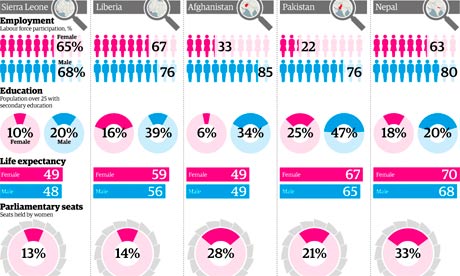
    An excerpt from The Guardian datablog:

    Women and peace deals - key indicators

    The IDS report found that “women are more likely than men to adopt a broad definition of peace which includes the household level and focuses on the attainment of individual rights and freedoms such as education, healthcare and freedom from violence. In contrast, men have a greater tendency to associate peace with the absence of formal conflict and the stability of formal structures such as governance and infrastructure”. It is important to include women in formal peace mediations and agreements as “peace means different things to women and men because of their unique experiences as a result of war”.

    Additionally, the research established that women have a lot of experience, and are principal actors, when it comes to mediating and decision making within the home and the family. Women are also more likely to come together collectively to create change. However, their “experiences building trust and dialogue in their families and communities are frequently dismissed as irrelevant or are not sufficiently valued by national governments, and the international community”.

    Some barriers to women’s participation in peacebuilding include: restrictive social norms and attitudes, violence against women and girls, poverty and economic inequality and inequality in access to education. The report suggests empowering women through access to justice, creating safe spaces for women’s participation and changing attitudes towards peace and valuing women’s contribution as key elements to support women peacebuilding.

    The 2000 United Nations Security Council resolution 1325 calls for “equal participation for women in the maintenance and promotion of sustainable peace”.

    Only yesterday, Foreign Secretary William Hague called upon UN Security Council resolution 1325, announcing to the UN General Assembly that the UK  “will contribute £1 million this financial year to support the Office of the UN Secretary-General’s Special Representative on Sexual Violence in Conflict”. “It’s our purpose in gathering here this morning to ensure that preventing sexual and gender-based crime in conflict and post-conflict situations is an urgent priority for the international community”, William Hague declared, and went on to say “We are convinced in the United Kingdom that we can do more to help […] we can do it as a permanent member of the Security Council, a leading member of NATO, the European Union and the commonwealth and as a nation with one of the most extensive international development programmes in the world.”

    The IDS report states that although Security Council resolution 1325 was passed in 2000, it has since then been almost totally ignored, not least by the UN itself. Hopefully this time, the international community, including the UK government, will take serious steps towards its implementation. At the same time, it is important to commit to preventing sexual and gender-based crimes, not only in “conflict and post-conflict situations”, but also in times of “peace”.

    No sustainable peace and security will ever be possible, if women’s voices are marginalised and if women and men do not work together equally on national and international peace mediations and agreements.

    Anna Alissa Hitzemann is a  Peaceworker with Quaker Peace and Social Witness. She currently works with Oxford Research Group as a Project Officer for the Sustainable Security Programme, with a focus on our ‘Marginalisation of the Majority World’ project.


    IDS, ActionAid, Womankind Worldwide report From the Ground Up can be read here.

    The Guardian, Who creates harmony the world over? Women. Who signs peace deals? Men is available here

    The Guardian, datablog Women’s participation in peace- how does it compare is available here

    Remarks by the Foreign Secretary William Hague to the UN General Assembly can be read here

    UN Security Council resolution 1325 is available here

    Image Source: UNAMID

  • Sustainable Security

  • Global militarisation

    Long-time and widely respected arms control watcher, Michael Krepon has written an interesting post on the Arms Control Wonk website about the perils of assuming that a negotiated outcome is always a good one. As the phrase goes, “the devil is in the detail” and looking very carefully at the relationship between militarisation and the provisions that get contained in treaties is all important.

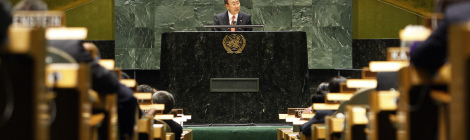
    Image source: UN.

    Read more »

  • Assessing the Security Challenges of Climate Change

    At the outset of the twenty first century, climate change has become one of the greatest challenges to international peace and security. It is seriously affecting hundreds of millions of people today and in the coming decades those affected will likely more than double, making it the greatest emerging humanitarian and security challenge of our time. Climate change acts as a threat multiplier for instability in some of the most volatile regions of the world. Projected climate change will seriously aggravate already marginal living standards in many Asian, African, and Middle Eastern nations, causing widespread political instability and conflict.

    A crucial new quality of current climate change is its speed and extent. The matter is thus not one of individually occurring, monocausal crises and conflicts, but rather one of a great number of destabilising, mutually amplifying factors. To comprehend the danger of climate change, the CNA report on “National Security and the Threat of Climate Change” released in April 2007 has clearly stated that-

    “When climates change significantly or environmental conditions deteriorate to the point that necessary resources are not available, societies can become stressed, sometimes to the point of collapse.”

    Recent Scientific Assessment Regarding Climate Change

    The recent scientific assessment presents a worrisome picture regarding climate change. The evidence of the scientific community clearly suggests that the scale of climate change has continued to widen at an accelerated pace. According to the Fourth Assessment Report of IPCC, eleven of the last twelve years (1995-2006) rank among the twelve warmest years in the instrumental record of global surface temperature (since 1850). The report presents a statistical idea about this trend where it suggests that the 100-year linear trend (1906-2005) of 0.74 °C is larger than the corresponding trend of 0.6 °C (1901-2000) given in the Third Assessment Report (TAR). The linear warming trend over the 50 years from 1956 to 2005 (0.13 °C per decade) is nearly twice that for the 100 years from 1906 to 2005.

    The IPCC in its Fourth Assessment Report also concludes that some extreme weather events have changed in frequency and intensity over the last 50 years. It has been observed that:

    – Cold days, cold nights and frosts have become less frequent over most land areas, while hot days and hot nights have become more frequent.

    – Heat waves have become more frequent over most land areas.

    – The frequency of heavy precipitation events (or proportion of total rainfall from heavy falls) has increased over most areas.

    – The incidence of extreme high sea level has increased at a broad range of sites worldwide since 1975.

    Regarding future climate change, IPCC projected that continued Green House Gas (GHG) emissions at or above current rates would cause further warming and induce many changes in the global climate system during the 21st century that would very likely be larger than those observed during the 20th century.

    Security Implications of Climate Change

    Climate change is a very complex phenomenon that affects many aspects of international politics and acts as a stressor making situations of instability, conflict and humanitarian crises more likely and severe. Climate change presents both direct and indirect threat to the security and stability of the society and the state. This has been discussed below in detail:

    Primary threats of climate change

    Resource scarcity and conflict

    Climate induced resource scarcity always has the potential to be a contributing factor to conflict and instability. Over the past centuries there have been various instances in which climate change has exerted a highly negative influence on societies, in some cases triggering crises or aggravating conflicts and, in combination with other factors, leading to the collapse of entire societies. Some recent examples include: the 1994 genocide in Rwanda that was furthered by violence over agricultural resources; the situation in Darfur, Sudan, which had land resources at its root and which is increasingly spilling over into neighbouring Chad; the 1970s downfall of Ethiopian Emperor Haile Selassie through his government’s inability to respond to food shortages; and the 1974 Nigerian coup that resulted largely from an insufficient response to famine (CNA Report, 2009)

    Water crises

    Climate change aggravates water quality and availability in regions that are already struggling hardest with water scarcity: Africa, South Asia, the Middle East and the Mediterranean. 1.1 thousand million people are currently without access to safe drinking water (German Advisory Council on Global Change, 2008) and the situation is likely to be aggravated through climate change. This global crisis may in turn fuel existing internal or inter-state conflicts and social conflict and heighten competition among different users of the scarce water resources. The Indus water dispute is a glaring example of how water can complicate relations between states. It is predicted that unresolved water issue could trigger Indo-Pak war which would have unpredictable consequences in the international arena.

    Migration

    Large scale migration is another consequence of climate change which has deep security implications. Changes in local and regional climatic conditions in the form of sea level rise, heat stress, desertification, flooding and drought severely restrict livelihood options for large groups in developing countries. On the one hand, these changes may directly challenge basic subsistence of already disadvantaged communities in the region, thereby further increasing their vulnerability across social, economic and institutional settings. On the other hand, increasing local vulnerability could potentially trigger large-scale internal displacement and migration in search of new avenues for employment and settlement that can further lead to destabilization and violence. Such destabilization may take place at various levels: local (group vs. group), national (group vs. state) and international (state vs. state) level. For instance, an exercise at the National Defense University, published in the New York Times in August 2009, explored the potential impact of a destructive flood in Bangladesh that sent hundreds of thousands of refugees streaming into neighbouring India, touching off religious conflict, the spread of contagious diseases and vast damage to infrastructure. Indicating the severity of the problem, the Deputy assistant secretary of defenSe for strategy Amanda J. Dory commented that:  “It gets real complicated real quickly.”

    Climate shock

    Climate change is expected to increase the intensity and frequency of climatic shocks. In recent years, abrupt climatic disasters are increasing in frequency and touching the lives of more people. Such abrupt disaster which is also termed as ‘climate pearl harbour’ is reinforcing wider risks and vulnerabilities, leading to short and long-term setbacks to human security.

    Melting of Himalayan Glacier

    The fast melting of Himalayan glacier due to climate induced global warming also present severe security challenges to countries like Bangladesh. The expanding volume of water is causing higher sea levels which in turn can submerge a significant portion of land area. For instance, a rise above one metre, which could be reached by 2050, means Bangladesh could lose 15 per cent to 18 per cent of its land area, turning 30 million people into “environmental refugees”.

    Natural Disaster

    Another consequence of climate change that has the potential to undermine the security of the state and individuals is related to natural disasters. Global warming is predicted to increase the frequency and intensity of various natural disasters e.g. tropical storms, flash floods, landslides etc. For instance, according to the Bangladesh Ministry of Environment and Forests, between 1991 and 2000, 93 major disasters were recorded in Bangladesh, resulting in nearly 200,000 deaths and causing US $ 5.9 billion in damages with high losses in agriculture and infrastructure. As a result, governments and individuals are still dealing with the effect of one event when another hazard strikes. Impacts of global warming and climate change thus challenge our development efforts, our human security and our future.

    However, climate change not only leads to primary security challenges, but also presents a number of secondary threats.

    Secondary Threats of Climate Change

    Possible increase in the number of weak and fragile states

    Climate change is likely to lead to an increase in the number of weak and fragile states. Weak and fragile states have inadequate capacities to guarantee the core functions of the state, notably the state’s ability to deliver basic services and maintain public order, and therefore already pose a major challenge for the international community. The impacts of unabated climate change would hit these countries especially hard, further limiting and eventually overstretching their problem-solving capacities. This is particularly relevant to regions like South Asia (the most crisis-ridden in the world -World Bank, 2006) and Africa, whose state institutions and intergovernmental capacities are weak. It is therefore foreseeable that climate change will overwhelm political structures and will further complicate economic and social problems of these regions.

    Health Risks

    Current weather conditions heavily impact the health of poor people in developing nations, and climate change has a multiplying effect. It is estimated that the health of 235 million people a year is likely to be seriously affected by gradual environmental degradation due to climate change (Human Impact Report, Global Humanitarian Forum, 2009). This is based on the assumption that climate change will increase malnutrition, diarrhoea and malaria. Malnutrition is the biggest burden in terms of deaths. Climate change is projected to cause over 150,000 deaths annually and almost 45 million people are estimated to be malnourished because of climate change, especially due to reduced food supply and decreased income from agriculture, livestock and fisheries. (Human Impact Report, Global Humanitarian Forum, 2009).

    Threat to global economic development

    Climate change slows – and in the worst cases reverses – progress made in fighting poverty and disease, and threatens the long terms sustainability of development progress. Climate change can lead to the destruction and devaluation of economic capital, as well as the loss of skilled and productive workers through environmentally induced migration and an increase in climate-induced diseases and malnutrition. Furthermore, economic resources that would normally be channelled directly into the production process instead have to be spent on adaptation measures, e.g. preparing for extreme events, or on reconstruction or the delivery of additional health services. Unabated climate change thus results in reduced rates of growth which will increasingly limit the economic scope, at national and international level. According to the Stern Review, which was commissioned by the British government, climate change impacts could cost 5-20% of global GDP each year (Stern, 2006) which can halt progress in meeting the Millennium Development Goals.

    Increases in Poverty

    Climate change compounds existing poverty by destroying livelihoods. Specifically, rising temperatures, changing rainfall patterns, floods, droughts and other weather-related disasters destroy crops and weaken or kill livestock. The majority of the people suffering from the impacts of climate change are already extremely poor. Currently about 2.6 billion people – two thirds of them women – live in poverty (below $2 a day) with almost 1 billion living in extreme poverty (less than $1 a day). About 12 million additional people are pushed into poverty today because of climate change (Human Impact Report, Global Humanitarian Forum, 2009).

    Energy, infrastructure and transport

    In view of the predicted climate trends and their associated socio-economic processes, key infrastructures are facing new demands. Climate induced consequences negatively affect the key infrastructures and make it more vulnerable which has wide ranging security implications such as:

    – The impacts of climate change may damage key infrastructures, such as energy supply, and consequently destabilise public order.

    – Wide-ranging destruction of the coastal infrastructure may lead to mass migration movements and trigger tensions in regions of destination.

    – The decline in hydroelectric power generation may additionally reinforce competition/conflicts over fossil energy sources.

    – New supply channels may additionally increase GHG emissions and thus aggravate problems-including the drivers of conflict.

    Food crisis

    Reduced or constrained agricultural productivity is often conceived as potentially the most worrisome consequence of climate change which reduces food security – especially in the poorest part of the world where hunger is already an issue. As a result, more than 850 million people worldwide are currently undernourished (German Advisory Council on Global Change, 2008) and the situation is likely to worsen in future as a result of climate change. Such impacts are particularly severe in developing regions such as South Asia, Sub-Saharan Africa and the dry land belt that stretches across the Sahara and the Middle East. This situation can trigger regional food crisis and further undermine the economic performance of weak and unstable states, thereby encouraging or aggravating destabilization, the collapse of social systems and violent conflicts.

    Gender and climate change

    Though climate change affects everyone, it is not gender neutral. Women are, in particular, more vulnerable to the effects of climate change as they represent 70% of those living below the poverty line. Consequently, they are most likely to bear the heaviest burdens when natural disasters strike. When poor women lose their livelihoods, they slip deeper into poverty and the inequality and marginalization they suffer from because of their gender, increases. In this way, climate induced disaster presents a very specific threat to their security.

    North-South Conflict

    Climate change can fuel conflict between the industrialized north and the developing south over the sharing of burden caused by unabated climate change. Though the industrialized countries have been primarily responsible for climate change, developing countries are bearing the main burden of the rising costs associated with climate change impacts. This reality has also been reflected through the words of Kofi Annan, the former Secretary General of the UN, as he stated that: “The countries most vulnerable…contribute least to the global emissions of greenhouse gases. Without action they will pay a high price for the actions of others.”

    The unabated climate change thus herald the onset of a diplomatic freeze between the main drivers of climate change and a substantial number of developing countries that are especially hard hit by its impacts.

    Radicalization and terrorism

    Radicalization and terrorism may be increased in many developing societies due to the climate induced social and economic deprivation. Many developing countries do not have the government and social infrastructures in place to cope with the types of stressors that could be brought on by global climate change. When a government can no longer deliver services to its people, conditions are ripe for the extremists and terrorists to fill the vacuum. The radical and terrorist exploit this condition as a recruiting ground by offering various social services to the people. Lebanon’s experience with the militant group Hezbollah is a glaring example of how the central governments’ inability to provide basic services has led to the strengthening of a radical organization.

    Undermining the Conditions of Human Rights

    Climate change affects the situation of human rights adversely. Food security and access to drinking water could be challenged by the impacts of climate change in affected countries and regions, destruction caused by rising sea levels and extreme weather conditions could put people’s livelihoods at risk. In this way, climate change can endanger the human dignity to a large number of people by denying them the conditions in which they will not be able to safeguard their human rights.

    Cultural Threat

    Climate change can jeopardise the cultural heritage of people and society. As people are losing their places and livelihoods, increasing number of people are becoming climate refugees – leaving their history and tradition behind. It is predicted that some of the endangered groups in Africa which are coming under further stress due to climate impacts will be disappeared in future, thereby posing a threat to the cultural security of the society and the state.

    Limiting the prospect of international cooperation

    Climate change can also put additional stretch on international system by limiting the potential of cooperation over the management of scarce resources. When the countries come under further stress caused by climate change, they will become more insular and may take in-ward approach, thereby limiting the prospect of international cooperation in managing natural resources.

    International Legal Complications

    It is predicted that climate change could deepen the international legal complications. If the prediction of the scientific community becomes true, then countries like Maldives will be nowhere in the global Map in the foreseeable future. This could completely destabilize international maritime boundaries, and fuel tensions between maritime countries.

    Concluding thoughts

    At this juncture of history, it needs to be recognized that environmental crisis potentially has more pervasive and more security implications than any other crisis. For this reason, environmental challenges should be placed at the core of security considerations in a rapidly changing world. Hence, effective international cooperation should occur to address the unpredictable consequences of climate change.

    Finally, I would like to conclude quoting the Obama’s Noble Peace Prize acceptance speech where he clearly states that:

    ‘It is undoubtedly true that development rarely takes root without security; it is also true that security does not exist where human beings do not have access to enough food, or clean water, or the medicine they need to survive…This is why the world must come together to confront climate change. There is little scientific dispute that if we do nothing, we will face more drought, famine and mass displacement that will fuel more conflict for decades.’

    Image source: Oland0 7

    Obayedul Hoque Patwary is a graduate of the department of Peace and Conflict Studies of Dhaka University, Bangladesh. He is working as a Research Analyst at the Bangladesh Institute of Peace and Security Studies. His research mainly focuses on the issue of ‘climate change and security’ and the ‘transnational security threats’.

  • Sustainable Security


    This piece by sustainablesecurity.org’s Zoë Pelter and Richard Reeve was originally published on 5 September, 2013 on openDemocracy 

    4815774738_b9962f4875_bThe narrow defeat on 29th August of the UK government’s parliamentary motion on support in principle for military action against the Syrian regime has forced Prime Minister David Cameron to concede that Britain will play no part in any direct attack on Syria. If the UK is to play no military role in ‘punitive’ responses to the regime’s alleged use of chemical weapons, what options are open to the UK in terms of resolving the Syrian conflict, protecting civilians and punishing those responsible for war crimes there? And how does Cameron’s overt preference for the military option, with or without UN mandate, condition these non-military options?

    Pushing for peace

    The possibility of a negotiated peace in Syria should not be dismissed. Neither the regime’s military, militia and foreign allies, nor the variety of armed factions ranged against them (and, increasingly, each other) are exhausted. Nor do the Assad regime’s mid-year successes in central Syria presage any imminent likelihood of it regaining control of the north and east. The strategic stalemate that appeared to set in to the conflict in June, after pro-Assad forces retook al-Qusayr, arguably presented a breathing space for negotiations and the so-called Geneva II conference, proposed by the US and Russia, with UN and Arab League backing, the previous month. As recently as mid-August, the Geneva talks were expected to resume in September.

    But even convening these talks will now prove far harder. Expectation of Western intervention against President Bashar al-Assad, as well as their own increasing divisions, gives the Western-backed armed opposition groups an incentive to delay talks. Jihadist groups that have proved effective militarily are largely excluded. US and Russian facilitation of the Geneva process, however fraught, also tends to exclude the voices of regional actors like Turkey, Iran, Iraq and Saudi Arabia, each of which feels its interests very directly threatened in Syria and gives active support to one or more armed faction.

    This calls for a rethinking of the Geneva process, if not the 2012 transition roadmap, to bring in the full range of actors, not the abandonment of peace talks. Threat of US-led intervention and its own increasing international marginalisation, should it be proved to have launched a chemical attack on 21st August, could incline the Assad regime towards a negotiated settlement, perhaps even an exit and exile strategy.

    Cameron and PutinThis will not happen without pressure from Iran and Russia. Both have much to lose in Syria, but neither is entirely closed. Iran is still in its post-electoral opening and under severe economic pressure, looking to cut a wider deal with the West. Russia may not be comfortable with its isolated position defending the alleged user of chemical weapons. Like the US, it fears the growing influence of jihadi groups while the current stalemate continues. While there is little hope of Moscow abandoning its Security Council veto over action against Syria, it will be embarrassed if it stands almost alone defending Assad in the Council or against a General Assembly resolution. Neutrally collected and analysed evidence of Syrian regime culpability for chemical weapons attack will be crucial to shifting Russia’s position.

    Having made clear its preference for ‘punitive’ military action, and been frustrated by parliament in pursuing such action, the UK government is not ideally placed to broker negotiations. Yet the UK does have influence with Syrian opposition groups, in the Gulf States and, when it acts in concert with its less interventionist EU partners, with Russia, Turkey and Iran.

    Fighting impunity

    Again, the importance of due investigative and legal process through UN Fora is crucial. When asked on 29 August if he agreed that Assad should be prosecuted at the International Criminal Court (ICC), David Cameron replied curtly that these processes take time. Yes, the wheels of institutional responses turn slowly, not least justice institutions. Yet the most obvious response to any breach of customary international law on the use of chemical weapons (Syria is one of just five states not to have signed the 1993 Chemical Weapons Convention) is a war crimes prosecution through the ICC. It is not important that Syria has not signed the Court’s establishing Rome Statute. Assad and any responsible commanders could still be subject to international prosecution if the Security Council referred Syria formally to the ICC.

    The UN has been investigating a wide range of alleged crimes committed by both sides with a view to future prosecutions. Clearly, the presence on the Security Council of Syrian allies and a majority of non-signatories to the Rome Statute presents obstacles to referral, but the Council has overcome such obstacles before, notably China’s reluctance to see its Sudanese allies prosecuted over actions in Darfur. With France and other allies, the UK should take the lead within the Security Council in pushing to refer Syria to the ICC based on the same ‘moral minimum’ or red line that has been deployed in favour of armed intervention. This, in turn, may provide leverage to persuade pro- and anti-Assad factions alike to take peace negotiations more seriously.

    Notwithstanding the heavy shadow of its past action in Iraq, the UK’s moral standing is bolstered by commitment to legal and democratic process. The UK should take a breath, step back from punitive reaction and recommit itself to a multilateral, inclusive and legally rigorous approach to resolving the war in Syria and its many affiliated regional conflicts. No other form of intervention will effectively protect the lives and rights of Syrian civilians either in the current war or the difficult peace that must follow.

    Richard Reeve is the Director of Oxford Research Group’s Sustainable Security Programme. He works across a wide range of defence and security issues and has particular expertise in Sub-Saharan Africa, peace and conflict analysis, and the security role of regional organisations.

    Zoë Pelter is the Research Officer of Oxford Research Group’s (ORG) Sustainable Security Programme. She works on a number of projects across the programme, including Rethinking UK Defence and Security Policies and Sustainable Security and the Global South.

    Image sources:

    Image: The Prime Minister welcomes President Vladimir Putin to Downing Street ahead of the G8 Summit. Source: The Prime Minister’s Office

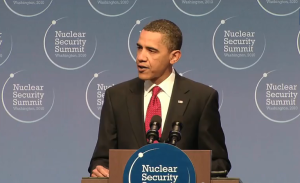
    Image: The Prime Minister during a joint press conference with US President Barack Obama. Source: The Prime Minister’s Office

  • Climate Change and Security Threats: Time to Call a Spade a Spade?

    When does a serious environmental problem become a security threat?

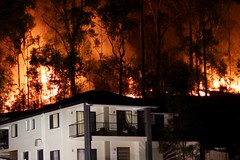
    Professor Tim Flannery, a leading scientist and public intellectual in Australia wrote a piece in the Guardian newspaper a few days ago reflecting on the links between climate change and the extreme temperatures and bushfires ravaging Australia at present. He notes that “Australians are used to hot summers. We normally love them. But the conditions prevailing now are something new. Temperature records are being broken everywhere.” What is important for thinking about the security consequences of climate change is that towards the end of the article, Flannery reflects:

    “Australia’s average temperature has increased by just 0.9 of a degree celsius over the past century. Within the next 90 years we’re on track to warm by at least another three degrees. Having seen what 0.9 of a degree has done to heatwaves and fire extremes, I dread to think about the kind of country my grandchildren will live in. Even our best agricultural land will be under threat if that future is realised. And large parts of the continent will be uninhabitable, not just by humans, but by Australia’s spectacular biodiversity as well.”

    Conditions in which large parts of the continent are threatened in such a way would appear to raise some pretty serious questions about Australia’s national security (let alone the human security of those individuals living in areas where agriculture has failed or fires threaten homes and livelihoods). Yet recently a number of commentators have become particularly concerned about the so-called ‘securitisation’ of climate change, largely due to a sense of there being “alarmist views about climate change on conflict risk.” This has led some to argue that rather than helping to raise the profile of the issue in terms of the need for urgent policy change, we in fact now need to “disconnect security and climate change.” According to Professor Betsy Hartmann of Hampshire College, “A fear of imminent doom runs deep in popular culture and, like the grim reaper, stalks the environmental movement.” This, she argues allows “security agencies and analysts” to distract us from feelings of empathy towards those affected by climate change and to instead cause us to fear them and to “turn to the military to protect us.” According to Professor Mike Hulme of the University of East Anglia,

    “What climate change means to us and means to the world is conditioned by what we do, by the way we govern, by the stories we tell. Presenting climate change as the ultimate security crisis is crudely deterministic, detached from the complexities of our world, and invites new and dangerous forms of military intervention.”

    All of this matters as the potential world in which Flannery is imagining that his grandchildren might have to live in is becoming more and more likely the longer multilateral efforts drag on. Richard Haass, the President of the Council on Foreign Relations, when asked to look ahead to the big global governance challengers for 2013 recently stated that: “It is becoming increasingly clear that efforts at mitigation are not just falling short but that the gap between what is needed and what is likely to happen is widening.”

    The whole notion of the ‘securitisation’ of climate change pre-supposes that we get to choose whether climate change is a security threat or not – it emphasises what political scientists refer to as human agency. Of course we can choose to label something as a threat or not (yes, perhaps it may even not be the end of the world if we use the dreaded T word!). But in the face of increasingly extreme weather and related natural disasters (let alone serious discussions about whether states such as Kiribati can survive within their own national borders), it does seem that we can sensibly talk about the security threats posed by climate change in the decades to come regardless of whether we can specifically link particular instances of conflict and climate change in the past.

    The point is that simply because something may pose a security threat does not mean that we have to respond in the traditional way – to throw military force at it. It’s abundantly clear that there is no military solution to climate change and that addressing the problem at source means changing (among other things) the ways we use energy. But that doesn’t mean that our current energy policies are not a fundamental security threat. They are. And why can’t we use better energy policies to ensure our security?

    Image source: HighExposure

  • Sustainable Security

  • Sustainable Security

    Young people are frequently ‘othered’ in discussions about on conflict. This is a dangerous practice as youths can play a very positive role aiding peacebuilding in societies recovering from conflict.

    The UN World Population Prospects statistics estimate that there are 1.3 billion 15-24 years olds in the world and nearly one billion live in developing countries where conflict is more likely to have taken place.

    In such demographic realities, the potential youths hold for change and positive action is the subject of growing research agenda, and this is particularly the case with the recent wave of social upheavals and humanitarian crises in different parts of the world.

    For much of human social interaction, the category called ‘youth’ has been perceived as a historically constructed social category, a relational concept, and as a group of actors that is far from homogenous. A myriad of factors make childhood and youth highly heterogeneous categories in terms of gender, class, race, ethnicity, political position as well as age.

    They also have multi-faceted roles. Youths can be heroes as well as victims, saviours and courageous in the midst of crisis, as well as criminals in the shantytowns and military entrepreneurs in the war zones. Yet, as a category, youth are often approached as a fixed group or demographic cohort.

    Youth, peace and conflict

    youth-peacebuilding

    Image by CIFOR via Flickr.

    Youths as a conceptual category are frequently ‘othered’ in the discourse on conflict. They are seen as potentially dangerous ‘subjects’ and policy approaches often regard them as ‘a problem’. Often, male youths in the age group 16-30 have been observed as the main protagonists of criminal and political violence. In other words, much of contemporary thinking on youth and conflict tends to be overly negative. It focuses on the dangers posed by disaffected youths as is evident in the negative connotations of the ‘youth bulge’ or ‘at risk youth’ concepts.

    A number of dangerous assumptions about the role, position, and contribution of youths appear to plague thinking among national and international elites driving recovery efforts within societies in transition. The majority of national and international policy pronouncements or security-related programmes in post-conflict and fragile contexts reflect a polarised discourse.

    The young vacillate between the two extremes of ‘infantilizing’ and ‘demonizing’. On the one hand, youths are viewed as vulnerable, powerless and in need of protection. On the other, they are feared as dangerous, violent, apathetic and as threats to security. Youths are subjected to stereotypical images of being angry, drugged and violent and as threat, especially those who participated in armed conflict as combatants.

    On the other hand, recent literature on youth in post-conflict societies marks a shift in thinking about youth. It underlines the agency perspective, and acknowledges the importance of making the connection between youth and peacebuilding for transforming a predominantly negative discourse on the role of youths in societies recovering from conflict.

    Youth as peacebuilders

    The positioning of youth in society has a bearing on their leadership potential and their possible role in peacebuilding. The tension between young and old has been one of the key features of inter-generational shifts pertaining to the control over power, resources and people.

    The tension lies in the palpable impatience of youth, their desire to strive for more, their willingness to be seen as responsible and capable, and the structural barriers to their social mobility. Independence from others and responsibility for others, such as taking care of a family or household, can be seen as defining markers of pre-requisites of social adulthood.

    In this sense, dependency, exclusion, and social or political marginalization become prominent sources of social contest. At the same time, it should be recognised that such societal dynamics, challenges and opportunities vary across different cultural contexts whether it is in Africa, Europe, Asia or Latin America.

    Within the challenging fluidity of post-conflict environments, which are nothing but contexts where the politics of war continue through different means, the young would need to show great ‘navigational skills’ in order to respond to such power dynamics. Their social, political and economic navigation is about their identity transformation as well as the negotiation or re-negotiation of societal norms, values and structures so that they can find a voice and place in the emerging structures of post-conflict environments.

    What needs to be underlined is that youth should be conceptualized and studied as agents of positive peace in terms of addressing not only the challenges of physical violence, but also the challenges of structural and cultural violence, and the broader social change processes to transform violent, oppressive and hierarchical structures, as well as behaviour, relationships and attitudes into more participatory and inclusive ones.

    The key point to remember is that without recognizing youths as political actors, their trajectories in peacebuilding would likely be ignored, wasted and at best, under-utilized. To recognize their agency as a political actor in peacebuilding, there needs to be a comprehensive understanding of their conflict trajectories, and this is particularly important for those young people who have taken direct participation in an armed conflict as combatants.

    To understand the engagement of youth in peacebuilding, first of all, the youth mobilization and reintegration factors such as who they are, what they did before the conflict, how they were recruited, what specific fighting roles they undertook, what they experienced physically, socio-economically and psychologically, during the armed conflict, and what ‘home’ context they will be reintegrating into will all be critical for the youth’s trajectories in peacebuilding.

    Second, the involvement of youth in non-violent politics, and from a wider perspective, the enablement of their political agency in a more positive and peace-oriented role in post-conflict environments, is likely to depend on how these trajectories are shaped by the overall political and governance context.

    Third, the enablement of youth as an active agent in peacebuilding cannot be considered without considering such challenges they tend to face due to the armed conflict such as the loss of education, a lack of employable skills and the destruction of a stable family environment. The wider socio-economic needs of youths are often ignored in post-conflict contexts as they are not seen as a ‘vulnerable’ group.

    Fourth, it is important to provide youths with training opportunities to take an active part in peacebuilding. With their youthful energy and capabilities, and ability of adaptation to new technological trends, for example, youths could act as mediators, community mobilisers, humanitarian workers and peace brokers. Like any particular conflict affected population group, the mobilisation of youths’ capacities requires a targeted and long-term approach.

    At the Centre for Trust, Peace and Social Relations, an annual event called Global Peace Workshop is held in Turkey every year. Around 70-80 young participants from across the world get together in this one-week training, networking and solidarity event, and it is incredible to see the transformation of those young people in a such a short span of time as peacebuilders and start undertaking a wide range of peacebuilding projects in their own communities, schools and work places.

    Fifth, the engagement of youth in peacebuilding in a wider perspective can be ensured through the arts, culture, tourism, sports and education. The innovativeness and creativeness of young people in those areas could be mobilised effectively by connecting them with wider peacebuilding objectives such as building bridges between divided communities and ensuring a viable process of reconciliation.

    There are many examples across the world of the contributions that the young make towards peacebuilding such as the strengthening of community cohesion and reconciliation in South Sudan, civic awareness for peaceful social relations and development programmes in Nepal,  trust-building across different ethno-religious groups in Sri Lanka, and community entrepreneurship and livelihoods programmes in Burundi. Furthermore, the UN Inter-Agency Network on Youth Development  Report entitled ‘Young People’s Participation in Peacebuilding: A Practice Note’ presents a number of policy and programme examples from different conflict affected countries that would facilitate such participation more effectively.

    Finally, in undertaking all of these objectives it is also pivotal to avoid the well-known cliché of referring to youths as the ‘future leaders’. Leadership should not be considered as a factor of age and providing appropriate governance contexts would likely enable young people to flourish as leaders today. In other words, they need to be treated as leaders today without postponing it to an elusive future whether it is in governance in general or peacebuilding programmes specifically.

    To achieve this objective there have recently been a number of critical developments such as the UN Security Council Resolution 2250 on Youth, Peace and Security of December 2015 which makes a clear recognition of positive contributions of youth to peace and sets an overall framework to support their efforts. In May 2016, the UN Peacebuilding Fund started its first Youth Promotion Initiative, which could play a key role to encourage youth leadership in peacebuilding. Therefore, the current trends show that there will be many more similar youth leadership programmes across the world in the near future, but the key point for their successes will depend on whether or not such initiatives can also respond to wider socio-economic, cultural and political barriers that young people face in their quest of becoming an active agent of positive change, peacebuilding and reconciliation.

    Professor Alpaslan Ozerdem is Co-Director of the Centre for Trust, Peace and Social Relations at Coventry University.

  • book

    Image of Al-Qaeda: The True Story of Radical Islam

    • Purchase from Amazon:
    • Al-Qaeda: The True Story of Radical Islam
    • Author: Jason Burke
    • Publisher: Penguin ()
    • Binding: Paperback, pages
    • Price: £8.99