Blog

  • Sustainable Security

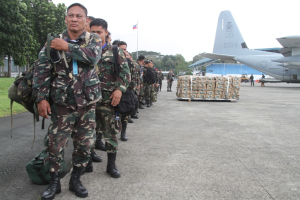
    Philippine Army servicemembers stand alongside a pallet of bottled water as they prepare to board a U.S. Marine Corps KC-130J to support victims of Super Typhoon Haiyan at Villamor Air Base, Manila, Republic of the Philippines Nov. 11. Source: U.S. Marine Corps. (Photo by Lance Cpl. Stephen D. Himes/Released)

    Philippine Army servicemembers stand alongside a pallet of bottled water as they prepare to board a U.S. Marine Corps KC-130J to support victims of Super Typhoon Haiyan at Villamor Air Base, Manila, Republic of the Philippines Nov. 11.
    Source: U.S. Marine Corps. (Photo by Lance Cpl. Stephen D. Himes/Released)

    US Defense Secretary Chuck Hagel has ordered the USS George Washington and her battle group from Hong Kong to the Philippines to provide humanitarian assistance in the aftermath of the Typhoon. Already, about 90 U.S. Marines and sailors have deployed from Okinawa to the Philippines and are on the ground providing support. UK Prime Minister David Cameron has ordered the Royal Navy’s HMS Daring to the region as well. This disaster response mission is part of the Department of Defense’s growing humanitarian response mission to help affected regions. Simply put, if the U.S. military and allies did not provide fast-acting logistical support to relief missions like this, there are no other entities that can provide the heavy lift or logistical expertise necessary to get large quantities of aid to a region in time.

    Last week, prior to the storm, in reference to Pacific Command’s disaster response mission and capability, the PACOM Commander Admiral Locklear said:

    It’s the right thing to do… Also, if something is going to happen in the Pacific that is going to create a churn in the security environment, the most likely thing will be a humanitarian disaster problem of some kind – whether it is horrific typhoons or tsunamis or floods or something else.

    He’s right. Beyond the clear threats to the human security of the residents of the affected area – loss of life, home, food, electricity, and clean water – natural disasters can act as a clear threat to national security, especially when the government is unable to respond effectively. That’s because a government failure can create the opportunity for other security threats to develop, ranging from crime and corruption to insurgency or terrorism. Unfortunately, we may already be seeing this in the Philippines; there are reports of massive looting after the storm passed over, and unverified reports that the Filipino military has engaged and killed a group from the New People’s Army, a communist rebel group in Leyte, as they tried to attack a government relief convoy.

    I’m not going to spend much time debating whether or not man-made climate change was responsible for this storm in particular.  There is an ongoing debate about whether climate change will both increase the number of tropical cyclones as well as their intensity. The latest IPCC report only expressed a ‘low confidence’ in the impact of climate change on tropical cyclones – that doesn’t mean there’s no impact, but it means we don’t know. What we do know is that the water in the Pacific has been warmer than average –and that warmer water is an important part of cyclone intensity. Phil Plait’s blog, Bad Astronomy, has a good explanation of the climate-cyclone link. Suffice it to say that climate change is another risk that must be considered when planning for security threats in the region.

    These are precisely the reasons that the U.S. Department of Defense has labeled climate change as an “accelerant of instability” in the 2010 QDR. PACOM, which has responsibility for all American forces in the Pacific region, has operationalized that guidance from the QDR to include real and significant planning for the many natural disasters that happen around the Pacific Rim. Admiral Locklear has stated that climate change “is probably the most likely thing that is going to happen . . . that will cripple the security environment, probably more likely than the other scenarios we all often talk about.”

    As ASP has determined in our Global Security Defense Index on Climate Change, the U.S. is not the only country that is planning for the security threats of climate change; over 70% of the world also deems climate change to be a security threat. The Philippines’s National Security Policy specifically gives the security forces the mission to “Help Protect the Country’s Natural Resources and Reduce the Risks of Disasters” and goes on to say that “the government must focus on establishing disaster and calamity preparedness and effective response mechanisms.” Clearly, Typhoon Haiyan has overwhelmed the ability of the Filipino security services to effectively respond to this calamity; it is appropriate for the U.S. and international community to help as much as possible.

    Climate change acts as a threat multiplier and an accelerant of instability. Whether this storm was ‘caused’ by climate change is a moot point now. Even with concerted international action to reduce greenhouse gas emissions, like those proposed at the UNFCCC negotiations in Warsaw, the Pacific will likely see these disasters for decades to come. Efforts to reduce risk should include military preparations for response, readiness that increases the capacity to prevent such harm, as well as greenhouse gas mitigation to reduce the chance of future storms. The net effect, unfortunately will be that the military is likely to have many opportunities to practice disaster response: it should be treated as a key mission.

    Andrew Holland is Senior Fellow for Energy and Climate at American Security Project, a Washington D.C based think tank. He is an expert on energy, climate change, and infrastructure policy. He has over seven years of experience working at the center of debates about how to achieve sustainable energy security and how to effectively address climate change. He tweets regularly via @TheAndyHolland.

  • Sustainable Security

    National security and the paradox of sustainable energy systems

    The transition away from a centralised global economy built around conventional energy sources to a decentralised global economy mostly fuelled by renewable resources is one we must make for the sake of our children’s futures and that of our planet. Writing for sustainablesecurity.org, Phillip Bruner asks if national security is at present, deeply concerned with preserving access to conventional energy, then how would national security for a decentralised renewable energy Internet be managed? Who would manage it? And what role, if any, could the public play in helping to alleviate some of the burdens of 21st century threat mitigation?

    Read Article →

    Causes of Conflict: A Strategic Perspective on US–Sino Relations in the Caribbean

    Author and former High Commissioner of Trinidad and Tobago to the Court of St. James, Serena Joseph-Harris writes that China’s increasing regional profile in the Caribbean highlights the challenges now posed to American exceptionalism as Beijing defines its own course in the region. This article focuses on the potential within the Caribbean Basin for the burgeoning proceeds presently derived from increases in the legitimate investment, trade, and commerce emanating from Beijing and Washington to become entwined with illicitly derived funds generated from transnational crime activities, specifically the trafficking of drugs.

    Read Article →

  • Sustainable Security

    DU-turn? The changing political environment around toxic munitions

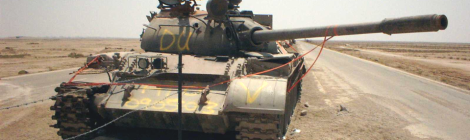
    Is the US backpedalling on its use of depleted uranium (DU) rounds? There are indications that the use of these highly toxic munitions could increasingly be a political liability for the US, with countries affected by DU, like Iraq, other UN Member States, and populations in contaminated areas all expressing concerns over its use and impact. But stigmatisation, although important, is not enough on its own – in order to make sustained progress on accountability and in reducing civilian harm, a broader framework that addresses all toxic remnants of war is needed.

    Read Article →

    Drone-tocracy? Mapping the proliferation of unmanned systems

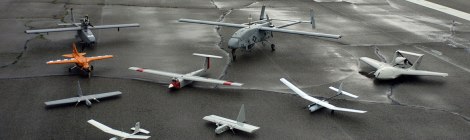
    While the US and its allies have had a monopoly on drone technology until recently, the uptake of military and civilian drones by a much wider range of state and non-state actors shows that this playing field is quickly levelling. Current international agreements on arms control and use lack efficacy in responding to the legal, ethical, strategic and political problems with military drone proliferation. The huge expansion of this technology must push the international community to adopt strong norms on the use of drones on the battlefield.

    Read Article →

  • What’s the Real Mission In Libya?

    What is the real mission in Libya? Not the no-fly zone– that’s a method. So what is the mission? How do we end this thing?

    The president said in Santiago yesterday that the military mission isn’t aimed at getting rid of Gaddafi. He said we have other means to do that-sanctions and money freezes and that stuff.

    Well, excuse me for being skeptical, Mr. President, but we’ve done all that before and regimes have survived it for years-many years. I remember how many years we had white-ruled Rhodesia under sanctions. When I was over there in the Peace Corps, I went to that country, it meant watching old movies instead of ones currently available in other countries. No, it really didn’t really work all that fast.

    Americans don’t like long wars. Are we going to be backing this military campaign in Libya for months or even years-with the French and the Brits and a token Arab force flying overhead while Gaddafi kills his people in alleys and basements below? Are we going to wait for –excuse me — sanctions to work their will?

    It doesn’t ring true. We went in there to stop a killer from massacring his people. If he’s set on doing it, he’s got plenty of time now to find ways of doing it — if all we’re doing is running sanctions against him.

    So, we need to know more. Perhaps there’s a secret plan out there to overthrow Gaddafi. Are we offering him safe-conduct to Venezuela? Are we giving him a means to end this standoff?

    Because if we’re not doing any of this, it promises to be a long war, a standoff, where Gaddafi sacrifices more and more of his people to prolong his own rule, which he needs to prolong if he’s going to prolong his own life.

    I hope we have a plan here we’re not talking about, because what we’re seeing makes no sense. We say we want to overthrow Gaddafi again but give him no place to escape. If that’s the nature of this contest, he will fight to the death — as most people would — and that will mean the deaths of countless people who would survive if we had a quicker, smarter plan that promised a quicker, smarter ending to this thing.

    I don’t like the looks of this campaign for the simple reason it looks like so many others. In an effort to reduce our footprint, we’re making it a far longer, more bloody journey to where we’re headed in the end.


    Chris Mathews is a TV News anchor in the United States.

    This article originally appeared on the Huffington Post. 


  • Share the World’s Resources (www.stwr.org)

    This website presents an extensive database of the latest news, analysis and information on a variety of international issues. There are currently over 2,000 articles available covering issues ranging from globalization to poverty, climate change, people power and much more.

    The objectives of Share the World’s Resources are

    1. To raise awareness of how and why the dominant international economic and political systems are incapable of ending poverty, creating a sustainable economy, or mitigating climate change.

    2. To propose an alternative sustainable economic framework based on international cooperation and the sharing of essential resources.

    3. To campaign for governments around the world to initiate global economic reform and to share essential resources in order to immediately secure basic human needs for all.

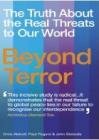
  • Beyond Terror: The Truth About the Real Threats to Our World

    Many leading military analysts in the United States are increasingly alert to the link between security and climate change. Is international terrorism really the single greatest threat to world security?

    Since the 9/11 attacks, many Western governments assume terrorism to be the greatest threat we face. In response, their dangerous policies attempt to maintain control and keep the status quo by using overwhelming military force. This important book shows why this approach has been such a failure, and how it distracts us from other, much greater, threats:

    • Climate change
    • Competition over resources
    • Marginalisation of the majority world
    • Global militarisation

    Unless urgent, coordinated action is taken in the next 5-10 years on all these issues it will be almost impossible to avoid the earth becoming a highly unstable place by the middle years of this century. Beyond Terror offers an alternative path for politicians, journalists and concerned citizens alike.

    For more information or to buy the book please click here. 

  • Sustainable Security

    The Threat of Nuclear Disconnect: Engaging the Next Generation

    The dramatic decrease in public awareness and engagement in the nuclear weapons debate since the 1980s poses a risk to our future, as younger generations and future policy shapers will be less familiar with the challenges posed by nuclear weapons when they take the helm. But nuclear weapons are too dangerous a threat for an entire generation to disconnect from. BASIC’s Rachel Staley explores the ramifications of not updating the nuclear debate.

    Read Article →

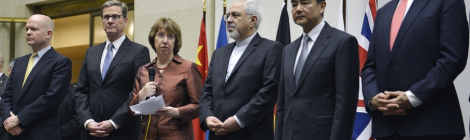
    The Iran Interim Deal: Responses, Potential Impacts, and Moving Forward

    Implementation of the interim deal with Iran, which freezes the country’s nuclear enrichment in exchange for limited sanctions relief, began in January. As a result, we are witnessing a substantial shift in diplomatic relations between Iran and its regional neighbours – some positive, some not. This deal marks a significant step for the international non-proliferation regime, but will it achieve the trust and confidence-building goals intended? As the US and Iran face increasing domestic pushback on the terms of the agreement, questions remain on the interim deal’s impact on relations in the region and abroad, and the effect these relations may have on the prospects of coming to a full comprehensive follow-up agreement between Iran and the P5+1 countries.

    Read Article →

  • Competition over resources

    For some years, the Oxford Research Group (ORG) has been analysing the likely underlying drivers of global insecurity over the coming years, and ways to develop sustainable responses to these threats. This analysis has focused on four trends that are expected to foster substantial global and regional instability, and large-scale loss of life, of a magnitude unmatched by other potential threats. These are climate change, competition over resources, marginalisation of the ‘majority world’ and global militarisation.

    Read the full article here.

    Author: Hannah Brock

    Image source: WorldIslandInfo.com

    Read more »

  • Climate change

    Accelerating climate change and competition for limited supplies of water, food and energy are poised to ignite long-simmering conflicts in fragile states, monopolising the world’s military resources and hampering development efforts, security experts say. Defusing these new 21st century conflicts – or at least preparing governments and citizens to cope with them – will require a broad range of innovative interventions, a gathering at Britain’s Department for International Development (DFID) heard earlier this month.

    Image source: Images.Defence.Gov.au

    Read more »

  • Sustainable Security

    The UK is the state of registration for a large number of land-based and maritime PMSCs. How compatible is the UK regulation model for PMSCs with international norms, especially those concerning human rights?

    Author’s note: this commentary draws upon work found in a previous article written by the author – ‘Regulation of the Private Military and Security Sector: Is the UK Fulfilling its Human Rights Duties?’ in (2016) 16(3) Human Rights Law Review 585-599.

    There are a large number of Private Military and Security Companies (PMSCs) registered in the UK. In 2011 the Security in Complex Environments Group (SCEG) was appointed by the UK government as its partner for the development and accreditation of standards for the UK private security industry when operating overseas. SCEG is a special interest group within Aerospace Defence and Security (ADS), a trade organisation advancing the UK aerospace, defence, and security industries. SCEG lists nearly 60 UK-registered PMSCs as members. Separately, 21 UK-registered PMSCs are currently listed as members of the International Code of Conduct Association (ICoCA), set up in 2013 to oversee the implementation of a non-binding international code for private security companies, although a much larger number of UK PMSCs, over 150, had signed up to the International Code of Conduct for Private Security Providers of 2010. This emerging system of national and international self-regulation was a political choice by the UK government based on free-market thinking and limited resistance to a powerful and profitable industry.

    Options for Regulation
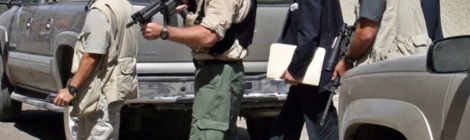
    Image credit: chuck holton/Flickr.

    The post-Cold War peace dividend, which led to a surplus of well-trained former armed forces personnel, combined with the damage done to the UK’s reputation in the late 1990s by Sandline International, led to some soul searching about the regulation of the overseas operations of an emergent private military and security industry. Sandline was a private military company with a previous history of involvement in conflicts in Africa, headed by former British Army Officer Tim Spicer, that had breached a UN and UK arms embargo against Sierra Leone by supplying arms to President Kabbah. The recommendations of the Legg Report of 1998, that the government consider introducing a system of licensing for PMSCs operating out of the UK, were a direct outcome of the ‘Sandline Affair’.  The UK Foreign and Commonwealth Office’s (FCO) Green Paper, ‘Private Military Companies: Options for Regulation’ of 2002, provided a thoughtful examination of the reasons for growth of the industry, including a convincing rationale for regulating what was at the time still a fledgling industry:

    Bringing non-state violence under control was one of the achievements of the last two centuries. To allow it again to become a major feature of the international scene would have profound consequences. Although there is little risk of a return to the circumstances of the 17th and 18th centuries when privateers were hard to distinguish from pirates, and Corporations commanded armies that could threaten states, it would be foolish to ignore the lessons of the past. Were private force to become widespread there would be risks of misunderstanding, exploitation and conflict. It would be safer to bring PMCs and PSCs within a framework of regulation while they are a comparatively minor phenomenon.

    In outlining the options for regulation, the Green Paper clearly favoured a system of government licencing over a system of self-regulation based on a voluntary code of conduct. The Montreux Document (on Pertinent International Legal Obligations and Good Practices for States Related to Operations of Private Military and Security Companies During Armed Conflict) of 2008, a non-binding document agreed to by a number of countries (mainly those with a PMSC industry such as the UK or those that were hoisting significant number of contractors such as Iraq), also expressed a preference for a licensing system. The Montreux Document identifies exiting legal obligations incumbent upon states in their relationships with PMSCs when either acting as the host state, home state (state of registration) or contracting state, but it did not take the form of a binding treaty. It also recommends good practices for governments to adopt when engaging with PMSCs, but there is no supervision or enforcement of any aspect of the Document.

    Given this support, the creation of a system of licensing seemed likely, particularly as such a regime had been introduced for UK domestic private security operators in the 2001 Private Security Industry Act, after a period of ineffective self-regulation. Indeed, when considering the Green Paper later in 2002 the Foreign Affairs Committee stated that, while self-regulation would establish better standards of PMSC conduct, it would not by itself prevent rogue or disreputable UK companies from acting against or, indeed, damaging UK interests or policies. Therefore, the Committee recommended a mixed system of general and specific licences.

    However, the UK’s experience with contractors during its involvement in conflicts in Afghanistan from 2001 and Iraq from 2003 had significant effects. By the time the government came to reconsider the matter in 2009, a much more powerful PMSC industry in terms of reach, capability and lobbying influence, combined with a new climate of austerity following the financial crisis beginning in 2008, to push  the Conservative-led government rapidly towards the least burdensome, least interventionist and, moreover, least expensive option of self-regulation.

    Despite further consultations revealing concern with a system of self-regulation, when the government re-engaged with the issue of regulation, it proceeded to create a system in which government backing for a national system of self-regulation was keyed into voluntary international codes. Concerning the latter, the UK government has been a keen supporter of the Montreux Document 2008, which provides a non-binding framework for states, as well as the International Code of Conduct for Private Security Providers of 2010. The latter contains a set of standards for security companies to respect human rights and humanitarian law, and which provides for a non-binding international form of self-regulation for the companies themselves. On the other hand, the UK has opposed any form of binding treaty requiring states to legislate for the regulation of PMSCs as proposed by the UN Working Group on Mercenaries, an item that has been on the agenda of the UN’s Human Rights Council since 2010.

    Flaws in Self-Regulation

    Ignoring the Rogue Traders

    In 2009 the FCO optimistically estimated that in time 90% of PMSCs would opt-in to a system of voluntary self-regulation. Even if this happened, it would still leave 10% of unregulated rogue companies, potentially trading on their willingness to engage in shady operations rather than on their corporate social responsibility. A voluntary system may raise standards in the industry as a whole but it ignores the central point of regulating the industry: to deter and punish those most likely to commit abuses.

    Nemo Judex in Causa Sua (no-one should be a judge in his own cause)

    Self-regulation in its pure form means that the industry is essentially being given the task of acting as a judge in its own cause. This basic injustice has been partly addressed in the regime within the UK by creating a national system of monitoring, inspection and enforcement through SCEG, separated from the industry association (ADS). This has also been duplicated at the international level, with PMSC membership of the International Code of Conduct being separate from the system of monitoring and enforcement in the hands of the ICoCA. At national level, the SCEG consists of a mixture of PMSCs, with some legal and insurance industry membership, as well as representatives from the FCO and the Department of Transport. At the international level, the ICoCA comprises states (Australia, Norway, Sweden, Switzerland, UK, US), civil society and industry representatives, with equal representation of the three pillars in the Board of Directors. Clearly it is not solely a case of the industry judging the actions of its members, but a truly independent body would not include the industry at all.

    Under the voluntary system put in place in the UK, the auditors comprise individuals from bodies accredited by the UK Accreditation Service (UKAS) as being able to measure the management, performance and activities of PMSCs against national (PSC1 US National Standard, 2012), and international standards (ISO 18788/28007, 2015), and these individuals and bodies are presumably approved because they are independent of PMSCs.

    Limited Sanctions for Non-Compliance

    Sanctions are limited, the main one comprising exclusion of a non-compliant PMSC, a sanction that ultimately does not stop the company in question from trading, as shown by the US experience of transition from ostracised ‘Blackwater’ (responsible for the 2007 Nisour Square lethal shooting of 17 civilians in Iraq), to the renamed ‘Xe Services’ in 2009, and then to ’Acedemi’ in 2011.

    Applicable Standards?

    The question of what standards are to be applied is not as straightforward as the documents (International Code of Conduct, PSC and ISO standards) suggest; that this system will be upholding human rights, humanitarian law and other applicable principles of international law. Given that these laws are not directly applicable to PMSCs, indeed most are designed to cover states not business actors, there is a certain amount of picking and choosing, adapting and interpreting, of standards. This is found at the international level, where the International Code of Conduct (ICoCA) covers some human rights but not others; and in the adoption of PSC1 (2012) as the national standard and ISO 18788/28007 (2015) as the international standards. These standards are not formulated in inter-governmental fora where the development and application of international norms normally take place. PSC1 was formulated by ASIS (an organisation for security professionals), and approved by the American National Standards Institute (ANSI); while ISO 18788/28007 was produced within the International Organization for Standardization (ISO), a non-governmental international organisation consisting of national standard-setting bodies.

    Failure to Close the Accountability Gap

    The UK government shows limited willingness to engage with its positive responsibilities under international law to ensure that private actors within its jurisdiction respect relevant national and international laws in foreign countries in which they operate. Arguably, the government’s presence on both the SCEG at national level and the ICoCA at the international level may address this deficiency, but its critical scrutiny of the practices of PMSCs in these fora is difficult to ascertain or gauge. In any case, it is certainly not as robust as a system of licencing that would require all UK-registered PMSCs to demonstrate to the licensing authorities due diligence in vetting, training, deploying and controlling personnel in conflict zones and other fragile situations. This must be backed up by a system of penalties and fines on companies and their directors for breach of the licence conditions and, ultimately, punishment for individual contractors committing serious crimes over which the UK authorities can, despite government protestations to the contrary, exercise criminal jurisdiction.

    The rapid implementation of soft voluntary standards that might have been expected does not appear to have materialised as the number of certified UK registered companies is low (at just over 40 land and maritime PMSCs according to the SCEG website). This means that a majority of UK-registered companies remain unregulated. Given that such companies often operate in unregulated spaces in other countries, there remains a major accountability gap. In these circumstances it is very difficult to see how the government’s backing for a system of voluntary self-regulation for UK-registered PMSCs, no matter how sophisticated the system appears to be, has worked to close this gap.

    Nigel D. White is Professor of Public International Law at University of Nottingham.