Blog

  • Sustainable Security

    Author’s Note: This post is based on a journal article which first appeared in International Peacekeeping in 2016.

    During the Cold War, Denmark was a staunch supporter of UN peacekeeping. Following the fall of the Berlin Wall, however, Denmark gradually turned its back on peacekeeping. More recently, Denmark has given priority to NATO- and US-led operations. This shift was driven by a number of interweaving factors. 

    In its 2015 input to the High-Level Independent Panel on Peace Operations (HIPPO) chaired by Ramos-Horta, Denmark characterized itself as ‘a dedicated and engaged contributor to United Nations (UN) Peace Operations’. It also stated that ‘UN peace operation activities remain a central pillar of Denmark’s foreign and security policy’, and that Denmark since 1948 has provided more than 84,000 soldiers and staff members to more than 30 UN peacekeeping operations. The input to HIPPO did not mention that since 2001 Denmark has primarily made symbolic contributions of some 40-60 military observers, staff officers and advisors to UN operations, or that Denmark since 1995 has prioritized military operations led by other actors, notably the North Atlantic Treaty Organization (NATO) and the United States (US).

    Two drivers have shaped Denmark’s evolving support for UN-led blue helmet peace operations since the beginning: a national interest in preserving Denmark’s security and welfare and an altruistic desire to do good. The mutually reinforcing interaction between interests and altruism meant that peacekeeping became internalized into Denmark’s foreign policy identity. As a result, a third driver materialized by the late 1950s: an identity-driven urge to contribute to peacekeeping because it was the ‘natural’ thing, which constituted a source of national pride and made Danish policy makers feel good.

    When these three drivers “clicked” and reinforced one another, support for UN peace operations was strong and internalized as a major component of Danish foreign policy. When they stopped doing that, support for UN peacekeeping fell dramatically. This is the situation now, and it seems unlikely to change in the near future.

    Denmark’s history of peacekeeping during and after the Cold War
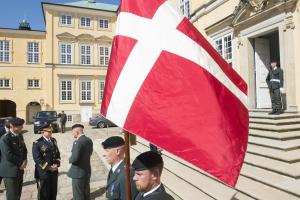
    Image credit: Danish Government.

    Denmark began supporting UN peacekeeping during the Cold War because it allowed Danish decision makers to promote their interests and values at the same time. UN peacekeeping was regarded as good for national security because it lowered international tension and provided a way of supporting Denmark’s key NATO allies without angering the Soviet Union. UN peacekeeping was also good for Danish values as it supported Denmark’s vison of a rule-based international society characterized by peaceful conflict resolution. The successful peacekeeping operation launched in 1956 in order to defuse the Suez crisis strengthened Denmark’s support for peacekeeping.

    The praise earned for the participation in this mission made Danish decision-makers realize that UN peacekeeping also provided an effective way of enhancing Denmark’s international prestige and influence. By the late 1950s peacekeeping had been internalized as part of Denmark’s foreign policy identity. Danish governments now portrayed UN peacekeeping as something ‘natural’ that Denmark should be proud to support. In 1964, Danish Foreign Minister Per Haekkerup even stated that it was a ‘duty’ for small nations like Denmark to support UN peacekeeping. This was not mere rhetoric. A feeling that one could not turn down a UN request thus influenced the 1964-decision to provide 1,000 personnel for a new UN peacekeeping operation on Cyprus.

    This mutually reinforcing interaction between interests, values and identity meant that Danish support for UN peacekeeping operations became routine. The absence of operational setbacks and casualties allowed this routine to produce a steady supply of Danish peacekeepers for the remainder of the Cold War. 34,100 Danish soldiers served on UN operations in the 1948-1989 period. Denmark had an average of 811 soldiers continuously deployed abroad and contributed eight percent of the total number of UN peacekeepers (419,100) during this period, making it one of the largest UN troop contributors per capita.

    The operational difficulties that the UN encountered in the Balkans in the early 1990s broke this routine. They served as an external shock undermining Denmark’s positive perception of UN peace operations. NATO’s successful bombing campaign and subsequent takeover of the UN operation in Bosnia in 1995 made the UN less attractive from an interest perspective. Denmark had always used UN peacekeeping as a way supporting its great power allies in NATO, and when they chose to abandon the UN in favour of NATO, Denmark followed suit.

    The strategic failure of the UN operation in Bosnia, culminating in the Srebrenica massacre, also gave rise to the perception in Denmark that UN peacekeeping was ill-suited for ‘doing good’ in the post-Cold War era. The tactical success enjoyed by the Danish tank squadron in Bosnia in 1994 reinforced this perception. One engagement (Operation Hooligan Buster) made international headlines. On 29 April 1994, the Danish tanks successfully fought their way out of a Serb ambush firing their 105 mm canons 72 times. They also blew up an ammunitions depot killing an estimated 150 Serb soldiers. This skirmish became a watershed. Denmark’s great power allies showered Denmark with praise, and the Danish use of tanks influenced NATO’s and UN approaches to ‘robust peacekeeping’. The charismatic Danish tank commander, Lars R. Møller, became a national hero, and Danish decision makers became convinced that peacekeeping was best conducted with combat capable units; a perception subsequently reinforced by NATO’s successful enforcement missions in the Balkans.

    Operation Hooligan Buster set in motion a process that in the course of the next two decades transformed Denmark’s foreign policy identity. The Danish peacekeeper, hailed for his ability to keep the peace without firing his weapon, was replaced by a new hero: the Danish warrior who made a difference on the battlefield. After Operation Hooligan Buster Danish politicians displayed far greater willingness to use force beyond self-defence. Denmark made large army contributions to NATO’s enforcement operations in the Balkans, advocated military invention in Albania as OSCE chairman in 1997, and allowed Danish fighter aircraft to conduct strike missions during NATO’s Kosovo War in 1999. Public support for the Kosovo war was higher in Denmark than anywhere else, and a large majority favoured contributing to a land war in case the air campaign failed. The strong public support for the war took Danish decision makers by surprise. Danish Minister of Defence Hans Haekkerup interpreted it as ‘a breakthrough in the history of Denmark’ and as proof that the Danish foreign policy identity had changed.

    Denmark and the War on Terror

    The US-led war on terror launched in response to the September 11 attacks in 2001 reinforced the Danish preference for NATO- and US-led operations and the emerging warrior identity. Denmark provided forces for the US-led wars against the Taleban and Iraq as well as the subsequent stabilization missions. The lion’s share of the approximately 20,000 Danish military personnel serving on international missions in the decade following 9/11 served in these two missions.

    The Danish participation in the NATO and US missions in Afghanistan proved very costly. Denmark lost more soldiers in Afghanistan (43) than on all other international missions conducted by the Danish armed forces since World War Two, and a 20 billion DDK price tag (2001-2017) made it the most expensive international operation ever conducted by Denmark.

    Surprisingly, the high costs and the less than satisfactory outcome of the Afghanistan war did not undermine domestic support for the mission. By 2011 when all 43 fatalities had occurred and it was clear that the mission would not succeed, 46% of the Danish population and a large majority in parliament continued to support it.

    The predominant understandings of Danish interests, altruism and foreign policy identity explain why. The government narrative portrayed the war as being in Denmark’s interest because it supported the United States and NATO and reduced the risk of terror attacks on Danish soil. The narrative also emphasized that the operation enhanced Denmark’s standing and influence in NATO and in Washington. The mission was portrayed as the right thing to do in altruistic terms, because it helped the Afghan people and in particular the Afghan women. Finally, the war reinforced the warrior ethos in the armed forces and their martial prowess, highlighted in a series of bestselling books, was a source of considerable national pride.

    Conclusion

    The current high level of Danish support for NATO- and US-led operations is driven by a mutually reinforcing combination of interest, altruism and identity that resembles the one that underpinned Denmark’s strong support for UN peace operations during the Cold War. An interest in supporting Denmark’s great power allies was an important driver then and now. A major Danish return to UN peace operations NATO has enhanced its military presence in Eastern Europe significantly since then, and it is currently asking Denmark to make a greater army commitment to deter Russia in Eastern Europe than it ever made in Afghanistan. This makes it impossible for Denmark to contribute to UN-led operations with anything but small personnel contributions officers and critical enables. In sum, all indications are that Denmark’s military support for UN peacekeeping will remain at the low level that has characterized it since 2001.

    Dr. Peter Viggo Jakobsen is an Associate Professor at the Royal Danish Defence College and a Professor (part-time) at the Center for War Studies at University of Southern Denmark. His is the author of Nordic Approaches to Peace Operations: A New Model in the Making? (London and New York: Routledge, 2009) and several other publications on (UN) peace and stabilization operations.
  • Global Responses to Global Threats: Sustainable Security for the 21st Century

    This major report was the result of an 18-month long research project examining the various threats to global security, and sustainable responses to those threats.

    Current security policies assume international terrorism to be the greatest threat to global security, and attempt to maintain the status quo and control insecurity through the projection of military force. The authors argue that the failure of this approach has been clearly demonstrated during the ‘war on terror’ and it is distracting governments from the real threats that humanity faces.

    Unless urgent action is taken within the next five to ten years, it will be extremely difficult, if not impossible, to avoid a highly unstable global system by the middle years of the century.

    Download in English or Spanish as a PDF

  • SDC working paper

    Food security will remain out of reach for many people, especially women and children, in the Lao People’s Democratic Republic, or Laos, if the country continues to emphasize commodities and resources development at the expense of the environment and livelihoods while ignoring global trends for food and energy. Read more »

  • Sustainable Security

  • Climate change, conflict and fragility: understanding the linkages, shaping balanced responses

    Thousands of negotiators, activists and lobbyists have descended on Copenhagen for two weeks to attempt to seal a global deal on climate change. Issues on the negotiating table include how much wealthy polluters like the US put towards financing measures to help people in poorer countries cope with the impacts they are already experiencing, and how the rich states will share their low carbon technology with poor states so that the unindustrialised world can still develop without relying on fossil fuels.

    But as the negotiations unfold, one very real issue unlikely to be given much discussion space is the heightened risk of violent conflict. Factors linking climate change and the potential for conflict include a number of powerful threats to human security, such as water scarcity, land degradation, decreased food production. The risk will be greatest in poor, badly governed countries, many of which have a history of armed conflict. International Alert’s report ‘A Climate of Conflict’ estimates that just under three billion people live in 46 conflict-affected countries, where climate change could create a high risk of violent conflict, and a further in two billion people living in an additional 56 countries face a high risk of instability as a result of climate change.

    Attention to the security implications of climate change is slowly increasing among politicians and strategists in the developed world, yet climate change negotiators are largely silent on the matter. Specialists in climate change are not generally well informed about it and, although development specialists universally agree that the poorest will be worst hit by climate change, they have not resolved how to deal with the issue of fragile states in climate negotiations.

    It is essential to address this issue, but necessary to do so carefully. The potential conflict implications are among the most compelling arguments for rich states to take action against climate change. But there are three notes of warning.

    First, there is the risk of over-stating the conflict dimension in an attempt to persuade a sceptical, even disaffected or merely ill-informed public to support cuts in carbon emissions. Fuelling fears that climate change will generate threats like terrorism and mass immigration* will lead to oversimplified and inaccurate perceptions of the security angle. In the political debate, exaggerated positions will inevitably be vulnerable.

    Secondly, securitising the issue runs the risk of a damaging response that overlooks cost-effective and sustainable options in favour of high cost and probably ineffective military ones. The point here is that policy responses must be based on a thorough understanding of not only the reality of the conflict risk but also of how it is shaped. Effects of climate change such as more frequent natural disasters, long-term water shortages and food insecurity could combine with other factors and lead to violent conflict. The reason why this can happen lies in the context of poverty, weak governance, political marginalisation and corruption. These factors limit the capacity to adapt to climate change and simultaneously drive conflict. Policy responses need to look not only at the immediate risk of violence, for example by reforming the security sector, and not only at the specific environmental impacts, for example by taking steps to reduce the risk of disaster, but also at the broader context of failures of governance.

    Thirdly, climate negotiators have not paid attention to fragile states and conflict risks. Most negotiators are climate and legal experts whose remits do not extend beyond the talks. They have neither incentive nor expertise for taking account of the complex web of that links climate, conflict, governance and development.

    Nonetheless, to be effective, the global agreement must make it possible to address these linkages. This means taking the discussion beyond the question of how to raise climate funds for adaptation and mitigation, into thinking about how to spend and what governance and institutional changes are needed so spending can be effective.

    Policies for adaptation have to respond to the political and social realities in which they are intended, or they will not work. Climate change impacts are linked to conflict, development, government, human rights, trade and the world economy. The problems are interlinked and so the responses must be interlinked.

    International Alert’s latest report ‘Climate Change, Conflict and Fragility’ recommends that adaptation strategies should be more conflict-sensitive. Water management in water stressed countries for example should be decided by understanding the systems of power and equity. This must involve the poorest and most marginalised, and avoid pitting groups against each other.

    Likewise, peace-building needed to be climate-proofed by paying attention to the availability of resources for livelihoods such as agriculture – which could be under pressure because of climate change – for returning ex-combatants or people displaced by conflict.  For example, in Liberia, which is in the process of recovery from war, many ex-combatants are returning to villages hoping to make a living from agriculture. But climate scientists predict that crop yields in parts of West Africa could halve by 2020. The prospect arises of returned fighters becoming resentful unemployed farmers, and thus potential recruits, with their combat experience, in a new conflict.

    The efforts of rich countries to shift to a low-carbon economy must be peace-friendly and supportive of development. We don’t want a repeat of the hasty actions in 2007/8 that saw the diversion of food crops and land use to biofuel production playing a role in pushing food prices up, causing conflict in over 30 countries.

    Getting the negotiators in Copenhagen to understand these interlinkages will mean there’s a good chance that responses to climate change could yield a double dividend: increasing resilience to climate change and to violent conflict. Failure to take account of the linkages though could result in the millions or billions of dollars of new funding actually becoming part of the problem.


    *For example, see the US public education campaign on climate change, September 2009 http://www.secureamericanfuture.org/

    Janani Vivekananda is Senior Climate Policy Adviser on climate change and security at International Alert, the London-based peacebuilding organisation. She co-authored Alert’s latest report Climate Change, Conflict and Fragility, and A Climate of Conflict: The links between climate change, peace and war, published by International Alert in 2007.

  • Sustainable Security

  • Sustainable Security

  • Sustainable Security

    To understand why some groups fighting in civil conflicts target civilians more than others, it is vital to examine the role of ideology.

    Recent civil wars in Iraq and Syria underscore the fact that different armed groups fighting in the same conflict can adopt strikingly different approaches to the treatment of civilians. While historically about 40 percent of states and rebels have exercised restraint, others’ victimization of civilians has been routine and manifold. Much of the current understanding attributes these differences to armed groups’ material resources, organization, territorial control, and similar factors. While providing important insights, these accounts are incomplete at best because they either neglect or downplay the critical role that ideology plays in targeting civilians.

    Mainstream Explanations of Civilian Victimization

    Many analysts share a key assumption with the classical literature on insurgency and counter-insurgency – such as the works of T.E. Lawrence and Mao Tse-Tung – that securing the support of local populations is critical for fighting groups. Several implications are drawn. For example, groups that enjoy local population’s support may be less prone to victimize civilians, particularly in the communities that serve as their home or recruitment base. Conversely, such support can backfire because the enemy forces can attempt to raise its costs for the local population by targeting civilians in this community.

    Based primarily on the study of the Greek Civil War (1942–1949), another influential account argues that groups with higher degree of control over a territory are likely to selectively target enemy forces rather than indiscriminately attack civilians. In this view, information flows are pivotal: higher degree of territorial control means better information and this makes it possible and expedient to identify and selectively target specific individuals.

    Another assumption is that the fighting groups’ capabilities – their size, training, and experience – relative to their rivals can also affect their targeting patterns. Weak groups can be more prone to victimize civilians than stronger groups as they can fail to limit the collateral damage of their operations to civilians. Alternatively, when they lack resources to secure civilian support through offering benefits, such groups can also deliberately choose to target civilians as an alternative way to coerce such support. An analysis of violence in Afghanistan between 2004 and 2009, disaggregated by province and month, supports this view.

    The amount of material resources at the armed group’s disposal and where it obtains them may also affect its targeting patterns. If groups acquire their resources through exploiting natural resources or through foreign sponsorship, they may be more likely to attack civilians than if they depended on the local population for resources. External donor characteristics can matter as well, with a small number of democratic donors believed to have a more restraining effect than either autocratic donors or many donors.

    A survey of former fighters in Sierra Leone’s civil war (1991–2002) suggests that organizational characteristics are the pivotal factor. According to this view, civilian abuse is likely to be higher if groups rely on material incentives in their recruitment (thus attracting more opportunists), have an ethnically diverse group of fighters (thus lacking ways to control the fighters’ behavior through social pressure), and lack disciplinary mechanisms. This view resonates with Niccolo Machiavelli’s aversion toward mercenaries and Mao Tse-Tung’s insistence that “it is only undisciplined troops who make the people their enemies.”

    More recently, some analysts have drawn attention to the role of political and ethnic cleavages, which had previously been downplayed in large cross-national studies of civil wars. Based on a study of Spanish Civil War (1936–1939), one view maintains that civilians who have mobilized for one belligerent group are likely to be attacked by rivals as they would be considered assets for this group. A study of violence against civilians in African conflicts between 1989 and 2009 holds that ethnic background can serve as a cue for targeting because in an environment of uncertainty about people’s allegiances it serves as a shortcut for identifying potential enemy supporters.

    Much of this thinking on civil wars has tended to relegate ideology to a secondary role, if any at all. Yet, a notable resurgence of attention shows just how consequential ideology can be in understanding civil wars.

     Why Ideology Matters

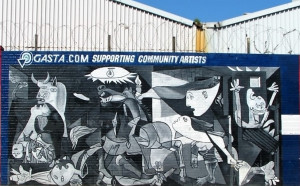
    Mural in Belfast, Northern Ireland based on the painting “Guernica” by Pablo Picasso. Image credit: Rossographer.

    Research shows that in newly democratizing countries, a combination of nationalist ideology and unconsolidated democracy can help ignite internal and international conflict in the first place. Revolutionary ideologies have historically been critical ingredients for a robust insurgency by fostering strong commitment and mobilization. They can enhance fighting capacity by boosting morale. Although often based on case studies of specific groups or lacking in-depth systematic evidence, qualitative literature on civil wars and traditional research on terrorism historically have pointed at the role of ideology in armed groups’ target selection (one solid case study can be found here).

    In a recent study our working hypothesis is that far from being a mere rhetorical device, ideology can be the key factor that explains civilian victimization patterns across fighting groups in civil wars. We draw on the established concept of ideology which sees it as “shared framework of mental models that groups of individuals possess that provides both an interpretation of the environment and a prescription as to how that environment should be structured”. We argue that its effect on civilian victimization can work through two channels.

    The first is through framing some groups as hostile to the armed groups’ cause. The ideology that an armed group espouses identifies the group’s vision and the sources of threats to achieving this vision. These threat perceptions foster identifying friends and enemies of the cause. The ideology can then frame “enemies” as legitimate targets. Belonging to a certain ethnicity or territory may be a marker, but it need not be just any civilian from within these groups that becomes a legitimate target – only those can be identified as such who are seen through the ideological prism as hostile to the group’s cause.

    However, there is nothing automatic between seeing members of a specific group as hostile and victimizing them. The second channel through which ideology can affect civilian victimization is through determining strategies that the group accepts as legitimate in achieving its vision. Of course, in some cases different types of violence may be included or excluded for strategic reasons. But a group’s ideology can also prescribe adopting a strategy that is costly for the group from the material or organizational point of view. That is, some strategies may be filtered out despite presenting strategic or material advantages. This is probably because they go against the group’s vision or its identity as a certain ideological force. Therefore, some ideologies will see civilian victimization as part of their legitimate repertoire of violence to attain its vision, while others will impose constraints on or even exclude it from the group’s approach.

    It might be tempting to follow this reasoning by drawing a typology of ideologies by their approach to civilian victimization. However, often broad ideological frameworks are adapted to local conditions – they are crystallized into specific ideologies that different groups adopt. In other words, groups in different contexts that seem to share an ideology may develop different approaches, such as European leftist groups in 1970-1990s like Baader-Meinhof Group in West Germany and the Red Brigades in Italy. Instead, we should understand an armed group’s ideology in its particular context.

    Case Study: Northern Ireland

    In our study, we examined these ideas using quantitative and qualitative empirical evidence on armed group violence in Northern Ireland’s conflict between 1969 and 2005.  This conflict provides a fertile ground for this study because it involved a number of groups that differed from one another in several ways and because there were considerable differences in civilian killings across groups, locations and time. Unlike many other conflicts, it has also been well documented on the level of individual fatalities, which makes it possible to test our ideas with more nuance than previous studies. Our dataset provides details on almost all fatalities directly attributed to the conflict (3,702) and allows disaggregating them by perpetrator group, location, victim’s identity, etc. Then we try to see whether different perpetrator group characteristics, such as their size, structure, or ideology, consistently predict whether the victim is civilian or combatant as well as the victim’s ethnic identity. We do this in a framework that simultaneously accounts for all suggested factors.

    While the two main ideologies embraced by the fighting groups – Irish Republicanism and Unionism – shared similarities, such as the focus on nationalism, historically they developed distinct approaches. Drawing on the civic nationalist ideology of the French Revolution, Irish Republicanism stressed the oppression of all Irish people and adopted an anti-colonialist identity that aimed to end imperial control. This entailed a reluctance to target would-be members of the “imagined community” of free Ireland and instead emphasized focusing on combatants who were viewed as struggling to preserve imperial domination.

    Drawing on the historical “Protestant Ascendancy” movement, the ideology of Unionism came to emphasize a defensive settler identity that viewed Catholics as “fifth-columnist” Irish nationalists who intend to dismantle Northern Ireland and its union with Britain. We conjectured that these ideological differences were likely to shape the fighting groups’ targeting patterns. While the group ideologies were further crystallized during the course of the conflict, their key tenets remained.

    Our preliminary findings from statistical analysis suggest that the fighting group ideologies were the strongest and most consistent predictors of civilian victimization patterns. Fighting groups that embraced Unionist ideology, such as Ulster Defence Association (UDA) or Ulster Volunteer Force (UVF), were on average more likely to target civilians and launch cross-ethnic attacks on civilians, while Republican fighting groups, such as the Provisional Irish Republican Army (Provisional IRA) or Irish National Liberation Army (INLA), were on average more likely to focus on combatants. These results hold when we account for all other suggested factors, such as group size or resources. Our qualitative historical study suggests that these differences emerged because of differences in previously adopted norms, patterns of recruitment, and relations with the British state forces.

    While civilian targeting was prevalent in the initial stages of the conflict in early 1970s, over time it decreased in terms of total numbers. Republican groups were responsible for the largest number of total fatalities and Loyalist paramilitaries were responsible for the largest number of civilian killings. After mid-1970s, all three armed blocs – state forces, Unionist groups, and Irish Republican groups – killed fewer civilians than before, but relative proportions (combatant-civilian) remained the same.

    Implications

    Naturally, our study may be limited by its focus on civilian killings rather than civilian abuse more generally or our focus on one civil war. Nonetheless, our tentative findings strongly indicate that ideological factors need to be taken much more seriously than before in trying to understand and hopefully prevent civilian victimization by armed groups in civil wars. Neglecting these factors or downplaying their significance is simply dangerous. This is all the more important at the time when transmission of ideas is considerably enhanced by technology, which does not discriminate between benevolent or harmful ideologies. This, for example, is most drastically illustrated by Isil’s media-savvy, effective propaganda.

    Anar K. Ahmadov is Assistant Professor of Political Economy at Leiden University.

    James Hughes is Professor of Comparative Politics and Director of the Conflict Research Group at the London School of Economics and Political Science (LSE).

  • Climate change

    Avoiding the coming catastrophic nexus of climate change, food, water and energy shortages, along with worsening poverty, requires a global technological overhaul involving investments of 1.9 trillion dollars each year for the next 40 years, said experts from the U.N. Department of Economic and Social Affairs (UN-DESA) in Geneva Tuesday.

    “The need for a technological revolution is both a development and existential imperative for civilisation,” said Rob Vos, lead author of a new report, “The Great Green Technological Transformation”. 

    Article source: Terraviva

    Image source: Paul Keller

    Read more »

  • Sustainable Security

    One of the main problems for supporters of nuclear disarmament, in terms of their advocacy efforts, is that the experience and process of disarming will be unique for each nuclear possessor state and constitute a journey into the unknown. Thus while South Africa and former Soviet states Ukraine, Kazakhstan and Belarus dismantled or gave up their nuclear arsenals, there is a limited amount we can learn from their experiences in terms of how existing nuclear possessors may disarm.

    What’s more, nuclear disarmament can seem negative and intangible, perhaps because there is no common idea of what it would look or feel like. In order to address this it is useful to explore different approaches to abolition, for example, the debate between unilateralists and multilateralists, so we can be clearer about the causes and consequences of disarmament. This article therefore focuses on what the UK can do to help create a nuclear weapons free world (NWFW) as a vital public good.

    The fall and rise of unilateralism 

    Disarmament Sculpture (Twisted Revolver) covered in ice and snow, outside the visitors entrance to the United Nations Building in New York City.

    Disarmament Sculpture (Twisted Revolver) covered in ice and snow, outside the visitors entrance to the United Nations Building in New York City. CC: Luke Redmond via Flickr.

    Labour’s new leader Jeremy Corbyn has long been committed to unilateral nuclear disarmament and has recently revived the debate over whether the UK should be a nuclear weapon state (NWS). Unilateralism would entail the UK eliminating its nuclear arsenal without seeking concessions from other states. From the late 1980s up to the Scottish National Party’s breakthrough in 2015, all of Britain’s main political parties rejected this stance. The parliamentary consensus has instead favoured multilateral disarmament, commonly understood to mean a step-by-step negotiating process involving the other nuclear powers with Trident as a bargaining chip. Other steps the UK has taken in order to support this approach include ratification – unlike the US – of the Comprehensive Test Ban Treaty and support for a verified Fissile Materials Cut-off Treaty, albeit one which only limits future production of such materials.

    This approach might appear, at first glance, to be practical, with the US and Russia taking the lead, based on the fact that they have 93% of the world’s nuclear weapons, and to align with public opinion. For example, whilst some surveys show that a majority of voters (54%) would prefer Britain to abandon its nuclear weapons and not replace them, other surveys show that a larger majority (81%) favour an international plan ‘for totally eliminating nuclear weapons according to a timeline’. Thus, as a 2007 study by the Simons Foundation found, the UK ‘boasts a high level of support for elimination of nuclear arms and nuclear testing all over the world’.

    Given the significant public support for abolition and the fact that the UK, like all other NWS, has dual obligations under the nuclear non-proliferation treaty (NPT) – firstly to eliminate its own nuclear arsenal and secondly to help create the conditions for a NWFW – it is apparent that the UK could be doing much more and without waiting for reconciliation between China, Russia and the US.

    As the NPT makes clear, the elimination of nuclear weapons and the achievement of general and complete disarmament will be facilitated by ‘the easing of international tension and the strengthening of trust between States’. This should lead the UK – both as an NWS and a permanent member of the UN Security Council – to consider how it may act responsibly, both enabling nuclear possessors to move towards disarmament and reducing the incentives for others to seek non-conventional deterrents.

    British interpretations of multilateralism

    During Gordon Brown’s tenure as Prime Minister the Foreign and Commonwealth Office produced an information paper entitled ‘Lifting the Nuclear Shadow: Creating the Conditions for Abolishing Nuclear Weapons’, wherein the government outlined how it would fulfil its commitments under the NPT. The document stated that the UK would ‘continue to work towards the total elimination of our own nuclear arsenal and all others through multilateral, mutual and verifiable agreements’. Furthermore, when ‘useful’, the government would willingly include in any negotiations ‘the small proportion of the world’s nuclear weapons that belong to the UK.’

    Using such vague and misleading language to wriggle out of national responsibilities is an unedifying but unfortunately common trait of official documents, with the government having previously stated that the NPT ‘does not establish any timetable for nuclear disarmament’. Firstly, as former US Ambassador for the NPT Lewis Dunn notes, the 120-member Non-Aligned Movement ‘has long argued for negotiation of a time-bound framework for eliminating nuclear weapons’, yet this has been strenuously resisted by the UK and other nuclear powers.

    Secondly, does the UK’s stance mean it concurs with NATO’s 2012 Deterrence Defence Posture Review, which declared that ‘as long as nuclear weapons exist, NATO will remain a nuclear alliance’? The question here is how soon Trident would be put on the table in a multilateral negotiating process for disarmament given that it is assigned to NATO. For example, does the UK government think that including Trident would only be ‘useful’ after Russia and the US agree bilaterally to reduce their nuclear arsenals from over 7,000 weapons each to low numbers approaching the 200-300 weapons that China, France and the UK each maintain? The need here is for more clarity from the government so the public can get a better sense of the timescale that is being proposed.

    Lifting the Nuclear Shadow goes on to acknowledge that NWS have a ‘special responsibility’ to lead on eliminating nuclear weapons, but that this first requires certain ‘political and security conditions’ to be met, via ‘a co-operative project with the active engagement of the entire international community.’ If it is accepted that a more cooperative and peaceful world will benefit multilateral disarmament efforts how can we judge whether the UK has lived up to its ‘special responsibility’ in this area?

    Creating the conditions for a NWFW 

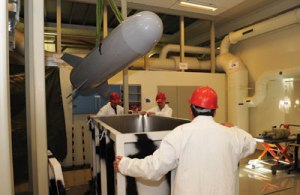
    A verification exercise took place at the mock-up nuclear weapon dismantlement facility in Norway in June 2009

    A verification exercise took place at the mock-up nuclear weapon dismantlement facility in Norway in June 2009. CC: http://www.norway-un.org

    A brief review of the UK’s actions in recent years shows that in several ways the UK has directly undermined efforts for disarmament to make headway. This point is most obviously illustrated by the fact that the UK is planning to spend tens of billions of pounds on replacing Trident – an immensely powerful type of nuclear weapon integrated within an aggressive military alliance that does not rule out the first use of nuclear weapons. Significantly, the UK does this whilst seeking to portray itself as the most progressive NWS and an active supporter of a NWFW in its public diplomacy.

    In reality the UK has, so far, not taken any unilateral or multilateral disarmament steps. What the UK has done, since the end of the Cold War, is to make quantitative reductions to its nuclear forces whilst acquiring, as Nick Ritchie points out, a nuclear weapons system – Trident – that provides an increased capability over its predecessor – Polaris. The reductions trend continued with the 2010 Strategic Defence and Security Review, which announced that ‘the number of warheads on board each submarine would be reduced from a maximum of 48 to a maximum of 40, the number of operational missiles on the Vanguard Class submarines would be reduced to no more than eight, and the number of operational warheads reduced from fewer than 160 to no more than 120.’

    These reductions, while unilateral, cannot be described as disarmament, because they have not taken place in a verifiable, irreversible and transparent manner as envisaged by the 2000 NPT Review Conference’s 13 steps. While the UK has so far not undertaken disarmament, it has begun to investigate how this might occur in future through initiatives with Norway and the US. These projects have brought together experts aiming to address the technical and procedural challenges of verifying nuclear warhead dismantlement.

    Understanding how nuclear possessors think

    Adopting truly progressive policies capable of fostering international cooperation would require the UK to develop an understanding of other state’s threat perceptions. For example, disarmament advocates and scholars often assert that the UK’s nuclear status legitimates nuclear possession for all, encouraging proliferation, and that this undermines the NPT.

    While it is true that Russia sees the UK’s nuclear arsenal as part of NATO’s overall military capabilities, the UK’s nuclear arsenal alone cannot be considered, from a strategic point of view, a key factor in the decision-making of any state currently possessing or with the potential to acquire nuclear weapons. Rather, it is clear from the strategic studies literature that US conventional superiority – at the head of the NATO alliance – and domestic political dynamics are far more important considerations for states, including China and Russia, because nuclear weapons are ‘force equalisers’. China and Russia thus primarily see their nuclear weapons as deterrents against the West’s overwhelming conventional military superiority and policies of containment and expansion. This should lead British decision-makers to consider carefully the legal and political consequences of overseas power projection.

    Take, for example, the UK’s involvement in NATO’s 1999 bombing of Yugoslavia (code named Operation Allied Force), which was, according to the Foreign Affairs Select Committee ‘contrary to…the basic law of the international community – the UN Charter’. According to Russian defence analyst Nikolai Sokov, the significance for Moscow of NATO’s bombing campaign was that it showed how the US could use force without the authorisation of the UN Security Council. Such considerations, for Sokov, led Russia to ‘enhance reliance on nuclear weapons in a departure from all documents adopted in the 1990s’ in order to deter the West from conducting ‘limited conventional wars’, principally in Russia’s near abroad.

    More widely, as Raju Thomas notes, NATO’s ‘unrestrained use of force’ gave ‘an additional post-hoc justification for an Indian nuclear deterrent’, in the ‘context of the new Western-dominant world order’, bringing nuclear powers China, India and Russia together in protest against the bombing. These three states shared concerns about aggressive intervention being justified on humanitarian grounds, as each had to deal with a potentially secessionist region with parallels to Kosovo. For China this was Tibet and Xinjiang, for India, Kashmir, and for Russia, Chechnya. Subsequent US- or NATO-led regime-change operations in Afghanistan, Iraq and Libya have also stoked concerns, not least in Iran, about where the West would seek to intervene next.

    Profiting from proliferation 

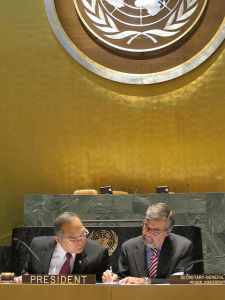
    The top leadership consult seconds before opening the last session of the 2010 review conference of the Non-Proliferation Treaty on Nuclear Weapons (NPT). From left; NPT President Ambassador Libran N. Cabactulan and NPT Secretary-General Tom Markram.

    The top leadership consult seconds before opening the last session of the 2010 review conference of the Non-Proliferation Treaty on Nuclear Weapons (NPT). From left; NPT President Ambassador Libran N. Cabactulan and NPT Secretary-General Tom Markram. CC: UN Norway (New York). Image via: Flickr

    Perhaps as a means of placating Indian anger and drawing it into the Western orbit, in 2008 Washington made a highly controversial deal with New Delhi, providing assistance to India’s civilian nuclear energy program, and greater help with other energy and satellite technology, despite India refusing to join the NPT. The UK followed the US in July 2010, sealing an agreement with India for the export of civil nuclear technology that continues to this day. As Nicolas Watt reported, this move raised ‘fears of leakage’ to India’s ‘military nuclear programme’, meaning the UK would be engaged in blatant proliferation which would likely lead to responses from New Delhi’s rivals in Beijing and Islamabad.

    The British government has also in recent years lobbied for India to join the Nuclear Suppliers Group, which was interpreted as a way of boosting India’s standing as ‘an atomic power’ and thus provide a larger export market for Western technology. Yet, as Fredrik Dahl explains, China and other states have questioned whether India should be given exceptional access ‘into a key forum deciding rules for civilian nuclear trade’ despite being outside the NPT, under which it would have to commit to disarmament.

    The UK could also support non-proliferation by carefully considering how arms transfers affect political dynamics in regions suffering from conflict. For example, arming human rights abusing regimes in the Middle East contributes to tensions and reduces the chances of establishing a Weapons of Mass Destruction Free Zone, which the government claims to support.

    Overall, if progress on non-proliferation and disarmament is to be made, short-term economic and political goals must not be allowed to trump critical national and international security concerns. Advocates of multilateral disarmament therefore need to produce and enact policies that make sense across government. Moreover, without a clear understanding of the various economic, psychological and strategic factors driving proliferation and what might enable disarmament, it will be a meaningless exercise for politicians to argue that Britain favours the international elimination of nuclear weapons.

    Tim Street is the Senior Programme Officer on the Sustainable Security programme at Oxford Research Group (ORG) and a PhD student at Warwick University.