Blog

  • Oxford Research Group Director Dr. John Sloboda launches SustainablySecurity.org

     Swimming Upstream to Sustainable Security

    “Extremist violence and terrorist attacks are often the final, murderous manifestations of a long process rooted in helplessness, humiliation and hatred. Therefore, any comprehensive approach has to also address the upstream factors, the conditions that help fuel violent extremism.”  These words come, not from a left-leaning NGO, but from the mouth of John Brennan, a long-serving CIA officer, who is now President Obama’s senior advisor on counter-terrorism.   They come in a major address given last month at the Centre for Strategic and International Studies, a highly ‘establishment-linked’ Washington think-tank.

    These sentiments mark a huge shift in rhetoric and focus from the mindset of the post-9/11 Bush administration. For a spokesperson of the President to suggest that the USA is “committed to using every element of our national power to address the underlying causes and conditions that fuel so many national security threats, including violent extremism. We will take a multidimensional, multi-departmental, multinational approach” seems a million miles from George Bush’s assertion that, “You’re either with us or against us in the fight against terror.” However, sentiment alone is not enough. New thinking requires new kinds of action on the international stage, and concrete signs of such action are few and far between.

    Since 9/11 we  have seen year on year increases in military budgets, yet the dominant US-led project funded by these increases has yielded few unambiguous security gains. Despite US troops now beginning to withdraw from Iraq, the violence that has cost the lives of at least 100,000 Iraqi civilians continues; truck bombs and mortars killed 95 people on one day alone in August this year. General Stanley McChrystal, the top US Commander in Afghanistan, last week submitted a review to US and NATO commanders in which he outlined grave concerns about the failure of current strategy there.  The resurgence of the ‘Taliban’ is likely to lead to a separate request that the US administration consider allocating extra troops. For the time being, the focus is not on achieving long-term security, but rather on avoiding immediate and humiliating defeat.
     
    The war on terror has created over 4 million refugees and resulted in the detention of over 120,000 people without trial, some for more than 6 years.  Despite this, the threat of terrorism is no doubt still real; al-Qaeda’s remaining leadership, which has most likely moved across the border from Afghanistan to Pakistan, still wields influence. The Somali al-Shabaab has perhaps come under the sway of such influence and lawless Somalia represents a potential future launching point for terrorist attacks. Although previous attempts to tackle the problem may have prevented terrorist attacks in the short-term, little has been done to eliminate the long-term threat.
     
    It is being increasingly realised that to effectively tackle the security problems the world faces,  resources must be diverted away from military spending towards diplomacy and development to address the conditions that ferment radicalisation amongst the marginalised. But the specific details of how this should best be done are still some way from being articulated, let alone turned into workable policies.   The global financial crisis has meant that military budgets are now under greater scrutiny. In the UK, following the 2010 general election, the new government will hold a defence spending review. The review will provide a key opportunity to reconsider costly projects such as the replacement of trident and the building of two new Royal Navy aircraft carriers. But without clear and compelling alternatives, closely articulated in detail as well as commanding strong public support, governments may squander such opportunities and adopt a “business as usual” approach, tinkering at the margins rather than adopting a fundamentally new approach.   The disappointingly status-quo oriented governmental responses to the global banking crisis of 2008 shows what the default response is likely to be unless there is compelling and persistent encouragement to “step outside the box”.

    One task is to demonstrate in necessary detail that diverting money from defence towards diplomacy and development will be cost effective in the long run.  It needs to be established beyond any reasonable doubt that responses that attempt to control the symptoms of insecurity have proved more expensive than responses that address the root causes. For instance, in the 15 years from 1990 to 2005 conflict had an economic cost to Africa’s development of $284billion. As the IANSA, Oxfam, and Saferworld report that identified this figure states: “If this money was not lost due to armed conflict, it could solve the problems of HIV and AIDS in Africa, or it could address Africa’s needs in education, clean water and sanitation, and prevent tuberculosis and malaria.” Whilst widening social divisions, poverty and injustice exist; radical groups are always likely to find recruits amongst the marginalised.

    Even with increased resources, such issues cannot be tackled by one state alone, however powerful. Approaches to development must be collaborative. The often-uncoordinated actions of aid agencies and donor countries have at times proved counterproductive. For this reason, another task facing the world is to work out how to productively strengthen the capacity of regional and international organisations. More detailed attention needs to be given to showing how organisations such as the UN can better facilitate co-ordinated efforts of nation states to address the social, economic, and political problems that breed insecurity. Likewise, we need to examine closely how organisations such as the AU and ASEAN can be strengthened to address particular regional issues such as the absence of arms control architecture in the Asian region.

    Climate change and competition over resources represent further key challenges to global security. As with marginalisation, there is an increasing realisation that these issues can only be tackled collaboratively.  It has now been broadly accepted that the Climate Conference in Copenhagen must result in an agreement from developed countries to reduce carbon emissions by 80% by 2050, and that strong targets are agreed in the short to mid-term (40% by 2020 from a 1990 base). But even these will not be sufficient unless developing countries likewise commit to ambitious reductions in carbon emissions. Is there yet sufficient clarity about how they will be given the appropriate support to do so by their more developed counterparts? 

    We face multiple resource crises, of food, water, and energy.  The International Energy Agency has suggested that oil supplies are likely to peak as early 2020 and an ‘oil-crunch’ is likely to occur this decade.  Competition over resources may escalate and become more aggressive.  To avoid early resource conflict, ambitious proposals such as Professor John Matthews’ bio-pact need to be developed and promoted within the international system so that robust and credible solutions are to hand as the situation becomes more critical.

    If we are to avoid future global disaster on an epic scale, then the step change in security thinking that has already begun must result in the adoption of sustainable security policies that encompass the principles of collective, human and just security.  Left to follow their own momentum, governments are unlikely to fully embrace sustainable security.  When seen primarily through the lens of national interest, sustainable security concepts will tend to be appropriated (and diluted) as means to sustain the status quo and existing power relations.   If sustainable security is to become an end, with the security of humanity in its totality as the goal then community groups, faith groups, NGOs, and many other elements of civil society (including journalists) must coordinate their efforts to promote such policies. John Brenner’s call for security policies to “swim upstream” is admirable, but unless this call propels us far beyond national interest, the rapid current of realpolitik is likely to dump us all far downstream.  We hope that this new website will provide a focus for swimming strongly and persistently upstream.  


  • Competition over resources

    This major report was the result of an 18-month long research project examining the various threats to global security, and sustainable responses to those threats. Read more »

  • Marginalisation of the majority world

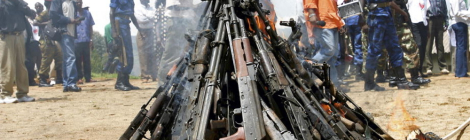
    Writing for the New Security Beat, Schuyler Null discusses a recent event on creating a new national security narrative for the US held at the Woodrow Wilson Center. The event was based on a white paper by two active military officers writing under the pseudonym “Mr. Y” (echoing George Kennan’s famous “X” article). In “A National Strategic Narrative,” Captain Wayne Porter (USN) and Colonel Mark Mykleby (USMC) argue that the United States needs to move away from an outmoded 20th century model of containment, deterrence, and control towards a “strategy of sustainability.”

    Image source: LizaP.

    Read more »

  • Sustainable Security


    Food insecurity small

    The United Nations Development Programme (UNDP) defines food security as “all people at all times having both physical and economic access to the basic food they need”. However, due to a complex range of interconnected issues from climate change to misguided economic policies, political failure and social marginalisation, over 2 billion people across the world live in constant food Insecurity. It is important to take a sustainable security approach to look at the importance of “physical and economic access to basic food” by exploring the links between food insecurity and violence.

    A recent article published by the journal Conflict, Security & Development examines food riots as representations of insecurity and looks at the relationship between contentious politics and human security.

    Thomas O’Brien, author of the article, argues “the upheaval caused by a food riot can lead to lasting instability and violence as social and political structures are challenged”. Global rises in basic food prices triggered demonstrations and often violent protests in “over 30 countries across Africa, Asia, Latin America and the Middle East in 2007-08”. The article puts recent food riots and the current global food crisis in historical perspective. Food riots are about more than “just access to food”.  They represent dissatisfaction with political structures and perceived injustices.

    It is important to note that “the extreme nature of the rise in food price in the absence of much evidence of food shortages, left a sense of something unnatural about the way food markets were working”. Although poverty, weak states, ineffective civil society and lack of political freedom all contribute to food insecurity and the possibility of violent food riots, we cannot ignore to challenge underlying transnational and global power structures: “146 protests in 39 countries over the 1976-92 period were linked to the imposition of International Monetary Fund and World Bank structural adjustment policies.” Food security is fundamental to human security and needs to be approached by addressing underlying causes and drivers. A sustainable response to food insecurity would take global cooperation, justice and equity as key requirements.

    An often mentioned driver of food insecurity is climate change. Climate change already has a great impact on global security concerns and the physical, social and economic effects will undoubtedly only be exacerbated in the near future. Increasingly high temperatures and little or inconsistent rainfall have devastating effects on crop yields in places such as India, Africa’s Sahel region and the mid-western United States.

    The catastrophic food crisis in Niger in 2005 for example was largely attributed to the effects of climate change and competition over limited resources. Years of too little and too inconsistent rainfall have meant devastating droughts and diminishing harvests in this Sahel country of west Africa which has the highest birth rate in the world. Increasingly advanced desertification due to climate change means competition and potentially violent conflict, over limited resources such as water and arable land, intensifies.

    In the 2005 food crisis however, although thousands of children died of malnourishment, Niger had produced enough food to feed its population. The real issue was a food shortage in neighbouring Nigeria. Nigeria has an economy based primarily on oil exports with a significantly weakened agricultural sector. Instead of Niger feeding its own population, much of the harvest was sold to wealthier Nigeria at prices much higher than anyone in Niger could have afforded. This is a good example of why free market economy and trade liberalisation do not necessarily benefit all parties involved. Writing about the great famines of the last century, Nobel laureate Amartya Sen noted “a drought is natural but famine is man-made”. What this tells us is that although the challenges we face by climate change are serious threats, there is much that can be done to ensure more food security through political and economic policies.

    Farmers in Niger are struggling. But so are farmers in Jamaica. In contrast to Niger, Jamaica has a wealth of fruit, vegetables, fish and an abundance of fertile land. About one fifth of this island’s population is employed in the agricultural sector. Still, farmers are struggling to survive because they cannot compete with the much lower prices of subsidised agricultural imports from the USA. As cheap foreign products flood the market, Jamaican prices are driven down which makes local food production by and large unprofitable. As they rely more on foreign food imports, Jamaicans will be increasingly vulnerable to price volatility on the global marketplace. With the average Jamaican spending about half of household income on food, such vulnerability to price changes is a real danger to food security.

    Importing less foreign food products is a difficult matter for Jamaica because of the strict trade liberalisation policies imposed on the country through its debt relief agreements. One could also argue that if it is cheaper for Jamaica to import food than to produce its own, why should it still encourage its local agricultural sector? When a country is dependent on food imports, it cannot assure food security for its population.

    So far US imports have been much cheaper than local Jamaican produce. 2012 however has seen the “worst US drought in 50 years” according to last month’s Aljazeera article entitled Food riots predicted over US crop failure. “Grain prices have skyrocketed and concerns abound the resulting higher food prices will hit the world’s poor the hardest- sparking violent demonstration” says the newspaper. Corn is a primary staple in Sub-Saharan Africa, Central and South America, and prices have already gone up 60 per cent since June because “the United States accounts for 39 per cent of global trade in corn and stockpiles are now down 48 per cent” due to the drought.

    Price fluctuations on the global food market do not affect all people in the same way as “people in wealthy industrialised countries spend between 10 to 20 per cent of their income on food. Those in the developing world pay up to 80 per cent. According to Oxfam, a one per cent jump in the price of food results in 16 million more people crashing into poverty.”

    A sustainable approach to food security would address underlying forces such as climate change, economic and political policies and social marginalisation.

    Paul Rogers, expert on global conflict and consultant to the Oxford Research Group on global security, was recently featured on the BBC Radio 4 programme Costing the Earth. When asked whether free markets can help feed us, he replied:

    “It will contribute in some way, but I think it is fairly minimal. There are far more important things to consider. Look at it this way: Back in the world food crisis in the early 1970s, which was the worst for about 80 years, there were about 450 million people malnourished.  Now the figure is closer to 800 million. Now, that malnourishment and lack of food is not generally because there isn’t enough food to go around. Even at the height of that crisis there was still half the normal reserve. It is because people cannot afford to get the food or to buy the food. […]  If you are looking at the situation of poor people across the majority world, there has to be some way in which we can actually improve the production of food in and around those areas to provide greater resilience in the face of what is coming because beyond all of this is the whole issue of climate change. I think we will have a wakeup call this year in terms of what might come.”

    Anna Alissa Hitzemann is a  Peaceworker with Quaker Peace and Social Witness. She currently works with Oxford Research Group as a Project Officer for the Sustainable Security Programme, with a focus on our ‘Marginalisation of the Majority World’ project.

    The Conflict, Security and Development article Food riots as representations of insecurity is available for paid download here
    The AlJazeera article Food riots predicted over US crop failure is available here
    The Pulitzer Center for Crisis Reporting project Agriculture and Jamaica’s rural poor is available here
    Paul Rogers’ Monthly Global Security Briefings can be read and subscribed to here
    Image source: Dioversity International
  • Sustainable Security

    Contributing an Article

    We are always on the lookout for new authors with new perspectives to add to the debate on the blog – especially if you think we’ve missed something!

    We aim to address a wide range of evident and emerging security issues and take a broad and integrated approach to the term ‘security’. Generally, we look for insightful pieces which seek to explore solutions for ongoing security situations and the underlying issues which drive them. While we do place an emphasis on our ‘key’ drivers (climate change, marginalisation, competition over resources and militarisation), contributors should not feel limited to these subjects alone.

    Our current contributors are academics, practitioners, researchers and analysts working on global security.

    Please note that, as a not-for-profit blog that serves as a resource for interested readers, sustainablesecurity.org does not have the resources to pay contributors.

    If you are interested in contributing an article, please get in touch with us using the form to the right.

    Guidelines

    • 1,400 words max.
    • Please fact-check your article, especially if the subject is controversial or emerging . Although we check submissions carefully, authors are ultimately responsible for the factual accuracy of their contributions.
    • We do not use footnotes or endnotes. Embedded links for information that is sourced from other websites are a great opportunity to support your argument and opinions, especially for subjects that are not common knowledge. Please be sure to include a hyperlink for specific statistics and quotations.
    • Spelling: UK or US English – we don’t mind which, as long as it is used consistently throughout your article.
    • Please avoid unnecessary jargon and explain any that is used in a clear and concise manner.
    • You are welcome to cross-post your article in other places if we are accredited as the original site of publication.
    • We do not reprint pieces published elsewhere (with the exception of Sustainable Security programme staff articles that have been featured in the media).

    Legal stuff…

    All content and downloads are licensed under a Creative Commons Attribution-NonCommercial-NoDerivs 3.0 Licence unless stated otherwise.

    We look forward to hearing from you!

    SusSec Team

  • Sustainable Security

  • Sustainable Security

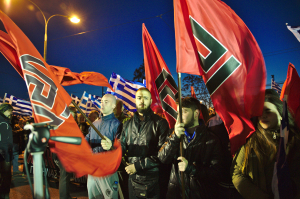
    Golden Dawn, a Greek Neo-Fascist party, has gradually enjoyed greater success in Greek and European parliamentary elections. What are the drivers behind this development?

    The Greek Golden Dawn, a violent neo-Nazi party, has remained in the margins of the Greek political system for most of its political life. However, within the context of the emerging economic crisis both in Europe and in Greece, the party marked an electoral breakthrough in May and June 2012, receiving 7 per cent of the vote in May and 6.9 per cent in June, translating into 21 and 18 parliamentary seats out of 300 respectively. As the economic crisis unfolded, and societal upheaval in Greece became reinforced by the emerging migration crisis, the party retained its support in the 2014 European Parliament Elections receiving 9.38 per cent of the vote; and in the January and September 2015 general elections, when it retained third place in the party system with 6.28 and 6.99 per cent of the vote respectively.

    The ideology of Golden Dawn

    golden_dawn_members_at_rally_in_athens_2015

    Image by Wikimedia Commons.

    The Golden Dawn is unlike all other parties in the Greek parliament; and most other far right parties in Europe. While the party itself rejects the fascist label, it nonetheless espouses all core fascist- and more specifically Nazi- principles. In our book, we show the party rejects liberalism and socialism and endorses what it terms the ‘third biggest ideology in history’, i.e. nationalism, combined with support for an all-powerful state premised on ‘popular sovereignty’. In its manifesto the party states that being a member of the Golden Dawn entails the acceptance of the following principles: the establishment of the state in accordance to nationalism; the moral obligations that derive from this ideology including the rejection of any authority that perpetuates societal decline; the acceptance of nationalism as the only authentic revolution; the establishment of the popular state in which there are no inequalities on the basis of wealth; racial supremacy and more specifically the belief in the continuation of the ‘Greek race’ from antiquity to the modern day; the idea that the state must correspond and be subservient to the nation/race; and the nationalization of all institutions.

    The fascist myth of palingenetic ultra-nationalism constitutes a key ideological premise underpinning the party’s discourse. The ideology of the Golden Dawn may indeed be categorised within the ‘ethnic nationalism’ variant, emphasising blood, geneaology and the perennial nature of the Greek nation. The party emphasises ties with ancient Greece, past wars, imperial experience during the Ottoman years and invasion in the 1940s. In this context, the party makes frequent references to ancient Greece, emphasising the heroic traits of those belonging to the Greek nation. Historical figures, whether heroes of ancient Greece, Byzantium, the Greek War of Independence, the Second World War or Cyprus are glorified for their heroism, bravery and sacrifice. By referring to a very large array of officially recognised historical events, personalities and national identity traits and placing them within the ethnic election framework, the Golden Dawn successfully integrates them into its ultra-nationalist palingenetic ideology.

    The Golden Dawn seeks ‘catharsis’. The party’s key goal is to eliminate all political divisions and cleanse the nation from outsiders. Communists are identified as those internationalists that seek the annihilation of the Greek nation. Contributing to this ethnocide are also Greece’s external enemies, which include all foreigners who according to the Golden Dawn contribute to the moral and cultural decay of Greece, for example people of Jewish origin and all immigrants.

    Militarism hence is the key to both the Golden Dawn’s ideology and organizational structures. The army is the ultimate value, they claim. A value that encloses within it ‘blood, struggle and sacrifice’. The party’s members see themselves as ‘street soldiers’ fighting for the nationalist cause. This places violence at the heart of Golden Dawn’s activities and illustrates their distinctive view of democracy as a bourgeois construct only to be used as a means for achieving their ultimate goal: its abolition, as its leader Nikolaos Michaloliakos claims. It also explains the link between Golden Dawn members and army officials, as well as the organization of ‘paramilitary orders’ or ‘battalions’.

    Therefore the party should be understood as neo-Nazi, not because of its past use of Nazi paraphernalia, but rather because its ideology and organizational structures fulfil the criteria of what constitutes a neo-Nazi group. Its association with a large number of violent acts resulted in the imprisonment of the majority of its MPs including the party leader in 2013/2014. 70 defendants, which include the party leader and the party’s MPs, went on trial in Spring 2015 on charges including murder, grievous bodily harm and sustaining a criminal organization. The trial remains on-going.

    Accounting for the rise of Golden Dawn

    How may we explain the rise and sustained support for the Golden Dawn? The Golden Dawn’s electoral fortunes have coincided with both the economic and migration crises that have affected Europe as a whole. For example, in 2012 during the peak of Greece’s economic crisis, the country’s unemployment was at 24.5 per cent with youth unemployment at 55.3 per cent. In 2013 these figures increased to 27.5 and 58.3 respectively. The government deficit was -8.6, which increased in 2013 to -12.1. In addition, Greece experienced the bulk of the migration crisis as the entry point for a high number of refugees who travel from Turkey to the islands of Kos, Chios, Lesvos and Samos. For example, an estimated number of 856.723 refugees arrived by sea in 2015 and 169.459 in 2016.  It would make sense to seek causal links between the economic and migration crises on the one hand, and the rise of the Golden Dawn on the other. However, the adoption of a comparative logic suggests that this argument does not hold when subjected to empirical scrutiny. Other European countries that were also severely affected by the Eurozone and/or migration crises have not experienced a comparable rise in support for the far right. For example, Spain’s unemployment levels are second in the EU after Greece with 24.8 per cent in 2012 and 26.1 per cent in 2013. Youth unemployment in Spain is also very high at 52.9 per cent in 2012 and 55.5 in 2013. Portugal’s somewhat lower unemployment rates at 15.8 per cent in 2012 and 16.4 per cent in 2013 are still above the EU average. The same goes for the country’s youth unemployment rates at 37.9 per cent in 2012 and 38.1 in 2013.

    We posit an alternative explanation that takes into account the broader implications of the crises of Greek society. We understand the rise of the Golden Dawn as a response to a perceived breach of the social contract in Greece. Therefore, we see this rise not as question of intensity of economic and/ or migration crisis, but rather as a question of the nature of the crisis, i.e. economic and/migration versus overall crisis of democratic representation. Extreme right parties such as the Golden Dawn are more likely to experience an increase in their support when a societal crisis culminates into an overall crisis of democratic representation. This is likely to occur when severe issues of governability impact upon the ability of the state to fulfil its social contract obligations. The perceived inability of the state to mediate the effects of the crisis and to deliver services based on the redistribution of the collective goods of the state. When state capacity is limited or perceived to be limited, then the result is the delegitimization of the party system as a whole. This is because the system is perceived as incapable to address the crisis and mediate its socioeconomic effects. This breach of the social contract is accompanied by declining levels of trust in state institutions, resulting in party system collapse.

    Conclusion

    If we are right, then the Golden Dawn is a specific symptom of a broader institutional pathology. Therefore in order to contain this phenomenon, political actors should focus on institutional reform in order to restore the domestic social contract and reintegrate key social groups back into the political mainstream. More specifically:

    1. Empower the middle class: because the middle class is key to both economic prosperity and democratic stability. Weak democratic institutions and widespread corruption have resulted in the weakening of the middle ground and this is what allows extremist groups to co-opt middle-class voters. Unless we address this institutional pathology at its core, extremism will keep recurring.
    2. Welfare reform: because the appropriation of key social groups into the mainstream depends on social security. The greater the insecurity, and the broader the populace it affects, the greater the potential of extremist elements to co-opt these social groups that would otherwise support mainstream alternatives.
    3. Strengthen civil society institutions: Because civil society fosters tolerance. Greek civil Society is weak at all levels: weak structure, limited impact and limited membership. There is a wider sentiment of public distrust towards this type of organisations in Greece because of the long tradition of corruption and clientelistic relations that prevail.
    4. Reform the education system: Because education is a key means of socialisation that institutionalises political culture. The type of socialisation that occurs from an early age at the school level is the one that becomes most embedded. And, because people of a younger age are more easily moulded into violence and extremism, they tend to occupy a large portion of far right party membership. As long as the Greek education system promotes exclusion and vilifies the other through official textbooks, it will continue to offer opportunities for right-wing extremism.

    Dr Sofia Vasilopoulou is a Senior Lecturer in Politics at the University of York.

    Dr Daphne Halikiopoulou is an Associate Professor in Comparative Politics at the University of Reading.

  • Sustainable Security


    Welcome back! We’ve just re-launched with a brand new look, great new authors and, as always, lots to say!

    Sustainablesecurity.org is space to debate, discuss and develop understandings of modern insecurity within a  ‘sustainable security’ framework, which realises the interconnected underlying drivers of challenges to global security and seeks to counter them with preventive policy solutions.

    The blog is a project of the Sustainable Security programme of Oxford Research Group, originally launched in September 2009.

    Sustainablesecurity.org is space to debate, discuss and develop understandings of modern insecurity within a  ‘sustainable security’ framework, which realises the interconnected underlying drivers of challenges to global security in the 21st century. Through topical discussion pieces, we aim to explore the integrated, preventive policies that are needed to solve these threats at source.

    As well as covering a range of pertinent modern security challenges, the website highlights four key interconnected drivers of global insecurity:

    • Climate Change
    • Competition over natural resources
    • Global militarisation
    • Marginalisation

    Articles and resources are allocated to one or more of these headings, but the overall emphasis is on the interconnected nature of these threats and the need for comprehensive, multilateral approaches to them. For a wider range of topics, try our ‘Hot Topics’ tag cloud in the sidebar to the right.

    Don’t forget, you can sign up for updates about new blog posts and special features.

    We hope you enjoy exploring the new site!

    SusSec Team

    Image source: John Martinez Pavliga

  • Sustainable Security