 By Oxford Research Group’s Sustainable Security Programme Manager Ben Zala
Currently Latin America and the Caribbean is a region that finds itself somewhat out of the global spotlight. The region is not at the heart of the financial crisis but instead is, on the whole, a victim of the collapse of the global economy. At the end of the first decade of the ‘global war on terror’, the region has played a marginal role in the conflict and its flashpoints in Iraq, Afghanistan and elsewhere. Even in the debates and developments in what has been termed the ‘regionalisation’ of global politics, Europe and Southeast Asia have absorbed the focus with discussion of Latin America and the Caribbean acting more as an afterthought than a key point of analysis. Yet this is unlikely to remain the case for long. In a region where poverty, militarism and environmental limits are coalescing, Latin America and the Caribbean is becoming a testing ground for responding to security challenges that are increasingly global in nature.
To address these issues, security experts, academics, journalists and civil society leaders from across Latin America and the Caribbean were brought together by ORG and the Norwegian Peacebuilding Centre (Noref) in January 2010. The meeting explored the implications of a ‘sustainable security’ framework for the region. The consultation was the fourth in a series of regional meetings held as part of ORG’s Sustainable Security Programme.
The meeting identified the regional drivers of insecurity as:
- State practices and insecurity
- Militarisation
- Urban-rural divides and socio-economic divisions
- Environmental and energy insecurity
The blockages to achieving change in the region were identified as:
- Conceptions of security
- Historical legacies and economic models
- Regional institutions and identity
The report includes an integrated analysis of these issues, together with recommendations for policy-makers.

 Delicious
 Digg
Digg StumbleUpon
 Reddit

 Delicious
 Digg
Digg StumbleUpon
 Reddit
 Delicious
 Digg
Digg StumbleUpon
 Reddit
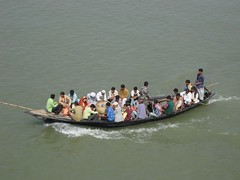 This case study explores the potential impact of climate change on security and conflict in Bangladesh. As international researchers have started to make the link between climate change, insecurity and conflict, they have raised concerns that Bangladesh’s extreme vulnerability to the environmental effects of climate change may create conditions that put it at risk of greater insecurity and possible conflict.

 Delicious
 Digg
Digg StumbleUpon
 Reddit
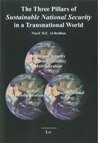 In today’s transnational world, a sustainable national security policy cannot be achieved through national capabilities alone. Sustainable national security instead rests on three pillars: 1) a multi-sum security principle based on justice at all levels, multilateralism and multidimensionality (including human, environmental, national, transnational and transcultural/transcivilizational security); 2) symbiotic realism in international relations, whereby mutual cooperation among states results in non-conflictual absolute gains; and 3) transcivilizational synergy which results from mutual respect, multiculturalism, cosmopolitanism and cross-fertilization, and will lead to global justice, security and prosperity. This is essential reading for anyone interested in an innovative approach to the complex yet central subject of sustainable national security.
 Delicious
 Digg
Digg StumbleUpon
 Reddit
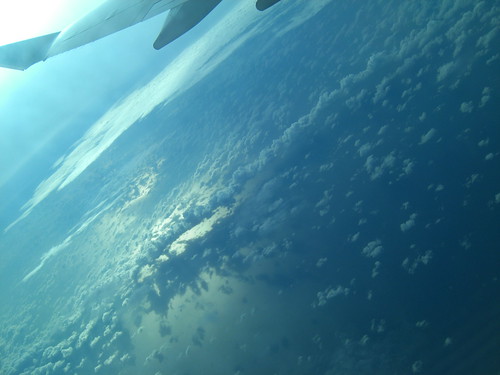 In the Lowy Institute’s latest Strategic Snapshot, International Security Program Associate Ashley Townshend explores the strategic dynamics between China and India in the Indian Ocean. While the potential for rivalry exists, Mr Townshend argues that the combination of a skewed distribution of capabilities and collective interest in stability, together with a range of enhanced confidence-building mechanisms, should go a long way to dampening the region’s underlying competitive impulses.
 Delicious
 Digg
Digg StumbleUpon
 Reddit
 Delicious
 Digg
Digg StumbleUpon
 Reddit
 Climate change will have serious environmental, socio-economic and security consequences for both developed and developing nations alike. This report explores these consequences and demonstrates that they will present new challenges to governments trying to maintain domestic stability. Those agencies tasked with protecting and sustaining national security will need to adapt to better cope with a changing global environment.
 The Middle East and North Africa is a region of great diversity. It encompasses Arab and many other ethnic populations, theocratic and secular states, democracies and authoritarian regimes. A region of immense wealth and crippling poverty; it is blessed (some might say cursed) with vast resources, not least oil, but has not always proved able to manage them for the benefit of ordinary people. While it is often viewed from the outside as a source of terrorism and conflict, the regional perception is one of foreign occupation and other external interference.
 Delicious
 Digg
Digg StumbleUpon
 Reddit
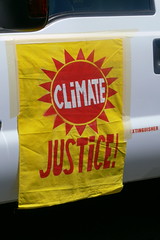 Climate-related displacement is one of the key challenges facing South Asia in the coming decades. Although there is considerable debate about the salience of the term ‘climate refugees’ and extent to which climate change is a primary cause of forced displacement, there is no doubt that large numbers of people are already having to cope with the impact of environmental changes on their livelihoods and everyday life.
 Delicious
 Digg
Digg StumbleUpon
 Reddit
 ‘The sheer scale and chaotic construction of the favelas, which became home to hundreds of thousands of migrants, made them the ideal milieu for drug gangs to hide from the police and set up initially paternalistic, de-facto governments, albeit without any concrete political aims.’
 Delicious
 Digg
Digg StumbleUpon
 Reddit
 The World Development 2010 climate Change Report published in September outlines how a 2 degree centigrade rise in global temperature would likely cost Africa 4% of GDP whilst the impact on India would be %5 of GDP. Developing countries are already disproportionately impacted by climate change with 80% of the worlds population located in the developing world.
 Delicious
 Digg
Digg StumbleUpon
 Reddit
 This Food Policy Report presents research results that quantify climate-change impacts, assess the consequences for food security and estimate the investments that would offset the negative consequences for human well-being.
 Delicious
 Digg
Digg StumbleUpon
 Reddit
 Delicious
 Digg
Digg StumbleUpon
 Reddit
 This excellent report by International Alert examines the growing risk of armed conflict as a result of climate change now being experienced by some of the most fragile regions of the world, and reveals the alarming consequences of continued inaction to enable affected countries to adapt to the consequences of climate driven changes on their populations.
 Delicious
 Digg
Digg StumbleUpon
 Reddit
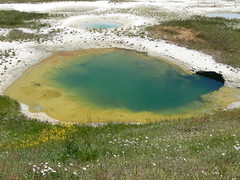 The article investigates the inter-relation between armed conflict and natural resources and its implications for conflict resolution and peacebuilding.
 In this Peace Research Institute Oslo (PRIO) Policy Brief, Kaja Borchgrevink & Kristian Berg Harpviken explore claimed links between Taliban militancy and religious education in Afghan and Pakistani madrasas.
 Delicious
 Digg
Digg StumbleUpon
 Reddit
 CNA Corporation, a US Department for Defense funded think-tank, published this report in April 2007. The report was produced by CNA’s writers and researchers under the guidence of a Military Advisory Board (MAB) consisting of retired admirals and generals.
  Delicious
 Digg
Digg StumbleUpon
 Reddit
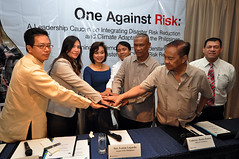 On February 25, 2009, the International Institute for Strategic Studies (IISS) launched the “Transatlantic Dialogue on Climate Change and Security”, funded by a grant from the European Commission, with the purpose of analyzing the impact of climate change on global security and stability. The dialogue has included some of the foremost environmental and security experts from government, including the military and intelligence communities, academia, international organizations, and the private sector. The results, presented here, are intended to inform policymakers on both sides of the Atlantic on how to most effectively address climate change.
 Delicious
 Digg
Digg StumbleUpon
 Reddit
 Delicious
 Digg
Digg StumbleUpon
 Reddit
 This major report was the result of an 18-month long research project examining the various threats to global security, and sustainable responses to those threats.
  A three-part BBC documentary series, written and produced by Adam Curtis. The films compare the rise of the neo-conservative movement in the United States and the radical Islamist movement, making comparisons on their origins and claiming similarities between the two.
 Delicious
 Digg
Digg StumbleUpon
 Reddit
 This paper from Alex Evans of the
 Delicious
 Digg
Digg StumbleUpon
 Reddit
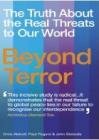 Many leading military analysts in the United States are increasingly alert to the link between security and climate change. Is international terrorism really the single greatest threat to world security?
 Delicious
 Digg
Digg StumbleUpon
 Reddit
 This website presents an extensive database of the latest news, analysis and information on a variety of international issues. There are currently over 2,000 articles available covering issues ranging from globalization to poverty, climate change, people power and much more.
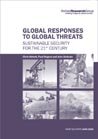 This major report was the result of an 18-month long research project examining the various threats to global security, and sustainable responses to those threats.
 Delicious
 Digg
Digg StumbleUpon
 Reddit
 Delicious
 Digg
Digg StumbleUpon
 Reddit
 Sub-Saharan Africa is too readily dismissed from the outside, but the regional perception is often one of optimism. It is an area rich in natural resources: ranging from oil and natural gas to other minerals such as chrome, nickel and zinc. Nearly half the population are under the age of 14, making the region free from the demographic burden of an ageing workforce prevalent in other parts of the world. There are also promising beginnings to regional approaches to tackling shared security problems; with the draft framework for a Common African Defence and Security Policy being a good example of this.
 Humanity appears caught in a trap with no way out. ‘Business as usual’ is no longer an option. However, halting and reversing our consumption of more and more ‘stuff’ appears likely to trigger a massive depression with serious unemployment and poverty. This is certainly true if all we do is ‘apply the brakes’ without fundamentally redesigning the whole economic system. We are facing a series of interlinked systemic problems – consuming beyond our planetary limits; untenable inequality; growing economic instability and a breakdown in the relationship between ‘more’ and ‘better’. The only way to overcome these systemic problems is through a set of solutions which themselves address the whole.
 Delicious
 Digg
Digg StumbleUpon
 Reddit
 Delicious
 Digg
Digg StumbleUpon
 Reddit
 Persistent calls for clear and transparent information on Sudan’s oil revenues have yet to yield satisfactory information, says a new report published by Global Witness today. With a referendum on independence for southern Sudan just days away, oil sector transparency is now more important than ever to preserving the fragile peace between north and south.
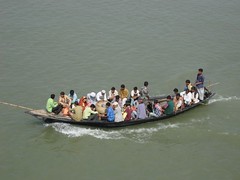 This case study explores the potential impact of climate change on security and conflict in Bangladesh. As international researchers have started to make the link between climate change, insecurity and conflict, they have raised concerns that Bangladesh’s extreme vulnerability to the environmental effects of climate change may create conditions that put it at risk of greater insecurity and possible conflict. It is therefore important to analyse this issue in detail, in order to identify how serious the risk is and what can be done to address it.
 Delicious
 Digg
Digg StumbleUpon
 Reddit
 A new SIPRI report highlights the limitations of United Nations attempts to control the flows of arms into Somalia, and the role of potential arms-supplying states.
 Delicious
 Digg
Digg StumbleUpon
 Reddit