Blog

  • Marginalisation of the majority world

    Marginalisation of the majority world

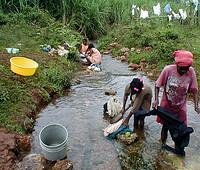
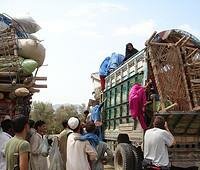
    A complex interplay of discrimination, global poverty, inequality and deepening socio-economic divisions, together make for key elements of global insecurity. While overall global wealth has increased, the benefits of this economic growth have not been equally shared. The rich-poor divide is actually growing, with a very heavy concentration of growth in relatively few parts of the world, and poverty getting much worse in many other regions. The ‘majority world’ of Asia, Africa and Latin America feel the strongest effects of marginalisation as a result of global elites, concentrated in North America and Europe, striving to maintain political, cultural, economic and military global dominance.

    Bridging the North-South divide: Sustainable Security for all

    Hannah Brock | Oxford Research Group | January 2011

    Issues:Climate change, Competition over resources, Global militarisation, Marginalisation

    For some years, the Oxford Research Group (ORG) has been analysing the likely underlying drivers of global insecurity over the coming years, and ways to develop sustainable responses to these threats. This analysis has focused on four trends that are expected to foster substantial global and regional instability, and large-scale loss of life, of a magnitude unmatched by other potential threats. These are climate change, competition over resources, marginalisation of the ‘majority world’ and global militarisation.

    Read the full article here.

    Author: Hannah Brock

    Image source: WorldIslandInfo.com

    Read more »

    Aid and the Middle Income Countries Dilemma: UK Aid to India

    Andy Sumner | Global Dashboard | January 2011

    Issue:Marginalisation

    On Global Dashboard, IDS’ Andy Sumner writes about the UK parliament’s development committee  inquiry into aid to India –  a country where there are 450 million poor people (a third of the world’s poor) living below US$1.25/day. 

    Recent research suggests the level of inequality in India is at ‘Latin American type levels’ but the capacity for redistribution by taxation is limited as it would mean prohibitively high levels of taxation. Since 1998, India has received more UK overseas aid than any other country. The paradox is India, like many other countries was ‘graduated’ out of ‘poor country’ status by the World Bank in 2009 to middle income status (more than $1000 per person per year) but is still home to a third of the world’s poor or 450 million people.


    Image source: Meanest Indian. 

    Read more »

    Teaching Religion, Taming Rebellion? Religious Education Reform in Afghanistan

    Issues:Global militarisation, Marginalisation

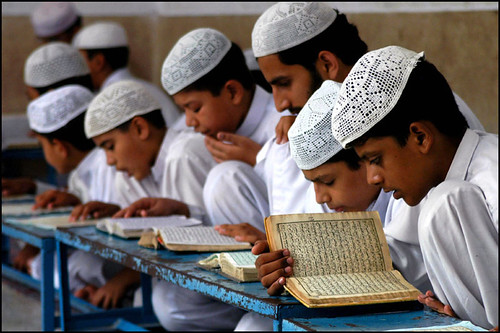
    In this Peace Research Institute Oslo (PRIO) Policy Brief, Kaja Borchgrevink & Kristian Berg Harpviken explore claimed links between Taliban militancy and religious education in Afghan and Pakistani madrasas.

    Access the report online at the PRIO website

    Arma Virumque Cano: Capital, Poverty and Violence

    I. R. Gibson | Exclusively written for sustainablesecurity.org | November 2010

    Issues:Global militarisation, Marginalisation

    This article addresses how systems of capital that underpin the present world structure perpetuate both global insecurity and endemic poverty. By upholding the practice of global arms sales, violence is endorsed by state and non-state actors continuing this inequity. Alternatives to the dominant security paradigm nevertheless exist.

    Poverty is violence, an enjoined condition sustained by capital and yet paradoxically ignored by it. Capital is possessed and dispensed by the various capitalist constructs that currently function and while the 2008 global recession revealed many variables within these constructs as extremely suspect, they nevertheless remain, guaranteeing continued wealth for elite powers. The poor in turn exist insecure, in need and in want. As little action is offered against these inequitable systems, state or global – governments seem more intent on short-tem economic ‘Band-aids’ the focus being save OUR souls – the poor linger, trapped in violence, deprived of voice and rights.

    Read more »

    Freedom in the World 2010: Erosion of Freedom Intensifies

    Arch Puddington | Freedom House | October 2010

    Issue:Marginalisation

    ‘In a year of intensified repression against human rights defenders and democratic activists by many of the world’s most powerful authoritarian regimes, Freedom House found a continued erosion of freedom worldwide, with setbacks in Latin America, Africa, the former Soviet Union, and the Middle East. For the fourth consecutive year, declines have trumped gains.’

     
    Arch Puddington examines the state of democratic freedoms across the world.
     
    Article source: Freedom House
     
    Image source: antony_mayfield


    Read more »

  • The New Faces of Violence and War: Peace and Security Challenges

    The New Faces of Violence and War: Peace and Security Challenges

    Issue:Marginalisation

    In this recent article, Mariano Aguirre, Director of the Norwegian Peacebuilding Centre in Oslo, examines the complex and unpredictable challenges to peace and security.

    Excerpt: The new vision on war, low intensity armed conflicts and violence is increasingly based on the inter-relation among different factors that generate the use of force. This is not a new approach, but is is the way that has been adopted, and there are several factors that are considered direct or indirect roots of conflicts as poverty, climate change, scarce resources and lack of democracy and representation are aggravating the competition for political power, territories, natural resources and cultural hegemonies among different countries and particular communal groups. 


    Attach PDF: 

  • Climate change, conflict and fragility: understanding the linkages, shaping effective responses

    Climate change, conflict and fragility: understanding the linkages, shaping effective responses

    Issue:Climate change

    This excellent report by International Alert examines the growing risk of armed conflict as a result of climate change now being experienced by some of the most fragile regions of the world, and reveals the alarming consequences of continued inaction to enable affected countries to adapt to the consequences of climate driven changes on their populations.

    Taken from the introduction:

    This paper outlines the climate-conflict interlinkages and the challenges involved in responding to their combined challenge. Establishing the overall goal of international policy on adaptation as helping people in developing countries adapt successfully to climate change even where there is
    state fragility or conflict risk, the paper makes and explains eight specific policy recommendations.

    To redirect to the International Alert weblink for this report please click here.

  • Global militarisation

    Global militarisation

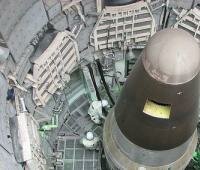
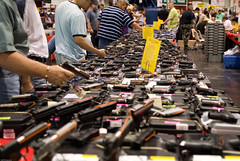
    The current priority of the dominant security actors is maintaining international security through the vigorous use of military force combined with the development of both nuclear and conventional weapons systems. Post-Cold War nuclear developments involve the modernisation and proliferation of nuclear systems, with an increasing risk of limited nuclear-weapons use in warfare – breaking a threshold that has held for sixty years and seriously undermining multilateral attempts at disarmament. These dangerous trends will be exacerbated by developments in national missile defence, chemical and biological weapons and a race towards the weaponisation of space.

    Wikileaks reveals Arctic could be the new cold war

    Greenpeace UK | Greenpeace UK | May 2011

    Issues:Climate change, Competition over resources, Global militarisation

    New Wikileaks releases today have shown the Arctic oil rush is not just a threat to the environment and our climate, but also to peace. The documents show how deadly serious the scramble for Arctic resources has become. And the terrible irony of it is that instead of seeing the melting of the Arctic ice cap as a spur to action on climate change, the leaders of the Arctic nations are instead investing in military hardware to fight for the oil beneath it. They’re preparing to fight to extract the very fossil fuels that caused the melting in the first place.

    Article source: Greenpeace UK

    Image source: U.S. Geological Survey

    Read more »

    A New Strategy for the US: From the Control Paradigm to Sustainable Security

    Schuyler Null | The New Security Beat | May 2011

    Issues:Climate change, Competition over resources, Global militarisation, Marginalisation

    Writing for the New Security Beat, Schuyler Null discusses a recent event on creating a new national security narrative for the US held at the Woodrow Wilson Center. The event was based on a white paper by two active military officers writing under the pseudonym “Mr. Y” (echoing George Kennan’s famous “X” article). In “A National Strategic Narrative,” Captain Wayne Porter (USN) and Colonel Mark Mykleby (USMC) argue that the United States needs to move away from an outmoded 20th century model of containment, deterrence, and control towards a “strategy of sustainability.”

    Image source: LizaP.

    Read more »

    New Films on Nuclear Threats and the Prospects for Disarmament

    Issue:Global militarisation

    Two new films in TalkWorks’ series about nuclear disarmament have been released. In the latest instalments, Baroness Shirley Williams and Sir Jeremy Greenstock give their personal perspectives on the current state of affairs regarding nuclear dangers and progress with the multilateral nuclear disarmament agenda.

    Image source: Kingdafy.

    Read more »

    Sustainable Security and Environmental Limits

    Rachel Tansey | Quaker Council for European Affairs | May 2011

    Issues:Climate change, Competition over resources, Global militarisation, Marginalisation

    The Quaker Council for European Affairs publicises a briefing on the topic of Sustainable Security, specifically highlighting environmental concerns:

    “The treatment of the natural world by humankind has contributed towards the two related major trends that are likely to drive insecurity in the coming decades: climate change and competition over natural resources.”

    Article source: Quaker Council for European Affairs

    Image source: kretyen

    Read more »

    The economic relationship of armed groups with displaced populations

    Josep Maria Royo Aspa | Forced Migration Review | March 2011

    Issues:Global militarisation, Marginalisation

    Practically all armed groups are heavily dependent on external support. Armed groups primarily seek support from both other states and from the diasporas, displaced populations and other armed groups, in order to prevent the burden of  the war effort from falling entirely on the civil population they claim to protect, a situation that has its own political costs. States too need external support to deal with outbreaks of instability and violence; during the Cold War this was normal and it still continues today in most current armed conflicts.

    Image source: Gustavo Montes de Oca

    Article source: Forced Migration Review

    Read more »

    NGOs Call for Immediate and Full Reporting of Every Casualty in Libya

    NGO coalition | Oxford Research Group | April 2011

    Issues:Global militarisation, Marginalisation

    As rebel forces reportedly claim that 10,000 deaths have occurred and up to 55,000 have been injured since the start of the conflict in Libya, a group of NGOs have sent a call to those intervening in Libya to commit to properly monitoring and recording every casualty in the conflict.

    This call is made in the belief that the accurate recording and reporting of all casualties will benefit accountability, any assessment of the international intervention, and humanitarian programming.

    Article source: Oxford Research Group

    Image source: Defence Images

    Read more »

  • Sustainable Security

  • Sustainable Security

    Resources

    Climate-related Displacement and Human Security in South Asia

    Susan Chaplin | Institute for Human Security Working Paper | April 2011

    Issues:Climate change, Marginalisation

    Climate-related displacement is one of the key challenges facing South Asia in the coming decades. Although there is considerable debate about the salience of the term ‘climate refugees’ and extent to which climate change is a primary cause of forced displacement, there is no doubt that large numbers of people are already having to cope with the impact of environmental changes on their livelihoods and everyday life.

    Transatlantic Dialogue on Climate Change and Security

    Issue:Climate change

    On February 25, 2009, the International Institute for Strategic Studies (IISS) launched the “Transatlantic Dialogue on Climate Change and Security”, funded by a grant from the European Commission, with the purpose of analyzing the impact of climate change on global security and stability.

    Crude Calculation – The Continued Lack of Transparency Over Oil in Sudan

    Issue:Competition over resources

    Persistent calls for clear and transparent information on Sudan’s oil revenues have yet to yield satisfactory information, says a new report published by Global Witness today. With a referendum on independence for southern Sudan just days away, oil sector transparency is now more important than ever to preserving the fragile peace between north and south.

    New Report on Alternatives to Militarisation in the Indian Ocean

    Issue:Global militarisation

    In the Lowy Institute’s latest Strategic Snapshot, International Security Program Associate Ashley Townshend explores the strategic dynamics between China and India in the Indian Ocean.

    Teaching Religion, Taming Rebellion? Religious Education Reform in Afghanistan

    Issues:Global militarisation, Marginalisation

    In this Peace Research Institute Oslo (PRIO) Policy Brief, Kaja Borchgrevink & Kristian Berg Harpviken explore claimed links between Taliban militancy and religious education in Afghan and Pakistani madrasas.

    Access the report online at the PRIO website

    The New Faces of Violence and War: Peace and Security Challenges

    Issue:Marginalisation

    In this recent article, Mariano Aguirre, Director of the Norwegian Peacebuilding Centre in Oslo, examines the complex and unpredictable challenges to peace and security.

    Attach PDF: 

    Development in Lao PDR: The food security paradox

    Issues:Climate change, Competition over resources

    Tags:climate change, food security, human security, Lao PDR, SDC working paper

    Food security will remain out of reach for many people, especially women and children, in the Lao People’s Democratic Republic, or Laos, if the country continues to emphasize commodities and resources development at the expense of the environment and livelihoods while ignoring global trends for food and energy. Read more »

    Arms Flows and the Conflict in Somalia

    Issue:Global militarisation

    A new SIPRI report highlights the limitations of United Nations attempts to control the flows of arms into Somalia, and the role of potential arms-supplying states.

    A Study on the Inter-Relation between Armed Conflict and Natural Resources

    Andrea Edoardo Varisco | Journal of Peace, Conflict and Development | October 2010

    Issue:Competition over resources

    The article investigates the inter-relation between armed conflict and natural resources and its implications for conflict resolution and peacebuilding.

  • The Challenge of Managing State-owned Small Arms and Light Weapons in South Sudan

    The Challenge of Managing State-owned Small Arms and Light Weapons in South Sudan

    Marius Kahl | Bonn International Center for Conversion | October 2011

    Issue:Global militarisation

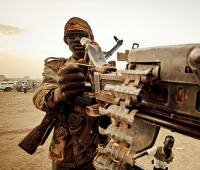
    In this feature for the Bonn International Center for Conversion, Marius Kahl explores the security threats posed by widespread possession of small arms and light weapons in South Sudan, and some of the practical measures that can be taken to contain these threats.

    Article: The Challenge of Managing State-owned Small Arms and Light Weapons in South Sudan

    Picture Source: ENOUGH Project

    Comments

    Post new comment


  • Afghanistan: propaganda of the deed

    The military campaign now being waged in the Afghan province of Helmand is being described in much of the world’s media as the biggest such operation since the one which secured “regime-change” in Kabul in October-November 2001. A coordinated military assault involving 15,000 troops – from the United States, Britain and Afghanistan itself – aims to seize the town of Marjah and surrounding areas, which are described as the Taliban’s last stronghold in Helmand.

    Operation Moshtarak (the word means “together” in the Dari language), even before its launch, has been the subject of a series of high-profile news stories with an almost uniformly positive “spin”. Their consistent core is that the operation’s purpose is to curb Taliban influence over Helmand as a whole; that the province is, alongside neighbouring Kandahar, the pivot of Taliban power in Afghanistan; and, therefore, that victory would be likely to turn the whole course of the war in Afghanistan in favour of the Nato/Isaf project.

    The herald of success

    The task of reaching an accurate assessment of the real state of the conflict must look beyond such public-relations campaigns from military sources. The starting-point here is to acknowledge that after a long process of internal deliberation the Barack Obama administration has embarked on a policy markedly different from its predecessor. Washington’s new approach combines a readiness to negotiate and compromise (even with significant elements of the Taliban leadership) in order to end the war with a belief that it needs to do so from a position of clear military strength. Operation Moshtarak is the first major step in this military-diplomatic process.

    Why, though, is the assault getting so much advance publicity? At first sight this seems puzzling, for it evidently gives Taliban strategists detailed warnings of what they are about to face. The rationale is fourfold: to intimidate some militants into abandoning the fight; to encourage civilians to evacuate the area (thereby reducing casualties); to make the best of the fact that the Afghan security services are so penetrated by Taliban sympathisers that it is pointless to keep operations secret; and – a crucial domestic consideration in the United States and Britain – to wring some positive publicity from a situation of diminishing popular support for the war. For Nato’s military planners and their political overlords, it is essential to demonstrate that the war can be won; what better way than to depict Operation Moshtarak as the instrument that breaks Taliban control of a key province?

    The problem is that this narrative of anticipatory semi-triumphalism in no way corresponds to current signals from elsewhere in Afghanistan, including Helmand. For example, a new report from the Center for A New American Security co-authored by Major-General Michael T Flynn (Isaf’s director of intelligence) highlights the remarkable capabilities of the Taliban and is very cautious about progress (see Fixing Intel: A Blueprint for Making Intelligence Relevant in Afghanistan, 4 January 2010). A number of other recent reports similarly point to a versatile and resilient opponent (see CJ Chivers, “As Marines Move In, Taliban Fight a Shadowy War”, New York Times, 1 February 2010).

    Two senior military officers – Major-General Andrew Mackay, a former commander of Britain’s task-force in Helmand, and Steve Tatham – make an especially potent criticism of the country’s war-fighting approach. They argue that “a fresh ‘hearts and minds’ strategy is required which focuses less on winning bloody battles against the enemy, and more on understanding their culture, economy and psychology” (see Eddie Barnes, “MoD ‘is not capable’ of winning war”, Scotland on Sunday, 3 January 2010).

    Such critical, topical and ground-level analyses at least suggest that the intense and positive publicity devoted to Moshtarak is more a public-relations exercise than a realistic estimate of the current situation. In this respect, the experience of an earlier military operation of comparable scale – the attempt to send a giant turbine to the Kajaki dam in northern Helmand in August-September 2008 – casts an interesting light.

    What comes after

    This operation received huge publicity in the British media, most of which hailed it as one of the great successes of the war. The plan was to supplement the dam’s already working turbine with another that would be divided into seven large sections (of over twenty tonnes each), then carried by road from Kandahar airbase to Kajaki through 280 kilometres of largely hostile territory. No less than 5,000 troops were involved to ensure the safe transfer of the turbine: from Britain (3,000), the United States, Australia, Denmark and Canada (a total of 1,000), and Afghanistan (1,000).

    The logistics were enormous: a 4-kilometre convoy of 100 vehicles – supported by fifty Viking armoured vehicles and constant air-cover from British, American, French and Dutch planes and American drones – took six days to travel the route, deliver the turbine, and (again over six days) return to secure bases. Along the way, one Canadian soldier and a reported 200 Taliban were killed. The way was now ready to import Chinese technicians to instal the turbine (which was a Chinese design), and for Nato/Isaf to bask in the secure knowledge that this part of Helmand province had been made safe and was on the development path.

    The British ministry of defence (MoD) was upbeat about the result:

    • “With the delivery of the turbine complete, work can now begin on its installation and the much larger programme of the rejuvenation of the electrical distribution network needed to pass the extra power to the areas of Sangin, Musa Qaleh, Kandahar and the provincial capital of Helmand, Lashkar Gah. The new turbine is capable of producing 18.5MW of economically viable, renewable energy, which will be in addition to the dam’s current 16.5MW output”

    • “The additional electricity it will eventually provide will light up classrooms, allowing Afghans across southern Afghanistan to learn to read and write in evening classes; farmers to store their produce in chilled storage, allowing greater export opportunities for the booming wheat markets; and clinics to provide improved health services” (see “Kajaki dam troops return to base”, Military Operations [Ministry of Defence, 8 September 2008]).

    The MoD concluded its report on the successful operation by quoting George Wilder, a contractor working on the USAID contract to upgrade the power- plant:

    • “There’s still a lot to do, but I’ve been waiting for this for a long time. It’s a great day for Afghanistan and it feels like my birthday.”

    The entire operation was portrayed both as a success in itself and as the start of a process that would have a ripple-effect across much of southern Afghanistan. It could, it was claimed, be a turning-point in the war.

    What happened next? By March 2009, six months on, there were reports that the turbine was still waiting to be unpacked (yet alone installed); and that security concerns were delaying progress in the work. Now the whole project has been abandoned (see “US postpones Afghan dam project”, BBC News, 14 December 2009).

    The immediate trigger of the decision was that the Chinese contractor charged with installing the turbines withdrew overnight because of poor security. The job was always going to be huge; it would have involved the deployment of several hundred tonnes of cement and other supplies, and the mobilisation of a large team of engineers, technicians and labourers. At last, USAID has accepted that a further operation on this scale across land still controlled by the Taliban is unfeasible. It has reluctantly arranged for the turbine sections to be put into storage, and is now seeking energy projects elsewhere in Afghanistan in which it can invest.

    A complex reality

    The Kajaki power-plant experience has implications, direct and indirect, for Operation Moshtarak. First, it reveals the possibility of Nato using its huge firepower advantages to push Taliban paramilitaries out of larger towns – but being unable to prevent the Taliban from retaining control of many rural areas, to the degree that the movement can prevent the completion of an important infrastructure project.

    Second, what might come after the impending operation is likely to be much more significant than what happens during it. As Moshtarak unfolds, it is almost certain that the Taliban will be evicted from Marjah and the surrounding areas; indeed, there may even be relatively little fighting as local Taliban commanders avoid localised conflicts that they cannot win. The great risk then is that Taliban rule will be replaced by regional governance of a kind that is all too typical of the Hamid Karzai regime’s record elsewhere: corrupt, dysfunctional, incompetent, with a police force that may be be infiltrated by Taliban sympathisers.

    This is not to denigrate the efforts of defence ministries and departments yet again to represent the current operation as a decisive turning-point. Such efforts are, from their perspective, a necessary part of their work that becomes especially important at a time when support for the war is diminishing.

    But it has always to be remembered is that the official representation of Afghanistan’s condition is just one part of a much wider picture; and that any worthwhile assessment of what is happening in the country must take into account many other factors. In this respect, the dismaying outcome of the Kajaki operation may be a more accurate reflection of Afghan realities than the publicity accompanying Operation Moshtarak.

  • global security

    global security

    Iraq’s shadow over Afghanistan

    Paul Rogers | openDemocracy | February 2010

    Issue:Global militarisation

    Tagss:global security, globalisation, International politics

    The current surge in United States military forces in Afghanistan part of a strategy designed to bring the war to an end from a position of strength. The great strains within the US military mean that the deployment of 30,000 troops to Afghanistan can be sustained only if forces can be withdrawn from Iraq at the scheduled rate: that is, all combat-forces out by August 2010 and the remaining (approximately 50,000) personnel by the end of 2011. The dynamics of violence in Iraq present a serious challenge to this strategy.

    Washington is thus engaged in a delicate balancing-act: managing disengagement from Iraq while ensuring that the United States will retain a significant military presence in the country well beyond 2011 in order to exercise a maximum degree of influence.

    Read more »

    Iraq: the path of war

    Paul Rogers | open Democracy | December 2009

    Issues:Competition over resources, Global militarisation

    Tagss:global security, globalisation, Iraq

    Most analysts agree that the security situation across Iraq as a whole has improved in 2008-09. The lower incidence of violence owes something to the consolidated sectarian geography of Baghdad and its environs as a result of the ferocious conflict of the mid-2000s. In any event the decline is relative rather than absolute, for Iraq continues to be a perilous place for many of its citizens.

    In conjunction with the opening of the official inquiry in Britain into the circumstances of the then prime minister Tony Blair’s decision to join the United States-led military campaign against Saddam Hussein’s regime in 2003, the persistent violence in Iraq reopens the question of the impulse of the war and whether other decisions with better outcomes could have been taken.


    Originally published in openDemocracy.

    Read more »

  • Sustainable Security

    Debates about Japanese whaling revolve around the issues of animal welfare, science and cultures. However, the dynamics that shape whale hunting are much more complex. 

    Watching the voting patterns of the various Parties to the International Whaling Commission (IWC) a neutral observer would think that the world is equally split between a pro-conservation lobby and those who are vocally committed to the support of commercial whaling. Whaling advocates use this apparent polarity to claim the IWC is ‘dysfunctional’ and to call for parties to compromise in their opposition to whaling.

    One of the leading proponents for whaling is the Japanese Government whose rhetoric on the issue could lead one to believe that whaling is a core part of the Japanese eternal zeitgeist.

    To some, the issue of whaling can be reduced to an ongoing debate between animal welfare, science and cultures. However, the dynamics that shape the hunting of the great whales are much more complex.  It can be argued that it is the combined interaction of both localized domestic Japanese politics, wider international strategic concerns and Japan’s relationship with the US, which creates the real drivers of Japanese whaling policy.

    In fact, the whales may have very little to do with it.

    Political Resource (In)Security and the IWC Moratorium

    As a net importer of both food and raw materials Japan has always been sensitive to resource security. In the face of the 1973 oil shocks Japan launched an independent and vigorous campaign of resource diplomacy. The seriousness by which Japan saw this issue is referenced in the 1981 Japanese Defence White Paper,

    “…Among the possible threats to [Japan’s] safety and existence are the restrictions or suspensions of supplies of resources, energies and foodstuffs, as well as armed aggression”.

    Whilst many in Japan had not eaten whale meat before the 1940s post-war US occupation authorities urged that whale meat be offered in classroom lunches nationwide as a cheap source of protein and on so doing, temporarily became part of ‘Japanese everyday life’.

    Japan’s industrial whaling peaked in the early 1960s and then entered a steady decline as consumers switched to other meat products  It may well have ended altogether when the IWC enacted a moratorium on commercial whaling in 1982, but even before the zero catch quotas had come into force the Japanese Minister of Agriculture, Forestry and Fisheries, Moriyoshi Sato stated,

    “The government will do its utmost to find out ways to maintain the nation’s whaling in the form of research or other forms”.

    Thus, Japan began a sustained programme of ‘resistance’ to the implementation of the moratorium, including launching a programme of ‘scientific’ permit whaling, ostensibly allowed for under Article VIII of the International Convention for the Regulation of Whaling (ICRW) and a programme of recruiting allied states through conditional aid.

    Whilst the 1946 signing of the ICRW was an important jurisprudential step in establishing the principle of international regulation in both the high seas and national waters, since joining the IWC in 1951, Japan has actively sought to limit IWC jurisdiction. It has argued against IWC competency for small cetaceans and increasingly asserting its sovereignty within its 200-mile Exclusive Economic Zone (EEZ) over the accepted norms of IWC control of whaling in ‘all waters in which whaling is prosecuted’

    Despite multiple calls by the IWC for Japan to cease its whaling, Japan’s decades of so-called ‘scientific’ whaling in the Antarctic was only paused when it was ruled ‘not for the purposes of science’ by the International Court of Justice (ICJ) in its landmark 2014 ruling. 

    Japan’s reaction to the ICJ decision
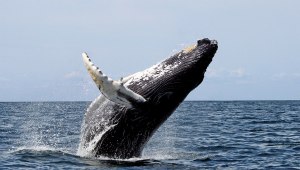
    Image credit: White Welles/Wikimedia.

    Whilst many countries may well have ‘thrown in the towel’ on an industry that was now attracting international condemnation and consuming significant government subsidies, Japan has sought to use the ICJ decision to bolster its domestic claims of foreign prejudice.

    In late 2015, despite failing to obtain IWC or scientific support, Japan’s whaling fleet again sailed to the Antarctic under a new permit (NEWREP-A). At the same time, Japan signalled that it would not countenance any future challenges withdrawing from the jurisdiction of the ICJ with respect to ‘research on, or conservation, management or exploitation of, living resources of the sea’.

    In one move, Japan not only removed itself from being challenged on whaling, but it seized the opportunity the incident gave it to remove any future chance of challenges to its other fisheries activities in the highest global court.

    Japan’s ‘scientific-whaling’ programme may well also be about keeping its whaling infrastructure extant, stimulating its domestic market, and, importantly, maintaining pressure on the IWC. Japan’s creative interpretation of Article VIII special permit whaling may even be an ongoing strategy to stimulate international criticism that can feed the wider Japanese Government nationalistic rhetoric of western bias.

    Japan’s use of ‘cheque-book’ diplomacy

    Japan would not have felt confident at rejecting the jurisdiction of the ICJ unless it felt it remained under the protection of the USA ‘permission umbrella’ and that it had enough client states in the IWC. Japan has regularly been criticised for buying the votes of developing countries within the IWC, but this strategy has very different roots.

    During the Cold War, US political intervention to counter perceived Soviet expansionist activities in the Pacific encouraged Japanese use of conditional aid. What had begun at the signing of the US-Japan Security Treaty in 1951 has grown into a Japanese foreign policy that includes aid to ex-Soviet states such as Mongolia.

    Japan developed an increasing politico-strategic rationale as an instrument of the doctrine of ‘comprehensive security’. Under Shintaro Abe, Japan’s Foreign Ministry, was to find the necessary leadership and political will to embrace strategic aid openly as part of a forthright foreign policy posture. In 1987, Japanese Foreign Minister, Tadashi Kuranari, visited the South Pacific region, and articulated what became known as the Kuranari Doctrine that set out a multidimensional approach to Japanese ODA and foreign policy.

    In the same year as the IWC voted for the moratorium, the South Pacific Forum reacted to Japan trying to reorganize its fishing arrangements in light of the adoption of the United Nation’s Convention on the Law of the Sea (UNCLOS) stating that it, ‘Deplores the increasing tendency of distant water fishing nations to link the grant of aid with the receipt of fisheries access…’

    The precedence of Japanese interests has remained a constant feature of Japan’s aid programme to the Pacific with preferred bilateral negotiations allowing Japan to exploit divisions between states to maximise its bargaining power.

    And not all Japanese ODA is equal when the Japanese Fisheries Ministry (JMAFF) is involved. Indeed, it may be a mistake to see the actions of Japanese Government departments as pursuing a holistic strategy. The domestic power of the whaling block within the Japanese Ministry of Fisheries should not be underestimated. Studies suggest that the Fisheries Ministry has been the main beneficiary of an aggressive ODA policy, highlighting the fact that when trying to carry out an analysis of the motivations of Japan, analysis cannot be limited to trying to understand what is  believed to be the strategic national goals of any one state actor. 

    Trapped in a ‘domestic bubble’ of concerns

    Observers have pointed to the incestuous relationships between JMAFF and those who profit from whaling. It has been noted that the Institute of Cetacean Research (ICR), the ‘quasi-governmental’ body that carries out ‘scientific’ whaling, is funded by sales of whale meat and from direct subsidies, whilst the government relies on the ‘independence’ of the ICR to claim scientific legitimacy for its whaling. Some go so far as to argue that this relationship is so institutionalized that Japan was happy with the scientific whaling status quo.

    Japanese academic analysis points to the policy of ageing whaling advocates amongst the Ministry of Fisheries ‘retiring’, after years of defending Japanese whaling interests at international fora, into the very fisheries conglomerates that financially benefit from Japan’s continued whaling. This domestic ‘bubble of concerns’ makes Japan almost impervious to external pressures when it comes to ending whaling. Indeed, the inter-connections go even deeper. In 1976 in an attempt to consolidate and preserve the dying Japanese whaling industry Japan’s current Prime Minister’s own father, Fisheries Minister Shintaro Abe helped to establish the whaling company of Nihon Kyodo Hogei Co. Ltd.

    Prime Minister Abe has modelled his political credo on that of his grandfather, Nobusuke Kishi, who championed resurgent post-war nationalism. Abe is also a supporter of Nippon Kaigi, a nationalistic revisionist grouping within the Japanese Cabinet and Diet. Historical re-interpretation of historical events has long coloured Japan’s relationships with its regional neighbours but this new nationalism is seeking to redefine and reinforce whaling as part of their narrative. The ruling Liberal Democratic Party wishing to shore up its rural political support, including that from fishing communities, has been careful to back the establishment whaling position making it difficult for anyone to publicly criticise whaling without being seen to criticise Japan itself.

    Some concluding thoughts

    Japan’s whaling policy is thus a complex product of domestic political norms and an industry maintained by direct and indirect financial and political co-dependencies all nested within an increasing nationalistic narrative.

    Whilst the primacy of Japan’s early foreign policy was focused on securing access to scarce raw materials and achieving its re-acceptance into the global sphere after World War II,  it has now grown into a foreign policy tool for achieving diplomatic objectives. What is of concern to policy makers as well as conservationists is the fact that these real and manufactured drivers of Japanese whaling policy can negatively affect regional and international policy at the highest levels.

    The debate within the IWC is no longer just about protecting whales, and is increasingly becoming a testing ground for Japan to establish new international norms for the exploitation of marine species. The consequences of acquiescence to Japan’s ambitions may well have major repercussions not only for marine conservation, but also for the way states perceive how international law can be circumvented to serve domestic minority interests.

    Chris Butler-Stroud is the Chief Executive of the international NGO, Whale and Dolphin Conservation (WDC). Joining the UK arm of WDC in 1992 as a researcher, he has since worked across all WDC’s cetacean conservation disciplines, and has been involved in delivering most aspects of WDC’s policy areas including participation at the International Whaling Commission, the Convention in Trade in Endangered Species (CITES), the Convention on Migratory Species (CMS) and its daughter agreements, ASCOBANS, and ACCOBAMS amongst others. Chris has particular research interests in whaling policy and emergent conservation policy and law.