Blog

  • Inspirations for Post-liberal Peacebuilding from Latin America

    The political changes in certain South American countries, including most notably the case of Bolivia, could act as inspirations in the ongoing search for locally grown, hybrid variants of a post-liberal peace.

    Author’s Note: This article presents key arguments from my article Jonas Wolff (2015) Beyond the liberal peace: Latin American inspirations for post-liberal peacebuilding, Peacebuilding, 3:3, 279-296, DOI: 10.1080/21647259.2015.1040606.

    Responding to the sobering results of international peacebuilding missions around the world, a rich academic debate has emerged that, from different perspectives and with different aims, criticizes the practices and premises of peacebuilding. In particular, critics have suggested that the liberal template of social and political order (‘liberal peace’ and ‘liberal democracy’) which guides peacebuilding is a crucial part of the problem. As a consequence, scholars have started to think about – and empirically study – alternatives to the liberal peace. This idea of a hybrid, peaceful order that develops out of the encounter between external and local efforts at building peace is captured, most prominently, by Oliver Richmond’s notion of ‘post-liberal peace’. The crux of this deliberately ill-defined concept is that it denotes the emergence of hybrid social orders that somehow combine liberal and non-liberal (but not necessarily anti-liberal or non-democratic) norms and practices. Such orders, thereby, go beyond and may also partially contradict liberal principles – but do so without following an established, alternative template. According to Richmond (and other critical peacebuilding scholars), local resistance to, and local appropriation of, international peacebuilding activities will inevitably produce such hybridity. Yet, there is still limited empirical evidence and rather abstract theoretical ideas about what such post-liberal forms of peace could look like.

    With this piece, I bring in experiences that are usually not reflected in the debate about peacebuilding, namely: current political changes in a series of South American countries, including most notably the case of Bolivia. The context in which these processes occur is very different from the so-called post-conflict societies in which peacebuilding takes place. Yet, precisely because of these differences, conditions for locally driven experiments with post-liberalism are arguably better in Latin America.

    While the attempt to move beyond liberal peacebuilding does certainly not need yet another template to be implemented worldwide, these experiences might well serve as inspirations in the ongoing search for locally grown, hybrid variants of a post-liberal peace. Against those that defend liberal peacebuilding by suggesting that there is, simply, no alternative (as Roland Paris has argued), the Latin American experience at the very least shows that there are actual alternatives to liberal mainstream conceptions of political and economic order – even if post-liberal experiments in South America are limited and uncertain, diverse and contradictory.

    Post-liberalism in South America

    1024px-Aymara_ceremony_copacabana_1

    Photos of a traditional Aymara ceremony in Copacabana, on the border of Lake Titicaca in Bolivia. Image via Wikimedia Commons.

    In recent years, scholars working on Latin American politics have noted ‘post-neoliberal’ and ‘post-liberal’ trends in the region. On the one hand, the so-called left turn, i.e. the election and reelection of several left-of-center governments across the region, has been accompanied by attempts to turn away from neoliberal economic policies. On the other, with diverse experiences of participatory democracy at the local level and, in the Andean region, the adoption of new constitutions that partially deviate from the mainstream model of liberal democracy, contours of a possible post-liberal democracy have begun to take shape. These developments are diverse and contradictory, but they share one basic commonality: They are the result of attempts to go beyond liberal, representative democracy and neoliberal, market-oriented economics without entirely replacing the preexisting political or economic order through a new, alternative model of development. The new constitutions in Bolivia and Ecuador, for instance, maintain all the well-known institutions of representative democracy and the usual series of political and civil rights but add or strengthen mechanisms of direct democracy and societal participation, expand the notion of human rights in areas of economic, social and cultural rights and include collective indigenous rights.

    In the area of economic policy, contemporary attempts to strengthen the economic role of the state and expand social policies, to deepen the domestic market and implement some kind of redistributive policies differ from country to country, but in general do not break with the entire neoliberal model. The prefix ‘post’ in both post-liberal democracy and post-neoliberalism is precisely meant to capture this partial, and hybrid, combination of continuity and change.

    Redefining the nation-state and the rule of law

    A core question for international peacebuilding concerns the related task of nation-building. For obvious reasons, most post-conflict societies lack a common national identity. An innovative response that has emerged from Latin America, and particularly from the indigenous movements in Bolivia and Ecuador, is the notion of a ‘plurinational state’. On the one hand, this concept openly breaks with the unitary conception of the nation-state: The state at hand is supposed to not only include different cultures (‘multicultural’) or ethnic communities (‘pluriethnic’), but several nations or peoples that have their own right to self-determination. On the other hand, however, the concept as used and constitutionally recognized in Bolivia and Ecuador is rather a hybrid: It combines an overarching national identity with an acknowledgment of particular indigenous identities. The plurinational state, contradictory as this may seem, is both a unitary nation-state and an umbrella organization that includes partially autonomous indigenous peoples. This formula has been severely contested – and continues to be so – in both countries and is, certainly, far from offering a panacea for the complex problems of nation-building in divided societies. But it may still be worthwhile to take into account.

    Directly related to this, another crucial issue in the peacebuilding debate concerns the rule of law – and, more specifically, the tension between liberal state law that is to be implemented ‘from above’ (but usually does not work very well) and local forms of community justice that exist at the grassroots level (and frequently work much better but exhibit non- or illiberal features). The same kind of tension exists in a series of Latin American countries and concerns the existence of indigenous or community justice at the local level – also not least a result of the factual absence of the state’s judicial institutions especially in rural areas. Responding to this reality and to increasing claims by indigenous movements, several Latin American countries since the 1990s have progressively recognized indigenous customs and practices. In the case of Bolivia, the new constitution goes so far as to place ordinary and indigenous legal jurisdiction on an equal footing.

    In general, research on indigenous community justice in the Andean region shows that it works relative well: When compared to the state’s justice system, which is often hardly pre-sent in rural areas and frequently perceived as alien, community justice provides an important mechanism for resolving a broad range of conflicts in ways that local populations generally regard as much more efficient and legitimate. While studies show that indigenous community justice is not at all arbitrary, but follows specific rationalities, its logic is clearly different from the rationality guiding ordinary state justice: The overall aim is to preserve the social harmony of a given community; its main strategy is some kind of reconciliation. From this perspective, long-term imprisonment is irrational, while what is regarded as physical punishment from a liberal perspective (e.g., whipping with nettles, ice water baths) is considered rather symbolic acts of purification and/or reconciliation.

    Just as in quite a few post-conflict societies legal pluralism in the Andean region is both an empirical reality and a normative challenge – and research on the experiences in Bolivia, Colombia, Ecuador and Peru offers a series of crucial insights about both the diverse practices of indigenous/community justice and about different ways of dealing with legal pluralism in more or less pluralist ways.

    Broadening democratic participation and human rights

    In the mainstream model of liberal democracy, the people do not in fact govern but through elected representatives. In debates about peacebuilding, a common criticism has precisely been directed against an overly focus on (early) elections. In South America, disenchantment with the ways in which real-existing representative democracy worked has led to experiments with more direct and ‘participatory’ forms of democracy. Important innovations in this regard include the introduction of recall referenda that enable the citizens to revoke the mandate of their elected representatives and different types of participatory budgeting and participatory development planning.

    A related criticism of liberal peacebuilding concerns its focus on a relatively narrow, and specifically liberal, set of political and civil rights. Especially when combined with neoliberal recipes of economic reform, this frequently implies a disregard for economic, social and cultural rights, which are equally established as human rights at the international level. Yet, given the existing socioeconomic conditions in the global South, liberal democracy’s emphasis on formal political equality rings quite hollow to many people. As a consequence, across Latin America, the failure of democratic regimes to significantly reduce the dramatic socioeconomic inequalities has led, since the turn of the century, to a reemergence of the ‘social question’ and the ‘left turn’ discussed above.

    Social and economic rights have consequently been strengthened in several countries, but most notably in the new constitutions adopted in Bolivia and Ecuador (but, previously, also in Brazil, Colombia and Venezuela). And, with the ‘leftist turn’ (and the commodity boom), governments have generally started to govern a bit more in line with this notion of socioeconomic rights by expanding social policies, improving basic public services, and reducing poverty. To be sure, nowhere in the region has the constitutional recognition of a broad catalog of human rights led to a consistent policy of guaranteeing universal socioeconomic rights. Still, the constitutional promise of progressive change at least establishes an important normative reference point for those that mobilize in the name of ‘social justice’.

    Caveats

    The experiences indicated above also caution against expecting too much from experiments with alternatives to liberal democracy and neoliberal economics. Most notably for the debate on peacebuilding, the search for (some kind of) post-liberal political order – and, thus, also for post-liberal peace – is itself a conflict-ridden process. While ‘localizing’ peacebuilding may plausibly reduce conflicts between external and local actors, it may well increase intra-local struggle – precisely because local-local interactions then become decisive. If the very fundamentals of the politico-economic order are up for discussion, this plausibly increases the risk of violent conflict. In fact, the process of constitutional change in Bolivia was characterized by an open clash between different conceptions of democracy – and by mutual allegations that what was presented as democratic by the opponent was precisely the opposite (colonial or imperialist, exclusive or secessionist, autocratic or totalitarian).

    The Bolivian attempt to construct some kind of post-liberal democracy also brought about more specific risks. On the one hand, the transition process meant dismantling an existing structure of democratic institutions and led to a certain, if temporary, institutional vacuum during which the democratic shape of the future political order was uncertain. On the other hand, features of Bolivia’s new political order such as the emphasis on direct democracy do not only increase the power of the people, but more specifically the power of the majority; at the same time, a popular president can use plebiscitary mechanisms to further increase and consolidate his/her power vis-à-vis the opposition, minorities or other powers and levels of the state.

    Finally, the current economic crisis, triggered by the decrease in international commodity prices, reveals the limitations of the post-neoliberal economic policies in the region – and immediately threatens the advances in the reduction of poverty and inequality.

    Conclusion

    The most important feature of the debates about post-liberal peace, post-neoliberal economics and post-liberal democracy is, arguably, that they are not aimed at identifying yet another universal peacebuilding template. If anything, the main academic and political purpose is to open up discussions that have been too narrow and closed for too long. Thinking about alternatives, however, still requires concrete ideas about elements and characteristics, dynamics and paths that may characterize (different) post-liberal configurations. And while theoretical reflections are certainly needed, the very idea of post-liberalism as something arising ‘bottom up’ from dynamics at least partially driven by local knowledge and local agency points to the need to empirically study developments that point in some post-liberal direction. In this sense, I have argued, recent experiences from Latin America do offer political inspirations as well as important caveats which might be of interest for both scholars of peacebuilding and for those engaged in building whatever kind of hybrid peace in whatever kind of place.

    Jonas Wolff is head of the research department ‘Governance and Societal Peace’ and executive board member of the Peace Research Institute Frankfurt (PRIF) as well as adjunct professor (Privatdozent) at Kassel University. He studied Political Science, Economics and Sociology at University of Frankfurt, where he also received his PhD. He completed his habilitation at the University of Kassel. His research focuses on Latin American politics, international democracy promotion, and the interrelation between social conflict, political transformation and economic development.

  • Too Quiet on the Western Front? The Sahel-Sahara between Arab Spring and Black Spring

    Too Quiet on the Western Front? The Sahel-Sahara between Arab Spring and Black Spring

    While the world’s attention has been focused on the US-led military interventions in Iraq and Syria a quieter build-up of military assets has been ongoing along the newer, western front of the War on Terror as the security crises in Libya and northeast Nigeria escalate and the conflict in northern Mali proves to be far from over. In the face of revolutionary change in Burkina Faso, the efforts of outsiders to enforce an authoritarian and exclusionary status quo across the Sahel-Sahara look increasingly fragile and misdirected.

    Read Article →

    The Costs of Security Sector Reform: Questions of Affordability and Purpose

    In considering security sector reform, questions of affordability have often been subordinated to questions of effectiveness and expediency. A recent series of reviews of security expenditures by the World Bank and other actors in Liberia, Mali, Niger and Somalia has highlighted several emerging issues around the (re)construction of security institutions in fragile and conflict-affected states.

    Read Article →

    Beaux Gestes and Castles in the Sand: The Militarisation of the Sahara

    Whatever the benefits for Mali, the French-led eviction of jihadist groups from northern Mali may have made the wider Sahara a less safe place, and has done little to lower the capacity of such groups to threaten European interests.. In 2014, France is implementing a major redeployment of its forces in Africa into the Sahel and Sahara. Meanwhile, the US has been quietly extending its military reach from Djibouti to Mauritania. However, as elsewhere, the western military approach to countering Islamist insurgency in the Sahel rests on very unsteady foundations and the potential to provoke wider alienation and radicalisation is strong.

    Read Article →

  • Losing control over the use of force: fully autonomous weapons systems and the international movement to ban them

    Losing control over the use of force: fully autonomous weapons systems and the international movement to ban them

    Later this month, governments will meet in Geneva to discuss lethal autonomous weapons systems. Previous talks – and growing pressure from civil society – have not yet galvanised governments into action. Meanwhile the development of these so-called “killer robots” is already being considered in military roadmaps. Their prohibition is therefore an increasingly urgent task.

    Read Article →

  • A Faustian Special Relationship

    Donald Trump has recently been critising his democratic allies, but he has been eager to revive the special relationship with the UK. Likewise, Theresa May has pledged to “renew the special relationship for this new age”. What are the drivers behind this development?

    Donald Trump has a thing for rebuking America’s democratic allies and their leaders—his latest target being Australia’s Prime Minister, Malcolm Turnbull. The UK appears to be an exception to this trend. In his first interview with the British press as president-elect, Trump explained that the UK has a “special place” in his half-Scottish heart and pledged to support a post-Brexit UK-US trade deal. Reportedly a big fan of Winston Churchill—and of Boris Johnson’s Churchill Factor—he also asked the UK government to loan him a Churchill bust that his Republican predecessor George W. Bush kept in the Oval Office.

    This got some people in the UK excited—and not just Trump’s old friends like Nigel Farage. Indeed, shortly after Trump’s inauguration, Downing Street announced that Prime Minister Theresa May would be the first world leader to visit America’s new president. On January 23, four days ahead of May’s visit, Sean Spicer, the White House press secretary, confirmed that two leaders would talk trade (of course he called May “the British head of state”) and that the US has “always had that special relationship with Britain.” He then added, with a peculiar giggle: “We can always be closer.”

    Looking at the visual images the media coverage left behind in isolation, you might think that May’s visit was a roaring success—the beginning of a beautiful Conservative-Republican friendship à la Margaret Thatcher and Ronald Reagan. Image one depicts the two leaders shaking hands against the background of Trump’s main Oval Office redecorations—the Churchill bust and the portrait of Andrew Jackson. Image two shows Trump and May holding hands while walking from the Oval Office to the press conference. Image three: a well-attended, convivial press conference.

    These images now depict a day that will live in infamy in the history of British foreign policy. A day after May left Washington—that is, on the Holocaust Remembrance Day—Trump’s “Muslim ban” came into force, causing worldwide shock and pain. Now even her supporters had to wonder: How did we ever think we could we do business with this misogynistic, racist man? And why was the prime minister prevaricating instead out outright condemning Trump’s policy?

    The standard answer is cold realpolitik. Scheduled to formally take the country outside the EU’s single market in 2019, the UK government is desperately searching for new trade deals. The U.S. market is the primary target—this was implicit in May’s Lancaster House speech (“We will continue to be reliable partners, willing allies and close friends”) and explicit in her speech at the Republican Party conference in Philadelphia (“I am delighted that the new Administration has made a trade agreement between our countries one of its earliest priorities”). Viewed from this perspective, hugging Trump close, while doing so in an extremely unedifying manner, is in Britain’s best interest—it is certainly in the best of interest of some Britons, as George Monbiot pointed out in his latest weekend column for The Guardian.

    Most Conservatives and probably at least a third of the British voters are in quiet support of staying the course. On the same day Trump’s press secretary giggled about the need for an ever closer special relationship. William Hague, former British foreign secretary and no supporter of Brexit, penned in The Daily Telegraph that the special relationship was Britain’s only “indispensable alliance.” Subsequent events did little to make him change his mind. To Hague, rather than retaliating against Trump’s policies—which is a minority demand anyway—the UK government should host the American president this summer as planned. As for the image of the queen being “within grabbing distance of America’s helmsman,” Britons would do well to recall that she has dealt with thugs before, wrote Hague on January 31.

    theresa-may-donald-trump-900

    Image (modified) by UK Home Office and Gage Skidmore.

    Bannon’s rules

    The special relationship has always been asymmetric, with the Americans acting as rule-makers and the British as rule-takers. That said, the rules have never before been made by Stephen Bannon, the American president’s “chief strategist.” Having likened himself to revolutionaries such as Lenin and Thomas Cromwell (and also figures like Darth Vader and Satan)  Bannon appears to be bent on remaking international order by moving the US away from “multilateralism”, “liberalism” and “democracy” and towards America First-styled “sovereignty” and “traditional values.” In practice, this means that the US is now openly hostile to the UN, WTO, NATO, the Five Eyes, to say nothing of the fragile global governance regimes on climate, human rights and arms control—while simultaneously being “open-minded” about Putin’s Russia and Europe’s far right.

    Related, Bannon, former executive chairman of Breitbart News, an information hub for conspiracy theorists, ultra-conservatives, authoritarians, fascists, white supremacist and other “alt-right” aficionados, seems to think of international relations are fundamentally inter-racial relations. American politics and American foreign policy textbooks cannot shed light on this particular America. A combination of Samuel Huntington, Carl Schmidt and Jared Taylor’s White Identity might.

    In every generation for the past seventy years there were those who saw the special relationship as a Faustian bargain for Britain. Their arguments usually never made it into the mainstream, however. As of last week, this has changed—compare the aforementioned Monbiot or Paul Mason in The Guardian to Gideon Rachman in The Financial Times, for example.

    As thousands of Londoners surrounded the US embassy this past Saturday under the banner “Make America Think Again,” it is worth asking where May’s Trump policy might take Britain. Among several memorable statements the prime minister made in her Philadelphia speech, one that received no media scrutiny was the claim that the UK and the US together “defined the modern world.” Not a diplomatic thing to say, but not necessarily wrong either. The British Empire, in its many forms and iterations, transformed the globe by making Britain and “Neo-Britains” rich, and those on the outside poor. Britain also never challenged the rise of the U.S. the way it challenged other imperial rivals—before the democratic peace came the Anglo-Saxon peace. And once the US moved to establish the so-called liberal international order after World War II, a special role was reserved for Britain. “Whenever we want to subvert any place, we find the British own an island within an easy reach,” said one American spook in 1952. The statement has aged well—it helps explain British foreign policy after Suez, after East-of-Suez, after the end of the Cold War and after 9/11. It may well be valid in the Trump era as well, albeit this time the island in question is likely to be Britain itself—Oceania’s “Airstrip One,” as depicted by Orwell in 1984.

    Srdjan Vucetic is Associate Professor at the Graduate School of Public and International Affairs. His research interests involve American and Canadian foreign and defence policy and international security. Prior to joining the GSPIA, Srdjan was the Randall Dillard Research Fellow in International Studies at Pembroke College, University of Cambridge.

  • Engendering Peace? The militarized implementation of the women, peace and security agenda

    by Isabelle Geuskens, Executive Director of Women Peacemakers Program

    Almost 15 years after the first resolution to address women, peace and security, the agenda’s implementation is increasingly subverted by the militarised security paradigm. Implementing UNSCR 1325 has been interpreted as being about fitting women into the current peace and security paradigm and system; rather than about assessing and redefining peace and security through a gender lens. As a result, the opportunity to create a new recipe for peace and security, based on taking women’s perspectives into account, is being lost.

    North Darfur Committee on Women session on the UN Security Council Resolution 1325 on women, peace and security in Dar El Salaam, Darfur Source: UNAMID (Flickr)

    North Darfur Committee on Women session on the UN Security Council Resolution 1325 on women, peace and security in Dar El Salaam, Darfur, 2011 Source: UNAMID (Flickr)

    Next year we will be celebrating the 15th anniversary of United Nations Security Council Resolution (UNSCR) 1325, the first resolution of seven addressing Women, Peace & Security. In 2000, UNSCR provided the world with a groundbreaking message – providing an important recognition of the crucial role that women have to play in processes of conflict prevention, resolution and peacebuilding, as well as the specific impact of war on women’s and girls’ lives.

    The years following its adoption have borne witness to an increase in the amount of interest in the Resolution, as well as in the number of activities dedicated to “1325”, both at civil society and governmental level. However, almost 15 years into actual implementation of UNSCR 1325, we are still facing many challenges. Women’s participation in peace negotiations and peace agreements has remained low. Though some progress has been made in the adoption of UNSCR 1325 National Action Plans (NAPs) and in terms of legal and judicial reforms in some countries; implementation of these policies is often not enforced. Conflict related sexual violence as a deliberate weapon of war still occurs on a large scale and with impunity

    Peace and security from a holistic gender perspective

    Analyzing and addressing these challenges requires us to go back to the bigger picture. Over the years, the women’s peace movement has observed a growing, and worrying, trend. To a large extent, implementing UNSCR 1325 seems to be interpreted as being about fitting women into the current peace and security paradigm and system; rather than about assessing and redefining peace and security through a gender lens. In other words, “Just Add Women and Stir” has become the maxim as the way to move forward, instead of coming up with a new recipe for peace and security altogether, based on taking women’s perspectives into account.

    Such a new recipe would not only impact the lives of women, it would also provide important alternatives for men. The dominant peace and security paradigm is heavily militarized, normalizing the use of armed force and violence as a means to address conflict. This process of militarization incorporates specific gender dynamics, among others pushing men to engage in armed and violent action to solve conflict. Redefining this peace & security paradigm from a holistic gender perspective not only brings in women’s perspectives of what makes up real human security, it also addresses the normalization of violence in patriarchal society and prioritizes conflict prevention as well as nonviolent conflict resolution.

    Militarization of Women, Peace & Security

    Member of a female engagement team, Ghazni province, Afghanistan. Source: US Department of Defense

    Member of a US Marine Female Engagement Team, Ghazni province, Afghanistan. Source: US Department of Defense

    UNSCR 1325 is increasingly being used as a tool to support women’s recruitment into militarized institutions and environments. Though some actors in the women’s movement view the increase of women’s participation in the armed forces as a sign of women’s empowerment and emancipation, others see it as a sign of the increased militarization of society. It is not the question whether women are capable of taking up arms and engaging in military action; for many of us, the discussion is about whether the militarization of women’s lives is beneficial for women and society in general.

    Often, the call to increase women’s participation in militarized institutions is backed up by essentialist arguments. One of the arguments given is that “adding women” will somehow challenge its hyper-masculine culture and contribute to both a more humane and a more women-friendly environment. The assumption at work here is that women are naturally less violent than men, and hence might have a soothing effect on the inside and the outside. However, using violence against the enemy is part and parcel of every militarist system. Some of the women combatants WPP has spoken to over the years – whether active within state armies or guerrilla movements – indicated that in order to be taken seriously as a woman fighter, they often presented an even tougher front towards the enemy. They made it clear: a woman in the armed forces is, first and foremost, a fighter. Within any military system – state or non-state – unity is key, and many women in armed forces most certainly do not want to be viewed as special category, because they are working hard to be taken seriously in their role of fighters.

    It is also often argued that women’s inclusion will benefit the military mission, as their presence provides access to previously untapped sources of intelligence: women in the community. However, referring to local women in such a manner can be dangerous, as in many situations of conflict, anyone (and in particular women’s groups, whose women’s rights activism might already challenge existing traditional notions around gender) seen interacting closely with (foreign) armed forces is at risk of being labelled a traitor or enemy agent.

    A major concern for us is that the above lines of argumentation completely instrumentalize women’s lives and experiences. The arguments also fail to challenge the – patriarchal – status quo by any means: conflict continues to be framed and solved by armed intervention, hence promoting the use of violence to overcome and dominate the enemy “other”.

    Missing an opportunity for change

    With the 15th anniversary of UNSCR 1325 around the corner, there are some big questions to be asked. Is the world becoming a safer place if UNSCR 1325 implementation merely focuses on integrating the female half of the population in upholding and promoting militarization? If the focus is narrowed to embedding women firmly within existing systems, are we not missing out on an opportunity for real change? Should UNSCR 1325 not also be about stretching the current peace and security paradigms, about addressing the gendered way that humanity frames and addresses conflict itself, and about investing in disarmament, conflict prevention, human security and alternative conflict resolution mechanisms? As UNSCR 1325 is about gender and peacebuilding, should we not also explore and address men’s gendered experiences of violence and war? Is it not time to  lay bare the connections between war and hyper-masculinity, and thereby show the importance of investing in alternative masculinities to address violent conflict at its roots?

    Many women peace activists – some of whom laid the ground work for UNSCR 1325 via the Beijing Declaration and Platform for Action and their continued mobilizing during the late 90s – have presented us with powerful feminist perspectives on peace and security that challenge current patriarchal paradigms. Their peace work is inextricably linked to calls for disarmament; investment in nonviolent conflict resolution and the prevention of policies of aggression; the need to divert excessive military expenditures to social development, and the promotion of women’s leadership in order to advance a culture of peace.

    Now is the time for their claims to be taken serious: violent intervention is not bringing about the desired impact. In their publication “Gender, Conflict and Peace” (2013), Dyan Mazurana and Keith Proctor state: “Contrary to popular belief, the academic literature increasingly argues that a strategy of non-violence is more effective than violence in achieving policy goals. According to data analyzed by Stephan and Chenoweth, between 1900 to 2006 non-violent campaigns were successful in achieving their policy goals 53 percent of the time, whereas violent campaigns only had a success rate of 26 percent.

    Nonviolence provides an important alternative to our current thinking about peace and security. Often also referred to as “people power” or “civil courage”, it recognizes that conflict is a fact of life, and can even provide an important opportunity for positive change. The challenge lies in how to frame and address conflict. Instead of the current “Power Over” security model – which is rooted in the use and legitimacy of armed violence to overcome and eliminate the opponent – nonviolence operates on the principle of “Power With”: empowering the people with the idea that peace and security ultimately has to come from the people, which implies that injustice can be successfully addressed when people organize themselves into a nonviolent collective.

    For decades now, women peace activists have presented us with feminist analysis and viable alternatives to secure peace for all, challenging the current patriarchal security and peace paradigm. Despite their efforts, their claims and peace work tend to still be largely overlooked– even after 15 years of USNCR 1325. If we truly want to engender peace, we need to broaden and diversify UNSCR 1325 implementation. For only by going back to the bigger picture and applying a holistic gender analysis to peace and security, can we become successful in securing peace and security for all.

    Isabelle Geuskens serves as Executive Director of  Women’s Peacemakers Program, a Dutch NGO that works for the nonviolent resolution of conflict, and the inclusion of women’s voice and leadership in nonviolent conflict resolution processes. From 2002-12, she acted as program Manager of WPP at the International Fellowship of Reconciliation (IFOR). Under her leadership, WPP started pioneering a program on engaging men for gender sensitive peacebuilding. Prior to taking up this position, Isabelle was active in peacebuilding initiatives in Belfast and in Srebrenica, where she worked for the Working Group Netherlands-Srebrenica. Isabelle holds a Master of Arts from the University of Maastricht.

    Featured Image: Female soldier at a shooting range during IDF training, southern Israel  Source: Wikipedia

  • The Environment and Conflict in 2016: A Year in Review

    In spite of early signs of progress, 2016 saw damaging levels of wartime environmental damage. Will 2017 be any different?

    Marking the UN’s international day on conflict and the environment in November, the Special Rapporteur tasked with reviewing and developing the law protecting the environment before, during and after conflict argued that 2016 was “…set to be a milestone in global efforts to protect the environment in connection with armed conflict.” But it has also been a year where such efforts have seemed more vital and urgent than ever. This blog takes a look back at conflict and the environment in 2016, at the progress made and considers what should come next.

    Fires from burning oil facilities are one of the most visible forms of wartime environmental damage; 2016 began in flames, and it will end in flames. Back in January, facilities in Libya’s oil crescent were being targeted by Islamic State. The smoke plumes from the huge blazes at the storage sites at As Sidr and Ras Lanuf were visible from space, the attacks – branded an economic and environmental disaster by local emergency staff – were intended to help further destabilise the fragile interim government.

    The year will close with another environmental disaster caused by oil, this time in northern Iraq where oil well fires, again started by Islamic State, have burned for months and with no end in sight. As of November, data from UNOSAT showed that 29 fires were burning near Qayyarah, and two oil slicks were travelling down a tributary of the Tigris.

    qayyarah_unosat_images_dec_16

    Map illustrating satellite-detected fires and oil spills between September and November at and around Al Qayyarah, approximately 60km south of Mosul, Iraq. Credit: UNOSAT/UNITAR

    libya_sn2_2016005

    Satellite photos of fires at oil production and storage facilities near Sidra, Libya. Image credit: NASA


    25 years on from the last time

    The fires in Libya, Iraq and also in Syria – where facilities have been targeted by all sides of the conflict – have served as a perverse marker of the 25th anniversary of the 1991 Gulf War. A reminder, were it needed, that while our understanding of the environmental causes and consequences of conflicts has grown, our formal systems of protection and response appear as weak today as they were 25 years ago.

    But as 2016 began, there were modest signs of progress. States at the preparatory meetings for the second UN Environment Assembly (UNEA-2) were considering three draft resolutions on conflict and the environment: on the environmental consequences of human displacement from the Syrian conflict; on the need to assess Gaza’s environment; and on the protection of the environment in all areas affected by armed conflict.

    After months of mergers, disagreements and redrafts, the last of these, sponsored by Ukraine, was passed by consensus in May. Co-sponsored by a number of conflict-affected and Western States, in some ways it too marked an anniversary, that of the weak UN General Assembly resolution passed in response to the environmental disaster of the Gulf War in 1992. The UNEA-2 resolution is a significant step forward in many ways. Its scope, which includes the humanitarian consequences of environmental degradation, natural resources, displacement, protected areas, human rights, post-conflict assessments and assistance, is a world away from that passed in 1992. Both were products of their time, reflecting the concerns of States and civil society, but also the international community’s knowledge and understanding of the issues at hand.

    Untangling conflict and the environment

    The often complex linkages between conflict, peace, environment and health were visible throughout 2016. For Colombia and its peace agreement, it meant costing up the financial benefits of peace – the health and environmental savings that could accrue if the deal were to pass. But peace seemed likely to also herald new challenges for Colombia’s environment, biodiversity and human rights, from an anticipated expansion of the extractive industries, from accelerated deforestation and conflict over rural land rights.

    In Syria, the health of children and communities is being harmed by pollution from makeshift oil refining. This coping strategy has flourished thanks in part to a chain of events initiated by policies intended to destroy and degrade the country’s oil production and refining capacity, some of which had fallen into the hands of Islamic State. Satellite images have also captured the wholesale collapse of Syria’s agricultural system as a result of displacement and insecurity. The latter completing the closely related story of growing environmental pressures in Syria’s neighbours due to the influx of people fleeing the conflict, a conflict that has now caused local, national and transboundary impacts on the environment.

    Effective policy-making requires that we work to fully understand the causal linkages between conflict and insecurity, and environmental degradation and its impact on human health and ecosystems. While it may be tempting to present simplistic narratives – such as those proposed in relation to Syria and climate change – this year has shown just how important it is to comprehensively document and interrogate the evidence. One powerful example of this has been a new study on conservation in conflict zones, which identified institutional collapse as the single greatest threat to wildlife.

    Legal initiatives contribute to a sense of momentum

    The complexity and scope of conflict and the environment was also apparent in a major legal development this year. The third report from the UN’s International Law Commission’s (ILC) ongoing study into the protection of the environment in relation to armed conflicts primarily dealt with the law applicable after conflicts. The report’s draft principles cover everything from military bases, to peace operations, peace agreements, the rights of indigenous peoples and toxic remnants of war; with still more topics proposed for study by governments. The principles that the ILC is formulating are merging humanitarian, environmental and human rights law in an effort to clarify the disparate norms and practices that could provide a legal framework for enhanced protection.

    Elsewhere, the chief prosecutor of the International Criminal Court announced a new focus on the prosecution of individuals involved in the illegal exploitation of natural resources, deliberate environmental destruction, and land grabbing. All problems associated with armed conflicts and a potentially useful contribution if the court follows through on the decision. Meanwhile the 33rd session of the UN Human Rights Council heard from its Special Rapporteur on the management and disposal of hazardous wastes, on the impact of toxic remnants of war on health and the environment. He recommended that States improve monitoring of such threats and ensure that remediation and assistance takes place.

    These parallel legal and political pathways are providing a long-overdue framework for debate and State engagement on conflict and the environment. The renewed energy around the topic was clear on November 6th this year – the UN’s international day on conflict and the environment. The level of interest this year was a world away from previous years, with compelling statements calling for progress from the UN Secretary General, the heads of UNEP and UNOCHA, governments, experts and civil society.

    Where next for conflict and the environment?

    oil-fires-libya

    Photo of Sirda oil fires. Image credit: NASA/Flickr

    The question of “where next?” is currently being considered by a number of parties. Whatever the outcome, it remains the case that civil society will have an important role to play in working with international organisations and progressive States to encourage further progress. The momentum to date is the result of seven years of work and the conditions for advancing protection for the environment and civilians in relation to conflict come around rarely.

    When this same question was posed to governments in 1992 in the wake of the Kuwaiti oil fires, the response mirrored the situation today: “Some States felt that the existing rules were sufficient and what was needed was ensuring better compliance with them. However, most of the States represented thought it also necessary to clarify and interpret the scope of some of those rules, and even to develop other aspects of the law relating to the protection of the environment in times of armed conflict.”

    But it cannot just be a question of law and compliance. Like that other cross-cutting issue gender, what seems to be required is effective environmental mainstreaming throughout the conflict cycle. Good work has and is being done with regard to peacebuilding and humanitarian response but more is needed. There are also strong arguments in favour of a more robust system of environmental response in the wake of conflicts. And of course more visibility and stigmatisation for the practices that can cause serious harm to the environment and human health. Vague objectives for now maybe, but they perhaps demonstrate one possible direction of travel. Civil society can continue to contribute through research and advocacy, in untangling and communicating complexity, and by engaging at key moments, but achieving substantive progress will require greater capacity and coordination than we have at present.

    Work on conflict and the environment in 2017 should aim to signpost the direction of travel, and make more use of the parallel processes currently in play. If they can be identified and agreed, a clearer destination and mode of transport will allow a greater number of States and civil society to engage, something that will be vital if we are to make use of the momentum that has been created this year.

    Doug Weir manages the Toxic Remnants of War Project.  The project is on Twitter: @detoxconflict

  • Libyan Lessons: Bring back the Responsibility to Rebuild

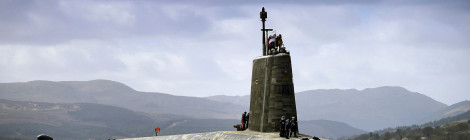
  • Trident – Why I Changed My Mind About the UK’s Nuclear Weapons

    Following the vote to renew the Trident nuclear programme, a former nuclear-armed submarine commander discusses why the UK needs to seriously rethink its attitude to nuclear weapons. 

    Editor’s Note: Commander Forsyth’s explanation as to why he has changed his view on the deterrence value of the now and future Trident weapon system was originally written for family members. It has been edited by the ORG with the full involvement and agreement of Commander Forsyth to be suitable for wider publication. Of particular interest is his alternative proposal for a smaller,  ‘for but not with’ and  more versatile submarine platform as a stepping stone to reducing the level of ready use weapons whilst preserving the ability to resurrect full CSD posture if required.

    In 1972 I became Executive Officer of HMS Repulse, one of the four Polaris A3 missile-carrying submarines based on the Clyde. Based on this experience I can say, without any sentiment or exaggeration, that the use of nuclear weapons during the Cold War would have threatened the existence of humanity.

    I believed that Mutually Assured Destruction (MAD) was at the centre of the UK’s deterrence policy, meaning that if the Soviets fired at us then we (as well as the USA and, latterly, France) would respond in such measure as to immediately annihilate several major cities in the Soviet Union.

    The consequential radiation effects of any nuclear detonation would largely complete the destruction and this would almost certainly have caused a ‘nuclear winter’.

    MAD and the Cold War

    forsyth

    Commander Forsyth on HMS Sceptre.

    The policy of MAD would, we were told, only have been used in retaliation to a Soviet nuclear first strike with missiles en route to Europe or the USA. We were constantly assured that under no circumstances would we fire our Polaris missiles first even if tanks were rolling across the German plain, unless the Soviets had already fired nuclear weapons at us.

    As Paul Rogers notes, the UK’s other tactical nuclear weapons could have been used against such a Soviet offensive. Yet at the time we thought that this would not necessarily start a strategic exchange. Perhaps naively, we tended to consider Polaris in isolation from the tactical battlefield and on a whole different level.

    The UK’s retaliatory only policy (assuring a second strike was possible) let us sleep easily at night during the years that we took 16 Polaris missiles to sea. As Nick Ritchie explains, each of these missiles carried two warheads with an estimated yield of 40kt. Thus, with 16 missiles per boat, just one patrolling submarine could have fired 32 40kt warheads, which would have given a potential explosive yield of 1.28 megatons—hence why we called what would happen if they were used Armageddon.

    Understanding the power of the bomb

    The US had many more submarines, aircraft and land-based missile silos. Our contribution was a gesture of togetherness against a common enemy whose declared policy was assumed to be ‘world domination by any means’.

    Torpedo tracks perishot_enhanced

    Periscope pic of torpedo tracks approaching the target.

    In comparison, the atomic bomb that physically destroyed the Japanese city of Hiroshima in WWII and killed 100,000 people in the process had just a 15 kiloton yield.  So when Prime Minister Theresa May stated in parliament last July that she was prepared to press the button and kill 100,000 people, we should recognise that the number of deaths she was referring to was significantly less than that which Polaris missiles were capable of inflicting—never mind the massive collateral structural and radiation casualties which would result.

    Each Trident warhead has a yield of up to 100 kilotons, which, in terms of destructive power, is equivalent to six or seven Hiroshimas. The UK presently deploys 40 nuclear warheads and not more than eight missiles on its four submarines, meaning that the destructive power on board just one of these submarines, if used at the same time against a densely populated country, would kill considerably more than 100,000 people.

    Justifying nuclear use

    The ownership of this sort of power begs the question: what threat might justify the use of such destructive force? We also need to be clear under what circumstances and at what scale the Prime Minister might authorise a nuclear strike because she could be taking us all with her.

    Two government statements are relevant to this discussion:

    1. Then Secretary of State for Defence, Geoff Hoon, stated in 2002, prior to the invasion of Iraq, that Saddam Hussein could ‘be absolutely confident that in the right conditions we would be willing to use our nuclear weapons’.
    2. A government policy paper of 8th May 2015 stated that ‘it will not rule in or out the first use of nuclear weapons’ to ‘deter and prevent nuclear blackmail and acts of aggression against our vital interests that cannot be countered by other means’. This leaves open the option for the Prime Minister to authorise Trident’s use to deter an aggressor who may be threatening to use nuclear weapons or is using massive conventional forces which we do not have sufficient conventional force to counter. But, importantly, the government deliberately maintains ‘some ambiguity precisely when, how and at what scale we would contemplate use of our nuclear deterrent’.

    Keeping the option open of using nuclear weapons first against an adversary who you judge is threatening your ‘vital interests’ with non-nuclear force is quite different from MAD. This is what makes me question the whole basis of what we may or may not do with Trident. Formerly we would not have fired Polaris missiles until British cities had been totally destroyed by a megalomaniacal action by the Soviets. It would have been a futile gesture by us but the threat of doing so was considered to be a deterrent. Now it is ultimately a matter of the Prime Minister’s judgement as to whether we embark on a nuclear war. This raises the prospect of deliberately causing Armageddon as opposed to a reaction to one already started.

    In which case, I would argue that we have the right seriously (a) to question whether the Government should have that power and (b) if so, to constrain the circumstances in which such power can be used. As Nick Ritchie points out, the UK ‘does not dispute that international humanitarian law applies to the use of nuclear weapons and has incorporated the notion of “extreme circumstances of self-defence” into its declaratory nuclear policy statements’. Yet will all future Prime Ministers follow such guidelines in practice?

    The need to ask these questions, and decide if building a new generation of nuclear weapons is justified and will ‘keep us safe’, is particularly important given that no military case has been made for Trident’s use by its supporters—other than the vague statement that we don’t know what the future holds.

    Reference to the prospective use of nuclear weapons is nearly always qualified by adding that they are a weapon of ‘last resort’. As part of the Prime Minister’s decision making process she has therefore, at the very least, to be satisfied that all other alternative avenues have been exhausted, starting with the political and economic ones, escalating up through the increasing use of conventional military power.

    Rethinking what military capabilities the UK needs

    140602-N-ZZ999-202 ATLANTIC OCEAN (June 2, 2014) A trident II D-5 ballistic missile is launched from the Ohio-class ballistic missile submarine USS West Virginia (SSBN 736) during a missile test at the Atlantic Missile Range. The test flights were part of a demonstration and shakedown operation, which the Navy uses to certify a submarine for deployment after a major overhaul. The missiles were converted into test configurations with kits containing range safety devices and flight telemetry instrumentation. The U.S. Navy supports U.S. Strategic Command's strategic deterrence missions by operating and maintaining Ohio-class ballistic missile submarines to deter regional and strategic threats. The triad, the U.S. strategic nuclear forces of ICBMs, bombers, and ballistic missile submarines, remains the primary deterrent of nuclear attacks against the U.S., our allies, and partners. (U.S. Navy photo/Released)

    Image of Trident missile via Wikimedia.

    When I was at sea in the 1960s and 1970s the UK invested in both the Polaris force and significant conventional armed military forces in all three services. The country was able to send a Task Force as far afield as the Falklands and, more importantly, the armed forces were strong and large enough to withstand the quite considerable attrition—particularly in the Navy—in fighting a full-on war.

    The services have gradually been whittled down to a level in which such a Task Force could not be assembled. By its own admission the Navy does not have enough ships and submarines to meet peacetime commitments—never mind war. The six Type 45 destroyers designed to protect the UK’s two new carriers were victims of over-design and under-funding (albeit costing £1billion each) such that they are now in harbour with major operational limitations which will take some years to be rectified.

    Meanwhile, the next generation of frigates have been delayed. When they do come they will have outdated equipment and there will still not be enough of them to give anti-submarine warfare protection to the carriers—unless they forego other roles of which there are many. The Army and Air Force also have their own tales of woe—soldiers die for lack of body armour and the correct vehicles because the military budget has to cope with the costs of Trident.

    Why is this? To some extent you can blame senior officers for lack of management ability and vision when challenged by the need to meet major commitments with a constantly reducing budget. They should perhaps have been stronger and said we are not well placed to play the role assigned in the Iraq war, be peace keepers afterwards and also embark on a new war in Afghanistan. The ‘can do’ spirit has been counter-productive.

    However, the other budgetary factor is that the cost of building four Successor submarines alone is now set to cost at least £31 billion. You can buy quite a lot of aircraft carriers, frigates and hunter killer submarines for that.

    The consequential reality is that we have very little conventional capability before the use of Trident becomes our last resort—a very dangerous situation for world peace. So who are we likely to need to use our last resort against having said that rogue states and dirty bombers are not likely targets? The answer is no one at the moment. Yes, Russia is acting aggressively, waving their nuclear weapons stick, but Russia has no grand plan for world domination. I must therefore conclude that the Royal Navy is being exploited to operate a political status symbol with no military value at the cost of other important capabilities.

    There is no threat to the UK that justifies our nuclear force

    During the Cold War the UK’s nuclear-armed submarines were at 15 minutes notice to fire. Since 1994 however, following an agreement with Russia, the UK’s nuclear weapons have been de-targeted—although this situation could be quickly reversed. The Trident submarines are lurking on standby ‘just in case’, so there is time to target and arm them if the situation escalates. Saying North Korea is a threat to the UK is not credible. Pyongyang may become a threat to US interests, but even that is unlikely and the US is more than capable of responding.

    Some may argue that now is not the time to lay down our nuclear arms because it might further destabilise our position in Europe and be seen as a further ‘weakness’ post-Brexit. But what does this mean? That the Russians will see an opportunity and seize it? I believe they know, despite the Prime Minister’s words, that we would not fire our nuclear weapons except in retaliation to a major nuclear first strike by them—which they are unlikely to launch.  But I also believe it is possible that Putin could take advantage of our regular Force’s weakness, for example, through giving covert military support and overt political support to ‘popular’ pro-Moscow uprisings in Russia’s near abroad. The calculation here would be that NATO would likely find it difficult to find an effective response to such manoeuvres.

    As for a developing intercontinental threat from elsewhere in the future, if it’s not on the drawing board now (and it’s not) then we have time to consider our options. Designing a submarine today to go to sea in 17 years’ time to counter a future undefined notional threat is really fighting yesterday’s war with yesterday’s technology. By making that decision now it becomes harder to change our posture as more and more money is poured into the Successor programme.

    Is there an alternative? Yes there is. If, despite all the above, the UK decides it needs to have a nuclear weapon system for ‘insurance’ reasons then a submarine platform is probably the best vehicle to carry it because it is considerably less vulnerable (I would not use the word invulnerable now) to counter-detection than cruise missiles, aircraft or land based weapon platforms. However, the problem with the current and future Trident submarines is that they are a single purpose platform, very big—consequentially comparatively slow—and really only have a self-defence capability. They contribute nothing to peacetime surveillance or war-fighting capability in any other area than firing strategic missiles and cost the earth.

    We have already reduced the number of missiles per boat so why not make a further reduction to say four per boat and fit a missile section into existing Astute class hunter-killer submarine hulls?[1] This option could save money, enable a dual role and, by building five, two or even three of them could be at sea at any time in either role and be a useful enhancement to the UK’s broader submarine needs.

    Furthermore, if the Government wished to demonstrate its willingness to comply with the Nuclear Non-proliferation Treaty, then missiles and warheads could be placed in ready-use store. This is justifiable on the basis that there is no threat today that requires the cost of having a submarine at sea at all times employed solely on what is known as Continuous at Sea Deterrence (CASD). Apart from anything else, the maintenance of the ‘invisibility’ of the SSBN on patrol requires additional support from ships, submarines and maritime aircraft taken off other more real time operations. Should it ever begin to become necessary, a CASD posture could, of course, be re-introduced very quickly as a clear signal of the UK’s determination to deter and as a further step up the nuclear ladder.

    Conclusion

    I believe that it is highly unlikely that the UK will ever come under nuclear attack from an enemy remotely susceptible to a threat of nuclear retaliation. I also don’t think first strike nuclear attack should ever be an option for the UK—we should not duck saying that. But if, as some may argue, that now is not the time to scrap the nuclear option because there is a remote chance we need to retain a nuclear weapons capability, then there is an option which cuts the cost significantly, allows for the restoration of our three Services to something resembling useful and still maintains the nuclear deterrent as a capability to be deployed if events ever require. Yet, of course, even this option would not prevent the government of an independent Scotland from forcing the relocation of Trident south of the border at a massive extra cost.


    [1] Trident submarines have 16 missile tubes and the Successor class is due to have 12. Each missile is capable of carrying 12 warheads. The 2010 Strategic Defence and Security Review, unilaterally downgraded the outload per submarine to a maximum of 8 missiles and 40 warheads. There are, therefore, redundant missile tubes in existing and planned submarines. Only 4 missiles are needed to carry 40 warheads.

    Commander Forsyth joined the submarine service in 1961 (aged 22). He subsequently served in conventional and nuclear powered submarines until 1980. During his career he commanded HMS Alliance (diesel powered), was Executive Officer (2nd in command) of HMS Repulse (Starboard Crew) a nuclear powered, Polaris missile firing submarine, Commanding Officer (Teacher) of the Submarine Command Course (aka ‘Perisher’) and Commanded HMS Sceptre a nuclear powered Hunter Killer submarine deployed on Cold War patrols. He created the website www.whytrident.uk with the aim of providing the wider world with answers to the obvious questions not easily obtainable elsewhere.


  • Environmental security in the Arctic: the ‘Great Game’ vs. sustainable security

    Environmental security in the Arctic: the ‘Great Game’ vs. sustainable security

    Arctic security remains wedded to traditional, state-centric military threats despite the fact that the threat of outright conflict is as remote as the farthest reaches of the Arctic region itself. These approaches are predictable, but they will contribute little to alleviating the complex, interrelated, and underlying drivers of insecurity in the Arctic region. Cameron Harrington argues that if our understanding of both Arctic security and the Arctic environment continues to be reduced to the international scramble for untapped resources and for newly opened “shipping lanes”, it is unlikely that the hugely alarming and damaging environmental effects of climate change will ever be truly overcome.

    Read Article →

    Bay of Bengal: a hotspot for climate insecurity

    The Bay of Bengal is uniquely vulnerable to a changing climate because of a combination of rising sea levels, changing weather patterns, and uncertain transboundary river flows. These problems combine with already existing social problems like religious strife, poverty, political uncertainty, high population density, and rapid urbanization to create a very dangerous cocktail of already security threats. Andrew Holland argues that foresight about its impacts can help the region’s leaders work together to solve a problem that knows no boundaries.

    Read Article →

    ‘Petropolitics’ and the price of freedom

    “As the price of oil goes down, the pace of freedom goes up… As the price of oil goes up, the pace of freedom goes down…” So says New York Times columnist Thomas Friedman, who argues that the first law of ‘petropolitics’ is that the price of oil and the pace of freedom are inversely correlated in countries “totally dependent on oil” for economic growth. However, the correlation between recent oil price spikes and anti-authoritarian action – particularly in the Arab Spring – challenges this assessment. But if this pattern of change is to continue, Western states must curb their hypocritical dependence on authoritarian oil-exporting governments by developing more sustainable sources of energy.

    Read Article →

  • Blue Helmets for Culture

    ‘Cultural peacekeeping’ has emerged as a new task for international peace operations. The inclusion of a cultural component in the mandates of peacekeeping interventions is a desirable move. But it is an extremely complex political-military exercise. 

    We are currently witnessing the most dramatic attack on cultural properties since the large-scale destruction and misappropriation of cultural heritage seen in World War II. Since summer 2014, Daesh has deliberately and systematically damaged, destroyed and looted significant portions of the exceptional cultural heritage of Mesopotamia, the ‘cradle of civilization’, from Mosul to Niniveh, from Nimrud to Khorsabad, from Hatra to Palmyra.

    Reacting to Daesh’s iconoclastic fury, the UNESCO 38th General Conference of Paris, 3–18 November 2015, passed a resolution to establish – adopting an effective slogan often used by both media and diplomats – the ‘Blue Helmets for Culture’. Building on the positive experience of the ‘United Nations Multidimensional Integrated Stabilization Mission in Mali’ (MINUSMA), which was mandated to ensure the safeguarding of cultural heritage sites in collaboration with UNESCO, the resolution adopts a new strategy founded on two key elements: the inclusion of a cultural component in the mandates of peacekeeping interventions where cultural heritage is at risk; the creation of a task force of experts in the protection of cultural heritage.

    As a direct contribution to the actualization of the resolution, UNESCO and the Italian Government signed an agreement on 16 February 2016 in Rome for the establishment of the first task force. Named ‘Unite4Heritage’, the task force is largely based on the Italian Carabinieri ‘Command for the Protection of Cultural Heritage’ (Comando Carabinieri Tutela Patrimonio Culturale ), which is internationally renowned as of the most competent and effective military policing force for protecting works of art and archaeological property. The Director-General of UNESCO, Irina Bokova, urged other countries to establish and make available similarly specialized units to strengthen and enforce the existing cultural heritage protection regime, expressing her confidence that ‘this Task Force, and the agreement signed in Rome with the Italian Government, will become a model for other countries’. The urgency of the issue was also recently taken up by the UN Security Council, which approved Resolution 2437 on 24 March 2017, providing for the engagement of a cultural component in UN peace-keeping missions.

    While the process of implementing and defining the operational aspects of the Blue Helmets for Culture’s initiative is underway, this article provides an initial assessment of the politico-military significance of ‘cultural peacekeeping’ (CPK) as a new task for international peace operations, considering both its strengths and weaknesses, opportunities and challenges. Still lacking actual case studies, this exercise is highly theoretical, but it is solidly grounded in the literature on heritage studies, peacekeeping, terrorism and armed violence.

    Opportunities and prospects

    Image credit: US Army.

    CPK can serve multiple and interrelated cultural, political and military objectives.

    First of all, it is hoped that CPK will contribute to protecting cultural heritage from damage and destruction by helping the enforcement of the international protection regime and, in particular, giving teeth to the implementation of the 1954 ‘Convention for the Protection of Cultural Property in the Event of Armed Conflict’, which has shown many inadequacies and proven to be minimally effective and difficult to enforce as political and legal instrument.

    Secondly, the integration of cultural heritage protection in the mandate of a peacekeeping mission can have a significant impact on the mission’s broader immediate and long-term objectives. On the ground, the mission’s efforts to save cultural heritage can help to ‘win the hearts and minds’ of local populations and increase their acceptance and support for the peacekeepers. CPK can also contribute to cutting off the funding generated by looting and selling artefacts, which fuels and prolongs conflicts by providing revenues for armed groups and terrorists. At the end of hostilities, it can help to ensure quicker recovery and stabilization by promoting societal and economic regeneration for a long-lasting peace.

    From a broader political perspective, CPK can gather and sustain international support and mobilization for the mission. Cultural heritage is widely appreciated, respected and prized for its universal value, and its protection and preservation are deemed the collective responsibility of the entire international community. It follows that engagement in CPK has the potential to win support more easily and with less political controversy than other types of international interventions. It can be presented (and ‘marketed’) to an internal and/or external audience as an intervention for a very noble, principled and apolitical goal that unites the international community in a ‘war for civilization’ against extremism.

    Finally, CPK has the merit of simplifying very complex realities and issues, which is again key in building political and public support for an international intervention and for clearly defining its objectives. While sorting out and taking sides in the complex geopolitical, religious, and ethnic Middle Eastern dynamics is a very difficult undertaking, understanding what an ancient cultural item or site is, and siding against those who want to destroy it, is rather straightforward and politically less controversial.

    Challenges and risks

    In theory, the proposed integration of the protection of cultural heritage and cultural diversity in peacekeeping mandates can be considered an important and welcomed novelty with multiple strengths. In practice CPK is, however, bound to incur serious challenges and risks that should not be underestimated.

    At the military and operational level, it should be emphasized that cultural heritage sites often have important military and strategic value, which is one of the reasons they become deliberate targets during armed conflicts. Many cultural heritage sites are not ‘soft targets’ but represent highly valued and militarily sensitive objectives for the warring parties. If CPK is deployed as a preventative mission in precarious pre-conflict situations or in post-conflict situations even before complete stability has been achieved, those sites will require heavily armed and mandated international forces for their protection. When intervening in such a context, an international operation might find it difficult to strike a balance between military necessity and its mandate of cultural protection.

    Moreover, if a mandate for cultural heritage protection can help mobilize support for international intervention, it is equally true that the moment things go wrong and the mission starts suffering casualties, public support could evaporate very rapidly, which could promptly rescind its initial backing with the argument that the protection of cultural heritage is not worth the lives of the intervening country’s ‘ boys’ and that those ‘ boys’ should immediately brought back home.

    Most importantly, CPK can entail the grave risk of transforming from a ‘civilisation war’  to save the world’ s cultural heritage into a ‘clash of civilisations’. If CPK is not well planned or wrong decisions are made, a group such as Daesh could exploit the situation to its own advantage by presenting the well-intentioned protection of cultural heritage in terms of a war against Islam. Through a well-orchestrated propaganda campaign, ‘cultural peacekeepers’ could be depicted as ‘invaders’ if not ‘crusaders’ who occupy and violate the sacred soil of the Prophet. At the very least, CPK can risk the accusation of ‘mission civilisatrice’ or ‘civilizing mission’, especially if it involves Western contingents whose past history of colonial rule, imperial domination, and ‘colonial archaeology’ which will be promptly highlighted by adversaries.

    Again, deployment of ‘boots on the ground’, and especially ‘Western boots’, may serve Daehs’s military strategy. It is not a coincidence that Western countries and especially the United States have to date strongly resisted sending ground troops to Syria, fearing being bogged down in another costly and extended Middle Eastern military fiasco, which is what Daesh hopes to achieve. The dilemma is that ground forces are indispensable to protecting cultural heritage ‘in situ’, be it in Syria, Iraq or Libya.

    Another non-trivial problem is the inherent difficulty of maintaining civil/military relations. CPK will necessarily involve extended cooperation between military and civilian personnel, such as archaeologists, historians, and anthropologists. However, cooperation can be particularly challenging between diverse working communities with very different educational backgrounds, mindsets, training, sensibilities, work habits and customs. On the ground, cooperation between warriors, peacekeepers, archaeologists and humanitarians may turn into a very complex exercise, and their respective primary concerns may become hard to reconcile.

    A risky but necessary business

    In conclusion, CPK should be not be mistaken as a minor, light and inexpensive international intervention (in all senses, in economic terms and in terms of possible human losses). Although badly needed, CPK is an extremely complex and hazardous major politico-military exercise that can face serious challenges and risks of unintended consequences. Before becoming involved in any CPK mission, a sound, realistic and legally accurate assessment is needed along with planning of the mission’s objectives and the capabilities required to meet those objectives. This would avoid gaps between the mandates and the reality on the ground, which could very negatively impact the mission’s execution.

    Paolo Foradori is Associate Professor of Political Science at the School of International Studies, University of Trento, Italy. He previously worked with the United Nations in Russia, Kosovo, and Afghanistan. This paper extensively draws from his recent articles: ‘Protecting cultural heritage during armed conflict: the Italian contribution to ‘cultural peacekeeping’’, Modern Italy (2017) and (with Paolo Rosa) ‘Expanding the peacekeeping agenda. The protection of cultural heritage in war-torn societies’, Global Change, Peace and Security (2017).