
El Salvador’s gang truce: a lost opportunity?
The truce declared in 2012 may have been imperfect and controversial but positive lessons must be learned amid the country’s current crisis of violence.
In February 2016, two former military officers of the Guatemalan army were convicted of crimes against humanity based on cases of sexual and domestic slavery, perpetrated in the 1980s during the civil war. Together they received sentences of 360 years in prison, and ordered to pay reparations to the eleven victim-survivors on whose testimonies the case rested. The case, known as Sepur Zarco after the community where these crimes took place, is unique; it is the first domestic trial successfully prosecuting former military for sexual violence in conflict in the world. What happened in Sepur Zarco is less unique: the witness statements echo the experiences of women who gave their testimony to the Peruvian Truth and Reconciliation Committee (2001-2003), where women in embattled communities during the war between Shining Path and the state (1980-2000) were also systematically raped and/or enslaved. And there are other experiences; other genocides, war contexts, and rape camps in contemporary history, which would allow for a solid comparison with Sepur Zarco. Such an observation confirms the importance of the Sepur Zarco trial for the future of accountability and justice in cases of war-related sexual violence, in Guatemala, in Latin America, and indeed, globally.
The testimonies of victim-survivors in the Sepur Zarco trial against military commanders in Guatemala shows once more that rape in war has specific meanings and intentions that are informed and shaped by the specific coordinates of conflict. In the 1980s, the Guatemalan military repeatedly attacked the population of the rural community Sepur Zarco. Local indigenous leaders who were trying to get their land titled by the state were kidnapped, tortured, and killed. Women who went to search for disappeared family members at the military base were captured, beaten and raped, and enslaved as sexual and domestic servants of soldiers. Several witnesses at the trial told details about how they were raped and beaten multiple times, in front of or alongside their children, sometimes in a pit where their husbands would be held before being buried. They also told about other victims, abused, enslaved, raped and killed in their presence. The statements show a world of extreme cruelty and suffering, facilitated by racism and sexism, and encouraged by a military campaign against indigenous communities that lasted three decades. All evidence shows that in the case of Sepur Zarco, rape was used as a weapon of war: to conquer, to reinforce victory, to send a message, humiliate, and fragment entire communities, in sum, to control.
Of course, military commanders can only be prosecuted for systematic rape if we accept that rape in war is exceptional, different, and not inevitable. Perpetrators can only be held accountable if we recognise their agency in the act, their authority in allowing (or ordering) certain acts to happen. The extreme cruelty and violence that accompanies many of these acts further confirm that rape in war represents a rupture in a community’s history and in the lives of both perpetrators and victims. This is not normal, and hence, we can prosecute.
And yet, there are others, including myself, who have emphasised the continuity in the history and possibility of sexual violence against women. I have argued, based on the testimonies of victim-survivors of rape in the Peruvian conflict, that while much of the scale and cruelty of these experiences were certainly exceptional and strongly conflict related, the script for these acts – immersed in racism and sexism, as in the case of Guatemala – pre-dated the conflict, and has yet to be dismantled. There is a continuum in the persistence of sexual violence against women that supersedes the categories of war and peace.
In contemporary Guatemala, around 700 women are murdered each year because of sexism, killed by intimate partners or unknown others. This is what is known as femicidio in the region. Impunity is not absolute, but it is certainly very high and contributes to its prevalence, as public institutions are uninterested in pursuing cases of ‘private’ violence. The idea that violence against women, even if so large scale as in contemporary Guatemala (or elsewhere), can be private and thus irrelevant to national security (police, judiciary, policy) is strongly tied to perceptions of women being responsible somehow for the domestic sphere, the home, including the sexual gratification of men. Women are often perceived and portrayed as somehow complicit in their own abuse. Similar patterns of the domestication of violence are seen in conflict.
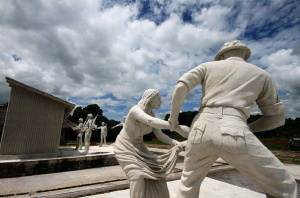
Sculpture at Mujibnagar: A woman being raped by a Pakistani soldier during the 1971 war. Image by Rahat Rahim via Wikimedia.
For example, women held at military bases to sexually serve men are often also required to wash and cook. The Sepur Zarco case also heard a former military commissioner tell the court how the then head of the military base and the accused in the trial, Lieutenant Esteelmer Reyses Girón, ordered soldiers to gang rape a woman, and that the Lieutenant himself “took” this woman as his “wife”. In similar vein, in the case of Peru, few women used the words ‘rape’ (violación) to describe their experiences. Instead, some said ‘he used me as his wife’, indicating how domestic and sexual enslavement were part of the package of abuse. One witness even stated ‘he started to beat us as if we were their wives’, further blurring the boundaries between the domestic and the political, between wartime abuse and peacetime abuse, and arguably, between husband and abuser. In Sierra Leone, and Uganda, similar patterns can be found: sexual and domestic slavery go hand in hand, and is made possible because of the peacetime structures in which women’s roles are already defined by their service to men. Hence, girls forcibly recruited into rebel armies soon became ‘wives’.
The idea that those who are violently enslaved could in fact be in a consensual relationship, albeit unequal, such as a marriage, provides a veil of legitimacy to an otherwise exceptional situation. It does, indeed, suggest a level of normality, a continuum, of life as one knows it. It might be the veil that makes survival possible. But many victim-survivors of conflict-related rape and sexual slavery are ostracised from their communities, exposed to a postconflict life of continuous abuse from their intimate partners, or choose to hide their trauma out of fear of retaliation. The women who testified in the Sepur Zarco case either did so behind closed doors, or they hid their faces behind veils during public sessions. What happened in war might have been exceptional, but not sufficiently so to erase the suggestion of complicity entirely, less so, stigma.
In my book Sexual Violence in War and Peace, I identify a continuum in how sexual violence is understood and perpetrated in both war and peace, and hence, how such violence is dealt with post-conflict. The characteristics of rape regimes perpetrated by military in the high Andes of the 1980s and early 1990s showed many known features of power relations along lines of race, sex, class, age, and gender. Sexual violence, because of its intimate and potential reproductive qualities, helps produce and reproduce those unequal power relations. In war this might be strategic and large-scale, or it might be facilitated and condoned, in order to dominate over others (i.e., both to affirm power as well as subordination, both to destroy communities, as well as consolidate military loyalty and masculine strength). But in peacetime, it does the same: sexual violence produces dominance and subordination between genders, races, sexualities, classes and ages, be that catcalling, sexual harassment, marital rape or other forms of highly gendered and sexualised violence.
Understanding sexual violence along a continuum does not say anything about the gravity of the violence or even how it might be experienced. On the contrary, while recognising and naming the differences between forms of sexual violence, experiences can be named as violence and as harmful, instead of normal or deserved. What the concept of a continuum of violence intends to highlight is how all forms of sexual violence are part of gendered social structures and patterns that have to be identified and transformed. Highlighting, combatting and prosecuting rape in war should arguably be part of a similarly linked set of measures that aim to eradicate gender inequality and the (often intersecting) violence with which such inequality is maintained and perpetuated, be that in war or in peace, at the level of families or in public space, in Guatemala or in the UK.
Thinking in terms of a continuum does not aim to minimise rape in conflicts, gang rape, or the femicides we are seeing particularly in parts of contemporary Central America. But it gives us an analytical tool that allows us to connect sex, male violence, and gender inequality, both in the everyday as well as during armed conflict. Thinking in terms of a continuum allows us to see how much violence is hidden, institutionalised, and/or normalised in everyday life, both in peacetime and wartime, in homes, in intimate relationships, and in public spaces. The term allows us to see parallels between the extreme and the everyday, the public and the private, thereby not undermining the seriousness of the extreme, but undercutting the normality of the everyday.
As such, the Sepur Zarco case is a milestone, and is hopefully a further step towards accountability for acts of sexual violence, and more broadly, gender-based violence, in both war and peace, in Guatemala and beyond.
Jelke Boesten is Reader in Gender and Development at International Development Institute, King’s College London.
The truce declared in 2012 may have been imperfect and controversial but positive lessons must be learned amid the country’s current crisis of violence.
As activists around the world participate in a Global Day of Action against criminalisation of drug use, evidence from the multi-billion dollar War on Drugs in Colombia suggests that militarized suppression of production and supply has displaced millions of people as well as the problem, not least to Mexico. The wrong lessons are being exported to Central America and beyond, but a groundswell of expert and popular opinion internationally is calling for alternative approaches to regulating the use and trade in drugs.
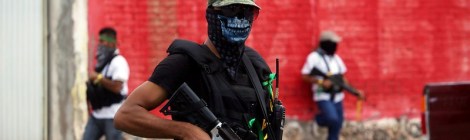
A new alliance between the Mexican security forces and citizen ‘self-defence’ groups in Michoacán state has brought some short term success in the fight against the Knights Templar cartel. But what will be the long-term consequences of legitimizing heavily armed vigilante groups in Mexico?

Writing exclusively for SustainableSsecurity.org, Elizabeth Wilke argues that a new conceptualization of insecurity and instability is needed in a world with greater and freer movement of goods, services and people – both legal and illicit – greater demands on weakening governments and the internationalization of local conflicts. The new insecurity is fundamentally derived from the responses of people and groups to greater uncertainty in an increasingly volatile world. Governments, and increasingly other actors need to recognize this in order to promote sustained stability in the long-term, locally and internationally.
This article was originally published on openSecurity’s monthly Sustainable Security column on 18 May 2015. Every month, a rotating network of experts from Oxford Research Group’s Sustainable Security programme explore pertinent issues of global and regional insecurity.
The truce declared in 2012 may have been imperfect and controversial but positive lessons must be learned amid the country’s current crisis of violence.
Violence is escalating again in El Salvador. March 2015 was the most violent month in over a decade, and the government is preparing army and police battalions to fight the gangs. These trends mark the definitive end of a process which started in 2012 with a truce between the two main gangs—MS-13 and Barrio 18—and evolved into a more complex and multidimensional approach to reducing violence, with a degree of international support.
The process was complicated, imperfect and subject to public controversy but it stands as one of the most significant examples worldwide of an effort to reduce violence through negotiation with criminal groups. With an annual homicide rate of 60 murders per 100,000 inhabitants, El Salvador is one of the most violent countries in the world. It is also a notable example of the trend towards non-conventional, hybrid and criminal violence.
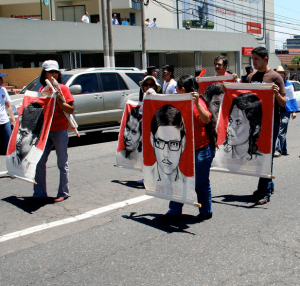
On a march organised by the FMLN, people carry pictures of the faces of those disappeared during El Salvador’s civil war. Source: Flickr | Laura
A peace agreement reached in 1992 put an end to civil war and initiated a peacebuilding process, which saw rebels of the leftist Farabundo Martí National Liberation Front (FMLN) make a successful transition to civilian and political life. The FMLN finally won the presidency by a tiny margin in 2009, and by an even smaller sliver in 2014, overturning 20 years of rule by the right-wing Nationalist Republican Alliance (ARENA).
Meanwhile, a complex set of factors triggered a transformation of violence, which became criminal and perpetrated by illegal armed groups, most notably the gangs (maras). A profound crisis of public security has since shaken the country, as well as neighbours Honduras and Guatemala. Successive governments have responded with ‘iron-fist’ approaches focused on crime suppression and militarisation of security. These policies, although of limited effectiveness, have helped to cement the electoral support of a population angered and traumatised by decades of violence.
In March 2012 the country was taken by surprise by news of a truce between Barrio 18 and MS-13, facilitated by two mediators (a former insurgent and government advisor, and a Catholic bishop) and tacitly supported by the government of the FMLN president, Mauricio Funes. Imprisoned gang leaders were transferred from a maximum-security prison to other jails in exchange for a reduction in violence. The gangs agreed to end forced recruitment of children and young people, respect schools and buses as zones of peace and reduce attacks on the security forces.
In the succeeding months, the gangs surrendered limited amounts of weapons and the government acted to address shortcomings in the overcrowded prison system, such as softening visitor searches and removing the army from the task. For the first time since the war, the International Committee of the Red Cross (ICRC) was invited to contribute and in October 2012 it established a special mission to monitor human rights in prison. The drop in homicides was immediate—from 14 per day to five.
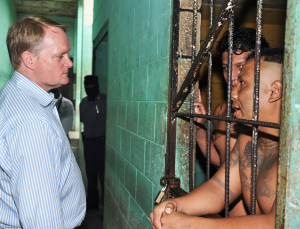
Organization of American States (OAS) visit to a prison in Quezaltepeque, 2012. Source: Flickr | Arena Ortega
The gangs’ leaderships and the mediators were discussing a list of issues to be included in an enlarged process with a wider pacification agenda. Their Proposal for a Framework Agreement for the Recovery of Social Peace in El Salvador included reform of the prison system, a public-private body with gang participation to oversee rehabilitation and reinsertion, derogation of the anti-gang law and removal of the army from public-security duties. Notably absent was any demand for amnesty or reduction of prison sentences. The proposals included suspension of all acts of violence, voluntary surrender to security forces, decommissioning of weapons and explosives, and an end to forced disappearances.
As more details emerged, however, public opinion about the truce became increasingly polarised. The main opposition came from conservative sectors, parts of the legal establishment and law enforcement, and the media. Contributing to scepticism were unabated extortion and other violent crimes, such as ‘disappearances’—allied to concern about the potential empowerment and legitimisation of criminal structures and a widely-held perception that violence was being rewarded.
But a second school of thought saw the truce as a way to reduce violence and reintegrate gang members. This vision was shared by segments of civil society and the Organization of American States, which became an observer and guarantor of the process. A formal agreement with the government resulted in the creation of a Technical Committee for the Co-ordination of the Process of Violence Reduction in El Salvador.
Nevertheless, the government remained equivocal. Funes and other members refused to admit any participation and delivered contradictory statements, which fed distrust and confusion. But the sustained impact on violence and better understanding of the process gradually legitimised it and allowed the government to acknowledge involvement.
The government’s ambivalence can be contextualised. This was the first FMLN administration and conservatives controlled the National Assembly. The United States prohibits negotiations between a government and a criminal organisation and in November 2012 it so labelled the MS-13. The US is El Salvador’s main trading partner and co-operation in trade and security has resulted in US support and military and police aid from programmes such as the Central America Regional Security Initiative. In what has been described as the performance of “a trapeze artist”, the FMLN has thus tried to develop progressive policies while not antagonising the US, foreign capital and the Salvadoran establishment (in control of the media).
The truce was supported by the minister of justice and public security, David Munguía, a retired general and former minister of defence. Although his appointment in 2011 (and the removal of FMLN members from those positions) was largely interpreted as a move towards remilitarisation, he surprised his critics by encouraging the first steps of the truce—authorising the transfer of gang leaders to other jails. According to the analyst of Salvadoran politics Paolo Lubers, he and other generals took the initiative after improved intelligence co-ordination convinced them that most violence was gang-driven.
Opposition came, however, from the Office of the Prosecutor and, later, sections of the police. They alleged that the truce was an opportunity for the gangs to reorganise, and that the drop in homicides was driving other crimes such as ‘disappearances’ and extortion. Some of this was a legacy of the peace accords, which disbanded the old security forces, established the National Civil Police (PNC) and reined in the armed forces.
The PNC comprised civilians, demobilised guerrilla fighters and vetted members of the prior security forces—whose most authoritarian members, however, were able to secure the most prominent positions in the new service, particularly during the two decades of ARENA governments. The police force is thus politicised and plagued by poor performance, corruption and authoritarian practices. Meanwhile, the Office of the Attorney-General (as with Supreme Court judges) is marked by political appointments by the Legislative Assembly, which have benefited ARENA hitherto.
In 2013, the process entered a more complex second phase, centred on the creation of violence-free municipalities. These ‘peace zones’ were based on agreement among local authorities, gangs and facilitators, with groups committing to cease violence and crime in exchange for a reduction in police operations and raids and reinsertion programmes. The first four municipalities, presented in January 2013, were soon extended to 11, with a combined population of more than 1m (out of 6m in all in El Salvador) and support from the OAS and the European Commission.
Mayors from both main parties, the FMLN and ARENA, participated in the initiative. Again, an ambivalent government promised, but then failed to deliver, grants and loans for prevention and rehabilitation. In Ilopango, the first peace zone, reduced violence presented an opportunity for the creation of a bakery and a chicken farm to generate employment, and the local government set up education centres and sports fields in marginalised neighbourhoods. But the mayor complained that the municipality had not received any of the $9 million promised by the government. Other cities were also left to their own devices.
In May 2013, the process suffered a major blow: the Constitutional Court nullified the appointment of Munguía as minister of justice and public security and forced Funes to restructure the security cabinet. The new minister, Ricardo Perdomo, proved a sharp critic of the truce. Amidst a polarised debate leading up to the February 2014 presidential election, his hard-line discourse and the restrictions placed on the mediation mechanisms weakened the process. The downward trend in murder rates began to reverse, amid a turf war between two factions of Barrio 18.
At the beginning of 2015, the new president, the former rebel Salvador Sánchez Ceren, said he would discontinue support for the truce. Leaders of the gangs were returned to the maximum security prison of Zacatecoluca.
In March 2015 481 homicides were reported by the PNC (16 per day), a 52% increase on a year earlier. There were six massacres and on average 4.5 persons ‘disappeared’ each day.
A recent report however suggests that the truce has had a lasting effect on the geographical distribution of violence. Murder figures remain lower than average in regions where the truce was strong and coalitions of local actors (such as mayors, churches and NGOs) took advantage of the opportunity to promote new policies. The trend is even more striking in the ‘peace zones’: in seven the drop in murders has been sustained in spite of the setbacks.
But in other areas violence is soaring and tough positions are gaining a foothold. Sánchez Ceren has announced the creation of three battalions, with more than 1,200 troops, to fight crime in areas most affected by violence. And the rightist business association ANEP has hired the former New York mayor Rudolph Giuliani as an adviser.
This truce can be counted among so-called second-generation security promotion activities, which depart from conventional top-down approaches and are forged on “formal and informal cooperation with existing (including customary) sub-national institutions”. But making peace with criminal (as against political) actors poses particular problems.
As James Cockayne put it, these cases are fraught with moral and political hazards, and there are critical questions. What is the desired end-state of negotiation? Is it a reduction of violence, a reduction of all criminal activities or dissolution of the illegal actor? The response to these questions will largely determine the contours of any negotiation in El Salvador and elsewhere.
Despite its flaws and shortcomings, the experience can however provide invaluable lessons. Apart from a drastic reduction in homicides, it contributed to a recognition of the social contours of the gang phenomenon and opened discussions at national and international levels about prevention, reintegration and rehabilitation.
The truce also demonstrated that a vast proportion of the violence afflicting the country was due to inter-gang confrontation. It revealed gang leaderships with a capacity for command-and-control and a sophisticated understanding of their role in society. Their ability to articulate demands surprised many, and to some extent changed conventional thinking.
But exploitation of public security in electoral politics tends to favour hard-line approaches. As criticism and polarisation grew to politically untenable levels, the government adopted contradictory statements and policies and later distanced itself from the process. An overall lack of planning and co-ordination hampered effectiveness—not least because the civil-society actors with more experience in working with gangs and communities were not involved.
Fear that the gangs might use the truce to rearm and reorganise, and anger towards perceived preferential treatment, is common in countries in transition from war to peace and with schemes of disarmament, demobilisation and reintegration (DDR) of former combatants. The accumulated experience of the global peacebuilding community can provide useful insights, including the adoption of community-based approaches to reintegration. Similarly, adaptation and use of mechanisms of transitional justice can help find a balance between security, justice and reconciliation.
The truce in El Salvador has been a lost opportunity to take advantage of reduced violence to strengthen the institutional presence in communities affected by gangs and implement comprehensive approaches to prevention, reintegration and reconciliation. Any future attempt will need stronger political commitment, a long-term strategy and engagement with civil society and public opinion. Given the scope of the problem and an estimated gang membership in the tens of thousands, socio-economic programmes and opportunities are also imperative for sustainability. But, for the time being, the horses of war are riding again.
Mabel González Bustelo (@MabelBustelo) is a journalist, researcher and international consultant specialising in international peace and security. She is author of Narcotráfico y crimen organizado: ¿Hay alternativas? (Narco-trafficking and Organized Crime: Are There Alternatives?), Icaria, Barcelona, 2014.
Featured image: Salvadoran police officers. Source: Flickr | Paulien Osse
Today’s younger generations of Palestinians desperately need to become more engaged in community peacebuilding activities to end the division of Palestinian society.
The engagement of the younger generation in civil society work to promote peacebuilding concepts and practices at both grassroots and political levels is necessary for restoring order and security in societies divided by conflict and violence. This is particularly true of Gaza in Palestine where the inhabitants live in an environment where there is violence, extreme poverty and a lack of freedom.
Palestinian youth and civil society face many challenges related to the harsh circumstances imposed by a lack of peace, security and economic development since the failure of the so called ‘Peace Process’ in 2000 between the Palestine Liberation Organization (PLO) and Israel. There have, however, been a variety of projects and programmes installed to raise youth awareness and the importance of civil society values and practices to achieve human rights, peacebuilding and good governance that help bring hope to a young generation, despite some of the local cynicism.
Cynicism towards youth
I always remember the cynical questions raised by many Palestinian citizens while engaging in civil society activities at different levels: “What kind of civil society under occupation are you talking about?” “How will civil society promote and advocate the values of peacebuilding under a territory experiencing foreign occupation?” There are still some Palestinian intellectuals, leaders and activists who do not believe in education for peacebuilding in a country under occupation, but they believe strongly in community peacebuilding to restore the order and security of their own society, after years of division and the failure of the ‘peace process’.
They also go beyond just cynicism and move into absolute pessimism and defeatism by asking: “How can empowering youth in peacebuilding be effective, while they still suffer from the violence under Israeli occupation and a lack of freedom?” “How will civil society organisations promote and persuade youth to become engaged in activities while an overwhelming majority are poor, jobless and losing hope in the future?”
An example is often raised that during the last five years, several young people committed suicide in the Gaza Strip, owing to the harsh economic and social circumstances. This society, however, has little experience of suicide, as it is known for its spirit of religious education and social solidarity, which have always prevailed and are considered to be the highest in the region.
Cynics believe that talking about the empowerment of youth involvement in peacebuilding activities in Gaza is a matter of ‘idealism’ and ‘luxury’, a waste of resources and time because they see such pursuits as being only achievable through concurrently obtaining freedom and national independence in a viable Palestinian state. Cynics often point out that there were many peacebuilding activities implemented in the Green Line between 1995 and 2000.
Many Palestinian citizens from the various health, NGOs and environmental sector participated at capacity building development courses inside the Green Line. They enjoyed education, trips and nice food, but not sustained peace or security, as the main cause of the problems, the need to establish of a Palestinian state, had not yet been solved. These activities passed without any glimpse of hope or peace after the failure of the ‘peace process’ that led to the breakout of various cycles of violence including the latest war in the Gaza Strip in the summer of 2014 and changed both the context and style of life, after massive destruction.
Life Style
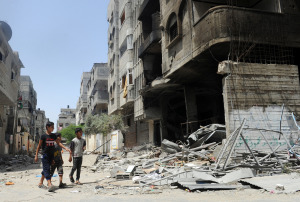
Image credit: UN Photo/Flickr.
The Palestinian people are used to the daily life style of suffering and the absence of human security; they lost their top priority of securing their own basic human, needs during the failure of the 2000 ‘peace process’ and the collective punishment policies exercised by the occupation. They have lost their own economic, food, health, environmental, personal, community, political and human security. In 1994, the UNDP defined human security, which is achieved when people can exercise their choices safely and freely, and when they can be relatively confident that the opportunities they have today will not be entirely lost tomorrow.
The Gazan people cannot plan their own day without any interruption, owing to the circumstances imposed by a lack of electricity, pollution and a devastated economy. As Mohammed Srour, a field researcher at a human rights organisation in Gaza says
“The Palestinian people now busy with their own daily affairs, living without electricity and facing the entire closure on the strip and the invasion of pollution of their environment and beaches, owing to the lack of electricity. The citizens have no place to go in Gaza to escape the heat of the summer because of the lack of electricity. The sewage flows into the sea as the pumps and wasting stations do not work without electricity. The beaches are fully polluted and people cannot enjoy swimming in the sea to escape from the extreme heat any more in most coastal areas”.
Gaza’s economy has actually been virtually stagnant for the past ten years, with an average annual real GDP growth rate over the decade not exceeding 1.44%, while Gaza’s population has grown by 38.4% over the same period.
Today’s younger generations of Palestinians desperately need to become more engaged in community peacebuilding activities to end the division of Palestinian society. But the dire circumstances have deepened the wounds of Gazan society and made the life of the younger generation almost unbearable and impossible. Consequently, many young Palestinians have decided to leave rather than stay and help build peace.
The Brain Drain of Palestinian Youth
Many young minds have already left Palestine to find a new environment and hope. More than 21 young people who attempted to find their way to Europe lost their lives in the Mediterranean in 2014 when one of their boats was wrecked and their fate is still unknown to this day. However, the rest of the youth who could not leave after the full closure of the tunnels between the Gaza Strip and Egypt spend their time navigating social media and the internet.
They enjoy their chats which help them escape from the harsh politics and economic realities, attempting to watch any developments posted by other fellows or friends online. Facebook, in particular, is considered their own ideal ‘city’ of information and it is a way of ‘killing the time’, as many young people are always informing me when I have a conversation with them. They have lost hope in local politicians, political groups, the international community and civil society organisations in helping them to change their circumstances. There are many who accuse these actors of lying, trading off and using the suffering of the Gazans to increase their power, wealth and business. But not all have abandoned hope.
Resilience and Hope
Despite the seemingly dire straits of life, the youths of Palestine are still resilient enough to try change the de facto situation, by engaging in community initiatives. They have, for example, on different occasions, engaged in non-violent and peaceful protests to contribute to the ending of the circumstances in the West Bank and the Gaza Strip. For example, the youth march movement in 2012 during ‘the Arab Spring’ to end the Palestinian division. After 2014 war in Gaza, they also participated actively, in non-violent activities to end the siege in the Gaza Strip by protesting close to the ‘buffer zone’ or in front of the ‘security fence’ with Israel in the Gaza Strip.
Now, in 2017, the Palestinian youth, across their homeland, have seized the initiative again to protest peacefully against the closure of Al Aqsa. They are still seeking a better future and attempting to find any opportunity for hope and change. They attempt to find out about the latest leaks of reconciliation between Hamas and a Fatah wing in the Gaza Strip to end the conflict between the two sides that has divided the Palestinian house. If reconciliation takes place between the two sides, it will contribute to changing the social and political circumstances of the entire society and of youth in particular.
In addition to these political developments, there have been a number of community activities to help keep youth hopeful for a better future. For example, the Gaza youth UNRWA Football team that won the Norway Cup last year continued preparation and already left the Strip for Denmark and Norway to participate in two different international football tournaments in the last week of July and the First week of August. This kind of participation always gives youth and the whole society hope that there is still a bright future coming soon where they can achieve justice, peace and freedom.
Dr Ibrahim Natil is a Fellow at the Institute for International Conflict Resolution and Reconstruction, Dublin City University http://iicrr.ie/people/fellows/dr-ibrahim-natil/. He is an international human rights campaigner, nominee for the Tällberg Foundation Global Leadership Prize, 2016 and the founder of Society Voice Foundation http://www.mbialumniassociation.org/alumni-news/news-folder/year-of-publication/2016/qa-ibrahim-natil/
Climate change and human migration are often presented as threats to national and international security. But what is the actual link between these phenomena and conflict?
Author’s Note: This commentary presents key arguments from the articles Christiane J. Fröhlich (2016) Climate migrants as protestors? Dispelling misconceptions about global environmental change in pre-revolutionary Syria, Contemporary Levant, 1:1, 38-50, DOI: 10.1080/20581831.2016.1149355 (available online here), and Michael Brzoska & Christiane Fröhlich (2015): Climate change, migration and violent conflict: vulnerabilities, pathways and adaptation strategies , Migration and Development, DOI: 10.1080/21632324.2015.1022973 (available online here).
Climate Change and Conflict
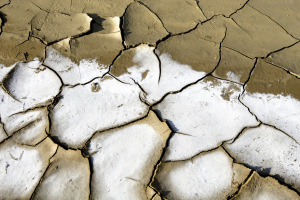
Photo by Martine Perret/UNMIT via Flickr.
Today, climate change is often perceived predominantly as a security risk. The most common argument behind this train of thought is that many societies’ adaptive capacities will be overstretched by the effects of global warming within the short- to midterm, potentially leading to destabilization and violence, and jeopardizing national and international security in a way that is unprecedented (see WBGU, 2007; UNSC, 2007; UNGA, 2009). One additional concern is that, should the international community fail to adopt an effective and globally coordinated climate policy, climate change may deepen pre-existing lines of conflict on the local, national, inter- and transnational levels. Another worry are conflicts over natural resources, since reduced availability and changes in the distribution of water, food and arable land are considered by some to potentially trigger violent conflicts (Hsiang et al., 2013; Burke et al., 2009). Other hypothesized pathways from climate change to the onset of violent conflict are a deterioration of the governance capacities of formal and informal institutions as well as the increase in horizontal inequality among groups (see Gleditsch, 2012; Scheffran et al., 2012).
Bringing Migration in
Very much the same is true for human mobility: Large migration movements have frequently been presented as a threat to national and international security, particularly when crossing into the United States and Europe (see Huysmans 2000; Ceccirulli & Labanca, 2014; Adamson, 2006; Alexseev, 2006; Waever, Buzan, Kelstrup, & Lemaitre, 1993). The underlying assumption is that in a globalised world, states enjoy growing benefits and opportunities stemming from increasing human mobility, but are also threatened by an unknown and equally growing potential for crime, trafficking, drugs and terrorism within these new migratory flows. Therefore, human mobility is framed as a matter of security, leading to what has become known as the ‘migration-security nexus’.
“Climate Migration”
With global warming well under way, climate change-induced migration has come to the forefront of such risk assessments (see Myers 1998; Myers 2005; Myers and Kent 1995; Brown 2008; Barnett 2003, Smith and Vivekananda 2007; Boano 2008; Hummel et al. 2012; Warner et al. 2013). The underlying assumed causality is that climate change will engender or exacerbate resource scarcities, which in turn might drive migration as well as conflict. In its first assessment report, for instance, the Intergovernmental Panel on Climate Change (IPCC) warned as early as 1990: ‘the gravest effects of climate change may be those on human migration as millions are displaced by shoreline erosion, coastal flooding and severe drought’. This was the basis for predictions of major conflict in receiving regions both within countries suffering from climate change and internationally. In 2008, the European Commission and the EU’s High Representative for the Common Foreign and Security Policy released a report on climate change and international security in which they stressed that as a result of climate change, ‘Europe must expect substantially increased migratory pressure’.
But reality is much less linear and simple, and empirical data is scant. The underlying imaginaire, which assumes linear causality between global environmental change and conflict via environmentally-induced migration, contains several misconceptions. Firstly, migration decisions are complex and not determined by environmental factors alone. Scholarship has identified five main drivers for (internal and international) human mobility, namely economic, political, demographic, social and environmental factors, which are deeply interconnected and mediated through socially, politically and economically determined institutions and structures. Secondly, chain migration and migration networks need to be taken into account as factors that guide migration streams in certain directions and not others. Thirdly, there are few systematic studies researching the assumed causality between climate change and migration (Reuveny 2007, 2008; Raleigh, 2010; Raleigh et al., 2010) or between (climate) migration movements and (violent) conflict. In fact, there is very limited evidence for both propositions. Fourthly, it remains disputed how many people will leave their habitat due to climate change: So-called maximalists assume a simple, direct relationship between migration and climate change and thus project comparatively large numbers of environmental migrants. Estimates reach from some 200 million up to 1 billion refugees globally by 2050 (Jacobson 1988; Myers 1997, 2002; Stern 2006). Minimalists, on the other hand, underscore the complex nature of migration decisions and stress the respective society’s vulnerability and adaptive capacity as a major factor for reducing the expected number of climate migrants (Suhrke 1994; Castles 2002; Morrissey 2009; Gemenne 2011, Morrissey 2012 gives a good overview). Fifthly, migration has been identified as a potentially powerful adaptation mechanism with regard to global warming, a view which is not reflected by the simple causality cited above. In a nutshell, the theoretical foundation and empirical support for propositions of a causal linearity between climate change, human mobility and conflict are thin. This does not mean that climate change will be irrelevant for future patterns of migration, including migration that may be linked to conflict. But the links are complex and defy simple and sensationalist conclusions.
Case Study Syria: A Climate War?
One case in point is Syria. The Syrian Arab Republic, as most of the Middle East and North Africa, has been suffering from long-term environmental changes linked to anthropogenic climate change. In recent years, a particularly long drought period immediately preceding the beginning of the Syrian uprising has negatively impacted what used to be the breadbasket of the Fertile Crescent, with consecutive crop failures in parts of the country, loss of livestock, the demise of whole villages and a distinct increase in internal migration. This has lead an increasing number of commentators to believe that this “century drought” was at least partly responsible for the timing and intensity of social upheaval in Syria (Werrell, Femia, and Sternberg 2015; Kelley et al. 2015, as well as numerous media contributions, for instance in The Independent and The New York Times. From the United States government to the European Union, from American to European think tanks, this powerful supposed ‘pre-story’ of the Syrian revolution is continuously gaining traction and has even been introduced into the overall discussion of the migration flows to Europe by assuming that the timing and magnitude of the current migration flows from the Middle East to Europe was at least partly environmentally motivated.
However, the existing studies of this link, while having received a lot of public attention, do not present authoritative evidence on the issue. On the contrary, they overstress environmental drivers of migration while tuning out other factors that influence migration decisions. For instance, the Syrian state only created around 36,000 new jobs per year between 2001 and 2007, with the agricultural sector losing 69,000 per annum, making (un)employment a very serious issue in the Syrian economy and powerful driver of migration long before the drought began. Modernisation, rapid de-peasantisation and slow replacement of agricultural employment with waged work in industry or services in the formal sector had taken their toll on both rural and urban environments before the drought even began.
Also, macro-economic policies of the Syrian government, which had for decades regulated agricultural crops, worked as economic push factor, too. The state-led system which had been imposed on the agricultural sector in the mid-20th century was characterised by subsidies for farm inputs and fuels, especially for strategic crops such as wheat, cotton and barley. These state-led structures introduced strong dependencies into the agricultural sector that became liabilities when Bashar al-Assad started to deregulate the Syrian economy into what the 10th five-year-plan calls “an open competitive economy”. Parallel to his reforms, an economy that had been based on rents from the oil sector started to give way to demographic pressures, a decrease in oil-production, depleting oil reserves and economic stagnation.
Socio-political drivers for migration also played a role in pre-revolutionary Syria. The rule of law was ambivalent, state institutions were characterized by manipulation and poor performance, the business environment was extremely fragile, corruption abounded, and Syrian citizens had little to no avenue to participate in political decision-making processes. Power and wealth were being distributed along highly informal but extremely resilient patronage networks. But the decade-old strategy of repressing those who advocated taghyir (change), while at the same time attempting to bind those advocating islah (reform) in patronage networks, began to crumble.
Finally, the assumed causality between climate change induced migration and social unrest is based on the idea that the migrants were the driving force behind the Syrian uprising. However, orchestrating popular protest requires social networks built on trust and at least some kind of organizational structure (McAdam, McCarthy, and Zald 1996; Tarrow 1998; Diani and McAdam 2003; Chesters and Welsh 2011). There is no evidence that new migrants, who were often living below the poverty line, could initiate large-scale, long-lasting popular uprisings, especially in repressive autocratic regimes like Syria.
Christiane Fröhlich is Mercator-IPC-Fellow at the Istanbul Policy Center of Sabanci University and Research Fellow at the Institute for Peace Research and Security Policy at Hamburg University. Her research focuses on reasons for migration, with a particular focus on environmental drivers. She has done extensive ethnographic field research on the impact of a prolonged and climate change-related drought period in Syria which immediately preceded the Syrian war. Moreover, she inquires into the role of the Global North for current migration movements from the Global South from a Postcolonial Perspective. In the past, she has worked extensively on water conflicts on the international, national and local levels, as well as on the Israeli-Palestinian core conflict and its role for Middle Eastern geopolitics. She holds a PhD from the Center for Conflict Studies at Marburg University, and a Master in Peace Research and Security Policy from Hamburg University. More information is available at www.christianefroehlich.de
In the environmentally constrained but more populous world that can be expected over the course of this century, there will be greater scarcity of three key resources: food, water and energy. Demand for all three resources is already beyond that which can be sustained at current levels. Once population growth and the effects of climate change are factored in, it is clear that greater competition for such resources should be expected, both within and between countries, potentially leading in extreme cases to conflict.
Issues:Climate change, Competition over resources
In Global Warring: how environmental, economic and political crises will redraw the world map, Cleo Paskal combines climate research and interviews with geopolitical strategists and military planners, to identify the environmental problems that are most likely to start wars, destroy economies and create failed states.
Global Warring is available for purchace from palgrave macmillan.
 Delicious
 Digg
Digg StumbleUpon
 Reddit
Posted on 19/01/10
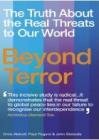
Chris Abbott, Paul Rogers and John Sloboda | Oxford Research Group | June 2006
Issues:Climate change, Competition over resources, Global militarisation, Marginalisation
Tag:report
 This major report was the result of an 18-month long research project examining the various threats to global security, and sustainable responses to those threats.
Current security policies assume international terrorism to be the greatest threat to global security, and attempt to maintain the status quo and control insecurity through the projection of military force. The authors argue that the failure of this approach has been clearly demonstrated during the ‘war on terror’ and it is distracting governments from the real threats that humanity faces.
Unless urgent action is taken within the next five to ten years, it will be extremely difficult, if not impossible, to avoid a highly unstable global system by the middle years of the century.
Download in English or Spanish as a PDF
Delicious Digg StumbleUpon RedditPosted on 20/05/09
Issues:Climate change, Competition over resources, Marginalisation
 Humanity appears caught in a trap with no way out. ‘Business as usual’ is no longer an option. However, halting and reversing our consumption of more and more ‘stuff’ appears likely to trigger a massive depression with serious unemployment and poverty. This is certainly true if all we do is ‘apply the brakes’ without fundamentally redesigning the whole economic system. We are facing a series of interlinked systemic problems – consuming beyond our planetary limits; untenable inequality; growing economic instability and a breakdown in the relationship between ‘more’ and ‘better’. The only way to overcome these systemic problems is through a set of solutions which themselves address the whole.
In this report we have sketched out how, in the light of these challenges we face as a country and as a world, things could ‘turn out right’ by 2050. We have focused particularly on the UK, but many of the solutions we outline apply globally. We have called the process by which this could happen the Great Transition as a deliberate echo of The Great Transformation, written by Karl Polanyi in the 1940s. While in a relatively short report such as this we could not hope to achieve anything remotely comparable to Polanyi’s great work, the scale of the change we need to see is at least the equal of the changes he described.
Document source: the new economics foundation
Image source: Matt from London
Delicious Digg StumbleUpon RedditPosted on 22/09/10
 This major report was the result of an 18-month long research project examining the various threats to global security, and sustainable responses to those threats.
 Many leading military analysts in the United States are increasingly alert to the link between security and climate change. Is international terrorism really the single greatest threat to world security?