Blog

  • Chemical Weapons Use in Syria: a Test of the Norm

    Chemical Weapons Use in Syria: a Test of the Norm

    Recent events in the Syrian civil war have proved an unparalleled test of the norm against the use of chemical weapons. At its core this was a test of the willingness of countries to uphold the norm, in this case in the face of a flagrant violation, and a response that in the end stumbled upon a satisfactory conclusion—reaffirming the special category of chemical arms—but which in the process said a great deal about current attitudes to the use of military force as a means of humanitarian intervention.

    Read Article →

    Beyond crime and punishment: UK non-military options in Syria

    The defeat of the UK government’s parliamentary motion on support in principle for military action against the Syrian regime means that Britain will play no part in any direct attack on Syria. What then are its options for resolving the Syrian conflict, protecting civilians and punishing those responsible for war crimes there? This article assesses what the UK can do in terms of pushing for a negotiated peace settlement and to hold accountable those responsible for using chemical weapons and any other war crimes committed during this century’s worst humanitarian crisis.

    Read Article →

  • Militarising Conservation: A Triple ‘Fail’ for Security, People and Wildlife

  • Interreligious Peacebuilding: An Emerging Field of Research and Practice

    International Relations scholars, politicians, religious institutions and religious leaders can no longer debate whether religion is relevant to global or national governance issues and they can no longer afford to ignore the roles and functions of religious identity in many violent and nonviolent conflict areas in the world today. From European to South Asian societies, the headlines are related to the potentially destructive role that religion can play in everyday policy making. Those cases include, but are not limited to, the self-declared Islamic State of Iraq and Syria (ISIS); the civil war in the Central African Republic in which religious identity was thrown into the midst of the political conflict; and the ongoing conflict in Myanmar where religious identity is utilized to justify certain governmental policies.

    The issue that practitioners (policy makers, religious institutions and religious leaders) are really struggling to effectively address is how to understand the interreligious dynamics of conflicts and constructively link this to future policies. The response of policy makers in Europe to the ongoing global refugee crisis represents an important case of the need for further linkages between religious leaders and policy makers. Given that the majority of the refugees are Muslims, how are secular European policy makers going to develop an approach to manage or mediate the inherent difference of cultural and religious Islamic ways of living and do so without stereotyping or inciting violence and exclusion towards refuges?  An even more challenging task is facing policy makers in the Muslim world, especially those in the Middle East where religious and sectarian identities have been systematically manipulated to justify political and even inter- and intra-communal violence with brutal effects. Unlike the European reality, in the Middle East, delinking religious identity and institutions from governmental policies and from justifying wars and certain governance frameworks is the primary needed change. In this context, politicians continuously enlist religious leaders in pursuing their own interests.

    President Barack Obama meets with the Dalai Lama in the Map Room of the White House, Feb. 21, 2014. (Official White House Photo by Pete Souza) This official White House photograph is being made available only for publication by news organizations and/or for personal use printing by the subject(s) of the photograph. The photograph may not be manipulated in any way and may not be used in commercial or political materials, advertisements, emails, products, promotions that in any way suggests approval or endorsement of the President, the First Family, or the White House.

    President Barack Obama meets with the Dalai Lama in the Map Room of the White House, Feb. 21, 2014. (Official White House Photo by Pete Souza)

    Despite their problems grasping the issues, there is a growing agreement amongst policy makers and researchers that engaging religious leaders and institutions in peacebuilding on all levels is crucial to bringing the message of tolerance, pluralism and peaceful resolution of conflicts to communities. However, the research on such tools and techniques is still limited. Most studies continue to focus on the theological bases of peace and harmony in different faith groups (See Abu-Nimer’s 2007 book, Unity in Diversity). There are few studies on the mechanism and tools (design, processes, and evaluation of success) of interreligious peacebuilding which will allow policy makers to engage religious leaders and their institutions in a systematic process of mediation, negotiation, or problem solving to respond to a concrete social or political problem. As result of this shortage in experiences, many interreligious peacebuilding activities resort to the traditional and old models of symbolic and ceremonial representation of religious leaders in policy making circles. For example, a prime minster invites Abrahamic faith leaders to bless his/her new policy towards refugees in a certain area. In most cases such blessings take place outside of areas of worship and in the public secular space. The lack of systematic engagement of religious agencies in such peace processes and the instrumentalization of such agencies in a symbolic way only at the end of the process reduces the capacity of religious peacemakers in their own communities.

    This approach of limited (time and resources) and symbolic engagement with religious identity (via leaders, symbols, rituals, etc.) has been around for centuries: a ceremonial role but not genuine engagement as a serious stakeholder in the conflict (using the cross or holy books as part of the ceremony to celebrate a peace agreement in a conflict situation like Northern Ireland, Palestine-Israel, Mindanao Philippines, etc.). In fact, a similar approach is taken by those who use religion to justify their war plans and violence in general (such as the use of religion for justification of violence in the wars in Bosnia in the 1990s, conflict in Northern Ireland, etc). The selective and partisan hijacking of certain religious values to explain the need to exclude, discriminate, dehumanize the “different other.” In both cases, there is an instrumentalization of the religious identity but not deep and nuanced engagement.

    In current interreligious peacebuilding practices there are genuine efforts to move beyond this instrumentalization and bring a more holistic and integrative approach to engage religious leaders and institutions (See the recent 2015 report on CVE). Such trends can be vied in the most recent revisions of the American White House Summit responding to countering violent extremism (CVE) in which a strong call for a community based approach is an integral part of the CVE efforts; the KAICIID campaign, “United Against Violence in the Name of Religion”; Network of Religious and Traditional Peacemakers (launched by Finn Church Aid, Religions for Peace, KAICIID, USIP, OIC, etc.).

    The Main Challenges Ahead

    In spite of such efforts, there are still number of core challenges and potential pitfalls that face the field of interreligious peacebuilding in its development as a recognized field of researchers and practice, these include the following:

    • First, there is the western post Industrial Revolution framework that endorses the cultural assumption (some argue myth) that religion and faith can and should be left outside of public spheres. Thus, bringing faith into academic institutions becomes a major struggle and threatens the foundation of its knowledge generating paradigm. This assumption that dealing with religion and faith is a private matter that ought to be compartmentalized to the Sociology of Religion or Theological Studies has obstructed many international relations and political scientists from systematically exploring the complex relations between religion and peace and war.
    • Second is the assumption that conflicts and their causes reside primarily with material resources and not religion (identity or ideology). Such assumptions can lead many researchers and practitioners to dismiss or underestimate the role that religious identity and ideology can play in both triggering and sustaining conflict, as well as peace. There is no doubt that religion plays a complex and to some extent unique role in many conflict dynamics and outcomes. However, many aspects of this role are similar to other identity-based conflicts in which the stakeholder’s identity is deployed in the process of conflict escalation and de-escalation. Ethnicity, culture, race, gender, and sexual orientation are identities that have also been linked to conflict and violence, often through aggressive parties employing dehumanizing framing of an ‘other’, and there are many studies in both social science and the humanities that have explored the links between these identities and conflict and peace (see From Identity-Based Conflict to Identity-Based Cooperation, edited by Jay Rothman; and Ashmore, Jussim and Wilder of Rutgers University’s Department of Psychology’s publication: Social Identity, Intergroup Conflict, and Conflict Reduction).  The study of interreligious peacebuilding can draw on this wealth of research on conflict and identity and develop its own analytical frameworks and practices (R. Scott Appleby addresses religious identity and documents many of these the conflicts in his book, The Ambivalence of the Sacred: Religion Violence and Reconciliation).
    • Third, resources and support by professional organizations, donors, religious leaders and institutions are limited due to the above perceptions and biases. Thus many interreligious analysts and practitioners are rarely invited to the table as recognized and credible actor or agency who can contribute to the processes of peace or policy managements.
    • The fourth challenge is understanding that religious peacebuilding is not the ultimate solution for all social and political problems in any given society, since religious identity and its manipulation is rarely the main cause of the violence in any conflict situation. In such cases, we should relate to interreligious peacebuilding agencies as serving a complementary role in a wider range of peacebuilding efforts carried out by many other peace agencies (such as media, educators, business sector, civil society, etc.) (See Abu-Nimer)

    Conclusion

    Despite the above challenges, the field of religious peacebuilding has been growing and gradually recognized by policy makers and donors as an important agency to engage with. Also, it is important to recognize that interreligious peacebuilders have been able to create significant progress in relief, development and aid. Faith based Organizations (FBOs) have illustrated that through interreligious cooperation they can significantly contribute to eradication of malaria in West Africa, provide relief to Tsunami victims in Sri Lanka and Indonesia, and fight hunger and poverty around the world in many local communities; and NIFA, a Nigerian interfaith organization that launched a campaign to eradicate malaria; also see the recent International Partnership on Religion and Sustainable Development (PaRD), a network for linking development and religion, which was launched by the German Federal Ministry for Economic Cooperation and Development.

    Nevertheless, the field of interreligious peacebuilding still has a long road ahead in terms of its research and study agenda, especially in producing empirical research that articulates the detailed processes, conditions and dynamics in every conflict and that lead certain communities to be easily mobilized through their religious identities (symbols, rituals, and institutions) to endorse violence or peace.

    Mohammed Abu-Nimer is Senior Advisor Interreligious and Intercultural Dialogue Center (KAICIID); and Prof. of Peace and Conflicts Resolution, American University, Washington DC.

  • Of Ruptures and Continuities: Sexual Violence in Conflict

    In February 2016, two former military officers of the Guatemalan army were convicted of crimes against humanity based on cases of sexual and domestic slavery, perpetrated in the 1980s during the civil war. Together they received sentences of 360 years in prison, and ordered to pay reparations to the eleven victim-survivors on whose testimonies the case rested. The case, known as Sepur Zarco after the community where these crimes took place, is unique; it is the first domestic trial successfully prosecuting former military for sexual violence in conflict in the world. What happened in Sepur Zarco is less unique: the witness statements echo the experiences of women who gave their testimony to the Peruvian Truth and Reconciliation Committee (2001-2003), where women in embattled communities during the war between Shining Path and the state (1980-2000) were also systematically raped and/or enslaved. And there are other experiences; other genocides, war contexts, and rape camps in contemporary history, which would allow for a solid comparison with Sepur Zarco. Such an observation confirms the importance of the Sepur Zarco trial for the future of accountability and justice in cases of war-related sexual violence, in Guatemala, in Latin America, and indeed, globally.

    The testimonies of victim-survivors in the Sepur Zarco trial against military commanders in Guatemala shows once more that rape in war has specific meanings and intentions that are informed and shaped by the specific coordinates of conflict. In the 1980s, the Guatemalan military repeatedly attacked the population of the rural community Sepur Zarco. Local indigenous leaders who were trying to get their land titled by the state were kidnapped, tortured, and killed. Women who went to search for disappeared family members at the military base were captured, beaten and raped, and enslaved as sexual and domestic servants of soldiers. Several witnesses at the trial told details about how they were raped and beaten multiple times, in front of or alongside their children, sometimes in a pit where their husbands would be held before being buried. They also told about other victims, abused, enslaved, raped and killed in their presence. The statements show a world of extreme cruelty and suffering, facilitated by racism and sexism, and encouraged by a military campaign against indigenous communities that lasted three decades. All evidence shows that in the case of Sepur Zarco, rape was used as a weapon of war: to conquer, to reinforce victory, to send a message, humiliate, and fragment entire communities, in sum, to control.

    Of course, military commanders can only be prosecuted for systematic rape if we accept that rape in war is exceptional, different, and not inevitable. Perpetrators can only be held accountable if we recognise their agency in the act, their authority in allowing (or ordering) certain acts to happen. The extreme cruelty and violence that accompanies many of these acts further confirm that rape in war represents a rupture in a community’s history and in the lives of both perpetrators and victims. This is not normal, and hence, we can prosecute.

    And yet, there are others, including myself, who have emphasised the continuity in the history and possibility of sexual violence against women. I have argued, based on the testimonies of victim-survivors of rape in the Peruvian conflict, that while much of the scale and cruelty of these experiences were certainly exceptional and strongly conflict related, the script for these acts – immersed in racism and sexism, as in the case of Guatemala – pre-dated the conflict, and has yet to be dismantled. There is a continuum in the persistence of sexual violence against women that supersedes the categories of war and peace.

    In contemporary Guatemala, around 700 women are murdered each year because of sexism, killed by intimate partners or unknown others. This is what is known as femicidio in the region. Impunity is not absolute, but it is certainly very high and contributes to its prevalence, as public institutions are uninterested in pursuing cases of ‘private’ violence. The idea that violence against women, even if so large scale as in contemporary Guatemala (or elsewhere), can be private and thus irrelevant to national security (police, judiciary, policy) is strongly tied to perceptions of women being responsible somehow for the domestic sphere, the home, including the sexual gratification of men. Women are often perceived and portrayed as somehow complicit in their own abuse. Similar patterns of the domestication of violence are seen in conflict.

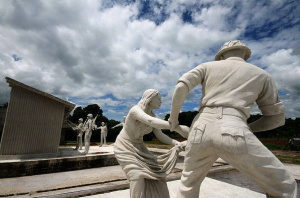
    Sculpture at Mujibnagar: A woman being raped by a Pakistani soldier during the 1971 war

    Sculpture at Mujibnagar: A woman being raped by a Pakistani soldier during the 1971 war. Image by Rahat Rahim via Wikimedia.

    For example, women held at military bases to sexually serve men are often also required to wash and cook. The Sepur Zarco case also heard a former military commissioner tell the court how the then head of the military base and the accused in the trial, Lieutenant Esteelmer Reyses Girón, ordered soldiers to gang rape a woman, and that the Lieutenant himself “took” this woman as his “wife”. In similar vein, in the case of Peru, few women used the words ‘rape’ (violación) to describe their experiences. Instead, some said ‘he used me as his wife’, indicating how domestic and sexual enslavement were part of the package of abuse. One witness even stated ‘he started to beat us as if we were their wives’, further blurring the boundaries between the domestic and the political, between wartime abuse and peacetime abuse, and arguably, between husband and abuser. In Sierra Leone, and Uganda, similar patterns can be found: sexual and domestic slavery go hand in hand, and is made possible because of the peacetime structures in which women’s roles are already defined by their service to men. Hence, girls forcibly recruited into rebel armies soon became ‘wives’.

    The idea that those who are violently enslaved could in fact be in a consensual relationship, albeit unequal, such as a marriage, provides a veil of legitimacy to an otherwise exceptional situation. It does, indeed, suggest a level of normality, a continuum, of life as one knows it. It might be the veil that makes survival possible. But many victim-survivors of conflict-related rape and sexual slavery are ostracised from their communities, exposed to a postconflict life of continuous abuse from their intimate partners, or choose to hide their trauma out of fear of retaliation. The women who testified in the Sepur Zarco case either did so behind closed doors, or they hid their faces behind veils during public sessions. What happened in war might have been exceptional, but not sufficiently so to erase the suggestion of complicity entirely, less so, stigma.

    In my book Sexual Violence in War and Peace, I identify a continuum in how sexual violence is understood and perpetrated in both war and peace, and hence, how such violence is dealt with post-conflict. The characteristics of rape regimes perpetrated by military in the high Andes of the 1980s and early 1990s showed many known features of power relations along lines of race, sex, class, age, and gender. Sexual violence, because of its intimate and potential reproductive qualities, helps produce and reproduce those unequal power relations. In war this might be strategic and large-scale, or it might be facilitated and condoned, in order to dominate over others (i.e., both to affirm power as well as subordination, both to destroy communities, as well as consolidate military loyalty and masculine strength). But in peacetime, it does the same: sexual violence produces dominance and subordination between genders, races, sexualities, classes and ages, be that catcalling, sexual harassment, marital rape or other forms of highly gendered and sexualised violence.

    Understanding sexual violence along a continuum does not say anything about the gravity of the violence or even how it might be experienced. On the contrary, while recognising and naming the differences between forms of sexual violence, experiences can be named as violence and as harmful, instead of normal or deserved. What the concept of a continuum of violence intends to highlight is how all forms of sexual violence are part of gendered social structures and patterns that have to be identified and transformed. Highlighting, combatting and prosecuting rape in war should arguably be part of a similarly linked set of measures that aim to eradicate gender inequality and the (often intersecting) violence with which such inequality is maintained and perpetuated, be that in war or in peace, at the level of families or in public space, in Guatemala or in the UK.

    Thinking in terms of a continuum does not aim to minimise rape in conflicts, gang rape, or the femicides we are seeing particularly in parts of contemporary Central America. But it gives us an analytical tool that allows us to connect sex, male violence, and gender inequality, both in the everyday as well as during armed conflict. Thinking in terms of a continuum allows us to see how much violence is hidden, institutionalised, and/or normalised in everyday life, both in peacetime and wartime, in homes, in intimate relationships, and in public spaces. The term allows us to see parallels between the extreme and the everyday, the public and the private, thereby not undermining the seriousness of the extreme, but undercutting the normality of the everyday.

    As such, the Sepur Zarco case is a milestone, and is hopefully a further step towards accountability for acts of sexual violence, and more broadly, gender-based violence, in both war and peace, in Guatemala and beyond.


    Jelke Boesten is Reader in Gender and Development at International Development Institute, King’s College London.

  • Does Climate Change Cause Conflicts in the Sahel?

    Droughts can potentially help escalate conflicts, but empirical evidence from the Sahel suggests that the root causes of land disputes are more historical and political than climate driven.

    The climate-conflict narrative

    Oxfam International

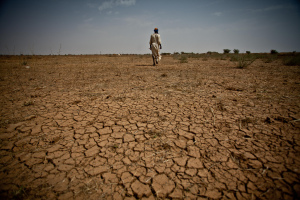
    Image by Oxfam International via Flickr.

    The Sahel is often highlighted as a hotspot of violent conflicts, typically occurring between farmers and pastoralists or between the state and armed groups. More recently, jihadist violence, in particular by groups associated with ISIL and Al Qaeda in Mali, Boko Haram in Nigeria and Al-Shabab in Somalia, has also added to this image of the Sahel as a conflict-ridden part of the world.

    With climate change becoming a leading global political issue, a powerful policy narrative has emerged which uses global warming to explain conflicts. In contrast to this narrative, most empirical research points to the role of political and historical factors as the root causes of conflicts in the Sahel.

    Many politicians, international civil servants and climate activists seem attracted to the idea of climate-driven conflicts. For instance, in a newspaper article in 2007 UN Secretary-General Ban Ki-moon made a connection between global warming and the Darfur conflict. In the same year, the idea was also at the crux of the decision to award the Nobel Peace Prize to former US Vice President Al Gore and the Intergovernmental Panel on Climate Change (IPCC). According to the Norwegian Nobel Committee, human-induced climate change is one of the main causes of violent conflict and war in the world today, and violence between farmers and herders in the Sahel are the most typical examples of what the committee calls ‘climate wars’. Also many climate activists champion the idea of climate-driven conflicts – for instance the idea has been repeatedly promoted by former executive director of Greenpeace Kumi Naidoo.

    This narrative about the climate-conflict link in the Sahel consists of two elements. First, it assumes that global climate change leads to drought and desertification, which in turn result in resource scarcity. Secondly, this resource scarcity is believed to cause migration and the emergence of new conflicts, or to trigger existing ones.

    The re-greening of the Sahel

    The claim that rainfall in the Sahel is decreasing is problematic, because the rains have increased again after the drought of the 1980s. Since it is largely rainfall that drives the Sahelian ecosystem, global warming might obviously in the long run produce desertification and resource scarcity – if it reduces rainfall. However, there is currently considerable uncertainty about current rainfall trends and projections in the Sahel. This uncertainty is generally stressed by climate scientists who model how global warming will affect the climate in the Sahel. While some models support the theory that this region will become drier, a majority of models actually suggest not only more abundant, but also possibly more delayed and concentrated rainfall in the future in the Sahel. This might lead to more vegetation over all, and more runoff and floods.

    In fact, because of increased rainfall since the 1980s, instead of desertification, the Sahel became greener again over this period. The re-greening of the Sahel has actually been observed for more than a decade. More recent research by French scientists has also confirmed this trend.  Based on long-term research in northern Mali, this French team observed not only strong resilience and recuperation of the vegetation on sandy soils, but also detected a transformation and thinning of the vegetation on shallow soils. This latter process is linked to stronger and more concentrated run-off resulting in increasing water levels in temporary streams and lakes that in some places have become permanent (see here).

    Hence, while there is a general re-greening of the Sahel caused by stronger rainfall trends since the droughts of the 1980s, there has also been the opposite, a thinning of vegetation on shallow soils, which again leads to more run-off and increased water bodies. In a similar vein and in parallel to the myth of the marching desert, the drying of Lake Chad, the largest lake in the Sahel, is also a myth according to recent research.

    Both these observed and opposing trends are in fact contrary to received wisdom and the dominating policy narrative on the Sahel represented, for instance, by the Great Green Wall Initiative, which aims to make the Sahel green and thereby to fight desertification. This initiative is funded by the Global Environment Facility at the tune of over 100 million USD.

    Political causes of conflicts

    The narrative of climate-driven conflicts first assumes desertification to be a widespread process in the Sahel, and second it postulates such resource scarcity increases conflict levels. This second link cannot be dismissed theoretically, even if empirical results from international research question the validity of this correlation. Most quantitative research undermines the existence of such a general link between climate and conflict, while case studies in central parts of the Sahel indicate that the conflicts have other causes such as rent seeking among government officials as well as policies and legislation that are marginalizing pastoralists.

    In the dry parts of Africa where pastoralism and farming overlap as the main forms of land use, there are continuous conflicts of varying scale. These conflicts have historical and political causes.  For instance, farmer-herder conflicts in Mali are associated with the state’s pastoral and land tenure policies and legislation, which generally are to the disadvantage of pastoralists and tend to lead to their marginalization. Three structural factors can be seen as the main drivers behind these conflicts: agricultural encroachment that has obstructed the mobility of herders and livestock, opportunistic behavior of rural actors as a consequence of an increasing political vacuum following decentralization and the disintegration and withdrawal of state services, and corruption and rent seeking among government officials (see here and here).

    Pastoral marginalization is also at the root of the Tuareg rebellion in Mali. The droughts of the 1970s and 1980s did, however, play an indirect role in the rebellion, because they led to the migration of young men to Algeria and Libya, where they were exposed to revolutionary discourses. There was already a strong feeling among nomads and Tuareg in Mali of being marginalized by state policies of modernization and sedentarization. Embezzlement of drought relief funds by government officials in Bamako added further to the anger felt by young Tuareg in Algeria and Libya who took up arms against the Malian state in 1990. The droughts of the 1970s and 1980s were probably not a necessary condition for the rebellion to take place. The first Tuareg rebellion in Mali took place in 1963 following an unusually humid period.

    Pastoralists are probably the group best adapted to climate variability through their opportunistic and flexible resource use strategies. But at the same time, pastoralists are suffering from state policies favoring settled agriculture in many countries in the Sahel. Even though pastoralists are losing access to land, livestock-keeping remains one of the economically most important activities throughout the Sahel and the large export of live animals to neighboring countries, especially on the West African coast, continues.

    Conclusion

    Even though droughts or flooding may potentially help escalate conflicts, empirical evidence from the Sahel, as well as from other parts of Africa, demonstrates a lack of correlation between climate and conflicts, and suggests that the root causes of land disputes are historical and political in character. While climate change remains a dangerous global challenge, over-stretching its causal responsibility may not only undermine long-term public engagement, but also depoliticize and thereby gloss over the real causes of conflicts, which could hinder the process of finding effective solutions to disputes.

    Tor A. Benjaminsen is Professor at the Department of International Environment and Development Studies, Norwegian University of Life Sciences

  • The Complex Drivers of Japanese Whaling Policy

    Debates about Japanese whaling revolve around the issues of animal welfare, science and cultures. However, the dynamics that shape whale hunting are much more complex. 

    Watching the voting patterns of the various Parties to the International Whaling Commission (IWC) a neutral observer would think that the world is equally split between a pro-conservation lobby and those who are vocally committed to the support of commercial whaling. Whaling advocates use this apparent polarity to claim the IWC is ‘dysfunctional’ and to call for parties to compromise in their opposition to whaling.

    One of the leading proponents for whaling is the Japanese Government whose rhetoric on the issue could lead one to believe that whaling is a core part of the Japanese eternal zeitgeist.

    To some, the issue of whaling can be reduced to an ongoing debate between animal welfare, science and cultures. However, the dynamics that shape the hunting of the great whales are much more complex.  It can be argued that it is the combined interaction of both localized domestic Japanese politics, wider international strategic concerns and Japan’s relationship with the US, which creates the real drivers of Japanese whaling policy.

    In fact, the whales may have very little to do with it.

    Political Resource (In)Security and the IWC Moratorium

    As a net importer of both food and raw materials Japan has always been sensitive to resource security. In the face of the 1973 oil shocks Japan launched an independent and vigorous campaign of resource diplomacy. The seriousness by which Japan saw this issue is referenced in the 1981 Japanese Defence White Paper,

    “…Among the possible threats to [Japan’s] safety and existence are the restrictions or suspensions of supplies of resources, energies and foodstuffs, as well as armed aggression”.

    Whilst many in Japan had not eaten whale meat before the 1940s post-war US occupation authorities urged that whale meat be offered in classroom lunches nationwide as a cheap source of protein and on so doing, temporarily became part of ‘Japanese everyday life’.

    Japan’s industrial whaling peaked in the early 1960s and then entered a steady decline as consumers switched to other meat products  It may well have ended altogether when the IWC enacted a moratorium on commercial whaling in 1982, but even before the zero catch quotas had come into force the Japanese Minister of Agriculture, Forestry and Fisheries, Moriyoshi Sato stated,

    “The government will do its utmost to find out ways to maintain the nation’s whaling in the form of research or other forms”.

    Thus, Japan began a sustained programme of ‘resistance’ to the implementation of the moratorium, including launching a programme of ‘scientific’ permit whaling, ostensibly allowed for under Article VIII of the International Convention for the Regulation of Whaling (ICRW) and a programme of recruiting allied states through conditional aid.

    Whilst the 1946 signing of the ICRW was an important jurisprudential step in establishing the principle of international regulation in both the high seas and national waters, since joining the IWC in 1951, Japan has actively sought to limit IWC jurisdiction. It has argued against IWC competency for small cetaceans and increasingly asserting its sovereignty within its 200-mile Exclusive Economic Zone (EEZ) over the accepted norms of IWC control of whaling in ‘all waters in which whaling is prosecuted’

    Despite multiple calls by the IWC for Japan to cease its whaling, Japan’s decades of so-called ‘scientific’ whaling in the Antarctic was only paused when it was ruled ‘not for the purposes of science’ by the International Court of Justice (ICJ) in its landmark 2014 ruling. 

    Japan’s reaction to the ICJ decision

    Image credit: White Welles/Wikimedia.

    Whilst many countries may well have ‘thrown in the towel’ on an industry that was now attracting international condemnation and consuming significant government subsidies, Japan has sought to use the ICJ decision to bolster its domestic claims of foreign prejudice.

    In late 2015, despite failing to obtain IWC or scientific support, Japan’s whaling fleet again sailed to the Antarctic under a new permit (NEWREP-A). At the same time, Japan signalled that it would not countenance any future challenges withdrawing from the jurisdiction of the ICJ with respect to ‘research on, or conservation, management or exploitation of, living resources of the sea’.

    In one move, Japan not only removed itself from being challenged on whaling, but it seized the opportunity the incident gave it to remove any future chance of challenges to its other fisheries activities in the highest global court.

    Japan’s ‘scientific-whaling’ programme may well also be about keeping its whaling infrastructure extant, stimulating its domestic market, and, importantly, maintaining pressure on the IWC. Japan’s creative interpretation of Article VIII special permit whaling may even be an ongoing strategy to stimulate international criticism that can feed the wider Japanese Government nationalistic rhetoric of western bias.

    Japan’s use of ‘cheque-book’ diplomacy

    Japan would not have felt confident at rejecting the jurisdiction of the ICJ unless it felt it remained under the protection of the USA ‘permission umbrella’ and that it had enough client states in the IWC. Japan has regularly been criticised for buying the votes of developing countries within the IWC, but this strategy has very different roots.

    During the Cold War, US political intervention to counter perceived Soviet expansionist activities in the Pacific encouraged Japanese use of conditional aid. What had begun at the signing of the US-Japan Security Treaty in 1951 has grown into a Japanese foreign policy that includes aid to ex-Soviet states such as Mongolia.

    Japan developed an increasing politico-strategic rationale as an instrument of the doctrine of ‘comprehensive security’. Under Shintaro Abe, Japan’s Foreign Ministry, was to find the necessary leadership and political will to embrace strategic aid openly as part of a forthright foreign policy posture. In 1987, Japanese Foreign Minister, Tadashi Kuranari, visited the South Pacific region, and articulated what became known as the Kuranari Doctrine that set out a multidimensional approach to Japanese ODA and foreign policy.

    In the same year as the IWC voted for the moratorium, the South Pacific Forum reacted to Japan trying to reorganize its fishing arrangements in light of the adoption of the United Nation’s Convention on the Law of the Sea (UNCLOS) stating that it, ‘Deplores the increasing tendency of distant water fishing nations to link the grant of aid with the receipt of fisheries access…’

    The precedence of Japanese interests has remained a constant feature of Japan’s aid programme to the Pacific with preferred bilateral negotiations allowing Japan to exploit divisions between states to maximise its bargaining power.

    And not all Japanese ODA is equal when the Japanese Fisheries Ministry (JMAFF) is involved. Indeed, it may be a mistake to see the actions of Japanese Government departments as pursuing a holistic strategy. The domestic power of the whaling block within the Japanese Ministry of Fisheries should not be underestimated. Studies suggest that the Fisheries Ministry has been the main beneficiary of an aggressive ODA policy, highlighting the fact that when trying to carry out an analysis of the motivations of Japan, analysis cannot be limited to trying to understand what is  believed to be the strategic national goals of any one state actor. 

    Trapped in a ‘domestic bubble’ of concerns

    Observers have pointed to the incestuous relationships between JMAFF and those who profit from whaling. It has been noted that the Institute of Cetacean Research (ICR), the ‘quasi-governmental’ body that carries out ‘scientific’ whaling, is funded by sales of whale meat and from direct subsidies, whilst the government relies on the ‘independence’ of the ICR to claim scientific legitimacy for its whaling. Some go so far as to argue that this relationship is so institutionalized that Japan was happy with the scientific whaling status quo.

    Japanese academic analysis points to the policy of ageing whaling advocates amongst the Ministry of Fisheries ‘retiring’, after years of defending Japanese whaling interests at international fora, into the very fisheries conglomerates that financially benefit from Japan’s continued whaling. This domestic ‘bubble of concerns’ makes Japan almost impervious to external pressures when it comes to ending whaling. Indeed, the inter-connections go even deeper. In 1976 in an attempt to consolidate and preserve the dying Japanese whaling industry Japan’s current Prime Minister’s own father, Fisheries Minister Shintaro Abe helped to establish the whaling company of Nihon Kyodo Hogei Co. Ltd.

    Prime Minister Abe has modelled his political credo on that of his grandfather, Nobusuke Kishi, who championed resurgent post-war nationalism. Abe is also a supporter of Nippon Kaigi, a nationalistic revisionist grouping within the Japanese Cabinet and Diet. Historical re-interpretation of historical events has long coloured Japan’s relationships with its regional neighbours but this new nationalism is seeking to redefine and reinforce whaling as part of their narrative. The ruling Liberal Democratic Party wishing to shore up its rural political support, including that from fishing communities, has been careful to back the establishment whaling position making it difficult for anyone to publicly criticise whaling without being seen to criticise Japan itself.

    Some concluding thoughts

    Japan’s whaling policy is thus a complex product of domestic political norms and an industry maintained by direct and indirect financial and political co-dependencies all nested within an increasing nationalistic narrative.

    Whilst the primacy of Japan’s early foreign policy was focused on securing access to scarce raw materials and achieving its re-acceptance into the global sphere after World War II,  it has now grown into a foreign policy tool for achieving diplomatic objectives. What is of concern to policy makers as well as conservationists is the fact that these real and manufactured drivers of Japanese whaling policy can negatively affect regional and international policy at the highest levels.

    The debate within the IWC is no longer just about protecting whales, and is increasingly becoming a testing ground for Japan to establish new international norms for the exploitation of marine species. The consequences of acquiescence to Japan’s ambitions may well have major repercussions not only for marine conservation, but also for the way states perceive how international law can be circumvented to serve domestic minority interests.

    Chris Butler-Stroud is the Chief Executive of the international NGO, Whale and Dolphin Conservation (WDC). Joining the UK arm of WDC in 1992 as a researcher, he has since worked across all WDC’s cetacean conservation disciplines, and has been involved in delivering most aspects of WDC’s policy areas including participation at the International Whaling Commission, the Convention in Trade in Endangered Species (CITES), the Convention on Migratory Species (CMS) and its daughter agreements, ASCOBANS, and ACCOBAMS amongst others. Chris has particular research interests in whaling policy and emergent conservation policy and law. 

  • Beyond Disarmament, Demobilization and Reintegration of Ex-combatants

    For decades, national and international actors have used Disarmament, Demobilization and Reintegration (DDR) programs for combatants as standardized key elements of peace operations, but these programs are not without their problems. 

    There is an African expression: “Softly, softly, catchee monkey!” which means that with patience and perseverance obstacles can be overcome. The saying exemplifies the qualities and skillset needed by peacebuilders in the difficult task of reintegrating combatants through Disarmament Demobilization and Reintegration (DDR) programs. What turns people towards armed mobilization and political violence and how can individuals be steered away from it? These are questions that have vexed governments and international organizations for some time now. Yet nobody seems to have a definite answer to what it takes to reintegrate ex-combatants, insurgents and rebels. What kinds of activities and skills underpin reintegration and more importantly: can they be acquired over time?

    DDR and the Changing Context of Conflict

    DDR programs are designed and intended to facilitate the transformation of combatants into civilians (see below). The understanding that DDR programs are essential in helping to prevent war’s recurrence in post-conflict situations is at the heart of current international aid practice and the academic literature on peacekeeping and stabilization.

    Disarmament is the comprehensive collection, documentation, and disposal of small arms, ammunition, explosives and light and heavy weapons of ex-combatants and the civilian population.

    Demobilization is the formal and controlled discharge of active combatants from armed groups. The first stage involves the processing of combatants in temporary centers. The second stage encompasses a ‘reinsertion’ package.

    Reintegration is the process by which ex-combatants return to civilian life and gain sustainable employment and income during the post-conflict recovery period. Reintegration addresses social and economic issues.

    DDR programming today is frequently mandated in on-going conflict contexts. There are two major challenges for ensuring the implementation of DDR interventions in these settings:

    1. When there is no peace to keep due to on-going hostilities. To this one must add of lack of a political agreement and political buy-in from warring parties. There have been doubts about whether DDR activities will work in such settings (also called non-permissive environments).
    1. When ongoing conflicts lack the stability required to facilitate the economic reconstruction needed to provide ex-combatants jobs entering the labor market, raising questions about how to implement effective DDR programs that prevent conflict relapse.

    The Scale of DDR

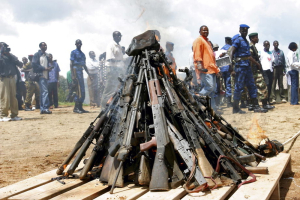
    Weapons being burnt during the official launch of the Disarmament, Demobilization, Rehabilitation and Reintegration (DDRR) process in Muramvya, Burundi. Burundian military signed up voluntarily to be disarmed under the auspices of United Nations peacekeepers and observers. 2/Dec/2004. Muramvya, Burundi. UN Photo/Martine Perret. www.un.org/av/photo/

    Weapons being burnt during the official launch of the Disarmament, Demobilization, Rehabilitation and Reintegration process in Muramvya, Burundi. Image by United Nations Photo via Flickr.

    DDR has grown significantly during the last decades. The first UN effort in Central America demobilized 18,000 fighters in the early 1990s. In recent years, 101,000 combatants were demobilized in Liberia.  150,000 combatants were due to be processed through DDR in South Sudan before the outbreak of the ongoing civil war and this number is expected to double or triple with the implementation of the peace agreement between the warring factions.  According to the UN department of Peacekeeping Operations, in 2013 estimated mandated caseloads for on-going DDR operations in peacekeeping contexts alone were over 400,000. DDR efforts, in other words, seem here to stay as long as conflicts around the world show no sign of abating.

    DDR programs comprise a number of elements. They are highly standardized following the introduction in 2006 of the United Nation’s Integrated DDR Standards. Never before have DDR programs been so comprehensive in their scope and areas of competency, comprising an ever expanding field of interventions such as access to land, cash transfers, skills training and job placement.

    Despite the abundant literature on lessons to be learned from previous DDR processes there is little evidence that DDR programs actually produce the desired outcomes, and important loopholes and gaps remain; particularly around the mechanisms at stake in successful social and economic reintegration of former combatants.

    Very few DDR programs aim to achieve a sustainable reintegration of ex-combatants. Arguably, the aim has been to provide a tangible peace dividend and stabilize the situation in the short term (for instance in Sierra Leone, Liberia, South Sudan, Nepal, just to name a few countries). In other words, the theory and policy of DDR is driven by realist and strategic rationalities: security first.

    A dominant assumption underlying academic theory, policy and practice in the field of peacekeeping is the indispensability of DDR in the early transition from war to peace. Indeed, the rather rigid model of DDR that has evolved over the past decade has become part of the orthodoxy of UN peacekeeping, part of a sequencing of programs and activities that UN missions rarely deviate from. In recent years, this orthodoxy has increasingly been questioned, both in terms of the content of the DDR templates along with the outcomes/effectiveness of the intervention and, not least, the very serviceability of the concept to broader processes of peacekeeping. The important questions regarding DDR programs we have to ask ourselves are: Why do we approach these issues the way we do? Is the offer of a DDR program better than no program at all since it is believed that they make a substantial difference to the lives of ex-combatants and community members?

    Vocation Skills Training vs Spending

    The potential success of a DDR programme depends largely on the type, quality and length of the vocational skills training provided to ex-combatants. In practice, though, the type of training carried out often does not even amount to half of the duration required for a civilian in peace circumstances. In other words, training does not lead to jobs, and it might not even provide access to employment at all. More often than not, training is poorly suited to labour market needs. Furthermore, without capital, the returns on skills training could be low. If the outcomes are that meagre, then why are education and skills training still so central to DDR? For some critical observers, vocational training persists because it is what donors and implementing actors know and are willing to fund, and it therefore involves little risk (the measurement of success is straightforward: the number of graduated trainees). If DDR has been ineffective in facilitating economic reintegration for former combatants, the reason may be that the programs’ approach to the problem is wrong because skills training will not be effective in environments characterized by fragility, conflict and violence. In contrast to the poor results of training and education, recent research has shown that capital-centred DDR activities are among the best performing ones. Capital-centric intervention refers to start-up grants, in-kind capital transfers and cash injections.

    In Burundi, for instance, a reinsertion allowance was offered for eighteen months, with the amount depending on rank. A business start-up grant worth about $1200 was also offered. Comparing the results for those who received it with those who did not, researchers found a large reduction in poverty among the former.

    This review of DDR experiences suggests that ex-combatants tend to use the cash received wisely to satisfy their immediate needs and that some manage to save and invest. In Liberia cash transfers had a positive impact on local and national security. This is reflected, for example, in the low levels of violence reported in parts of Liberia, where the Danish Refugee Council ran a dollar-a-day program for ex-combatants after the war ended. Injections of capital – cash, capital, livestock – seem to stimulate self-employment and raise long-term earning potential. The main assumption is that these programs are cost-effective and enable ex-combatants to expand their income generating activities.

    DDR Bureaucracy and the Promise of Peace

    An important assumption of DDR program concerns the special needs of ex-combatants – as opposed to the broader population – for reintegration support in order to leave behind militancy and adopt a civilian life and identity. However, that is not necessarily the case. Ex-combatants are a heterogeneous group, with some of them more at ‘risk’ than others. Some ex-combatants might even share traits with youth at risk of recruitment by radical groups or violent gangs. Programs should be targeted at those at the highest risk of crime, violence, or future insurgency. But increasingly, DDR programs directly target civilians insofar as they have a relation with an ex-combatant (spouses and children), as it is the case in the recently launched DRC reinsertion and reintegration program. This prompts us to ask: are DDR programs faced with a difficult balancing act between equity and security? In other words, is this kind of targeted assistance rewarding violence? The answer seems to be ‘yes’.

    Conclusion

    DDR programs, rather than being value-free, amount to a normative process of change, with the aim of altering the identity from that of a combatant to a civilian, and from individual dependency on military structures to civilian self-resilience. It is believed that DDR programs are able to facilitate this change. DDR as a technocratic intervention amounts to a belief in the ability to arrive at the optimal answer to any discussion through the application of particular practices. In other words, DDR programs keep the promise that disarmament and reintegration can be achieved by bureaucratic means. Bureaucracies require standardization for efficiency and rationalized training.

    Today, however, effective DDR requires greater participation of local populations. DDR activities have still not found ways to adapt and respond to local contexts of armed violence and fragility in sensible, realistic and cost-effective ways.  DDR interventions require locally differentiated analyses rooted in local perceptions and participation, as well as inclusive processes in designing prioritized programs. To be honest: the bulk of the world’s fighters, gang members, insurgents and high risk youth do not want to be reintegrated: but have expectations of physical protection and material support for their own projects. They should have a say in this multimillion dollar enterprise.

    Jairo Munive is a postdoctoral research fellow at the Danish Institute for International Studies in Copenhagen. His research focuses on DDR processes in Africa. Previously worked as a consultant for DANIDA, ILO and UNDP. He has published in various journals such as:  the Journal of Agrarian Change, Conflict Security and Development, and Forced Migration Review.

  • Prevention and Militarization in Africa’s Security Governance: Mirror Images?

    Due to a conflict within policy circles between those who want more inclusive approaches to resolving conflict in Africa and those who want robust responses to violent jihadism, a problematic imbalance in African security governance is being created.

    Introduction

    African peace and security policy-makers and intellectuals within and beyond the continent are calling for more inclusive political approaches to resolving conflict in Africa. Yet, patterns of decision-making, most evidently by the African Union (AU) Peace and Security Council, indicate that proactive, robust and joint responses to jihadist terrorism and radicalized armed non state actors are preferred because these threats pose particularly urgent challenges to Africa’s security and political order. This argument has important transnational echoes and an imbalance in African security governance is being created as a result of these developments. The more implementation of the African peace and security architecture (APSA) is measured by how well the AU together with global partners fight global terrorism, the more likely an excessive over-reliance on military responses to political problems seems. Such over-reliance risks militarizing the people, ideas and institutions of Africa’s security governance. Many voices in AU peace and security circles are pulling in a de-militarizing direction and are attempting to mobilize behind an enhanced prevention and mediation-agenda, and a value-driven vision of African ownership.

    The preventive pivot

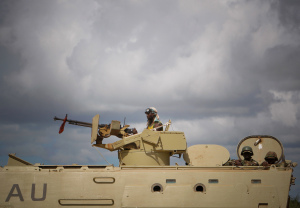
    AMISON

    Image by AMISON Public Information via Flickr.

    Preventing armed conflicts is a strategic priority for the African Union Peace and Security Architecture (APSA) as seen in APSA Roadmap 2016-2020. This follows on from the Windhoek Declaration and AU-adopted commitment to end all wars and ‘Silencing the Guns in Africa by 2020’ which forms part of the continent-wide Agenda 2063. The Agenda 2063 document, adopted by the AU Assembly of African Heads of state and government in May 2013, sets forth a value-based vision of a united and prosperous Africa. Understood as one leg of the pan-African political body, the APSA should arguably first and foremost facilitate Africa’s unity, development and prosperity through early conflict prevention.

    The Roadmap sets out the objective for the AU and the Regional Economic Communities (REC) and Regional Mechanisms (RM) to contribute to the prevention of conflicts and crises. Early warning systems with state of the art data collection and monitoring tools exist at continental and regional levels. Enhancing capacity means that they must coordinate and collaborate better with each other and other relevant component parts of APSA. The sometimes sensitive information that these early warning bodies gather is only as good as the use decision-makers and the AUPSC make of it.

    The use of special envoys, senior mediation panels and networks of elders is one of the AU’s ‘best kept secrets’.  To underscore their importance, the APSA Roadmap sets out as one objective to show evidence of frequency, relevance and efficacy of preventive diplomatic missions undertaken by the AU and the RECs. On a case by case basis, it has always been possible to gather knowledge about the roles and outcomes of preventive mediation efforts. Only a select few can claim to have the overall picture of their scales, roles and achievements. Most often mediation missions are set up rapidly and with an ad hoc initial role. At times, the AU Panel of the Wise is used, yet in other conflicts a high-level panel is tailored to the specific conflict by comprising former heads of state with high moral standing in the eyes of the conflicting parties.

    The Roadmap notes that early warning capacity and inclusive mediation-capacity must be connected with the strategic security priorities of decision-makers. Early warning systems cannot collect equally in-depth and actionable data on all forms of conflict in Africa. However, concerning the most geo-strategically sensitive conflicts their reports are not likely to be as welcome or as frequently used by decision-makers. Might intellectuals and policy experts help change the mindset of decision-makers if they could point to research and verified information showing that prevention at early stages of conflict is most sustainable and effective? There exist examples of early warning/information sharing mechanisms which bridge the ‘soft’ approach with ‘hard’ security issues. For instance, the ‘Nouakchott process’ aims to enhance security cooperation between intelligence and security-services of states in the Sahelo-Sahara region. However, the political oversight and support of this process must be ensured. Early warning data can otherwise of course be narrowly used towards the military approach of regional states.

    The preventive mediation tool has been used extensively, especially in the most geo-strategically important conflicts. However, their tasks, roles and achievements are less well known outside APSA’s decision-making circle. Often, references are made to Africa’s rich tradition of culturally aware and dialogue-centered ‘Baobab tree’ meetings. But it remains hard to access best practices and the gold standard of AU’s recruitment, support, as well as linking its preventive mediation to other external mediation initiatives. Changing this should be a key priority, especially since high-level gatherings and summits on Africa’s peace and security argue that prevention is the most cost-effective and the most successful form of conflict management for Africa. References are often made to the vital importance of inclusivity in African mediation culture. Dialogue must occur with all conflict actors. Talking to terrorists and non-state radicalized actors is therefore not excluded. The Windhoek Declaration argues that reflection is needed on the direction of the counter-terrorism agenda in Africa and importantly forefronts the value of Africa’s rich tradition of mediation. This offers a possible bridge between ethical-political arguments (advocates of the preventive pivot) and interest-based arguments (advocates of robust action on global terrorism).

    Reflection is required on how to calibrate prevention as a core phase in traditional conflict resolution with emerging specialized notions such as preventing mass atrocities (in line with the Responsibility to Protect), preventing acts of terrorism, and perhaps also preventing electoral violence. Diverging prevention agendas under conditions of resource scarcity might otherwise compete and bring with them rivalling perspectives and bureaucratic silos on prevention. More strategic discussions are needed about conflict patterns and structural as well as direct causes of wars and security threats. The Windhoek Declaration discusses how state fragility when considered a structural cause of radicalization of youth indicates that efforts aimed at enhancing democratic governance, security sector reform and state-society relations will prevent radicalization more effectively than military efforts because these only focus on ‘symptoms’ of state fragility.

    A preventive turn might also be detected in global policymaking. The UN Secretary-General has placed prevention of atrocity crimes and the roles of regional actors in achieving this as a core priority in his July 2015 report on the Responsibility to Protect (R2P). The UN General Assembly and UN Security Council on 27 April this year endorsed as a framing concept ‘sustaining peace’ in the recognition of the finding by the advisory group of experts’ review of the peacebuilding architecture that peacebuilding must be an inclusive endeavor, and necessitates holistic approaches and global commitment starting with preventive mediation efforts.  At the 24 May UN Security Council meeting on UN cooperation with regional and sub-regional organisations, a number of state representatives actually referred to the concept of ‘sustaining peace’ and/or the crucial role of UN-regional partnerships as glimmers of hope at this time of heightened pressure on global institutions to respond to several extremely complex conflicts. Some argued that the current global security situation requires a new mind set, even a ‘paradigm shift’ in global affairs.

    Militarized institutional narratives and practices

    The joint fight against violent extremism featured primarily at the first ever Africa-based core group meeting of the Munich Security Conference in April this year. The framing of the discussion was that global terrorism in North Africa, East Africa and the Sahel needed urgent, robust and joint action. The readiness of Africa’s own peace and security institutions to lead on terrorism and other sources of insecurity was emphasized. The dominant position was starkly defensive: a strong perception is that the sovereign’s role as main provider of territorial order and security is under unacceptable assault by non-democratic forces. Given the importance attached to stable African governments, such a perceived assault justifies military responses short term. ‘Combat’, ‘fight against’, and ‘counter’ violent terrorism and extremism were the common terms used at this event, and further echoed in relevant AU PSC meeting communiqués (for example on 29 Jan 2016), as well as at the 5th Tana Security Forum in April 2016.

    Present were representatives of academic institutions and CSOs that objected to the dominant trope and the prioritization of heavy handedness. These actors preferred to talk about historical and structural causes of terrorism (such as weak state-society relations, demographic challenges and unemployment rates). Or, they raised the acute absence of knowledge surrounding radicalization and recruitment into extremist groupings. Additionally, it was argued that strengthening or stabilizing central government and its ruling capacity by itself would not change the structural causes of marginalization and exclusion in many African societies.

    It might be argued based on the assumption that global terrorism requires a global fight that it is a lesser ill that hard approaches overshadow alternative political, developmental and humanitarian-based approaches. Certainly, part of the global push towards strategic partnerships with African regional actors is linked to seeing African states and institutions as playing specific useful roles in world order. France and the US have most candidly expressed that the AU and certain African states play very useful combat roles in active conflicts, and that partnerships are strategic in so far as they help all involved partners identify and secure their respective interests. Partnerships offer one way to strengthen a global hybrid coalition of counter-terrorism. This is the predominant trend, even as counter-strategies and counter- arguments exist and will hopefully take hold. Prevention and responding to terrorism-rationales are not mutually exclusive, but are better understood as mirror images. The trick for the foreseeable future is how to rebalance APSA, and develop legitimate and sustainable ways to prevent/respond to terrorism.

    There is a serious danger that context-driven, root-cause based values embedded in AU foundational documents and the APSA are being pulled in a direction to serve short-sighted militaristic values. In the medium to long term this will favor autocratic modes of governance on the continent and already extends a level of international legitimacy to autocratic leaders (for example Chad’s Idriss Déby, Djibouti’s Ismail Omar Guelleh and Uganda’s Yoweri Museveni). This will also infer the AU with legitimacy and capacity building packages chiefly on basis of counter-terrorism practices. Consequently, other APSA programmes rank lower on the global priority ladder unless they are coupled with the ‘fight’ on terrorism. Adding to the pressures on APSA policy mechanisms to demonstrate capacity is the argument by certain African leaders and external partners that the African Standby Force and its rapid reaction capability must become more efficient. This line of argument has increased incentives for states to favor state-to-state relations and hybrid regimes to enable rapid and more efficient forms of political and security cooperation.

    African peace operations receive external recognition due to their militarized characteristics. Most AU peace operations are stabilization missions, using combat operations against specific aggressors (sometimes terrorist groups) in bounded conflict theatres. The troop contributing countries to the AU Mission in Somalia (AMISOM) have been commended and supported by the international community for the willingness to combat Al-Shabab fighters. As noted by Yvonne Akpasom in a book on Africa-led peace operations while this combat readiness may be necessary, it is crucial for APSA and for host populations in conflict-affected states that these stabilization missions are always linked to a political objective. AU-led missions to date have demonstrated operational readiness, but have been insufficiently streamlined with political strategic-level direction. In need of development are: realization of protection of civilians policies and guidelines, human resources to plan for, for example, policing components and human rights observers, reflection on security sector reform and law and order efforts.

    Conclusion

    For AU member states and APSA policy organs, the first strategic priority is really the achievement of full ownership over regional security governance. The counter-terrorism developments referred to do not aim to settle whether global terrorism poses the biggest security threat to Africa’s societies and populations. What is at stake is Africa’s political authority to define conflicts and threats on the continent. To achieve a bigger impact on global governance, the AU has to balance the different pressures on it to demonstrate authority and capacity to manage security threats in Africa.

    Linnéa Gelot is a Senior Researcher at the Nordic Africa Institute (NAI), Sweden and a Senior Lecturer at the School of Global Studies, Gothenburg University, Sweden. Her most recent publication is The Future of African Peace Operations: From Janjaweed to Boko Haram, co-edited with Cedric de Coning and John Karlsrud, with Zed Books. She is currently leading the project ‘AU Waging Peace? Explaining the Militarization of the African Peace and Security Architecture’ in which the concept of militarization and security practice theory are employed to study militarizing/de-militarizing institutional discourses and practices. Additionally, she has worked as a consultant and substance matter expert (African peace and security and the protection of civilians in UN peace operations) for UNITAR in Geneva, as well as other consultancy firms.

  • The Costs of Security Sector Reform: Questions of Affordability and Purpose

    The Costs of Security Sector Reform: Questions of Affordability and Purpose

    In considering security sector reform, questions of affordability have often been subordinated to questions of effectiveness and expediency. A recent series of reviews of security expenditures by the World Bank and other actors in Liberia, Mali, Niger and Somalia has highlighted several emerging issues around the (re)construction of security institutions in fragile and conflict-affected states.

    Read Article →

    Human Security and Marginalisation: A case of Pastoralists in the Mandera triangle

    This paper seeks to bring out the relevance of human security in pastoral areas of Mandera triangle and the relationships and contradictions that exist between it and national security. The “Mandera Triangle” encompasses a tri-border region of Ethiopia, Somalia, and Kenya that exemplifies, in a microcosm, both a complex and a chronic humanitarian crisis that transcends national boundaries.

    Read Article →

  • Markets, Minerals and Mayhem in Darfur