Blog

  • Global militarisation

    Global militarisation

    The current priority of the dominant security actors is maintaining international security through the vigorous use of military force combined with the development of both nuclear and conventional weapons systems. Post-Cold War nuclear developments involve the modernisation and proliferation of nuclear systems, with an increasing risk of limited nuclear-weapons use in warfare – breaking a threshold that has held for sixty years and seriously undermining multilateral attempts at disarmament. These dangerous trends will be exacerbated by developments in national missile defence, chemical and biological weapons and a race towards the weaponisation of space.

    How the Competing Security Needs of Caribbean Community Members have Crystallized Through Multilateralism and Consensual Decision-Making

    Serena Joseph-Harris | Exclusively written for sustainablesecurity.org | April 2011

    Issues:Competition over resources, Global militarisation, Marginalisation

    In a paper exclusively written for sustainablesecurity.org, Serena Joseph-Harris (former High Commissioner for Trinidad and Tobago) focuses on competition over natural resources, the role of maritime routes in the Caribbean, and the importance of multilateral approaches to finding sustainable solutions in the Caribbean.

    Image source: Len@Loblolly

    Read more »

    Mano Dura: Gang Suppression in El Salvador

    Sonja Wolf | Exclusively written for sustainablesecurity.org | March 2011

    Issues:Global militarisation, Marginalisation

    Case study examining how  repressive policies against gangs in El Salvador drove gangs to further violence, heightening the cycle of militarisation.

    “In 2003 – eight months before the 2004 presidential elections – President Francisco Flores of the conservative ARENA party launched Plan Mano Dura (“Strong Hand”), ostensibly to dismantle the gangs and curb the number of homicides, most of which had been attributed to these groups. Backed by considerable media publicity, the measure entailed not only area sweeps and joint police-military patrols, but was also accompanied by a temporary anti-gang law that permitted the arrest of suspected gang members on the basis of their physical appearance alone. Both the nature and the timing of the initiative suggested that it had been designed to improve the ruling party’s electoral position rather than to ensure effective gang control.”

    Image source: VCK xD

    Read more »

    Libya: lessons in controlling the arms trade

    Pieter D. Wezeman | SIPRI | March 2011

    Issue:Global militarisation

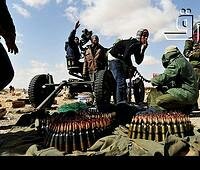
    In the current military air strikes against Libyan forces, nations that once supported Colonel Muammar Gaddafi’s regime are now—based on sanction by the United Nations—attacking the forces they were marketing and delivering arms to only weeks before. As the violence escalates and the international community examines how to respond to internal conflict and human rights violations, arms supply should be analysed as it implicates the international community as complicit in the violence it is now trying to end.

    Image source: B.R.Q.

    Article source: SIPRI

    Read more »

    What’s the Real Mission In Libya?

    Chris Mathews | Huffington Post | March 2011

    Issues:Global militarisation, Marginalisation

    US TV News anchor Chris Mathews, writing for ther Huffington Post, asks what is the real mission in Libya? Not the no-fly zone – that’s a method. So what is the mission? How do we end this thing?

    Image source: Gumpingit. 

    Read more »

    How Food Could Determine Libya’s Future

    Christopher Albon | The Atlantic | March 2011

    Issues:Global militarisation, Marginalisation

    As Libya’s protesters-turned-rebels fight a series of hard battles with forces loyal to Muammar Qaddafi, the United States — and the much of the world — struggles to find a meaningful response to the conflict. U.S. lawmakers have proposed such aggressive options as enforcing a no-fly zone over Libya or arming anti-Qaddafi rebels, both of which the White House has kept on the table. Critics of these plans argue that they risk involving the U.S. in another military engagement. But there’s another option that the U.S. could consider, one that might give anti-Qaddafi rebels crucial help while avoiding the messy complications of direct involvement: Send food.

    Image source: B. R. Q.

    Read more »

    The Securitisation of Aid?

    Saferworld | Saferworld Briefing | March 2011

    Issues:Global militarisation, Marginalisation

    Poor people want to feel safe just like anyone else. Security and access to justice for poor people are development goals in their own right whether in the midst of endemic violence, such as in parts of Somalia or Afghanistan, or in more stable countries where the police and judicial services may still be inadequate, unfair or abusive. Basic security and the rule of law are also necessary for other areas of development to take root and flourish.

    Image source: Demosh

    Read more »

  • Land, livelihoods and identities: Inter-community conflicts in East Africa

    Land, livelihoods and identities: Inter-community conflicts in East Africa

    Laura A. Young and Korir Sing’Oei | Minority Rights Group International | December 2011

    Issues:Competition over resources, Marginalisation

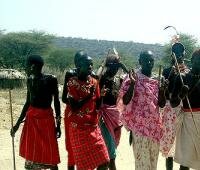
    In a report published in December 2011, Minority Rights Group International highlights the problems facing minority groups, specifically in an area covering Kenya, Uganda and Jonglei State in South Sudan. Competition over resources has increased the potential for confrontation not only with local dominant ethnic groups, but also with the state and international corporations, thereby increasing the liklihood of different forms of conflict on different levels. Progressive legal protections are often not enforced because of a disconnect at state-level between legislation and law-enforcement, which only exacerbates existing problems caused by long-standing discrimination. Moreover, conflict involving already marginalised people adversely affects the women and children in these groups in particular, which in turn re-impacts on the community because of the traditional roles that women play in family cohesion and as food producers.

    Many problems arise not simply because people belonging to minority groups are themselves marginalised, but also their community and governance structures which previously had been successful in mediating conflict such as (in an East African context) cattle raiding. Marginalisation not only discriminates against individuals because of their backgrounds or beliefs but also rides roughshod over communal organisation and mediation, leaving groups unable to adapt to change or protect their interests when threatened by more powerful entities.


    Executive Summary, by Laura A. Young and Korir Sing’Oei

    In resource-scarce East Africa, minority groups face major challenges over the control of and access to land and other natural resources. Despite national policy regimes that are developing in a positive direction, the reality for minority groups and their neighbouring ethnic groups is that land and natural resources continue to be a major trigger of violence. Minorities find themselves competing with other communities, with the state, and with corporate interests for control of resources upon which they depend for their livelihood, cultural integrity and future development.

    As globalization, population explosion, and climate change converge to increase the demand for land, water, forest products and mineral resources within territories inhabited by minorities in East Africa, these groups are forced to find new ways to cope with different types of conflict at once.

    This report describes the situation of selected minorities and their neighbouring groups in Kenya, Uganda and South Sudan’s Jonglei State. Each group has unique characteristics, including extreme livelihood challenges, vulnerability to conflict, and ongoing discrimination, which are common across communities and countries. Decades of discrimination against minority groups, often as a result of state policy starting in the colonial era, has rendered minorities in East Africa poorer and with more precarious access to land and natural resources than other communities.

    Minorities face such serious challenges for numerous reasons: legal regimes remain unimplemented or result in further discrimination against minority groups; there are existing conflicts between formal and customary laws; population pressures and climate change; lack of coordination in conflict resolution programming and donor support, and non-recognition of indigenous livelihoods by states.

    Resource conflicts and discrimination lead to negative consequences for women from these communities in particular, as they face double discrimination because of deeply entrenched patriarchy. Conflicts between formal and customary laws often leave women with limited options to protect their access to land and natural resources. Given the place of women in the social system of most minority groups, in which they are responsible for production of food, denial of access has negative effects on the community overall and specifically on women and children. Women also often bear the brunt of conflicts over natural resources. Security operations to quell violence or evict communities expose women to multiple violations of their rights. Moreover, violence between communities leads to attacks on women and children and directly impacts women’s particular property rights within traditional community structures.

    The research for this report reveals that communities often struggle with multiple types of conflict at once: interethnic competition; conflict with the state; and conflict with corporate actors. Each of these types of conflict requires a different method of resolution. The report highlights that communities themselves are initiating the most effective conflict resolution methods when it comes to inter-ethnic violence, most often associated with cattle raiding in pastoralist communities. Effective conflictresolution strategies often draw on customary practices, integrated with modern technological advances. The report highlights that national law and policies often contradict and undermine customary practices. Moreover, current conditions of land scarcity, state intervention and resource extraction are straining or obliterating customary management in many communities.

    State-led policy initiatives to resolve conflict between communities and state or corporate actors have not proven successful because of lack of implementation and failure to effectively consult minority communities’ traditional governance structures. Accordingly, many communities, such as the Endorois, have been forced to become legal adversaries of the state, addressing conflict through litigation at the national and regional level.

    This report recommends that governments in the regions discussed take urgent action to adopt and implement their national policy directives on land and natural resources. These policies are generally progressive with respect to minority rights and provide a strong basis for supporting the other recommended actions in the report.

    Among other key recommendations, this report urges national governments to develop guidelines on what constitutes participatory and effective community consultation around land and natural resource extraction, based on free, prior and informed consent; and recognize the value of indigenous peoples’ knowledge of resource management and of customary practise, especially related to women’s rights to hold and use land.

    To read the full report and press release, click here

    Image Source: Leonie_x

  • Sustainable Security

    Drone-tocracy? Mapping the proliferation of unmanned systems

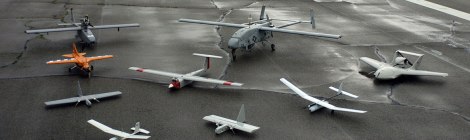
    While the US and its allies have had a monopoly on drone technology until recently, the uptake of military and civilian drones by a much wider range of state and non-state actors shows that this playing field is quickly levelling. Current international agreements on arms control and use lack efficacy in responding to the legal, ethical, strategic and political problems with military drone proliferation. The huge expansion of this technology must push the international community to adopt strong norms on the use of drones on the battlefield.

    Read Article →

    VIDEO – Militarisation of the Sahel: An interview with Richard Reeve

    Sustainable Security programme Director Richard Reeve discusses our latest report ‘From New Frontier to New Normal: Counter-terrorism operations in the Sahel-Sahara’. The report, commissioned by the Remote Control project, finds that 2014 is a critical year for militarisation of the Sahel-Sahara and the entrenchment of foreign powers there.

    Read Article →

  • Climate Change and Security in Bangladesh

    Climate Change and Security in Bangladesh

    Issue:Climate change

    This case study explores the potential impact of climate change on security and conflict in Bangladesh. As international researchers have started to make the link between climate change, insecurity and conflict, they have raised concerns that Bangladesh’s extreme vulnerability to the environmental effects of climate change may create conditions that put it at risk of greater insecurity and possible conflict. It is therefore important to analyse this issue in detail, in order to identify how serious the risk is and what can be done to address it.

    Published by Bangladesh Institute of International and Strategic Studies and Saferworld

    Image source: Julie Lindsay

  • Sustainable Security

    In March 2016, Jaelyn Young, a 20-year-old student at Mississippi State University was accused of attempting to leave the United States and join the Islamic State (ISIS). She attempted to board a flight with Muhammed Dakhlalla and fly to Turkey with the intent to cross into Syria and join the terrorist group. Young, who pleaded guilty, was posting messages on Twitter about her desire to join the jihadist group, catching the attention of the FBI in May 2015. An agent posing as an Islamic State recruiter began corresponding with her and Dakhlalla. Young and Dakhlalla told the supposed recruiter they would help Islamic State “correct the falsehoods” about it in U.S. news media, such as reports that the group trades young girls as sex slaves. They also asked the recruiter whether ISIS would offer Koran classes in English, how they would be required to prove that they were Sunni Muslims, and what kind of military training Dakhlalla would receive.

    Young and Dakhlalla are just two of many cases of the new trend of terrorists using the newest online platforms, commonly known as the “new media” or “social media.” As several reports on online terrorism reveal, today 90 percent of terrorist activity on the Internet takes place using social networking tools. The growing attraction of social media for modern terrorists relies on the combined impact of several trends: the expansion of online social media and their advantages for terrorists, the virtual interactivity that terrorist propaganda and recruitment are using especially with the targeting of specific audiences (“narrowcasting”) and the emergence of “Lone Wolf” terrorist whose virtual pack is found in the terrorist social media. ISIS managed to recruit thousands of foreign fighters, many of them from Western societies. Many of them were radicalized and recruited on Western online social media. Modern terrorism is turning social media into a powerful anti-social platform of hate, destruction, suicide and mass murder.

    Terrorist Migration to Social Media

    Terrorist use of online platforms is not new. After the events of 9/11 and the antiterrorism campaign that followed, a large number of terrorist groups moved to cyberspace, establishing thousands of websites that promoted their messages and activities.  Many terrorist sites were targeted by intelligence and law enforcement agencies, counterterrorism services, and activists, who monitored the sites, attacked some of them, and forced their operators to seek new online alternatives. The relocation to social media followed. The main motivation to use Facebook and other social media was properly outlined by the terrorist themselves in a Jihadi online forum calling for “Facebook Invasion”:

    This [Facebook] is a great idea, and better than the forums. Instead of waiting for people to [come to you so you can] inform them, you go to them and teach them! …[I] mean, if you have a group of 5,000 people, with the press of a button you [can] send them a standardized message. I entreat you, by God, to begin registering for Facebook as soon as you [finish] reading this post”.

    Social media differentiates from traditional/conventional media in many aspects such as interactivity, reach, frequency, usability, immediacy, and permanence. They are comparatively inexpensive and easily accessible. They enable anyone to upload, download, share and access information. Social media depend on new communication technologies such as mobile and web-based networks to create highly interactive platforms. The global spread of cellular phone with online access to social media made these platforms so widely accessed and used, even in the poorest places in the world. There are 3.42 billion internet users, equaling 46% global penetration, 2.31 billion social media users, delivering 31% global penetration, 3.79 billion unique mobile users, representing 51% global penetration and 1.97 billion mobile social media users.

    These trends were noticed also by Internet-savvy terrorists who quickly learned how to harness the new social media for their purposes. Increasingly, terrorist groups and their sympathizers are shifting their online presence from websites, chatrooms and forums to the newer platforms, the social media.

    Backlit keyboard

    Image via Wikimedia Commons.

    Today, all terrorist groups are present on Facebook, Twitter, Instagram, YouTube, Telegram and other online platforms. Terrorists are encouraging their audiences, followers and operatives to join social media and use them. Maybe most successful is the Sunni terrorist group ISIS, which launched a multi-platform online campaign, covering the entire range of social media. ISIS is using social media to seduce, radicalize and recruit. Since the summer of 2014, ISIS has opened numerous social media accounts for distributing its videos, audios and images via various channels and in many languages, thereby avoiding online censorship. As part of these intensive propaganda efforts, it has launched Al-Hayat Media, a new media branch specifically targeting Western and non-Arabic speaking audiences. ISIS has developed an effective online propaganda machinery. On various social media platforms, ISIS has released numerous videos, photos, texts and music promoting different sides of the militant group. On the one hand is its face of cruel, bloody terror such as of beheadings and burnings of hostages; on the other are more humane and friendly videos of ISIS fighters posing with Nutella jars and kittens. Some of propaganda items on social media are about ISIS providing governance, social justice, and new construction.

    Going Dark: the Move to the Dark Web

    Social media, useful and beneficiary as they may be for terrorists, also involve risks for them: they could be monitored, traced and found. Many of the terrorist websites and social media on the so-called Surface Web are monitored by counter-terrorism agencies and are often shut down or hacked. That led to a recent terrorist migration to the Dark Web. One can describe the Internet as composed of layers: the “upper” layer, or the Surface Web, can easily be accessed by regular searches. However, “deeper” layers, the content of the Deep Web, are not indexed by traditional search engines such as Google. The deepest layers of the Deep Web, a segment known as the Dark Web, contain content that has been intentionally concealed. The Dark Web serves as Internet users for whom anonymity is essential, since they not only provide protection from unauthorized users, but also usually include encryption to prevent monitoring.

    The Dark Web is quite appealing for terrorist groups: While they may lose a broad audience that is available on the Surface Web, they can exploit the obscurity of the Dark Web to further their goals. Following the attacks in Paris (November 2015), ISIS has turned to the Dark Web to spread news and propaganda in an apparent attempt to protect the identities of the group’s supporters and safeguard its content from hacktivists. The move comes after hundreds of websites associated with ISIS were taken down as part of the campaign launched by the amorphous hacker collective Anonymous. ISIS’ media outlet, Al- Hayat Media Center, posted a link and explanations on how to get to their new Dark Web site on a forum associated with ISIS. The announcement was also distributed on ISIS’ Telegram channel, the encrypted communication application. The messages shared links to a Tor service with a “.onion” address, more commonly known as a website on the Dark Web. The ISIS site in the Dark Web contains an archive of the group’s propaganda materials, including its documentary-style film, The Flames of War. The site also includes a link to the terrorist group’s private messaging portal on Telegram. Telegram offers encrypted messaging, a slick, intuitive interface, and a big userbase: it hit 100 million active monthly users in February 2016.

    At this stage, terrorist presence in the Dark Web is rather modest: when propaganda, radicalization and recruitment are the chief goals of terror groups, the reach of Dark Web is limited. Yet, terrorists are already applying the newest privacy-preserving mobile applications like Telegram and are using the Tor browser to hide what they are browsing on the open web from prying eyes. This growing sophistication of terrorist’s use of the Dark Web presents a tough challenge for governments, counter-terrorism agencies and security services. DARPA, the Defense Advanced Research Projects Agency, believes the answer can be found in MEMEX, a software that allows for better cataloguing of Deep Web sites. Envisioned as an analog computer to supplement human memory, the MEMEX (a combination of “memory” and “index”) would poke around the Dark Web and also tune its knowledge to specific domains of interest. MEMEX was originally developed for monitoring human trafficking on the Deep Web, but the same principles can be applied to almost any illicit Deep Web activity. In 2014, an investigation of the source code in one NSA program called XKeyscore, (revealed by the Edward Snowden’s leaks), showed that any user simply attempting to download Tor was automatically fingerprinted, essentially enabling the NSA to know the identity of millions of Tor users. The NSA source code also revealed some of the behavior which users exhibit can immediately be tagged or “fingerprinted” for so-called deep packet inspection, an investigation into the content of data packages sent across the Internet, such as emails, web searches and browsing history.

    However,  there is another side to counter measures in the Dark Web which can serve terrorist communications and activities but also serves journalists, civil rights and democracy activists – all of which may be under threat of censorship or imprisonment.  Thus, the alarming infiltration of Internet-savvy terrorists to the “virtual caves” of the Dark Web should trigger an international search for a solution, but one that should not impair legitimate, lawful freedom of expression.

    Dr. Gabriel Weimann is a Full Professor of Communication at the University of Haifa, Israel. His research interests include the study of persuasion and propaganda, political campaigns, terrorism and the media, online terrorism and cyber-war. He is the author of nine books and over 180 scientific articles. His recent book, Terrorism in Cyberspace: The Next Generation, was published in 2015 by Columbia University Press.
  • Sustainable Security

    Getting Older But Not Wiser: the Arms Trade Treaty’s First Birthday

    April 2nd marked the first anniversary of the adoption of the much celebrated Arms Trade Treaty (ATT), the world’s first treaty to establish common standards of international trading in conventional weapons and which in turn aims to ‘ease the suffering caused by irresponsible transfers of conventional weapons and munitions’. But with the continued irresponsible arms trading and an overall rise in the global arms trade, it seems that some states have yet to put the ideals of the ATT into practice.

    Read Article →

    A top-down approach to sustainable security: the Arms Trade Treaty

    2012 has been hailed as a potential landmark year in the push for greater regulation of the global trade in conventional arms. After more than a decade of advocacy to this end, negotiations took place throughout July towards the world’s first Arms Trade Treaty (ATT), which is intended to establish the highest possible common international standards for the transfer of conventional weapons. However, although significant progress was made during the month of intense negotiations, the ATT is not yet open for signature. In this article, Zoë Pelter explores what role a potential treaty – if reopened for further negotiation – could play in a move towards sustainable security.

    Read Article →

  • Sustainable Security

  • Exploring the security implications of climate change in South Asia – International Alert co-hosts South Asia Climate and Security Expert Roundtable in Dhaka

    Exploring the security implications of climate change in South Asia – International Alert co-hosts South Asia Climate and Security Expert Roundtable in Dhaka

    Janani Vivekananda | International Alert | April 2010

    Issues:Climate change, Competition over resources, Marginalisation

    International Alert, together with the Bangladesh Institute for Peace and Security Studies (BIPSS) and  the Regional Centre for Security Studies and the Peacebuilding and Development Institute in Sri Lanka, co-hosted an expert roundtable on the Security Implications of Climate Change in South Asia in Dhaka, Bangladesh on 29th-30th March 2010.
    The two-day event brought together experts from Bangladesh, India, the Maldives, Nepal, Pakistan and Sri Lanka for an important regional exchange on issues related to climate change and security. International Alert’s recent work on climate change, fragility and conflict has shown that the security implications of climate change are a very real but relatively unexplored issue worldwide and in this region. This event marked the start of a significant process, creating a space for a critical discussion on the interlinkages between climate change and conflict in South Asia.

    Participants discussed the various and interconnected ways in which climate change is affecting fragile communities in the region. Case studies from the experts offered insights from each country – from the impacts of climate-related changes on rice and wheat yields, and thence on health and livelihoods in Bangladesh, to tensions arising from dam construction diverting water between upstream industry and downstream agricultural users in the Sindh province of Pakistan, to disputes over access to ground water in rural communities in India.  

    In many of these communities, the failure of governance structures to address risks such as food shortages and reduced access to drinking water erodes peoples’ trust in their governments. In certain contexts, this mistrust and diminished support can lead to an increased risk of political instability and violent conflict. The case studies showed how the impacts of climate change increase the risk of armed conflict in the poorest and least well-governed countries. At the same time, the shadow of conflict and the background condition of state fragility make it harder for communities to deal with the impact of climate change.

    The two-day meeting underlined the fact that these inter-related problems demand inter-related solutions. The triangle of climate change, conflict and fragility needs to be addressed by a unified approach – building resilience.

    This approach can be operationalised by taking forward five policy objectives:

    – Adaptation to climate change needs to be conflict-sensitive. In fragile contexts, all interventions must respond to the needs of the people, involve them in consultation, take account of power distribution and social order, and avoid pitting groups against each other.

    – Development needs to be climate-proof.

    – Shifts towards low-carbon economies must be supportive of development and peace.

    – Steps must be taken to strengthen social capacity to understand and manage climate and conflict risks. This means communicating the knowledge available on the issue in an open and honest manner to enable understanding, awareness and response.

    – Greater efforts are needed to support regional responses to these regional challenges.

    Acknowledging the importance of addressing climate and security in the region, the participants of the expert workshop initiated the South Asia Network on Security and Climate Change (SANSaC) – the first network to address this dual problem and its interlinked solutions in South Asia.

    The SANSaC network will share a communiqué from the roundtable with the Heads of Governments at the next meeting of the SAARC in Bhutan. The group intends to meet in the future to advance the dialogue on the key themes emerging from this event, including promoting regional approaches, institutional reform and building stronger relationships between the state and the citizens.


    Source: International Alert

    Image source: Orangeadnan

    Comments

    Post new comment


  • Sustainable Security

    Very few insurgencies are stopped using military force alone. Data from the RAND Corporation suggests that only 7% of terrorist campaigns end through military defeat. And yet many in Nigeria still pin their hopes on a swift military victory against Boko Haram, the Islamist insurgency that has been plaguing the country since 2009. Since the Chibok abduction in April, the world has woken up to the group’s increasingly bold and dangerous tactics – and also to the Nigerian government’s failure to turn the tide.

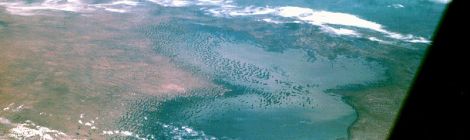
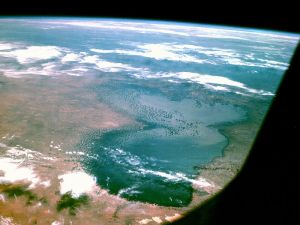
    Lake Chad as seen from Apollo 7. The lake's drying basin is the crucible of Boko Haram's insurgency in Nigeria, Niger, Cameroon and Chad. (Source: NASA, via Wikipedia)

    Lake Chad as seen from Apollo 7 in 1968. The lake’s drying basin is the crucible of Boko Haram’s insurgency in Nigeria, Niger, Cameroon and Chad. (Source: Wikimedia)

    Realistically, Nigeria is not in a position to inflict a military defeat on Boko Haram. Like most insurgencies, Boko Haram avoids concentrating its forces. It prefers to skirmish and build its presence in lots of places at once. The security forces must therefore spread wide to protect the population and root out insurgents village-by-village. According to the orthodox counter-insurgency formula of 20 soldiers and police to every 1000 people, 200,000 soldiers and police would be required in north-east Nigeria.  This is about five times the current deployment level.

    It also assumes that such forces would be adequately equipped and trained and motivated to protect the civilian population. Even the troops that are deployed in the north-east are given little ammunition, and their weapons routinely malfunction. The air force, which gives Nigeria its one clear military advantage, has been struck by multiple equipment failures and crashes in recent months. And the strategy is also to blame. There has been too much focus on a military-only approach and not enough attention paid to the underlying drivers of the conflict.

    Yet Nigerian politicians and generals still line up to claim imminent victory, usually giving three month’s notice for Boko Haram’s projected downfall. Time after time the deadlines pass and Boko Haram is anything but defeated. In fact, the insurgency has never been stronger. Since July, Boko Haram has shifted from hit-and-run tactics to the capture and control of swathes of territory and even large towns across three states: Borno, Adamawa and Yobe.

    The obvious alternative to a military solution – a negotiated political settlement – is admittedly unpalatable. After the appalling war crimes committed by Boko Haram over the last five years, it is hard to contemplate offering them a share of power and, most likely, an amnesty. Yet if it wants to stop the violence, the government has little choice. Indeed it has shown itself willing to enter into negotiations, as the failed attempt to broker a truce through Chadian president Idriss Déby in October showed. But is such a deal even possible?

    Obstacles to a deal

    There is much that stands in the way of a deal with Boko Haram. Probably the most immediate obstacle is the insurgency’s own success. Why would Boko Haram want to do a deal when it is achieving its aims already? To force Boko Haram to the negotiating table, the military may have to retake some of the captured territory to create the impression that the momentum is with the army.

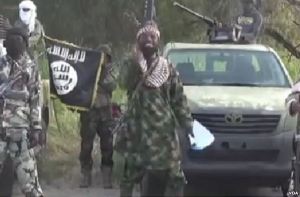
    Abubakar Shekau, leader de Boko Haram, still from an October 2014 Boko Haram video communique. (Source: VOA, via Wikipedia)

    Abubakar Shekau, leader of Boko Haram in a still from an October 2014 Boko Haram video communique. (Source: VOA, via Wikipedia)

    The second obstacle is even greater. Over the past five years, Boko Haram has become increasingly extreme and violent. It has transitioned from a menacing but peaceful movement focused on preaching, to an insurgency focused on attacking government targets, and now to a group willing to indiscriminately kill civilians.

    The insurgency’s growing extremism is a major driving force behind its violence. As Boko Haram’s leader, Abubakar Shekau, said in a recent video, “our religion and our way of worship is nothing but killings, killings and killings”. Indeed, as Ahmad Salkida, a Nigerian journalist with rare access to Boko Haram, has said, “the fuse that drives Boko Haram’s terror is the sect’s doctrine”. Their religious ideology, a form of Salafi Jihadism, focuses on purging Islam of corrupting influences and returning to the ‘pure’ Islamic practices of the distant past. Over the years, Shekau has purged Boko Haram of more moderate commanders, leading to an increasingly fanatical take on what methods are acceptable to purge Muslim society of impure elements and what constitutes an impure element. Violence has become the method of choice, and the targets include children.

    It is hard to see how this extremism and violence can be accommodated in a negotiated settlement. Is it even possible to have a meaningful dialogue with a group that seems to have gone beyond any kind of rational political or socio-economic programme?

    What does Boko Haram want?

    Yet there are discernable grievances underlying the conflict in northern Nigeria. Even if Shekau is only interested in purgative violence, many of the group’s followers and fighters are likely to have more tangible motivations and aims. They are also rumoured to be growing increasingly tired of life in the bush, so it’s possible a deal could be done if a strong enough offer were made.

    A core driver of the insurgency is an escalating cycle of grievance and revenge. Boko Haram first became violent after security forces attacked its members who were participating in a funeral procession in Maiduguri in 2009. After a series of skirmishes, its founding leader Mohammed Yusuf was arrested, detained, and summarily executed. Since then, numerous suspected Boko Haram supporters have also been murdered. On March 14 of this year, the military was accused of summarily executing 600 prisoners in response to a Boko Haram attack. The families of suspected Boko Haram members have also been targeted. Many women and children who are related to militants are believed to be in detention, including the family of Shekau, and there are rumours that female family members have been raped.

    Central to any deal must be accountability and compensation for these excesses, as politically difficult as that may be. Many imprisoned Boko Haram supporters and relatives will also have to be released.

    There are also political and socio-economic factors feeding into the conflict. North-east Nigeria is one of the most impoverished places in the world, with three-quarters of the population living below the poverty line. People there feel politically as well as economically marginalised, as northerners have been increasingly locked out of power in recent years. President Goodluck Jonathan, a southern Christian, has broken an unwritten rule by running again for the presidency in 2015. Convention on rotation of power dictates that a northern Muslim candidate should be put forward by the ruling party.

    Corruption and poor governance in the region have also played a role in promoting alienation from Nigeria’s institutions and fostering an environment ripe for insurgency. The government would do well to include measures aimed at boosting development, improving governance, and ending the region’s political marginalisation in any deal.

    An amnesty from prosecution and jobs for former insurgents must be the final element of a deal. It is unlikely insurgent leaders and fighters will come out of the bush if they believe they will be prosecuted, and jobs will be vital for re-integrating them into society. Again, this would depend on massive federal and/or private investment in the northeast, what some have called a ‘Marshall Plan’ for the northeast.

    There have been signs that the Nigerian government is willing to engage with these questions. The “soft” counter-terrorism strategy unveiled by Nigeria’s National Security Adviser in March included an emphasis on tackling under-development and other underlying drivers of the conflict. Its commitment to address social injustice, joblessness, and poverty may well be attractive to Boko Haram members who have joined the insurgency for those reasons. However, the international storm following the Chibok abduction, Boko Haram’s territorial gains, and the national elections due in February 2015 seem to have dragged momentum away from these measures.

    Talking to Shekau

    One of the major challenges of doing a deal with Boko Haram is finding a way of talking to Shekau. Since the Chibok abduction, all sorts of people have reportedly come forward claiming to be intermediaries representing the insurgents. Many of them, if not all of them, are bogus – including the one who did the supposed deal with Idriss Déby.

    The government has to find the right interlocutor. One possible option is to go through Ahmad Salkida, and the government did reportedly bring him in to discuss the Chibok abduction. He is one of very few people with a credible connection to the insurgents who may be able to advise on how to reach out to them.

    Whatever the case, and as Salkida has said himself, it will be difficult to achieve any kind of peace deal until the army is able to stem the tide of Boko Haram’s advances. The first step must be to summon the political will and train, motivate and deploy the resources necessary to adequately protect the civilian population in north-east Nigeria.

    Andrew Noakes is Coordinator of the Nigeria Security Network. He is on Twitter at @andrew_noakes 

    Image: Lake Chad as seen from Apollo 7 in 1968. Source: Wikimedia.

  • book

    book

    Al-Qaeda: The True Story of Radical Islam

    Issues:Global militarisation, Marginalisation

    Tag:book

    Image of Al-Qaeda: The True Story of Radical Islam

    • Purchase from Amazon:
    • Al-Qaeda: The True Story of Radical Islam
    • Author: Jason Burke
    • Publisher: Penguin ()
    • Binding: Paperback, pages
    • Price: £8.99

    Losing Control: Global Security in the Twenty-first Century

    Issues:Climate change, Competition over resources, Global militarisation, Marginalisation

    Tag:book

    Image of Losing Control: Global Security in the Twenty-first Century

    • Purchase from Amazon:
    • Losing Control: Global Security in the Twenty-first Century
    • Author: Paul Rogers
    • Publisher: Pluto Press ()
    • Binding: Paperback, pages
    • Price: £15.99

    Global Security and the War on Terror: Elite Power and the Illusion of Control

    Issues:Climate change, Competition over resources, Global militarisation, Marginalisation

    Tag:book

    Image of Global Security and the War on Terror: Elite Power and the Illusion of Control (Contemporary Security Studies)

    • Purchase from Amazon:
    • Global Security and the War on Terror: Elite Power and the Illusion of Control (Contemporary Security Studies)
    • Author: Paul Rogers
    • Publisher: Routledge ()
    • Binding: Paperback, pages
    • Price: £22.99

    Beyond Terror: The Truth About the Real Threats to Our World

    Chris Abbott, Paul Rogers and John Sloboda | Rider | April 2007

    Issues:Climate change, Competition over resources, Global militarisation, Marginalisation

    Tag:book

    Many leading military analysts in the United States are increasingly alert to the link between security and climate change. Is international terrorism really the single greatest threat to world security? Read more »