Blog

  • Deforestation: REDD-y for peace or fuelling conflict?

    by Janani Vivekananda and Shreya Mitra

    REDD forestry efforts don’t pay enough attention to their influence on local conflict dynamics. For REDD+ to be an effective mechanism to curb deforestation and strengthen peace opportunities, it has to pay more attention to pre-existing land and forest conflicts linked to tenure, take into account the interests of the local communities and be more sensitive to the local context .

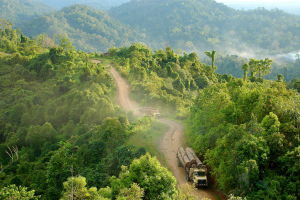
    trucks carrying logs in Gunung Lumut, Kalimantan Timur, Indonesia, November 2005. Source: CIFOR (Flickr)

    Trucks carrying logs in Gunung Lumut, Kalimantan Timur, Indonesia, November 2005. Source: CIFOR (Flickr)

    Indonesia has for the first time surpassed Brazil’s historical record of being at the forefront of deforestation suggests a new study published in the journal Nature Climate Change. Despite a government-signed moratorium in 2011 to slow down the pace of deforestation, the study reveals that Indonesia has lost virgin forests of 60,000 sq. km, an area roughly the size of Ireland, over a period of 12 years.

    The accelerated rate of deforestation raises concerns about the governance of forests in Indonesia and the effectiveness of the moratorium. It also highlights the missed opportunities to preserve the forests and bring about greater peace dividends, especially in a context where peace remains fragile and unequal forest rights remain unresolved. In conflict-affected areas, availability and access to forest resources can either make conflict worse or contribute to peace. If you accept the case, as many do, that the impacts of climate change make it harder to build peace, there is also a compelling argument that mitigating climate change by reducing deforestation, if done right, could offer significant peace opportunities by addressing inequalities and grievances of marginalised forest-dependent communities.

    REDD Programmes and Peacebuilding

    Yet despite the importance of forests to both climate change mitigation and peace, deforestation continues at an alarming rate as seen in the case of Indonesia. To combat deforestation and preserve forests as carbon sinks, the United Nations Framework Convention on Climate Change (UNFCCC) in 2005 introduced a mechanism called Reducing Emissions from Deforestation and Forest Degradation (REDD). Under REDD, more developed countries pay for programmes in less developed countries to preserve forests. Later, a ‘plus’ was added to REDD introducing the elements of conservation, sustainable forest management and enhancement of forests as carbon sinks. The financial dimensions are significant. For example, Norway as the biggest contributor has pledged over $1.4 billion to REDD+ funds. Most of the money targets Latin America and the Caribbean, sub-Saharan Africa and Asia. For Indonesia alone, $156 million of REDD+ funding has been approved.

    From a peacebuilding perspective, REDD+ and other efforts to promote sustainable forest management offer both peace opportunities and conflict risks. The conflict risks of REDD+ often have to do with land ownership and forest access. The peace opportunities associated with REDD+ are wider recognition of the multiple economic, social and cultural values of forests and a strengthening of the rights of local communities that depend on the forest. Poverty may also be reduced if the financial benefits of REDD+ are shared, and income opportunities created for local residents, who may work as forest monitors and guards.

    In 2006, in Aceh, Indonesia, initiatives by the newly formed government on forest protection and supporting smallholder plantations, as well as the social opportunities offered by REDD investment, showed real promise for building a sustainable peace in the conflict-affected region. The REDD investment fell through after investors withdrew, but this experience hints at the potential for REDD to exert a positive influence on politics and power relations in a post-conflict context.

    Short-Term Gains

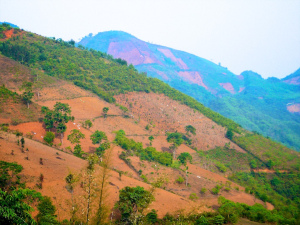
    Patchwork mountain landscape of agriculture, forestry, and deforested terrain, Tianlin County, Guangxi Zhuang Autonomous Region, China. Source: CIFOR (Flickr)

    Patchwork mountain landscape of agriculture, forestry, and deforested terrain, Tianlin County, Guangxi Zhuang Autonomous Region, China. Source: CIFOR (Flickr)

    Yet given the prospect of sums of money to be gained (in the short-run at least), there is a very real risk that communities can make decisions based on short-term profit or be bought off by entrepreneurs hoping to capitalise on REDD+. This means that while community involvement is critical, it alone is not sufficient and should certainly not be viewed as a silver bullet for equitable forestry that supports peace.

    As a member of the Dhankuta District Community Forest Management committee explained during International Alert’s research in Nepal: “Forest-user groups might plant trees but don’t always protect them. How can a forest grow if you just plant trees and don’t protect them? People have begun to misuse resources. There is too much freedom and too little responsibility. Poverty is also a factor. People want an immediate return, instead of a better long-term gain.” In Papua New Guinea, many landowners are not aware of their rights, leaving them vulnerable to exploitation by ‘carbon cowboys’ who gain control of land and forests to capitalise on REDD+ funding. While REDD+ caused this problem, the mechanism also drew international attention to the issue, which in turn helped push the government to improve its policy on revenue-sharing.

    During International Alert’s research in Odisha in India, respondents reported that forest degradation is a key challenge for them. Forest conservation projects could help here to develop a forest management that is beneficial to both communities and carbon reduction. On the other hand, there is a risk that governments use REDD+ as an instrument to restrict the access of local communities to forests and thereby undermine their livelihoods. In addition, incoming finance can fuel existing corrupt structures or cause grievances if it is not shared in a transparent and balanced manner.

    Striking a balance

    Our research in Bangladesh showed that restrictions on access to the Sundarbans mangrove forest may be useful for conservation purposes but local communities perceived them as a direct obstacle to sustain their livelihood, in the short term at least. This highlights the challenge between balancing conservation and community interests. As with the case of Bangladesh, poor Indonesians dependent on forests for their livelihoods have not been provided a viable alternative source of income, which is one reason why deforestation continues.

    Compared with Indonesia, Brazil has been much more proactive on the issue of land and forest tenure and therefore better placed to manage issues of illegal logging and deforestation. Brazil has through REDD+ initiatives been recognising and delineating customary lands and creating new protected areas though these have been beset with some problems.

    For REDD+ to be an effective mechanism to curb deforestation and strengthen peace opportunities in Indonesia, Brazil and elsewhere, it has to pay more attention to pre-existing land and forest conflicts linked to tenure, take into account the interests of the local communities and be more sensitive to the local context

    Janani Vivekananda is Environment, Climate Change and Security Manager at International Alert. Her specific interests include the implications of climate change policies on peace, the links between climate change and community resilience, and opportunities for positive responses to climate and environmental change and disasters.

    Shreya Mitra Programme Officer with the Environment, Climate Change and Security team at International Alert. She previously worked as a Research Consultant for ODI, Save the Children and Social Development Direct. 

    Featured image: Patchwork mountain landscape of agriculture, forestry, and deforested terrain, Tianlin County, Guangxi Zhuang Autonomous Region, China. Source: CIFOR (Flickr)

  • UN Peacekeeping and Counter-Terrorism

    There are strong calls to give UN peacekeeping operations more robust mandates to engage in counter-terrorism tasks. But the idea of UN peacekeepers conducting counter-terrorism operations is not without its problems.

    Terrorist attacks have been increasing rapidly over the last decade. According to the Global Terrorism Index, 29,376 people were killed in terrorist attacks in 2015. This was the second deadliest year after 2014, when 32,765 people were killed. The spike in 2014 and decline in 2015 is largely a result of the rise and subsequent weakening of Boko Haram and the Islamic State (IS).

    Fatigue after long engagements in Afghanistan and Iraq and the continued impact of the financial crisis has significantly dampened the interest in new out-of-area operations among Western member states. At the same time, the threats of terrorism and migration remain at the top of the foreign policy agenda. It is in this environment that policy makers are turning to the UN, to see what role it can play in the global security burden-sharing. This means a more transactional relationship with the UN, not necessarily considering the longer-term impact of undermining its impartiality and legitimacy.

    UN peacekeeping operations have, during the last decade, been deployed to protect civilians in increasingly unstable conflicts, most often without a peace to keep. However, although the conflicts have been asymmetrical in nature, armed groups have seldom perceived the UN as a party to the conflict, and pursued a strategy of strategic targeting of its troops, police and civilians.

    The Case of Mali

    Image credit: MINUSMA/Flickr.

    In March 2012, a coalition of rebel and Islamist groups took control of the north of Mali in the wake of a coup. On April 6, 2012, the rebels proclaimed the independence of the ‘Republic of Azawad’ and the imposition of sharia law in northern Mali. 412,000 persons had fled their homes and had become internally displaced or moved across the border to Mauritania, the Niger and Burkina Faso. By November 2012, Al Qaida in the Islamic Maghreb (AQIM) had taken control of Timbuktu and Tessalit, the Movement for Unity and Jihad in West Africa (MUJAO) had taken control of Douentza, Gao, Menaka, Ansongo and Gourma, and Kidal was under the control of the Islamist group Ansar Dine (“defenders of the faith”).

    The Islamists and rebel groups were quickly conquered and fled to the far north of Mali after a short and swift intervention in the beginning of 2013 by the French Opération Serval, in cooperation with the African-led International Support Mission in Mali (AFISMA). To avoid being stuck in a long and bloody counterinsurgency, the French had pushed for a swift handover to the UN.

    On 1 July 2013, AFISMA handed over authority to the UN multidimensional integrated stabilisation mission in Mali (MINUSMA). However, the Islamist groups have proven resilient and the operation has been struggling to deploy and implement its mandate. From its inception in 2013 until 31 January 2017, it has endured 72 fatalities due to hostile actions, including suicide attacks, mortar attacks and improvised explosive devices (IEDs). The mission has been given increasingly robust mandates, and its most recent mandate ordered the mission to “…to stabilize the key population centres and other areas where civilians are at risk, notably in the North and Centre of Mali, and, in this regard, to enhance early warning, to anticipate, deter and counter threats, including asymmetric threats…”.

    The mission is actively supporting counter-terrorism actions, as it has been preparing “targeting packs” and has been informally sharing information with the French parallel counter-terrorism operation Barkhane  (the French follow-on mission from Serval). This follows a trend towards peace enforcement that started with MONUSCO, where the UN peacekeeping mission in the Democratic Republic of Congo (DRC) is now being mandated to “neutralize” identified rebel groups.

    Future missions may be deployed to Libya, Syria and Yemen – countries that are also marked by asymmetric conflict and violent religious extremism. Against this backdrop, many member states are now arguing that UN peacekeeping operations need to reform to not only deal better with the challenges it faces in Mali, but also in future operations.

    The high-level panel on peace operations, nominated by former UN Secretary-General Ban Ki-moon, strongly underscored that UN peacekeeping operations should not undertake “counter-terrorism operations”. However, the report left the back-door open, insofar as it argued that “UN peacekeeping missions, due to their composition and character, are not suited to engage in military counter-terrorism operations. They lack the specific equipment, intelligence, logistics, capabilities and specialized military preparation required, among other aspects.” Disregarding the principled arguments against moving UN peacekeeping in such a direction, this could indeed be read as a list of areas where reform is needed to enable UN peacekeeping to take on counter-terrorism tasks.

    A Desirable Shift?

    But what may the consequences be of taking UN peacekeeping operations in such a direction? First, UN peacekeeping missions are not likely to be able to perform counter-terrorism tasks in a satisfactory manner, militarily speaking. They are composed of troops from many different countries, and although they should provide a military deterrent against armed groups, they are not likely to be able to protect themselves against asymmetric attacks. Even small attacks can lead to the withdrawal of troops by troop-contributing countries, as most of these do not have the political interest needed to be able to sustain losses. The exception to this are neighbouring countries, as these may have a political interest in the conflict, but precisely because of this fact they may also be interested to use force only against some and not all parties that threaten the peace.

    The UN has been strongly criticised for not taking action to protect civilians, and the continued inaction has been used as an argument to make the UN more robust, as well as able to take on counter-terrorism tasks. However, this argument confuses the ability of the UN to protect civilians with counter-terrorism. In Mali, the mission is much busier protecting itself than protecting civilians. In fact, the recruitment to the terrorist groups is increasingly moving south in the country, as local populations are not experiencing a peace dividend or improving levels of participation and inclusion after the deployment of MINUSMA. Rather, they are experiencing a government that is continuing to marginalize significant groups of the population such as the Tuaregs in the North and the Fulani (also known as Peul) in the central regions of the country, and employ draconian counter-terrorism tactics.

    The inclusion of neighbouring countries’ troops in UN peacekeeping missions was previously considered a red line. As seen with the example of MINUSMA, as well as UN peacekeeping missions in the Democratic Republic of Congo and South Sudan (to mention a few), this principle has fallen by the wayside. Taken together with the move towards UN peacekeeping missions taking on counter-terrorism tasks, this shows a trend towards a more partial UN in these situations, which may increasingly be rendered unable to play its vital good offices and humanitarian roles, and be a UN for all the people, not only the government of the day. The UN and member states should reverse this trend, and make sure that UN peacekeeping operations can serve in their most effective way – as a tool to keep the peace while institutions, service delivery and an inclusive and participatory state is being built.

    John Karlsrud is the Manager of the Training for Peace program. He is on Twitter at @johnkarlsrud.

  • Mano Dura: Gang Suppression in El Salvador

    Mano Dura: Gang Suppression in El Salvador

    Widespread social exclusion makes El Salvador fertile ground for gang proliferation and, over time, gang members have resorted to greater levels of violence and drug activity. Yet, government approaches have proved spectacularly ineffective: the homicide rate escalated, and gangs have adapted to the climate of repression by toughening their entry requirements, adopting a more conventional look, and using heavier weaponry. Sonja Wolf argues for approaches which focus on prevention and rehabilitation and looks at why such approaches have been continually sidelined.

    Read Article →

  • The Politics of Coltan: An Interview With Michael Nest

    michael-photo-low-res-jpeg2Dr Michael Nest has expertise in political and social issues around mining. He is also an anti-corruption expert and formerly worked for the Independent Commission Against Corruption in Sydney, Australia. He has recently focused on building capacity to prevent corruption in community development programmes, including a research paper on corruption in local-level development schemes funded by mineral revenues.  Michael is the author of Coltan (Polity Press, 2011), which is about the changing global supply chain for the mineral ‘coltan’ (or tantalum), the new US legislation focused on conflict minerals, and China’s emerging role in the market for this mineral. In 2012 and 2014, Michael advised African governments on the new certification mechanism for tin, tantalum, tungsten and gold being established to prevent conflict minerals from Central Africa entering the supply chain.  His latest co-authored book, Still a Pygmy: the unique struggle of one man’s fight to save his identity from extinction (Finch, 2015) is the first memoir by a Pygmy ever published.

    In this interview, Dr. Nest discusses the political, environmental, ethical and social issues surrounding the mining of columbite–tantalite (coltan).

    Q. In the past, arguably very few had heard of coltan. Yet in the past two decades it has entered into discussions in the UN and featured in several international media outlets’ reports. What is coltan and what is it used for?

    Coltan is the nickname for the mineral ‘tantalite’.  When processed, the mineral tantalite is called tantalum – so tantalum is the metal.

    Coltan – or properly speaking, the metal ‘tantalum’ – has a wide application.  About two-thirds of coltan is used in a device called a ‘capacitor’.  Capacitors are found in electronic products, especially consumer electronic products such as mobile phones, laptops, gaming platforms, and ipads, and are used to store and regulate the flow of electricity from the source of power (such as a battery) to the working parts of the device.  Capacitors have a crucial role in ensuring there is no power surge or fluctuations to the device that could disable or break it.  Coltan is also used for special alloys (mixtures of different metals), in memory chips for electronic consumer goods, and special coatings (such as on camera lenses).

    Q. In which parts of the world is coltan mined?

    Coltan comes from three sources: as a by-product of tin slag (20% of supply) – ‘slag’ is the waste material that sits in dumps around historic tin mines; recycling (30% of supply); and mines (50% of supply).

    Coltan is extracted from tin slag in Brazil, Malaysia and Thailand.  Coltan that comes from recycled scrap materials is extracted at metal recycling plants in many countries around the world.

    In terms of mines producing coltan/tantalite, these are found around the world.  In 2016, according to the US Geological Survey, the biggest producers of coltan are Rwanda, D.R. Congo, Brazil, China, and Australia (in this order), although historically Canada and Ethiopia have also been significant producers, and Australia was the largest producer until the global financial crisis in 2008.  There are lower levels of mine production in Mozambique, Namibia, Nigeria, and Zimbabwe.  Tantalite deposits have been identified and are being explored in Canada, Colombia, Egypt, Greenland, Madagascar, Namibia, Saudi Arabia, Sierra Leone, South Africa, Tanzania, Venezuela, and Zimbabwe.

    Q. There has been some literature examining the relationship between coltan extraction and violence with a fair amount of discussion focused on the Democratic Republic of the Congo (DRC). What role did coltan play in the DRC’s war?
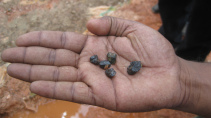
    coltan

    Image of coltan via Responsible Sourcing Network/Flickr

    The allegation made by activist organisations focused on reducing conflict in the D.R. Congo is that profits from coltan mining were a primary source of funding for armed militias waging war against the government.  These militias, so the argument goes, used coltan profits to buy weapons and food, which allowed them to wage war.  Militias in the DRC are notorious for their attacks on civilian populations, so the argument was not just that coltan profits perpetuated conflict against the government, but also that these profits were a chief cause of massacres of civilians, systemic rape and widespread destruction of property of civilians who live in Eastern DRC where coltan mines are located.

    In the late 1990s and early 2000s, activist organisations – as well as some media, academics and the UN – made connections between coltan profits and conflict in Eastern DRC, and focused overwhelmingly on coltan and not other minerals.  Many journalists continue to portray coltan as a major cause of conflict, although other commentators have now backed away from such simplistic claims and talk more broadly about ‘conflict minerals’ and acknowledge that conflict in the DRC occurs for a complex range of reasons.

    Conflict in Eastern DRC occurs for multiple reasons, including:

    • Local level struggles by powerful individuals for political domination
    • Competition for land for agricultural purposes
    • Ethnic rivalry
    • For control of natural resources, especially minerals
    • To protect land from outsiders seeking to exploit it (e.g., miners and loggers)
    • Poor men waging war as a means of making a living through theft and looting

    There were also broader factors around national-level conflict over the past 20 years that have drawn in local level actors and created incentives for war, including: military campaigns in DRC territory by the Rwandan and Ugandan armies (supposed by their local Congolese allies) focused on security concerns regarding opponents of their respective governments; defensive military campaigns by the DRC armed forces and government-allied local forces against the Rwandans and Ugandans and their proxies in the DRC, including retribution against civilian populations when they have regained territory; and armed groups with regional political agendas that oppose the DRC national government.  Fighting over mineral deposits was a minor element in all of these conflicts (a UN estimate of 1,500 local-level conflicts in the early 2000s was that fighting over natural resources accounted for only 8% of all conflicts), and conflict over coltan deposits was even less significant.

    As I argue in my book Coltan (Polity 2011), some armed groups did, however, profit from coltan and undoubtedly these profits were used to buy weapons, food and other material used to wage war.  These profits were gained in four ways: armed groups stole coltan stocks from mine sites and mining companies’ depots; armed groups directly controlled production of coltan by controlling mines themselves; armed groups taxed the trade of coltan into and out of territory they controlled (as they did for other minerals and goods); and armed groups became directly involved in the export of coltan from Central Africa to the buyers on the international minerals market.  Calculating profits made from coltan is difficult, but I estimate that the total amount made by the Rwandan army from coltan in 1999 was approximately US$62m; by the Rwandan army and its Congolese-based ally (the RCD-Goma) in 2000 approximately US$10m; and by all armed groups in 2008 approximately US$11.8m.  Note that the high total in 1999 was largely because the price of coltan on the international market boomed that year and in 2000.

    In sum, the war in the DRC was never just about minerals, and was certainly never just about coltan (gold, tin and tungsten were also importance sources of mineral revenue in the 2000s).  Tracing the role of coltan in war in the DRC, however, can tell us a lot about the connections between natural resources and conflict generally and research into these connections have helped broaden our understanding of the relationships between these natural resources and war.

    Q. Were any Western corporations responsible for indirectly financing armed groups during the war in the DRC through purchasing coltan from the country?
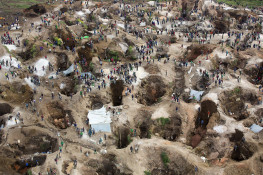
    Luwowo Coltan mine near Rubaya, North Kivu the 18th of March 2014. © MONUSCO/Sylvain Liechti Luwowo is one of several validated mining site that respect CIRGL-RDC norms and guaranties conflict free minerals.

    Luwowo coltan mine near Rubaya, North Kivu, DRC. Image by MONUSCO/Sylvain Liechti/Flickr

    During the wars between 1998 and 2003 companies from many different countries were involved in the coltan trade, including Western corporations.  The UN’s Report of the Panel of Experts on the Illegal Exploitation of Natural Resources and other Forms of Wealth in the D. R. Congo (April 2001) identified scores of private trading, brokerage, banking and transportation firms that participated in the illegal exploitation of natural resources from the DRC by trading or importing coltan from the DRC.

    While almost none of these transactions were directly with armed groups (with the probable exception of some transactions involving Rwandan and Congolese firms), foreign firms were an important element of the coltan commodity chain that enabled armed groups in the DRC to profit from the production and export of illegally mined coltan to the rest of the world.

    Because of the conflicted and dangerous conditions in Eastern DRC at the time, few foreign companies sent representatives into the country.  Instead, smaller Congolese or Rwandan trading firms bought and transported coltan into Rwanda, from where international minerals trading companies then imported it.  The UN identified twenty-seven firms from the following countries that imported coltan from the DRC via Rwanda: Rwanda (2 firms), Malaysia (1 firm), Germany (3 firms), Belgium (10 firms), Switzerland (1 firm), Netherlands (4 firms), UK (2 firms), Kenya (1 firm), India (1 firms), Pakistan (1 firm), and Russia (1 firm).  These firms sold the coltan they imported on to other minerals trading firms, or they sold it directly to processing plants.

    Three big minerals processing plants bought much of the coltan that was exported via Rwanda during the early phase of the Congo Wars: Cabot from Canada, HC Starck from Germany and Ningxia Non-Ferrous Metals Smelter from China.  After 2001, Cabot and HC Starck released statements saying they no longer bought Congolese coltan.

    Several airlines were involved in flying coltan out of Rwanda to second destinations, including Alliance Express (then 49% owned by South African Airways and 51% owned by the Rwandan government), Kencargo International (20% owned by Martinair), Airflo, Astral Aviation, and Martinair Holland, as well as the former Swissair and Sabena before these airlines collapsed.

    The UN’s final report into the illegal exploitation of natural resources in the DRC (published October 2002), recommended placing financial sanctions on 29 companies from Belgium, South Africa, Zimbabwe, Rwanda, Uganda and the DRC itself, that were identified as being involved in the illegal coltan trade.  The same report identified businesses from OECD countries that the UN considered to be in violation of the OECD Guidelines for Multinational Enterprises, including from the UK, USA, Belgium, Switzerland, and Germany.  Firms from non-OECD countries that were also identified as having violated these guidelines were from Malaysia, China, Hong Kong, South Africa, and St Kitts.  The UN did not recommend sanctions on these OECD and non-OECD firms.  Rather, it brought attention to the firms’ breaches of these guidelines, presumably with a view to the companies then being reported to the national reporting contact point for such breaches in the relevant OECD country.

    Q. In addition to the human rights issues attached to the coltan industry, is the mining process itself environmentally harmful?
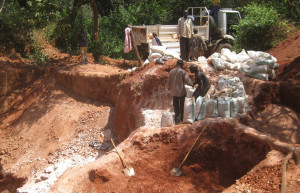
    coltan-miners

    Workers in a coltan mine in DRC. Image (cropped) via Responsible Sourcing Network/Flickr.

    Yes, there are environmental harms associated with coltan mining.  In the DRC, coltan mining overwhelmingly uses artisanal and small-scale (and occasionally medium scale) methods, although the harms these methods cause to the environment are not distinctive in that there is nothing specific about mining coltan that creates a different kind of harm to, for example, tin or tungsten.  Compare this to gold, where there are harms associated with the use of mercury.


    In the DRC when a coltan deposit is found, miners rush in to exploit the site, regardless of whether it is on agricultural land or in a national park, and the mining destroys the potential for the land to be used for grazing or cropping, or as a biological reserve for fauna and flora.  Like other artisanal mining of minerals, artisanal coltan mining involves stripping forest and bush cover, then any topsoil, and digging pits to a depth of about 6m to get access to the ore deposit.  Water, provided through a pump system where a generator can be used, or by diverting a creek or river if a generator is not available, is used to soften the earth and rock, to break it up, and then to separate mineral ore from soil and to wash away the soil.  Water use is a major factor in the environmental harm caused by mining.

    As I outlined in my book Coltan on pp.49-50, specific environmental effects of artisanal coltan mining include the following:

    • Forest clearance to expose soil for mining;
    • Cutting of timber to build worker camps;
    • Cutting of firewood;
    • Removing the bark from trees to make panning trays to wash coltan;
    • Pollution of streams by silt from washing process;
    • Diversion of streams from their original course;
    • Cutting lianas to make baskets to carry coltan;
    • Hunting animals, including for food, ivory and other body parts;
    • Animals injured after escaping snares;
    • Disturbance of fauna due to people resident in, and moving through, reserves;
    • Reduced population of invertebrates and reduced photosynthesis in aquatic plants due to silting of streams;
    • Reduced fish stocks in lakes and rivers affected by silt pollution;
    • Erosion, including landslides, of unprotected ground during rains;
    • Ecological changes due to loss of key species, such as elephants;
    • Long-term changes in watershed due to rapid run-off in deforested areas;

    There have been some studies that document these impacts.  A study of mining communities in the Kahuzi Biéga National Park in 1999 found that they ate elephants, gorillas, chimpanzees, buffalo, and antelope – all poached from the park.  However, a subsequent report in 2001 found that tortoises, birds, small antelope, and monkeys were being eaten because all the big animals had been killed.

    Q. Do you feel that there are any plausible ways for companies to be certain that the coltan they use in manufacturing their products is not from a conflict zone or unethically produced?

    A company can improve certainty around the origins of any coltan used in its products, if it sources metals directly through a smelter that has an exclusive long-term contract with a coltan producer in a country such as Brazil, China, or Mozambique.  In such smelters, supply from these producers is so consistent there is virtually no likelihood of it being ‘contaminated’ by ore from other destinations.  The conflict-free smelter programme, which works with over 200 smelters, has safeguards in place to verify the origins of minerals processed by its members.  While there is always a chance that these consignments of minerals could be mixed with ore from militia-controlled mines in the D.R. Congo, this would be fairly unlikely as the reputation of the smelter (and the programme) is at stake and there is considerable due diligence around the provenance of minerals.

    The challenge of sourcing ethically produced coltan is complicated when companies are buying components, especially components manufactured from yet other components, to manufacture their final goods, e.g., electronic items.  It is impracticable for an end-manufacturer to check the origin of all the metals that are used in all components – because literally thousands of components may be involved – and unrealistic to think that companies are able to do this.  The best they can do, is try to identify component manufacturers that have declared they will abide by ethical standards for sourcing minerals and have systems in place this claim to be verified – and of course end-product manufacturers should insist on seeing evidence of such checks.

    It is important that all D.R. Congo coltan is not seen as being a ‘conflict mineral’, in a way that become common after the US Government first passed its conflict minerals Dodd-Frank legislation in 2010.  Civilian Congolese producers of coltan should be allowed to sell their product on the world market, and such production and trade is one of the few economic opportunities available to many Congolese.  The emphasis in terms of due diligence around ethical production of coltan should be on determining if coltan comes from conflict zones and is produced by armed groups, rather than if it comes from the DRC itself – this is an important distinction.  There are various schemes in place, or being established, in the DRC to ensure civilian-produced coltan is traced through to export.  The most well-known of these is the industry traceability and due diligence programme for coltan, tin and tungsten, which is managed by the International Tin Research Institute.

    Q. As you mention, there have been a range of international efforts that have endeavoured to address the ethics surrounding coltan mining. Overall, do you feel that current efforts are succeeding or falling short?

    Efforts have brought attention to ongoing violence and instability in the DRC, which is a good thing.  The problem is that the focus of activists, and even government initiatives such as the US Dodd-Frank legislation, has often been solely on conflict minerals as a cause of violence rather than a range of factors.  Thus, while there is heightened attention, there is also a simplified narrative being propagated that is detrimental to understanding the causes and consequences of the conflicts.

    There is no doubt that international efforts have had an effect on the mining industry in DRC, but also Rwanda.  The passing of US legislation and consequence temporary embargo by the DRC government in late 2011 on any exports of conflict minerals, severely curtailed mining and trading of these minerals in eastern provinces (it was business as usual for mining in other provinces, such as Katanga).  This showed that international efforts can definitely have an impact (presumably President Kabila of the DRC felt that he had to impose the embargo to appear to be doing something about the conflict minerals trade).  New OECD regulations, the conflict-free smelter program and the International Tin Research Institute’s ‘tag and bag’ scheme for tin and coltan in Rwanda and some mines in DRC are also closing opportunities for ‘laundering’ conflict minerals through civilian-controlled supply chains, while also guaranteeing opportunities for civilian-produced and traded minerals.

    There are criticisms of these schemes, especially ITRI’s tracking scheme which is expensive for participants, and regional governments and officials feel they are excluded from its data or operations.  Nevertheless, in a complex and difficult political and economic environment, the combination of regional and international efforts have resulted in more mines and more mineral transactions coming under civilian control, and therefore generated economic opportunities for Congolese civilians.  This said, anti-government militias and the DRC army are still involved in some mining and trading of the 3Ts and gold.

    The big question is whether current political tensions around President Kabila’s possible election to a third term, will cause the ITRI scheme to be suspended, see renewed militias activity in Eastern provinces, and a resumption of widespread smuggling of minerals out of Eastern Congo into Uganda, Rwanda and Burundi.

    Q. Do you think China will complement the efforts of Western organizations and the DRC’s own efforts at cracking down on the conflict mineral trade or will China’s status as the world’s largest coltan refiner make matters more difficult?

    sea_of_phones

    Coltan is used in electronic devices such as mobile phones. Image via Wikimedia.

    To answer this question properly, we have to pull apart the idea of ‘China’.  The Chinese government may have some interest in protecting its international reputation by participating in or publicly supporting international government initiatives to control the production and trade of conflict minerals.  This might include passing some minimal regulation on its own industry (possibly that it has no intention of enforcing).  It will have no interest in supporting activist initiatives, as it will not to want to fuel or strengthen independent civil society, let alone one that might actually have influence over aspects of international commerce.  The Chinese minerals industry, on the other hand, is aware of its strong and growing position in the global mining and minerals sector – a sector that the Chinese government itself sees as strategic.  Without pressure from its own government to desist from importing, smelting or otherwise trading in conflict minerals, the Chinese minerals industry will see no reason to change the current situation.  Some Chinese consumer product manufacturers, especially in the electronics sector, will be aware of the potential for boycotts by Western consumers to damage their sales and reputation, but Western consumers are not significant for some electronics manufacturers.  Asian (especially Chinese), African and Latin American consumers will be far more important, and awareness or concern by these consumers about conflict minerals is low.  In sum, while Chinese actors may be interested in some international efforts to regulate the trade of certain products, conflict minerals will be low on the list of priorities and there is unlikely to be any Chinese effort in this regard.

    Q. Looking to the future, what impact do you feel Donald Trump’s presidency may have on talking the problem of conflict minerals?

    Trump made it clear during his campaign that he is in favour of minimal regulation for business and that the US should be more isolationist in terms of spending less time and effort worrying about global affairs.  Given that responses to conflict minerals are based around additional regulations for business (regulations that everyone agrees have a cost in terms of compliance), which also represent an effort by OECD governments to shape conflict minerals production and trade in Central Africa, a Trump administration is highly unlikely to have much, if any, interest in such initiatives.  US business groups have already contested the regulations of the Dodd-Frank Act, and they will see a Trump presidency as creating another opportunity to exert pressure and have the regulations pared back or abolished.  A Trump administration is also likely to cut funding for USAID projects focused on capacity building for Central African governments to regulate production and trade of the mining industry.
  • Carefully Managing Water Resources to Build Sustainable Peace

    Carefully planned interventions in the water sector can be an integral part to all stages of a successful post-conflict process, from the end of conflict, through recovery and rebuilding, to long-term sustainable development.

    Does the better post-war water resource management contribute to peacebuilding by generating legitimacy within a society and for the state? Research has become increasingly interested in the potential role of natural resources, especially freshwater resources in war affected societies, because the misuse of natural resources is increasingly being seen as one of the key challenges for sustaining and promoting peace. This link has of late received serious traction in research and policy circles as the international community stresses the significance of environment for the peaceful societies by including both in the 2015 UN Sustainable Development Goals.

    Water Management after War

    Post-war countries are among the most difficult policy arenas for international agencies and domestic stakeholders. The challenge is not only to bring an end to the war and prevent violence from reoccurring, but also to help countries reset the dynamic among their internal actors on a peaceful path. The long-term adverse effects of wars further amplify this policy challenge.

    Many of these challenges for post-war countries relate to political and social aspects. Lasting impressions of human rights abuses committed during wars continue to shape the relations among members of societies for decades to come. Both socio-economic crunch and political churning can challenge the stability of post-war countries for many years if not decades. The public health crisis has been found to be especially severe and affect disproportionately the civilian population in post-war countries. Environmental and climate change exposes war affected people further to new risks, exaggerating the human costs of war long after active combat has ceased.

    In order to address public health crisis and to reduce further human costs of war, it is critical for a post-war country to be able to provide access to clean water and sanitation for its population. Often in war times, water storage facilities and installations for water delivery are damaged and sometimes even targeted. Thus, after the end of the war it often needed for the focus to be placed on the rapid restoration of water infrastructure.

    When a war affected country fails to swiftly and smartly manage its water resources it amplifies the vulnerability of post-war communities on water and inevitably exacerbates and prolongs the human costs of war. Increasing demand for freshwater and climate change induced variability of its availability are further adversely affecting the agricultural production and the provision of sustainable livelihood for post-war communities. Thus, addressing the war related damages to the water infrastructure are often key to rebuilding a state after war. Then, it is necessary to develop the increasingly scarce water resources in a sustainable manner, which will bring inclusive development and promote peace in the society.

    Yet, even though the international community is aware of these tasks, — recent research indicates that while addressing water management in post-war period — the emphasis is usually placed on expert-oriented solutions, which bypass the complex and critical political aspects of it. Ignoring political factors might expedite the implementation process in short run, however, it can possibly create worrying challenges not only for the smooth operation of the water projects, but also for the peace itself.

    Lessons from Kosovo and Nepal

    Asian development Bank

    The Kali Gandaki “A” Hydroelectric Project in Nepal. Image by Asian devlopment bank via Flickr.

    A recent analysis of the post-war water resource management in Kosovo shows how the international community, choosing a highly expert driven technocratic approach to rebuild Kosovo’s water sector after the violent conflict came to an end, frequently clashed with political realities in this landlocked and conflict affected territory. The United Nations Interim Administration in Kosovo (UNMIK), which assumed trusteeship of the territory in 1999 until a European Union mission replaced it in 2008, favored technical solutions and bypassed the political realities. Especially the case of the divided city of Mitrovica exemplifies that UNMIK sought to avoid confrontation. As the central political authority in Kosovo, UNMIK rather paid outstanding water bills for Kosovo Serbs, than facilitating the collection of fees for supplied water. Overall, the empirical analysis shows that UNMIK’s technocrat driven management of the water sector in fact impeded the peace process rather than aided it.

    Other recent findings on the water resource development in conflict affected Nepal, show the positive potential of ecologically sensitive service provision as these can yield tremendous socio-economic benefits for rural communities. The provision of energy in Nepal remains a pivotal challenge. In 2010, almost a quarter of the country did not have access to electricity, and even those households that were connected did not receive continuous power. The capital, Kathmandu, experiences scheduled power cuts up to 14 hours a day during the drier winter season, when hydropower ebbs, and two to three hours a day in the water-rich monsoon months. The study of two localities in rural Nepal, shows that micro-hydropower development has had many positive effects for rural communities, especially in regard to socio-economic development. This improved socioeconomic status of households reflects a clear reduction in vulnerability to poverty and even food security as the improved cannels diverting water to the micro-hydropower station have improved irrigation of nearby fields. Though it does not immediately translate into improving the legitimacy of the Nepali state, by helping to bring over all sustainable development of its citizens, the state is most likely going to reap the benefit in the future. The experiences from the study of micro-hydropower development in Nepal show that the state needs to actively pursue and project the ownership of the water sector development process in a post-war period in order to legitimize itself.

    Conclusion

    There is certainly a need to acknowledge the long-term interplay of social, political, and ecological processes in post-war countries and to understand the potential and dynamics of natural resources and environmental issues in this context. The interactions of these processes decisively shape the post-war landscape. It is therefore prudent to help building a peace that is ecologically sensitive and socially and politically relevant and desirable.

    Thus, the carefully planned interventions in the water sector become an integral part to all stages of the post-conflict process, from the end of conflict, through recovery and rebuilding, to long-term sustainable development. A recently published article in the Hydrological Sciences Journal argues that for the best possible use of water resources in the peacebuilding process, there is a need for a comprehensive approach. Both the Nepal and Kosovo cases show the unintended consequences that result from narrow focused interventions in the post-conflict landscape. It is pivotal that the international community engaged in peacebuilding must plan, think and execute with a long-term perspective that sets the conditions for sustainable peace. Drawing on an extensive reading of the current literature, such a comprehensive approach includes a series of measures to be taken in a post-conflict setting: legal reforms and building of sound water institutions; careful planning of water use to achieve sustainable food security; and cooperative involvement of international, national and local stakeholders in the planning and managing of water resources.

    Further reading:

    Swain, A., & Jägerskog, A. 2016. “Emerging Security Threats in the Middle East.” Lanham: Rowman and Littlefield Publishers.

    Krampe, Florian. 2016. “Empowering Peace: Service Provision and State legitimacy in Peacebuilding in Nepal.” Conflict, Security, and Development 16 (1), pp. 53-73.

     Krampe, Florian. 2016. “Water for Peace? Post-Conflict Water Resource Management in Kosovo,” Cooperation and Conflict. DOI: 10.1177/0010836716652428.

     Ashok Swain. 2016. “Water and post-conflict peacebuilding.” Hydrological Sciences Journal  61 (7), pp. 1313-1322.

    Florian Krampe is a political scientist specializing in peace and conflict research, international relations, and political ecology at the Department of Peace and Conflict Research at Uppsala University.

     Ashok Swain is Professor of Peace and Conflict Research and Director of the Research School for International Water Cooperation at the Department of Peace and Conflict Research, Uppsala University. He is also Professor at the Department of Earth Sciences of Uppsala University.

  • Climate Change and Security Threats: Time to Call a Spade a Spade?

  • The Ukraine conflict’s legacy of environmental damage and pollutants

    The Ukraine conflict’s legacy of environmental damage and pollutants

    One year after violent conflict began, information is now emerging on the specific environmental impact of war in Ukraine’s highly industrialised Donbas region. Although obtaining accurate data is difficult, indications are that the conflict has resulted in a number of civilian health risks, and potentially long-term damage to its environment. In order to mitigate these long-term risks, international and domestic agencies will have to find ways to coordinate their efforts on documenting, assessing and addressing the damage.

    Read Article →

    The ‘High Politics’ of Sustainable Security

    If events like those in Ukraine have taught us anything it is that, despite the predictions of many, the potential for conflict between the major powers is still one of the defining characteristics of world politics. Crisis diplomacy and inter-state rivalry is back on the global agenda. But if policymakers, analysts and civil society actors are to try and come up with ways of reversing the trend towards an increasingly competitive, militarised and crisis-driven inter-state order, then thinking carefully through the implications of a sustainable security approach to great power politics would appear to be a most useful starting point.

    Read Article →

    International Dimensions of the Ukraine Crisis: Syria and Iran

    The Russian annexation of Crimea may be in direct contravention of international agreements but is popular in Russia and almost certain to hold. Given tensions within Ukrainian society and its weak transitional government, there remains some risk of further intervention in eastern Ukraine and possibly the Trans-Dniester break-away region of Moldova. Even if there is no further escalation in the crisis, the deterioration in EU/Russian and US/Russian relations is of great concern, not least in relation to two aspects of Middle East security – the Syrian civil war and the Iran nuclear negotiations.

    Read Article →

  • From Surveillance to Smuggling: Drones in the War on Drugs

    RC_long_logo_small_4webThis article is part of the Remote Control Warfare series, a collaboration with Remote Control, a project of the Network for Social Change hosted by Oxford Research Group.


    Editor’s note: Remote Warfare and the War on Drugs mini-series: This series of articles explores how remote warfare is being used in the war on drugs. To date, much of the debate on remote warfare has focused on its use in the war on terror. However, the use of drones, private military and security companies (PMSCs), special forces and mass surveillance are all emerging trends found in the US’s other long standing war, the War on Drugs. The articles in this series seek to explore these methods in more depth, looking at what impact and long term consequences they may have on the theatre in which they’re being used. Read other articles in the series.

    In Latin America drones are being used as part of the War on Drugs as both regional governments and the US are using surveillance drones to monitor drug trafficking and find smuggling routes.. However, as drones are increasingly being used by drug cartels themselves to transport drugs between countries, could Latin America find itself at the forefront of emerging drone countermeasures?

    In many Latin American countries, militaries operate as internal security forces because they combat drug traffickers and insurgencies. As a result, regional security agencies are constantly looking for new technologies to support security operations. Indeed, Peruvian Admiral José Cueto Aservi described purchasing drones in 2013 as necessary due to the “asymmetric war” being launched by narco-movement Shining Path that “takes advantage of the complex geography to attack” and thus “all methods” – including “technology” – are needed to defeat them.

    Today, drones are regarded as potential “game changers” by regional security forces, believed to be invaluable “eyes in the sky” that will aid surveillance operations. Hence, it is no surprise that several Latin American countries have acquired them, whilst many others are producing them. At the same time, US drones are carrying out their own operations in Latin America as part of the global War on Drugs and drug cartels themselves have started using drones to smuggle drugs across international borders. As the use of drones looks set to increase, what is the likelihood of armed drones being used in this theatre and what implications could the non-state use of drones have on the region?

    Drones in Latin America

    Crahed Drone

    Crashed drone on Mexican border. Image by Secretaría de Seguridad Pública Tijuana.

    There are currently at least 14 Latin American and Caribbean countries which have used or purchased drones. No Latin American state possesses large numbers of drones in the manner of the US military, rather, regional governments mostly operate just two or three drones of any type. Israel is the largest provider of drone technology to Latin America, having sold some $500 million worth to the region between 2005 and 2012.  Latin American states have also started developing their own drones with Colombia being the first South American nation to have home-built a drone, the Iris, in 2015.

    Unarmed drones carry out Intelligence, Surveillance and Reconnaissance (ISR) roles for a range of different operations in Latin America. Due to the region’s complex topography (a case in point is the Amazon, where drug traffickers from Brazil, Colombia, Bolivia and Peru operate) drones require special features like infrared cameras and have been useful for monitoring vast uninhabited spaces in the region. In Brazil, for example, drones have been used for agricultural reasons, including monitoring the Amazon rainforest. In Belize and Costa Rica too, drones have been used for conservation purposes. In Peru, a municipality police force in Lima,deployed three drones to patrol the Peruvian capital during the last Christmas season to help security officers locate emergency areas if necessary and in Mexico, drones have been used to patrol and secure sensitive areas like the facilities of the state oil company PEMEX.

    Drones and the War on Drugs

    Drones have also been used as part of the War on Drugs in Latin America. In Mexico, National Defense Secretariat, the Federal Police, the Procuradoría General de la República (the Attorney General’s office), as well as the Army and Air Force fly drones to gather intelligence to combat organized crime, mainly drug trafficking. In Brazil, Colombia, Panama and Trinidad and Tobago too, drones are used to monitor drug trafficking and find drug smuggling routes.

    Drones are also being used by non-state actors, in the form of drug cartels, to smuggle drugs between countries. In January 2015, a drone crashed in a supermarket parking lot in Tijuana, Mexico –carrying three kilograms of crystal meth and in August 2015, two Mexican citizens were convicted of utilizing a UAV to fly 13 kilograms of heroin from Baja California, Mexico, into California.This led US authorities to deem drones an “emerging trend” employed by transnational criminal organizations to smuggle narcotics into the US.

    In its long running War on Drugs, the US has also been using its own drones in Latin America. A New York Times article reported that, in 2011, in an effort to step up its involvement in Mexico’s drug war, the Obama administration begun sending its drones deep into Mexican territory to gather intelligence to help locate major traffickers. Furthermore, an official US briefing from 2011 – obtained via the Freedom of Information Act – revealed that the US Air Force is working to make its RQ-4 Global Hawk high altitude long endurance drones available to its allies in Latin America and the Caribbean in order to help “find drugs fields and helping plan offensives against rebel groups”.

    US Customs and Border Protection operates 10 MQ-1 Predator drones, including two based in Cape Canaveral, Florida, that patrol a wide swatches of the Caribbean through the Bahamas and down to south of Puerto Rico as part of the drugs fight, and, in 2013, it was reported that the US Navy was testing a new type of drone that can be hand-launched from a ship’s deck to help detect, track and videotape drug smugglers in action across the Caribbean Sea.

    US drones have also been used for other purposes in the region. US Customs and Border Protection have been flying surveillance drones for nearly a decade, launching them from bases in Texas, Florida, North Dakota and Arizona to detect illegal border-crossing. This activity has been called into question recently as a 2015 report from the Department of Homeland Security’s inspector general found drones to be ineffective in conducting surveillance along the border.

    Towards drone countermeasures?

    As for the future, we can expect drones to continue to be utilized in Latin America, as there has been an increase in the purchasing and development of drones across the region in the last few years. US companies Boeing and Aerovironment, for example, have both declared their intention to increase drone sales to Latin America, with countries like Colombia, Chile, Mexico and Peru interested in purchasing from them and the Swedish firm Unmanned System Groups (USG), showcased its F-330 drone to the Uruguayan armed forces in late 2014.

    More countries in the region are also looking to develop their own drones. Following the building of Colombia’s first drone in 2015, a COHA report found that Peru, Ecuador, Argentina and Brazil are all in the process of developing their own drones. There have also been talks of developing a South American drone, which would be manufactured by the Union of South American Nations (UNASUR, which has as members all twelve South American states).

    With regards to armed drones in the region, a number of states have indicated their desire for them. Peru and Colombia in particular could seek to acquire armed drones as internal security conditions worsen. However, this is unlikely to happen any time soon as countries that possess armed drones, such as the US and Israel, are unlikely to sell them to Latin America in the near future. Hence Latin American militaries would have to look to other potential suppliers, like China or Russia, or construct them themselves. Here, financial barriers, along with limited technological know-how capabilities, even amongst countries that already produce drones, would make this unlikely.

    Even if armed drones are unlikely to be used in the region any time soon, there is a potential for Latin America to become a testing ground for drone technology in other ways. As drones are being increasingly utilized by drug traffickers in the region to transport drugs between countries in ever more sophisticated ways, it is likely that this will lead to regional efforts to develop increasingly advanced drone-detection and interdiction technologies to defend against this threat. At present a number of companies internationally are developing this technology, used to detect, block and destroy drones. This includes the development of early warning systems that can identify and detect drones and signal jamming technology to block drone control frequencies. As well as this, technology is also being advanced to destroy detected drones. This includes both laser and kinetic defence systems, the later using missiles, rockets and bullets capable of shooting drones down. Companies are also looking into nonlethal projectile weapons that fire blunt force rounds, such as bean bags or rubber bullets, or small portable net guns that can ensnare drones. As Latin America finds itself battling against the hostile use of drones by drug cartels it could find itself at the forefront of these emerging drone countermeasures.

    Alejandro Sanchez is a regular contributor for IHS Jane’s Defense Weekly, the Center for International Maritime Security, Blouin News and Living in Peru. He focuses on geopolitics, military and cyber security issues in the Western Hemisphere. His analyses have appeared in numerous refereed journals including Small Wars and Insurgencies, Defence Studies, the Journal of Slavic Military Studies, European Security, Studies in Conflict and Terrorism and Perspectivas. Follow him on Twitter:  @W_Alex_Sanchez

  • Syria’s Uneven Aid Distribution Threatens Future Peace

  • Weavers of Peace: The Higaonon Tribe in the Philippines

    The Higaonon, an indigenous tribe in Northern Mindanao in the southern Philippines, have preserved an ancient system of conflict resolution which has enabled them to be a truly peaceful community. However, there is a need to ensure that this knowledge is not lost in the future.

    The Higaonon described as “people of living mountains” and “people of the wilderness” are one of the lumads (indigenous peoples) in the mountainous areas of Northern Mindanao in southern Philippines, who have resisted assimilation or acculturation, with their traditional systems, practices, beliefs remaining relatively intact (Tri-people Consortium for Peace, Progress and Development in Mindanao, 1998).

    They have continuously lived as an organized community on communally bounded and defined territory, and have, under claims of ownership since time immemorial, possessed customs, traditions and other distinctive cultural traits. They are one of the indigenous people (IPs) recognized as the true natives of the islands, who at one time occupied and controlled a substantial portion of Mindanao and Sulu archipelago (Tri-people Consortium for Peace, Progress and Development in Mindanao, 1998).

    Mercado (1998) has argued that unlike the early IPs who embraced Christianity, the lumads have retained their original primal religion because they refused to accept either Islam or Christianity at the early times of colonization. Though a Christian sect penetrated the  communities in Bukidnon in 2007 and baptized at least 50 members from a tribe in Kagahuman area, these members still practice their original religion while at the same time joining weekly worship with their Christian group.

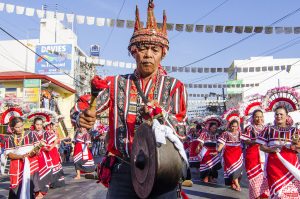
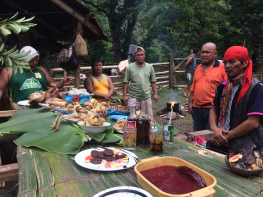
    Higaonon at Kaamulan Festiva 2016. Image credit: Costantin Agustin.

    One of the indigenous practices that the Higaonons have retained up to this day is their system of conflict resolution, locally called paghusay (meaning “to settle”). With its tribal council composed of a Supreme Datu (chieftain), 11 delegates, 3 baes (women delegates), and 25 alimaong (tribal police), they resolve all kinds of conflicts as long as they take place within their jurisdiction. Cases that reach the tribal authorities for possible resolution include thievery, fighting, murder, misunderstandings, adultery, land conflicts, contempt against rituals and conflicts involving rebels.

    The ability of the Higaonon to effectively solve internal conflicts has led to them being described as a genuinely peace loving community and the “weavers of peace“.

    Cases of Higaonon Tribal Conflicts: Adultery and Land Disputes

    The Alimaongs of the tribe (tribal soldiers). Image credit: Primitivo III Ragandang.

    Adultery and land disputes are the most prevalent form of conflict in the tribe and are often the root causes of other conflicts. For instance, misunderstanding, fighting, and even murder are sometimes due to adultery and disputes concerning the land.

    Concerning adultery, the tribal chieftain has said that the practice is considered a serious crime in the tribe because the Higaonons believe that it actually brings bad luck. During a wedding, the datu (the one performing religious duty as the Babaylan of the tribe), inculcates in the couple’s minds the sanctity of marriage, which would become impure when a wife or a husband practices adultery (personal communication, May 24, 2008).

    Though pagduway (or having two wives) is allowed in the tribe, the consent of the original wife is required; otherwise, the husband could not engage in duway (have two wives). A man intending to have two wives must see to it that he can afford to provide the basic needs of his wives and their children. However, the respondents revealed that there was no such case when a wife allowed her husband to have two wives; there were reported cases of adultery instead. These cases of adultery led to lido or war between families. This was due to the fact that the Higaonons are by nature protective of their family.

    Thus, in cases like this, the wrongdoers disrespect their own families and the family of the betrayed partner. The Higaonons believe that in due time, the spirits of their ancestors would punish them, thus “magabaan” (cursed). As an old Filipino remarked, “kay ang gaba muduol dili magsaba” [bad karma comes without warning]. Gaba is quite similar to the doctrine of karma in Hinduism and in Buddhism. It is also similar to the biblical doctrine of reaping what one sows and is considered a form of immanent justice (Mercado, 1993).

    As to conflicts involving lands, the Higaonons consider the soil not just their material property. It is actually regarded as their life and part of their legacy from their ancestors. They inhibited over 150 hectares of lands in Bukidnon Province with the boundaries marked by either a tree alone or by just a butig (big stone). Even if the original occupant of the land is not occupying or tilling the territory, the land can no longer be owned by anybody else.

    Today, the Higaonons do not have land titles. Fortunately, the chieftain commented that the Impahanong Amosig Higaonon Tribal Community Organization (IAHTCO) through the National Commission on Indigenous Peoples-10 (NCIP-10) is actually working towards the grant of Certificate of Ancestral Domain Title (CADT) for the Higaonons. Chapter 2, Section 3 (c) of the IPRA Law of 1997 referred CADT to a title formally recognizing the rights, possession and ownership of IPs over their ancestral domain.  The lack of clear boundary usually led to conflicts between the Higaonons in the tribe who own adjacent land. It is really a source of conflict when somebody extends his boundary.

    The Higaonon’s System of Conflict Resolution

    A tribal chieftan. Image credit: Primitivo III Ragandang.

    The Higaonon tribal council inherited the procedures of resolving conflicts from their ancestors who bestowed it through stories alone. Through stories, the procedures were transferred from generation to generation. Even up to the present, they do not have any written documents about their system of resolving conflicts, yet they are assured that their tradition and culture will continue. According to one member of the tribal council, “even my four-year-old son knows what are to continue in the tribe. We told them stories of our tradition before bedtime and in the morning too. They also witness the rituals in the tribe.”

    The process of conflict resolution starts with the submission of the case to a member of the tribal council who is delegated in a particular area. A complaint may be lodged in the house of the datu or wherever the complainant meets him. Moreover, lodging a complaint can be done anytime of the week. Wherever disputes arise, especially concerning a single or a particular group of individuals only, the council waits until someone refers the case to them for possible resolution. However, in cases where the general population is involved, the council acts right away. It is a traditional practice which actually best describes the principle of motu proprio (by one’s own motion or initiative).

    Cases like rebels threatening the people and destroying their properties, or a drunkard inflicting hazard on the community requires no prior submission to the tribal council. Once a complainant has referred a case, it is considered filed. As a general requirement, a ritual must be performed at all times prior to the hearing of the case being filed. A conflict resolution session is considered legitimate only when there is a ritual. In the ritual, one or two live chickens are offered to appeal the Halangdong Magbabaya (God) and the spirits of their ancestors to arrive a good resolution of the dispute.  Therefore, the absence of a ritual in conflict resolution processes invalidates all the agreements or decisions made in that session.

    The referral of the case in the Higaonon tribe of Kagahuman is hierarchical in nature. Thus, no case is brought to the Supreme Datu prior to its hearing in the lower body. All cases must be brought first to a member of the tribal council who is delegated in a particular area. If the case is not resolved, that is, the complainant is not satisfied with the decision and therefore appeals to the higher body, the case is then forwarded to the Vice Supreme Datu.

    At this level, this higher body explores all possible alternatives in order to resolve the dispute. If the decision has been rendered and both parties are satisfied, the case is closed; otherwise, the case is brought to the highest judicial body of the tribe, the Supreme Datu. The latter will then schedule the time and place of the hearing. Once the Supreme Datu has rendered his decision, it is considered final. In case a party fails to come to the hearing scheduled, a summons is served through the assistance of the alimaong (tribal police).

    Locally known as sala, the Higaonon justice system of punishment generally varies depending on the nature, motive and incidence of the crime. Through the years, the form and nature of sala in the tribe have undergone a number of amendments already. Among others, the abolition of death penalty was agreed upon by the tribal chieftains of the eight (8) talugans (villages) during a tagulambong datu (chieftains summit) in 1969 through the initiative of Datu Indangag of Impahanong. Also, the respondents recalled that pigs were never used as payment before, until the time when the people learned to raise pigs. Penalties include payments in the form of animals, tibod, money, non- inheritance of ancestral domain and banishment from the tribe. Tibod is a special kind of jar made from clay and is believed to be plated with gold in the internal portion (Sagayna, 2007).

    A chieftain performing a prayer. Image credit: Primitivo III Ragandang.

    It can be inferred that the penalties imposed in the Higaonon tribe of Kiabo is restorative in nature since “the application of punitive sanctions such as death penalty would,” according to the Chieftain “make the situation worse.” This traditional system is recognized as providing a win-win situation to all parties involved. It is a condition which would best describe the theoretical point of Stewart (1990) that in the early stage of struggle, one possible outcome is the accommodated agreement between parties which may lead to both parties being satisfied. Moreover, the abolition of the death penalty in 1969 is an indication that the Higaonons cherish the value of a person’s life.

    After the ritual is performed, the hearing procedure begins. It can be inferred further that the tribal council plays a very crucial role in maintaining the peace and order of the tribe. Also, the hierarchical nature of conflict resolution can also lead to a more egalitarian practice since a case can be forwarded whenever a party is not satisfied with the decision of only one judicial entity. Also, the credence for a Divine Intervention is seen to be an important preliminary habit in a resolution process – both in the Higaonon tribal council and in the barangay as manifested in the opening ritual and prayer, respectively.

    The ritual and the whole paghusay system is so effective because the Higaonons have high regard for the spirits and it is part of their belief system. Also, in day-to-day activities – planting, harvesting, child delivery, making a house, and paghusay – they must start with a ritual for the spirits in order for the spirits to help them and bring them success in their endeavors.

    The Future of the  Higaonon’s system

    There are some serious issues with the conflict resolution system which need to be addressed. Firstly, it is desirable for a functional tribal hall within the Higaonon tribe of Kagahuman to be built. Establishing a tribal hall for conflict resolution is very necessary for two reasons: first, there is a fixed place for settling disputes; second, it actually develops the sense of justice, peace, and belongingness among the Higaonons in the tribe.

    Another important issue that needs to be addressed is gender. The female representation in the tribal council, though accounting for only 20% of the populace, is a good sign of gender-awareness and development in the tribe. However, the role of women in the resolution process is actually very limited. They must therefore have a higher role so their voices can be heard.

    Moreover, based on the observation that the tribe does not document every case being resolved, it is highly recommended that the tribal council should have a record in every paghusay. These records will contain the date, time, venue, present persons during the hearing, and also agreements or decisions made. More importantly, a secretary must be appointed to perform the recording tasks. Also, a written document on the resolution processes and penalties imposed is necessary to have clear and detailed presentation of their traditional methods of settling disputes. Penalties must be presented in a very detailed manner, especially on murder cases wherein self-defense does not warrant any penalty.

    Perhaps the most immediate concern, though, is the need to ensure that this knowledge of conflict resolution is not lost and becomes sustainable. Due to forces of modernization in the Philippines, it is very likely that not codifying this indigenous system of conflict resolution among the Higaonons will lead to extinction of this useful system. This is not impossible as the pattern of migration (especially among the younger Higaonons) is increasing, where the young leave the tribe and head towards the cities for the quest of greener pastures and opportunities. Unfortunately, maintaining the minutes of paghusay proceedings is a challenge for the tribe for two reasons.

    Firstly, the Higaonons are not used to writing. There are literate tribal members, but they are no longer staying in the tribe — they either work in the city or are busy with their own business. Secondly, they are not equipped with the basics of writing minutes of case hearings. It is in this light that the intervention of the local government and other civil society organizations is crucial in empowering the Higaonons, especially the young who are left in the tribe.

    It is important that they are taught the basics of making paghusay proceedings, codifying them for future purposes, and being able to share it with other communities who might find their system as effective for replication. Young Higaonons must preserve and continue to practice their lumad tradition and culture. To make this happen, they must put into practice the teachings and activities that are conferred to them by the older tribal members.

    The Higaonons of Bukidnon province in the Philippines are teaching us the lessons that upholding community security, respecting all members of a community and adhering to the traditions of cultural heritage are crucial to building a peace in the community.

    Some References and Suggested Additional Readings

     Abu- Nimer, M. (1999). Dialogue, conflict resolution, and change: Arab- Jewish encounter in Israel. Albany: State University of New York Press.

    Barcenas, T. B. (1985). Maranao traditional system: structure and roles. Mindanao Journal, XI: 1- 4, 113- 158.

    Indigenous Peoples Rights Act, Philippine Republic Act 8371 § Section 15.

    Mercado, L. N. (1993). Elements of Filipino philosophy. Tacloban City: Divine Word University Publications.

    Pailig Development Foundation, Inc. (2007). Rido: A traditional conflict in modern times. Iligan City: PDIF.

    Rodil, B. R. (1994). The minoritization of indigenous communities of Mindanao and the Sulu archipelago. Davao City: AFRIM.

    Starr, H. (1992). Why don’t democracies fight one another: Evaluating the theory-findings feedback loop. Jerusalem Journal of International Relations, 14 (1), 41-59.

    Stewart, J. (ed.). (1990). Bridges not walls. (5th ed.). New York City:   McGraw- Hill, Inc.

    Tri-People Consortium for Peace, Progress and Development of Mindanao (1998). Defending the land: Lumad and Moro peoples’ struggle for ancestral domain in Mindanao. Manila: TRICOM 

    Valmores, C. (2008). The Higaunon people of Northern Mindanao. Retrieved from: http://www.philippines.hvu.nl/higaunon1.htm

    Primitivo Cabanes Ragandang III is Philippine Director of Move This World, Inc and a PhD candidate in Sustainable Development Studies at Mindanao State University-Iligan Institute of Technology.