Category: 09

  • Sustainable Security

    After four years of peace negotiations, the 52-year-long civil war between the Colombian government and the left wing guerrilla FARC-EP recently came to an end. What will happen now to the thousands of combatants who are laying down their arms and what are the challenges to their reintegration? Could a gender aware reintegration programme hold the key to long-term peace?

    On November 30, 2016 the Colombian government formally ratified a revised Peace Agreement after a national plebiscite rejected the original peace accord. The agreement ended the longest armed conflict in the western hemisphere and in Latina America.

    The FARC-EP (Fuerzas Armadas Revolucionarias de Colombia – Ejército del Pueblo) started the demobilisation process in January 2017. The combatants are currently gathered in 23 transitory areas (zonas veredales transitorias de normalización) and 7 camps that will be in force for 180 days. The government is expecting around 6.300 combatants to reach the areas. In relation to children associated with the armed group, the High Commissioner said that the delivery´s protocols will be activated upon FARC´s arrival in the zones: as FARC combatants enter the zones they will be delivering the minors and UNICEF will receive them.

    The FARC´s demobilisation and disarmament is supported by the United Nations Special Mission in Colombia. The mission has the mandate to monitor and verify the disarmament, and be part of the tripartite mechanism that will control and verify the definitive bilateral ceasefire and cessation of hostilities.

    Once the FARC´s members are settled in the transitory areas, the first step will be for arms and weapons to be laid down and registered. Unstable armaments will be destroyed on site and the UN Mission will remove all the weapons from the camp after 180 days.

    After the demobilisation and disarmament, the former combatants will also go through a reintegration process that, at present, is based on the current legal framework implemented by the Colombian Agency for Reintegration (Agencia Colombian para la Reintegración: ACR). The Colombian government agency ACR is the institution in charge of the reintegration process. The ACR was created on 3 November 2011 as a new state agency ascribed to the Administrative Department of the Presidency of the Republic.

    Overview of the Colombian reintegration process

    The reintegration of former combatants is a formidable challenge for Colombia. In addition to the FARC´s members that will soon reintegrate, data from the ACR shows that there are currently 15.043 persons taking part in the governmental reintegration process and a further 15.478 former combatants have completed the reintegration programme since the ACR´s creation. Among the persons currently going through the reintegration programme, 47% are former paramilitaries, 42% are former FARC´s combatants who demobilized before the peace agreement and most of the remaining former combatants were enrolled with the guerrilla ELN (Ejercito de Liberacion Nacional).

    Additionally, if the on-going negotiation between the ELN and the Colombian government succeeds there will be another collective demobilization of about 2.500 combatants. This figure includes both men and women but not children. Although it is impossible to know with certainty how many children and adolescents are currently linked to the armed groups or have been demobilised in the last few decades, between 1999 and 2013 the Colombian Family Welfare Institute (ICBF) assisted 5,417 children and adolescents who were separated from illegal armed groups (28 percent of them are girls and 72 percent boys).

    The ACR takes into account national and international guidelines on DDR, such as the United Nations Integrated Standards for Disarmament, Demobilization and Reintegration (IDDRS). The main components of the reintegration process are social and economic assistance (such as payments for basic living expenses), psychosocial care, vocational training, and access to the national health system. The reintegration model includes eight dimensions: personal, productive, family, habitability, health, educational, civic and security.

    Challenges to the reintegration process

    Revolutionary Armed Forces of Colombia (FARC) guerrillas guard the location of talks between Manuel Marulanda, Marxist rebel chief of the FARC, and Colombian President Andres Pastrana in Los Pozos, Caqueta, 750 km (466 miles) south of Bogota, 09 February 2001. The two began 09 February a second day of talks that could relaunch the fragile peace process in the violence-torn South American country. AFP PHOTO/Luis ACOSTA

    Image credit: Silvia Andrea Moreno/Flickr.

    The reintegration of former combatants is a key factor in the stabilisation of countries that are transitioning from conflict to peace. Unsuccessful reintegration could lead to the creation of new armed groups, the expansion of criminal activities and the recurrence of violence. In transitional and violent settings “unemployed, demobilized young men, socialized to violence and brutality during war, are more likely than others to form gangs, particularly in urban areas, and pose a constant threat to the security of women and children” (De Watteville, 2002: ix). As it has been acknowledged by the international agencies working in reintegration, creating alternative livelihoods and jobs opportunities is exceptionally difficult in post-conflict or conflict settings. The high number of former combatants to reintegrate into the civilian life poses an arduous challenge for the second most economically unequal country in Latin America, with an estimated unemployment rate of 8.3 and one of the highest and most inequitable concentrations of land ownership in the world.

    Colombia has already experienced the consequences of an incomplete reintegration process. After the demobilization of the paramilitary group United Self-Defense Forces of Colombia (Spanish: Autodefensas Unidas de Colombia: AUC) in 2005 and 2006, new armed groups emerged. Those groups are referred to as Las Bandas emergentes en Colombia o bandas criminales emergentes (BACRIM), meaning emerging criminal gangs, by the Colombian government but it has shown similar continuity with the previous AUC structure and often some mid-level paramilitary commanders have joined this new groups.

    There is a risk that many demobilized combatants will receive recruitment offers or will be threatened into joining the new organizations and narcotraffic groups, as has happened in the past. A recent Wall Steet Journal article reported that the Brazilian gang Primer Comando is recruiting FARC´s members in order to extend its drug network and routes. Since one of the main factors that can jeopardize the reintegration of former combatants is the enormous Colombian drugs trafficking market, the government launched a comprehensive strategy against illegal crops with the goal to substitute and clean about 50,000 hectares of illicit crops in 2017.

    One of the main challenges for former combatants is to find a sustainable and decent employment. Most of the ex-combatants have an extremely limited education level and it will be very challenging for them to succeed in the increasingly competitive job market. Many of them joined the armed groups as teenagers and did not complete a formal school education. The governmental reintegration programme developed learning programs for adults and it offers education opportunities. However, adults’ education has many challenges and not all former combatants succeed in completing the studies. Among those who took part in the reintegration programme, 21.875 passed the primary level of elementary school, 8.064 passed the second grade of elementary education, 14.967 graduated from the high school and 2.763 attended further education. Most of the jobs that are accessible with a low education level are paid the national minimum wage, which in 2017 is about 240 euro (737,717 Colombian pesos). Without doubt, the drugs cartels and the armed groups offer payments that are much higher than those of the regular job market for unschooled persons.

    Additionally, the former combatants have to overcome the trauma generated by the war. It has been estimated that in Colombia 90% of the people who enter the reintegration process have some kind of psychosocial affectation.There are also gender specific risks and challenges effecting the reintegration phase. Demobilised women may face stigma and discrimination. In Colombia, where gender roles and patriarchal models are very strong, female combatants that have transgressed traditional gender norms – by joining the armed groups – face difficulties in their personal lives and for many of them returning to their families is not an option. It has been reported that 87% of individually demobilised women choose to leave in anonymous urban environments like Bogotá and Medellín, instead of their native towns.

    The gender dimension of reintegration programmes

    The importance of a gender mainstreaming approach during the reintegration processes is widely recognized today and many manuals and guidelines have been designed to reflect this (United Nations 2014, UN Women 2012). Also, the literature emerging in the conflict resolution field examining masculinities and transitional justice shows the importance of addressing militarized and hegemonic identities as a key step toward peace (see Specht 2013; Enloe 2008; Cockburn 2010). However, the demobilization and reintegration of ex-combatants frequently overlooks the relationship between masculinities and the construction of peace (see Flisi 2016). Still there is limited knowledge on how to deconstruct wartime masculinities and too few attempts to promote non-violent ideals of manhood.

    In Colombia different initiatives are emerging that focus on the gender dimensions of the transition to the civilian life, with a special focus on family relationship, positive masculinities and gender roles. In this sense, the Colombian ACR´s reintegration programme has elaborated a gender strategy. The strategy promotes non-violent gender relations, both in the reintegration process and in the families. This is done through the implementation of psychosocial activities that include a gender and new masculinities perspective. To this extent, competencies such as non-violent conflict resolution and assertive relationships are encouraged by cultivating the ability to identify and generate constructive relationships. The focus is on effective communication, tolerance, empathy, emotional assertiveness and the demilitarization of masculinities and femininities.

    Many of the challenges of a reintegration programme are related to the community, family and domestic spheres. The anthropologist Kimberly Theidon, who researched the reintegration of former combatants in Colombia, highlights the risk of an increase and “domestication” of violence. Similarly, researchers showed an increase in sexual violence against women and girls as well as other forms of violence after the reintegration of paramilitaries (see Caicedo Delgado 2007; Londoño & Ramírez 2007). Tackling gender based violence is an important component of a holistic and integral reintegration programme. A successful gender strategy is not limited to a focus on womens’ needs and should also consider the gender dynamics and the relationship within the family and the community. A transformative gender reintegration programme should include activities that are able to tackle gender stereotypes such as initiatives to promote the role of men as care givers, equal redistribution of the childcare responsibilities and womens’ economic and political empowerment, among many others examples. Since the end of 2011 the ACR designed and implemented a special focus on tackling interfamily violence that is composed of 24 activities aimed to address both men and women. But the effectiveness of those activities is not known and further research is needed to identify the impact in the long term.

    Conclusions

    In Colombia fighting narcotraffic and criminal armed groups should be at the forefront of the government strategies to ensure a successful reintegration. However, there other many other aspects of the reintegration that are equally important and should not be overlooked such as technical and professional education, employment generation, psychosocial caring, family and community support, domestic violence and gender specific needs. There is important evidence of the Colombian Government´s efforts to incorporate a gender approach into the reintegration programme. Colombia could provide valuable examples in elaborating strategies to tackle violence against women and deconstructing militarized masculinities as part of the reintegration process but further evidence on this needs to be collected.

    Isabella Flisi is an international development worker and researcher with almost 10 years of experience working on human rights in Colombia and in Latin America. She has worked with different international organizations: Peace Brigades International, Christian Aid, War Child Holland, FAO and KIT-Royal Tropical Institute. She is currently a Ph.D. candidate at the Ulster University Transitional Justice Institute, where she is researching child soldiers´ reintegration and reparations programs from a gender perspective. Flisi has both a master’s degree in international cooperation and a B.A. in anthropology from the University of Bologna, Italy. Her expertise covers conflict transformation, peace-building, DDR, gender-based violence and human rights with a strong focus on women and child rights. She has published the article The reintegration of former combatants in Colombia: addressing violent masculinities in a fragile context in Gender & Development. She wrote about the reparations for victims of sexual violence in Colombia in PassBlue.

  • Sustainable Security

    Chemical weapons elicit a very specific emotive and political response from populations, namely, anxiety. What are the drivers behind the fears surrounding chemical weapons? 

    “War, like revolution, is founded upon intimidation. A victorious war…destroys only an insignificant part of the conquered army, intimidating the remainder and breaking their will…Terror…kills individuals, and intimidates thousands”.

    Writing in 1920, Leon Trotsky thus attributed the power of war and terrorism to its psychological effect. The ability to intimidate and coerce is the key strategy in a world in flux; fear and uncertainty are the weapons of choice for terrorist groups. The observation that terrorists endeavour to kill few and create fear among many has been woven tightly into the fabric of terrorism discourse for decades.  

    But the current century has witnessed an evolved threat paradigm in which the aim of a new type of terrorist group is to achieve “a lot of people watching and a lot of people dead”. Chemical weapons are often presented as the apex of such a goal. Yet increasingly it is argued that chemical weapons are merely a tool to elicit fear that far exceeds their actual destructive clout. This fear is a very human response. The psychological power of chemical weapons is intrinsically linked to their contaminant nature, indiscriminate harm and ability to undermine an individual’s sense of security.

    Are chemical weapons really weapons of mass destruction, with a devastating impact on infrastructure, life, and property? Or, are they weapons of terror? Distinguishing between the two, this article queries how uncertainty feeds the fears surrounding chemical weapons. To what extent does the weapon of terror moniker depend on the concept of mass destruction?

    The enduring power of contamination

    new-york-national-guard

    Image credit: New York National Guard/Flickr.

    Chemical weapons have an ancient history. Early hunter-gatherers learned to poison their arrows to ensure an effective kill. Poison gas as a weapon of war was recorded by Thucydides in 428 BCE. The scorched earth tactic of poisoning wells using the rotten corpses of people who had died from infectious disease was used across the Ottoman era and Middle Ages. Chemical weapons have been utilised – or attempted – in many conflicts since then. The British government, for example, approved the use of sulphur fumes at the siege of Sebastopol during the Crimean War. Even in Afghanistan and Iraq, the US Army used white phosphorous grenades, as did the British.

    As scientific advances began to allow a greater multiplicity of chemical agents in industrial quantities, concerns mounted over potential consequences. In recognition of the sentiment that injury or death by poison is inhumane, the Hague Conventions (1899 & 1907) outlawed the battlefield use of poisoned weapons and toxic gas via projectiles. The declaration prohibiting the dissemination of asphyxiating and deleterious gases was ratified by all major powers except the US which refused to sign, arguing that projectiles as detailed in the convention had not yet been fully developed.

    The use of poison has long been regarded as morally reprehensible. This harks back to disdain inherent to poisoning and its associations with chemical weapons: in contrast to the hero’s death by sword in battle, poisoning is regarded as cowardly and secretive. Yet this became more acute in the aftermath of the Hague Conventions: moral indignation follows the breaking of accepted conventions, shattering indoctrinated agreement as to non-use. In the early 20th century, both Allies and Axis powers were reluctant to be the first to breach the law.

    Even General John Pershing, having established the U.S. military’s first gas warfare unit in 1917, denounced chemical weapons as “abhorrent to civilization…a cruel, unfair and improper use of science…fraught with the gravest danger to non-combatants”. By the end of WWI, over 124,000 tonnes of chlorine, phosgene and mustard gases had been dispersed, causing approximately 90,000 deaths and 1,230,853 injuries and earning WWI the moniker, “the chemist’s war”. Though the development of gas masks reduced the number of casualties in the later years, the scale of chemical warfare had set the precedent for a lingering psychological and moral response. That even Hitler refused to use chemical weapons on the battlefield (if not in the gas chambers) cemented their standing as a wholly unacceptable weapon of war.

    For decades, the threat from chemical weapons remained largely in the hands of states. Almost two decades since the Chemical Weapons Convention came into force outlawing the production, stockpiling, and use of chemical weapons, the threat of non-state actors obtaining or producing chemical weapons has become of increasing concern. Large quantities of improperly disposed unconventional weapons have been unearthed in recent decades. After WWII, for instance, tons of mustard gas, sarin, soman, tabun, hydrogen cyanide and many other agents were left in storage facilities near towns and cities, buried in landfills across the world or dumped at sea. During the Cold War, chemical weapons facilities proliferated across the world, shrouded in secrecy. Throughout this time, in the Soviet Union thousands of tonnes of chemical materials were simply dumped in undisclosed, unchartered locations. With the collapse of the Soviet Union, some chemical research units were abandoned, leaving available a mass of untraced and unacknowledged weaponry.

    Chemical weapons and non-state actors

    Various terrorist organisations have spent years working on developing chemical weapons, of which the so-called Islamic State (IS) is but one. The eleventh volume of al-Qaida’s Encyclopaedia of Jihad provides instructions on how to construct chemical and biological weapons, although al-Qaida seems to have balked at actually using such weapons. Where groups have succeeded in their use, they have created vast shockwaves, with minimal outlay. In 1978, a Palestinian group injected non-lethal quantities of mercury into Jaffa oranges leading many countries to cease imports, jeopardising a market worth $172 million to Israel at the time. In 1989, terrorists reportedly laced Chilean grapes with cyanide, costing the Chilean fruit industry $333 million, despite the chemical only having been identified in two grapes.

    In 1995, Aum Shinrikyo unleashed the largest gas attack in peacetime history on several lines of the Tokyo subway, killing 12 people and injuring thousands. Though the proportion of people killed was relatively low compared to numbers injured, the attack demonstrated the ability of non-state actors to obtain and use significant quantities of non-conventional weapons. It has subsequently been cast as a “crossing of the Rubicon” (to pass a point of no return), foreshadowing further similar attacks.

    Chemical anxieties

    Chemical weapons elicit a very specific emotive and political response. When the threat and impact of terrorist attacks using conventional weapons against Western targets is so real, why does the as-yet unrealised potential for chemical terror attacks in the West retain a particular power over our thinking?

    Attempts to explain the anxieties surrounding chemical weapons remain incomplete when considered alongside conventional weapons with similarly cruel capabilities. Why, as in Aleppo or Homs, do we regard using explosives to tear people apart as more humane than burning or asphyxiating them to death? Weapons such as “soft nosed” bullets (which disintegrate upon entry to the body) were banned alongside asphyxiating gases by the 1899 Hague Conventions, yet they do not receive such global censure.

    Part of the concern specifically attributed to chemical weapons lies in the human fear of unpredictable, adverse events such as the potential to develop illness after exposure. The most terrifying threats are those perceived not just as lethal but as dehumanising. The fear of chemical weapons is therefore, at least partially, a result of their potential to cause insidious harm.

    So the potency of chemical weapons lies in the unknown and in how they fester in the imagination of those who have felt threatened by them. Chemical weapons attacks are distinguished by the propagation of functional somatic – medically unexplained – physical symptoms, bestowing unconventional weapons a “psychogenic” hallmark. A result of the potential for chemical weapons to yield psychiatric illness, the notion that the long-term psychological consequences of unconventional weapons may be worse than acute physical, is popular in psychological circles. The many chemical incidents in which low-risk patients far outnumbered those whose exposure could be confirmed, contribute to this “weapon of terror” epithet: the perception of exposure to a toxin is a greater determinant of health status and anxiety than actual exposure. After the Aum Shinrikyo attack, over 4,000 people with no sign of exposure sought medical care.

    Many chemicals are perceived by the public as having a high to extreme degree of uncertainty; many, too, elicit strong anxiety, which can drive somatic symptoms. In order to form judgement under uncertainty, people form intuitive assessments upon relevant information. Attempting to decrease their uncertainty, people may apply preconceived beliefs (for instance, that chemicals are dangerous) to symptoms, even if benign, constructing a causal link between symptom and event.

    Consider, for instance, cases in Israel, a nation so subject to the corollaries of war that it has been termed a natural station for the study of stress. During the 1991 Gulf War, Israel endured 18 Scud ballistic missile attacks from Iraq. The stress of conventional bombardment was compounded by the fear that the missiles contained nerve agents; residents had been instructed to carry gas masks and prepare for Iraqi use of biological or chemical weapons. Fearing contamination, over 1,000 patients attended medical facilities with symptoms such as tremors and breathing difficulties. Only 22% of patients had been genuinely injured: none by biochemical agents. 27% of casualties had mistakenly injected themselves with atropine, an antidote to nerve agents.

    Conclusion

    There are two schools of thought explaining the power of chemical weapons. On one hand is the argument that chemical weapons can be harnessed as weapons of mass destruction. This bears significant political pull. On the other, there is scepticism as to their capabilities, where instead they are branded weapons of psychological terror. The schism between “weapon of terror” and “weapon of mass destruction” is rarely acknowledged. Conflation of the two allowed Tony Blair to drawn upon their psychological power to justify the 2003 invasion of Iraq, which shattered the Middle East.

    The truth lies somewhere in between. The psychological and physical fallout of chemical weapons are, essentially, two sides of the same coin. Feared or sustained physical harm gives rise to short-term anxiety and long-term psychological distress. Chemical weapons victims may never be definitively free from the physical effect, thus the psychological effects may endure. Uncertainty directly impacts upon fear, and is thus one of the most influential features of human history. As human experience is a complex nexus of affect, behaviour, cognition and physiology, chemical weapons are disturbing for their ability to bear upon each, fracturing this integration. Uncertainty can become visceral. While war does not accommodate certainty, the potential use of chemical weapons will feed doubt and continue to draw substantial political influence.

    Clare Henley divides her time between acting as Assistant to the Director of the Oxford Process, and as Project Officer at Refugee Trauma Initiative. She previously worked on the Humanitarian Impact of Nuclear Weapons Initiative at Chatham House, and at the Maudsley Hospital’s Centre for Anxiety Disorders and Trauma. Prior to this, she interned on a decontamination project with the Behavioural Science team at Porton Down, Public Health England. Clare has an MSc in War and Psychiatry from King’s College London, where her thesis focused on the psychological impact of chemical, biological, radiological and nuclear weapons. Her other work focused on topics such as the impact of war on child soldiers and of being held hostage. She also has a BSc in Psychology from the University of Exeter.

  • Sustainable Security

    With right-wing populism growing across Europe, Germany was thought to be an exemption to this trend. However, the rise of Alternative for Germany could potentially change this.

    While far right parties have been on the rise throughout Europe for decades, it seemed like Germany was immune to the seduction of the far-right. Whereas, among others, the National Front in France, the Dansk Folkeparti, Flemish Interest in Belgium and the Freedom Party in Austria recorded growing electoral results, parties such as the Republicans (REP), the National Democratic Party (NPD) or the German People’s Union (DVU) were unable to overcome the electoral threshold. Although successful at the national level and represented in several regional parliaments (Landtage), no party to the right of the Christian Democrats has managed to gain seats in the Bundestag since 1949. Why has this been the case in Germany?

    Germany’s “special status”

    Political scientists and other observers both in and outside the country were puzzled by the ‘special status’ of the German party system, all the more so because the key conditions for the electoral success of right-wing populist and radical right parties were not that different from the European neighbors. Several studies have shown a small but relatively stable presence of nativist, even xenophobic attitudes within the German society. However, although right-wing populist parties profited from these preconditions in several state elections – e.g. in Baden-Württemberg in the early 1990s and some East German states from the beginning the new millennium onwards – they were not able to establish at the federal level. One can hardly identify one single reason for this mismatch, but according to most scholars, the answer lies in three German characteristics.

    Firstly, the German political right was divided and fractioned. While in France, Austria, Switzerland and other European countries, major far right parties were able to unify the right beyond the Conservatives, the right spectrum in Germany was distinguished by a high degree of competition. For instance, with NPD and DVU, two main players of the extreme right competed against each other in several Land elections until their consolidation in 2011. At the same time, the populist radical right spectrum was marked by the coexistence of various small parties, such as The Freedom or the so-called ‘Pro’ Movement, a minuscule group that basically operates in North Rhine-Westphalia.

    Secondly, the yearlong strategy of the Christian Democrats, which consisted in the integration of conservative streams within the German society, might have had a negative impact on newcomers on the right. Especially the Bavarian CSU, an autonomous party that is embedded in the Christian Democratic Union at the federal level—the CDU, in turn, holds no regional branch in Bavaria—was able to address conservative voters beyond the Bavarian borders and helped to maintain the strategy of the Union.

    The third reason relates to German history. Since the end of World War II, radical or extreme right parties have been dealing with stigmatization and exclusion from the political discourse.  While far right parties are treated as outsiders in almost all countries, in Germany, they are suspected of standing in the tradition of historical Nazism and thus barred. For instance, when the NPD found its way into the state parliament of Mecklenburg-West Pomerania in 2006, the other parties decided to not to support any of the NPD’s parliamentary initiatives (so-called ‘Schweriner Weg’ – ‘Way of Schwerin’).

    These unfavorable conditions contributed a great deal to keeping far right parties out of the German party system for more than six decades. At the beginning of 2017, however, it seems like the ‘anti-fascist consensus’ of the German post-war era has begun to totter. Violent acts against refugees have risen. In 2015, the German Federal Office of Criminal Investigation (Bundeskriminalamt) had registered a right-wing populist political movement (‘Pegida’), although solely a regional phenomenon in the city of Dresden, has dominated media coverage on East Germany. The most impressive evidence for the establishment of a far right stream is the ongoing success of a new right-wing populist party: the Alternative for Germany (AfD).

    Accounting for the AfD’s rise

    afd

    Image credit: Metropollco.org/Flickr.

    Since its foundation in the first quarter of 2013, the AfD has been denoting growing electoral support. Whereas it had failed to jump over the electoral threshold in the 2013 general election, the party won seats in every state election since that time. With partly extremely high results—such as 24.3 percent in Saxony-Anhalt and 20.8 percent in Mecklenburg-West Pomerania—the AfD is already the most successful new party in the history of the Federal Republic.

    To some scholars—including the author of this piece—one crucial reason for the popularity of the AfD are the arbitrary features of its ideology in the first two years of its existence. While clearly Eurosceptic and populist in terms of its anti-elitist appeal, the official program of the AfD in 2013/2014 did not include any nativist or xenophobic components.

    However, studies diagnose a clearly right-wing populist profile for both the sympathizers and the members of the AfD from the start. Other inquiries illustrate that in 2013, the public opinion as well as the first studies on the party located the AfD firmly at the right of CDU and CSU but did not imply a far right profile. The party therefore profited from its moderate but populist program while at the same time, as it was slightly more conservative than the Christian Democrats, the AfD was attractive for far right voters and activists from the very beginning. At the same time, the success of the AfD mirrors the evolution of the Christian Democrats, which have turned to a more liberal party under the leadership of Chancellor Angela Merkel. While this strategy has clearly marginalized the SPD, which scores just under 21 percent in the national polls, it has annoyed a great deal of more conservative voters, who now lean towards the AfD.

    It is not surprising that that the agenda of the AfD changed after the 2014 European election. Whereas anti-Euro and anti-EU positions had dominated its program until May or so, the party highlighted its conservative social values in the face of the state elections in autumn 2014. During this phase of the party’s history, growing tensions about the leadership of its founder Bernd Lucke, an economist from the University of Hamburg and the ideological direction of the AfD, including its relationship to Pegida, occurred. In summer 2015, Mr Lucke lost the election to the party executive against the leader of the Saxonian regional branch and parliamentary party, Frauke Petry, who chairs the party until today together with co-speaker Jörg Meuthen. Even though scandals and internal conflicts have been shattering the party, some observers’ expectation that the party will break down did not prove true. At the beginning of the election year 2017, the polls indicate high electoral support (around 12 percent) for the AfD at the general election in September.

    While it is right that a successful far right party in Germany mirrors a normalcy in Europe, it is also a benchmark for the crisis of representative democracy and the elites and the parties that underpin it. Populist far right parties—including Donald Trump in the United States by the way—benefit from growing contempt towards the political elites and the perception of individual powerlessness in the political process. In that sense, parties like the FPÖ in Austria, the French Front National or the AfD in Germany are phenomena of modernization, although they do not directly profit from its negative economic consequences (e.g. unemployment), as scholars have argued for years.

    Not surprisingly, recent studies show that electoral support for the AfD is not entirely based on protest—in fact, there is a great deal of convergence between the political positions of the voters and the ideology of the party. Empirical results also illustrate that the share of losers of the modernization process within the AfD electorate is high, but they do not represent the majority of their voters. In other words, the AfD is at least as much the exponent of a latent new right movement as it is the vehicle of discontent. At the same time, it represents to a certain extent an invisible coalition of middle-class and lower-class voters.

    In contrast to its predecessors in the far right spectrum, the AfD faces hardly any competitors in its niche. Founded by both neo-liberal, Eurosceptical economists (e.g. former party leader Bernd Luck and Joachim Starbatty) and socially conservative activists (e.g. Beatrix von Storch), the AfD became the center of attraction for right-wing networks without being right-wing extremist on its own terms. Due to its electoral successes, the AfD became a much more attractive player in the spectrum than other, much less successful parties did.

    The political public, especially the established parties, still seem somehow paralyzed and helpless. Strategies oscillate between stigmatization—the approach that embossed the exposure to the far right for sixty years—and dispute. While some argue that the—in part—extreme ideology of the party prohibits its inclusion in the democratic discourse, approaches that are more pragmatic allude to three crucial facts.

    First, they highlight the ‘normative power of the factual’: by being represented in more than half of the state parliaments and likely to master the electoral threshold in the upcoming federal election, the AfD is already an established actor, at least in the medium term. Ignoring is thus no strategic option. Secondly, while it was easy to demonize other right-wing parties, such as the NPD, due to their extremist ideology and appeal, the AfD, although clearly part of the far right, is not a fascist party. Even if the party has evolved from a moderate conservative-Eurosceptic to a far right party, it still lacks a clear racist and anti-system agenda. Neither its anti-elitist appeal to the people nor its Islamophobia resemble the neo-Nazi agenda of the NPD or other parties of this spectrum. It is thus not surprising that the anti-fascist reflexes of the political public failed.

    Finally, the common strategy of demonization (or stigmatization) could even prove to be counterproductive: populist far right parties feed on their perception as political outsiders. Therefore, any attempt to exclude the AfD from the political discourse can be interpreted as another move by the ‘aloof’ political class and strengthen the bond between the party and its supporters.

    Outlook

    In the face of the increasing establishment of the AfD and constantly high results in the polls, the prospects for the newcomer party are auspicious. The AfD will almost certainly be represented in the next German Bundestag. This will pose a challenge to the established parties. As to parliamentary strategies, a strong far right fraction could prevent the realization of preferred coalitions. While the SPD is unlikely to gain enough seats to claim the chancellorship, the CDU/CSU might become the strongest party but without the perspective of a two-party alliance other than a grand coalition. However, the only possible outcome might as well be the worst.

    Not only is the grand coalition highly unpopular among Social Democrats. As the case of Austria shows, grand coalitions in persistence lead to the increasing perception of the ‘cartelization’ of the political class, which fosters support for the far right. Considering the options of government formation after the 2017 general election, the AfD might well become the beneficiary of the situation it contributed to: political sclerosis. In that case, Germany might face a long period of bounded competition between the major mainstream parties and growing polarization in terms of increasing successes of the far right.

    Dr. Marcel Lewandowsky (* 1982) is a political scientist and research fellow and the University of the Federal Armed Forces in Hamburg, Germany. His current research focuses on right-wing populism in Europe with special consideration to the AfD in Germany.

  • Sustainable Security

    Following civil war, re-establishing the legitimacy of a state’s army is a crucial part of security sector reform and international actors can aid this process. The capacity-building work of the United Nations Interim Force in Lebanon provides a useful example of this.

    Rebuilding a national army after civil war is an important part of security sector reform (SSR) to help ensure the survival of the institution and its effectiveness in the long-term. Based on a recent article in Contemporary Politics, this blog post discusses the strategies used by an international actor, the United Nations Interim Force in Lebanon (UNIFIL), to contribute to the capacity and legitimacy of a local institution, the Lebanese Armed Forces (LAF). This case study revealed that a sustainable strategy for SSR requires a long-term, flexible, and pragmatic approach; and that successful capacity building can take place when the normative values of the SSR project are accepted by key stakeholders and the local population.

    The United Nations Interim Force in Lebanon

    The UNIFIL mission has been present in South Lebanon since 1978. United Nations Security Council (UNSC) Resolution 1701 (11 August 2006) is the mandate under which UNIFIL has operated since 2006 after the July war between Hezbollah and Israel. It clearly states that a key objective of the mission is assisting with the reintroduction of LAF throughout Lebanon; prevent violations of the line of withdrawal ‒ called the Blue Line ‒ that borders Israel and Lebanon, and clear unauthorised weapons from the area of operations.

    UNIFIL has targeted three main areas in capacity building the LAF: building relationships through regular liaison and communication; lobbying for money and resources from the international community; and conducting a comprehensive strategic review of LAF’s operational capabilities. One of the biggest challenges has also been handling the political situation which UNIFIL has negotiated with a combination of flexibility and pragmatism. But underscoring UNIFIL’s success is the fact that the army is considered legitimate in Lebanon by the local population and at the national political level. Furthermore, the LAF share the normative assumptions of the international community in terms of how they wish to rebuild.

    Whilst LAF was not present in the south until 2006, its popularity has increased since the Syrian withdrawal in 2005. The Lebanese Armed Forces is the only national institution that is genuinely regarded as non-sectarian, and has an approval rating of over 75 per cent amongst the Lebanese population. A survey of civilians in the south of Lebanon found that 91.5 per cent of civilians stated that they thought that LAF should be responsible for national security.

    The Political Challenges

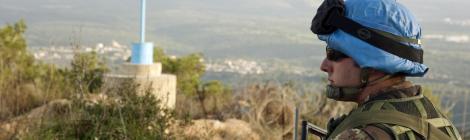
    An Italian peacekeeper of the United Nations Interim Force in Lebanon (UNIFIL) patrols the "Blue Line" that demarcates the border between Lebanon and Israel. 17/Jan/2009. UN Photo/Eskinder Debebe. www.unmultimedia.org/photo/

    An Italian peacekeeper of UNIFIL patrols the “Blue Line” that demarcates the border between Lebanon and Israel. Image credit: UN Photo

    The main challenge to both LAF and UNIFIL authority in South Lebanon is the presence of Hezbollah. LAF and UNIFIL must respect the legacy of Hezbollah’s military success in not losing the 2006 war, and its important role in ejecting Israel from Lebanon in 2000. Whilst Hezbollah agreed in 2006 to withdraw to positions north of the Litani River (outside the area of operations), it is commonly believed by many Lebanese, the Israel Defence Forces (IDF), and the Israeli government, that Hezbollah retains weapons caches within the area of operation.

    For many Lebanese citizens, the continued presence of Hezbollah’s armed faction ‒ who use a combination of traditional and guerrilla warfare techniques ‒ is considered a necessary deterrent to Israeli aggression. LAF, whilst respected is regarded as underfunded and under-equipped and therefore not able to be fully in control of the security situation at the present time. Interviews for this case study, however, revealed that after years of living under foreign occupation, southern Lebanese are happy to see LAF patrolling the area with UNIFIL.

    Whilst UNIFIL’s mandate requires the mission to rid the area of operations of all weapons not belonging to the Lebanese Armed Forces, it is not possible for either UNIFIL or LAF to aggressively hunt for weapons stored in the area without risking the loss of local support. Hence UNIFIL is pragmatic when negotiating the tension between its mandate and local perceptions of its role in relation to local security. When unauthorised weapons are found, UNIFIL interprets the mandate on this issue by asking LAF to retrieve the weapons. They report the findings to LAF and then wait for them to arrive and deal with the recovery. This means that UNIFIL does not have to deal directly with the removal of illegal weapons which may or may not belong to Hezbollah but which can be a contentious issue with the local population.

    Building relationships

    UNIFIL contributes to re-establishing LAF’s presence by conducting joint patrols, helping to build LAF’s CIMIC activities and ensuring LAF takes the lead in local disputes and in highly politicised situations. When patrolling alongside LAF, UNIFIL is careful to play the role of observer as much as possible. LAF is deliberately placed at the forefront of any Blue Line violations involving local civilians in order to empower LAF to deal with any situation in its own way and to help build its credibility. Furthermore, as UNIFIL is not allowed to physically restrain anyone who is violating the Blue Line, LAF plays a key role in deciding what measures (physical or verbal) they wish to take in regard to Lebanese citizens on Lebanese territory.

    Time has played an important role in maintaining good UNIFIL‒LAF relations. Interviews with LAF officers indicate that long-term UNIFIL staff who understand the local political and social culture in the region are valued highly. Constant staff rotations frustrate the LAF as personal relationships are considered highly important to successful liaison and cooperation. Flexibility has also been of benefit in helping UNIFIL build strong relationships with LAF, officers gave very positive reports of their relationship with UNIFIL staff and in particular their commitment to helping to resolve problems when they arose.

    Building capacity

    UNIFIL works to try and build LAF’s operational capabilities in a number of ways as this is regarded as an essential part of UNIFIL’s eventual exit strategy.  First of all it lobbies the international community independently to gain support and donations for LAF and requests donations from current battalions for example UNIFIL vehicles at the end of their lifecycle. UNIFIL also seeks funding from the EU and internationally for LAF battalions based throughout Lebanon, not in the area of operations.  Since the Syrian withdrawal from Lebanon in 2005, the EU has been supportive of UNIFIL’s efforts to capacity build LAF. Furthermore, since the emergence of IS in 2014, Lebanon has been seen as a key buffer state, so interest in providing assistance to LAF has further increased.

    Another example of UNIFIL’s flexible approach to interpreting its mandate is a joint project entitled the Strategic Dialogue. In recent years, UNIFIL Political Affairs Officers and LAF engaged in a full analysis of LAF’s structure and capabilities and produced a joint report that identified gaps in LAF’s structure. UNIFIL Political Affairs Officers have since organised a coordinating mechanism with UNSCOL and now work jointly to seek contributions from the US and European states to specifically fill these gaps. Finally, battalions within UNIFIL conduct joint exercises with the LAF which can include shooting, artillery, administrative tasks and computer exercises.

    Future lessons

    Lebanon’s SSR may carry useful lessons for the international community when looking to help other post-conflict countries transition into peace – namely Iraq, where the security environment remains both complex and challenging. The rise and territorial gains of so-called Islamic State in Iraq reflects a failed security sector reform policy which has seen 100 billion US Dollars invested in it. Implementing a more effective SSR policy in Iraq will be a crucial prerequisite for both long-term stability and peace.

    When rebuilding a national army after internecine warfare, obtaining support from the domestic constituency is as important as capacity building the force in order to present as a credible deterrent. The Lebanese Army has worked very hard to minimalize sectarian differences within the institution both during and after the civil war and this has been very helpful in enabling it to build a largely positive image amongst the people of Lebanon itself. But the sectarian nature of the armed forces in Iraq will make the rebuilding of the army a great deal more challenging in terms of winning broad popular support in Iraq.  A key task therefore will therefore be for the Iraqi national army to become openly inclusive of multiple ethnicities and religious sects as quickly as possible.

    Long term planning in SSR is crucial. One challenge faced in rebuilding the national army in Lebanon is ensuring a regular budget flow to the army and national political cover from politicians. Whilst UNIFIL has been successful in terms of identifying the gaps in LAF expertise and in seeking funding and training to assist in capacity building, the lack of a regular budget for the army still hampers the LAF’s ability to make long term plans for growth and development.

    In addition, politicians in Lebanon are broadly supportive of the LAF, but ongoing political cover remains important especially when the national military is faced with domestic disturbances, particularly outbreaks of sectarian violence. It is imperative the LAF are viewed as impartial by the Lebanese to avoid being drawn into domestic political conflict and thus far the LAF have managed this extremely well. These are considerations that Iraq may face in the future.

    Since the peace deal of 2006, UNIFIL has been successful in re-introducing LAF into the south of Lebanon. But this has required a nuanced approach because there is a delicate balance between the imposition of an agenda and local agency in peacebuilding projects. Ultimately the success of SSR depends on the degree to which the reforms resonate with institutional and local interests and ideas.

    Faced with the aforementioned myriad of sectarian and security challenges, any future attempts to capacity-build the Iraqi army would do well to take a pragmatic approach and be prepared to sacrifice quick wins for the sake of long-term objectives. The first step will involve a careful focus on making the army representative of the Iraqi people and beyond that ensuring national financial and political support is maintained to allow the army the political space to rebuild trust with the all-important domestic constituency of the Iraqi public.

    Vanessa Newby is a Research Fellow at the Australian National University. research focus is peacebuilding and peacekeeping in the Middle East. She has published on the normalisation of peace through everyday security practices, the role of time in successful peacebuilding and the use of technocracy and credibility to negotiate the politics of peacekeeping.  She holds a Masters and PhD in International Relations from Griffith University in Australia. She is an Arabic speaker and has spent over three years conducting research in Lebanon and Syria.  In 2013 she was a visiting researcher at the American University of Beirut.  Her undergraduate degree is in Psychology from the University of Westminster and she is trained in conducting quantitative and qualitative research methods for the social sciences. Dr Newby is currently writing up her book: Mission Impossible? Negotiating the Politics of Peacekeeping in the Middle East.

  • Sustainable Security

    In February 2016, two former military officers of the Guatemalan army were convicted of crimes against humanity based on cases of sexual and domestic slavery, perpetrated in the 1980s during the civil war. Together they received sentences of 360 years in prison, and ordered to pay reparations to the eleven victim-survivors on whose testimonies the case rested. The case, known as Sepur Zarco after the community where these crimes took place, is unique; it is the first domestic trial successfully prosecuting former military for sexual violence in conflict in the world. What happened in Sepur Zarco is less unique: the witness statements echo the experiences of women who gave their testimony to the Peruvian Truth and Reconciliation Committee (2001-2003), where women in embattled communities during the war between Shining Path and the state (1980-2000) were also systematically raped and/or enslaved. And there are other experiences; other genocides, war contexts, and rape camps in contemporary history, which would allow for a solid comparison with Sepur Zarco. Such an observation confirms the importance of the Sepur Zarco trial for the future of accountability and justice in cases of war-related sexual violence, in Guatemala, in Latin America, and indeed, globally.

    The testimonies of victim-survivors in the Sepur Zarco trial against military commanders in Guatemala shows once more that rape in war has specific meanings and intentions that are informed and shaped by the specific coordinates of conflict. In the 1980s, the Guatemalan military repeatedly attacked the population of the rural community Sepur Zarco. Local indigenous leaders who were trying to get their land titled by the state were kidnapped, tortured, and killed. Women who went to search for disappeared family members at the military base were captured, beaten and raped, and enslaved as sexual and domestic servants of soldiers. Several witnesses at the trial told details about how they were raped and beaten multiple times, in front of or alongside their children, sometimes in a pit where their husbands would be held before being buried. They also told about other victims, abused, enslaved, raped and killed in their presence. The statements show a world of extreme cruelty and suffering, facilitated by racism and sexism, and encouraged by a military campaign against indigenous communities that lasted three decades. All evidence shows that in the case of Sepur Zarco, rape was used as a weapon of war: to conquer, to reinforce victory, to send a message, humiliate, and fragment entire communities, in sum, to control.

    Of course, military commanders can only be prosecuted for systematic rape if we accept that rape in war is exceptional, different, and not inevitable. Perpetrators can only be held accountable if we recognise their agency in the act, their authority in allowing (or ordering) certain acts to happen. The extreme cruelty and violence that accompanies many of these acts further confirm that rape in war represents a rupture in a community’s history and in the lives of both perpetrators and victims. This is not normal, and hence, we can prosecute.

    And yet, there are others, including myself, who have emphasised the continuity in the history and possibility of sexual violence against women. I have argued, based on the testimonies of victim-survivors of rape in the Peruvian conflict, that while much of the scale and cruelty of these experiences were certainly exceptional and strongly conflict related, the script for these acts – immersed in racism and sexism, as in the case of Guatemala – pre-dated the conflict, and has yet to be dismantled. There is a continuum in the persistence of sexual violence against women that supersedes the categories of war and peace.

    In contemporary Guatemala, around 700 women are murdered each year because of sexism, killed by intimate partners or unknown others. This is what is known as femicidio in the region. Impunity is not absolute, but it is certainly very high and contributes to its prevalence, as public institutions are uninterested in pursuing cases of ‘private’ violence. The idea that violence against women, even if so large scale as in contemporary Guatemala (or elsewhere), can be private and thus irrelevant to national security (police, judiciary, policy) is strongly tied to perceptions of women being responsible somehow for the domestic sphere, the home, including the sexual gratification of men. Women are often perceived and portrayed as somehow complicit in their own abuse. Similar patterns of the domestication of violence are seen in conflict.

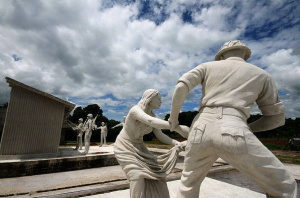
    Sculpture at Mujibnagar: A woman being raped by a Pakistani soldier during the 1971 war

    Sculpture at Mujibnagar: A woman being raped by a Pakistani soldier during the 1971 war. Image by Rahat Rahim via Wikimedia.

    For example, women held at military bases to sexually serve men are often also required to wash and cook. The Sepur Zarco case also heard a former military commissioner tell the court how the then head of the military base and the accused in the trial, Lieutenant Esteelmer Reyses Girón, ordered soldiers to gang rape a woman, and that the Lieutenant himself “took” this woman as his “wife”. In similar vein, in the case of Peru, few women used the words ‘rape’ (violación) to describe their experiences. Instead, some said ‘he used me as his wife’, indicating how domestic and sexual enslavement were part of the package of abuse. One witness even stated ‘he started to beat us as if we were their wives’, further blurring the boundaries between the domestic and the political, between wartime abuse and peacetime abuse, and arguably, between husband and abuser. In Sierra Leone, and Uganda, similar patterns can be found: sexual and domestic slavery go hand in hand, and is made possible because of the peacetime structures in which women’s roles are already defined by their service to men. Hence, girls forcibly recruited into rebel armies soon became ‘wives’.

    The idea that those who are violently enslaved could in fact be in a consensual relationship, albeit unequal, such as a marriage, provides a veil of legitimacy to an otherwise exceptional situation. It does, indeed, suggest a level of normality, a continuum, of life as one knows it. It might be the veil that makes survival possible. But many victim-survivors of conflict-related rape and sexual slavery are ostracised from their communities, exposed to a postconflict life of continuous abuse from their intimate partners, or choose to hide their trauma out of fear of retaliation. The women who testified in the Sepur Zarco case either did so behind closed doors, or they hid their faces behind veils during public sessions. What happened in war might have been exceptional, but not sufficiently so to erase the suggestion of complicity entirely, less so, stigma.

    In my book Sexual Violence in War and Peace, I identify a continuum in how sexual violence is understood and perpetrated in both war and peace, and hence, how such violence is dealt with post-conflict. The characteristics of rape regimes perpetrated by military in the high Andes of the 1980s and early 1990s showed many known features of power relations along lines of race, sex, class, age, and gender. Sexual violence, because of its intimate and potential reproductive qualities, helps produce and reproduce those unequal power relations. In war this might be strategic and large-scale, or it might be facilitated and condoned, in order to dominate over others (i.e., both to affirm power as well as subordination, both to destroy communities, as well as consolidate military loyalty and masculine strength). But in peacetime, it does the same: sexual violence produces dominance and subordination between genders, races, sexualities, classes and ages, be that catcalling, sexual harassment, marital rape or other forms of highly gendered and sexualised violence.

    Understanding sexual violence along a continuum does not say anything about the gravity of the violence or even how it might be experienced. On the contrary, while recognising and naming the differences between forms of sexual violence, experiences can be named as violence and as harmful, instead of normal or deserved. What the concept of a continuum of violence intends to highlight is how all forms of sexual violence are part of gendered social structures and patterns that have to be identified and transformed. Highlighting, combatting and prosecuting rape in war should arguably be part of a similarly linked set of measures that aim to eradicate gender inequality and the (often intersecting) violence with which such inequality is maintained and perpetuated, be that in war or in peace, at the level of families or in public space, in Guatemala or in the UK.

    Thinking in terms of a continuum does not aim to minimise rape in conflicts, gang rape, or the femicides we are seeing particularly in parts of contemporary Central America. But it gives us an analytical tool that allows us to connect sex, male violence, and gender inequality, both in the everyday as well as during armed conflict. Thinking in terms of a continuum allows us to see how much violence is hidden, institutionalised, and/or normalised in everyday life, both in peacetime and wartime, in homes, in intimate relationships, and in public spaces. The term allows us to see parallels between the extreme and the everyday, the public and the private, thereby not undermining the seriousness of the extreme, but undercutting the normality of the everyday.

    As such, the Sepur Zarco case is a milestone, and is hopefully a further step towards accountability for acts of sexual violence, and more broadly, gender-based violence, in both war and peace, in Guatemala and beyond.


    Jelke Boesten is Reader in Gender and Development at International Development Institute, King’s College London.

  • Sustainable Security

    In 2008, media outlets declared that a new Cold War was unfolding in the Arctic. This story was centred on a small, titanium Russian flag, fixed to the seabed below the North Pole.

    Planted in 2007 by a modest team of explorers and scientists, the flag triggered angry responses from Western politicians and media commentators, with the most vociferous coming from the then Canadian Foreign Minister, Peter MacKay, who declared: ‘This isn’t the 15th Century…You can’t go around the world and just plant flags and say “We’re claiming this territory”’.

    Nearly a decade later, this story remains emblematic of the geopolitical intrigue that refuses to go away in the Arctic, which continues to be stoked by uncertainties over sovereignty, ownership and access in the region.

    Carving up the Arctic, Carefully

    The Arctic Ocean, like every ocean, is governed by the UN Convention on the Law of the Sea’s (UNCLOS) provisions. The US has not ratified this treaty, but considers its provisions relevant as customary international law of the sea.

    Under UNCLOS, the Arctic Ocean littoral states are entitled to Exclusive Economic Zones (EEZ) stretching up to 200 nautical miles (nm) from their Arctic coastlines. Article 234 allows littoral states to develop and administer special regulations dealing with human activities in ice-covered waters. Russia and Canada use this to regulate shipping activity in their Arctic waters through environmental protection measures.

    UNCLOS also entitles a coastal state to extend the outer limit of its sovereign rights over the continental shelf (the seabed and subsoil of submarine areas–including, any oil and gas resources contained) beyond 200nm, if it can prove the shelf is a natural prolongation of the coastal states’ land mass. This has led Denmark and Russia to submit evidence (with Canada expected to follow this year) to the UN to support claims reaching all the way to the North Pole. Norway settled its continental shelf limits in 2009.

    As their claims overlap, the UN Commission on the Limits of the Continental Shelf (CLCS) is responsible for reviewing the evidence and issuing a final recommendation on where the borders should be drawn according to Articles 76 and 77. However, the CLSC has no legal authority or personality meaning it will be up to Canada, Denmark and Russia to reach an international agreement which will settle their claims. Any remaining space will be considered part of ‘the Area’ (see below), and falls under the purview of the International Seabed Authority.

    Although the decision on ‘who owns the North Pole’ will ultimately be determined by an agreement between Canada, Denmark and Russia,wherein lies a latent potential for conflict, the five Arctic littoral states’ public commitment to use UNCLOS as the basis for settling any sovereignty disputes is an important step towards ‘sustainable security’. It will take three to five years just for the CLCS to review the latest evidence submitted by Russia on 9 February 2016.The CLCS is already overwhelmed by the number of applications received globally. Since the prospects for oil and gas development further from shore are still highly uncertain, and claims to the North Pole are primarily symbolic, the CLCS arguably has time on its side.

    As long as the Arctic states maintain their trust in the process, UNCLOS should be able to prevent any ‘race’ to carve up the Arctic seabed, which could lead to tension between the littoral states.

    High Seas and the Area: Accommodating New Interests

    Where UNCLOS reaches its limits is in the parts of the Central Arctic Ocean (CAO), we will be dealing with High Seas,parts of the water column beyond the EEZs of coastal states,and ‘the Area’– seabed areas which cannot be claimed by any state (see map). Theoretically, anyone can fish and mine in these parts of the Arctic, but such activity is likely to be limited for the time being by the continued prevalence of thick sea-ice covering the surface of the ocean (and other environmental factors).

    In another step towards ‘sustainable security’, the five Arctic coastal states have initiated a process to create a governance framework to manage future fishing activity in the CAO.

    In July 2015, the littoral states signed a ‘Declaration’ preventing unregulated high seas fishing in the CAO, and promising to only authorise their own fleets to conduct commercial fishing in the CAO if it was in accordance with recognised international standards.

    The littoral states’ problem is that they do not have the authority to dictate the terms under which the rest of the international community can access CAO high seas fisheries. China’s, Japan’s, Korea’s, Iceland’s, and the EU’s finishing fleets are entitled under international law to fish in the CAO.

    Consequently, the littoral states took another preventative step by calling a second meeting in December 2015, where negotiations for fisheries agreement for the CAO’s high seas was opened up to these other parties. Other nations such as Taiwan are expected to join future deliberations, eventually ensuring buy-in for a governance framework from all nations with an interest in future Arctic fisheries.

    Again, this is a long-term process, providing another example of how governance structures developed now can prevent certain unwanted futures from becoming present, including, for exampletension and conflict over fisheries and continental shelves.

    Navigating Arctic Waters

    Can similar preventative steps be taken to ensure that disputes do not flare up over the problem of maritime activity in the Arctic? There are two issues to address. Firstly, the status of two ‘international straits’ in the Arctic: the North West Passage and the Northern Sea Route. Secondly, the regulating of ice-covered waters in littoral state EEZs as addressed by Article 234 of UNCLOS.

    Science team in the Arctic Sea. Image by NASA Goddard Space Flight Center.

    Science team in the Arctic. Image by NASA Goddard Space Flight Center.

    Canada and Russia do not consider the North West Passage (passing through the Canadian archipelago) and the Northern Sea Route (across northern Russia) to be ‘international straits’. Consequently, foreign vessels have no right of ‘transit passage’ through these waters–a right that entitles foreign ships to pass through without coastal state permission, and foreign submarines may remain submerged. Both countries claim that their sovereignty over nearby islands effectively means these waters should be considered ‘internal waters’, requiring foreign vessels to seek permission before entering.

    The US and the EU contest Canada and Russia’s claims, not least because of concerns about setting a legal precedent that could be applied to more important southerly shipping routes.

    There seems to be little ambition to settle the disagreement, because Arctic transit shipping is still a niche activity. Several uncertainties remain about whether large-scale transit shipping will ever become commercially viable, not least because of the competition posed by more southerly trade routes and the general unpredictability of seasonal sea-ice retreat that makes seasonal passages possible without expensive icebreaker escorts.

    The problem with the current stance is that Russia is actively investing in icebreakers, port infrastructure, marine services, search and rescue facilities and constabulary forces with the ambition of turning NSR into a viable shipping route. The more Russia builds up infrastructure around the route and offers to accommodate shipping on Russian terms, the greater the historical precedent it will set that the NSR is part of Russian-controlled waters. This feeds Western fears about Russian militarization of the Arctic building a security dilemma.

    While US and EU lawyers might question the validity of such a precedent, the de facto claim will remain and Russia will likely continue resisting attempts to change the status quo. It might therefore be worthwhile considering preventative steps sooner rather than later to resolve the NSR and the NWP’s legal status, before marine activity in the Arctic increases further and positions become more deeply entrenched.

    The issue is complicated by the second issue referred to above–the regulating of ice-covered waters by Arctic littoral states, notably Canada and Russia. As already noted, under Article 234 of UNCLOS, Arctic littoral states are entitled to regulate marine activities in ice-covered waters within their EEZs. Both the NSR and the NWP fall within these provisions, allowing Canada and Russia to regulate marine activity beyond their territorial waters regardless of whether they have the status of ‘international straits’ (see, for example, Canada’s Arctic Waters Pollution Prevent Act).

    So what happens when these waters are no longer ice-covered for a large part of the year? Article 234 indicates that ice-cover must be present for most of the year (i.e. 6 months and one day), while other points of contest exist in determining exactly what is meant by ‘severe climatic conditions’ and ‘exceptional hazards to navigation’ and who would decide whether such conditions prevailed (littoral states, non-littoral states, international organisations?).

    This remains a longer-term issue, but if as most scientists predict the amount of sea-ice cover each year continues to spiral downwards, the issue of whether littoral states can regulate in Arctic waters beyond 12 nm could become a significant point of tension with those seeking to benefit from new opportunities for regional marine activity. Currently, unlike in the cases of fisheries and continental shelves, few preventative steps are being taken to resolve this outstanding issue, despite its potential to cause future confrontation in Arctic waters. The situation is exacerbated by the deterioration of relations between Russia and the West over the Ukraine and Syria crises, likely making dialogue difficult.

    Prospects for Sustainable Security

    On the issues of resource competition and militarisation sustainable security’s prospects, in the Arctic for the most part look good. Since the end of the Cold War, international cooperation on various scientific and environmental protection initiatives have provided the basis for constructive engagement between the Arctic states and other interested actors (such as the UK) on many issues.

    Bilateral and multilateral arrangements have provided a governance structure that all Arctic states, and other interested actors, have indicated provides a firm basis for resolving inter-state disputes peacefully in accordance with international law, especially concerning fisheries and the delineation of the continental shelf. However,access to the NWP and NSR could lead to future contention. Potential flashpoints remain over how regional marine activity should be governed in EEZs where the sea-ice is in fast retreat, especially if Russia and Canada refuse to accept that Article 234 might lose purchase in the future.

    Whether preventative action is politically possible on this issue remains to be seen, but the sooner a constructive dialogue begins between Russia, Canada and potential users of the NWP and NSR, the more likely it will be to find a sustainable solution. Speculatively, an Arctic agreement on shipping activity negotiated under the Arctic Council’s auspices (but accommodating interested non-Arctic states as seen in the fisheries discussions) to complement the International Maritime Organisation’s Polar Code (due 2017) could be one way of consolidating international understanding that these waterways are to some extent shared spaces requiring the international community’s shared stewardship.

    An important dimension of sustainable security not discussed in this state-centric article is that of human security–especially of indigenous peoples and other local communities that live and work in the Arctic. The decline of traditional cultures, environmental pollution and other threats to human health and well-being are prevalent in nearly all of the Arctic states, and there has been a long history of marginalisation of Arctic residents. However, all of the Arctic states have readily admitted the need to address the challenges facing Arctic indigenous peoples and other local communities, and the Arctic Council is somewhat unique to the extent that it invites representatives of indigenous people’s organisations to sit at the table with government ministers.

    The sustainable security outlook is also weaker with regards to climate change. Huge uncertainty remains over how soon we are likely to see an ice-free Arctic in the summertime. The temperature spikes witnessed in January and February this year suggest this event horizon might be closer than we think. The impacts of climate change pose a particular risk to human security in the Arctic, threatening food, housing, infrastructure and livelihoods. It remains to be seen whether these communities will be able to adapt to the drastic changes that are being observed.

    Duncan Depledge is a Teaching Fellow in the Department of Politics and International Relations at Royal Holloway, University of London, and director of the secretariat to the UK All-Party Parliamentary Group for Polar Regions. He received his PhD from Royal Holloway for his research investigating contemporary developments in U.K. policy toward the Arctic.

  • Sustainable Security


    by Joe Thwaites

    UN Climate Change Talks Conclude with Copenhagen AccordLast Wednesday, the United Nations Security Council held its second ever debate on climate change, at the request of Germany, who holds the monthly presidency. UN Secretary General Ban Ki-Moon, Director of the UN Environment Program Achim Steiner, President of Nauru Marcus Stephen, and Australia’s Parliamentary Secretary for Pacific Island Affairs Richard Marles all addressed the Council, along with representatives of 62 member states.
    Stephen wrote powerfully in the New York Times last week about the threat rising sea levels pose to his Pacific island country’s existence, and did not hold back in the Council, usually a place of diplomatic stoicism. Speaking on behalf of the Pacific Small Island Developing States, he said they were facing “the single greatest security challenge of all – that is, our survival” and put the question: “Where would we be if the roles were reversed? What if the pollution coming from our island nations was threatening the very existence of the major emitters? What would be the nature of today’s debate under those circumstances?”

    As it happened, the nature of the debate was twofold. On the ostensible subject, “Maintenance of international peace and security: impact of climate change”, most states agreed that it would have – and in some cases already is having – profound implications for international peace and security, and that the UN had a key role to play coordinating efforts on mitigation and adaptation to climate change. But discussion on this remained secondary to complex political wrangling over the role of the Security Council in addressing the topic. Whilst this is the case for any issue before the body – in discussions on whether to mandate armed intervention into a specific country, for example, the debate focuses not just on the rights and wrongs in that instance, but also the wider precedent it may set – there were added complexities with climate change.

    China and Russia displayed their usual reticence about extending the Security Council’s competencies into new areas. They were joined by Brazil, India, and many developing countries in the G77 bloc, who opposed attempts to move the issue away from the General Assembly-mandated UN Framework Convention on Climate Change (UNFCCC), in which all member states have equal footing and decisions are made by consensus, and into the 15 member body where China, Russia, France, the UK and U.S. hold veto power, and are some of the biggest greenhouse gas emitters, on either cumulative or per capita bases. The underlying fear of developing countries was that such a move would circumvent the core principles which make the existing climate change regime palatable – namely, the recognition of states’ “common but differentiated responsibilities” to act on climate change, and the right to sustainable development.

    Indeed, if the Security Council were to take overall control of climate action, this would be a regressive step, potentially allowing developed countries off the hook for their failure to meet existing targets under the Kyoto Protocol, and removing the impetus to agree a further UNFCCC commitment period. States proposing that the Security Council address the issue (primarily the EU, U.S. and small island states) were therefore at pains to stress that it would be complementary to existing UN bodies and processes, and should not encroach upon their remits. They argued that as a major security threat, it was right that the Council afford these dimensions of climate change due consideration. But as the UN body with the most diplomatic bite – only the Security Council has the power to authorise military force – it is easy to see why there are concerns that it could dominate the issue.

    During the debate there was related apprehension about the excessive securitisation of climate change. Many states pointed out that climate change was a cross-cutting issue, as much related to sustainable development and humanitarian relief as security, and that looking at it as a security issue would not address the underlying causes of the problem. Bolivia noted that developed countries gave $10 billion in climate change finance annually, which amounted to just 1% of defence spending, and suggested the Council adopt a resolution to cut defence and security spending by 20%, using the money saved to address the impacts of climate change. Papua New Guinea echoed Nauru’s Marcus Stephen, pointing out that if the Security Council could address issues such as development and HIV/AIDs as security problems (without them becoming militarised), then why not climate change?

    The non-binding Presidential Statement which was finally agreed did not include mention of a Special Representative on Climate Change and Security, which had been one of Germany’s original proposals. Many countries remained open to the idea of a representative, but opposed them being answerable to the Security Council, instead suggesting they be appointed by the General Assembly.

    On one level, the outcome was disappointing. Russia initially vetoed adoption of the statement, later agreeing to a watered down version merely noting the “possible security implications” of climate change. Ambassador Susan Rice of the U.S. lambasted the lack of stronger action as “pathetic”, “short sighted” and “a dereliction of duty”. However, given that the first Council debate on climate change in 2007 was unable to agree any formal outcome, getting a Presidential Statement was something of a success.

    There remains wide disagreement between states over whether climate change merely exacerbates conflict, or is a distinct threat itself. Academic opinion is still divided, and the Security Council’s position often lags a good ten years behind the latest research on peacebuilding and conflict prevention, so this is not hugely surprising. It is also difficult to untangle the opposition to climate-security links on conceptual grounds from opposition for political reasons related to Security Council ‘mission creep’, as discussed above.

    In 2009, the General Assembly requested that the Secretary General produce a report on the possible security implications of climate change. A few states strongly disputed its findings on Wednesday. Nevertheless, the Presidential Statement recommended that in his regular reports to the Council, the Secretary General begin to include information on the possible influence of climate change upon conflict situations around the world. These are important first steps towards mainstreaming climate change in conflict assessments, even if we are a long way from any legally binding resolution.

    Another reason for optimism is the level of participation in the debate. I followed many Security Council meetings whilst working in the UN community last year, and never saw so many member states request to speak. Most countries took the discussion seriously, and even where they disagreed on whether the Council had a mandate to act, they spoke strongly on the devastating impacts of climate change.

    The question now is: how long will it take for states to take this rhetoric seriously; to realise the gravity of the situation, break the cycle of mistrust in international negotiations and commit to unified multilateral action to address this issue – in whatever forum they choose? The answer is unclear.
    There is one thing we can be confident about – this won’t be the last time the Security Council discusses climate change.

    Joe Thwaites is a graduate in politics from the University of York, UK. He has worked on conflict prevention at the Quaker United Nations Office and represented Friends of the Earth at the UNFCCC.

    Image Source: United Nations Photo

  • Sustainable Security

    Far-right terrorism has re-emerged as a serious security issue in the United States. What are is the drivers behind this phenomenon?

    The recent violence in Charlottesville Virginia, perpetrated by white supremacists and neo-Nazis that had gathered for a “Unite the Right” rally, has refocused attention on right-wing terrorism in the United States.  During the rally, James Alex Fields Jr., a possible neo-Nazi sympathizer, drove a car into a crowd of counter-demonstrators, killing one person and seriously wounding 19 others.  The car attack has been described by U.S. Attorney General Jeff Sessions and Republican and Democratic elected officials alike as an (alleged) act of right-wing domestic terrorism, and the U.S. Justice Department has promised to open an official civil rights investigation of the incident.

    What are the macro-causes of domestic right-wing terrorism in the United States?  In a published study, I attempted to address this question by statistically evaluating all identifiable “right-wing” terrorist attacks in the United States for the period 1970 to 2011.  My goal was to try to determine the economic, social and political factors that drive right-wing terrorism.  In the study, terrorism is defined as an act of premeditated political violence perpetrated by nongovernment organizations intended to influence a wider audience.  I identified domestic terrorist incidents as “right-wing” if they were perpetrated by groups or individuals that were motivated by racist, white supremacist, antiabortion and violent, extreme antigovernment ideologies.

    It is important to distinguish the events in my analysis from hate crimes, which are spontaneous rather than premeditated or strategically-calculated acts, and from legal, nonviolent far-right political activities.  The groups and individuals in the analysis are outside of mainstream politics in the United States and have deliberately adopted the use of violence to achieve their goals, rather than nonviolent political strategies such as voting, lobbying and forming protest movements.

    The drivers of US far-right terrorism

    James Alex Fields, Jr., who conducted the Charlottesville car attack. Image credit: Rodney Dunning/Flickr.

    It does not seem that right-wing terrorism is driven by economic grievances or distress.  Across the board, socioeconomic factors that are commonly argued to produce resentments that fuel right-wing terrorism were not significant.  For example, right-wing terrorism is not more likely to occur in U.S. states that have a larger percentage of their populations below the poverty line or that have higher levels of unemployment or income inequality.  I specifically examined two economic factors commonly argued by scholars to be associated with the rise of violent right-wing extremism: the structural decline of blue-collar manufacturing and the “Farm Crisis” that took hold of the United States in the 1980s.  Both of these are said to have produced strong resentments that violent right-wing groups exploited to garner recruits, thereby becoming more active and dangerous.  Neither of these factors, however, do a good job predicting when and where right-wing terrorism occurs in the United States.

    States that have suffered heavy industrial manufacturing job losses in a given year or a decline in family farms due to foreclosure do not disproportionately experience right-wing terrorism.  The apparent lack of a direct relationship between economic distress in the United States and right-wing terrorism mirrors findings for terrorism writ-large, globally.  Other studies of economically-aggrieved countries or individuals have not found them to be more terrorism-prone.

    I also examined a series of social factors.  The propaganda of right-wing extremist groups often mentions immigration, growing ethnic diversity and the decline of white demographic dominance in the United States as motivating threats.  Far-right protestors in Charlottesville illustrated this by chanting “You Will Not Replace Us!” and “Blood and Soil!”  However, I did not find actual racial and ethnic diversity on the ground to be a statistically significant driver of right-wing terrorism.

    Nationwide, the increase in the nonwhite population, and the growth of the nonwhite Hispanic or Latino population, in the United States, bears little relation with ebbs and flows of right-wing terrorist attacks.  Similarly, states with rapidly growing nonwhite population were not found to experience more right-wing attacks.  This does not foreclose the possibility that growing ethnic diversity in the U.S. is a driver of right-wing terrorism.  However, it is possible that the perceived rather than actual threat of demographic change and growing diversity fuels violent extremism.  This effect might be better revealed by a study of individual attitudes as drivers of terrorism.

    Related to fears among violent right-wing extremists that whites are being “replaced” by nonwhite immigrants and others is the belief among extremists that traditional male roles have been undermined by the empowerment and enhanced personal autonomy of women in contemporary America.  I investigated this by testing two measures of women’s status: the national rate of female participation in the workforce and the rate at which women seek abortions.  Both of these are frequently-used measures of actual women’s empowerment and are also potent political and cultural symbols of women’s equality.  I find both to be associated with a significant increase in right-wing terrorism.

    Holding constant other factors such as past experience of right-wing terrorism at the state level, unemployment, income, population, urbanization, size and growth of the economy and region of the country, I found that for each five percent increase in women’s employment nationally, the U.S. states experienced a 50 percent increase in rates of domestic right-wing terrorist attacks.  Similarly, for every increase of 10 medical abortions per 10,000 live births, a state experienced a 24 percent increase in right-wing terrorist attacks.  Of course it is possible that this latter abortion rate finding is simply reflecting abortion clinics being targeted by anti-abortion extremists.  However, when I removed attacks on abortion clinics from the data, the abortion rate in a state still is a statistically significant predictor of terrorism. This suggests that the controversy of abortion itself is a driver of all types of right-wing terrorism.

    Figures 1 and 2 help to illustrate these effects.

    Figure 1. Impact of Women’s Employment on Right-Wing Terrorism


    Figure 2. Impact of Abortion Rates on Right-Wing Terrorism


    Finally, I considered some political and policy factors that have been hypothesized to drive right-wing terrorism. There are several schools of thought on the impact that partisan control of government might have on violent right-wing extremism.  One holds that when Republicans win elections and hold public offices, violent far-right extremists increase their activities because they feel emboldened.

    The other school argues that Democratic Party control, and policies that Democratic politicians frequently seek to enact such as gun control or enhanced social policies that increase the size of the federal government, antagonizes right-wing extremists, prompting them to strike back by launching terrorist attacks.  I tested for both and found that right-wing terrorist attacks were more common when a Democrat controlled the White House, and increased dramatically after the elections of both Bill Clinton and Barack Obama.

    In fact, Democratic control over the White House increases right-wing attacks by almost 73 percent.  Figure 3 presents the different projected rates of right-wing terrorism under Democratic versus Republican presidencies.  The partisan effect, however, seems limited to national politics.  Partisan control over state government does not significantly affect patterns of right-wing terrorism.

    Figure 3. Predicted Right-Wing Terrorism Under Democratic and Republican Presidencies


    This particular finding is interesting given the argument that U.S. President Trump has emboldened right-wing extremists through his rhetoric and his policies and policy proposals.  However, the impact of the Trump presidency cannot be assessed by the study as the analysis does not cover terrorism after 2011.  The data I used to conduct the original analysis has not yet been updated through 2017, when Trump assumed office.  It will be critical to retest the role of partisan control over the White House once this data is available.

    While who controls the White House is found to affect patterns of right-wing terrorism, the national partisan effect seems to not be linked to specific federal government policies.  Policies such as increases in federal income taxes or the 1994 federal ban on the sale assault weapons – both of which were an anathema for right-wing extremists – are not statistically significant predictors of attacks.

    Conclusion

    The sum of these findings is that several of the more symbolic factors, such as reaction against the empowerment of women or control over the government by an ideological “enemy,” that are significant drivers of terrorism rather than structural economic factors, demographic change or government polices enacted.  This finding is, perhaps, not so surprising.  On a general level, symbolic issues are frequently important motivators for terrorists world-wide.  Consider, for example, the symbolic importance of cleansing Muslim society from the influence of Western culture for a movement like Boko Haram in Nigeria or reconstructing an imagined Caliphate for the Islamic State (ISIL) movement.  More specific to the phenomenon of right-wing terrorism, the results underscore the potency of the U.S. President as a (singular) symbol of government and political direction of the country as well as the cultural impact of changing women’s statuses.

    It is also important to consider that the study is very much a preliminary investigation into the drivers of domestic right-wing terrorism.  The study focused on the most basic structural factors that precipitate right-wing terrorism.  Future research might look beyond structural precipitants to examine factors that facilitate the motivation, planning and execution of right-wing terrorist attacks, such as the role played by social media, hate speech online, etc.

    Author’s Note: Graphs of marginal effects of a 5-unit change (Women’s Employment), 10-unit change (Abortion Rates) and 1-unit change (Republican to Democrat) on counts of right-wing terrorist events. In models, state unemployment rate, inequality, population, population growth, urbanization rate, area, gross state product per capita, growth of gross state product per capita, region (Midwest, South, West) and previous year right-wing attacks are controlled for.

    James A. Piazza is Liberal Arts Research Professor of Political Science at the Pennsylvania State University. Piazza’s research focuses on terrorism, counterterrorism, political violence and intra-state armed conflict. His published work has appeared in the American Journal of Political Science, the Journal of Politics,International Organization, Comparative Political Studies, International Studies Quarterly, Journal of Conflict Resolution, Public Choice, Journal of Peace Research, Political Psychology, Conflict Management and Peace Science, Political Research Quarterly, Foreign Policy Analysis, International Interactions, Defence and Peace Economics, Southern Economic Journal, Security Studies, Terrorism and Political Violence and Studies in Conflict and Terrorism. He can be contacted at . His website:  http://polisci.la.psu.edu/people/jap45

  • Sustainable Security

    Author’s note: In this article, I use the terms “war” and “civil war” interchangeably. They refer to a contested armed incompatibility involving a government and a non-state actor that generates at least 25 battle-related fatalities annually. Whereas ethnic civil wars refer to those armed conflicts that include ethnic challengers that are at odds with the identity of a state, seek to redefine or divide the state itself, or strive for major changes in their relationship with the state ( see Sambanis 2001).

    Under what conditions can religion play a constructive role in peacebuilding and what are the obstacles to this process?

    Religion, war, and peace are among the “thickest” and multifaceted concepts. Thus, tackling the relationship between them is a daunting task and calls for a greater scrutiny.

    A great deal of existing scholarship on civil war, particularly those statistically examining the effects of various social, economic, and political factors on war dynamics, almost exclusively refer to the term “peace” in the negative sense, i.e., the absence of violence. This “narrow” approach to peace is in part driven by its simplicity that allows for large-n cross-national comparison. While useful in reaching generalizable findings, such an approach could potentially mask the underlying causes of war, preventing us from addressing the root causes of conflict eruption.

    Here I refer to peace in the positive sense, or the absence of “structural violence” that calls for going beyond the mere absence of physical violence and points toward “social justice” (see Galtung 1969). This positive or “quality peace,” in the words of Peter Wallensteen, requires the creation of postwar conditions that not only prevent countries from relapsing back into another episode of violence but also allows for security and dignity for the members of the war-torn society.

    How does religion help or hinder the creation of such circumstances? Under what conditions can religion as a powerful, potent force help reinforce and strengthen peace? What are the obstacles to religion playing such a constructive role in peacebuilding?

    A complicated relationship

    Photo credit (edited): murdelta/Flickr. 

    A number of scholars have identified religion to be the cause of deadlier, longer, and more intractable civil wars (see Svensson 2007; Fox, James, and Li 2009; Basedau et al. 2011). Yet others have drawn attention to “the seeds of tolerance, justice, compassion, and peace” in religious traditions and argued that religion can help bring about peace and democracy (Johansen 1997, 53; see also Appleby 2000; Driessen 2010).  Religion, as Philpott states, “devastates not only New York skyscrapers but also authoritarian regimes; it constructs not only bellicose communal identities but also democratic civil society.” Thus, this group of scholars concludes that religion can also be used in conflict resolution and peacebuilding processes (see Abu-Nimer 2001; Alger 2002).

    These contradictory findings stem from a number of sources. First and foremost, the literature on the relationship between war, peace, and religion often conceptualizes and measures these concepts from different points of view. In addition to the narrow conceptualization of peace noted above, the question of what entails a civil war and how it should be operationalized has caused much controversy. While scholars often agree on what a civil war is, the casualty threshold used to mark the onset of a civil war, ranging from 25 to 1,000 annual battle-related deaths, has resulted in a number of civil war datasets on which most of empirical findings are based, and that are not always comparable.

    Second, the peacebuilding capacity of religion is applied to cases that are not necessarily analogous. For example, as Nichols argues, religious actors played a positive role in bringing about peace in the conflict between the Sandinistas and East Coast Indians of Nicaragua in the late 1980s through helping to develop a common language of conciliation and infusing Christian values into the negotiating process. Appleby, drawing on the case of Northern Ireland, maintains that religious leaders can gradually “saturate” the society by transforming the conflict environment and issues, condemn violence, and thus foster cross-communal cooperation. However, Appleby warns that such an outcome requires special situations characterized by a strong civil society and democratic tradition as well as assistance from the international community. Partly because of the lack of agreement on the casualty threshold noted above, current literature on civil war often treats the case of the Sandinistas vs. East Coast Indians within the broader conflict between Nicaragua under the Sandinistas and Contras, making it a somewhat “marginal” case. Whereas, the Northern Ireland conflict, as Appleby aptly warns, is characterized by some unique characteristics that are that are rarely present in many war-torn countries.

    Third, existing literature is still in the process of identifying the complex and complicated causal mechanisms between religion and peacebuilding. This is in part due to the ambivalent, contextual nature of religion. Religion and politics are connected in complicated ways that make it nearly impossible to disentangle one from another. A religious tradition as Armstrong summarizes is “never a single, unchanging essence that impels people to act in a uniform way.” Instead, religions and religious interpretations “are susceptible to different readings in different contexts and become entangled in or influenced by newer sociopolitical context”. In the context of civil war, religion often becomes a part of the political arsenal to sustain the fight. As religion turns into another instrument of legitimation and mobilization in the hands of political actors it loses its power as a peacemaker.

    Finally, and relatedly, the politicization of religion is most prevalent in ethnic civil wars in which fighters are lined up along identity lines and rebels are by and large secessionist in goals or desires. Therefore, the effect of religion on conflict processes in a case like Chechnya where Muslim Chechens fought destructive civil wars against Russia dominated by Orthodox Christians needs to be distinguished from the role religion plays in ethnic conflicts that involve groups hailing from the same faith, as in the case of Kurds vs. Turkey. While civil war between groups hailing from different faiths can contribute to identity formation in such a way that fuels the violence, war between co-religionists does not necessarily help foster peace. Instead, religion as the common denominator is often subsumed to ethnic, national identities and interests. The war realities often constrain, if not shape, religion, rendering religion an ineffective peacemaker (Gurses 2015).

    Religion and ethnic civil war

    Nicolas Rost and I have shown that due mainly to this “politicization of religion,” the hypothesized peacemaker role of religion does not hold against a global sample of ethnic civil wars. War and country characteristics, rather than shared religion, are better predictors of peace duration after ethnic civil wars. While the peace duration in our study refers to the absence of violence, in further support of studies that have pointed to discriminatory state policies as the culprit behind ethnic civil war onset and recurrence (Cederman, Wimmer, and Min 2010; Gurses and Rost 2013), we found that the level of discrimination faced by members of ethnic groups that rebelled against their government after the end of the war is the most robust predictor of peace duration. Thus, state policies that address the demands of aggrieved minorities and re-adjust their relationship with the state that could make them a part of the system are more likely to help build sustainable peace. Resorting to a shared religion to help reconcile warring groups without addressing the root causes of conflict is more rhetoric than reality.

    Observations 

    • There is a need to clarify the terms in order to delineate the religion-peacebuilding nexus. The terms war, religion, and peace are multidimensional and hence defy reaching a consensus on the exact nature of religion’s relationship with peacebuilding. Avoiding law-like, general explanations is more likely to be fruitful. Just as religion’s role in identity formation varies, so does the role it plays in conflict onset, duration, outcome, as well as building peace in postwar environments.
    • The role religion plays in peacebuilding should be qualified. Religion in conflicts fought over government, also known as ideological civil wars, could take on a dramatically different role than in conflicts involving competing identities which are often secessionist in nature. While it is much easier for religious actors to mediate between warring groups that share the same ethnicity, speak the same language, and believe in the same “God,” their role is likely to be diminished, tarnished by political considerations in situations where protagonists use religion to either distinguish themselves as a group from one another (e.g., Palestinians vs. Israel) or religion as a common denominator ceases to be a marker that separates members of warring groups (e.g., Acehnese vs. Indonesia, 1976-2005; Kurds vs. Turkey, 1984-Ongoing). Thus sharing the same faith in the context of such ethnic civil wars often results in relegating religion to a secondary role as the war dynamics help bring ethnic identities front and center.
    • Sustainable peace requires addressing structural causes of violence. Merely stressing shared faith as a solution to conflict without undertaking reforms that can re-adjust the warring groups’ relationship with the state is not likely to be effective.

    Conclusion

    Religion is a potent force and can serve as a peacemaker. Its role, however, is contingent upon characteristics of the civil war and the nation in question. It is worthwhile to note that “ethnic conflict remains one of the prevailing challenges to international security in our time” and “conflicts that in some way involve an ethnic dimension can be found across each of the world’s continents”. Furthermore, as Fox notes, of 268 politically active ethnic minorities worldwide for the 1990-1995 period, 163 (61%) are not religiously distinct from the dominant group. Gurses and Rost, building on datasets drawn from two different sources, find that in about half of the ethnic civil wars that started and ended between 1950 and 2006 ethnic rebels shared the same religion as the governing ethnic group. Thus, it is essential to differentiate such cases in which religion is likely to be politicized and used as an instrument of legitimation and mobilization than those cases involving groups hailing from the same ethnicity, culture, and faith.

    Still, religion can serve as a peacemaker by injecting “meaning” and repair social ties that were destroyed during the war. Ideally a change of mind should coincide with a change of heart in order to reach positive or “quality” peace. However, given the discriminatory state policies toward ethno-national minorities that account for armed conflict, concrete measures, a change of mind, should precede a change of heart to build and sustain the peace in the aftermath of seemingly intractable ethnic civil wars. Sustainable peace is a dignified peace. Religion can help bring about sustainable peace only after ethnic minorities’ relations with the state are re-adjusted to a degree that minority groups feel secure and certain of their future.

    Mehmet Gurses is an associate professor of Political Science at Florida Atlantic University. He received his B.A. degree in political science and international relations from Marmara University in Istanbul, Turkey, and his doctorate from University of North Texas. His research interests include democracy and democratization, ethnic and religious conflict, post-civil war peace building, post-civil war democratization, Kurdish politics, and the emergence and evolution of the Islamist parties in the Middle East. His publications have appeared in International Interactions, Social Science Quarterly, Civil Wars, Defense and Peace Economics, Democratization, Party Politics, International Journal of Human Rights, Nationalism and Ethnic Politics, Conflict Management and Peace Science, and Political Research Quarterly.

  • Sustainable Security

    Author’s note: In this article, I use the terms “war” and “civil war” interchangeably. They refer to a contested armed incompatibility involving a government and a non-state actor that generates at least 25 battle-related fatalities annually. Whereas ethnic civil wars refer to those armed conflicts that include ethnic challengers that are at odds with the identity of a state, seek to redefine or divide the state itself, or strive for major changes in their relationship with the state ( see Sambanis 2001).

    Under what conditions can religion play a constructive role in peacebuilding and what are the obstacles to this process?

    Religion, war, and peace are among the “thickest” and multifaceted concepts. Thus, tackling the relationship between them is a daunting task and calls for a greater scrutiny.

    A great deal of existing scholarship on civil war, particularly those statistically examining the effects of various social, economic, and political factors on war dynamics, almost exclusively refer to the term “peace” in the negative sense, i.e., the absence of violence. This “narrow” approach to peace is in part driven by its simplicity that allows for large-n cross-national comparison. While useful in reaching generalizable findings, such an approach could potentially mask the underlying causes of war, preventing us from addressing the root causes of conflict eruption.

    Here I refer to peace in the positive sense, or the absence of “structural violence” that calls for going beyond the mere absence of physical violence and points toward “social justice” (see Galtung 1969). This positive or “quality peace,” in the words of Peter Wallensteen, requires the creation of postwar conditions that not only prevent countries from relapsing back into another episode of violence but also allows for security and dignity for the members of the war-torn society.

    How does religion help or hinder the creation of such circumstances? Under what conditions can religion as a powerful, potent force help reinforce and strengthen peace? What are the obstacles to religion playing such a constructive role in peacebuilding?

    A complicated relationship

    Photo credit (edited): murdelta/Flickr. 

    A number of scholars have identified religion to be the cause of deadlier, longer, and more intractable civil wars (see Svensson 2007; Fox, James, and Li 2009; Basedau et al. 2011). Yet others have drawn attention to “the seeds of tolerance, justice, compassion, and peace” in religious traditions and argued that religion can help bring about peace and democracy (Johansen 1997, 53; see also Appleby 2000; Driessen 2010).  Religion, as Philpott states, “devastates not only New York skyscrapers but also authoritarian regimes; it constructs not only bellicose communal identities but also democratic civil society.” Thus, this group of scholars concludes that religion can also be used in conflict resolution and peacebuilding processes (see Abu-Nimer 2001; Alger 2002).

    These contradictory findings stem from a number of sources. First and foremost, the literature on the relationship between war, peace, and religion often conceptualizes and measures these concepts from different points of view. In addition to the narrow conceptualization of peace noted above, the question of what entails a civil war and how it should be operationalized has caused much controversy. While scholars often agree on what a civil war is, the casualty threshold used to mark the onset of a civil war, ranging from 25 to 1,000 annual battle-related deaths, has resulted in a number of civil war datasets on which most of empirical findings are based, and that are not always comparable.

    Second, the peacebuilding capacity of religion is applied to cases that are not necessarily analogous. For example, as Nichols argues, religious actors played a positive role in bringing about peace in the conflict between the Sandinistas and East Coast Indians of Nicaragua in the late 1980s through helping to develop a common language of conciliation and infusing Christian values into the negotiating process. Appleby, drawing on the case of Northern Ireland, maintains that religious leaders can gradually “saturate” the society by transforming the conflict environment and issues, condemn violence, and thus foster cross-communal cooperation. However, Appleby warns that such an outcome requires special situations characterized by a strong civil society and democratic tradition as well as assistance from the international community. Partly because of the lack of agreement on the casualty threshold noted above, current literature on civil war often treats the case of the Sandinistas vs. East Coast Indians within the broader conflict between Nicaragua under the Sandinistas and Contras, making it a somewhat “marginal” case. Whereas, the Northern Ireland conflict, as Appleby aptly warns, is characterized by some unique characteristics that are that are rarely present in many war-torn countries.

    Third, existing literature is still in the process of identifying the complex and complicated causal mechanisms between religion and peacebuilding. This is in part due to the ambivalent, contextual nature of religion. Religion and politics are connected in complicated ways that make it nearly impossible to disentangle one from another. A religious tradition as Armstrong summarizes is “never a single, unchanging essence that impels people to act in a uniform way.” Instead, religions and religious interpretations “are susceptible to different readings in different contexts and become entangled in or influenced by newer sociopolitical context”. In the context of civil war, religion often becomes a part of the political arsenal to sustain the fight. As religion turns into another instrument of legitimation and mobilization in the hands of political actors it loses its power as a peacemaker.

    Finally, and relatedly, the politicization of religion is most prevalent in ethnic civil wars in which fighters are lined up along identity lines and rebels are by and large secessionist in goals or desires. Therefore, the effect of religion on conflict processes in a case like Chechnya where Muslim Chechens fought destructive civil wars against Russia dominated by Orthodox Christians needs to be distinguished from the role religion plays in ethnic conflicts that involve groups hailing from the same faith, as in the case of Kurds vs. Turkey. While civil war between groups hailing from different faiths can contribute to identity formation in such a way that fuels the violence, war between co-religionists does not necessarily help foster peace. Instead, religion as the common denominator is often subsumed to ethnic, national identities and interests. The war realities often constrain, if not shape, religion, rendering religion an ineffective peacemaker (Gurses 2015).

    Religion and ethnic civil war

    Nicolas Rost and I have shown that due mainly to this “politicization of religion,” the hypothesized peacemaker role of religion does not hold against a global sample of ethnic civil wars. War and country characteristics, rather than shared religion, are better predictors of peace duration after ethnic civil wars. While the peace duration in our study refers to the absence of violence, in further support of studies that have pointed to discriminatory state policies as the culprit behind ethnic civil war onset and recurrence (Cederman, Wimmer, and Min 2010; Gurses and Rost 2013), we found that the level of discrimination faced by members of ethnic groups that rebelled against their government after the end of the war is the most robust predictor of peace duration. Thus, state policies that address the demands of aggrieved minorities and re-adjust their relationship with the state that could make them a part of the system are more likely to help build sustainable peace. Resorting to a shared religion to help reconcile warring groups without addressing the root causes of conflict is more rhetoric than reality.

    Observations 

    • There is a need to clarify the terms in order to delineate the religion-peacebuilding nexus. The terms war, religion, and peace are multidimensional and hence defy reaching a consensus on the exact nature of religion’s relationship with peacebuilding. Avoiding law-like, general explanations is more likely to be fruitful. Just as religion’s role in identity formation varies, so does the role it plays in conflict onset, duration, outcome, as well as building peace in postwar environments.
    • The role religion plays in peacebuilding should be qualified. Religion in conflicts fought over government, also known as ideological civil wars, could take on a dramatically different role than in conflicts involving competing identities which are often secessionist in nature. While it is much easier for religious actors to mediate between warring groups that share the same ethnicity, speak the same language, and believe in the same “God,” their role is likely to be diminished, tarnished by political considerations in situations where protagonists use religion to either distinguish themselves as a group from one another (e.g., Palestinians vs. Israel) or religion as a common denominator ceases to be a marker that separates members of warring groups (e.g., Acehnese vs. Indonesia, 1976-2005; Kurds vs. Turkey, 1984-Ongoing). Thus sharing the same faith in the context of such ethnic civil wars often results in relegating religion to a secondary role as the war dynamics help bring ethnic identities front and center.
    • Sustainable peace requires addressing structural causes of violence. Merely stressing shared faith as a solution to conflict without undertaking reforms that can re-adjust the warring groups’ relationship with the state is not likely to be effective.

    Conclusion

    Religion is a potent force and can serve as a peacemaker. Its role, however, is contingent upon characteristics of the civil war and the nation in question. It is worthwhile to note that “ethnic conflict remains one of the prevailing challenges to international security in our time” and “conflicts that in some way involve an ethnic dimension can be found across each of the world’s continents”. Furthermore, as Fox notes, of 268 politically active ethnic minorities worldwide for the 1990-1995 period, 163 (61%) are not religiously distinct from the dominant group. Gurses and Rost, building on datasets drawn from two different sources, find that in about half of the ethnic civil wars that started and ended between 1950 and 2006 ethnic rebels shared the same religion as the governing ethnic group. Thus, it is essential to differentiate such cases in which religion is likely to be politicized and used as an instrument of legitimation and mobilization than those cases involving groups hailing from the same ethnicity, culture, and faith.

    Still, religion can serve as a peacemaker by injecting “meaning” and repair social ties that were destroyed during the war. Ideally a change of mind should coincide with a change of heart in order to reach positive or “quality” peace. However, given the discriminatory state policies toward ethno-national minorities that account for armed conflict, concrete measures, a change of mind, should precede a change of heart to build and sustain the peace in the aftermath of seemingly intractable ethnic civil wars. Sustainable peace is a dignified peace. Religion can help bring about sustainable peace only after ethnic minorities’ relations with the state are re-adjusted to a degree that minority groups feel secure and certain of their future.

    Mehmet Gurses is an associate professor of Political Science at Florida Atlantic University. He received his B.A. degree in political science and international relations from Marmara University in Istanbul, Turkey, and his doctorate from University of North Texas. His research interests include democracy and democratization, ethnic and religious conflict, post-civil war peace building, post-civil war democratization, Kurdish politics, and the emergence and evolution of the Islamist parties in the Middle East. His publications have appeared in International Interactions, Social Science Quarterly, Civil Wars, Defense and Peace Economics, Democratization, Party Politics, International Journal of Human Rights, Nationalism and Ethnic Politics, Conflict Management and Peace Science, and Political Research Quarterly.