Category: 09

  • Sustainable Security

    As activists around the world participate in a Global Day of Action against criminalisation of drug use, evidence from the multi-billion dollar War on Drugs in Colombia suggests that militarized suppression of production and supply has displaced millions of people as well as the problem, not least to Mexico. The wrong lessons are being exported to Central America and beyond, but a groundswell of expert and popular opinion internationally is calling for alternative approaches to regulating the use and trade in drugs.

    The arrest of the Mexican drug kingpin Joaquin ‘El Chapo’ Guzman on 22 February was cheered by US and Mexican officials as the most important success against narco-trafficking since the killing of Pablo Escobar two decades earlier. Designated in 2013 by the Chicago Crime Commission as the ‘public enemy number one’ and featured among the ‘most powerful’ by Forbes, he was the leader of the Sinaloa Federation. This is considered the most powerful drug trafficking group worldwide, responsible for around 25% of the cocaine that enters the US market and enjoying connections in various continents.
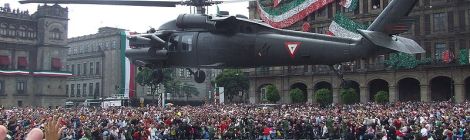
    UH-60 Black Hawk fotografiádo después del desfile militar del 15 de septiembre de 2009 en la ciudad de méxico

    Mexican UH-60 Black Hawk lands in the Zocalo, Mexico City’s main square, 15 September 2009. (Source: Wikipedia)

    If the ‘War on Drugs’ logic is followed, the event should mark the beginning of the end of drug-related violence in Mexico. But the lessons from the elimination of Pablo Escobar and the defeat of the Medellín (and later Cali) cartels in Colombia suggest otherwise. Whether El Chapo continues to run operations from jail, full leadership is assumed by the remaining commander, or the group breaks into smaller factions, the drug business is likely to survive.

    What could be reinforced is the trend to fragmentation already in place, which does not necessarily means less violence, at least in the short and medium term, and could give birth to a decentralized and networked drug business. In this sense, Mexico could well be now where Colombia was 15-20 years ago.

    Colombia’s success narrative

    Despite their different insertion into the global political economy of drugs, both countries are remarkable examples of militarized approaches to the drug war promoted by the US in Latin America (and beyond). The focus is almost entirely on the supply side: criminalization, eradication and aggressive enforcement with the aim to put a halt to the global supply of illegal drugs. The burden is mostly assumed by countries of production and transit that are evaluated on an annual basis against compliance with those prescriptions.

    The terms of the debate about this issue have until recently been limited and based on partial evidence in at least two aspects. Success is measured by the figures of crops eradication, detentions and seizures of drugs, not by net impact on the trade (drug availability and market prices). And the consequences in violence, violations of human rights, marginalization, corruption and institutional failure, have been exclusively attributed to illegal drugs and organized crime and not to the war on drugs itself. Fortunately, those terms are changing and a range of new voices, including at highest political levels, are joining a necessary and urgent discussion.

    Colombia has undertaken an amazing journey in this regard. Once criminalized in the international arena through its identification with the drug trade, in recent years it has been promoted as the brightest example of success in the drug war. The narrative of success is based on two main elements: the defeat of the big cartels in the 1990s and Plan Colombia in the 2000s.

    However, the story has critical under-reported angles. What followed the demise of Medellin and Cali was not elimination of the drug trade but the decentralization and fragmentation of the market into around 300 smaller, flatter and networked groups. The Revolutionary Armed Forces of Colombia (FARC) – and, to a lesser extent, National Liberation Army (ELN) insurgents and United Self-Defense Forces of Colombia (AUC) paramilitaries – furthered their involvement in the drug business and provided the armed ‘muscle’ in order to finance their nation-wide expansions.

    Moreover, the biggest cocaine profits shifted from Colombia to Mexico, contributing to the financial and armed power of its drug trafficking groups as the smaller rings and armed actors in Colombia lacked the power, contacts and/or will to control international logistics and operations, not to mention distribution in the US. The vacuum was filled by the Mexican cartels that established a direct buying presence in Colombia (and later Peru), logistic bases in the Caribbean and Central America for transportation, and distribution networks in the US market.

    Plan Colombia

    The largest counter-drugs programme ever launched, Plan Colombia was funded by the US with more than $7 billion to conduct massive aerial spraying of illicit crops and provide equipment and training to the Colombian armed forces.

    The focus of Plan Colombia was counter-insurgency against the FARC, particularly after the US Congress unblocked in 2002 the use of counter-drug funds for counter-terrorism. The group was weakened by increased state military power and mobility, and is currently involved in peace talks with the government. But it retains 8,000 combatants and has increasingly relied on urban militias. More importantly, despite the propaganda, the FARC was never the only (nor main) group involved in drug trafficking.

    The AUC paramilitaries had a mixed criminal-political character from their beginnings. Born out of an array of self-defence groups and narco-trafficking interests, these two ‘souls’ coexisted for years but the drug trade eventually prevailed. The demobilization of more than 31,000 AUC combatants in 2006 was immediately followed by the emergence of 30 new criminal groups that drew membership from former AUC members and mid-level commanders and sought (and eventually won) control of cultivation and trade in areas and routes formerly under paramilitary control.

    With an estimated initial membership of 4,000 members, these new criminal groups later expanded throughout the territory and are now present in 17 out of 32 departments. Those groups have never been a unified project but an array of decentralized criminal networks. Infighting and shifting alliances are the norm among them and with sectors of the FARC and the ELN also involved in drug trafficking. According to the Colombian police, they were responsible for half the total murders committed in 2010.

    Uncounted costs

    The Colombian success in the war on drugs has been partial at best and come at a high price. Taking the accumulated figures of the US International Narcotics Control Strategy Report, around 2 million hectares have been fumigated to eradicate crops since 2000. Massive herbicide spraying destroyed coca, but also livelihoods and protected natural areas, and impacted food security, health and the environment. The complex marginalization problems of rural communities that resort to coca as a livelihood strategy were addressed through securitization and criminalization (coca farmers have often been identified with the FARC). The result, for many, was forced displacement and further vulnerability. Cultivation expanded to new areas and departments, and fragmented as a result.

    The levels of violence have decreased slightly nowadays, but the homicide rate stayed at 32 for 100,000 in 2013, well above Mexico in its worst year of violence (2011, with 24 for 100,000). Also in 2013, between 140,000 and 219,000 persons (depending on the sources) were forcibly displaced in Colombia. Those figures are lower than in the past but nonetheless immense and add to a total of 6 million people forcibly displaced since 1985. The specialized agency Insight Crime interprets the current high incidence of this phenomenon in the Pacific regions and intra-urban settings as an indicator of displacement by criminal –not political- violence.

    Mexico’s War on Drugs

    Regardless of the real situation on the ground, those policies (and apparently, the high levels of popular support enjoyed by then Colombian president Alvaro Uribe) inspired President Felipe Calderón to launch an all-out war against drugs in Mexico in 2007. Around 100,000 soldiers and thousands of marines were deployed to fight the cartels in an effort to overcome the problems of corruption and ineffectiveness of the police forces, a policy later backed by the US under the Merida Initiative. The strategy got results, with relevant high and mid-level commanders of drug trafficking groups captured or killed, and seizures of illegal drugs soaring amidst the crackdown.
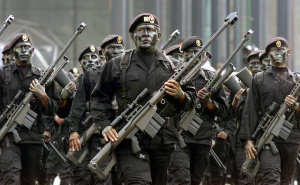
    Mexican Special Forces with Barrett M82 sniper rifles.

    Mexican Special Forces with Barrett M82 sniper rifles. (Source: Wikipedia)

    But the destabilization of the drug market triggered an escalation of violence. Violent competition for power erupted within the groups and coalitions as leaders were eliminated, coupled with fierce battles for territorial control among groups. The response against the state scaled up with the cartels creating militarized wings and using sophisticated military weaponry and tactics to fight the military and the police. The process of fragmentation and decentralization accelerated and the six big cartels of 2006 have split into around 15 today, coupled with a diversification of transnational criminal activities and soaring incidences of kidnapping and extortion. The Sinaloa Federation and the Zetas remain the most powerful cartels but have also suffered splits and setbacks.

    More than 60,000 people have died and 26,000 ‘disappeared’ in just six years. The formerly respected military have been accused of grave human rights violations including extrajudicial killings and forced disappearances. More than 4,000 complaints for human rights violations by military personnel were filed in 2006-2010 This was more than the total figure for the previous 15 years.

    Mexico has come under close scrutiny by the Inter-American Court on Human Rights and other international institutions. On June 12, the UN Special Rapporteur on extrajudicial, summary or arbitrary executions warned about unacceptable levels of violations to the right to life and impunity. Although recognizing some positive steps by the government of Enrique Peña Nieto, he warned that “a heavy-handed military approach is unlikely to improve the situation” and what is needed is “systematic, holistic and comprehensive strengthening of the rule of law”.

    As in Colombia, the Mexican victims of violence face further victimization as the government and sectors of the media dismiss them as criminals. Families and civil society groups claiming for justice may become targeted themselves. Unabated violence and institutional failure are the factors behind the emergence of armed self-defence groups, first in Michoacán and Guerrero and currently in around 10 states, as civilians take up arms to face lawlessness and fight the cartels (and sometimes corrupt authorities). This adds a new layer of armed actors whose evolution may not be easily put under control.

    Challenging the Colombian success narrative

    In Colombia, and later in Mexico, the militarized drug wars have proved ineffective in halting the drug trade but their impact is hugely negative on security and human rights, development and governance. While marginalization feeds the illegal economy, the securitized responses criminalize communities and add abuses and institutional failure to the problem of exclusion. The focus on the military also delays the hugely needed efforts to establish functioning justice systems and effective rule of law. Meanwhile, the drug business learns and adapts, moving from strict hierarchies to networked configurations.

    Despite those evidences, growing international debates about drug policies and a shifting internal public opinion, the US continues to promote a securitized approach to drugs that is most evident now in Central America. The use of Colombia as a symbol of success for Mexico and others, and as an actual ‘proxy’ to provide support in counter-narcotics and counter-insurgency to third parties including West Africa, should raise some basic questions about the premises, effectiveness and potential consequences of those policies.

    This month, the West African Commission on Drugs – an expert panel convened by Kofi Annan and chaired by former Nigerian president Olusegun Obasanjo – has called for decriminalization of drug use and to “avoid militarisation of drug policy and related counter-trafficking measures, of the kind that some Latin American countries have applied at great cost without reducing supply.”

    This potentially brings West Africa into line with the Organisation of American States, which in a report of May 2013 proposed “alternative legal and regulatory regimes” for tackling drugs, starting with cannabis”. Uruguay has already decriminalized cannabis and Colombia’s President Juan Manuel Santos, re-elected this month, has at times advocated drug policy reform. Enrique Peña Nieto has recently called on the US to start an open debate and a revision of ‘failed’ hemispheric policies whose outcome has been the rise of drug production and consumption.

    There are growing calls internationally to open a global debate over drug use and the policies needed to address it, including addressing demand in consumer countries. No less a figure than Sir William Patey, British Ambassador to Afghanistan from 2010 to 2012, has called for legalization of the heroin trade as the war on drugs in Afghanistan fails to address the complex problems at the roots of opium cultivation. Dozens of high profile British individuals and organisations, including the Prison Governors Association, have also called for decriminalization of drug use.

    The debate seems to be reaching a tipping point as the numbers and diversity of the sceptical and critical voices grow worldwide. Now it is the turn of policy makers to listen and act.

    Mabel González Bustelo is a journalist, researcher and international consultant specialized in international peace and security, with a focus on non-state actors in world politics, organized violence, conflict and peacebuilding. You can follow her at her blog The Making of War and Peace, her webpage, and Twitter (@MabelBustelo).

  • Sustainable Security

    In the Arctic, Indigenous peoples are increasingly seeing their own survival as threatened by environmental change. In this respect, the small Inuit community of Clyde River, Nunavut in Canada represents an interesting case.

    On November 30, 2016 the Supreme Court of Canada heard a highly anticipated legal appeal on behalf of residents of the small Inuit community of Clyde River, Nunavut. The town of 1,100 – supported by interventions from groups like Greenpeace and three organizations representing Inuit people across Canada – argues that the federal government, specifically the National Energy Board (NEB), failed to adequately consult them before granting a license for a Norwegian-based business consortium to conduct seismic testing in nearby coastal waters. The license was granted in 2014 even though consultations with nearby communities exposed significant local concern over the project’s potential impacts on marine mammals such as seals, whales, and other aquatic species, which local residents rely upon for food and cultural practices. The NEB’s initial decision was upheld by a Federal Court in August 2015, but in October of that year Clyde River was granted leave to appeal to the Supreme Court, which offers the last judicial option to stop the seismic testing and protect the marine ecosystem from possible irreparable harm.

    The case of Clyde River has attracted national and international media interest because it reflects a familiar and sympathetic narrative: a small Indigenous community, with support of environmental activities and high profile celebrities, fights for its survival against a corporation abetted by a neo-colonial state committed to extracting hydrocarbon resources for sale on the global market. But the struggle over seismic testing in a tiny community located higher than 70°N latitude represents the intersection of three powerful issues within Canadian and global environmental politics: Indigenous peoples identifying non-renewable resource extraction as a fundamental threat to their survival and well-being; the growing legal and constitutional recognition of the rights of Indigenous peoples to make decisions over resource extraction and other industrial projects within their traditional territories; and emerging alliances between Indigenous communities and non-Indigenous environmental groups to stop such projects. Together, these issues form the latest chapter in the interrelated struggles for human and environmental security, self-determination for Indigenous peoples, and steps towards decarbonizing the global economy.

    Indigenous Peoples’ Insecurity and Climate Change

    iglo-arctic

    Image (cropped) by Emmanuel Milou/Flickr.

    Indigenous peoples in Canada and elsewhere have, for decades, resisted various non-renewable resource extraction projects on the grounds that these often proceed without adequate consultation with local communities or the Indigenous governments on whose lands they occur. Local environmental impacts have worsened as these projects have grown in size, but greater public awareness of the dangers of human-caused climate change have added a new dimension to these struggles. In the Arctic – where climate change is occurring twice as fast as in more southerly regions, causing a range of negative consequences for humans and other animal populations – activities enabling hydrocarbon extraction that will directly contribute to climate change have been met with particular scepticism. In recent years, dozens of Northern organizations, including some representing Indigenous peoples, have signed a Joint Statement of Indigenous Solidarity for Arctic Protection calling for a moratorium on oil drilling in the Arctic. In 2011, the Inuit Circumpolar Council, which represents Inuit in Canada, the United States, Greenland, and Russia, released the Circumpolar Inuit Declaration on Resource Development Principles. The declaration reserves the right of Inuit to benefit from resource development on their traditional territories, but stipulates that “Inuit and others – through their institutions and international instruments – have a shared responsibility to evaluate the risks and benefits of their actions through the prism of global environmental security” (s. 5.1).

    In fact, Inuit have increasingly framed their arguments around climate change and hydrocarbon extraction in explicitly security terms. Survey data indicate that large majorities of Northern Canadians consider the environment to be the most important issue for Arctic security, followed closely by maintenance of Indigenous cultures. For people who rely on traditional country foods for sustenance, and whose culture and identity are premised on reciprocal connections between humans, non-human animals, and the land itself, climate change and local environmental damage are not merely worrisome issues. They are existential threats to the survival of Inuit as Inuit: an Indigenous people defined by their unique environment and the methods of survival and subsistence they have developed over thousands of years of continuous habitation in their Arctic homeland.

    Inuit leaders have articulated the clear and present threats they currently face as a result of environmental changes. Sheila Watt-Cloutier, nominated for the Nobel Peace Prize for her work raising awareness of Arctic climate change and pursuing legal remedies on behalf of Inuit under international law, has stated in no uncertain terms that “climate change is threatening the lives, health, culture and livelihoods of the Inuit.” Terry Audla, who until 2015 was president of Inuit Tapiriit Kanatami (ITK), the national organization representing all Inuit in Canada, has written that “climate change at a rate and of an intensity that appears unprecedented, and well outside Inuit cultural memory, creates insecurities of an entirely new nature, generating concerns about the sustainability of large aspects of our inherited and acquired patterns of life … Our very sense of who and what we are as Inuit.” Mary Simon, another former president of ITK, echoes the threat of Arctic climate change: “The urgency surrounding mitigating the impact of climate change grows with the almost daily news of unprecedented developments in our Arctic environment … Arctic ice is melting three times faster than models had earlier predicted – and the earlier predictions were alarming.  The Arctic is melting, with dramatic consequences for all of us.” In articles, books, speeches, interviews, policy statements, and testimonies before Parliament, the message from Inuit leaders in Canada is clear: climate change is the gravest threat confronting Inuit and all peoples living in the Arctic and beyond, and proposed industrial activities that contribute to climate change should be viewed with the highest concern.

    New Laws and New Allies in Indigenous Environmental Struggles

    These examples of Inuit security claims are recent, but as a phenomenon they are not new: Indigenous peoples have long argued that their wellbeing was undermined by the actions of settler-colonial governments which served to perpetuated their poverty and disenfranchisement. For decades, little changed as politicians and the courts consistently declined to respect or enforce the rights of Indigenous peoples; despite Aboriginal rights being enshrined in Section 35 of the Canada’s Constitution Act 1982, environmental damage affecting nearby communities was considered a cost of doing business and a routine part of Canada’s political economy. In recent years, however, several developments in law and politics have altered the landscape, such that the rights of Indigenous peoples to be consulted about, and possibly consent to, industrial activities on their territories have been established, if not yet fully implemented. Most notable among these is the ruling in the 2014 Tsilhqot’in case, in which the Supreme Court first recognized Aboriginal title over their traditional territories, and the federal government’s 2016 decision to implement the United Nations Declaration on the Rights of Indigenous Peoples (UNDRIP), which codifies international standards for the individual and collective rights of Indigenous peoples, including the rights to land (though the Liberal government’s position on UNDRIP has wavered, with different Cabinet members expressing different views of how, or even whether, UNDRIP can be incorporated into Canadian law). As the case of Clyde River demonstrates, these developments are in the process of being interpreted by policymakers and tested before the courts to establish the new distribution of authority and governance over land use on Indigenous territories.

    The judicial empowerment of Indigenous legal claims in Canada and elsewhere has led to a recognition by many non-Indigenous environmental groups that cooperation and engagement with Indigenous peoples offers the best route to stop extractive projects which they believe will harm local environments, contribute to global climate change, or both. These partnerships have been described as “the native rights-based strategic framework”, an advocacy and campaigning strategy that links the legal and constitutional rights of Indigenous peoples with their normative claims to sovereignty and justice and the fundraising and operational resources of non-Indigenous advocacy groups. Major environmental NGOs have worked to repair relationships with Indigenous peoples that have been harmed by environmentalists’ campaigns targeting certain Indigenous cultural practices, such as Greenpeace indicating its desire to “make amends” for its past opposition to the Inuit seal hunt. Long opponents over their differing views on environmental stewardship and land use, NGOs and Indigenous peoples have increasingly made common cause through their shared view that, with respect to hydrocarbon extraction in particular, “these fights were all life and death situations, not just for local communities, but for the biosphere.”

    Conclusion

    The case of Clyde River is one example of how the threats posed by climate change, now and in the future, are front and centre in the political and legal engagements of Indigenous peoples and environmental organizations. It reflects the fact that many communities are increasingly seeing their own survival as threatened by environmental change, and thus articulate conceptions of what security means to them which highlights the human-caused environmental dangers they face. Such local and Indigenous security claims – statements of what should be protected against certain, identifiable threats – are now part of a global political context where the meaning of security is deeply contested. Longstanding security practices and discourses that privilege states and their national interests are today in direct contradiction with a complex series of security claims made by groups that have been historically and remain adversely affected by the state and its actions. Moreover, in the context of a rapidly changing global environment due to human-caused climate change, struggles to define what security means have deep implications for the future. Environmentalists and others concerned for the prospects of human survival and wellbeing on a warming planet are increasingly prepared to use all available tools at their disposal to secure a stable and sustainable future for themselves and their children. As reflected in recent and ongoing cases of Indigenous peoples and their environmentalist allies resisting the expansion of hydrocarbon extraction and infrastructure – such as the Keystone XL and Dakota Access crude oil pipelines – that struggle continues. In the case of the Arctic, it is currently focused on the small hamlet of Clyde River, and the legal battle over who gets to make decisions over how much environmental damage will be borne to facilitate resource extraction, and what powers Indigenous peoples possess under the law to defend themselves and define the conditions necessary for their own survival.

    Wilfrid Greaves, PhD, is Lecturer at the University of Toronto. His doctoral research examined how in/security and environmental change have been conceptualized by states and Indigenous peoples in the circumpolar Arctic region. An Ontario Graduate Scholar, SSHRC Doctoral Scholar and DFAIT Graduate Student Fellow, he is author of multiple peer-reviewed articles, book chapters, and working papers. He has also taught undergraduate courses in International Relations, global security, peace and conflict studies, and Canadian foreign policy at Ryerson University and the University of Toronto. A graduate of the University of Calgary and Bishop’s University, his research interests include security theory, human and environmental security, natural resource extraction and climate change, Arctic and Indigenous politics, Canadian foreign policy, and complex peacebuilding operations.

  • Sustainable Security

    As established by UN General Assembly resolution 64/35 of 2009, the 29th of August marked the International Day Against Nuclear Tests. This date serves to enhance public awareness about the harmful effects of nuclear weapon test explosions (of which at least 2,046 were conducted between 1945 and 1996: an average of one every nine days) on people and the environment, and reminds the international community about the importance of banning nuclear tests through the Comprehensive Test Ban Treaty (CTBT).

    CTBT: Verification outpaces Ratification

    Opened for signature in September 1996, the CTBT has yet to enter into force, pending the final eight ratifications by all of the Annex II states. These are the 44 states which participated in the negotiations on the CTBT and possessed nuclear power or research reactors at the time. Although five – China, Egypt, Iran, Israel, the US – of these final eight states have signed the Treaty, three have not: North Korea (DPRK), India and Pakistan.

    While some argue that CTBT ratification by the US would be a “game changer” and trigger a cascade of ratifications, it may rest on President Obama’s successor to invest domestic political capital and concerted engagement to shepherd through a successful ratification. With recent studies such as the 2012 National Research Council’s updated assessment of technical issues related to the CTBT serving to inform and allay previously voiced national security and verification concerns, strategic efforts to educate Congress, media and the US public could assist in highlighting the benefits of ratifying the CTBT.

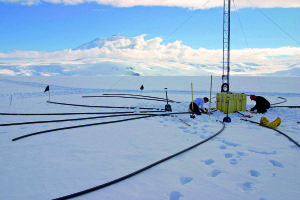
    Performing maintenance at CTBTO infrasound station IS55, Windless Bight, Antarctica

    Performing maintenance at CTBTO infrasound station IS55, Windless Bight, Antarctica. (Source: CBTBO via Wikipedia)

    Pending those eight ratifications for the CTBT entry into force, the Preparatory Commission for the CTBT Organization (CTBTO) is building up an extensive and sophisticated global International Monitoring System (IMS) which will serve to monitor and verify compliance with the Treaty. With over 85% of the IMS’ facilities in operation, the CTBT is already providing ‘a firm barrier against a qualitative and quantitative development of nuclear weapons for both nuclear weapon-capable states and then would-be possessors‘.

    Proof of the partially complete verification regime’s detection capability has been showcased by the three nuclear tests conducted since 2006 by the DPRK, the only remaining state defying the established international anti-testing norm. Since the international community unanimously condemned the 1998 round of tests by India and Pakistan, defying the non-testing norm and global de facto moratorium established by the CTBT, the two states in South Asia have implemented and observed unilateral moratoria on nuclear testing.

    Concerns about a DPRK fourth test

    The urgency of reaffirming the importance of the CTBT and re-energizing efforts to bring the Treaty into force, should be ever present with concerns about a possible fourth nuclear test as threatened by the DPRK earlier this year. The DPRK is the only state that has disregarded the testing moratorium and non-testing norm since 1998 with its three successively larger nuclear tests (in 2006, 2009 and 2013). South Korean Foreign Minister Yun Byung-se warned earlier this year that a fourth test by North Korean would be a “game changer” for the region.

    Even with the DPRK remaining a wildcard on prospects for ratification, not least given the shaky political conditions for regional resumption of dialogue on the nuclear issue while Kim Jong Un consolidates his regime, the other seven Annex II states can lead in responsibly committing to shore up their legal commitment to the non-testing norm.

    Improving regime atmospherics for the 2015 NPT Review Conference

    The CTBT and the NPT are interlinked and thus progress on the CTBT would serve to garner positive atmospherics for the NPT review process, in 2015 and beyond. The 1995 NPT Review Conference (RevCon) indefinite extension of the NPT and the 2000 NPT RevCon’s ‘13 steps’ (steps 1 and 2) called on states for action and commitment to a CTBT. More recently, five of the 64 action points in the 2010 NPT RevCon’s Action Plan stress bringing the Treaty into force. Given the growing discontent within the NPT review process due to the perceived lack of progress on disarmament commitments, a renewed and reinvigorated commitment to the CTBT by NPT states parties could ameliorate the atmosphere and help to build confidence and momentum.

    Two initiatives within the nuclear non-proliferation and disarmament regime—the Helsinki Conference for discussing the establishment of a Weapons of Mass Destruction-Free Zone (WMDFZ) in the Middle East, and the humanitarian consequences initiative concerning the impact of nuclear weapons—could provide an impetus for renewed focus to the importance of legally committing to the CTBT. Both of these initiatives, which continue to enjoy a broad divergence of views, could serve to channel attention on ratification of the CTBT as a key trust- and confidence-building measure and a foundational first-step for progress on the aims of the two initiatives.

    Given the active civil society engagement of the humanitarian initiative, some of these agents could focus efforts on promoting the entry into force of the CTBT, channelling campaigns to lobby and engage their elected parliamentarians on the importance of the CTBT.

    If any of the three remaining Annex II states from the Middle East region – Egypt, Iran and Israel – were to legally commit to refrain from nuclear testing, it would be a hugely significant political and confidence-building gesture for the high-profile efforts to convene a conference which was mandated by the 2010 NPT Review Conference to take place in 2012. Given the ongoing P5+1 talks with Iran, such a step by Iran would further serve to reassure the international community about the intent and peaceful nature of its nuclear programme.

    Multilateral initiatives

    UN High Representative for Disarmament Affairs Angela Kane encouraged states to seize the high-profile opportunity to sign or deposit their instruments of ratification at an event held on the margins of the UN General Assembly this month. As an interim step, short of signing or ratifying the CTBT, other proposals to further consolidate the anti-testing norm and moratorium include a suggested UN Security Council resolution condemning nuclear tests as a threat to international peace and security, and regional pledges committing member states to refrain from nuclear tests or even sub-critical experiments not prohibited by the CTBT.

    Notably, the Community of Latin American and Caribbean States (CELAC) endorsed such a regional commitment in its declaration on nuclear disarmament at a meeting in Buenos Aires in August 2013. Such effort could be replicated by other regions or via multilateral negotiating groupings operating in the nuclear non-proliferation regime. Regional and other groupings could pledge to highlight this issue at every nuclear-relevant forum and opportunity in efforts to cross-germinate this message.

    Annex II states particularly, as well as other states and groupings, should welcome, engage and promote the efforts of the CTBTO’s Group of Eminent Persons (GEM), comprised of high-profile experts and former officials aiming to promote the CTBT’s entry into force. Through the support of such initiatives, awareness can be raised. Further to raising awareness and educating civil society, efforts such as the CTBTO’s public training courses and NGOs’ public information and awareness efforts should be supported, promoted and even replicated regionally as force multipliers.

    J. Robert Oppenheimer recounted of those witnessing the Manhattan Project’s first atom bomb test (the 1945 Trinity test), “we knew the world would not be the same; a few people laughed; a few people cried; most people were silent.” Indeed, the world has not been the same and the proverbial nuclear genie cannot be put back in the bottle. But states can make the legal commitment to ban all nuclear tests, anywhere. 18 years after the CTBT opened for signatures, responsible states should commit efforts to facilitate the ratification of this Treaty.


    Jenny Nielsen is a Postdoctoral Research Fellow in the School of Political Science and International Studies at the University of Queensland. Previously, she was a Research Analyst with the Non-proliferation and Disarmament Programme at the International Institute for Strategic Studies (IISS), a Programme Manager for the Defence & Security Programme at Wilton Park, and a Research Assistant for the Mountbatten Centre for International Studies (MCIS) at the University of Southampton, where she co-edited the 2004-2012 editions of the NPT Briefing Book.

  • Sustainable Security

    Author’s note: For further analysis on this topic, see the following publications: Kai Michael Kenkel and Cristina Stefan, “Brazil and the ‘responsibility while protecting’ initiative: norms and the timing of diplomatic support”. Global Governance, Vol 22, No. 1 (2016); pp. 41-78; and Kai Michael Kenkel and Felippe De Rosa). “Localization and Subsidiarity in Brazil’s Engagement with the Responsibility to Protect.” Global Responsibility to Protect. Vol. 7, No. 3/4 (2015); pp. 325-349.

    Since Libya, the Responsibility to Protect (R2P) has been a hotly debated concept. Previously a nation exhibiting strict non-interventionist principles, Brazil has recently contributed to the R2P debate with its Responsibility while Protecting initiative.

    Introduction

    Inspired by what it saw as the excesses of NATO’s intervention in Libya and their potentially disastrous effects on the credibility of the “Responsibility to Protect” (R2P) norm, in November 2011 Brazil launched the corollary concept of a “Responsibility while Protecting” (RwP) at the United Nations. While essentially reiterating its endorsement of key principles of R2P, Brazil admonished R2P implementing states to avoid discrediting the norm by exercising restraint while operationalizing R2P. Brazil, itself at that time a rising power seeking more global influence—and particularly participation in shaping the rules of the international system—saw the divisions created by the Libyan intervention as an opportunity to act as a norm entrepreneur. Meant to bridge the gap between R2P supporters in the North and sceptics in the South, RwP was initially criticized by both. Over time, however, certain R2P supporters began to see the concept’s value as a means of reviving R2P after Libya and as a means of attaining crucial Global South buy-in. By this time, however, Brazil—lacking experience in the role of norm entrepreneur—had backed away from its initiative. Though the specific initiative has not been taken forward, RwP has had a clear effect in structuring the contours of subsequent R2P debates at the UN.

    Rising Brazil: between beliefs and expectations     

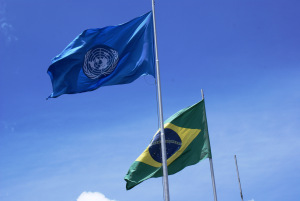
    UN brazil

    Image by Ben Tavener via Flickr.

    Under the Lula da Silva administration, Brazil began to actively seek a larger profile in international politics, ostensibly with a view to a permanent, veto-endowed seat on an eventually reformed UN Security Council. This presented the country with a conundrum: in UN praxis, particularly among established powers, there is a clear connection between global relevance, military capacity, and the willingness to use force remedially, beyond self-interest, to help those in need—as foreseen by R2P as implemented by the UN. Brazil’s historical normative commitments, however, are rooted in a combination of a highly traditional regional security culture—which equates sovereignty exclusively with non-intervention—and a healthy postcolonial scepticism of multilateral initiatives born in the North. Arguably, the most strongly held of these commitments is a profound aversion to the use of force. Faced with a choice between staying true to its original traditions and fulfilling the expectations placed on global players—as exemplified for example in R2P’s acceptance of the use of force in defence of human life—Brazil launched RwP as an attempt to reconcile these factors, remain active on the international stage, and render R2P both more relevant and less prone to misuse.

    The Libya effect

    NATO’s 2011 Libyan intervention created a trust deficit between its leaders and the BRICS countries, who had been excluded as non-permanent UNSC members from the elaboration process for its enabling Resolution 1973. These states emerged from the experience highly doubtful of Western motives, and they took as a lesson from the Libya intervention that the use of force could have an opposite effect from that intended, effectively distancing a crisis situation from a lasting solution.

    Beyond the immediate concerns related to the intervention’s mandate, the debate over the Libyan case took on contours that resonated with the larger tension between the established powers and emerging players such as the other BRICS countries and Brazil. Substantial divergences remain over R2P’s implementation and particularly its third pillar, which can be used to authorize military force. R2P’s shift in emphasis between understandings of sovereignty has become symbolic of some emerging powers’ resistance to the normative dominance of established powers, making the principle a key rallying point in the ideational skirmishes resulting from a changing global distribution of power. This expands the debate over the RwP initiative beyond its immediate link to the Libyan case and links it firmly to broader issues of global governance. The R2P debate has become a not only a key element of some emerging powers’ challenge to the established distribution of power, but a key locus for increased targeted consultation and cooperation in mounting that challenge. In addition, the intervention debates have become an important stage for emerging powers constructively to give normative content to their challenge to the established order, allowing them to move beyond what some have termed an obstructionist stance.

    The “Responsibility while Protecting” concept

    The RwP concept was launched on 9 November 2011 and floated explicitly as a touchstone for further debate within the United Nations. This targeting would become important later on, as it meant that in characterizing R2P and mobilizing its history, the note limited itself to the concept’s course within the United Nations system, referring for example to its inclusion in paragraphs 138-139 of the World Summit Outcome Document but not to the principle’s original formulation by the International Commission on Intervention and State Sovereignty (ICISS). As such the RwP note was intended less as a normative innovation than as an attempt to shape the norm in terms acceptable to the Global South.

    The primary contribution of the note was its establishment of a set of guidelines to orient the Security Council in contemplating an R2P-based intervention. These guidelines focused on two main topics: limiting the use of force, and the strict chronological sequencing of R2P’s three pillars. The RwP note posits that force should only be used as a last resort (an item already included in the 2011 ICISS Report that launched R2P), and subject to a limited and well-defined mandate implemented under conditions of complete accountability in the field. Brazilian diplomats attempted to appropriate the “do no harm” principle, known from the Hippocratic oath, even arguing that one death from an intervention is too many. These reservations were read correctly by many Western states as a reaction to the perceived excesses of NATO’s foray into Libya, and an attempt to put strict limits on the level and type of force authorizeable under R2P.

    The document’s real element of innovation, and the eventual centre of the debate it created, is its call for the strict political and chronological sequencing of R2P’s three pillars. This was viewed by Western states as too limiting, both in the field, and of the flexible diplomatic responses required of the Council in dealing with a crisis. The threat of force, it was argued, is often subjacent in making diplomatic initiatives work, and taking this option off the table could tie the international community’s hands. Indeed, the note’s Brazilian authors later replaced strict chronological sequencing with the toned-down notion of “prudential sequencing”.

    The reception of RwP

    Initially received coolly by both Western and Southern states, the RwP note nonetheless played a crucial part in both moving R2P forward normatively and in stimulating the inclusion of Southern states into the intervention debate. Despite initial strong criticism, the initiative did shape how established and rising powers interacted in the ensuing UN debates on R2P and intervention more broadly. There are four main criticisms:

    1. that the concept bears little value added, merely repeating provisions already present in the 2001 ICISS Report;
    2. that the initiative was a Trojan horse, designed to limit Western powers’ autonomy and to prevent the further institutionalization of R2P;
    3. specific elements regarding feasibility of RwP’s concrete suggestions, such as sequencing, proactive monitoring, and further limitations on the use of force;
    4. the contention that RwP’s confuses jus ad bellum (R2P’s main focus) and jus in bello (rules for conduct once war has broken out);

    Despite these criticisms and Brazil’s abandonment of its role as a norm entrepreneur, the RwP note has continued to structure global diplomatic debates on intervention, with a focus on reigning in Western action through stricter guidelines in the wake of R2P’s crisis of legitimacy after Libya. It has done so in three main areas:  advancing the importance of some form of relational sequencing of R2P’s pillars; increased restrictions on the use of force; and more proactive monitoring by the Security Council of the following of guidelines by ongoing missions.

    Brazil’s role as a norm entrepreneur on intervention issues remains tied to the RwP concept. The initiative was withdrawn after it did not elicit the desired level of support, and by the time its potential had been realized, internal changes in Brazil and its Foreign Ministry had made continued advocacy politically unviable. Despite attempts to revive a strong role for Brazil in the R2P conversation through efforts in the General Assembly in 2015-2016, crippling fiscal austerity and the paralyzing political crisis which began in April 2016 have temporarily but severely limited Brazil’s ability to proactively advance normative initiatives. Nevertheless, the desire remains to fulfill the country’s natural function as a bridge-builder between North and South on intervention issues, and Brazil is sure not to remain absent for long from the ranks of those crafting R2P’s future contours.

    Kai Michael Kenkel is Associate Professor in the Institute of International Relations at the Pontifical Catholic University of Rio de Janeiro and Associate Researcher at the German Institute of Global and Area Studies. He has published extensively on R2P, with a focus on Brazilian policy, including three edited volumes and articles in Global Governance, Global Responsibility to Protect and  International Peacekeeping.

  • Sustainable Security

    Following President Rouhani’s success in last August’s election, relations between the United States and Tehran have improved substantially, partly because of the election result but also because the Obama administration has a more positive view of Iran. There is no guarantee that the US election in 2016 will result in an administration sympathetic to further progress. This element of uncertainty will be factored into the policy-making process of the Rouhani administration. Even so, prospects for a negotiated settlement to the nuclear issue are the best they have been for a decade and it follows that if an agreement is concluded, this is likely to have a pronounced effect on Iranian foreign policy as it finds itself in a more positive international environment.

    The Ahmadinejad Legacy

    President Luiz Inácio Lula da Silva is greeted by the president of Iran, Mahmoud Ahmadinejad. Source: Wikipedia

    President Luiz Inácio Lula da Silva is greeted by the President of Iran, Mahmoud Ahmadinejad. Source: Wikipedia

    The flamboyance and the sometimes inflammatory rhetoric of the Ahmadinejad administration (2005-13) disguised a pragmatic foreign policy that combined a degree of confrontation on the nuclear issue with the enhancing of contacts with many countries across the global south, including left-leaning states in Latin America and numerous states in sub-Saharan Africa. It also sought to maintain reasonable links with Russia and China while limiting links with the West. While acceptable to much of the “Iranian street”, it was at odds with the liking of elements of western culture by young Iranians and the nuclear issue was deeply problematic in terms of the impact of sanctions.

    While much is made of their role in bringing Rouhani to power and then to the negotiating table, the reality is rather different. Sanctions were effective, in part, because of the parallel impact of internal economic mismanagement by the Ahmadinejad government. Thus, if the Rouhani government improves the management of the economy then even the modest sanctions relief already promised will combine to enable the government to benefit through early respite from recent economic woes.

    One other key factor is that Iran’s standing in the region, including the Arab world, has been damaged by its support for the Assad regime in Syria. Under Ahmadinejad, Iran saw the Assad regime as a strong and necessary ally, especially in combination with the Maliki government in Iraq. But as the war in Syria has worsened, and as the violence in Iraq degenerates towards a civil war, many states blame Iran. Regional powers such as Saudi Arabia and Egypt hold Iran partly responsible for the violent suppression of the Sunni majority in Syria, and states beyond the region believe Iran bears some responsibility not just for that but also for the possible spread of the war to Lebanon.

    Conservative Strategy

    Hassan Rouhani speaks in Mashhad during his presidential campaign

    Hassan Rouhani speaks in Mashhad during his presidential campaign Source: Wikimedia

    Rouhani’s victory was singularly impressive in that he gained an absolute majority on the first ballot against four relatively conservative opponents on a 72% poll turnout. While this has given him considerable authority, most power still lies with the Supreme Leader. However, Ayatollah Khamenei has to be aware of the popularity of Rouhani, a matter made more difficult for him by Rouhani’s preference for avoiding a personality cult. While the election gave Rouhani a clear mandate for negotiating with the US, conservative elements are regrouping.

    For these elements a particular concern is the election of the Assembly of Experts – the parliamentary upper house, which selects the Supreme Leader – that are due in September this year. Their fear is of a buoyant Rouhani government that will damage conservative prospects still further following last year’s reversals. It appears to be for this reason that they have sought to persuade the Supreme Leader to expand the negotiating team at the Syria peace talks in Geneva to include more hard-line elements and to have a Majlis (parliamentary) oversight body for the whole process. This would be dominated by conservatives. Rouhani’s Deputy Foreign Minister, Seyed Abbas Araqchi, has stated officially that the negotiating group remains accountable to the Supreme National Security Council, not a Majlis body, but there are reports of more members recently being appointed to the group.

    What this means is that the Rouhani government will have a strong interest in developing policies that are attractive to the domestic constituency as soon as possible. The emphasis will undoubtedly be on the nuclear issue and getting further sanctions relief which, in combination with better economic management, could ensure palpable improvements in the economy and consequent political popularity. This, though, is not enough and liberalising economic reforms such as removal of subsidies may even exacerbate short-term economic difficulties. It follows that the Rouhani government will be looking closely at ways of increasing Iran’s standing in the region and beyond.

    Developing Foreign Policy: Iran in the world

    A key aspect of the Iranian outlook is a belief in Persia’s very proud history, one that extends over thousands rather than hundreds of years, and the consequent belief that Iran has not been realising its potential as one of the world’s potential great powers. This view of historic greatness transcends religion, even if Iran sees itself also as the centre of the Shi’a Muslim world. Iran has a population of 80 million, a little less than Egypt at 85 million and Turkey at 81 million. Egypt has formidable internal problems and a weak non-oil-based economy; Turkey is far stronger in terms of economy, even if it, too, lacks significant fossil fuel reserves. Since its 2013 counter-revolution, Egypt is also increasingly reliant on Saudi Arabia, Iran’s greatest rival for influence in the Gulf and wider Middle East.

    Iran has all the problems of a near-moribund economy but has remarkable potential for development given that it has close to 10% of world oil reserves and 15% of gas reserves. The latter is largely shared with Qatar because of the huge reserves under the Gulf. There have so far been few problems of delineating boundaries – indeed relations with Qatar remain quite good despite major differences on other issues such as Syria, where Qatar, with Turkey, strongly backs the anti-Assad rebellion.

    Asia or Europe?

    Iran Foreign Minister Javad Zarif walks with EU High Representative Catherine Ashton at the EU +3 and Iran talks, November 2013.

    Iran Foreign Minister Javad Zarif walks with EU High Representative Catherine Ashton at the EU +3 and Iran talks, November 2013. Source: EEAS (Flickr)

    The issue for Iran relates largely to where it seeks to develop its economic and political alliances. To the immediate east the borders with Afghanistan and Pakistan are hugely significant, especially in the case of Afghanistan where opium and refined heroin smuggling across the border has cost the lives of hundreds of Iranian border guards. Iran has close links with the north-west parts of Afghanistan and has no liking for the Taliban. It is suspicious of Pakistan because of radical Sunni Islamist elements within the state, its long-term support for the Taliban, close security ties to Saudi Arabia and the precarious security predicament of the Pakistani Shi’a community, but still seeks to improve relations, not least through exporting gas. The originally planned Iran-Pakistan-India pipeline is going ahead as far as Pakistan. Iran will further increase its links with Afghanistan, where it has greatly increased aid in recent years, especially to projects in the north-west of the country.

    India and China are both significant importers of Iranian oil and gas and China has been particularly useful to Iran in two respects. One has been long-term investment in the development of new oil and gas fields, and it remains much appreciated that China persisted with this when relations with the US were at their lowest. The other has been China’s supply of carefully selected weapons, especially shore-based anti-ship cruise missiles. Iran will maintain close links with China, but will not eschew improved relations with India, seeing it as a useful counter-balance to Pakistan.

    The links with southern and eastern Asia will remain highly significant in terms of Iranian foreign policy but it is already clear that a priority will be to improve relations with neighbouring Turkey, already demonstrated by the meeting between Foreign Ministers Mohammad Javad Zarif and Ahmet Davutoglu in Tehran last November. In spite of considerable differences over Syria, the countries have good relations in other respects, and Turkey’s past role in trying to defuse the nuclear issue remains appreciated. Trade relations between Iran and Turkey have expanded greatly in the past decade.

    It is highly likely that Iran will seek a much closer relationship with Turkey, seeing the two countries together comprising an axis of influence linking Europe and Asia. The Turkish attitude to this is likely to be very positive, seeing it as a useful factor in increasing Turkey’s significance for the European Union. This does mean that the Rouhani government has an added interest in seeing a scaling down of the Syrian War. It is probable that a Turkey/Iran connection is more important to Tehran than the much vaunted Lebanon/Syria/Iraq/Iran “Shi’a crescent”.

    The rivalry with Saudi Arabia remains pervasive and is a crucial proxy element in the Syrian conflict but Rouhani’s personal links with Saudi diplomats in the past, combined with Iran’s need to see the war scaled down, means that even here there may be potential for progress. Further improving relations with the US will be a priority but the Rouhani government recognises the risk of sudden changes in US leadership in less than three years time. This means that European links remain useful but Iran does not look to the west to ensure its standing in the world. Turkey, China and India are more significant and this will remain as long as Rouhani is in power. Of these, Turkey is probably the most important.

    Implications

    Rouhani has barely a year all told to build on the considerable support he gathered last year, and this is against a background of entrenched conservative and theocratic elements that will work hard to limit his capacity. While he will give ground on nuclear issues and may work towards a Syrian settlement, if Iran is allowed to participate in Geneva ll, there is a risk that this can be presented by his opponents as a sign of weakness. Economic progress might blunt this but an additional way forward is to engage in a much more active foreign policy. One consequence of such a shift to the north and east is that Iran may not see Europe as important to its interests to the extent that Europe sees Iran. This is a reflection of more general global changes, bringing its own challenges.

    Paul Rogers is Global Security Consultant to Oxford Research Group, for which he writes monthly security briefings.  He is Professor of Peace Studies at the University of Bradford and author of numerous books including ‘Beyond Terror’. Paul writes a weekly column for openDemocracy  and tweets regularly at @ProfPRogers.

    Featured image: President Rouhani delivers remarks at the Hilton Hotel in New York City, September 2013. Source: Asia Society (Flickr)

  • Sustainable Security

    Islamic State (IS) appear to attach considerable importance to dreams and have started publishing dream accounts of martyred jihadists. Do IS see this as a way of ‘calling’ potential lone wolf jihadists to action?

    Over the last decade, several studies have shown that militant Islamists make extensive use of reported night dreams to inspire, announce, and validate violent jihad. Bin Laden himself brought up dreams in one of the first videos released after 9/11. Mullah Omar was understood by his followers to have founded the Taliban, and run his campaign, inspired and even guided by his dreams. Dream accounts can be found of numerous other well-known militants, including Richard Reid, the failed shoe bomber, the two core 9/11 planners, Ramzi bin al-Shibh and Khalid Sheikh Muhammad, and the ‘20th’ suicide bomber, Zacarious Moussaoui.

    This tradition has continued with Islamic State (IS) members and sympathisers who appear to attach considerable importance to dreams. This article updates the discussion and analysis of the role of dreams for IS jihadists, and, through looking at some recent case studies, asks whether IS is publishing martyred jihadist dreams as a way of ‘calling’ potential lone wolf jihadists to action.

    Dreaming in Islam

    mosque-night

    Image by four12 via Flickr

    To understand the jihadi appreciation for dreams, it is important to first understand that dreams are both historically and contemporaneously important in Islam. Indeed, today, Arabic TV programs are replete with dream interpretation programs and the internet is awash with Islamic dream interpretation websites.

    The dream tradition is similar across all the main branches of Islam: Sunni, Shia, Salafi and Sufi, as well as amongst the minority Alevi and Ahmadiyya sects. In the Sufi mystical traditions, dreaming is highly regarded. While Sufis have traditionally paid the most attention to dreams, the more literalist Salafis appear to have become more interested in them over time.

    The Islamic tradition distinguishes between three types of dreams: the true dream (al-ru’ya), the false dream, which may come from the devil (shatan), and the meaningless everyday dream (hulm) which could be caused by what has been eaten by the dreamer and comes from the nafs (ego, or lower self).  The interpretive tradition regarding the “true dream” (al-ru’ya) is a fundamental feature of Islamic theology. The true dream tradition is reported more extensively in the hadith. 

    Islamic dream interpretation differs from Western attitudes to dreams, which, being largely shaped by a scientific materialist outlook of the world, generally see dreams as bearing little or no relevance for people. But in Islam, dreams are understood as, on occasion, offering a portal to the divine will, and are seen as the only appropriate form of future divination. Dreams have a special authority as they are believed to communicate truth from the supernatural world (dar al-haq).  Lamoreux summarises the importance of dreaming in Islamic societies:

    Dream interpretation offered Muslims a royal road that led not inward but outward, providing insight not into the dreamer’s psyche but into the hidden affairs of the world. In short, the aim of dream interpretation was not diagnosis, but divination.

    Based on his anthropological research in Egypt, Gilsenan offers further insights:

    In dreams began responsibilities. Judgements were made. Commands issues. Justifications provided. Hope renewed. Conduct was commented on by holy figures, by the Prophet himself, by the founding Sheik who had died some years before but who appeared with his son and successor.

    Dreams were public goods, circulated in conversational exchanges, valorizing the person, authoring and authorizing experience, at once unique and collective visual epiphanies. Dreams thus constituted a field of force and framed interchange between the living and the only apparently dead.

    There is extensive literature on the art and science of dream interpretation in Islam going back over a thousand years, and scholars like Sirriyeh are emphatic about the importance of the Prophet Mohammed’s God-guided interpretation of dreams. Mohammed’s and his companions’ dreams played a significant role before, during and after the Qur’anic revelation. In the six months before the  revelation began, his wife Aisha said his dreams came true like the ocean’s waves. The Prophet’s famous night journey from Mecca to Jerusalem (Laylat ul-isra wal miraj), in which Muhammed ascended to heaven and was initiated into the mysteries of the cosmos, is understood by many Muslims, though not all, as being in a dream vision (al-ruya can refer to vision and or dream). Mohammed would start the day asking about his companions’ dreams as a source of possible illumination and spiritual guidance. The Prophet’s companion, Abd Allah b. Zayd, is understood to have dreamt the Islamic call to prayer. There are three dream reports in the Qur’an, two reported as received by the Prophet Mohammed. One of these directly relates to the decisive Battle of Badr  (624 CE). The Joseph Sura contains the reported dream experiences of the Prophet Joseph, such as that of the seven fat and seven lean cows.

    The continued vitality and relevance of dreams in the Islam is well shown in the following examples of Islamic State fighters drawn from Dabiq, the Islamic State magazine.

    Recent dream accounts published by Islamic State

    In April 2016 (issue 14) Dabiq published three dream accounts purporting to have inspired Khalid El Bakraoui in his martyrdom operation on the Brussels metro killing 14 people. Khalid’s first dream was a ‘life-changing’ dream in prison in which he fought alongside the Prophet Mohammed against unbelievers. After the Paris 2016 attacks he is reported in the same Dabiq as having had two further motivational dreams. In the second, he ‘arose to a high place, as if I was in space, surrounded by stars; but the sky was the blue of night’. He says he heard a voice telling him he was only created to worship Allah and ordering him to fight for his cause and make his word supreme’. The third dream follows on almost in a sequence as Khalid dreams of his own martyrdom:

    I saw myself on a boat along with Abu Sulayman and another brother. Each of us had a Turkish soldier as a hostage. I had a pistol and Abu Sulayman had a belt. I told him to give me his belt, as I would feel better having it. So he gave me the belt and I gave him my pistol. I then quickly advanced with the Turkish hostage in order to close in other soldiers, two of whom were in front of us. I detonated my belt, killing the soldiers. My head then descended to the ground. One of the brothers working on the operation and Shaykh al-Adnani took my head and said, ‘check to see if he is smiling or not’. I then saw my soul and those of the three soldiers. All of a sudden, the soldiers souls burned and vanished and, suddenly, the banner of Islam – represented in the dream by the flag of the Islamic State – came out of the earth and was shining brightly. My soul then became full of light’.

    He then claimed he heard a voice telling him he had achieved deliverance.

    This tripartite dream account sequence evokes familiar Islamic dream tropes, images and ideas. In the first dream we see the dreamt and visualised conversion to violent jihad, including the ‘presence’ of the Prophet Mohammed which is understood in Islam as denoting a holy dream if the dream message is congruent with the teachings of the Qur’an and hadiths. Prison surroundings are famous, or infamous, for religious conversion dreams as many customary behaviours are circumscribed.

    The second dream report reads as almost from an ancient holy text; high places and mountain tops are traditionally sites of vision. Indeed Attar’s famous C12 epic Sufi poem ‘The Conference of the Birds’ (Farid ud-Din Attar, 1984 (written 1177) is a tale of Islamic revelation and enlightenment, symbolised by the human journey to the mountain top from where and from within Allah/God can be directly known and joined. The instruction to worship, fight and ‘make his word supreme’ would make excellent sense to a pious Muslim as long as the notion of fighting was referenced to the greater jihad of fighting the lower self, the nafs or selfishly orientated ego. Khalid’s membership of IS and the bloody and relentless killing of all peoples of a different religious persuasion (or none) by IS will have been experienced and apparently shared by militant jihadists as an example of the highest call to arms and martyrdom.

    The third dream completes the sequence from the first calling dream to his visualised death and the spiritual testing of the martyrdom operation. Authorisation and sanctity are communicated via the imagery of Khalid’s soul being composed of, or infused with, light while the enemies (Turkish soldiers) clearly have weaker or non-existent souls which may help validate (to themselves and others) their killing even though they are also Muslims. The dream also conveniently defines Islam as Islamic State. And then ‘deliverance’ is signified at the end of this epic dream narration sequence. As propaganda, now to be read by thousands of jihadist and interested potential recruits, almost all of whom may be aware of the potentially sacred nature in Islam of at least some dreams as being divine emanations and commands, this dream story is a classic. Remove the IS context and many Muslims would feel blessed to have received such dreams.

    In the following Dabiq (no 15) a future paradise dream example is quoted:

    Abul-Muthanna as-Sumali (Ali Dirie) was a man of great character and worship. After being imprisoned by the Crusaders for seven years, he was able to flee Canada despite being banned from travel. Upon the official expansion of the Islamic State to the Levant, he rushed to revive the Muslim Jama’ah through his bay’ah. Several weeks later, he had a dream in which the Hur (the maidens of Paradise) gave him glad tidings of martyrdom on a specific date (one which I have forgotten). A week before his martyrdom, several of our friends decided to go shopping for new military attire. He told them he wouldn’t be going with them, because he was expecting martyrdom soon, and narrated to them his dream. When that day arrived ….Abul-Muthanna rushed to battle ….fighting, until he was severely wounded, bleeding until he surrendered his soul to his Lord….May Allah accept him and add the blessing of caliphate we enjoy today to the scroll of his good deeds and that of all other martyrs.

    These issues are the first times Dabiq has contained personal dream reports of significant IS members intending to demonstrate the glorious Allah inspired sacrifice of their martyrs.

    Dreams may also feature in decision-making processes at different levels in the Islamic State organization. It was reported that Abu Bakr al-Baghdadi’s decision to withdraw forces from Mosul in late 2014 was inspired by a dream in which Prophet Mohammed ordered al-Baghdadi to evacuate the city.

    Both IS leaders and members strongly relate to their night dreams and IS have started recently publishing them. Is there a particular purpose to this new propaganda practice using dreams?

    The transpersonal communication of night dreams in Islam

    ‘Heroic’ (in an Islamic form/genre) dream accounts are now being ‘weaponised’ to influence other IS members, followers and jihadi wannabees. We know the media has enormous effect on our dreams. We also know, though this is maybe irrelevant as IS hate Sufis due to their shrine and Shaykh workship, that in the mystical Sufi Islamic groups it is normative for the top Shaykhs to ‘send’ dreams to their followers.

    In April 2005 I interviewed Shaykh Nazim, a famous Naqshbandi Shaykh, who is now deceased, following numerous reports by his UK followers that he was sending them night dreams of spiritual advice. He told me, “Yes, sometimes I send my power in dreams, when necessary.” I asked how he did this, and he said, “First you must take a step, even half a step, away from the material world, and we Sufis have ways to do this”; enigmatic indeed!. Can dreams be implicitly or even explicitly ‘sent’ in some form, or maybe just believed to be so communicated? Such a thought may well seem farfetched and fanciful to Western post-enlightenment minds, but certainly many Sufis think so and such practices have a long history in Sufism.

     Conclusion

    The last two Dabiqs have contained personal dream reports of significant IS members seemingly for the first time. IS recognise and value some kinds of night dream accounts and see a role for them in their movement’s public propaganda war; so why now for this high tech, high media skills Caliphate-named organisation? IS are slowly being degraded from without and are ruthlessly striking at Western symbolic soft population centres; IS are now strongly encouraging their followers to attack western centres; we see a rise in the self-inspired, via the internet and perhaps dreams, of the lone wolf who is previous to their attack, untraceable. A few lone wolves in summer 2016 seem to have responded to IS media exhortations to attack western targets and some seem clearly to have a history of prior mental illness. Does this make them more vulnerable to being influenced by dreams? We don’t know yet. But vulnerable young people on the net who spend a lot of time reading about the ‘heroic’ caliphate and its actions may well start having related dreams.

    Intelligence agents have spoken to me (2012) of the critical role of dreams in motivating potential jihadis from contemplation to decisive action. I was once told of a jihadi dreaming of his future death during anticipated jihad in Somalia, and another agent told me about a prospective jihadist experiencing two different peoples’ contradictory voices debating with him in his dream about whether he should go on jihad. Such uninterpreted and undigested dream images and accounts may conceivably convince a vulnerable young person, possibly after their consulting an IS dream interpretation twitter account and/or their baqiya (IS ‘family’), that their holy mission is through violent jihad. Is it possible then that potential lone wolves, perhaps with histories of mental health problems, believe themselves as being ‘called’ and then in part recruited not only through the internet, but through the sublime power of ‘glorious’ dream accounts of recent jihadi martyrs? We will have to wait for more autobiographical, media and trial accounts to emerge to know.

    Dr Iain R. Edgar is Emeritus Reader at the Department of Anthropology, University of Durham, UK.

  • Sustainable Security

    This piece by sustainablesecurity.org’s Zoë Pelter and Richard Reeve was originally published on 5 September, 2013 on openDemocracy 

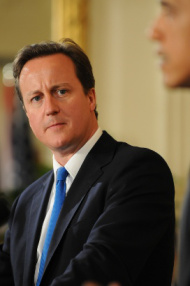
    4815774738_b9962f4875_b

    Image: The Prime Minister during a joint press conference with US President Barack Obama. Source: The Prime Minister’s Office

    The narrow defeat on 29th August of the UK government’s parliamentary motion on support in principle for military action against the Syrian regime has forced Prime Minister David Cameron to concede that Britain will play no part in any direct attack on Syria. If the UK is to play no military role in ‘punitive’ responses to the regime’s alleged use of chemical weapons, what options are open to the UK in terms of resolving the Syrian conflict, protecting civilians and punishing those responsible for war crimes there? And how does Cameron’s overt preference for the military option, with or without UN mandate, condition these non-military options?

    Pushing for peace

    The possibility of a negotiated peace in Syria should not be dismissed. Neither the regime’s military, militia and foreign allies, nor the variety of armed factions ranged against them (and, increasingly, each other) are exhausted. Nor do the Assad regime’s mid-year successes in central Syria presage any imminent likelihood of it regaining control of the north and east. The strategic stalemate that appeared to set in to the conflict in June, after pro-Assad forces retook al-Qusayr, arguably presented a breathing space for negotiations and the so-called Geneva II conference, proposed by the US and Russia, with UN and Arab League backing, the previous month. As recently as mid-August, the Geneva talks were expected to resume in September.

    But even convening these talks will now prove far harder. Expectation of Western intervention against President Bashar al-Assad, as well as their own increasing divisions, gives the Western-backed armed opposition groups an incentive to delay talks. Jihadist groups that have proved effective militarily are largely excluded. US and Russian facilitation of the Geneva process, however fraught, also tends to exclude the voices of regional actors like Turkey, Iran, Iraq and Saudi Arabia, each of which feels its interests very directly threatened in Syria and gives active support to one or more armed faction.

    This calls for a rethinking of the Geneva process, if not the 2012 transition roadmap, to bring in the full range of actors, not the abandonment of peace talks. Threat of US-led intervention and its own increasing international marginalisation, should it be proved to have launched a chemical attack on 21st August, could incline the Assad regime towards a negotiated settlement, perhaps even an exit and exile strategy.

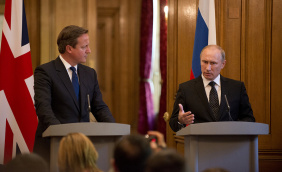
    Cameron and Putin

    Image: The Prime Minister welcomes President Vladimir Putin to Downing Street ahead of the G8 Summit. Source: The Prime Minister’s Office

    This will not happen without pressure from Iran and Russia. Both have much to lose in Syria, but neither is entirely closed. Iran is still in its post-electoral opening and under severe economic pressure, looking to cut a wider deal with the West. Russia may not be comfortable with its isolated position defending the alleged user of chemical weapons. Like the US, it fears the growing influence of jihadi groups while the current stalemate continues. While there is little hope of Moscow abandoning its Security Council veto over action against Syria, it will be embarrassed if it stands almost alone defending Assad in the Council or against a General Assembly resolution. Neutrally collected and analysed evidence of Syrian regime culpability for chemical weapons attack will be crucial to shifting Russia’s position.

    Having made clear its preference for ‘punitive’ military action, and been frustrated by parliament in pursuing such action, the UK government is not ideally placed to broker negotiations. Yet the UK does have influence with Syrian opposition groups, in the Gulf States and, when it acts in concert with its less interventionist EU partners, with Russia, Turkey and Iran.

    Fighting impunity

    Again, the importance of due investigative and legal process through UN Fora is crucial. When asked on 29 August if he agreed that Assad should be prosecuted at the International Criminal Court (ICC), David Cameron replied curtly that these processes take time. Yes, the wheels of institutional responses turn slowly, not least justice institutions. Yet the most obvious response to any breach of customary international law on the use of chemical weapons (Syria is one of just five states not to have signed the 1993 Chemical Weapons Convention) is a war crimes prosecution through the ICC. It is not important that Syria has not signed the Court’s establishing Rome Statute. Assad and any responsible commanders could still be subject to international prosecution if the Security Council referred Syria formally to the ICC.

    The UN has been investigating a wide range of alleged crimes committed by both sides with a view to future prosecutions. Clearly, the presence on the Security Council of Syrian allies and a majority of non-signatories to the Rome Statute presents obstacles to referral, but the Council has overcome such obstacles before, notably China’s reluctance to see its Sudanese allies prosecuted over actions in Darfur. With France and other allies, the UK should take the lead within the Security Council in pushing to refer Syria to the ICC based on the same ‘moral minimum’ or red line that has been deployed in favour of armed intervention. This, in turn, may provide leverage to persuade pro- and anti-Assad factions alike to take peace negotiations more seriously.

    Notwithstanding the heavy shadow of its past action in Iraq, the UK’s moral standing is bolstered by commitment to legal and democratic process. The UK should take a breath, step back from punitive reaction and recommit itself to a multilateral, inclusive and legally rigorous approach to resolving the war in Syria and its many affiliated regional conflicts. No other form of intervention will effectively protect the lives and rights of Syrian civilians either in the current war or the difficult peace that must follow.

    Richard Reeve is the Director of Oxford Research Group’s Sustainable Security Programme. He works across a wide range of defence and security issues and has particular expertise in Sub-Saharan Africa, peace and conflict analysis, and the security role of regional organisations.

    Zoë Pelter is the Research Officer of Oxford Research Group’s Sustainable Security Programme. She works on a number of projects across the programme, including Rethinking UK Defence and Security Policies and Sustainable Security and the Global South.

  • Sustainable Security

    One year on from the French intervention in Mali, Saharan jihadist groups continue to threaten not only Mali but Algeria, Libya, Niger, Nigeria and Tunisia. Will French and US plans to expand their military presence in the Sahel combat, contain or exacerbate the threat from militants displaced from Mali?

    Fragmentation, Displacement and Reconsolidation:  The AQIM Threat in 2014

    French General Pillet, Chief of Staff of the MINUSMA Kidal, during the visit of the Joint Security Committee in charge of the observance of the cease-fire between the Malian army and armed groups from the north. Source: MINUSMA (Flickr)

    French General Pillet, Chief of Staff of MINUSMA, Kidal, during the visit of the Joint Security Committee in charge of the observance of the cease-fire between the Malian army and armed groups from the north. Source: MINUSMA (Flickr)

    Last January, the French military, supported by African troops and 10 non-African air forces, intervened militarily in Mali at the request of its transitional government. Over the following four weeks they recaptured all of the towns in the northern half of Mali. This vast desert region had been seized by Islamist and separatist militia in March-April 2012 and declared independent as the ‘State of Azawad’, the Tuareg name for their homeland in northeast Mali. Since then, French troops have continued to conduct security operations across northern Mali to locate and ‘neutralise’ militants associated with Al-Qaida in the Islamic Maghreb (AQIM), a jihadist group of Algerian origin, and its West African splinter groups. Reduced numbers of French forces now support Malian and African forces within the United Nations Multidimensional Integrated Stabilization Mission in Mali (MINUSMA).                                                                                                                                                                                                                                                                                                                                                                                                                                                                                                                                                                                                                                                                                             However, the final quarter of 2013 saw an increase in violence in northern Mali, including terrorist attacks, violent protests and inter-communal violence. Moreover, the French advance into northern Mali displaced rather than destroyed AQIM and its two local allies, the Movement for Unity and Jihad in West Africa (MUJAO) and Ansar Dine, a Tuareg Islamist group. Their impact has been particularly felt in Niger and Libya and may also have bolstered jihadist groups operating in northern Nigeria, Tunisia and Egypt’s Sinai. The lawless desert of southwest Libya is believed to be the new stronghold of AQIM.

    A new group, al-Murabitun, combining MUJAO and the most active elements of AQIM’s Saharan front, now appears to pose more of a threat to western and West African interests than AQIM. This is because its strategic direction is towards the weak states of West Africa, including Niger, Mali and Mauritania, where critical infrastructure and individuals are more difficult to protect. It is also better connected to the kidnapping and trafficking enterprises that fund Saharan militancy, and more deadly. During 2013, its militants were behind frequent raids on Gao (northern Mali’s main town), on a prison, garrison and French-owned mine in Niger, and on the Algerian gas plant at In-Amenas. These audacious operations attest to its range, training, discipline and cosmopolitan membership. If it finds common purpose with the larger jihadist groups in northern Niger, as some analysts suggest, it could represent a severe threat to stability in the already shaky regional power.

    French Repositioning in the Sahel

    In recognition of the expansion of jihadist groups, France announced a major repositioning of its forces in Africa in January. The new French military posture will refocus from large coastal bases, designed to train, transport and supply African Union and regional rapid reaction forces, to smaller forward deployments in the Sahel and Sahara. 3,000 French troops will now be based indefinitely in Mali, Niger and Chad.

    U.S. soldiers and French commandos marine conduct a reconnaissance patrol during a joint-combined exercise in Djibouti. Source: Wikipedia

    U.S. soldiers and French commandos marine conduct a reconnaissance patrol during a joint-combined exercise in Djibouti. Source: Wikipedia

    The new posture is heavily influenced by US ‘War on Terror’ strategy in Africa, Yemen and south-west Asia, relying heavily on Special Forces, air strike capacities and unmanned aerial vehicles (UAVs). French and US forces (including contractors) already share facilities in Djibouti, Niger, Burkina Faso and Mauritania, and there is a small US liaison detachment with the French Combined Air Operations Centre in Chad. The French repositioning is explicit about confronting Islamist terrorist groups and the threat to regional security posed by the security vacuum in southern Libya. While the repositioning focuses on Mali, Niger and Chad, supplied via a coastal base in Côte d’Ivoire, it will actually include deployments to over a dozen small bases and elite detachments in the Sahel and Sahara, covering at least seven countries. In some cases it will mean French Special Forces reoccupying desert forts long abandoned by the Foreign Legion.

    There will also be greater use of aerial reconnaissance and targeting. French Navy patrol aircraft already criss-cross the Sahara and two MQ-9 Reaper UAVs arrived with French forces at Niamey airport in December after the US fast-tracked French acquisition of and training on these ‘hunter-killer’ drones. These double the effective range of the Harfang target-acquisition UAVs formerly used by the French in the Sahel, bringing all of Mali, Niger, almost all of the rest of West Africa and much of Algeria, Chad and southwest Libya into range.

    France also makes greater use of combat aircraft in the Sahel-Sahara, deploying fighter aircraft from its long-term base in N’Djamena, Chad to Bamako and Niamey airports. This brings northern Mali into range. Since October, French fighter-reconnaissance aircraft have deployed to Faya-Largeau in northern Chad, which brings southern Libya well within range. French Special Forces and armed helicopters have also operated from Burkina Faso, Niger and Mauritania in pursuit of AQIM.

    US and China Extend Their Presence

    French and US Reapers now operate from the same facility at Niamey airport, set up by the US in February 2013. While US UAVs in Niger are unarmed, it is unclear if French Reapers will be used for strike missions. US armed UAV bases in Djibouti, Ethiopia and Seychelles currently bring all of the Horn of Africa, East Africa and most of Arabia within range. US private military contractors have also flown unarmed, unmarked light aircraft on surveillance flights all across the Sahel belt since at least 2007. Using covert hubs in Burkina Faso and Uganda and smaller airfields in Mauritania, Niger and South Sudan, they have sought AQIM and the Ugandan Lord’s Resistance Army (LRA).

    Since 2011, US Special Forces have established small bases in the Central African Republic (CAR), South Sudan and the Democratic Republic of Congo (DRC) to assist Ugandan forces seeking the LRA there. They also provide training to several African militaries countering the LRA. As with programmes in Mauritania, Mali, Niger and Chad, these programmes have focused on creating elite counter-terrorism units. Unfortunately, all of these countries plus the CAR and South Sudan have experienced coups d’état or major army mutinies since this assistance began.

    In order to combat Boko Haram, a Nigerian Special Operations Command was announced on 14 January with the US military providing advice, training and equipment. Massive attacks by Boko Haram since December suggest that the Nigerian army’s use of indiscriminate force in the northeast has not weakened the insurgency. Rather, the state of emergency is likely to have strengthened the recruitment base of Boko Haram since May.

    China and Japan are also increasingly active in the Sahel. Chinese parastatals are the dominant actors in the oil industries of Sudan/South Sudan, Chad/Cameroon and Niger. They also mine uranium in Niger, and China is the primary buyer of iron ore from Mauritania’s vast desert complexes. So far, China is the only non-African state to deploy more than a few dozen troops with MINUSMA.  Japan, which saw ten of its nationals killed in the January 2013 militant attack on Algeria’s In-Amenas gas plant, has pledged $1 billion to stabilise the Sahel, including training of counter-terrorism units.

    Compromised Alliances

    This expansion of deployments and offensive operations relies on the status of forces agreements between western powers and’ friendly’ states such as Algeria. France, for example, depends on an air corridor across the Algerian Sahara. Securing such access puts host governments in a position of greater power. The highly authoritarian regime in Algiers – the world’s fifth or sixth largest arms importer – no longer faces western pressure to improve its dismal human rights record. Indeed, it has received friendly visits from the leaders of France and the UK and the US Secretary of State since late 2012. Mauritania’s military-based government faced little criticism over its unfair elections in November.

    Chad, Uganda and Ethiopia may be the biggest regional beneficiaries of the militarisation of the Sahel. Each has been governed for a quarter-century by a former armed movement. They face little censure of their authoritarian and undemocratic internal policies and have become more assertive as regional military powers. Ethiopia has forces in Somalia while Uganda now has combat troops in operation (by agreement) in Somalia (under AU command), South Sudan, the DRC and the CAR.

    Boosted by expanding oil revenues, French alliance and the demise of Libya’s Gaddafi regime, Chad has greatly expanded its military reach into Mali, Niger and the CAR, where its troops and citizens now face a violent backlash. It is also a Security Council member for the next two years and will be expected to help guide decisions on UN peacekeeping operations in Mali, South Sudan and potentially the CAR and Libya.

    Burkina Faso, long relied on by Paris to negotiate with armed groups in francophone West Africa, is also facing unaccustomed turbulence in 2014 as its president seeks to permit himself an additional term of office. Algeria, which is wary of France’s military deployments on its southern border, is set to take over from Burkina the mediation of talks between Mali’s government and secular Tuareg and Arab rebels.

    Foundations in Sand

    In some respects, the eviction of AQIM and its allies from northern Mali has made the wider Sahara a less safe place, without obviously impeding the capacity of jihadist groups to threaten Europe. In 2014, southwest Libya and parts of Niger are not necessarily less safe havens than northern Mali was in 2012. The insurgency has moved closer to the Mediterranean and closer to critical European energy infrastructure in Algeria, Libya, Tunisia and Niger (uranium). Unlike heterodox Mali, controlling Libya’s chaotic state is likely to be of interest to Arab Salafist groups, including AQIM.

    As elsewhere, the western military approach to countering Islamist insurgency in the Sahel rests on very unsteady foundations. This applies to the political legitimacy of allied regimes, the stability and security of locations hosting French and US bases, the traumatic historical legacy of France as the former colonial power, and the potential for counter-insurgency tactics to provoke wider alienation and radicalisation. However asymmetric its military technology, reinforcing a new line of castles in the Saharan sand may be as futile a gesture in France’s long retreat from empire as the UK’s last stand in Afghanistan.

    Richard Reeve is the Director of the Sustainable Security Programme at Oxford Research Group. He has researched African peace and security issues since 2000, including work with ECOWAS and the AU. Richard’s most recent security briefing ‘Security in the Sahel (Part II): Militarisation of the Sahel is available here.

  • Sustainable Security

    This article was originally published on openSecurity’s monthly Sustainable Security column on 26th February 2014. Every month, a rotating network of experts from Oxford Research Group’s Sustainable Security programme explore pertinent issues of global and regional insecurity.

    Prime Minister David Cameron visits British troops in South Afghanistan, 10 June 2010. Source: No. 10 (Flickr)

    Prime Minister David Cameron visits British troops in South Afghanistan, 10 June 2010. Source: No. 10 (Flickr)

    The 100th anniversary of the start of the First World War has kick-started a period of national self-reflection for the British public and political establishment. The timing seems almost scripted: as the country prepares to look back at the tragic events of 100 years ago, so we prepare for the first incidence of peace in a century. Following final pull-out from Afghanistan later this year, the UK should cease to be engaged in combat operations anywhere in the world for the first time since 1914.

    This “strategic pause”, as Ministry of Defence (MoD) insiders are calling it, comes on the heels of last summer’s controversial parliamentary vote against possible military intervention in Syria. Public and Parliament alike seem wearied by the diminishing returns of a “fight first, fix later” strategic approach. With national elections and scheduled reviews of defence and security strategies fast approaching, this national mood for reflection is an opportunity to reframe British thinking on national and international security – and get it right in 2015.

    Limits of military action

    The threats facing the UK today are a world away from those that instigated the First World War. A century on, a distinct lack of interstate war, the rise of global networks of terrorists and organised criminals, and the inability of many fragile states to respond to such challenges characterise an increasingly complex security landscape. There is also growing recognition of the role of a number of “non-traditional” drivers of global insecurity which act to multiply other threats. As with the localised devastation seen in the UK this winter, climate change is exacerbating economic, social and resource stresses. Thanks to the communications revolution, the world’s marginalised majority is suddenly and drastically aware of its inequality. Such risks highlight the increasing implausibility of military force being effective in tackling insecurity. What use are armies and navies in reducing the gap between elites and a disenfranchised underclass that is both local and global?  How can air forces address the myriad impacts of concentrated greenhouse gases in the atmosphere?

    As much as the global security landscape has changed, there remains an exceptional continuity in the British response to insecurity: a dogged, increasingly ineffective – and recently highly counter-productive – militarised approach. Given that, like World War I, the operation to dislodge the Taliban was originally intended to be “over by Christmas” in 2001, the war in Afghanistan is a case in point. The war has lasted 13 years, resulting in the deaths of 447 British troops, serious injury of thousands more, and costing the UK over £37bn, according to recent estimates from former Helmand adviser Frank Ledwidge.

    Moreover, Ledwidge estimates that British troops in Helmand province have killed at least 500 non-combatants and the Costs of War project estimates that at least 16,725 Afghan civilians have been killed directly by the war’s violence, not including indirect deaths from reduced access to health care, malnutrition and lack of clean drinking water that have been exacerbated in the country’s war zones. For all these costs, military action has done little to decrease Taliban influence or stabilise Afghanistan. A recent review by CNA on behalf of the Pentagon’s policy directorate predicts a sharp post-withdrawal resurgence of Taliban influence and would require far more Afghan troops and police capacity than planned for.

    Learning something from the Afghanistan and Iraq debacles, the UK has shifted towards a more streamlined version of the same interventionist thinking. This “no boots on the ground” approach, such as we saw in Libya (2011), also comes with unforeseen consequences. While NATO operations in Libya were deemed successful within the narrow definitions of the UN mandate, limited intervention there sowed the seeds of further intervention in Mali as weapons and fighters spread south, prompting the declaration of commitment by the prime minister, David Cameron, to the next “generational struggle” against Islamist terrorism.

    A similar rhetoric of limited intervention was noticeable last summer during debates on possible military action in Syria, when the prime minister assured the British public that intended air strikes would be strictly “punitive”. Again, considerations of the potential ineffectiveness and future blowback of military action – on the people of Syria as well as the UK – took a back seat to the political visibility of military action as British agency.

    Room to reflect?

    There is a clear need for more nuanced approaches to tackle insecurity in the coming decades. The struggle against violent extremism, for example, requires approaches which seek to address the conditions that allow such ideologies and instability to thrive. However, the overarching message from British leaders is that we can expect more of the same. Earlier this month, the UK Government confirmed the upcoming purchase of fourteen F-35B Joint Strike Fighter jets, with a price tag of £2.5bn, in addition to new aircraft carriers costing at least £6.2bn. Neither system will be operational before 2019, almost a decade after the last British carriers were retired. Similarly, plans to renew the Trident nuclear deterrent with a like-for-like system will cost at least £25bn, with whole-life costs of replacement exceeding £100bn.

    Decision is due in 2016. Such heavy budgetary weighting in defence spending towards nuclear deterrence and offensive force projection limit the country’s ability to assess strategic balance and diminish the opportunity to develop a wider range of security management options for the UK on the international stage. Investing over half a billion pounds on armed Reaper drones by 2015 predisposes the UK to this form of military action while the jury is still out on its legitimacy, ethics, legality and long term impact. The possibilities for constructive debate on alternatives to the current offensive defence approach are constrained by such massive forward commitments to next generation equipment that prioritises force projection.

    There is also uncertainty over the review of the National Security Strategy (NSS), which defines the threat environment that UK defence and security policy responds to through the Strategic Defence and Security Review (SDSR). Both documents are scheduled to be reviewed and updated following the May 2015 general election. While thinking on changes to the next SDSR is already underway, National Security Adviser Sir Kim Darroch indicated to the House of Commons on 11 September “no precise timetable” for the next NSS. On 30 January, Cameron told the parliamentary Joint Committee on the National Security Strategy that the NSS review process – led by his Cabinet Office – was “now beginning” but implied that the SDSR was further advanced.

    The 2010 NSS made a number of important observations about the changing nature of British security challenges – including climate change and the importance of conflict prevention – but these failed to translate into actionable policy prescriptions in the SDSR. This was in part the result of poor timing; while the SDSR should be a subsidiary document informed by the NSS, the documents were released a day apart in October 2010 after a rushed four month process.

    If the UK is to engage in meaningful debate on approaching complex security challenges and subsequently turn that debate into relevant policy options, it must avoid the mistiming of 2010 and be open to dialogue with UK civil society and foreign partners on the nature of threats and opportunities. With uncertainty over the timing and scope of the NSS review it is difficult to see what room exists for UK to develop policies that genuinely reflect changes in international security.

    Getting it right ahead of 2015

    If British approaches are to respond effectively to changing security threats, the scheduled 2015 SDSR process will need to rebalance priorities, with a shift towards conflict prevention and provision of early and non-combat security support in fragile states. Progressive thinking in the current NSS and initiatives, such as the 2011 Building Stability Overseas Strategy, must now translate into a change of priorities in British security, including spending, decisions on deterrence and intervention.

    The coinciding anniversary of the First World War and final withdrawal from Afghanistan may well provide a much overdue period of reflection on past lessons and future approaches to British security and defence. But if the UK is to learn the lessons of the past century – that unparalleled military interventionism cannot yield long term national nor global security – it must make 2014 a year of genuine consideration of the threats it faces in the next years. In turn, committing to an open process of reflection will allow the decisions of 2015-16 to positively contribute to sustainable peace and security for years to come.

    Zoë Pelter is the Research Officer of Oxford Research Group’s (ORG) Sustainable Security programme. She works on a number of projects across the programme, including ‘Rethinking UK Defence and Security Policies’ and ‘Sustainable Security and the Global South’. Zoë  co-authored ORG’s recent submission to the House of Commons Defence Select Committee inquiry ‘Towards the Next Defence and Security Review’.

  • Sustainable Security

    This post is based on Paul Rogers’ Monthly Global Security Briefings for Oxford Research Group and was originally posted  on 31 July, 2014. At the time of writing (31 July), Israeli Operation Protective Edge had exceeded the previous major operation, Cast Lead of 2008-9. Both operations have involved intensive use of air strikes combined with major ground incursions. The current war is already longer than the 2008-9 war, with no end in sight. Indeed, by the end of July, positions were hardening and prospects for anything longer than brief further humanitarian pause seemed remote. This briefing provides some context for the conflict together with a preliminary analysis of possible consequences.

    The War So Far

    Iron Dome in Operation Protective Edge Source: Wikipedia

    Iron Dome in Operation Protective Edge Source: Wikipedia

    The current war started on 8 July with intensive Israeli air and artillery assaults on Hamas paramilitary targets, intended primarily to destroy or greatly limit the Hamas ability to fire unguided rockets over much of Israel. In spite of the level of force used, the rocket fire continued, amidst growing concern within the Israeli Defence Forces (IDF) that paramilitaries had constructed many more infiltration tunnels than had been realised. A ground assault followed the initial air assault, with this being intended to destroy rocket launch facilities and stores and also interdict tunnels. As a consequence of this assault, the IDF suffered many casualties, including the deaths of 13 men from the elite Golani Brigade in a single day (20 July). Even after 10 days of conflict, with intensive IDF operations against the infiltration tunnels, Hamas paramilitaries managed to get under the border and in a brief attack killed five young IDF sergeants on a leadership training course. One Hamas paramilitary was killed but others appear to have returned to Gaza. Over the course of the war so far, Israeli forces have struck at over 3,700 targets in Gaza while more than 2,700 rockets have been launched by Hamas and other groups from Gaza towards Israel. The death toll among Palestinians exceeds 1,350 and is rising markedly each day. At least 6,000 people have been injured. Israel has lost 56 soldiers and three civilians, and more than 400 soldiers have been wounded. On 31 July, the 24th day of the war, Israel announced the calling up of a further 16,000 reservists, to bring the total call-up to 86,000. There has been considerable controversy over the numbers of civilian casualties in Gaza, especially the hitting of schools, hospitals and a market. UN figures indicate that at least 70% of those killed are civilians, and nongovernmental international support for Hamas has increased substantially. Public opinion in Israel remains very strongly in favour of continuing the war as a means of stopping the rockets and destroying the infiltration tunnels.

    Support for the Adversaries

    Hamas: In the past three years, Hamas has lost much of its international support from governments in the region, even though Gaza has existed in what amounts to an open prison controlled by Israel. The Egyptian government of President Sisi is strongly opposed to the Muslim Brotherhood and regards Hamas as a part of this wider movement. The consequent near-total closure of the common border with Gaza and the control of access tunnels has had a marked economic effect on Gaza, exacerbating its siege status. Furthermore, Hamas’s support for Islamist paramilitaries in Syria has lost it the support of the Assad regime in Syria and, to an extent, of the Iranian government. The recent rapprochement between Hamas and Fatah survives, if currently strained, but causes the Israeli government considerable concern. In spite of all the limitations, Hamas’s paramilitary wing has been able to assemble many thousands of rockets and mortar rounds and has also built a network of robust infiltration tunnels that has greatly exceeded Israel’s pre-war estimates. Hamas as a movement retains considerable support in Gaza, with even the impact of the Israeli air and ground assaults having little effect. Israel: Israel retains a measure of support of many western governments but there are growing concerns at the civilian losses in Gaza. The IDF and the defence industry as a whole have very close connections with their US counterparts. The key missile defence system, Iron Dome, is essentially a US-Israeli joint production, including current plans to set up a new production line in the US. Israel is also able to use US munitions stored in Israel. The US is in a position to put very heavy pressure on Israel but is deeply reluctant to do this at present, mainly because of domestic support for Israel. This support remains high but is declining

    Cast Lead and Protective Edge

    Both the 2008-09 and 2014 Israeli operations have had similar aims – to so damage Hamas that it is massively restricted as a threat to Israeli security. A comparison of the operations so far is indicative. Cast Lead lasted 23 days and ended with a ceasefire brokered largely by Egypt. During that period, Hamas and other groups launched 750 rockets and mortars, all relatively short-range. Israelis lost 13 lives, four of them to friendly fire. Israel killed 1,440 people in Gaza, claiming that half were militants, though Hamas denied this. Since the 2008-09 operation, Israel has deployed the Iron Dome system, and this has intercepted the great majority of approximately 2,700 rockets and mortars fired during Protective Edge.  Hamas has, though, hugely increased its capabilities over the past six years, in spite of its recent political isolation, and has exacted a much higher toll on IDF soldiers during the current ground assault than in 2008-09: 56 so far compared with 13 before. In this sense, the aim of Cast Lead – to substantially degrade Hamas’s crude offensive systems – was a singular failure. Even with the Iron Dome system, vulnerabilities have been demonstrated by the closure of Ben Gurion Airport to several international carriers for several days last week, following a rocket which penetrated the missile shield and landed within a mile of what is Israel’s gateway airport. The loss of so many Israeli soldiers may still seem small compared with the huge losses in Gaza, but the IDF is held in very high regard in Israel.  Indeed, support for the war has likely increased because of these losses and the partial closure of the airport. These appear to have combined to convince many Israelis that, though Hamas is weak and hugely restricted in its location, it represents such a threat to Israel that a protracted war is, if need be, fully justified. The phrase “impregnable in its insecurity” has sometimes been applied to Israel and it is useful in understanding the outlook of a very powerful country that still feels vulnerable.

    The home of the Kware' family, bombed by IDF forces. 8 civilians, including 6 minors, were killed. Gaza, 8 July, 2014. Source: B’Tselem

    The home of the Kware’ family, bombed by IDF forces. 8 civilians, including 6 minors, were killed. Gaza, 8 July, 2014. Source: B’Tselem

    What Now?

    At the time of writing (31 July) it is possible that another humanitarian pause might be agreed and might lead to something more substantial. Assuming that this does now happen, the indications are that the IDF will continue its operations to destroy rockets and tunnels, and Hamas paramilitaries will resist. Given the IDF casualties to date, a pattern is likely to emerge in which urban counter-paramilitary operations will prove both difficult and costly, and the IDF will rely much more on its huge firepower advantage. This is very much what happened with US and coalition forces in Iraq from 2003, and even more so with the Israeli siege of West Beirut in 1982 when at least 10,000 people were killed, the great majority of them civilians. It is already evident that targeting has moved on to the more general Hamas infrastructure, but the very nature of the densely populated Gaza Strip means that the infrastructure for the whole community is also hugely affected. Given the existing impoverishment of the area, the human consequences will be severe, as UN staff have been pointing out repeatedly.

    Consequences

    In all of its operations against Hamas – Cast Lead in 2008-09, the more limited air assault in 2012, and the current war – Israel has sought to severely damage Hamas’s paramilitary capabilities, and decrease its domestic support. In the first two conflicts that objective was not achieved, and it is unlikely that Israel’s current operation will succeed this time around. In spite of Hamas’s greater international isolation, its paramilitaries have this time had a substantial impact on the IDF, and the movement retains domestic support. Moreover, international public opinion has moved heavily against Israel. One of the major changes in comparing the current war with the two previous wars is that the use of social media has hugely expanded, resulting in graphic images being distributed across the region and beyond in near-real time. One effect of this, in turn, is that the more conventional western media reporting is itself becoming more graphic. In spite of a very efficient Israeli information operation, this change is working against Israel’s interests. It also means that Islamist propagandists across the Middle East and beyond are easily able to present the war as a further example of “Zionist aggression”. Indeed, they will also relentlessly point to close US-Israel links, further developing their long-term image of a “Crusader-Zionist war on Islam”, in spite of Secretary of State Kerry’s undoubted personal commitment to achieving a ceasefire. The long-term consequences of this are difficult to read, but could give a boost to radicalisation well beyond Israel and the occupied territories. That alone is an added reason why a ceasefire at the earliest opportunity is not only desirable but essential.

  • Sustainable Security

    RC_long_logo_small_4webThis article is part of the Remote Control Warfare series, a collaboration with Remote Control, a project of the Network for Social Change hosted by Oxford Research Group.
    Editor’s note: Remote Warfare and the War on Drugs mini-series: This series of articles explores how remote warfare is being used in the war on drugs. To date, much of the debate on remote warfare has focused on its use in the war on terror. However, the use of drones, private military and security companies (PMSCs), special forces and mass surveillance are all emerging trends found in the US’s other long standing war, the War on Drugs. The articles in this series seek to explore these methods in more depth, looking at what impact and long term consequences they may have on the theatre in which they’re being used. Read other articles in the series.

    Ever advancing remote warfare technology is being increasingly used by law enforcement agencies to counter drug trafficking. In response, drug cartels are also adopting new technology to smuggle and distribute drugs. However, the technological superiority of law enforcement-military actors is also causing criminal and militant groups to adapt by employing the very opposite tactic, by resorting to highly primitive technology and methods. In turn, society is doing the same thing, adopting its own back-to-the-past response to drug trafficking and crime.

    The history of drug trafficking and crime more broadly is a history of adaptation on the part of criminal groups in response to advances in methods and technology on the part of law enforcement agencies, and vice versa. Sometimes, technology trumps crime: The spread of anti-theft devices in cars radically reduced car theft. The adoption of citadels (essentially saferooms) aboard ships, combined with intense naval patrolling, radically reduced the incidence of piracy off Somalia. Often, however, certainly in the case of many transactional crimes such as drug trafficking, law enforcement efforts have tended to weed out the least competent traffickers, and to leave behind the toughest, meanest, leanest, and most adaptable organized crime groups.

    Increasingly, organized crime actors have adopted advanced technologies, such as semi-submersible and fully-submersible vehicles to carry drugs and other contraband, and cybercrime and virtual currencies for money-laundering. Adaptations in the technology of smuggling by criminal groups in turn lead to further evolution and improvement of methods by law enforcement agencies. However, the use of ever fancier-technology is only a part of the story. The future lies as much behind as ahead (to paraphrase J.P. Wodehouse), with the asymmetric use of primitive technologies and methods by criminal groups to counter the advanced technologies used by law enforcement.

    The Seduction of SIGINT and HVT

    The improvements in signal intelligence (SIGINT) (information gained by the collection and analysis of the electronic signals and communications of a given target) and big-data mining (the extracting of useful information from large datasets or streams of data) over the past two decades have dramatically increased tactical intelligence flows to law enforcement agencies and military actors, creating a more transparent anti-crime, anti-terrorism, and counterinsurgency battlefield than before. The bonanza of communications intercepts of targeted criminals and militants that SIGINT has come to provide over the past decades in Colombia, Mexico, Iraq, Pakistan, Afghanistan, and other parts of the world has also strongly privileged high-value targeting (HVT) and decapitation policies-i.e., principally targeting the presumed leaders of criminal and militant organizations.

    JJprogects

    Artwork of drone warfare by JJprojegts.

    The proliferation of SIGINT and advances in big-data trawling, combined with some highly visible successes of HVT, has come with significant downsides. Although high-value targeting has been effective, this has only occurred under certain circumstances. In many contexts, such as in Mexico, HVT has been counterproductive, fragmenting criminal groups without reducing their proclivity to violence; in fact, exacerbating violence in the market. Other interdiction (the targeting of opponent’s organizational structures or disrupting their logistical chains) patterns and postures, such as middle-level targeting and focused-deterrence, would be more effective policy choices.

    A large part of the problem is that the allure of signal intelligence has led to the discounting of other key intelligence techniques, including developing a strategic understanding of criminal groups’ decision-making in order to anticipate the responses of targeted nonstate actors to law enforcement actions (here Mexico provides a disturbing example). It also requires the cultivation of human intelligence assets (sorely lacking in Somalia, for example) and obtaining a broad and comprehensive understanding of the motivations and interests of local populations that interact with criminal and insurgent groups (notably deficient in Iraq, Afghanistan, and Pakistan). Finally, establishing good relationships with local populations to advance anti-crime and counterinsurgency policies is essential. In Colombia, for example, drug eradication policy antagonized local populations from national government and strengthened the bonds between them and rebel groups.

    In other words, the tactical tool, technology – in the form of signal intelligence and big-data mining – has trumped strategic analysis. Instead, strategic intelligence analysis needs to be brought back, to drive interdiction targeting patterns, instead of letting the seduction of signal data drive intelligence, analysis and targeting action. Indeed, the political effects, as well as the anticipated responses by criminal and militant groups, and any other outcomes of targeting patterns, need to be incorporated into the strategic analysis. Questions to be assessed need to include: Can interdiction hope to incapacitate – arrest and kill – all of the enemy or should it seek to shape the enemy? What kind of criminals and militants, such as how fractured or unified, how radicalized or restrained in their ambitions, and how closely aligned with local populations against the state, does interdiction want to produce?

    Dogs Fights or Drone Fights: Remote Lethal Action by Criminals

    Criminal groups have used technology not merely to foil law enforcement actions, but also to fight each other and dominate the criminal markets and control local populations. In response to the so-called Pacification (UPP) policy in Rio de Janeiro through which the Rio government has sought to wrestle control over slums from violent criminal gangs, the Comando Vermelho (one of such gangs), for example, claimed to deploy remote-sensor cameras in the Complexo do Alemão slum to identify police collaborators, defined as those who went into newly-established police stations. Whether this specific threat was credible or not, the UPP police units have struggled to establish a good working relationship with the locals in Alemão.

    The new radical remote-warfare development on the horizon is for criminal groups to start using drones and other remote platforms not merely to smuggle and distribute contraband, as they are starting to do already, but to deliver lethal action against their enemies – whether government officials, law enforcement forces, or rival crime groups.

    Eventually, both law enforcement and rival groups will develop defenses against such remote lethal action, perhaps also employing remote platforms (drones to attack the drones). Even so, the proliferation of lethal remote warfare capabilities among criminal groups will undermine deterrence, including deterrence among criminal groups themselves over the division of the criminal market and its turfs. This is because remotely delivered hits will complicate the attribution problem – i.e., who authorized the lethal action — and hence the certainty of sufficiently painful retaliation against the source and thus a stable equilibrium.

    More than before, criminal groups will be tempted to instigate wars over the criminal market with the hope that they will emerge as the most powerful criminal actors and able to exercise even greater power over the criminal market – the way the Sinaloa Cartel has attempted to do in Mexico even without the use of fancy technology. Stabilizing a highly violent and contested – dysfunctional – criminal market will become all the more difficult the more remote lethal platforms have proliferated among criminal groups.

    Back to the Past: The Ewoks of Crime and Anti-Crime

    In addition to adopting ever-advancing technologies, criminal and militant groups also adapt to the technological superiority of law enforcement-military actors by the very opposite tactic — resorting asymmetrically to highly primitive deception and smuggling measures. Thus, both militant and criminal groups have adapted to signal intelligence not just by using better encryption, but also by not using cell phones and electronic communications at all, relying instead on personal couriers, for example, or by flooding the e-waves with a lot of white noise. Similarly, in addition to loading drugs on drones, airplanes, and submersibles, drug trafficking groups are going back to very old-methods such as smuggling by boats (including through the Gulf of Mexico), by human couriers, or through tunnels.

    Conversely, society sometimes adapts to the presence of criminal groups and intense, particularly highly violent criminality by adopting its own back-to-the-past response – i.e., by standing up militias (which in a developed state should have been supplanted by state law enforcement forces). The rise of anti-crime militias in Mexico, in places such as Michoacán and Guerrero, provides a rich example of such populist responses and the profound collapse of official law enforcement. The inability of law enforcement there to stop violent criminality – and in fact, the inadvertent exacerbation of violence by criminal groups as a result of HVT – and the distrust of citizens toward highly corrupt law enforcement agencies and state administrations led to the emergence of citizens’ anti-crime militias. The militias originally sought to fight extortion, robberies, theft, kidnapping, and homicides by criminal groups and provide public safety to communities. Rapidly, however, most of the militias resorted to the very same criminal behavior they purported to fight – including extortion, kidnapping, robberies, and homicides. The militias were also appropriated by criminal groups themselves: the criminal groups stood up their own militias claiming to fight crime, where in fact, they were merely fighting the rival criminals. Just as when external or internal military forces resort to using extralegal militias, citizens’ militias fundamentally weaken the rule of law and the authority and legitimacy of the state. They may be the ewoks’ response to the crime empire, but they represent a dangerous and slippery slope to greater breakdown of order.

    In short, technology, including remote warfare, and innovations in smuggling and enforcement methods are malleable and can be appropriated by both criminal and militant groups as well as law enforcement actors. Often, however, such adoption and adaptation produces outcomes that neither criminal groups nor law enforcement actors have anticipated and can fully control. Technology cannot fix defecting anti-crime and anti-drug policies, such as preoccupation with drug seizures , or absent rule of law and culture of lawfulness. Advances in technology do not obviate the need to strengthen bonds between citizens and the state and to create law enforcement and socio-economic conditions which allow citizens to internalize laws. Nonetheless, crime and some illegal economies will always persist and law enforcements and criminals will compete with each other in adopting improving technologies and finding measures to counter them, including most primitive but effective ones. The criminal landscape and military battlefields will thus increasingly resemble the Star Wars moon of Endor: drone and remote platforms battling it out with sticks, stones, and ropes.

    Dr. Vanda Felbab-Brown is a senior fellow in Foreign Policy at the Brookings Institution and co-director of the Brookings projects on Improving Global Drug Policy: Comparative Perspectives and UNGASS 2016 and Reconstituting Local Orders. Dr. Felbab-Brown is an expert on illicit economies and organized crime and international and internal conflicts and their management, including counterinsurgency and statebuilding. Her research focuses particularly on South Asia, Burma, the Andean region, Mexico, and Somalia, and she has conducted fieldwork in some of the most dangerous parts of the world. Dr. Felbab-Brown has an extensive publication list of books, policy reports, academic articles, and opinion pieces, including Poached: Combating Wildlife Trafficking, with Lessons from the War on Drugs (forthcoming 2016); Narco Noir: Mexico’s Cartels, Cops, and Corruption (forthcoming 2016); Aspiration and Ambivalence: Strategies and Realities of Counterinsurgency and State-building in Afghanistan (2013); and Shooting Up: Counterinsurgency and the War on Drugs (2010). Dr. Felbab-Brown is a frequent consultant for national, multilateral, and non-governmental organizations and a frequent commentator in U.S. and international media. She also regularly provides expert testimony to the US Congress. Prior to joining the Brookings Institution, Dr. Felbab-Brown was an Assistant Professor at the Georgetown University School for Foreign Service. She received her PhD in political science from MIT and her BA from Harvard University.

  • Sustainable Security

    Does military integration make renewed civil wars less likely? Evidence from several cases of postwar military integration over four decades reveal little evidence that it contributes to the durability of postwar peace.

    Author’s Note: This article derives from a larger project which was intellectually indebted to the Security Sector Reform Workgroup of the Folke Bernadotte Academy and funded by grant BCS 0904905 from the Social and Behavioral Dimensions of National Security, Conflict, and Cooperation, a joint program of the National Science Foundation and the Department of Defense/Department of the Army/Army Research Office (the Minerva program). That grant funded a conference on military integration after civil wars, which the Peacekeeping and Stability Operations Institute of the U.S. Army War College graciously provided hospitality for and supported; special thanks are due to Raymond Millen and Col. Stephen T. Smith. I am especially grateful to all the participants in that conference, whose research and thinking so deeply informed the project.

    Military integration following a civil war is a common practice, evidenced by the fact that nearly 40 percent of peace settlements for the 128 civil wars from 1945 to 2006 called for some form of integration of combatant military forces. It has become accepted wisdom that integration is crucial to preventing a society’s relapse into war and there is much about this that feels like common sense. After all, a professional, communally representative force could conceivably diminish vulnerable groups’ security fears in a post-civil war environment by:

    • serving as a credible signal of the government’s commitment to power sharing which would make an army less likely to employ violence against the society’s constituent communal groups;
    • protecting populations against potentially dangerous militias;
    • providing employment to former fighters from all sides;
    • and facilitating, through symbolic power, popular identification and unity with an inclusive vision of a nation.

    But is this faith regarding military integration and civil wars actually true based on the research or is it fundamentally misplaced?

    The empirical evidence

    burundi-peace

    Image credit: US Army Africa/Wikimedia.

    Quantitative studies generally find a correlation between military integration and the likelihood of renewed civil wars (Walter 2002; Hoddie and Hartzell 2003; DeRouen, Lea, and Wallensteen 2009; Toft 2010).  However, aside from one notable dissent (Glassmyer and Sambanis 2008) the studies assumed that all military integration efforts were equivalent. They focused on agreements to integrate rather than their actual implementation, and it was possible that the causal arrow was reversed, that easier cases would allow military integration than those more likely to fail.  Two comparative case study analyses reached opposing conclusions (Knight 2011; Call 2012).

    My study of eleven cases began with the expectation that military integration would be difficult to carry out (bringing people who have been killing one another with considerable skill and enthusiasm and giving them weapons did not seem like a bright idea) but that doing so successfully would reduce the likelihood of renewed civil war.  I ended with precisely the opposite conclusions.

    The study – does military integration make renewed civil wars less likely?

    The study specified five plausible causal mechanisms linking the phenomena:

    1. The willingness of leaders on both sides to commit to this risky strategy persuades others that they are sincere in desiring peace and can be trusted on other difficult issues.
    2. The new force provides security for the elites (and perhaps the masses), allowing them to resolve other issues.
    3. The new force employs substantial numbers of veterans who might otherwise be available for recruitment by spoilers planning to restart the war.
    4. It is a powerful symbol of legitimacy and integration for the new regime—if people who have been killing one another can work together, surely civilians should be able to as well.
    5. The successful negotiation of military integration would build trust among members of the different groups, making it easier to resolve other issues.

    Cases and Authors

    Sudan 1972-1983—Matthew LeRiche

    Rhodesia to Zimbabwe—Paul Jackson

    Lebanon—Florence Gaub

    Rwanda—Stephen Burgess

    Philippines—Rosalie Arcala Hall

    South Africa—Roy Licklider

    Democratic Republic of the Congo—Judith Verweijen

    Mozambique—Andrea Bartoli and Martha Mutisi

    Bosnia-Herzegovina—Rohan Maxwell

    Sierra Leone—Mimmi Söderberg Kovacs

    Burundi 2000-2006—Cyrus Samii

    In lieu of more sophisticated methodologies, case authors were asked whether they had observed these mechanisms in their cases.  The only one which received even a few assents was increased legitimacy of integration in other functional areas, perhaps the most difficult to observe.

    None of our cases collapsed from violence among the new recruits but even successful integrations could not withstand the actions of civilian politicians which created new violence in places like Zimbabwe and Sudan.  Moreover, creating a strong security sector in a weak government is a recipe for military domination and less democracy in places like Rwanda.  So why do combatants adopt this policy after civil wars so often?  The single best predictor that a civil war would end with military integration was international mediation of the conflict (Hartzell 2014).

    Conclusion

    Ronald Krebs and I concluded that this suggests an ethical problem for peacemakers.  Military integration is relatively easy for outsiders to implement; we have substantial numbers of unemployed military to do the work, and it requires much less adaption in the target society than other actions like creating a working justice or taxation system.

    Moreover, in some wars the nature of the postwar military is a critical issue (Burundi is a good example) and in such cases, when the locals have decided they want military integration, internationals can give useful assistance.  But military integration is expensive to implement and support over time and may have regrettable political consequences so outsiders should not actively advocate it.  At this point, the evidence does not support the assumption that military integration will make renewed civil war less likely.

    Roy Licklider is Professor of Political Science at Rutgers University and Adjunct Senior Research Scholar in the Arnold A. Saltzman Institute of War and Peace Studies at Columbia University.

  • Sustainable Security

    Carefully planned interventions in the water sector can be an integral part to all stages of a successful post-conflict process, from the end of conflict, through recovery and rebuilding, to long-term sustainable development.

    Does the better post-war water resource management contribute to peacebuilding by generating legitimacy within a society and for the state? Research has become increasingly interested in the potential role of natural resources, especially freshwater resources in war affected societies, because the misuse of natural resources is increasingly being seen as one of the key challenges for sustaining and promoting peace. This link has of late received serious traction in research and policy circles as the international community stresses the significance of environment for the peaceful societies by including both in the 2015 UN Sustainable Development Goals.

    Water Management after War

    Post-war countries are among the most difficult policy arenas for international agencies and domestic stakeholders. The challenge is not only to bring an end to the war and prevent violence from reoccurring, but also to help countries reset the dynamic among their internal actors on a peaceful path. The long-term adverse effects of wars further amplify this policy challenge.

    Many of these challenges for post-war countries relate to political and social aspects. Lasting impressions of human rights abuses committed during wars continue to shape the relations among members of societies for decades to come. Both socio-economic crunch and political churning can challenge the stability of post-war countries for many years if not decades. The public health crisis has been found to be especially severe and affect disproportionately the civilian population in post-war countries. Environmental and climate change exposes war affected people further to new risks, exaggerating the human costs of war long after active combat has ceased.

    In order to address public health crisis and to reduce further human costs of war, it is critical for a post-war country to be able to provide access to clean water and sanitation for its population. Often in war times, water storage facilities and installations for water delivery are damaged and sometimes even targeted. Thus, after the end of the war it often needed for the focus to be placed on the rapid restoration of water infrastructure.

    When a war affected country fails to swiftly and smartly manage its water resources it amplifies the vulnerability of post-war communities on water and inevitably exacerbates and prolongs the human costs of war. Increasing demand for freshwater and climate change induced variability of its availability are further adversely affecting the agricultural production and the provision of sustainable livelihood for post-war communities. Thus, addressing the war related damages to the water infrastructure are often key to rebuilding a state after war. Then, it is necessary to develop the increasingly scarce water resources in a sustainable manner, which will bring inclusive development and promote peace in the society.

    Yet, even though the international community is aware of these tasks, — recent research indicates that while addressing water management in post-war period — the emphasis is usually placed on expert-oriented solutions, which bypass the complex and critical political aspects of it. Ignoring political factors might expedite the implementation process in short run, however, it can possibly create worrying challenges not only for the smooth operation of the water projects, but also for the peace itself.

    Lessons from Kosovo and Nepal

    Asian development Bank

    The Kali Gandaki “A” Hydroelectric Project in Nepal. Image by Asian devlopment bank via Flickr.

    A recent analysis of the post-war water resource management in Kosovo shows how the international community, choosing a highly expert driven technocratic approach to rebuild Kosovo’s water sector after the violent conflict came to an end, frequently clashed with political realities in this landlocked and conflict affected territory. The United Nations Interim Administration in Kosovo (UNMIK), which assumed trusteeship of the territory in 1999 until a European Union mission replaced it in 2008, favored technical solutions and bypassed the political realities. Especially the case of the divided city of Mitrovica exemplifies that UNMIK sought to avoid confrontation. As the central political authority in Kosovo, UNMIK rather paid outstanding water bills for Kosovo Serbs, than facilitating the collection of fees for supplied water. Overall, the empirical analysis shows that UNMIK’s technocrat driven management of the water sector in fact impeded the peace process rather than aided it.

    Other recent findings on the water resource development in conflict affected Nepal, show the positive potential of ecologically sensitive service provision as these can yield tremendous socio-economic benefits for rural communities. The provision of energy in Nepal remains a pivotal challenge. In 2010, almost a quarter of the country did not have access to electricity, and even those households that were connected did not receive continuous power. The capital, Kathmandu, experiences scheduled power cuts up to 14 hours a day during the drier winter season, when hydropower ebbs, and two to three hours a day in the water-rich monsoon months. The study of two localities in rural Nepal, shows that micro-hydropower development has had many positive effects for rural communities, especially in regard to socio-economic development. This improved socioeconomic status of households reflects a clear reduction in vulnerability to poverty and even food security as the improved cannels diverting water to the micro-hydropower station have improved irrigation of nearby fields. Though it does not immediately translate into improving the legitimacy of the Nepali state, by helping to bring over all sustainable development of its citizens, the state is most likely going to reap the benefit in the future. The experiences from the study of micro-hydropower development in Nepal show that the state needs to actively pursue and project the ownership of the water sector development process in a post-war period in order to legitimize itself.

    Conclusion

    There is certainly a need to acknowledge the long-term interplay of social, political, and ecological processes in post-war countries and to understand the potential and dynamics of natural resources and environmental issues in this context. The interactions of these processes decisively shape the post-war landscape. It is therefore prudent to help building a peace that is ecologically sensitive and socially and politically relevant and desirable.

    Thus, the carefully planned interventions in the water sector become an integral part to all stages of the post-conflict process, from the end of conflict, through recovery and rebuilding, to long-term sustainable development. A recently published article in the Hydrological Sciences Journal argues that for the best possible use of water resources in the peacebuilding process, there is a need for a comprehensive approach. Both the Nepal and Kosovo cases show the unintended consequences that result from narrow focused interventions in the post-conflict landscape. It is pivotal that the international community engaged in peacebuilding must plan, think and execute with a long-term perspective that sets the conditions for sustainable peace. Drawing on an extensive reading of the current literature, such a comprehensive approach includes a series of measures to be taken in a post-conflict setting: legal reforms and building of sound water institutions; careful planning of water use to achieve sustainable food security; and cooperative involvement of international, national and local stakeholders in the planning and managing of water resources.

    Further reading:

    Swain, A., & Jägerskog, A. 2016. “Emerging Security Threats in the Middle East.” Lanham: Rowman and Littlefield Publishers.

    Krampe, Florian. 2016. “Empowering Peace: Service Provision and State legitimacy in Peacebuilding in Nepal.” Conflict, Security, and Development 16 (1), pp. 53-73.

     Krampe, Florian. 2016. “Water for Peace? Post-Conflict Water Resource Management in Kosovo,” Cooperation and Conflict. DOI: 10.1177/0010836716652428.

     Ashok Swain. 2016. “Water and post-conflict peacebuilding.” Hydrological Sciences Journal  61 (7), pp. 1313-1322.

    Florian Krampe is a political scientist specializing in peace and conflict research, international relations, and political ecology at the Department of Peace and Conflict Research at Uppsala University.

     Ashok Swain is Professor of Peace and Conflict Research and Director of the Research School for International Water Cooperation at the Department of Peace and Conflict Research, Uppsala University. He is also Professor at the Department of Earth Sciences of Uppsala University.

  • Sustainable Security

    Implementation of the interim deal with Iran, which freezes the country’s nuclear enrichment in exchange for limited sanctions relief, began last week. As an initial outcome of this deal, we are witnessing a substantial shift in diplomatic relations and relationships between Iran and its regional neighbours – some positive, some not. This deal marks a significant step for the international non-proliferation regime, but will it achieve the trust and confidence-building goals intended? As the US and Iran face increasing domestic pushback on the terms of the agreement, questions remain on the interim deal’s impact on relations in the region and abroad, and the effect these relations may have on the prospects of coming to a full comprehensive follow-up agreement between Iran and the P5+1 countries.

    The Interim Deal

    P5 + 1 Iran 2

    P5+1 foreign ministers — as well as European Union High Representative Catherine Ashton and Iranian Foreign Minister Javad Zarif — at the United Nations Headquarters in Geneva, Switzerland, after the group concluded negotiations about Iran’s nuclear capabilities on November 24, 2013. Source: US State Department (Flickr)

    The current deal, in which Iran will halt further progress on its nuclear programme and roll back key elements in return for temporary and limited sanctions relief from the P5+1, was originally negotiated at the end of November in Geneva, but the details of implementation were confirmed in early January. After a decade of negotiations to solve the Iranian “nuclear crisis”, the implementation of this deal marks a significant step forward for the international non-proliferation regime, and is an important success story for international diplomacy. Despite the misgivings of a number of sceptics, this six-month interim deal brings countries together to work towards developing assurances around Iran’s nuclear programme, acting as a trust and confidence building exercise with the intention to create opportunity and space for a more ambitious longer term agreement in the future.

     A Positive Impact on Diplomatic Relations…

    As an initial outcome of this deal, we are witnessing a substantial shift in diplomatic relations and relationships between Iran and its regional neighbours. While the outset of the interim deal saw a number of sceptics, encouraging reactions have developed, including positive official responses from Kuwait, Qatar, Bahrain and Oman. Even the Prime Minister of the UAE officially welcomed the deal and called for lifting sanctions and a partnership with Iran.

    Relationships between Iran and Western partners have also begun to restore themselves as a result of the deal. After three decades of no sustained direct contact, back channels were set up prior to and early on during Rouhani’s presidency to help unlock the negotiations and in a pinnacle moment in September, Barack Obama and Hassan Rouhani spoke on the phone after the UN General Assembly.

    The United Kingdom also hasn’t had bilateral diplomatic relations with the Islamic Republic since 2011, when the British Embassy in Tehran was stormed.  However, the UK and Iran agreed to renew direct diplomatic links during November’s Geneva talks and shortly thereafter, a newly appointed British chargé d’affaires, Ajay Sharma, travelled to Iran as the first British envoy since 2011. It was announced on the 28th of January that a delegation of Iranian parliamentarians will visit London during the summer months. This follows a visit by British Members of Parliament, led by former Foreign Secretary Jack Straw MP, to Tehran that took place in early January.

    This overall confidence-building between regional states and diplomatic restoration between Iran and the P5+1 negotiating partners promises to improve the chances of negotiating a comprehensive nuclear deal next month.

    …But Not for Everyone

    Netanyahu and Obama

    US President Obama with Israeli Prime Minister Netanyahu Source: The Israel Project

    However, the possible détente between Iran and Western countries – the US in particular – may be a game changer for some regional states and parties. Israel’s response to the interim deal has been continuously vocal and disapproving from the start, with Israeli Prime Minister Benjamin Netanyahu condemning the deal as a “historic mistake”. It comes as somewhat of a personal defeat for the Israeli Prime Minister, who has been campaigning to strip Iran from all of its enrichment capability. Some analysts have hinted that this deal will damage the prospects for the Weapons of Mass Destruction Free Zone in the Middle East as it will pull Israel even further away from the negotiation table. Perhaps, though, the fear of losing US interest will bring them even closer to it.

    Responses in Saudi Arabia have also been less than enthusiastic: while the official response labelled the deal as a good solution to the Iranian nuclear programme, the unofficial response fears proliferation in the region and the enhancement of Iran’s role as a regional power. Members of the Saudi royal family have labelled Obama’s strategy with Iran as flawed and claimed that sanctions relief was a huge mistake that will now give Iran the upper hand. The Saudis see this deal as giving Iran more power, which threatens their status as a regional hegemon. In an unusual turn of events, this sees Saudi Arabia’s and Israel’s interests aligning—both feeling disappointed and outraged towards the US and fearing Iran’s potential.

    Hints of a rift between Gulf Cooperation Council (GCC) states have also been noticed as a result of this deal. Unlike Saudi Arabia, most of these states have signalled their modification in policy to match US goodwill towards Iran. This is especially seen in Oman, a state with strong historic ties to Iran and which helped broker the initial back channels established between the Islamic Republic and US in early 2013. At the IISS Manama Dialogue in December 2013, Omani Foreign Minister Youssef bin Alawi candidly spoke out against the Saudi proposal to upgrade the GCC union. The Sultanate state has always intended to pursue an independent foreign policy path, careful to balance relationships on both sides of the Gulf. The proposal, which strengthens the union of the GCC, was rejected by the Omani Sultanate on the grounds that there is a failure to agree on the foundations of the GCC and economic integration, but it would also force Oman to align more closely with Saudi Arabia which might in turn antagonise Oman’s relationship with Iran. With the complex combination of global and regional structural shifts and intersecting economic interests, this is perhaps the first of many small fissures between the Gulf States and regional partners that will come as unintended consequences of this deal.

    Hurting at home

    Even within Iran, the reaction has been mixed, and Rouhani has faced criticism for being too close to the West. Since his election in June of last year, he and his administration have been leading a public relations campaign to repair relations with the West, but he has faced problems with hardliners who are sceptical of US motivations or hold on to historical grudges.  While this deal helps to relieve some of Iran’s economic hardship, Rouhani has gone out on a limb in easing off enrichment, a capability which is seen by many within Iran to be entrenched within their national identity.

    Obama faces similar problems in Washington, as lawmakers in the Congress come dangerously close to causing the collapse of the deal by supporting the Nuclear Weapons Free Iran Act (S.1881) in the Senate. This bill, introduced in December by New Jersey Democratic Senator, Robert Menendez, imposes additional financial sanctions against Iran if it were to default on the terms of the interim deal, or if a long term deal was not agreed to after the end of the six months. Terms of the initial deal with Iran stipulates there will be no new nuclear related sanctions but core sanctions will remain intact for now and Iran will continue to lose $4-$5 billion in revenue per month.

    Crucially,  the Nuclear Weapons Free Iran Act would require zero enrichment from Iran, which is a red line for Iranians. Under the terms of the Non-Proliferation Treaty, all Parties have the inalienable right “to develop research, production and use of nuclear energy for peaceful purposes without discrimination”. Blatant discrimination against these rights is a deal breaker for Iran and in response (or perhaps retaliation) to Menendez’s bill, Iranian parliament has proposed new legislation that would allow for Iran to increase uranium enrichment to 60 percent, enough for weapons grade uranium. Iranian Foreign Minister Mohammad Javad Zarif has threatened that if bill S.1881 is passed in Congress, “the entire [interim] deal is dead”.

    Moving Forward

    The next round of talks between Iran and the P5+1 to negotiate a more comprehensive nuclear deal is reportedly to be held in New York in mid-February. However, with domestic and regional backlash from the deal threatening to collapse the interim deal – and worse, threatening to prohibit the agreement of a more sustainable deal in February – the chance of achieving further negotiations now depends on successful physical implementation of the interim deal Joint Plan of Action.

    While many remain sceptical of the parties involved or the implications on the region and beyond, this interim deal is a positive breakthrough for the international non-proliferation regime, which has needed a major boost like this for some time. We have a major opportunity ahead of us for restoring trust and strengthening Iran’s partnership on the global non-proliferation and disarmament agenda. This potential for such positive outcomes must now be the focus of the next month, because losing the momentum of this deal and starting from scratch would be a setback that global security cannot afford.

    Rachel Staley is currently the Programme Manager for the British American Security Information Council (BASIC) in their London office. Since 2011, Rachel has managed the operations of the office and assisted in developing the organisation’s programmes working on nuclear non-proliferation and disarmament in the Middle East, as well as engaging directly in the Trident renewal debate in the United Kingdom. Rachel holds an MA with Distinction in Non-Proliferation and International Security from King’s College London and a BA with Honours in International Affairs and Anthropology from Northeastern University.

    Featured image: British Foreign Secretary William Hague, German Foreign Minister Guido Westerwelle, EU foreign policy chief Catherine Ashton, Iranian Foreign Minister Mohammad Javad Zarif, Chinese Foreign Minister Wang Yi, US Secretary of State John Kerry, on early November 24, 2013 in Geneva. Source: European External Action Service (Flickr)

  • Sustainable Security

    Music and dance can be useful means to engage youth in a dialogue for peace.  Music and dance can also provide many unique insights into transforming conflicts and achieving change.


    “As a musician who works for peace, “unity” holds less interest for me than “harmony.” Unity is when we all sing the same note. Harmony is when we sing different notes, and they are beautiful together.”

    – David Lamotte, musician and peace activist

    At the same time, as David goes on to say in his book World Changing 101, “Harmony is not homogeneity.” Moreover, he says, “Of course, it is also true that many notes playing together may clearly not be in harmony with one another. Creating that confluence takes attention, patience, and work. It is a beautiful thing when we achieve it, though. And it is not achieved by eliminating difference, but instead by finding ways to work together that are mutually nourishing, that honor and reveal each other’s gifts.” (LaMotte 2014: 113).

    In these ways, artistic approaches to building peace like music and dance can offer us the means to embrace pluralism through working together to co-create knowledge rather than attempting to determine one ‘right’ way upheld by those a particular society may deem to be experts.

    On Music and Peacebuilding

    Image credit: Hernan Pinera/Flickr.

    In the research for my first book, Youth Peacebuilding: Music, Gender and Change I used qualitative case comparison to explore the use of music as a tool for engaging youth in reducing and preventing violence.  More specifically, the research for that book included participant observation and semi-structured interviews with young people involved in musical peacebuilding programs in Australia and Northern Ireland, providing a uniquely deep look at young people’s experiences of everyday violence and how they approached peacebuilding in their local cultural contexts.

    In Australia this involved a peace program in a major city engaging Indigenous, non-Indigenous, and migrant and refugee background young people in a collaborative process of music making in order to build understanding across difference, challenge racism, and create safe spaces for recovering from violence already experienced. Similarly, the program in Northern Ireland shared similar goals around addressing both racism and sectarianism in its efforts at peacebuilding through participatory music practice.

    This project contributed to theoretical and practical debates and discussions around: youth political participation, the gendered landscape of conflict environments, and creative approaches to pursuing peace. In particular, I explored how music could foster peacebuilding through offering an alternative means for dialogue, helping people create and recreate identities of themselves and others, and offering a tool that could help create safe spaces for such dialogue and identity work, often in challenging circumstances.

    While my research has taken me in many directions in the decade since I began the study that underpinned that first book, I always feel drawn to return to reflections on creative approaches to peace, especially the ways they can engage youth. At present, this has taken the form of working to further analyse and share the findings from my research on dance and peacebuilding. While my earlier work dealt with dance to a degree as part of a broader range of musical practices for peacebuilding, since then I have taken up opportunities to explore dance more specifically.

    Researching Dance and Peacebuilding

     As Nicole Krauss writes in her latest book,

    “More and more it seems to me…that when I write, what I am really trying to do is dance, and because it is impossible, because dancing is free of language, I am never satisfied with writing…to dance is to make oneself available  (for pleasure, for an explosion, for stillness)…The abstract connections it provokes in its audience, of emotion with form, and the excitement from one’s world of feelings and imagination—all of this derives from its vanishing…But writing, whose goal is to achieve a timeless meaning, has to tell itself a lie about time; in essence, it has to believe in some form of immutability…” (Krauss 2017: 136).

    While recognizing these challenges, I continue to find meaning in attempting to write about dance or perhaps to dance writing. As such, during my time as a McKenzie Research Fellow at the University of Melbourne I designed and embarked on a comparative study looking at the use of dance in peacebuilding programs across a range of contexts, including Colombia (now commonly deemed a post-conflict site); the US (in inner city locations in Washington, DC and Baltimore, MD where violence is commonly seen as widespread) and in the Philippines, which, despite a peace agreement being signed, continues to face conflict in Mindanao.

    Using ethnographically informed methods, including participant observation, interviews, and document analysis, I designed the project and methodological approach and gathered data in the US and Colombia, while a research assistant gathered the data in the Philippines case. This type of intensive data gathering, which included participating in the full global training of the trainers for the program involved, as well as months of participant observation of the programs, offered rich insights into how dance and creative movement can and does engage young people in peacebuilding across a range of diverse contexts.

    While the process of writing this into a book proposal and eventually a book is ongoing, over the past several years of working on the project some key themes have started to emerge.

    The role of dance in peacebuilding

    How, if at all, did dance function as a useful way for youth to take part in peacebuilding? Firstly, participant statements indicated, “that dance can be useful in engaging youth in peacebuilding but that it must be applied in sensitive, reflexive and culturally relevant ways to appeal to and include both young men and young women.” Most if not all participants articulated one or more ways dance had been useful for peacebuilding. Some noted, for example, that dance could serve as a nonviolent means of communication and a way to connect with one’s feelings in a peace education context. Moreover, dance was seen as something that is culturally relevant and familiar, thus many youth could relate to it, and it was also something that did not require lots of expensive equipment or training. At the same time, dance was also seen as a way to release and reduce stress, an important aspect of recovering from violence already witnessed or experienced.

    Of course, participants also noted a variety of limitations to what dance could do and how, including pointing to how short term funding cycles, which are common across global peacebuilding initiatives, can at times mean short sighted programs. They also noted that without attention to access and inclusion, efforts to engage youth in dance and creative movement for peacebuilding might overlook the needs of people with disability or people who speak a different language from the one deployed in the dance programs. Still these limitations are not inherent to dance or always present, as seen by the work of VisAbility in Sri Lanka, a country recovering from conflict and where dance programming has been used to engage people with and without disabilities in coordination with a rights empowerment initiative.

    Conclusion

    Overall, it appears music and dance, when applied in thoughtful ways, can help foster peacebuilding. This is not to say they may not also be used ineffectively or to create exclusions, but when used appropriately they can have much to offer. As one facilitator in programs using dance and creative movement for peacebuilding the Washington, DC and Baltimore programs said when speaking about stepping out of one’s comfort zone to engage within a group:

    “When one person takes a positive risk, it shows the rest of us that we can take a positive risk and encourages us to do that also.  So hopefully, after a while they will be able to see that if they can just do one thing that makes them uncomfortable or kind of step outside their comfort zone that it actually helps other people to do the same and get the most out of the experience.”

    Surely such steps can be a useful means for reflecting on ways of finding harmony in the dissonance of conflict.

    Author’s Note: The research assistant involved with the Philippines work, Erica Rose Jeffrey is a fantastic scholar and dance practitioner in her own right and will soon be awarded her PhD for her own practice-led research in Fiji and the Philippines. More on her work can be found at: http://peacemoves.org

    Lesley Pruitt is a Senior Lecturer in International Relations at Monash University and a member of the Monash GPS (Gender, Peace and Security) Centre. Lesley’s research focuses on peace and conflict studies, especially recognising and enhancing youth participation in peacebuilding and advancing gender equity in peacekeeping. A Truman Scholar and Rotary Ambassadorial Scholar, Lesley received her Masters & PhD from the University of Queensland. Lesley’s books include The Women in Blue Helmets: Gender, Policing & the UN’s First All-Female Peacekeeping Unit and Youth Peacebuilding: Music, Gender & Change. She is also an author of Young People, Citizenship and Political Participation: Combatting Civic Deficit?

  • Sustainable Security

    Award-winning reporter Jakob Sheikh talks about his work interviewing the Danes who travelled to Iraq and Syria to join the jihad. 

    Q. Since 2001, there has been much written on terrorism and more specifically the global jihadi movement, and this trend has continued with the rise of Islamic State. Your research is quite unique as it has involved interviewing those who have joined the Jihad. Why did you decide to take this approach to understanding jihadism and what did you hope to learn from talking to jihadis?

    When I started covering militant Islamism in 2012, I noticed that the great bulk of articles written on this topic dealt with jihadists quite superficially. Most often, reporters where talking about jihadists; not with jihadists. So I began building trustful relations with Danish militant Islamists. I put a lot of time and effort in meeting consistently with figures—even rather unimportant ones— in the Danish militant Islamists milieu, enabling me to get access to  otherwise unavailable sources and interview foreign fighters in Denmark, in Syria during their time with the Islamic State, and even back in Denmark when some of them had returned.

    The goal of my reporting is quite simple. In order to deal with a challenge that is generally considered a threat to national security in most Western countries, we need to understand the very nature of this challenge.

    Sadly, we often tend to simplify or generalize when it comes to foreign fighters. We alienate radical Islamists from ourselves as if they have nothing to do with our society. However, the fact is that most European foreign fighters are born—or at least raised—in Europe. They are shaped by upbringings in European societies; they attend public schools, play in the local football club and so forth. By many measures, they are products of modern Europe.

    This leads to a very important question: How does modern Europe deal with this ever-evolving problem? I hope that my reporting has shed light on the backdrop of this question.

    Q. In your research, have you noticed any common traits in the backgrounds of Denmark’s foreign fighters (age, gender, profession, geographical location) and their pathways into joining the Jihad?

    Image credit: CREST Research/Flickr.

    This is an interesting question as some of the foreign fighter traits are in fact quite counter intuitive. It’s easy to state the obvious: most foreign fighters are young men and the vast majority have family roots outside the European continent.

    But there are other interesting traits to mention. When I started collecting socioeconomic background data on Danish foreign fighters, I was expecting to find individuals from poor families who were economically and educationally marginalised. However, while the main part had struggled with social challenges of some sort—their parents’ divorce, a mental diagnosis, deaths in the near family, etc.—I discovered that a great number of Danish foreign fighters were average middle class kids, not raised at the bottom of society (one even played the cello and lived in a sumptuous villa with his well-educated parents).

    Also, I would have assumed that most foreign fighters would come from strictly conservative Muslim families. But in fact, a significant number of Danish foreign fighters with non-Western backgrounds came from families that were remarkably secular and liberal. I find this particularly interesting as it says something important about the way we deal with the notion of converts. We generally consider converts to be ethnic Danes or ethnic Swedes or ethnic Brits who suddenly converts to Islam and get radicalised—as opposed to individuals with Muslim family backgrounds. But what we see now is that most foreign fighters are in fact converts—some may just have Muslim family roots. In many ways, these converts from Muslim families share their pathway into the jihadist milieu with that of “regular” ethnic Danish converts; they do not feel strongly about religion, something happens along the way, they are socially marginalized, perhaps they enter a criminal environment, and at a certain point in time they are intrigued by Islam as a way out of their problems. Often, the radicalisation process that follows completely changes their approach to Islam—just as with the Danish converts who have no previous experience with Islam whatsoever.

    To me, this shows that we need to study the inner motivations of jihadists. Common socioeconomic traits simply doesn’t do the job when it comes to explaining why foreign fighters decide to wage jihad. Despite many so-called experts’ attempts to tell you otherwise.

    Q. In terms of the motivations of Denmark’s foreign fighters, you’ve previously stated that grievance over Denmark’s activist foreign policy has been an important driver. Yet one of the things that stands out in your interviews with foreign fighters is this idea of “the state” as a cause. What does this concept of “the state” mean to the foreign fighters you spoke to and why is it such a powerful idea that it is worth travelling many miles across the world to fight and die for? 

    As mentioned, many of the things the foreign fighters told me during interview ran counter to common assumptions. My own, at least.

    The very idea of a state was a recurrent narrative among IS fighters. In fact, several fighters consider this notion a direct motivation for joining the battlefield.

    They stress the fact that they are not just joining an insurgency; they are joining a state. As much as they see themselves as fighters, they see themselves as immigrants who want to settle down and build a future.

    As I have pointed out before, when jihadists use the term “dawla” [“state” or “nation”] they are often not referring to the group, but rather to the so-called caliphate itself. They speak of a place that represents a home to them. This also explains why foreign fighters usually are more likely to refer to propaganda videos released by IS about the daily life in IS held areas rather than brutal executions and so on.

    A Danish born Salafi with Pakistani roots named Shiraz Tariq, who is perhaps the most prominent jihadi figure in Denmark, often spoke of the state as a goal in itself.

    “My goal is to fight the infidels until the state is implemented,” he told me in an interview from Syria.

    To at least some parts of Danish foreign fighters, institutional aspects such as economic systems, schools, and legal systems are key in their justification of violent jihad. They talk about “protecting the state” rather than protecting Islam, or protecting the group.

    That said, the fall of Raqqa completely changes this motivation. In many ways, I see the fall of Raqqa as way more decisive than the fall of Mosul. It is a major blow to IS’ ability to mobilize and recruit soldiers to the local war in Syria and Iraq. Not just because of the military defeat but even more so because the defeat destroyed the notion of state building that IS offers to its followers.

    Q. How did the fighters you interviewed describe life inside the state and what sort of roles did they undertake?

    Like in many other countries, Denmark has foreign fighters in the upper ranks of IS and regular foot soldiers in the fields. I spoke to jihadists who were very close to the local “emir” or “wali” and to jihadists who were not even taking part in the fighting.

    I’ve met with returnees who’ve returned further radicalized in terms of both ideology and fighting skills. But—and this is important—I’ve also met several jihadists who’ve returned to Denmark deeply disillusioned about what they experienced in Syria and Iraq. A prominent 28 year old jihadist told me upon his return to Denmark that he’d “never seen anything that un-Islamic”. The notion of “takfir” is taken to a level where some jihadists—despite the official IS narrative about jihadists having no scruples killing non-IS-fighters—are left in deep disagreement with the strategy.

    To me, this disillusion upon return may be the best chance in terms of aiding counter-radicalisation efforts.

    Another important aspect we need to be aware of is the mindset of foreign fighters. Before and after our talks, several jihadists would often send me pictures and videos that would somewhat glorify the daily life in the caliphate. Here, we’re talking about videos of children fooling around and playing in a fountain, women shopping in the bazaar, pictures of toyshops, and so on.

    What’s striking about these pictures and videos is that they often ran counter to the actual situation and reality of life inside the IS-held territories. While IS as a group were losing ground and were severely hit by drone strikes, the propaganda spoke of harmony and almost heavenly peace.

    The question, then, is: Were the jihadists I interviewed consciously neglecting the fact that they were on the verge of losing their war? Or were they simply not aware of what was going on?

    In my opinion, the answer is none of the two. In fact, it seemed to me—though psychiatrists may need to study this further—that the “real” world and the “imaginary” world of peace and harmony existed side by side, next to each other. In the mind of a jihadist, it is not necessarily contradictive to live in a real world of fighting and a virtual world that enables you to dream about how a perfect caliphate should look like or how a new Islamic golden age should look like. These two perceptions actually seem to complement each other. The frightening thing, however, is that when the border between these two perceptions gets blurred, some jihadists don’t seem to be able to separate the two.

    Q. There has been a lot of discussion about the role of religion as a driver of the foreign fighters, including the role played by mosques. How influential have Danish mosques been in the radicalisation of foreign fighters?

    Interestingly, very few militants mention that they get their religious inspiration from the mosques. In fact, militant Islamists—at least in Denmark—are quite skeptical towards the mosques, especially mosques that are considered to be “moderate” by mainstream society. I would assume this goes for other European countries as well. This is due to widespread conspiracies that the mosques are in fact right-hand men for the Danish government or the intelligence service.

    Rather than trusting what is preached in the mosque, many Danish foreign fighters rely almost exclusively on their close friends—and certainly not open communities such as mosques where rumors are spread quickly.

    That said, I think it would be a huge mistake to underestimate the role of religion when it comes to foreign fighter mobilization. While you can argue that the social and political dimension were more prevalent driving factors during the first years of the Syria civil war, I find religion—or at least arguments rooted in Islamic texts—to play a quite decisive role today and even since early 2015.

    The fundamental ideology of IS is deeply Islamic.

    Jakob Sheikh is a multi-award-winning investigative reporter who worked as staff writer with Danish daily Politiken, one of Scandinavia’s leading newspapers. Since 2012, he has focused on radicalization and foreign fighters. In 2015, he released his book on Danish Islamic State fighters based on numerous interviews with returned and current jihadists as well as key figures in the militant Islamist environment in Scandinavia. In February 2017, he joined the Danish Ministry of Justice as a special advisor to the minister.

  • Sustainable Security

    Alex J. Bellamy is professor of peace and conflict studies at the University of Queensland. His books include Kosovo and International Society (2002), Security Communities and Their Neighbours: Regional Fortresses or Global Integrators? (2004), Understanding Peacekeeping (edited with Paul D. Williams and Stuart Griffin, 2004), International Society and Its Critics (editor, 2004), Just Wars: From Cicero to Iraq (2006), and Fighting Terror: Ethical Dilemmas (2008), and Responsibility to Protect (2009). He serves on the editorial board of Ethics & International Affairs.

    In this interview Professor Bellamy discusses the successes and failures of the Responsibility to Protect and the future of this doctrine.

    Q. The Responsibility to Protect (R2P) is commonly understood to be a global political commitment, endorsed by all Member States of the United Nations at the 2005 World Summit, to prevent genocide, war crimes, ethnic cleansing and crimes against humanity. Since the endorsement of this concept in 2005, how successful do you feel the international community has been in honouring this commitment?

    It all, of course, depends on what we mean by ‘success’. To text for underlying progress, I tend to use three measures:

    1. Are states more or less likely to commit atrocities? Here we’ve seen a steady decline that, of course, predates R2P (the commitment to R2P itself being a manifestation of changing international commitment to norms) – there’s been a blip in the past couple of years owing largely to Syria and South Sudan but the overall trends are still downwards and the ‘norm’ is a much lower rate of atrocities than in any other decade since WWII.
    2. Is the international community more, or less, willing to become engaged when atrocities are committed? For this, I’ve used the simple proxy of whether the UNSC passes a resolution in response to atrocity crimes (my dataset works on a threshold of 5,000 deliberately caused civilian deaths). Here we’ve seen clear progress linked to R2P – in the decade prior to R2P the council responded to around three quarters of all qualifying cases (itself up from two thirds in the 1990s), since 2005 that figure has climbed to 100%. In other words, the Council responds in some way or other to every major case of mass atrocity – that is quite a change from past practice.
    3. When the international community responds, is protection a priority? Here the change is still more noticeable. Even when the UNSC did act in times of mass atrocity, until quite recently protection was not a priority. In only around a quarter of its responses to civil wars in the 1990s was some form of protection specifically mandated. That grew to around a half in the 2000s, but has now climbed to somewhere north of 90% – i.e. Since R2P not only is the UNSC likely to respond to atrocities, it is also likely to foreground protection in that response.

    So, I think the underlying evidence is that R2P has been associated with positive shifts in international behaviour with respect to protection. That doesn’t, of course, mean that all of these responses are effective (in some senses since we are talking only of the world’s hardest and most difficult crises, we should expect a low success rate) – but if R2P is understood as a ‘responsibility to try’ to take measures at reasonable cost to protect civilians from atrocities then we have seen positive overall shifts.

    Q. Looking at a specific case of a response by the international community to a humanitarian crisis, the 2011 intervention in Libya was, at the time, heralded as a successful first true test of the R2P. In this instance, the Security Council authorized an intervention to protect civilians citing the R2P. The intervention may have stopped the massacre of civilians, but since 2011 Libya has experienced serious instability. Do you feel that the Libyan case harmed the R2P norm?

    First, I’d start with the caveat that the use of force is always controversial, whether in the name of R2P or not, and it was always going to be the case that the use of force connected to R2P would prove controversial.  Second, it is important to stress how significant Resolution 1973 was not just for R2P but for the UN Security Council – the first time in its history that it had authorised force against a de jure state for human protection purposes – this is an important precedent of principle. Third, that said, this was never going to be a precedent that would be followed very often – it was caused by a range of contingent factors unlikely to be repeated often.

    I’d agree with your assessment of the campaign itself – the intervention prevented a massacre and shortened the civil war. By doing these things, it undoubtedly saved a lot of lives. We need only look at Syria to see what happens when a country falls into protracted civil war. As unstable as Libya is today, it is better than Syria.  The problems with Libya were twofold – first, the linking of R2P with regime change, which was done for understandable domestic political reasons, muddied the international normative waters. Second, the failure to sustain the peace raised questions about the efficacy of the intervention. On the latter point, it should be stressed that the UN developed plans for a follow-on mission but these were rejected by the Libyan authorities themselves. Certainly, however, more pressure should have been brought to bear to get peacekeepers on the ground.

    As for the longer terms impacts on R2P, the effects were paradoxical. On the one hand, there was significant fallout and criticism of the campaign and the link with regime change. On the other hand and at the same time, the use of R2P has become much less controversial in the UN’s political organs. The UNSC has become much more willing to use R2P post-Libya than it was pre-Libya (in fact, subsequent to 1973, the Council issues two more resolutions on Libya itself that contained R2P) and it has even started writing R2P into mission mandates (UNMISS, MINUSMA). Other organs, such as the Human Rights Council and General Assembly have also become more actively engaged (look, for example, at the UNGA’s resolutions on Syria and DPRK).  So, what’s going on here? I think we need to distinguish R2P from the use of force. The former is, by itself, no longer considered controversial and is now a part of common working practice. The latter – whether it is related to R2P or not – remains controversial. What was controversial about Libya was not the invocation of R2P, but the manner in which force was employed. So we have some additional caution on the latter (though I firmly believe that Syria would have panned out exactly as it did had Libya not happened) – in a context where the bar was already set high – but that hasn’t stymied the progress of R2P short of coercive force.

    Q. Obama has recently said that the biggest mistake of his presidency was the lack of planning for the aftermath of Gaddafi’s ouster in Libya. Obviously, effective exit strategies which allow a transition into peace are extremely difficult things to develop. But, aside from putting more pressure on the Libyan authorities to get peacekeepers on the ground, what work could the international community have done to build peace in Libya?

    That’s a good question, that I’m not sufficiently well qualified to answer I’m afraid, being an expert on neither Libya nor peacebuilding. I would say two things, however. First, we need to be more modest in our expectations of what outsiders can achieve – incremental change is possible, but rapid development and political harmony was always going to be unlikely. Second, though, clearly the Western powers dropped the ball too rapidly and dramatically, and more could have been done to support the new authorities to establish and maintain order and facilitate political dialogue. Greater and more sustained political engagement might have helped produce better results. Also, the international community – through the UN or EU – could have looked at better options for civilian support for the new authorities.

    Q. One of the most notable, and perhaps lamentable, changes to R2P since the 2001  International Commission on Intervention and State Sovereignty report, was the dropping of the ‘Responsibility to Rebuild’ – which focused on peacebuilding and exit strategies. Do you feel that getting this component of R2P back on the agenda might help avoid situations like those witnessed in Libya and, if so, how likely do you feel it would be for the international community to commit to this responsibility?   

    Good question. First, I don’t think that Libya panned out the way it did because of the absence of a responsibility to rebuild – it wasn’t that relevant actors ‘forgot’ about peacebuilding, it was simply that the political commitment, strategy and resources from both sides (Libyan and international) were not present. Second, R2P is not a stand alone principle; it exists within a broader framework of international peace and security. The World Summit may not have included a ‘responsibility to rebuild’ but it did say quite a bit about peacebuilding and established an entirely new architecture within the UN system for it — the Peacebuilding Commission. Last year we had the system wide review of that architecture and there are signs that Member States are quite responsive to, for example, broadening the scope of the Peacebuilding Commission’s work.  In terms of understanding post-intervention Libya, I’d suggest that the best lessons to be learned are those from within this peacebuilding architecture and there does seem to be a sense that the key recommendations stemming from the review have purchase in that regard. So that gets me to the third point, which is about political capital. Since 2005, and especially since 2011, the international community’s deeper consensus on R2P has been prefaced on the precise configuration agreed in 2005. I think there’s no will to consider opening that up to include peacebuilding and doing so would, I think, help neither R2P not the peacebuilding architecture. Much better, I think, to see the two as aligned parts of a common whole agreed in 2005 and to focus on learning the lessons of Libya and reforming peacebuilding as fits that rather than trying to reverse engineer the concepts.

    Q. Concerning the legacy of Libya, there have been some analyses that have argued that the Libyan case may have seriously affected the international community’s capacity to respond in a timely and effective fashion to the Syrian crisis. Do you feel that this is the case?

    Simple answer; no. I think the international response to Syria would have been pretty much the same had Libya not happened.  That’s because the factors actually driving Russian thinking, Western thinking and the positions of relevant regional actors are very much driven by Syrian related concerns and interests that would have been in play irrespective of Libya.

    Q. Looking to the future, what do you see as being the greatest challenges for R2P in the next 5-10 years?

    1. Conceptual challenges – clarifying the relationship between R2P and non-state armed groups and the relationship between the R2P, counter-terrorism and countering violent extremism policy agendas.
    2. Political challenges – the ongoing challenge of persuading states to comply with their obligations under international humanitarian law and also commit the resources and personnel needed to protect populations in need. This will be an ongoing political challenge requiring leadership and involves not just persuading cautious states to get on board but also working with committed states to deepen their engagement.
    3. Practical challenges – a) fine tuning early warning and linking it to good understandings of effective early response, so policymakers can be advised of conditions and options with greater confidence; b) developing evidence based guidance on the steps that different sorts of actors (Int Orgs, states, civil society, private sector etc.) can and ought to take to prevent atrocities; c) developing and implementing better strategies for the protection of people from imminent harm, including better approaches to displacement that puts protection at the fore.
  • Sustainable Security

    In considering security sector reform, questions of affordability have often been subordinated to questions of effectiveness and expediency.  A recent series of reviews of security expenditures by the World Bank and other actors in Liberia, Mali, Niger and Somalia has highlighted several emerging issues around the (re)construction of security institutions in fragile and conflict-affected states.

    Afghan National Army soldiers march during the 3rd term graduation oath ceremony at Ghazi Military Training Center in Kabul, Afghanistan, Sept. 6, 2010. During the ceremony 379 non-commissioned officers graduated and joined the Afghan Army. Source: ISAF Media (Flickr)

    Afghan National Army soldiers march during the 3rd term graduation oath ceremony at Ghazi Military Training Center in Kabul, Afghanistan, Sept. 6, 2010. During the ceremony 379 non-commissioned officers graduated and joined the Afghan Army. Source: ISAF Media (Flickr)

    When in late 2005 a team of international financial experts in Kabul put the numbers together on how much the Afghanistan security sector was costing they were astounded by the results. So were the Afghan government and its partners. Running at some $1.3 billion per year, or 23 % of GDP, just over three-quarters of it financed by donors, Afghan security spending (not including counter-narcotics) exceeded domestic revenues by over 500%.

    Simple number crunching put into stark focus the unsustainability of the security sector and the need to look at options for changing the posture of the military and police (the two largest spenders) and bringing costs under control. This analysis did not even touch the international costs of ongoing conflict (such as the NATO-led International Security Assistance Force – ISAF) in the country.

    Such a financial perspective is increasingly being added to emerging practice on internationally driven security sector reform (SSR) with interesting results. One particular aspect that has largely been missing from the international SSR agenda since its beginning in the 1990s has been the nexus between financial resources and security. While general aspirations for affordability are often stressed with regard to SSR, there has been little guidance supporting governments to better understand whether security sector financing is sustainable, let alone efficiently and effectively allocated.

    National budgets are, after all, the most important policy vehicle for articulating and ultimately meeting a country’s priorities within scarce public resources; it is through the budget process that competing priorities are reconciled and implemented. One of the core priorities for many countries is security and justice provision and yet to date there has not been much work on the composition of security sector budgets as well as the processes of how they are planned and managed.

    This is beginning to change for a number of possible reasons, not least that the ‘suits’ responsible for the national purse rather than those ‘in uniform’ are advocating change. A quick overview of a number of recent exercises in conflict-affected African states suggests a number of different contexts in which such scrutiny is being requested.

    Transitions and UN peacekeeping drawdowns: Liberia

    The thirty-third class of police officers of the Liberian National Police (LNP) participate in a graduation ceremony. Source: Africa Renewal (Flickr)

    Police officers of the Liberian National Police (LNP) participate in a graduation ceremony. Source: Africa Renewal (Flickr)

    In a recent example of United Nations, World Bank and government collaboration, a public expenditure review was undertaken for Liberia in mid-2013 in order to identify the funding requirements necessary for a national security strategy to be put in place in anticipation of the gradual reduction and exit of the UN peacekeeping operation (UNMIL).

    What this immediately revealed was that there was a financing gap between domestic revenues, anticipated foreign assistance and the targets set by the national strategy. In the short term, recommendations focused upon savings through strengthening public financial management systems as well as mobilising additional resources.

    More significantly, the joint review raised questions about the effectiveness of a strategy that relied on the establishment of regional ‘law and order’ hubs which could deploy law enforcement personnel as well as extend the reach of judicial services. Was this the best way to use scarce resources? Were such regional hubs the solution to providing accessible security and justice services to a general public that held in distrust the state and particularly those in uniform? In turn, were there more effective ways to use those scarce resources to address some of the underlying structural causes of grievance and disorder, such as contestation over land and land concessions?

    The debates around those policy tensions and trade-offs continue;  but this was an interesting example of how the money question – whether a proposed security and justice model could be paid for – raised more fundamental questions about the effectiveness and ultimately the purpose of the security and justice system.

    Interestingly, an important side-question was not asked: the affordability of the national army. The review was simply focused on public order and internal security and not on the small (and largely US funded) Armed Forces of Liberia. Indeed, this omission was characteristic of the bifurcated Liberian SSR process, with US (military) and UN (police and justice) pursuing separate programmes since 2004.

    Domestic resource constraints vs existential threats: the Sahel

    Long a focus of international support to national militaries and counter-terrorist capacity, the western Sahel region suffered a major crisis in 2012 with a coup in Mali precipitating the take-over of the country’s north by regional jihadist and local Tuareg and Arab nationalist armed groups.

    As part of the return to ‘normalcy’ and seeking to address historical concerns relating to public mismanagement, the Malian transitional government requested a review of the defence sector in early 2013. This was in part to respond to grievances that had resulted in the coup, particularly relating to reports of an inflated senior officer corps and poor equipping of frontline troops. In turn, donors that had long treated Mali as an ‘aid-darling’ were becoming super sensitive to reports of public sector corruption.

    Nigerien soldiers from the 322nd Parachute Regiment march to a training site during Operation Flintlock 2007. Source: US Navy (Wikipedia)

    Nigerien soldiers from the 322nd Parachute Regiment march to a training site during Operation Flintlock 2007. Source: US Navy (Wikipedia)

    Across the border, Niger, which to date has managed its ‘northern problem’ and the Libyan ‘spillover’ by ways of political accommodation, was also seeking an expanded security sector and additional resources. In so doing, the Nigerien government realised that the quid pro quo was to conduct a review of its security sector.

    Both country reviews were undertaken by the World Bank working on its own; and for its own mandate reasons the Bank reviews were focused exclusively on the public financial management of the sector. This meant that more fundamental policy issues about the effectiveness of the respective militaries and the complementary roles played by key bilateral and multilateral (in Mali’s case) security actors were left aside. However, the reviews did serve to push for more accountable and transparent use of such resources as well as identifying resourcing gaps.

    Management of external financial flows and shaping an emerging security sector: Somalia

    Somalia in many senses confronts all of the challenges outlined above; the newly selected Federal Government (FGS) faces the existential threat posed by the al-Shabab insurgency while also hosting the African Union’s largest peacekeeping force (AMISOM) as well as a number of other onshore and offshore security interventions, such as by US and French forces. At the same time, the FGS is undergoing its own constitutional review process on how it relates to other entities within Somalia on key questions regarding the nature of the state and in particular the very scope, shape and purpose of a formal security and justice system.

    The FGS is keen to take on greater responsibility, expand its remit beyond Mogadishu, and put a variety of external financial flows into the security forces on budget. It is also conscious of the significant resources going to external security providers, such as AMISOM, and would like increasingly to take over the functions of those actors as well as some of their funding.

    For this reason it has turned to the World Bank and the UN Assistance Mission (UNSOM) for support in trying to strengthen public financial management systems, particularly but not exclusively for the Somali National Army and Somali Police Force, as well as to examine some scenarios for the sector and issues of affordability. This review is still ongoing but it is clear that Somalia faces similar questions posed in Kabul about what is a sustainable security sector, and are there alternative ‘cost-effective’ means to reach political settlement with other regional entities in Somalia while tackling an ongoing insurgency.

    Emerging Issues

    It is too early to say whether these recent government requests are turning into a systemic trend; there remain many countries for which such an opening-up of books would be out of the question. However, what this body of work does point to is a number of challenging issues particularly relating to the peace- and state-building agenda.

    Accountability of external support: While many African militaries and security forces are still receiving significant external support, little of this is being formalised within the national budget and in turn discussed with parliaments and civil society. While transparent, accountable and open government is part of the official development discourse, foreign bilateral security arrangements are still kept more often closed and off the books. Foreign governments are not speaking with one voice: foreign assistance is coupled with calls for good-governance that can often be trumped or undermined by bilateral security arrangements.
    Transparency as a process: Budget amounts to policy; it reflects what states actually do and are accountable for. Such reviews are critical entry points for the civilian side of governments to be more empowered in looking at various financing gaps and pose questions about how those gaps can be filled. Security budgets in developed countries often remain opaque and weakly scrutinised, no less than those in the developing world. There is no doubt that security expenditures can remain secret as they touch upon sensitive issues of national security; yet the sector can also harbour serious corruption, off-budget expenditure and unclear procurement practice. Transparency is therefore a bit-by-bit process. Better use of domestic resources could be one prize of greater scrutiny; another could ultimately be greater sharing of data at the regional level in order to build confidence amongst neighbours.

    Revenues, security functions and state-building: Too often, classic SSR approaches can be a Weberian analysis of what a security apparatus should look like in any given country and how external actors can support the establishment of such a system. This is often blind to the actual functions of domestic security actors and their access to resources and exaction of revenues. A political economic inquiry can obtain a better understanding of how security forces raise revenues, from large-scale exploitation of natural resources to illicit taxation, and in turn what the functions of such forces are in practice. A greater understanding of these dynamics enables a clearer policy dialogue around, first, what is affordable in relation to revenues being exacted and, second, what incentives are required to transform those functions into provision of a public good – security.

    Two examples come to mind. At the more micro-level, in 2008, a study on checkpoints in Côte d’Ivoire revealed that the military, gendarmerie and police were raising up to $100 million a year in illicit taxes on local traffic. This study enabled a more open discussion on what steps were needed to clear the checkpoints and remove the burden on commerce and public alike.

    Somaliland Shillings, Hargeisa, 2008. Source: Tristam Sparks (Flickr)

    Somaliland Shillings, Hargeisa, 2008. Source: Tristam Sparks (Flickr)

    The more meta-level example is that of Somaliland in which security sector reform without external support has ‘worked,’ in the sense of providing stability and the conditions for successful democratic transitions of power. Local business and political elites forged a co-dependent coalition in the mid-1990s that allowed sufficient funds (initially some $6m) to pay for the stand-down and demoblisation of the clan militias. To this day some 30-50% of the regular budget is estimated to be payments to these forces; the high price for peace. Analysts have remarked on the way in which domestic revenue (business donations) were utilised to pay off militias (to stand-down and secure stability) that, in turn, no-longer exacted revenues from infrastructure points such as air or seaports. This allowed the government to raise its own revenues (albeit with the largest share of expenditures to pay for the army or demobilised militia) and the business sector to flourish.

    Standards of affordability and effectiveness: ultimately this work asks questions around what is affordable and what is an effective security and justice sector. The former US Secretary for Defense (1961-68, when US military spending averaged over 8% of GDP) and President of the World Bank (1968-81), Robert McNamara, famously posited the idea of an ideal ceiling of 2% of GDP for security. Although that is a standard no longer referred to, the international financial institutions continue to discuss with client governments the size of the public sector in relation to the fiscal framework (revenues vs spending) and, in turn, the sectoral trade-offs such as those between national defence and provision of basic social services such as health or education.

    A more important question is: what is effective security? This relates to a more rigorous management of public finances, greater accountability, transparency and measures against corruption. Yet, it also points to value-for-money performance standards for security and justice providers such as the police. Ultimately, it can potentially pave the way to a more participatory discussion among end-users (citizens) and providers (the state) about how to be cost-effective, which may include sustainable approaches to violence and conflict prevention, including addressing underlying causes of grievance and disorder.

    Afghanistan is now going through another turbulent electoral cycle while donors seek some $3.5 billion to meet the costs of the Afghan army and police – now estimated at over $4 billion per year, or 20% of GDP – as the US and ISAF forces exit by the end of 2014. External security imperatives have superseded questions around affordability and effectiveness: and what is working and what is not. However, a number of African governments have at least started asking the right questions to obtain information to begin to address the challenge of creating affordable and effective security systems for citizens.

    Bernard Harborne is lead of the Violence Prevention Team in the World Bank, having joined in 2004. He has worked for over 20 years on conflict-affected countries for the UN, World Bank, NGOs and the British Government. He has a background in law, including a Masters in International Law from the LSE, and is an adjunct professor at George Washington University. Opinions expressed in this article represent his personal views and not those of the World Bank.

  • Sustainable Security

    The United Nations Integrated Mission in Timor Leste (UNMIT) represents an interesting case when discussing the impact of local peacekeeping on the overall success, or failure, of peacekeeping operations. Although not without its share of problems, this mission is a good example of the promise of local peacekeeping.

    Timorese policemen used to refer to peacekeepers as ‘really useful cabbies’ whose 4x4s could get you anywhere, which provides a stark contrast with the official United Nations (UN) version that peacekeepers had been building the capacity of the local police. The United Nations Integrated Mission in Timor Leste (UNMIT) is particularly interesting when discussing the impact of local peacekeeping on the overall success, or failure, of peacekeeping operations.  This large mission in a relatively small and, following the departure of Indonesian troops, relatively peaceful country followed an integrative approach to peacekeeping. The UN also strongly supported community policing in Timor Leste, which is a good example of the promise of local or ‘bottom-up’ peacekeeping. Generally seen as successful, the peacekeeping operation ended in December 2012. Although not without its share of problems, Timor Leste has remained relatively stable and secure.

    Local Peacekeeping

    Local peacekeeping refers to the activities of peacekeepers throughout the whole area of operations and thus corrects for a biased focus on a country’s capital and the official, internationally recognized government. It emphasizes interactions between local communities and peacekeepers and considers the improvement of local conditions as crucial to stabilizing post-conflict situations. Communities often experience specific conflict dynamics because of uncertainty about entitlements to land and property, exacerbated by the movements of internally displaced people. A common legacy of the civil conflict is the undermining of traditional authority, leading to generational conflicts, as the experience of Liberia illustrates.

    These parochial, often even partially private conflicts and grievances not only lead to increased insecurity locally, they can also have a wider impact because they are easily exploited to obstruct national peace processes. Recently, Séverine Autesserre highlighted the failures of the international community, among them UN peacekeepers, to adequately deal with such local conflict dynamics in the DRC, and it has become common to talk about the need for bottom-up peacebuilding.

    Bottom-up Peace

    Members of the United Nations Transitional Administration in East Timor (UNTAET) Portuguese contingent are accompanied by a group of local children as they conduct a security patrol in the Becora district of Dili. 1/Mar/2000. Dili, East Timor. UN Photo/Eskinder Debebe. www.unmultimedia.org/photo/

    Image by UN Photo via Flickr.

    Even though they are obviously related, local peacekeeping is not the same as bottom-up peacebuilding, and the differences matter when evaluating possible contributions of local peacekeeping to the overall success of missions. First of all, even when peacekeepers are deployed throughout a larger area, they may still predominantly engage with national tensions, for example, when they monitor possible military activities of the government and rebels. In such cases, local communities may simply be caught in the crossfire between the government and rebel groups, and the interaction between peacekeepers and locals will remain largely of an economic and social nature.

    Secondly, a very large peacebuilding community tends to operate in post-conflict countries, involving representatives of global organizations such as UNICEF and UNHCR, but also from international NGOs such as the Red Cross, as well as local activists and local NGOs. This community, rather than the peacekeepers, initiates and supports local peace initiatives and has more readily accepted the importance of bottom-up peacebuilding. Even when they are not directly involved, the presence of peacekeepers can still matter. for example, by guaranteeing the general security situation. Unfortunately, the record of peacekeepers to effectively protect humanitarian workers remains mixed as illustrated by recent events in South Sudan  and the DRC. To find out whether local peacekeeping works, we need to know where peacekeepers go, what they do, with whom they interact, and how locals respond to them.

    Regardless of the recent attention paid to local peacekeeping, it is important to be aware that peacekeeping remains predominantly ‘top-down’. In our research, we have found that UN peacekeeping missions in Sub-Sahara Africa report mainly on interactions with government representatives. Their collaboration is presented as essential to realizing a key goal of the UN, namely to rebuild central administration. There are not only fewer reports of engagement with rebel groups, but these reports also mention conflict more often. The picture is not uniform: relatively weak rebel groups are more cooperative towards larger UN missions, possibly because the latter are able to offer protection. Even more rare are reports of dealing with independent local authorities; in fact, there are too few to be able to say anything about the quality of the interaction.

    A Strategic Approach to Local Peacekeeping

    Currently, there is also little evidence to suggest that the UN recognizes the relevance of local peacekeeping as a strategy. Instead, peacekeeping operations deal with local violence in response to specific events and mainly at the tactical level to contain such events. Peacekeepers definitely respond to flare ups of violence and they are concerned about protecting civilians. Stories about peacekeepers hanging around hotel pools or spending their time on the beach are largely urban myths. Even though they are commonly positioned near cities, they are deployed to, and more active in, conflict zones. The lack of strategy, however, leads to considerable and systematic delays in their response to violence. Once peacekeepers arrive on the scene, they appear able to largely contain the violence but they may well have missed valuable opportunities to limit damage and save lives.

    Operations also lack high-quality information about local conditions hindering the development of an effective local peacekeeping strategy. At the local level, allegiances and antagonisms are often complex and subtle, and may shift quickly. It is not only necessary to gather intelligence about the local context prior, during and even post deployment, but also to coordinate this intelligence with ongoing operations. Stefano Costalli similarly argues that the United Nations Protection Force (UNPROFOR) failed to develop a strategy for Bosnia based on features of the terrain, warring factions and ethnic composition of the population that would have allowed them to intervene in a timely manner. He also recognizes that creating strategies is particularly difficult for multinational missions.

    Pittfalls and Prospects

    Local peacekeeping thus requires a number of difficult choices. First of all, not all peacekeepers are equally suited for local peacekeeping. Regional peacekeeping forces will often have a better understanding of local conditions, but local actors may also perceive them, rightly or wrongly, as biased. Secondly, local peacekeeping benefits from long-term commitments, allowing contingents to understand local conditions better and to be able to complete the projects they have initiated.  Peacekeeping forces, however, regularly rotate, since they often have to operate in difficult circumstances. The support for community policing in Timor Leste provides several useful lessons. Peacekeepers from New Zealand took prime responsibility for this task throughout the duration of the mission and even following its completion. They were credible because the local population, including local policemen, appreciated their commitment to and understanding of community policing. Interestingly, locals recognized the different approaches to policing taken by police officers from, for example, Portugal, Japan and New Zealand.

    Even though it is too early to say that local peacekeeping has become a strategic approach to peacekeeping, the importance of building good relations between peacekeepers and local communities is by now broadly accepted. The United Kingdom is experimenting with training for its peacekeeping mission within local communities in Malakal and Bentiu in South Sudan. This approach, if successful, can be expected to transform into a new policy looking to improve the interaction and integration of the mission within the communities. There are also initiatives within ongoing peacekeeping missions; for example, while deployed as UN police officer, Kristin Konglevoll Fjell set up a women police support network in Liberia, which created a channel for communication between local women police officers and women UN officers.

    It is important to realize that whether with or without a strategic approach to local peacekeeping, peacekeepers always have had a local impact. First of all, already a modest deployment of peacekeepers shortens the duration of conflict episodes in a particular locality. There is also evidence that it makes attacks against civilians by armed factions less likely. The ‘Blue Helmets’ provide a basic level of security in situations where insecurity is the norm rather than the exception. Peace, however, is more than the absence of conflict. Moreover, the endemic insecurity in post-conflict situations creates a dependency on peacekeepers—even while cooperation with, and appreciation of, peacekeepers declines the longer peacekeepers are present in a particular country.  The need for a peacebuilding, rather than peacekeeping, strategy seems evident, and the value of local peacekeeping may well be that it recognizes the importance of harnessing the local capacity to build peace.

    Han Dorussen (PhD, University of Texas at Austin) is Professor of Government at the University of Essex (UK). He is associate editor of the Journal of Peace Research. Current research interests include peacekeeping and the governance of post-conflict societies, the relationship between trade and conflict, and policy convergence in the European Union. Recently his research has focused on the impact of peacekeeping on local communities and on the perception of insecurity among the local population. The latter research based on fieldwork in Timor Leste. He has published in (a.o) International Organization, World Politics, Journal of Peace Research, Journal of Conflict Resolution, International Peacekeeping, and the British Journal of Political Science. 

  • Sustainable Security

    Since October 2014, thousands of people have gathered weekly in Dresden to protest against immigration and Islam which are both perceived by them as deadly threats to German society. What is the background of this unique mobilisation known as PEGIDA and what are the drivers behind its growth?

    Since 20 October 2014, the East-German city of Dresden, capital of the state Saxony, has hosted rallies organized by a group named PEGIDA (German: Patriotische Europäer gegen die Islamisierung des Abendlandes, English: Patriotic Europeans Against the Islamisation of the West). While PEGIDA attracted some hundred supporters to its earliest rallies, numbers quickly peaked in late January 2015 with 25,000 attending. Up until the end of 2016, at least some 2,000 followers showed up week-on-week.

    With the number of refugees seeking refuge in Germany rising since 2013, the extent of anti-immigrant protest, often organised by extreme right groups such as the National Democratic Party of Germany, has increased. For example, in the Saxon town Schneeberg, mobilization brought more than 1,500 people to the streets three weeks in a row in late 2013 at the accommodation used for hosting refugees. Speakers at such rallies depicted asylum seekers as a threatening Other in xeno-racial terms by arguing that Muslims cannot adopt to ‘Western civilized standards as they are not hygienic’, and that there is a ‘jihad of births’. Following a call for action by a group named Hooligans Against Salafists, 4,500 gathered in Cologne on 26 October 2014 with a significant minority clashing heavily with the local police. While these activities remained occasional events, Dresden became the location of the most successful extra-parliamentary right-wing mobilization in post-war Germany.

    Pegida’s formation and growth

    pegida

    Image credit: Metropolico.org/Flickr.

    In Dresden, a group of close friends, some of them soccer fans, others already known for their racist and derogatory remarks on refugees, Muslims, and people from Turkey and Kurdistan on the Internet, started weekly rallies mid-October 2014. The initiators of PEGIDA, Lutz Bachmann being primus inter pares and other founding members such as Siegfried Däbritz and Thomas Tallacker, had understood that there was potential for street protests against migration, intercultural coexistence and religious diversity. Speakers again and again invoked the destruction of Germany as a result of the refugees coming to Germany, and accused the media for false reporting on the situation. They accused the government in general, but chancellor Angela Merkel especially, of being traitors to the German people. Quite often, references to ›1989‹ were made. By referring to the mass demonstrations that contributed to the overthrow of the socialist regime in the former German Democratic Republic (GDR) in 1989, PEGIDA tries to strengthen the belief that it would once again be possible to overthrow a political regime by mass action.

    Like many social movements, conflicts related to leadership, competing concepts of strategy and framing, and narcissistic behaviour started to play a role within PEGIDA effecting its unity,  capacity for mobilization and outreach. The original plan of the Dresden group to directly control the many offshoot splinter groups that appeared in many German cities did not work. By the end of 2016 there have been racist and anti-Islamic rallies in hundreds of cities and smaller towns organized by groups such as Mönchengladbach – Get up, Commitment for Germany, Eichsfeld fights back, People’s Movement North Thuringia, or Together Strong Germany. While it is true that Dresden was the only place where this right-wing mobilization reached numbers above 20,000 with an astonishing regularity, the many other rallies also contributed to spreading racist and Islamophobic hate speech, and inflaming acts of aggression not only against those belonging to minority groups but also against social workers and volunteers who supported refugees.

    The importance of Saxony

    Scientific studies and surveys show that there is a relevant minority of the German population holding hostile attitudes against asylum seekers, homeless people, Roma, and long-term unemployed. The exceptional mobilization capability of PEGIDA Dresden is the result of the specific political culture of the city and the state of Saxony. It consists of several narratives such as the belief about a unique and phenomenal cultural heritage, the beauty of the landscape, and urban cleanliness; and other stories that emphasize a distinct Saxon identity comprising of a special self-confidence, astuteness, and avant-garde action. Finally, it is argued, a strong feeling of solidarity exists among Saxons, this togetherness was demonstrated by the floods in 2002 and 2013 both of which had caused major damage in the country. The Christian Democratic Union (CDU) that has ruled the country continuously since 1990 labels itself as the Saxon Union contributing to a kind of regional nationalism and solidarity.

    It is also noteworthy that the CDU in Saxony belongs to the decidedly conservative part of the party regularly speaking up for a German patriotic self-awareness. Leading representatives of the CDU in Saxony have publicly blamed the same political forces, developments and ideas as being responsible for the decline of morals in the same way that PEGIDA speakers have. Not surprisingly, then, appeasing the far-right has a long tradition in Saxony going back into the early 1990s when Kurt Biedenkopf the then-Prime Minister in Saxony claimed, in light of pogrom-like violence in the Saxon town Hoyerswerda, that the citizens of Saxony are immune to right-wing extremism. Despite ten years of parliamentary representation of the neo-Nazi National Democratic Party of Germany (NPD) in the state parliament of Saxony, leading politicians from the Saxon CDU like Frank Kupfer, chairman of the Christian Democratic faction in the Saxon parliament, argued that people from outside Saxony cannot understand the situation, overestimate the problem and intend to purposely discredit the political course of the regional branch of the Christian Democrats.

    Another dimension which helps explain the PEGIDA phenomena is the fact that the population in Saxony played a major role in the final phase of the GDR’s fall. Leipzig and, to a lesser extent, Dresden hosted Monday demonstrations in late 1989 bringing huge numbers to the streets and contributed to the downfall of the socialist regime. Public statements of the time, especially the ones given by then chancellor Helmut Kohl on the evening of 19 December 1989 contributed to a nationalist interpretation of events. In the 1990s and 2000s, Dresden also became the site of several heavily attended neo-Nazi rallies, where the Allied bombing of the city in mid February 1945 which killed some 24,000 people was framed as another kind of holocaust. This re-framing of the Allied bombing, which was actually created by the Nazi propaganda machine in the aftermath of the bombing, was used by the former GDR government in the Cold War.

    Discourses of victimization by protest organizations exist in several variations in the city. Some lament the political and economic consequences of German reunification which caused fundamental structural and demographic changes especially in the more rural East Saxon regions. Open borders with Poland and the Czech Republic has changed the perception of crime. Rising levels of theft and burglary is attributed by many to the opening of German borders, which, some argue, allows foreign criminals to easily return after committing crimes on German territory. In both cases, the idea of ‘Germans as victims’ is given discoursive empirical evidence and fosters exclusionist interpretations.

    PEGIDA’s future

    In early January 2017, the Leipzig branch of PEGIDA declared that it had decided to not hold any more demonstrations. While relieving police forces was given as the reason, media comments and political observers widely agreed that the decreasing number of participants has been the real reason behind this decision. With only a few places left in which weekly rallies are organised, albeit with not more than a hundred people taking part, PEGIDA in Dresden is still the most important site of action. Yet, the weekly meetings have become a mere ritual with the same content of the speeches, the same faces and no idea of new impetus. With Lutz Bachmann meanwhile living in Tenerife only to fly in for the Monday rallies and growing criticism of the transparency of the use of donations, it might well be the case that PEGIDA Dresden will die a slow death toll in 2017.

    Dr. Fabian Virchow is Professor of Social Theory and Theories of Political Action at the University of Applied Sciences Düsseldorf where he also directs the Research Unit on Right Wing Extremism. He has published numerous books and articles on worldview, strategy and political action of the far right.

  • Sustainable Security

    Author’s Note: The authors of this comment piece are involved in the scientific project called “Arctic Ocean ecosystems – Applied technology, Biological interactions and Consequences in an era of abrupt climate change” (Arctic ABC). This project is led by the Department of Arctic Marine Biology at University of Tromsø, The Arctic University of Norway, and comprises the development and operation of new technology for biological studies, as well as interdisciplinary components where researchers from the disciplines of Law of the Sea and international relations are deeply involved.

    Climate change has meant that the living resources of the Arctic Ocean have become more accessible. Will this be a source of cooperation or conflict? 

    Global warming is not only increasing temperatures on land and melting glaciers around the globe, but also resulting in rising water temperatures in the oceans. This is particularly true for the Arctic Ocean – the northernmost of the world’s oceans – where temperatures are rising more rapidly than the global average. Warmer temperatures in the Arctic have triggered a northwards expansion of boreal marine organisms, including several commercially harvested fish species. Concomitantly to an increase in Arctic temperatures, the permanent ice cap is shrinking rapidly, possibly leading to ice free summers within a few decades. As the Arctic ice cover diminishes, the resources of the Arctic Ocean become more accessible for exploration and exploitation.

    A scramble for the Arctic?

    arctic-department-state

    Image credit: US Department of State/Flickr.

    The increased accessibility to now ice-free areas has led to speculations about a new “scramble” for potential unclaimed Arctic resources. Although such reports should generally be viewed as exaggerated alarmist warnings, the “high seas” of the Arctic Ocean – defined as areas beyond 200 nautical miles from Arctic costal states northernmost shores – do indeed comprise living resources beyond any state’s national jurisdiction. According to the UN Convention on the Law of the Sea, living resources of high seas belong to no one and could hence be exploited by anyone. The potential for conflicts between states regarding resource harvesting in the Arctic is therefore real. Interstate negotiations on how to regulate living resources in the “high seas” of the Arctic Ocean have been ongoing since 2010. The five Arctic Costal states (USA, Russia, Norway, Canada and Denmark – including Greenland and the Faroe Islands) are actively participating in the negotiations, together with five additional key stakeholders (Iceland, China, South Korea, Japan and the EU) and form the so called 5+5 group. While indigenous peoples have been represented in the delegations from Denmark (Greenland), Canada and the USA, their role have in practice been rather limited as the central part of the Arctic Ocean are very far away from the areas inhabited by these people and no historic rights exists.

    The current format of state negotiations is evolving as a two-tier process, where scientists are actively involved. Because the central Arctic Ocean is, so far, permanently covered by ice and hardly accessible, knowledge of the extent and volume of marine organisms populating this area has been identified as an important data gap. Particularly, there is a need to assess the presence and abundance of both Arctic species adapted to this environment and boreal species migrating northwards. A key task in the negotiation process has therefore been to establish a joint scientific project, with the long-term goal of assessing the potential for future commercial fisheries. Discussions between scientists from the 5+5 stakeholder group have complemented meetings at the diplomatic level, demonstrating a practical example where science plays a major role in a political negotiation process.

    The main fish species known to colonize the high Arctic Ocean is the polar cod Boreogadus saida. Polar cod is a small (<40 cm) mainly benthic fish with low commercial interest and high ecological importance for the ecosystem. Adult specimens seem to be restricted to the shelf region, but younger individuals are frequently encountered in connection with sea ice in the central Arctic Ocean. Despite its relative small size, its ecological importance is great as they can channel up to 75% of the energy between zooplankton and marine birds or mammals. So far, commercial fisheries of polar cod are limited and restricted to Russian waters. Being restricted to shelf regions, it is unlikely that it will extend its distribution into the central Arctic Ocean. As such, its direct economic importance is likely to be low. However, as commercially harvested boreal species, such as Atlantic cod and halibut, expand northwards, the region could possibly become of interest for fishermen from Arctic costal states as well as from other nations with expertise in high-sea fisheries, in particular from Eastern Asia. Through ecological cascading effects, the ecological and economical role of polar cod may also be shifted, with hitherto unknown consequences and influence on future fisheries in the Arctic Ocean.

    Negotiating the Arctic Ocean’s Living resources

    Negotiations to regulate the harvesting of marine living resources in the Arctic Ocean comprise of several conflicting topics. As these negotiations involve resources with potentially significant commercial interest not owned by anyone and a geopolitically important and highly symbolic region, it appears impossible to take for granted that the process will go smoothly. However, thanks to scientific cooperation and responsible state behavior, the negotiations are taking into account ecological vulnerabilities of the region and the need for maintaining peace and stability. While not concluded yet, signals from the negotiators indicate that a common declaration or agreement can be expected soon, perhaps even in 2017.

    In a broader context, these negotiations represent an interesting first example where fisheries regulations could be implemented before harvesting takes place and where the precautionary principle could be applied. This result is also interesting as the participating state actors (+EU) have different interests, and the settlement of an agreement carries a high symbolic value. Why should for example Russia, which through sea and land possessions hold almost 50% of the Arctic, view a tiny stakeholder like Iceland, or the remote high sea fishing nations like S. Korea or China as equal legitimate participants in these negotiations? While the central part of the Arctic Ocean indeed is high seas, great powers like Russia or the US could have acted less constructive in the talks. Similarly, as different national priorities exist with respect to whether the potential resources should be utilized or protected, these obstacles have gradually have diminished. As the years of negotiations have shown, the states have concluded on a multilateral and including approach, giving scientific advice a key role, taking into account the many uncertainties and the vulnerability of the region, rather than only pushing forward narrow national interests. Obviously, further monitoring of the living resources inhabiting the “high seas” of the Arctic Ocean is critically needed to define this precautionary principle.

    Dr. Njord Wegge is Associate Professor- II, Political science, University of Tromsø, The Arctic University of Norway

    Dr. Maxime Geoffroy is Postdoctoral researcher, Department of Arctic and Marine Biology, University of Tromsø, The Arctic University of Norway.

    Dr. Jørgen Berge is Professor, Department of Arctic and Marine Biology, University of Tromsø, The Arctic University of Norway. Project leader Arctic ABC.

  • Sustainable Security


    There will be no sustainable security if we do not equally value the needs, experiences and input of men and women. A new report published by the Institute of Development Studies (IDS), funded by ActionAid and Womankind Worldwide, examines the role women play in local community peacebuilding in Afghanistan, Liberia, Nepal, Pakistan and Sierra Leone. The report states “despite the increased international attention to women’s participation in peacebuilding, the achievements and challenges facing women building peace at the local level have been largely overlooked”.

    Last week’s Guardian article entitled Who creates harmony the world over? Women. Who signs peace deals? Men points to some surprising data on female participation in official peacebuilding initiatives. “There have been no female chief mediators in UN-brokered peace talks and fewer than 10% of police officers and 2% of the soldiers sent on UN peacekeeping missions have been women”, reports the article. Furthermore, “fewer than one in 40 of the signatories of major peace agreements since 1992 have been female […] and in 17 out of 24 major accords- including Croatia, Bosnia, Sierra Leone, Burundi, Liberia, Sudan and the Democratic Republic of Congo- there was zero female participation in signing agreements”.

    An excerpt from The Guardian datablog:

    Women and peace deals - key indicators

    The IDS report found that “women are more likely than men to adopt a broad definition of peace which includes the household level and focuses on the attainment of individual rights and freedoms such as education, healthcare and freedom from violence. In contrast, men have a greater tendency to associate peace with the absence of formal conflict and the stability of formal structures such as governance and infrastructure”. It is important to include women in formal peace mediations and agreements as “peace means different things to women and men because of their unique experiences as a result of war”.

    Additionally, the research established that women have a lot of experience, and are principal actors, when it comes to mediating and decision making within the home and the family. Women are also more likely to come together collectively to create change. However, their “experiences building trust and dialogue in their families and communities are frequently dismissed as irrelevant or are not sufficiently valued by national governments, and the international community”.

    Some barriers to women’s participation in peacebuilding include: restrictive social norms and attitudes, violence against women and girls, poverty and economic inequality and inequality in access to education. The report suggests empowering women through access to justice, creating safe spaces for women’s participation and changing attitudes towards peace and valuing women’s contribution as key elements to support women peacebuilding.

    The 2000 United Nations Security Council resolution 1325 calls for “equal participation for women in the maintenance and promotion of sustainable peace”.

    Only yesterday, Foreign Secretary William Hague called upon UN Security Council resolution 1325, announcing to the UN General Assembly that the UK  “will contribute £1 million this financial year to support the Office of the UN Secretary-General’s Special Representative on Sexual Violence in Conflict”. “It’s our purpose in gathering here this morning to ensure that preventing sexual and gender-based crime in conflict and post-conflict situations is an urgent priority for the international community”, William Hague declared, and went on to say “We are convinced in the United Kingdom that we can do more to help […] we can do it as a permanent member of the Security Council, a leading member of NATO, the European Union and the commonwealth and as a nation with one of the most extensive international development programmes in the world.”

    The IDS report states that although Security Council resolution 1325 was passed in 2000, it has since then been almost totally ignored, not least by the UN itself. Hopefully this time, the international community, including the UK government, will take serious steps towards its implementation. At the same time, it is important to commit to preventing sexual and gender-based crimes, not only in “conflict and post-conflict situations”, but also in times of “peace”.

    No sustainable peace and security will ever be possible, if women’s voices are marginalised and if women and men do not work together equally on national and international peace mediations and agreements.

    Anna Alissa Hitzemann is a  Peaceworker with Quaker Peace and Social Witness. She currently works with Oxford Research Group as a Project Officer for the Sustainable Security Programme, with a focus on our ‘Marginalisation of the Majority World’ project.


    IDS, ActionAid, Womankind Worldwide report From the Ground Up can be read here.

    The Guardian, Who creates harmony the world over? Women. Who signs peace deals? Men is available here

    The Guardian, datablog Women’s participation in peace- how does it compare is available here

    Remarks by the Foreign Secretary William Hague to the UN General Assembly can be read here

    UN Security Council resolution 1325 is available here

    Image Source: UNAMID

  • Sustainable Security


    This piece by sustainablesecurity.org’s Zoë Pelter and Richard Reeve was originally published on 5 September, 2013 on openDemocracy 

    4815774738_b9962f4875_bThe narrow defeat on 29th August of the UK government’s parliamentary motion on support in principle for military action against the Syrian regime has forced Prime Minister David Cameron to concede that Britain will play no part in any direct attack on Syria. If the UK is to play no military role in ‘punitive’ responses to the regime’s alleged use of chemical weapons, what options are open to the UK in terms of resolving the Syrian conflict, protecting civilians and punishing those responsible for war crimes there? And how does Cameron’s overt preference for the military option, with or without UN mandate, condition these non-military options?

    Pushing for peace

    The possibility of a negotiated peace in Syria should not be dismissed. Neither the regime’s military, militia and foreign allies, nor the variety of armed factions ranged against them (and, increasingly, each other) are exhausted. Nor do the Assad regime’s mid-year successes in central Syria presage any imminent likelihood of it regaining control of the north and east. The strategic stalemate that appeared to set in to the conflict in June, after pro-Assad forces retook al-Qusayr, arguably presented a breathing space for negotiations and the so-called Geneva II conference, proposed by the US and Russia, with UN and Arab League backing, the previous month. As recently as mid-August, the Geneva talks were expected to resume in September.

    But even convening these talks will now prove far harder. Expectation of Western intervention against President Bashar al-Assad, as well as their own increasing divisions, gives the Western-backed armed opposition groups an incentive to delay talks. Jihadist groups that have proved effective militarily are largely excluded. US and Russian facilitation of the Geneva process, however fraught, also tends to exclude the voices of regional actors like Turkey, Iran, Iraq and Saudi Arabia, each of which feels its interests very directly threatened in Syria and gives active support to one or more armed faction.

    This calls for a rethinking of the Geneva process, if not the 2012 transition roadmap, to bring in the full range of actors, not the abandonment of peace talks. Threat of US-led intervention and its own increasing international marginalisation, should it be proved to have launched a chemical attack on 21st August, could incline the Assad regime towards a negotiated settlement, perhaps even an exit and exile strategy.

    Cameron and PutinThis will not happen without pressure from Iran and Russia. Both have much to lose in Syria, but neither is entirely closed. Iran is still in its post-electoral opening and under severe economic pressure, looking to cut a wider deal with the West. Russia may not be comfortable with its isolated position defending the alleged user of chemical weapons. Like the US, it fears the growing influence of jihadi groups while the current stalemate continues. While there is little hope of Moscow abandoning its Security Council veto over action against Syria, it will be embarrassed if it stands almost alone defending Assad in the Council or against a General Assembly resolution. Neutrally collected and analysed evidence of Syrian regime culpability for chemical weapons attack will be crucial to shifting Russia’s position.

    Having made clear its preference for ‘punitive’ military action, and been frustrated by parliament in pursuing such action, the UK government is not ideally placed to broker negotiations. Yet the UK does have influence with Syrian opposition groups, in the Gulf States and, when it acts in concert with its less interventionist EU partners, with Russia, Turkey and Iran.

    Fighting impunity

    Again, the importance of due investigative and legal process through UN Fora is crucial. When asked on 29 August if he agreed that Assad should be prosecuted at the International Criminal Court (ICC), David Cameron replied curtly that these processes take time. Yes, the wheels of institutional responses turn slowly, not least justice institutions. Yet the most obvious response to any breach of customary international law on the use of chemical weapons (Syria is one of just five states not to have signed the 1993 Chemical Weapons Convention) is a war crimes prosecution through the ICC. It is not important that Syria has not signed the Court’s establishing Rome Statute. Assad and any responsible commanders could still be subject to international prosecution if the Security Council referred Syria formally to the ICC.

    The UN has been investigating a wide range of alleged crimes committed by both sides with a view to future prosecutions. Clearly, the presence on the Security Council of Syrian allies and a majority of non-signatories to the Rome Statute presents obstacles to referral, but the Council has overcome such obstacles before, notably China’s reluctance to see its Sudanese allies prosecuted over actions in Darfur. With France and other allies, the UK should take the lead within the Security Council in pushing to refer Syria to the ICC based on the same ‘moral minimum’ or red line that has been deployed in favour of armed intervention. This, in turn, may provide leverage to persuade pro- and anti-Assad factions alike to take peace negotiations more seriously.

    Notwithstanding the heavy shadow of its past action in Iraq, the UK’s moral standing is bolstered by commitment to legal and democratic process. The UK should take a breath, step back from punitive reaction and recommit itself to a multilateral, inclusive and legally rigorous approach to resolving the war in Syria and its many affiliated regional conflicts. No other form of intervention will effectively protect the lives and rights of Syrian civilians either in the current war or the difficult peace that must follow.

    Richard Reeve is the Director of Oxford Research Group’s Sustainable Security Programme. He works across a wide range of defence and security issues and has particular expertise in Sub-Saharan Africa, peace and conflict analysis, and the security role of regional organisations.

    Zoë Pelter is the Research Officer of Oxford Research Group’s (ORG) Sustainable Security Programme. She works on a number of projects across the programme, including Rethinking UK Defence and Security Policies and Sustainable Security and the Global South.

    Image sources:

    Image: The Prime Minister welcomes President Vladimir Putin to Downing Street ahead of the G8 Summit. Source: The Prime Minister’s Office

    Image: The Prime Minister during a joint press conference with US President Barack Obama. Source: The Prime Minister’s Office

  • Sustainable Security

    Young people are frequently ‘othered’ in discussions about on conflict. This is a dangerous practice as youths can play a very positive role aiding peacebuilding in societies recovering from conflict.

    The UN World Population Prospects statistics estimate that there are 1.3 billion 15-24 years olds in the world and nearly one billion live in developing countries where conflict is more likely to have taken place.

    In such demographic realities, the potential youths hold for change and positive action is the subject of growing research agenda, and this is particularly the case with the recent wave of social upheavals and humanitarian crises in different parts of the world.

    For much of human social interaction, the category called ‘youth’ has been perceived as a historically constructed social category, a relational concept, and as a group of actors that is far from homogenous. A myriad of factors make childhood and youth highly heterogeneous categories in terms of gender, class, race, ethnicity, political position as well as age.

    They also have multi-faceted roles. Youths can be heroes as well as victims, saviours and courageous in the midst of crisis, as well as criminals in the shantytowns and military entrepreneurs in the war zones. Yet, as a category, youth are often approached as a fixed group or demographic cohort.

    Youth, peace and conflict

    youth-peacebuilding

    Image by CIFOR via Flickr.

    Youths as a conceptual category are frequently ‘othered’ in the discourse on conflict. They are seen as potentially dangerous ‘subjects’ and policy approaches often regard them as ‘a problem’. Often, male youths in the age group 16-30 have been observed as the main protagonists of criminal and political violence. In other words, much of contemporary thinking on youth and conflict tends to be overly negative. It focuses on the dangers posed by disaffected youths as is evident in the negative connotations of the ‘youth bulge’ or ‘at risk youth’ concepts.

    A number of dangerous assumptions about the role, position, and contribution of youths appear to plague thinking among national and international elites driving recovery efforts within societies in transition. The majority of national and international policy pronouncements or security-related programmes in post-conflict and fragile contexts reflect a polarised discourse.

    The young vacillate between the two extremes of ‘infantilizing’ and ‘demonizing’. On the one hand, youths are viewed as vulnerable, powerless and in need of protection. On the other, they are feared as dangerous, violent, apathetic and as threats to security. Youths are subjected to stereotypical images of being angry, drugged and violent and as threat, especially those who participated in armed conflict as combatants.

    On the other hand, recent literature on youth in post-conflict societies marks a shift in thinking about youth. It underlines the agency perspective, and acknowledges the importance of making the connection between youth and peacebuilding for transforming a predominantly negative discourse on the role of youths in societies recovering from conflict.

    Youth as peacebuilders

    The positioning of youth in society has a bearing on their leadership potential and their possible role in peacebuilding. The tension between young and old has been one of the key features of inter-generational shifts pertaining to the control over power, resources and people.

    The tension lies in the palpable impatience of youth, their desire to strive for more, their willingness to be seen as responsible and capable, and the structural barriers to their social mobility. Independence from others and responsibility for others, such as taking care of a family or household, can be seen as defining markers of pre-requisites of social adulthood.

    In this sense, dependency, exclusion, and social or political marginalization become prominent sources of social contest. At the same time, it should be recognised that such societal dynamics, challenges and opportunities vary across different cultural contexts whether it is in Africa, Europe, Asia or Latin America.

    Within the challenging fluidity of post-conflict environments, which are nothing but contexts where the politics of war continue through different means, the young would need to show great ‘navigational skills’ in order to respond to such power dynamics. Their social, political and economic navigation is about their identity transformation as well as the negotiation or re-negotiation of societal norms, values and structures so that they can find a voice and place in the emerging structures of post-conflict environments.

    What needs to be underlined is that youth should be conceptualized and studied as agents of positive peace in terms of addressing not only the challenges of physical violence, but also the challenges of structural and cultural violence, and the broader social change processes to transform violent, oppressive and hierarchical structures, as well as behaviour, relationships and attitudes into more participatory and inclusive ones.

    The key point to remember is that without recognizing youths as political actors, their trajectories in peacebuilding would likely be ignored, wasted and at best, under-utilized. To recognize their agency as a political actor in peacebuilding, there needs to be a comprehensive understanding of their conflict trajectories, and this is particularly important for those young people who have taken direct participation in an armed conflict as combatants.

    To understand the engagement of youth in peacebuilding, first of all, the youth mobilization and reintegration factors such as who they are, what they did before the conflict, how they were recruited, what specific fighting roles they undertook, what they experienced physically, socio-economically and psychologically, during the armed conflict, and what ‘home’ context they will be reintegrating into will all be critical for the youth’s trajectories in peacebuilding.

    Second, the involvement of youth in non-violent politics, and from a wider perspective, the enablement of their political agency in a more positive and peace-oriented role in post-conflict environments, is likely to depend on how these trajectories are shaped by the overall political and governance context.

    Third, the enablement of youth as an active agent in peacebuilding cannot be considered without considering such challenges they tend to face due to the armed conflict such as the loss of education, a lack of employable skills and the destruction of a stable family environment. The wider socio-economic needs of youths are often ignored in post-conflict contexts as they are not seen as a ‘vulnerable’ group.

    Fourth, it is important to provide youths with training opportunities to take an active part in peacebuilding. With their youthful energy and capabilities, and ability of adaptation to new technological trends, for example, youths could act as mediators, community mobilisers, humanitarian workers and peace brokers. Like any particular conflict affected population group, the mobilisation of youths’ capacities requires a targeted and long-term approach.

    At the Centre for Trust, Peace and Social Relations, an annual event called Global Peace Workshop is held in Turkey every year. Around 70-80 young participants from across the world get together in this one-week training, networking and solidarity event, and it is incredible to see the transformation of those young people in a such a short span of time as peacebuilders and start undertaking a wide range of peacebuilding projects in their own communities, schools and work places.

    Fifth, the engagement of youth in peacebuilding in a wider perspective can be ensured through the arts, culture, tourism, sports and education. The innovativeness and creativeness of young people in those areas could be mobilised effectively by connecting them with wider peacebuilding objectives such as building bridges between divided communities and ensuring a viable process of reconciliation.

    There are many examples across the world of the contributions that the young make towards peacebuilding such as the strengthening of community cohesion and reconciliation in South Sudan, civic awareness for peaceful social relations and development programmes in Nepal,  trust-building across different ethno-religious groups in Sri Lanka, and community entrepreneurship and livelihoods programmes in Burundi. Furthermore, the UN Inter-Agency Network on Youth Development  Report entitled ‘Young People’s Participation in Peacebuilding: A Practice Note’ presents a number of policy and programme examples from different conflict affected countries that would facilitate such participation more effectively.

    Finally, in undertaking all of these objectives it is also pivotal to avoid the well-known cliché of referring to youths as the ‘future leaders’. Leadership should not be considered as a factor of age and providing appropriate governance contexts would likely enable young people to flourish as leaders today. In other words, they need to be treated as leaders today without postponing it to an elusive future whether it is in governance in general or peacebuilding programmes specifically.

    To achieve this objective there have recently been a number of critical developments such as the UN Security Council Resolution 2250 on Youth, Peace and Security of December 2015 which makes a clear recognition of positive contributions of youth to peace and sets an overall framework to support their efforts. In May 2016, the UN Peacebuilding Fund started its first Youth Promotion Initiative, which could play a key role to encourage youth leadership in peacebuilding. Therefore, the current trends show that there will be many more similar youth leadership programmes across the world in the near future, but the key point for their successes will depend on whether or not such initiatives can also respond to wider socio-economic, cultural and political barriers that young people face in their quest of becoming an active agent of positive change, peacebuilding and reconciliation.

    Professor Alpaslan Ozerdem is Co-Director of the Centre for Trust, Peace and Social Relations at Coventry University.

  • Sustainable Security

    With conflict causing much political instability and human suffering in parts of the world, there is a need for preventive diplomacy which stops the outbreak, relapse or escalation of organized violence. Frontline diplomats have potentially crucial roles to play in early preventive efforts.

    Conflict prevention is popular in international political circles these days. In April 2016, the UN Security Council and General Assembly passed concurring resolutions on the review of the UN peacebuilding architecture in which they confirmed the essential role of the UN in “preventing the outbreak, escalation, continuation and recurrence of conflict”. On 5 July, the German Federal Foreign Office launched a public outreach process for the development of new guidelines on civilian crisis prevention, an area for which it increased its funds by 260% from 2015 to 2016 to 248.5 million €. Last year, the British government announced plans to increase its Conflict, Stability and Security Fund from 1 to 1.3 billion pounds by 2019/20.

    The political reasoning behind the call for prevention is simple: if the escalation of political disputes into organized violence or even outright civil war can be stopped in its tracks, it not only saves lives, but also keeps refugee flows created by war at bay and helps leaders avoid making difficult and potentially unpopular decisions about whether to launch military interventions to quell conflicts. Despite what seemed like a long-term decline of organized violence, the number of armed conflicts has ticked up again in the past few years: 2014 saw 40 armed conflicts, the highest number since 1999, and 126,059 conflict-related fatalities, the highest number since 1994, according to the Uppsala Conflict Data Program. At the end of 2015, 65.3 million people were either internally displaced or international refugees, the highest number since the Second World War. Yet many UN member states tend to view conflict prevention with suspicion, as they fear international meddling in what they perceive to be their domestic political affairs.

    Putting high-flying international commitments to conflict prevention into practice and “sustaining peace” throughout the conflict cycle, as the SC and GA affirmed in their parallel resolutions, requires an astute handling of sensitive matters with intelligence and tact, prudence and patience. In short: diplomacy. While government ministries can, of course, reach out to their foreign counterparts directly and permanent representatives negotiate mandates for international organisations in New York or Geneva, frontline diplomats, i.e. members of the foreign service posted abroad, have potentially crucial roles to play in early preventive efforts. Preventive diplomacy aims at the short- to medium-term prevention of the outbreak, relapse or escalation of organized violence, through both coercive and non-coercive means serving a political purpose. Taking preventive diplomacy seriously requires a different, more active and principled kind of diplomacy. In order to do adjust to this profile, frontline diplomats need to be better equipped, trained, and organisationally empowered.

    Frontline preventive diplomacy: benefits and risks

    100612-F-7713A-171

    Image via U.S. Army via Flickr.

    Frontline diplomats may be able to resort to thematic expertise, funds or international networks that they can employ to tweak political dynamics in a country. As some diplomats are repeatedly posted to conflict regions, they may draw comparative conclusions and show domestic parties the risky trajectories of their actions. And diplomats are, theoretically at least, trained in the very skills of facilitation, brokering and negotiation that might be needed to cool down heated tensions.

    As the International Crisis Group lays out in an excellent recent report, preventive diplomacy is fraught with dilemmas and considerable challenges. Usually, the elites in a given country carry the main responsibility for the escalation of political conflicts, and even high-level officials of major powers have limited entry points when positions have become deeply polarized and parties are entrenched in a zero-sum logic. As the Crisis Group succinctly observes: “Outsiders must tread carefully when pursuing these goals. All early action involves engaging in fluid political environments. There is a high chance of political friction, with misunderstandings and miscalculations derailing plans. No form of crisis response is neutral.”

    Frontline diplomats may grant insurgent groups unwarranted legitimacy simply by meeting them. Officially mediating between parties may raise expectations about peaceful conflict resolution, that, when disappointed, may embolden domestic actors to pursue their goals by violent means. Short-term goals of stabilization may conflict with long-term goals of democratisation and transitional justice. Thus, preventive engagements must be based on continuing political analysis and do-no-harm principles.

    A different diplomacy

    More fundamentally, an active pursuit of conflict prevention requires a different kind of diplomacy. Conventionally, diplomats pursue a narrowly conceived “national interest”, acting on explicit instructions from the capital. They concentrate on the governing authorities as official partners in their bilateral relations. As a result, their engagement is reactive and ad hoc, while preventive diplomacy requires a forward-looking and principled approach, as David Hamburg already wrote in 2003.

    “I am not the person who sits all day at the office. I want to see how people live out there,” is how German Ambassador to South Africa Walter Lindner introduces himself in a video message on the embassy’s website. It sums up the kind of spirit diplomats need to embrace are they to further the ambitious objective of conflict prevention. Christopher J. Stevens, the US Ambassador to Libya murdered in 2012, represented the skills of a “guerrilla diplomat” (Daryl Copeland): multilingual, frequently speaking to people on the street, and showing respect and compassion for local cultures, traits which President Obama highlighted in his speech at the UN General Debate in September 2012.

    Yet these diplomats are usually seen as “unconventional”. If governments want to take their stated objective of crisis prevention seriously, they need to embrace the following policies that support and empower their agents in the field. Political leaders and senior officials need to foster an organisational culture that grants ambassadors and other frontline diplomats more autonomy, based on frequent reporting on their activities. Leaders need to highlight bold behaviour, even when diplomats encounter hostility from host governments despite their most sensitive efforts; rewarding best practices can start horizontal socialization processes. Ministries need to provide frontline diplomats with the authority to quickly disperse small development funds and include them in internal discussions on government-wide country strategies.

    Lastly, they need to offer training to their diplomats in conflict analysis, mediation and critical thinking. The German Federal Foreign Office, for example, only started to provide dedicated mediation courses to its attachés and more senior diplomats a few weeks ago. Similarly, a recent reform report of the British Foreign and Commonwealth Office argued to increase training in stabilisation and mediation as core skills for diplomats posted to fragile areas. Many intra-state conflicts are based on disputes within a country’s political elite; foreign diplomats trained in peace mediation may be able to facilitate conversations between polarized parties. As external third parties, they may help local stakeholders to identify mutually acceptable ways that lead out of their conflicts.

    Conclusion

    Historically, Western biases and wilful ignorance of domestic politics and cultures have marred international engagement in conflict prevention and resolution. A healthy dose of scepticism towards a renewed push for preventive diplomacy is therefore warranted. Diplomats need to overcome a rigid binary of local stakeholders whose actions need to be prevented and international actors who conduct preventive diplomacy.

    If foreign services embrace a bolder, innovative style of (preventive) diplomacy that rewards local sensitivity, autonomy and innovation, however, they may improve the implementation of their foreign policy overall. Frontline diplomats need to travel in their host country extensively, collecting information about local grievances through first-hand observation. They need to reach out to the host population directly, through personal use of social media, as many British diplomats already do. And they need to maintain reliable relationships with key political actors that continue to function in crisis situations. If diplomats do that, they will find that an increased attention towards conflict prevention entails benefits – a deeper understanding of elite politics, influence beyond the capital and credibility with a broad spectrum of a country’s society – that continue to exist when a crisis ends.

    Gerrit Kurtz is a postgraduate research student at the War Studies Department of King’s College London, where he researches the role of frontline diplomats in conflict prevention. He is also a non-resident fellow with the Global Public Policy Institute in Berlin, where he worked between 2012 and 2015 on the policies of emerging powers on a responsibility to protect populations from mass atrocity crimes. He also conducted research in South Sudan on local conflict management by UN peace operations. Aside from preventive diplomacy, conflict management and peacekeeping, his research interests include protection of civilians, transitional justice in the conflict in Sri Lanka, the conflict in South Sudan, as well as German and Indian foreign policy.

  • Sustainable Security

    Philippine Army servicemembers stand alongside a pallet of bottled water as they prepare to board a U.S. Marine Corps KC-130J to support victims of Super Typhoon Haiyan at Villamor Air Base, Manila, Republic of the Philippines Nov. 11. Source: U.S. Marine Corps. (Photo by Lance Cpl. Stephen D. Himes/Released)

    Philippine Army servicemembers stand alongside a pallet of bottled water as they prepare to board a U.S. Marine Corps KC-130J to support victims of Super Typhoon Haiyan at Villamor Air Base, Manila, Republic of the Philippines Nov. 11.
    Source: U.S. Marine Corps. (Photo by Lance Cpl. Stephen D. Himes/Released)

    US Defense Secretary Chuck Hagel has ordered the USS George Washington and her battle group from Hong Kong to the Philippines to provide humanitarian assistance in the aftermath of the Typhoon. Already, about 90 U.S. Marines and sailors have deployed from Okinawa to the Philippines and are on the ground providing support. UK Prime Minister David Cameron has ordered the Royal Navy’s HMS Daring to the region as well. This disaster response mission is part of the Department of Defense’s growing humanitarian response mission to help affected regions. Simply put, if the U.S. military and allies did not provide fast-acting logistical support to relief missions like this, there are no other entities that can provide the heavy lift or logistical expertise necessary to get large quantities of aid to a region in time.
    Last week, prior to the storm, in reference to Pacific Command’s disaster response mission and capability, the PACOM Commander Admiral Locklear said:

    It’s the right thing to do… Also, if something is going to happen in the Pacific that is going to create a churn in the security environment, the most likely thing will be a humanitarian disaster problem of some kind – whether it is horrific typhoons or tsunamis or floods or something else.

    He’s right. Beyond the clear threats to the human security of the residents of the affected area – loss of life, home, food, electricity, and clean water – natural disasters can act as a clear threat to national security, especially when the government is unable to respond effectively. That’s because a government failure can create the opportunity for other security threats to develop, ranging from crime and corruption to insurgency or terrorism. Unfortunately, we may already be seeing this in the Philippines; there are reports of massive looting after the storm passed over, and unverified reports that the Filipino military has engaged and killed a group from the New People’s Army, a communist rebel group in Leyte, as they tried to attack a government relief convoy.

    I’m not going to spend much time debating whether or not man-made climate change was responsible for this storm in particular.  There is an ongoing debate about whether climate change will both increase the number of tropical cyclones as well as their intensity. The latest IPCC report only expressed a ‘low confidence’ in the impact of climate change on tropical cyclones – that doesn’t mean there’s no impact, but it means we don’t know. What we do know is that the water in the Pacific has been warmer than average –and that warmer water is an important part of cyclone intensity. Phil Plait’s blog, Bad Astronomy, has a good explanation of the climate-cyclone link. Suffice it to say that climate change is another risk that must be considered when planning for security threats in the region.

    These are precisely the reasons that the U.S. Department of Defense has labeled climate change as an “accelerant of instability” in the 2010 QDR. PACOM, which has responsibility for all American forces in the Pacific region, has operationalized that guidance from the QDR to include real and significant planning for the many natural disasters that happen around the Pacific Rim. Admiral Locklear has stated that climate change “is probably the most likely thing that is going to happen . . . that will cripple the security environment, probably more likely than the other scenarios we all often talk about.”

    As ASP has determined in our Global Security Defense Index on Climate Change, the U.S. is not the only country that is planning for the security threats of climate change; over 70% of the world also deems climate change to be a security threat. The Philippines’s National Security Policy specifically gives the security forces the mission to “Help Protect the Country’s Natural Resources and Reduce the Risks of Disasters” and goes on to say that “the government must focus on establishing disaster and calamity preparedness and effective response mechanisms.” Clearly, Typhoon Haiyan has overwhelmed the ability of the Filipino security services to effectively respond to this calamity; it is appropriate for the U.S. and international community to help as much as possible.

    Climate change acts as a threat multiplier and an accelerant of instability. Whether this storm was ‘caused’ by climate change is a moot point now. Even with concerted international action to reduce greenhouse gas emissions, like those proposed at the UNFCCC negotiations in Warsaw, the Pacific will likely see these disasters for decades to come. Efforts to reduce risk should include military preparations for response, readiness that increases the capacity to prevent such harm, as well as greenhouse gas mitigation to reduce the chance of future storms. The net effect, unfortunately will be that the military is likely to have many opportunities to practice disaster response: it should be treated as a key mission.

    Andrew Holland is Senior Fellow for Energy and Climate at American Security Project, a Washington D.C based think tank. He is an expert on energy, climate change, and infrastructure policy. He has over seven years of experience working at the center of debates about how to achieve sustainable energy security and how to effectively address climate change. He tweets regularly via @TheAndyHolland.

  • Sustainable Security

    Author’s Note: This post is based on a journal article which first appeared in International Peacekeeping in 2016.

    During the Cold War, Denmark was a staunch supporter of UN peacekeeping. Following the fall of the Berlin Wall, however, Denmark gradually turned its back on peacekeeping. More recently, Denmark has given priority to NATO- and US-led operations. This shift was driven by a number of interweaving factors. 

    In its 2015 input to the High-Level Independent Panel on Peace Operations (HIPPO) chaired by Ramos-Horta, Denmark characterized itself as ‘a dedicated and engaged contributor to United Nations (UN) Peace Operations’. It also stated that ‘UN peace operation activities remain a central pillar of Denmark’s foreign and security policy’, and that Denmark since 1948 has provided more than 84,000 soldiers and staff members to more than 30 UN peacekeeping operations. The input to HIPPO did not mention that since 2001 Denmark has primarily made symbolic contributions of some 40-60 military observers, staff officers and advisors to UN operations, or that Denmark since 1995 has prioritized military operations led by other actors, notably the North Atlantic Treaty Organization (NATO) and the United States (US).

    Two drivers have shaped Denmark’s evolving support for UN-led blue helmet peace operations since the beginning: a national interest in preserving Denmark’s security and welfare and an altruistic desire to do good. The mutually reinforcing interaction between interests and altruism meant that peacekeeping became internalized into Denmark’s foreign policy identity. As a result, a third driver materialized by the late 1950s: an identity-driven urge to contribute to peacekeeping because it was the ‘natural’ thing, which constituted a source of national pride and made Danish policy makers feel good.

    When these three drivers “clicked” and reinforced one another, support for UN peace operations was strong and internalized as a major component of Danish foreign policy. When they stopped doing that, support for UN peacekeeping fell dramatically. This is the situation now, and it seems unlikely to change in the near future.

    Denmark’s history of peacekeeping during and after the Cold War

    Image credit: Danish Government.

    Denmark began supporting UN peacekeeping during the Cold War because it allowed Danish decision makers to promote their interests and values at the same time. UN peacekeeping was regarded as good for national security because it lowered international tension and provided a way of supporting Denmark’s key NATO allies without angering the Soviet Union. UN peacekeeping was also good for Danish values as it supported Denmark’s vison of a rule-based international society characterized by peaceful conflict resolution. The successful peacekeeping operation launched in 1956 in order to defuse the Suez crisis strengthened Denmark’s support for peacekeeping.

    The praise earned for the participation in this mission made Danish decision-makers realize that UN peacekeeping also provided an effective way of enhancing Denmark’s international prestige and influence. By the late 1950s peacekeeping had been internalized as part of Denmark’s foreign policy identity. Danish governments now portrayed UN peacekeeping as something ‘natural’ that Denmark should be proud to support. In 1964, Danish Foreign Minister Per Haekkerup even stated that it was a ‘duty’ for small nations like Denmark to support UN peacekeeping. This was not mere rhetoric. A feeling that one could not turn down a UN request thus influenced the 1964-decision to provide 1,000 personnel for a new UN peacekeeping operation on Cyprus.

    This mutually reinforcing interaction between interests, values and identity meant that Danish support for UN peacekeeping operations became routine. The absence of operational setbacks and casualties allowed this routine to produce a steady supply of Danish peacekeepers for the remainder of the Cold War. 34,100 Danish soldiers served on UN operations in the 1948-1989 period. Denmark had an average of 811 soldiers continuously deployed abroad and contributed eight percent of the total number of UN peacekeepers (419,100) during this period, making it one of the largest UN troop contributors per capita.

    The operational difficulties that the UN encountered in the Balkans in the early 1990s broke this routine. They served as an external shock undermining Denmark’s positive perception of UN peace operations. NATO’s successful bombing campaign and subsequent takeover of the UN operation in Bosnia in 1995 made the UN less attractive from an interest perspective. Denmark had always used UN peacekeeping as a way supporting its great power allies in NATO, and when they chose to abandon the UN in favour of NATO, Denmark followed suit.

    The strategic failure of the UN operation in Bosnia, culminating in the Srebrenica massacre, also gave rise to the perception in Denmark that UN peacekeeping was ill-suited for ‘doing good’ in the post-Cold War era. The tactical success enjoyed by the Danish tank squadron in Bosnia in 1994 reinforced this perception. One engagement (Operation Hooligan Buster) made international headlines. On 29 April 1994, the Danish tanks successfully fought their way out of a Serb ambush firing their 105 mm canons 72 times. They also blew up an ammunitions depot killing an estimated 150 Serb soldiers. This skirmish became a watershed. Denmark’s great power allies showered Denmark with praise, and the Danish use of tanks influenced NATO’s and UN approaches to ‘robust peacekeeping’. The charismatic Danish tank commander, Lars R. Møller, became a national hero, and Danish decision makers became convinced that peacekeeping was best conducted with combat capable units; a perception subsequently reinforced by NATO’s successful enforcement missions in the Balkans.

    Operation Hooligan Buster set in motion a process that in the course of the next two decades transformed Denmark’s foreign policy identity. The Danish peacekeeper, hailed for his ability to keep the peace without firing his weapon, was replaced by a new hero: the Danish warrior who made a difference on the battlefield. After Operation Hooligan Buster Danish politicians displayed far greater willingness to use force beyond self-defence. Denmark made large army contributions to NATO’s enforcement operations in the Balkans, advocated military invention in Albania as OSCE chairman in 1997, and allowed Danish fighter aircraft to conduct strike missions during NATO’s Kosovo War in 1999. Public support for the Kosovo war was higher in Denmark than anywhere else, and a large majority favoured contributing to a land war in case the air campaign failed. The strong public support for the war took Danish decision makers by surprise. Danish Minister of Defence Hans Haekkerup interpreted it as ‘a breakthrough in the history of Denmark’ and as proof that the Danish foreign policy identity had changed.

    Denmark and the War on Terror

    The US-led war on terror launched in response to the September 11 attacks in 2001 reinforced the Danish preference for NATO- and US-led operations and the emerging warrior identity. Denmark provided forces for the US-led wars against the Taleban and Iraq as well as the subsequent stabilization missions. The lion’s share of the approximately 20,000 Danish military personnel serving on international missions in the decade following 9/11 served in these two missions.

    The Danish participation in the NATO and US missions in Afghanistan proved very costly. Denmark lost more soldiers in Afghanistan (43) than on all other international missions conducted by the Danish armed forces since World War Two, and a 20 billion DDK price tag (2001-2017) made it the most expensive international operation ever conducted by Denmark.

    Surprisingly, the high costs and the less than satisfactory outcome of the Afghanistan war did not undermine domestic support for the mission. By 2011 when all 43 fatalities had occurred and it was clear that the mission would not succeed, 46% of the Danish population and a large majority in parliament continued to support it.

    The predominant understandings of Danish interests, altruism and foreign policy identity explain why. The government narrative portrayed the war as being in Denmark’s interest because it supported the United States and NATO and reduced the risk of terror attacks on Danish soil. The narrative also emphasized that the operation enhanced Denmark’s standing and influence in NATO and in Washington. The mission was portrayed as the right thing to do in altruistic terms, because it helped the Afghan people and in particular the Afghan women. Finally, the war reinforced the warrior ethos in the armed forces and their martial prowess, highlighted in a series of bestselling books, was a source of considerable national pride.

    Conclusion

    The current high level of Danish support for NATO- and US-led operations is driven by a mutually reinforcing combination of interest, altruism and identity that resembles the one that underpinned Denmark’s strong support for UN peace operations during the Cold War. An interest in supporting Denmark’s great power allies was an important driver then and now. A major Danish return to UN peace operations NATO has enhanced its military presence in Eastern Europe significantly since then, and it is currently asking Denmark to make a greater army commitment to deter Russia in Eastern Europe than it ever made in Afghanistan. This makes it impossible for Denmark to contribute to UN-led operations with anything but small personnel contributions officers and critical enables. In sum, all indications are that Denmark’s military support for UN peacekeeping will remain at the low level that has characterized it since 2001.

    Dr. Peter Viggo Jakobsen is an Associate Professor at the Royal Danish Defence College and a Professor (part-time) at the Center for War Studies at University of Southern Denmark. His is the author of Nordic Approaches to Peace Operations: A New Model in the Making? (London and New York: Routledge, 2009) and several other publications on (UN) peace and stabilization operations.

  • Sustainable Security

    To understand why some groups fighting in civil conflicts target civilians more than others, it is vital to examine the role of ideology.

    Recent civil wars in Iraq and Syria underscore the fact that different armed groups fighting in the same conflict can adopt strikingly different approaches to the treatment of civilians. While historically about 40 percent of states and rebels have exercised restraint, others’ victimization of civilians has been routine and manifold. Much of the current understanding attributes these differences to armed groups’ material resources, organization, territorial control, and similar factors. While providing important insights, these accounts are incomplete at best because they either neglect or downplay the critical role that ideology plays in targeting civilians.

    Mainstream Explanations of Civilian Victimization

    Many analysts share a key assumption with the classical literature on insurgency and counter-insurgency – such as the works of T.E. Lawrence and Mao Tse-Tung – that securing the support of local populations is critical for fighting groups. Several implications are drawn. For example, groups that enjoy local population’s support may be less prone to victimize civilians, particularly in the communities that serve as their home or recruitment base. Conversely, such support can backfire because the enemy forces can attempt to raise its costs for the local population by targeting civilians in this community.

    Based primarily on the study of the Greek Civil War (1942–1949), another influential account argues that groups with higher degree of control over a territory are likely to selectively target enemy forces rather than indiscriminately attack civilians. In this view, information flows are pivotal: higher degree of territorial control means better information and this makes it possible and expedient to identify and selectively target specific individuals.

    Another assumption is that the fighting groups’ capabilities – their size, training, and experience – relative to their rivals can also affect their targeting patterns. Weak groups can be more prone to victimize civilians than stronger groups as they can fail to limit the collateral damage of their operations to civilians. Alternatively, when they lack resources to secure civilian support through offering benefits, such groups can also deliberately choose to target civilians as an alternative way to coerce such support. An analysis of violence in Afghanistan between 2004 and 2009, disaggregated by province and month, supports this view.

    The amount of material resources at the armed group’s disposal and where it obtains them may also affect its targeting patterns. If groups acquire their resources through exploiting natural resources or through foreign sponsorship, they may be more likely to attack civilians than if they depended on the local population for resources. External donor characteristics can matter as well, with a small number of democratic donors believed to have a more restraining effect than either autocratic donors or many donors.

    A survey of former fighters in Sierra Leone’s civil war (1991–2002) suggests that organizational characteristics are the pivotal factor. According to this view, civilian abuse is likely to be higher if groups rely on material incentives in their recruitment (thus attracting more opportunists), have an ethnically diverse group of fighters (thus lacking ways to control the fighters’ behavior through social pressure), and lack disciplinary mechanisms. This view resonates with Niccolo Machiavelli’s aversion toward mercenaries and Mao Tse-Tung’s insistence that “it is only undisciplined troops who make the people their enemies.”

    More recently, some analysts have drawn attention to the role of political and ethnic cleavages, which had previously been downplayed in large cross-national studies of civil wars. Based on a study of Spanish Civil War (1936–1939), one view maintains that civilians who have mobilized for one belligerent group are likely to be attacked by rivals as they would be considered assets for this group. A study of violence against civilians in African conflicts between 1989 and 2009 holds that ethnic background can serve as a cue for targeting because in an environment of uncertainty about people’s allegiances it serves as a shortcut for identifying potential enemy supporters.

    Much of this thinking on civil wars has tended to relegate ideology to a secondary role, if any at all. Yet, a notable resurgence of attention shows just how consequential ideology can be in understanding civil wars.

     Why Ideology Matters

    Mural in Belfast, Northern Ireland based on the painting “Guernica” by Pablo Picasso. Image credit: Rossographer.

    Research shows that in newly democratizing countries, a combination of nationalist ideology and unconsolidated democracy can help ignite internal and international conflict in the first place. Revolutionary ideologies have historically been critical ingredients for a robust insurgency by fostering strong commitment and mobilization. They can enhance fighting capacity by boosting morale. Although often based on case studies of specific groups or lacking in-depth systematic evidence, qualitative literature on civil wars and traditional research on terrorism historically have pointed at the role of ideology in armed groups’ target selection (one solid case study can be found here).

    In a recent study our working hypothesis is that far from being a mere rhetorical device, ideology can be the key factor that explains civilian victimization patterns across fighting groups in civil wars. We draw on the established concept of ideology which sees it as “shared framework of mental models that groups of individuals possess that provides both an interpretation of the environment and a prescription as to how that environment should be structured”. We argue that its effect on civilian victimization can work through two channels.

    The first is through framing some groups as hostile to the armed groups’ cause. The ideology that an armed group espouses identifies the group’s vision and the sources of threats to achieving this vision. These threat perceptions foster identifying friends and enemies of the cause. The ideology can then frame “enemies” as legitimate targets. Belonging to a certain ethnicity or territory may be a marker, but it need not be just any civilian from within these groups that becomes a legitimate target – only those can be identified as such who are seen through the ideological prism as hostile to the group’s cause.

    However, there is nothing automatic between seeing members of a specific group as hostile and victimizing them. The second channel through which ideology can affect civilian victimization is through determining strategies that the group accepts as legitimate in achieving its vision. Of course, in some cases different types of violence may be included or excluded for strategic reasons. But a group’s ideology can also prescribe adopting a strategy that is costly for the group from the material or organizational point of view. That is, some strategies may be filtered out despite presenting strategic or material advantages. This is probably because they go against the group’s vision or its identity as a certain ideological force. Therefore, some ideologies will see civilian victimization as part of their legitimate repertoire of violence to attain its vision, while others will impose constraints on or even exclude it from the group’s approach.

    It might be tempting to follow this reasoning by drawing a typology of ideologies by their approach to civilian victimization. However, often broad ideological frameworks are adapted to local conditions – they are crystallized into specific ideologies that different groups adopt. In other words, groups in different contexts that seem to share an ideology may develop different approaches, such as European leftist groups in 1970-1990s like Baader-Meinhof Group in West Germany and the Red Brigades in Italy. Instead, we should understand an armed group’s ideology in its particular context.

    Case Study: Northern Ireland

    In our study, we examined these ideas using quantitative and qualitative empirical evidence on armed group violence in Northern Ireland’s conflict between 1969 and 2005.  This conflict provides a fertile ground for this study because it involved a number of groups that differed from one another in several ways and because there were considerable differences in civilian killings across groups, locations and time. Unlike many other conflicts, it has also been well documented on the level of individual fatalities, which makes it possible to test our ideas with more nuance than previous studies. Our dataset provides details on almost all fatalities directly attributed to the conflict (3,702) and allows disaggregating them by perpetrator group, location, victim’s identity, etc. Then we try to see whether different perpetrator group characteristics, such as their size, structure, or ideology, consistently predict whether the victim is civilian or combatant as well as the victim’s ethnic identity. We do this in a framework that simultaneously accounts for all suggested factors.

    While the two main ideologies embraced by the fighting groups – Irish Republicanism and Unionism – shared similarities, such as the focus on nationalism, historically they developed distinct approaches. Drawing on the civic nationalist ideology of the French Revolution, Irish Republicanism stressed the oppression of all Irish people and adopted an anti-colonialist identity that aimed to end imperial control. This entailed a reluctance to target would-be members of the “imagined community” of free Ireland and instead emphasized focusing on combatants who were viewed as struggling to preserve imperial domination.

    Drawing on the historical “Protestant Ascendancy” movement, the ideology of Unionism came to emphasize a defensive settler identity that viewed Catholics as “fifth-columnist” Irish nationalists who intend to dismantle Northern Ireland and its union with Britain. We conjectured that these ideological differences were likely to shape the fighting groups’ targeting patterns. While the group ideologies were further crystallized during the course of the conflict, their key tenets remained.

    Our preliminary findings from statistical analysis suggest that the fighting group ideologies were the strongest and most consistent predictors of civilian victimization patterns. Fighting groups that embraced Unionist ideology, such as Ulster Defence Association (UDA) or Ulster Volunteer Force (UVF), were on average more likely to target civilians and launch cross-ethnic attacks on civilians, while Republican fighting groups, such as the Provisional Irish Republican Army (Provisional IRA) or Irish National Liberation Army (INLA), were on average more likely to focus on combatants. These results hold when we account for all other suggested factors, such as group size or resources. Our qualitative historical study suggests that these differences emerged because of differences in previously adopted norms, patterns of recruitment, and relations with the British state forces.

    While civilian targeting was prevalent in the initial stages of the conflict in early 1970s, over time it decreased in terms of total numbers. Republican groups were responsible for the largest number of total fatalities and Loyalist paramilitaries were responsible for the largest number of civilian killings. After mid-1970s, all three armed blocs – state forces, Unionist groups, and Irish Republican groups – killed fewer civilians than before, but relative proportions (combatant-civilian) remained the same.

    Implications

    Naturally, our study may be limited by its focus on civilian killings rather than civilian abuse more generally or our focus on one civil war. Nonetheless, our tentative findings strongly indicate that ideological factors need to be taken much more seriously than before in trying to understand and hopefully prevent civilian victimization by armed groups in civil wars. Neglecting these factors or downplaying their significance is simply dangerous. This is all the more important at the time when transmission of ideas is considerably enhanced by technology, which does not discriminate between benevolent or harmful ideologies. This, for example, is most drastically illustrated by Isil’s media-savvy, effective propaganda.

    Anar K. Ahmadov is Assistant Professor of Political Economy at Leiden University.

    James Hughes is Professor of Comparative Politics and Director of the Conflict Research Group at the London School of Economics and Political Science (LSE).

  • Sustainable Security

    Donald Trump’s presidency has called into serious question the role of the US in the Paris Agreement, the direction of international cooperation on climate change, and the role of the US in the liberal international order.

    Just one year ago, the world was celebrating the adoption of the Paris Agreement as a new foundation for global cooperation on climate change. The North/South firewall that created asymmetrical obligations under the Kyoto Protocol was removed, leaving in its place, a level playing field upon which to build efficient international regulatory cooperation. As Prime Minister David Cameron remarked, “What is so special about this deal is that it puts the onus on every country to play its part.” The more optimistic among us were already discussing how the voluntary aspects of this hybrid agreement could be strengthened to advance the effectiveness of the treaty regime.

    The election of Donald Trump as the 45th President of the United States, however, has called into serious question the role of the US in the Paris Agreement, the direction of international cooperation on climate change, and moreover, the role of the US in the liberal international order and its cohesiveness moving forward. On climate change, for example, Trump and his cabinet vacillate between outright denial and “lukewarmism” (open to the possible existence of climate change but denial of its importance or the urgency of a response).

    As such, most of us who take international cooperation seriously are filled with more than a little anxiety and/or dread at the prospect of a Trump presidency but it is important to view Trump as a symptom of a systemic problem: a struggle at the heart of liberal democracy.

    The past and future of liberal democracy

    Winston Churchill’s remark that, “the best argument against democracy is a five-minute conversation with the average voter” gets to the heart of the post-Cold War rebalance between the paternalism of liberal autocracy (or undemocratic liberalism) and the recent growth of populist illiberal democracy.

    As Fareed Zakaria reminds us, “The tension between constitutional liberalism and democracy centers on the scope of governmental authority. Constitutional liberalism is about the limitation of power, democracy about its accumulation and use.” The purpose of liberalism’s controls on democracy is to create a long-term structure that is resistant to the short-term solutions of individual leaders to placate the short-term thinking of the people. The liberal international order seeks to do the same between states.

    The recent pendulum swing towards illiberal democracy reflects the shortened time horizon of the electorate in the West and their resentment of the longer time horizon of the elites necessary for a liberal international order.

    Foreign policy and the willingness of the electorate to pay for it

    donald_trump_25927764516

    Image credit: Gage Skidmore/Wikimedia.

    Trump has been able to tap into a populist resentment of the costs Americans are paying to support international public goods, in particular a global trade regime that is perceived to have benefited Mexico and China at America’s expense and “collective” security arrangements in Europe and Asia that have provided US allies a far greater peace dividend at a disproportionately lower cost than for Americans. For many Americans, ungrateful allies but also America’s challengers are free riding on an international order shouldered by the American taxpayer.

    There are, of course, virtually no benefits and considerable costs for America to withdraw from the international economic order or its security alliances, but Trump may be able to increase the cost for other states of participating in the international order secured by the US.

    The Republican Party has been trying to limit disproportionately high financial obligations to the UN since the 1980’s, but with an electorate choosing to give them control of the Presidency, Congress, and the Supreme Court, the credible threat of US isolationism has not been this great since the rejection of the League of Nations.

    By threatening to walk away from international agreements that provide others benefits reliant on American beneficence, Trump, who has made a career out of rent seeking in real estate development and personal branding, will seek to extract greater rents from the international order.

    The danger for Trump is that reduced obligations for Americans, or unreasonably high costs for free riders, create incentives for them to seek other sources of global leadership. However, there is reason to believe that Japan and South Korea see much larger costs from Chinese domination; middle-eastern allies see much higher costs than benefits from a US withdrawal; and post-modern Europe will realize it is mostly defenseless without American security guarantees.

    None of this “deal making” will improve the lives of the Americans who voted for Trump, but it will likely force US allies to come to terms with their contribution to the peace benefit they’ve enjoyed for so long.

    Paris and domestic politics

    The Trump administration has begun the process of rolling back the implementation of President Obama’s Clean Power Plan and is likely to reduce donations to international climate funds. In the short term, this will appease many in the Republican Party who feel that responsibility for addressing climate change creates short-term costs that disproportionately fall on Americans and provides benefits primarily to non-Americans. That said, these policy changes are likely to result in more coal plants outside the US than within it.

    Article 28 delays the possibility of withdrawing from the Paris Agreement for four years, but the US could repudiate the ratification of the UN Framework Convention on Climate Change, a process that would only take one year. As the Paris Agreement creates no binding mitigation obligations for the US, it is not clear what the Trump administration gains from walking away from either treaty, especially when it is clear that the US would lose a seat at the table it could use to stall the progressive development of the regime.

    With former Exxon CEO Rex Tillerson as Secretary of State, the US is likely to continue to support the transition away from fossil fuels (or decarbonization of the global economy) but work actively to slow the pace of implementation to a crawl.

    Contagion: from a domestic politics issue to an international problem

    In the West, the long-term thinking of liberal democracies facilitated increased prosperity among partners in the international order.

    And that prosperity empowered undemocratic liberal elites to expand national rights and responsibilities and translate them into international rights and responsibilities. Tacit approval for these measures, however, was reliant on continued domestic prosperity. But as that prosperity has faltered, it is unsurprising that support for liberal internationalism has declined among the electorate.

    The vote for Brexit typifies the impulse of the people to support measures described by illiberal democrats as necessary to regain control of their uncertain economic and cultural destiny. The EU’s migrant crisis and austerity measures from the financial crisis have strengthened illiberal nationalists across Europe, weakening the normative power of the liberal autocracy at the heart of supranational Europe.

    In all cases, the excesses of undemocratic liberalism, followed by reduced domestic prosperity, have eroded popular support for international cooperation where the domestic costs are perceived to exceed the benefits.

    Conclusion

    Trump’s formal repudiation of the TPP and rejection of the TTIP reflect the shortened time horizon of an electorate unwilling to invest in potential future economic gains, but these decisions don’t inherently threaten the international economic order. If, on the other hand, Trump imposes 45% tariffs on imports from China (another ill-advised campaign promise) or walks away from US security guarantees these actions would present serious systemic risks.

    It’s worth considering, however, that by painting the worst-case scenario of US withdrawal from the international order so vividly, Trump has highlighted the benefits provided by American leadership that are frequently taken for granted.

    In seeking to protect US sovereignty (by reducing what are viewed as asymmetrical obligations) Trump may reinforce the importance of reciprocity in international cooperation and diminish the desire to internationalize Western liberal values. An international criminal court with the support of the US, China, and Russia would be stronger than the current European incarnation. The UN Security Council would be stronger if each member of the P-5 paid the same proportion of UN dues, and the UN General Assembly (where two-thirds of the members collectively pay less than 2% of the total UN budget) would be more legitimate if it were unable to determine the UN budget with a two-thirds voting majority.

    Scaling back liberal excesses need not result in authoritarianism, isolationism, or gunboat diplomacy. If addressed prudently, illiberal democratic rebalancing may produce more sustainable liberal democracies and a better liberal democratic foundation for international cooperation.

    Murray Carroll is a co-founder and director of the International Court for the Environment Coalition. He has a law degree from the London School of Economics, and is a graduate student of international relations at Harvard University and international law at the University of London. Responsibility for the views expressed in this commentary rest exclusively with the author.


  • Sustainable Security

    The Gacaca courts were set up in the aftermath of the Rwandan genocide to try and help Rwandans live together in peace. But research suggests that this system has been used as a tool for vengeance, and political and economic gain. 

    In the aftermath of the 1994 Rwandan genocide, the Rwandan Patriotic Front (RPF) government was faced with the task of bringing justice and reconciliation to a divided and devastated country. Gacaca, meaning “justice amongst the grass”, a traditional justice system once used to try local disputes between neighbours, was restored to relieve the overwhelmed prison system.

    Initially, it was well received. For those accused of genocide crimes, it was a long awaited step towards justice, an opportunity for the truth to be heard and them to be judged (see Tertsakian 2008: 376).  For the survivors, it meant that they would be able to tell their story and have justice for their loved ones.

    Between 2001 and 2012, gacaca processed nearly two million cases.  Most, if not all have involved Hutu as defendants. Gacaca was set up to try only genocide crimes. Crimes committed by RPF and out of revenge were excluded from the mandate. Waldorf notes that:

    Early on Penal Reform International warned that the implementation of gacaca was emphasizing legalistic retribution over socio-political reconciliation.  Since then, gacaca has become increasingly retributive, both in design and practice

    As a result, the legal system is perceived as being used against Hutu to not only criminalize them, but to obtain their wealth and resources. This paper examines the ways in which gacaca has been used as a tool for vengeance and to serve political or economic interests.

    The misuse of gacaca

    Beginning in March 2008, I carried out ethnographic research in Gisenyi and Cyangugu Rwanda as well as Goma and Bukavu Democratic Republic of the Congo (DRC). My research has emphasised that Hutu participants did not outright reject gacaca, rather they rejected how the system was being misused, as Zach, a Hutu participant, argued

    Gacaca is good idea, but those who work in the government are bad. The rules are written in a book but they are not obeyed. …Gacaca would be very good, if the government didn’t influence the decisions.  But this is not the case; judges are influenced by soldiers, genocide survivors and others.

    According to another Hutu participant, Huey:

    Some Hutu begin a business and the government will stop them.  There are many example of this.  One man had a very successful business of selling materials for repairing cars.  However, people took him to gacaca because he had lots of money.  He gave them money even though he wasn’t guilty.  He gave them lots of money.  Now he had to change the way he conducts business.  He doesn’t like to show the materials he has, because he’s scared that he will get dragged back to gacaca.

    Alphonse, another Hutu participant, agreed “They (the government) like to charge rich Hutu. When they don’t find anything, they take that Hutu to a different district and charge him with the same crimes there.” Robert was a Hutu participant arrested for genocide crimes in 1997 and for ‘genocide ideology’ in 2008. He believes the underlining cause for both arrests centred on property disputes:

    I was accused of killing my neighbour by his brother.  During the genocide, my neighbour was caught at a roadblock.  I explained to the men there that this man was my brother, but he didn’t have his identity card to prove it.  They told me they wouldn’t kill him, but to find some way to prove his identity.  I went to the District Office and paid for an identity card that said my neighbour was Hutu and my brother.  It was a lot of money. They released my neighbour, who fled to Congo.  When he arrived at the border, the Interahamwe killed him.  I fled with my family to Congo after the genocide.  When I returned, I was arrested on genocide crimes for this man’s death.  I had spent years in prison when the formal courts found me innocent.  I told them everything and they found that my neighbour’s brother had lied. Next the brother brought me in front of gacaca for the same crimes [killing his brother]. The gacaca judges were confused as to why this case was in front of them.  They agreed with the previous ruling and I was released.  [Why was your neighbour’s brother going to all these lengths to charge you?] Because, while I was in Congo, my neighbours had moved into my house and did not want to give it back.  When I returned, I reclaimed my house, but it was stripped of all windows and doors.  Two days later I was arrested for the death of his brother.

    Robert was in fact lucky. According to Human Rights Watch (HRW), Rwandan law protects an individual from double jeopardy. However, the practice has been allowed due to a loophole in the 2004 Gacaca law. HRW reported a case that was nearly identical to Robert’s, where a man was cleared by the formal courts and then given a thirty-year sentence in gacaca. He was released upon a successful appeal. In another case, in the district of Huye, a gacaca judge told how there were two cases where the men were acquitted in conventional courts, but convicted with lengthy prison sentences through gacaca (ibid).

    Coercion within gacaca

    gacaca

    Image credit: Elisa Finocchiaro/Flickr.

    According to Douglas, a Hutu participant, who was also a RPF member and gacaca official, guilt and innocence are often determined by the government. He told me “For those Hutu who are rich, the decision is always made before he is charged, before the judges reach a decision.” The involvement of the government became evident when I was allowed to attend a gacaca proceeding in Douglas’s jurisdiction.

    The accused was a former leader, who had been convicted by the formal courts of killing someone during the genocide. Upon appeal to the Supreme Court, the man’s conviction was overturned. He was finally released from prison and freed for only one night, when the police arrested him again. People from surrounding areas had accused him of killing and stealing a motorcycle during the genocide. However, some of those murder charges were the same accusations that the Supreme Court had previously overturned.

    Douglas explained that a genocide survivors’ organisation had initiated a campaign to mobilise survivors to accuse those who were ‘guilty’ of genocide crimes. However, the organisation and gacaca officials were unable to find anyone to accuse this particular man. As a result, the trial was cancelled and the case was postponed for a month. I asked Douglas if this was a form of coercion:

    Oh for sure, I’ve already been contacted. …I was told that I have to convince the judges and that we must charge this former leader and find him guilty.  We have to do this.  This is a heavy burden… As a team, we say that he is guilty. But in private we know this prisoner is innocent, we have no choice.  That prisoner was my neighbour.  I had seen everything that happened.  A former local leader took him to the market, where those Tutsi were.  He did nothing! He didn’t kill or hurt anybody!

    Genocide ideology, a tool for vengeance

    In all likelihood the ending of gacaca will not offset the misuse of the legal system as a tool for vengeance. In 2008, the Rwandan government passed Law No. 18/2008 that defined genocide ideology as:

    an aggregate of thoughts characterized by conduct, speeches, document and other acts aiming at exterminating or inciting others to exterminate people basing on ethnic group, origin, nationality, region, colour, physical appearance, sex, language, religion or political opinion, committed in normal periods or during war.

    Human rights organisations have been concerned with the imprisonment of Rwandans on vague accusations of ‘genocide ideology.’ Amnesty International argues that ‘genocide ideology’ legislation, like gacaca, ‘is compounded by the reality and perception that most accused come from one ethnic group.’  Furthermore, it is not uncommon for individuals to use ‘genocide ideology’ laws for personal gain.

    In fact, Amnesty was only able to find one case where a Hutu attempted to bring ‘genocide ideology’ charges against a Tutsi. The individual was offended after a Tutsi neighbour had called him a Hutu. The case was dropped by the prosecution. Robert believed that in connection with gacaca, ‘genocide ideology’ becomes a weapon that is used to discriminate and imprison innocent Hutu:

    Gacaca is used for stopping those Hutu who are rising up in society.  It allows Tutsi to take their property.  It helps to promote young Tutsi to occupy jobs.  A Tutsi can claim genocide ideology as a way of forcing a Hutu out of their post. It is like a business, anyone who gets into an argument at work can be accused of genocide ideology. Then they get put into prison.  Just ask why charges of genocide ideology only exist against Hutu, but Tutsi have genocide ideology as well.

    In 2008, Robert was arrested on allegations of ‘genocide ideology’ made by the same man who accused him of murder. Robert felt that having failed to obtain his property through accusations of genocide crimes, the man now turned to ‘genocide ideology.’

    I decided to rebuild a granary, after a few days the community leader came to me and told me that I must destroy the granary, because it was in the road.  I told him he didn’t have the authority… My neighbours sent that official, the same ones who had me arrested before, those that accused me before. They called the police and told them I had insulted them [a way of saying that a racial/ethnic epithet was used].  It was planned! The leader had told them that I had beaten him.  I am an old man; the leader is a young man. I cannot beat him!  When I got to prison, they charged me with crimes of genocide ideology and opposition to the government’s programmes. My wife’s brother came to intervene on my behalf.  He told me that I must be quiet; because they have many things they could charge me with.  The Police Commissioner also told me to go home and keep quiet.  Now I’m quiet.

    The other man involved was a neighbour, with whom Robert was having a boundary dispute with.  According to Robert, the men believe that if Robert returned to prison, he wouldn’t be able to pay back a bank loan and his house would be repossessed, solving both problems. Robert’s testimony highlights how the misuse of the legal system through gacaca and genocide ideology presents challenges to reconciliation. While, at the same time, demonstrating that there is a desire and a demand for it, he states,

    Those Tutsi were looking for any reason to condemn me to prison.  I didn’t do anything.  If I say anything, they will get me again and put me in prison. Everyday they accuse me.  Their (genocide survivors) agenda is like revenge there was no reason for them to do what they did.   They see me and their hearts accuse themselves.  When I was released (the first time) they were not happy to see me…In 2002, after I was released, I had electricity and water and my neighbours didn’t.  They came to me asking me for water.  They say, “This Hutu has TV, water, we have nothing”.  They think of me as being rich.  They say, “this Hutu, who has all these things, how can he get these things”? It’s a major reason why they want to punish me.  I put myself in Allah’s hands. …The best thing for all Rwandans would be to share power and forget.  To work for the nation, forget about the divisions or favouritism and use the same Arusha Accords as a power sharing agreement.  Only then can Rwanda be one house with one parent, to care for all children.

    Conclusion

    Much has been written and debated about whether or not gacaca has achieved reconciliation in Rwanda. While most would agree and recognize that gacaca was “one of the most ambitious transitional justice experiments in history”, it was also developed and carried out within the context of “deep political and ethnic division, fear, suspicion, intimidation and corruption” (see Tertsakian 2008: 362). The consequences of this is that gacaca was never going to be able to bring about reconciliation for all Rwandan, but rather contributed further wounds of mistrust and division.

    Larissa R. Begley received her PhD in Social Anthropology from the University of Sussex. She is currently a lecturer in African and African American Studies at Iowa State University. Her research focuses on understanding the implication of genocide ideology laws as a form of state violence in Rwanda.

  • Sustainable Security

    Despite suffering major losses of territory and personnel, Islamic State (ISIS) has continued to produce propaganda. Understanding the strategic role of propaganda in the group’s campaign strategy offers telling insights into the ISIS phenomenon and what it may do next.

    As Islamic State (ISIS) continues to hemorrhage personnel, resources and territory across Syria and Iraq – the heartlands of its so-called ‘Caliphate’ – the world is witnessing another bloody chapter in the group’s ‘boom-bust’ history. ISIS’s propaganda machine has not been immune from this destruction with recent airstrikes killing two crucial figures: the charismatic spokesman Abu Muhammad Al-Adnani on 30 August and the self-declared Minister of Information Wa’il Al-Fayad on 7 September. Nevertheless, ISIS has continued to churn out messaging designed to lure friends and foes alike into exaggerating its waning strengths while deflecting from its mounting losses.

    Just this month, ISIS released a new online magazine called Rumiyah (Rome) – a mix of rehashed content from its Arabic newsletter Al-Naba and segments drawn from Dabiq such as ‘Among the believers are men’ which eulogizes Western foreign fighters. Meanwhile, ISIS videos continue to capture global media attention. In the last fortnight, videos commemorating Eid Al-Adha were released by several ISIS wilayats, including Wilayat al-Khayr’s ‘The making of illusion’ showing captives being slaughtered like animals, while another video (‘But if you return, we will return’) featured child executioners. Whether ISIS’s propaganda efforts are ramping up or down in response to its losses, the central role of propaganda in ISIS’s politico-military campaign strategy will remain unchanged even as messaging themes shift with its fortunes. Understanding the strategic role of propaganda in ISIS’s campaign strategy and how messaging trends reflect this relationship offers telling insights into the ISIS phenomenon and what it may do next.

    ISIS’s war of meaning and control

    thierry-ehrman

    Image by thierry ehrman via Flickr.

    ISIS are the great strategic plagiarists of modern asymmetric warfare. As Dr Craig Whiteside’s excellent analysis highlights (also here), whatever is unique about the ISIS phenomenon is significantly outweighed by what it has cannibalized (knowingly or unknowingly) from insurgency/revolutionary war doctrinaires like Mao Tse-Tung, Che Guevara or Abu Musab Al-Suri. Like other modern insurgencies, ISIS’s war is characterized by two interrelated contests: a ‘battle of control’ between opposing politico-military apparatuses (e.g. ISIS versus the Iraqi government) and a ‘battle of meaning’ for the ‘hearts and minds’ of local, regional and even transnational populations. ISIS fights the former battle with a spectrum of politico-military actions that results in the group looking remarkably state-like in its shrinking areas of dominance (i.e. bureaucratized governance, conventional military capabilities), more like a guerrilla warfare movement in contested areas (i.e. informal governance functions, asymmetric warfare) and a terrorist network on the fringes of its regional and global reach (i.e. terrorist violence, no governance initiatives). The ‘battle of meaning’ occurs largely in the ‘information theatre’ and it is a contest for not only the dominant narrative (i.e. how the conflict is described), but to shape the perceptions and polarize the support of audiences (i.e. how the conflict is understood and judged).

    While it may be popular to point to ISIS’s use of social media and flashy production to explain the allure of its propaganda, far more important is how ISIS uses a diversity of messages to leverage powerful psychosocial forces and strategic factors that are pertinent to its audiences. Indeed, ISIS propaganda is characterized by two broad categories of messaging: rational-choice appeals (highlighting how ISIS are pragmatically addressing supporter needs via politico-military actions) and identity-choice appeals (interplaying identity, solution and crisis to influence how the conflict and its actors are perceived). Of course, ISIS’s battles of meaning and control are deeply interrelated and strategic success is often reliant upon how seamlessly both can be intertwined. As Robert Taber argues in War of the Flea: ‘The guerrilla fighter is primarily a propagandist, an agitator, a disseminator of the revolutionary idea, who uses the struggle itself – the actual physical conflict – as an instrument of agitation.’

    Success in modern small wars is largely dependent on winning popular ‘support’. But support operates on a spectrum where, at one end, there is ‘behavioral’ support (compliance with a group’s politico-military system) while, on the other, is a deeper ‘attitudinal’ or ‘perceptual’ support (adherence to a group’s agenda). Research has shown that armed groups are not necessarily strongest where support is highest but rather support tends to be highest in places where armed groups are strongest. This points to a dominance of ‘behavioral’ support under such circumstances. Having conducted dozens of field interviews as part of my research with civilians, migrants and activists, as well as former and current fighters, from Syria, Iraq, Afghanistan and Chechnya, almost all described the civilian population as largely apolitical whose ‘support’ tended to follow whoever was in control. But another trend emerged: interviewees regularly cited the influence of what could be described as ‘decisive minorities’ who had a disproportionate influence – perhaps as a consequence of their social status, access to resources, social connectedness or zeal for the ‘cause’ (i.e. deep attitudinal/perceptual support) – on how the broader population assigned their support.

    This dynamic was particularly prominent amongst those who had lived in or near ISIS-controlled territories. ISIS wanted the behavioral support (acquiescence) of local populations but knew that it would be important to ‘win’  and mobilise their ‘decisive minorities’ while killing those ‘decisive minorities’ that were committed to its opponents (ISIS often describes the latter as ‘harvesting’). ISIS messages to potential foreign fighters and ‘lone wolf’ terrorists globally fundamentally appeals to ‘decisive minorities’. After all, ISIS are broadly despised by Muslim populations, as evidenced by polling, and so their propaganda is often designed to drive wedges between not just friends and enemies but tacit and active supporters. While every violent non-state political group appeals to ‘decisive minorities’ to varying degrees, it seems particularly important in ISIS strategies. Trends in ISIS propaganda offer useful insights into these dynamics.

    The ISIS sirens

    While ISIS messaging regularly draws upon a diverse range of themes and issues, what is given priority and greater emphasis will inevitably depend on strategic calculations and circumstances. In the year after ISIS captured Mosul in mid-2014, certain themes were more pronounced than others in its propaganda. For example, ISIS tended to frame its politico-military successes as manifestations of divine-approval and their enemies’ defeats as proof of divine punishment. A central feature of this messaging was ISIS’s regular promotion of how it was pragmatically addressing the needs of populations under its control thanks to its politico-military prowess and the ineptitude of its opponents: “In the midst of a raging war with multiple fronts and numerous enemies, life goes on in the Islamic State. The soldiers of Allah do not liberate a village, town or city, only to abandon its residents and ignore their needs.” Particularly prominent during this period were communiques showing the variety of ISIS’s bureaucratized governance initiatives and the successes of its hybrid military operations. To local audiences, ISIS promised security, stability and livelihoods. To regional and transnational audiences, ISIS messaging wove together rational- and identity-choice appeals to lure supporters to its ‘caliphate’ or, as a secondary option, to pledge allegiance to ISIS before committing acts of terrorism ‘at home’.

    Since late-2015, however, the themes of ISIS messaging have shifted in ways that may seem subtle but telling. As victories and signs of strength dwindle, a noticeable trend in ISIS messaging, particularly to transnational audiences, has been a greater prioritization of identity- over rational-choice appeals (e.g. see the latest issue of its English-language magazine Dabiq). For instance, an increasingly prominent theme in recent ISIS messaging is that human and material losses are ultimately fleeting and prophesied so should not deter ‘true believers’. Where victory was once framed as proof of God’s blessing, ISIS narratives focus increasingly on the value and honor of the struggle. As al-Adnani declared earlier this year: “And victory is that we live in the might of our religion or die upon it. It is the same, whether Allah blesses us with consolidation or we move into the bare, open desert, displaced and pursued.” Where ISIS once placed primacy on foreigners traveling to support its ‘Caliphate’, it now tends to stress ‘lone wolf’ terrorism.

    Sure, ISIS continues to promote how it addresses the needs of its ‘citizens’, especially in ‘offline’ messages for local audiences, but increasing emphasis is being placed on influencing and mobilizing. A powerful strategy ISIS continues to use is the depiction of extreme violence in its propaganda. Such messaging not only helps to coerce complicity from local populations and intimidate rivals, but inevitably works to polarize ‘true believers’ from all others. Reciprocity is a dominant theme in this messaging. Whether it is a Jordanian pilot being burned alive, a captured soldier being run-over by a tank or spies being executed like sheep or by children, the gruesome execution scene is preceded by emotive narratives, jurisprudential justifications and graphic imagery that frames the killing as a reciprocal act, performed by the victim (or their representative) in response to the aggressor’s violence. The calmness on the face of ISIS executioners helps symbolically reinforce these points.

    Conclusion

    The final article in Rumiyah was titled ‘The Kafir’s blood is halal for you, so shed it’ and in the following fortnight ISIS released some of its most graphic messaging. Look beyond the gore, though, and this messaging is in fact quite sophisticated. This is not for the masses. This is for the ‘true believers’. It has and will continue to be partnered by narratives condemning ‘moderate’ Muslim clerics as sell-outs, chastising Western powers for their ‘brutality’ against Muslims and calling for supporters to mobilise. As the antecedents to ISIS demonstrated almost a decade ago, ISIS understands that as areas of control shrink its survival is dependent on using propaganda synchronized with whatever politico-military capabilities remain to keep their ‘decisive minorities’ committed, motivated and ready to mobilise. ISIS may not be able to live up to its slogan of ‘remaining and expanding’ but it understands that so long as it can ‘remain’ the potential to ‘expand’ always exists.

    Haroro J. Ingram is a research fellow with the Australian National University and a research associate with the International Centre for Counter-terrorism – The Hague (ICCT). His Australian Research Council funded project analyses the role of propaganda in the campaign strategies of violent non-state actors with Daesh and the Afghan Taliban as major case studies. Ingram is also a visiting researcher with the Naval Postgraduate School’s Defense Analysis Department. He can be followed on Twitter @haroro_ingram.

  • Sustainable Security

    Jenny Nielsen and Nathalie Osztaskina

    With geopolitics and deterrence doctrines back in the ascendant, the prospects for multilateral nuclear disarmament look worse than for a generation; many options are on the table but whether states will engage constructively and pursue any of these proposals remains an open question.

    Following the failure of the states parties to the NPT to adopt a consensus Final Document at the 2015 RevCon due to significant divisions on key issues, the voting and statements at the UN General Assembly First Committee (which deals with disarmament and threats to peace) highlighted the ‘even stronger polarisation and hardening of positions’ between the non-nuclear weapon states (NNWS) and NWS given the latter’s refusal to make meaningful progress on their disarmament obligations.

    As recently heard at the 2015 EU Non-Proliferation and Disarmament Conference, ‘the First Committee has confirmed the polarisation and also the deep mistrust that is there between nuclear-weapon states and a considerable part of the non-nuclear weapon states’. To aggravate this, no state or group of states seemed to be capable of playing ‘a bridge-building role’. As a result, the world was left without a consensus on how to begin disentangling the tight knot of nuclear politics so that NWS could move towards their NPT commitment to disarmament.
    The re-emergence of nuclear deterrence

    Following Moscow’s aggressive actions in Crimea and eastern Ukraine, the salience of nuclear weapons and the role of nuclear deterrence in security and defence doctrines is re-emerging in European political discussions, particularly regarding NATO’s posture.

    At the 2015 EU Non-Proliferation and Disarmament Conference, Russian analyst Alexei Arbatov stressed the regrettable paradox that despite the lower number of nuclear weapons since the end of the Cold War, ‘the probability of their use is now higher’. Chillingly, Arbatov added ‘it is not only higher than 25 years ago, it is probably higher than at any time since the early 1980s’.

    23128494592_6ee987a7de_k

    Guests at a roundtable organised by the Vienna Center for Disarmament and Non-Proliferation (VCDNP) on November 19, 2015. Image credit: Flickr

    Based on ‘the resurgence of state-based threats’, Professor Wyn Bowen argues that the UK’s recently published 2015 Strategic Defence and Security Review (SDSR) has ‘brought deterrence back to the centre stage for the United Kingdom more than any other time since the end of the Cold War’.

    At the same time, in the UK, the recently elected leader of the Labour Party, Jeremy Corbyn — a long-standing opponent of nuclear weapons and vice president of the Campaign for Nuclear Disarmament (CND) — has stated that he would not condone the use of nuclear weapons if he were elected prime minister. Corbyn’s Trident statements have clearly ruffled feathers amongst some in the military and political establishment, with a parliamentary ‘Main Gate’ decision on renewing the UK’s nuclear weapons system confirmed for 2016.

    Despite Corbyn’s recent statements, elite debates have largely remained limited to discussions of whether the UK should build four new nuclear-armed ballistic missile submarines in order to ensure continuous at sea deterrence (CASD).

    Another key debate within NATO concerns how the alliance might re-articulate, refresh and clearly communicate its nuclear posture to reflect the current geo-strategic environment. NATO’s former Deputy Assistant Secretary General for Weapons of Mass Destruction Policy and Director for Nuclear Policy, Guy Roberts, recently argued that ‘to be fully credible, NATO’s nuclear posture and policy needs to be firmly articulated and communicated to Russia and other would-be adversaries’.

    Furthermore, it was recently argued at the 2015 EU Non-Proliferation and Disarmament Conference that ‘we no longer have a debate about the potential withdrawal of’ the 160-200 theatre nuclear weapons (TNW) still in Europe. The debate instead now focuses on the role of nuclear deterrence in the broader defence posture of the NATO alliance. Guy Roberts argues that ‘if Russia continues to use nuclear threats and intimidation tactics, then the West will need to plan deterrence, response, and escalation control options that are credible and particularly tailored to the mindset of the Russian leadership. Otherwise, Russia may see its own rhetoric as validated and NATO as weak’.

    Possible ways forward

    So, what are possible ways forward vis-à-vis multilateral nuclear disarmament goals as mandated by the NPT in the current security environment? Given the re-ascendance of perceptions of imminent state-based security threats, how can we move from increasing frustrations among NNWS and procrastination or obstruction by states towards constructive engagement? Technical, legal and normative proposals exist to further progress towards nuclear disarmament commitments by NPT member states.

    Legal Approaches

    Many NNWS that are supporting the evolving Humanitarian Initiative are pursuing a legal measure that would ultimately delegitimise nuclear weapons use and possession. Proposals exist for a group of NNWS to pursue such a legal ban on nuclear weapons even without the participation of the five NWS and the other four non-NPT nuclear possessors (Israel, India, Pakistan and North Korea). Proponents argue that by concluding a legal ban, an international norm delegitimising nuclear weapons will be established, regardless of engagement by states with nuclear arsenals. The multilateral fora addressing nuclear disarmament have been subject to intense contention given the postures on this issue.

    As voted for by 135 states at the 2015 session of the First Committee, the 2016 sessions of the Open-Ended Working Group (OEWG) could serve as a multilateral forum for discussions on nuclear disarmament. This is a measure specifically taken to avoid the polarisation that has characterised the Humanitarian Initiative and the refusal of the NWS to engage with it. Since 2009, the five NWS have been pursuing their own discussions on disarmament, known as the P5 Process, with limited results even before the NATO/Russia schisms over Ukraine. It is still unclear whether the five NWS and some NNWS under extended deterrence arrangements (i.e. the other 25 NATO members plus other allies) would participate in the OEWG.

    In 2014, the Marshall Islands initiated a different legal approach towards demanding accountability vis-à-vis nuclear disarmament progress through the Global Zero lawsuits. Whether this approach through the lawsuits filed in the International Court of Justice will bring effective results – other than grabbing headlines and elevating the issue of nuclear disarmament on the international agenda – remains to be seen.

    While a nuclear ban may be a key long-term normative and legal aim for some NNWS, the Comprehensive Nuclear-Test-Ban Treaty (CTBT) (and its sophisticated International Monitoring System) is a realistic short-term objective. The CTBT is a developed and available legal and technical step towards nuclear disarmament. With the 20th anniversary of the CTBT due in 2016, its entry into force should be a policy priority for states looking to bolster the nuclear non-proliferation regime.

    In democracies at least, civil society and disarmament advocacy groups could funnel their energy and passion to promoting the establishment of the CTBT, educating the electorate on this issue and lobbying parliamentarians. With broad declaratory support voiced by NPT states parties (and Israel) for the CTBT, further ratifications of this treaty by states with some nuclear capabilities (called ‘Annex II’, including signatories China, Egypt, Iran, Israel and the US) would significantly strengthen the non-proliferation regime and states’ commitment to disarmament. Recent declaratory support by US officials (including Kerry, Gottemoeller and Moniz) and efforts to re-energise the CTBT debate in the United States are therefore a positive development.

    Technical Approaches

    Another approach to furthering progress vis-a-vis nuclear disarmament is the US-launched International Partnership for Nuclear Disarmament Verification (IPNDV). This initiative aims at addressing the technical challenges of disarmament verification, bridging NNWS’ and NWS’ understanding of the key measures and practical issues involved in verifying disarmament agreements. At a recent Vienna Center for Disarmament and Non-Proliferation event following the IPNDV’s November meeting in Oslo, US Assistant Secretary of State Frank Rose, provided an overview of the IPNDV. The Partnership made progress in establishing three Working Groups and authorised them to move forward with their important technical assignments. Rose believes that, by concentrating on technical tasks, the Partnership ‘can make real and important progress’ in achieving multilateral cooperation and towards realising disarmament goals.

    Several other pragmatic, technical proposals exist in support of reducing nuclear salience in security doctrines, including de-alerting arsenals and reducing stocks of delivery systems. In a recent Washington Post op-ed, former Defense officials William J. Perry and Andy Weber argued against the implementation of a US nuclear-armed cruise missile system which could heighten the risk of miscalculation by an adversary.

    From entrenched postures to dialogue

    Given the current deep divides on how to move forward on nuclear disarmament goals amidst heightened strategic discontents, pragmatic and confidence-building measures, including dialogue and trust-building activities, which enjoy broad support by international actors should be pursued. Frustrations, ineffective criticism and outright obstructions need to be channelled into constructive efforts, at the core of which should be frank and respectful dialogue. This applies to both sides of the debate. Only through unpacking the core assumptions underlying the extreme postures and perspectives on the perceived value of nuclear weapons, can these social constructs begin to be appreciated.

    Effective progress towards a secure world without nuclear weapons as the ultimate security guarantee and ultimate insurance policy remains a long and arduous journey that will require open minds, constructive dialogue and a mix of various technical and legal measures at the right time. The dislodging of deeply entrenched postures and institutional cultures won’t happen in the short-term, even if a normative and legal ban is attained by a group of NNWS.

    Following the outcome of the 2015 NPT RevCon, the five NWS are faced with the challenge of soothing perceptions of their lack of commitment to their Article VI obligation to pursue “a treaty on general and complete [nuclear] disarmament”. Whether the current international tensions between Russia and the West will test the NWS’s solidarity within the NPT P5 Process, as well as bilateral arms control measures, remains to be seen.


    Jenny Nielsen is a Postdoctoral Fellow at the Vienna Center for Disarmament and Non-Proliferation (VCDNP). Previously she was a Visiting Scholar at the NATO Defence College (NDC), Postdoctoral Research Fellow at the University of Queensland (UQ), Research Analyst at the International Institute for Strategic Studies (IISS), and Programme Manager for the Defence & Security Programme at Wilton Park.

    Nathalie Osztaskina is an Intern at the VCDNP. Her research focuses on disarmament efforts and the humanitarian movement, nuclear security, and promotion of CTBT’s entry into force. She worked previously at the Geostrategic Forecasting Corporation, doing research on the Russian-Ukrainian crisis.

  • Sustainable Security

    This article by Sustainable Security’s Richard Reeve was originally published on openDemocracy on 29 November, 2013.

    Syria Rubble 3

    Bab Amro, Homs
    Source: Freedom House (Flickr)

    All wars end, sooner or later. With an interim deal signed on Iran’s nuclear programme, the great powers, Middle Eastern diplomats and the mediators of Geneva are returning their attention to ending the war in Syria. As figures released by Oxford Research Group on 24 November reveal, at least 113,735 Syrians had been killed by August, one-in-ten of them children. No conflict is currently deadlier. The 25 November announcement that the so-called Geneva II conference would finally convene on 22 January is thus overdue but good news. But what are the chances of it bringing peace?

    Securing Syrian participation

    If the responsibility for making peace rests with the Syrian actors to the crisis, the Geneva process has not yet secured domestic participation, let alone commitment. Convened in June 2012, the original Geneva conference was a meeting of the Action Group for Syria, an initiative co-sponsored by the UN and League of Arab States and including the five permanent members of the UN Security Council (‘P5’), the EU, Turkey and, as office-holders within the Arab League, Iraq, Kuwait and Qatar. The ensuing Geneva Communiqué set out a six-step plan to peaceful transition. But this was a commitment of the Action Group, not the Syrian parties to the conflict.

    Geneva II, by contrast, is all about brokering agreement between Syrians. This has become very much more difficult since mid-2012, when up to 25,000 Syrians had died in the conflict. Based on data up to end of August 2013 analysed by ORG and ongoing casualties recorded by Syrian civil society, this casualty figure is now around five times higher. Levels of destruction, displacement and brutality have similarly multiplied.

    The Sayyidah Zaynab Mosque south of Damascus is a major pilgrimage site for Shia Muslims from Syria, Lebanon, Iraq, Iran and beyond. Attacks on the shrine in 2013 have reportedly motivated many regional Shia to fight in Syria. Source: Wikimedia

    The Sayyidah Zaynab Mosque south of Damascus is a major pilgrimage site for Shia Muslims from Syria, Lebanon, Iraq, Iran and beyond. Attacks on the shrine in 2013 have reportedly motivated many regional Shia to fight in Syria.
    Source: Wikimedia

    The character of the war has also changed since 2012. It has increasingly become sectarian and internationalised. Sunni militants from across the Arab world and beyond have transformed the nature of the armed resistance. Shi’a militia from Lebanon, Iraq, Iran and Syria’s Alawite community have played a decisive role in recent regime offensives. Secular Kurdish militia control the northeast.

    Healing these divisions may take generations. Peace or a cessation of violence is an immediate imperative. Securing a deal in Geneva is likely to be a case of a ‘good enough’ compromise from an ‘inclusive enough’ coalition of interests. This is likely to have at least three dimensions.

    First is the problem of securing meaningful participation in even initial talks. The largest and most widely recognised opposition political force, the National Coalition insists that President Bashar al-Assad must leave power. The regime insists it will neither ‘talk to terrorists’ nor negotiate surrendering power. The National Coalition faces greater internal resistance to negotiating, while the Assad regime is reassured by negotiating from a position of increasing strength on the battlefield.

    Second is the problem of linking political settlement with battlefield realities: without the buy-in of combatants, no peace deal will be ‘good enough’ to hold. The National Coalition and its Free Syrian Army (FSA) have never coalesced the myriad of armed local resistance units into a capable force. Pulverised by regime armour, artillery and air power, opposition forces have increasingly rallied from secular to Islamist command to access more effective leadership and resources. The Islamic Front merger of the largest such groups on 22 November hugely undermines the National Coalition’s credibility. Conversely, association with the main armed Kurdish party has boosted the National Coordination Body, a moderate coalition of otherwise unarmed opposition parties still operating within Syria. The question of how civil society groups or minorities opposed to armed struggle can be involved in Geneva II remains unresolved. These should not be considered niche perspectives.

    Third, ‘inclusive enough’ probably means side-lining some Jihadist groups that in 2013 have become dominant in the east and major players on the northern (Idlib and Aleppo) and southern (Daraa) fronts. Funded, organised and to a significant extent manned from abroad, the extent to which these groups represent Syrian interests is debatable. Affiliation with al-Qaida suggests these groups’ leaders are opposed to political compromise. As with AQ affiliates in Somalia and Mali, their radicalism may not be shared entirely by the Syrians who fight with them. The consolidation of the Islamic Front could serve to divert resources from al-Qaida affiliates.

    U.S. Secretary of State John Kerry and Russian Foreign Minister Sergey Lavrov on September 12, at beginning of Syrian chemical weapons talks.

    U.S. Secretary of State John Kerry and Russian Foreign Minister Sergey Lavrov on September 12, at beginning of Syrian chemical weapons talks.
    Source: Wikipedia

    Securing international commitment

    If the responsibility for making peace rests with the international actors who have waged a war through armed Syrian proxies, the Geneva process so far looks equally constrained. Global rivals Russia and the United States play a leading role in the Action Group, but this leaves unrepresented the far more heavily committed (in military and financial terms) rivals for influence in the Persian/Arabian Gulf region: Iran and Saudi Arabia. Turkey and Qatar are also key supporters (and hosts) of the armed opposition but their presence adds to the sense that the Action Group is weighted against the Assad regime, which may count only Russia, Iraq and, more loosely, China as allies in Geneva.

    Bringing the Iranians and Saudis into the process is thus crucial to the success of Geneva II. Iran’s opening to the west since the election of President Hassan Rouhani is partly driven by the draining of Iranian resources in Syria. With the Assad regime advancing on the battlefield, and Russia and the western powers sharing its concern over the rapid rise of Sunni extremists on the Syria/Iraq border, Iran is more likely to back peace in Syria. Its interests include a veto on Sunni dominance and continuance of its access to Hezbollah in Lebanon. However, with Shi’as and Alawites representing under 15% of Syria’s population, it is unclear how it can secure these interests without the Assads in charge.

    Saudi Arabia looks a harder sell, not least because it feels its privileged status as US regional ally slipping as Iran pursues rapprochement. Recent Saudi tensions with Turkey and Qatar over influence in Egypt further undermine the unity of foreign pressure on the opposition. Yet reshuffles within the National Coalition and Islamic Front since July suggest that pro-Saudi elements have gained prominence in both. Riyadh may have the influence to bring these rivals together, but only if the Coalition assumes a more overtly Islamist identity. Reconciling Syria’s Sunni Arab majority and an Islamist agenda with either the Assad regime or western expectations is an enormous challenge, although the Geneva Process foresees a National Dialogue followed by constitutional and legal reforms to determine just such issues.

    What way forward, then? It seems axiomatic that the rivalry between Iran and its Gulf Arab neighbours needs to be addressed directly through talks and confidence-building rather than through proxies over Syria. This is of particular urgency as talk re-emerges of a Saudi nuclear weapons programme to counter Iran. It could also be that the National Coalition is overly constrained by its disparate backers’ demands for opposition unity. The divisions that have hampered it in making war may also hamper it in making peace. Representation in Geneva that allows disparate Salafist, Muslim Brotherhood, secularist and pacifist currents to express themselves may be beneficial.

    Judicial pressure

    While the parties and their regional backers remain far apart in their expectations, international judicial mechanisms have potential importance as leverage towards peace, in restraining the behaviour of combatant parties, and eventually pursuing post-conflict justice. Although Syria has not signed the Rome Statute, international war crimes prosecutions could be brought if the UN Security Council refers Syria formally to the International Criminal Court (ICC).

    Due legal process and systematic gathering of evidence, including data on casualties, is crucial if the threat of prosecutions is to be realistic. The UN Commission of Enquiry has been investigating a wide range of alleged crimes committed by both sides, with a view to future prosecutions. Growing P5 consensus on the need for conflict settlement could make referral to the ICC possible in the case of Syria, as it did over Sudan in 2005.

    As with the now dissipated threat of military intervention, at least the threat of prosecutions could increase pressure on Syrian combatants to curb the most egregious atrocities and negotiate peace. With both Iran and Russia appalled at the use of chemical weapons in Syria, pressure of prosecution could even be used to unstick the question of whether Bashar al-Assad presides over any transition government.

    Richard Reeve is the Director of Oxford Research Group’s Sustainable Security programme. He works across a wide range of defence and security issues and is responsible for the strategic direction of the programme. Richard has particular expertise in global security, Sub-Saharan Africa, peace and conflict analysis, and the security role of regional organisations.

  • Sustainable Security

    Islamic State is one of the most revolutionary and dangerous political movements of modern times, but its attraction it often highly misunderstood. How and why does Islamic State appeal to some?

    The Islamic State (also known as ISIS and Daesh), seemingly enjoyed a meteoric rise to power and infamy. ISIS was simultaneously an entity that was admired and/or feared, as this new force attracted vast media attention and reporting. It appeared an unstoppable force, sweeping aside armed forces opposing them in Iraq, Syria and Libya. During 2015, 15 vast tracts of territory in Iraq and Syria were taken. But there was another side to ISIS, some kind of attraction that lured a wide variety of people, including those from the West, to their cause. It was something that many found difficult to understand, let alone adequately explain. When trying to analyse this from the point of view of competing norms and values, between the West and ISIS it may superficially  seem to be an ‘obvious’ choice between the projection of freedom and liberty in the West, and oppression and violence by ISIS. However, the realities of this case, both actual and perceived, are more complex. Understanding the lure of ISIS requires some critical self-reflection from the West, and not only on what has been done by ISIS. How and why does ISIS appeal to some Western publics?

    ISIS as a Brand

    A brand is a psychological and emotional short-cut that creates immediate associations and expectations in an audience with a product, service, person or organisation. Although the brand aspect of ISIS is not totally ignored, it is still under rated by many. Viewing ISIS not simply as an illegal terrorist organisation that needs to be wiped out, or extreme nihilists, but as something more than its tangible form and deeds is necessary. Otherwise, the task of understanding and ultimately countering ISIS becomes more problematic as it ignores the intangible and emotionally significant aspects of ISIS’s appeal.

    In a recent global brand rankings index, there was a great deal of surprise and shock expressed by those that had compiled the index. The 2016 rankings showed that ISIS was a more recognised brand than the Vatican! In 2016, ISIS stood at 107 on the Western Perception index, which was up 56 places from 2015. This does not mean that the ISIS brand has a better reputation than other country and organisation brands, but it does mean that it is more widely recognised. Even though ISIS is shown to be mostly hated in countries with large Muslim populations, there are sufficient potential recruits there and in the West to lure with different grievances or causes. This process will be made easier if a backlash against Muslims in general is precipitated as a result of various terror attacks that have been occurring in Belgium, France and other countries. Some other polls seem to contradict the mentioned trends and show that there is support for the terror group, which was shown in an Al Jazeera poll, where 80 per cent of respondents seemed to support them.

    Signature atrocities and war crimes by ISIS are widely disseminated in video format by media outlets that are associated with or sympathetic to ISIS or by Western media covering a ‘newsworthy’ soundbite that is given in an infotainment format. The ISIS logo has been used widely to increase brand recognition and association. It is full of political and social (such as an equal and ideal society in the making) symbolism, which places and positions the organisation within an environment of competing jihadist organisations. Part of ISIS’ means to project itself in terms of its brand and reputation, to attract attention, supporters and recruits is through one of its means of public relations, the Internet-based magazine Dabiq. This magazine is produced in a very familiar glossy magazine format that is commonly found in the West, yet the content is extremist in nature, attempting to appeal to a variety or discontent or angry individuals and groups. Its message may not only appeal to Muslims, but those isolated and discontent individuals or groups that find the ISIS messages of revenge , building a new society or becoming socially significant appealing. This is the means of public outreach to turn its propaganda of the act into the propaganda of the word, to rhetorically publicise what it stands for and against, and to convert the idea of ISIS into some form of political movement.

    ISIS as a Political Movement

    Currently the nature of politics and political relationships is evolving. Traditionally politics has been measured by using a left-right political scale. This is a now somewhat obsolete way to accurately understand the events and processes that are currently taking place in global political environments. Politics in its current form is the result of a culmination of time periods of discontent and disconnection with mainstream political and public policy. Various people and groups have gradually become increasing discontent, frustrated and seek alternatives in political movements, something that breaks the status quo. Those political movements are able to offer something different and situate themselves as being opposed to the incumbent political elite that can resonate with some of those groups and individuals. This does not mean that ISIS is ‘simply’ a political movement (which is the basis for forming its political relationships), but it is also a revolutionary one that seeks to alter existing political, social and economic relationships through violent means. They are attracted to messages that offer an alternative, pledge resistance to the current political environment, and offer a new and inclusive society. These messages and visions of a promised utopia attract many, and these groups and individuals create what they believe to be mutually reinforcing and ‘beneficial’ political relationships with the likes of ISIS. The realisation of the ISIS Caliphate gave tangible visualisation to a previously intangible set of ideas and ideals. Underlying reasons can be found in human needs for self-actualisation, esteem and a sense of belonging that is explained in Maslow’s Hierarchy of Needs.

    Events and Processes that Influence the ISIS Appeal

    isis-again

    Image by Wikimedia.

    There are a mixture of internal and external influences – processes and events – that combine to influence the level of appeal of ISIS to different individuals and groups. These form a mixture of push and pull factors that can make an organisation with such a brutal track record as ISIS appealing. In the sum of things, it is not only a matter of what ISIS says and does that makes it attractive to some individuals or groups, but also what the West says and does. This is an example of negative politics and political interaction at its worst. ISIS has made very effective use of the Internet and social media to spread its message and influence around the globe, rendering the old geopolitical constraints of time and space ineffective. This has enabled them to bypass the traditional gatekeepers of the information space. It has also enabled them to enact three significant geopolitical shifts: 1) from states to individuals/organisations; 2) real world to virtual world mobilisation and power; 3) old media to new media.

    In the West

    Politics and policy in the West has had profound, and often negative, effects on the issue of equality of its citizens. There is a growing disparity of economic and political opportunity in many countries, which is problematic when there is a growing sense of alienation and outrage in society, and those higher human needs that Maslow discussed remain unfulfilled. The United Kingdom received a shock on 7 July 2005 when domestic terrorists attacked. It was not the first time the UK had been attacked by terrorism, the IRA ran a long campaign. Within the Global War On Terrorism that the UK joined the United States after the September 11, 2001 attacks, it was assumed that any kind of Islamic-based terrorism was simply happening somewhere else.

    However, the New Public Management policies had created an ideal environment. Social services (such as health, education and policing) were gradually withdrawn from marginalised communities. The British state withdrew its presence and care of these people in the name of budget cuts. This political and social vacuum was soon filled by non-state actors, including some radical ones, which offered basic health and ‘policing’ services, educated children in madrassas. This is not to say there is necessarily a link between madrassas and violent extremism, but when one form of government vacates territory the resulting vacuum is soon filled by other forms and sources of social and political order that move in to occupy that space. The social and political relationships were created, which can also form mutually reinforcing trends, such as the rise of right-wing populism that feeds sets of radicalisation (in the Muslim and right-wing groups).Thus the different forces try to politically mobilise their constituent audiences through fear of the other. However, some research shows that there has been little impact so far.

    In a similar tone to the Western understanding of the practice of Hearts and Minds, there are the five aspects of Jihad. There is Jihad of the sword, hand, tongue, knowledge and heart. Jihad of the Sword (combat) carries the least weight, of more importance are Jihad of the Tongue (including propaganda) and Hand (humanitarian operations).

    When looking at recruits that have fought and died for ISIS, it has included some ‘surprising’ individuals, drawn from very non-Islamic backgrounds. There are those that have been recruited to fight for the ISIS cause. From 2011 onwards, an estimated 27, 000 – 31, 000 foreign recruits have gone to Syria and Iraq. There are those that have gone for a sense of ‘adventure’, because they feel there are personal opportunities for them or to be part of a community and to build something significant and special. In their home communities they felt left out, isolated, marginalised, held back or somehow insignificant. Audiences from Western countries have followed the news in disbelief as various stories of young men and women have been leaving, what they believe is a comfortable life, straight to the dangers of joining ISIS in Syria and Iraq.

    ISIS makes a sustained and deliberate effort to attract youth to its cause. The attraction has not been only about destruction and death, but the promise or hope to build a special community. This has been spread by some very slick advertising and public relations, such as the example provided by someone claiming to be an Australian doctor recruiting professionals to join him.

    When one thinks of Islamic-based terrorism, immediate associations normally revolve around concepts of brutality and violence as being the key elements. However, this is not the case. In terms of how information is used by these organisations, military operations are subordinate to information operations. The importance is found in the value of the information that is derived from an action. This differs from most Western governments, where information operations are secondary to military operations, information is used to try and legitimise those military ventures.

    In the Middle East and North Africa

    One of the now seemingly defunct stereotypes of ISIS recruits from the Middle East and North Africa was that they were poorly educated and highly religious. However, field research conducted by Dr Noha Bakr from Cairo, reveals that they are in fact well educated and from well-to-do families in the Middle East/North Africa region. Research also confirms this trend among Western recruits. Those factors that motivated them to join ISIS included a deep rooted sense of different injustices (political, social and economic inequalities) experienced in the Middle East and North Africa. It should be noted that ISIS attempt to project themselves as fighting a defensive war, in the defence of Islam and Muslims, which more likely appeals to those dispossessed and disconnected individuals and groups. This narrative differs greatly from the Western narrative of an aggressive and offensive ISIS.

    Those senses of injustice have been further compounded by decades of self-destructive US-led foreign policy in the region. Regime changes that were nominally fought in the name of peace and freedom have brought anything but these qualities. Some of those dictators, as brutal as they were, kept terrorism in check and generally people enjoyed a greater level of collective human security, with Iraq and Libya providing good examples. A lot of anger has also been generated in the Muslim world concerning the occupation of Muslim lands by Western armies. To some extent, the damage done by Western foreign policy and its long-term effects have been privately spoken about, but rarely publicly acknowledged. An example of this was found in the August 2012 report by the US Defence Intelligence Agency that gave a confidential assessment of the security situation in Iraq and Syria that was (and still is) very much at odds with what key political and military officials publicly stated. The regime changes have also unleashed massive waves of refugees and ethnic cleansing and persecution in those newly ‘liberated’ areas. This in turn is likely to create fertile grounds for further disconnected and vulnerable groups that are susceptible to the subversive propaganda of groups, such as ISIS. Not to mention the gradually escalating counter-reactions from citizens in the West.

    What Does the Future Hold?

    When ISIS transformed itself and its way of waging war, moving from irregular warfare to regular warfare and declaring a Caliphate after the capture of Mosul, it was both a tangible and intangible symbolic change. It was likely intended to signal itself as an emerging power with a physical state-like structure. In the long-run this seems to have been a strategic miscalculation as the tangible military power of the multiple military forces arrayed against ISIS is much stronger.

    Since the Russian military began their direct involvement in Syria from September 2015, ISIS has become increasingly pressured and their territory held is shrinking. It is likely that they may very well be defeated in this regular style of warfare, however, it is unlikely to be the finish of ISIS. There seems to be a move back towards irregular forms of warfare and an increasing reliance on the use of terrorism in core Western countries as a means to offset their tangible disadvantage, and to try and create a political demand among Western publics to cease military action against them.

    ISIS’s strength is found in its intangible qualities and abilities and not in the tangible world where it is challenging a much stronger opponent, and where it is very likely to lose an openly fought military-style of conflict. Thus reverting to an intangible basis in order to create doubts in the publics concerning their confidence in their political and military leadership, and degrading the will to fight seems to be a logical path to follow. They are also likely to continue exploiting any forms of existing weaknesses or divisions that are to be found in Western society or even to create new ones in order to attract the next generations of recruits, supporters and sympathisers.

    Currently, the number of foreign recruits to ISIS seems to be declining. This may well be a reaction to the military setbacks that ISIS has been experiencing recently. The territory it had previously gained is now shrinking under increasing military pressure from different forces arrayed against them which has shattered their reputation as an unstoppable force. Success breeds greater operational possibilities and popularity, and the reverse seems to have an opposite effect. Assad’s fall in Syria would have rapid and significantly negative consequences for political and security developments in the region, Europe and the wider world. It is too early to say if the soft strategies employed by the coalitions against ISIS have been successful as these means usually are medium to long-term enterprises. The military defeats inflicted upon ISIS, which have shaken the brand and reputation of the group, have also made it more physically difficult to join them. Therefore, a continued combination of hard and soft strategies need to be maintained.

    Associate Professor Greg Simons is a researcher at the Centre for Asymmetric Threat Studies (CATS) at the Swedish Defence University. He specialises in research on Information Operations and hybrid warfare.

  • Sustainable Security

    Increasingly, non-traditional threats to maritime security are linked to resource scarcity and conflict. An overriding challenge for policymakers is how to address these threats.

    The relatively new concept of ‘maritime security’ has received increasingly greater attention both within the marine resource management and national security communities, particularly since the early 2000s.  While definitions of maritime security vary, there is broad agreement that maritime security generally encompasses the policies, regulations, and operations designed to secure the governance and management of a nation’s maritime jurisdiction (e.g., exclusive economic zones or territorial waters). This definition is broad enough to attract the relevant interest of and contributions from several fields of study, including: global policy; defense and security; natural resource economics; criminal justice; international development; and environmental management.

    During the last two decades, a number of investigations have been conducted into the threats facing maritime security, particularly within the transnational waters of three regions: the Gulf of Aden and Horn of Africa in East Africa (see Sumaila and Bawumia 2014; Bueger 2013; Hansen 2011; Gilmer 2017); the Gulf of Guinea in West Africa (see Jacobsen 2017); and the South China Sea and Sulu-Sulawesi Seas of Southeast Asia (see Pomeroy et al. 2016; Chapsos and Malcolm 2017; Pomeroy et al. 2007).

    Such research has encouraged careful analysis by the international community to identify relationships between relevant political, socioeconomic, and environmental factors with regional stability and maritime security.  Such investigations are of increasing interest to those addressing national security, international policy, and sustainable development concerns.

    Linking Marine Resource Scarcity and Maritime Security

    Maritime security can be viewed as a non-traditional security threat, defined by Caballero-Anthony as “challenges to the survival and well-being of peoples and states that arise primarily out of nonmilitary sources, such as climate change, environmental degradation and resource depletion, infectious diseases, natural disasters, irregular migration, food shortages, people smuggling, drug trafficking, and other forms of transnational crime”. Increasingly, non-traditional security threats are linked to natural resource scarcity. Whether considering energy, food, or freshwater shortages, such resource scarcities exhibit common attributes.

    • First, they share common drivers, or factors that influence and cause or exacerbate scarcity, such as poverty, food insecurity, ecological degradation, human population growth, and ineffective governance and enforcement.
    • Second, they are linked to each other through feedback loops, which create a major risk of unintended consequences when one scarcity issue is tackled without reference to other scarcity issues.
    • Third, they have common impacts. That is, they disproportionately impact poor and fragile states, cause economic stress, and result in the potential for increased and strategically-targeted resource competition and conflict.

    Bueger identifies four, interrelated concepts as an analytical foundation of maritime security: national security; human security; economic development; and the marine environment.  Building from this economic-environment-security framework, other research has investigated the relationship between the relative abundance (or scarcity) of available marine resources, the type and degree of extractive effort for such marine resources, and the level of resource competition and conflict (see Pomeroy et al. 2016; Bueger 2015b; Pomeroy et al. 2007).  These studies highlight how various political, socioeconomic, institutional, and cultural factors are linked to and cumulatively influence maritime security.  This research also illustrates how maritime insecurity can influence broader trends related to civil unrest (nationally or locally) and regional peace and order.

    In this work, there is growing recognition of how increasing fisheries scarcity, competition, and conflict exacerbates rates of illegal, unreported, and unregulated (IUU) fishing in central Indonesia, Liberia, eastern Malaysia (Sabah), the southern Philippines, and Somalia.  In turn, IUU fishing further increases scarcity, competition, and conflict over remaining resources, eroding peace and order and decreasing maritime security.  Declining marine resource availability and decreasing maritime security also threaten the conservation and sustainable management of in situ marine biodiversity within these regions.

    The Role of Non-State Actors and Transnational Crime

    Image credit: U.S. Coast Guard. Photo by Chief Petty Officer Sara Mooers.

    Investigations into marine resource scarcity, competition, and conflict have also highlighted how non-state actors and non-traditional threats are influencing maritime security.  Transnational crime has a notable influence on both marine resource scarcity and maritime security.  For example, illicit maritime commerce (such as human trafficking and the smuggling of narcotics or small arms via ocean vessels in Southeast Asia and West Africa) and piracy (including armed robbery at-sea, kidnapping for ransom, and oil bunkering off Indonesia, Malaysia, Nigeria, the Philippines, Somalia, and Yemen) committed by non-state (and in some cases, stateless) actors are linked both to marine resource scarcity (via both illegal fishing and piracy of post-harvest fishing vessels) and increased armed conflict and civil unrest (via increased rates of armed conflict/violence at sea and logistical and supply support for insurgencies and acts of terrorism).

    As highlighted recently by an INTERPOL study (2016), 80% of the world’s nations today recognize environmental crime as one of their nation’s highest national security priorities (INTERPOL and UN 2016).  INTERPOL investigations reveal how environmental crimes are linked to both transnational criminal networks and terrorism.  Such crimes include the illegal exploitation of high-value natural resources from conflict areas (and in some cases, to fuel or sustain conflict in such areas).

    Criminal supply chains trafficking in high-value natural resources (e.g., timber, oil, fisheries, diamonds, and gold) are documented as often converging under broader, networked operations of organized transnational crime.  Such transnational crime networks include actors operating within high-value fishery supply chains, including those for tuna, shark fins, and live reef fish.  Such criminal supply chains illustrate how closely linked marine resource scarcity and maritime security are.

    Moving from Investigation to Prediction and Intervention

    Building upon the recommendations outlined by INTERPOL and the UN, we propose that the international community move beyond investigating the relationships between political, socioeconomic, and cultural factors with maritime security (now documented), and move toward supporting three, focused interventions to bolster maritime security, particularly in sensitive or destabilized regions of transnational waters.

    First, we propose the development of a predictive model of observed versus forecasted changes to the relative level of maritime security within a specific nation or region.  To do this, an empirical approach must be taken to build a predictive, multivariate model of national and regional maritime security trends (as the dependent or outcome variable), based on observable, real-time data related to political, socioeconomic, and cultural factors that are known to be correlated (independent variables).

    By periodically monitoring such multivariate models at the national and regional levels, ‘tipping points’ in maritime security and regional stability can be identified prior to being reached, thus allowing opportunities for timely and focused interventions.  Such a model would require identification and measurement of an adequate, sensitive, reliable, and practical set of maritime security indicators across relevant dimensions; for example, Germond identifies geopolitical indicators of maritime security.

    Next, we argue that current and future maritime security operations be redesigned from being largely specialized, narrowly-defined efforts to becoming broader, multidisciplinary efforts that account for the correlation and interdependence of relevant political, socioeconomic, institutional, and cultural factors present.  This will require the deliberate and focused recruitment, consultation, and active participation of non-traditional actors (e.g., fisheries managers; resource economists; rural development experts) into national security operations and defense policy.

    By redesigning such maritime security activities, they can interfere with the ability of such factors to converge and cumulatively exacerbate civil and environmental insecurity.  Such maritime security activities include: coastal defense and security operations or missions; national marine resource management policies and actions; ‘good’ governance programs relating to nautical jurisdictions; economic development programs for coastal and marine industries; international foreign aid and development programs.

    To be effective, redesigned security activities must address a broad suite of relevant factors rather than narrowly focus in on a specific aspect of maritime security; e.g., redesigning counterterrorism activities within coastal areas of unrest to include targeted marine resource livelihood and community-supported enforcement projects.  Case studies of successful models of broader, multidisciplinary maritime security operations can be documented and shared across nations and regions.

    Finally, we propose that maritime security operations move away from being largely single country-specific efforts that are driven by national security agendas to that of collaborative, multinational efforts that are driven by a mutual, regional maritime security strategy.  Addressing transnational maritime threats and regional criminal networks in the seafood supply chain requires a collaborative approach that relies on coalition building and shared (negotiated) tactical objectives.

    In some cases, such regional processes and multinational policy fora already exist, and can serve as a platform for targeted, collaborative, multinational maritime security operations; e.g., transnational security forces patrolling regional seas under the Regional Plan of Action to Combat IUU Fishing by the Association of Southeast Asian Nations (ASEAN).  Such collaborative, multinational efforts to reduce marine resource conflicts and improve maritime security would be a logical, strategic, and high-value approach commensurate with addressing the multiple operating conditions.

    Conclusion

    Maritime security is an important but often overlooked dimension of the broader “sustainable security” framework.  A complex web of multivariate drivers influencing maritime security are increasingly documented and recognized as being interconnected with the emerging security challenges of the 21st century, including by non-state actors through non-traditional threats.  Addressing the contributions of marine resource scarcity, competition, and conflict in eroding maritime security is an important step that must be taken to uphold the rule of law, strengthen national security, and promote regional peace and order.

    Robert Pomeroy is currently a Professor in the Department of Agricultural and Resource Economics and Connecticut Sea Grant College Fisheries Extension Specialist at the University of Connecticut – Avery Point in Groton, Connecticut USA. Dr. Pomeroy has his PhD in Resource Economics from Cornell University. His areas of professional interest are marine resource economics and policy, specifically small-scale fisheries management and development, coastal zone management, aquaculture economics, international development, policy analysis, and seafood marketing. Dr. Pomeroy has worked on research and development projects in over 70 countries in Asia, Africa, the Caribbean and Latin America.

    John Parks has worked, for more than twenty years, with local communities, indigenous leaders, resource users, government agencies, non-governmental groups, and donors to design and implement marine resource management solutions that strengthen both environmental and civil security within coastal communities around the world. He has served in a number of non-government and government organizations, including as a federal officer with the United States National Oceanic and Atmospheric Administration and as senior staff with the Nature Conservancy, the World Resources Institute, and World Wildlife Fund. John assists government and non-government clients around the world design and implement marine management solutions, including for fisheries management, marine protected area design and management, citizen-supported maritime enforcement, and climate change adaptation in coastal communities. John earned his undergraduate and graduate degrees from the Rosenstiel School of Marine and Atmospheric Science at the University of Miami, with a dual focus on behavioral science and tropical coastal ecology. He is a member of the IUCN World Commission on Protected Areas, and has been a contributing or lead author on numerous peer-reviewed journal articles, books, and other publications.

  • Sustainable Security

    NPT Double Standards 4President John F. Kennedy once said:

    “You cannot negotiate with people who say what’s mine is mine and what’s yours is negotiable.”

    However a small group of states (including the state of which Kennedy was President) have done just this in relation to the possession of nuclear weapons for decades. Five of them (China, France, Russia, the United Kingdom and the United States) have held the position of being the privileged few allowed to possess nuclear weapons under the terms of the 1968 Treaty on the Non-Proliferation of Nuclear Weapons (NPT)  while all others agree to forego developing the ‘ultimate weapon’ in return for access to civilian nuclear technology. Three others have refused to sign the treaty (India, Israel and Pakistan) and instead developed their own nuclear weapons (overtly in the cases of India and Pakistan after 1998 and covertly in the case of Israel from the late 1960s) happy to free-ride on the lack of global proliferation ensured by the treaty. To paraphrase Kennedy, the decision of these eight states (nine if you include North Korea from 2003 onwards) to inflict mass destruction on an adversary is theirs, but everyone else’s decision to acquire the same capability can be negotiated away.

    What is perhaps most extraordinary about the NPT ‘grand bargain’, as it is often called (although given that the five nuclear weapon states have exactly the same access to civil nuclear technology as the rest of the signatories, ‘bargain’ here really is a polite term for ‘scam’), is that it has remained largely intact for so long. For something built on such a seemingly unsustainable basis as an institutionalised double standard (particularly one that relates to the ultimate survival of nation states), the fact that its indefinite extension was negotiated in 1995 and that the treaty is still with us defies most conventional wisdoms about the ‘dog-eat-dog’ nature of self-help politics in an anarchical international system. Yes, the treaty may have been abused by some states and used as a cover to develop covert weapons programmes (Iraq, Libya, North Korea and possibly Iran) and one state has even withdrawn from the treaty under Article X (North Korea in 2003), but these are four cases in a treaty that boasts 189 signatories.

    Challenging sustainable security

    In many ways the success of the treaty regime provides one of the most robust challenges to the whole concept of sustainable security. Why bother addressing the root causes and underlying drivers of nuclear proliferation if you can effectively stem the flow of nukes by maintaining a treaty which promotes a ‘norm’ of non-proliferation as good international behaviour, and allows you to deflect charges of hypocrisy as long as you make encouraging noises about ‘eventual’ nuclear disarmament at some unspecified point in the future?

    However, like a building with rotten foundations, it may be that what has appeared to be a relatively sustainable global non-proliferation regime is far less stable than many believe it to be. Recently, Egyptian negotiators walked out of the UN talks that are held in the lead-up to each five yearly review conference of the NPT. This dramatic move from Egypt was a public expression of the long-held private frustrations of its diplomats who, after being effectively promised serious negotiations towards a Middle East Weapons of Mass Destruction Free Zone (WMDFZ), in return for their support for the indefinite extension of the Treaty in 1995 (and re-affirmed explicitly at the review conference in 2010), face the continued postponement of such talks. The problem is, Israel has no interest at all in such a zone – why would it? A combination of the NPT and Western action against would-be proliferators such as Iraq, Libya and Iran have meant that the construction of a WMDFZ in the Middle East would mean that Israel would either have to join and give up its position as the only state in the region with nuclear weapons, or be the one state in the region that refuses to join. Either way, it would also mean attracting global attention to its nuclear weapons arsenal, something Israel has managed to successfully avoid of late in all the focus on the weaponisation concerns over Iran’s civil programme.

    Calling it like it is

    Before leaving the NPT preparatory talks, Egypt’s Ambassador Hisham Badr explicitly referred to the resolution passed in 1995 that called for negotiations on a Middle Eastern WMDFZ, and called out those that thought they could get away with Egypt sticking to its side of the bargain and getting little in return. His comments challenged the idea that the double standard could be maintained indefinitely when he stated clearly that “we cannot wait forever for this resolution to be implemented.”

    Perhaps the most worrying signs here are the responses to Egypt’s move. Israeli diplomats have effectively said that with the security situation in Syria, in Egypt itself and elsewhere in the region, a WMDFZ is the least of its concerns. The United States has referred to the episode as “theatrics” and in the meantime has pushed on with negotiating a nuclear trade pact with Saudi Arabia. These trade deal talks are taking place at a time when experts are tracking an increase in the acquisition of strategic ballistic and cruise missiles by the Kingdom. The other nuclear weapons states have been conspicuously quiet throughout.

    So rather than seeing this as a sign of the potential unravelling of an unsustainable regime based on a double standard, those who have most to gain from the NPT arrangement (both inside and outside the regime), are betting on this being just another ‘NPT in crisis’ – a moment they assume will pass. Whether this storm will blow over (like a mushroom cloud over the Pacific Ocean…no, sorry that bad pun is stopping right there!) is now THE big question for those concerned about nuclear threats. If the regime falls apart and 189 states are no longer happy to give up nuclear weapons, the simple days of dealing with Iranian and North Korean nuclear ‘crises’ will be looked back upon with great fondness.

    Time for regime change?

    While the NPT regime story is one of a continuing death foretold, it is difficult to see how the all-important 2015 review conference can outrun the double standard that sits at the heart of the regime without all signatories applying some degree of what could be called a ‘sustainable security’ approach. As Egypt’s actions make clear, anything less than a regime specifically geared towards addressing the reasons why some states seek nuclear weapons  – including regional insecurity, conventional weapons imbalances and the prestige attached to nuclear arsenals by their possessors – is a regime existing on borrowed time.

    Ben Zala is a Lecturer in International Politics at the University of Leicester.

    Image source: Wikimedia

  • Sustainable Security


    BZ Bushfire smallWhen does a serious environmental problem become a security threat?

    Professor Tim Flannery, a leading scientist and public intellectual in Australia wrote a piece in the Guardian newspaper a few days ago reflecting on the links between climate change and the extreme temperatures and bushfires ravaging Australia at present. He notes that “Australians are used to hot summers. We normally love them. But the conditions prevailing now are something new. Temperature records are being broken everywhere.” What is important for thinking about the security consequences of climate change is that towards the end of the article, Flannery reflects:

    “Australia’s average temperature has increased by just 0.9 of a degree celsius over the past century. Within the next 90 years we’re on track to warm by at least another three degrees. Having seen what 0.9 of a degree has done to heatwaves and fire extremes, I dread to think about the kind of country my grandchildren will live in. Even our best agricultural land will be under threat if that future is realised. And large parts of the continent will be uninhabitable, not just by humans, but by Australia’s spectacular biodiversity as well.”

    Conditions in which large parts of the continent are threatened in such a way would appear to raise some pretty serious questions about Australia’s national security (let alone the human security of those individuals living in areas where agriculture has failed or fires threaten homes and livelihoods). Yet recently a number of commentators have become particularly concerned about the so-called ‘securitisation’ of climate change, largely due to a sense of there being “alarmist views about climate change on conflict risk.” This has led some to argue that rather than helping to raise the profile of the issue in terms of the need for urgent policy change, we in fact now need to “disconnect security and climate change.” According to Professor Betsy Hartmann of Hampshire College, “A fear of imminent doom runs deep in popular culture and, like the grim reaper, stalks the environmental movement.” This, she argues allows “security agencies and analysts” to distract us from feelings of empathy towards those affected by climate change and to instead cause us to fear them and to “turn to the military to protect us.” According to Professor Mike Hulme of the University of East Anglia,

    “What climate change means to us and means to the world is conditioned by what we do, by the way we govern, by the stories we tell. Presenting climate change as the ultimate security crisis is crudely deterministic, detached from the complexities of our world, and invites new and dangerous forms of military intervention.”

    All of this matters as the potential world in which Flannery is imagining that his grandchildren might have to live in is becoming more and more likely the longer multilateral efforts drag on. Richard Haass, the President of the Council on Foreign Relations, when asked to look ahead to the big global governance challengers for 2013 recently stated that: “It is becoming increasingly clear that efforts at mitigation are not just falling short but that the gap between what is needed and what is likely to happen is widening.”

    The whole notion of the ‘securitisation’ of climate change pre-supposes that we get to choose whether climate change is a security threat or not – it emphasises what political scientists refer to as human agency. Of course we can choose to label something as a threat or not (yes, perhaps it may even not be the end of the world if we use the dreaded T word!). But in the face of increasingly extreme weather and related natural disasters (let alone serious discussions about whether states such as Kiribati can survive within their own national borders), it does seem that we can sensibly talk about the security threats posed by climate change in the decades to come regardless of whether we can specifically link particular instances of conflict and climate change in the past.

    The point is that simply because something may pose a security threat does not mean that we have to respond in the traditional way – to throw military force at it. It’s abundantly clear that there is no military solution to climate change and that addressing the problem at source means changing (among other things) the ways we use energy. But that doesn’t mean that our current energy policies are not a fundamental security threat. They are. And why can’t we use better energy policies to ensure our security?

    Ben Zala is a Lecturer in International Politics at the University of Leicester.

  • Sustainable Security

    Author’s Note: All views in this piece are the author’s own and do not reflect her employer’s views or anyone else’s.

    In 1996, the Comprehensive Nuclear-Test-Ban Treaty (CTBT) opened for signature. The CTBT is a multilateral treaty that bans all nuclear explosions on Earth. Its predecessor, the 1963 Partial Test Ban Treaty (PTBT), banned nuclear explosions except for underground testing. Between 1945 and 1996, over 2000 tests were conducted by the five NPT nuclear-weapon states. Since 1996, India, Pakistan and the DPRK have conducted around half a dozen tests. A ban on testing limits further development of nuclear explosive devices. Twenty years since the CTBT opened for signature, the Treaty has not yet entered into force given the pending necessary ratifications by eight Annex 2 states (China, the DPRK, Egypt, India, Iran, Israel, Pakistan and the United States).  Annex 2 states are the 44 states that participated in the negotiations of the CTBT and possessed nuclear power or research reactors at the time.

    Marking the 20th year of the CTBT, I attended the 2016 CTBTO Symposium, including several panel events on the treaty in Vienna, and organized a public panel event at the Vienna Center for Disarmament and Non-Proliferation (VCDNP). Last week, I attended a high-level CTBTO public discussion panel featuring the UN Secretary-General Ban Ki-Moon, among other dignitaries. The following are a few reflections and musings on issues surrounding the CTBT at 20 to stimulate discussion. These include issues and questions which continue to irk me—an analyst—and which remain unanswered.

    Trite but true: political will vs policy priorities

    CBTO

    UN Secretary-General Ban Ki-moon at the CTBTO Symposium. Image by the Official CTBTO Photostream via Flickr. 

    Twenty years on, the bottom line ultimately remains languishing political will. Let’s be honest—the CTBT is not a priority for most states who have yet to sign or ratify this treaty. If this issue had been a policy priority for states, there would have been positive progress towards ratification by now, despite domestic hurdles. Some Annex 2 states may be increasingly perceived to be holding CTBT entry-into-force hostage to other regional issues and priorities.

    Political will is again tested when those few windows of opportunity for exerting political leverage on other states vis-à-vis non-proliferation and disarmament are dismissed for more pressing policy objectives. In bilateral nuclear cooperation deals with India, NPT states who advocate routinely for the entry into force of the CTBT—including the US and Australia—could have used the negotiation of a bilateral commercial cooperation deal to include some requirement for India to progress on its CTBT status. More significantly, if the Nuclear Suppliers Group (NSG) has to take a decision in the future on admitting India into the NSG as a participating government, then the pre-condition of adhering to nuclear non-proliferation conditions such as ratifying the CTBT could be pushed. Yet these small windows of opportunity for bilateral or multilateral leverage on non-proliferation priorities are squandered.

    In a similar vein, one could wonder whether requiring Iran to ratify the CTBT was sacrificed early on in the negotiation process of the multilateral deal seeking to curtail Iran’s nuclear activities. Of course, more pressing objectives vis-à-vis Iran’s nuclear program were at stake. The CTBT and missile development issues were expendable.

    If CTBT entry-into-force is indeed a priority for states of the international community, as oft heard in high-level declarations of support and urgency for this issue, political will and determination for the CTBT should align with policy priorities. It currently doesn’t and, as evidenced by bilateral nuclear cooperation agreements, securing trade policy objectives seem instead to be prioritized.

    With the DPRK’s continued defiance of the nuclear testing moratorium, more than high-level statements of condemnation and expressions of regret need to take place following suspected nuclear tests and missile-related activities. China seems to be finally exerting some pressure on the DPRK in the UNSC and via bilateral channels after all these years of acquiescence. Concerted and united action by the international community and the UN Security Council needs to be taken against the DPRK. Such action should include curtailing bilateral trade relations with the DPRK. Again, this will require policy priorities—trade versus non-proliferation—to be assessed by governments.

    CTBT: is it a disarmament, non-proliferation, or an arms control treaty?

    Throughout the various sessions of the CTBTO Symposium, there were comments and unanswered questions posed by speakers on their views of how to categorize the CTBT. For example, is it a disarmament, non-proliferation or arms control treaty? Or possibly a hybrid of these? There was no clear consensus of views on this issue which was recurrently woven throughout sessions and presentations. An academic assessment of this issue would be useful and may have implications on practicalities.

    During a session on the CTBT and nuclear security, I posed a politically sensitive question which remains unanswered. What are the prospects of the CTBT contributing to issues of the broader nuclear security agenda given the existing apprehension and political sensitivities by IAEA member states to link any aspects of nuclear disarmament in addressing nuclear security issues post the Nuclear Security Summit (NSS) process? The “d” word inside certain corridors of the Vienna International Center (VIC) seems to raise apprehension and discontent, with arguments voiced by member states of certain international organizations that nuclear disarmament is not covered by the mandates. Disarmament seems to traditionally not be a Vienna issue, and belongs to the enclave dialogue in the NPT and First Committee bubbles in Geneva and New York. Until, that is, 2017, when the NPT PrepCom is due to roll into town for the kick-off of the 2020 NPT review cycle. How states parties view the CTBT—as a disarmament, non-proliferation or arms control treaty—may have implications for this question on whether the CTBT can contribute towards the broader nuclear security priorities.

    Is testing necessary?

    During the CTBTO Symposium there was a very interesting panel discussion between scientists elaborating the technical rationale for why states conduct nuclear tests. One passing comment on the Vela Incident—a 1979 event which is believed to be a nuclear test conducted by Israel and South Africa over the ocean between the southern part of Africa and the Antarctic–prompted  me to think the unthinkable quietly to myself. Given the existing moratorium on testing (not including subcritical)—which only the DPRK defies–and based on the technical assessment that testing is not necessary for certain devices, would the potential sharing of nuclear test data amongst allies be a preferable solution to testing?

    Although this would strictly not contravene the testing moratorium and the text of the CTBT, assisting proliferation and nuclear weapons advancement to NPT non-nuclear weapon states and non-NPT states would still contravene the NPT and the spirit of the CTBT. Although states could potentially avoid international condemnation by transgressing the established testing moratorium e.g. by relying on allies for the required testing data and expertise in relation to simple devices, this would still be contradictory to the spirit of the established non-proliferation treaties which underpin the broader nuclear non-proliferation regime. Moreover, some Annex 2 states seem to be debating domestically whether computer simulations, subcritical tests and activities not specifically prohibited by the CTBT are sufficient for the maintenance of their safe, secure and reliable nuclear arsenals. A comment by a Chinese Ambassador at this week’s recent CTBTO discussion panel, alludes to this debate as the National People’s Congress deliberate the Treaty.

    Definitional issue: does nuclear testing constitute nuclear use?

    There is a definitional issue which remains to be addressed adequately: does nuclear testing constitute nuclear use? Individuals affected by nuclear testing definitely consider the testing of nuclear explosives and devices as nuclear use. In his intervention at this week’s CTBTO discussion panel, UN Secretary-General Ban Ki-Moon argued that bringing the CTBT into force would honour the victims of nuclear testing. The Secretary-General noted that nuclear testing poisons water, causes cancers and pollutes the environment with radioactive fallout for generations.

    Whilst most states, academics and analysts would consider the explosion of nuclear devices at Hiroshima and Nagasaki the two instances of nuclear use, many —including victims of nuclear testing— would argue that nuclear testing actually constitutes nuclear use. This is based on the detrimental effects and impact that nuclear testing has had on individuals, communities and the environment where these tests were conducted. In Australia, “nuclear nomads” from aboriginal communities have been forced to leave their spiritual lands. In the South Pacific, including the Marshall Islands, many communities are still living with the long-term reproductive health implications from the nuclear testing that was conducted on their territory.

    During this year, marking the 20th anniversary of the CTBT, it may therefore be fitting to have an honest conversation about whether the international community ought to start considering and reframing our understanding and discourse of what actually constitutes nuclear use. This wouldn’t be politically popular, given the many states who have conducted nuclear tests. Given the highly contentious discord and fractures in the multilateral nuclear non-proliferation and disarmament fora—the NPT review process,the UNGA First Committee and the Open Ended Working Group taking forward multilateral nuclear disarmament negotiations (OEWG)—in multilateral discussions of pathways towards nuclear disarmament and the humanitarian consequences of nuclear weapons, discussions of reframing the discourse on nuclear testing as nuclear use may add further contention. It could, however, also serve to discursively elevate the issue of nuclear testing, and strengthen the case for entry-into-force of the CTBT. Additionally, it would raise the political costs of future nuclear tests. It does however remain an issue—along with several others raised in this short piece—which ought to be assessed and adequately discussed, even if only in wonky academic circles.

    Jenny Nielsen is a Postdoctoral Fellow at the Vienna Center for Disarmament and Non-Proliferation (VCDNP). Previously she was a Visiting Scholar at the NATO Defence College (NDC), Postdoctoral Research Fellow at the University of Queensland (UQ), Research Analyst at the International Institute for Strategic Studies (IISS), and Programme Manager for the Defence & Security Programme at Wilton Park.

  • Sustainable Security

    This interview was conducted by the Remote Control project. 

    Dr. Jon Moran is Reader in Security and the School of History, Politics and International Relations at the University of Leicester. He is interested in the role of the state and military and intelligence agencies both domestically and internationally. He has conducted field research with police and security agencies and civil society activists in Western Europe, Eastern Europe, South Africa and East Asia. For three years he conducted training for the EU for security professionals on the reform of intelligence agencies as part of a programme on Security Sector Reform. He wrote a Briefing Paper on understanding and evaluating Remote Warfare in 2015 for the project. It is available here and organised a conference on remote Warfare in conjunction with the Remote Control project in February 2015.

    Dr. Moran’s last book was ‘From Northern Ireland to Iraq: British Military Intelligence Operations, Ethics and Human Rights’ which covers the role of army intelligence and special forces since the 1970s. He is currently working on a book concentrating on the use of intelligence and special forces in the most recent phase of the War on Terror.

    In this interview, Dr. Moran discusses the use of remote warfare in Libya, its effectiveness and some of the key problems yielded by the use of this tactic.

    Q. In 2011, the UK took part in the NATO military intervention in Libya which led to the overthrow of Gaddafi. Official government statements suggest that the UK’s military operations in Libya both began and ended with this campaign. Since then, however, evidence has gradually surfaced suggesting that the UK has been conducting ‘remote warfare’ in Libya. What is remote warfare and how has this tactic been used in the case of Libya?

    Remote warfare is a term used to describe a group of tactics that allow states to prosecute military activities from a distance rather than using conventional warfare. These tactics include:

    1. the use of special operations forces (SOF) either directly, or as trainers or mentors to local forces
    2. the use of airpower (including drones)
    3. the use of intelligence assets to direct forces on the ground and
    4. the use of local security forces, either official forces or militias or paramilitaries.

    One important thing to note about remote warfare is that it is a set of tactics that can be very effective. Remote warfare was employed in Libya in 2011. United Nations Resolution 1973 called for the protection of civilians against threats by the Gaddafi regime. However, the use of airpower for this purpose was then expanded by Western and other powers into remote warfare in order to overthrow the Gaddafi regime.

    In 2011 the civil war between Gaddafi and the rebels was in a stalemate. It was not just airpower that made the difference to the rebels. In addition to airpower, special forces from France, the UK and Qatar were deployed not just for forward air control, but to help the rebels become a more professional force. Special forces and UK intelligence assets were used to support the rebels as they advanced. This involved assistance to them in developing combat plans, gaining tactical skills, identifying Gaddafi forces, and supporting them with air strikes on Gaddafi forces. Foreign intelligence support was particularly important in the final operation to take Tripoli. It is my assessment that without this remote warfare support the rebels would have been unable to defeat Gaddafi.

    However, this also highlighted one problem with remote warfare. Although as a set of tactics it can be very effective, it cannot by its nature involve long term planning. Following the overthrow and execution of Gaddafi, Libya descended into chaos. This chaos, involving the development of militias, organised crime, widespread general crime and the collapse of public services led to such instability that Islamic State (IS) identified Libya as a suitable base for its operations outside Iraq and Syria. Such has been the instability in Libya since 2011 that the West is now engaging in a second round of remote warfare to defeat IS forces in Libya and promote one of the competing governments as a stable political actor. This is having success in defeating IS but it still leaves the future of Libya in doubt.

    Remote warfare can have strategic effect (in overthrowing Gaddafi and defeating IS) but it is not a strategy in itself. If it is not part of a long term strategy it may end up creating more problems than it solves.

    Q. So what are the problems that remote warfare can create?

    Remote warfare can have a short term strategic effect (e.g. in stabilising or overthrowing a regime). But by its nature it cannot have a long term strategic effect. Remote warfare involves small numbers of specialist troops (special forces, intelligence, air control) and air power which by their nature cannot be deployed over the long term and can only have a limited effect. Even if remote warfare operatives work with local security forces or militias they cannot control them over the long term since they are small in number and that is not the point of a remote warfare mission. With this is mind remote warfare can create a number of problems:

    • Long term instability. The overthrow of Gaddafi in Libya in 2011 was a classic example of a successful remote warfare operation. But the operation had no plans for the aftermath. Libya descended into political and security chaos with rival governments, militias and criminal groupings all contributing to a situation in which citizens became more insecure. By 2016 Western and other states were again engaging in remote warfare in Libya, this time to try and stabilise the area and defeat IS – aiming to solve the problems created by the first phase of remote warfare in 2011.
    • Perpetuating conflict. In places such as Yemen remote warfare may assist local forces but not in a game changing (strategic) way. It may end up creating a stalemate where no side is strong enough to prevail and ongoing conflict continues to cost civilian lives and create insecurity.

    Overall, remote warfare is no substitute for a long term commitment, either politically (though aid and diplomacy) or militarily (large scale deployment in conjunction with local forces – itself a serious decision).

    Q. Given the problems that remote warfare can create, why is the use of remote warfare by states on the rise?

    For a number of reasons. One is the lack of success of long term deployments of regular troops by Western countries in Iraq and Afghanistan. In Iraq approximately 4500 US military troops were killed and over 30,000 wounded. In Afghanistan the casualties were fewer but the conflict dragged on for a long time. Both conflicts have to be judged as a failure. Iraqi security was only evident for a period after the surge in 2007 and then the rise of Islamic State showed how weak public security was, and is, in Iraq. In Afghanistan the Taliban remain undefeated and indeed the period after 2010 saw the UK and US negotiating with the Taliban and redefining them as insurgents rather than terrorists in the global jihad against the US. Remote warfare is a way for the US to maintain its pressure on jihadist groups without necessitating massive troop deployments and long term counter insurgency operations. It saves money also – both wars cost the US perhaps $3 trillion dollars.

    For the UK, remote warfare is way of keeping up its security profile and assisting the US as its conventional power has declined. The UK military was, in a sense, exhausted after Iraq and Afghanistan and then military cuts imposed by the Coalition government further reduced its capacity for large scale deployments. Further, the UK public would not support any large scale ground force deployment for the next few years or in the absence of direct major terrorists attacks on the UK. They are more inclined to support remote warfare.

    The French have used remote warfare in Mali and Libya because again it is way to maintain a security presence without the large deployment of troops that the French public might not support even after the IS attacks in France. The French already had a crucial experience with large scale troop deployments and drawn out conflict in Indochina and Algeria in the 1950s and 1960s, and since then have often relied on airpower and paratroopers to support friendly local regimes in Africa.

    It should also be pointed out that although remote warfare by Western states has been patchy in its success, elsewhere countries are using remote warfare very effectively. The Russians have used remote warfare very effectively in Ukraine. They have used special operations forces, military advisers and local militias supported where necessary to take the Crimea and parts of eastern Ukraine under effective Russian control.  Remote warfare seems to have been a success in Syria. The Iranians developed remote warfare against the Coalition forces in Iraq after 2003 and have been involved in remote warfare in the Lebanon supporting Hezbollah for a long period.  Recently, they have joined with Russia in using local or other forces (such as Lebanese Hezbollah) and their own operatives to stabilise the Assad regime, while Russia has employed surveillance, reconnaissance and airpower to batter the rebels. These are successful operations because they have been used by Russia and Iran not as an antidote to the failure of large scale operations – they have seen what disasters this can bring and they also want to avoid direct conflict with the USA. Rather, for them, remote warfare allows them to achieve their objectives – it’s a useful way of achieving foreign policy objectives. For the West, remote warfare is often a reaction to previous failures at invasion, occupation and nation building.

    Q. So is remote warfare better at achieving political stabilisation or destabilisation?

    I think overall remote warfare is better at destabilisation. This is not to say that remote warfare cannot stabilise countries. There are examples including the US in Afghanistan (2001-02), the UK in Sierra Leone (2001), and the French in Mali (2011) where remote warfare successfully defeated local militias or terrorist groupings and prevented the further development of conflict. In Afghanistan the Taliban, never viewed as legitimate and not in full control of the country, was deposed and a fragile democracy imposed; in Sierra Leone remote warfare helped to defeat the militias who were opposed to the UN brokered peace agreement; and in Mali remote warfare prevented the overthrow of the government by a combination of insurgent and terrorist groups.

    However, remote warfare only started these processes. In all three cases extra support in the areas of security, aid, civilian assistance etc. was provided to make sure the stabilisation was secured in the longer term. In areas where remote warfare has been the start and the finish of the operation it has created far more instability. Libya is the prime example, where intervention successfully overthrew Gaddafi but left the country in anarchy. In Yemen it is also the case as is the remote warfare conducted on the Pakistan-Afghanistan border. Remote warfare operations in these two areas have ‘managed’ conflict and have not reduced it.

    Remote warfare is only the start of any process of intervention. It might be seen as useful tactic but it cannot operate in a vacuum. Russian remote warfare has been effective because the Russians have been working with strong local forces to effectively wrest parts of the Ukraine away; these territories will now need continuing Russian support (like other breakaway areas such as Transdnistria). In Syria the Russians (and Iranians) have been able to bolster Assad’s exhausted but still coherent national army. But a long term peace process will determine the future of Syria and Russia and Iran realise this – they have just used remote warfare to ensure Assad will be a big player in this and that rebel forces will not be negotiating from a position of strength. In Iraq, the rise of IS exposed the weakness of the Iraqi security forces. The US could only work with the Kurdistan Peshmerga and the reliable US-trained Iraq Special Operations Forces, assisted by Shia militias. The disparate group of local forces has been able to stop Islamic State’s advance but with far more difficulty than should have been the case. US and UK remote warfare support has allowed this but this is not any long term solution to the weakness of the Iraqi state.

    Q. Taking into consideration the mixed results of remote warfare, how do you see its use evolving in the future?

    Remote warfare will not replace conventional warfare but it is likely to be the dominant form of warfare for the next decade at least. There are differing reasons for this depending on the country involved. In the USA, the UK and France there is little public support for any large scale conventional intervention in other countries. So remote warfare remains the main way that countries such as these can maintain some sense of control. Taking into consideration the limits of remote warfare, this will probably remain reactive and have limited success. (It will remain a response to the long term problems of the West ‘Losing Control’ of international security as Paul Rogers pointed out in his book of the same name some years ago). For other countries such as Russia and Iran remote warfare has been effective and is a sign of their gaining more control as the West loses it. Russia used remote warfare effectively in Ukraine and now controls a substantial part of the east of the country and will likely use remote warfare to intervene where it feels necessary to protect its security interests. Iran effectively used remote warfare to destabilise the US intervention in Iraq after 2003 and to support the Assad regime in Syria. Other countries like Saudi Arabia and Qatar have employed remote warfare techniques in Yemen and Libya. It is possible that countries like China in its territorial disputes in Southeast Asia may use remote warfare to gain control of the islands involved.
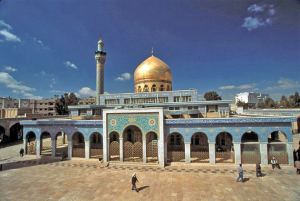
  • Sustainable Security

    After decades of largely unsuccessful military interventions against a long-standing Maoist insurgency, India’s large-scale labor market program MGNREGS has helped reduce conflict dramatically.

    Other than the conflict in Kashmir, Maoist violence is India’s longest-standing internal national security threat. The Maoists are predominantly active in the eastern parts of India, with strongholds in forest areas and places with substantial tribal populations who have seen little improvement in their living conditions since Indian independence 70 years ago. Over time, more than 160 districts have been affected by Maoist violence, and decades of military force by the Indian government have been largely unsuccessful. Conflict intensity escalated in the mid-2000s, but since then Maoist-related deaths have seen an unprecedented decline to reach the lowest level of violence in The number of districts severely affected by Maoist violence fell from 51 districts in 2007 to 12 districts in 2013, and the total number of Maoist-affected districts declined from 165 to 120 districts in the same time period.

    Areas with Naxalite activity in 2007. Image credit: Wikimedia.


    Areas with Naxalite activity in 2013. Image credit: Wikimedia.


    The Naxalite-Maoist insurgency in India

    The conflict started with a peasant revolt in the village of Naxalbari in the state of West Bengal in 1967, which led to a rising insurgency called the Naxalite movement. Naxalites use guerilla tactics in their fight against the government, and aim to overthrow the Indian state to create a liberated zone in central India. They wanted to improve the living conditions of the local population through redistribution of land and the revenue from mining activities.

    The intensity of the Maoist conflict rose dramatically in the mid-2000s, when previously competing Naxalite groups came together to create the Communist Party of India (Maoist). Large parts of east India were heavily affected by that violence, and the Indian government lost de facto territorial control over a number of districts. Civilians were often caught in between the Maoists and government security forces, since both sides had to rely on the local population for information and assistance in remote forest areas.

    In 2006, the Indian Prime Minister Manmohan Singh referred to the Maoist insurgency as the “single biggest internal security challenge ever faced by our country.” Maoist-related deaths rose rapidly, peaking with a large attack in 2009-10 that killed 76 policemen in Dantewada district. In recent years, fatalities have fallen to some of the lowest levels in decades, and the Maoists have been pushed out of many traditional areas of their control. According to government statistics, Naxalite deaths have risen by 65% and surrenders by 185% between 2014 and 2016. Maoist activities are now almost exclusively limited to 35 districts, although the insurgents retain a presence in 68 districts across 10 states.

    What factors explain this sharp rise and fall in violence?

    The Indian central and state governments responded to the increased violence after the creation of the Communist Party of India (Maoist) with a variety of measures. Personnel and spending on security forces were increased, and central and state paramilitary forces started operations against the Maoists that came to be referred to as Operation Green Hunt by the media. At the same time, expenditures on development programs were increased as well, with the hope of improving the living conditions of the local population and thereby the traditionally strained relationship between civilians and the government in Maoist-affected areas.

    One of the first development programs in Maoist-affected areas in this time period was MGNREGS (Mahatma Gandhi National Rural Employment Guarantee Scheme), rolled out across India between 2006 and 2008. MGNREGS guarantees 100 days of employment per year for each household at the minimum wage in public-works programs. The work projects focus on drought-proofing, irrigation and infrastructure improvements in Indian villages.

    The only eligibility criterion is that a household lives in a rural area and is prepared to work full-time in manual jobs at the minimum wage. This allows households to self-select into the program when they need it and covers about 70 percent of the population, making it the world’s largest public-works program. The annual expenditures under the scheme amount to about one percent of India’s GDP. In addition to its size, the program is unprecedented in India and worldwide because the program provides a legal guarantee for employment, which is enforceable in courts. It was rolled out in three separate phases, and the first implementation phase of the program was targeted to 200 of India’s poorest districts, many of which are in Maoist-affected areas, such as Dantewada and Bastar districts in Chattisgarh, and Anantapur district in Andhra Pradesh.

    What role did MGNREGS play in tackling Maoist violence?

    Image credit: Adam Jones/Wikimedia.

    Comparing districts that received MGNREGS to very similar districts that did not receive the program until later, in our research we find police attacks on Maoists intensified after MGNREGS came into effect. This is consistent with an improvement in the relationship of civilians with the government as a result of the program. Since civilians may have important information about the location of the Maoists, who rely on them for shelter and information on police movements, MGNREGS seems to have helped win civilians over and encourage them to share that information with the security forces. The Indian Home Ministry also attributes the increased success of catching Maoists to better intelligence gathering.

    In concurrence with the increase in police-initiated attacks, we find that the Maoists started retaliating against civilians. The rebels traditionally concentrated on attacking government forces rather than civilians, which makes this shift an important change in behavior. In leaflets and other documents, Maoists claim that the killed civilians were police informants and threaten to attack other civilians cooperating with the police.

    MGNREGS therefore appears to have contributed to the effectiveness of government forces by winning the “hearts and minds” of the local population. While this improved effectiveness lead to a short-run increase in violence as government forces become more pro-active, violence declined over time as security forces won more battles against the insurgents.

    This matches the recent substantial decline in Maoist-related violence. Up until around 2010 when MGNREGS was a relatively new program, Maoist fatalities increased substantially, and many top leaders surrendered. Since then, India has seen an impressive decline in Maoist-related deaths and areas under Maoist control. Anti-poverty programs like MGNREGS can therefore support more traditional counter-insurgency strategies if they manage to improve the local population’s relationship with the government. Since civilians take on large risks when choosing to share information on insurgents with government forces, this strategy will only be successful if civilians believe that the benefits from the program are large and long-lasting enough to be worth potential retaliation by the insurgents.

    MGNREGS was set up to be a more permanent program than other initiatives because of the legal guarantee and was enacted partly due to pressure from NGOs and social activists, who also played an important role in monitoring implementation quality. This buy-in from government and NGOs makes the program very different from similar programs elsewhere, and is likely to have contributed to its success.  Lower actual benefits than promised by the government remain a challenge in many developing countries, including India, however. If governments do not ensure a high level of implementation quality, transitory programs and broken promises will sow distrust with citizens, making future investments less effective.

    Authors’ Note: This text is based on our article “Guns and Butter? Fighting Violence with the Promise of Development”, published in the Journal of Development Economics in January 2017.

    Gaurav Khanna is an assistant professor of Economics at the School of Global Policy and Strategy, University of California – San Diego. His research focusses on conflict and the markets for education and labor in developing countries. 

    Laura Zimmermann is an assistant professor in Economics and International Affairs at the University of Georgia. Her research focuses on the labor-market and political economy impacts of government programs in developing countries, and she has worked widely on effects of MGNREGS in India.  

  • Sustainable Security


    Food insecurity small

    The United Nations Development Programme (UNDP) defines food security as “all people at all times having both physical and economic access to the basic food they need”. However, due to a complex range of interconnected issues from climate change to misguided economic policies, political failure and social marginalisation, over 2 billion people across the world live in constant food Insecurity. It is important to take a sustainable security approach to look at the importance of “physical and economic access to basic food” by exploring the links between food insecurity and violence.

    A recent article published by the journal Conflict, Security & Development examines food riots as representations of insecurity and looks at the relationship between contentious politics and human security.

    Thomas O’Brien, author of the article, argues “the upheaval caused by a food riot can lead to lasting instability and violence as social and political structures are challenged”. Global rises in basic food prices triggered demonstrations and often violent protests in “over 30 countries across Africa, Asia, Latin America and the Middle East in 2007-08”. The article puts recent food riots and the current global food crisis in historical perspective. Food riots are about more than “just access to food”.  They represent dissatisfaction with political structures and perceived injustices.

    It is important to note that “the extreme nature of the rise in food price in the absence of much evidence of food shortages, left a sense of something unnatural about the way food markets were working”. Although poverty, weak states, ineffective civil society and lack of political freedom all contribute to food insecurity and the possibility of violent food riots, we cannot ignore to challenge underlying transnational and global power structures: “146 protests in 39 countries over the 1976-92 period were linked to the imposition of International Monetary Fund and World Bank structural adjustment policies.” Food security is fundamental to human security and needs to be approached by addressing underlying causes and drivers. A sustainable response to food insecurity would take global cooperation, justice and equity as key requirements.

    An often mentioned driver of food insecurity is climate change. Climate change already has a great impact on global security concerns and the physical, social and economic effects will undoubtedly only be exacerbated in the near future. Increasingly high temperatures and little or inconsistent rainfall have devastating effects on crop yields in places such as India, Africa’s Sahel region and the mid-western United States.

    The catastrophic food crisis in Niger in 2005 for example was largely attributed to the effects of climate change and competition over limited resources. Years of too little and too inconsistent rainfall have meant devastating droughts and diminishing harvests in this Sahel country of west Africa which has the highest birth rate in the world. Increasingly advanced desertification due to climate change means competition and potentially violent conflict, over limited resources such as water and arable land, intensifies.

    In the 2005 food crisis however, although thousands of children died of malnourishment, Niger had produced enough food to feed its population. The real issue was a food shortage in neighbouring Nigeria. Nigeria has an economy based primarily on oil exports with a significantly weakened agricultural sector. Instead of Niger feeding its own population, much of the harvest was sold to wealthier Nigeria at prices much higher than anyone in Niger could have afforded. This is a good example of why free market economy and trade liberalisation do not necessarily benefit all parties involved. Writing about the great famines of the last century, Nobel laureate Amartya Sen noted “a drought is natural but famine is man-made”. What this tells us is that although the challenges we face by climate change are serious threats, there is much that can be done to ensure more food security through political and economic policies.

    Farmers in Niger are struggling. But so are farmers in Jamaica. In contrast to Niger, Jamaica has a wealth of fruit, vegetables, fish and an abundance of fertile land. About one fifth of this island’s population is employed in the agricultural sector. Still, farmers are struggling to survive because they cannot compete with the much lower prices of subsidised agricultural imports from the USA. As cheap foreign products flood the market, Jamaican prices are driven down which makes local food production by and large unprofitable. As they rely more on foreign food imports, Jamaicans will be increasingly vulnerable to price volatility on the global marketplace. With the average Jamaican spending about half of household income on food, such vulnerability to price changes is a real danger to food security.

    Importing less foreign food products is a difficult matter for Jamaica because of the strict trade liberalisation policies imposed on the country through its debt relief agreements. One could also argue that if it is cheaper for Jamaica to import food than to produce its own, why should it still encourage its local agricultural sector? When a country is dependent on food imports, it cannot assure food security for its population.

    So far US imports have been much cheaper than local Jamaican produce. 2012 however has seen the “worst US drought in 50 years” according to last month’s Aljazeera article entitled Food riots predicted over US crop failure. “Grain prices have skyrocketed and concerns abound the resulting higher food prices will hit the world’s poor the hardest- sparking violent demonstration” says the newspaper. Corn is a primary staple in Sub-Saharan Africa, Central and South America, and prices have already gone up 60 per cent since June because “the United States accounts for 39 per cent of global trade in corn and stockpiles are now down 48 per cent” due to the drought.

    Price fluctuations on the global food market do not affect all people in the same way as “people in wealthy industrialised countries spend between 10 to 20 per cent of their income on food. Those in the developing world pay up to 80 per cent. According to Oxfam, a one per cent jump in the price of food results in 16 million more people crashing into poverty.”

    A sustainable approach to food security would address underlying forces such as climate change, economic and political policies and social marginalisation.

    Paul Rogers, expert on global conflict and consultant to the Oxford Research Group on global security, was recently featured on the BBC Radio 4 programme Costing the Earth. When asked whether free markets can help feed us, he replied:

    “It will contribute in some way, but I think it is fairly minimal. There are far more important things to consider. Look at it this way: Back in the world food crisis in the early 1970s, which was the worst for about 80 years, there were about 450 million people malnourished.  Now the figure is closer to 800 million. Now, that malnourishment and lack of food is not generally because there isn’t enough food to go around. Even at the height of that crisis there was still half the normal reserve. It is because people cannot afford to get the food or to buy the food. […]  If you are looking at the situation of poor people across the majority world, there has to be some way in which we can actually improve the production of food in and around those areas to provide greater resilience in the face of what is coming because beyond all of this is the whole issue of climate change. I think we will have a wakeup call this year in terms of what might come.”

    Anna Alissa Hitzemann is a  Peaceworker with Quaker Peace and Social Witness. She currently works with Oxford Research Group as a Project Officer for the Sustainable Security Programme, with a focus on our ‘Marginalisation of the Majority World’ project.

    The Conflict, Security and Development article Food riots as representations of insecurity is available for paid download here
    The AlJazeera article Food riots predicted over US crop failure is available here
    The Pulitzer Center for Crisis Reporting project Agriculture and Jamaica’s rural poor is available here
    Paul Rogers’ Monthly Global Security Briefings can be read and subscribed to here
    Image source: Dioversity International
  • Sustainable Security

    Golden Dawn, a Greek Neo-Fascist party, has gradually enjoyed greater success in Greek and European parliamentary elections. What are the drivers behind this development?

    The Greek Golden Dawn, a violent neo-Nazi party, has remained in the margins of the Greek political system for most of its political life. However, within the context of the emerging economic crisis both in Europe and in Greece, the party marked an electoral breakthrough in May and June 2012, receiving 7 per cent of the vote in May and 6.9 per cent in June, translating into 21 and 18 parliamentary seats out of 300 respectively. As the economic crisis unfolded, and societal upheaval in Greece became reinforced by the emerging migration crisis, the party retained its support in the 2014 European Parliament Elections receiving 9.38 per cent of the vote; and in the January and September 2015 general elections, when it retained third place in the party system with 6.28 and 6.99 per cent of the vote respectively.

    The ideology of Golden Dawn

    golden_dawn_members_at_rally_in_athens_2015

    Image by Wikimedia Commons.

    The Golden Dawn is unlike all other parties in the Greek parliament; and most other far right parties in Europe. While the party itself rejects the fascist label, it nonetheless espouses all core fascist- and more specifically Nazi- principles. In our book, we show the party rejects liberalism and socialism and endorses what it terms the ‘third biggest ideology in history’, i.e. nationalism, combined with support for an all-powerful state premised on ‘popular sovereignty’. In its manifesto the party states that being a member of the Golden Dawn entails the acceptance of the following principles: the establishment of the state in accordance to nationalism; the moral obligations that derive from this ideology including the rejection of any authority that perpetuates societal decline; the acceptance of nationalism as the only authentic revolution; the establishment of the popular state in which there are no inequalities on the basis of wealth; racial supremacy and more specifically the belief in the continuation of the ‘Greek race’ from antiquity to the modern day; the idea that the state must correspond and be subservient to the nation/race; and the nationalization of all institutions.

    The fascist myth of palingenetic ultra-nationalism constitutes a key ideological premise underpinning the party’s discourse. The ideology of the Golden Dawn may indeed be categorised within the ‘ethnic nationalism’ variant, emphasising blood, geneaology and the perennial nature of the Greek nation. The party emphasises ties with ancient Greece, past wars, imperial experience during the Ottoman years and invasion in the 1940s. In this context, the party makes frequent references to ancient Greece, emphasising the heroic traits of those belonging to the Greek nation. Historical figures, whether heroes of ancient Greece, Byzantium, the Greek War of Independence, the Second World War or Cyprus are glorified for their heroism, bravery and sacrifice. By referring to a very large array of officially recognised historical events, personalities and national identity traits and placing them within the ethnic election framework, the Golden Dawn successfully integrates them into its ultra-nationalist palingenetic ideology.

    The Golden Dawn seeks ‘catharsis’. The party’s key goal is to eliminate all political divisions and cleanse the nation from outsiders. Communists are identified as those internationalists that seek the annihilation of the Greek nation. Contributing to this ethnocide are also Greece’s external enemies, which include all foreigners who according to the Golden Dawn contribute to the moral and cultural decay of Greece, for example people of Jewish origin and all immigrants.

    Militarism hence is the key to both the Golden Dawn’s ideology and organizational structures. The army is the ultimate value, they claim. A value that encloses within it ‘blood, struggle and sacrifice’. The party’s members see themselves as ‘street soldiers’ fighting for the nationalist cause. This places violence at the heart of Golden Dawn’s activities and illustrates their distinctive view of democracy as a bourgeois construct only to be used as a means for achieving their ultimate goal: its abolition, as its leader Nikolaos Michaloliakos claims. It also explains the link between Golden Dawn members and army officials, as well as the organization of ‘paramilitary orders’ or ‘battalions’.

    Therefore the party should be understood as neo-Nazi, not because of its past use of Nazi paraphernalia, but rather because its ideology and organizational structures fulfil the criteria of what constitutes a neo-Nazi group. Its association with a large number of violent acts resulted in the imprisonment of the majority of its MPs including the party leader in 2013/2014. 70 defendants, which include the party leader and the party’s MPs, went on trial in Spring 2015 on charges including murder, grievous bodily harm and sustaining a criminal organization. The trial remains on-going.

    Accounting for the rise of Golden Dawn

    How may we explain the rise and sustained support for the Golden Dawn? The Golden Dawn’s electoral fortunes have coincided with both the economic and migration crises that have affected Europe as a whole. For example, in 2012 during the peak of Greece’s economic crisis, the country’s unemployment was at 24.5 per cent with youth unemployment at 55.3 per cent. In 2013 these figures increased to 27.5 and 58.3 respectively. The government deficit was -8.6, which increased in 2013 to -12.1. In addition, Greece experienced the bulk of the migration crisis as the entry point for a high number of refugees who travel from Turkey to the islands of Kos, Chios, Lesvos and Samos. For example, an estimated number of 856.723 refugees arrived by sea in 2015 and 169.459 in 2016.  It would make sense to seek causal links between the economic and migration crises on the one hand, and the rise of the Golden Dawn on the other. However, the adoption of a comparative logic suggests that this argument does not hold when subjected to empirical scrutiny. Other European countries that were also severely affected by the Eurozone and/or migration crises have not experienced a comparable rise in support for the far right. For example, Spain’s unemployment levels are second in the EU after Greece with 24.8 per cent in 2012 and 26.1 per cent in 2013. Youth unemployment in Spain is also very high at 52.9 per cent in 2012 and 55.5 in 2013. Portugal’s somewhat lower unemployment rates at 15.8 per cent in 2012 and 16.4 per cent in 2013 are still above the EU average. The same goes for the country’s youth unemployment rates at 37.9 per cent in 2012 and 38.1 in 2013.

    We posit an alternative explanation that takes into account the broader implications of the crises of Greek society. We understand the rise of the Golden Dawn as a response to a perceived breach of the social contract in Greece. Therefore, we see this rise not as question of intensity of economic and/ or migration crisis, but rather as a question of the nature of the crisis, i.e. economic and/migration versus overall crisis of democratic representation. Extreme right parties such as the Golden Dawn are more likely to experience an increase in their support when a societal crisis culminates into an overall crisis of democratic representation. This is likely to occur when severe issues of governability impact upon the ability of the state to fulfil its social contract obligations. The perceived inability of the state to mediate the effects of the crisis and to deliver services based on the redistribution of the collective goods of the state. When state capacity is limited or perceived to be limited, then the result is the delegitimization of the party system as a whole. This is because the system is perceived as incapable to address the crisis and mediate its socioeconomic effects. This breach of the social contract is accompanied by declining levels of trust in state institutions, resulting in party system collapse.

    Conclusion

    If we are right, then the Golden Dawn is a specific symptom of a broader institutional pathology. Therefore in order to contain this phenomenon, political actors should focus on institutional reform in order to restore the domestic social contract and reintegrate key social groups back into the political mainstream. More specifically:

    1. Empower the middle class: because the middle class is key to both economic prosperity and democratic stability. Weak democratic institutions and widespread corruption have resulted in the weakening of the middle ground and this is what allows extremist groups to co-opt middle-class voters. Unless we address this institutional pathology at its core, extremism will keep recurring.
    2. Welfare reform: because the appropriation of key social groups into the mainstream depends on social security. The greater the insecurity, and the broader the populace it affects, the greater the potential of extremist elements to co-opt these social groups that would otherwise support mainstream alternatives.
    3. Strengthen civil society institutions: Because civil society fosters tolerance. Greek civil Society is weak at all levels: weak structure, limited impact and limited membership. There is a wider sentiment of public distrust towards this type of organisations in Greece because of the long tradition of corruption and clientelistic relations that prevail.
    4. Reform the education system: Because education is a key means of socialisation that institutionalises political culture. The type of socialisation that occurs from an early age at the school level is the one that becomes most embedded. And, because people of a younger age are more easily moulded into violence and extremism, they tend to occupy a large portion of far right party membership. As long as the Greek education system promotes exclusion and vilifies the other through official textbooks, it will continue to offer opportunities for right-wing extremism.

    Dr Sofia Vasilopoulou is a Senior Lecturer in Politics at the University of York.

    Dr Daphne Halikiopoulou is an Associate Professor in Comparative Politics at the University of Reading.