Category: 09

  • Sustainable Security

    After four years of peace negotiations, the 52-year-long civil war between the Colombian government and the left wing guerrilla FARC-EP recently came to an end. What will happen now to the thousands of combatants who are laying down their arms and what are the challenges to their reintegration? Could a gender aware reintegration programme hold the key to long-term peace?

    On November 30, 2016 the Colombian government formally ratified a revised Peace Agreement after a national plebiscite rejected the original peace accord. The agreement ended the longest armed conflict in the western hemisphere and in Latina America.

    The FARC-EP (Fuerzas Armadas Revolucionarias de Colombia – Ejército del Pueblo) started the demobilisation process in January 2017. The combatants are currently gathered in 23 transitory areas (zonas veredales transitorias de normalización) and 7 camps that will be in force for 180 days. The government is expecting around 6.300 combatants to reach the areas. In relation to children associated with the armed group, the High Commissioner said that the delivery´s protocols will be activated upon FARC´s arrival in the zones: as FARC combatants enter the zones they will be delivering the minors and UNICEF will receive them.

    The FARC´s demobilisation and disarmament is supported by the United Nations Special Mission in Colombia. The mission has the mandate to monitor and verify the disarmament, and be part of the tripartite mechanism that will control and verify the definitive bilateral ceasefire and cessation of hostilities.

    Once the FARC´s members are settled in the transitory areas, the first step will be for arms and weapons to be laid down and registered. Unstable armaments will be destroyed on site and the UN Mission will remove all the weapons from the camp after 180 days.

    After the demobilisation and disarmament, the former combatants will also go through a reintegration process that, at present, is based on the current legal framework implemented by the Colombian Agency for Reintegration (Agencia Colombian para la Reintegración: ACR). The Colombian government agency ACR is the institution in charge of the reintegration process. The ACR was created on 3 November 2011 as a new state agency ascribed to the Administrative Department of the Presidency of the Republic.

    Overview of the Colombian reintegration process

    The reintegration of former combatants is a formidable challenge for Colombia. In addition to the FARC´s members that will soon reintegrate, data from the ACR shows that there are currently 15.043 persons taking part in the governmental reintegration process and a further 15.478 former combatants have completed the reintegration programme since the ACR´s creation. Among the persons currently going through the reintegration programme, 47% are former paramilitaries, 42% are former FARC´s combatants who demobilized before the peace agreement and most of the remaining former combatants were enrolled with the guerrilla ELN (Ejercito de Liberacion Nacional).

    Additionally, if the on-going negotiation between the ELN and the Colombian government succeeds there will be another collective demobilization of about 2.500 combatants. This figure includes both men and women but not children. Although it is impossible to know with certainty how many children and adolescents are currently linked to the armed groups or have been demobilised in the last few decades, between 1999 and 2013 the Colombian Family Welfare Institute (ICBF) assisted 5,417 children and adolescents who were separated from illegal armed groups (28 percent of them are girls and 72 percent boys).

    The ACR takes into account national and international guidelines on DDR, such as the United Nations Integrated Standards for Disarmament, Demobilization and Reintegration (IDDRS). The main components of the reintegration process are social and economic assistance (such as payments for basic living expenses), psychosocial care, vocational training, and access to the national health system. The reintegration model includes eight dimensions: personal, productive, family, habitability, health, educational, civic and security.

    Challenges to the reintegration process

    Revolutionary Armed Forces of Colombia (FARC) guerrillas guard the location of talks between Manuel Marulanda, Marxist rebel chief of the FARC, and Colombian President Andres Pastrana in Los Pozos, Caqueta, 750 km (466 miles) south of Bogota, 09 February 2001. The two began 09 February a second day of talks that could relaunch the fragile peace process in the violence-torn South American country. AFP PHOTO/Luis ACOSTA

    Image credit: Silvia Andrea Moreno/Flickr.

    The reintegration of former combatants is a key factor in the stabilisation of countries that are transitioning from conflict to peace. Unsuccessful reintegration could lead to the creation of new armed groups, the expansion of criminal activities and the recurrence of violence. In transitional and violent settings “unemployed, demobilized young men, socialized to violence and brutality during war, are more likely than others to form gangs, particularly in urban areas, and pose a constant threat to the security of women and children” (De Watteville, 2002: ix). As it has been acknowledged by the international agencies working in reintegration, creating alternative livelihoods and jobs opportunities is exceptionally difficult in post-conflict or conflict settings. The high number of former combatants to reintegrate into the civilian life poses an arduous challenge for the second most economically unequal country in Latin America, with an estimated unemployment rate of 8.3 and one of the highest and most inequitable concentrations of land ownership in the world.

    Colombia has already experienced the consequences of an incomplete reintegration process. After the demobilization of the paramilitary group United Self-Defense Forces of Colombia (Spanish: Autodefensas Unidas de Colombia: AUC) in 2005 and 2006, new armed groups emerged. Those groups are referred to as Las Bandas emergentes en Colombia o bandas criminales emergentes (BACRIM), meaning emerging criminal gangs, by the Colombian government but it has shown similar continuity with the previous AUC structure and often some mid-level paramilitary commanders have joined this new groups.

    There is a risk that many demobilized combatants will receive recruitment offers or will be threatened into joining the new organizations and narcotraffic groups, as has happened in the past. A recent Wall Steet Journal article reported that the Brazilian gang Primer Comando is recruiting FARC´s members in order to extend its drug network and routes. Since one of the main factors that can jeopardize the reintegration of former combatants is the enormous Colombian drugs trafficking market, the government launched a comprehensive strategy against illegal crops with the goal to substitute and clean about 50,000 hectares of illicit crops in 2017.

    One of the main challenges for former combatants is to find a sustainable and decent employment. Most of the ex-combatants have an extremely limited education level and it will be very challenging for them to succeed in the increasingly competitive job market. Many of them joined the armed groups as teenagers and did not complete a formal school education. The governmental reintegration programme developed learning programs for adults and it offers education opportunities. However, adults’ education has many challenges and not all former combatants succeed in completing the studies. Among those who took part in the reintegration programme, 21.875 passed the primary level of elementary school, 8.064 passed the second grade of elementary education, 14.967 graduated from the high school and 2.763 attended further education. Most of the jobs that are accessible with a low education level are paid the national minimum wage, which in 2017 is about 240 euro (737,717 Colombian pesos). Without doubt, the drugs cartels and the armed groups offer payments that are much higher than those of the regular job market for unschooled persons.

    Additionally, the former combatants have to overcome the trauma generated by the war. It has been estimated that in Colombia 90% of the people who enter the reintegration process have some kind of psychosocial affectation.There are also gender specific risks and challenges effecting the reintegration phase. Demobilised women may face stigma and discrimination. In Colombia, where gender roles and patriarchal models are very strong, female combatants that have transgressed traditional gender norms – by joining the armed groups – face difficulties in their personal lives and for many of them returning to their families is not an option. It has been reported that 87% of individually demobilised women choose to leave in anonymous urban environments like Bogotá and Medellín, instead of their native towns.

    The gender dimension of reintegration programmes

    The importance of a gender mainstreaming approach during the reintegration processes is widely recognized today and many manuals and guidelines have been designed to reflect this (United Nations 2014, UN Women 2012). Also, the literature emerging in the conflict resolution field examining masculinities and transitional justice shows the importance of addressing militarized and hegemonic identities as a key step toward peace (see Specht 2013; Enloe 2008; Cockburn 2010). However, the demobilization and reintegration of ex-combatants frequently overlooks the relationship between masculinities and the construction of peace (see Flisi 2016). Still there is limited knowledge on how to deconstruct wartime masculinities and too few attempts to promote non-violent ideals of manhood.

    In Colombia different initiatives are emerging that focus on the gender dimensions of the transition to the civilian life, with a special focus on family relationship, positive masculinities and gender roles. In this sense, the Colombian ACR´s reintegration programme has elaborated a gender strategy. The strategy promotes non-violent gender relations, both in the reintegration process and in the families. This is done through the implementation of psychosocial activities that include a gender and new masculinities perspective. To this extent, competencies such as non-violent conflict resolution and assertive relationships are encouraged by cultivating the ability to identify and generate constructive relationships. The focus is on effective communication, tolerance, empathy, emotional assertiveness and the demilitarization of masculinities and femininities.

    Many of the challenges of a reintegration programme are related to the community, family and domestic spheres. The anthropologist Kimberly Theidon, who researched the reintegration of former combatants in Colombia, highlights the risk of an increase and “domestication” of violence. Similarly, researchers showed an increase in sexual violence against women and girls as well as other forms of violence after the reintegration of paramilitaries (see Caicedo Delgado 2007; Londoño & Ramírez 2007). Tackling gender based violence is an important component of a holistic and integral reintegration programme. A successful gender strategy is not limited to a focus on womens’ needs and should also consider the gender dynamics and the relationship within the family and the community. A transformative gender reintegration programme should include activities that are able to tackle gender stereotypes such as initiatives to promote the role of men as care givers, equal redistribution of the childcare responsibilities and womens’ economic and political empowerment, among many others examples. Since the end of 2011 the ACR designed and implemented a special focus on tackling interfamily violence that is composed of 24 activities aimed to address both men and women. But the effectiveness of those activities is not known and further research is needed to identify the impact in the long term.

    Conclusions

    In Colombia fighting narcotraffic and criminal armed groups should be at the forefront of the government strategies to ensure a successful reintegration. However, there other many other aspects of the reintegration that are equally important and should not be overlooked such as technical and professional education, employment generation, psychosocial caring, family and community support, domestic violence and gender specific needs. There is important evidence of the Colombian Government´s efforts to incorporate a gender approach into the reintegration programme. Colombia could provide valuable examples in elaborating strategies to tackle violence against women and deconstructing militarized masculinities as part of the reintegration process but further evidence on this needs to be collected.

    Isabella Flisi is an international development worker and researcher with almost 10 years of experience working on human rights in Colombia and in Latin America. She has worked with different international organizations: Peace Brigades International, Christian Aid, War Child Holland, FAO and KIT-Royal Tropical Institute. She is currently a Ph.D. candidate at the Ulster University Transitional Justice Institute, where she is researching child soldiers´ reintegration and reparations programs from a gender perspective. Flisi has both a master’s degree in international cooperation and a B.A. in anthropology from the University of Bologna, Italy. Her expertise covers conflict transformation, peace-building, DDR, gender-based violence and human rights with a strong focus on women and child rights. She has published the article The reintegration of former combatants in Colombia: addressing violent masculinities in a fragile context in Gender & Development. She wrote about the reparations for victims of sexual violence in Colombia in PassBlue.

  • Sustainable Security

    Chemical weapons elicit a very specific emotive and political response from populations, namely, anxiety. What are the drivers behind the fears surrounding chemical weapons? 

    “War, like revolution, is founded upon intimidation. A victorious war…destroys only an insignificant part of the conquered army, intimidating the remainder and breaking their will…Terror…kills individuals, and intimidates thousands”.

    Writing in 1920, Leon Trotsky thus attributed the power of war and terrorism to its psychological effect. The ability to intimidate and coerce is the key strategy in a world in flux; fear and uncertainty are the weapons of choice for terrorist groups. The observation that terrorists endeavour to kill few and create fear among many has been woven tightly into the fabric of terrorism discourse for decades.  

    But the current century has witnessed an evolved threat paradigm in which the aim of a new type of terrorist group is to achieve “a lot of people watching and a lot of people dead”. Chemical weapons are often presented as the apex of such a goal. Yet increasingly it is argued that chemical weapons are merely a tool to elicit fear that far exceeds their actual destructive clout. This fear is a very human response. The psychological power of chemical weapons is intrinsically linked to their contaminant nature, indiscriminate harm and ability to undermine an individual’s sense of security.

    Are chemical weapons really weapons of mass destruction, with a devastating impact on infrastructure, life, and property? Or, are they weapons of terror? Distinguishing between the two, this article queries how uncertainty feeds the fears surrounding chemical weapons. To what extent does the weapon of terror moniker depend on the concept of mass destruction?

    The enduring power of contamination

    new-york-national-guard

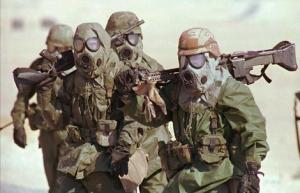
    Image credit: New York National Guard/Flickr.

    Chemical weapons have an ancient history. Early hunter-gatherers learned to poison their arrows to ensure an effective kill. Poison gas as a weapon of war was recorded by Thucydides in 428 BCE. The scorched earth tactic of poisoning wells using the rotten corpses of people who had died from infectious disease was used across the Ottoman era and Middle Ages. Chemical weapons have been utilised – or attempted – in many conflicts since then. The British government, for example, approved the use of sulphur fumes at the siege of Sebastopol during the Crimean War. Even in Afghanistan and Iraq, the US Army used white phosphorous grenades, as did the British.

    As scientific advances began to allow a greater multiplicity of chemical agents in industrial quantities, concerns mounted over potential consequences. In recognition of the sentiment that injury or death by poison is inhumane, the Hague Conventions (1899 & 1907) outlawed the battlefield use of poisoned weapons and toxic gas via projectiles. The declaration prohibiting the dissemination of asphyxiating and deleterious gases was ratified by all major powers except the US which refused to sign, arguing that projectiles as detailed in the convention had not yet been fully developed.

    The use of poison has long been regarded as morally reprehensible. This harks back to disdain inherent to poisoning and its associations with chemical weapons: in contrast to the hero’s death by sword in battle, poisoning is regarded as cowardly and secretive. Yet this became more acute in the aftermath of the Hague Conventions: moral indignation follows the breaking of accepted conventions, shattering indoctrinated agreement as to non-use. In the early 20th century, both Allies and Axis powers were reluctant to be the first to breach the law.

    Even General John Pershing, having established the U.S. military’s first gas warfare unit in 1917, denounced chemical weapons as “abhorrent to civilization…a cruel, unfair and improper use of science…fraught with the gravest danger to non-combatants”. By the end of WWI, over 124,000 tonnes of chlorine, phosgene and mustard gases had been dispersed, causing approximately 90,000 deaths and 1,230,853 injuries and earning WWI the moniker, “the chemist’s war”. Though the development of gas masks reduced the number of casualties in the later years, the scale of chemical warfare had set the precedent for a lingering psychological and moral response. That even Hitler refused to use chemical weapons on the battlefield (if not in the gas chambers) cemented their standing as a wholly unacceptable weapon of war.

    For decades, the threat from chemical weapons remained largely in the hands of states. Almost two decades since the Chemical Weapons Convention came into force outlawing the production, stockpiling, and use of chemical weapons, the threat of non-state actors obtaining or producing chemical weapons has become of increasing concern. Large quantities of improperly disposed unconventional weapons have been unearthed in recent decades. After WWII, for instance, tons of mustard gas, sarin, soman, tabun, hydrogen cyanide and many other agents were left in storage facilities near towns and cities, buried in landfills across the world or dumped at sea. During the Cold War, chemical weapons facilities proliferated across the world, shrouded in secrecy. Throughout this time, in the Soviet Union thousands of tonnes of chemical materials were simply dumped in undisclosed, unchartered locations. With the collapse of the Soviet Union, some chemical research units were abandoned, leaving available a mass of untraced and unacknowledged weaponry.

    Chemical weapons and non-state actors

    Various terrorist organisations have spent years working on developing chemical weapons, of which the so-called Islamic State (IS) is but one. The eleventh volume of al-Qaida’s Encyclopaedia of Jihad provides instructions on how to construct chemical and biological weapons, although al-Qaida seems to have balked at actually using such weapons. Where groups have succeeded in their use, they have created vast shockwaves, with minimal outlay. In 1978, a Palestinian group injected non-lethal quantities of mercury into Jaffa oranges leading many countries to cease imports, jeopardising a market worth $172 million to Israel at the time. In 1989, terrorists reportedly laced Chilean grapes with cyanide, costing the Chilean fruit industry $333 million, despite the chemical only having been identified in two grapes.

    In 1995, Aum Shinrikyo unleashed the largest gas attack in peacetime history on several lines of the Tokyo subway, killing 12 people and injuring thousands. Though the proportion of people killed was relatively low compared to numbers injured, the attack demonstrated the ability of non-state actors to obtain and use significant quantities of non-conventional weapons. It has subsequently been cast as a “crossing of the Rubicon” (to pass a point of no return), foreshadowing further similar attacks.

    Chemical anxieties

    Chemical weapons elicit a very specific emotive and political response. When the threat and impact of terrorist attacks using conventional weapons against Western targets is so real, why does the as-yet unrealised potential for chemical terror attacks in the West retain a particular power over our thinking?

    Attempts to explain the anxieties surrounding chemical weapons remain incomplete when considered alongside conventional weapons with similarly cruel capabilities. Why, as in Aleppo or Homs, do we regard using explosives to tear people apart as more humane than burning or asphyxiating them to death? Weapons such as “soft nosed” bullets (which disintegrate upon entry to the body) were banned alongside asphyxiating gases by the 1899 Hague Conventions, yet they do not receive such global censure.

    Part of the concern specifically attributed to chemical weapons lies in the human fear of unpredictable, adverse events such as the potential to develop illness after exposure. The most terrifying threats are those perceived not just as lethal but as dehumanising. The fear of chemical weapons is therefore, at least partially, a result of their potential to cause insidious harm.

    So the potency of chemical weapons lies in the unknown and in how they fester in the imagination of those who have felt threatened by them. Chemical weapons attacks are distinguished by the propagation of functional somatic – medically unexplained – physical symptoms, bestowing unconventional weapons a “psychogenic” hallmark. A result of the potential for chemical weapons to yield psychiatric illness, the notion that the long-term psychological consequences of unconventional weapons may be worse than acute physical, is popular in psychological circles. The many chemical incidents in which low-risk patients far outnumbered those whose exposure could be confirmed, contribute to this “weapon of terror” epithet: the perception of exposure to a toxin is a greater determinant of health status and anxiety than actual exposure. After the Aum Shinrikyo attack, over 4,000 people with no sign of exposure sought medical care.

    Many chemicals are perceived by the public as having a high to extreme degree of uncertainty; many, too, elicit strong anxiety, which can drive somatic symptoms. In order to form judgement under uncertainty, people form intuitive assessments upon relevant information. Attempting to decrease their uncertainty, people may apply preconceived beliefs (for instance, that chemicals are dangerous) to symptoms, even if benign, constructing a causal link between symptom and event.

    Consider, for instance, cases in Israel, a nation so subject to the corollaries of war that it has been termed a natural station for the study of stress. During the 1991 Gulf War, Israel endured 18 Scud ballistic missile attacks from Iraq. The stress of conventional bombardment was compounded by the fear that the missiles contained nerve agents; residents had been instructed to carry gas masks and prepare for Iraqi use of biological or chemical weapons. Fearing contamination, over 1,000 patients attended medical facilities with symptoms such as tremors and breathing difficulties. Only 22% of patients had been genuinely injured: none by biochemical agents. 27% of casualties had mistakenly injected themselves with atropine, an antidote to nerve agents.

    Conclusion

    There are two schools of thought explaining the power of chemical weapons. On one hand is the argument that chemical weapons can be harnessed as weapons of mass destruction. This bears significant political pull. On the other, there is scepticism as to their capabilities, where instead they are branded weapons of psychological terror. The schism between “weapon of terror” and “weapon of mass destruction” is rarely acknowledged. Conflation of the two allowed Tony Blair to drawn upon their psychological power to justify the 2003 invasion of Iraq, which shattered the Middle East.

    The truth lies somewhere in between. The psychological and physical fallout of chemical weapons are, essentially, two sides of the same coin. Feared or sustained physical harm gives rise to short-term anxiety and long-term psychological distress. Chemical weapons victims may never be definitively free from the physical effect, thus the psychological effects may endure. Uncertainty directly impacts upon fear, and is thus one of the most influential features of human history. As human experience is a complex nexus of affect, behaviour, cognition and physiology, chemical weapons are disturbing for their ability to bear upon each, fracturing this integration. Uncertainty can become visceral. While war does not accommodate certainty, the potential use of chemical weapons will feed doubt and continue to draw substantial political influence.

    Clare Henley divides her time between acting as Assistant to the Director of the Oxford Process, and as Project Officer at Refugee Trauma Initiative. She previously worked on the Humanitarian Impact of Nuclear Weapons Initiative at Chatham House, and at the Maudsley Hospital’s Centre for Anxiety Disorders and Trauma. Prior to this, she interned on a decontamination project with the Behavioural Science team at Porton Down, Public Health England. Clare has an MSc in War and Psychiatry from King’s College London, where her thesis focused on the psychological impact of chemical, biological, radiological and nuclear weapons. Her other work focused on topics such as the impact of war on child soldiers and of being held hostage. She also has a BSc in Psychology from the University of Exeter.

  • Sustainable Security

    With right-wing populism growing across Europe, Germany was thought to be an exemption to this trend. However, the rise of Alternative for Germany could potentially change this.

    While far right parties have been on the rise throughout Europe for decades, it seemed like Germany was immune to the seduction of the far-right. Whereas, among others, the National Front in France, the Dansk Folkeparti, Flemish Interest in Belgium and the Freedom Party in Austria recorded growing electoral results, parties such as the Republicans (REP), the National Democratic Party (NPD) or the German People’s Union (DVU) were unable to overcome the electoral threshold. Although successful at the national level and represented in several regional parliaments (Landtage), no party to the right of the Christian Democrats has managed to gain seats in the Bundestag since 1949. Why has this been the case in Germany?

    Germany’s “special status”

    Political scientists and other observers both in and outside the country were puzzled by the ‘special status’ of the German party system, all the more so because the key conditions for the electoral success of right-wing populist and radical right parties were not that different from the European neighbors. Several studies have shown a small but relatively stable presence of nativist, even xenophobic attitudes within the German society. However, although right-wing populist parties profited from these preconditions in several state elections – e.g. in Baden-Württemberg in the early 1990s and some East German states from the beginning the new millennium onwards – they were not able to establish at the federal level. One can hardly identify one single reason for this mismatch, but according to most scholars, the answer lies in three German characteristics.

    Firstly, the German political right was divided and fractioned. While in France, Austria, Switzerland and other European countries, major far right parties were able to unify the right beyond the Conservatives, the right spectrum in Germany was distinguished by a high degree of competition. For instance, with NPD and DVU, two main players of the extreme right competed against each other in several Land elections until their consolidation in 2011. At the same time, the populist radical right spectrum was marked by the coexistence of various small parties, such as The Freedom or the so-called ‘Pro’ Movement, a minuscule group that basically operates in North Rhine-Westphalia.

    Secondly, the yearlong strategy of the Christian Democrats, which consisted in the integration of conservative streams within the German society, might have had a negative impact on newcomers on the right. Especially the Bavarian CSU, an autonomous party that is embedded in the Christian Democratic Union at the federal level—the CDU, in turn, holds no regional branch in Bavaria—was able to address conservative voters beyond the Bavarian borders and helped to maintain the strategy of the Union.

    The third reason relates to German history. Since the end of World War II, radical or extreme right parties have been dealing with stigmatization and exclusion from the political discourse.  While far right parties are treated as outsiders in almost all countries, in Germany, they are suspected of standing in the tradition of historical Nazism and thus barred. For instance, when the NPD found its way into the state parliament of Mecklenburg-West Pomerania in 2006, the other parties decided to not to support any of the NPD’s parliamentary initiatives (so-called ‘Schweriner Weg’ – ‘Way of Schwerin’).

    These unfavorable conditions contributed a great deal to keeping far right parties out of the German party system for more than six decades. At the beginning of 2017, however, it seems like the ‘anti-fascist consensus’ of the German post-war era has begun to totter. Violent acts against refugees have risen. In 2015, the German Federal Office of Criminal Investigation (Bundeskriminalamt) had registered a right-wing populist political movement (‘Pegida’), although solely a regional phenomenon in the city of Dresden, has dominated media coverage on East Germany. The most impressive evidence for the establishment of a far right stream is the ongoing success of a new right-wing populist party: the Alternative for Germany (AfD).

    Accounting for the AfD’s rise

    afd

    Image credit: Metropollco.org/Flickr.

    Since its foundation in the first quarter of 2013, the AfD has been denoting growing electoral support. Whereas it had failed to jump over the electoral threshold in the 2013 general election, the party won seats in every state election since that time. With partly extremely high results—such as 24.3 percent in Saxony-Anhalt and 20.8 percent in Mecklenburg-West Pomerania—the AfD is already the most successful new party in the history of the Federal Republic.

    To some scholars—including the author of this piece—one crucial reason for the popularity of the AfD are the arbitrary features of its ideology in the first two years of its existence. While clearly Eurosceptic and populist in terms of its anti-elitist appeal, the official program of the AfD in 2013/2014 did not include any nativist or xenophobic components.

    However, studies diagnose a clearly right-wing populist profile for both the sympathizers and the members of the AfD from the start. Other inquiries illustrate that in 2013, the public opinion as well as the first studies on the party located the AfD firmly at the right of CDU and CSU but did not imply a far right profile. The party therefore profited from its moderate but populist program while at the same time, as it was slightly more conservative than the Christian Democrats, the AfD was attractive for far right voters and activists from the very beginning. At the same time, the success of the AfD mirrors the evolution of the Christian Democrats, which have turned to a more liberal party under the leadership of Chancellor Angela Merkel. While this strategy has clearly marginalized the SPD, which scores just under 21 percent in the national polls, it has annoyed a great deal of more conservative voters, who now lean towards the AfD.

    It is not surprising that that the agenda of the AfD changed after the 2014 European election. Whereas anti-Euro and anti-EU positions had dominated its program until May or so, the party highlighted its conservative social values in the face of the state elections in autumn 2014. During this phase of the party’s history, growing tensions about the leadership of its founder Bernd Lucke, an economist from the University of Hamburg and the ideological direction of the AfD, including its relationship to Pegida, occurred. In summer 2015, Mr Lucke lost the election to the party executive against the leader of the Saxonian regional branch and parliamentary party, Frauke Petry, who chairs the party until today together with co-speaker Jörg Meuthen. Even though scandals and internal conflicts have been shattering the party, some observers’ expectation that the party will break down did not prove true. At the beginning of the election year 2017, the polls indicate high electoral support (around 12 percent) for the AfD at the general election in September.

    While it is right that a successful far right party in Germany mirrors a normalcy in Europe, it is also a benchmark for the crisis of representative democracy and the elites and the parties that underpin it. Populist far right parties—including Donald Trump in the United States by the way—benefit from growing contempt towards the political elites and the perception of individual powerlessness in the political process. In that sense, parties like the FPÖ in Austria, the French Front National or the AfD in Germany are phenomena of modernization, although they do not directly profit from its negative economic consequences (e.g. unemployment), as scholars have argued for years.

    Not surprisingly, recent studies show that electoral support for the AfD is not entirely based on protest—in fact, there is a great deal of convergence between the political positions of the voters and the ideology of the party. Empirical results also illustrate that the share of losers of the modernization process within the AfD electorate is high, but they do not represent the majority of their voters. In other words, the AfD is at least as much the exponent of a latent new right movement as it is the vehicle of discontent. At the same time, it represents to a certain extent an invisible coalition of middle-class and lower-class voters.

    In contrast to its predecessors in the far right spectrum, the AfD faces hardly any competitors in its niche. Founded by both neo-liberal, Eurosceptical economists (e.g. former party leader Bernd Luck and Joachim Starbatty) and socially conservative activists (e.g. Beatrix von Storch), the AfD became the center of attraction for right-wing networks without being right-wing extremist on its own terms. Due to its electoral successes, the AfD became a much more attractive player in the spectrum than other, much less successful parties did.

    The political public, especially the established parties, still seem somehow paralyzed and helpless. Strategies oscillate between stigmatization—the approach that embossed the exposure to the far right for sixty years—and dispute. While some argue that the—in part—extreme ideology of the party prohibits its inclusion in the democratic discourse, approaches that are more pragmatic allude to three crucial facts.

    First, they highlight the ‘normative power of the factual’: by being represented in more than half of the state parliaments and likely to master the electoral threshold in the upcoming federal election, the AfD is already an established actor, at least in the medium term. Ignoring is thus no strategic option. Secondly, while it was easy to demonize other right-wing parties, such as the NPD, due to their extremist ideology and appeal, the AfD, although clearly part of the far right, is not a fascist party. Even if the party has evolved from a moderate conservative-Eurosceptic to a far right party, it still lacks a clear racist and anti-system agenda. Neither its anti-elitist appeal to the people nor its Islamophobia resemble the neo-Nazi agenda of the NPD or other parties of this spectrum. It is thus not surprising that the anti-fascist reflexes of the political public failed.

    Finally, the common strategy of demonization (or stigmatization) could even prove to be counterproductive: populist far right parties feed on their perception as political outsiders. Therefore, any attempt to exclude the AfD from the political discourse can be interpreted as another move by the ‘aloof’ political class and strengthen the bond between the party and its supporters.

    Outlook

    In the face of the increasing establishment of the AfD and constantly high results in the polls, the prospects for the newcomer party are auspicious. The AfD will almost certainly be represented in the next German Bundestag. This will pose a challenge to the established parties. As to parliamentary strategies, a strong far right fraction could prevent the realization of preferred coalitions. While the SPD is unlikely to gain enough seats to claim the chancellorship, the CDU/CSU might become the strongest party but without the perspective of a two-party alliance other than a grand coalition. However, the only possible outcome might as well be the worst.

    Not only is the grand coalition highly unpopular among Social Democrats. As the case of Austria shows, grand coalitions in persistence lead to the increasing perception of the ‘cartelization’ of the political class, which fosters support for the far right. Considering the options of government formation after the 2017 general election, the AfD might well become the beneficiary of the situation it contributed to: political sclerosis. In that case, Germany might face a long period of bounded competition between the major mainstream parties and growing polarization in terms of increasing successes of the far right.

    Dr. Marcel Lewandowsky (* 1982) is a political scientist and research fellow and the University of the Federal Armed Forces in Hamburg, Germany. His current research focuses on right-wing populism in Europe with special consideration to the AfD in Germany.

  • Sustainable Security

    Following civil war, re-establishing the legitimacy of a state’s army is a crucial part of security sector reform and international actors can aid this process. The capacity-building work of the United Nations Interim Force in Lebanon provides a useful example of this.

    Rebuilding a national army after civil war is an important part of security sector reform (SSR) to help ensure the survival of the institution and its effectiveness in the long-term. Based on a recent article in Contemporary Politics, this blog post discusses the strategies used by an international actor, the United Nations Interim Force in Lebanon (UNIFIL), to contribute to the capacity and legitimacy of a local institution, the Lebanese Armed Forces (LAF). This case study revealed that a sustainable strategy for SSR requires a long-term, flexible, and pragmatic approach; and that successful capacity building can take place when the normative values of the SSR project are accepted by key stakeholders and the local population.

    The United Nations Interim Force in Lebanon

    The UNIFIL mission has been present in South Lebanon since 1978. United Nations Security Council (UNSC) Resolution 1701 (11 August 2006) is the mandate under which UNIFIL has operated since 2006 after the July war between Hezbollah and Israel. It clearly states that a key objective of the mission is assisting with the reintroduction of LAF throughout Lebanon; prevent violations of the line of withdrawal ‒ called the Blue Line ‒ that borders Israel and Lebanon, and clear unauthorised weapons from the area of operations.

    UNIFIL has targeted three main areas in capacity building the LAF: building relationships through regular liaison and communication; lobbying for money and resources from the international community; and conducting a comprehensive strategic review of LAF’s operational capabilities. One of the biggest challenges has also been handling the political situation which UNIFIL has negotiated with a combination of flexibility and pragmatism. But underscoring UNIFIL’s success is the fact that the army is considered legitimate in Lebanon by the local population and at the national political level. Furthermore, the LAF share the normative assumptions of the international community in terms of how they wish to rebuild.

    Whilst LAF was not present in the south until 2006, its popularity has increased since the Syrian withdrawal in 2005. The Lebanese Armed Forces is the only national institution that is genuinely regarded as non-sectarian, and has an approval rating of over 75 per cent amongst the Lebanese population. A survey of civilians in the south of Lebanon found that 91.5 per cent of civilians stated that they thought that LAF should be responsible for national security.

    The Political Challenges

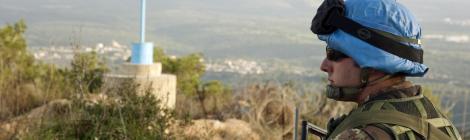
    An Italian peacekeeper of the United Nations Interim Force in Lebanon (UNIFIL) patrols the "Blue Line" that demarcates the border between Lebanon and Israel. 17/Jan/2009. UN Photo/Eskinder Debebe. www.unmultimedia.org/photo/

    An Italian peacekeeper of UNIFIL patrols the “Blue Line” that demarcates the border between Lebanon and Israel. Image credit: UN Photo

    The main challenge to both LAF and UNIFIL authority in South Lebanon is the presence of Hezbollah. LAF and UNIFIL must respect the legacy of Hezbollah’s military success in not losing the 2006 war, and its important role in ejecting Israel from Lebanon in 2000. Whilst Hezbollah agreed in 2006 to withdraw to positions north of the Litani River (outside the area of operations), it is commonly believed by many Lebanese, the Israel Defence Forces (IDF), and the Israeli government, that Hezbollah retains weapons caches within the area of operation.

    For many Lebanese citizens, the continued presence of Hezbollah’s armed faction ‒ who use a combination of traditional and guerrilla warfare techniques ‒ is considered a necessary deterrent to Israeli aggression. LAF, whilst respected is regarded as underfunded and under-equipped and therefore not able to be fully in control of the security situation at the present time. Interviews for this case study, however, revealed that after years of living under foreign occupation, southern Lebanese are happy to see LAF patrolling the area with UNIFIL.

    Whilst UNIFIL’s mandate requires the mission to rid the area of operations of all weapons not belonging to the Lebanese Armed Forces, it is not possible for either UNIFIL or LAF to aggressively hunt for weapons stored in the area without risking the loss of local support. Hence UNIFIL is pragmatic when negotiating the tension between its mandate and local perceptions of its role in relation to local security. When unauthorised weapons are found, UNIFIL interprets the mandate on this issue by asking LAF to retrieve the weapons. They report the findings to LAF and then wait for them to arrive and deal with the recovery. This means that UNIFIL does not have to deal directly with the removal of illegal weapons which may or may not belong to Hezbollah but which can be a contentious issue with the local population.

    Building relationships

    UNIFIL contributes to re-establishing LAF’s presence by conducting joint patrols, helping to build LAF’s CIMIC activities and ensuring LAF takes the lead in local disputes and in highly politicised situations. When patrolling alongside LAF, UNIFIL is careful to play the role of observer as much as possible. LAF is deliberately placed at the forefront of any Blue Line violations involving local civilians in order to empower LAF to deal with any situation in its own way and to help build its credibility. Furthermore, as UNIFIL is not allowed to physically restrain anyone who is violating the Blue Line, LAF plays a key role in deciding what measures (physical or verbal) they wish to take in regard to Lebanese citizens on Lebanese territory.

    Time has played an important role in maintaining good UNIFIL‒LAF relations. Interviews with LAF officers indicate that long-term UNIFIL staff who understand the local political and social culture in the region are valued highly. Constant staff rotations frustrate the LAF as personal relationships are considered highly important to successful liaison and cooperation. Flexibility has also been of benefit in helping UNIFIL build strong relationships with LAF, officers gave very positive reports of their relationship with UNIFIL staff and in particular their commitment to helping to resolve problems when they arose.

    Building capacity

    UNIFIL works to try and build LAF’s operational capabilities in a number of ways as this is regarded as an essential part of UNIFIL’s eventual exit strategy.  First of all it lobbies the international community independently to gain support and donations for LAF and requests donations from current battalions for example UNIFIL vehicles at the end of their lifecycle. UNIFIL also seeks funding from the EU and internationally for LAF battalions based throughout Lebanon, not in the area of operations.  Since the Syrian withdrawal from Lebanon in 2005, the EU has been supportive of UNIFIL’s efforts to capacity build LAF. Furthermore, since the emergence of IS in 2014, Lebanon has been seen as a key buffer state, so interest in providing assistance to LAF has further increased.

    Another example of UNIFIL’s flexible approach to interpreting its mandate is a joint project entitled the Strategic Dialogue. In recent years, UNIFIL Political Affairs Officers and LAF engaged in a full analysis of LAF’s structure and capabilities and produced a joint report that identified gaps in LAF’s structure. UNIFIL Political Affairs Officers have since organised a coordinating mechanism with UNSCOL and now work jointly to seek contributions from the US and European states to specifically fill these gaps. Finally, battalions within UNIFIL conduct joint exercises with the LAF which can include shooting, artillery, administrative tasks and computer exercises.

    Future lessons

    Lebanon’s SSR may carry useful lessons for the international community when looking to help other post-conflict countries transition into peace – namely Iraq, where the security environment remains both complex and challenging. The rise and territorial gains of so-called Islamic State in Iraq reflects a failed security sector reform policy which has seen 100 billion US Dollars invested in it. Implementing a more effective SSR policy in Iraq will be a crucial prerequisite for both long-term stability and peace.

    When rebuilding a national army after internecine warfare, obtaining support from the domestic constituency is as important as capacity building the force in order to present as a credible deterrent. The Lebanese Army has worked very hard to minimalize sectarian differences within the institution both during and after the civil war and this has been very helpful in enabling it to build a largely positive image amongst the people of Lebanon itself. But the sectarian nature of the armed forces in Iraq will make the rebuilding of the army a great deal more challenging in terms of winning broad popular support in Iraq.  A key task therefore will therefore be for the Iraqi national army to become openly inclusive of multiple ethnicities and religious sects as quickly as possible.

    Long term planning in SSR is crucial. One challenge faced in rebuilding the national army in Lebanon is ensuring a regular budget flow to the army and national political cover from politicians. Whilst UNIFIL has been successful in terms of identifying the gaps in LAF expertise and in seeking funding and training to assist in capacity building, the lack of a regular budget for the army still hampers the LAF’s ability to make long term plans for growth and development.

    In addition, politicians in Lebanon are broadly supportive of the LAF, but ongoing political cover remains important especially when the national military is faced with domestic disturbances, particularly outbreaks of sectarian violence. It is imperative the LAF are viewed as impartial by the Lebanese to avoid being drawn into domestic political conflict and thus far the LAF have managed this extremely well. These are considerations that Iraq may face in the future.

    Since the peace deal of 2006, UNIFIL has been successful in re-introducing LAF into the south of Lebanon. But this has required a nuanced approach because there is a delicate balance between the imposition of an agenda and local agency in peacebuilding projects. Ultimately the success of SSR depends on the degree to which the reforms resonate with institutional and local interests and ideas.

    Faced with the aforementioned myriad of sectarian and security challenges, any future attempts to capacity-build the Iraqi army would do well to take a pragmatic approach and be prepared to sacrifice quick wins for the sake of long-term objectives. The first step will involve a careful focus on making the army representative of the Iraqi people and beyond that ensuring national financial and political support is maintained to allow the army the political space to rebuild trust with the all-important domestic constituency of the Iraqi public.

    Vanessa Newby is a Research Fellow at the Australian National University. research focus is peacebuilding and peacekeeping in the Middle East. She has published on the normalisation of peace through everyday security practices, the role of time in successful peacebuilding and the use of technocracy and credibility to negotiate the politics of peacekeeping.  She holds a Masters and PhD in International Relations from Griffith University in Australia. She is an Arabic speaker and has spent over three years conducting research in Lebanon and Syria.  In 2013 she was a visiting researcher at the American University of Beirut.  Her undergraduate degree is in Psychology from the University of Westminster and she is trained in conducting quantitative and qualitative research methods for the social sciences. Dr Newby is currently writing up her book: Mission Impossible? Negotiating the Politics of Peacekeeping in the Middle East.

  • Sustainable Security

    In February 2016, two former military officers of the Guatemalan army were convicted of crimes against humanity based on cases of sexual and domestic slavery, perpetrated in the 1980s during the civil war. Together they received sentences of 360 years in prison, and ordered to pay reparations to the eleven victim-survivors on whose testimonies the case rested. The case, known as Sepur Zarco after the community where these crimes took place, is unique; it is the first domestic trial successfully prosecuting former military for sexual violence in conflict in the world. What happened in Sepur Zarco is less unique: the witness statements echo the experiences of women who gave their testimony to the Peruvian Truth and Reconciliation Committee (2001-2003), where women in embattled communities during the war between Shining Path and the state (1980-2000) were also systematically raped and/or enslaved. And there are other experiences; other genocides, war contexts, and rape camps in contemporary history, which would allow for a solid comparison with Sepur Zarco. Such an observation confirms the importance of the Sepur Zarco trial for the future of accountability and justice in cases of war-related sexual violence, in Guatemala, in Latin America, and indeed, globally.

    The testimonies of victim-survivors in the Sepur Zarco trial against military commanders in Guatemala shows once more that rape in war has specific meanings and intentions that are informed and shaped by the specific coordinates of conflict. In the 1980s, the Guatemalan military repeatedly attacked the population of the rural community Sepur Zarco. Local indigenous leaders who were trying to get their land titled by the state were kidnapped, tortured, and killed. Women who went to search for disappeared family members at the military base were captured, beaten and raped, and enslaved as sexual and domestic servants of soldiers. Several witnesses at the trial told details about how they were raped and beaten multiple times, in front of or alongside their children, sometimes in a pit where their husbands would be held before being buried. They also told about other victims, abused, enslaved, raped and killed in their presence. The statements show a world of extreme cruelty and suffering, facilitated by racism and sexism, and encouraged by a military campaign against indigenous communities that lasted three decades. All evidence shows that in the case of Sepur Zarco, rape was used as a weapon of war: to conquer, to reinforce victory, to send a message, humiliate, and fragment entire communities, in sum, to control.

    Of course, military commanders can only be prosecuted for systematic rape if we accept that rape in war is exceptional, different, and not inevitable. Perpetrators can only be held accountable if we recognise their agency in the act, their authority in allowing (or ordering) certain acts to happen. The extreme cruelty and violence that accompanies many of these acts further confirm that rape in war represents a rupture in a community’s history and in the lives of both perpetrators and victims. This is not normal, and hence, we can prosecute.

    And yet, there are others, including myself, who have emphasised the continuity in the history and possibility of sexual violence against women. I have argued, based on the testimonies of victim-survivors of rape in the Peruvian conflict, that while much of the scale and cruelty of these experiences were certainly exceptional and strongly conflict related, the script for these acts – immersed in racism and sexism, as in the case of Guatemala – pre-dated the conflict, and has yet to be dismantled. There is a continuum in the persistence of sexual violence against women that supersedes the categories of war and peace.

    In contemporary Guatemala, around 700 women are murdered each year because of sexism, killed by intimate partners or unknown others. This is what is known as femicidio in the region. Impunity is not absolute, but it is certainly very high and contributes to its prevalence, as public institutions are uninterested in pursuing cases of ‘private’ violence. The idea that violence against women, even if so large scale as in contemporary Guatemala (or elsewhere), can be private and thus irrelevant to national security (police, judiciary, policy) is strongly tied to perceptions of women being responsible somehow for the domestic sphere, the home, including the sexual gratification of men. Women are often perceived and portrayed as somehow complicit in their own abuse. Similar patterns of the domestication of violence are seen in conflict.

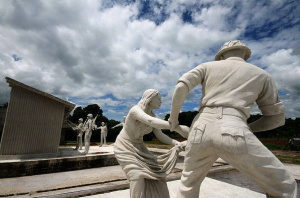
    Sculpture at Mujibnagar: A woman being raped by a Pakistani soldier during the 1971 war

    Sculpture at Mujibnagar: A woman being raped by a Pakistani soldier during the 1971 war. Image by Rahat Rahim via Wikimedia.

    For example, women held at military bases to sexually serve men are often also required to wash and cook. The Sepur Zarco case also heard a former military commissioner tell the court how the then head of the military base and the accused in the trial, Lieutenant Esteelmer Reyses Girón, ordered soldiers to gang rape a woman, and that the Lieutenant himself “took” this woman as his “wife”. In similar vein, in the case of Peru, few women used the words ‘rape’ (violación) to describe their experiences. Instead, some said ‘he used me as his wife’, indicating how domestic and sexual enslavement were part of the package of abuse. One witness even stated ‘he started to beat us as if we were their wives’, further blurring the boundaries between the domestic and the political, between wartime abuse and peacetime abuse, and arguably, between husband and abuser. In Sierra Leone, and Uganda, similar patterns can be found: sexual and domestic slavery go hand in hand, and is made possible because of the peacetime structures in which women’s roles are already defined by their service to men. Hence, girls forcibly recruited into rebel armies soon became ‘wives’.

    The idea that those who are violently enslaved could in fact be in a consensual relationship, albeit unequal, such as a marriage, provides a veil of legitimacy to an otherwise exceptional situation. It does, indeed, suggest a level of normality, a continuum, of life as one knows it. It might be the veil that makes survival possible. But many victim-survivors of conflict-related rape and sexual slavery are ostracised from their communities, exposed to a postconflict life of continuous abuse from their intimate partners, or choose to hide their trauma out of fear of retaliation. The women who testified in the Sepur Zarco case either did so behind closed doors, or they hid their faces behind veils during public sessions. What happened in war might have been exceptional, but not sufficiently so to erase the suggestion of complicity entirely, less so, stigma.

    In my book Sexual Violence in War and Peace, I identify a continuum in how sexual violence is understood and perpetrated in both war and peace, and hence, how such violence is dealt with post-conflict. The characteristics of rape regimes perpetrated by military in the high Andes of the 1980s and early 1990s showed many known features of power relations along lines of race, sex, class, age, and gender. Sexual violence, because of its intimate and potential reproductive qualities, helps produce and reproduce those unequal power relations. In war this might be strategic and large-scale, or it might be facilitated and condoned, in order to dominate over others (i.e., both to affirm power as well as subordination, both to destroy communities, as well as consolidate military loyalty and masculine strength). But in peacetime, it does the same: sexual violence produces dominance and subordination between genders, races, sexualities, classes and ages, be that catcalling, sexual harassment, marital rape or other forms of highly gendered and sexualised violence.

    Understanding sexual violence along a continuum does not say anything about the gravity of the violence or even how it might be experienced. On the contrary, while recognising and naming the differences between forms of sexual violence, experiences can be named as violence and as harmful, instead of normal or deserved. What the concept of a continuum of violence intends to highlight is how all forms of sexual violence are part of gendered social structures and patterns that have to be identified and transformed. Highlighting, combatting and prosecuting rape in war should arguably be part of a similarly linked set of measures that aim to eradicate gender inequality and the (often intersecting) violence with which such inequality is maintained and perpetuated, be that in war or in peace, at the level of families or in public space, in Guatemala or in the UK.

    Thinking in terms of a continuum does not aim to minimise rape in conflicts, gang rape, or the femicides we are seeing particularly in parts of contemporary Central America. But it gives us an analytical tool that allows us to connect sex, male violence, and gender inequality, both in the everyday as well as during armed conflict. Thinking in terms of a continuum allows us to see how much violence is hidden, institutionalised, and/or normalised in everyday life, both in peacetime and wartime, in homes, in intimate relationships, and in public spaces. The term allows us to see parallels between the extreme and the everyday, the public and the private, thereby not undermining the seriousness of the extreme, but undercutting the normality of the everyday.

    As such, the Sepur Zarco case is a milestone, and is hopefully a further step towards accountability for acts of sexual violence, and more broadly, gender-based violence, in both war and peace, in Guatemala and beyond.


    Jelke Boesten is Reader in Gender and Development at International Development Institute, King’s College London.

  • Sustainable Security

    In 2008, media outlets declared that a new Cold War was unfolding in the Arctic. This story was centred on a small, titanium Russian flag, fixed to the seabed below the North Pole.

    Planted in 2007 by a modest team of explorers and scientists, the flag triggered angry responses from Western politicians and media commentators, with the most vociferous coming from the then Canadian Foreign Minister, Peter MacKay, who declared: ‘This isn’t the 15th Century…You can’t go around the world and just plant flags and say “We’re claiming this territory”’.

    Nearly a decade later, this story remains emblematic of the geopolitical intrigue that refuses to go away in the Arctic, which continues to be stoked by uncertainties over sovereignty, ownership and access in the region.

    Carving up the Arctic, Carefully

    The Arctic Ocean, like every ocean, is governed by the UN Convention on the Law of the Sea’s (UNCLOS) provisions. The US has not ratified this treaty, but considers its provisions relevant as customary international law of the sea.

    Under UNCLOS, the Arctic Ocean littoral states are entitled to Exclusive Economic Zones (EEZ) stretching up to 200 nautical miles (nm) from their Arctic coastlines. Article 234 allows littoral states to develop and administer special regulations dealing with human activities in ice-covered waters. Russia and Canada use this to regulate shipping activity in their Arctic waters through environmental protection measures.

    UNCLOS also entitles a coastal state to extend the outer limit of its sovereign rights over the continental shelf (the seabed and subsoil of submarine areas–including, any oil and gas resources contained) beyond 200nm, if it can prove the shelf is a natural prolongation of the coastal states’ land mass. This has led Denmark and Russia to submit evidence (with Canada expected to follow this year) to the UN to support claims reaching all the way to the North Pole. Norway settled its continental shelf limits in 2009.

    As their claims overlap, the UN Commission on the Limits of the Continental Shelf (CLCS) is responsible for reviewing the evidence and issuing a final recommendation on where the borders should be drawn according to Articles 76 and 77. However, the CLSC has no legal authority or personality meaning it will be up to Canada, Denmark and Russia to reach an international agreement which will settle their claims. Any remaining space will be considered part of ‘the Area’ (see below), and falls under the purview of the International Seabed Authority.

    Although the decision on ‘who owns the North Pole’ will ultimately be determined by an agreement between Canada, Denmark and Russia,wherein lies a latent potential for conflict, the five Arctic littoral states’ public commitment to use UNCLOS as the basis for settling any sovereignty disputes is an important step towards ‘sustainable security’. It will take three to five years just for the CLCS to review the latest evidence submitted by Russia on 9 February 2016.The CLCS is already overwhelmed by the number of applications received globally. Since the prospects for oil and gas development further from shore are still highly uncertain, and claims to the North Pole are primarily symbolic, the CLCS arguably has time on its side.

    As long as the Arctic states maintain their trust in the process, UNCLOS should be able to prevent any ‘race’ to carve up the Arctic seabed, which could lead to tension between the littoral states.

    High Seas and the Area: Accommodating New Interests

    Where UNCLOS reaches its limits is in the parts of the Central Arctic Ocean (CAO), we will be dealing with High Seas,parts of the water column beyond the EEZs of coastal states,and ‘the Area’– seabed areas which cannot be claimed by any state (see map). Theoretically, anyone can fish and mine in these parts of the Arctic, but such activity is likely to be limited for the time being by the continued prevalence of thick sea-ice covering the surface of the ocean (and other environmental factors).

    In another step towards ‘sustainable security’, the five Arctic coastal states have initiated a process to create a governance framework to manage future fishing activity in the CAO.

    In July 2015, the littoral states signed a ‘Declaration’ preventing unregulated high seas fishing in the CAO, and promising to only authorise their own fleets to conduct commercial fishing in the CAO if it was in accordance with recognised international standards.

    The littoral states’ problem is that they do not have the authority to dictate the terms under which the rest of the international community can access CAO high seas fisheries. China’s, Japan’s, Korea’s, Iceland’s, and the EU’s finishing fleets are entitled under international law to fish in the CAO.

    Consequently, the littoral states took another preventative step by calling a second meeting in December 2015, where negotiations for fisheries agreement for the CAO’s high seas was opened up to these other parties. Other nations such as Taiwan are expected to join future deliberations, eventually ensuring buy-in for a governance framework from all nations with an interest in future Arctic fisheries.

    Again, this is a long-term process, providing another example of how governance structures developed now can prevent certain unwanted futures from becoming present, including, for exampletension and conflict over fisheries and continental shelves.

    Navigating Arctic Waters

    Can similar preventative steps be taken to ensure that disputes do not flare up over the problem of maritime activity in the Arctic? There are two issues to address. Firstly, the status of two ‘international straits’ in the Arctic: the North West Passage and the Northern Sea Route. Secondly, the regulating of ice-covered waters in littoral state EEZs as addressed by Article 234 of UNCLOS.

    Science team in the Arctic Sea. Image by NASA Goddard Space Flight Center.

    Science team in the Arctic. Image by NASA Goddard Space Flight Center.

    Canada and Russia do not consider the North West Passage (passing through the Canadian archipelago) and the Northern Sea Route (across northern Russia) to be ‘international straits’. Consequently, foreign vessels have no right of ‘transit passage’ through these waters–a right that entitles foreign ships to pass through without coastal state permission, and foreign submarines may remain submerged. Both countries claim that their sovereignty over nearby islands effectively means these waters should be considered ‘internal waters’, requiring foreign vessels to seek permission before entering.

    The US and the EU contest Canada and Russia’s claims, not least because of concerns about setting a legal precedent that could be applied to more important southerly shipping routes.

    There seems to be little ambition to settle the disagreement, because Arctic transit shipping is still a niche activity. Several uncertainties remain about whether large-scale transit shipping will ever become commercially viable, not least because of the competition posed by more southerly trade routes and the general unpredictability of seasonal sea-ice retreat that makes seasonal passages possible without expensive icebreaker escorts.

    The problem with the current stance is that Russia is actively investing in icebreakers, port infrastructure, marine services, search and rescue facilities and constabulary forces with the ambition of turning NSR into a viable shipping route. The more Russia builds up infrastructure around the route and offers to accommodate shipping on Russian terms, the greater the historical precedent it will set that the NSR is part of Russian-controlled waters. This feeds Western fears about Russian militarization of the Arctic building a security dilemma.

    While US and EU lawyers might question the validity of such a precedent, the de facto claim will remain and Russia will likely continue resisting attempts to change the status quo. It might therefore be worthwhile considering preventative steps sooner rather than later to resolve the NSR and the NWP’s legal status, before marine activity in the Arctic increases further and positions become more deeply entrenched.

    The issue is complicated by the second issue referred to above–the regulating of ice-covered waters by Arctic littoral states, notably Canada and Russia. As already noted, under Article 234 of UNCLOS, Arctic littoral states are entitled to regulate marine activities in ice-covered waters within their EEZs. Both the NSR and the NWP fall within these provisions, allowing Canada and Russia to regulate marine activity beyond their territorial waters regardless of whether they have the status of ‘international straits’ (see, for example, Canada’s Arctic Waters Pollution Prevent Act).

    So what happens when these waters are no longer ice-covered for a large part of the year? Article 234 indicates that ice-cover must be present for most of the year (i.e. 6 months and one day), while other points of contest exist in determining exactly what is meant by ‘severe climatic conditions’ and ‘exceptional hazards to navigation’ and who would decide whether such conditions prevailed (littoral states, non-littoral states, international organisations?).

    This remains a longer-term issue, but if as most scientists predict the amount of sea-ice cover each year continues to spiral downwards, the issue of whether littoral states can regulate in Arctic waters beyond 12 nm could become a significant point of tension with those seeking to benefit from new opportunities for regional marine activity. Currently, unlike in the cases of fisheries and continental shelves, few preventative steps are being taken to resolve this outstanding issue, despite its potential to cause future confrontation in Arctic waters. The situation is exacerbated by the deterioration of relations between Russia and the West over the Ukraine and Syria crises, likely making dialogue difficult.

    Prospects for Sustainable Security

    On the issues of resource competition and militarisation sustainable security’s prospects, in the Arctic for the most part look good. Since the end of the Cold War, international cooperation on various scientific and environmental protection initiatives have provided the basis for constructive engagement between the Arctic states and other interested actors (such as the UK) on many issues.

    Bilateral and multilateral arrangements have provided a governance structure that all Arctic states, and other interested actors, have indicated provides a firm basis for resolving inter-state disputes peacefully in accordance with international law, especially concerning fisheries and the delineation of the continental shelf. However,access to the NWP and NSR could lead to future contention. Potential flashpoints remain over how regional marine activity should be governed in EEZs where the sea-ice is in fast retreat, especially if Russia and Canada refuse to accept that Article 234 might lose purchase in the future.

    Whether preventative action is politically possible on this issue remains to be seen, but the sooner a constructive dialogue begins between Russia, Canada and potential users of the NWP and NSR, the more likely it will be to find a sustainable solution. Speculatively, an Arctic agreement on shipping activity negotiated under the Arctic Council’s auspices (but accommodating interested non-Arctic states as seen in the fisheries discussions) to complement the International Maritime Organisation’s Polar Code (due 2017) could be one way of consolidating international understanding that these waterways are to some extent shared spaces requiring the international community’s shared stewardship.

    An important dimension of sustainable security not discussed in this state-centric article is that of human security–especially of indigenous peoples and other local communities that live and work in the Arctic. The decline of traditional cultures, environmental pollution and other threats to human health and well-being are prevalent in nearly all of the Arctic states, and there has been a long history of marginalisation of Arctic residents. However, all of the Arctic states have readily admitted the need to address the challenges facing Arctic indigenous peoples and other local communities, and the Arctic Council is somewhat unique to the extent that it invites representatives of indigenous people’s organisations to sit at the table with government ministers.

    The sustainable security outlook is also weaker with regards to climate change. Huge uncertainty remains over how soon we are likely to see an ice-free Arctic in the summertime. The temperature spikes witnessed in January and February this year suggest this event horizon might be closer than we think. The impacts of climate change pose a particular risk to human security in the Arctic, threatening food, housing, infrastructure and livelihoods. It remains to be seen whether these communities will be able to adapt to the drastic changes that are being observed.

    Duncan Depledge is a Teaching Fellow in the Department of Politics and International Relations at Royal Holloway, University of London, and director of the secretariat to the UK All-Party Parliamentary Group for Polar Regions. He received his PhD from Royal Holloway for his research investigating contemporary developments in U.K. policy toward the Arctic.

  • Sustainable Security


    by Joe Thwaites

    UN Climate Change Talks Conclude with Copenhagen AccordLast Wednesday, the United Nations Security Council held its second ever debate on climate change, at the request of Germany, who holds the monthly presidency. UN Secretary General Ban Ki-Moon, Director of the UN Environment Program Achim Steiner, President of Nauru Marcus Stephen, and Australia’s Parliamentary Secretary for Pacific Island Affairs Richard Marles all addressed the Council, along with representatives of 62 member states.
    Stephen wrote powerfully in the New York Times last week about the threat rising sea levels pose to his Pacific island country’s existence, and did not hold back in the Council, usually a place of diplomatic stoicism. Speaking on behalf of the Pacific Small Island Developing States, he said they were facing “the single greatest security challenge of all – that is, our survival” and put the question: “Where would we be if the roles were reversed? What if the pollution coming from our island nations was threatening the very existence of the major emitters? What would be the nature of today’s debate under those circumstances?”

    As it happened, the nature of the debate was twofold. On the ostensible subject, “Maintenance of international peace and security: impact of climate change”, most states agreed that it would have – and in some cases already is having – profound implications for international peace and security, and that the UN had a key role to play coordinating efforts on mitigation and adaptation to climate change. But discussion on this remained secondary to complex political wrangling over the role of the Security Council in addressing the topic. Whilst this is the case for any issue before the body – in discussions on whether to mandate armed intervention into a specific country, for example, the debate focuses not just on the rights and wrongs in that instance, but also the wider precedent it may set – there were added complexities with climate change.

    China and Russia displayed their usual reticence about extending the Security Council’s competencies into new areas. They were joined by Brazil, India, and many developing countries in the G77 bloc, who opposed attempts to move the issue away from the General Assembly-mandated UN Framework Convention on Climate Change (UNFCCC), in which all member states have equal footing and decisions are made by consensus, and into the 15 member body where China, Russia, France, the UK and U.S. hold veto power, and are some of the biggest greenhouse gas emitters, on either cumulative or per capita bases. The underlying fear of developing countries was that such a move would circumvent the core principles which make the existing climate change regime palatable – namely, the recognition of states’ “common but differentiated responsibilities” to act on climate change, and the right to sustainable development.

    Indeed, if the Security Council were to take overall control of climate action, this would be a regressive step, potentially allowing developed countries off the hook for their failure to meet existing targets under the Kyoto Protocol, and removing the impetus to agree a further UNFCCC commitment period. States proposing that the Security Council address the issue (primarily the EU, U.S. and small island states) were therefore at pains to stress that it would be complementary to existing UN bodies and processes, and should not encroach upon their remits. They argued that as a major security threat, it was right that the Council afford these dimensions of climate change due consideration. But as the UN body with the most diplomatic bite – only the Security Council has the power to authorise military force – it is easy to see why there are concerns that it could dominate the issue.

    During the debate there was related apprehension about the excessive securitisation of climate change. Many states pointed out that climate change was a cross-cutting issue, as much related to sustainable development and humanitarian relief as security, and that looking at it as a security issue would not address the underlying causes of the problem. Bolivia noted that developed countries gave $10 billion in climate change finance annually, which amounted to just 1% of defence spending, and suggested the Council adopt a resolution to cut defence and security spending by 20%, using the money saved to address the impacts of climate change. Papua New Guinea echoed Nauru’s Marcus Stephen, pointing out that if the Security Council could address issues such as development and HIV/AIDs as security problems (without them becoming militarised), then why not climate change?

    The non-binding Presidential Statement which was finally agreed did not include mention of a Special Representative on Climate Change and Security, which had been one of Germany’s original proposals. Many countries remained open to the idea of a representative, but opposed them being answerable to the Security Council, instead suggesting they be appointed by the General Assembly.

    On one level, the outcome was disappointing. Russia initially vetoed adoption of the statement, later agreeing to a watered down version merely noting the “possible security implications” of climate change. Ambassador Susan Rice of the U.S. lambasted the lack of stronger action as “pathetic”, “short sighted” and “a dereliction of duty”. However, given that the first Council debate on climate change in 2007 was unable to agree any formal outcome, getting a Presidential Statement was something of a success.

    There remains wide disagreement between states over whether climate change merely exacerbates conflict, or is a distinct threat itself. Academic opinion is still divided, and the Security Council’s position often lags a good ten years behind the latest research on peacebuilding and conflict prevention, so this is not hugely surprising. It is also difficult to untangle the opposition to climate-security links on conceptual grounds from opposition for political reasons related to Security Council ‘mission creep’, as discussed above.

    In 2009, the General Assembly requested that the Secretary General produce a report on the possible security implications of climate change. A few states strongly disputed its findings on Wednesday. Nevertheless, the Presidential Statement recommended that in his regular reports to the Council, the Secretary General begin to include information on the possible influence of climate change upon conflict situations around the world. These are important first steps towards mainstreaming climate change in conflict assessments, even if we are a long way from any legally binding resolution.

    Another reason for optimism is the level of participation in the debate. I followed many Security Council meetings whilst working in the UN community last year, and never saw so many member states request to speak. Most countries took the discussion seriously, and even where they disagreed on whether the Council had a mandate to act, they spoke strongly on the devastating impacts of climate change.

    The question now is: how long will it take for states to take this rhetoric seriously; to realise the gravity of the situation, break the cycle of mistrust in international negotiations and commit to unified multilateral action to address this issue – in whatever forum they choose? The answer is unclear.
    There is one thing we can be confident about – this won’t be the last time the Security Council discusses climate change.

    Joe Thwaites is a graduate in politics from the University of York, UK. He has worked on conflict prevention at the Quaker United Nations Office and represented Friends of the Earth at the UNFCCC.

    Image Source: United Nations Photo

  • Sustainable Security

    Far-right terrorism has re-emerged as a serious security issue in the United States. What are is the drivers behind this phenomenon?

    The recent violence in Charlottesville Virginia, perpetrated by white supremacists and neo-Nazis that had gathered for a “Unite the Right” rally, has refocused attention on right-wing terrorism in the United States.  During the rally, James Alex Fields Jr., a possible neo-Nazi sympathizer, drove a car into a crowd of counter-demonstrators, killing one person and seriously wounding 19 others.  The car attack has been described by U.S. Attorney General Jeff Sessions and Republican and Democratic elected officials alike as an (alleged) act of right-wing domestic terrorism, and the U.S. Justice Department has promised to open an official civil rights investigation of the incident.

    What are the macro-causes of domestic right-wing terrorism in the United States?  In a published study, I attempted to address this question by statistically evaluating all identifiable “right-wing” terrorist attacks in the United States for the period 1970 to 2011.  My goal was to try to determine the economic, social and political factors that drive right-wing terrorism.  In the study, terrorism is defined as an act of premeditated political violence perpetrated by nongovernment organizations intended to influence a wider audience.  I identified domestic terrorist incidents as “right-wing” if they were perpetrated by groups or individuals that were motivated by racist, white supremacist, antiabortion and violent, extreme antigovernment ideologies.

    It is important to distinguish the events in my analysis from hate crimes, which are spontaneous rather than premeditated or strategically-calculated acts, and from legal, nonviolent far-right political activities.  The groups and individuals in the analysis are outside of mainstream politics in the United States and have deliberately adopted the use of violence to achieve their goals, rather than nonviolent political strategies such as voting, lobbying and forming protest movements.

    The drivers of US far-right terrorism

    James Alex Fields, Jr., who conducted the Charlottesville car attack. Image credit: Rodney Dunning/Flickr.

    It does not seem that right-wing terrorism is driven by economic grievances or distress.  Across the board, socioeconomic factors that are commonly argued to produce resentments that fuel right-wing terrorism were not significant.  For example, right-wing terrorism is not more likely to occur in U.S. states that have a larger percentage of their populations below the poverty line or that have higher levels of unemployment or income inequality.  I specifically examined two economic factors commonly argued by scholars to be associated with the rise of violent right-wing extremism: the structural decline of blue-collar manufacturing and the “Farm Crisis” that took hold of the United States in the 1980s.  Both of these are said to have produced strong resentments that violent right-wing groups exploited to garner recruits, thereby becoming more active and dangerous.  Neither of these factors, however, do a good job predicting when and where right-wing terrorism occurs in the United States.

    States that have suffered heavy industrial manufacturing job losses in a given year or a decline in family farms due to foreclosure do not disproportionately experience right-wing terrorism.  The apparent lack of a direct relationship between economic distress in the United States and right-wing terrorism mirrors findings for terrorism writ-large, globally.  Other studies of economically-aggrieved countries or individuals have not found them to be more terrorism-prone.

    I also examined a series of social factors.  The propaganda of right-wing extremist groups often mentions immigration, growing ethnic diversity and the decline of white demographic dominance in the United States as motivating threats.  Far-right protestors in Charlottesville illustrated this by chanting “You Will Not Replace Us!” and “Blood and Soil!”  However, I did not find actual racial and ethnic diversity on the ground to be a statistically significant driver of right-wing terrorism.

    Nationwide, the increase in the nonwhite population, and the growth of the nonwhite Hispanic or Latino population, in the United States, bears little relation with ebbs and flows of right-wing terrorist attacks.  Similarly, states with rapidly growing nonwhite population were not found to experience more right-wing attacks.  This does not foreclose the possibility that growing ethnic diversity in the U.S. is a driver of right-wing terrorism.  However, it is possible that the perceived rather than actual threat of demographic change and growing diversity fuels violent extremism.  This effect might be better revealed by a study of individual attitudes as drivers of terrorism.

    Related to fears among violent right-wing extremists that whites are being “replaced” by nonwhite immigrants and others is the belief among extremists that traditional male roles have been undermined by the empowerment and enhanced personal autonomy of women in contemporary America.  I investigated this by testing two measures of women’s status: the national rate of female participation in the workforce and the rate at which women seek abortions.  Both of these are frequently-used measures of actual women’s empowerment and are also potent political and cultural symbols of women’s equality.  I find both to be associated with a significant increase in right-wing terrorism.

    Holding constant other factors such as past experience of right-wing terrorism at the state level, unemployment, income, population, urbanization, size and growth of the economy and region of the country, I found that for each five percent increase in women’s employment nationally, the U.S. states experienced a 50 percent increase in rates of domestic right-wing terrorist attacks.  Similarly, for every increase of 10 medical abortions per 10,000 live births, a state experienced a 24 percent increase in right-wing terrorist attacks.  Of course it is possible that this latter abortion rate finding is simply reflecting abortion clinics being targeted by anti-abortion extremists.  However, when I removed attacks on abortion clinics from the data, the abortion rate in a state still is a statistically significant predictor of terrorism. This suggests that the controversy of abortion itself is a driver of all types of right-wing terrorism.

    Figures 1 and 2 help to illustrate these effects.

    Figure 1. Impact of Women’s Employment on Right-Wing Terrorism


    Figure 2. Impact of Abortion Rates on Right-Wing Terrorism


    Finally, I considered some political and policy factors that have been hypothesized to drive right-wing terrorism. There are several schools of thought on the impact that partisan control of government might have on violent right-wing extremism.  One holds that when Republicans win elections and hold public offices, violent far-right extremists increase their activities because they feel emboldened.

    The other school argues that Democratic Party control, and policies that Democratic politicians frequently seek to enact such as gun control or enhanced social policies that increase the size of the federal government, antagonizes right-wing extremists, prompting them to strike back by launching terrorist attacks.  I tested for both and found that right-wing terrorist attacks were more common when a Democrat controlled the White House, and increased dramatically after the elections of both Bill Clinton and Barack Obama.

    In fact, Democratic control over the White House increases right-wing attacks by almost 73 percent.  Figure 3 presents the different projected rates of right-wing terrorism under Democratic versus Republican presidencies.  The partisan effect, however, seems limited to national politics.  Partisan control over state government does not significantly affect patterns of right-wing terrorism.

    Figure 3. Predicted Right-Wing Terrorism Under Democratic and Republican Presidencies


    This particular finding is interesting given the argument that U.S. President Trump has emboldened right-wing extremists through his rhetoric and his policies and policy proposals.  However, the impact of the Trump presidency cannot be assessed by the study as the analysis does not cover terrorism after 2011.  The data I used to conduct the original analysis has not yet been updated through 2017, when Trump assumed office.  It will be critical to retest the role of partisan control over the White House once this data is available.

    While who controls the White House is found to affect patterns of right-wing terrorism, the national partisan effect seems to not be linked to specific federal government policies.  Policies such as increases in federal income taxes or the 1994 federal ban on the sale assault weapons – both of which were an anathema for right-wing extremists – are not statistically significant predictors of attacks.

    Conclusion

    The sum of these findings is that several of the more symbolic factors, such as reaction against the empowerment of women or control over the government by an ideological “enemy,” that are significant drivers of terrorism rather than structural economic factors, demographic change or government polices enacted.  This finding is, perhaps, not so surprising.  On a general level, symbolic issues are frequently important motivators for terrorists world-wide.  Consider, for example, the symbolic importance of cleansing Muslim society from the influence of Western culture for a movement like Boko Haram in Nigeria or reconstructing an imagined Caliphate for the Islamic State (ISIL) movement.  More specific to the phenomenon of right-wing terrorism, the results underscore the potency of the U.S. President as a (singular) symbol of government and political direction of the country as well as the cultural impact of changing women’s statuses.

    It is also important to consider that the study is very much a preliminary investigation into the drivers of domestic right-wing terrorism.  The study focused on the most basic structural factors that precipitate right-wing terrorism.  Future research might look beyond structural precipitants to examine factors that facilitate the motivation, planning and execution of right-wing terrorist attacks, such as the role played by social media, hate speech online, etc.

    Author’s Note: Graphs of marginal effects of a 5-unit change (Women’s Employment), 10-unit change (Abortion Rates) and 1-unit change (Republican to Democrat) on counts of right-wing terrorist events. In models, state unemployment rate, inequality, population, population growth, urbanization rate, area, gross state product per capita, growth of gross state product per capita, region (Midwest, South, West) and previous year right-wing attacks are controlled for.

    James A. Piazza is Liberal Arts Research Professor of Political Science at the Pennsylvania State University. Piazza’s research focuses on terrorism, counterterrorism, political violence and intra-state armed conflict. His published work has appeared in the American Journal of Political Science, the Journal of Politics,International Organization, Comparative Political Studies, International Studies Quarterly, Journal of Conflict Resolution, Public Choice, Journal of Peace Research, Political Psychology, Conflict Management and Peace Science, Political Research Quarterly, Foreign Policy Analysis, International Interactions, Defence and Peace Economics, Southern Economic Journal, Security Studies, Terrorism and Political Violence and Studies in Conflict and Terrorism. He can be contacted at . His website:  http://polisci.la.psu.edu/people/jap45

  • Sustainable Security

    Author’s note: In this article, I use the terms “war” and “civil war” interchangeably. They refer to a contested armed incompatibility involving a government and a non-state actor that generates at least 25 battle-related fatalities annually. Whereas ethnic civil wars refer to those armed conflicts that include ethnic challengers that are at odds with the identity of a state, seek to redefine or divide the state itself, or strive for major changes in their relationship with the state ( see Sambanis 2001).

    Under what conditions can religion play a constructive role in peacebuilding and what are the obstacles to this process?

    Religion, war, and peace are among the “thickest” and multifaceted concepts. Thus, tackling the relationship between them is a daunting task and calls for a greater scrutiny.

    A great deal of existing scholarship on civil war, particularly those statistically examining the effects of various social, economic, and political factors on war dynamics, almost exclusively refer to the term “peace” in the negative sense, i.e., the absence of violence. This “narrow” approach to peace is in part driven by its simplicity that allows for large-n cross-national comparison. While useful in reaching generalizable findings, such an approach could potentially mask the underlying causes of war, preventing us from addressing the root causes of conflict eruption.

    Here I refer to peace in the positive sense, or the absence of “structural violence” that calls for going beyond the mere absence of physical violence and points toward “social justice” (see Galtung 1969). This positive or “quality peace,” in the words of Peter Wallensteen, requires the creation of postwar conditions that not only prevent countries from relapsing back into another episode of violence but also allows for security and dignity for the members of the war-torn society.

    How does religion help or hinder the creation of such circumstances? Under what conditions can religion as a powerful, potent force help reinforce and strengthen peace? What are the obstacles to religion playing such a constructive role in peacebuilding?

    A complicated relationship

    Photo credit (edited): murdelta/Flickr. 

    A number of scholars have identified religion to be the cause of deadlier, longer, and more intractable civil wars (see Svensson 2007; Fox, James, and Li 2009; Basedau et al. 2011). Yet others have drawn attention to “the seeds of tolerance, justice, compassion, and peace” in religious traditions and argued that religion can help bring about peace and democracy (Johansen 1997, 53; see also Appleby 2000; Driessen 2010).  Religion, as Philpott states, “devastates not only New York skyscrapers but also authoritarian regimes; it constructs not only bellicose communal identities but also democratic civil society.” Thus, this group of scholars concludes that religion can also be used in conflict resolution and peacebuilding processes (see Abu-Nimer 2001; Alger 2002).

    These contradictory findings stem from a number of sources. First and foremost, the literature on the relationship between war, peace, and religion often conceptualizes and measures these concepts from different points of view. In addition to the narrow conceptualization of peace noted above, the question of what entails a civil war and how it should be operationalized has caused much controversy. While scholars often agree on what a civil war is, the casualty threshold used to mark the onset of a civil war, ranging from 25 to 1,000 annual battle-related deaths, has resulted in a number of civil war datasets on which most of empirical findings are based, and that are not always comparable.

    Second, the peacebuilding capacity of religion is applied to cases that are not necessarily analogous. For example, as Nichols argues, religious actors played a positive role in bringing about peace in the conflict between the Sandinistas and East Coast Indians of Nicaragua in the late 1980s through helping to develop a common language of conciliation and infusing Christian values into the negotiating process. Appleby, drawing on the case of Northern Ireland, maintains that religious leaders can gradually “saturate” the society by transforming the conflict environment and issues, condemn violence, and thus foster cross-communal cooperation. However, Appleby warns that such an outcome requires special situations characterized by a strong civil society and democratic tradition as well as assistance from the international community. Partly because of the lack of agreement on the casualty threshold noted above, current literature on civil war often treats the case of the Sandinistas vs. East Coast Indians within the broader conflict between Nicaragua under the Sandinistas and Contras, making it a somewhat “marginal” case. Whereas, the Northern Ireland conflict, as Appleby aptly warns, is characterized by some unique characteristics that are that are rarely present in many war-torn countries.

    Third, existing literature is still in the process of identifying the complex and complicated causal mechanisms between religion and peacebuilding. This is in part due to the ambivalent, contextual nature of religion. Religion and politics are connected in complicated ways that make it nearly impossible to disentangle one from another. A religious tradition as Armstrong summarizes is “never a single, unchanging essence that impels people to act in a uniform way.” Instead, religions and religious interpretations “are susceptible to different readings in different contexts and become entangled in or influenced by newer sociopolitical context”. In the context of civil war, religion often becomes a part of the political arsenal to sustain the fight. As religion turns into another instrument of legitimation and mobilization in the hands of political actors it loses its power as a peacemaker.

    Finally, and relatedly, the politicization of religion is most prevalent in ethnic civil wars in which fighters are lined up along identity lines and rebels are by and large secessionist in goals or desires. Therefore, the effect of religion on conflict processes in a case like Chechnya where Muslim Chechens fought destructive civil wars against Russia dominated by Orthodox Christians needs to be distinguished from the role religion plays in ethnic conflicts that involve groups hailing from the same faith, as in the case of Kurds vs. Turkey. While civil war between groups hailing from different faiths can contribute to identity formation in such a way that fuels the violence, war between co-religionists does not necessarily help foster peace. Instead, religion as the common denominator is often subsumed to ethnic, national identities and interests. The war realities often constrain, if not shape, religion, rendering religion an ineffective peacemaker (Gurses 2015).

    Religion and ethnic civil war

    Nicolas Rost and I have shown that due mainly to this “politicization of religion,” the hypothesized peacemaker role of religion does not hold against a global sample of ethnic civil wars. War and country characteristics, rather than shared religion, are better predictors of peace duration after ethnic civil wars. While the peace duration in our study refers to the absence of violence, in further support of studies that have pointed to discriminatory state policies as the culprit behind ethnic civil war onset and recurrence (Cederman, Wimmer, and Min 2010; Gurses and Rost 2013), we found that the level of discrimination faced by members of ethnic groups that rebelled against their government after the end of the war is the most robust predictor of peace duration. Thus, state policies that address the demands of aggrieved minorities and re-adjust their relationship with the state that could make them a part of the system are more likely to help build sustainable peace. Resorting to a shared religion to help reconcile warring groups without addressing the root causes of conflict is more rhetoric than reality.

    Observations 

    • There is a need to clarify the terms in order to delineate the religion-peacebuilding nexus. The terms war, religion, and peace are multidimensional and hence defy reaching a consensus on the exact nature of religion’s relationship with peacebuilding. Avoiding law-like, general explanations is more likely to be fruitful. Just as religion’s role in identity formation varies, so does the role it plays in conflict onset, duration, outcome, as well as building peace in postwar environments.
    • The role religion plays in peacebuilding should be qualified. Religion in conflicts fought over government, also known as ideological civil wars, could take on a dramatically different role than in conflicts involving competing identities which are often secessionist in nature. While it is much easier for religious actors to mediate between warring groups that share the same ethnicity, speak the same language, and believe in the same “God,” their role is likely to be diminished, tarnished by political considerations in situations where protagonists use religion to either distinguish themselves as a group from one another (e.g., Palestinians vs. Israel) or religion as a common denominator ceases to be a marker that separates members of warring groups (e.g., Acehnese vs. Indonesia, 1976-2005; Kurds vs. Turkey, 1984-Ongoing). Thus sharing the same faith in the context of such ethnic civil wars often results in relegating religion to a secondary role as the war dynamics help bring ethnic identities front and center.
    • Sustainable peace requires addressing structural causes of violence. Merely stressing shared faith as a solution to conflict without undertaking reforms that can re-adjust the warring groups’ relationship with the state is not likely to be effective.

    Conclusion

    Religion is a potent force and can serve as a peacemaker. Its role, however, is contingent upon characteristics of the civil war and the nation in question. It is worthwhile to note that “ethnic conflict remains one of the prevailing challenges to international security in our time” and “conflicts that in some way involve an ethnic dimension can be found across each of the world’s continents”. Furthermore, as Fox notes, of 268 politically active ethnic minorities worldwide for the 1990-1995 period, 163 (61%) are not religiously distinct from the dominant group. Gurses and Rost, building on datasets drawn from two different sources, find that in about half of the ethnic civil wars that started and ended between 1950 and 2006 ethnic rebels shared the same religion as the governing ethnic group. Thus, it is essential to differentiate such cases in which religion is likely to be politicized and used as an instrument of legitimation and mobilization than those cases involving groups hailing from the same ethnicity, culture, and faith.

    Still, religion can serve as a peacemaker by injecting “meaning” and repair social ties that were destroyed during the war. Ideally a change of mind should coincide with a change of heart in order to reach positive or “quality” peace. However, given the discriminatory state policies toward ethno-national minorities that account for armed conflict, concrete measures, a change of mind, should precede a change of heart to build and sustain the peace in the aftermath of seemingly intractable ethnic civil wars. Sustainable peace is a dignified peace. Religion can help bring about sustainable peace only after ethnic minorities’ relations with the state are re-adjusted to a degree that minority groups feel secure and certain of their future.

    Mehmet Gurses is an associate professor of Political Science at Florida Atlantic University. He received his B.A. degree in political science and international relations from Marmara University in Istanbul, Turkey, and his doctorate from University of North Texas. His research interests include democracy and democratization, ethnic and religious conflict, post-civil war peace building, post-civil war democratization, Kurdish politics, and the emergence and evolution of the Islamist parties in the Middle East. His publications have appeared in International Interactions, Social Science Quarterly, Civil Wars, Defense and Peace Economics, Democratization, Party Politics, International Journal of Human Rights, Nationalism and Ethnic Politics, Conflict Management and Peace Science, and Political Research Quarterly.

  • Sustainable Security

    Author’s note: In this article, I use the terms “war” and “civil war” interchangeably. They refer to a contested armed incompatibility involving a government and a non-state actor that generates at least 25 battle-related fatalities annually. Whereas ethnic civil wars refer to those armed conflicts that include ethnic challengers that are at odds with the identity of a state, seek to redefine or divide the state itself, or strive for major changes in their relationship with the state ( see Sambanis 2001).

    Under what conditions can religion play a constructive role in peacebuilding and what are the obstacles to this process?

    Religion, war, and peace are among the “thickest” and multifaceted concepts. Thus, tackling the relationship between them is a daunting task and calls for a greater scrutiny.

    A great deal of existing scholarship on civil war, particularly those statistically examining the effects of various social, economic, and political factors on war dynamics, almost exclusively refer to the term “peace” in the negative sense, i.e., the absence of violence. This “narrow” approach to peace is in part driven by its simplicity that allows for large-n cross-national comparison. While useful in reaching generalizable findings, such an approach could potentially mask the underlying causes of war, preventing us from addressing the root causes of conflict eruption.

    Here I refer to peace in the positive sense, or the absence of “structural violence” that calls for going beyond the mere absence of physical violence and points toward “social justice” (see Galtung 1969). This positive or “quality peace,” in the words of Peter Wallensteen, requires the creation of postwar conditions that not only prevent countries from relapsing back into another episode of violence but also allows for security and dignity for the members of the war-torn society.

    How does religion help or hinder the creation of such circumstances? Under what conditions can religion as a powerful, potent force help reinforce and strengthen peace? What are the obstacles to religion playing such a constructive role in peacebuilding?

    A complicated relationship

    Photo credit (edited): murdelta/Flickr. 

    A number of scholars have identified religion to be the cause of deadlier, longer, and more intractable civil wars (see Svensson 2007; Fox, James, and Li 2009; Basedau et al. 2011). Yet others have drawn attention to “the seeds of tolerance, justice, compassion, and peace” in religious traditions and argued that religion can help bring about peace and democracy (Johansen 1997, 53; see also Appleby 2000; Driessen 2010).  Religion, as Philpott states, “devastates not only New York skyscrapers but also authoritarian regimes; it constructs not only bellicose communal identities but also democratic civil society.” Thus, this group of scholars concludes that religion can also be used in conflict resolution and peacebuilding processes (see Abu-Nimer 2001; Alger 2002).

    These contradictory findings stem from a number of sources. First and foremost, the literature on the relationship between war, peace, and religion often conceptualizes and measures these concepts from different points of view. In addition to the narrow conceptualization of peace noted above, the question of what entails a civil war and how it should be operationalized has caused much controversy. While scholars often agree on what a civil war is, the casualty threshold used to mark the onset of a civil war, ranging from 25 to 1,000 annual battle-related deaths, has resulted in a number of civil war datasets on which most of empirical findings are based, and that are not always comparable.

    Second, the peacebuilding capacity of religion is applied to cases that are not necessarily analogous. For example, as Nichols argues, religious actors played a positive role in bringing about peace in the conflict between the Sandinistas and East Coast Indians of Nicaragua in the late 1980s through helping to develop a common language of conciliation and infusing Christian values into the negotiating process. Appleby, drawing on the case of Northern Ireland, maintains that religious leaders can gradually “saturate” the society by transforming the conflict environment and issues, condemn violence, and thus foster cross-communal cooperation. However, Appleby warns that such an outcome requires special situations characterized by a strong civil society and democratic tradition as well as assistance from the international community. Partly because of the lack of agreement on the casualty threshold noted above, current literature on civil war often treats the case of the Sandinistas vs. East Coast Indians within the broader conflict between Nicaragua under the Sandinistas and Contras, making it a somewhat “marginal” case. Whereas, the Northern Ireland conflict, as Appleby aptly warns, is characterized by some unique characteristics that are that are rarely present in many war-torn countries.

    Third, existing literature is still in the process of identifying the complex and complicated causal mechanisms between religion and peacebuilding. This is in part due to the ambivalent, contextual nature of religion. Religion and politics are connected in complicated ways that make it nearly impossible to disentangle one from another. A religious tradition as Armstrong summarizes is “never a single, unchanging essence that impels people to act in a uniform way.” Instead, religions and religious interpretations “are susceptible to different readings in different contexts and become entangled in or influenced by newer sociopolitical context”. In the context of civil war, religion often becomes a part of the political arsenal to sustain the fight. As religion turns into another instrument of legitimation and mobilization in the hands of political actors it loses its power as a peacemaker.

    Finally, and relatedly, the politicization of religion is most prevalent in ethnic civil wars in which fighters are lined up along identity lines and rebels are by and large secessionist in goals or desires. Therefore, the effect of religion on conflict processes in a case like Chechnya where Muslim Chechens fought destructive civil wars against Russia dominated by Orthodox Christians needs to be distinguished from the role religion plays in ethnic conflicts that involve groups hailing from the same faith, as in the case of Kurds vs. Turkey. While civil war between groups hailing from different faiths can contribute to identity formation in such a way that fuels the violence, war between co-religionists does not necessarily help foster peace. Instead, religion as the common denominator is often subsumed to ethnic, national identities and interests. The war realities often constrain, if not shape, religion, rendering religion an ineffective peacemaker (Gurses 2015).

    Religion and ethnic civil war

    Nicolas Rost and I have shown that due mainly to this “politicization of religion,” the hypothesized peacemaker role of religion does not hold against a global sample of ethnic civil wars. War and country characteristics, rather than shared religion, are better predictors of peace duration after ethnic civil wars. While the peace duration in our study refers to the absence of violence, in further support of studies that have pointed to discriminatory state policies as the culprit behind ethnic civil war onset and recurrence (Cederman, Wimmer, and Min 2010; Gurses and Rost 2013), we found that the level of discrimination faced by members of ethnic groups that rebelled against their government after the end of the war is the most robust predictor of peace duration. Thus, state policies that address the demands of aggrieved minorities and re-adjust their relationship with the state that could make them a part of the system are more likely to help build sustainable peace. Resorting to a shared religion to help reconcile warring groups without addressing the root causes of conflict is more rhetoric than reality.

    Observations 

    • There is a need to clarify the terms in order to delineate the religion-peacebuilding nexus. The terms war, religion, and peace are multidimensional and hence defy reaching a consensus on the exact nature of religion’s relationship with peacebuilding. Avoiding law-like, general explanations is more likely to be fruitful. Just as religion’s role in identity formation varies, so does the role it plays in conflict onset, duration, outcome, as well as building peace in postwar environments.
    • The role religion plays in peacebuilding should be qualified. Religion in conflicts fought over government, also known as ideological civil wars, could take on a dramatically different role than in conflicts involving competing identities which are often secessionist in nature. While it is much easier for religious actors to mediate between warring groups that share the same ethnicity, speak the same language, and believe in the same “God,” their role is likely to be diminished, tarnished by political considerations in situations where protagonists use religion to either distinguish themselves as a group from one another (e.g., Palestinians vs. Israel) or religion as a common denominator ceases to be a marker that separates members of warring groups (e.g., Acehnese vs. Indonesia, 1976-2005; Kurds vs. Turkey, 1984-Ongoing). Thus sharing the same faith in the context of such ethnic civil wars often results in relegating religion to a secondary role as the war dynamics help bring ethnic identities front and center.
    • Sustainable peace requires addressing structural causes of violence. Merely stressing shared faith as a solution to conflict without undertaking reforms that can re-adjust the warring groups’ relationship with the state is not likely to be effective.

    Conclusion

    Religion is a potent force and can serve as a peacemaker. Its role, however, is contingent upon characteristics of the civil war and the nation in question. It is worthwhile to note that “ethnic conflict remains one of the prevailing challenges to international security in our time” and “conflicts that in some way involve an ethnic dimension can be found across each of the world’s continents”. Furthermore, as Fox notes, of 268 politically active ethnic minorities worldwide for the 1990-1995 period, 163 (61%) are not religiously distinct from the dominant group. Gurses and Rost, building on datasets drawn from two different sources, find that in about half of the ethnic civil wars that started and ended between 1950 and 2006 ethnic rebels shared the same religion as the governing ethnic group. Thus, it is essential to differentiate such cases in which religion is likely to be politicized and used as an instrument of legitimation and mobilization than those cases involving groups hailing from the same ethnicity, culture, and faith.

    Still, religion can serve as a peacemaker by injecting “meaning” and repair social ties that were destroyed during the war. Ideally a change of mind should coincide with a change of heart in order to reach positive or “quality” peace. However, given the discriminatory state policies toward ethno-national minorities that account for armed conflict, concrete measures, a change of mind, should precede a change of heart to build and sustain the peace in the aftermath of seemingly intractable ethnic civil wars. Sustainable peace is a dignified peace. Religion can help bring about sustainable peace only after ethnic minorities’ relations with the state are re-adjusted to a degree that minority groups feel secure and certain of their future.

    Mehmet Gurses is an associate professor of Political Science at Florida Atlantic University. He received his B.A. degree in political science and international relations from Marmara University in Istanbul, Turkey, and his doctorate from University of North Texas. His research interests include democracy and democratization, ethnic and religious conflict, post-civil war peace building, post-civil war democratization, Kurdish politics, and the emergence and evolution of the Islamist parties in the Middle East. His publications have appeared in International Interactions, Social Science Quarterly, Civil Wars, Defense and Peace Economics, Democratization, Party Politics, International Journal of Human Rights, Nationalism and Ethnic Politics, Conflict Management and Peace Science, and Political Research Quarterly.

  • Sustainable Security

    Throughout the Muslim world, Islamic Feminism is taking shape. It presents alternative discourses on gender and Islam and aims to advance women’s rights within larger issues of social justice and minority rights.

    Throughout the Muslim world a counter discourse to western, mostly secular, feminism and Islamic fundamentalism is taking shape in the form of Islamic Feminism. While this is not a new phenomenon, having started primarily in Egypt in the 1950s, Islamic Feminism is increasingly gaining ground. The North African kingdom of Morocco and Malaysia form the bookends of this discourse that proposes to embed the advancement of women’s rights within larger issues of social justice and minority rights. It explores new readings of sacred scriptures that challenge historic patriarchy within Muslim tradition. At the forefront of this approach is Musawah (Equality in Arabic), an international network of scholars, activists, and lawyers. Musawah grew out of the groups Sisters in Islam and Karama (Dignity), both of which promote understandings of Islam that foster justice, equality, freedom, and dignity, especially for women. Founded in 2009 in Malaysia, Musawah’s headquarters moved to Morocco in 2015.

    The Moroccan King and Women’s Rights

    Islam is one of the pillars of Moroccan identity, and King Mohamed VI is a strong advocate of an “open, moderate Islam” based on the Maliki School of Islamic jurisprudence and Sunni Sufism. Since 2013, the Moroccan government has actively sought to train imam students from Tunisia and Libya as well as several West African countries, thus exporting Morocco’s Islam as a counterpoint to more radical or fundamentalist versions. In his dual capacity as Head of State and Commander of the Faithful (amir al mu’minin), the king is in the unique position of shaping religious discourse concerning women without resorting to authoritarian state-imposed feminism, as was the case in pre-revolution Tunisia. There, the government under dictator Zine El Abindine Ben Ali repressed religious discourse on women’s rights, a course that was reversed when, in the first free and democratic post-uprising elections in 2011, the religiously based Ennahda party was elected to government, allowing for a religiously inspired discourse on gender equality.

    Meanwhile in Morocco, under the auspices of the Moroccan King, a Center of Feminine Studies in Islam within the Rabita mohammadia des Oulémas (Royal Council of Religious Scholars) was established. Asma Lambrabet, a medical doctor and vocal proponent of Islamic Feminism, was the appointed director of this Center.

    Islam as a dynamic religion

    6444263899_3382108d6b_b

    Image by Iokha via Flickr.

    Islamic feminism is based on the idea that Islam is a dynamic religion, the eternal message of which needs to be adapted to changing historical circumstances. This interpretive process, called ijtihad (independent reasoning of the sources of Islamic law) involves the sacred texts of the Qur’an, sunnah (sayings and doings of the Prophet) and hadith (saying attributed to the Prophet). Islamic feminist ideas challenge predominant androcentric, absolutist theological concepts of authority. In so doing, women are appropriating religious authority, historically a domain controlled by men.

    The Moroccan Asma Lamrabet’s and U.S. scholar Amina Wadud’s writings enjoy wide popularity, especially among young Muslims who want to find answers to the question what it means to be a Muslim in the modern world. Faced with increasingly conservative and radical interpretations of sacred texts, these two scholars offer a religious perspective on modern identity formation that is not primarily western or secular. They exemplify how Muslim women can appropriate sacred texts, a fundamental strategy of their empowerment and personal development.

    Who holds religious authority?

    Lamrabet and Wadud address head-on an age-old question: Who has the authority to interpret the sacred texts? Each scholar in her own way is appropriating authority over textual analysis and, in doing so, is creating a new voice, a new way of approaching gender and women’s rights within an Islamic context. Together, their work exists within the larger context of challenges to conventional religious authorities in contemporary Muslim societies. Just as the role of the traditional ulama (Islamic scholars) has been challenged by the rise of alternative sources of religious authority – such as Internet fatwas and satellite TV imams – that claim equal legitimacy, Islamic feminists demand this right for themselves. If men with limited scholarly theological training can exert influence—uncontested by conservative scholars—why would alternative interpretations by women not fit into this colorful landscape of religious authorities?

    One of the earliest and most important pioneers of Muslim feminist scholarship is Morocco’s Fatema Mernissi (1945-2015). She was among the first to turn to the Qur’an to advance a reformist interpretation of the sacred texts with a view to supporting gender equality. In addition, Mernissi placed women’s rights within a larger context of social and economic justice. Today, Mernissi is Morocco’s most widely translated and internationally read author. Ironically, it was only after her death a year ago that she became widely known in her home country and finally gained publicly acknowledgement for her contributions.

    Islamic feminist hermeneutics considers the Qur’an as a historical text, revealed at a particular time and place. Over time, then, certain interpretations need to be reconsidered or refuted in accordance with the principles and egalitarian spirit of the texts. As Mernissi has repeatedly argued, sacred texts have been used as a political weapon to uphold laws that treat women as legal minors. This action is possible because traditional Islamic theological scholarship lacks fundamental historic contextualization, fails to acknowledge that knowledge production always occurs within a given historical context, and downplays the possibility of human fallibility in any hermeneutics. Recognizing such limitations is an important element of Islamic Feminist thought. Inasmuch as Mernissi critiqued the gender inegalitarian reality, she also was critical of promoting women’s rights without simultaneously advocating for social and economic justice.

    Pioneers of Islamic Feminism

    Thus, Mernissi, Lamrabet, and Wadud represent important alternative voices in scholarly discourses on gender and Islam. There certainly are other, important proponents of Islamic feminism. Margot Badran has written about Islamic Feminism for more than a decade, mostly focusing on Egypt. One of the founders of Musawah, the Malaysan Zainah Anwar, Iranian born scholar Ziba Mir-Hosseini and South African Farid Esack have also emerged as important advocates and scholars in re-interpreting concepts that traditionally have undergirded male superiority such as quiwamah (male authority), wialya (guardianship), mixed marriages and one of the cornerstones of inequality: inheritance laws.

    Thus, Islamic Feminism aims to liberate Muslim women from archaic and limited roles with negative social and economic consequences. Islamic Feminism argues for pluralistic interpretations of sacred scriptures, as a means by which global feminists can establish a dialogue based on the deconstruction of traditional knowledge that is masculine and patriarchal. It allows the reconciliation of Islam and modernity and goes beyond the false dichotomies of Muslim and secular, modernist and traditionalist, East and West.

    Dr Doris H. Gray directs the Hillary Clinton Center for Women’s Empowerment at Al Akhawayn University in Ifrane, Morocco where she is also Assoc. Professor of Gender Studies. She is the author of “Beyond Feminism and Islamism – Gender and Equality in North Africa” (I.B. Tauris 2102, second revised edition 2014) and “Muslim Women on the Move – Women of Moroccan and French Origin speak out (Rowman and Littlefield, 2008) and editor of “Gender, Law and Social Change in North Africa” (Cambridge University Press, 2017)

  • Sustainable Security

     (This piece was originally published by Channel 4 News on  January 22, 2013 and is the first of two parts by Anna Alissa Hitzemann and Ben Zala)

    France Mali smallBritain is on standby and the US is already transporting French troops into Mali. But a new paper says the west is “betting on the wrong horse” by intervening in the region.

    Now well over a decade after the beginning of the so-called war on terror, yet again, another western nation is leading a military intervention against Islamist paramilitaries based in a largely ungoverned region of a state in the Global South, write Anna Alissa Hitzemann and Ben Zala for the Oxford Research Group.

    The hostage situation in Algeria that developed late last week is just the latest in a series of western hostage takings in recent years, demonstrating the increasing radicalisation of elements in the region.

    The French-led intervention in Mali is only one of many in a growing list of attempts to control outbreaks of political violence and terrorism with military means.

    As the intervention gathers pace, it is worth reflecting on the lessons from similar operations over the past decade or so. From the US-led interventions in Afghanistan and Iraq to the attempts to control Islamist-inspired political violence in Yemen, Nigeria and Somalia and separatist rebellions in Burma, Indonesia and elsewhere, the resort to military force has singularly failed to achieve the aims set for it.

    Common to all of these examples is the reluctance to match military operations against rebel groups and insurgents with serious, long-term efforts to address the factors that underlie the feelings of resentment and marginalisation that drive such conflicts.

    As the commentary and analysis of events in Mali follow the fortunes of the military battles of France and its other western and African allies, it is worthwhile examining the political, socio-economic and cultural divisions which have sparked the uprising in the north of Mali.

    Background to the northern uprising

    The factors that led to the current Malian crisis are complex but can largely be attributed to unintended consequences of the war against Gaddafi. It is clear that the 2011 crisis in Libya, followed by foreign intervention and Nato’s military involvement, and the consequent fall of Gaddafi‘s regime, had a crucial role to play.

    After losing the war in Libya, hundreds of Malian mercenaries (many of whom had been recruited among former Tuareg rebels) who had been an integral part of Gaddafi’s army, returned home. They brought with them an arsenal of weapons and ammunition as well as experience.

    These soldiers who returned to Mali from Libya played a key role in the formation of the largely Tuareg-led secular MNLA (Azawad National Liberation Movement), which in a matter of months, took over several key towns in the north of Mali, declaring an independent Azawad state.

    The situation in the north of Mali led to widespread frustration within the military over the government’s incompetence or unwillingness to deal with the issue and reclaim their territory. Ultimately, it led to the April 2012 military coup by Amadou Sanogo against Mali’s elected government and president Amadou Toumanie Touré.

    Interestingly enough, Sanogo himself had received extensive training by the United States as part of the $600m (£380m) spent by the US government in efforts to train military of the region to combat Islamic militancy.

    The actions of the separatist MNLA group and the consequent military coup and inability of the Malian government and military forces to control the situation led to a violent conflict in Mali’s north which includes four main groups: the secular MNLA and the religiously motivated AQMI (Al-Qaeda of the Islamic Maghreb), Ansar Dine and MUJAO (Movement for Unity and Jihad in West Africa).

    AQIM, the group most closely linked to the international terrorist network Al-Qaeda, has been present in Mali for several years now, has taken several European hostages over the last few years and is said to be made up of mostly Algerians and Mauritanians with much financial support from abroad.

    Tuareg rebellion and the paths not taken

    The formation of the Tuareg-led MNLA movement and its desire for an independent Azawad state has in fact deep roots and a history going back to the first Tuareg rebellion of 1963. Tuaregs led significant armed struggle and resistant movements against colonisation by the French and later the central Malian government.

    Long-term sustainable security and stability for Mali will not be possible without seriously addressing the long-standing and deep-seated grievances that stem from the marginalisation of the northern territories and their peoples.

    The political, socio-economic, educational and cultural marginalisation of the north cannot be ignored. With the effects of climate change, increasing desertification and the government’s reluctance to implement meaningful development programmes, Tuareg and other nomadic communities see no viable future and feel abandoned by the Malian state.

    Grievances also stem from past brutal repressions of Tuareg movements, as well as the state’s failure to adhere to the Algerian brokered peace agreements between Tuareg rebels and the government.

    Even after the Tuareg rebellions of the early to mid 1990s, the Malian government still remained unwilling or unable to implement the education programmes and development projects which were promised and are necessary to alleviate poverty and a deep sense of disenfranchisement.

    The political, socio-economic, educational and cultural marginalisation of the North cannot be ignored.

    It would have been wise to negotiate and come to an agreement with the MNLA at the early stages of the current crisis. Both Burkina Faso and Algeria pushed for a diplomatic solution to this crisis instead of military intervention.

    Burkina Faso’s president, Blaise Compaore, West Africa’s mediator on the Malian crisis, had organised talks between MNLA, Ansar Dine and the Malian government in Ouagadougou in December. A ceasefire was agreed and all parties approved to adhere to further peaceful negotiations.

    The talks which had been planned to continue this January have now been interrupted due to the French military intervention in Mali.

    The chance of finding a solution to combating Islamic extremism in northern Mali would be significantly better if the Malian and French military sought a way of collaborating with the Tuaregs. This is a challenging task but a task that is unavoidable over the long-term.

    It is the resentment towards the central government over the marginalisation of the northern territories and its population that in part has helped Islamists gain strength.

    Dr Ben Zala is Ben Zala is a Lecturer in International Politics at the University of Leicester.

    Anna Alissa Hitzemann is a  Peaceworker with Quaker Peace and Social Witness. She currently works with Oxford Research Group as a Project Officer for the Sustainable Security Programme, with a focus on our ‘Marginalisation of the Majority World’ project.

    Image source: Defence Images

  • Sustainable Security

    Environmental changes in the Arctic are making the region more accessible which many believe will lead to competition and conflict over its resources. But is this really the case?

    The Great Game moves North

    A battle to ‘carve up’ the Arctic

    ‘Ice Wars’ heating up the Arctic

    Melting ice caps open up Arctic for ‘white gold rush’

    Warming Arctic opens way to competition for resources

    Conflict ahead in Arctic waters

    The above are just some of the many headlines and titles that have described the state of the Arctic over the last decade. Ever since a Russian flag was planted on the seabed at the North Pole in 2007, media outlets, academics and policy-makers have been pondering the conflict potential of a warming Arctic.

    Their concerns surely have a dramatic background. The Arctic, the region commonly defined as all land and water areas above the Arctic Circle at 66 degrees north, has over the past 50 years warmed twice as fast as the global average. Consequently, the Arctic ice sheet has retreated significantly. In September 2012, the ice extend dropped to around half of what it was in the late 1970s, and is lingering on low extent numbers ever since. The diminishing sea ice has made the resources of the Arctic, such as oil and gas, increasingly accessible for exploration and exploitation.

    This increasing accessibility of the region combined with, thus far, inaccessible and high-in-demand resources and still existing boundary disputes between the Arctic coastal states, made (and still makes) many believe that we are heading towards a region of conflict.

    But is this really so? Should we expect the region in the north to erupt into hot conflicts about access to oil and gas, shipping lanes and fishing grounds that the retreating ice lays open? Does a warming Arctic inevitably mean increasing conflict potential with little hope for cooperation to emerge?

    Cooperation and conflict: a misleading dichotomy

    arctic

    Image credit: Fulbright Arctic Initiative/Flickr.

    Most of the debates aiming to answer these questions circle around the issue of whether the Arctic is a region of “conflict” or “cooperation”. The cardinal error of this debate is that “cooperation” and “conflict” are taken as two sides of the same coin. Taking cooperation and conflict as the two ends of a continuum inadequately twists the empirical perceptions and expectations as to future developments in the Arctic.

    As a matter of fact, cooperation and conflict are part of two different coins. Conflict is first of all a situation in which the interests of two or more actors overlap in the sense that they pursue different goals or that they prefer different means to achieve a specific goal. The opposite of conflict is then harmony, a situation in which actors’ interests do not touch each other. This is one coin.

    If there is a case of conflict, actors can react to this situation in different ways. Roughly speaking, they can either react with “cooperation” or “confrontation”. They can decide to solve the conflict through negotiation and looking for compromises, or they can revert to using force of some kind, such as sanctions or military actions. These possible options for actions in a situation of conflict are the second coin.

    Once one has understood the difference between these two coins, it is possible to analyze how actors have reacted to Arctic conflict cases in the past (like open boundary disputes, of which many have been solved since the 1970s), and which options for resolution exist in response to possible future Arctic conflict cases (like still open boundary disputes, competing interests for access to resources or shipping lanes etc.).

    Unfortunately, in the past and current Arctic conflict debate the existence of a conflict is usually treated the same as a confrontation– a situation in which breakdown of relations and even violent actions are imminent. But if we equalize conflict and confrontation, we face a very alarming situation in the Arctic since there are cases where the interests of Arctic actors (including those from south of the Arctic Circle) overlap. The open maritime delimitations around the area of the North Pole and the question how much of the Arctic is to be legally treated as a common heritage of mankind are just two examples of Arctic conflicts.

    But if we were to conduct a sound analysis with the two-coin understanding as outlined above, we would understand that conflict is the very prerequisite to make cooperation and confrontation happen in the first place. In other words, there is no cooperation or confrontation if there is no conflict (since actors do not interact in a situation of harmony). Then we can look at the Arctic world out there and check which options for action Arctic actors choose to react to conflict situations.

    The Arctic Council – A prime example of Arctic cooperation

    We find a multitude of examples for actors choosing cooperative options for actions, especially among the members of the Arctic Council, which are the eight Arctic states Canada, Denmark, Finland, Iceland, Norway, Russia, Sweden and the United States. Since the flag-planting in 2007, and also since Russia’s more recent assertive actions elsewhere in the world, cooperation in the preeminent political forum of the region, the Arctic Council, has been strengthened. The Council has evolved from a forum for debate to a policy-shaping body through the adoption of several intergovernmental agreements under its auspices. These range from provisions for preparedness and response for oil spills in Arctic waters, a search and rescue cooperation agreement, and will soon be added by an agreement on Arctic scientific cooperation.

    On the international level, an “International Code of Safety for Ships Operating in Polar Waters” or short “Polar Code” has been negotiated under the International Maritime Organization to regulate the increasing shipping activity in the Arctic. Arctic countries are working on their submissions to the UN to verify their extensions of their continental shelves, and have in unison pledged to settle any overlapping claims peacefully and in close consultation with each other.

    All these cooperative actions have included the Arctic states as well as many state and non-state actors beyond the region, for example in the form of observers to the Arctic Council. The short result of this analysis is: Yes, the Arctic is full of conflict but also full of cooperation since across the board actors are reacting cooperatively to cases of conflict.

    The crux is that these instances of cooperation can be observed. In contrast, most foreboding of a confrontation in the Arctic only refers to what could happen now that the Arctic is accessible and its resources up for grasp. In other words, these contributions can only be speculative.

    A lingering problem of the Arctic conflict debate is that a conflict over Arctic issues is usually very easily and quickly proclaimed and seldom reflected upon or questioned again. So once a conflict is said to exist, it is hard to get rid of again, even if observations show that there is no real ground for the conflict or if actors react cooperatively to it. A prominent example is the rising Chinese interest in Arctic issues, which peaked 2013 when China was admitted as an observer to the Arctic Council. Since then, many have depicted Chinese Arctic interests as a “conflict” since China as a powerful player would undermine other Arctic voices and generally would bring turmoil to Arctic affairs. In contrast, when talking to the members and Permanent Participants (the representatives of Indigenous Peoples’ Organizations) of the Council, one hears that after some initial concerns everyone is pretty happy about the presence of important players like China. Not least, China has to be part of the solution to the global climate change problem, which heavily affects the Arctic. And having China present at Arctic Council meetings is a rare opportunity for small, Indigenous organizations to get into a direct conversation with countries like China.

    Conclusion

    In sum, if we consider how often the “next Cold War” in the Arctic has been proclaimed now that we have entered the tenth (!) year after the Russian flag-planting, one keeps wondering why this war has failed to materialize. This may be sign that the assessment of the Arctic as a region of confrontational conflict is not for nothing predominantly based on speculation. In fact, the predication of a next Cold War in the Arctic may be exactly that: a wild guess.

    Dr. Kathrin Keil is Scientific Project Leader at the Institute for Advanced Sustainability Studies (IASS) in Potsdam, Germany, where she is leading the Arctic research work on Sustainable Arctic Futures: A Regional and Global Challenge. She is also Senior Fellow at The Arctic Institute – Center for Circumpolar Security Studies where she regularly writes about and comments on current Arctic developments. Further, Kathrin is part of the official German observer delegation to the Sustainable Development Working Group (SDWG) of the Arctic Council.

  • Sustainable Security

    Over 10 years ago, the Cathedral Peak Hotel, which nestles among the peaks of South Africa’s majestic Drakensburg Mountains, played host to what was, at the time, a unique gathering. Scholars from around the globe (the United States, Britain, Switzerland, Australia, Germany, South Africa, and Israel) met with representatives of international NGOs (the International committee of the Red Cross and the Geneva Center for the Democratic Study of Armed Forces, among others) and members of the private military and security industry to discuss and debate the growing role of private contractors in contemporary conflict zones. I was the convener of that conference and co-editor of the subsequent volume of the same title, Private Military and Security Companies: Ethics, Policies and Civil-Military Relations (Routledge 2008).

    Though the modern private military company can be traced back to companies such as David Stirling’s WatchGuard International in the 1960’s, and though there was some related early scholarly research, it was the massive use of contractors by the United States in Iraq in the civil war that emerged after the 2003 invasion which ultimately sparked serious public and scholarly interest in the sector. Just a year before the conference, the killing and gruesome mutilation of four Blackwater contractors by insurgents had been a major cause of the bloody and ultimately fruitless first battle of Fallujah. Given the context, it’s particularly interesting that Doug Brooks – then the President of the largest industry body for PMSCs, the International Peace Operations Association (now the International Stability Operations Association) – chose to focus his contribution to the conference, and his co-authored contribution to the book, on peacekeeping operations.

    Brooks argued then that, with the growth of what he called ‘Westernless peacekeeping’ (i.e. UN and African Union peacekeeping operations carried out without major support from NATO and ‘NATO-class’ military forces) PMSCs should have an increasing role in peacekeeping operations, contributing capabilities not possessed by the military forces of developing world countries like Bangladesh, Ethiopia, Nepal, Indonesia and Rwanda, who contribute the bulk of peacekeepers for UN operations.  Contractors, Brooks contended, offer ‘faster, better and cheaper’ solutions to capability challenges in peacekeeping operations, operate with a smaller and less culturally sensitive footprint than equivalent military forces, and act as a force-multiplier through the provision of specialist and niche capabilities.

    private-miltary

    Private military contractors in Baghdad, Iraq. Image by Babeltravel via Flickr.

    A decade on and Iraq is still in the news, but Western boots on the ground are largely absent, and the previously booming market for contractors there and in Afghanistan has shrunk dramatically. As Molly Dunigan and Ulrich Petersohn and their collaborators show in a recent edited collection, the once-championed ‘global market for force’ has proven itself to be, in fact, a conglomeration of quite different markets for force, and it is a mistake to conflate the legitimate with the illegitimate. The United States, Britain and other nations continue to employ the services of private military contractors for lower priority tasks where doing so is (or at least appears to be) cost and manpower effective.

    The US State Department’s five-year $10.2 billion Worldwide Protective Services contract, the next phase of which was announced in mid February, is distributed largely among companies like SOC, Triple Canopy and Aegis Services which made their names during the Iraq post-invasion boom. And the old stomping ground is showing signs of a revival – according to a report by Bloomberg Business week, “Operation Inherent Resolve, the Pentagon’s anti-Islamic State initiative, employed 7,773 contractors in the second quarter of 2016, up from 5,000 in the first quarter of 2015.” Many of those contracts are for logistical, training and advisory roles in conflict and post-conflict environments in Africa and the developed world. And, quietly, the United Nations has also become a significant employer of PMSCs, as a careful reading of the UN Department of Procurement’s list of registered vendors reveals. As long ago as 2011 the Geneva Center for the Democratic Control of Armed Forces (DCAF) released a report showing that, despite the sensitivities involved, “the UN has increasingly paid private military and security companies (PMSCs) for a range of services in the areas of humanitarian affairs, peacebuilding and development.” The companies themselves have become increasingly corporatized and professional in their structures and practices, an evolutionary necessity for those companies which survived the ‘gold rush’ days of post-invasion Iraq.

    The more dramatic pronouncements by both proponents and opponents of the PMSC industry have failed to come to pass. Contractors have neither rendered state-based peacekeeping and stability operations obsolete, nor have they radically undermined the monopoly on force of the states that employ them or created greater instability in the international sphere.

    Looking to the future, what might we expect regarding the involvement of PMSCs in peacekeeping and stabilization operations? Despite their popularity as ‘bad guys’ in television dramas and Hollywood films, and an uncomfortable legacy of past serious human rights abuses committed by contractors, the evidence suggests that in the real world the use of PMSCs is increasingly becoming normalized, and that in policy circles there is a growing understanding of the potential value contractors can provide if properly employed. While there are still contractors operating in the global periphery who better fit the old ‘mercenary’ moniker, we can expect this process of normalization to lead to an increase in the employment, and more open employment, of PMSC’s in peacekeeping operations (though the term ‘PMSC’ will likely decline in usage).

    The improved clarity about the status and responsibilities of contractors in zones of armed conflict that resulted from the publication of the ICRC sponsored Montreaux Document of 2008 has played an important role in this process of normalization. Though this was unquestionably not the intended purpose of the creation of the document (which carries no legal weight but summarizes the status of contractors under international law and gives recommendations to both PMSCs and the states that contract them), the Montreaux process cleared up numerous misconceptions and provided a firm framework to which companies could attach their claims to legitimacy.

    Over the past decade there has been much debate and discussion over what functions ought to be considered by states to be ‘inherently governmental’ and which therefore ought not to be contracted out. A similar discussion will likely occur as the outsourcing of peacekeeping functions becomes more publicly acknowledge. However, it will likely be pragmatic factors which establish the limits of outsourcing.  Whatever those limits turn out to be in practice, it is certain that there will be limits. Even in today’s complex and spoiler afflicted environment, effective peacekeeping relies heavily on the perception of legitimacy, and that means blue UN helmets or the green berets of the African Union, not beards and Oakley sunglasses.

    Dr Deane-Peter Baker is a Senior Lecturer in the School of Humanities and Social Sciences at UNSW Canberra, located at the Australian Defence Force Academy. He is also a Researcher in the Australian Center for the Study of Armed Conflict and Society. His research interests include military ethics, private military and security companies, special operations, military strategy and the ethics of public policy. He is the author of Just Warriors Inc.: The Ethics of Privatized Force and Citizen Killings: Liberalism, State Policy and Moral Risk.

  • Sustainable Security

    Brexit has called into question Britain’s relationship with Northern Ireland. Whilst the possibility of sporadic inter-communal violence in Northern Ireland is small, the Brexit vote has certainly placed a strain upon the hard-won stability of British-Irish relations.

    Introduction

    Whilst the full implications of so-called ‘Brexit’ for the future of the United Kingdom (UK)’s relationship (if any) with the European Union (EU) remain profoundly uncertain, it is also the case that the UK-wide vote to Leave has exacerbated the already existing sense of fluidity regarding the future constitutional relationships between the constituent parts of the multi-national UK state. Of course, the majority votes to Remain in Scotland and Northern Ireland do not, of themselves, create a new constitutional arrangement, but if the new Conservative administration of Theresa May were to decide to push on with a UK-wide ‘hard Brexit’, perhaps involving leaving the single market in a bid to establish control over the free movement of persons, then it is difficult to see how the stability of the UK’s constitutional status quo could be guaranteed. As Brendan O’Leary has argued, ‘those who insist that a 52-48 vote is good enough to take the entire UK out of the EU would trigger a serious legitimacy crisis.’  A key lesson that needs to be understood by Westminster in the coming months or years of negotiation (with Brussels and the EU member states, particularly the Republic of Ireland, but also within the divided UK) is that, as O’Leary puts it, multi-national states are not usually ‘destroyed by secessionists alone’ (Ibid.). It is the ‘unilateral adjustment of the terms of the union by the centre’ that can provoke such an outcome. This may be an unintended consequence of such unilateralism, even if some at the centre profess the view (as David Cameron did after the Scottish referendum on independence in 2014) that the multi-national union is ‘precious beyond words’.

    Great Britain and Northern Ireland: A ‘Place Apart’

    unionist mural

    Image by Miss Copenhagen via Flickr

    It is unsurprising that during the campaign neither the public nor the political class in Great Britain (GB) appeared to give much serious consideration to the effect of a Brexit vote upon three crucial interlocking relationships: the fragile state of communal relations within Northern Ireland in the post-Good Friday Agreement (GFA) era; the North-South relationships on the island of Ireland, and the questions Brexit was likely to raise concerning the 300-mile land border; the wider UK relationship with its closest neighbour. This ‘reflexive forgetfulness’ of the GB public with regard to the unloved province of Northern Ireland may have been unsurprising, but it was lamentable, and possibly destabilising, nonetheless. If there was engagement with the potential repercussions of a Leave vote on the internal, already fragile, relations between the constituent parts of the UK, the focus tended to be on Scotland, rather than Northern Ireland. This neglect, by no means benign, reflects a deep-rooted sense that Northern Ireland is, in Dervla Murphy’s phrase, a ‘place apart’.  In the short and medium-term the ‘peace process’ has not been jeopardised directly, and there is no immediate prospect of a return to widespread violent confrontation between Irish nationalists and British unionists in Northern Ireland. Aside from a number of weak and fragmented ‘dissident’ republican groups, there is no appetite for the resumption of an armed campaign among ‘mainstream’ republicans. There is always a possibility of sporadic inter-communal violence in Northern Ireland, but this looks remote at present. Nevertheless the Brexit vote has certainly placed a strain upon the hard-won stability of these relationships since 1998.

    The Republic of Ireland and ‘Brexit’

    For the Dublin government of Fine Gael (supported by several independent TDs), there was a fear that the critically important trading relationships with the UK would be damaged, and that any imposition of a ‘hard’ border (involving customs posts and possibly restrictions upon free movement) would further complicate and hamper economic activity. Allied to this hard-nosed economic concern, Dublin was also anxious that Northern Ireland’s fragile community relations and the institutional balance reflected in the GFA could be under threat, as ‘the border’ and potential constitutional change were placed, once again, on the agenda. Related to this anxiety was, perhaps, the unspoken fear of Taoiseach Enda Kenny that Dublin’s sense of being an equal partner with the UK in the lengthy years of the peace process might be compromised. The harmonious co-operation between the Dublin and London governments, built up over several decades stretching back to the Anglo-Irish Agreement of 1985, might begin to unravel, if London took the Brexit vote as a green light to marginalise the concerns of the Irish. Those concerns were three-fold: maintaining the open border between the Republic and Northern Ireland; keeping the ‘common travel area’ between Ireland and the UK (first agreed in the aftermath of partition in 1922); and, safeguarding the trading relationships (worth approximately £1 billion a week). As Pat Leahy argued in the Irish Times, ‘underpinning all these was the need above all else to protect the peace process.’

    Kenny was keen to confirm that this bilateralism, and the ‘special relationship’ between the two states would survive Brexit, and his meeting with Theresa May in late July assuaged these doubts somewhat. But, as with that other fabled ‘special relationship’ between London and Washington, this one is also fundamentally asymmetrical, intrinsically of more significance for one side than the other. When it comes to tackling the enormous fallout from the Brexit decision, neither the relationship with Dublin, nor indeed the impact upon Northern Ireland, are at the top of London’s to-do list. It may even be the case that these issues are closer to the bottom of that list. Having said this, the new Prime Minister’s willingness to meet with Kenny, and her declaration in Belfast that ‘no-one wants to return to the borders of the past’ have calmed these fears to at least some extent.

    However, hard choices remain to be made, and there is no guarantee that May’s government will be able to square the circle between impatient Conservative back-benchers and pragmatists in Whitehall who are concerned about softening the impact of the decision, both economically and diplomatically. The former group, buoyed by the momentum of victory, believe that Brexit should be swift, complete and irrevocable; they are watching hawkishly for any signs of back-tracking. This is the context in which Enda Kenny made a speech at the MacGill summer school in Co. Donegal, which speculated on the prospect, at some time in the indeterminate future (perhaps ‘10, 15 or 20 years from now’), that Northern Ireland might vote to join with the Republic. Of course, this was ‘controversial’, but almost certainly was designed to ensure that others, in the UK and Europe, take seriously the concerns of the Dublin administration. More parochially, Kenny perhaps felt that he needed to respond to the pressure being applied by opposition parties Fianna Fáil and Sinn Féin (SF).

    Sinn Féin and ‘Brexit’

    Having campaigned for a Remain vote, on the basis of its ‘critical engagement’ position with respect to the EU, SF’s first response to the referendum result was to demand a border poll in Northern Ireland, as provided for in the GFA, if there is a realistic prospect of a majority vote in favour of constitutional change. Gerry Adams, SF President, claimed that the result meant that the ‘British government had forfeited the claim to represent the North at an EU level. Its policy has been rejected by the people.’ When this demand was predictably dismissed by the outgoing Secretary of State for Northern Ireland, Theresa Villiers, SF quietly moved on, instead focusing its attention on a mooted ‘national forum’ (modelled on the New Ireland Forum of the early 1980s and the Forum for Peace and Reconciliation of the early years of the peace process) to discuss how ‘the vote of the clear majority of citizens in the North who want to remain in the EU can be respected and defended.’ Although this proposal was effectively adopted by the Dublin government, it was also immediately rejected by Arlene Foster, the Democratic Unionist First Minister of Northern Ireland. Nevertheless, SF senses that Brexit could present republicans with a real opportunity to break out of the sterile impasse that had threatened its ‘project of transformation’ in Northern Ireland. SF has always characterised the GFA as ‘transitional’ and the peace process as ‘dynamic’, reflecting the party’s teleological belief that the ‘natural’ end-point of the process will be a united Ireland. It remains to be seen whether or not Brexit helps to make this vision any more realistic, but for the moment it has certainly breathed new life into the notion that the ‘border’ continues to be a key issue for the peoples of the island.

    Since June 23rd, there have been emollient words and symbolic gestures from Theresa May, but sooner or later some difficult and potentially painful choices will have to be taken. In a joint letter on August 10th to Theresa May, Arlene Foster and Martin McGuinness, the First and Deputy First Minister of the Northern Ireland Executive, argued that the UK government should take into full account four issues of particular significance for Northern Ireland: the border should not become an impediment to the movement of goods, people and services; both private and public sectors need to retain access to unskilled as well as skilled labour; the energy requirements of Northern Ireland should not be affected; the potential loss of EU funds (over 3.5 billion Euros during 2014-2020) needs to be addressed.  The Dublin government, and the parties in Northern Ireland, will be hoping to have a genuine input into this decision-making, but it looks highly improbable that all the political forces in play will, or can, be satisfied simultaneously. Despite the constructive initial discussions, the Foster/McGuinness letter recognises that ‘it cannot be guaranteed that outcomes that suit our common interests are ultimately deliverable.’ Will the centre hold, and if so, how?

    Stephen Hopkins is Lecturer in Politics in the Department of Politics and International Relations at the University of Leicester, UK. His book, The Politics of Memoir and the Northern Ireland Conflict, was published in 2013 by Liverpool University Press.

  • Sustainable Security

    In Africa, former child soldiers are often stigmatized and considered impure by the people they once lived among. But religious rituals, in the form of spiritual purification, can help reintegrate former fighters back into communities.

    Author’s note: The statements cited in the text are a combination of the author’s own experiences as a former child soldier and his investigative research works with former child combatants, ECOMOG Soldiers, refugees, military officers, religious and tribal leaders in Northern Nigeria, Sierra Leone, Liberia, South Sudan, Mali and Côte d’Ivoire. All respondents, including children currently serving prison term in Giwa Barrack and those in 5th Battalion Operational Ground Headquarters, Gubio Northeast Maiduguri, Nigeria; gave consent for the interviews and publication. Most children in Northern Nigeria pleaded that we tell the world what has happened to them; however, the information they have provided will be published in an upcoming publication.

    Introduction

    The involvement of children in armed conflict has raised more questions than answers regarding the future of Africa. Child soldiering is strictly prohibited in international law, yet over 500,000 children in conflict hotspots are exposed to the worst forms of cruelty on the face of the earth. Governments and international bodies have discussed remedial policies, but have largely failed to formulate effective reintegration initiatives to tackle this serious problem. Part of this failure lies with inability of Western approaches to child soldiering, and more generally African conflict resolution, to address the local and religious settings of the people. This is a problem because whilst the highly religious nature of African societies can stigmatize former child soldiers, it can also provide a means to reintegrate them back into societies.

    This article discusses a study conducted by the Charles Wratto Foundation in rural Liberia using local solutions to address local challenges. Among other experiments, indigenous religious purification rites were performed for the acceptance and reintegration of former child soldiers while tribal leaders and youth were trained to discuss tolerance and lead peace-building activities within their respective communities.

    Mental health and child soldiers

    Despite the wealth, security and comfort of stable societies, studies show that, on average, an estimated one million people commit suicide every year worldwide. The reasons for these suicides include, but are not limited to, an inability to deal with extreme emotional pain, divorce, physical and mental violence, low self-esteem and substance abuse. According to the United States Department of Veterans Affairs, an estimated 22 deaths through suicide take place among US service men and women every day. In comparison, regardless being poorly trained or equipped for battle and conscripted to fight in guerrilla armies where they are subjected to serious mental and physical mistreatments, the development of a high suicide rate, if any, is yet to be seen among former child soldiers, particularly in Africa. Indeed, the harsh realities of war, has bestowed on these children the will to survive beyond our imagination.

    Although researchers in the field of mental health eagerly and critically examine the behaviours of those formerly associated with child soldiers, it should be noted here that suicidal ideation, which is a thought, and suicide, meaning the action of taking one’s own life, are distinct and entirely different. Despite the evidence, the idea that a child soldier is scarred with mental disability and in no position to function as a normal human being has come to influence our thoughts, communities and, most importantly, our political and educational philosophies. Regrettably, it is based on this discourse that the youth and children associated with armed groups in post war Africa, are, for the most part, marginalized and excluded from national priorities including sustainable reintegration strategies.

    The relevance of the indigenous approach

    Demobilised child socldiers in Democratic Republic of the Congo. Image credit: L.Rose/Wikimedia.

    Contrary to the imaginative views of non-Africans, the wars on the African continent are not restricted to the uses of small weapons, drugs or alcohol alone; instead, they involve also deep-rooted and extreme tribal rituals practices that demand human or animal sacrifices believed to protect a warrior against an enemy in battle. Against this backdrop, there is no doubt that, from the point of view of a warlord, ritualistic oblations are strategies designed to strike fear and horror into the hearts and minds of their much larger and better-equipped enemy. However, once the gun beat ceases and peace treaties are signed, reintegration becomes a major challenge as the rural communities to which most of these children are returned to, hold religious purification in the highest esteem.

    The returning soldiers are considered unholy, and, as such, required to undertake spiritual cleansing in order to sanctify themselves from the evils of war and appease the spirits of dead victims. These ceremonies are significant and symbolic as they acknowledged the vile practices that have occurred, and thus, serve as a deterrent to future reoccurrences. As is the case, refusal to perform these religious appeasements would be seen to contaminate the entire clan and lead them into misfortune. But there is more to the ritual than this. There is also a fundamental and unshakeable credence that the avenging spirits of those killed during the war, but were denied their place in the ancestral world due to the lack of a proper burial, possess the ability to harm their killers and community members. In this sense, it should be noted here that such impending danger, which includes, but not limited to, the reappearance of a victim’s ghost to his/her killer cannot be prevented or resolved by Western treatments as they are seen to hold no place in the spiritual realm. Undertaking these ritual rites does not necessary mean a child is mentally unstable, but above all else, it is a precondition for readmission into society.

    The indigenous methodology applied

    The traditional purification rites performed for the youth and children with military backgrounds were aimed at dealing with their wartime experiences as well as rebuilding their morality for the re-admission into society. Hence, the rituals performed varied depending on the extent of the child’s involvement in the war. While some rituals addressed those who participated in the war but did not kill, others were focused on murderers.

    During these ceremonies, the former soldiers were isolated from their communities and taken to shrines and secret locations of spiritual significance, where they were given sacred herbal medicine to drink. There, the healers spoke to ancestral spirits who were believed to be unhappy and pleaded forgiveness on behalf of the youth and the community through incantations. Furthermore, they were taken to streams for sanctified baths and were told not to look back upon emerging from the river. Doing so was considered a way of reopening the door to the evil war spirits and inviting them to harm the person. Their clothes and other objects from the war were burnt or washed away in a river to symbolize an end to a life of violence and the beginning of a new peaceful life.

    In addition, the healers pleaded with the spirits of the dead, asking them to forgive the community and the perpetrators which included protecting them from harm and illness. During the Liberian civil war, brutality grew to its worst when every rebel group attempted to instilled terror and wanted be viewed as the most dreaded fighting force in the country. Children lacking military experience were ordered to eat the hearts of their captured enemies if they desired to be invisible to bullets. However, given the scarcity of finding an enemy’s heart, the definition of an “enemy” was redefined from anyone opposing you in battle to those outside your ethnicity. Needless to say, this led to the deaths of many innocent people falsely accused of being “enemies.” Informed of these experiences and aware that the bleeding spirits of those innocent souls will hunt their killers, the healers performed separate ceremonies to appease the dead upon request by each perpetrator.

    Conclusion

    There is nothing wrong with Western approaches to conflict resolution in themselves. Nevertheless, the concepts and contexts under which they are employed to address conflicts in Africa undermine the social and religious settings of the people. Consequently, scarce and precious resources are wasted and achieving the overall objective of sustainable peace in a timely fashion becomes a major challenge. It is a known fact that Africans are extremely religious with each tribe having its own religious structure established on a set of beliefs that is impossible to separate from daily life. That being said, they have welcomed new ideas and foreign assistance.

    However, foreigners could be exploited if they ignored the traditional structures or the systematic realties of the communities they find themselves in. For instance, the assumption by most donors and international organisations that children formerly associated with armed groups are mentally ill and need the help of Western psychiatrists isn’t just a delusion, which deepens the wounds of fragile communities, but more than this, it provides a platform for children, who were never recruited to fight as soldiers, to exploit humanitarian organisations due to a pre-meditated notion of the situation. NGOs will be told what they want to hear by those with no military background in an effort to claim the benefits of a child soldier. After all, they are all victims of war. Lets not forget, Western veterans were born and raised in much more stable societies while the children in armed conflict were born and raised in dreadful environments which they considered normal.

    Here, they mastered the art of survival when serving not only as combat soldiers, but as leaders and strategic decision makers who have developed a high sense of intelligence and a reservoir of knowledge that can be put to constructive use during peace time. For this group of children, reintegration programs organized by representatives of foreign donors are perceived as dangerous and unnecessary given that these programs differentiates them as evil monsters, which doesn’t just ruin the possibility of future career opportunities, but also exposes them to retributions and increases family shame.

    While a few find it challenging to adjust in society, the vast majority, including female fighters, concealed their true identities and reintegrated into society without the help of internal or external bodies. For the girls who wish to have a family, this remains a personal and well-kept secret as associating themselves with armed groups could destroy the chances of having a future husband. In addition, both girls and boys, some of whom may have financial means or a place to stay, do so with the knowledge of being perfectly fine and thus, see no reason to attract stigmatization and societal imagination by seeking medical or psychological assistance.

    Children endure harsh realities during their time in combat, but regardless of the brutality involved, these experiences do not lead all child soldiers into psychological crises. Naturally, we would imagine post-traumatic disorders occuring given that we are so distracted and disconnected from these realities due to the very nature of our lifestyle. As a result, the inability to live without certain preferences limit our vision to either recognize nor connect with those possessing outstanding survival qualities and resilience.

    Charles Wratto is a former child soldier and a Ph.D. candidate whose research focuses on Child Soldiering, Youth Peace-Building and Indigenous Dispute Resolution Mechanisms on Sub Saharan Africa. He is currently a lecturer assistant and an associate researcher at the Babes-Bolyai University’s Conflict Studies Centre, in Romania. As a former child soldier, and now a peace activist, Charles has experience working with youth and children in armed conflicts, victims of war as well as community and religious leaders on issues relating to youth participation in post-conflict reconstructions. He has given public lectures at several universities and organizations across three continents and spoken at numerous conferences on the use of children in war and its impact on our society. He is also the founder of the Charles Wratto Foundation, a non-profit organization dedicated to rescuing and helping war affected youth and children. In January 2014, “Think Outside the Box,” a Romanian New Agency, named Charles one of the four heroes of the year.

  • Sustainable Security

    The Internet has become a major arena for modern jihadis. Understanding how militant Islamist groups operate online can help security services devise appropriate methods to forestall jihadist activities. 

    Modern terrorism relies heavily on modern technology. Indeed, modern technology is a defining characteristic of today’s terrorism. Both modern terror and modern technology are diffusive, decentralised, universal, interactive, low cost and chaotic in their respective structures (or lack of structures).

    The Internet has enabled a global jihad based on a loose network of Mujahedeen (people who fight for jihad) transcending the limitations of face-to-face interaction. Jihadis are making the most of the vast information available on the Internet to coordinate, to communicate, and to find essential data in order to wage anti-social, violent operations.

    How jihadis use the internet

    Propaganda, Indoctrination and Recruitment – Most radical and terrorist organizations use the Internet as a vehicle for ideological indoctrination. There are numerous cases of normal, often non-religious citizens becoming radicalized by jihadist websites, leaving them vulnerable to terrorist recruitment. The content of such propaganda usually consists of enemy demonization, justification of violence, and a general background of the jihadi group, its platform and objectives. The sites try to be effective as they compete with each other on the attention of potential followers. Interactive technology is used to connect with those who seem receptive to the jihadi messages and ideology. Recruiters use messaging apps like Kik to communicate with those who seek advice on how to cross into Syria. Terrorists proactively troll social media sites for individuals they believe may be susceptible and sympathetic to their violent messages. Indeed, Internet recruitment by ISIS is a major concern for European countries. Social media it utilised for the most anti-social activities.

    Hizb ut-Tahir, an Islamist extremist group, offers music and computer games to introduce their ideology and to attract young supporters. They depict Islam as under attack, and claim Muslims have a personal duty to fight attackers. Officially, the group distances itself from violence. At the same time, Hizb ut-Tahir, in Danish propaganda leflets, urged Muslims to kill Jews wherever they are. It also supports offensive jihad against Israel.  People affiliated with Hizb ut-Tahir have been linked to violent acts in multiple countries, including coup attempts in the Middle East, the murder of a pro-secularist blogger in Bangladesh, and spreading anti-Western and Muslim-separatist propaganda in the West.

    Al-Qaeda in the Arabian Peninsula (AQAP) publishes its English language jihadist magazine Inspire. The magazine, known for its high production standards, is designed to radicalize English-speaking Muslims, and encourages them to engage in militant activity. Inspire calls upon jihadists to mount attacks in the countries where they live. In December 2015, the Islamic State launched a cyber war magazine for jihadists called Kybernetiq that instructs militants about technology. The Islamic State is exploiting the Internet to the fullest, using social networks such as Facebook and Twitter to communicate with its audiences, and diversifying its reach by also using peer-to-peer apps like Telegram (fast, simple and free messaging service with enhanced security measures), Surespot (a secure mobile messaging app that uses end-to-end encryption for every text, image and voice message) and content sharing such as JustPaste.

    Anwar al-Awlaki was one of the iconic figures of modern terrorism. The American-Yemeni cleric was the leading English-speaking propagandist for al-Qaeda who was embraced also by the Islamic State. He was described by the FBI as the “senior recruiter for al Qaeda”. For his operational and leadership roles with al-Qaeda and for plotting attacks intended to kill Americans, al-Awlaki was killed by an American drone in 2011. But his influence endures beyond the grave.

    al-Awlaki’s propaganda helped radicalize several jihadists, including the terrorist Nidal Hasan from Fort Hood, Texas who murdered 13 people and wounding 32 others in a 2009 shooting rampage; Roshonara Choudhry, a 21-year-old student who stabbed in May 2010 MP Stephen Timms because of his 2003 vote in British parliament in support of the Iraq war; Dzhokhar Tsarnaev and his brother Tamerlan Tsarnaev, the Boston Marathon bombers (April 2013) who murdered three spectators and wounded more than 260 other people; Syed Rizwan Farook and Tashfeen Malik, the San Bernardino terrorists who murdered 14 people and injured 22 others in December 2015; Elton Simpson and Nadir Soofi who aimed to kill people who attended the “Draw Muhammad” cartoon contest in Garland, Texas in May 2015; Mohammad Youssef Abdulazeez who in July 2015 murdered four US marines in attacks on two facilities in Tennessee, and Omar Mateen, who murdered 49 people and wounded 53 others in a June 2016 mass shooting at Pulse nightclub in Orlando.

    Elsewhere, Hamas uses a network of websites targeting many populations. Its Website, the Palestinian Information Center, appears in eight languages. It provides propaganda and updates the Palestinian take on the news.

    The military wing of Hamas, the Ezzedin al Qassam Brigades, has its own website. It provides reports on current affairs, glorifies martyrs, offers interviews with Palestinians and intellectuals who support the armed struggle against Israel, provides information about their prisoners, and offers a comprehensive photo gallery. One of Hamas’s Websites was designed to target children: the site presented, in comic-book style, stories that encouraged children to engage in jihad and to become “martyrs”.

    Online jihadi propaganda can also be a potent form of psychological warfare. ISIS and Al-Qaida regularly publish videos that are designed to evoke fear. Violence plays a key role in the psyche of jihadists. The majority of videos distributed on jihadi forums feature explicit violence. On 19 April 2017 I wrote the words “ISIS violence” on YouTube search engine. The search yielded 706,000 results. The top results warned the viewers of graphic violence and of horrific ISIS executions.

    Networking – The Internet can help bridge the gap from the isolated potential mujahid to the global jihad. Connection between people may start on social networking sites such as Facebook, Twitter, Telegram and Vibe and then may continue on more obscure forums. The anonymity which individuals and groups may enjoy on the Internet, the encrypted capabilities and the international character of the Internet provide terrorists with an easy and effective arena for their destructive interests.

    The dark Internet is a home to illicit jihadi information and communication. Jihadi websites allow isolated young Muslims to engage with a worldwide network of like-minded people striving against what they perceive as a common enemy and with a singular unity of purpose. The forums, where people seem to care for each other, provide them with friends and support. The forums prove the existence of the ummah, or transnational Muslim community.

     Fundraising – Follow the money is a good advice for those who wish to understand the world of terrorism. Terrorist groups raise funds via the Internet by five primary methods:

    1.  Making appeals via e-mail or directly through their websites. Hamas has circulated appeal letters to various newsgroups. Hezbollah supplied bank account information to those who solicit the group by e-mail and it posted its bank account information directly on several of its websites. The Ibn Taymiyya Media Center (ITMC), an online jihadist propaganda unit located in the Gaza Strip, has been using social media to run a fundraising campaign. It is one of the first terrorist groups to publicly use the digital currency bitcoin.
    2. Selling goods. Many sites offer online “gift shops”: visitors can purchase or download free posters, books, videos, pictures, audiocassettes and discs, stickers, badges, symbols, and calendars.
    3. Through side businesses that are not identified as group-owned but are nevertheless associated. There are links between terrorism and organized crime, especially in spheres concerning illegal migration, corruption, economic crime, illicit drugs, arms trafficking and money laundering. The Hezbollah had coordinated the transportation, distribution, and sale of multi-ton bulk shipments of cocaine from South America. Large cash money was smuggled to Lebanon, and several Lebanese exchange houses utilized accounts at the Beirut-based Lebanese Canadian Bank (LCB). The proceeds were laundered through various methods which included the sale of used cars in the United States to African nations, mixing legitimate business with drug money which eventually found its way to the Hezbollah.
    4. Via online organizations that resemble humanitarian charity groups. Some charity organizations in the USA were in the service of Hamas and the Hezbollah until they were closed down. Charities are legitimate front organizations which enable to raise money from across the globe. In 2013, the UK Charity Commission warned of a risk that funds raised in the name of ‘charity’ generally or under the name of a specific charity are misused to support terrorist activities, with or without the charity’s knowledge. In 2017, the Charity Commission reported that alleged links between charities and terrorism or extremism have surged to a record high.
    5. Through fraud, gambling, or online brokering. According to the United Kingdom’s Financial Services Authority (FSA), terrorist groups launder their money through online firms. Online brokerage and spread-betting firms are particularly vulnerable to exploitation by terrorist groups because they are under-regulated and do not perform thorough checks on their investors. Younes Tsouli, Waseem Mughal and Tariq Al-Daour, based in London, worked for al-Qaida in Iraq. They stole money through online gambling sites. With different Trojan viruses, the three terrorists managed to raise more than 3.5 million dollars to buy web hosting services in order to show more influential videos of al-Qaida.

    Spreading tactics, planning of attacks and coordination of activities – Information technology has enabled terrorist organizations to receive and share knowledge globally. Terrorists can easily obtain information on sensitive targets and their potential weaknesses; public transport timetables; building sites, their opening times and their layout. Terrorist organisations maintain extensive databases that contain information about potential American targets.

    Multiple password-protected forums refer to extensive literature on explosives. Terrorists disseminate detailed manuals how to terrorise, kill and create mayhem. There is an immense amount of how-to material: cell phone detonators, how to make flamethrowers and napalm bombs together with violent and terrorist propaganda. There are detailed tutorials in viruses, hacking stratagems, the use of secret codes, encryption methods, Tor and other anonymity tools. Bomb-making knowledge is available on jihadi websites in the form of very detailed step-by-step video instructions showing how to build improvised explosive devices.

    There is strong evidence that such online instructions played a critical role in the March 2004 Madrid bombings, the April 2005 Khan al-Khalili bombings in Cairo, the July 2006 failed attempt to bomb trains in Germany, and the June 2007 plot to bomb London’s West End and Glasgow. The information help radical so-called “lone-wolfs” (who, thanks to the Internet, are never alone) to plan their actions.

    The Internet has proven to be an excellent vehicle by which information about travel, training, targets, tactics and a host of other useful organization details is displayed. Data, instructions, maps, diagrams, photographs, tactical and technical details are often sent in this exchange, often in encrypted format, using onion routers such as Tor that hide the Internet Protocol (IP) address. Gilles de Kerchove, EU Counter-terrorism Coordinator, said: “We have to be vigilant, since the threat posed by the so-called Islamic State (IS) and returning foreign fighters is likely to persist in the coming years”. 

    Al-Qaida members used the Internet in planning and coordinating the attacks of September 11, 2001. Mary E. Galligan, FBI Chief Inspector who supervised PENTTBOM, the FBI’s investigation of the attacks, studied closely the incident that brought about the global war on terror. She said that clearly the Internet was a vital channel for coordination of those attacks. Galligan asserted that al-Qaida terrorists learned the methods used by the US to combat terrorism; they studied the American soft spots and targets.

    Al-Qaida activists refrained from using cell phones, as they knew cell phones could be traced. Instead, they used the Internet, prepaid phone cards, and face-to-face meetings in Spain. Email was used to transmit messages between the terrorists. Al-Qaida activists were looking for American flight schools on the Internet, while they were in Germany.

    The terrorists used public libraries terminals for communications and data. At many public libraries, people can simply walk up to a terminal and access the Internet without presenting any form of identification. Within two weeks of the 9/11 attacks, the US had located hundreds of e-mails linked to the hijackers, in English and Arabic, sent before September 11, some of which included operational details of the planned terrorist assault.

    In 2015, Sid Ahmed Ghlam tried to open fire on a church in Paris. When the police searched his car, they found in his laptop a series of messages showing how he had been guided by a pair of handlers who provided both the weapons and the getaway car. Ghalem was remote-controlled by his handlers with the help of technology.

    The Telegram platform which enables end-to-end encryption was used by terrorists before the attacks on Nice in July 2016 and Berlin in December 2016. It is believed that videos of high profile attacks were posted on Telegram by jihadists to inspire and motivate each other, including the murder of soldier Lee Rigby in Woolwich and the 7/7 London bombings.

    In March 2017, Khalid Masood launched a terror attack near the British Houses of Parliament in which four people died and more than 35 others were injured. Minutes before the attack, Masood communicated with other people via the WhatsApp platform. WhatsApp, owned by Facebook, uses end-to-end encryption which prevents even its own technicians from reading people’s messages. This makes the work of law enforcement agencies particularly difficult.

    Responding to the cyber-jihad

    Law-enforcement agencies throughout the world can learn from each other and cooperate in the fight against illicit and anti-social activities online. Indeed, there are many similarities between counter-online terrorism activities, counter-online child-pornography activities and counter-online racism activities. To have effective results in fighting down terrorism, cooperation is vital. Failure to do so is inexcusable.

    Without responsible cooperation, Internet abusers will prevail, and our children will suffer. Nations, Internet intermediaries and responsible Netcitizens are obliged to ensure that future generations will be able to develop their autonomy, their individuality and their capabilities in a secure environment, both offline and online.

    Raphael Cohen-Almagor received his DPhil in political theory from Oxford University. He is Professor/Chair in Politics, and Founder and Director of the Middle East Study Group, University of Hull, UK. He is the author of hundreds of publications in politics, law, media and ethics, including most recently Confronting the Internet’s Dark Side (NY and Washington DC.: Woodrow Wilson Center Press and Cambridge University Press, 2015), the first comprehensive book on social responsibility on the Internet. https://www.wilsoncenter.org/book/confronting-the-internets-dark-side-moral-and-social-responsibility-the-free-highway.  Website: http://www.hull.ac.uk/rca. Blog: http://almagor.blogspot.com Twitter: @almagor35

  • Sustainable Security

    Community-led counterterrorism presents an untapped opportunity, as it recognises that religiously defined communities have a distinct role to play in responding to growing terrorist recruitment efforts in Europe and North America.

    How is security against terrorism risk with a domestic origin to be created in an effective and sustainable way? The first instinct of many politicians, especially on the populist right, is to turn to the state and its diverse apparatus of police, military, and intelligence agencies as the canonical supplier of protection against violent risk. The so-called “travel ban” recently enacted in the United States is one example; the aggressive use of Section 44 stop and search powers in the United Kingdom is another.

    But a different dynamic is often at play when terrorism incidents are in fact interdicted—a dynamic that the state and its agents are less keen to publicize:

    • In 2008, British police arrested a man named Isa Ibrahim (né Andrew Philip), a convert to Islam, in Bristol, England, on the basis of information from the city’s Muslim community. A detective leading the investigation stated, “He was an unknown. Without the information from the community we may not have got to him. Without the community’s help he could have killed dozens of people.”
    • On February 17, 2015, three teenagers from the Bethnal Green neighborhood of east London boarded flights from London’s Gatwick airport to Turkey with plans to join the Islamic State. Distraught, their families appealed for their return, but also criticized the Metropolitan Police for failing to share information that might have allowed parents and close friends to have intervened and thereby prevented the girls’ departure. Even if the state would have lacked the authority to act coercively against the girls, family members persuasion and appeals from close relations could have mitigated IS’ allure.
    • In 2004, a Jamaican-born imam, Abdullah el-Faisal, was convicted in London of solicitation to murder and provocation of racial hatred. Yet a group of Salafists from Brixton had already brought el‑Faisal’s propaganda in favor of terrorism to the attention of London police some years earlier. The same Brixton-based Salafist group had also attempted (unsuccessfully) to persuade the English-born Richard Reid—later to secure renown as the ‘shoe bomber’—to reject el‑Faisal’s teachings.

    In each of these examples—and they can be multiplied—a nongovernmental actor with ties of some sort to an alleged terrorism suspect independently took an action that mitigated the threat of terrorism without priming or prompting by the state. In almost every case, the sheer fact of daily interaction endowed the relevant actor with an epistemic or credibility advantage in comparison to the government. The resulting intervention, to be sure, was not always a success. Sometimes, it was not forceful enough. Other times, the state failed to follow through. But still, each intervention made a terrorist act less likely in expectation. At a minimum, these examples should provoke an investigation of what I call the social production of counterterrorism—social mechanisms external to state apparatus that are conducive to collective security against terrorism—to ascertain better its magnitude and significance, its causal predicates, and its policy entailments.

    The social production of counterterrorism

    Image credit: Diamond Geezer/Flickr.

    Given the increasing claims made on behalf of state coercion and control, there is a pressing need to explore the potential theoretical or evidentiary foundations for an account of counterterrorism’s social production. In a series of articles, I have identified three causal mechanisms that might underwrite the social production of counterterrorism: ideological competition, ethical anchoring, and cooperative coproduction. Each works by changing the costs of terrorist groups’ action.  The first two involve raising the cost to terrorists of transparency at the moment of recruiting; the last involves raising the cost of opacity downstream.

    First, ideological competition is the possibility that social action can raise the cost of terrorism by providing substitute forms of social solidarity and vehicles of collective political action. The ideological competition mechanism works through the disciplining effect of competition, which, as in any other domain, conduces to higher costs and smaller operating margins. A terrorist organization seeking to attain certain policy goals or appealing on the basis of particular foreign policy disputes must compete in a market of social movements, both political and religious. The greater the competition it faces, the more onerous its task.

    By populating the marketplace of ideas more densely, ideological competition raises terrorism’s propagandizing and recruitment costs. At the same time, this mechanism is not free of risk: Perhaps a plurality of private associations that share the liminal political views—but not the penchant for violence—of terrorist organizations might instead hinder efforts to minimize terrorism risk. Beyond this enabling effect, an increase in the frequency of antiestablishment messaging by quietist but politically radical organizations may have the effect of legitimating terrorist organizations’ calls to arms. Ultimately, the net effect of ideological competition is an empirical question. The important point here is that ideological competition is at least a plausible candidate mechanism through which the social production of terrorism might work, even if its sign and magnitude may well vary according to circumstance.

    A second way in which social action can prevent a person from even considering the possibility of violent political action is through the ethical anchoring effect of close affiliations. This mechanism hinges on the manner in which a network of friends, colleagues, and kin members can impose social pressure on an individual to eschew the use of violence for political ends. Political violence necessitates the violation of generally shared ethical commitments, which in turn can lead to breaches with otherwise close members of familial and social networks. To the extent that members of tight social networks reiterate and reinforce those ethical norms, with the implicit threat of ostracism and social sanction in the background, recruitment costs will be higher. And to the extent that these networks furnish affirmative role models, individuals will feel less need to seek out violent forms of social action in the first instance.

    Finally, the possibility of cooperative coproduction focuses on the manner in which private individuals can substitute more fine-grained epistemic instruments for the blunter investigative methods government otherwise employs. Whereas ideological competition and ethical anchoring raise terrorist organizations’ front-end recruitment costs by increasing the price of effective publicity, this third species of social action against counterterrorism is valuable because it increases the cost of opacity during the period in which a terrorist group seeks to render its activities immune from public, and in particular official, scrutiny.

    For example, members of the public will be better able than the state to interpret ambiguous and fragmentary social cues from otherwise scattered and disconnected individuals in their social milieu. In the case of the Brixton Salafis, there is some reason to believe that they were able to discern the difference between individuals drifting toward violence, as opposed to those becoming more religiously committed but quietist. Even if the state can develop an extensive and deep system of intelligence collection through electronic data, undercover agents, and paid informants, it is still not at all clear that these sources have the same epistemic competence in situating nuanced social actions in context as members of a close-knit community. Moreover, there is always a concern that the state apparatus itself will be captured by elements with a xenophobic or racist agenda.

    Conclusion

    Assuming these causal mechanisms are fruitful, can the state promote them? To date, states have not seriously considered how efforts to promote beneficial social action intersect with other policy efforts. Nor have they seriously considered how efforts to promote counterterrorism’s social production might interact with other security‑related policies.

    The place to start in thinking about how to promote the social production of security is programs like the U.K.’s  Prevent  and the U.S.’s Countering Violent Extremism. These have been subject to considerable criticism, and have not succeeded in the main in fostering healthy relationships between Muslim communities and law enforcement. Often, quite the opposite has occurred. These programs, though, could be reengineered (with considerable effort) to be less directive, more inclusive, and more enabling of a range fof different voices.

    Moreover, any government’s security strategy will inevitably have coercive elements. At times, these may work at cross-purposes with security’s social production. A government that is serious about security (as opposed to mere security theater) will carefully examine any such conflicts, and do its best to mitigate rather than exacerbate them.

    Striving to achieve these policy goals at a moment when political pressures bend in a quite different direction will require vigorous argument and clear thinking in the coming years.

    Aziz Huq is an assistant professor at the University of Chicago Law School.

  • Sustainable Security

    ‘Cultural peacekeeping’ has emerged as a new task for international peace operations. The inclusion of a cultural component in the mandates of peacekeeping interventions is a desirable move. But it is an extremely complex political-military exercise. 

    We are currently witnessing the most dramatic attack on cultural properties since the large-scale destruction and misappropriation of cultural heritage seen in World War II. Since summer 2014, Daesh has deliberately and systematically damaged, destroyed and looted significant portions of the exceptional cultural heritage of Mesopotamia, the ‘cradle of civilization’, from Mosul to Niniveh, from Nimrud to Khorsabad, from Hatra to Palmyra.

    Reacting to Daesh’s iconoclastic fury, the UNESCO 38th General Conference of Paris, 3–18 November 2015, passed a resolution to establish – adopting an effective slogan often used by both media and diplomats – the ‘Blue Helmets for Culture’. Building on the positive experience of the ‘United Nations Multidimensional Integrated Stabilization Mission in Mali’ (MINUSMA), which was mandated to ensure the safeguarding of cultural heritage sites in collaboration with UNESCO, the resolution adopts a new strategy founded on two key elements: the inclusion of a cultural component in the mandates of peacekeeping interventions where cultural heritage is at risk; the creation of a task force of experts in the protection of cultural heritage.

    As a direct contribution to the actualization of the resolution, UNESCO and the Italian Government signed an agreement on 16 February 2016 in Rome for the establishment of the first task force. Named ‘Unite4Heritage’, the task force is largely based on the Italian Carabinieri ‘Command for the Protection of Cultural Heritage’ (Comando Carabinieri Tutela Patrimonio Culturale ), which is internationally renowned as of the most competent and effective military policing force for protecting works of art and archaeological property. The Director-General of UNESCO, Irina Bokova, urged other countries to establish and make available similarly specialized units to strengthen and enforce the existing cultural heritage protection regime, expressing her confidence that ‘this Task Force, and the agreement signed in Rome with the Italian Government, will become a model for other countries’. The urgency of the issue was also recently taken up by the UN Security Council, which approved Resolution 2437 on 24 March 2017, providing for the engagement of a cultural component in UN peace-keeping missions.

    While the process of implementing and defining the operational aspects of the Blue Helmets for Culture’s initiative is underway, this article provides an initial assessment of the politico-military significance of ‘cultural peacekeeping’ (CPK) as a new task for international peace operations, considering both its strengths and weaknesses, opportunities and challenges. Still lacking actual case studies, this exercise is highly theoretical, but it is solidly grounded in the literature on heritage studies, peacekeeping, terrorism and armed violence.

    Opportunities and prospects

    Image credit: US Army.

    CPK can serve multiple and interrelated cultural, political and military objectives.

    First of all, it is hoped that CPK will contribute to protecting cultural heritage from damage and destruction by helping the enforcement of the international protection regime and, in particular, giving teeth to the implementation of the 1954 ‘Convention for the Protection of Cultural Property in the Event of Armed Conflict’, which has shown many inadequacies and proven to be minimally effective and difficult to enforce as political and legal instrument.

    Secondly, the integration of cultural heritage protection in the mandate of a peacekeeping mission can have a significant impact on the mission’s broader immediate and long-term objectives. On the ground, the mission’s efforts to save cultural heritage can help to ‘win the hearts and minds’ of local populations and increase their acceptance and support for the peacekeepers. CPK can also contribute to cutting off the funding generated by looting and selling artefacts, which fuels and prolongs conflicts by providing revenues for armed groups and terrorists. At the end of hostilities, it can help to ensure quicker recovery and stabilization by promoting societal and economic regeneration for a long-lasting peace.

    From a broader political perspective, CPK can gather and sustain international support and mobilization for the mission. Cultural heritage is widely appreciated, respected and prized for its universal value, and its protection and preservation are deemed the collective responsibility of the entire international community. It follows that engagement in CPK has the potential to win support more easily and with less political controversy than other types of international interventions. It can be presented (and ‘marketed’) to an internal and/or external audience as an intervention for a very noble, principled and apolitical goal that unites the international community in a ‘war for civilization’ against extremism.

    Finally, CPK has the merit of simplifying very complex realities and issues, which is again key in building political and public support for an international intervention and for clearly defining its objectives. While sorting out and taking sides in the complex geopolitical, religious, and ethnic Middle Eastern dynamics is a very difficult undertaking, understanding what an ancient cultural item or site is, and siding against those who want to destroy it, is rather straightforward and politically less controversial.

    Challenges and risks

    In theory, the proposed integration of the protection of cultural heritage and cultural diversity in peacekeeping mandates can be considered an important and welcomed novelty with multiple strengths. In practice CPK is, however, bound to incur serious challenges and risks that should not be underestimated.

    At the military and operational level, it should be emphasized that cultural heritage sites often have important military and strategic value, which is one of the reasons they become deliberate targets during armed conflicts. Many cultural heritage sites are not ‘soft targets’ but represent highly valued and militarily sensitive objectives for the warring parties. If CPK is deployed as a preventative mission in precarious pre-conflict situations or in post-conflict situations even before complete stability has been achieved, those sites will require heavily armed and mandated international forces for their protection. When intervening in such a context, an international operation might find it difficult to strike a balance between military necessity and its mandate of cultural protection.

    Moreover, if a mandate for cultural heritage protection can help mobilize support for international intervention, it is equally true that the moment things go wrong and the mission starts suffering casualties, public support could evaporate very rapidly, which could promptly rescind its initial backing with the argument that the protection of cultural heritage is not worth the lives of the intervening country’s ‘ boys’ and that those ‘ boys’ should immediately brought back home.

    Most importantly, CPK can entail the grave risk of transforming from a ‘civilisation war’  to save the world’ s cultural heritage into a ‘clash of civilisations’. If CPK is not well planned or wrong decisions are made, a group such as Daesh could exploit the situation to its own advantage by presenting the well-intentioned protection of cultural heritage in terms of a war against Islam. Through a well-orchestrated propaganda campaign, ‘cultural peacekeepers’ could be depicted as ‘invaders’ if not ‘crusaders’ who occupy and violate the sacred soil of the Prophet. At the very least, CPK can risk the accusation of ‘mission civilisatrice’ or ‘civilizing mission’, especially if it involves Western contingents whose past history of colonial rule, imperial domination, and ‘colonial archaeology’ which will be promptly highlighted by adversaries.

    Again, deployment of ‘boots on the ground’, and especially ‘Western boots’, may serve Daehs’s military strategy. It is not a coincidence that Western countries and especially the United States have to date strongly resisted sending ground troops to Syria, fearing being bogged down in another costly and extended Middle Eastern military fiasco, which is what Daesh hopes to achieve. The dilemma is that ground forces are indispensable to protecting cultural heritage ‘in situ’, be it in Syria, Iraq or Libya.

    Another non-trivial problem is the inherent difficulty of maintaining civil/military relations. CPK will necessarily involve extended cooperation between military and civilian personnel, such as archaeologists, historians, and anthropologists. However, cooperation can be particularly challenging between diverse working communities with very different educational backgrounds, mindsets, training, sensibilities, work habits and customs. On the ground, cooperation between warriors, peacekeepers, archaeologists and humanitarians may turn into a very complex exercise, and their respective primary concerns may become hard to reconcile.

    A risky but necessary business

    In conclusion, CPK should be not be mistaken as a minor, light and inexpensive international intervention (in all senses, in economic terms and in terms of possible human losses). Although badly needed, CPK is an extremely complex and hazardous major politico-military exercise that can face serious challenges and risks of unintended consequences. Before becoming involved in any CPK mission, a sound, realistic and legally accurate assessment is needed along with planning of the mission’s objectives and the capabilities required to meet those objectives. This would avoid gaps between the mandates and the reality on the ground, which could very negatively impact the mission’s execution.

    Paolo Foradori is Associate Professor of Political Science at the School of International Studies, University of Trento, Italy. He previously worked with the United Nations in Russia, Kosovo, and Afghanistan. This paper extensively draws from his recent articles: ‘Protecting cultural heritage during armed conflict: the Italian contribution to ‘cultural peacekeeping’’, Modern Italy (2017) and (with Paolo Rosa) ‘Expanding the peacekeeping agenda. The protection of cultural heritage in war-torn societies’, Global Change, Peace and Security (2017).

  • Sustainable Security

    This article was originally published on openSecurity’s monthly Sustainable Security column on 27th January, 2014.  Each month, a rotating network of experts from Oxford Research Group’s Sustainable Security programme and their partners explore on-going issues of global and regional insecurity. 

    Sustainable Security is a concept that has been around for almost a decade now. It was first conceptualised by my colleagues Chris Abbott and Paul Rogers, whose thoughts on the subject have appeared many times in these pages. In 2000, Paul summed up what looked to many commentators like a surprisingly quiet decade of US hegemony as characterised by an unsustainable ‘control paradigm’, in which the symptoms of global insecurity were suppressed with force while their root causes were ignored and left to fester. The 9/11 attacks and subsequent ‘war on terror’ served to confirm Paul’s hypothesis that military domination would not be sufficient to ‘keep a lid’ on security challenges, even in the world’s most powerful states.

    The Sustainable Security paradigm has been developed by the Oxford Research Group as an alternative lens through which to view global security, identifying the underlying drivers of conflict and insecurity rather than its symptoms, such as violence, organised crime or radicalisation. The point is to understand how unmet human needs and feelings of insecurity interrelate and lead to violence, then to work to prevent conflict by addressing its root causes. The aim of this new monthly column on openSecurity is to facilitate precisely this kind of understanding through contributions from the Sustainable Security Programme’s network of experts on non-traditional security issues.

    Taking a sustainable security approach requires some thought about the future of our planet as well as its current unsustainable state. Changes to climate, demography, economic production and consumption, political and national identity, access to information and military technology will all condition the future security of our world. What, then, does 2014 hold in the way of challenges and opportunities?

    2014: the end of the war on terror?

    British Soldier with 1 Welsh Guards returns from patrol in Zarghun Kalay, Afghanistan Source: Ministry of Defence (Flickr)

    By the end of 2014, the last NATO combat troops should have withdrawn from Afghanistan. Does this mean that the alliance’s war on terror will end where it began 13 years earlier? I doubt it. Billions of dollars and thousands of lives later, Afghanistan looks about as stable as Iraq. Pakistan, India, Iran and other powerful actors will continue to play their own cards at the Afghan table and it is barely conceivable that the US and its allies will not seek to use their own military influence and proxies to keep the Taliban down, however appalling the post-Karzai elections this April.

    As much as President Obama has sought to distance himself from the toxic Bush legacy of overt and unilateral interventionism, the nature of the ‘Obama doctrine’ is war on terror-lite. It is covert, stealthy, and still the wrong side of international law. Obama’s strategy relies on the use of ‘remote control’ warfare: special forces, private military contractors and, above all, armed drones, or unmanned combat air vehicles (UCAVs). Since 2009, US drone attacks have escalated dramatically and killed hundreds, including civilians, in Pakistan, Yemen, Somalia and Afghanistan, where the UK also increasingly uses UCAVs. Withdrawing combat units does not mean that NATO states will cease to pursue war by remote control in Afghanistan.

    Arguments that UCAV systems and operators are more offensive or inclined to kill civilians miss the larger legal point that the US is increasingly pursuing undeclared wars and targeted assassinations, whether it employs drones, special forces, mercenaries, manned gunships or cruise missiles. The backlash to such action is demonstrable through the further radicalisation of communities living in fear of constant surveillance and attack from the unseen. It is employing terror against terror.

    2013 was something of a break-out year for UCAVs. Israel set many of the precedents that the US has followed in drone warfare as well as targeted killings. The technology is simple and easy to imitate. While the UK and France invest in US systems and test indigenous prototypes, China and Iran have flown their own first UCAVs. Russia and others are not far behind. Even very modest air forces like Nigeria’s have built their own rudimentary drones. Non-state constructors cannot be far behind. Drone proliferation may define this decade as wireless communications defined the last.

    Militarisation of the greater Middle East

    If 2013 was the year that the democratic hopes of the Arab Spring unravelled, 2014 may be the year that it turns to regional war. Libya appears to be at the vanguard, although there remains a chance that it could follow Yemen’s path of dialogue and isolate its increasingly prominent radical fringe. Egypt’s generals have learned nothing from Algeria’s tragic past and the leaden Mubarak years. Iraq’s Maliki regime still believes it has nothing to learn from Syria’s sectarian implosion, continuing to marginalise a Sunni minority.

    Neither the US, UK nor France is likely to want to overtly intervene in the inferno of Syria or the escalating crises of Iraq, Libya and Egypt; plenty of others will. Meanwhile, the Sahara is becoming steadily more militarised. France has just announced a major repositioning of its forces in Africa out of their urban and coastal bases and into the Sahel to hunt and destroy al-Qaida affiliates. Ever since 2009, US special forces, drone operators and private contractors have been quietly moving from Djibouti across the Sahel and Horn, increasingly sharing facilities with France.

    Transition tensions

    Away from the Middle East, 2014 could be a year of democratic consolidation among rising powers. No less than eight of the 15 largest emerging economies expect to hold elections this year and a couple more are already polarising around polls due in early 2015.

    Taksim Sqaure protestors, 16 June, 2013. Source: Wikimedia

    Taksim Sqaure protestors, Istanbul, Turkey, 16 June, 2013. Source: Wikimedia

    India, Brazil, Turkey, South Africa, Thailand and Egypt all plan to hold elections this year, in the wake of major protest movements in 2013. New parties from the margins are shaking up politics in India and South Africa, potentially increasing instability as the establishment fights back. Thailand is already politically paralysed as its metropolitan establishment lashes back at the populist aspirations of the rural majority. Turkey could see something similar if, as expected, conservative premier Erdogan seeks the presidency in August. Emerging giants Brazil and Indonesia will probably weather their elections better but nonetheless will be distracted.

    While 2014 may not be a peak year for economic growth or political stability among regional powers, overall the longer-term trend looks positive – marginalised groups, whether from the middle or working classes, asserting their rights and taking a stand against corruption and environmental degradation.  With notable exceptions in Egypt, Thailand and perhaps Turkey, there is a deepening of democratic culture, whether or not civil society is fully respected, in many major developing states and significant incidences of demilitarisation and respect for rights.  However, many of the biggest of them – Brazil, Mexico, Indonesia, Argentina to name just the democracies – are major oil, food and timber exporters with structural incentives to resist, for example, international efforts to restrict carbon emissions.

    Elections to the European Parliament in May and the US Congress in November may be less encouraging. The Tea Party trend and the rise of populist nationalism will continue squeezing progressive policy options on both sides of the North Atlantic.

    2014 as prelude to 2015

    Finally, 2014 is the year in which much of the work has to be done to prepare for the potentially landmark policy processes of 2015, each of which will have significant impact on future global security. For the UK, this includes the political parties setting their manifesto commitments ahead of the May 2015 general election and preparations for the ensuing review of National Security Strategy and Defence and Security Review. Three international processes also stand out.

    For arms reduction there is the quinquennial Nuclear Non-Proliferation Treaty Review Conference, due next May. Difficult debates are expected given the Obama administration’s focus on superiority in strategic conventional weapons.

    For climate change the UN Framework Convention on Climate Change is to set a new universal climate agreement to replace the 1997 Kyoto Protocol on carbon emissions after 2020. This will extend emissions targets from industrialised to developing countries but faces huge hurdles in overcoming resistance from energy lobbies and climate change sceptics in the most powerful states.

    To address development there is also the culmination of the Post-2015 Development Agenda process to supersede the Millennium Development Goals and forge a new agenda with the Sustainable Development Goals. This is a massive project and there remains much to be done to ensure that conflict-affected states are not left behind, as they have been by the MDGs, and that the new agenda tackles inequality as a crucial part of achieving sustainable human security and development.

    2014, then, is a time for looking backwards and forwards. While the dynamics of the war on terror are still very much in play, the withdrawal from Afghanistan and the re-escalation of violence in Iraq and Libya present an opportune context for sincere reflections on the disastrous consequences of war without borders. Such inquiry needs to look forward too, to the implications of the current administration’s ‘war-lite’ and the unstoppable proliferation of remote control technologies.

    This is also the year where we have the chance to get the agenda right for the big international policy decisions of 2015. Looming elections may make it a difficult year for politicians in the US, Europe and many emerging powers to show leadership on such controversial issues. Thus, 2014 will be an important year in deciding whether we continue to control the symptoms of global insecurity or whether we begin to address seriously the inequalities and injustices that underlie it.

    Richard Reeve  is the Director of Oxford Research Group’s Sustainable Security programme. He works across a wide range of defence and security issues and is responsible for the strategic direction of the programme. Richard has particular expertise in global security, Sub-Saharan Africa, peace and conflict analysis, and the security role of regional organisations.

  • Sustainable Security

    Neuroscience, the scientific study of the nervous system, is a rapidly emerging interdisciplinary scientific approach, offering exciting new insights into our understanding of human behaviour. Could it also help us overcome many of the difficulties of peacebuilding?

    Why do violent conflicts arise so easily? Why do groups and nations believe that their own violence is justified but not that of the other sides? How do political or religious fundamentalist ideologies capture the minds and hearts of people and groups, often beyond the value of their own lives?  Why do people often believe, or create, their own versions of ‘truth’? Why does peacebuilding take so long  – and be so darned difficult?

    As a social and political psychologist, these questions have absorbed and challenged me for decades. Then, some years ago I came across a relatively new science – or parts of other sciences – which helped me to re-think many of my ideas about the difficulties of peacebuilding.  These were the emerging ideas that question whether or the not the ways in which we as humans have been physically shaped by the exigencies of evolution, have left us with some body/brain legacies which, if left unattended, seem to hamper our capacities to live together and to resolve our conflicts peacefully. Many of these processes are currently being studied by businesses, educational institutions, governments and others for their possible use in shaping human behavior, but not as yet in any conscious way by social and international conflict resolvers.  These new fields are called variously biopsychology, genopolitics, political physiology, behavioral genetics, cognitive neuroscience, etc. What do they suggest to us that may be of use to those in the peacebuilding professions?

    We are strangers to ourselves

    Contrary to what most of us believe, our human capacity for rational judgment is much (much!)  shallower than we think. We are limited by our nature as human beings whose very existence throughout history was often dependent upon instincts and emotions to survive.  Mostly, it is the emotional brain that drives us, in this case the amygdala, the part of our brain that deals with our memories, pleasures and fears. Millennia of evolution have shaped us to feel first and think (if at all) afterwards. Research using Functional Magnetic Resonance Imaging (fMRI shows) that feelings usually precede the analytic and logical reasoning that comes from our anterior cingulate cortex, which controls our logical thinking, and this is true particularly in times of stress.  Our ‘emotional’ and ‘reasoning’ minds coexist uneasily. Our choices are often instinctual, dictated not only by our brain structures, but also by hormones such as adrenaline, norepinephrine and cortisol, which inform our response to fear messages. Thus when we feel threatened, or someone – and particularly a leader, or would be leader  – tells us that we are being threatened, our amygdala fears overwhelm the cortex thinking that is needed to rationally respond to complex and changing situations. This supremacy of emotions is particularly relevant in situations termed “weak psychological situations” such as crises or situations characterized by uncertainty or conflict.

    Our brains differ

    B0010280 Healthy human brain from a young adult, tractography Credit: Alfred Anwander, MPI-CBS. Wellcome Images images@wellcome.ac.uk http://wellcomeimages.org Coronal view of nerve fibres in the brain of a young healthy adult, which has been virtually sliced down a vertical axis to divide it into front and back. The brain is viewed from behind, with the left side of the brain on the left of the image. This image was created by virtually dissecting the brain using data obtained from diffusion magnetic resonance imaging (MRI). Diffusion weighted imaging is a specialised type of MRI scan which measures water diffusion in many directions in order to reconstruct the orientation of bundles of nerve fibres. Tractography is used to indirectly model these nerve fibres, which transmit information between different regions of the brain. These have been colour-coded to help distinguish between different tracts which pass close to each other. For example, fibres connecting the left and right hemispheres (red), fibres travelling from top to bottom (blue) connecting to the spinal cord, and fibres running from front to back (green) are visible here. Reconstructing these connections between different parts of the brain will aid our understanding of how the brain functions in health and disease, and could ultimately become a tool in the same way as the human genome. Width of image is approximately 165 mm. Magnetic resonance imaging 2015 Published: - Copyrighted work available under Creative Commons by-nc-nd 4.0, see http://wellcomeimages.org/indexplus/page/Prices.html

    Healthy human brain from a young adult, tractography. Image by Wellcome Images via Flickr.

    Genetically, the power of the amygdala can differ from person to person, and enables some of us to tolerate uncertainty more easily, and to be more open to those we see as ‘others’. fMRI scans have shown that these differences in biology, and in genetics, influence differences in attitudes and beliefs.

    At one end of the spectrum, people, often called traditionalists, or conservatives, are influenced more by their amygdala. Having genetically greater sensitivity to fear and uncertainty they are more likely to advocate policies that protect the existing social structure from both external out groups and internal, norm-violator threats. They have a greater need for order, structure, and certainty in their lives, resist change more often, and are less open to risk taking. Researchers have shown that they are usually more supportive of policies that provide them with a sense of security:  hence their greater backing for e.g. military spending, capital punishment, patriotism, and tougher laws on immigration.

    On the other end of the continuum, there are people who are genetically more open to new things, and to new experiences – these are often termed ‘liberals’. fMRI scans have shown that they can better tolerate uncertainty, and cognitive complexity,  take risks more often, and have wider and more diverse friendships.  They often exhibit stronger preferences for social change and for equality when compared with traditionalists. Researchers have identified a variant called DRD4-7R, which affects the neurotransmitter called dopamine and a further 11 genes which are responsible for inclining people towards liberal or conservative beliefs: these are genes involved in the regulation of three neurotransmitters—dopamine, glutamate and serotonin—and also G-protein-coupled. There is speculation that evolutionary wise it may have proved useful to have such varied types of individuals in a society so as to ensure the best survival responses to different sets of societal and group challenges.

    We are ‘groupish” people

    There is a now an increasing, and welcome, body of literature stressing the innate tendencies for cooperation between people, in contrast to the competitiveness that previous evolutionary psychology has suggested is the norm. However, it appears that although biologically humans have evolved for cooperation, it is mainly with those people they perceive as their own group. Experiments have shown that bonding within groups is assisted by the hormone oxytocin, a rise in the level of which appears to provide a ‘glue’ between people, making them demonstrably more generous, trusting and compassionate towards their neighbours.

    Spraying oxytocin into people’s noses increases a sense of belonging, or connectedness to a group, and makes them more willing to cooperate with them. However, research has also shown that while oxytocin can increase levels of cooperation within a group, it can also promote ethnocentric behavior, increase our suspicion and rejection of ‘others’ outside the group, and make people less likely to cooperate with members of an out-group.

    Brain imaging experiments (fMRI) have also shown that our attitude towards out-groups is affected by what scientists call ‘mirror neurons’, which are linked to our capacity for empathy, which helps us to better understand other peoples intentions, feelings and emotions.

    Unfortunately, when we encounter people from groups we perceive as others, the brain often switches off the empathetic neurons and actively resists any emotional connection with the perceived other group. There is also some research from MIT on Israeli/Palestinians and US/Mexican group processes using fMRI scans during group dialogues that suggests it is particularly hard for groups who see themselves as ‘oppressed’ groups to feel any empathy with those they see as having more power than they have.

    Mirror neurons also have the effect of increasing emotional contagion so e.g. during a political landscape where fear is high and emotions are strong, there is quite a bit of emotional contagion occurring between individuals, which will drive them to group behaviour that can be contrary to their ‘normal’ characteristics.

    Truth is as  we see it

    What we see as ‘truth’ is often determined by our innate needs for beliefs and values, our capacity to tolerate uncertainty and fear, and the cultural context in which we live – thus they have often been what is termed  ’groupish’ rather than necessarily true. We often rationalize what our guts tell us rather than care too much about fact checking. The number of would be ISIS recruits who have been caught with a copy of ”Islam for Dummies” and “The Koran for Dummies”  in their rucksacks is legendary. Suggestions that such recruits are conversant with, and committed to Islam, are therefore questionable, suggesting that alternative reasons such as a search for meaning and for a group belonging  in their lives. Once we form our beliefs, we have a tendency to see and find evidence to support them, and ignore evidence that challenges them. When faced with logical contradictions to their very deeply held beliefs, fMRI scans  show that although people may feel negative emotions, there is no actual increase in their reasoning cortex, which becomes quiescent.  Our memories too are also notoriously faulty – they often reframe and edit events so as to create a story that will fit our current situation, conflating the past and present to suggest a story to us that suits what we need to believe today, rather than what is true

    So – what does this mean for peacebuilding?

    For change to happen, people need to be both emotionally and rationally engaged. As peacebuilders we often fail to understand how little actual sway logical thinking has on the actors concerned, and on their constituencies in the field. Peace agreements fall apart because, although the cognitive skills of those involved have crafted clever political and social compromises, constituents fail to feel they are winning through peace agreements.

    Peacebuilding processes need to particularly appeal to traditionalists who are more afraid of change.  For traditionalists, such processes will often involve leaders from trusted faith, community or political leaders who can reassure their constituencies about the advantages of various change measures, and of how such measures can ensure their future security.

    We need to find ways of increasing oxytocin levels between conflicting groups at both individual and social levels.  These include factors such as empathetic responses to others family/national crises, and gestures such as gift giving, meal sharing, alcohol, where such is culturally permitted (just a modicum – too much can make us belligerent!) positive physical gestures, expressions of understanding and appreciation, sharing of family stories, group singing, etc. Note that none, or almost none of these are mentioned in the mediator’s guidebooks, but fMRI and hormonal testing indicate that perhaps they should be. Also, given the challenges of achieving empathy as shown by the patterning of mirror neurons, we need to ensure that dialogue processes address, or promise to address, structural societal differences, as little empathy between perceived victims/oppressor groups can be achieved without such promises.

    We should not get too hung up on issues of ‘factual’ differences, but should try and see why it is important for some people or groups to hold on to a version of facts that seems incontrovertibly incorrect to ‘experts’.  It may be more helpful to see such beliefs as a need for personal or group safety or congruence, or as a lack of trust in the sources and the filters through which people learn about facts, rather than of a lack of intelligence.

    Conclusion

    In recognizing the bio-psychological sciences as important, we need to be careful not to turn the spotlight away from structural and societal contexts that are unfair to certain groups: such contexts often bring out our worst bio-psychological feelings rather than our best. We also need to appreciate that much of the research about these processes is very tentative, and many of the mechanisms used to measure such processes are still in their infancy. Finally, and most importantly, there is nothing determinist about what is revealed by fMRI scans. While our genes can predispose us to certain ideas, they are not predestined: brains can be relatively plastic in their nature, and our bio-psychological and genetic tendencies can be altered (somewhat) by our environments.

    My hope is that a greater appreciation of how our genetic and physical predispositions, allied to environmental factors, can affect our human behaviour, and can help make our work more effective and sustainable. Building our programs on the realities of our neural legacies, rather than ignoring them, may help us to relate more realistically, and more compassionately to conflicted groups whose behavior is often dictated to, and limited by, human physical processes whose consequences we are only just beginning to understand and appreciate.

    Mari  Fitzduff was the founding Chief Executive of the Northern Ireland Community Relations Council (CRC). The CRC was set up in 1990 to fund and work with government, trade unions, community groups, police and army, paramilitaries, prisoners, businesses and politicians on issues of peacebuilding in N Ireland. Mari has also worked on programs on conflict issues  in the Basque Country, the Caucasus, Sri Lanka, Middle East, Indonesia, Russia, Crimea, Cameroon, Philippines, Peru and Columbia. From 1997-2003, she held a Chair of Conflict Studies at the University of Ulster where she was Director of a United Nations University researching peacebuilding program and practice development around the world. She is Founding Director of the MA professional programs in Conflict Resolution and Coexistence at the Heller School at Brandeis University. Her publications include: (2015) An Introduction to Neuroscience for Peacebuilders, Public Policy for Shared Societies Palgrave MacMillan (2013), Fitzduff, M and Stout, C: (Eds) (2006) The Psychology of Resolving Global Conflicts: From War to Peace. 3 Vols Praegar Press and Fitzduff, M and Church (Eds): (2003) NGO’s at the Table Rowan and Littlefield.  She is just finished editing a political psychology book for Praegar Press on the phenomenon of Trumpism, and why it has been so successful in engaging with so many possible voters.

  • Sustainable Security

    El Salvador ArticleEl Salvador’s gang history dates back to the 1960s. At the time, numerous neighbourhood-based groups provided marginalised urban youths with the means to hang out, party, take drugs, and fight their rivals. These gangs constituted a nuisance for the affected residents but did not represent a public security threat. The situation drastically changed when the Central American civil wars ended and the United States stepped up its deportations of offending non-citizens, including members of Mara Salvatrucha (or MS-13) and Calle Dieciocho (18th Street). Both gangs had been formed in Los Angeles’ immigrant barrios, a haven for Central American refugees some of whose children responded to difficult circumstances by joining existing gangs (such as the Dieciocho) or forming their own group (Mara Salvatrucha). Tired of the stresses of gang life, many deportees arrived in their country of origin hoping to make a fresh start. Faced with poor reinsertion opportunities, however, they continued with what they knew best. Their comparatively nice dress, money, and tales of gang exploits held a fascination that local adolescents found hard to resist. Soon the imported gangs absorbed their smaller counterparts and continued to grow, since widespread social exclusion made El Salvador fertile ground for gang proliferation. Over time gang members resorted to greater levels of violence and drug activity, but the country long lacked a full-fledged gang policy.

    In 2003 – eight months before the 2004 presidential elections – President Francisco Flores of the conservative ARENA party launched Plan Mano Dura (“Strong Hand”), ostensibly to dismantle the gangs and curb the number of homicides, most of which had been attributed to these groups. Backed by considerable media publicity, the measure entailed not only area sweeps and joint police-military patrols, but was also accompanied by a temporary anti-gang law that permitted the arrest of suspected gang members on the basis of their physical appearance alone. Both the nature and the timing of the initiative suggested that it had been designed to improve the ruling party’s electoral position rather than to ensure effective gang control. Plan Mano Dura enjoyed huge support among a population that had become weary of permanent insecurity, but human rights defenders, judges, and opposition politicians criticised it for its abuses and neglect of prevention and rehabilitation. The measure helped ARENA win the elections, but the incoming administration of Antonio Saca responded to the earlier criticism by incorporating prevention and rehabilitation into his Plan Super Mano Dura. These alternative approaches, however, were a largely rhetorical concession since suppression remained the dominant strategy. Contrary to the official discourse of success, Mano Dura was spectacularly ineffective: the homicide rate escalated, and the gangs adapted to the climate of repression by toughening their entry requirements, adopting a more conventional look, and using heavier weaponry. More importantly, confinement in special prisons allowed gang members to strengthen group cohesion and structure. Moreover, the large-scale incarceration of gang members fuelled the need for more resources for both the inmates and their families and resulted in an upsurge in extortions, particularly in the transport sector.

    By June 2009, when the government of ex-journalist Mauricio Funes and the FMLN (the former guerrilla army) came into power, the gang problem had become intractable. MS-13 and Dieciocho clicas (subgroups) sprawled hundreds of marginal urban communities, their members committed a variety of crimes – ranging from threats, robbery, injuries, auto theft, and the illegal carrying of firearms to drug sales, extortions, rapes, kidnappings, and homicides – and their violence had become increasingly diffuse and brutal. The Funes government announced a comprehensive crime policy comprising social prevention, law enforcement, rehabilitation, victim support, and institutional and legal reforms. The strategy, however, is underfunded (state coffers had been plundered by previous administrations), and gangs are being tackled through the overall crime policy rather than a specific gang programme. The police – now under a new command – has stopped conducting mass raids in gang-affected zones and begun to strengthen its investigative capacity. These are promising steps, but events on the ground soon pushed policy in another direction. Public demands for a quick reduction of homicides and media coverage alleging government incompetence led President Funes in November 2009 to deploy the army. Military participation in public security tasks is no recent development. At present, however, the army has been given broader powers, permitting it to conduct patrols, perform searches, and arrest criminals caught red-handed as well as to maintain perimeter security at the prisons. In what appears to be a face-saving gesture, the Funes administration adopted a gang strategy that exhibits ominous parallels with the earlier Mano Dura policies. Meanwhile, prevention and rehabilitation have once again taken the backseat.

    Sonja Wolf is a Researcher at the Instituto para la Seguridad y la Democracia in Mexico City, where she conducts research on security and migration issues in Mexico and Central America.

    Image source: VCK xD

  • Sustainable Security

    A version of this article was originally published on Paul Roger’s column on openDemocracy on 11 September 2014.

    Soon after the start of the Iraq war in March 2003, I wrote of the risk of a “thirty-year war” in the Middle East. More than eleven years on – and after thirteen years of the “war on terror” – Barack Obama has now committed the United States to “degrade and ultimately destroy” the Islamic State with “a comprehensive and sustained counter-terrorism strategy”.

    President Barack Obama delivers an address to the nation on the U.S. Counterterrorism strategy to combat ISIL, in the Cross Hall of the White House, Sept. 10, 2014. (Official White House Photo by Chuck Kennedy)

    President Barack Obama delivers an address to the nation on the U.S. Counterterrorism strategy to combat ISIL, in the Cross Hall of the White House, Sept. 10, 2014. (Official White House Photo by Chuck Kennedy)

    This will be a long-term project that goes way beyond Obama’s own second term, and thus his 10 September Address to the Nation may be the most important speech of his presidency. Beyond that, it is likely to be the prelude to two more decades of war – and perhaps even on to that thirty-year timescale.

    The BBC summarises the strategy as Obama outlined it:

    * A systematic campaign of airstrikes against IS targets “wherever they are”, including in Syria;

    * Increased support for allied ground forces fighting against IS – but not President Assad of Syria;

    * More counter-terrorism efforts to cut off the group’s funding and help stem the flow of fighters into the Middle East;

    * Continuing humanitarian assistance to civilians affected by the IS advance.

    The Iraq element of this strategy has already been underway for a month, with at least 154 airstrikes by 10 September.  An initial analysis of the targets attacked shows that the Islamic State paramilitaries are lightly armed, highly mobile and prone to use commercial vehicles for much of their mobility. They have acquired US weapons, not least from overrunning Iraqi army bases, but they use these sparingly. A Breaking Defense analysis suggests that their capabilities would be limited against well-protected and well-armed defenders, but that their versatility would make it difficult for air-strikes to degrade and ultimately destroy them.

    Tip-toeing back into Iraq

    The United States intention is to work with other states, including the Iraqi government and the Iranian (though that is not admitted in public). Also it already has its own substantial forces in the region, primarily air and naval power. The latter includes the George H W Bush carrier battle-group in the Persian Gulf and the USS Cole cruise-missile-armed destroyer in the eastern Mediterranean. The USS Cole itself was an early victim of an al-Qaida-linked operation when it was bombed in Aden harbour in October 2000, killing seventeen American sailors and injuring thirty-nine.

    The US airforce has even stronger forces available: air-bases in Kuwait, Qatar, the United Arab Emirates and Turkey as well as facilities in Jordan. It could also utilise the large UK base at RAF Akrotiri in Cyprus. President Obama has stated that the US operations will differ greatly from the “boots-on-the-ground” wars in Iraq and Afghanistan, with their deploymernt of huge numbers of ground troops. More indicative of what is intended are the operations in Yemen and Somalia, with their heavy reliance on armed-drones, special forces, and aid to local militias.

    In each of these examples, though, early successes have been followed by regroupings of opponents. The Yemeni government is currently struggling to cope with a resurgent al-Qaida in the Arabian Peninsula (AQAP). Al-Shabaab in Somalia may have been excluded from some of the country’s few large urban areas, but it has influence across swathes of countryside as well as regional abilities through to Kenya and beyond.

    In any case, the US secretary of state John Kerry has acknowledged – in a revealing comment at a Baghdad press conference on 9 September – that in extreme circumstances, the United States might commit combat-troops on the ground in Iraq. Indeed, several hundred more US troops are already heading for Iraq, albeit reportedly for defensive purposes only; but special-forces units are likely to be already in the country, many of them involved directly in combat (though again this would never be acknowledged officially).

    In the labyrinth

    All this raises the issue of why the Islamic State’s paramilitary capabilities have come to the fore so rapidly and lethally. It remains a central question. The answer will determine how deeply the US and its coalition partners gets immersed in a new war, and relates quite strikingly to how the United States conducted the previous war in Iraq before the withdrawal of most of its forces in 2011.

    The well-informed Guardian journalist Martin Chulov reports that at the core of the Islamic State’s paramilitary force is a tightly-knit group around its leader Abu Bakr al-Baghdadi. Many of them are Iraqis who fought the American and British special forces in perhaps the most vicious phase of that singularly dirty war, which lasted for three years from late 2004.

    At that time, the US joint special-operations command (JSOC) under General Stanley McChrystal was facing a relentless and capable insurgency inflicting huge US casualties. In response it developed a new form of network-centric warfare focusing on mobile special-force groups that were highly autonomous yet connected in “real time” to a wide range of intelligence capabilities.

    The operation reached its peak in 2005 in the form of Task Force 145 (TF 145), comprising four groups working in four geographical locations around central Iraq. Three of the groups were based on US forces – SEAL Team 6 from the navy, a Delta squadron and a Ranger battalion. The fourth, Task Force Black, was organised around a British SAS squadron.

    The entire JSOC operation was centred on rapid night-raids that killed or captured insurgent suspects. Those captured would often be subject to intensive interrogation (a.k.a. torture) – the results immediately used, sometimes within hours, to prompt further raids. Steve Niva, in his remarkable academic paper “Disappearing violence: JSOC and the Pentagon’s new cartography of networked warfare” in the journal Security Dialogue (June 2013) recounts: “By the summer of 2005, JSOC teams undertook an estimated 300 raids per month, hitting targets every night, eventually turning their focus to suspected local players and middle managers in insurgent networks”. A further valuable source is Mark Urban’s book Task Force Black (2010).

    The learning game

    The full death-toll among the insurgents is not known but believed to be in the thousands. More significant in this context, however, is that many tens of thousands of insurgents were detained by JSOC units and others. Some of them were kept for years in squalid conditions in huge prison-camps such as Camp Bucca, south of Basra – which at its peak had 20,000 inmates. Some of the prisoner abuse came to light at Abu Ghraib, but other centres were engaged as well in straightforward torture (one was the infamous “Black Room” at Camp Nana near Baghdad).

    By 2009, Barack Obama had been elected president in the US and the war began to wind down. Most of the prisoners were released, including the current Islamic State leader, Abu Bakr al-Baghdadi, who may himself have been radicalised partly by his time in Camp Bucca. Nouri al-Maliki, prime minister of Iraq since 2006, was marginalising the Sunni minority. From the Sunni ranks arose a renewed extreme lslamist group in Iraq which developed into the Islamic State, linking increasingly from 2011 onwards with paramilitaries fighting Bashar al-Assad’s regime in Syria.

    The Islamic State is thus part of a long-term evolution of a process that originated in Iraq in 2003, was badly knocked back by McChrystal’s JSOC forces by 2008, but has now re-emerged to provide the hardline core of a revived movement – veterans of urban conflict against well-trained and heavily-armed US troops, marines, and special forces.

    These are people likely to have an intense hatred of the United States and its forces – coupled with a cold ability to avoid that hatred clouding their judgment. They will be people, including Abu Bakr al-Baghdadi himself, who will positively welcome US military action, especially when it extends to the greater use of special forces and the even more welcome possibility of regular troops. These are individuals who survived intense air-attacks and special-force operations for years in Iraq. They will be prepared for what now, following Obama’s speech, is likely to ensue: a new phase in a very long war.


    Paul Rogers is professor in the department of peace studies at Bradford University and Global Security Consultant at Oxford Research Group.  He is the author of numerous books including Why We’re Losing the War on Terror (Polity, 2007), and Losing Control: Global Security in the 21st Century (Pluto Press, 3rd edition, 2010). He is on twitter at: @ProfPRogers 

    Featured Image: Iraqi troops run through a smoke screen in Baqubah, central Iraq, 22 June 2007, followed by US troops from the 3rd Stryker Brigade Combat Team. The action was part of Operation Arrowhead Ripper against al-Qaida in Iraq (precursor of Islamic State) as part of the 2006-07 Diyala Campaign. Source: Sgt. Armando Monroig, 5th Mobile Public Affairs Detachment, Tikrit (via Wikipedia)

  • Sustainable Security

    RC_long_logo_small_4webThis article is part of the Remote Control Warfare series, a collaboration with Remote Control, a project of the Network for Social Change hosted by Oxford Research Group.

    Following a recent Remote Control Project briefing paper, Mass surveillance: security by ‘remote control’ – consequences and effectiveness, this piece explores the hidden costs of government mass surveillance programmes.

    Last week the new UN privacy chief said UK surveillance was “worse than [George Orwell’s novel] 1984”. In the two years since the Snowden leaks revealed the existence of bulk internet and phone surveillance by US intelligence services and their partners, including the UK, the British government continues to engage in the mass collection of citizens’ communications data.

    camera-19223_1280

    Image Credit: https://pixabay.com/en/camera-cameras-traffic-watching-19223/

    Whilst the US Congress barred the National Security Agency (NSA) from collecting US phone data in bulk in June this year after the US court of appeals ruled it to be unlawful, in the UK the mass collection of communications data was found by both the parliamentary Intelligence and Security Committee and David Anderson QC, who is responsible for reviewing UK terrorism legislation, to be legal and should be maintained. Furthermore, the Investigatory Powers Bill, dubbed the “Snooper’s Charter”, which was blocked by the Liberal Democrats party three years ago, has re-emerged under the Conservative majority government. Now firmly back on the agenda, it would move to strengthen the security services’ powers for the bulk interception of communications data.

    To date, the debate around mass communications surveillance has focused primarily on the infringement of privacy it entails. But, beyond privacy implications, government mass surveillance programmes come at further costs.

    Proliferation, public trust and internet security

    A major concern with the development of mass surveillance tools is that they can be used by authoritarian regimes to suppress freedom of information and expression and track down political opponents.  There is evidence that this is already happening: Privacy International’s publicly available database on the private surveillance sector has found that surveillance companies are selling powerful and invasive surveillance technologies, with the potential for the mass interception of communications, to a number of authoritarian regimes globally, including Bahrain, Ethiopia, Libya and Pakistan. Much of this technology is at pace with the capabilities of the NSA and its UK equivalent, GCHQ, which is having clearly visible consequences. In Ethiopia, for example, mass surveillance technology was found to be used to regularly arrest and detain citizens, in particular as a tool to silence dissenting voices, targeting the ethnic Oromo population. The widespread use of torture and other ill-treatment against political detainees in Ethiopian detention centre makes the use of these technologies even more troubling.

    Another cost of mass surveillance is the weakening of public trust in national governments. An erosion of public trust in government in general (see this report from President Obama’s own Review Group on Intelligence and Communications), coupled with a weakening of trust in governments for citizens online security in particular, was found to have occurred since the Snowden leaks. The steep increase in the use of Tor (an open source network that allows users to obscure their online activity) which went from 500,000 daily users worldwide to more than 4 million following the Snowden leaks, as well as an increase in other internet privacy platforms since the leaks seem to confirm this.

    Furthermore, the weakening of internet security is another cost of mass surveillance programmes. These programmes rely on creating and maintaining vulnerabilities in communications networks that undermine the communications infrastructures that we all rely on (see this report from The Council of Europe). The creation of “back doors”, for example, along with other weaknesses in security standards and implementation could easily be exploited by non-state groups.

    In May this year, a group of tech companies, including Facebook, Google and Yahoo (as well as civil society groups and academics) signed a letter to President Obama urging him to oppose efforts that would force companies to build in ways for law enforcement to access products and services protected by encryption. The letter warned that introducing intentional vulnerabilities into secure products for the government’s use will make those products “less secure against other attackers”, including street and computer criminals, repressive or dangerous regimes and foreign intelligence agencies.

    Is mass surveillance stopping terror attacks?

    Beyond the risk of proliferation, the weakening of government trust and the threat to internet security, the UK government’s reliance on mass surveillance could also come at a cost to its citizens’ physical security. The use of data-mining and automated data-analysis techniques used to filter down the vast amounts of data acquired in mass surveillance programmes comes with a high risk of false positives. It has been suggested that data-mining for counter-terrorism in particular comes with a higher risk of false positives than when used in other settings (such as credit card fraud detection) due to the quality of data available and the rarity of terror attacks. This high number of false positives associated with counter-terrorism will, in turn, cause an overload of data, swamping analysts and thus taking resources and attention away from more appropriate counter-terrorism methods.[1]

    Recent evidence suggests that mass surveillance may not be an effective tool for foiling terror plots. A number of reports from the US, including a declassified 2009 report from the US government and a report from a review group appointed by President Obama, have shed doubt on the supposed effectiveness of mass surveillance programmes. One in particular, from Washington based think-tank New America Foundation, found traditional investigative methods played a far greater role than mass surveillance in initiating investigations into the majority of terror cases reviewed. In one case (a 2009 plot to attack the Danish newspaper Jyllands-Posten), the US government was found to have exaggerated the role mass surveillance played in thwarting the plot.

    Recent terror attacks have further exposed the limits of surveillance. In the Boston Marathon bombing in 2013, for example, it was revealed that the failure to foil the bomb plot was due to a failure in sharing and coordination of information between departments, rather than the bombers being unknown to intelligence agencies prior to the attack. Similarly, the 2014 Charlie Hebdo and French grocery store attackers in Paris were not only known to French and US authorities but one had a prior terrorism conviction and another was monitored for years by French authorities. In both cases the attackers were known to authorities and had been under surveillance.

    Security by ‘remote control’

    The use of mass surveillance programmes by government must not be seen in isolation but should be viewed as part of the trend towards maintaining security by ‘remote control’, the global shift towards countering threats at a distance without the need to deploy large military force. As technological advances have increased governments’ digital intelligence gathering capabilities, mass surveillance techniques demonstrate the interdependence between intelligence and surveillance and the growing relationship between intelligence, technology and modern combat.

    Like the use of drones, special forces and private military companies, the secretive nature of mass surveillance programmes means they operate in an accountability vacuum, with little transparency or oversight, rendering the public unable not only to hold government to account, but to assess these techniques’ perceived effectiveness. In the UK, recent Anderson, ISC and RUSI reports all stressed the need for greater transparency and oversight with regards to government mass surveillance programmes.

    Like other remote control methods, mass surveillance of citizens’ communications data is appealing as it is perceived as cost-free and plays to Western states’ technological strengths. The perceived ease of remote control has, however, blinded policy makers from considering its broader and long term implications. There is a need for greater transparency and accountability with regards to government mass surveillance in the UK, along with a robust regulatory framework for private security companies which are trading surveillance technologies globally. As well as this, far more consideration must be given to the unforeseen and long-term costs of mass surveillance in order to evaluate its utility for long-term sustainable peace and security.


    The Remote Control project recently published a briefing paper “Mass surveillance: security by ‘remote control’ – consequences and effectiveness”, read it here.

    [1] For more information please see report by the Committee on Technical and Privacy Dimensions of Information for Terrorism Prevention and Other National Goals, National Research Council, “Protecting Individual Privacy in the Struggle Against Terrorists: A framework for program assessment”, William Binney in “NSA Struggles to Make Sense of Flood of Surveillance Data”, Wall Street Journal, December 2015 http://www.wsj.com/articles/SB10001424052702304202204579252022823658850, and Bruce Schneier, “Why Mass Surveillance Can’t, Won’t, And Never Has Stopped A Terrorist”, digg, March 2015 http://digg.com/2015/why-mass-surveillance-cant-wont-and-never-has-stopped-a-terrorist


    Esther Kersley is the Research and Communications Officer for the Remote Control project. Prior to joining ORG, Esther worked in Berlin for the anti-corruption NGO Transparency International as an editorial and online communications officer. She has a particular interest in counter-terrorism and conflict resolution in the Middle East, having previously worked with the Quilliam Foundation and IPCRI (Israel/Palestine Center for Research and Information), a Jerusalem based think tank.

  • Sustainable Security

    This month marks the 25th anniversary of the start of Operation Desert Storm, the combat phase of the Gulf War. Precipitated by Iraq’s invasion and annexation of Kuwait in August 1990, the conflict was the first to see the widespread use of depleted uranium (DU) ammunition. US and UK forces subsequently acknowledged firing a combined 286,000kg of DU – the vast majority of which was fired by US Abrams and M60 tanks, and A10 and Harrier aircraft.

    The decision to deploy the radioactive and chemically toxic weapons, which had been under development since the 1950s as a response to Cold War concerns over defeating Soviet armoured divisions, would prove highly contentious in the following years. Once the media and military’s enthusiasm for what was promoted as a new paradigm in high-tech low-casualty warfare began to subside, veterans, journalists and civil society organisations in the US and UK increasingly began to challenge the general conduct of the war, and the use of DU in particular.

    Soldiers in Gulf War wearing gas masks. Image by Wikimedia

    Soldiers in Gulf War wearing gas masks. Image by Wikimedia.

    This was largely to be expected, and had been anticipated just six months before the conflict in a US military study on the environmental and health risks of DU: “Public relations efforts are indicated, and may not be effective due to the public’s perception of radioactivity. Fielding and combat activities present the potential for adverse international reaction.” Those wishing to continue to use DU weapons recognised that they would need to plan vigorous public relations efforts in order to justify their continued use, a pattern that continues today. Following 1991, this saw DU branded as the “Silver Bullet” – a weapon capable of such astonishing feats, and so militarily important, that any concerns over its potential health or environmental impacts should be disregarded.

    “The most toxic war in history”

    As increasing numbers of veterans began to report post-deployment health problems in the years that followed, attention began to focus on the overall toxicity of the conflict. From oil fires and pesticides, to the use and disposal of chemical weapons, the Gulf War was increasingly viewed as “the most toxic in history”. Whether it was – conflict pollution had been developing in concert with the mechanisation of warfare and industrialisation throughout the 20th Century, or whether this just represented a growing awareness of the linkages between chemicals and health is a matter of debate. Nevertheless, questions were asked about whether possible exposures to a suite of chemicals could be responsible for the ailments reported by veterans. These ranged from birth defects to chronic fatigue, and led to the emergence of the catch all term Gulf War Syndrome (GWS).

    United States troops wearing NBC [Nuclear Biological and Chemical] outfits with a 'wounded' soldier on a stretcher during an exercise before the start of operations in Kuwait, 1991.

    US troops wearing Nuclear Biological and Chemical outfits with a ‘wounded’ soldier on a stretcher during an exercise before the start of operations in Kuwait, 1991. Image by Wikimedia.

    In the decade that followed a number of internal reviews, which were triggered by public concern over veterans, flagged problems caused by the haste to deploy DU weapons. For example, a 2000 review by the US Government Accounting Office found that there had been significant failures in the training policies intended to minimise the exposure of military personnel to DU. It also found flaws in the systems of data collection necessary to determine exposure levels and subsequent health impacts, not only for DU but also for other toxic exposures.

    In the case of DU, it also became clear that scientifically unjustified assumptions had been made about the health risks it posed. These ranged from basic information about the quantity of DU released when targets are struck, to the complex biological responses within the human body when cells are exposed, with the in vitro and animal studies necessary to identify DU’s role in causing cancer only initiated in 2000. For those troops caught in friendly fire incidents, or who returned to, or repaired, DU damaged vehicles, it was clear that the scientific knowledge available on these and other issues was insufficient to answer their concerns about the health risks they faced.

    The clear lesson from DU’s use in 1991 is that far more data is required on the health risks and environmental behaviour of the substances used in munitions before they are deployed. Indeed, such data should be a pre-requisite for determining both the legality and acceptability of munitions prior to their use. In the rush to deploy the weapons, DU advocates found it all too easy to rely on assumptions that were not based on robust scientific evidence. Similarly, the lack of accurate monitoring of other toxic battlefield exposures hampered efforts to determine the cause or causes of GWS among military personnel. The situation was similar to that experienced by veterans from the conflict in south-east Asia, when efforts were made to quantify their exposure to dioxin contaminated herbicides.

    Increasing concerns over the health of Iraqi civilians

    Concerns over the health risks that DU weapons posed to Iraqi civilians took rather longer to emerge but by 1996, reports had begun to circulate from western journalists visiting Iraqi hospitals. Harshly affected by the sanctions regime, which blocked access to basic equipment and medication, medical professionals were identifying changes in the rates and age distribution of certain cancers, and in the prevalence of birth abnormalities.

    Politicisation of the findings by the Iraqi regime, and a disinterest in the humanitarian consequences of the legacy of the 1991 conflict, contributed to a failure to meaningfully address these reports. Yet the problems that the US military had faced in trying to determine the health effects being reported by their own troops during the 1990s also applied for those who sought, and continue to seek, to examine the impact of the weapons on Iraqi civilians.

    Sole of shoe at 'Highway of Death' in Iraq, where DU munitions were used to destroy tanks and other vehicles of Saddam Hussein's retreating army in Gulf War

    Sole of shoe at ‘Highway of Death’ in Iraq, where DU munitions were used to destroy tanks and other vehicles. Image by Christiaan Briggs.

    As was the case with military personnel, systems to track and record potential environmental exposures for communities in conflict were, and remain, largely absent. Mechanisms for warning civilians about possible environmental exposures are largely non-existent, in spite of the numerous pollution risks found in contemporary conflicts. Systems to follow up possible exposures in order to determine health effects in the medium to long-term are almost unheard of. What civilian epidemiological or exposure research there is, is often undertaken independently with minimal resources, as a result studies may be temporally or geographically limited, which can leave methodologies open to criticism.

    The new norm?

    The pollution generated in 1991 affected military personnel and public and environmental health across the Persian Gulf area, with smoke plumes travelling 1,600km and oil slicks affecting 440km of coastline, but it was not unique by contemporary standards. The conflict in Ukraine is also thought to have produced significant pollution, due to the fighting taking place in one of the most heavily industrialised regions on Earth. Elsewhere, current Russian and Coalition bombing operations against Islamic State controlled oil facilities in Syria have also caused widespread air, water and soil pollution. This is also likely to be the case for the conflict as a whole, which has seen half of Syria’s housing stock pulverised to rubble and fighting in and around industrial areas. From Iraq, to Libya and South Sudan, isolated and strategically valuable oil and gas facilities are often the targets of choice for militaries and armed groups alike.

    Instability and armed conflicts also degrade the institutional frameworks that safeguard environmental and public health. These forms of degradation can create pollution problems in their own right, for example by limiting governmental systems of oversight or management for industrial or domestic wastes. Institutional damage also reduces the capacity of the State to properly address pollution threats to public health and the environment. Instability can also slow or halt progress towards the implementation of multilateral environmental agreements, be they on waste, water or biodiversity, ensuring that the environmental legacy of armed conflict lasts well beyond the cessation of hostilities. Together with the direct environmental damage caused by conflict, the diminution of environmental governance and institutional capacity has serious implications for the attainment of the environmental dimensions of the Sustainable Development Goals.

    Lessons learned?

    A quarter of a century on from the Gulf War, what have we learned? As anticipated in 1990, DU weapons have not become any more acceptable, with an overwhelming majority of States demonstrating their concerns at the UN General Assembly every two years. This has helped encourage a shift in US policy on their use. Gulf War veterans are still seeking recognition for their illnesses but the experiences from 1991, and Vietnam before it, have helped catalyse progress on the collection of “environmental intelligence” for troops on deployment.

    Gunners of 26 Squadron (Sqn) Royal Air Force (RAF) Regiment based at RAF Honington wearing the GSR10 gas mask during an exercise. Image by Defence Images

    Gunners of 26 Squadron (Sqn) Royal Air Force (RAF) Regiment based at RAF Honington wearing the GSR10 gas mask during an exercise. Image by Defence Images.

    Rather less progress has been made for the civilians living in environments polluted by conflict, and much more could and should be done to gather data on environmental risks and integrate it into humanitarian assistance and public health systems. As for environmental protection in times of war, little has changed since 1991. For that reason Ukraine deserves praise for sponsoring a resolution on the necessity of greater environmental protection and more effective response ahead of this May’s UN Environment Assembly.

    Last year, the Toxic Remnants of War Project completed a study that examined whether a more formalised mechanism of post-conflict environmental assistance could not only help address wartime environmental damage when it does occur, but also help to strengthen norms against the most damaging military behaviours. For inspiration, we looked to the treaties on land mines and cluster bombs but also to the norms and principles established by international environmental and human rights law. Although primarily a think piece, it clearly demonstrated that elements of these systems are readily transferrable to the protection of the environment in relation to armed conflicts – if the political will could be mobilised to address the topic in a meaningful way.

    Building the political will for the systemic change that could overhaul the existing ad-hoc responses to wartime environmental damage, and challenge the weakness of current protection under international humanitarian law is a significant challenge, but if we fail to do so we will be ignoring the lessons from 1991 and from many conflicts since.

    Doug Weir is the Coordinator of the International Coalition to Ban Uranium Weapons and manages the Toxic Remnants of War Project, which studies the environmental and public health legacy of conflict pollution @detoxconflict. The Project is a founding member of the Toxic Remnants of War Network, which advocates for a greater standard of environmental protection in conflict @TRWNetwork.

  • Sustainable Security

    Authors note: This short contribution is an updated assessment built on a previous article with free access until end of June 2017, among those chosen by Taylor & Francis to commemorate 25 years since the fall of the Soviet Union: http://explore.tandfonline.com/page/pgas/soviet-union-collapse-25-years-on-post-soviet. Tom Røseth, ‘Russia’s China Policy in the Arctic’, Strategic Analysis, 38.6 (2014), 841–59.

    Russia’s policy towards China in the Arctic is pragmatic and opportunistic, and increased collaboration between the two states is expected.

    Russia is destined to be the most significant player in the Arctic. It has the longest Arctic coastline, vast resources and the prospects of a new trade route. China has recently become a key actor in the Arctic. It has displayed an interest in the resources of several Arctic states, an ambition to utilise the Northern Sea Route (NSR), a strong research agenda on climate change in the region and has a permanent observer status in the Arctic Council. How does Russia welcome Chinese interest, and what kind of Russo-Chinese Arctic relationship should other states prepare for?

    Russia has a dual policy towards China in the Arctic. On one hand, Russia’ Arctic focus contains strong security concerns and a sensitivity to issues of sovereignty, which hamper opportunities with China. On the other hand, Moscow seeks to attract Chinese investments integrated in a strategy to promote the region commercially. In short, international euphoria seen 2007-2012 connected to the Arctic as an energy resource base and effective transit route between Asia and Europe has toned down, seeing little Chinese investments and activity. From a long term perspective, Chinese involvement in Russia’s Arctic is expected to raise, depending on continued retracting ice conditions, oil prices, increase infrastructure development and improve Beijing’s developing relationship with Moscow.

    Russia views its own position in the Arctic as privileged. In the Arctic, it has both a “treasure chamber” in the region’s vast resources, and its strong national security interests are protected by the Northern Fleet. Moscow demonstrated, through its Arctic strategies of 2008 and 2013, that developing its Arctic policy is a national priority, with a focus being placed on resource development, ensuring security and stability, developing the NSR and sustainable development. Through Russia’s geopolitical positioning and active Arctic policies, Asian countries such as China depend on the benevolence of Russia if they seek a role in Arctic affairs. China’s growing interest and Russia’s main role in the Arctic makes it paramount to study their relationship in the region, which, by and large, reflects improved general bilateral relations. Scholars tend to inflate Chinese activities and interests in the Arctic by aggregating positive cases over time. However, Chinese interests and expectations in the Arctic actually peaked under the accession process to the Arctic Council around 2010-2013, and then fell as Chinese actors obtained in depth knowledge of climate challenges, sovereignty issues and the lack of infrastructure, combined with hard-hitting external factors in place since 2014, such as low oil prices and Western sanctions over Ukraine. There are three cases which can be raised to illuminate why Russia’s policies towards China show greater potential for cooperation than conflict between the two powers in the Arctic.

    The grounds for Sino-Russian cooperation

    Image credit: Christopher Michel/Flickr.

    First, Chinese scholars and governmental actors had high expectations on shipping along the NSR, which became more realistic around 2013. Chinese commercial actors on shipping have never really embraced the NSR, and performed only test cases of utilizing the route. Currently, the route is important for Russian national shipments, and has the potential to bring resources out of the area both to the East and West. But as a proper transit route its prospects are still limited. Russian Arctic scholars have voiced disappointment on the low level of Chinese infrastructure investments along the route. China might wish for more unrestricted usage without Russian tariffs and special conditions with strict legislation including the exclusive economic zone, but both Beijing and Moscow have common aims in developing and commercialising the route. Russia sees China as a potential partner for making the route more feasible, as long as Beijing does not challenge Russia’s national interests in controlling and regulating the NSR. At the same time, Russia’s renewed focus on military presence in ensuring its sovereignty and security along the NSR indicates a defensive approach moving beyond commercial preparations, and conveys a strong message that it will balance other states’ security interests in the region.

    Second, in its quest to join the Arctic Council as a permanent observer, Beijing overstated the council’s role. While the council is the main forum for arctic affairs – it is not a decision-making body. After being accepted, Beijing seemed bewildered over what to do next and how to make use of this new-won position, treading carefully to see where it could play a constructive role that coincided with its interests. Under the US-chairmanship, China is well integrated into the council’s workgroups. Russia was reluctant to accept China and other applicants that do not border the Arctic as it may challenge Moscow’s position and make the council ineffective. Moscow changed its stance at the Kiruna meeting in 2013, as Canada suddenly changed to a positive position and Russia could not take the cost of standing alone in opposition to Beijing’s accession. Beijing had reassured Moscow over time that its intentions were not to go against Russia’s interest in the Arctic, made formal as the applicants were bound to adhere to the Arctic regime. Russia and China have since cooperated well in the council, and Russia seeks a constructive relationship in the forum, as long as China confines itself to its limited role as an observer and does not challenge Russian interests. The Russia-West conflict over Ukraine brings implications for intergovernmental cooperation although most states have tried to keep business as usual. China joined in a period where some participating states engaged in strong rhetoric over Ukraine, followed by limited cooperation avoiding sensitive issues in the council.

    Third, on Arctic energy, Chinese participation in the Russian Arctic was initially promising, but is now basically limited to the LNG-project at Yamal. The Chinese National Petroleum Company bought 20 percent from Novatek in 2013, with China’s Silk Road Fund acquiring another 9.9 percent in 2015. Other agreed projects between Russian and Chinese energy companies, especially offshore, have been put on hold awaiting a third western partner or higher oil prices. China has capital, but Western companies are main contenders for participating in offshore projects in the Russian Arctic due to their competencies. With the West’s sanctions, deep-water technology is unattainable. Also, Chinese financing is more complicated, as these often were channelled through western institutions. Arctic energy contrasts at the state-to-state level, where Russo-Chinese energy cooperation has turned strategic with large agreements on the delivery of oil and gas to China. Russia’s limited energy cooperation with China in the Arctic is due to more external factors than reluctance towards working with Chinese companies, as Moscow ideally would seek increased Asian investments, to balance Western influence and secure wider marked access and diversity.

    Conclusion

    By allowing China into the Arctic, Moscow signals a willingness to re-evaluate previous positions as it wants to benefit from greater bilateral issues. This change opens up the potential for increased Chinese activity, investments and co-operation in the Arctic. In moving towards a strategic Sino-Russian relationship, more co-operation and Chinese activity is to be expected in the Russian Arctic, as long as China is a proponent of commercial opportunities and does not challenge perceived Russian national interests in the Arctic. Sino-Russian co-operation in the Arctic through shipping, energy projects and investments in infrastructure will incrementally lead Beijing to seek more influence in Arctic matters as it is more affected by it. China’s economic rise might eventually give Beijing leverage over Russia on Arctic matters, as Moscow would become more dependent on Chinese capital and activity to make the region develop. Generally, Russia is initiating a constructive stance on Chinese economic interests in the Arctic, but takes great care in promoting its security interests. Russia’s approach towards China is first and foremost pragmatic, as no special treatment is given to Chinese actors in the Russian Arctic. Russia needs assistance to develop its Arctic and an eastward diversification is opportune both for political support on international issues and economic opportunities. There is therefore a duality in Russia’s China policy in the Arctic, between restrictions connected to security concerns and openness due to commercial interests, which Moscow needs to sort out before embarking a proper strategic relationship with China in the Arctic.

    Tom Røseth is an Assistant Professor at the Defence Command and Staff College, Norwegian Defence University College. His main research areas are Russo-Chinese relations, Arctic security policies, intelligence studies and Russian foreign policy.

  • Sustainable Security

    One year after violent conflict began, information is now emerging on the specific environmental impact of war in Ukraine’s highly industrialised Donbas region. Although obtaining accurate data is difficult, indications are that the conflict has resulted in a number of civilian health risks, and potentially long-term damage to its environment. In order to mitigate these long-term risks, international and domestic agencies will have to find ways to coordinate their efforts on documenting, assessing and addressing the damage.

    The environmental legacy of conflict and military activities is rarely prioritised in post-conflict response, in spite of the short and long-term impact of damage on civilian health and livelihoods. At times relationships between incidents and harm may be complex, often requiring detailed and lengthy analysis. Warfare in highly industrialised areas has the potential to generate new pollution incidents and exacerbate existing problems; the conflict in Ukraine has done both, as well as damaging the area’s natural environment.

    The chronology of the Donbas conflict is widely accessible and there is no need to repeat it here. More important is the current uncertainty. With the signing of the second round of Minsk agreements in February 2015, hope re-emerged that a peaceful solution might be possible. For the moment the truce is holding but remains fragile. Should it collapse, it is likely that new and grave risks to the region’s people and environment will emerge.

    Scope of environmentally damaging incidents

    Prior to the outbreak of the war, more than 5,300 industrial enterprises were operating in the pre-war Donetsk and Luhansk oblasts (provinces). Damage to the region’s industry is widespread, and ranges from direct damage to industrial installations, to enterprises simply stopping production because of the lack of raw materials, energy, workforce or distribution channels.

    A map produced by Geneva’s Zoi environment network and the East Ukraine Environment Institute based on official information, media reports, assessments and interviews shows environmental damage in the region. Click here to view full size map

    It is this disruption of the region’s industry that is likely to be primarily responsible for the environmental side-effects of the conflict. In some cases, the disruption has led to accidental releases of pollutants from shelled or bombed facilities. In others, facilities have been forced to shift to more polluting technologies that have impacted regional air quality. Among dozens of facilities damaged by fighting are the Zasyadko coal mine, a chemicals depot at Yasynivskyi, coke and chemical works in Makiyvka, the Lysychyansk oil refinery, an explosives factory at Petrovske and a fuel-oil storage facility at Slavyansk thermal power plant.

    Coal mining has been the backbone of the economy of the Donbas region since the nineteenth century. With the intermittent collapse of the electricity supply across the entire conflict area, ventilation systems and water pumps in coal mines failed, resulting in the release of accumulated gases after ventilation restarted. The often irreparable flooding of mines not only damages installations but also waterlogs adjacent areas and pollutes groundwater. At the time of writing, permanent or temporary flooding has been reported at more than ten mines, yet due to the lack of uninterrupted monitoring and fieldwork to assess the damage, the exact extent of the risks to environmental and public health is unclear.

    The Zasyadko mine in Donetsk used to produce 4 million tonnes of coal annually and was one of the region’s economic flagships. A release and explosion of methane in March 2015 killed 33 of the 200 miners underground at the time. Even though this was not the first such accident at the mine (it is considered among the most lethal in the area’s risky mining industry), the chair of the mine’s board attributed the incident to heavy shelling at nearby Donetsk airport, where fighting continued until late January 2015.

    There have been numerous media reports about war damage caused to Donbas’ water supply, including in and around Luhansk and Donetsk – cities that had a combined pre-war population of 1.5 million. Repair work to the water infrastructure is still carried out, often under direct fire, but periods of irregular supply are common. Less well documented is the impact of the conflict on drinking water quality but one can reasonably assume widespread deterioration as a result of the disruption.

    At the moment, relatively little is known about the direct chemical impact of the war on the environment and people. Limited sampling by the Ukraine-based NGO Environment-People-Law confirmed the expected range of some ‘war chemicals’ from the use of conventional weapons in impact zones. Similarly, large quantities of damaged military equipment and potentially hazardous building rubble will require disposal. The Ukrainian Ministry of Defence also raised concerns that depleted uranium weapons may have been used in the fighting around Donetsk airport, and proposed to determine whether this was the case when conditions allowed.

    The region’s nature has also suffered. Already prone to fires because of the dry summer climate, steppes and forests have burnt more often than would have been expected. According to an as yet unpublished analysis of NASA satellite data, the Eastern European branch of the Global Fire Monitoring Centre showed that in 2014, the incidence per unit area of forest and grass fires in the Donetsk oblast was up to two to three times higher than in the surrounding regions of Ukraine and Russia.

    The conflict has also damaged the region’s numerous nature protection areas, from armed groups occupying their administrative buildings to the impact of fighting and the movement of heavy vehicles within nature reserves. The restoration of large tracts of agricultural and other land for normal cultivation and use will require considerable effort too, and will be complicated by the presence of new minefields and unexploded ordnance.

    Challenges in determining the extent of damage

    The prevailing media narrative over environmental damage from the conflict has sought to link it directly to the fighting, but the information currently available is too fragmented to fully confirm the extent of the relationship. Such simplifications can also mask the indirect effects of warfare on environmental quality.

    Graphs produced by the East-Ukraine Environment Institute shows a decrease in air quality in eastern Ukraine in summer 2014. Click here to view full size graphs

    As is common for armed conflicts in heavily developed areas, a large proportion of the pollution impact may not come directly from the fighting but from damage to industrial infrastructure and to the disruption of everyday economic activities. A good example from the Donbas region can be seen in data from its only functioning (until November 2014) automated air quality monitoring station. Located in the town of Schastya in the Luhansk oblast, the data demonstrate that peak concentrations are not obviously associated with periods of combat; instead, they correlate with a reduction in the supply of high-grade coal for the Luhanska power plant in August 2014.

    Coal supplies were first restricted when a bridge in Kondrashevskaya-Novaya was destroyed. Then an electrical substation was shelled, which disconnected the area from the rest of Ukraine’s electricity grid. As a result, the Luhanska power plant, which was responsible for supplying more than 90% of the oblasts’ electricity, was forced to simultaneously increase production while turning to lower-grade coal from its reserve stock. This caused a clear deterioration in air quality.

    Coverage of the conflict has also claimed that the fighting has caused 20 times more wildfires than in 2013. While 2014 had seen more fires in comparison to the previous year, 2013 was relatively wet so this comparison is hardly informative. Assessing the exact area affected by fires in the territories remains difficult and imprecise, requiring the use of more refined data and techniques. The task is further complicated by the fact that forest fire statistics, which would normally be used to verify the findings from satellite data, are not being collected at the moment as the conflict has rendered large areas unsafe for ground surveys.

    What next?

    In spite of the fragile Minsk agreement, the half-frozen conflict continues. At present it is impossible to predict whether further damage will be wrought on the people and the environment of Donbas. Insecurity continues to impact basic environmental governance on both sides of the line of contact, while cooperation across the frontline, even on urgent humanitarian issues, remains a remote prospect. Therefore expectations for cooperation over environmental issues at the current stage in the conflict are low.

    Based on the available evidence, it is clear that there is great potential for long-term civilian health risks from the pollution generated by the conflict. Efforts to collect systematic data on both pollution and health outcomes should start immediately, as must preparations for remediation. The financial and technical requirements for the comprehensive assessment and remediation of contaminated sites are considerable.

    These are problems common to many conflicts affected by toxic remnants of war and, as the ICRC noted in 2011, consideration should be given to whether a new system that ensures environmental assistance is required in order to protect both civilians and the environment from conflict pollution:

    “given the complexity, for example, of repairing damaged plants and installations or cleaning up polluted soil and rubble, it would also be desirable to develop norms on international assistance and cooperation… Such norms would open new and promising avenues for handling the environmental consequences of war.

    The broader context for the eventual remediation of the environmental damage should include the radical modernisation of the region’s notoriously unsustainable industry, much of which has for years presented direct and grave risks for its environment and people (see Zoi’s 2011 report Coalland). In this way, quite unexpectedly, the highly unwelcome conflict may in the end offer a rare and welcome opportunity to eventually ‘green’ the black and brown coalfields of Donbas.

    This blog was prepared by Nickolai Denisov and Otto Simonett of Zoi environment network together with Doug Weir of the Toxic Remnants of War Project and Dmytro Averin of the East-Ukrainian Environment Institute. The authors thank Serhiy Zibtsev, Victor Mironyuk and Vadym Bohomolov, National University of Life and Environmental Sciences of Ukraine / Regional Eastern European Fire Monitoring Center, for help with the analysis of forest and grassland fires data.

    Zoi environment network is a non-profit organisation in Geneva, Switzerland, with the mission to reveal, explain and communicate connections between the environment and society and a long record of working on environmental issues in and with the countries of Eastern Europe.

    Featured image: A barricade burns in Kiev, Ukraine in January 2014. Source: Flickr | Sasha Maksymenko

  • Sustainable Security

    Plan Colombia was an initiative aimed at combating drug cartels and left-wing insurgent groups and fostering economic development in Colombia. How effective was Plan Colombia in terms of decreasing drug production, generating economic development and reducing violence?

    In November 2016, the Colombian government signed and ratified a peace agreement with the Fuerzas Armadas Revolucionarias de Colombia (Revolutionary Armed Forces of Colombia, FARC), which officially brought an end to Colombia’s 53-year-long civil war. With this historic step towards peace, it is advisable to analyse and learn from some of the security policies Colombia implemented in the past. In a context where truth, justice and reconciliation are central aspects to achieving a sustainable and durable peace, it is particularly pertinent to look at the country’s largest, most extensive and controversial security, military and development policy programme: Plan Colombia.

    The plan

    The US $7.5 billion policy programme of Plan Colombia, which was implemented between 2000 and 2006, was an initiative to eliminate the production of illegal drugs, end violence, foster economic development and achieve social justice. Backed and financed by the United States and implemented largely during the presidency of the far-right populist Álvaro Uribe, Plan Colombia went well beyond being just a mere national security strategy. It was also an extensive programme borne out of the strong political conviction held by certain policymakers and leaders that Colombia’s security problems could only be solved through increased militarisation and attacks against FARC leaders and commandos (even if it meant risking the violation of international law).

    But what were the exact impacts of this militarised security and development imitative? What effects did the Plan have on reducing violence and illicit drug production in order to achieve development? And what lessons can be learned from the programme for building a society in which peace can be durably sustained?

    Plan Colombia had three main objectives: a) to diminish the cultivation, production and trafficking of illicit drugs by 50%; b) to bring an end to the violent conflict; and c) to spur economic growth and development in rural parts of Colombia that have been historically marginalised.

    The effects

    Image credit: Public domain.

    The policy programme largely failed in all of its three objectives. Despite the allocated US $3.8 billion to eradication efforts, Plan Colombia was only effective in reducing the cultivation coca crops from 160,000 hectares in 2000 to 74,000 in 2006. The intensified aerial spraying, however, did not have any significant effects on cocaine production, which only decreased by 5.3% in the period of implementation. Innovative production processes increased the productivity of coca per hectare and the increased coca supply from Bolivia and Peru provided input-substitutes for Colombian producers of illicit drugs.

    Plan Colombia’s effects on violence reduction were also rather ambiguous: the increased militarisation meant that violence from illegal armed groups decreased substantially over the time of implementation. FARC violence decreased from 489 cases of human rights violations in 2000 to 168 in 2006, similar to paramilitary violence, which went down from 1,191 cases to 510 in the same time span. These decreases in human rights violations by the illegal armed groups, as well as dramatic decreases in some of the main violence indicators, such as the homicide rate (43% decrease), the number of kidnappings (95% decrease) and the number of massacres (71.4% decrease) are arguments for the Colombian and the US governments to call Plan Colombia a success in reducing violence. However, human rights violations of the public forces (military and police) increased substantially from 270 cases in 2000 to 758 cases in 2006. For example, between 2004 and 2008, army troops extrajudicially executed more than 3,000 peasants, farmers, activists and community leaders to dress them in FARC uniforms and claimed they were killed in battle.

    Furthermore and linked to the aerial spraying and the increased human rights violations of the public forces, Plan Colombia caused various unintended costs as it directly led to an intensification of social and economic problems. While the GINI index stagnated at a high 0.59 between 2000 and 2006, the concentration of land ownership increased. In 2000 3.7% of the Colombian population possessed 40.7% of land, whereas in 2009 3.8% owned 41.1%. This is inter alia a result of as well as a factor for continued forced displacement in Colombia, which has increased by an estimated 300,000 internally displaced people per year since the beginning of the implementation of Plan Colombia in 2000. Rural poverty remains a major barrier for development and security with 65% of rural households living in poverty and 33% in extreme poverty without access to viable public services. These continued high levels of inequality, displacement, and poverty in agricultural regions are a major barrier for Colombia’s rural population to break out of the vicious cycle of poverty, dependence on drug income, and violence

    Despite these facts, during his tenure as Minister of National Defence (or “señor de la guerra”) Juan Manuel Santos was one of the main architects of this militarised initiative for peace, security and development, and his policy approach changed dramatically once he was elected president in 2010. His decision to embark on peace negotiations with the FARC also reflects a political realisation that effective security in Colombia cannot be achieved and sustained with a militarised approach à la Plan Colombia. However, while the strategy of the Santos government reflects a major shift in the country’s security strategy, there are many lessons yet to be learnt from the failures of Plan Colombia for the building of a peaceful future Colombia.

    Lessons learned

    Through its aerial spraying and the militarisation strategy, Plan Colombia had its most disastrous effects in geopolitically strategic areas of the country, many of which have been at the epicentre of the decades-long conflict such as the structurally marginalized regions of Cauca, Chocó and Urabá in the west and Putumayo and Nariño in the south. FARC commandos who controlled some of these areas for many years are now demobilising.

    Rather than witnessing a decrease in violence, these areas have experienced a recent spike in assassinations and forced disappearances, as paramilitary groups move in to fill the vacuum left behind by the demobilised FARC. This recent increase in violence is also linked to the historically weak state presence in rural Colombia. And the killings of community leaders, peasants and civil rights activists (35 since the beginning of the implementation process) are significantly diminishing chances of a secure and durable peace for Colombia.

    However, a call for a stronger presence of the state is oversimplified and misleading, as it disregards the lessons that need to be learnt from the failures of Plan Colombia – which after all was a state-driven strengthening of the military and its presence in these areas. Human rights violations of the military and the continued close ties between sections of the public armed forces and paramilitary groups make those who have been at the receiving end of violence suspicious of the state-backed security measures.

    Instead, security policy efforts should focus on supporting community organisations that for years have been building demilitarised spaces, such as Peace Communities or Comunidades de Paz, in which peasants, social leaders, indigenous communities, female and LGBT+ activists protect themselves from state, guerrilla, and paramilitary violence. As such, the current government faces the great challenge to go from fighting an enemy to protecting its most marginalised citizens who have turned away from the state in the search for security and peace.

    However, the challenge to achieve a sustained peace goes beyond the state’s capacity to provide protection. Much of the past failures to achieve increased security and peace (including Plan Colombia) are linked with structural failures to achieve wider socio-economic changes in Colombia. For too long, illegal armed groups, marginalised communities and peasants have relied and continue to rely on incomes of the illicit drug industry. Particularly in rural parts of the country where Plan Colombia’s aerial spraying of coca and poppy plants also heavily affected farmland for licit crops, the illicit economy remains the only viable option. This is particularly true given that the monthly minimum wage in Colombia is only 737,717 pesos (US $250), which is less than half of the average income of farmers working for the drug cartels and paramilitary groups (which is estimated at 1.8 million pesos/US $620 per month).

    And while the current peace treaty to some extent focuses on creating new markets and supporting farmers in marginalised areas, these plans for investments in many cases have been nothing but empty promises. The failure to commit to investment in farmland, fisheries, and infrastructure and to provide basic services of water, healthcare and education has recently resulted in new tensions between state forces and striking citizens.

    Conclusion

    Amid various struggles for a swift and thorough implementation, the current peace treaty truly represents a positive shift away from past militarised strategies for peace and security. However, the current situation following the ratification of the peace deal shows that the disastrous militarisation strategy Plan Colombia has left the country a painful aftermath. In order to break out of the vicious cycle of underdevelopment, dependence on drug income, and violence, Colombia needs a structural economic and social development plan that commits to long-term investments in infrastructure and basic services, that creates decent and well-paid jobs in the licit economy, and that provides security for communities and farmers who are being persecuted and killed by paramilitary groups.

    Tobias Franz is a postdoctoral researcher at the Centro Interdisciplinario de Estudios sobre Desarrollo (Interdisciplinary Centre for Development Studies, Cider), Universidad de los Andes, in Bogotá, Colombia. He holds a PhD in Economics from SOAS, University of London. His research focuses on the political economy of growth and development in Latin America, with a particular emphasis on institutions and organisations underpinning national and sub-nation economies in Colombia. His recent publications include Plan Colombia: illegal drugs, economic development and counterinsurgency – a political economy analysis of Colombia’s failed war (Development Policy Review) and Urban Governance and Economic Development in Medellín: An “Urban Miracle”? (Latin American Perspectives).

  • Sustainable Security

    In January 2016, the government of Honduras and the Organization of American States (OAS) formalized the creation of a new international organ to help fight corruption in this country. The Mission of Support Against Corruption and Impunity in Honduras (MACCIH, in the Spanish acronym) is a welcome step. However, it is very early to estimate whether it will be able to make a positive contribution to solving the daunting challenges facing justice and security in this country.

    Honduras experiences what can be called a “perfect storm” of interrelated problems: violence perpetrated by diverse actors (gangs, drug traffickers); human rights abuses, in the context of a steady militarization of public security; impunity; corruption at the highest institutional levels, and widespread poverty and inequality. For years, it has been the most violent country in the world, with an average rate of 90 homicides per 100,000 people according to estimates by the UN Office on Drugs and Crime and the World Bank, which is significantly higher than the international average intentional homicide rate of 6.2 per 100,000 people.

    Gangs, Drugs, and Corruption

    Honduras, like El Salvador and Guatemala, has a serious problem with gangs. These are territorial groups involved in extortion and other crimes, exerting social control and who are connected to other criminal actors. The prevailing narrative from politicians and the media puts the blame of violence on the gangs, whose members are highly stigmatized as a result. Different governments have adopted iron-first and militarized approaches to deal with them. Casa Alianza, a charity that works and campaigns for the rehabilitation and the defence of street children, has documented that even children become victims of extrajudicial executions, carried out by death squads sometimes linked to the security forces. In January 2016, Casa Alianza denounced a monthly average rate of 81 children victims of extrajudicial executions.

    makarinfotos

    Image of Mara Salvatrucha gang member by markarinafotos.

    However, the figures of homicides attributable to gangs are highly disputed, and national and international actors diverge in their interpretations about the share of responsibilities for violence. This is a strategic corridor for drug trafficking, and the local markets are growing. According to the OAS, around 70% of homicides are perpetrated by drug cartels involved in wars for the control of routes, sometimes using gang members and youth as sicarios (a Spanish term for hit men). By January 2014, estimates were that 87% of the drug planes heading from South America to North America passed through this country. Transnational groups, especially from Mexico, have established bases here. Then, there are local groups and transportistas (carriers), contracted by the cartels and connected to Honduran political and economic elites, including land owners and mayors.

    In 2012, when the news about the gang truce in El Salvador spread throughout Central America, the Honduran gangs explored the possibility of starting a similar process. In May 2013, they delivered their first public statements from jail, announcing that they would stop violence in exchange for a series of demands. This was the first public event of a process accompanied by the Bishop of San Pedro Sula, Rómulo Emiliani, and the Secretary of Multidimensional Security of the OAS, Adam Blackwell.

    Dialogue never advanced for many different reasons, including the decentralized nature of the Honduran gangs (that makes it difficult to enforce discipline among the ranks), the lack of political maturity of their leadership, and the weak legitimacy of a government that had emerged from the 2009 coup d’état,. But Bishop Emiliani had warned, from the beginning, that even a successful truce could never emulate the sudden drop of homicides of El Salvador, where the daily rate plummeted from 14 to 5. n Honduras, he warned, the range of actors involved in violence for different purposes is extensive, and the balances of power among them very distinct from those of the neighbour country.

    It is worth remembering that in the 80s, amidst the wars that ravaged Central America, the Honduran territory was used for drug and arms trafficking with the aim of supporting the US allies in these wars, among them the Contras, who fought against the Sandinista government in Nicaragua. The illicit networks and connections created have survived well after these conflicts ended, including in sectors of the elite and security forces. Interpeace states that this is the country with more denounces of complicity between police members and illegal actors for the commission of crimes.

    Militarization as a Response

    President Juan Orlando Hernández, who took office in 2014, has followed others by trying to respond to these threats with an iron first strategy of crime suppression. But he has elevated the militarization of law enforcement to new levels. The military is now in charge of most aspects of public security.

    The most prominent example is the creation of the Military Police of Public Order (PMOP), which currently has around 3,000 soldiers deployed throughout the country. A special law has been approved to prevent the Attorney General’s Office from investigating and prosecuting their potential abuses. It is the National Council on Defence and Security, under the control of the Armed Forces, who appoints judges and prosecutors for that role. The resources for the PMOP are collected through a security tax and allocated through a classified and ultra-secret budget.

    Another emerging actor is FUSINA (Fuerza de Seguridad Interinstitucional), a task force composed of representatives of different security units. Led by the military, and with no formal status as an agency, FUSINA manages various bodies and organs, such as an anti-extortion unit that controls phone intercepts. Added to this is the US-backed Special Comprehensive Government Security Response Unit (TIGRES), a SWAT-style militarized police force.

    Militarization takes place in the streets and also in the top-down institutional structures, with more military in charge of security positions, including the Security Ministry that has power over the armed forces and the police. The military also controls the penitentiary system, with soldiers guarding prisons. The trend is worrying in itself and for the lack of transparency and accountability implied. Civil society groups have denounced a trend that might be bringing the country back to the ‘80s, when the military had extended powers and human rights abuses were rampant, and reversing the efforts to advance civilian power during the 90s.

    On the other hand, the national police experienced only limited reform in the past and are often accused of corruption and complicity in crime. Recently there have been limited purges of corrupt officers, but the situation could get even worse as they receive less equipment, salaries, and benefits than the PMOP. The priority given to the military threatens the feasibility and viability of a much-needed profound transformation of the police forces.

    There have been some successes in the fight against drug trafficking, such as the dismantlement of the leadership of the crime organization Los Valle while Los Cachiros surrendered to US authorities. The head of operations of the Sinaloa Federation, who operated from San Pedro Sula, has also been captured. But efforts to cut the links of powerful elite sectors with narco-trafficking and crime have been far less evident despite the US efforts in this matter. The US Treasury Department has included some of them in their “kingpin list”, including the Rosenthal family, one of the most influential in the country. Jaime Rosenthal, former vice-president and head of an economic conglomerate, has been asked for extradition on charges of money laundering.

    Corruption Shocking the Country

    In 2015, a corruption scandal shook the country. Members of the President-related Liberal Party diverted more than 335 million dollars from the Institute of Social Security, at least in part to fund the party’s electoral campaign. Citizens protested for months in the streets of Tegucigalpa, the nation’s capital, and other cities against corruption, impunity, and human rights abuses. They claimed for the President resignation and asked for international support to fight corruption, through an initiative similar to the International Commission to Combat Impunity in Guatemala (CICIG), which has achieved significant results including the case against President Otto Pérez Molina on corruption charges.

    The Mission Against Corruption and Impunity in Honduras (MACCIH), tasked with “the prevention and fight against corruption and impunity in the country”, is now a reality and could be accompanied by a permanent UN human rights monitoring mission in Honduras. The MACCIH shares some similarities with the CICIG. Both are hybrid agencies, international and domestic, but composed by international civil officers accountable to international organs (the UN, and the OAS). Both are tasked with the fight against corruption and impunity with the hope of bringing justice where the national counterparts cannot for different reasons (pressures, corruption, lack of resources).

    The MACCIH is expected to include independent judges and prosecutors to supervise and support their national counterparts, promote a review of the effectiveness of the public security system, create a civil society observatory to evaluate progress and a role for the Justice Studies Centre of the Americas in proposing legislation reform. But their powers will be more limited than those of the CICIG, which can initiate and conduct criminal proceedings against anyone without approval of the national authorities.

    The MACCIH can promote transparency and reforms, but much will depend on the political will to follow and implement (instead of resisting) its recommendations and proposals. National and international voices have questioned whether it will have enough power to fight effectively institutional corruption. Honduran elites will probably resist any effort directed at reform and accountability. In April 2015, the investigator that uncovered the ISS corruption scandal received death threats and had to flee the country. And the former head of the National Commission for the Fight Against Drug Trafficking, Alfredo Landaverde, was shot dead days after condemning the links between police and organized crime.

    With all those factors in mind, it becomes clear that repressive iron first policies and militarization cannot substitute the fight against illicit networks, corruption and impunity, nor the effort towards institution building, particularly in the rule of law and justice. They have been popular in electoral terms and have received substantial international backing, but are incapable of supressing crime connected to gangs or drug trafficking, and fail to guarantee human security. Furthermore, they do nothing to address corruption at all levels of the state and cut the links between elites and different forms of organized crime. Ivan Briscoe, of the Clingendael Institute, summarized the dynamic as follows: “Informal relationships, money and fear have initiated a vicious cycle of emergency responses, militarization and corruption that only virtuous policies with public backing can replace”. Of course, that will be a long-term endeavor.

    Mabel González Bustelo is a Fellow of the Global South Unit for Mediation (BRICS Policy Centre, Brazil) and author of Mediation with non-conventional armed groups? Experiences from Latin America.

  • Sustainable Security

    International Relations scholars, politicians, religious institutions and religious leaders can no longer debate whether religion is relevant to global or national governance issues and they can no longer afford to ignore the roles and functions of religious identity in many violent and nonviolent conflict areas in the world today. From European to South Asian societies, the headlines are related to the potentially destructive role that religion can play in everyday policy making. Those cases include, but are not limited to, the self-declared Islamic State of Iraq and Syria (ISIS); the civil war in the Central African Republic in which religious identity was thrown into the midst of the political conflict; and the ongoing conflict in Myanmar where religious identity is utilized to justify certain governmental policies.

    The issue that practitioners (policy makers, religious institutions and religious leaders) are really struggling to effectively address is how to understand the interreligious dynamics of conflicts and constructively link this to future policies. The response of policy makers in Europe to the ongoing global refugee crisis represents an important case of the need for further linkages between religious leaders and policy makers. Given that the majority of the refugees are Muslims, how are secular European policy makers going to develop an approach to manage or mediate the inherent difference of cultural and religious Islamic ways of living and do so without stereotyping or inciting violence and exclusion towards refuges?  An even more challenging task is facing policy makers in the Muslim world, especially those in the Middle East where religious and sectarian identities have been systematically manipulated to justify political and even inter- and intra-communal violence with brutal effects. Unlike the European reality, in the Middle East, delinking religious identity and institutions from governmental policies and from justifying wars and certain governance frameworks is the primary needed change. In this context, politicians continuously enlist religious leaders in pursuing their own interests.

    President Barack Obama meets with the Dalai Lama in the Map Room of the White House, Feb. 21, 2014. (Official White House Photo by Pete Souza) This official White House photograph is being made available only for publication by news organizations and/or for personal use printing by the subject(s) of the photograph. The photograph may not be manipulated in any way and may not be used in commercial or political materials, advertisements, emails, products, promotions that in any way suggests approval or endorsement of the President, the First Family, or the White House.

    President Barack Obama meets with the Dalai Lama in the Map Room of the White House, Feb. 21, 2014. (Official White House Photo by Pete Souza)

    Despite their problems grasping the issues, there is a growing agreement amongst policy makers and researchers that engaging religious leaders and institutions in peacebuilding on all levels is crucial to bringing the message of tolerance, pluralism and peaceful resolution of conflicts to communities. However, the research on such tools and techniques is still limited. Most studies continue to focus on the theological bases of peace and harmony in different faith groups (See Abu-Nimer’s 2007 book, Unity in Diversity). There are few studies on the mechanism and tools (design, processes, and evaluation of success) of interreligious peacebuilding which will allow policy makers to engage religious leaders and their institutions in a systematic process of mediation, negotiation, or problem solving to respond to a concrete social or political problem. As result of this shortage in experiences, many interreligious peacebuilding activities resort to the traditional and old models of symbolic and ceremonial representation of religious leaders in policy making circles. For example, a prime minster invites Abrahamic faith leaders to bless his/her new policy towards refugees in a certain area. In most cases such blessings take place outside of areas of worship and in the public secular space. The lack of systematic engagement of religious agencies in such peace processes and the instrumentalization of such agencies in a symbolic way only at the end of the process reduces the capacity of religious peacemakers in their own communities.

    This approach of limited (time and resources) and symbolic engagement with religious identity (via leaders, symbols, rituals, etc.) has been around for centuries: a ceremonial role but not genuine engagement as a serious stakeholder in the conflict (using the cross or holy books as part of the ceremony to celebrate a peace agreement in a conflict situation like Northern Ireland, Palestine-Israel, Mindanao Philippines, etc.). In fact, a similar approach is taken by those who use religion to justify their war plans and violence in general (such as the use of religion for justification of violence in the wars in Bosnia in the 1990s, conflict in Northern Ireland, etc). The selective and partisan hijacking of certain religious values to explain the need to exclude, discriminate, dehumanize the “different other.” In both cases, there is an instrumentalization of the religious identity but not deep and nuanced engagement.

    In current interreligious peacebuilding practices there are genuine efforts to move beyond this instrumentalization and bring a more holistic and integrative approach to engage religious leaders and institutions (See the recent 2015 report on CVE). Such trends can be vied in the most recent revisions of the American White House Summit responding to countering violent extremism (CVE) in which a strong call for a community based approach is an integral part of the CVE efforts; the KAICIID campaign, “United Against Violence in the Name of Religion”; Network of Religious and Traditional Peacemakers (launched by Finn Church Aid, Religions for Peace, KAICIID, USIP, OIC, etc.).

    The Main Challenges Ahead

    In spite of such efforts, there are still number of core challenges and potential pitfalls that face the field of interreligious peacebuilding in its development as a recognized field of researchers and practice, these include the following:

    • First, there is the western post Industrial Revolution framework that endorses the cultural assumption (some argue myth) that religion and faith can and should be left outside of public spheres. Thus, bringing faith into academic institutions becomes a major struggle and threatens the foundation of its knowledge generating paradigm. This assumption that dealing with religion and faith is a private matter that ought to be compartmentalized to the Sociology of Religion or Theological Studies has obstructed many international relations and political scientists from systematically exploring the complex relations between religion and peace and war.
    • Second is the assumption that conflicts and their causes reside primarily with material resources and not religion (identity or ideology). Such assumptions can lead many researchers and practitioners to dismiss or underestimate the role that religious identity and ideology can play in both triggering and sustaining conflict, as well as peace. There is no doubt that religion plays a complex and to some extent unique role in many conflict dynamics and outcomes. However, many aspects of this role are similar to other identity-based conflicts in which the stakeholder’s identity is deployed in the process of conflict escalation and de-escalation. Ethnicity, culture, race, gender, and sexual orientation are identities that have also been linked to conflict and violence, often through aggressive parties employing dehumanizing framing of an ‘other’, and there are many studies in both social science and the humanities that have explored the links between these identities and conflict and peace (see From Identity-Based Conflict to Identity-Based Cooperation, edited by Jay Rothman; and Ashmore, Jussim and Wilder of Rutgers University’s Department of Psychology’s publication: Social Identity, Intergroup Conflict, and Conflict Reduction).  The study of interreligious peacebuilding can draw on this wealth of research on conflict and identity and develop its own analytical frameworks and practices (R. Scott Appleby addresses religious identity and documents many of these the conflicts in his book, The Ambivalence of the Sacred: Religion Violence and Reconciliation).
    • Third, resources and support by professional organizations, donors, religious leaders and institutions are limited due to the above perceptions and biases. Thus many interreligious analysts and practitioners are rarely invited to the table as recognized and credible actor or agency who can contribute to the processes of peace or policy managements.
    • The fourth challenge is understanding that religious peacebuilding is not the ultimate solution for all social and political problems in any given society, since religious identity and its manipulation is rarely the main cause of the violence in any conflict situation. In such cases, we should relate to interreligious peacebuilding agencies as serving a complementary role in a wider range of peacebuilding efforts carried out by many other peace agencies (such as media, educators, business sector, civil society, etc.) (See Abu-Nimer)

    Conclusion

    Despite the above challenges, the field of religious peacebuilding has been growing and gradually recognized by policy makers and donors as an important agency to engage with. Also, it is important to recognize that interreligious peacebuilders have been able to create significant progress in relief, development and aid. Faith based Organizations (FBOs) have illustrated that through interreligious cooperation they can significantly contribute to eradication of malaria in West Africa, provide relief to Tsunami victims in Sri Lanka and Indonesia, and fight hunger and poverty around the world in many local communities; and NIFA, a Nigerian interfaith organization that launched a campaign to eradicate malaria; also see the recent International Partnership on Religion and Sustainable Development (PaRD), a network for linking development and religion, which was launched by the German Federal Ministry for Economic Cooperation and Development.

    Nevertheless, the field of interreligious peacebuilding still has a long road ahead in terms of its research and study agenda, especially in producing empirical research that articulates the detailed processes, conditions and dynamics in every conflict and that lead certain communities to be easily mobilized through their religious identities (symbols, rituals, and institutions) to endorse violence or peace.

    Mohammed Abu-Nimer is Senior Advisor Interreligious and Intercultural Dialogue Center (KAICIID); and Prof. of Peace and Conflicts Resolution, American University, Washington DC.

  • Sustainable Security

    by Elizabeth Minor, Researcher at Article 36

    RC_long_logo_small_4webThis article is part of the Remote Control Warfare series, a collaboration with Remote Control, a project of the Network for Social Change hosted by Oxford Research Group.

    Later this month, governments will meet in Geneva to discuss lethal autonomous weapons systems. Previous talks – and growing pressure from civil society –  have not yet galvanised governments into action. Meanwhile the development of these so-called “killer robots” is already being considered in military roadmaps. Their prohibition is therefore an increasingly urgent task.

    From 13-17 April, governments will meet at the United Nations in Geneva to discuss autonomous weapons – also referred to as killer robots. The week-long meeting will be the second round of multilateral expert discussions on “lethal autonomous weapons systems” to take place within the framework of the United Nations’ Convention on Certain Conventional Weapons (CCW).

    Urgent and coordinated international action is needed to prevent the development and use of fully autonomous weapons systems. Such systems would fundamentally challenge the relationship between human beings and the application of violent force, whether in armed conflict or in domestic law enforcement. Once activated and their mission defined, these systems would be able to select targets and carry out attacks on people or objects, without meaningful human control. As states with high-tech militaries such as China, Israel, Russia, South Korea, the UK, and the US continue to invest in aspects of increased autonomy in weapons systems technologies, consideration of this issue is increasingly urgent. Campaigners are calling on states to tackle this issue by developing a treaty that pre-emptively bans these weapons systems before they are put into operation, by which time it may be too late.

    The issue

    Taranis stealth UAV

    The UK’s Taranis stealth UAV. The Taranis exemplifies the move toward increased autonomy as it aims to strike distant targets “even on other continents”, although humans are currently expected to remain in the loop. Source: Flickr | QinetiQ

    Weapons systems that do not permit the exercise of meaningful human control over individual attacks should be prohibited, due to the insurmountable ethical, humanitarian and legal concerns they raise. The governance of the use of force and the protection of individuals in conflict require control over the use of weapons and accountability and responsibility for their consequences. This principle, rather than any particular piece of technology or format of weapons delivery, is at the heart of the issue of autonomous weapons systems. Some have argued that fully autonomous weapons systems might reduce the risk of conflict or be able to better protect civilians. However, the focus must remain on these systems’ overall implications for the conduct of violence, rather than on a small range of hypothetical possibilities.

    Tasks can be given to hardware and software systems. Responsibility for violence cannot. The process of rendering the world ‘machine-sensible’ reduces people to objects. This is an affront to human dignity. Computerised target-object matching such as shape detection, thermal imaging and radiation detection may enable the identification of objects such as military vehicles, though in complex and civilian-populated environments, not necessarily with accuracy. However, assessment of information about these objects and the surrounding environment, including the presence of protected persons such as civilians or wounded combatants, is also essential to uphold the principles that govern the launching of individual attacks under International Humanitarian Law. These are not quantitative rules, but considerations that require deliberative moral reasoning and contextual decision-making. As such, they could not be translated into software code. Based on the principle of humanity, they implicitly require human judgement and control over the process of decision-making in individual attacks.

    Other concerns about the development of fully autonomous weapons systems include the dangers of proliferation among state and non-state actors, hacking, and the use of these systems in law enforcement or other situations outside of warfare.

    Campaign to Stop Killer Robots campaign launch in April 2013

    Campaign to Stop Killer Robots first NGO conference in April 2013

    A preemptive ban as a solution

    Whilst the Campaign to Stop Killer Robots is calling on states to move with urgency towards negotiations on a treaty to outlaw fully autonomous weapons systems, previous talks in Geneva have not yet galvanised governments into action.

    Some states have suggested that existing law is sufficient to tackle this issue. Existing international law, which was developed prior to any consideration of autonomous weapons systems, implicitly assumes that the application of force is governed by humans. This body of international law is now inadequate as a reliable barrier to the development and use of fully autonomous weapons systems. A pre-emptive ban through an international instrument would not only halt any progress on these systems amongst states parties, but would help to stigmatise development by others.

    Some states have argued that this issue can be dealt with by conducting individual reviews of their weapons technologies to ensure they continue to uphold current international law. States are already obligated to do this however, and whilst it is important, it will not be sufficient in preventing the development of these systems internationally. A clear legal standard and norm needs to be set, and this is best done through new international treaty law.

    A ban based around prohibiting systems that operate without meaningful human control over individual attacks should be the starting point in international discussions among states, and so the elaboration and agreement of the elements of this principle are required as a next step.

    International response so far

    To date, autonomous weapons have been raised at the Human Rights Council in 2013 and considered by governments in dedicated discussions held at expert meetings of the CCW in 2014. The UN Special Rapporteur on extrajudicial, summary or arbitrary executions, Christof Heyns, called in 2013 for national moratoria to be imposed by all states on the “testing, production, assembly, transfer, acquisition, deployment and use” of these systems, until an internationally agreed framework on their future has been established. The CCW could be a possible venue for developing this, having previously produced a pre-emptive ban on blinding laser weapons. One should note, though, that previous attempts within the CCW to deliver the responses needed to certain weapons systems have occasionally failed, often hampered by operating under the consensus rule and a tendency to defer to military considerations rather than focus on humanitarian or ethical imperatives.

    Promisingly, the need to ensure meaningful human control has already been a prominent feature of the debate at the CCW, with several states recognising the importance of this approach. In upcoming discussions, governments should elaborate their policies for maintaining meaningful human control over existing weapons systems in individual attacks. Such an exchange would advance consideration of how human control can be ensured over future systems. This would in turn help clarify what practices and potential systems must be prohibited and the standards that states must demonstrate that they are meeting in their conduct. Elements to consider could include the need for adequate information to be available to commanders using any weapons system, positive action from a human being in launching individual attacks, and ensuring accountability.

    Few states have elaborated any policy on human control over weapons systems. Current US policy on autonomous weapons systems stresses that there should be “appropriate levels of human judgement over the use of force”, but does not define what these should be. The policy leaves the door open for the development of fully autonomous weapons systems, whilst recognising the harm they could cause to civilians. The UK government has stated that it has no intention to develop fully autonomous weapons and that “human control” over any weapons system must be ensured. However, it has not given sufficient elaboration of what exactly this means and how it will be ensured.

    States may see different types of operating, supervising or overseeing systems to constitute acceptable control. Agreement between states on the concept of meaningful human control is therefore an important element of international progress on the issue of fully autonomous weapons systems.

    Work by states on an international framework should be supported by input from civil society and draw on the views of a range of experts. Ultimately, negotiation processes will determine the definitions of key concepts. If discussions do not advance towards a binding framework within the CCW, a freestanding treaty process may be required, as was the case previously in the processes to outlaw both anti-personnel landmines and cluster munitions.

    The upcoming meeting of experts at the CCW in April is unlikely to result in particular concrete actions due to the nature and format of the meeting. It could pave the way for a decision in November that states continue to discuss this issue in 2016 and put it on the agenda for the CCW’s 2016 Review Conference. At that point it could be flagged as a subject on which States Parties should develop a new binding protocol. No clear group to lead this process has yet emerged. So far Cuba, Ecuador, Egypt, the Holy See, and Pakistan have endorsed a pre-emptive ban on autonomous weapons systems. France secured consensus for the CCW mandate in 2013 that established its work on lethal autonomous weapons systems, and Germany will be chairing the upcoming meeting, with the aim of seeking consensus on further consideration of the subject. However, the development of fully autonomous weapons systems is already being considered in military roadmaps. This makes their prohibition an urgent task.

    Elizabeth Minor (@elizabethminor3) is a Researcher at Article 36, and was previously Senior Research Officer at Every Casualty, and a Researcher for Iraq Body Count (IBC). 

    Featured image: The UK’s Taranis stealth UAV. The Taranis exemplifies the move toward increased autonomy as it aims to strike distant targets “even on other continents”, although humans are currently expected to remain in the loop. Source: Flickr | QinetiQ

  • Sustainable Security

    by Shazad Ali and Chris AbbottMQ1 Predator Drone

    Strikes by unmanned combat air vehicles, or armed drones, have become the tactic of choice in US counterterrorism efforts in Yemen, Somalia and Pakistan. But lack of transparency, dubious effectiveness, civilian casualties and negative consequences for US national security means that Washington needs to re-evaluate its approach.

    It is the controversy over drone strikes in northwest Pakistan that has bought the issue to public attention. Leaving aside the wider issue of the extrajudicial nature of these killings and the questions over the legality of repeatedly breaching Pakistani airspace, it is the level of civilian casualties that is prompting the most concern.

    In a 23 May 2013 national security speech, President Barack Obama asserted that only terrorists are targeted by drones and that ‘there must be near-certainty that no civilians will be killed or injured’ before any strike is taken. However, independent reports contradict his claims.

    From 2004 to date, there have been 376 known US drone strikes in Pakistan. According to the UK-based Bureau of Investigative Journalism (BIJ), 407 to 926 civilians, including 168 to 200 children, have been killed in these strikes. According to a leaked Pakistani government report cited by the BIJ, at least 147 of 746 people killed in the 75 drone strikes in Pakistan between 2006 and 2009 were civilians. Of those killed, about 94 were children.

    Controversial tactics

    The high level of civilian casualties is attributable to two key elements of the US drone strike programme: double-tap strikes and signature strikes.

    Double-tap strikes use follow up strikes to deliberately target rescuers and first responders who are coming to the aid of those injured in an initial strike. The UN special rapporteur on extrajudicial executions, Christof Heyns, and the UN special rapporteur on counterterrorism and human rights, Ben Emmerson, have described the use of double-tap strikes as a possible war crime. Ironically, terrorists in Pakistan are now using their own version of the double-tap strike to target law enforcement personnel in cities such as Karachi: an initial low-intensity blast is used to draw in the emergency services, who are then targeted in a second much larger explosion.

    Signature strikes target individuals based on predetermined ‘signatures’ of behaviour that US intelligence links to militant activity. In other words, people are targeted merely on the basis of their behaviour patterns. This is different to personality strikes, which use intelligence to target specific terror suspects. In a June 2013 report that cited classified documents, NBC News revealed that one in four people killed in drone strikes in Pakistan between 3 September 2010 and 30 October 2011 were classified as ‘other militants’ by CIA. This means the CIA were unable to determine the affiliation, if any, of those killed.

    Intelligence failures

    However, even those strikes directed by intelligence are fallible. Such strikes rely on a mixture of signals intelligence and human intelligence from assets on the ground in Pakistan. The local CIA operatives are notoriously unreliable sources of intelligence.

    The doubts over the accuracy of US intelligence have some credence, as there are several cases in which a militant was reported killed in a drone strike only to be declared dead again following a later strike.

    For example, the alleged al-Qaeda leader in Pakistan, Ilyas Kashmiri, was reportedly killed in a drone strike in January 2009 and then again in September 2009, though he gave an interview to a Pakistani journalist the next month. Civilians are known to have been harmed in these unsuccessful attacks. In the January attack, 14-year-old Fahim Quershi lost an eye and suffered multiple injuries. In the September 2009 attack, 15-year-old Sadaullah Wazir lost his both legs and an eye. Three of his relatives died in the same attack. Kashmiri was again declared dead in July 2011, which is also contested.

    The United States has indeed managed to kill many militants in drone strikes in Pakistan, but these have been mostly low-level targets. According to a September 2012 study by Stanford Law School and New York University’s School of Law, only 2% of militant casualties in drone strikes between 2004 and 2012 were high-value targets.

    Justification

    MQ9 Reaper (used in Pakistan)There is an important question over congressional oversight of US drone strikes. The Obama administration has refused to provide legal justification of drone strikes to the Senate Select Committee on Intelligence despite several requests, according to committee chair Senator Dianne Feinstein. This has created an accountability vacuum and is a significant hurdle in congressional debate on the use of drones.

    Following the 9/11 attacks, the US Congress gave the president sweeping powers through the Authorisation to Use Military Force (AUMF). It allows the president to:

    ‘use all necessary and appropriate force against those nations, organisations, or persons he determines planned, authorised, committed, or aided the terrorist attacks that occurred on September 11, 2001, or harboured such organisations or persons.’

    In that context, drone strikes against al-Qaeda and the Afghan Taliban are authorised under US law. But it is hard to justify under the AUMF attacks in Pakistan against organisations not involved in 9/11, such as the Tehrik-i-Taliban Pakistan and the Haqqani network – notwithstanding the transnational nature of and blurred boundaries between some of these groups.

    It is also difficult to justify such attacks under the right to self-defence, which cannot be applied prospectively without limit. Nor does it warrant the repeated violations of Pakistan’s airspace, as Pakistan has not been shown to be responsible for any attacks against US interests. According to a leaked US diplomatic cable, Pakistan had, at one point, consented to drone strikes but it is not known whether Washington continues the strikes with Islamabad’s tacit agreement. Publicly, the Pakistani government has denounced the drone strikes, saying they are illegal and a violation of their country’s sovereignty. In September 2013, Pakistani Prime Minister Nawaz Sharif told the UN General Assembly that US drone strikes violated his country’s borders and were detrimental to Pakistani counterterrorism efforts. But, in reality, Pakistan has at times been deliberately ambiguous on the issue and the complex nature of civil-military relations in Pakistan and the known links between the ISI and various militant networks make things more complicated.

    Unintended consequences

    Whatever the legal status of the US drone strike programme in Pakistan, it is clear that it risks several unintended consequences. The United States might have made a prudent military choice in using armed drones rather the special forces for counterterrorism strikes in Pakistan. But the use of drones has backfired in a strategic sense and resulted in serious ‘blowback’.

    Chief among these is the radicalising impact US drone strikes are having in Pakistan. Repeated strikes are stoking anti-American sentiments and are a propaganda and recruitment gift to the extremist groups. Pakistan is being destabilised, as the strikes are undermining chances of peace talks between the state and Taliban groups. There are now increasing numbers of terrorist attacks against the Pakistani government by Taliban militants who believe Islamabad has failed to maintain the country’s sovereignty. Furthermore, the United States may be risking further attacks in its own backyard along the lines of the failed 2010 Times Square attack by Pakistani-born US citizen Faisal Shahzad.

    Drone strikes in Pakistan may also be complicating the US withdrawal from Afghanistan, as they have resulted in attacks on US forces. The 2009 Camp Chapman attack is a case in point. The al-Qaeda and Tehrik-i-Taliban Pakistan suicide attack used a double agent to target CIA personnel and contractors inside Forward Operating Base Chapman who were responsible for providing intelligence for drone strikes against targets in Pakistan. The attack on the base in Khost province was in revenge for the deaths of three al-Qaeda and Pakistani Taliban leaders who were killed in US drone strikes.

    The use of drones by the US has increased the danger of proliferation. Seventy six countries are known to have unmanned aerial vehicles, with approximately 20 countries possessing armed drones (though estimates vary widely). The United States has lowered the threshold for the use of lethal force and pushed back the limits of counterterrorism efforts to include the targeted killing of its enemies abroad. In doing so, they have set a dangerous precedent – one that could easily be followed by other countries. In a September 2013 study, Open Briefing identified 29 different models of armed drone in use with China, India, Iran, Israel, Russia and Turkey – each of which have external security concerns that could justify drones strikes under doctrine modelled on the US approach.

    Time for change

    The use of double-tap and signature strikes must be ended, as they result in unjustifiably high numbers of civilian casualties. They are the most controversial elements within the already controversial US drone strike. Beyond that, it is time to begin winding in Washington’s unchecked ability to target individuals around the world without due process. Central to this is the revocation of the post-9/11 Authorisation to Use Military Force. For 12 years this has allowed the spread of US military and intelligence operations around the world without accountability and transparency. These operations are increasingly straying from targeting those who ‘planned, authorised, committed, or aided the terrorist attacks that occurred on September 11, 2001’ to simply targeting suspected militants, regardless of their links to al-Qaeda or the Taliban.

    Washington can address the democratic deficit inherent in its drone programme by moving responsibility for it from the CIA to the usual chain of command within the US Department of Defense. There must also be proper congressional and judicial oversight of the drone programme, with monitoring by Congress’s intelligence and armed services select committees, in order to remove absolute executive power for the targeted killings.

    For its part, Pakistan can retract any tacit approval of US drone strikes and be unequivocal in its opposition to further strikes. This will allow the United Nations and key US allies to use whatever influence they have to press the United States to enact the much needed changes to its drone programme.

    Shazad Ali is a contributing analyst at Open Briefing. He is a journalist in Pakistan and pursuing a PhD in European Studies at the University of Karachi. He has been the assistant editor of the Vienna-based journal Perspectives on Terrorism and now serves as a member of its editorial board.

    Chris Abbott is the founder and executive director of Open Briefing. He is an Honorary Visiting Research Fellow in the School of Social and International Studies at the University of Bradford and the former deputy director of Oxford Research Group. http://www.openbriefing.org

    Featured image: MQ-1 Predator on patrol  Source: Air Force Reserve Command

    Image: An MQ-9 Reaper takes off on a mission from Afghanistan. Source: Wikimedia

  • Sustainable Security

    Nitrogen largeWith nearly 870 million people chronically undernourished, and progress towards the Hunger Millennium Development Goal ebbing since 2008, feeding the world will continue to be a major global challenge. The limitations of arable land availability, water accessibility, and humanity’s increasing population trajectory further compound the problem. Addressing the challenges to global food security while ensuring the sustainability of the planet will require changes to the way we interact with agriculture and a clear understanding of the driving factors behind it.

    Food and Energy Price Volatility

    World-Energy-PricesThe industrialisation of agriculture over the last five decades has contributed to massive gains in productivity, but it has also made food increasingly susceptible to energy supply and price fluctuations. Energy in the form of oil and gas is needed to run industrial farm equipment and to ship food around the world. Fertilizers, the driving factor behind most yield increases, are intimately tied to energy and therefore price volatility. Nitrogen fertilizers are particularly significant and are created through a process that combines natural gas and inert nitrogen from the atmosphere in a high-energy reaction to create ammonia. Fertilizer production is estimated to account for more than 50 per cent of total energy use in commercial agriculture (Woods, et al 2010). While shale gas has had a significant impact on the US natural gas market, globally, energy prices are expected to rise in the long term and become increasingly volatile, as shown by the graph to the right. Fertilizer costs will follow a similar trend, leading to variability in cost and availability. This can be especially difficult for small farmers in developing countries, whose resilience to price fluctuations is low.
    Locking Ourselves In to Volatility

    Natural means of increasing agricultural yields are possible through recycling manures and planting crops that add nutrients to the soil. However, barring a radical change in agricultural practices, globally we are locked into chemical fertilizer use, especially nitrogen fertilizers in the short and medium term. Approximately 45 per cent of the world’s food supply is grown using chemical fertilizers, and that number is growing. Meat consumption, which requires large amounts of grain for animal feed, is on the rise. Consumption of animal protein in Europe and the United states together is double the world average (FAO 2006), and is expected to grow 10 per cent between 2005 and 2030. However, demand in developing countries for animal proteins is projected to increase 60 per cent in the same period (Reay 2011). Pressure from biofuel legislation in Europe and the United States puts further pressure on land and drives up global food prices.

    Global land deals have increased dramatically in the last ten years, with an area of land eight times the size of the UK sold off globally in that time (Geary 2012). In addition to causing landlessness and poverty for local communities, the land is often used to grow large areas of single-species crops such as soy or eucalyptus, which use industrial agricultural methods requiring a high amount of chemical fertilizer, thus increasing dependence on global energy markets and locking new land into fertilizer dependence. Furthermore, nutrients and pesticides can make their way into local water supplies, degrading the environment upon which local communities depend. For example, water contamination from agricultural runoff can force communities to buy bottled or trucked water at higher prices, reducing their resilience to price fluctuations even further.

    Fertilizer as a Means of Reducing Poverty

    But fertilizers are not evil. Increasing yields (either through better access to fertilizers or implementing natural yield improvement practices) can greatly impact poverty and inequality. There are many regions of the world in which more nutrients are urgently needed in order to ensure the land is not degraded. When fertilizer is introduced to degraded soils, it can have enormous trickle down effects for poverty reduction, health, and education. In the early stages of development, when a country is primarily agrarian, the most consistently effective methods to reduce poverty and improve equality involve the agriculture sector, particularly through methods that raise small farm productivity (Berry 2010, Deininger and Byerlee 2011). For example, a recent review of coffee grower data from Mexico and Peru, published in the World Development journal, found that increasing yields are most important for growers (Barham and Weber 2011).

    Nitrogen: The Missing Link

    So where does that leave us? The very thing that reduces poverty and hunger through increasing yields can cause insecurity through energy price volatility. Add increasing pressure from consumption choices, land degradation, population pressure and climate change and we have a situation of increasing food insecurity globally.

    Population-and-Fertilizer-UseThere is no silver bullet answer to this conundrum. However, the solution will likely be a combination of improving the efficiency of chemical fertilizer use and increasing the productivity and adoption of natural methods. Cross-cutting all of these solutions is the main driver of yields: nitrogen. Phosphorous and potash are also important elements of fertilizer, but nitrogen is the nutrient needed in the largest quantities. Just as a basic knowledge of how CO2 impacts climate change is important for developing solutions to the problem, so is knowledge of nitrogen important for developing solutions to food security.
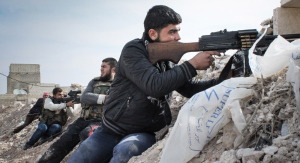
    Nitrogen is critical for all plants and animals to grow. Some plants build it naturally into the soil through a symbiotic process between bacteria and their roots called ‘biological nitrogen fixation’ (beans and clover, for example), but the majority comes from chemical fertilizers and as a by-product of burning fossil fuels.

    For those that remember the nitrogen cycle from science class, we know that 78.1% of the atmosphere is inert nitrogen (N2). In the 20th century, we developed a way to convert this inert, atmospheric nitrogen into a form of nitrogen accessible to plants and animals (known as “reactive nitrogen”). This has enabled food production to roughly keep pace with the explosion of population growth over the last fifty years. Whether through fertilizers or biological fixation, nitrogen will play a key role in meeting the food needs of the future.

    When there is not enough nitrogen in the soil, loss of soil productivity and degradation occur. Because it is small farmers that often lack access to nitrogen, their yields decline year over year, reducing their annual income and thus exacerbating inequality within the global food system. This pushes them further into poverty, and in many cases can force them to purchase food when they cannot grow enough. Degraded land forces them to go in search of new, more fertile land, breaking apart families and communities.

    However, the solution is not as easy as simply adding more nitrogen in areas where there is not enough. Too much nitrogen can cause serious problems for human health and the environment. While nitrogen is required by plants in order to grow, there is a limit to how much any plant can use. Beyond this “critical load”, nutrients that cannot be absorbed by plants will leach into the water and air. Once in the environment, nitrogen can change forms over an extremely long life (average of 120 years) and detrimentally affect many different systems before finally becoming denitrified back into atmosphere. Nitrogen exacerbates climate change, depletes the ozone layer and drives biodiversity loss. It causes low-oxygen zones in water systems that weaken or kill fish and marine habitats (known as eutrophication or hypoxia). Reactive nitrogen can also be very detrimental to human health through air and water contamination. It is a major contributor to smog, which is estimated to take six months off the life expectancy of over half the population in Europe (Sutton et al 2011). It is even worse in areas like China, where the density of air particulates have registered at twice the level considered “dangerous” in metropolitan centres like Beijing. Ingesting high levels of water-borne nitrates has been associated with cancer, diabetes and adverse reproductive outcomes (Ward et al. 2005).

    The graph below shows nitrogen fertilizer application globally. In the red areas of the graph, many of the main water bodies suffer the detrimental effects of too much nitrogen, and the people that live in those areas suffer as a result of nitrogen pollution. Many of the green areas could benefit from more nitrogen to increase soil productivity.

    WorldFertilizerApplication

    The key is balance. On the one hand, improving the efficiency of fertilizer use will maintain crop yields while protecting the ecosystems humans and animals depend upon. On the other hand, developing biological nitrogen fixation methods or pro-poor fertilizer programmes to increase yields for small farmers will improve their situation economically and strengthen their resilience to price shocks and weather events. In both cases, proper nitrogen management will be a crucial part of solving our global hunger crisis while ensuring sustainability for future generations.

    Lisa Dittmar is the CEO and founder of NitrogenWise,  a website that brings together research and straightforward communication to explain the complexities of nitrogen in a meaningful and relevant way.


    Citations

    Barham, B. L., & Weber, J. G. (2011). The Economic Sustainability of Certified Coffee: Recent Evidence from Mexico and Peru. World Development, 1269-1279.

    Berry, A. (2010). What type of global governance would best lower world poverty and inequality? In J. Clapp, & R. Wilkinson, Global Governance, Poverty and Inequality (pp. 46-68). London: Routledge.

    Deininger, K., & Byerlee, D. (2011). Rising global interest in farmland. Washington DC: World Bank. Retrieved November 30, 2012, from http://siteresources.worldbank.org/INTARD/Resources/ESW_Sept7_final_final.pdf

    FAO. (2006). Livestock Report 2006. Rome: Food and Agriculture Organization of the United Nations.

    Geary, K. (2012). Our Land, Our Lives: Time out on the global land rush. Oxford: Oxfam. Retrieved November 2, 2012, from http://www.oxfam.org/sites/www.oxfam.org/files/bn-land-lives-freeze-041012-en_1.pdf

    Reay, D. S. (2011). Societal choice and communicating the European nitrogen challenge. In M. Sutton, The European Nitrogen Assessment (pp. 585-602). Cambridge: Cambridge University Press.

    Sutton, M. (2011). Too much of a good thing. Nature, 472, 159-161

    Ward, M. (2005). Workgroup report: Drinking-water nitrate and health-recent findings and research needs. Environmental Health Perspectives, 113, 1607-1614

    Woods, J., Williams, A., Hughes, J. K., Black, M., & Murphy, R. (2010). Energy and the food system. Philosophical Transactions of the Royal Society B, 2991-3006

    Front page image source: Organic Fertiliser for sugar cane – Shell

  • Sustainable Security

    This post is based on Paul Rogers’ Monthly Global Security Briefings and was originally posted by Oxford Research Group on 29 April, 2014.

    Free Syrian Army rebels fighting Assad militias on the outskirts of the northwestern city of Maraat al-Numan, Idlib - Syria Source: Freedom House (Flickr)

    Free Syrian Army rebels fighting Assad militias on the outskirts of the northwestern city of Maraat al-Numan, Idlib – Syria Source: Freedom House (Flickr)

    The Syrian War is now in its fourth year and the indications are that the regime will survive and consolidate its position in 2014. This is radically different from early last year when many analysts thought it was under serious pressure, and it should be recalled that in mid-2011, a few months into the war, the prevailing view was that the regime would not last to the end of that year. The costs have been huge, with around 140,000 killed, twice that number injured and more than a third of the population displaced, millions of them refugees in other countries.  This article seeks to put this appalling conflict in a longer term regional context as an aid to looking at possible policy options in attempting to bring the war to an end.

    The Regional Context in 2011

    At the start of 2011 the region was struck by remarkable political upheavals as people in a number of countries reacted against autocratic rule and demanded political change. It commenced with the rapid and unexpected fall of the Ben Ali regime in Tunisia on 14 January and was followed on 11 February by the quite startling collapse of the Mubarak regime in Egypt. Across the region there were public uprisings of varying intensities in Oman, Bahrain, Yemen, Libya and Syria and political uncertainty in several countries including Kuwait, Jordan and Morocco.

    In broad terms, those political authorities that did not immediately collapse reacted in different ways that may be summarised as concession or repression or a mixture of both. In Oman, demonstrations were repressed with force but concessions were also offered and the innate wealth of the authorities was available to “buy off” resentment. In Bahrain the royal house opted for repression, aided by army and police support from Saudi Arabia and the UAE.  Saudi Arabia treated Shi’a opponents harshly but distributed many billions of dollars of resources across most of the population.

    In Morocco, King Mohammed sped up the pace of reform with some effect, and across the border in Algeria some economic concessions, including increased food subsidies, were made.  In Libya, Gaddafi used repression but western, and a few Gulf Arab, states intervened on the part of the rebels; a six-month war ended with regime collapse and Gaddafi’s lynching. This has been followed by huge insecurity, including rise of Islamist and local tribal militias.

    The Syrian regime faced extensive nonviolent demonstrations, most commonly after Friday prayers, and faced an escalation in dissent at a time when two regimes in the region had already fallen and in the same week that Saudi and Emirati forces intervened in Bahrain and the UN approved foreign intervention in Libya. The fate of Mubarak was particular striking for the Assad regime given Syria’s long-term historical relationship with Egypt, and it is probable that this meant the regime believed its only course of action was vigorous repression. It became progressively more vigorous and determined in its pursuit of control.

    Underlying Causes

    Although most of the individual anti-government actions across the Arab World were responses to persistent and long-term autocracy, these were in the context of a number of other factors:

    • Outside of a small cluster of oil-rich states, the wealth-poverty divide has become huge, often with the majority of populations marginalised.
    • Even in countries of modest wealth, much of the economic power has been concentrated in the hands of small groups of elites, often less than a tenth of the population. The world economic downturn from 2007 onwards exacerbated these socio-economic divisions.
    • The demographic transition is still in progress across much of the Middle East, meaning that a large proportion of the population is under the age of 30.
    • Although educational standards are highly variable and there is a still a marked gender gap, in most countries most people now go through high school and there is an increasing proportion of graduates among people under 30. There is frequently a serious lack of job opportunities, not least for well-educated young people. At the time of the changes in Tunisia it was reported to have 140,000 unemployed or seriously underemployed graduates out of a population of 11 million.
    • The surge in world grain prices in the late 2000s, not least following China’s harvest difficulties, added to the economic problems for many, not least in Egypt. Syria had a specific problem of drought stretching over many years, leading to an influx of the rural poor into urban areas.

    As a whole, these factors mean that there are trends across the region that point to the risk of longer-term social upheavals. These will persist and must be factored into any policy formulation that might relate primarily to Syria. Instability is highly likely to be a feature of the region in the coming years.

    Syria’s Perspective

    In the light of the regional upheavals, the Assad regime used high levels of violent repression from the start, which led to a transition from nonviolent to violent protest. From the start the regime presented itself as the guardian of stability against opponents that were essentially terrorists. This may have been a travesty of reality at that time, but in the context of the extraordinary upheavals and uncertainties across the region – as well as a keen understanding of the shared sectarian and geopolitical rivalries that tore Lebanon apart within recent memory – the need for a strong regime was more widely accepted within Syria than most diplomats and external analysts appreciated.

    The regime’s stance was aided by internal and external factors. Internally it had the strong support of the Alawi minority but most other Shi’a, Christians and Druze were also willing to accept the regime as guardian of the security of the state. In combination this represented close to a quarter of the population but there was also support from many in the Sunni business community who feared that regional upheavals would spread to Syria. By and large these elements persist, although the great majority of Syrians just want an end to the war.

    Externally, the regime has had support from three quarters. One is the Hezbollah movement in Lebanon that has long been heavily dependent on Syria for weapons and other support.  Hezbollah militias have become a crucial part of the paramilitary support base of the regime.  Second has been the continuing support of Iran, including weapons, training and supplies, and an important sub-set of this has been the increase in paramilitaries from Iraqi Shi’a communities, backed by Iran. Finally there has been the long–term relationship with Russia, with the Putin government seeing Syria as the key centre for remaining Russian influence in the Middle East.  In the past year Russia has been particularly useful in its support for repairing and upgrading military equipment, especially aircraft and related weapons systems.

    The Islamist Dimension

    In the past year, radical Islamist paramilitary groups such as ISIS, the Islamic Front and al-Nusrah have come to the fore among the rebellion, offering the strongest opposition to the regime. There has thus been an element of self-fulfilling prophecy for the regime. In 2014, internal conflicts among the Islamists have weakened them. They may still offer the strongest resistance but their relative decline is one reason why the regime is likely to survive long-term.  Western states, whatever their public stance, would now prefer to see the regime survive than lose control to al-Qaida-linked Islamists. This is clearly the case for Putin, where fear of an Islamist spill-over to the Caucasus is now considered less likely following the safe conclusion of the Winter Olympics and the internal Islamist conflicts within Syria.

    Policy Implications

    In a very pessimistic environment, there are two more positive elements. One is that relations between Iran and Saudi Arabia are showing signs of improvement, including reports of unofficial Saudi/Iranian discussions on Syria. The second is that a number of local ceasefires have been developed, not least in some parts of Damascus.  There may be scope for these to develop further, especially in parts of the country where Islamist groups are not prominent.

    The international community must seek to increase pressure on the UN to enhance multilateral processes, and specifically seek to engage Tehran and Riyadh. In addition, given that this war has many months and possibly years to run, states must commit to improve aid to refugees and to any initiatives that increase the possibility of gaining and embedding local ceasefires – not least by immediate aid for those districts where ceasefires take hold. Approaches to the region must now take a much longer-term view, based on the likely survival of the regime and the fact that the underlying elements behind changes in the region will persist.

    Paul Rogers is Global Security Consultant to Oxford Research Group and Professor of Peace Studies at the University of Bradford.

  • Sustainable Security

    Since the 9/11 attacks, and the ensuing “war on terrorism,” the U.S. government has engaged in a series of controversial counterterrorism policies. One such policy has been targeted killings, which have been used to try and eliminate the senior leadership of the global jihadist movement. How effective has the practice been?

    The recent high profile terrorist attacks perpetrated in the U.K. have generated a resurgence in the debate surrounding counterterrorism tactics. Targeted killings, defined by Alston as the “intentional, premeditated and deliberate use of lethal force, by States or their agents…against a specific individual who is not in the physical custody of the perpetrator,” are one such tactic; frequently employed, yet extremely controversial.  This practice most often takes two forms: kill/capture missions and unmanned aerial vehicle assaults (UAVs). Certainly the most well known of the former is that of the May 2nd, 2011 Navy SEAL raid on Usama bin Laden’s Pakistan compound. The use of UAVs has become much more common, with a recent Director of National Intelligence report indicating that 473 drone strikes had resulted in the deaths of around 2,500 terrorists and between 64-114 civilians.  Such civilian fatalities, criticized by independent organizations to be a low estimate, illustrate the largest criticism of the policy; that it can be, as it is even from China’s perspective, “a blank space in international law (that is) subject to abuse”.

    These issues have kindled a spirited discussion among scholars, but have yet to influence the policy’s role as a favoured strategy amongst policymakers.  Former President Obama, whose administration was responsible for the program’s significant expansion, declared just last year that “none of ISIL’s leaders were safe” and they were “going to keep going after them”. President Trump has also indicated that he plans to continue with the program, recently noting that “the terrorists and extremists and those who give them aid and comfort must be driven out from our society forever”.

    It would seem that the moral and legal consequences of targeted killings have been, at the very least, overlooked given the intense focus and leeway that has been granted to combating the global jihadist movement (GJM). However, this preference for the use of targeted killings as counterterrorism has become increasingly hard to rectify given the mounting lack of empirical evidence to support its effectiveness.  Indeed, a host of previous investigations into contexts both within and outside of the GJM has yielded a complex picture. This picture is one that does not necessarily indicate resounding ineffectiveness, but one that does not garner particularly strong support for the strategy either. Rather, conclusions regarding the capability of targeted killings vary by how the incident is perceived (discriminate vs. indiscriminate violence), what outcome is studied (group desistance; frequency versus severity), the type of leader killed (position in the group; presence of a tribal elder), and characteristics of the organization (size, structure, and ideology).

    Evaluating effectiveness

    Image credit: U.S. Air Force photo/Lt Col Leslie Pratt.

    Taking into account these nuances, my own work demonstrates that this policy has largely failed to decrease GJM-related terrorism, utilizing the Global Terrorism Database’s definition of, “the threatened or actual use of illegal force and violence to attain a political, economic, religious, or social goal through fear, coercion, or intimidation.” Rather, such killings, in the form of both kill/capture and UAVs, have been unsuccessful at decreasing the especially noxious outcomes resulting from jihadi terrorism; namely, casualties, along with the more detrimental attacks involving high civilian deaths and suicide attackers. Perhaps even more disconcerting, the deaths of certain al Qa’ida leaders like that of al-Awlaki, the infamous cleric responsible for many a terrorist’s radicalization, have led to an increase in incidents, or a backlash effect.

    Examining a slightly varied predictor in the form of monthly killings has yielded similar conclusions, again in the form of an increase in casualties. Still other al Qa’ida leaders’ deaths have produced decreases in terrorism incidents, while at the same time increasing other types of attacks. This displacement phenomenon is not new to studies of crime and terrorism, but adds to the general conclusion that targeted killings have yet to render consistent successes.

    While I have also discovered support for the notion that targeted killings are an effective deterrent, these findings are largely outweighed by the above. It would appear that this tactic, as one of the leading scholars on leadership decapitation Jenna Jordan notes, “is not enough to effectively fight a strong and emboldened terrorist organization.” Nevertheless, it may be too early to designate targeted killings a complete failure.  As Brian Forst has argued, “a failure to find is not at all the same as a finding of failure.” Certainly, other research has noted the short-term benefits like those present in the work of Patrick Johnston and Anoop Sarbahi, the lack of attacks on the U.S. Homeland, and the possibility that there are other purposes to the policy like that of retribution.

    Although not directly assessed in my work, the totality of countermeasure evaluations have become increasingly supporting of Laura Dugan and Erica Chenoweth’s contention that conciliatory, rather than punitive efforts, are the key to fighting terrorism. Actions like that of removing curfews, releasing prisoners, or even meeting to discuss issues have demonstrated their effectiveness in decreasing violence within the Israel-Palestine conflict. Even investigations outside the context of terrorism, like Matthew Dickenson’s study of Mexican drug-traffickers, are similarly reflective of the idea that incentives rather than punishments offer the most promise. Specifically, Dickensen has suggested that improving both the economic and law enforcement environments are better counter-narcos strategies than that of leadership removal. Jordan has also suggested that al Qa’ida’s organization, which tends to be bureaucratic, and its communal support, have been integral to its ability to rebound from killings. While such killings have the potential to affect the former, it is the opinion of this researcher that conciliatory efforts may have the best shot at addressing the latter.

    Conclusion

    All in all, and given the issues surrounding terrorist negotiation coupled with an ideology that is fraught with human rights’ violations, conciliatory actions are likely to remain unpopular. As the U.S. continues to fight a movement that has been responsible for a quarter of all deaths and injuries from terrorism, the policy of targeted killing is likely to remain.  Perhaps, at the very least, this strategy could be coupled with other efforts that address the larger causes and correlates of terrorism, like that of larger macro-level predictors.

    Jennifer Varriale Carson is an Associate Professor of Criminal Justice and the Coordinator of Undergraduate Research at the University of Central Missouri.  She holds a Ph.D. from the University of Maryland in Criminology and Criminal Justice.  Her work focuses on policy evaluation, particularly the use of quasi-experimental methods in assessing counterterrorism efforts, and can be found in a number of outlets including Criminology and Public Policy, Journal of Quantitative Criminology, and Deviant Behavior.

  • Sustainable Security

    Kristian Skrede Gleditsch is Professor in the Department of Government at the University of Essex, director of the Michael Nicholson Centre for Conflict and Cooperation, and a research associate at the International Peace Research Institute, Oslo (PRIO). His research interests include conflict and cooperation, democratization, and spatial dimensions of social and political processes. He is the author of All International Politics is Local: The Diffusion of Conflict, Integration, and Democratization (University of Michigan Press, 2002), Spatial Regression Models (Sage, 2008, with Michael D. Ward), Inequality, Grievances, and Civil War (Cambridge University Press, 2013, with Lars-Erik Cederman and Halvard Buhaug), and journal articles in the American Journal of Political Science, American Political Science Review, Annals of the Association of American Geographers, Biological Reviews, Comparative Political Studies, Conflict and Cooperation, Defence and Peace Economics, Economic History Review, European Journal of International Relations, International Interactions, International Organization, Internasjonal Politikk, International Studies Quarterly, Journal of Conflict Resolution, Journal of Peace Research, Journal of Politics, PLOS One, Political Analysis, Political Psychology, R Journal, and World Politics.

    In this interview, Professor Gleditsch discusses the global decline of violence since World War II and some of the challenges to this trend.

    Recently, several authors have declared that there has been a decline in armed conflict since the end of World War II. From your research on this topic, what does the data say about the global patterns of violence and is war really waning?

    On the question, yes, I think war is declining in most common data sources, although the causes remain contested. For civil wars there is at least some evidence that accommodation and conflict management has promoted a decline of war. Although Syria is a sever conflict, it is not by itself sufficient to say that we have a clear reversal. Perhaps the greatest current challenge is the alleged increase in terrorism. However, it is not obvious why we should see an increase in less severe and less organized conflict, and there is also some evidence that ethic terrorism has declined following accommodation in ways similar to civil war.

    You mention that the causes of this decline in war remain contested. What are some of the main explanations offered by scholars for this development and what do you feel are the main areas of disagreement on this issue?

    I think some of the key explanations include more democratization, less ethnic discrimination, globalization/increase in trade, and greater scope for conflict management by the UN and other regional organizations. All of these in my view are plausible and likely to be part of the explanation, but I think it is also fair to say that none of these alone provide a clear explanation for the decline in conflict.

    There has been a great deal of skepticism about some of these factors, especially democratization, as many point to examples where conflict has followed after elections. However, some of this research takes a very binary approach to violence, where any conflict is regarded as a failure even if the level of conflict declines or fewer actors engage in violence. To use another example, although some dissident republicans in Norther Ireland continue to use terrorist tactics, it would be absurd to say that there has been no decline in the volume terrorism after the Good Friday agreement.

    Do you feel that there has been a gradual shift in the attitudes of people towards war and, if so, that this might have also contributed to this decline of war?

    I think there has been a dramatic shift in attitudes to war. At least a 100 years ago it was common to glorify war as heroic and character forming. Countries had ministries of war. Now war tends to be seen as a regrettable last resort, and we have ministries of defense, and literature on the horrors of war. All of this contributes to make war a much harder sell. That is not to say that aversion to war is universal or that people have never approve of conflict, and attitudes can influenced, in both directions. Moreover, attitudes are probably influenced by views on the costs of war and feasibility of alternatives.

    I have been involved in some experiments on support for escalatory actions in territorial conflict with China among Japanese respondents, and there is some evidence that although people are generally quite hard line they become less belligerent when provided with information on the military or economic costs of conflict.

    With regards to democratization, why do you feel that democracy reduces the risk of war?

    For interstate war, then I think it is fairly well established that democracies rarely fight severe wars with each other. Of course, the risk of interstate conflict is low in general, at least for severe conflicts. Moreover, democracies may fight other states, and the democratic major superpowers are much more likely to be involved in conflict. However, I think there is also some evidence that the increased role of public opinion can constrain the use of force more generally, and that democratic states have supported a liberal order with emphasis on stronger international institutions and conflict management approaches that have helped reduce the risk of conflict more generally.

    I also believe that transitions to democracy reduce the risk of civil war, despite widespread pessimism and fears of democracies increasing conflict. Democracies provide alternative political avenues for conflict, and decrease the motivation to use violence compared to autocracies. Transitions to democracy may not eradicate all domestic violence. Many democracies have inherited ethnic separatist conflicts that started before democratization, and established organizations may remain active after transitions (ETA in Spain and the IRA can be interpreted in this perspective). Moreover, we may see violence around elections, under a climate of mistrust. However, the overall magnitude of civil violence tends to be lower under democracies.

    Whilst civil war is in decline, it became the principle form of armed conflict after the end of the Second World War. What were the main drivers for civil war becoming the main form of conflict?

    Civil wars became particularly common with decolonialization. Some anti-colonial movements turned violent, and, in some cases, competing factions continued to fight each other after independence (e.g., Angola). Moreover, after independence, many colonial states were prone to violence for a host of reasons. One the one hand, state weakness can by itself encourage violence as the barriers for taking on the state are lower. Moreover, the post-colonial states often had various features that could encourage violence such as ethnic nepotism, poor governance, or lack of legitimacy. Finally, although the Cold War did not escalate to a direct confrontation between the superpowers, many civil wars escalated as the opposing sides could obtain support from the superpowers.

    The end of the Cold War coincided with a spike in civil wars for somewhat similar reasons. Many weak states faced a loss of external support that weakened the central government (e.g., Somalia), and some larger federal units faced challenges form ethnic groups who sought independence and who might be willing to use violence (e.g., former USSR and Yugoslavia). However, other factors such as democratizations, decrease ethnic discrimination and powersharing, as well as more active UN conflict management efforts have likely all helped reduce the incidence of civil war from the immediate post cold war peak.

    Some studies have discussed an apparent revolution in warfare in the post-Cold War world, described using terms such as ‘new wars’, ‘hybrid wars’, and ‘post-modern wars’. Some of the characteristics of these wars include blurred distinctions between public and private combatants, warlords, and criminals; regular targeting of civilians and other war atrocities; war economies sustained by illegal trade in drugs, weapons, resources such as oil or diamonds; and violence being driven more by identity than ideology. Do you feel that these so called ‘new wars’ represent a revolution in warfare and have they also marked a shift in the nature of warfare?

    I am actually very skeptical of whether the concept of new wars is very helpful or whether the alleged trends exist at all. It is certainly not the case that targeting of civilians is a new feature – recall the shelling of cities during sieges in the 30 years war. The opium war was thus named for a reason. And the blurred lines between criminal gangs and warfare cannot be a new thing – the North African coast was known as the barbary coast due to the endemic piracy and the Mongol hordes probably picked up some things along the way too.

    I suppose this raises the question of why some find this concept so compelling. I can only speculate on this since I do not share this myself, but I believe that the decline of a master narrative of conflict after the Cold War increases people’s sense of new wars as different from old war. However, all systematic research that I have seen raises serious question over this.

    In addition to the alleged increase in terrorism, what do you see as the other greatest challenges to the decline in violence in the near and distant future?

     I actually think the long-term outlooks is relatively favorable, but I can imagine some cases that may contribute to long-term challenges

    1. increasing tension between the major power is unlikely to lead to direct conflict, but it may increase support to opposing sides in civil war and decrease the prospects for the UN to become involved.
    2. globalization has in all likelihood increased the costs of conflict and increased the value of peace, but there is a chance that globalization could be rolled back with increasing protectionism. This can make it more difficult to contain some territorial conflicts, such as the ones seen in Asia
    3. global challenges such as refugees change require cooperation, and if states fail to cooperate on these then poorer relations may weaken the ties that prevent conflict
    4. the consequences of climate change could increase the risk of conflict by undermining livelihoods and increasing competition between states. My own reading of the evidence says that there is little evidence of this happening so far, but skeptics would argue that dramatic consequences would move us into a new scenario.

    These are serious concerns, but at best indicate risk, and none of them imply that the decline of violence must be reversed.

  • Sustainable Security

    One year on from the French intervention in Mali, Saharan jihadist groups continue to threaten not only Mali but Algeria, Libya, Niger, Nigeria and Tunisia. Will French and US plans to expand their military presence in the Sahel combat, contain or exacerbate the threat from militants displaced from Mali?

    Fragmentation, Displacement and Reconsolidation:  The AQIM Threat in 2014

    French General Pillet, Chief of Staff of the MINUSMA Kidal, during the visit of the Joint Security Committee in charge of the observance of the cease-fire between the Malian army and armed groups from the north. Source: MINUSMA (Flickr)

    French General Pillet, Chief of Staff of MINUSMA, Kidal, during the visit of the Joint Security Committee in charge of the observance of the cease-fire between the Malian army and armed groups from the north. Source: MINUSMA (Flickr)

    Last January, the French military, supported by African troops and 10 non-African air forces, intervened militarily in Mali at the request of its transitional government. Over the following four weeks they recaptured all of the towns in the northern half of Mali. This vast desert region had been seized by Islamist and separatist militia in March-April 2012 and declared independent as the ‘State of Azawad’, the Tuareg name for their homeland in northeast Mali. Since then, French troops have continued to conduct security operations across northern Mali to locate and ‘neutralise’ militants associated with Al-Qaida in the Islamic Maghreb (AQIM), a jihadist group of Algerian origin, and its West African splinter groups. Reduced numbers of French forces now support Malian and African forces within the United Nations Multidimensional Integrated Stabilization Mission in Mali (MINUSMA).                                                                                                                                                                                                                                                                                                                                                                                                                                                                                                                                                                                                                                                                                             However, the final quarter of 2013 saw an increase in violence in northern Mali, including terrorist attacks, violent protests and inter-communal violence. Moreover, the French advance into northern Mali displaced rather than destroyed AQIM and its two local allies, the Movement for Unity and Jihad in West Africa (MUJAO) and Ansar Dine, a Tuareg Islamist group. Their impact has been particularly felt in Niger and Libya and may also have bolstered jihadist groups operating in northern Nigeria, Tunisia and Egypt’s Sinai. The lawless desert of southwest Libya is believed to be the new stronghold of AQIM.

    A new group, al-Murabitun, combining MUJAO and the most active elements of AQIM’s Saharan front, now appears to pose more of a threat to western and West African interests than AQIM. This is because its strategic direction is towards the weak states of West Africa, including Niger, Mali and Mauritania, where critical infrastructure and individuals are more difficult to protect. It is also better connected to the kidnapping and trafficking enterprises that fund Saharan militancy, and more deadly. During 2013, its militants were behind frequent raids on Gao (northern Mali’s main town), on a prison, garrison and French-owned mine in Niger, and on the Algerian gas plant at In-Amenas. These audacious operations attest to its range, training, discipline and cosmopolitan membership. If it finds common purpose with the larger jihadist groups in northern Niger, as some analysts suggest, it could represent a severe threat to stability in the already shaky regional power.

    French Repositioning in the Sahel

    In recognition of the expansion of jihadist groups, France announced a major repositioning of its forces in Africa in January. The new French military posture will refocus from large coastal bases, designed to train, transport and supply African Union and regional rapid reaction forces, to smaller forward deployments in the Sahel and Sahara. 3,000 French troops will now be based indefinitely in Mali, Niger and Chad.

    U.S. soldiers and French commandos marine conduct a reconnaissance patrol during a joint-combined exercise in Djibouti. Source: Wikipedia

    U.S. soldiers and French commandos marine conduct a reconnaissance patrol during a joint-combined exercise in Djibouti. Source: Wikipedia

    The new posture is heavily influenced by US ‘War on Terror’ strategy in Africa, Yemen and south-west Asia, relying heavily on Special Forces, air strike capacities and unmanned aerial vehicles (UAVs). French and US forces (including contractors) already share facilities in Djibouti, Niger, Burkina Faso and Mauritania, and there is a small US liaison detachment with the French Combined Air Operations Centre in Chad. The French repositioning is explicit about confronting Islamist terrorist groups and the threat to regional security posed by the security vacuum in southern Libya. While the repositioning focuses on Mali, Niger and Chad, supplied via a coastal base in Côte d’Ivoire, it will actually include deployments to over a dozen small bases and elite detachments in the Sahel and Sahara, covering at least seven countries. In some cases it will mean French Special Forces reoccupying desert forts long abandoned by the Foreign Legion.

    There will also be greater use of aerial reconnaissance and targeting. French Navy patrol aircraft already criss-cross the Sahara and two MQ-9 Reaper UAVs arrived with French forces at Niamey airport in December after the US fast-tracked French acquisition of and training on these ‘hunter-killer’ drones. These double the effective range of the Harfang target-acquisition UAVs formerly used by the French in the Sahel, bringing all of Mali, Niger, almost all of the rest of West Africa and much of Algeria, Chad and southwest Libya into range.

    France also makes greater use of combat aircraft in the Sahel-Sahara, deploying fighter aircraft from its long-term base in N’Djamena, Chad to Bamako and Niamey airports. This brings northern Mali into range. Since October, French fighter-reconnaissance aircraft have deployed to Faya-Largeau in northern Chad, which brings southern Libya well within range. French Special Forces and armed helicopters have also operated from Burkina Faso, Niger and Mauritania in pursuit of AQIM.

    US and China Extend Their Presence

    French and US Reapers now operate from the same facility at Niamey airport, set up by the US in February 2013. While US UAVs in Niger are unarmed, it is unclear if French Reapers will be used for strike missions. US armed UAV bases in Djibouti, Ethiopia and Seychelles currently bring all of the Horn of Africa, East Africa and most of Arabia within range. US private military contractors have also flown unarmed, unmarked light aircraft on surveillance flights all across the Sahel belt since at least 2007. Using covert hubs in Burkina Faso and Uganda and smaller airfields in Mauritania, Niger and South Sudan, they have sought AQIM and the Ugandan Lord’s Resistance Army (LRA).

    Since 2011, US Special Forces have established small bases in the Central African Republic (CAR), South Sudan and the Democratic Republic of Congo (DRC) to assist Ugandan forces seeking the LRA there. They also provide training to several African militaries countering the LRA. As with programmes in Mauritania, Mali, Niger and Chad, these programmes have focused on creating elite counter-terrorism units. Unfortunately, all of these countries plus the CAR and South Sudan have experienced coups d’état or major army mutinies since this assistance began.

    In order to combat Boko Haram, a Nigerian Special Operations Command was announced on 14 January with the US military providing advice, training and equipment. Massive attacks by Boko Haram since December suggest that the Nigerian army’s use of indiscriminate force in the northeast has not weakened the insurgency. Rather, the state of emergency is likely to have strengthened the recruitment base of Boko Haram since May.

    China and Japan are also increasingly active in the Sahel. Chinese parastatals are the dominant actors in the oil industries of Sudan/South Sudan, Chad/Cameroon and Niger. They also mine uranium in Niger, and China is the primary buyer of iron ore from Mauritania’s vast desert complexes. So far, China is the only non-African state to deploy more than a few dozen troops with MINUSMA.  Japan, which saw ten of its nationals killed in the January 2013 militant attack on Algeria’s In-Amenas gas plant, has pledged $1 billion to stabilise the Sahel, including training of counter-terrorism units.

    Compromised Alliances

    This expansion of deployments and offensive operations relies on the status of forces agreements between western powers and’ friendly’ states such as Algeria. France, for example, depends on an air corridor across the Algerian Sahara. Securing such access puts host governments in a position of greater power. The highly authoritarian regime in Algiers – the world’s fifth or sixth largest arms importer – no longer faces western pressure to improve its dismal human rights record. Indeed, it has received friendly visits from the leaders of France and the UK and the US Secretary of State since late 2012. Mauritania’s military-based government faced little criticism over its unfair elections in November.

    Chad, Uganda and Ethiopia may be the biggest regional beneficiaries of the militarisation of the Sahel. Each has been governed for a quarter-century by a former armed movement. They face little censure of their authoritarian and undemocratic internal policies and have become more assertive as regional military powers. Ethiopia has forces in Somalia while Uganda now has combat troops in operation (by agreement) in Somalia (under AU command), South Sudan, the DRC and the CAR.

    Boosted by expanding oil revenues, French alliance and the demise of Libya’s Gaddafi regime, Chad has greatly expanded its military reach into Mali, Niger and the CAR, where its troops and citizens now face a violent backlash. It is also a Security Council member for the next two years and will be expected to help guide decisions on UN peacekeeping operations in Mali, South Sudan and potentially the CAR and Libya.

    Burkina Faso, long relied on by Paris to negotiate with armed groups in francophone West Africa, is also facing unaccustomed turbulence in 2014 as its president seeks to permit himself an additional term of office. Algeria, which is wary of France’s military deployments on its southern border, is set to take over from Burkina the mediation of talks between Mali’s government and secular Tuareg and Arab rebels.

    Foundations in Sand

    In some respects, the eviction of AQIM and its allies from northern Mali has made the wider Sahara a less safe place, without obviously impeding the capacity of jihadist groups to threaten Europe. In 2014, southwest Libya and parts of Niger are not necessarily less safe havens than northern Mali was in 2012. The insurgency has moved closer to the Mediterranean and closer to critical European energy infrastructure in Algeria, Libya, Tunisia and Niger (uranium). Unlike heterodox Mali, controlling Libya’s chaotic state is likely to be of interest to Arab Salafist groups, including AQIM.

    As elsewhere, the western military approach to countering Islamist insurgency in the Sahel rests on very unsteady foundations. This applies to the political legitimacy of allied regimes, the stability and security of locations hosting French and US bases, the traumatic historical legacy of France as the former colonial power, and the potential for counter-insurgency tactics to provoke wider alienation and radicalisation. However asymmetric its military technology, reinforcing a new line of castles in the Saharan sand may be as futile a gesture in France’s long retreat from empire as the UK’s last stand in Afghanistan.

    Richard Reeve is the Director of the Sustainable Security Programme at Oxford Research Group. He has researched African peace and security issues since 2000, including work with ECOWAS and the AU. Richard’s most recent security briefing ‘Security in the Sahel (Part II): Militarisation of the Sahel is available here.

  • Sustainable Security

    Despite being strictly prohibited in international humanitarian law, child soldiering remains a serious global problem. How effective has the international community’s response to this phenomenon been?

    Constituting one of the most egregious child rights violations, many children are currently actively involved in violent conflict as members of armed organizations, states and non-state actors. They can be found on every continent, but sub-Saharan Africa is the epicenter of the phenomenon. These recruited children perform a range of different tasks; they participate in combat, lay mines and explosives, are scouting, spying, and acting as decoys, couriers or guards. Others are used for logistics and supporting functions such as cooking and cleaning.

    The 1977 Additional Protocols to the Geneva Conventions were the first international treaties to try and tackle the problem of child soldiering. They prohibit the recruitment and participation in hostilities of children under the age of 15. The 1989 Convention on the Rights of the Child, which has achieved almost universal ratification, also included the 15 age limit. An optional protocol to this Convention, in May 2000, lifted the age to 18. It insisted that armed groups should not use children under 18 in any circumstances and called on states to criminalize such practices. However, although the use of children by armed groups is prohibited and defined as a war crime, child soldiering remains a pressing global issue.

    A “time bomb”?

    omo_river_valley_img_0463

    Child soldiers in Ethiopia. Image by Vittorio Bianchi via Flickr.

    The most commonly cited figure for the number of children involved in conflicts is 300,000. This estimate is, however, not necessarily the most accurate one as information on child soldier usage is difficult to obtain. Children are often employed in remote conflict zones away from public view and the media, no record is kept of their number and ages, and those who employ them often deny their existence or claim that these were isolated cases. Besides, they often ‘vanish’ after the conflict ends; they are rarely as visible among the demobilised troops as they were among the combatants at the height of hostilities.

    The number of children active in armed groups is clearly nominal when compared to the millions of children who do not participate directly as soldiers but are profoundly affected by war. Nonetheless, this group is a tangible, visible, and dramatic example of the deprivation of the human rights of children. It has been empirical proven that using children as active participants in armed conflict has severe consequences not only for the child and their family, but also for society in general. For instance, at a recent Paris conference on child soldiering, the keynote speaker, the former French foreign minister Philippe Douste-Blazy, warned that the use of child soldiers is “a time bomb that threatens stability and growth in Africa and beyond.” They are “lost children,” he argued, “lost for peace and lost for the development of their countries”. Also, a New York Times editorial stated: “They are walking ghosts, damaged, uneducated pariahs.” Ultimately, if subscribing to these statements, child soldiering may be thought to contribute to the well-known ‘conflict trap’, i.e. they might increase the likelihood that conflict recurs.

    There are at least two avenues that link former child soldiers to conflict recurrence. First, it is argued that former child soldiers have often limited skills besides killing and being able to fieldstrip weapons after the conflict has ceased. This is primarily due to the fact that they experience little to no education while being in the bush. This lack of education impedes their labour market success: they earn less and are less likely to be engaged in skilled work in comparison to those that were not recruited by armed groups. This may significantly raise the willingness to rejoin armed groups again, which might assure them of at least the basic necessities, such as food and perhaps even a bit of money.

    Second, although child soldiers are far from the only ones who are affected as a result of their experiences in war, they suffer the most and have the least capacity to recover. Typically former child soldiers have witnessed, experienced and/or perpetrated shocking and disturbing violent actions during their time with the armed group. This can create great difficulties both for the children and their interface with society. It can lead to both physical symptoms, such as headaches, stomach pains, sleep disorders, and mental symptoms, like depression, anxiety, and extreme levels of pessimism.

    One of the most worrying symptoms connected to children’s war participation is a supposed increase in the child’s level of aggression. Due to the fact that they often do not have the capacities and experiences to disengage themselves from these violent and aggressive behavioral norms established during their time in the armed groups, difficulties arise when peace is restored. For instance, they often display on-going aggressiveness within their families and communities: they also often use physical violence to resolve conflicts, reflecting an absence of adequate social skills.

    These skills are not easily acquired by former child soldiers since they often encounter broken families once they are back that could have provided a better regulation of the use of violence. Hence, some scholars have argued that the phenomenon of child soldiers feeds upon itself: each round of fighting creates a new cohort, traumatized by the war and bereft of economical skills, who then become a potential pool and catalyst for the next spate of violence. Or as Wessells describes it: “A society that mobilizes and trains its young for war weaves violence into the fabric of life, increasing the likelihood that violence and war will be its future. Children who have been robbed of education and taught to kill often contribute to further militarization, lawlessness, and violence”.

    International response

    The response of the international community to counter child recruitment falls usually in two categories: (1) punishing perpetrators by ‘naming and shaming’ practices and by prosecution; and (2) mitigating some of the damage done to children once they leave the armed group by implementing child-centred Disarmament Demobilization and Reintegration (DDR) programs.

    Concerning the ‘naming and shaming’ policies, the United Nations often publishes reports mentioning particular governments and non-state actors that use children. Some have argued that this has an effect, especially on governments, although there is little empirical evidence to back this up. The largest degree of child recruitment is, however, carried out by non-state actors and it seems that media exposure, public pressure, and pressure of international organizations and governments have little to no effect, with perhaps the exception of rebel groups who strive for secession.

    Besides ‘naming and shaming’ campaigns, the international community has also started to shift its focus to the criminalization of child soldier recruitment. Thomas Lubanga Dyilo, a warlord from the Democratic Republic of the Congo who led the Union of Congolese Patriots, was the first rebel leader convicted by the International Criminal Court for the use of children in military operations. More recently, Charles Taylor, the former president of Liberia, was found guilty of conscripting and enlisting children. It is, however, unclear whether this criminalization has a deterrent effect on child soldier recruitment.

    Once children are out of the armed groups, the international community attempts to mitigate the damage done to them and the potential consequences for society by implementing DDR programs. Initially children were often excluded from these programs, as it was argued that they did not pose a post-conflict threat. Moreover, since children cannot be legally recruited, child-centered DDR program elements were not viewed as a routine component of peacemaking. Fortunately, this has changed in recent times, and most DDR programs now have their own imperatives focused on rehabilitating former child soldiers. Usually these programs consist of three components.

    First, former child soldiers are gathered at pick-up points, moved to disarmaments sites, and, whenever necessary, disarmed. During the demobilization part of the program, eligibility for the DDR program is determined through a screening process in which they receive identity and discharge documents. Reintegration is the third component of the DDR program, which starts at care centers – transit facilities which help prepare former child soldiers for going home and give non-governmental organizations time for the preparation of families and communities to receive the children. During their time at the center, emphasis is placed on educational activities, recreational activities, psychological support and counselling, and several different life skills trainings. Once the parents or extended family members are traced, the children will be taken home to their family and will join an appropriate educational program.

    The effectiveness of these programs in reducing recidivism and establishing post-conflict stability is, however, not always affirmed. Some scholars conclude that these programs are generally inefficient at disarming ex-combatants, reducing the likelihood of recidivism, and addressing their economic and security concerns. This lack of supporting evidence might be due to conceptual and operational problems with defining the outcome of these programs (and how to measure this), and a lack of information on the existing DDR programs (money, personnel, mission statements, etc.). But it might also be due to the content of these programs and how they approach child soldiering. Many of these child-centered DDR programs, for instance, are put in place under enormous time pressure, are often disconnected from the perception of local communities, and are based on a one approach fits all children principle. Consequently, some scholars have called for more flexibility within these programs to enhance is effectiveness. Only then can efforts to promote social reconstruction bear its fruits.

    Roos Haer (PhD, University of Konstanz, Germany) is a postdoctoral researcher at the University of Konstanz at the chair of International Relations and Conflict Management. Her current research interests include the role of children in conflict, child soldier recruitment by state and non-state actors, Disarmament Demobilisation and Reintegration programs, and survey methodology in less developed (conflict) countries. Her research is often based on quantitative field research conducted in Africa. She has published in (a.o) the European Journal of International Relations, Conflict Management and Peace Science, Third World Quarterly, and has published a book with Routledge publisher.

  • Sustainable Security

    Author’s Note: This contribution is a shorter version of the article “Assessment of Transboundary River Basins for Potential Hydro-political Tensions” by De Stefano et al. 2017.

    The impacts of new dams and diversions are felt across borders, and the development of new water infrastructure can increase political tensions in transboundary river basins. International water treaties and river basin organizations serve as a framework to potentially deescalate hydro-political tensions across borders.

    The availability of freshwater in the right quantity and quality at the right times for dependent systems is required for human security, environmental security, and economic growth. As populations and economies have grown, water has become scarcer and more variable in certain locations, leading to concerns over how water may lead to conflict. Though violent conflicts over water occur more often at the local level, disputes over water are also possible at the international level, particularly as impacts of water use spill across international borders.

    Dams and other water infrastructure help manage water variability—providing water in times of drought and dampening the effects of floods. With these benefits come ecological impacts as large-scale water infrastructure effects the hydrologic function of the basin in which they are built. This includes altering the timing and/or magnitude of flows, altering aquatic migratory patterns, and preventing sediments from moving downstream. Thus, the construction of large-scale water infrastructure such as dams and water diversions can become significant sources of tension between countries sharing a river basin.

    The significance of new dams and water diversions is increasing across the world as many countries have begun construction on large infrastructure projects in internationally shared river basins. This is evident in places such as the Nile Basin, where the Ethiopian government’s construction of the Grand Ethiopian Renaissance Dam has been occurring without an agreement with downstream Egypt, and the news of its construction has been met with violent protests and strong rhetoric from Egyptian politicians. Water diversions are not the only factor potentially creating tension between countries over shared waters. Other factors including high population growth, urbanization, increasing water pollution, over-abstraction of groundwater, climate change and water-related disasters can contribute to tensions.

    Building institutional capacity (treaties and river basin organizations) is a crucial factor in decreasing the likelihood of conflict over shared waters – particularly if the agreements contain mechanisms that reduce uncertainty and increase flexibility in water management. Past research suggests that a basin will be more resilient to conflict if a basin has international mechanisms able to manage effects of rapid or extreme physical or institutional change. However, the mere presence of institutions does not necessarily indicate that a basin is resilient, nor does it indicate that water-related conflict will be absent.

    Countries can exploit treaties since they are not easily enforceable. Treaties can also be structured in a way that exploits (or worsens) already-existing inequities between countries. Treaties can not only solidify power imbalances, but can also lock out public participation or even become a source of conflict themselves. This can lead to a lack of participating by some countries.

    Previous studies in analyzing potential future conflict in river basins at a global scale have identified basins at future risk through predictive and forecasting methods, treaty analysis, and climate change. Our recent study aims to contribute to those types of analyses through examining multiple issues – stressors on political relationships due to the development of dams and water diversions, how treaties/river basin organizations can mitigate these stresses, and external socio-environmental factors that could exacerbate these tensions in the near future. We integrate these multi-faceted data to map the risk of potential tensions regarding water and politics in transboundary basins across the globe.

    Findings

    We found several basins to be vulnerable to tensions over water, particularly in Southeast Asia, South Asia, Central America, the northern part of the South American continent, the southern Balkans as well as different parts of Africa (Table 1). New dams and diversions is ongoing or planned in at least 57 basins worldwide. The new dams are highly concentrated in very few geographic areas, including regions in Nepal, Brazil, and India. Most international river basins were found to have a moderate risk of tensions over water (see Figure 1). Twenty-two basins were classified as having a very high risk, and 14 basins were classified as having a high risk of tensions. Many basins of higher risk are concentrated in Sub-Saharan Africa and in Central and Southeast Asia. These basins at higher risk are experiencing a combination of factors lending them vulnerable to conflict, including high rates of dam development, limited, weak, or nonexistent treaty coverage, high water variability, and low gross national income per capita.

    Concluding remarks

    The indicator-based analysis (Figure 1) uses a combination of environmental, political, and economic metrics, including high or increased climate-driven water variability, presence of armed conflicts, and low gross national income per capita, to identify vulnerability and resilience to tensions brought forth by water resources development in international watersheds at a global scale. The development of new dams and water diversions is very unevenly distributed.

    Certain basins will be much more impacted than others. Most of the new water infrastructure is in upstream portions of river basins, with many dams being built in emerging or developing economies that require increased hydropower and water regulation to sustain their economic development. Many of these areas still lack well-developed instruments and institutions that would contribute towards transboundary cooperation.

    The ability to understand when (and where) these variables combine to potentially create conflict is critical to managing and transforming future conflict in transboundary basins. Understanding where conflict might occur can contribute towards guiding policy interventions, focusing capacity-building efforts where needed, and actualizing worldwide initiatives of integrated water resources management. This includes achieving the United Nations’ Sustainable Development Goal Target 6.5 (“By 2030, implement integrated water resources management at all levels, including through transboundary cooperation as appropriate.”).

    Jacob D. Petersen-Perlman is a Research Analyst at the University of Arizona Water Resources Research Center. His research areas of interest include transboundary water conflict and cooperation, water security, and water governance.

    Lucia De Stefano is Deputy Director of the Water Observatory of the Botín Foundation and Associate Professor at Complutense University of Madrid (Spain). Her main fields of interest are multilevel water planning, drought management, groundwater governance, transboundary waters, and the assessment of good governance attributes from different disciplinary perspectives.

    Eric Sproles is a hydrologist at the Centro de Estudios Avanzados en Zonas Áridas in La Serena, Chile and a Courtesy faculty member at Oregon State University. His research areas of interest include climate change impacts on hydrology, particularly on mountain snowpack and streamflow, and remote sensing of terrestrial water storage.

    Aaron T. Wolf is a professor of geography in the College of Earth, Ocean, and Atmospheric Sciences at Oregon State University and directs the Program in Water Conflict Management and Transformation, through which he has offered workshops, facilitations, and mediation in basins throughout the world. His research focuses on issues relating transboundary water resources to political conflict and cooperation.

  • Sustainable Security

    Acclaimed military historian Dr. Mark Moyar discusses the history and current use of US special operations forces, America’s most elite soldiers.

    This interview was originally conducted for the Remote Control project.

    Q. Your book Oppose Any Foe was recently published. The book examines the history of U.S. special operations forces. What are the origins of America’s special operations forces and why were they created?

    Most of America’s special operations forces trace their roots to World War II. The Army Rangers were created in 1942 as a means of collaborating with the British Commandos, at a time when the Commandos were a central element of Winston Churchill’s raiding strategy. The Rangers were disbanded after World War II and again after the Korean War, but they were reincarnated in the 1970s and have been a part of the US Army ever since. President Franklin Roosevelt created the US Marine Corps Raiders in 1942 because his son, who was enamored with commando-type forces, convinced him to form Marine special operations forces despite objections from the head of the Marine Corps. Marine special operations forces were dissolved in 1944, not to be reconstituted until 2006, and eventually the new organization took on the Raider name.

    The US Navy fielded Frogmen in WWII as a means of clearing channels for amphibious landings, and retained some of the units after the war. In 1961, some of the Frogmen were converted into members of Sea, Air, Land Teams (SEALs). The Office of Strategic Services, the primary US intelligence agency during World War II, created special operations forces such as the Jedburghs and Operational Groups, which in the 1950s became the model for the US Army Special Forces.

    Q. In the early years, how strategically effective were US special operations forces?

    During both World War II and the Korean War, the United States formed special operations forces for the purpose of raids on enemy “soft spots.” In both cases, the Americans soon discovered that opportunities for such missions were few and far between. Given the need for regular infantry in these wars of grinding attrition, the special operations units were routinely employed in conventional infantry missions. For the purposes of stealth and speed, these units carried less heavy equipment than other line units, which proved to be a major handicap in conventional combat.

    The heavy losses sustained in battle led to the dissolution of most special operations units prior to the ends of both World War II and the Korean War. The special units of the Office of Strategic Services were somewhat more effective in their role of supporting resistance movements behind enemy lines, but for the most part they had little impact on the tide of battle, and they too were disbanded after the war. The US Navy Frogmen were a notable exception to the general trend, as their performance in clearing obstacles prior to amphibious landings was deemed so successful that they were retained after war’s end.

    Q. In your book, you describe how the future of special operations forces at the end of the 1950s looked bleak, but that the Vietnam War seemed to mark a turning point. What roles were US special operations forces used for during the Vietnam campaign and how did this experience effect their organisational structure and future use?

    President John F. Kennedy was more interested in special operations forces than any other US President, before or since. He enlarged the Army Special Forces and created new units in order to counter insurgencies in Vietnam and other third-world countries. The largest Special Forces program, the Civilian Irregular Defense Groups (CIDGs), performed both guerrilla and counterguerrilla missions, as they shifted from defending their villages to attacking infiltrating North Vietnamese Army units.

    In addition, the Special Forces attempted to insert intelligence collectors and saboteurs into North Vietnam, but most of the people they sent were compromised or killed. Special operations units also carried out reconnaissance missions in Laos and Cambodia, advised paramilitary forces, and conducted raids. After the war, conventional forces and special operations forces blamed each other for failures in Vietnam, based largely on inaccurate perceptions of the war, and those accusations would remain a source of friction for decades to come. Because conventional officers had greater clout, the special operations forces suffered the greater loss in resources after the war.

    Q. In the post-Vietnam era, there was a rise in hostage taking by Islamic terrorists which created the need for soldiers who could take out terrorists quickly and effectively without harm coming to hostages. How did this demand change U.S. special operations forces?

    In the post-Vietnam era, as in other post-conflict eras, special operations forces sought new missions to keep them occupied and demonstrate their worth. An upsurge in hostage taking by Islamic terrorists in the early 1970s led to the reconstitution of the US Army Rangers in 1974 and the formation of Delta Force in 1977 and SEAL Team Six in 1980. The Delta Force mission to rescue US hostages in Tehran in April 1980 failed spectacularly, but it led to a series of reforms with far-reaching implications for special operations forces.

    In the aftermath of the abortive raid, the US government formed the Joint Special Operations Command to alleviate the command problems that arose during the operation, as well as the 160th Special Operations Aviation Battalion to prevent recurrence of aviation mishaps. The Iran calamity also gave impetus to the reforms of 1986, which included creation of Special Operations Command, appointment of an Assistant Secretary of Defense for Special Operations, and authorization of a separate funding line for special operations forces. The inception of Delta Force and SEAL Team Six gave special operations forces permanent raiding capabilities, which would be used for different ends in the early twenty-first century.

    Q. Moving into the twenty-first century, the post-9/11 era has seen a significant increase in the use and numbers of US special operations forces. During the Afghanistan campaign, U.S. special operations forces played an important role in the overthrow of the Taliban. How much did the Afghanistan experience and its perceived successes influence the strategic thinking behind the U.S. military campaigns which would follow?    

    The Northern Alliance militias defeated the much larger Taliban armed forces in 2001 thanks to US Special Forces advisers, whose chief task was the guiding of precision munitions onto Taliban targets. It was the first time that American SOF played a role that could be characterized as strategically decisive, and thus encouraged the view that SOF were a strategic instrument. That view in turn fueled decisions to enlarge SOF and employ them in isolation from conventional forces. Efforts to rely primarily or solely on SOF, however, did not yield the anticipated successes.

    The use of SOF to support local actors failed twice in Afghanistan shortly after the fall of the Taliban- at Tora Bora at the end of 2001 and in Operation Anaconda in early 2002. SOF would also come up short when the Obama administration charged them with the task of building an army of Syrian rebels. Both George W. Bush and Barack Obama attempted to achieve strategic success through SOF surgical strike operations against the leaders of insurgent and terrorist organizations, but the elimination of large numbers of leaders failed to destroy these organizations.

    Q. What were some of the reasons for these failures you mention?

    SOF did not achieve their objectives at Tora Bora because their Afghan partners were not as competent or reliable as the Northern Alliance had been. The Afghan militiamen at Tora Bora failed to pursue Bin Laden aggressively, ensuring that he would escape. In Operation Anaconda, the Afghan partners panicked at the first setback and abandoned the battlefield. In the case of Syria, American special operators were unable to recruit substantial numbers of rebels because the White House put unrealistic constraints on recruitment and because most of the moderate rebels had been wiped out by the time the United States was prepared to back them.

    The many tactical achievements of surgical strike operations did not produce strategic success because the enemy was able to replace lost personnel with competent individuals, in part as the result of popular dissatisfaction with the surgical strikes.

    Q. As you previously mentioned, US special operations forces have expanded much since 9/11. Do you think the US is over-reliant on special operations forces and, if so, why has the US become so dependent on them?

    After 9/11, the Bush administration built up special operations forces for “manhunting” operations against extremist leaders, in the hope that extremist organizations could be destroyed through decapitation. Those organizations proved capable of withstanding the precision strikes, which led the United States to the use of special operations forces against lower levels of insurgent groups. Whereas the Bush administration sought to employ the special operators in concert with conventional forces in Iraq and Afghanistan, the Obama administration began seeking ways to use them as low-cost substitutes for large conventional forces.

    The Obama administration also decided to send more special operations forces into failed and failing states such as Somalia, Yemen, and Iraq to support friendly governments or insurgents. There is now general recognition in the US SOF community that the operators have more work than they can handle with their existing manpower base, and hence some of their work must be shifted to other military forces or civilian agencies.

    Since 9/11, the demands for SOF have exceeded the supply, which explains why the stresses on the forces have become unsustainable. Rectifying the problem will require reducing the deployment pace of special operations forces, which means that some tasks will either have to be performed by other forces, or not performed at all. US conventional forces have the capacity to perform some of those tasks, so the best solution is to shift duties to the conventional forces.

    Q. How much transparency and accountability has there been regarding the use of special operations forces in the US? 

    From their inception, US special operations forces have functioned under conditions of greater secrecy than other military forces. The primary reason has been the need to conceal their activities from the enemy–the more that was known about them, the better the enemy could combat them. Secrecy, though, has also shielded special operations forces from the scrutiny of the American public, media, and Congress

    Lack of transparency has at times made it more difficult to hold special operations forces accountable. Congress, which for decades held special operations forces in high esteem, turned against Special Operations Command in the latter part of the Obama administration as a result of the command’s unwillingness to share information with Congress. Ultimately, Congress used its authority over funding to compel greater transparency.

    Q. One of the many interesting things about your book is that it highlights how important certain presidents were in deciding the types of roles that special operations forces were used for. Thus far, has the use of special operations forces under Trump differed from their use under Obama? 

    It is too early to tell how the use of special operations forces will differ under the Trump administration. The Defense Department is still fleshing out strategy, and has yet to fill key positions. Given the heavy involvement of special operations forces in a multitude of pressing tasks, a certain amount of continuity is inevitable.

    About the interviewee

    Mark Moyar is director of the Project on Military and Diplomatic History at CSIS. The author of six books and dozens of articles, he has worked in and out of government on national security affairs, international development, foreign aid, and capacity building. Dr. Moyar’s newest book is Oppose Any Foe: The Rise of America’s Special Operations Forces (Basic Books, 2017), the first comprehensive history of U.S. special operations forces. He is currently writing the sequel to his book Triumph Forsaken: The Vietnam War, 1954-1965. Moyar has served as a professor at the US Marine Corps University and a senior fellow at the Joint Special Operations University and has advised the senior leadership of several US military commands. He holds a BA summa cum laude from Harvard and a PhD from Cambridge.

  • Sustainable Security

    The world is witnessing unprecedented forced displacement due to conflict, persecution, and human rights violations. The conflict in Syria has been a major source of this displacement, producing over 7.6 million internally displaced persons and over 4.8 million refugees. The escalation of armed conflict in Iraq since 2014 has also contributed to a dire humanitarian and displacement crisis, and recent data indicate that Iraq is one of the three main origin countries—along with Syria and Afghanistan—for asylum seekers and migrants arriving in Europe. The conflicts in Syria and Iraq have been characterized by mass atrocity crimes including war crimes, crimes against humanity, and possible acts of genocide. As the death tolls and casualties associated with attempts to flee these conflicts continue to rise, the failure of the international community to adequately protect civilian populations targeted by violence underscores concerns regarding the international norm of Responsibility to Protect (R2P). Over ten years after its acceptance by all member states at the United Nations World Summit, the framework for collectively responding to mass atrocities when states have manifestly failed to protect their populations remains weakened by critiques of selective use and by its conflation with coercive humanitarian intervention in the aftermath of its application in Libya. R2P’s association with controversial coercive measures threatens to undermine its legitimacy and overlooks important non-coercive opportunities for implementing the human protection principles that are at its core. In particular, in the wake of mass atrocity situations, facilitating access to asylum and other forms of protection for refugees and displaced persons represents an essential step towards fulfilling R2P.

     Linking the Responsibility to Protect and Refugee Protection

    DFID Syrian Camp

    Za’atari refugee camp, Jordan. Image by DFID via Flickr.

    There are strong foundations for emphasizing R2P as refugee protection. First, the international norm is intended to apply to mass atrocity situations where there is evidence of war crimes, crimes against humanity, ethnic cleansing, or genocide. The refugee crises associated with World War II, the Vietnam War, the Rwandan genocide, and the Balkans conflicts of the 1990s underscore the connection between mass displacement and mass atrocity crimes. International indifference or opposition to collective refugee burden-sharing in these cases frequently resulted in further victimization. In his study of mass killings, Benjamin Valentino argues that greater international response to refugees could have helped reduce the death toll of many of the 20th century’s worst genocides.

    An emphasis on R2P as refugee protection also bolsters the non-coercive and non-violent aspects of the human protection norm at a time when significant criticism surrounding the third pillar of the framework regarding forceful intervention threatens to erode its legitimacy and global consensus. Humanitarian interventions raise concerns about selectivity and often pose significant risks with regard to civilian harm. These risks are compounded by the power asymmetries and realpolitik dynamics that typically characterize coercive interventions. Further associations of R2P with forceful interventions will understandably trigger greater contestations of the norm and undermine the potential for its evolution into meaningful legal obligations. As an alternative to the use of force, states can respond to mass atrocity situations with mechanisms of refugee protection like facilitating access to asylum, granting temporary protection, and upholding the principle of non-refoulement, thus addressing R2P’s call for collective international response in a timely and decisive manner to protect civilian populations and prevent further victimization.

    Allocating Responsibility for Refugees

    While there are robust foundations for connecting the human protection norm to mass displacement and refugee response, the implementation of R2P as refugee protection faces significant impediments both in Europe and the United States. One major obstacle is refugee burden-sharing. The 1951 Refugee Convention and its 1967 Protocol do not specify how, in the face of major refugee crises, states should equitably allocate legal, financial, or physical responsibilities for protection. While states are obligated by the principle of non-refoulement not to contribute to refugees’ harm by returning them to their place of persecution, international law grants states the right to retain control over their sovereign borders. As such, states are not compelled to grant asylum. A related problem is that the existing refugee protection regime relies on post-World War II assumptions that forced displacement is a temporary phenomenon and refugees will be able to return to their country of origin following the resolution of the conflict. Despite data indicating that displacement has become increasingly prolonged, the repatriation of refugees to their home countries remains more heavily promoted than their resettlement or local integration in host countries.

    To date, neighboring states in the Middle East have absorbed the vast majority of refugees fleeing atrocities in Syria and Iraq. This disproportionate burden on states in the region is in line with global trends in the distribution of refugees. Because proximity to place of origin has been a key determinant of distribution, developing countries that can least afford to host refugees have assumed the overwhelming responsibility for them. This inequality in refugee burden-sharing emerges not only due to geographical proximity, but also reflects the increased ability of developed countries to prevent refugees from arriving on their territories. In the ongoing crisis, inequitable burden-sharing is also apparent on a regional level within the European Union (EU), as southern European states have continued to bear the primary responsibility for screening and processing asylum claims. While other EU members have partially shared the burden by committing financial resources to assist Greece and Italy and by hosting some refugees through relocation frameworks, as of November 2015 only three states—Germany, Austria, and Sweden—fulfilled their committed quotas for relocating refugees.   Debates over refugee burden-sharing in Europe have underscored tensions between EU principles and individual member states’ willingness to implement norms of equity in refugee protection.

    While discussions of refugee burden-sharing have largely focused on capability—that is, states’ relative capacities to assist refugees based on factors like economic development, population, and territorial size—the criteria that ought to govern the allocation of refugee responsibility remain ambiguous. The EU plan for distributing asylum seekers approved in September of 2015 utilized economic strength, population, unemployment, and the number of asylum applications approved in the last five years as criteria; however, this resettlement plan has faced opposition from central and eastern European states, and Poland announced that it would not participate. Complicating the task of determining how refugee protection responsibilities should be allocated is the notion that a country’s culpability in the creation of the displacement might also shape its obligations to respond.

    The Securitization of Refugees

    Even if consensus can be reached at the international level regarding principles of equitable refugee burden-sharing, policymakers can increasingly expect resistance from their domestic publics rooted in logics that link refugees to fears of terrorism and perceptions of foreigners as threatening. The implementation of R2P as refugee protection thus faces significant hurdles related to the securitization of asylum seekers—particularly those from Muslim-majority countries—as threats to both national security and cultural values in the United States and Europe. Increased fears of terrorist infiltration via refugee flows have produced calls to round up Syrian refugees and resulted in the U.S. House of Representatives passing H.R. 4038, the American Security Against Foreign Enemies (SAFE) Act. Opposition to refugees at the domestic level has also manifested in arson attacks against refugee shelters in Germany and violence against refugees in France. As refugees are increasingly conflated with migrants, and the current crisis emanates largely from the Middle East, perceptions of asylum seekers have become linked to broader debates about immigration and Islam. In this context, domestic political forces in Europe and the US have framed the refugee crisis in ways that undermine the potential for R2P to be successfully reoriented as refugee protection.

    Navigating these obstacles requires grappling with representations of refugees in social and political discourse, as well as articulating how refugee burden-sharing can serve states’ national interests. Organized and predictable responses for allocating refugee responsibilities could, for example, support greater international stability and reinforce principles of cooperative security. In an increasingly interdependent global environment, fulfilling R2P through refugee protection could arguably compliment counterterrorism policies and contribute to an international protective infrastructure that facilitates better coping with transnational threats and humanitarian emergencies.

    Alise Coen is currently Assistant Professor of Political Science at the University of Wisconsin-Sheboygan, USA. Her article, ‘R2P, Global Governance, and the Syrian Refugee Crisis’ was recently published in the International Journal of Human Rights. She is on Twitter at @alise_coen

  • Sustainable Security

    Mali - Another Long War(This piece was originally published by Channel 4 News on Tuesday 22 January 2013, and is the second of two parts by Ben Zala and Anna Alissa Hitzemann)
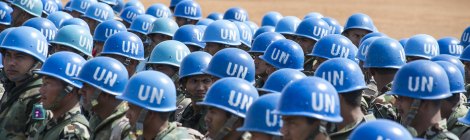
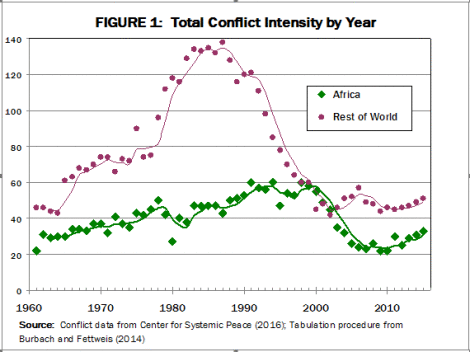
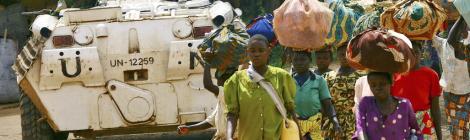
    There is a stark warning today the western intervention strategy in Mali is “flawed”. Part two of a special paper also says France and others are likely to be involved in the conflict “for some time”

    Not unlike the United States in both Afghanistan and Iraq, the French government has begun the intervention with talk of short timelines and minimal troops on the ground before quickly changing its tune, write Anna Alissa Hitzemann and Ben Zala for the Oxford Research Group.

    The initial deployment of 800 French troops may end up numbering more than 2,500 and President François Hollande has stated France’s mission is to ensure that “when we end our intervention, Mali is safe, has legitimate  authorities, an electoral process and there are no more terrorists threatening its territory”. This does not seem to tally with the earlier statement by the French Foreign Minister that the current level of French involvement in the country would last for “a matter of weeks”.

    The latest reports are that the Islamist fighters have been preparing for this intervention by carving a network of caves and tunnels into cliff faces to house bases and supplies of fuel and ammunition. This, combined with the concerns about the roles of both the Malian security forces and a number of potential contributors to the ECOWA force in relation to the abuse of civilian populations (and the likely blowback effect of such actions), mean that stability in Mali will be almost impossible achieve with military force alone.

    It is also far from clear whether the African states that are set to join the intervention will be able commit forces for a drawn-out insurgency. After Chad, the second biggest promised contributor of troops is Nigeria, which has pledged a contingent of 900.

    Yet the Nigerian government itself is fighting its own Islamist-inspired insurgency with the Boko Haram group in the country’s north. Despite a relative decline in Boko Haram attacks in recent months and even the potential for Saudi-backed peace talks between the rebels and the government, fighting could easily intensify once more, in which case Nigeria is unlikely to remain involved in Mali in any significant way.

    Without taking serious action to address the sense of marginalisation and disenfranchisement of those who were willing to join one of the rebel groups… there are few reasons to think the current intervention will produce a durable peace in Mali.

    Not only have France and its allies underestimated the difficulty of fighting the northern rebels among civilian populations in which bombing from above is of little use, there appears to be no sign of a plan as to how the factors underlying the uprising (including the original Tuareg rebellion) can be addressed.

    Without taking serious action to address the sense of marginalisation and disenfranchisement of those who were willing to join one of the rebel groups — Tuareg, Islamist or otherwise — there are few reasons to think the current intervention will produce a durable peace in Mali.

    Ongoing conflict

    While military force is considered the only option, feelings of resentment amongst elements of the population of northern Mali are likely to increase. Not only this, it will provide ample encouragement to other anti-Western paramilitary groups across North and Sub-Saharan Africa, the Middle East, and Central, South and Southeast Asia.

    The central lesson of the western interventions and small-scale military operations (including Pakistan, Yemen, Somalia and elsewhere) of the post 9-11 era, has been that reacting to the symptoms of insecurity once they are deeply manifested, and few options other than military force remain, is a fundamentally flawed strategy for global security. This means that France and others are likely to now be involved in an ongoing conflict in Mali for some time.

    Not only do the (so far conspicuously absent) plans for a post-conflict stabilisation process need to be settled between France and its coalition partners now, a serious commitment to assisting the Malian government to going much further in addressing the marginalisation of the north will be crucial.

    Until the focus shifts from military control to working towards solving the root causes of the conflict, no viable sustainable security will be found for Mali.

    Anna Alissa Hitzemann is a  Peaceworker with Quaker Peace and Social Witness. She currently works with Oxford Research Group as a Project Officer for the Sustainable Security Programme, with a focus on our ‘Marginalisation of the Majority World’ project.

    Ben Zala is a Lecturer in International Politics at the University of Leicester.

    Image source: Malian Airfield Protection Vehicle and Crew at Bamako, Mali. Source: UK Ministry of Defence.


  • Sustainable Security

    South Sudan, the world’s newest country, currently risks slipping into a violent malaise. The crisis in South Sudan highlights very clearly some of the key problems surrounding the practical implementation of the Responsibility to Protect. 

    Five years after seceding from Sudan, South Sudan is about to collapse into its second civil war since 2013. Marauding bands of informally constituted ethnic groups contribute to a climate of vigilantism.  UN diplomats debate the utility of an arms embargo in a state awash in arms.  The threat is meant to leverage Juba’s permission to allow a four thousand peacekeeper regional protection force into the country.  But Juba’s complaint about its exclusion from negotiations, contributes to a climate of distrust about the international community and its intentions. The crisis represents a serious challenge for the Responsibility to Protect (R2P) doctrine and the international community to forestall a humanitarian disaster that is well underway.

    The Responsibility to Protect

    A 2001 report by the International Commission on Intervention and State Sovereignty introduced the idea of R2P, creating a new international norm that made the formerly autonomous allowances of absolute sovereignty contingent on each state’s responsibility to protect its population from genocide, war crimes, crimes against humanity, and ethnic cleansing.  Its controversial pillar two seized the international community with subject matter jurisdiction to intervene as the residual stop-gap agency to prevent internal abuse when states were incapable or unwilling to do the same.  Two other pillars addressed a responsibility to prevent (addressing root causes of catastrophe) and a responsibility to rebuild (to assist with reconstruction and reconciliation).

    The development of the norm has been controversial and it has been reworked, principally along lines of nurturing states to live up to their internal responsibilities and tethering it to actions of the UN Security Council.  But its proactive charge of intervention has also been embraced by scholars and norm entrepreneurs as a progressive development. In its 2007 judgment in the Prevention and Punishment of Genocide Case, the International Court of Justice (ICJ) supported the duty of states to prevent atrocity beyond their borders if they have the capacity to influence persons likely to commit such acts; the ICJ acknowledged that this obligation extended beyond the competent organs of the UN.  The International Law Commission’s 2001 Draft Articles on State Responsibility provided that states cooperate to end through lawful means serious and systematic breaches of peremptory norms.  R2P’s normative development indicates that the idea of a collective responsibility to protect now informs the legalect of international courts and tribunals, suggesting a growing receptivity to and maturation of the doctrine.

    R2P, Africa and South Sudan

    UN Juba

    Image of peacekeepers in Juba by UN Photo via Flickr.

    Africa was the first region where the R2P was meant to be applied.  It grew out of the idea of responsible sovereignty, first articulated by Francis Deng and others in 1996.  Responsible sovereignty suggested benefits to cooperation among states.  These benefits went beyond the avoidance of international conflict or the mere ‘tending to’ of sovereign fences.  Responsible sovereignty suggested sovereignty could imply joint action and joint benefits.  It grew into the idea of R2P.

    Nowhere has R2Ps reception been stronger than in Africa, having been well received by the African Union, the Economic Community of West African States, (ECOWAS), the Southern African Development Community (SADC), and a litany of African elites, including South Africa’s Thabo Mbeki, Nigeria’s Olusegun Obasanjo, Tanzania’s Salim Ahmed Salim, South Sudan’s Francis Deng, Ghana’s former UN Secretary-General Kofi Anan, and Algeria’s Mohamed Sahnoun.  Cases within the African context indicated its time had come: The UN Security Council validated ECOWAS’ interventions in Liberia (1990/92) and Sierra Leone (1997), offering praise in the face of its own inaction to these humanitarian crises.  R2P received the unanimous support of one hundred and seventy Heads of State in two provisions of the 2005 UN World Summit final document, presaging the incorporation of the doctrine by the African Union in its 2005 Ezulwini Consensus report.

    But nowhere has its implementation been more problematic than in the world’s newest country, South Sudan.  Sudan, and now South Sudan, have been beset by internecine violence over the last sixty years.  South Sudan teetered on implosion almost immediately after achieving statehood in July 2011.  South Sudan devolved into civil war in December 2013, when its President Salva Kiir Mayardit accused former Vice President Riek Machar of plotting against the regime.  An improbable rapprochement, fortified by an internationally mediated agreement, was signed in August 2015, resulting in Machar’s much delayed return to the capital, Juba in April 2016, and the formation of a most tenuous unity government, which collapsed in July in a wave of bloodshed and atrocity in Juba.  Kiir has now rejected a US proposal to insert the four thousand peacekeepers, claiming it is an attempt to turn South Sudan into a UN protectorate.

    Kiir and Machar’s mutual distrust until the most recent violence in July was outweighed only by a common need for more money to support their factions and a mutual interest in avoiding a personal accounting of atrocities allegedly committed by their respective factions.  Interpreted alternatively as an explanation or a threat to the international community, the two allegedly wrote on the Op Ed page of the New York Times in June 2016 that any disciplinary justice meted out “even under international law” would destabilize unity efforts.  Translation:  If you try to bring us to justice, we will bring back war.  They invoked the name of the international community, calling on it to back their non-punitive plan for a mediated reconciliation.   Four days after publication, the New York Times appended an Editor’s Note to the South Sudan leaders’ world-wide call for reconciliation; Machar had disavowed the Op Ed piece, claiming his views had been fabricated. But not completely.  One month later, he and Kiir brought back bloodshed.

    The episode highlights the complexities facing South Sudan.  If the international community is to facilitate a solution to the ongoing crisis, only cosmetically concealed by an unravelling claim of unity, the fundamental normative problem of R2P must be addressed:  where in the international community does R2P reside?

    Transmuting the international community’s abstract but coercive cause of action to prevent domestic abuse into something other than high-minded rhetoric requires either a fully functioning UN Security Council or another agency with the legitimacy and authority to pierce sovereignty’s veil.  The UN Charter system created a jus ad bellum regime that placed monopoly power over all uses and threats of force (except in cases of self-defense) in the hands of the Security Council.  But that authority is often addled by inaction due to the veto-wielding interests of the big powers, exposing the fundamental weakness of the UN system and provoking the elusive international legal and political pursuit for a better or supplementary normative solution.

    Internationalists have wrestled with the poor choice between supporting the legality of the Charter system, which often stood silent in the face of atrocity, or supporting the legitimacy of humanitarian intervention, which only problematized consideration of hidden agendas pertaining to regime change, remedial secession, and self-determination.  Establishing the international community as the ex ante entity vested with such a remedial power came as something of a surprise, and, after fifteen years of ontological development, remains in dispute.  In theoretical terms, R2P marked a return to and modern expression of Christian Wolff’s eighteenth century Republican idea of the civitas maxima (a ‘grand republic’ of nations), the meta-expression of community virtue that upholds the common good, secures the pluralistic interests of the state, and protects the solidarist interests of humanity by presenting a means to prevent internal atrocity.  But even Wolff, who had no understanding of the modern state system as we know it, thought it could not function without a rector.

    Kiir and Machar embrace this much of Wolff’s eighteenth century mindset; they view the international community as a rhetorical trope that lacks a headmaster; they invoke its name to lend a fictive air of moral authority to their pieties on reconciliation, when they do not employ it as blackmail.  Much of the doctrinal disarray surrounding R2P’s non-appearance in South Sudan conforms to an uncertainty about the international community itself:  Is it an unwitting continuation of the mission civilisatrice – the persistently failed and resented attempt to make sub-Saharan Africa more European; does it embrace or dismiss African notions of community, which present a humanistic understanding different than contractarian models of liberal institutionalism (Ubuntu); is it an updated form of colonialism?  Perhaps it is an expression of Carl Schmitt’s Political Theology (1922), allowing its claimants the power to decide on the exceptions to legal rules.  Schmitt was wary of the keepers of humanity’s interests.  Paraphrasing Proudhon, he wrote:  whoever invokes humanity’s name wants to cheat.  Kiir and Machar would doubtless agree.

    Equally problematic has been locating the international community’s headmaster amid South Sudan’s turmoil.  Does the international community fundamentally reduce to a sanctions policy orchestrated by the US and its allies?  Should it claim a regional identity in the form of mediations sponsored by the Intergovernmental Authority for Development (IGAD) or IGAD-Plus (an amalgam of states associated with the African Union Peace and Security Council), or non-African agencies of the EU, the so-called Troika (US, UK, and Norway), or perhaps China?

    An Emergent Dark Side

    South Sudan’s misery teaches us something about the emergent dark side of R2P.  It reveals a heteronomous will of a fragmented international community, which, in South Sudan’s case finds expression in a variety of cross-cutting alliances.  Tensions exist within IGAD, certainly between Uganda and Sudan and possibly due to reports of Eritrean and Sudanese military support of South Sudanese opposition forces.  These tensions diminish IGAD’s mediation efforts and reputation as an honest broker.  Key sectors of South Sudan’s limited civil society (specifically Church leaders) are overlooked; an array of venues and sponsors compete for influence, contributing to complaints of forum-shopping, which allow Kiir and Machar to play components of the international community against each other.  The center of this unity government in South Sudan has not held; war is around the corner and famine is spreading.

    Conclusion

    Locating R2P within the international community would be daunting enough were questions of its authorization or operationalization in South Sudan settled matters of fact; but its non-appearance in the continuing misery of the country suggests the doctrine, fifteen years in the making, is neither thickly representative of historical process nor thinly embodied as an aspiration.  R2P, in the context of South Sudan, turns the international community into an ethical referent, a conceptual archetype that satisfies saints and sinners alike.

    Christopher Rossi has a Ph.D. in international relations from The Johns Hopkins University School of Advanced International Studies and an LL.M in public international law from the University of London.  He lectures on international law and relations at the University of Iowa College of Law.

  • Sustainable Security

    Africa is often presented as a war-ridden continent, but this depiction is becoming outdated. In the 21st century, the amount of warfare in Africa has declined dramatically, and today most Africans are more secure than ever.

    “Africa” and “conflict” are words all too often linked in Western minds. From Cold War proxy wars, to what Robert Kaplan saw as “the coming anarchy”  in the 1990s, to Boko Haram massacres today, news from Africa may seem dominated by never-ending conflict. That image is out of date. In 2002 Tony Blair was justified in describing the state of Africa as a “scar on the conscience of humanity”, but in the years since there has been an underappreciated success story in Africa. The amount of warfare in Africa has declined dramatically, and today most Africans are more secure than ever. Troubled areas remain, unfortunately, but the larger picture of receding conflict has implications for how we think about African security needs. Outside actors can help reinforce positive external and internal trends that mitigate conflict, can avoid creating new conflict zones like Libya or South Sudan, and should recognize emerging human security needs that are becoming relatively more important as armed conflict declines.

    Africa’s waning wars

    Quietly over the last 15 years, many African wars did end, to paraphrase Scott Strauss. Lingering Cold War struggles like the Angolan civil war burned out. West African nations including Liberia and Sierra Leone ceased being playgrounds for warlords and regained their status as functional, if weak, states. Eastern Congo is still violent, but far less so than during the 1990s “African World War”. Overall, 21st century Africa has seen more wars end or abate than ignite.

    The trend towards peace in Africa can be seen by using various datasets on armed conflict (for more on data sources, tabulation, and trend analysis, see Burbach and Fettweis 2014). The Center for Systemic Peace (CSP), for example, tracks conflicts from 1946 to the present, scoring each for the intensity of its societal impact. Figure 1 shows the yearly sum of conflict intensity assessed by CSP, for both Africa and the rest of the world. The end of the Cold War brought peace to much of the world, but African conflicts increased in the 1990s. States like Somalia and Sierra Leone collapsed into warlordism, for example. Central Africa was hit by the Rwanda genocide and bloody chaos in Eastern Congo, killing one to five million people.  At least three-fourths of the world’s total war deaths in the late 1990s took place in Africa (Burbach and Fettweis 2014, Figure 4).

    After the year 2000, the tide of war receded. Africa’s total conflict intensity as measured by CSP fell by approximately half. A similar pattern is shown by the Uppsala Conflict Data Project. Using somewhat different definitions, the Uppsala data shows that the number of conflicts in Africa resulting in 1,000 or more “battle deaths” per year declined from an average of 12 in the late 1990s to an average of 3.5 from 2010-2013. Some decades-long wars ended with formal peace accords, as with Angola in 2002; elsewhere, states gradually gained the upper hand on armed disorder. Given the unfortunate rise of warfare in the Middle East, Africa is no longer the most violent region of the world.

    africa-conflict-data

    The decline of warfare in Africa is even more dramatic in terms of individual risks. Africa’s population is growing rapidly, up 150% since 1980. Declining conflict despite a much larger population means the mortality risk from war has fallen substantially. An average of 32 people per 100,000 population were killed per year in the 1980s and 45 per 100,000 in the 1990s. In 2013, though the rate was only 8 per 100,000 (Burbach & Fettweis 2014, Figure 5). World Health Organization data shows an astonishing 95% decline in African conflict deaths from 2000 to 2012. In the 1980s, warfare killed more Africans than vehicle accidents. Today, perhaps three to six times as many Africans die in road crashes than from conflict. Many more Africans are harmed by crime or domestic violence than by warfare. Africa is still afflicted by more conflict than most ofthe world and the suffering of those involved is very real. Nevertheless, a greater proportion of Africans live free of war today than ever in the post-independence period.

    Celebrating African peace may seem premature given the civil war in South Sudan or the ravages of Boko Haram. Conflict has increased since 2011, but the level of armed conflict still remains lower than any time from 1970 – 2000. The most tragic development is the civil war in South Sudan, which the U.N. estimated had killed 50,000 as of spring 2016. Fortunately, South Sudan’s case is nearly unique: a newly created nation, devoid of physical or administrative infrastructure, with ethnically divided, soon-to-be-unemployed armed factions eyeing the lucrative oil revenues awaiting whomever could seize power. As academic panelists noted in 2011 – two years before the civil war –  predictors of conflict were flashing red in South Sudan. Few African countries contain such a combustible mix of problems anymore.

    Accounting for the decline

    Image by UN Photo via Flickr.

    Image by UN Photo via Flickr.

    There are several factors behind the ebbing of conflict in Africa. One important change is the geopolitical environment. During the Cold War, the U.S. and the Soviets armed and funded rival factions in civil wars, allowing bloody wars to fester for decades in countries like Angola, Mozambique, and Ethiopia. Then, 1990s Africa fell into turmoil as superpower-sponsored regimes collapsed. A disinterested world mostly left Africa to its fate, but continued trade in weapons and resources with warlords. In the last decade, however, the U.S., Europe, and China have all become more active in diplomacy, security assistance, and peacekeeping. The US and China are together pressing the South Sudanese factions to stop fighting, rather than choosing sides. The world has become somewhat less willing to sell arms or purchase minerals that directly fuel conflicts, admittedly with a long way to go.

    Africans themselves deserve great credit for ending the wars that plagued their continent.  Economic growth, improvements in governance, and greater space for peaceful political participation have all made state failure and internal conflict less likely. As Paul Collier among others has noted, civil wars tend to create vicious cycles that spread insecurity to whole regions. Many regions of Africa have climbed out of the conflict trap; political, security, and economic improvements are reinforcing each other. The nations of Africa increasingly work together through the institutions of the African Union to head off or resolve conflict, and to deploy peacekeepers to conflict zones. Needs still outpace available resources, but that cooperation is a marked change from 20th century Africa.

    A peaceful future?

    Whether the trend towards peace continues depends foremost on Africa’s leaders, but external actors can encourage positive trends in African security. Most directly, partners can help the AU and its member nations improve peacekeeping and conflict resolution capabilities. Likewise, the world should continue arms embargoes against combatants and regulating trade in valuable resources where exploitation appears to be a key ingredient of protracted conflict. Ongoing encouragement and incentives for democratization and governmental reform are helpful. Western countries should consider, however, that broad efforts like anticorruption programs are probably more helpful than International Criminal Court indictments of individual leaders, which can generate nationalist backlash.

    The world should especially try not to create new ground for conflict. Libya and South Sudan are Africa’s worst conflict zones today. Both were birthed through Western action – the removal by force of the Qaddafi regime, and diplomatically sponsoring South Sudan’s independence from Khartoum. While the moral cases were sound, both countries were left with non-existent governments, antagonistic armed factions, and grossly inadequate provision for disarming, demobilizing, and re-integrating fighters. American and European governments focused more on freeing people from hated regimes than on answering – let alone resourcing – the “what next?” question. Chaos followed, just as many African governments had warned at the time.

    From a humanitarian perspective, advocates should consider whether other challenges in Africa deserve relatively more attention. For example, Fearon and Hoeffler suggest that domestic violence against women and children now imposes larger human costs than warfare, and also that domestic violence can be reduced more cost-effectively than armed conflict. The ballooning toll of vehicle accident deaths in Africa may represent an opportunity for international technical or educational assistance to pay off with many saved lives. Beyond road safety, Africa is rapidly urbanizing.  Western visions of menacing rebels waving AK-47s in the bush privilege the exotic, but most Africans confront more prosaic threats to health and safety. The human security challenges Africans confront are increasingly those of city-dwellers:  crime, sanitation and utilities, safe and reliable transport, etc. Better policing, regularized urban housing, and expansion of infrastructure in megacities like Lagos and Kinshasa ought to be top priorities.

    Conclusion

    Sixteen years ago The Economist magazine suggested Africa was a “hopeless continent”. Lately The Economist has been bullish on Africa, citing the decline in warfare as a key reason for the continent’s improving business prospects. With remarkable speed, in the 21st century African conflict declined and safety improved, a hugely positive change in the welfare of Africans. Africa’s international friends should ensure their priorities respond to contemporary human security challenges, not ghosts of the past – and certainly they should avoid making things worse. Recognition of Africa’s progress itself would be a boon:  the continent’s increasingly out-of-date image as an undifferentiated war-torn anarchy retards investment and engagement from overseas. The tragedies of the moment deserve action, but we should not overlook that there is also much good news out of Africa.

    David T. Burbach is an Associate Professor of National Security Affairs at the Naval War College in Newport, RI.   Dr. Burbach received a Ph.D in Political Science from the Massachusetts Institute of Technology, and has expertise in African security, defense planning, and U.S. foreign policy.   The views expressed in this article are personal and do not represent official positions of the U.S. Navy.

  • Sustainable Security

    The French Front National is now one of the most successful political protest forces in Western Europe. The party is preparing to participate in the April 2017 Presidential election where the migrant crisis and the capacity of the government to provide security from terrorist attacks will be pressing issues.

    According to some scholars, such as Cas Mudde, the French Front National (FN) now appears to be one of the most successful populist radical right parties in Western Europe. Since the mid-1980s, the FN has established itself as a permanent force in French politics. Nowadays, the party appears to offer strength in a climate where European security appears weak and vulnerable. Flourishing in a France characterized by strong concerns about the migrant/refuges crisis and recent terrorist attacks by Islamic extremists, the party is currently placed in a European ideological space of extreme right protest, often dominated by racism and xenophobia. The FN supports a concept of “Europe of Nations” and protectionism. These ideas have been encouraged by the recent winning of the “leave” campaign in the UK referendum and the Donald Trump’s rise in the USA. What are the origins of the FN, its current strategies and its role in the contemporary political landscape (at national and supranational level)?

    From Jean-Marie to Marine: a family party

    meeting_1er_mai_2012_front_national_paris_46

    Image credit: Blandine Le Cain/Wikimedia Commons.

    Since Marine Le Pen took over party leadership from her father in 2011, the FN has entered a new stage of its political development, which demonstrates its adaptability and an ability to survive its founding leader: Jean-Marie Le Pen. However, the party has an even longer history in French politics. It was founded in 1972 from a small neo-fascist organization, Ordre Nouveau, as an electoral umbrella for nationalist groups to run in the 1973 legislative elections. The FN remained electorally irrelevant during the first decade of its starting phase. Its turning point was the 1984 European elections where it obtained about 11% of the vote. From the mid-1980s, the party maintained a sort of electoral stability (between 11 and 15% of electoral support). Since 1984, the FN has also fielded candidates in all local and regional elections, winning representation in regional, departmental and municipal councils, as well as in the European Parliament.

    The change of leader in 2011 reinforced the party’s electoral appeal: the FN under Marine Le Pen has enlarged its base of support, reaching new heights in the 2012 Presidential election with about 18% of the vote. The FN also topped the 2014 European election winning a quarter of the national vote and 24 seats, which allowed Marine Le Pen to establish leadership over the pan-European nationalist right. Success at the national level has been corroborated locally. In the 2014 municipal election, the party won 11 municipal councils and 1,544 councillors, outperforming its previous record (1995). The departmental elections of March 2015 showed another surge in FN support at 25% of the vote, with 62 local councillors. In 2015 again (December) the party participated in the regional elections and it obtained a new record. In particular in two regions (Provence-Alpes-Côte d’Azur and Nord-Pas-de-Calais-Picardie) the FN arrived at 40% of the vote during the first round of elections.

    Under Marine Le Pen’s leadership, party change has been embedded in the concept of “de-demonization” (dédiabolisation). As Gilles Ivaldi suggests, de-demonization is primarily characterized by the attempt to detoxify the party’s extremist reputation, while simultaneously preserving its populist radical right potential for voter mobilization. The current FN seeks to improve its credibility through party modernization and professionalization. Whilst the 2011 leadership election represented a first notable step towards greater intra party democracy, there is little evidence of a more substantial move towards a party “normalization”, neither ideologically nor organizationally. Instead, the party has taken a process of “Marinization” (personalization) whereby Marine Le Pen has successfully replaced her father as charismatic leader, both inside and outside the party.

    The 2011 congress represented probably the most important change in the French Front National organizational path, with Marine Le Pen taking over the party. Following Jean-Marie Le Pen’s decision to step down, the party had initiated an internal leadership campaign. During the same campaign against Bruno Gollnisch, Marine Le Pen had indicated that she would turn the party into a professionalized and more effective party organization: “I want to create a renewed, opened and well-functioning party”, she said. In 2011, the FN had experienced its first change of leader since 1972, together with a new executive team and a new logo. The “new” FN has pushed an agenda, which aims primarily to shed its extreme right profile and to achieve agency credibility.

    A “Europe of Nations”

    The FN articulates a strong populist anti-establishment agenda. It opposes European integration, exemplifying the “hard Euro-scepticism” defined by Aleks Szczerbiak and Paul Taggart as “a principled opposition to the EU and European integration”. Its opposition to Europe concerns a wide range of institutional, economic and national identity issues. The FN’s concept of a “Europe of Nations”, argues that institutional cooperation should only take place between sovereign nation-states, opposes the EU as a supranational entity, and criticizes the EU as elitist and bureaucratic. A pledge for a return of competences and powers to the national level has been central to the FN electoral platforms since the early 1990s. The 2014 FN ’s programme featured primarily the promise to shed the Euro which was portrayed as “ a jail” serving the “sole interests of bankers and the wealthy”, and from which the French people “should free themselves”.

    The FN’s distrust of European integration revolves around immigration and issues of national identity, and it is often linked with welfare-chauvinist positions. The FN’s hostility towards the EU is underpinned by the party’s traditional ethno-nationalist policies. As Mudde suggests, the FN’s anti-EU positions are incorporated into a typical populist radical right agenda, which combines nativism, authoritarianism and anti-establishment populism.

    The party is notorious for its politicization of immigration issues. During the 1980s, Jean Marie Le Pen laid out the basis for a potent ethno-nationalist and welfare-chauvinist “master frame”, which later diffused throughout Europe. In 2014, the European campaign by the FN was marked by the continuation of xenophobia and welfare-chauvinism, showing no significant departure from the party’s traditional ethno-nationalist ideology.

    The FN committed to “defending, in all circumstances, France’s values, identity, traditions and way of life” against what would be stigmatized as a “sieve Europe”. The party’s 2014 platform lashed out at the Schengen agreement, campaigning on withdrawal, and claiming that the FN would close France’s borders to “stop uncontrolled immigration and put an end to the free movement of Roma and delinquents across Europe”. In line with its 2012 manifesto, the FN proposedpolicies, which would remove the possibility within French law to regularize illegal migrants. The party’s 2012 presidential platform featured a range of nativist policies, including the FN’s traditional “national preference” scheme, which seeks to give priority to the French people over foreigners in welfare, jobs and housing.

    A product of France’s political system and climate?

    French political parties are characterized by their instability, organizational weakness and fragmentation. As one of the oldest parties in France, FN has shown greater signs of stability over time. Since 1972, it has experienced only one change at the top and it has retained its name. The Parti Socialiste (PS – Socialist Party), currently the most important centre-left party in France, underwent important organizational changes since 1971 as it opened itself to other political forces. Parties of the right exhibit an even greater degree of volatility over time. In 2002, the loose electoral alliances of the 1980s and the 1990s between the Gaullists and the Centre-Right gave way to organizational merger with the creation of the Union pour un Mouvement Populaire (UMP – Union for a Popular Rally), which was an attempt by the centre-right to consolidate its identity.

    In 2007, the new president of the UMP, Nicolas Sarkozy, was elected in the presidential election. In 2011, however, disgruntled liberals and Christian Democrats left the UMP to form an independent party, the Union des démocrates et indépendants (UDI). Following Sarkozy’s defeat in 2012, the UMP entered a period of high ideological, leadership and strategic factionalism. In November 2014, Sarkozy returned to the UMP and won the leadership election with a large internal consensus. He pushed important changes to the party statutes, including a renaming of the party to Les Républicains (The Republicans). Recently, the party reorganized itself around a new right-wing leader, François Fillon, who became the Presidential candidate in view of 2017 appointment and after a victory during an open primary election.

    The same event has generated a new political and social weakness in France, also fuelled by the election of Donald Trump as US president in November 2016. In current context, France is faced with another crucial battle between populist radical right and establishment (right again) forces. The unexpected victory of Fillon in the Republican primary, Socialist President François Hollande’s decision not to run again, may be complicating Le Pen’s efforts to turn her political success into an electoral victory in the two rounds of voting scheduled for April 23 and May 7, 2017. In fact, there are themes, such as Islam, insecurity and immigration, with which the FN is able to rule the debate in general and worry public opinion.

    The FN has been able to aquire a new agenda, a sort of “cultural hegemony”, a “vocabulary” even more used also by other traditional party from the centre-right area. France remains, therefore, pervaded by a strong wave of right-wing extremism. In this changed and menacing context, the FN maintains a high appeal and it is ready to prepare its battle in the 2017 Presidential election and probably it is going to reinforce its campaign and its strategies. In any case, it has become (and  remained) a constant presence in the French political system.

    Maria Elisabetta Lanzone, PhD, is Research Fellow and Teaching Assistant at University of Genoa (Italy). She is expert in comparative populism, Euro-scepticism and migration policies. She is the author, with Gilles Ivaldi, of the book chapter From Jean-Marie to Marine Le Pen: Organizational Change and Adaptation in the French Front National (2016, Palgrave Macmillan). From April 2015 she is also member of the ERMES Laboratory at University of Nice-Sophia Antipolis (France).

  • Sustainable Security

    Authors’ Note: The opinions expressed by the writers are theirs alone and not necessarily those of the United States government or any of its departments.

    As a response to the attacks by violent extremists around the world, policymakers have invested considerable effort into comprehending terrorists’ use of the Internet and initiating counter-measures.

    The internet is undeniably an important factor in understanding the radicalization trajectories of many violent extremists. A senior official at the U.S. Department of Homeland Security recently observed that extremists’ “deft use of Internet propaganda, together with that content’s wide availability, has broadened the population of potentially vulnerable individuals, and shortened the timespan of their recruitment.” Supporting this statement, terrorism expert Magnus Ranstorp lists social media as one of nine factors that may exacerbate causes of an individual’s radicalization, including individual and social factors as well as cultural and ideological motivators.

    Research has also shown that the internet facilitates both early engagement with violent ideologies and opportunities for learning and sharing criminal information. For instance, a study by the University of Maryland’s START terrorism consortium found that “the internet played a primary or contributing role in the radicalization of 86%” in the cases of over 200 U.S.-based foreign fighters. These individuals used the internet to “view extremist materials, research conflicts, groups and attack methods, and participated in online communities of like-minded individuals.” Moreover, results from the same dataset show that the internet “may be speeding up the radicalization timeframe” as compared to radicalization before the advent of the internet. Similar findings from a study of over 200 terrorist offenders in the United Kingdom found that 54% of the perpetrators used the internet to learn about their intended criminal activities and, in 44% of the cases, extremist media (e.g., videos, audio lectures and photographs) were found, viewed, or downloaded by the perpetrators.

    The authors of the UK study, however, recognize that terrorists’ use of the internet “is perhaps unsurprising given the ubiquity of Internet usage in the most benevolent activities across wider society.” Indeed, a good deal of research has examined terrorists’ expansive use of the internet, such as the terrorist organization known as the Islamic State of Iraq and Syria (ISIS) to build a network of ideological conformity through social media platforms like Twitter. A report from the Institute for Strategic Dialogue has shown not only how life under the Islamic State is romanticized through social media postings, but also how important digital connectivity can be to those in the field, describing young women in ISIS controlled territory who resort to “climbing pine trees to gain Internet reception.”

    Countering extremism online

    Image credit: Andres Eldh/Flickr.

    These studies shed light on the particular ways that terrorists use the internet and underscore the importance of law enforcement intervention into online criminal activities. However, an ongoing challenge for researchers and policymakers engaged in preventing and countering violent extremism (CVE) is how to proactively address the role of the internet and social media in the context of violent extremism before criminal activity has occurred. To respond to that challenge, two broad policy approaches have emerged.

    One approach advocates for online content removal and account suspension in order to reduce the supply of non-criminal but potentially extremist content. The European Commission recently instituted content-flagging mechanisms modelled after an initiative by the British government’s Counter Terrorism Internet Referral Unit. Outside of government, technology companies also have taken steps to remove terrorist content. In December 2016, social media companies announced their own cooperative efforts to use hashing techniques to quickly identify and take down extremist images and content that violate terms of service agreements. In their latest annual transparency report, Twitter suspended around 636,000 accounts between August 2015 and December 2016 for promoting extremist content.

    Research studies that have assessed whether content removal and account suspension efforts work to curb the propagation of violent extremist messages suggest promising outcomes. For instance, a report from the George Washington’s Program on Extremism found that “over time, individual users who repeatedly created new accounts after being suspended suffered devastating reductions in their followers.” While ISIS users quickly learn how to overcome account suspensions and restore some followers, the study suggests these actions to reestablish followers have only “limited benefits” once a suspension has occurred.

    Yet, as technology companies like Twitter, Microsoft, and Facebook become more effective at detecting extremist content with tools that recognize unique “fingerprints” of extremist content, terror groups have also become more agile in how they use the internet to facilitate their work. Terrorism researcher Audrey Alexander describes how attempts to limit terrorist content online have pushed extremists away from public platforms and to encrypted tools like WhatsApp, Telegram, and ProtonMail. Indeed, Telegram now “appears to be the top choice among both individual jihadists and official jihadist groups.” The covert nature of these platforms poses significant barriers to researchers and authorities seeking to understand, track, and measure the terrorist threat.

    Another method for combatting online violent extremist content suggests creating counter narratives to refute terrorist claims. The idea is to craft messages that will appeal to vulnerable individuals to persuade them that violence is not the answer.  To explore this approach, the U.S. government has sponsored an initiative along with support from Facebook that known as the Peer to Peer: Challenging Violent Extremism program to engage young people, who may be most vulnerable to violent extremist messages, to create credible counter message for their own peers. Since the program launched in 2015, over 5,000 students have taken part. The 2016 winning team from Rochester Institute of Technology developed an awareness campaign called “Ex-Out Extremism” to “open people’s eyes” to violent extremism and to encourage them to take a stand against it. While initiatives like Peer to Peer typically reach broad audiences, foster educational engagement and increase public awareness, researchers have pointed out that continued work is needed to understand what can inoculate or prevent radical ideologies from taking root in the first place.

    A more targeted approach for reaching at-risk individuals online has been piloted at Jigsaw, Alphabet’s technology incubator focusing on geopolitical challenges, to redirect users from ISIS propaganda to curated YouTube videos that credibly debunk ISIS recruiting themes. Similarly, the Institute for Strategic Dialogue conducted a pilot study to direct individualized online intervention services to those demonstrating affinity to violent extremist groups through their online activities. The results found that intervention messages that reached at-risk individuals were “highly likely” to cause behavior change, either by prompting radicalizing individuals to change their privacy settings or to send direct messages to the intervenors for more engagement.  While these results are based on a very small sample, directed intervention programs may offer options for providing “off ramps” to individuals at critical points.

    The value of partnerships

    Whether intervening online to remove content and suspend accounts or developing credible counter messages or intervention options, effectively addressing violent extremism will require innovative partnerships inside and outside government.  To this end, in 2016 the United States government launched an interagency task force to address countering violent extremism with representation from both security and non-security agencies along with engagement from civil society groups.  While these multidisciplinary partnerships are challenging bureaucratically, they underscore the need for developing networked approaches to emerging security challenges. Similar cooperative agreements might span across national boundaries, not only for the purposes of information sharing between law enforcement officials, but also to include cooperation, such as the recent announcement by the Netherlands and Kenya to build a comprehensive partnership around a range of security related issues including deradicalization efforts.

    Although some have suggested that there is little evidence that terrorism prevention works, there is a small but growing literature providing support for the application of prevention science to the problem of violent extremism. Without question, more attention is needed for rigorous assessment of these programs, especially with regard to evaluating the effectiveness of online campaigns. To fill this gap, the RAND Corporation recently released an evaluation toolkit for countering violent extremism, which includes guidelines for assessing programs’ social media metrics. The London-based Royal United Services Institute has published a guide to CVE program design and evaluation, which provides guidance for articulating relevant impact measures. Ultimately, these resources, coupled with innovative public and private sector partnerships, will contribute to preventing radicalization to violence both online and offline.

    Tackling online radicalization will undoubtedly be a major security priority for policymakers in the future. Following the deadly May 22, 2017 bomb explosion in Manchester, leaders of the G7 convened in Taormina, Italy to reaffirm their efforts to counter terrorism and violent extremism.  In a statement, members underscored several areas for continued engagement, not only through traditional counterterrorism measures like “knowledge-sharing” and cutting off “sources and channels of terrorist financing,” but also through technology sector engagement “to substantially increase their efforts to address terrorist content” and well as civil society engagement to promote “alternative and positive narratives rooted in our common values.” The future war against online extremism may prove to be a long and difficult one, but it is a fight that must be won.   

    Dr. Susan Szmania has served in government and academic positions addressing violent extremism.  She is currently a senior research analyst at the U.S. Department of Homeland Security in the Office for Community Partnerships.  In this capacity, she leads the research and analysis line of effort on the U.S. government’s interagency Countering Violent Extremism Task Force.  Prior to this work, Dr. Szmania was a senior researcher at the University of Maryland’s National Consortium for the Study of Terrorism and Responses to Terrorism, and she served in government positions at U.S. Embassies in Sweden and Spain to implement programs to counter violent extremism. She received her Ph.D. in Communication Studies from the University of Texas at Austin in 2004.

    Matthew Conway has served in various research capacities focusing on conflict and extremism, both independently and with two London-based think-tanks. He is currently a research adviser for the Department of Homeland Security’s Office for Community Partnerships, where he focuses on Countering Violent Extremism research. He received his Master’s in Conflict, Security and Development from King’s College London in 2015 and his Bachelor’s in Political Science and International Studies from the University of Wisconsin-Madison in 2013.

  • Sustainable Security

    Closing Europe’s borders and politicizing the attempt to admit refugees at a time when the growing humanitarian crisis poses mounting human rights challenges to the international community is fundamentally wrongheaded. These approaches only strengthen the hand of Islamic State.

    While violent extremism, terrorism, and civil wars have drawn the most attention, coming to grips with the refugee crisis—emanating mainly from Syria’s civil war, but also more generally from the Middle East and North Africa’s political environment (MENA) in the aftermath of the 2011 Arab uprisings—has never been more essential. The Syrian crisis has propelled a wave of migrants to the neighboring countries of Jordan, Lebanon, Iraq, and Turkey. The Syrian refugee population stands at approximately 4.7 million, of whom 1.7 million live in Lebanon and Jordan and even more in Turkey. It is estimated that Turkey now hosts the world’s largest community of displaced Syrians.

    Defeating the Islamic State in Iraq and Syria (ISIS, also known as ISIL and by its Arabic acronym as Da’esh), while at the same time fulfilling the Responsibility to Protect (R2P) in the Syrian situation, has presented a complex challenge to the international community. The growing threat of ISIS as shown in attacks in Paris (2015) and Brussels (2016), magnified by the increased threat of individual terrorists—the so-called “lone wolves” in San Bernardino, the United States—has stemmed a wave of nationalist, right-wing alarm, reinforcing a general concern about the influx of immigrants and asylum seekers, while underlining the shift from a regional to the international nature of both threat and risk. These security issues have also illustrated the willingness of great powers to support military reactions to ISIS in order to stem the atrocities perpetrated by this group, while putting the departure of the Assad regime on the back burner—at least for now. For all intents and purposes, ISIS poses a much greater threat to Europe than does the current regime in Damascus.

    An Unavoidable Tradeoff

    freedom-house-refugee

    Image by Freedom House via Flickr.

    Confronting and dismantling ISIS need not be achieved by stigmatizing refugees and subjecting them to religious litmus tests. Closing Europe’s porous borders and politicizing the admission of refugees at a time when the growing humanitarian crisis poses mounting human rights challenges to the international community is fundamentally misguided. After all, fortifying European borders, while effective in the short term, strengthens the hands of ISIS and other terrorist groups that portray such policies and practices largely in terms of apocalyptic visions and arcane Islamic prophecies of great battles against Western imperialists.

    Defeating ISIS requires strategic endurance and long-term prudent political decision-making involving internal and external actors in the MENA region. While doing so, it is important to avoid the enemy’s repressive, atavistic, and brutal methods, eschewing certain tactics that could potentially play into ISIS’s hands. It is important to bear in mind that the tactics that terrorist groups like ISIS employ pose mostly political and ideological challenges to the West and that the real fight will be in defeating and destroying the claims and values that these groups assert.  In the end, defeating ISIS requires that its demonic ideology and tactics be confronted and exposed.

    Preventing further refugee crises in the future requires that fighting ISIS be at least temporarily prioritized over the overthrow of the Assad regime.  Seeking a political solution in conjunction with harnessing a multipronged strategy may in fact be among the most effective tools and processes of dealing with current humanitarian crises that the world faces. The possibility of working with the Russians and the Iranians in order to seek a political solution in Syria also raises questions about whether this tradeoff is justified. If the intent is to defeat ISIS, al-Qaeda, and the Levant Conquest Front (formerly known as al-Nusra Front), then this tradeoff is inevitable even as it buttresses the Assad regime in Syria for the foreseeable future. This solution is not problem-free or without significant challenges, however.

    Competing Views

    While the military actions against ISIS are warranted and can be coordinated by both inside and outside actors, the nature of such military missions and their consequences are also subject to further debate and negotiations. The inclusion of Russia and Iran, allies of Assad, in the fight against ISIS raises concerns that their stated goal of curbing ISIS is merely a pretext to prolonging Assad’s rule. Likewise, Turkish participation in air strikes in northern Syria in the war against ISIS has raised the possibility that Ankara will target the Kurds, who have successfully fought against ISIS since the beginning of the conflagration. Turkey’s interest in settling political scores with the Kurds, an interest that it believes is vital to its security, imperils whatever impartiality one might have hoped for in a fight solely against ISIS.

    The massive movement of migrants and refugees to Europe, coupled with the ISIS-led attacks on soft targets in Europe, has created a new urgency among Western leaders to fully confront this new global threat and seriously contemplate the possibility of cooperating with Russia in a coordinated effort. Compromises must at times be made when a multifaceted campaign that includes both countering ISIS and precipitating the removal of the Assad regime is waged. The collapse of the Assad regime would create a significant security void that ISIS and other terrorist groups could easily exploit.

    There is no denying the fact that the Paris, Brussels, and San Bernardino terrorist attacks have heightened the securitization of the refugee threats, as the Islamic State has been using the wave of the migrant influx to infiltrate Europe and North America. The number of terrorists hiding among the refugees is small. ISIS has exploited the flood of refugees to smuggle jihadis into Europe by distributing fake passports in Greek refugee camps to allow its terrorists to travel within Europe. On April 22, 2016, The Washington Post reported that more than three dozen suspected militants who had posed as migrants have been arrested or died while planning or carrying out acts of terrorism.  They included at least seven individuals who were directly linked to the bloody attacks in Paris and Brussels.

    But even a few of these will be highlighted by conservative circles in all Western countries to call for the repatriation or active policing of refugee communities.  Donald Trump Jr.’s notorious analogy between refugees and poisoned Skittles is a case in point. Conservatives rank the issue of terrorism much higher than do liberals in the West, the latter agreeing that one cannot stop all terrorism and that the chances of being caught in a terrorist attack are still quite small. Vigilance and the exclusion of possible threats by governments, however, is prioritized over the compassionate acceptance of refugees.

    The Flaws of the Current Refugee Regime

    The issue remains to be discussed within the core conception of the mandate of the United Nation High Commissioner for Refugees (UNHCR). Remaining at the center of the global refugee regime, UNHCR faces new challenges. Today, for example, most refugees tend to flee from violence and flagrant human rights violations—not necessarily from the threat of persecution, which is a key requirement according to the 1951 Refugee Convention.

    This has resulted in confusion and lack of clarity regarding who qualifies for refugee status and what are the rights to which all refugees are entitled— issues left up entirely to states to interpret. To compound matters further, in the case of Syrian refugee crisis, the neighboring countries of Lebanon, Jordan, and Iraq have never ratified the 1951 Refugee Convention. Now, more than ever, a robust and comprehensive discussion about the future of refugees, whose numbers will only increase with the worsening effects of climate change, is not only timely but necessary, given the tumultuous nature of international politics.

    It is important to bear in mind that refugees can be a destabilizing factor, especially when displaced, alienated, and bitter persons among them are recruited into armed extremist factions. Many studies have shown that the absence of a protective and enabling environment is likely to render more young people vulnerable to racist ideologies and movements and ease the process of their recruitment into the ranks of radical groups like the Islamic State or al-Qaeda. The traditional method of relying on purely humanitarian remedies has proven counterproductive in the face of new influxes of refugees. There is a need for a new thinking that envisions relief and humanitarian aid as fundamentally linked to the granting of work permits to the refugees. To dwell solely on the conventional method of humanitarian aid, and to ignore the importance of wage-earning employment for the refugees, is to wear blinders.

    Shifting Focus from Protection to Empowerment

    The focus of the 1951 refugee protection regime should shift to new ways of dealing with displaced persons that take into account the self-interested reasoning of host countries and the concerns of their citizens regarding competition over jobs. This shift will help to eliminate risks to refugees’ personal security by reducing human smuggling and trafficking by land and sea. Some experts, such as Alexander Betts and Paul Collier, have offered solutions along the line of creating “spaces of opportunity” for the refugees through “special economic zones” that provide jobs, training, and education.

    Helping refugees, I would argue, should begin with technical education and vocational training, coupled with a strategy focused on creating jobs immediately in economic zones from which both host societies and displaced Syrians can benefit. The need to work is inseparable from human security and thus crucial to preserving human dignity. The refugees’ right to legal employment makes good ethical and logical sense. Designing, for example, a vocational skills training program tailored to the needs of women refugees can significantly reduce the incidence of sexual trafficking and abuse. These projects offer a more plausible solution in the long term, not only because they will develop transferable skills that refugees can use in their countries of origin upon return, but also because they create monetary disincentives for refugees to emigrate to Europe in the first place.

    Dr. Mahmood Monshipouri is a professor of international relations at San Francisco State University and he is also a visiting professor at UC-Berkeley, teaching Middle Eastern Politics, and editor, most recently, of Information Politics, Protests, and Human Rights in the Digital Age (New York: Cambridge University Press, 2016).  For more on the perspectives provided here, see Mahmood Monshipouri, Claude Welch Jr., and Khashayar Nikazmrad, “Protecting Human Rights in the Era of Uncertainty: How Not to Lose the War against ISIS,” Journal of Human Rights Online version, July 28, 2016, available at <http://www.tandfonline.com/doi/pdf/10.1080/14754835.2016.1205477>.

  • Sustainable Security

    RC_long_logo_small_4webThis article is part of the Remote Control Warfare series, a collaboration with Remote Control, a project of the Network for Social Change hosted by Oxford Research Group.

    The use of security forces to protect merchant vessels from piracy has led to a rise in ‘floating armouries’: vessels that are used for weapons storage, often moored in international waters. This growing trend raises a number of concerns over security, oversight and transparency. 

    From 2005 onwards, cargo ships traversing the seas off the coast of Somalia into the Gulf of Aden have become targets of maritime piracy.  One of the responses has been to station armed guards on the ships, or on support vessels travelling with the ships to protect them. On commercial ships these guards have generally been provided by Private Maritime Security Companies (PMSCs) with weapons owned by the PMSCs themselves or leased from governments or other PMSCs in the region.

    PMSCs need to have storage for the weapons when not in use. One option is to store them in land-based armouries, the other is to store them in ‘floating armouries’. A new report by the Omega Research Foundation commissioned by the Remote Control project examines the issue of floating armouries and offers recommendations for how they could be regulated.

    What are floating armouries and why are they used?

    Floating armouries are ships that store weapons, ammunition and other equipment such as night vision goggles and body armour for use by PMSCs engaged in vessel protection. They also provide other logistics support including accommodation, food and medical supplies storage. They are typically commercially owned vessels, and are often anchored in international waters. These vessels are not purpose built, but ships that have been converted and retrofitted.

    Due to the tightening of state regulation over the use of land based armouries, restrictions on weapons in some territorial waters, as well as the fees levied at PMSCs to move weapons through ports, PMSCs have increasingly turned towards floating armouries.

    What are the issues?

    Whilst PMSCs have dramatically reduced piracy off the coast of Somalia, the Omega Research Foundation’s report sheds light on an underexplored issue: the lack of regulation, oversight and security of floating armouries. It is not known how many floating armouries there are in operation – due to the lack of information on these vessels it is hard to verify their numbers. In 2012 a UN report detailed 18 floating armouries; other reports put the number at between 12 and 20 (See an industry newsletter and a Guardian article quoting the EU Naval Force). In September 2014 the UK Government published a list of floating armouries that UK PMSCs were licensed to use, stipulating 31 armouries. As this number only represents floating armouries licensed for use by UK companies, there may well be other armouries in operation.

    In 2012 the UN Monitoring Group on Somalia and Eritrea highlighted concerns over the safety and security of floating armouries, citing the lack of national and international regulations. The Group stated:

    This new and highly profitable business for PMSCs is uncontrolled and almost entirely unregulated, posing additional legal and security challenges for all parties involved.

    Two years on there is still no international regulation and only limited national regulation. As the floating armouries are often moored in international waters, they operate in a ‘legal grey area’ with, in some cases, the only regulation coming from the states that register the vessels (the flag states). There are at least 3 states (Djibouti, Mongolia, and St Kitts and Grenadine) that give explicit approval for vessels to operate as floating armouries. Other states do have some regulation regarding the carrying of weapons on board ships but it mainly relates to PMSCs rather than floating armouries specifically.

    Some of the vessels operating as floating armouries are flagged to countries that are on the Paris MoU or Tokyo MoU ‘black lists’. These black lists are derived from the Port State Control authority’s inspection of ships for compliance with international conventions and international law. Port State Control publishes an annual list evaluating the performance of flag states and assigning each a white, grey or black classification. The Omega Research Foundation has raised concerns that some floating armouries are flagged to states where there are serious concerns over the regulation of ships that fly under their flags.

    There are also concerns over the construction and physical security standards of the floating armouries. None of the vessels currently used as floating armouries have been purpose built for that function. Existing vessels have been adapted, which means they may not have acceptable storage facilities for arms and ammunition. As a minimum, floating armouries should have an armoury contained within the structure of the ship and should have a secure entrance. Arms and ammunition should be stored separately, and should be kept in a weatherproof, ventilated and shelved environment.

    What are the solutions?

    Whilst states can introduce legislation to regulate floating armouries operating within their jurisdiction, the most effective regulation needs to be at an international level. The International Maritime Organisation (IMO) as well as international trade bodies, such as the Security Association for the Maritime Industry (SAMI), should review current regulation and implement the necessary changes.

    As a first step there should be an international in-depth study into the number of floating armouries currently in operation and the establishment of a central registry that contains information on the vessels used as floating armouries and the companies that operate them. The IMO or another international body should also review any existing national regulations and examples of best practice. Subsequent work should focus on establishing an international regulatory framework for floating armouries and an effective monitoring and compliance mechanism.

    The Omega Research Foundation (@Omega_RF) is an independent UK-based research organisation dedicated to providing rigorous, objective, evidence-based research on the manufacture, trade in, and use of, military, security and police (MSP) technologies. Their report, ‘Floating Armouries: Implications and Risks’ is available here.

    The Remote Control project is a project of the Network for Social Change hosted by Oxford Research Group that looks at the current developments in military technology and the re-thinking of military approaches to future threats.

    Featured image: Offshore tug, the same kind of vessel used for floating armouries. Source: Flickr | Luc Van Braekel

  • Sustainable Security

    Introduction

    The international community is currently underperforming when it comes to integrating the environment into matters of peace and security. Climate change and contemporary armed conflicts are forcing a re-evaluation of this at times complex relationship but in general, the environment remains under-prioritised – as evidenced by its absence from Goal 16 of the Sustainable Development Goals (SDGs). But could the process towards the SDGs as a whole finally encourage greater consideration of the environment throughout the conflict cycle – as both a question of state security, and human security?

    Goal 16 of the SDGs seeks to promote peaceful and inclusive societies for sustainable development, provide access to justice for all and build effective, accountable and inclusive institutions at all levels. Like many other investigations before and since, a 2011 study by the World Bank clearly showed that conflict and insecurity hamper sustainable development. It would, therefore, have been unusual for peace and security not to be included in the SDGs. Russia nevertheless objected to their inclusion on the grounds that it would introduce an “artificial politicization” and that “…peace-building, rule of law and human rights have their own well-established intergovernmental processes”. For their part, NGOs were adamant that the SDGs, like peace itself, required the attainment and assurance of fundamental human rights. They would receive a major endorsement when Ban Ki-moon’s High-Level Panel of Eminent Persons made “peace and effective, open and accountable institutions for all” one of their five key objectives for the SDGs.

    Whither the environment?

    SDG16_environmental_960

    The environment may be absent from SDG 16 but the path towards the SDGs should encourage governments and civil society to more fully consider the role that the environment plays throughout the conflict cycle. Image by Doug Weir.

    Interpreted loosely, the targets comprising SDG 16 could relate reasonably well to some of the environmental dimensions of armed conflicts. However, the performance indicators currently being developed by a UN committee will introduce a level of specificity that could preclude this. A proposal that governments must record all conflict-related deaths is welcome, but what of ill health or lost livelihoods caused by conflict pollution or wartime environmental degradation? Similarly, the environment is absent from any indicator for the promotion of the rule of law and access to justice – for example, on land rights or resource management. For natural resources in conflict settings, the only directly relevant draft indicator is the requirement on governments to improve the recording of illicit financial flows.

    On participatory rights, which are crucial elements of environmental human rights, the indicators simply require States to record the diversity of individuals in public institutions, rather than empowering communities to participate in environmental decision-making. Meanwhile, the goal of ensuring access to information – be it environmental or otherwise, will only be tested by measuring the rates of detention and arbitrary killings of media representatives and human rights defenders. Of environmental rights defenders, there is no mention.

    Does this matter?

    Naturally, some may argue that the environment is dealt with by the other SDGs, such as those dealing with terrestrial and marine ecosystems, chemicals or health. Yet here again, few of the proposed indicators under these SDGs relate specifically to armed conflict. But it is the environment’s absence from SDG 16 which is perhaps most symptomatic of the low priority afforded to the environment in matters of peace and security. This is a troubling oversight as UNEP has found that at least 40 per cent of all violent conflicts in the last 60 years have been linked to natural resources, resources that are set to be further degraded by climate change and increasingly intense natural disasters. During the development of the SDGs, this led UNEP to argue that the sound stewardship of “…resources, including access to information, inclusive decision-making, equitable benefit sharing, and rule of law are essential to mitigate these risks and help create resilient and peaceful societies.”

    Is there a reason for the environment’s apparent exclusion from SDG 16? Reviewing the recommendations from many of the leading human rights and development NGOs that advocated for the inclusion of a strong SDG on peace and security, it’s clear that its environmental dimensions were low on their agendas; whereas for the environmental NGOs, attention was largely focused elsewhere – on marine life, forests or conservation. This siloing was unfortunate because current crises continue to highlight the importance of integrating the environment more fully into our thinking about the causes and consequences of conflicts.

    Lessons from Syria on the environment and security

    The Syrian crisis is a clear demonstration of why we must better integrate the environment into peace and security policy-making and practice. When researchers argued that climate change and an ensuing drought had played a role in creating the instability that led to the conflict in the run up to the Paris COP21 climate talks last year, the world’s media took note. For some, Syria was merely the latest stage in a process to securitise climate change, and in so doing help create a compelling state-centric narrative for global action. This was a process initiated by military think-tanks and which has now seen climate change defined as a “threat multiplier” – rather than a direct cause of conflict in and of itself. Meanwhile those opposed to the securitisation of climate change argue that this framing risks overwhelming humanitarian priorities such as adaptation, mitigation, resilience and justice for affected communities.

    The attempt to link climate change with the Syrian conflict, as earlier with the conflict in Darfur, elicited a backlash from some climate scientists, particularly when public figures like Al Gore and Prince Charles promoted the idea. Opponents argued that the studies were speculative, that the data were incomplete and that the political context of the urgency behind the Paris deal was skewing interpretations. The scientific jury remains out, with some arguing that the link between climate and conflict is clear, others that it is yet to be conclusively proven based on the historical record. Studies have shown that the region has suffered a drought more intense than could be expected by natural variation alone but the data linking this to the outbreak of the conflict are less clear. Beyond the specifics of the Syrian conflict, it is inescapable that climate change is happening and that the effects that are predicted have the potential to negatively influence the socio-political conditions in affected countries. Therefore in all likelihood, climate change will interfere with the objectives set out in SDG 16.

    Human displacement and migration allow the consequences of environmental problems associated with conflicts, climatic change and variability to be transmitted locally and regionally. This can translate into environmental consequences for neighbouring countries, as well as political instability for governments far removed conflict-affected areas. This is a pattern of connectivity that seems likely to become ever more apparent as climate change intensifies; as UNEP’s Disasters and Conflict Coordinator Oli Brown recently observed: “When you look to the root causes of migration, more often than not environmental change or mismanagement is in there somewhere.”

    For Jordan and Lebanon, rapid urbanisation, fragile and resource-scarce ecosystems and huge refugee populations are combining to create environmental risks that threaten stability. As its population has surged in the wake of the Syrian conflict, Jordan has seen rapid increases in illegal timber collection, overgrazing and wildlife poaching. Levels of air pollution from vehicle and industrial emissions have risen and its waste management sector has been stretched by growing levels of hazardous waste. The government has made tackling these issues a priority so as to minimise threats to public health and environmental quality and defuse community grievances.

    Within Syria, the precise extent of the damage to the resources upon which the civilian population depends for life and livelihoods is yet to be fully assessed, although early indications show that the environmental degradation caused by the conflict has been significant. When coupled with the pollution caused by the widespread destruction of urban and industrial areas, the collapse of environmental management and services and the future health and economic inequalities this will create, it seems inevitable that environmental quality and access to resources will strongly influence Syria’s chances of recovery and its eventual transition into a peaceful and inclusive society.

    The jury may still be out on the precise role that climate change played in Syria but it seems impossible to exclude it as a risk factor for future conflicts. Climate aside, it’s clear that displacement and the direct environmental damage caused by the conflict within Syria will have repercussions for the goals and spirit of SDG 16. These are not problems unique to the Syrian conflict and serve to underscore the importance of the environmental dimensions not only of peace and security but also of sustainable development itself.

    Sustainable development: not just a set of targets

    That the proposed SDG 16 indicators risk failing to specifically address many of the environmental dimensions of armed conflicts and insecurity, be they on resource management, migration, human rights or environmental degradation, is unfortunate. All the more so because for many countries it will be conflicts that invariably present the greatest challenge to them achieving the SDGs.

    But the true value of the SDGs is unlikely to be found in their rigid targets or indicators. Their greatest strength could instead be as a framework through which to understand and communicate the interconnectedness of all these themes. The path towards the SDGs should therefore encourage governments and civil society to more fully consider the role that the environment plays throughout the conflict cycle – from trigger to victim – and how the consequences of environmental change care little for national borders.

    In this respect, while the SDG indicators may lack the precision necessary to fully articulate the environmental dimensions of peace and security, as a process the SDGs should serve to encourage the long-overdue mainstreaming of the environment in this field. However, because of the low prioritisation afforded to the environment across many sectors, but particularly in peace and security, there will inevitably be a temptation to present the environment as part of a traditional state-centric security threat, rather than a question of human security. While this could help increase visibility and engagement in the short-term, as with the securitisation of climate change, it could also risk ignoring the needs of the communities and individuals who bear the brunt of the environmental causes and consequences of conflicts.

    Doug Weir manages the Toxic Remnants of War Project, part of a global coalition of NGOs advocating for a greater standard of environmental and civilian protection before, during and after armed conflict. The project is on Twitter: @detoxconflict

  • Sustainable Security

    by Amira Armenta

    Colombia 2011 article smallIn Colombia there are many regions where poverty and the absence, or weak presence, of the state has facilitated the emergence of violence by armed groups. Among these are the Afro-Colombian communities of the Curvaradó and Jiguamiandó in the Urabá region

    The Urabá is located in the Northwest of Colombia, near the border with Panama. It is a region of great biodiversity, rich in minerals, oil, water, and timber, amongst other natural resources. Urabá is also one of the regions with the highest poverty rates, and lowest rates of schooling in the country. The region is inhabited by many indigenous peoples and Afro-Colombians, who are the traditional owners of hundreds of thousands of hectares of land. Collective ownership of these territories is supported by Colombian Law 70 of 1993.

    With the rise of drug trafficking in the country in the 80s, the region became a point of export of illegal narcotic drugs. At the same time, the illegal import of weapons soared to meet the growing demand of Colombian armed groups. Various increasingly powerful criminal groups (known as ‘paramilitaries’) began to invest money earned from their illegal activities in profitable lawful sectors such as the agribusiness – palm oil, bananas and cattle. In a few years Urabá went from being a marginal and sparsely populated region to a place where settlers converged, and multinational corporations and armed groups of all stripes were vying for control of territory and a stake in the business.

    In this context, poor rural communities such as bold”>Curvaradó and Jiguamiandó were sucked into the violence unleashed between the different armed groups. As the collective ownership of land was an obstacle to the economic interests of the new sectors (farmers and landowners whose funds often had an illicit origin), these groups used threats and harassment to banish the native people and appropriate their land. This violence and banishment was possible given the state of marginalization of the population, totally unprotected by the central government. Large palm oil plantations installed since then in the area have been financed largely with the laundered drug money. They use land violently obtained by the forced displacement.

    Since the 1990s, the Curvaradó and Jiguamiandó communities have specifically been the target of violence and subsequent displacement. They have lost their few belongings and have helplessly seen the powerful economic groups systematically seize their land.

    The Colombian government has recently begun a process of returning land to the inhabitants of the river basins of Curvaradó and Jiguamiandó and reparation for victims of violence. The move is encouraging, but it might not be enough to solve the problems. The history of violence can repeat itself any moment, as long as the causes that led to the banishment and violence are not addressed and those responsible are not punished. Standards of justice must apply, not just to those still operating outside the law, but also to those who now operate legally but whose past is murky.

    Whilst the Colombian government fails to fully develop social development programs (including education, health and infrastructure) and sustainable economic development policies to assist marginalised communities, the people of Curvaradó and Jiguamiandó will remain poor, uneducated, vulnerable, and at risk of lose their territories once again.

    Amira Armenta is a Researcher with the Drugs & Democracy Programme of the Transnational Institute (TNI), with a particular focus on Colombia.

    Image source: Yuliam Gutierrez

    Some Useful References

    Murder in Curvaradó: http://www.cipcol.org/?p=682  Bajo Atrato

    UNHCR on the situation of Colombian Afro Descendants: http://www.acnur.org/t3/fileadmin/scripts/doc.php?file=t3/fileadmin/Documentos/RefugiadosAmericas/Colombia/EN/Colombia_Situation_-_2011_International_Year_of_Afrodescendants

    Alternative Developments, Economic Interests and Paramilitaries in Uraba : http://www.tni.org/sites/www.tni.org/files/download/brief27fin.pdf

    El caso de Jiguamiandó y Curvaradó: http://www.lasillavacia.com/historia-invitado/22660/yamile-salinas-abdala/el-caso-de-jiguamiando-y-curvarado-estrategia-criminal

    Coca y violencia en el Chocó BiogeográficoL: http://www.tni.org/es/archives/archives_armenta_cocachoco

    Comisión Intereclesial de Justicia y Paz – Jiguamiandó y Curvaradó: http://justiciaypazcolombia.com/-Consejo-comunitario-de-Jiguamiando-

    Las tierra de Curvaradó de nuevo invadidas – Verdad Abierta : http://www.verdadabierta.com/paraeconomia/tierras/2944-las-tierras-de-curvarado-de-nuevo-invadidas

    Bajo Atrato se resiste a la violencia y a la pobreza: http://www.elcolombiano.com/BancoConocimiento/B/bajo_atrato_se_resiste_a_la_violencia_y_a_la_pobreza/bajo_atrato_se_resiste_a_la_violencia_y_a_la_pobreza.asp