Blog

  • Floating liabilities? Maritime armouries, risks and solutions

    RC_long_logo_small_4webThis article is part of the Remote Control Warfare series, a collaboration with Remote Control, a project of the Network for Social Change hosted by Oxford Research Group.

    The use of security forces to protect merchant vessels from piracy has led to a rise in ‘floating armouries’: vessels that are used for weapons storage, often moored in international waters. This growing trend raises a number of concerns over security, oversight and transparency. 

    From 2005 onwards, cargo ships traversing the seas off the coast of Somalia into the Gulf of Aden have become targets of maritime piracy.  One of the responses has been to station armed guards on the ships, or on support vessels travelling with the ships to protect them. On commercial ships these guards have generally been provided by Private Maritime Security Companies (PMSCs) with weapons owned by the PMSCs themselves or leased from governments or other PMSCs in the region.

    PMSCs need to have storage for the weapons when not in use. One option is to store them in land-based armouries, the other is to store them in ‘floating armouries’. A new report by the Omega Research Foundation commissioned by the Remote Control project examines the issue of floating armouries and offers recommendations for how they could be regulated.

    What are floating armouries and why are they used?

    Floating armouries are ships that store weapons, ammunition and other equipment such as night vision goggles and body armour for use by PMSCs engaged in vessel protection. They also provide other logistics support including accommodation, food and medical supplies storage. They are typically commercially owned vessels, and are often anchored in international waters. These vessels are not purpose built, but ships that have been converted and retrofitted.

    Due to the tightening of state regulation over the use of land based armouries, restrictions on weapons in some territorial waters, as well as the fees levied at PMSCs to move weapons through ports, PMSCs have increasingly turned towards floating armouries.

    What are the issues?

    Whilst PMSCs have dramatically reduced piracy off the coast of Somalia, the Omega Research Foundation’s report sheds light on an underexplored issue: the lack of regulation, oversight and security of floating armouries. It is not known how many floating armouries there are in operation – due to the lack of information on these vessels it is hard to verify their numbers. In 2012 a UN report detailed 18 floating armouries; other reports put the number at between 12 and 20 (See an industry newsletter and a Guardian article quoting the EU Naval Force). In September 2014 the UK Government published a list of floating armouries that UK PMSCs were licensed to use, stipulating 31 armouries. As this number only represents floating armouries licensed for use by UK companies, there may well be other armouries in operation.

    In 2012 the UN Monitoring Group on Somalia and Eritrea highlighted concerns over the safety and security of floating armouries, citing the lack of national and international regulations. The Group stated:

    This new and highly profitable business for PMSCs is uncontrolled and almost entirely unregulated, posing additional legal and security challenges for all parties involved.

    Two years on there is still no international regulation and only limited national regulation. As the floating armouries are often moored in international waters, they operate in a ‘legal grey area’ with, in some cases, the only regulation coming from the states that register the vessels (the flag states). There are at least 3 states (Djibouti, Mongolia, and St Kitts and Grenadine) that give explicit approval for vessels to operate as floating armouries. Other states do have some regulation regarding the carrying of weapons on board ships but it mainly relates to PMSCs rather than floating armouries specifically.

    Some of the vessels operating as floating armouries are flagged to countries that are on the Paris MoU or Tokyo MoU ‘black lists’. These black lists are derived from the Port State Control authority’s inspection of ships for compliance with international conventions and international law. Port State Control publishes an annual list evaluating the performance of flag states and assigning each a white, grey or black classification. The Omega Research Foundation has raised concerns that some floating armouries are flagged to states where there are serious concerns over the regulation of ships that fly under their flags.

    There are also concerns over the construction and physical security standards of the floating armouries. None of the vessels currently used as floating armouries have been purpose built for that function. Existing vessels have been adapted, which means they may not have acceptable storage facilities for arms and ammunition. As a minimum, floating armouries should have an armoury contained within the structure of the ship and should have a secure entrance. Arms and ammunition should be stored separately, and should be kept in a weatherproof, ventilated and shelved environment.

    What are the solutions?

    Whilst states can introduce legislation to regulate floating armouries operating within their jurisdiction, the most effective regulation needs to be at an international level. The International Maritime Organisation (IMO) as well as international trade bodies, such as the Security Association for the Maritime Industry (SAMI), should review current regulation and implement the necessary changes.

    As a first step there should be an international in-depth study into the number of floating armouries currently in operation and the establishment of a central registry that contains information on the vessels used as floating armouries and the companies that operate them. The IMO or another international body should also review any existing national regulations and examples of best practice. Subsequent work should focus on establishing an international regulatory framework for floating armouries and an effective monitoring and compliance mechanism.

    The Omega Research Foundation (@Omega_RF) is an independent UK-based research organisation dedicated to providing rigorous, objective, evidence-based research on the manufacture, trade in, and use of, military, security and police (MSP) technologies. Their report, ‘Floating Armouries: Implications and Risks’ is available here.

    The Remote Control project is a project of the Network for Social Change hosted by Oxford Research Group that looks at the current developments in military technology and the re-thinking of military approaches to future threats.

    Featured image: Offshore tug, the same kind of vessel used for floating armouries. Source: Flickr | Luc Van Braekel
  • Spetsnaz: An Interview With Mark Galeotti

    Humanitarian Consequences of Nuclear Weapons: Five Reasons for the P5 to participate in Vienna

    The ‘humanitarian dimension’ initiative highlighting the consequences of nuclear weapons has evolved and consolidated itself in the non-proliferation regime since 2010. The five nuclear weapons states (NWS or P5) under the NPT – China, France, Russia, UK and US – boycotted the first two international conferences on the humanitarian consequences of nuclear weapons. A third conference will be held in Vienna on 8-9 December 2014. This article gives five reasons why the P5 should consider participating.

    Read Article →

    Building the Case for Nuclear Disarmament: The 2014 NPT PrepCom

    The humanitarian impact of nuclear weapons, highlighted by a wide-ranging, cross-grouping, multi-aim initiative which continues to consolidate itself in the non-proliferation regime, has come to the fore in the 3rd Prepatory Committe for the 2015 NPT Review Conference. Frustrated with the lack of progress towards NPT Article VI commitments to complete nuclear disarmament, the initiative has invigorated attention to the urgency of nuclear disarmament and a need for a change in the status quo. NPT member states and civil society continue to engage actively in publicizing the humanitarian consequences of nuclear weapons as an impetus to progress towards nuclear disarmament.

    Read Article →

    The ‘High Politics’ of Sustainable Security

    If events like those in Ukraine have taught us anything it is that, despite the predictions of many, the potential for conflict between the major powers is still one of the defining characteristics of world politics. Crisis diplomacy and inter-state rivalry is back on the global agenda. But if policymakers, analysts and civil society actors are to try and come up with ways of reversing the trend towards an increasingly competitive, militarised and crisis-driven inter-state order, then thinking carefully through the implications of a sustainable security approach to great power politics would appear to be a most useful starting point.

    Read Article →

  • The European Union as a Peace Mediator

  • Walking the Blue Line: Lebanon’s Security Sector Reform

  • Sustainable Finance and Energy Security

     Finance and EnergyThe link between volatility in financial markets and volatility in energy prices is poorly understood. Nevertheless, it is possible to understand certain aspects of the relationship between the two. First, we know that as cheap and easy access to conventional fossil fuel supplies diminishes due to rapidly rising demand in the majority world, the process of extracting resources from remaining reserves (or ‘provinces’) is prone to what the Industry Taskforce on Peak Oil and Energy Security has called ‘peaky behaviour’. The so-called peaky behaviour of lesser-known provinces is erratic and naturally less predictable than the usual behaviour of known provinces. This matters a lot in the case of oil extraction, as price stability in oil markets is predicated on understanding and making informed guesses about the rate at which oil can be brought to market.


    As access to predictable supply declines and new sources are sought offshore in the deep seas, among Arctic ice or onshore in untapped kerogen rock, the ability of retailers and speculators to understand the oil market is hindered by an added layer of uncertainty. Experimenting with new methods of extracting oil lacks a historical track record, which normally provides a more stable framework for making sound decisions about supply and demand management – decisions which oil companies, traders and regulators are usually adept at making. Industry professionals must now cope with attempts to acquire a more nuanced understanding of the impact which erratic rates of extraction can have on oil markets. They must also cope indirectly with volatility in consumer demand for oil-based products.

    Financing an oil shock?

    Volatility in financial markets, due to unsustainable lending practices and the rise in use of exotic trading instruments, affects consumer demand for everyday products, particularly in oil-importing nations such as the United States and Britain. Because oil is the lifeblood of the modern industrial economy on which all businesses in the supply chain depend, when oil prices increase, so too do the prices of mainstay consumer goods. In the West, we are dependent on our thriving oil-driven economies, where the transport of goods and services are very closely linked to oil prices. So when global oil prices rise or fall, foreign and domestic businesses transfer the added costs downstream to consumers who feel the impact. Or, in cases where the added expense cannot be borne by consumers, businesses may either attempt to reduce wages or absorb the price shocks internally, which can lead to downsizing and layoffs. When the prices of consumer goods increase, we also use more of our income to pay for oil-derived products, and as a result our spending on other goods and services declines. This means that demand for many types of non-essential goods and services drops, including holiday travel, dining out, new cars, computers and more expensive homes. These impacts have a compound effect on prospects for a speedy economic recovery, making it more difficult for growth to be restored post-crisis and threatening longer-term stability.

    Betting on volatility

    It may be a coincidence that at the height of the most recent stock market crash in July 2008, oil prices skyrocketed to $147 dollars per barrel. However, it wouldn’t seem so on the basis of an article in the Guardian published one month earlier, in which billionaire hedge fund manager George Soros , predicted that the price of oil had become a bubble that could trigger a stock market crash. On 3 June, Soros informed the US Senate commerce committee that oil had been ‘pushed to its $135 a barrel mark’ – at that time a record high – by a ‘new wave of speculators’. Soros claimed that the doubling in the price of oil from 2006-08 was partly due to investment institutions, such as pension funds, channelling money into indexes that link to the cost of crude. Soros proceeded to warn the committee that, “there could be very serious consequences for global stock markets if the institutions suddenly began betting on a fall in the oil price.” Finally, he compared the speculative pressures being forced by institutional investors on oil prices in 2008 with the stock market crash of 1987, which was partly caused by a sudden rush of money into portfolio insurance – which institutions used to hedge themselves against a fall in share prices. According to Soros, institutional investors have been engaged in propping up one side of the market so as to give them sufficient weight to unbalance it if so decided. “If the trend were reversed and the institutions as a group headed for the exit as they did in 1987 there would be a crash”, he said.

    A more recent example of energy market manipulation on a regional scale is that of Barclays’ involvement in manipulating California power markets. The U.S. Federal Energy Regulatory Commission has recently proposed a total $470 million fine on Barclays for its actions – the largest ever by the agency – revealed partly on the basis of communications by four traders at Barclays’ West Coast power desk. The trading activity allegedly took place over two years from late 2006, in which the team exchanged messages explaining how they would ‘crap on’ prices in one market in order to profit in another. The traders stand accused of having wilfully manipulated energy prices, i.e. ‘driving up or down physical power prices to make money with their financial swap positions’. Their actions, if proven true, may have resulted in losses for other traders amounting to $139 million, netting Barclays gains upwards of $34.9 million.

    Unsustainable finance and the threat to energy security

    The critical importance of predictable access to reliable energy supplies to meet electricity and fuel demand have been well documented in previous articles published by SustainableSecurity.org contributors. Economic recession, while potentially offsetting oil demand, could stand to make diminishing supplies last longer, buying time for other alternative clean energy sources to comprise a wider portion of overall generation. But economic recession also has another more subtle impact on energy production – it rattles investor confidence in innovative technologies that might otherwise stand to make oil-dependent economies more energy secure. Currently, a hot debate is raging in the UK and US on the future of conventional oil and gas, as well as nuclear energy, in curbing global demand for fossil fuels. This added uncertainty deters renewable energy investments while forecasts for economic recovery remain dismal. General volatility in financial markets, fuelled by irresponsible lending and trading practices, has an effect on oil prices as well, which further stifles economic growth. While the complexity of global markets demands wider investigation into the causes and effects of finance in relation to oil prices, evidence of market manipulation is unsettling. A sustainable and secure future, where a wider energy mix has been developed to meet rising demand, will no doubt require a more sustainable financial system which can service the real needs of citizens.

    Phillip Bruner is Founder of the Green Investment Forum and a guest lecturer in global political economy at the University of Edinburgh

    Image source: Heatingoil

  • Drone Strikes and Never-Ending Wars

    Drugs and Drones: The Crime Empire Strikes Back

    Ever advancing remote warfare technology is being increasingly used by law enforcement agencies to counter drug trafficking. In response, drug cartels are also adopting new technology to smuggle and distribute drugs. However, the technological superiority of law enforcement-military actors is also causing criminal and militant groups to adapt by employing the very opposite tactic, by resorting to highly primitive technology and methods. In turn, society is doing the same thing, adopting its own back-to-the-past response to drug trafficking and crime.

    Read Article →

    From Surveillance to Smuggling: Drones in the War on Drugs

    In Latin America drones are being used as part of the War on Drugs as both regional governments and the US are using surveillance drones to monitor drug trafficking and find smuggling routes.. However, as drones are increasingly being used by drug cartels themselves to transport drugs between countries, could Latin America find itself at the forefront of emerging drone countermeasures?

    Read Article →

    Losing control over the use of force: fully autonomous weapons systems and the international movement to ban them

    Later this month, governments will meet in Geneva to discuss lethal autonomous weapons systems. Previous talks – and growing pressure from civil society – have not yet galvanised governments into action. Meanwhile the development of these so-called “killer robots” is already being considered in military roadmaps. Their prohibition is therefore an increasingly urgent task.

    Read Article →

    Too Quiet on the Western Front? The Sahel-Sahara between Arab Spring and Black Spring

    While the world’s attention has been focused on the US-led military interventions in Iraq and Syria a quieter build-up of military assets has been ongoing along the newer, western front of the War on Terror as the security crises in Libya and northeast Nigeria escalate and the conflict in northern Mali proves to be far from over. In the face of revolutionary change in Burkina Faso, the efforts of outsiders to enforce an authoritarian and exclusionary status quo across the Sahel-Sahara look increasingly fragile and misdirected.

    Read Article →

    Drone-tocracy? Mapping the proliferation of unmanned systems

    While the US and its allies have had a monopoly on drone technology until recently, the uptake of military and civilian drones by a much wider range of state and non-state actors shows that this playing field is quickly levelling. Current international agreements on arms control and use lack efficacy in responding to the legal, ethical, strategic and political problems with military drone proliferation. The huge expansion of this technology must push the international community to adopt strong norms on the use of drones on the battlefield.

    Read Article →

  • PEGIDA: Germany’s Anti-Islamic Street Movement

  • UN Peacekeeping and Counter-Terrorism

    Too Quiet on the Western Front? The Sahel-Sahara between Arab Spring and Black Spring

    While the world’s attention has been focused on the US-led military interventions in Iraq and Syria a quieter build-up of military assets has been ongoing along the newer, western front of the War on Terror as the security crises in Libya and northeast Nigeria escalate and the conflict in northern Mali proves to be far from over. In the face of revolutionary change in Burkina Faso, the efforts of outsiders to enforce an authoritarian and exclusionary status quo across the Sahel-Sahara look increasingly fragile and misdirected.

    Read Article →

    The Costs of Security Sector Reform: Questions of Affordability and Purpose

    In considering security sector reform, questions of affordability have often been subordinated to questions of effectiveness and expediency. A recent series of reviews of security expenditures by the World Bank and other actors in Liberia, Mali, Niger and Somalia has highlighted several emerging issues around the (re)construction of security institutions in fragile and conflict-affected states.

    Read Article →

  • Belize: challenges and contradictions in gang policy

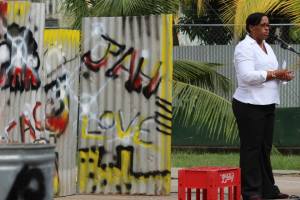
    Like its neighbours in the northern triangle (El Salvador, Honduras and Guatemala), Belize has a high murder rate that is closely connected to the strong presence of gangs – but the character of gang activity in Belize is quite different from its Central American neighbours. Belize has pioneered some innovative solutions to the problem it is facing. But it will need to overcome the challenges of internal resistance and an acute lack of resources in order to address the political, economic and social issues that marginalise Belize’s large youth population.

    Belize’s gangs have been a persistent feature of the insecurity facing this tiny and sparsely populated country, which sits straddling Central America and the Caribbean, one foot in each but not completely in either. Murders have risen above 40 per 100,000 inhabitants in recent years, around a third of which are gang affiliated according to official police statistics. The murder rate in Belize City, home to an overwhelming concentration of gangs, peaked at 180.2 in 2012.

    While the red and blue associated with the Crips and Bloods of LA (from which Belize’s gangs originated in the 80s and 90s) are seen elsewhere, the gangs remain a primarily urban phenomenon. In particular, they are symptomatic of the deep-rooted structural challenges that are most starkly present in the Southside of Belize’s former capital. There, large, marginalised and impoverished families live in a situation of social isolation and neglect, blanketed by the stigmatisation that results from the social prejudices and intolerances surrounding ‘Southside issues’. What’s more, youth living in the area must contend with a continuous exposure to often extreme and graphic violence, be it in the family or community environment.

    Gang activity in Belize is not as well organised as in its Spanish-speaking neighbours, where links with organised crime are much stronger and crimes of extortion and large-scale drug trafficking activities more prevalent. In Belize the gangs are also more highly fractured. They are typified by smaller groups whose ‘turf’ often extends no more than a couple of streets and whose members may number little over a dozen. Personal conflicts, often-stretching back generations, fuel aggression and revenge attacks.

    Beyond a driver of insecurity, the gangs are a symptom of the more deep-rooted structural challenges facing Belize, where social injustices, challenging socio-political conditions, and an acute lack of government resources have combined with an increasingly youthful population (69.8% under the age of 35) to create a large pool of marginalised youth lacking in opportunities.

    It is only by targeting these root causes, rather than simply repressing the gangs themselves, that the issue can be successfully addressed, and elements of Belize’s approach to youth and insecurity deserve to be widely lauded in this respect.

    A community building approach

    An event at a high school in Belize City organised by RESTORE Belize

    An event at a high school in Belize City organised by RESTORE Belize. Source: RESTORE Belize

    Located within the Office of the Prime Minister, RESTORE Belize was launched in 2010 at the behest of the Government to lead a community-building approach to the restoration of law and order. It seeks to target the social roots of crime and violence and promotes a strategic and comprehensive cross-sector effort involving state institutions, the private sector and civil society, as well as implementing its own programs in the area. It coordinates closely with other institutions, including the police, and forms part of an effort to improve relations between the Belizean State (of which the police are the foremost visible representation) and the population.

    Through its Community Action for Public Safety program, for example, it engages in human development activities focused on the Southside of Belize City, developing infrastructure including recreational and social facilities for youth as well as rehabilitation facilities for youth offenders. Similarly, its Metamorphosis Program engages young people deemed to be at-risk of school dropout and gang affiliation in an intensive program that involves counselling, weekend retreats, drug and alcohol therapy, as well as parenting classes and home visits by social workers.

    Belize has also sought to increase its capacity to engage in conflict resolution. In cooperation with the United States, mediators have been trained to work in schools, youth facilities and the prison service as well as directly in local communities. The Conscious Youth Development Program, for example, has a team of mediators that are deployed as first responders following incidents of gang violence in order to calm the immediate situation and prevent escalation.

    These community building approaches seek to cultivate change in the individual while providing tangible improvements to their personal and community environments. Furthermore, by engaging with them as individuals as opposed to ‘gang members’ they aim to foster their trust and confidence in the Belizean state and society. This is especially important because large segments of the Belizean population hold negative views of youth, who in turn resent being characterised as a source of the ills affecting society.

    Resistance

    One of the major challenges to these approaches – and a standard by which their progress can be judged – therefore, is overcoming resistance from those that favour more draconian policies. As an example, some schools in Belize, many of which are independently run, are strict, conservative, elitist and intolerant of ‘Southside problems’. Youth from such areas are often earmarked from the outset if their family members have been affiliated with gangs, while strictly enforced uniform codes work to further ostracise those from poorer backgrounds who often struggle to meet the financial costs. Given that free schooling is available only until the age of 12, many drop out prior to embarking on secondary education, despite it being a legal requirement up until 14 years of age. While interventions such as RESTORE Belize’s scholarship program assist in this regard, the stigmatisation and institutional marginalisation of such youth requires deep-rooted changes in attitudes and institutional cultures. Liaison efforts are being pursued to this end, but the autonomous nature of many of these schools means progress is often slow and hard fought. Meanwhile, with a national dropout rate of 8.4%, rising as high as 19.5% in certain schools in Southside Belize City, the scale of the challenge that remains is clear.

    Stigma and repression

    The issue of stigmatisation of youth is furthermore evident in the contradictory nature of other policies. For example, the Crime Control Act criminalises gang membership, meaning that by taking part in programs aimed at gang members and their leaders, these individuals are in essence incriminating themselves. Similarly, just as RESTORE Belize was launched, the Ministry of National Security rolled out Operation Jaguar, a hard-line approach involving military and police checkpoints and stop-and-search operations that had been developed and planned in isolation.

    Perhaps the starkest example, however, is that of the Gang Suppression Unit (GSU) – an elite police unit whose raison d’etre is the repression of gang activity. Widely perceived to operate beyond the law, the GSU is suspected of involvement in a number of high profile political and human rights abuses. While ‘harder’ approaches may be required to compliment ‘softer’ interventions, the lack of transparency and accountability surrounding the unit and allegations of their involvement in such offenses undermines efforts to build trust and confidence and to transform the perceptions of marginalised youth towards the state. The placement of RESTORE Belize within the Office of the Prime Minister was specifically designed to aid in efforts to mould a strategic cross-agency approach, but it is clear that a silo mentality continues to impede progress on this front.

    An uphill task

    Beyond attitudinal resistance, the country is also facing an acute shortage of resources which affects all security and justice institutions, greatly undermining state capacity in these sectors, as well as more widely. As an example, the National Forensic Science Service struggles to perform even the most basic functions: a lack of DNA analysis capabilities, training and equipment means they are often unable to verify matches between suspects and evidence found at crime scenes. Even where sufficient evidence can be brought to take a case to trial, the lack of public prosecutors further undermines the state’s judicial functions. With only eleven public prosecutors it is no surprise that impunity is high and prosecutions for major crimes often face severe delays, especially when it is considered that there were 145 murders in 2012 alone. Add this to a police force lacking in vehicles and even basic equipment and the scale of the task becomes even more daunting.

    Belize thus faces an uphill task in overcoming the challenges provided by gang violence. The approach followed by instances such as RESTORE Belize and the Conscious Youth Development Program are highly commendable for their recognition that youth, including those involved in gang activity, should not be treated as a plague on society that can simply be exterminated through repressive actions. But for their full value to be achieved there is a need for wider changes. Youth must be provided with greater opportunities to thrive, while state capacities need bolstering in order to improve its ability to provide security and justice to its citizens. Such changes, however, require significant resources that Belize is lacking. Furthermore, support to engage in these inherently longer-term efforts will be tested by the attitudes of those that continue to see Belize’s youth in a negative light, or that become impatient, and understandably so, with the immediate threats to their security.

    Matthew Budd is a security analyst at RESDAL (Latin American Security and Defence Network), where he specialises in public security issues, and is also studying for a Masters in Conflict, Security and Development at King’s College London. He is currently working on the second edition of RESDAL’s Public Security Index, which is the only existing resource to provide information on the public security context and institutional responses to them in the Central American region. The upcoming edition will incorporate the case of Belize alongside those of Spanish-speaking Central America.

    Featured image: A Belize City high school. Source: Flickr | Carsten ten brink

  • Too Quiet on the Western Front? The Sahel-Sahara between Arab Spring and Black Spring

    Too Quiet on the Western Front? The Sahel-Sahara between Arab Spring and Black Spring

    While the world’s attention has been focused on the US-led military interventions in Iraq and Syria a quieter build-up of military assets has been ongoing along the newer, western front of the War on Terror as the security crises in Libya and northeast Nigeria escalate and the conflict in northern Mali proves to be far from over. In the face of revolutionary change in Burkina Faso, the efforts of outsiders to enforce an authoritarian and exclusionary status quo across the Sahel-Sahara look increasingly fragile and misdirected.

    Read Article →

    Beaux Gestes and Castles in the Sand: The Militarisation of the Sahara

    Whatever the benefits for Mali, the French-led eviction of jihadist groups from northern Mali may have made the wider Sahara a less safe place, and has done little to lower the capacity of such groups to threaten European interests.. In 2014, France is implementing a major redeployment of its forces in Africa into the Sahel and Sahara. Meanwhile, the US has been quietly extending its military reach from Djibouti to Mauritania. However, as elsewhere, the western military approach to countering Islamist insurgency in the Sahel rests on very unsteady foundations and the potential to provoke wider alienation and radicalisation is strong.

    Read Article →

    Sustainable Security and the Challenges of 2014

    2014 is a time for looking backwards and forwards. While the dynamics of the war on terror are still very much in play, the withdrawal from Afghanistan and the re-escalation of violence in Iraq and Libya present an opportune context for sincere reflections on the disastrous consequences of war without borders. Such inquiry needs to look forward too, to the implications of the current administration’s ‘war-lite’ and the unstoppable proliferation of remote control technologies.

    Read Article →

    Geneva II: Prospects for a Negotiated Peace in Syria

    The recent announcement that the so-called Geneva II conference would finally convene on 22 January 2014 is overdue but good news. What are the chances of it bringing peace? With an interim deal signed on Iran’s nuclear programme, Richard Reeve discusses what chance the great powers, Middle Eastern diplomats and the mediators of Geneva have as they turn their attention to ending the war in Syria.

    Read Article →