Blog

  • Sustainable Security

    Too Quiet on the Western Front? The Sahel-Sahara between Arab Spring and Black Spring

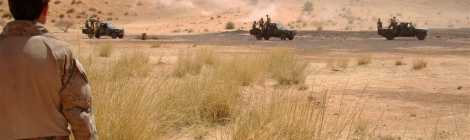
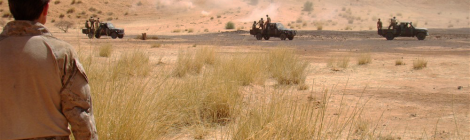
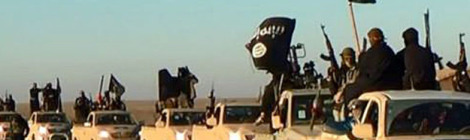
    While the world’s attention has been focused on the US-led military interventions in Iraq and Syria a quieter build-up of military assets has been ongoing along the newer, western front of the War on Terror as the security crises in Libya and northeast Nigeria escalate and the conflict in northern Mali proves to be far from over. In the face of revolutionary change in Burkina Faso, the efforts of outsiders to enforce an authoritarian and exclusionary status quo across the Sahel-Sahara look increasingly fragile and misdirected.

    Read Article →

    VIDEO – Militarisation of the Sahel: An interview with Richard Reeve

    Sustainable Security programme Director Richard Reeve discusses our latest report ‘From New Frontier to New Normal: Counter-terrorism operations in the Sahel-Sahara’. The report, commissioned by the Remote Control project, finds that 2014 is a critical year for militarisation of the Sahel-Sahara and the entrenchment of foreign powers there.

    Read Article →

    Colombia and Mexico: The Wrong Lessons from the War on Drugs

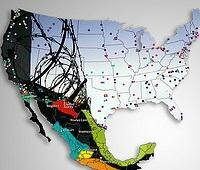
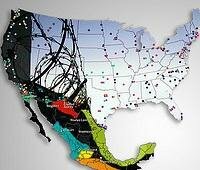
    As activists around the world participate in a Global Day of Action against criminalisation of drug use, evidence from the multi-billion dollar War on Drugs in Colombia suggests that militarized suppression of production and supply has displaced millions of people as well as the problem, not least to Mexico. The wrong lessons are being exported to Central America and beyond, but a groundswell of expert and popular opinion internationally is calling for alternative approaches to regulating the use and trade in drugs.

    Read Article →

    The Costs of Security Sector Reform: Questions of Affordability and Purpose

    In considering security sector reform, questions of affordability have often been subordinated to questions of effectiveness and expediency. A recent series of reviews of security expenditures by the World Bank and other actors in Liberia, Mali, Niger and Somalia has highlighted several emerging issues around the (re)construction of security institutions in fragile and conflict-affected states.

    Read Article →

    Exporting (in)Security? Questioning Colombian Military Engagement in West Africa

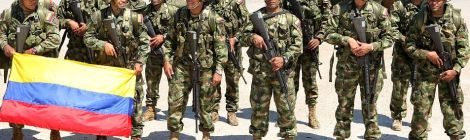
    With skills and expertise in fighting insurgencies and drug trafficking networks, Colombia’s armed forces are increasingly being sought for engagement in similar security challenges in West Africa. But increasing Colombian engagement gives rise to a number of important questions – not least of which is the goal and expected outcomes of replicating militarised approaches to the war on drugs that have already failed in Latin America.

    Read Article →

  • Global militarisation

    Global militarisation

    The current priority of the dominant security actors is maintaining international security through the vigorous use of military force combined with the development of both nuclear and conventional weapons systems. Post-Cold War nuclear developments involve the modernisation and proliferation of nuclear systems, with an increasing risk of limited nuclear-weapons use in warfare – breaking a threshold that has held for sixty years and seriously undermining multilateral attempts at disarmament. These dangerous trends will be exacerbated by developments in national missile defence, chemical and biological weapons and a race towards the weaponisation of space.

    Moving Beyond Crisis: Survival 2100 and Sustainable Security

    William Rees | Movement for a Just World | June 2012

    Issues:Climate change, Competition over resources, Global militarisation, Marginalisation

    In a piece for the International Movement for a Just World, William Rees maps out a vision for what he calls ‘Survival 2100.’ The goal of such a strategy would be “to engineer the creation of a dynamic, more equitable steady-state economy that can satisfy at least the basic needs of the entire human family within the means of nature.” The alternative, Rees argues is to “succumb to more primitive emotions and survival instincts abetted by cognitive dissonance, collective denial, and global political inertia.”

    Image source: hundrednorth.

    Read more »

    Before the Cyberwar

    R. Scott Kemp | Bulletin of the Atomic Scientists | June 2012

    Issue:Global militarisation

    Those concerned with the issue of militarisation as a driver of global insecurity are increasingly looking at the issue of cyberwarfare as the weapons of war become ever closely associated with the digital age. Waging war in the cyber domain raises some truly momentous questions about the nature of warfare, the laws of war and even what counts as self-defence. Nuclear expert, Scott Kemp has written an article in the Bulletin of the Atomic Scientists arguing that like the missed opportunity of the dawn of the nuclear age (in which possessing nuclear weapons was viewed as more important than the consequences of proliferation), policymakers today have an important opportunity to consider the implications – both intended and unintended – of cyberweapons.

    Image source: WFB

    Read more »

    A Sustainable Security Approach to the ‘War on Drugs’

    Chris Abbott and Joel Vargas | Open Briefing | April 2012

    Issue:Global militarisation

    A new report from Open Briefing argues that the illicit drugs trade, and the militarised government responses to it, are the greatest threats to state and human security in the Americas. The report analyses the almost total failure of current strategies and outlines a sustainable security approach to address this.

    Image source: truthout.org

    Read more »

    Kony 2012 and the Militarisation of Uganda

    Adam Branch | AlJazeera | March 2012

    Issue:Global militarisation

    A piece written by Adam Branch and published by AlJazeera highlights the dangers of militarisation associated with the online campaign to make Joseph Kony ‘famous’ in 2012 spearheaded by the NGO Invisible Children. Branch asks “how often does the US government find millions of young Americans pleading that they intervene militarily in a place rich in oil and other resources?”

    Image source: debobhappy

    Read more »

    Mutually Assured Destruction: Fifty Years and Counting

    Tom de Castella | BBC News Magazine | February 2012

    Issue:Global militarisation

    Writing for the BBC, Tom de Castella explores the reasons why the fear of a nuclear exchange has receded in the public imagination. Marking the fiftieth anniversary of Robert McNamara’s speech to the American Bar Foundation that outlined the official US position on mutually assured destruction (MAD), de Castella talks to a number of experts about the continuing threat from nuclear stockpiles around the world.

    Image source: Leeks. 

    Read more »

    A Realist Argument in Favour of Non-Violent Opposition in Syria

    Daniel Serwer | The Atlantic | February 2012

    Issue:Global militarisation

    How can the state violence in Syria be stopped? Daniel Serwer argues in the Atlantic that, given the Syrian regime’s complete failure to protect its own citizens it may be morally justifiable to arm the Syrian opposition; however from a realist perspective it is neither ‘possible nor wise’ as a means to topple Assad and bring about accountable politics. A violent reaction to the state’s overwhelmingly superior violence would not only destroy the opposition’s legitimacy, but would eventually draw them into a militarised conflict that they could not win.

    Serwer strongly advocates mass-participatory non-violent approaches which use tactics that are difficult to attribute to single individuals. In the end, removing the regime’s ability to instil fear will be the surest way to ensure its downfall, as seen in the cases of Zine El Abidine Ben Ali and Hosni Mubarak, and Serwer argues that this is still possible, even now after so much bloodshed.

    Article Source: the Atlantic

    Image Source: Yunchung Lee

    Read more »

  • Global militarisation

    Global militarisation

    The current priority of the dominant security actors is maintaining international security through the vigorous use of military force combined with the development of both nuclear and conventional weapons systems. Post-Cold War nuclear developments involve the modernisation and proliferation of nuclear systems, with an increasing risk of limited nuclear-weapons use in warfare – breaking a threshold that has held for sixty years and seriously undermining multilateral attempts at disarmament. These dangerous trends will be exacerbated by developments in national missile defence, chemical and biological weapons and a race towards the weaponisation of space.

    Moving Beyond Crisis: Survival 2100 and Sustainable Security

    William Rees | Movement for a Just World | June 2012

    Issues:Climate change, Competition over resources, Global militarisation, Marginalisation

    In a piece for the International Movement for a Just World, William Rees maps out a vision for what he calls ‘Survival 2100.’ The goal of such a strategy would be “to engineer the creation of a dynamic, more equitable steady-state economy that can satisfy at least the basic needs of the entire human family within the means of nature.” The alternative, Rees argues is to “succumb to more primitive emotions and survival instincts abetted by cognitive dissonance, collective denial, and global political inertia.”

    Image source: hundrednorth.

    Read more »

    Before the Cyberwar

    R. Scott Kemp | Bulletin of the Atomic Scientists | June 2012

    Issue:Global militarisation

    Those concerned with the issue of militarisation as a driver of global insecurity are increasingly looking at the issue of cyberwarfare as the weapons of war become ever closely associated with the digital age. Waging war in the cyber domain raises some truly momentous questions about the nature of warfare, the laws of war and even what counts as self-defence. Nuclear expert, Scott Kemp has written an article in the Bulletin of the Atomic Scientists arguing that like the missed opportunity of the dawn of the nuclear age (in which possessing nuclear weapons was viewed as more important than the consequences of proliferation), policymakers today have an important opportunity to consider the implications – both intended and unintended – of cyberweapons.

    Image source: WFB

    Read more »

    A Sustainable Security Approach to the ‘War on Drugs’

    Chris Abbott and Joel Vargas | Open Briefing | April 2012

    Issue:Global militarisation

    A new report from Open Briefing argues that the illicit drugs trade, and the militarised government responses to it, are the greatest threats to state and human security in the Americas. The report analyses the almost total failure of current strategies and outlines a sustainable security approach to address this.

    Image source: truthout.org

    Read more »

    Kony 2012 and the Militarisation of Uganda

    Adam Branch | AlJazeera | March 2012

    Issue:Global militarisation

    A piece written by Adam Branch and published by AlJazeera highlights the dangers of militarisation associated with the online campaign to make Joseph Kony ‘famous’ in 2012 spearheaded by the NGO Invisible Children. Branch asks “how often does the US government find millions of young Americans pleading that they intervene militarily in a place rich in oil and other resources?”

    Image source: debobhappy

    Read more »

    Mutually Assured Destruction: Fifty Years and Counting

    Tom de Castella | BBC News Magazine | February 2012

    Issue:Global militarisation

    Writing for the BBC, Tom de Castella explores the reasons why the fear of a nuclear exchange has receded in the public imagination. Marking the fiftieth anniversary of Robert McNamara’s speech to the American Bar Foundation that outlined the official US position on mutually assured destruction (MAD), de Castella talks to a number of experts about the continuing threat from nuclear stockpiles around the world.

    Image source: Leeks. 

    Read more »

    A Realist Argument in Favour of Non-Violent Opposition in Syria

    Daniel Serwer | The Atlantic | February 2012

    Issue:Global militarisation

    How can the state violence in Syria be stopped? Daniel Serwer argues in the Atlantic that, given the Syrian regime’s complete failure to protect its own citizens it may be morally justifiable to arm the Syrian opposition; however from a realist perspective it is neither ‘possible nor wise’ as a means to topple Assad and bring about accountable politics. A violent reaction to the state’s overwhelmingly superior violence would not only destroy the opposition’s legitimacy, but would eventually draw them into a militarised conflict that they could not win.

    Serwer strongly advocates mass-participatory non-violent approaches which use tactics that are difficult to attribute to single individuals. In the end, removing the regime’s ability to instil fear will be the surest way to ensure its downfall, as seen in the cases of Zine El Abidine Ben Ali and Hosni Mubarak, and Serwer argues that this is still possible, even now after so much bloodshed.

    Article Source: the Atlantic

    Image Source: Yunchung Lee

    Read more »

  • Sustainable Security

    Several diplomatic efforts have been made both domestically and internationally to enhance peaceful unity since the start of the Cyprus Problem. Despite the shortcomings of past efforts, it is still desirable not only to resolve the issue, but also to do so in a timely manner.

    The Cyprus Problem

    Cyprus, the third largest island in the Mediterranean Sea, is home to 1.1 million and has a tempestuous history involving many actors ranging from different empires and nations of the past to regional and global actors of today, including the UN, EU and NATO. As George Christou highlights, the history of Cyprus “has been characterised by tension and conflict due to the diametrically opposed interests of Greece and the Greek-Cypriots on the one hand, and Turkey and the Turkish-Cypriots on the other”. If we add the colonial heritage, proximity to the Suez Canal and interests of Great Britain, remnants of Cold War paranoia that the island was to become a Russian satellite or a ‘Cuba in the Mediterranean’, the British Sovereign Base Areas that host one of the biggest intelligence infrastructures in the region and the close links between the Greek and Russian Orthodox churches to the equation, the protracted conflict on the island starts looking multi-layered, multi-factored and multi-faceted.
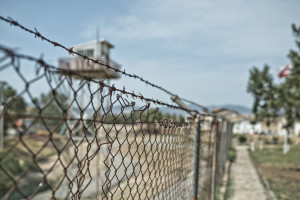
    The United Nations Buffer Zone, also known as the Green Line, a demilitarised zone patrolled by the United Nations Peacekeeping Force in Nicosia,  Cyprus. Image credit: Marco Fieber/Flickr.

    Historically, the Cyprus conflict is usually boiled down to competing ethno-nationalisms between Turkish-Cypriot and Greek-Cypriot communities; it is usually read in tandem with the ‘motherland’ nationalism in Turkey and Greece, is entrenched in the 1960s constitution along consociational lines and traced back to the decolonisation period in the 1950s. At one time or another, both communities in Cyprus have linked their destinies to those of their ethnic kin, to that of the large-group outside the island. Due to the pursuit of mutually exclusive destinies, Cyprus suffered from inter-communal violence from late 1950s until its decolonisation and independence in 1960. However, the newly founded Republic of Cyprus was only ephemeral, and inter-communal conflict erupted once again only after 3 years in 1963. Since 1964, the island hosts one of the longest-standing peacekeeping missions – The United Nations Peacekeeping Force in Cyprus (UNFICYP). The next 50 years witnessed a long and frustrating process of inter-communal talks and several UN settlement plans, turning the island into a ‘graveyard of diplomats’. As a result, the communities, who were psychologically divided under the new federation, would soon become physically and demographically divided. As such, following the Turkish intervention in response to the Greek coup on the island in 1974, Cyprus has effectively been divided in two, with Greek-Cypriots living in the southern part under the legally recognised Republic of Cyprus (RoC) and Turkish-Cypriots living in the northern part under the unrecognised, self-declared, administration called the ‘Turkish Republic of Northern Cyprus’ (TRNC).

    Despite the cease-fire and the protracted conflict, Cyprus is a safe place. This safety may be a common characteristic of small communities where social control is prevalent because of close familial and social relationships, but Cypriots are generally and unarguably non-violent people, demonstrated by low crime rates. In spite of the daily frustrations of the conflict, and its economic, social and political cost to Cypriots, it is hard to deny that the situation is ‘comfortable’ and ‘normalised’. Not only does Cyprus remain a popular holiday destination for many Europeans, but it officially became an EU member state with all its ‘anomalies’ in 2004. At times, Cyprus markets itself as the home for the last divided capital of Europe—at other times, as the furthest Eastern corner of Europe that offers pristine and exotic beaches—or as the multi-cultural holiday resort that is simultaneously European, Middle-Eastern and Mediterranean.

    The Cyprus Problem operates on local, regional and international levels. The local entails the relationship between the two ‘ethnically’ categorised communities. Owing to Turkey and Greece’s involvement since its early stages, the conflict has also had a distinct regional dimension for many years. This regional dimension is also the product of islands geography as a bridge between 3 continents and due to the history and demographics of the region. At the international level, the problem has preoccupied the UN since 1964 and involved NATO, the United States and since 2004, the EU became more directly embroiled when Cyprus acceded the Union without a peace settlement.

    Solving the Problem

    Numerous diplomatic efforts have been made both domestically and internationally to enhance different forms of peaceful unity since the conception of the Cyprus Problem. Over the decades, myriad negotiations and peace-talks have also begun and have been later halted, fast-tracked, and revisited. Nevertheless, it is still imperative to find a comprehensive solution to the Cyprus Problem.

    Such a solution, which would also advance the wider cause of peacebuilding and reconciliation, is crucial for several main reasons:

    • The prolongation of the conflict presents a myriad of human rights violations for the communities of Cyprus. While the RoC enjoys full EU membership, Turkish-Cypriots—who are also EU citizens—live in the northern part of Cyprus where the RoC does not exercise effective control and where the Acquis Communautaire is suspended. The Acquis Communautaireis the accumulated body of European Union (EU) law and obligations from 1958 to the present day. It comprises all the EU’s treaties and laws (directives, regulations and decisions), declarations and resolutions, international agreements and the judgments of the Court of Justice. The unrecognised status of the northern administration also amounts to a violation of the human rights of those Greek-Cypriots who became internally displaced people during 1974 and had lost access to their properties. As such, Cyprus is an explicit case of legality and politics persistently challenging each other, a situation which creates inherent contradictions for the EU project.
    • The accession of the RoC to the EU without the inclusion of the Turkish-Cypriots also presents a significant challenge for EU governance across a diverse range of issues, including the EU objective of achieving stability in the eastern Mediterranean. The EU accession also creates a state of exception that galvanises Cyprus’ ‘special status’ that is in reality not that special. As Harry Anastasiou eloquently puts it, Cyprus was “… the first EU member country that was ethnically divided; that was represented at EU level exclusively by members of one of the rival ethnic communities; that was partially occupied by the military forces of an EU candidate state; that had the institutional means to apply the Acquis Communautaire in one part of its territory but not in another; that had a cease-fire line and a buffer zone manned by UN peacekeepers; and that had one portion of its citizens deprived of the right to their property and residence and another portion of its citizens deprived of the right of access to and participation in the EU economy and EU political institutions. Moreover, Cyprus was the only EU member where its major ethnic communities recognise the EU law while simultaneously rejecting each other’s law; where its major ethnic communities accept the legitimacy of the EU while rejecting each other’s legitimacy within their own shared island”.
    • The ramifications of the conflict on the NATO–EU relationship and European energy policy is disconcerting due to newly discovered natural gas resources in Cyprus, competing claims over these resources and the fact that Turkey’s geographical location makes it an important corridor- particularly for gas and oil for the EU. When we look at regional alliances and hydrocarbon interests, we can see a highly intricate web of relationships. These include the hyper-securitisation, where threats are constructed and legitimised through security speech acts, of Turkey in the RoC, the latter’s close links with Russia and Greece, Turkey’s significance for NATO, and the fact that Russia and Cyprus are not part of the alliance. Such dynamics clearly add further tension to Turkey-EU, EU-Russia and Russia-Turkey relations, and create further instability in the region. Thus, solving the Cyprus problem can ease tensions in the region and positively influence the regional dynamics particularly those about regional energy policies.
    • Even though the intentions of Turkey’s Justice and Development Party (AKP) regarding full EU membership are highly questionable, non-resolution of the Cyprus Problem presents an obstacle for Turkey’s EU accession as well as being a persistent and bitter thorn in Turkey–EU relations. Solving the Cyprus Problem may also help normalise Turkey’s relationship with its neighbours. Considering the deteriorating diplomatic relationships between Turkey and the ‘West’, deep polarisation among different groups in Turkey, crumbling economy and intra-state violence, conflict and terrorism, Cyprus can help relieve much pressure off Turkey and restore its diplomatic stance.
    • Considering Cyprus’ geographical proximity to Syria and Iraq and to the Middle East and North Africa, it could be argued that the instability in the region (including Turkey)—and the subsequent ‘refugee’ crisis—are factors that add to the urgency of finding a comprehensive solution to the protracted conflict. The Cyprus Problem is a non-violent, ‘normalised’, and ‘comfortable’ conflict (see Adamides and Constantinou 2011), thus the regional dynamics can help cultivate a sense of urgency for reaching a comprehensive solution, which may contribute to eventual increased stability in the region, as it would not only ‘reconcile’ Greek-Cypriots and Turkish-Cypriots but ease much pressure off Turkey, Greece and the EU as well.

    What’s more, it is not only pertinent to solve the Cyprus Problem, but to do so in a timely manner too. In 2004, Cypriots came close to finding a solution to their intractable problem. A comprehensive settlement plan (a.k.a The Annan Plan) on a bi-zonal bi-communal federal state with single citizenship was accepted by the Turkish-Cypriot community but rejected by the Greek-Cypriot community in a simultaneous referenda in April 2004. Following the disappointment of the peace referenda, Cypriots became disengaged from the peace process, which was further exacerbated by the global economic crisis. Following the financial crises that hit the RoC in 2012, the economic concerns of communities have gradually pushed the Cyprus Problem behind other concerns and priorities, specifically unemployment, inflation and increasing crime rates.

    The peace negotiations resumed in 2008 but failed again in 2011. After independent left-wing Turkish Cypriot presidential candidate Mustafa Akıncı assumed office in the northern part of Cyprus in April 2015, hopes were revitalised. Known for his pro-solution and Turkey-defying stance and surprisingly clean political slate, many accounts argue that the centre-right Nicos Anastasiades, who has been the President of Republic of Cyprus since 2013 from the only party that supported the Annan Plan, and Akıncı duo has created a very favourable environment and that the stars are perfectly aligned this time, bringing the island closer than ever to reaching a comprehensive settlement. This gave birth to increasing public engagement in the peace process, which contributed to the ‘favourable’ environment by supporting and legitimising the mandate of the negotiation teams and creating a more convincing and prosperous ‘vision’ for the future of Cyprus without ‘the Problem’.

    Unfortunately however, this trend was showing signs of reversal. Following the Geneva summit disappointment, lack of convergence on the security dossier of the negotiations is reproducing sense of insecurity and triggering historic traumas, which underpins highly polarised internal narratives based on zero-sum discourse. Especially after the parliamentary Enosis commemoration vote in the RoC and Turkey’s four freedoms demand in Cyprus, the ‘peace fatigue’ is starting to set in once again. Frustration over lack of progress and impetus showing itself in low hope: While 53% of Greek Cypriots and 48% of Turkish Cypriots wish for the peace process to succeed, 43% and 50% respectively express no hope that the peace process will produce results. As the new security architecture proposal of SeeD Security Dialogue Initiative provides a four-step road map to break the current deadlock:

    Step 1: Shift the focus away from hard security and guarantees that only emphasize on last resort, deterrence and worse case scenarios to soft security and preventative measures that emphasize on sustainability and viability, by broadening the concept to include human security, economic, social and ontological security. The underlying objective should be to achieve an endogenously resilient Federal Cyprus that relies on its own institutions to guarantee the security of its citizens.

    Step 2: Acknowledge that a transitional period will be required before Federal Cyprus can be endogenously resilient and secure, where special arrangements and external support will be necessary to build the capacity of Cypriot institutions and provide a sense of security to all citizens and communities. Focus on benchmarks and performance indicators that can ensure a smooth implementation period.

    Step 3: Negotiate and agree those aspects of transitional arrangements that are less controversial (e.g. timelines for implementation of the settlement, what support will be provided by an international mission) in order to prevent deadlock, increase points of convergence and reinforce hope and public engagement in the process before negotiating those aspects of transitional arrangements that are more controversial (e.g. ‘last resort’ provisions, role of historic guarantors).

    Step 4: Enshrine all agreements and steps in a Treaty of Implementation, which will outline a robust bridge from the current status quo, to the ultimate vision of an endogenously resilient Federal Cyprus.

    What is needed to revitalise the peace process in Cyprus is innovation and reflection both on the process and on the content. Specifically relating to the security dossier, we need a different approach that broadens the concept of security beyond the realpolitik regional bargaining and beyond the narrow understanding that talking about the security of a federal Cyprus is talking about military arrangements and guarantees. It is crucial to capitalise on these proposals and regional dynamics and add a success story to the world’s peacemaking and peacebuilding record.

    İlke Dağlı, a Senior Researcher for the international think-tank SeeD (The Center for Sustainable Peace and Democratic Development), completed her PhD in Politics and International Studies at the University of Warwick, focusing on “Securitisation of Identities in Conflict Environments and its Implications on Ontological Security”.  She has a degree in European and International Politics and completed her MSC in Bristol on Security and Development. Since 2006 she has been working closely with CSOs and SMEs in Cyprus as a project coordinator, project developer, consultant and facilitator. She co-authored and coordinated many local projects such as The Civil Society Dialogue Project, Cyprus Community Media Centre initiative, Access Info Cyprus Project and Play for Peace Project and is closely involved with the ENGAGE Do Your Part for Peace project.
  • Sustainable Security

  • Climate Change and Security Threats: Time to Call a Spade a Spade?

    Climate Change and Security Threats: Time to Call a Spade a Spade?

    Ben Zala | | January 2013

    Issue:Climate change

    When does a serious environmental problem become a security threat?

    Professor Tim Flannery, a leading scientist and public intellectual in Australia wrote a piece in the Guardian newspaper a few days ago reflecting on the links between climate change and the extreme temperatures and bushfires ravaging Australia at present. He notes that “Australians are used to hot summers. We normally love them. But the conditions prevailing now are something new. Temperature records are being broken everywhere.” What is important for thinking about the security consequences of climate change is that towards the end of the article, Flannery reflects:

    “Australia’s average temperature has increased by just 0.9 of a degree celsius over the past century. Within the next 90 years we’re on track to warm by at least another three degrees. Having seen what 0.9 of a degree has done to heatwaves and fire extremes, I dread to think about the kind of country my grandchildren will live in. Even our best agricultural land will be under threat if that future is realised. And large parts of the continent will be uninhabitable, not just by humans, but by Australia’s spectacular biodiversity as well.”

    Conditions in which large parts of the continent are threatened in such a way would appear to raise some pretty serious questions about Australia’s national security (let alone the human security of those individuals living in areas where agriculture has failed or fires threaten homes and livelihoods). Yet recently a number of commentators have become particularly concerned about the so-called ‘securitisation’ of climate change, largely due to a sense of there being “alarmist views about climate change on conflict risk.” This has led some to argue that rather than helping to raise the profile of the issue in terms of the need for urgent policy change, we in fact now need to “disconnect security and climate change.” According to Professor Betsy Hartmann of Hampshire College, “A fear of imminent doom runs deep in popular culture and, like the grim reaper, stalks the environmental movement.” This, she argues allows “security agencies and analysts” to distract us from feelings of empathy towards those affected by climate change and to instead cause us to fear them and to “turn to the military to protect us.” According to Professor Mike Hulme of the University of East Anglia,

    “What climate change means to us and means to the world is conditioned by what we do, by the way we govern, by the stories we tell. Presenting climate change as the ultimate security crisis is crudely deterministic, detached from the complexities of our world, and invites new and dangerous forms of military intervention.”

    All of this matters as the potential world in which Flannery is imagining that his grandchildren might have to live in is becoming more and more likely the longer multilateral efforts drag on. Richard Haass, the President of the Council on Foreign Relations, when asked to look ahead to the big global governance challengers for 2013 recently stated that: “It is becoming increasingly clear that efforts at mitigation are not just falling short but that the gap between what is needed and what is likely to happen is widening.”

    The whole notion of the ‘securitisation’ of climate change pre-supposes that we get to choose whether climate change is a security threat or not – it emphasises what political scientists refer to as human agency. Of course we can choose to label something as a threat or not (yes, perhaps it may even not be the end of the world if we use the dreaded T word!). But in the face of increasingly extreme weather and related natural disasters (let alone serious discussions about whether states such as Kiribati can survive within their own national borders), it does seem that we can sensibly talk about the security threats posed by climate change in the decades to come regardless of whether we can specifically link particular instances of conflict and climate change in the past.

    The point is that simply because something may pose a security threat does not mean that we have to respond in the traditional way – to throw military force at it. It’s abundantly clear that there is no military solution to climate change and that addressing the problem at source means changing (among other things) the ways we use energy. But that doesn’t mean that our current energy policies are not a fundamental security threat. They are. And why can’t we use better energy policies to ensure our security?

    Image source: HighExposure

    Comments

    Post new comment


  • Sustainable Security

    Too Quiet on the Western Front? The Sahel-Sahara between Arab Spring and Black Spring

    While the world’s attention has been focused on the US-led military interventions in Iraq and Syria a quieter build-up of military assets has been ongoing along the newer, western front of the War on Terror as the security crises in Libya and northeast Nigeria escalate and the conflict in northern Mali proves to be far from over. In the face of revolutionary change in Burkina Faso, the efforts of outsiders to enforce an authoritarian and exclusionary status quo across the Sahel-Sahara look increasingly fragile and misdirected.

    Read Article →

    VIDEO – Militarisation of the Sahel: An interview with Richard Reeve

    Sustainable Security programme Director Richard Reeve discusses our latest report ‘From New Frontier to New Normal: Counter-terrorism operations in the Sahel-Sahara’. The report, commissioned by the Remote Control project, finds that 2014 is a critical year for militarisation of the Sahel-Sahara and the entrenchment of foreign powers there.

    Read Article →

    10 years of US Drone Strikes in Pakistan – What Impact Has it Had?

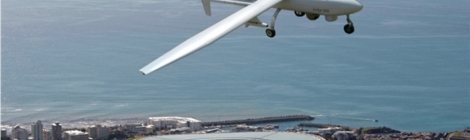
    This week marks 10 years since the first reported US drone strike in Pakistan. It has also seen the resumption of US drone strikes in the country following a five-month pause. Considering the length of time the CIA-led programme has been running, a number of questions deserve consideration: namely, how effective has the decade long covert drone programme been in Pakistan and what impact have drones had on wider Pakistani society? As the military technology for remote-control warfare spreads, there is a need to question whether drones provide significant tactical advantage or whether their proliferation could lead to greater long-term global insecurity.

    Read Article →

  • Sustainable Security

  • Sustainable Security

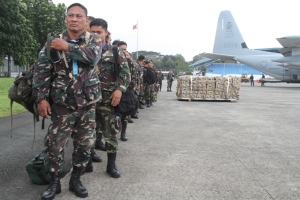
    Philippine Army servicemembers stand alongside a pallet of bottled water as they prepare to board a U.S. Marine Corps KC-130J to support victims of Super Typhoon Haiyan at Villamor Air Base, Manila, Republic of the Philippines Nov. 11. Source: U.S. Marine Corps. (Photo by Lance Cpl. Stephen D. Himes/Released)

    Philippine Army servicemembers stand alongside a pallet of bottled water as they prepare to board a U.S. Marine Corps KC-130J to support victims of Super Typhoon Haiyan at Villamor Air Base, Manila, Republic of the Philippines Nov. 11.
    Source: U.S. Marine Corps. (Photo by Lance Cpl. Stephen D. Himes/Released)

    US Defense Secretary Chuck Hagel has ordered the USS George Washington and her battle group from Hong Kong to the Philippines to provide humanitarian assistance in the aftermath of the Typhoon. Already, about 90 U.S. Marines and sailors have deployed from Okinawa to the Philippines and are on the ground providing support. UK Prime Minister David Cameron has ordered the Royal Navy’s HMS Daring to the region as well. This disaster response mission is part of the Department of Defense’s growing humanitarian response mission to help affected regions. Simply put, if the U.S. military and allies did not provide fast-acting logistical support to relief missions like this, there are no other entities that can provide the heavy lift or logistical expertise necessary to get large quantities of aid to a region in time.

    Last week, prior to the storm, in reference to Pacific Command’s disaster response mission and capability, the PACOM Commander Admiral Locklear said:

    It’s the right thing to do… Also, if something is going to happen in the Pacific that is going to create a churn in the security environment, the most likely thing will be a humanitarian disaster problem of some kind – whether it is horrific typhoons or tsunamis or floods or something else.

    He’s right. Beyond the clear threats to the human security of the residents of the affected area – loss of life, home, food, electricity, and clean water – natural disasters can act as a clear threat to national security, especially when the government is unable to respond effectively. That’s because a government failure can create the opportunity for other security threats to develop, ranging from crime and corruption to insurgency or terrorism. Unfortunately, we may already be seeing this in the Philippines; there are reports of massive looting after the storm passed over, and unverified reports that the Filipino military has engaged and killed a group from the New People’s Army, a communist rebel group in Leyte, as they tried to attack a government relief convoy.

    I’m not going to spend much time debating whether or not man-made climate change was responsible for this storm in particular.  There is an ongoing debate about whether climate change will both increase the number of tropical cyclones as well as their intensity. The latest IPCC report only expressed a ‘low confidence’ in the impact of climate change on tropical cyclones – that doesn’t mean there’s no impact, but it means we don’t know. What we do know is that the water in the Pacific has been warmer than average –and that warmer water is an important part of cyclone intensity. Phil Plait’s blog, Bad Astronomy, has a good explanation of the climate-cyclone link. Suffice it to say that climate change is another risk that must be considered when planning for security threats in the region.

    These are precisely the reasons that the U.S. Department of Defense has labeled climate change as an “accelerant of instability” in the 2010 QDR. PACOM, which has responsibility for all American forces in the Pacific region, has operationalized that guidance from the QDR to include real and significant planning for the many natural disasters that happen around the Pacific Rim. Admiral Locklear has stated that climate change “is probably the most likely thing that is going to happen . . . that will cripple the security environment, probably more likely than the other scenarios we all often talk about.”

    As ASP has determined in our Global Security Defense Index on Climate Change, the U.S. is not the only country that is planning for the security threats of climate change; over 70% of the world also deems climate change to be a security threat. The Philippines’s National Security Policy specifically gives the security forces the mission to “Help Protect the Country’s Natural Resources and Reduce the Risks of Disasters” and goes on to say that “the government must focus on establishing disaster and calamity preparedness and effective response mechanisms.” Clearly, Typhoon Haiyan has overwhelmed the ability of the Filipino security services to effectively respond to this calamity; it is appropriate for the U.S. and international community to help as much as possible.

    Climate change acts as a threat multiplier and an accelerant of instability. Whether this storm was ‘caused’ by climate change is a moot point now. Even with concerted international action to reduce greenhouse gas emissions, like those proposed at the UNFCCC negotiations in Warsaw, the Pacific will likely see these disasters for decades to come. Efforts to reduce risk should include military preparations for response, readiness that increases the capacity to prevent such harm, as well as greenhouse gas mitigation to reduce the chance of future storms. The net effect, unfortunately will be that the military is likely to have many opportunities to practice disaster response: it should be treated as a key mission.

    Andrew Holland is Senior Fellow for Energy and Climate at American Security Project, a Washington D.C based think tank. He is an expert on energy, climate change, and infrastructure policy. He has over seven years of experience working at the center of debates about how to achieve sustainable energy security and how to effectively address climate change. He tweets regularly via @TheAndyHolland.

  • Sustainable Security

    This article by Sustainable Security’s Richard Reeve was originally published on openDemocracy on 29 November, 2013.

    Syria Rubble 3

    Bab Amro, Homs
    Source: Freedom House (Flickr)

    All wars end, sooner or later. With an interim deal signed on Iran’s nuclear programme, the great powers, Middle Eastern diplomats and the mediators of Geneva are returning their attention to ending the war in Syria. As figures released by Oxford Research Group on 24 November reveal, at least 113,735 Syrians had been killed by August, one-in-ten of them children. No conflict is currently deadlier. The 25 November announcement that the so-called Geneva II conference would finally convene on 22 January is thus overdue but good news. But what are the chances of it bringing peace?

    Securing Syrian participation

    If the responsibility for making peace rests with the Syrian actors to the crisis, the Geneva process has not yet secured domestic participation, let alone commitment. Convened in June 2012, the original Geneva conference was a meeting of the Action Group for Syria, an initiative co-sponsored by the UN and League of Arab States and including the five permanent members of the UN Security Council (‘P5’), the EU, Turkey and, as office-holders within the Arab League, Iraq, Kuwait and Qatar. The ensuing Geneva Communiqué set out a six-step plan to peaceful transition. But this was a commitment of the Action Group, not the Syrian parties to the conflict.

    Geneva II, by contrast, is all about brokering agreement between Syrians. This has become very much more difficult since mid-2012, when up to 25,000 Syrians had died in the conflict. Based on data up to end of August 2013 analysed by ORG and ongoing casualties recorded by Syrian civil society, this casualty figure is now around five times higher. Levels of destruction, displacement and brutality have similarly multiplied.

    The Sayyidah Zaynab Mosque south of Damascus is a major pilgrimage site for Shia Muslims from Syria, Lebanon, Iraq, Iran and beyond. Attacks on the shrine in 2013 have reportedly motivated many regional Shia to fight in Syria. Source: Wikimedia

    The Sayyidah Zaynab Mosque south of Damascus is a major pilgrimage site for Shia Muslims from Syria, Lebanon, Iraq, Iran and beyond. Attacks on the shrine in 2013 have reportedly motivated many regional Shia to fight in Syria.
    Source: Wikimedia

    The character of the war has also changed since 2012. It has increasingly become sectarian and internationalised. Sunni militants from across the Arab world and beyond have transformed the nature of the armed resistance. Shi’a militia from Lebanon, Iraq, Iran and Syria’s Alawite community have played a decisive role in recent regime offensives. Secular Kurdish militia control the northeast.

    Healing these divisions may take generations. Peace or a cessation of violence is an immediate imperative. Securing a deal in Geneva is likely to be a case of a ‘good enough’ compromise from an ‘inclusive enough’ coalition of interests. This is likely to have at least three dimensions.

    First is the problem of securing meaningful participation in even initial talks. The largest and most widely recognised opposition political force, the National Coalition insists that President Bashar al-Assad must leave power. The regime insists it will neither ‘talk to terrorists’ nor negotiate surrendering power. The National Coalition faces greater internal resistance to negotiating, while the Assad regime is reassured by negotiating from a position of increasing strength on the battlefield.

    Second is the problem of linking political settlement with battlefield realities: without the buy-in of combatants, no peace deal will be ‘good enough’ to hold. The National Coalition and its Free Syrian Army (FSA) have never coalesced the myriad of armed local resistance units into a capable force. Pulverised by regime armour, artillery and air power, opposition forces have increasingly rallied from secular to Islamist command to access more effective leadership and resources. The Islamic Front merger of the largest such groups on 22 November hugely undermines the National Coalition’s credibility. Conversely, association with the main armed Kurdish party has boosted the National Coordination Body, a moderate coalition of otherwise unarmed opposition parties still operating within Syria. The question of how civil society groups or minorities opposed to armed struggle can be involved in Geneva II remains unresolved. These should not be considered niche perspectives.

    Third, ‘inclusive enough’ probably means side-lining some Jihadist groups that in 2013 have become dominant in the east and major players on the northern (Idlib and Aleppo) and southern (Daraa) fronts. Funded, organised and to a significant extent manned from abroad, the extent to which these groups represent Syrian interests is debatable. Affiliation with al-Qaida suggests these groups’ leaders are opposed to political compromise. As with AQ affiliates in Somalia and Mali, their radicalism may not be shared entirely by the Syrians who fight with them. The consolidation of the Islamic Front could serve to divert resources from al-Qaida affiliates.

    U.S. Secretary of State John Kerry and Russian Foreign Minister Sergey Lavrov on September 12, at beginning of Syrian chemical weapons talks.

    U.S. Secretary of State John Kerry and Russian Foreign Minister Sergey Lavrov on September 12, at beginning of Syrian chemical weapons talks.
    Source: Wikipedia

    Securing international commitment

    If the responsibility for making peace rests with the international actors who have waged a war through armed Syrian proxies, the Geneva process so far looks equally constrained. Global rivals Russia and the United States play a leading role in the Action Group, but this leaves unrepresented the far more heavily committed (in military and financial terms) rivals for influence in the Persian/Arabian Gulf region: Iran and Saudi Arabia. Turkey and Qatar are also key supporters (and hosts) of the armed opposition but their presence adds to the sense that the Action Group is weighted against the Assad regime, which may count only Russia, Iraq and, more loosely, China as allies in Geneva.

    Bringing the Iranians and Saudis into the process is thus crucial to the success of Geneva II. Iran’s opening to the west since the election of President Hassan Rouhani is partly driven by the draining of Iranian resources in Syria. With the Assad regime advancing on the battlefield, and Russia and the western powers sharing its concern over the rapid rise of Sunni extremists on the Syria/Iraq border, Iran is more likely to back peace in Syria. Its interests include a veto on Sunni dominance and continuance of its access to Hezbollah in Lebanon. However, with Shi’as and Alawites representing under 15% of Syria’s population, it is unclear how it can secure these interests without the Assads in charge.

    Saudi Arabia looks a harder sell, not least because it feels its privileged status as US regional ally slipping as Iran pursues rapprochement. Recent Saudi tensions with Turkey and Qatar over influence in Egypt further undermine the unity of foreign pressure on the opposition. Yet reshuffles within the National Coalition and Islamic Front since July suggest that pro-Saudi elements have gained prominence in both. Riyadh may have the influence to bring these rivals together, but only if the Coalition assumes a more overtly Islamist identity. Reconciling Syria’s Sunni Arab majority and an Islamist agenda with either the Assad regime or western expectations is an enormous challenge, although the Geneva Process foresees a National Dialogue followed by constitutional and legal reforms to determine just such issues.

    What way forward, then? It seems axiomatic that the rivalry between Iran and its Gulf Arab neighbours needs to be addressed directly through talks and confidence-building rather than through proxies over Syria. This is of particular urgency as talk re-emerges of a Saudi nuclear weapons programme to counter Iran. It could also be that the National Coalition is overly constrained by its disparate backers’ demands for opposition unity. The divisions that have hampered it in making war may also hamper it in making peace. Representation in Geneva that allows disparate Salafist, Muslim Brotherhood, secularist and pacifist currents to express themselves may be beneficial.

    Judicial pressure

    While the parties and their regional backers remain far apart in their expectations, international judicial mechanisms have potential importance as leverage towards peace, in restraining the behaviour of combatant parties, and eventually pursuing post-conflict justice. Although Syria has not signed the Rome Statute, international war crimes prosecutions could be brought if the UN Security Council refers Syria formally to the International Criminal Court (ICC).

    Due legal process and systematic gathering of evidence, including data on casualties, is crucial if the threat of prosecutions is to be realistic. The UN Commission of Enquiry has been investigating a wide range of alleged crimes committed by both sides, with a view to future prosecutions. Growing P5 consensus on the need for conflict settlement could make referral to the ICC possible in the case of Syria, as it did over Sudan in 2005.

    As with the now dissipated threat of military intervention, at least the threat of prosecutions could increase pressure on Syrian combatants to curb the most egregious atrocities and negotiate peace. With both Iran and Russia appalled at the use of chemical weapons in Syria, pressure of prosecution could even be used to unstick the question of whether Bashar al-Assad presides over any transition government.

    Richard Reeve is the Director of Oxford Research Group’s Sustainable Security programme. He works across a wide range of defence and security issues and is responsible for the strategic direction of the programme. Richard has particular expertise in global security, Sub-Saharan Africa, peace and conflict analysis, and the security role of regional organisations.