Blog

  • The Costs of Security Sector Reform: Questions of Affordability and Purpose

    In considering security sector reform, questions of affordability have often been subordinated to questions of effectiveness and expediency.  A recent series of reviews of security expenditures by the World Bank and other actors in Liberia, Mali, Niger and Somalia has highlighted several emerging issues around the (re)construction of security institutions in fragile and conflict-affected states.
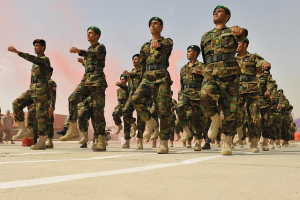
    Afghan National Army soldiers march during the 3rd term graduation oath ceremony at Ghazi Military Training Center in Kabul, Afghanistan, Sept. 6, 2010. During the ceremony 379 non-commissioned officers graduated and joined the Afghan Army. Source: ISAF Media (Flickr)

    Afghan National Army soldiers march during the 3rd term graduation oath ceremony at Ghazi Military Training Center in Kabul, Afghanistan, Sept. 6, 2010. During the ceremony 379 non-commissioned officers graduated and joined the Afghan Army. Source: ISAF Media (Flickr)

    When in late 2005 a team of international financial experts in Kabul put the numbers together on how much the Afghanistan security sector was costing they were astounded by the results. So were the Afghan government and its partners. Running at some $1.3 billion per year, or 23 % of GDP, just over three-quarters of it financed by donors, Afghan security spending (not including counter-narcotics) exceeded domestic revenues by over 500%.

    Simple number crunching put into stark focus the unsustainability of the security sector and the need to look at options for changing the posture of the military and police (the two largest spenders) and bringing costs under control. This analysis did not even touch the international costs of ongoing conflict (such as the NATO-led International Security Assistance Force – ISAF) in the country.

    Such a financial perspective is increasingly being added to emerging practice on internationally driven security sector reform (SSR) with interesting results. One particular aspect that has largely been missing from the international SSR agenda since its beginning in the 1990s has been the nexus between financial resources and security. While general aspirations for affordability are often stressed with regard to SSR, there has been little guidance supporting governments to better understand whether security sector financing is sustainable, let alone efficiently and effectively allocated.

    National budgets are, after all, the most important policy vehicle for articulating and ultimately meeting a country’s priorities within scarce public resources; it is through the budget process that competing priorities are reconciled and implemented. One of the core priorities for many countries is security and justice provision and yet to date there has not been much work on the composition of security sector budgets as well as the processes of how they are planned and managed.

    This is beginning to change for a number of possible reasons, not least that the ‘suits’ responsible for the national purse rather than those ‘in uniform’ are advocating change. A quick overview of a number of recent exercises in conflict-affected African states suggests a number of different contexts in which such scrutiny is being requested.

    Transitions and UN peacekeeping drawdowns: Liberia
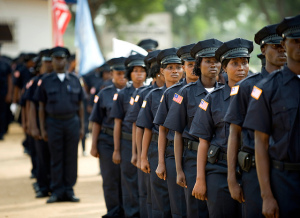
    The thirty-third class of police officers of the Liberian National Police (LNP) participate in a graduation ceremony. Source: Africa Renewal (Flickr)

    Police officers of the Liberian National Police (LNP) participate in a graduation ceremony. Source: Africa Renewal (Flickr)

    In a recent example of United Nations, World Bank and government collaboration, a public expenditure review was undertaken for Liberia in mid-2013 in order to identify the funding requirements necessary for a national security strategy to be put in place in anticipation of the gradual reduction and exit of the UN peacekeeping operation (UNMIL).

    What this immediately revealed was that there was a financing gap between domestic revenues, anticipated foreign assistance and the targets set by the national strategy. In the short term, recommendations focused upon savings through strengthening public financial management systems as well as mobilising additional resources.

    More significantly, the joint review raised questions about the effectiveness of a strategy that relied on the establishment of regional ‘law and order’ hubs which could deploy law enforcement personnel as well as extend the reach of judicial services. Was this the best way to use scarce resources? Were such regional hubs the solution to providing accessible security and justice services to a general public that held in distrust the state and particularly those in uniform? In turn, were there more effective ways to use those scarce resources to address some of the underlying structural causes of grievance and disorder, such as contestation over land and land concessions?

    The debates around those policy tensions and trade-offs continue;  but this was an interesting example of how the money question – whether a proposed security and justice model could be paid for – raised more fundamental questions about the effectiveness and ultimately the purpose of the security and justice system.

    Interestingly, an important side-question was not asked: the affordability of the national army. The review was simply focused on public order and internal security and not on the small (and largely US funded) Armed Forces of Liberia. Indeed, this omission was characteristic of the bifurcated Liberian SSR process, with US (military) and UN (police and justice) pursuing separate programmes since 2004.

    Domestic resource constraints vs existential threats: the Sahel

    Long a focus of international support to national militaries and counter-terrorist capacity, the western Sahel region suffered a major crisis in 2012 with a coup in Mali precipitating the take-over of the country’s north by regional jihadist and local Tuareg and Arab nationalist armed groups.

    As part of the return to ‘normalcy’ and seeking to address historical concerns relating to public mismanagement, the Malian transitional government requested a review of the defence sector in early 2013. This was in part to respond to grievances that had resulted in the coup, particularly relating to reports of an inflated senior officer corps and poor equipping of frontline troops. In turn, donors that had long treated Mali as an ‘aid-darling’ were becoming super sensitive to reports of public sector corruption.
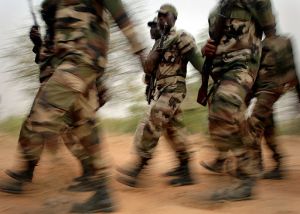
    Nigerien soldiers from the 322nd Parachute Regiment march to a training site during Operation Flintlock 2007. Source: US Navy (Wikipedia)

    Nigerien soldiers from the 322nd Parachute Regiment march to a training site during Operation Flintlock 2007. Source: US Navy (Wikipedia)

    Across the border, Niger, which to date has managed its ‘northern problem’ and the Libyan ‘spillover’ by ways of political accommodation, was also seeking an expanded security sector and additional resources. In so doing, the Nigerien government realised that the quid pro quo was to conduct a review of its security sector.

    Both country reviews were undertaken by the World Bank working on its own; and for its own mandate reasons the Bank reviews were focused exclusively on the public financial management of the sector. This meant that more fundamental policy issues about the effectiveness of the respective militaries and the complementary roles played by key bilateral and multilateral (in Mali’s case) security actors were left aside. However, the reviews did serve to push for more accountable and transparent use of such resources as well as identifying resourcing gaps.

    Management of external financial flows and shaping an emerging security sector: Somalia

    Somalia in many senses confronts all of the challenges outlined above; the newly selected Federal Government (FGS) faces the existential threat posed by the al-Shabab insurgency while also hosting the African Union’s largest peacekeeping force (AMISOM) as well as a number of other onshore and offshore security interventions, such as by US and French forces. At the same time, the FGS is undergoing its own constitutional review process on how it relates to other entities within Somalia on key questions regarding the nature of the state and in particular the very scope, shape and purpose of a formal security and justice system.

    The FGS is keen to take on greater responsibility, expand its remit beyond Mogadishu, and put a variety of external financial flows into the security forces on budget. It is also conscious of the significant resources going to external security providers, such as AMISOM, and would like increasingly to take over the functions of those actors as well as some of their funding.

    For this reason it has turned to the World Bank and the UN Assistance Mission (UNSOM) for support in trying to strengthen public financial management systems, particularly but not exclusively for the Somali National Army and Somali Police Force, as well as to examine some scenarios for the sector and issues of affordability. This review is still ongoing but it is clear that Somalia faces similar questions posed in Kabul about what is a sustainable security sector, and are there alternative ‘cost-effective’ means to reach political settlement with other regional entities in Somalia while tackling an ongoing insurgency.

    Emerging Issues

    It is too early to say whether these recent government requests are turning into a systemic trend; there remain many countries for which such an opening-up of books would be out of the question. However, what this body of work does point to is a number of challenging issues particularly relating to the peace- and state-building agenda.

    Accountability of external support: While many African militaries and security forces are still receiving significant external support, little of this is being formalised within the national budget and in turn discussed with parliaments and civil society. While transparent, accountable and open government is part of the official development discourse, foreign bilateral security arrangements are still kept more often closed and off the books. Foreign governments are not speaking with one voice: foreign assistance is coupled with calls for good-governance that can often be trumped or undermined by bilateral security arrangements.

    Transparency as a process: Budget amounts to policy; it reflects what states actually do and are accountable for. Such reviews are critical entry points for the civilian side of governments to be more empowered in looking at various financing gaps and pose questions about how those gaps can be filled. Security budgets in developed countries often remain opaque and weakly scrutinised, no less than those in the developing world. There is no doubt that security expenditures can remain secret as they touch upon sensitive issues of national security; yet the sector can also harbour serious corruption, off-budget expenditure and unclear procurement practice. Transparency is therefore a bit-by-bit process. Better use of domestic resources could be one prize of greater scrutiny; another could ultimately be greater sharing of data at the regional level in order to build confidence amongst neighbours.

    Revenues, security functions and state-building: Too often, classic SSR approaches can be a Weberian analysis of what a security apparatus should look like in any given country and how external actors can support the establishment of such a system. This is often blind to the actual functions of domestic security actors and their access to resources and exaction of revenues. A political economic inquiry can obtain a better understanding of how security forces raise revenues, from large-scale exploitation of natural resources to illicit taxation, and in turn what the functions of such forces are in practice. A greater understanding of these dynamics enables a clearer policy dialogue around, first, what is affordable in relation to revenues being exacted and, second, what incentives are required to transform those functions into provision of a public good – security.

    Two examples come to mind. At the more micro-level, in 2008, a study on checkpoints in Côte d’Ivoire revealed that the military, gendarmerie and police were raising up to $100 million a year in illicit taxes on local traffic. This study enabled a more open discussion on what steps were needed to clear the checkpoints and remove the burden on commerce and public alike.

    Somaliland Shillings, Hargeisa, 2008. Source: Tristam Sparks (Flickr)

    Somaliland Shillings, Hargeisa, 2008. Source: Tristam Sparks (Flickr)

    The more meta-level example is that of Somaliland in which security sector reform without external support has ‘worked,’ in the sense of providing stability and the conditions for successful democratic transitions of power. Local business and political elites forged a co-dependent coalition in the mid-1990s that allowed sufficient funds (initially some $6m) to pay for the stand-down and demoblisation of the clan militias. To this day some 30-50% of the regular budget is estimated to be payments to these forces; the high price for peace. Analysts have remarked on the way in which domestic revenue (business donations) were utilised to pay off militias (to stand-down and secure stability) that, in turn, no-longer exacted revenues from infrastructure points such as air or seaports. This allowed the government to raise its own revenues (albeit with the largest share of expenditures to pay for the army or demobilised militia) and the business sector to flourish.

    Standards of affordability and effectiveness: ultimately this work asks questions around what is affordable and what is an effective security and justice sector. The former US Secretary for Defense (1961-68, when US military spending averaged over 8% of GDP) and President of the World Bank (1968-81), Robert McNamara, famously posited the idea of an ideal ceiling of 2% of GDP for security. Although that is a standard no longer referred to, the international financial institutions continue to discuss with client governments the size of the public sector in relation to the fiscal framework (revenues vs spending) and, in turn, the sectoral trade-offs such as those between national defence and provision of basic social services such as health or education.

    A more important question is: what is effective security? This relates to a more rigorous management of public finances, greater accountability, transparency and measures against corruption. Yet, it also points to value-for-money performance standards for security and justice providers such as the police. Ultimately, it can potentially pave the way to a more participatory discussion among end-users (citizens) and providers (the state) about how to be cost-effective, which may include sustainable approaches to violence and conflict prevention, including addressing underlying causes of grievance and disorder.

    Afghanistan is now going through another turbulent electoral cycle while donors seek some $3.5 billion to meet the costs of the Afghan army and police – now estimated at over $4 billion per year, or 20% of GDP – as the US and ISAF forces exit by the end of 2014. External security imperatives have superseded questions around affordability and effectiveness: and what is working and what is not. However, a number of African governments have at least started asking the right questions to obtain information to begin to address the challenge of creating affordable and effective security systems for citizens.

    Bernard Harborne is lead of the Violence Prevention Team in the World Bank, having joined in 2004. He has worked for over 20 years on conflict-affected countries for the UN, World Bank, NGOs and the British Government. He has a background in law, including a Masters in International Law from the LSE, and is an adjunct professor at George Washington University. Opinions expressed in this article represent his personal views and not those of the World Bank.


  • Mexico’s Conflicting Migration Policy Goals: National Security and Human Rights

    Mexico’s Conflicting Migration Policy Goals: National Security and Human Rights

    Mexico has rapidly become a major site of transmigration from Central America to the United States, as people move in search of employment opportunities or escape from social violence. This rise in migrant flows from Mexico’s southern border overlaps with problems of control of contraband, organised crime, and the trafficking of drugs and arms. However, the government’s militarised approach to the phenomenon means that the use of force and human rights violations go unresolved and military approaches to preserving public order go unchecked. As long as migration remains a security issue, instead of a developmental and human rights matter, it will not be tackled appropriately. Instead, the government must start to view the matter through a citizen, not national, security lens.

    Read Article →

    Mano Dura: Gang Suppression in El Salvador

    Widespread social exclusion makes El Salvador fertile ground for gang proliferation and, over time, gang members have resorted to greater levels of violence and drug activity. Yet, government approaches have proved spectacularly ineffective: the homicide rate escalated, and gangs have adapted to the climate of repression by toughening their entry requirements, adopting a more conventional look, and using heavier weaponry. Sonja Wolf argues for approaches which focus on prevention and rehabilitation and looks at why such approaches have been continually sidelined.

    Read Article →

  • Learning the Lessons: 11 Years of Drones in Pakistan

    RC_long_logo_small_4webThis article is part of the Remote Control Warfare series, a collaboration with Remote Control, a project of the Network for Social Change hosted by Oxford Research Group. It originally appeared on openDemocracy on 19 June 2015.

    pakistan_tehreek-e-Insaf_protest_against_drones

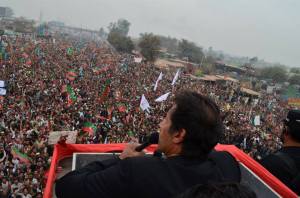
    Imran Khan addressing a crowd at a Pakistan Tehreek-e-Insaf protest against drones, Peshawar, in November 2013. Source: Wikimedia

    Last Wednesday marked 11 years since the first reported US drone strike in Pakistan. Since 2004, the US has launched more than 419 strikes in the Federally Administrated Tribal Areas (FATA) as part of its global war on terror. Whilst much debate has focused on the ethics, legality and civilian costs of this new technology, little attention has been given to the broader repercussions drones have had on Pakistan as a whole and how they have shaped the country in the past decade.

    New research into the impact of drone strikes on terrorist behaviour, published this week, shows that drones are having a far wider and more damaging impact on civilian populations beyond those directly killed in the drone strikes themselves. The report, by Dr Paul Gill (UCL) commissioned by the Remote Control project, analyses data on drone strikes and terrorist attacks in Pakistan between 2004 and 2013 at the monthly, weekly and daily levels, finding that terrorist reprisals following a drone strike are disproportionally more likely to target civilians.

    This is because, although terror groups slow down their activities in the immediate aftermath of a drone strike for basic security reasons, when they do re-emerge the attack that follows will likely be one that doesn’t necessitate the lengthy planning of high value targets, due to the damage done to the terrorist group by a drone strike. The focus instead will be on “softer targets”, i.e. civilians, leading to an increase in fatality rates.  When assessing the human costs of drone warfare it is these indirect victims – those who die in terrorist reprisals – that must be factored in.

    Beyond terror attacks, drones are having a broader and more profound impact on Pakistani society in other ways too. A report last year from Dr Wali Aslam (University of Bath) found that drone strikes, whist pursuing some “high value” targets and decreasing the number of fighters in the tribal areas, has caused militants to relocate to other parts of the country, thus displacing rather than eliminating terrorists.

    In turn, this relocation has brought an increase in radicalisation, violence and crime to the regions of Pakistan where the militants have resettled, bringing increased instability to areas such as the Punjab, Karachi and Kurram Agency. Furthermore, the deeply unpopular nature of drones in Pakistan, caused by the civilian casualties, psychological damage and the infringement of sovereignty they entail, has led to growing anti-American sentiment that has provided an effective recruitment tool for extremists, fuelling rather than minimising radicalisation.

    As the UK and US increasingly rely on drones in their air campaign against Islamic State and as a growing number of states are now developing armed drones (the global export market for drones is predicted to grow nearly three-fold over the next decade), we must learn the lessons of Pakistan.

    Drones, like other forms of remote warfare, may be technologically advanced but in reality they are no more effective at ending conflict than boots on the ground were. Both seek to solve insecurity with a military solution, failing to address the root causes of conflict, or to devise any long-term strategy for what comes next. It is the covert nature of remote control warfare – operating in the shadows with minimal transparency, accountability or oversight – that make this warfare even more concerning.

    The case of Pakistan, after a decade long drone war, shows how the appeal of drones as a “cost free” form of warfare is misguided, failing to take into consideration their long term implications. In Pakistan, drones have not only been an ineffective counter-terrorism strategy but they have also had far reaching, negative repercussions on wider society.  It is these long term consequences – in many cases still largely unknown – that will prove to be the most damaging for any long-term, sustainable resolution to conflict.

    Esther Kersley is the Research and Communications Officer for the Remote Control project. Prior to joining ORG, Esther worked in Berlin for the anti-corruption NGO Transparency International as an editorial and online communications officer. She has a particular interest in counter-terrorism and conflict resolution in the Middle East, having previously worked with the Quilliam Foundation and IPCRI (Israel/Palestine Center for Research and Information), a Jerusalem based think tank.

    Featured Image: Imran Khan addressing a crowd at a Pakistan Tehreek-e-Insaf protest against drones, Peshawar, in November 2013. Source: Wikimedia

  • The Arctic: Hot or Not?

  • Interview – Alex Bellamy

    Alex J. Bellamy is professor of peace and conflict studies at the University of Queensland. His books include Kosovo and International Society (2002), Security Communities and Their Neighbours: Regional Fortresses or Global Integrators? (2004), Understanding Peacekeeping (edited with Paul D. Williams and Stuart Griffin, 2004), International Society and Its Critics (editor, 2004), Just Wars: From Cicero to Iraq (2006), and Fighting Terror: Ethical Dilemmas (2008), and Responsibility to Protect (2009). He serves on the editorial board of Ethics & International Affairs.

    In this interview Professor Bellamy discusses the successes and failures of the Responsibility to Protect and the future of this doctrine.

    Q. The Responsibility to Protect (R2P) is commonly understood to be a global political commitment, endorsed by all Member States of the United Nations at the 2005 World Summit, to prevent genocide, war crimes, ethnic cleansing and crimes against humanity. Since the endorsement of this concept in 2005, how successful do you feel the international community has been in honouring this commitment?

    It all, of course, depends on what we mean by ‘success’. To text for underlying progress, I tend to use three measures:

    1. Are states more or less likely to commit atrocities? Here we’ve seen a steady decline that, of course, predates R2P (the commitment to R2P itself being a manifestation of changing international commitment to norms) – there’s been a blip in the past couple of years owing largely to Syria and South Sudan but the overall trends are still downwards and the ‘norm’ is a much lower rate of atrocities than in any other decade since WWII.
    2. Is the international community more, or less, willing to become engaged when atrocities are committed? For this, I’ve used the simple proxy of whether the UNSC passes a resolution in response to atrocity crimes (my dataset works on a threshold of 5,000 deliberately caused civilian deaths). Here we’ve seen clear progress linked to R2P – in the decade prior to R2P the council responded to around three quarters of all qualifying cases (itself up from two thirds in the 1990s), since 2005 that figure has climbed to 100%. In other words, the Council responds in some way or other to every major case of mass atrocity – that is quite a change from past practice.
    3. When the international community responds, is protection a priority? Here the change is still more noticeable. Even when the UNSC did act in times of mass atrocity, until quite recently protection was not a priority. In only around a quarter of its responses to civil wars in the 1990s was some form of protection specifically mandated. That grew to around a half in the 2000s, but has now climbed to somewhere north of 90% – i.e. Since R2P not only is the UNSC likely to respond to atrocities, it is also likely to foreground protection in that response.

    So, I think the underlying evidence is that R2P has been associated with positive shifts in international behaviour with respect to protection. That doesn’t, of course, mean that all of these responses are effective (in some senses since we are talking only of the world’s hardest and most difficult crises, we should expect a low success rate) – but if R2P is understood as a ‘responsibility to try’ to take measures at reasonable cost to protect civilians from atrocities then we have seen positive overall shifts.

    Q. Looking at a specific case of a response by the international community to a humanitarian crisis, the 2011 intervention in Libya was, at the time, heralded as a successful first true test of the R2P. In this instance, the Security Council authorized an intervention to protect civilians citing the R2P. The intervention may have stopped the massacre of civilians, but since 2011 Libya has experienced serious instability. Do you feel that the Libyan case harmed the R2P norm?

    First, I’d start with the caveat that the use of force is always controversial, whether in the name of R2P or not, and it was always going to be the case that the use of force connected to R2P would prove controversial.  Second, it is important to stress how significant Resolution 1973 was not just for R2P but for the UN Security Council – the first time in its history that it had authorised force against a de jure state for human protection purposes – this is an important precedent of principle. Third, that said, this was never going to be a precedent that would be followed very often – it was caused by a range of contingent factors unlikely to be repeated often.

    I’d agree with your assessment of the campaign itself – the intervention prevented a massacre and shortened the civil war. By doing these things, it undoubtedly saved a lot of lives. We need only look at Syria to see what happens when a country falls into protracted civil war. As unstable as Libya is today, it is better than Syria.  The problems with Libya were twofold – first, the linking of R2P with regime change, which was done for understandable domestic political reasons, muddied the international normative waters. Second, the failure to sustain the peace raised questions about the efficacy of the intervention. On the latter point, it should be stressed that the UN developed plans for a follow-on mission but these were rejected by the Libyan authorities themselves. Certainly, however, more pressure should have been brought to bear to get peacekeepers on the ground.

    As for the longer terms impacts on R2P, the effects were paradoxical. On the one hand, there was significant fallout and criticism of the campaign and the link with regime change. On the other hand and at the same time, the use of R2P has become much less controversial in the UN’s political organs. The UNSC has become much more willing to use R2P post-Libya than it was pre-Libya (in fact, subsequent to 1973, the Council issues two more resolutions on Libya itself that contained R2P) and it has even started writing R2P into mission mandates (UNMISS, MINUSMA). Other organs, such as the Human Rights Council and General Assembly have also become more actively engaged (look, for example, at the UNGA’s resolutions on Syria and DPRK).  So, what’s going on here? I think we need to distinguish R2P from the use of force. The former is, by itself, no longer considered controversial and is now a part of common working practice. The latter – whether it is related to R2P or not – remains controversial. What was controversial about Libya was not the invocation of R2P, but the manner in which force was employed. So we have some additional caution on the latter (though I firmly believe that Syria would have panned out exactly as it did had Libya not happened) – in a context where the bar was already set high – but that hasn’t stymied the progress of R2P short of coercive force.

    Q. Obama has recently said that the biggest mistake of his presidency was the lack of planning for the aftermath of Gaddafi’s ouster in Libya. Obviously, effective exit strategies which allow a transition into peace are extremely difficult things to develop. But, aside from putting more pressure on the Libyan authorities to get peacekeepers on the ground, what work could the international community have done to build peace in Libya?

    That’s a good question, that I’m not sufficiently well qualified to answer I’m afraid, being an expert on neither Libya nor peacebuilding. I would say two things, however. First, we need to be more modest in our expectations of what outsiders can achieve – incremental change is possible, but rapid development and political harmony was always going to be unlikely. Second, though, clearly the Western powers dropped the ball too rapidly and dramatically, and more could have been done to support the new authorities to establish and maintain order and facilitate political dialogue. Greater and more sustained political engagement might have helped produce better results. Also, the international community – through the UN or EU – could have looked at better options for civilian support for the new authorities.

    Q. One of the most notable, and perhaps lamentable, changes to R2P since the 2001  International Commission on Intervention and State Sovereignty report, was the dropping of the ‘Responsibility to Rebuild’ – which focused on peacebuilding and exit strategies. Do you feel that getting this component of R2P back on the agenda might help avoid situations like those witnessed in Libya and, if so, how likely do you feel it would be for the international community to commit to this responsibility?   

    Good question. First, I don’t think that Libya panned out the way it did because of the absence of a responsibility to rebuild – it wasn’t that relevant actors ‘forgot’ about peacebuilding, it was simply that the political commitment, strategy and resources from both sides (Libyan and international) were not present. Second, R2P is not a stand alone principle; it exists within a broader framework of international peace and security. The World Summit may not have included a ‘responsibility to rebuild’ but it did say quite a bit about peacebuilding and established an entirely new architecture within the UN system for it — the Peacebuilding Commission. Last year we had the system wide review of that architecture and there are signs that Member States are quite responsive to, for example, broadening the scope of the Peacebuilding Commission’s work.  In terms of understanding post-intervention Libya, I’d suggest that the best lessons to be learned are those from within this peacebuilding architecture and there does seem to be a sense that the key recommendations stemming from the review have purchase in that regard. So that gets me to the third point, which is about political capital. Since 2005, and especially since 2011, the international community’s deeper consensus on R2P has been prefaced on the precise configuration agreed in 2005. I think there’s no will to consider opening that up to include peacebuilding and doing so would, I think, help neither R2P not the peacebuilding architecture. Much better, I think, to see the two as aligned parts of a common whole agreed in 2005 and to focus on learning the lessons of Libya and reforming peacebuilding as fits that rather than trying to reverse engineer the concepts.

    Q. Concerning the legacy of Libya, there have been some analyses that have argued that the Libyan case may have seriously affected the international community’s capacity to respond in a timely and effective fashion to the Syrian crisis. Do you feel that this is the case?

    Simple answer; no. I think the international response to Syria would have been pretty much the same had Libya not happened.  That’s because the factors actually driving Russian thinking, Western thinking and the positions of relevant regional actors are very much driven by Syrian related concerns and interests that would have been in play irrespective of Libya.

    Q. Looking to the future, what do you see as being the greatest challenges for R2P in the next 5-10 years?

    1. Conceptual challenges – clarifying the relationship between R2P and non-state armed groups and the relationship between the R2P, counter-terrorism and countering violent extremism policy agendas.
    2. Political challenges – the ongoing challenge of persuading states to comply with their obligations under international humanitarian law and also commit the resources and personnel needed to protect populations in need. This will be an ongoing political challenge requiring leadership and involves not just persuading cautious states to get on board but also working with committed states to deepen their engagement.
    3. Practical challenges – a) fine tuning early warning and linking it to good understandings of effective early response, so policymakers can be advised of conditions and options with greater confidence; b) developing evidence based guidance on the steps that different sorts of actors (Int Orgs, states, civil society, private sector etc.) can and ought to take to prevent atrocities; c) developing and implementing better strategies for the protection of people from imminent harm, including better approaches to displacement that puts protection at the fore.
  • Countering Al-Shabaab in Somalia

  • Beyond Privacy: The Costs and Consequences of Mass Surveillance

    Beyond Privacy: The Costs and Consequences of Mass Surveillance

    Last week the new UN privacy chief said UK surveillance was “worse than [George Orwell’s novel] 1984”. In the two years since the Snowden leaks revealed the existence of bulk internet and phone surveillance by US intelligence services and their partners, including the UK, the British government continues to engage in the mass collection of citizens’ communications data.

    Read Article →

    The cooling wars of cyber space in a remote era

    As current discussions highlight the possibility of “major” cyber attacks causing a significant loss of life or large scale destruction, it is becoming harder to determine whether these claims are hype or are in fact justified fears. Esther Kersley, Katherine Tajer and Alberto Muti offer some clarity on the subject by assessing the major issues in cyber security today to help better inform the debate and assess what threats and challenges cyber issues really do pose to international peace and security.

    Read Article →

  • Conflict, Poverty and Marginalisation: The case of Curvaradó and Jiguamiandó (Urabá, Colombia)

    Conflict, Poverty and Marginalisation: The case of Curvaradó and Jiguamiandó (Urabá, Colombia)

    In Colombia there are many regions where poverty and the absence, or weak presence, of the state has facilitated the emergence of violence by armed groups. Among these are the Afro-Colombian communities of the Curvaradó and Jiguamiandó in the Urabá region. Whilst the Colombian government fails to fully develop social development programs (including education, health and infrastructure) and sustainable economic development policies to assist marginalised communities, the people of Curvaradó and Jiguamiandó will remain poor, uneducated, vulnerable, and at risk of lose their territories once again.

    Read Article →

  • Strategic Thinking in a Resource-constrained World


    BZ smallTwo new reports surveying the strategic trends that are likely to shape the next few decades of global politics point very clearly to the prospect of a severely resource-constrained world. Released two days apart, both the new Chatham House report on Resource Futures and the US National Intelligence Council report on Global Trends 2030: Alternative Worlds raise a number of important questions relating to conflict and security.


    According to the Chatham House report,

    The spectre of resource insecurity has come back with a vengeance. The world is undergoing a period of intensified resource stress, driven in part by the scale and speed of demand growth from emerging economies and a decade of tight commodity markets. Poorly designed and short-sighted policies are also making things worse, not better. Whether or not resources are actually running out, the outlook is one of supply disruptions, volatile prices, accelerated environmental degradation and rising political tensions over resource access.

    The report outlines what the authors refer to as volatility being “the new normal.” For this reason “High and fluctuating prices are spurring new waves of resource nationalism and making unilateral and bilateral responses more attractive.” This should be cause for concern, especially in relation to the ways in which the response of governments and other actors to scarcity (or at least perceptions of scarcity) can interact with existing tensions and conflicts between and within communities. As the report highlights, “In addition to efforts to reduce demand at home, governments and other actors have moved to ensure access to affordable resources, reshaping the landscape of international politics. The return to largely protectionist and beggar-thy-neighbour manoeuvres – often in reaction to short-term supply bottlenecks or perceptions of scarcities rather than actual ones – can act as fuel to the fire.”

    As well as mapping the consumption and trade trends across a series of important resources, the report also discusses the impact of external variables such as population growth and climate change. These are “multiple stress factors” which “render countries vulnerable to different types of shocks such as environmental disasters, political unrest, violent conflict or economic crises – increasing both local and systemic risks. Such factors can create new tensions and flashpoints as well as exacerbating existing conflicts and divisions along ethnic and political lines.”

    The report includes a section on resource conflict flashpoints (p. 114) which outlines fifteen different potential flashpoints relating to territorial/economic zone disputes in resource-rich areas, shared water resources and transboundary river systems and resource-related rebellion and insurgency. The report is also linked to an interactive website that maps some of these trends and potential flashpoints.

    The day after this report was released, the US National Intelligence Council released their own on the key trends over the next twenty years that the United States will need to adapt to or try and shape in order to “think and plan for the long term so that negative futures do not occur and positive ones have a better chance of unfolding.”

    Among other so-called mega trends such as urbanisation and changing demographics, the report echoes the Chatham House research by pointing to an increasingly complex situation in terms of global resources. The report argues that,

    “We are not necessarily headed into a world of scarcities, but policymakers and their private sector partners will need to be proactive to avoid such a future. Many countries probably won’t have the wherewithal to avoid food and water shortages without massive help from outside. Tackling problems pertaining to one commodity won’t be possible without affecting supply and demand for the others.”

    The key trend or ‘tectonic shift’ as the report calls it is that “demand for food is expected to rise at least 35 percent by 2030 while demand for water is expected to rise by 40 percent. Nearly half of the world’s population will live in areas experiencing severe water stress. Fragile states in Africa and the Middle East are most at risk of experiencing food and water shortages, but China and India are also vulnerable.”

    While this may lead some towards overly pessimistic conclusions about a world defined by instability, human insecurity and geopolitical tensions, it is refreshing to see the NIC emphasising the importance of how the US can respond now. In his forward, the Council’s Chairman Christopher Kojm states that “We are at a critical juncture in human history, which could lead to widely contrasting futures. It is our contention that the future is not set in stone, but is malleable, the result of an interplay among megatrends, game-changers and, above all, human agency.” It is worth noting the deliberate use of the phrase ‘alternative worlds’ in the report.

    While some degree of adaptation to these structural trends mapped out by both Chatham House and the National Intelligence Council will undoubtedly be necessary, the importance of both of these reports is that they remind us of the need for clear and far-sighted thinking on policy responses now. The worst case scenarios that these reports discuss are not inevitable and risks can be mitigated. National security policymakers will do well to study the scenarios outlined in these two impressive reports and to try and understand the drivers and ‘tipping points’ that lead to certain pathways. Both reports offer prescriptions for current decision makers (the Chatham House recommendations on ‘targeted resource dialogues’ and ‘coalitions of the committed’ are particularly worthwhile). While volatility and uncertainty might be the ‘new normal’ in global resource politics, one thing is entirely certain – inaction and ‘business-as-usual’ when facing “a critical juncture in human history” is a recipe for disaster.

    Ben Zala is a Lecturer in International Politics at the University of Leicester.

    Image source: Stayraw

  • The Environment and Conflict in 2016: A Year in Review