Blog

  • Rwanda’s Gacaca Courts: Vengeance Through Law

    The Gacaca courts were set up in the aftermath of the Rwandan genocide to try and help Rwandans live together in peace. But research suggests that this system has been used as a tool for vengeance, and political and economic gain. 

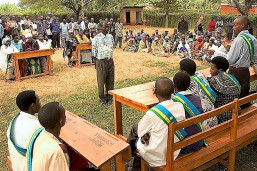
    In the aftermath of the 1994 Rwandan genocide, the Rwandan Patriotic Front (RPF) government was faced with the task of bringing justice and reconciliation to a divided and devastated country. Gacaca, meaning “justice amongst the grass”, a traditional justice system once used to try local disputes between neighbours, was restored to relieve the overwhelmed prison system.

    Initially, it was well received. For those accused of genocide crimes, it was a long awaited step towards justice, an opportunity for the truth to be heard and them to be judged (see Tertsakian 2008: 376).  For the survivors, it meant that they would be able to tell their story and have justice for their loved ones.

    Between 2001 and 2012, gacaca processed nearly two million cases.  Most, if not all have involved Hutu as defendants. Gacaca was set up to try only genocide crimes. Crimes committed by RPF and out of revenge were excluded from the mandate. Waldorf notes that:

    Early on Penal Reform International warned that the implementation of gacaca was emphasizing legalistic retribution over socio-political reconciliation.  Since then, gacaca has become increasingly retributive, both in design and practice

    As a result, the legal system is perceived as being used against Hutu to not only criminalize them, but to obtain their wealth and resources. This paper examines the ways in which gacaca has been used as a tool for vengeance and to serve political or economic interests.

    The misuse of gacaca

    Beginning in March 2008, I carried out ethnographic research in Gisenyi and Cyangugu Rwanda as well as Goma and Bukavu Democratic Republic of the Congo (DRC). My research has emphasised that Hutu participants did not outright reject gacaca, rather they rejected how the system was being misused, as Zach, a Hutu participant, argued

    Gacaca is good idea, but those who work in the government are bad. The rules are written in a book but they are not obeyed. …Gacaca would be very good, if the government didn’t influence the decisions.  But this is not the case; judges are influenced by soldiers, genocide survivors and others.

    According to another Hutu participant, Huey:

    Some Hutu begin a business and the government will stop them.  There are many example of this.  One man had a very successful business of selling materials for repairing cars.  However, people took him to gacaca because he had lots of money.  He gave them money even though he wasn’t guilty.  He gave them lots of money.  Now he had to change the way he conducts business.  He doesn’t like to show the materials he has, because he’s scared that he will get dragged back to gacaca.

    Alphonse, another Hutu participant, agreed “They (the government) like to charge rich Hutu. When they don’t find anything, they take that Hutu to a different district and charge him with the same crimes there.” Robert was a Hutu participant arrested for genocide crimes in 1997 and for ‘genocide ideology’ in 2008. He believes the underlining cause for both arrests centred on property disputes:

    I was accused of killing my neighbour by his brother.  During the genocide, my neighbour was caught at a roadblock.  I explained to the men there that this man was my brother, but he didn’t have his identity card to prove it.  They told me they wouldn’t kill him, but to find some way to prove his identity.  I went to the District Office and paid for an identity card that said my neighbour was Hutu and my brother.  It was a lot of money. They released my neighbour, who fled to Congo.  When he arrived at the border, the Interahamwe killed him.  I fled with my family to Congo after the genocide.  When I returned, I was arrested on genocide crimes for this man’s death.  I had spent years in prison when the formal courts found me innocent.  I told them everything and they found that my neighbour’s brother had lied. Next the brother brought me in front of gacaca for the same crimes [killing his brother]. The gacaca judges were confused as to why this case was in front of them.  They agreed with the previous ruling and I was released.  [Why was your neighbour’s brother going to all these lengths to charge you?] Because, while I was in Congo, my neighbours had moved into my house and did not want to give it back.  When I returned, I reclaimed my house, but it was stripped of all windows and doors.  Two days later I was arrested for the death of his brother.

    Robert was in fact lucky. According to Human Rights Watch (HRW), Rwandan law protects an individual from double jeopardy. However, the practice has been allowed due to a loophole in the 2004 Gacaca law. HRW reported a case that was nearly identical to Robert’s, where a man was cleared by the formal courts and then given a thirty-year sentence in gacaca. He was released upon a successful appeal. In another case, in the district of Huye, a gacaca judge told how there were two cases where the men were acquitted in conventional courts, but convicted with lengthy prison sentences through gacaca (ibid).

    Coercion within gacaca
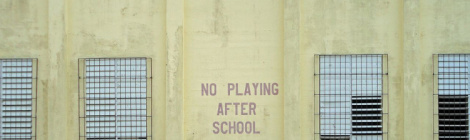
    gacaca

    Image credit: Elisa Finocchiaro/Flickr.

    According to Douglas, a Hutu participant, who was also a RPF member and gacaca official, guilt and innocence are often determined by the government. He told me “For those Hutu who are rich, the decision is always made before he is charged, before the judges reach a decision.” The involvement of the government became evident when I was allowed to attend a gacaca proceeding in Douglas’s jurisdiction.

    The accused was a former leader, who had been convicted by the formal courts of killing someone during the genocide. Upon appeal to the Supreme Court, the man’s conviction was overturned. He was finally released from prison and freed for only one night, when the police arrested him again. People from surrounding areas had accused him of killing and stealing a motorcycle during the genocide. However, some of those murder charges were the same accusations that the Supreme Court had previously overturned.

    Douglas explained that a genocide survivors’ organisation had initiated a campaign to mobilise survivors to accuse those who were ‘guilty’ of genocide crimes. However, the organisation and gacaca officials were unable to find anyone to accuse this particular man. As a result, the trial was cancelled and the case was postponed for a month. I asked Douglas if this was a form of coercion:

    Oh for sure, I’ve already been contacted. …I was told that I have to convince the judges and that we must charge this former leader and find him guilty.  We have to do this.  This is a heavy burden… As a team, we say that he is guilty. But in private we know this prisoner is innocent, we have no choice.  That prisoner was my neighbour.  I had seen everything that happened.  A former local leader took him to the market, where those Tutsi were.  He did nothing! He didn’t kill or hurt anybody!

    Genocide ideology, a tool for vengeance

    In all likelihood the ending of gacaca will not offset the misuse of the legal system as a tool for vengeance. In 2008, the Rwandan government passed Law No. 18/2008 that defined genocide ideology as:

    an aggregate of thoughts characterized by conduct, speeches, document and other acts aiming at exterminating or inciting others to exterminate people basing on ethnic group, origin, nationality, region, colour, physical appearance, sex, language, religion or political opinion, committed in normal periods or during war.

    Human rights organisations have been concerned with the imprisonment of Rwandans on vague accusations of ‘genocide ideology.’ Amnesty International argues that ‘genocide ideology’ legislation, like gacaca, ‘is compounded by the reality and perception that most accused come from one ethnic group.’  Furthermore, it is not uncommon for individuals to use ‘genocide ideology’ laws for personal gain.

    In fact, Amnesty was only able to find one case where a Hutu attempted to bring ‘genocide ideology’ charges against a Tutsi. The individual was offended after a Tutsi neighbour had called him a Hutu. The case was dropped by the prosecution. Robert believed that in connection with gacaca, ‘genocide ideology’ becomes a weapon that is used to discriminate and imprison innocent Hutu:

    Gacaca is used for stopping those Hutu who are rising up in society.  It allows Tutsi to take their property.  It helps to promote young Tutsi to occupy jobs.  A Tutsi can claim genocide ideology as a way of forcing a Hutu out of their post. It is like a business, anyone who gets into an argument at work can be accused of genocide ideology. Then they get put into prison.  Just ask why charges of genocide ideology only exist against Hutu, but Tutsi have genocide ideology as well.

    In 2008, Robert was arrested on allegations of ‘genocide ideology’ made by the same man who accused him of murder. Robert felt that having failed to obtain his property through accusations of genocide crimes, the man now turned to ‘genocide ideology.’

    I decided to rebuild a granary, after a few days the community leader came to me and told me that I must destroy the granary, because it was in the road.  I told him he didn’t have the authority… My neighbours sent that official, the same ones who had me arrested before, those that accused me before. They called the police and told them I had insulted them [a way of saying that a racial/ethnic epithet was used].  It was planned! The leader had told them that I had beaten him.  I am an old man; the leader is a young man. I cannot beat him!  When I got to prison, they charged me with crimes of genocide ideology and opposition to the government’s programmes. My wife’s brother came to intervene on my behalf.  He told me that I must be quiet; because they have many things they could charge me with.  The Police Commissioner also told me to go home and keep quiet.  Now I’m quiet.

    The other man involved was a neighbour, with whom Robert was having a boundary dispute with.  According to Robert, the men believe that if Robert returned to prison, he wouldn’t be able to pay back a bank loan and his house would be repossessed, solving both problems. Robert’s testimony highlights how the misuse of the legal system through gacaca and genocide ideology presents challenges to reconciliation. While, at the same time, demonstrating that there is a desire and a demand for it, he states,

    Those Tutsi were looking for any reason to condemn me to prison.  I didn’t do anything.  If I say anything, they will get me again and put me in prison. Everyday they accuse me.  Their (genocide survivors) agenda is like revenge there was no reason for them to do what they did.   They see me and their hearts accuse themselves.  When I was released (the first time) they were not happy to see me…In 2002, after I was released, I had electricity and water and my neighbours didn’t.  They came to me asking me for water.  They say, “This Hutu has TV, water, we have nothing”.  They think of me as being rich.  They say, “this Hutu, who has all these things, how can he get these things”? It’s a major reason why they want to punish me.  I put myself in Allah’s hands. …The best thing for all Rwandans would be to share power and forget.  To work for the nation, forget about the divisions or favouritism and use the same Arusha Accords as a power sharing agreement.  Only then can Rwanda be one house with one parent, to care for all children.

    Conclusion

    Much has been written and debated about whether or not gacaca has achieved reconciliation in Rwanda. While most would agree and recognize that gacaca was “one of the most ambitious transitional justice experiments in history”, it was also developed and carried out within the context of “deep political and ethnic division, fear, suspicion, intimidation and corruption” (see Tertsakian 2008: 362). The consequences of this is that gacaca was never going to be able to bring about reconciliation for all Rwandan, but rather contributed further wounds of mistrust and division.

    Larissa R. Begley received her PhD in Social Anthropology from the University of Sussex. She is currently a lecturer in African and African American Studies at Iowa State University. Her research focuses on understanding the implication of genocide ideology laws as a form of state violence in Rwanda.
  • El Salvador’s gang truce: a lost opportunity?

    Belize: challenges and contradictions in gang policy

    Like its neighbours in the northern triangle (El Salvador, Honduras and Guatemala), Belize has a high murder rate that is closely connected to the strong presence of gangs. But the character of gang activity in Belize is quite different from its Central American neighbours. Belize has pioneered some innovative solutions to the problem it is facing. But it will need to overcome the challenges of internal resistance and an acute lack of resources in order to address the political, economic and social issues that marginalise Belize’s large youth population.

    Read Article →

    The Costs of Security Sector Reform: Questions of Affordability and Purpose

    In considering security sector reform, questions of affordability have often been subordinated to questions of effectiveness and expediency. A recent series of reviews of security expenditures by the World Bank and other actors in Liberia, Mali, Niger and Somalia has highlighted several emerging issues around the (re)construction of security institutions in fragile and conflict-affected states.

    Read Article →

    Militarised Public Security in Latin America in Venezuela

    Across Latin America, governments are sending their militaries into the streets to act as de facto police forces in the face of disproportionally high crime and violence rates. This trend has been going on for several years, but has accelerated in 2013. With the move to deploy over 40,000 troops for citizen security in Venezuela, President Nicolás Maduro joined a growing list of leaders throughout the region that have relied on their militaries to carry out police duties. In the first of our two-part discussion ‘Countering Militarisation of Public Security in Latin America’, Sarah Kinosian discusses the conditions that are causing the trend to thrive.

    Read Article →

    Countering Militarised Public Security in Latin America: Lessons from Nicaragua

    Facing a myriad of public security challenges that have provoked some of the highest indices of crime and violence in the world, authorities in Central America have followed a variety of different responses, ranging from repressive and reactive policies to grass roots prevention. Of these approaches, the Nicaraguan National Police’s Proactive Community Policing model stands out due to the results it has achieved. In the second of our two-part discussion, ‘Countering Militarisation of Public Security in Latin America’, Matt Budd explores the lessons that Latin American countries can extract from Nicaragua’s unique approach to public security.

    Read Article →

  • ‘Petropolitics’ and the price of freedom

    ‘Petropolitics’ and the price of freedom

    “As the price of oil goes down, the pace of freedom goes up… As the price of oil goes up, the pace of freedom goes down…” So says New York Times columnist Thomas Friedman, who argues that the first law of ‘petropolitics’ is that the price of oil and the pace of freedom are inversely correlated in countries “totally dependent on oil” for economic growth. However, the correlation between recent oil price spikes and anti-authoritarian action – particularly in the Arab Spring – challenges this assessment. But if this pattern of change is to continue, Western states must curb their hypocritical dependence on authoritarian oil-exporting governments by developing more sustainable sources of energy.

    Read Article →

  • The Resilience of the Lord’s Resistance Army

    The Lord’s Resistance Army is seriously depleted as a fighting force, but it still continues to exist as an armed group. This resilience is driven by several key factors.  

    The Lord’s Resistance Army (LRA) has carved a path of violence and disorder throughout East and Central Africa for nearly three decades. Led by Joseph Kony, the rebel group has directly and indirectly killed more than 100,000 civilians, has abducted upwards of 66,000 children, and has displaced hundreds of thousands more across five countries. While formidable in the past, the LRA is now a threadbare non-threat from a conventional military standpoint. With the group’s numbers at less than 200 (down from at least 5,000 active fighters in the 1990s), attacks and abductions are steadily trending downwards.

    Yet the LRA has also proven to be distinctly resilient, surviving as a collection of semi-autonomous units in sparsely populated peripheries that put up no resistance. Nevertheless, LRA fighters still pose a tangible threat as they loot and harass civilians, while Kony evades detection in Sudan’s Kafia Kinji region. While many observers describe the group’s current behavior as “survival mode,” its complex history shows this to be its modal pattern of organization and behavior based on an on-going ability of the group to adapt to shifts in its politico-military environment through distinct organizational endowments and resource acquisition strategies.

    Understanding LRA Resilience

    Most of the prevailing literature on the LRA has provided key insights into its history, organization, and behavior. However, the research that has focused on the group’s motives and the drivers of its violence has not addressed the distinct question of its resilience. The LRA’s resilience comes down to its organizational structure and shrewd resource strategies that have developed within autonomous bush sanctuaries and vis-à-vis the group’s wider political environment.

    Its organizational structure is based on a distinct combination of two factors. First, LRA recruitment and retention strategies relied on Acholi beliefs in spiritual and cultural symbols, such as viewing Kony as a medium for the “holy spirit,” and the common use of rituals. Such beliefs and practices, undergirded by violence, helped socialize Acholi youths familiar with them into fighters. Second, a more traditional military hierarchy was built around an initial committed core, which formed the basis for a flexible, decentralized structure that, while slowly degrading over time, has remained remarkably sturdy. In addition, the group’s resource acquisition strategies have adapted to periods of both abundance and scarcity. This configuration of factors has remained more-or-less intact for more than three decades as the LRA has interacted with regional geopolitical shifts and in the face of multiple challenges of maintaining an insurgency.

    LRA Resilience Over Three Phases

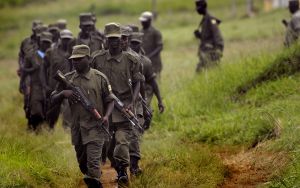
    Uganda soldiers part of the 2008–09 Garamba offensive against LRA. Image credit: Sgt. Jeremy T. Lock/Wikimedia.

    The LRA grew directly from a homegrown Ugandan People’s Democratic Army (UPDA), made up from the dominant Acholi faction of the national army overthrown by the National Resistance Army (NRA) in 1986. Led by Bazilio Olara-Okello and other military strongmen, the UPDA rebellion ended with the Pece Peace Accord of 1988. Yet senior officer Odong Latek and intransigent junior officers from the former military remained in the bush fearing criminal punishment. While this rump of the UPDA retained a military structure, it began to rely on alternative strategies for mobilization. During the UPDA’s war, head of the Holy Spirit Movement Alice Lakwena and Joseph Kony developed factions that attracted fighters with an appeal to the salvation for the Acholi people through military victory, using unorthodox military practices (e.g. believing shea butter would make fighters bullet-proof and that rocks would explode as hand grenades). Following the 1987 defeat of Lakwena’s Holy Spirit Mobile Forces (HSMF), Kony’s faction became dominant. By late 1988, Latek’s more conventional force merged with the sizable “cosmological” faction controlled by Kony, signaling the rise of his absolutist vision of Acholi society that sought to purify through violence anyone deemed government loyalists. This vision, which drew heavily on elements of elements of Acholi spiritual identity, quickly became an organizing principle and a source of resilience.

    With Latek killed in 1989, Kony asserted authority, rebranding the rebellion several times until it became the LRA in September 1993. Here the group established its organizational structure, with “Control Altar” directing its operational brigades – named Gilva, Sinia, Trinkle, and Stockree – which remained intact for years and adapted to changes in manpower and resource availability. Yet the decline of the LRA’s first phase began as the Ugandan state expanded into northern Uganda. The counterinsurgency campaign Operation North weakened the LRA while militarizing Acholiland. The government also expanded the Resistance Council (RC) administrative system while recruiting Local Defence Units (LDUs) as the RC’s coercive arm. However, when military action failed to eliminate the group, peace talks began in late 1993. These talks broke down in early 1994 amidst boycotts and accusations of dishonesty. Tired of the LRA’s mounting demands, President Museveni gave the group seven days to surrender or face a military solution. Meanwhile, Kony had used the talks to conceal clandestine negotiations with Sudanese intelligence. Following Museveni’s ultimatum, the LRA withdrew into southern Sudanese garrison towns for reorganization and training. By February 18th 1994, the group re-emerged heavily armed and newly equipped.

    Thus began the LRA’s second phase in the mid-1990s when it became part of a proxy war as the Sudanese government provided it with weapons and military training to fight the Sudan People’s Liberation Army and territorial sanctuaries from which to attack Uganda. The LRA’s experience in southern Sudan consolidated the group’s structure, hardened its fighters (largely abducted Acholi youth as young as 12), and taught them how to survive in borderlands for years of operations that kept northern Uganda in almost permanent humanitarian crisis. Yet, while Sudanese support was a decisive factor in the LRA’s military strength and the intensification of the conflict, it was not always seamless. Kony’s priorities in Uganda often put him at odds with Khartoum and this led to periodic ruptures in the LRA’s resource pipeline, and the group was often expected to fend for itself in terms of day-to-day survival. As such, the LRA developed a diversified strategy of resource acquisition – maintaining military stockpiles while creating self-sustaining agrarian communities. These experiences with intermittent access to resources promoted the LRA’s self-sufficiency and resilience.

    The decline of this period began with the December 1999 Nairobi Agreement, which committed Sudan and Uganda to end their proxy war. Attacks in northern Uganda declined, but the LRA remained in southern Sudan. At times, the group received Sudanese support. But Khartoum signaled its commitment to push the LRA from its territory in early 2002 when it authorized the UPDF to launch Operation Iron Fist, designed to dislodge the LRA from its Sudanese bush camps. While Iron Fist delivered some tactical successes, it did not deliver the desired knockout blow to the LRA. Instead, in 2003 the group re-entered Uganda and started a fresh conflict characterized by high profile violence and a humanitarian crisis that the Ugandan government largely outsourced to international aid agencies. The 2005 Comprehensive Peace Agreement (CPA) ended the civil war in Sudan and ejected the LRA while a revitalized UPDF blocked the group’s re-entry into Uganda.

    From 2005, the LRA shifted into its third phase, best described as roving banditry. Facing military threats and the geopolitical closure of northern Uganda and southern Sudan, the group shifted to DRC’s Garamba National Park. For the following two years, the Juba peace process allowed the LRA to regroup while coalescing more tightly around Kony’s security. During this period, there was a relative lull in LRA violence, limited abductions, and the suspension in abductee training. Yet while support from Khartoum had ended, the LRA’s military capacity remained intact. Juba ultimately collapsed in 2008 due to ceasefire violations, walkouts, the LRA’s refusal to gather in the assembly areas, and Kony’s repeated failure to sign the accord’s final documents of the accord. The LRA soon resumed violence in DRC as the UPDF led Operation Lightening Thunder against Kony’s Garamba hideout. Intelligence failures led to an unsuccessful operation, and UPDF ground troops arrived at an empty camp. Shortly thereafter, the LRA unleashed a series of reprisal killings against civilians.

    The LRA’s sanctuaries in DRC, CAR, and Sudan have provided permissive conditions for survival – few state institutions and a new set of resources. As such, the group has since engaged its resilience strategies in two key ways. First, the LRA has managed to maintain its hierarchy despite the outflow senior commanders, extended periods of geographical separation, and sporadic communication between units, which are expected to act independently and fend for themselves. Although this organizational structure is decentralized, core members still carry out Kony’s long-term strategic orders while maintaining an explicit LRA identity. Second, while looting remains a way of obtaining resources, the LRA has become a small player in regional illicit networks in natural resources, particularly ivory, diamonds, and gold. The group’s renewed informal relationship with Sudanese officials in the Kafia Kinji border region shelters Kony and his inner retinue and provides markets for looted items and commodities.

    Conclusion

    In sum, the LRA has survived by virtue of its organizational cohesion, resource use, and the ability to read its political terrain in order to exploit regions without state structures. However, such strategies may not be sufficient to sustain the LRA indefinitely. The Ugandan-led Regional Task Force (RTF) has killed and captured senior commanders from the battlefield and increased fighter defections. To be sure, the hunt for the LRA has been hamstrung by logistical and political difficulties. Above all, RTF operations are currently at risk of losing their logistical support from the U.S. Special Forces, which have larger consequences for regional peace and security in central and eastern Africa.

    Christopher Day is an Associate Professor at the College of Charleston. He joined the Department of Political Science in August 2012. His teaching and research interests are in Comparative Politics, with a particular emphasis on African politics, political violence, and civil wars. His research interests extend to international security, counterinsurgency, proxy warfare, and the institutional role of different armed state actors in Africa. A former disaster relief worker with Médécins Sans Frontières, he is also interested in humanitarian affairs. He offers courses on the Politics of Africa, the Model African Union, Global Political Theory, and World Politics.

  • The Environment and Conflict in 2016: A Year in Review

    DU-turn? The changing political environment around toxic munitions

    Is the US backpedalling on its use of depleted uranium (DU) rounds? There are indications that the use of these highly toxic munitions could increasingly be a political liability for the US, with countries affected by DU, like Iraq, other UN Member States, and populations in contaminated areas all expressing concerns over its use and impact. But stigmatisation, although important, is not enough on its own – in order to make sustained progress on accountability and in reducing civilian harm, a broader framework that addresses all toxic remnants of war is needed.

    Read Article →

  • Learning the Lessons: 11 Years of Drones in Pakistan

    Nuclear Weapons: From Comprehensive Test Ban to Disarmament

    Despite not yet entering into force, the 1996 Comprehensive Test Ban Treaty has succeeded in almost eliminating nuclear weapons testing and in establishing a robust international monitoring and verification system. A breakthrough in its ratification by the few hold-out states could have important positive repercussions for the Nuclear Non-Proliferation Treaty or nuclear disarmament in the Middle East.

    Read Article →

    10 years of US Drone Strikes in Pakistan – What Impact Has it Had?

    This week marks 10 years since the first reported US drone strike in Pakistan. It has also seen the resumption of US drone strikes in the country following a five-month pause. Considering the length of time the CIA-led programme has been running, a number of questions deserve consideration: namely, how effective has the decade long covert drone programme been in Pakistan and what impact have drones had on wider Pakistani society? As the military technology for remote-control warfare spreads, there is a need to question whether drones provide significant tactical advantage or whether their proliferation could lead to greater long-term global insecurity.

    Read Article →

    US Drone Strikes in Pakistan: ineffective and illegitimate

    Strikes by unmanned combat air vehicles, or armed drones, have become the tactic of choice in US counterterrorism efforts in Yemen, Somalia and, the topic of current controversy, Pakistan. The lack of transparency, dubious effectiveness, civilian casualties and negative consequences for US national security being highlighted by current debate means that Washington needs to re-evaluate its approach.

    Read Article →

    Can the Nuclear Non-Proliferation Treaty outrun its double standard forever?

    The recent walkout by Egyptian negotiators at UN talks have demonstrated that, like a building with rotten foundations, the nuclear non-proliferation regime is far less stable than many believe it to be. Egypt’s actions make clear that anything less than a regime specifically geared towards addressing the reasons why some states seek nuclear weapons is a regime existing on borrowed time.

    Read Article →

  • Fatal Attraction: The Lure of Islamic State

  • Rising Golden Dawn: Inside Greece’s Neo-Nazi Party

  • Water Security in South Africa: The need to build social and ecological resilience

    Water Security in South Africa: The need to build social and ecological resilience

    Tackling South African water insecurity will require addressing the technical deficiencies, governance gaps and social inequality that are currently having a dangerous and environmentally devastating impact. The links between environmental health and socio-political stability are clear in South Africa, where there has been an exponential increase in violent protests over poor or privatized service delivery, social marginalization, and unequal access to water. South Africa must act to solidify the links between resilient societies and resilient ecosystems.

    Read Article →

    Environmental security in the Arctic: the ‘Great Game’ vs. sustainable security

    Arctic security remains wedded to traditional, state-centric military threats despite the fact that the threat of outright conflict is as remote as the farthest reaches of the Arctic region itself. These approaches are predictable, but they will contribute little to alleviating the complex, interrelated, and underlying drivers of insecurity in the Arctic region. Cameron Harrington argues that if our understanding of both Arctic security and the Arctic environment continues to be reduced to the international scramble for untapped resources and for newly opened “shipping lanes”, it is unlikely that the hugely alarming and damaging environmental effects of climate change will ever be truly overcome.

    Read Article →

  • Resilience and Hope: Youth and Peacebuilding in Palestine

    Today’s younger generations of Palestinians desperately need to become more engaged in community peacebuilding activities to end the division of Palestinian society.

    The engagement of the younger generation in civil society work to promote peacebuilding concepts and practices at both grassroots and political levels is necessary for restoring order and security in societies divided by conflict and violence. This is particularly true of Gaza in Palestine where the inhabitants live in an environment where there is violence, extreme poverty and a lack of freedom.

    Palestinian youth and civil society face many challenges related to the harsh circumstances imposed by a lack of peace, security and economic development since the failure of the so called ‘Peace Process’ in 2000 between the Palestine Liberation Organization (PLO) and Israel. There have, however, been a variety of projects and programmes installed to raise youth awareness and the importance of civil society values and practices to achieve human rights, peacebuilding and good governance that help bring hope to a young generation, despite some of the local cynicism.

    Cynicism towards youth

    I always remember the cynical questions raised by many Palestinian citizens while engaging in civil society activities at different levels: “What kind of civil society under occupation are you talking about?” “How will civil society promote and advocate the values of peacebuilding under a territory experiencing foreign occupation?” There are still some Palestinian intellectuals, leaders and activists who do not believe in education for peacebuilding in a country under occupation, but they believe strongly in community peacebuilding to restore the order and security of their own society, after years of division and the failure of the ‘peace process’.

    They also go beyond just cynicism and move into absolute pessimism and defeatism by asking: “How can empowering youth in peacebuilding be effective, while they still suffer from the violence under Israeli occupation and a lack of freedom?” “How will civil society organisations promote and persuade youth to become engaged in activities while an overwhelming majority are poor, jobless and losing hope in the future?”

    An example is often raised that during the last five years, several young people committed suicide in the Gaza Strip, owing to the harsh economic and social circumstances. This society, however, has little experience of suicide, as it is known for its spirit of religious education and social solidarity, which have always prevailed and are considered to be the highest in the region.

    Cynics believe that talking about the empowerment of youth involvement in peacebuilding activities in Gaza is a matter of ‘idealism’ and ‘luxury’, a waste of resources and time because they see such pursuits as being only achievable through  concurrently obtaining freedom and national independence in a viable Palestinian state. Cynics often point out that there were many peacebuilding activities implemented in the Green Line between 1995 and 2000.

    Many Palestinian citizens from the various health, NGOs and environmental sector participated at capacity building development courses inside the Green Line. They enjoyed education, trips and nice food, but not sustained peace or security, as the main cause of the problems, the need to establish of a Palestinian state, had not yet been solved. These activities passed without any glimpse of hope or peace after the failure of the ‘peace process’ that led to the breakout of various cycles of violence including the latest war in the Gaza Strip in the summer of 2014 and changed both the context and style of life, after massive destruction.

    Life Style

    Image credit: UN Photo/Flickr.

    The Palestinian people are used to the daily life style of suffering and the absence of human security; they lost their top priority of securing their own basic human, needs during the failure of the 2000 ‘peace process’ and the collective punishment policies exercised by the occupation. They have lost their own economic, food, health, environmental, personal, community, political and human security. In 1994, the UNDP defined human security, which is achieved when people can exercise their choices safely and freely, and when they can be relatively confident that the opportunities they have today will not be entirely lost tomorrow.

    The Gazan people cannot plan their own day without any interruption, owing to the circumstances imposed by a lack of electricity, pollution and a devastated economy. As Mohammed Srour, a field researcher at a human rights organisation in Gaza says

    “The Palestinian people now busy with their own daily affairs, living without electricity and facing the entire closure on the strip and the invasion of pollution of their environment and beaches, owing to the lack of electricity. The citizens have no place to go in Gaza to escape the heat of the summer because of the lack of electricity. The sewage flows into the sea as the pumps and wasting stations do not work without electricity. The beaches are fully polluted and people cannot enjoy swimming in the sea to escape from the extreme heat any more in most coastal areas”.

    Gaza’s economy has actually been virtually stagnant for the past ten years, with an average annual real GDP growth rate over the decade not exceeding 1.44%, while Gaza’s population has grown by 38.4% over the same period.

    Today’s younger generations of Palestinians desperately need to become more engaged in community peacebuilding activities to end the division of Palestinian society. But the dire circumstances have deepened the wounds of Gazan society and made the life of the younger generation almost unbearable and impossible. Consequently, many young Palestinians have decided to leave rather than stay and help build peace.

    The Brain Drain of Palestinian Youth

    Many young minds have already left Palestine to find a new environment and hope. More than 21 young people who attempted to find their way to Europe lost their lives in the Mediterranean in 2014 when one of their boats was wrecked and their fate is still unknown to this day. However, the rest of the youth who could not leave after the full closure of the tunnels between the Gaza Strip and Egypt spend their time navigating social media and the internet.

    They enjoy their chats which help them escape from the harsh politics and economic realities, attempting to watch any developments posted by other fellows or friends online. Facebook, in particular, is considered their own ideal ‘city’ of information and it is a way of ‘killing the time’, as many young people are always informing me when I have a conversation with them. They have lost hope in local politicians, political groups, the international community and civil society organisations in helping them to change their circumstances. There are many who accuse these actors of lying, trading off and using the suffering of the Gazans to increase their power, wealth and business. But not all have abandoned hope.

    Resilience and Hope

    Despite the seemingly dire straits of life, the youths of Palestine are still resilient enough to try change the de facto situation, by engaging in community initiatives. They have, for example, on different occasions, engaged in non-violent and peaceful protests to contribute to the ending of the circumstances in the West Bank and the Gaza Strip. For example, the youth march movement in 2012 during ‘the Arab Spring’ to end the Palestinian division. After 2014 war in Gaza, they also participated actively, in non-violent activities to end the siege in the Gaza Strip by protesting close to the ‘buffer zone’ or in front of the ‘security fence’ with Israel in the Gaza Strip.

    Now, in 2017, the Palestinian youth, across their homeland, have seized the initiative again to protest peacefully against the closure of Al Aqsa. They are still seeking a better future and attempting to find any opportunity for hope and change. They attempt to find out about the latest leaks of reconciliation between Hamas and a Fatah wing in the Gaza Strip to end the conflict between the two sides that has divided the Palestinian house. If reconciliation takes place between the two sides, it will contribute to changing the social and political circumstances of the entire society and of youth in particular.

    In addition to these political developments, there have been a number of community activities to help keep youth hopeful for a better future. For example, the Gaza youth UNRWA Football team that won the Norway Cup last year continued preparation and already left the Strip for Denmark and Norway to participate in two different international football tournaments in the last week of July and the First week of August. This kind of participation always gives youth and the whole society hope that there is still a bright future coming soon where they can achieve justice, peace and freedom.

    Dr Ibrahim Natil is a Fellow at the Institute for International Conflict Resolution and Reconstruction, Dublin City University http://iicrr.ie/people/fellows/dr-ibrahim-natil/. He is an international human rights campaigner, nominee for the Tällberg Foundation Global Leadership Prize, 2016 and the founder of Society Voice Foundation http://www.mbialumniassociation.org/alumni-news/news-folder/year-of-publication/2016/qa-ibrahim-natil/