Blog

  • The UN’s Meetings on Autonomous Weapons: Biting the Bullet, or Lost in Abstraction?

    RC_long_logo_small_4webThis article is part of the Remote Control Warfare series, a collaboration with Remote Control, a project of the Network for Social Change hosted by Oxford Research Group.

    States’ ability to move forward on the issue of lethal autonomous weapons will depend on not only finding consensus on key concepts but also having the will to find concrete outcomes.
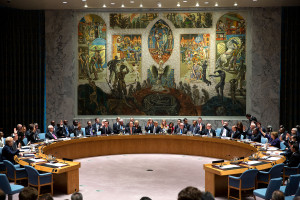
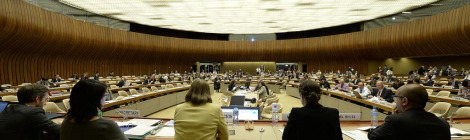
    UN_Meeting_of_Experts_Lethal_Autonomous_Weapons_CCW_April_2015

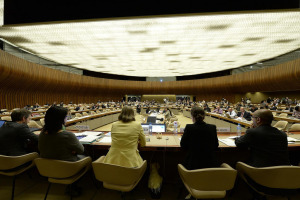
    UN Meeting of Experts on Lethal Autonomous Weapons in April 2015. Source: Flickr | UN Geneva

    April’s meeting of experts at the UN on lethal autonomous weapons systems (often shortened to LAWS or AWS) set out to consider questions relating to this emerging military technology, a continuation of UN talks begun in May 2014. These meetings took place under the aegis of the Convention on Certain Conventional Weapons (CCW), and brought together state representatives, NGOs and academics. The CCW meetings have demonstrated a divergence of views on the ethical and legal concepts that should be employed, and a complex debate that at times felt detached from reality; moreover, without a negotiating mandate there is a fear that the meetings could simply mire the issue in abstract debate, leaving states free to continue developing the technology in the meantime.

    The UN Convention on Certain Conventional Weapons

    For a long time the CCW was a neglected treaty; regarded by states and NGOs as an overambitious and failed attempt to combine elements of international humanitarian law with arms control. By the end of the 1980’s, the CCW appeared to be floundering with only 29 state parties. Yet in recent years, participation has increased and there are now 121 state parties to the convention. A total of 87 countries sent representatives to the first meeting on autonomous weapons, marking a record high level of participation for the CCW. Eighty-eight countries were present at April’s meeting.

    The purpose of the CCW is explicitly “to ban or restrict the use of specific types of weapons that are considered to cause unnecessary or unjustifiable suffering to combatants or to affect civilians indiscriminately.” The CCW is an evolving body of international humanitarian law, with a framework that is dynamically structured to be responsive to the concerns raised by the international community. The recognition that the law is not static is therefore a particular strength, indeed a cornerstone of the CCW.

    The CCW’s talks in May 2014 and April 2015 were undertaken with a mandate “to discuss the questions related to emerging technologies in the area of lethal autonomous weapons systems, in the context of the objectives and purposes of the convention.” A ban on autonomous weapons would join five other CCW protocols on non-detectable fragments, landmines, incendiary weapons, laser weapons and explosive remnants of war. The uptake of the issue of lethal autonomous weapons by the CCW has been unprecedented in its speed, and could indicate a move towards prohibition. However, because there is no negotiating mandate, it could also be a strategic move to engage in these discussions on the part of states keen to engage in the debate of abstract principles, while at the same time continuing to develop the technology. The annual meeting of the CCW in November 2015 will decide formally whether to continue the talks, based largely on the content of the April meeting.

    Autonomy

    The most contentious issue discussed so far is the issue autonomous weapons pose with regard to human control. This issue was discussed through reference to the contested concepts of ‘autonomy’ and ‘meaningful human control’. The United States, the UK, France and Germany are all in favor of the notion of autonomy as a guiding principle. The US was one of the first states to advocate for this concept when its Department of Defense issued the first policy announcement by any country on autonomous weapons systems in November 2012, just three days after Human Rights Watch had brought the issue into the global spotlight.  Interestingly, the directive refers not to ‘fully autonomous’, but to ‘autonomous weapon systems’ that include human supervision. This supports the view advocated by the US at April’s CCW meeting: as long as humans are ‘in the loop’, weapons systems are not fully autonomous and therefore compliant with international humanitarian law. The UK, France and Germany attach human involvement to autonomous weapons systems as well. In a general exchange of views the UK representative assured, “there will be human oversight in this new territory where lethal autonomous weapons systems can go […] Autonomous systems do not exist, and will never exist” (author’s own transcription).

    However, some objected that this was a ‘knockdown’ argument intended to rhetorically shut down the controversy about the lack of human control. The International Committee for Robot Arms Control (ICRAC) is an international association of experts that was sat up with the specific goal of getting governments to talk to each other about the continuous automation of warfare, and was present at both the 2014 and 2015 meetings. ICRAC’s interpretation of the DoD policy was that it was designed to “green-light” weapon systems able to select and engage human targets. Together with 272 experts in computer science, engineering, artificial intelligence, robotics, and related disciplines from 37 countries, ICRAC issued ‘The Scientists’ Call’,  stating: “[G]iven the limitations and unknown future risks of autonomous robot weapons technology, we call for a prohibition on their development and deployment. Decisions about the application of violent force must not be delegated to machines”. Their message was clear, that within such systems, human control would not be ‘meaningful’.

    Meaningful human control

    India and Pakistan expressed confusion over this idea of meaningful human control, observing that the presence of meaningful human control would mean the weapons systems would not then be ‘autonomous’. In their opinion the question should be whether or not independent weapon systems can comply with international humanitarian law: whether they can distinguish between civilians and combatants, make proportionality assessments, and comply with other time-tested legal principles. A counter-argument was raised by Richard Moyes from Article 36 that if discussion is too focused on undefined hypothetical systems’ ability to comply with international humanitarian law, then legal arguments could become separated from reality. In particular, he argued that the law is a human framework applied to humans. A state representative from Greece agreed, saying that autonomous weapons should be addressed ethically rather than legally or technically, as the question is whether or not humans should delegate life and death decisions to a machine. The debate around autonomous weapons’ ability to comply with international humanitarian law is a misguided one if it fails to grapple with the bigger, underlying issues that would be raised. Banning such systems, in fact, is about maintaining something unique in the decision-making process: a human with intent behind the act of killing. Cuba, Ecuador, Pakistan, Sri Lanka and Palestine agreed with this argument and called for a prohibition.

    Potential for convergence

    Consensus was reached on the undesirability of fully autonomous weapons systems. Ambassador Michael Biontino of Germany, who chaired the April meeting, wrote in his report that the following area of common understanding had emerged: “machines or systems tasked with making fully autonomous decisions on life and death without any human intervention, were they to be developed, would be in breach of international humanitarian law, unethical and to possibly even pose a risk to humanity itself.” However, because parties largely disagree about what constitutes human intervention, this statement is of limited value. The contradictory definitions used at the CCW meetings have created a lack of clarity for policymakers; it remains largely undecided what the world would look like if autonomous weapons came into existence.

    The April talks not only give some idea of the shape of the debate going forward, but also of the potential limitations of the CCW talks themselves, as a forum for discussion, but without a negotiating mandate. One significant milestone would be the establishment of a broad, representative and universal Group of Governmental Experts (GGE) next year that would move the discussion from an informal to a formal setting. It has been suggested that the current lack of common language makes this discussion challenging, and that it is critical to avoid rushing into formal discussions. However, it does not seem premature for prohibition to be on the agenda in a body that has been designed to create prohibitions. A GGE seems a necessary next step to keep states focused on a practical outcome.

    Lene Grimstad served as an observer at the 2014 and 2015 Geneva Meetings of Experts on Lethal Autonomous Weapons Systems, and holds a MA in Society, Science and Technology in Europe from the University of Oslo and ESST (European Inter-University Association on Society, Science & Technology) .

    Featured Image: Meeting of Experts on Lethal Autonomous Weapons Systems in April 2015. Source: Flickr | UN Geneva

  • Resources and Militarisation in the East China Sea (Re-upload)

    The Global Land Rush: Catalyst for Resource-Driven Conflict?

    Michael Kugelman of the Woodrow Wilson International Center, argues that the factors that first sparked many of the land acquisitions during the global food crisis of 2007-08 — population growth, high food prices, unpredictable commodities markets, water shortages, and above all a plummeting supply of arable land — remain firmly in place today. He writes that land-lusting nations and investors are driven by immediate needs, and they have neither the incentive nor the obligation to slow down and adjust their investments in response to the wishes of distant international bureaucrats. This, he argues, has serious consequences for global security.

    Read Article →

  • Beyond crime and punishment: UK non-military options in Syria


    This piece by sustainablesecurity.org’s Zoë Pelter and Richard Reeve was originally published on 5 September, 2013 on openDemocracy 

    4815774738_b9962f4875_bThe narrow defeat on 29th August of the UK government’s parliamentary motion on support in principle for military action against the Syrian regime has forced Prime Minister David Cameron to concede that Britain will play no part in any direct attack on Syria. If the UK is to play no military role in ‘punitive’ responses to the regime’s alleged use of chemical weapons, what options are open to the UK in terms of resolving the Syrian conflict, protecting civilians and punishing those responsible for war crimes there? And how does Cameron’s overt preference for the military option, with or without UN mandate, condition these non-military options?

    Pushing for peace

    The possibility of a negotiated peace in Syria should not be dismissed. Neither the regime’s military, militia and foreign allies, nor the variety of armed factions ranged against them (and, increasingly, each other) are exhausted. Nor do the Assad regime’s mid-year successes in central Syria presage any imminent likelihood of it regaining control of the north and east. The strategic stalemate that appeared to set in to the conflict in June, after pro-Assad forces retook al-Qusayr, arguably presented a breathing space for negotiations and the so-called Geneva II conference, proposed by the US and Russia, with UN and Arab League backing, the previous month. As recently as mid-August, the Geneva talks were expected to resume in September.

    But even convening these talks will now prove far harder. Expectation of Western intervention against President Bashar al-Assad, as well as their own increasing divisions, gives the Western-backed armed opposition groups an incentive to delay talks. Jihadist groups that have proved effective militarily are largely excluded. US and Russian facilitation of the Geneva process, however fraught, also tends to exclude the voices of regional actors like Turkey, Iran, Iraq and Saudi Arabia, each of which feels its interests very directly threatened in Syria and gives active support to one or more armed faction.

    This calls for a rethinking of the Geneva process, if not the 2012 transition roadmap, to bring in the full range of actors, not the abandonment of peace talks. Threat of US-led intervention and its own increasing international marginalisation, should it be proved to have launched a chemical attack on 21st August, could incline the Assad regime towards a negotiated settlement, perhaps even an exit and exile strategy.

    Cameron and PutinThis will not happen without pressure from Iran and Russia. Both have much to lose in Syria, but neither is entirely closed. Iran is still in its post-electoral opening and under severe economic pressure, looking to cut a wider deal with the West. Russia may not be comfortable with its isolated position defending the alleged user of chemical weapons. Like the US, it fears the growing influence of jihadi groups while the current stalemate continues. While there is little hope of Moscow abandoning its Security Council veto over action against Syria, it will be embarrassed if it stands almost alone defending Assad in the Council or against a General Assembly resolution. Neutrally collected and analysed evidence of Syrian regime culpability for chemical weapons attack will be crucial to shifting Russia’s position.

    Having made clear its preference for ‘punitive’ military action, and been frustrated by parliament in pursuing such action, the UK government is not ideally placed to broker negotiations. Yet the UK does have influence with Syrian opposition groups, in the Gulf States and, when it acts in concert with its less interventionist EU partners, with Russia, Turkey and Iran.

    Fighting impunity

    Again, the importance of due investigative and legal process through UN Fora is crucial. When asked on 29 August if he agreed that Assad should be prosecuted at the International Criminal Court (ICC), David Cameron replied curtly that these processes take time. Yes, the wheels of institutional responses turn slowly, not least justice institutions. Yet the most obvious response to any breach of customary international law on the use of chemical weapons (Syria is one of just five states not to have signed the 1993 Chemical Weapons Convention) is a war crimes prosecution through the ICC. It is not important that Syria has not signed the Court’s establishing Rome Statute. Assad and any responsible commanders could still be subject to international prosecution if the Security Council referred Syria formally to the ICC.

    The UN has been investigating a wide range of alleged crimes committed by both sides with a view to future prosecutions. Clearly, the presence on the Security Council of Syrian allies and a majority of non-signatories to the Rome Statute presents obstacles to referral, but the Council has overcome such obstacles before, notably China’s reluctance to see its Sudanese allies prosecuted over actions in Darfur. With France and other allies, the UK should take the lead within the Security Council in pushing to refer Syria to the ICC based on the same ‘moral minimum’ or red line that has been deployed in favour of armed intervention. This, in turn, may provide leverage to persuade pro- and anti-Assad factions alike to take peace negotiations more seriously.

    Notwithstanding the heavy shadow of its past action in Iraq, the UK’s moral standing is bolstered by commitment to legal and democratic process. The UK should take a breath, step back from punitive reaction and recommit itself to a multilateral, inclusive and legally rigorous approach to resolving the war in Syria and its many affiliated regional conflicts. No other form of intervention will effectively protect the lives and rights of Syrian civilians either in the current war or the difficult peace that must follow.

    Richard Reeve is the Director of Oxford Research Group’s Sustainable Security Programme. He works across a wide range of defence and security issues and has particular expertise in Sub-Saharan Africa, peace and conflict analysis, and the security role of regional organisations.

    Zoë Pelter is the Research Officer of Oxford Research Group’s (ORG) Sustainable Security Programme. She works on a number of projects across the programme, including Rethinking UK Defence and Security Policies and Sustainable Security and the Global South.

    Image sources:

    Image: The Prime Minister welcomes President Vladimir Putin to Downing Street ahead of the G8 Summit. Source: The Prime Minister’s Office

    Image: The Prime Minister during a joint press conference with US President Barack Obama. Source: The Prime Minister’s Office

  • The UN Security Council and Climate Change

    Whether the UN Security Council should address climate change is a highly politicized issue. But a more fundamental question has been lost in this debate—what exactly could the Council do about climate change?

    Given growing concerns about the links between climate change, instability and conflict, it is no surprise that the issue has spilled over into the UN Security Council. Since 2007, the Council has conducted two formal and several informal (“Arria-formula”) sessions on the topic. Bringing the climate issue into the Council has been contentious: proponents, including several European member-states, small island developing states, and other vulnerable developing countries, have sought to use the Council’s agenda-setting power and inject a sense of urgency into global climate politics, particularly at moments when global progress on climate action seems stalled.

    Opponents have raised a range of concerns, including longstanding objections to the Council’s composition and procedures; fears of stretching the Council’s mandate beyond recognition, such that anything could be regarded as a security issue; and concerns about negatively impacting the “legitimate” forum for climate discussions, the UN Framework Convention on Climate Change (UNFCCC) and the Paris Agreement. These objections almost blocked a 2011 thematic debate on the issue, leading the Obama administration to rebuke reluctant Council members for “dereliction of duty”. Only informal sessions have been held since then. At the most recent, in May of this year, several member-states urged that the Council revisit the issue in formal session.

    Too often lost in such political maneuvering is a fundamental question: what might the Council actually do on climate, peace and global security? Surveying the record, one finds a range of different ideas that have been floated by academics, advocates, and some individual member-states. These include relatively modest add-ons, such as keeping the Council apprised of how climate change affects current peacekeeping operations or developing better early-warning capabilities. Bolder roles have also been floated: engaging the Council in proactive, preventive diplomacy on emergent challenges such as competition for Arctic resources or water in international river basins, or even creating a climate analogue to the Responsibility to Protect. There have also been calls to inject the Council into complex political challenges for which no obvious institutional home exists within the UN system, such as the existential plight facing several small-island states and the challenge of climate-driven displacement and refugees.

    There are real questions about whether the Council, as currently constituted, can play such roles productively. One basic challenge is how the Council manages information. Conceptually, early warning fits well with current Council efforts around issues such as famine and human rights emergencies. But in practice, past efforts to extend the gaze of early warning into new issue areas, such as conflict-related sexual violence, have met with opposition, narrow framing, and poor follow-through. There are also many practical challenges yet to be resolved, including how to effectively incorporate environmental variables into conflict-assessment tools, or even deciding which variables matter and by what mechanisms they operate. For an early-warning mechanism to have foreseen the role of drought in the Syrian conflict (a causal role about which there remains no consensus among scholars), it would have had to be able to see not just rainfall or run-off data, but also the water-policy choices of the Syrian regime and the impacts of declining rural subsidies on smallholder farmers.

    Challenges facing the Security Council on climate change

    Image credit: The White House/Wikimedia.

    Even the seemingly straightforward exercise of informing the Council about aspects of climate change directly relevant to its ongoing activities around peacekeeping and fragile states has been challenging. The contentious 2011 session yielded a compromise that called on the Secretary-General to use his reporting function to keep the Council apprised about relevant “contextual information” on climate-conflict links. A review my colleagues and I conducted of 446 subsequent Secretary-General reports to the Council (through January 2016) found only 12 references linking climate change to some aspect of conflict or security (with 11 focused on Africa). Most of the content was highly generalized, noting general contextual trends such as urbanization, land tenure conflicts, or farmer-pastoralist tensions that might bear a climate signature. Even the handful of instances of specific reporting lacked the fine-grained subnational and temporal detail necessary for it to be of any operational or decision-making use. Climate-related references were also highly sporadic, with only one in 2012 and none in 2013.

    A second challenge resides in the Council’s largely reactive nature (when it can agree to react at all). Conflict prevention falls squarely within the Council’s mandate, and the high monetary cost of peacekeeping operations creates a strong incentive for prevention. The concept notes circulated by Council chairs for the 2007 and 2011 thematic debates (the UK and Germany, respectively) stressed conflict prevention as a key rationale for conflict engagement on climate. But for interstate preventive diplomacy, such as might be needed in shared river basins, the Secretary-General’s office has generally been a more effective tool than the Council. And on intrastate conflict, the Council has historically been reluctant to take preventive action. Efforts beginning in 2016 to implement a ‘horizon scan’ briefing from the Secretariat, focused on instability and emergent conflict, revealed the great reluctance of many member-states to appear on the Council agenda as ‘fragile’.

    A third problem is the tricky challenge of managing the political division of labor with the UNFCCC. Proponents of Council climate action have used past debates to try to jump-start sluggish climate diplomacy, even as opponents have warned about encroachment on or perturbation of the institutionalized process of global climate negotiations. Initial optimism around the Paris Agreement cooled such polarization, but was blunted by the Trump administration’s recent withdrawal from the accord. The deeper problem is that the Paris process seems to be half-heartedly engaging some of the critical challenges that would most resonate within the Council: blocking space for the Council while failing to really address the issues. On the looming problem of sea-level rise and the existential threat to small-island nations, the Paris Agreement’s provisions on loss and damage explicitly created an opening to address several relevant challenges, including early warning, emergency preparedness, slow-onset events, risk management, and the resilience of communities, livelihoods, and ecosystems (Article 8.4). This may limit political space for the Council on the issue of small-island statelessness, even as the weakness of the UNFCCC process on “liability and compensation” makes it a poor vehicle for serious movement on the problem. A similar dynamic of blunting political momentum through half-hearted response may be shaping up on climate-induced displacement; the UNFCCC’s 21st Conference of the Parties authorized a task force to develop recommendations on how to address the issue, scheduled to make a preliminary report in 2018.

    What can be done?

    Given such challenges, it may be that the relevant question is not “What climate role for the Council?” but rather “How can climate be part of the process of transforming the Council into a more effective body for sustainable security?” A first step in that direction would be to improve the Secretary-General’s reporting function, as agreed to during the 2011 debate. The most useful information for the Council is probably neither localized crisis briefings nor long-range climate-change scenarios, but rather regional-scale, medium-term assessments. Working on those spatial and temporal scales is most likely to yield forward-looking initiatives that can be supported by those member-states that find themselves most directly affected or vulnerable, as in the case of the Integrated Strategy for the Sahel. The strategy stressed building long-term resilience as one of its three pillars, along with inclusive governance and managing cross-border threats. A Security Council briefing in this context, on links among climate trends, migration, and conflict across the region, was well-received for both its specificity and the backing it had from member states in the region.

    A second step would be to challenge countries seeking a seat on the Council to articulate a specific vision of how the Council should move forward on the issue. Several aspirants for an elected seat have raised the issue in recent campaigns, but the question is also pertinent for those countries aspiring to a permanent seat on an expanded, reformed Council—notably, Japan, Germany, Brazil, and India. How, precisely, do they see the climate issue in relation to the Council’s mandate, with particular reference to preventive diplomacy, disaster vulnerability and displacement?

    Finally, while it may seem challenging in the current political moment, a symbolic gesture from the five permanent members (P5) would acknowledge member-states’ multiple roles across the UN system. Done properly, this could help legitimize an active (but not overreaching) Council role as part of a system-wide response. During the 2011 debate, Nigeria noted the P5’s dual role: “Seated around the table are those who could encourage developed countries to implement their commitments to reducing emissions and supporting developing countries with the requisite technological and financial assistance to address climate change effectively.” Imagine the legitimizing value that would have resulted if the US-China climate deal of 2014 had identified conflict prevention as part of its rationale for cutting emissions. Going forward, such commitments could be incorporated into the Nationally Determined Contributions that states offer under the Paris Agreement, and as action on the Sustainable Development Goals.

    The purpose of such measures is to begin to use climate engagements as a vehicle to transform the Council—into a body that is more capable of legitimate action, more proactive in peacebuilding and conflict prevention, and better able to take the long view of risks and responses.

    Ken Conca is a Professor of International Relations at American University in Washington, DC. His most recent book is An Unfinished Foundation: The United Nations and Global Environmental Governance (Oxford University Press). A more detailed version of the arguments here may be found there, and also in Ken Conca, Joe Thwaites, and Goueun Lee, “Climate Change and the UN Security Council: Bully Pulpit or Bull in a China Shop?” Global Environmental Politics 17/2: 1-20. Conca has been a member of the Scientific Steering Committee on Global Environmental Change and Human Security (GECHS) and is a founding member of the UN Environment Programme’s Expert Advisory Group on Conflict and Peacebuilding. He is, with collaborator Geoffrey Dabelko, the 2017 recipient of the Al-Moumin Environmental Peacebuilding Award.

  • Privatised Peacekeeping?

  • How to Respond to the Threat from Hostile Drones in the UK

    From Surveillance to Smuggling: Drones in the War on Drugs

    In Latin America drones are being used as part of the War on Drugs as both regional governments and the US are using surveillance drones to monitor drug trafficking and find smuggling routes.. However, as drones are increasingly being used by drug cartels themselves to transport drugs between countries, could Latin America find itself at the forefront of emerging drone countermeasures?

    Read Article →

    Losing control over the use of force: fully autonomous weapons systems and the international movement to ban them

    Later this month, governments will meet in Geneva to discuss lethal autonomous weapons systems. Previous talks – and growing pressure from civil society – have not yet galvanised governments into action. Meanwhile the development of these so-called “killer robots” is already being considered in military roadmaps. Their prohibition is therefore an increasingly urgent task.

    Read Article →

    Too Quiet on the Western Front? The Sahel-Sahara between Arab Spring and Black Spring

    While the world’s attention has been focused on the US-led military interventions in Iraq and Syria a quieter build-up of military assets has been ongoing along the newer, western front of the War on Terror as the security crises in Libya and northeast Nigeria escalate and the conflict in northern Mali proves to be far from over. In the face of revolutionary change in Burkina Faso, the efforts of outsiders to enforce an authoritarian and exclusionary status quo across the Sahel-Sahara look increasingly fragile and misdirected.

    Read Article →

    The cooling wars of cyber space in a remote era

    As current discussions highlight the possibility of “major” cyber attacks causing a significant loss of life or large scale destruction, it is becoming harder to determine whether these claims are hype or are in fact justified fears. Esther Kersley, Katherine Tajer and Alberto Muti offer some clarity on the subject by assessing the major issues in cyber security today to help better inform the debate and assess what threats and challenges cyber issues really do pose to international peace and security.

    Read Article →

    Drone-tocracy? Mapping the proliferation of unmanned systems

    While the US and its allies have had a monopoly on drone technology until recently, the uptake of military and civilian drones by a much wider range of state and non-state actors shows that this playing field is quickly levelling. Current international agreements on arms control and use lack efficacy in responding to the legal, ethical, strategic and political problems with military drone proliferation. The huge expansion of this technology must push the international community to adopt strong norms on the use of drones on the battlefield.

    Read Article →

  • A top-down approach to sustainable security: the Arms Trade Treaty

     ATT2012 has been hailed as a potential landmark year in the push for greater regulation of the global trade in conventional arms. After more than a decade of advocacy to this end, negotiations took place throughout July towards the world’s first Arms Trade Treaty (ATT), which is intended to establish the highest possible common international standards for the transfer of conventional weapons.  However, although significant progress was made during the month of intense negotiations, the ATT is not yet open for signature. The future of possible work towards a treaty now lies with the First Committee of the UN General Assembly, as discussions continue about the possibility of a second round of negotiations. As the Committee’s session nears an end, this article explores what role a potential treaty – if reopened for further negotiation – could play in a move towards sustainable security.


    The scale of the arms trade is significant; it’s impact, devastating in many parts of the world. From 2006-10, the top five arms exporting countries – the United States, Russia, Germany, the United Kingdom and France – delivered nearly 92 million major conventional weapons* . The recipients of arms transfers include countries such as Sudan, Yemen, Egypt and Libya, where the use of government stockpiles against civilians over the past two years has been particularly abhorrent. However, even as the volume of international transfers continues to increase – by 24 per cent from 2002-2006 to 2007-2011 – there is still no overarching global regulation of the trade. Instead, there exists only a patchwork of national laws and regional agreements that fail to impose any consistent international standard of trade.

    This lack of comprehensive global standards to regulate transfers of conventional arms – which range from battle tanks, combat aircraft and missile launchers to small arms and light weapons – has allowed a flow of weapons to actors who use them in contravention of international humanitarian and human rights law, including terrorist groups and human rights abusers. This in turn prolongs conflict, undermining stabilisation and development efforts. Indeed, as 30 high-profile Oxfam and Amnesty International supporters stated in a letter to UN Secretary General Ban Ki-Moon in at the start of the July’s negotiation conference:

    Every year an average of two bullets for every person on this planet is produced. With so few global rules governing the arms trade, no one really knows where all those bullets will end up – or whose lives they will tear apart. Under the current system, there are less global controls on the sales of ammunition and guns than on bananas and bottled water. It’s a ridiculous situation. The deadly and poorly regulated trade in arms leads to serious human rights abuses, armed violence, conflict, poverty and organized crime around the world. The lack of clear binding principles governing decisions on international arms transfers combined with patchy, diverse and poorly implemented national regulations are inadequate to deal with the increasingly globalised nature of the arms trade. As a result, irresponsible users are allowed to violate international humanitarian and human rights law.

    If negotiated, the ATT would establish much needed internationally agreed norms of responsible state behaviour with regards to arms transfers; with criteria that aims to prevent the transfer of weapons to the aforementioned irresponsible actors.

    What would this mean in practice? An ATT would act to ensure that arms-exporting states have an obligation to conduct comprehensive risk assessments in line with international humanitarian and human rights law before approving international transfers of arms. In so doing, an ATT would provide a crucial delineation of the circumstances under which transfers should not be allowed.

    This has important implications. For example, following a government review of arms exports to the Middle East and North Africa in 2011, the United Kingdom revoked 158 licenses because the exports were found to violate two main criteria for the UK’s Consolidated Criteria for arms exports: respect of human rights and fundamental freedoms, and risk that the exported weapons might be used for internal repression. The impact of certain earlier UK export decisions had become clear in Bahrain in February 2011, when a British-supplied arsenal of crowd control weapons – including stun guns, shotguns, crowd control ammunition and canisters of teargas – was reportedly used by security forces in a brutal crackdown against popular protests**. Although some licenses were revoked, the UK has a further 600 extant licenses to countries such as Syria, Bahrain and Yemen, where rights abuses are notoriously continuing. The aim of the ATT is to ensure that exporting countries consider the dangers to civilians and human rights while deciding whether or not to transfer arms and to prevent transfers where abuse is likely. An ATT is therefore hoped to help stem the flow of arms to actors – state and non-state – who use violent action to undermine rule of law and the international humanitarian laws that seek to protect civilians and sustain security.

    The consequences of irresponsible arms transfers reverberate further than governmental misuse. For example, the 2008 Final Report of the UN Panel of Experts on Sudan stated that arms originating from the stockpiles of Sudan, Chad and Libya had been used in attacks by the Justice and Equality Movement (JEM) forces in Sudan, a militia group included in the UN Security Council arms embargo on Sudan (Darfur region) from 2005 onwards. In the case of JEM attacks on the city of Omdurman in 2008, chain-of ownership tracing by the Panel identified numerous weapons manufactured in Spain, Belgium and Bulgaria, which had originally been legitimately shipped to Libya . Although many of the weapons were formerly exported to Libya in the early 1980s, the report stood as a clear sign of the danger of legitimately transferred arms leaking into the illicit market from irresponsible end-users. By assessing the responsibility of end-users before transferring arms, the ATT might go some way towards encouraging states to stem the flow of weapons to illicit markets from the back-doors of irresponsible end-users. In turn, it is hoped that it will work against the militarisation of societies that threatens the stability of the majority of civilians.

    Treaty negotiations keenly acknowledged the disproportionate impact of small arms and light weapons (SALW) on civilian populations during and after violent conflict and accordingly, SALW are covered in the scope of the treaty. As noted by the UN office for Disarmament Affairs (UNODA) ‘small arms are cheap, light, and easy to handle, transport and conceal. A build-up of small arms alone may not create the conflicts in which they are used, but their excessive accumulation and wide availability aggravates the tension. The violence becomes more lethal and lasts longer, and a sense of insecurity grows, which in turn lead to a greater demand for weapons…They are the weapons of choice in civil wars and for terrorism, organized crime and gang warfare.’  Including these weapons type in the treaty’s scope – and therefore extending beyond the UN Register of Conventional Arms – will increase the number of disarmament tools available to tackle the prolific spread of these weapons and their devastating impact and threat to sustained security during and following armed conflict.

    Each of these aims seeks to counter a pattern of increasing spread of arms and trend towards militarisation which, far from protecting societies, drives insecurity around the world. This is true for states – with the aforementioned trend towards increased spending for conventional arms and annual increases in world military expenditure from 1998-2010 – but also for civilian society. Around the world, millions of people face the direct and indirect consequences of increased militarisation on a daily basis, whether living under the constant threat of weapons held by local gangs or criminals, or direct trauma, injury or fatality as a result of use of weapons in conflict or terrorist action. In the face of these situations, both where the state abuses civil rights or where the state is unable to protect communities from armed non-state groups, communities often choose to seek further weapons as a means of protection, and so cycles of increased militarisation and violence continue to threaten the stability of societies. By stemming a downwards flow of weapons, and making assessments about the likelihood of irresponsible or abusive use of transferred arms, a treaty of this nature may serve to prevent violent conflict and/or help to make conflict less deadly.

    The current draft text does much towards these goals, by including provisions related to record keeping, international assistance and implementation, as well as creating a Secretariat to help signatory states implement the treaty, especially those who may lack the bureaucratic capacity to do so right away. More importantly, it clearly outlines the obligations that signatories would have to conduct comprehensive risks assessments in line with IHL and IHRL before approving transfers and effectively underlines the circumstances in which transfers should not be made.

    However, there are still a number of issues with the draft treaty, which at present leaves loopholes in regulation that would allow for on-going abuses as a result of arms transfers if it is used as a base for further negotiations. As outlined efficiently in Control Arms’ recent briefing ‘Finishing the Job: delivering a bullet-proof ATT’ , at present the draft treaty text falls short in a number of ways. Necessary improvements to the draft include: addressing the exclusion of ammunition from the scope of the treaty; the lack of a provision that requires state reports on transfers to be publically available; lack of provisions for states to consider risks that transferred arms may be diverted or used for corruption, against development or in gender-based violence; and current ambiguity about controls when dealing with states not party to the treaty. It will also be vital for key exporting nations such as the United States to be on board with the treaty for it to be effective. If negotiations are re-opened, negotiators must once again carefully navigate the need to sharpen the treaty scope and criteria with a need to have the participation from a majority of states.

    There is clearly quite some way to go before the treaty could come into force and be implemented effectively. The ATT clearly cannot act as a panacea for conflict-affected countries, nor will it hinder inter-state arms trade or domestic controls. However, if successfully negotiated and implemented, it could be an effective filter to curb the worst of irresponsible and illicit arms trading. The ATT may currently seem abstracted from the real impact of the arms trade, but in the end, as stated by the Control Arms Campaign, ‘the ATT will be judged according to its success in preventing transfers that risk contributing to or facilitating human suffering’. As UK Ambassador Jo Adamson said at the opening of the First Committee session, with the ATT ‘we have a real live example of where we can make a real difference in the real world to real people.’

    *(data on conventional weapons exports and military expenditure derived from SIPRI Yearbook 2012: http://www.sipri.org/yearbook/2012/06)
    **All information in this paragraph can be found in the UK Parliament Committees on Arms Export Controls report ‘Scrutiny of Arms Exports (2012)’  http://www.publications.parliament.uk/pa/cm201213/cmselect/cmquad/419/41902.htm 

    Zoë Pelter is a Research Officer of Oxford Research Group’s (ORG) Sustainable Security Programme. 

    Image source: Oxfam

  • Intersecting Commitments: the Responsibility to Protect and the Women, Peace and Security Agenda

  • Muslim Paranoia? Ideology and the Limits of Engagement

  • The UN’s Meetings on Autonomous Weapons: Biting the Bullet, or Lost in Abstraction?