Blog

  • Lost Generations? Consequences of and Responses to Child Soldier Recruitment

    Despite being strictly prohibited in international humanitarian law, child soldiering remains a serious global problem. How effective has the international community’s response to this phenomenon been?

    Constituting one of the most egregious child rights violations, many children are currently actively involved in violent conflict as members of armed organizations, states and non-state actors. They can be found on every continent, but sub-Saharan Africa is the epicenter of the phenomenon. These recruited children perform a range of different tasks; they participate in combat, lay mines and explosives, are scouting, spying, and acting as decoys, couriers or guards. Others are used for logistics and supporting functions such as cooking and cleaning.

    The 1977 Additional Protocols to the Geneva Conventions were the first international treaties to try and tackle the problem of child soldiering. They prohibit the recruitment and participation in hostilities of children under the age of 15. The 1989 Convention on the Rights of the Child, which has achieved almost universal ratification, also included the 15 age limit. An optional protocol to this Convention, in May 2000, lifted the age to 18. It insisted that armed groups should not use children under 18 in any circumstances and called on states to criminalize such practices. However, although the use of children by armed groups is prohibited and defined as a war crime, child soldiering remains a pressing global issue.

    A “time bomb”?

    omo_river_valley_img_0463

    Child soldiers in Ethiopia. Image by Vittorio Bianchi via Flickr.

    The most commonly cited figure for the number of children involved in conflicts is 300,000. This estimate is, however, not necessarily the most accurate one as information on child soldier usage is difficult to obtain. Children are often employed in remote conflict zones away from public view and the media, no record is kept of their number and ages, and those who employ them often deny their existence or claim that these were isolated cases. Besides, they often ‘vanish’ after the conflict ends; they are rarely as visible among the demobilised troops as they were among the combatants at the height of hostilities.

    The number of children active in armed groups is clearly nominal when compared to the millions of children who do not participate directly as soldiers but are profoundly affected by war. Nonetheless, this group is a tangible, visible, and dramatic example of the deprivation of the human rights of children. It has been empirical proven that using children as active participants in armed conflict has severe consequences not only for the child and their family, but also for society in general. For instance, at a recent Paris conference on child soldiering, the keynote speaker, the former French foreign minister Philippe Douste-Blazy, warned that the use of child soldiers is “a time bomb that threatens stability and growth in Africa and beyond.” They are “lost children,” he argued, “lost for peace and lost for the development of their countries”. Also, a New York Times editorial stated: “They are walking ghosts, damaged, uneducated pariahs.” Ultimately, if subscribing to these statements, child soldiering may be thought to contribute to the well-known ‘conflict trap’, i.e. they might increase the likelihood that conflict recurs.

    There are at least two avenues that link former child soldiers to conflict recurrence. First, it is argued that former child soldiers have often limited skills besides killing and being able to fieldstrip weapons after the conflict has ceased. This is primarily due to the fact that they experience little to no education while being in the bush. This lack of education impedes their labour market success: they earn less and are less likely to be engaged in skilled work in comparison to those that were not recruited by armed groups. This may significantly raise the willingness to rejoin armed groups again, which might assure them of at least the basic necessities, such as food and perhaps even a bit of money.

    Second, although child soldiers are far from the only ones who are affected as a result of their experiences in war, they suffer the most and have the least capacity to recover. Typically former child soldiers have witnessed, experienced and/or perpetrated shocking and disturbing violent actions during their time with the armed group. This can create great difficulties both for the children and their interface with society. It can lead to both physical symptoms, such as headaches, stomach pains, sleep disorders, and mental symptoms, like depression, anxiety, and extreme levels of pessimism.

    One of the most worrying symptoms connected to children’s war participation is a supposed increase in the child’s level of aggression. Due to the fact that they often do not have the capacities and experiences to disengage themselves from these violent and aggressive behavioral norms established during their time in the armed groups, difficulties arise when peace is restored. For instance, they often display on-going aggressiveness within their families and communities: they also often use physical violence to resolve conflicts, reflecting an absence of adequate social skills.

    These skills are not easily acquired by former child soldiers since they often encounter broken families once they are back that could have provided a better regulation of the use of violence. Hence, some scholars have argued that the phenomenon of child soldiers feeds upon itself: each round of fighting creates a new cohort, traumatized by the war and bereft of economical skills, who then become a potential pool and catalyst for the next spate of violence. Or as Wessells describes it: “A society that mobilizes and trains its young for war weaves violence into the fabric of life, increasing the likelihood that violence and war will be its future. Children who have been robbed of education and taught to kill often contribute to further militarization, lawlessness, and violence”.

    International response

    The response of the international community to counter child recruitment falls usually in two categories: (1) punishing perpetrators by ‘naming and shaming’ practices and by prosecution; and (2) mitigating some of the damage done to children once they leave the armed group by implementing child-centred Disarmament Demobilization and Reintegration (DDR) programs.

    Concerning the ‘naming and shaming’ policies, the United Nations often publishes reports mentioning particular governments and non-state actors that use children. Some have argued that this has an effect, especially on governments, although there is little empirical evidence to back this up. The largest degree of child recruitment is, however, carried out by non-state actors and it seems that media exposure, public pressure, and pressure of international organizations and governments have little to no effect, with perhaps the exception of rebel groups who strive for secession.

    Besides ‘naming and shaming’ campaigns, the international community has also started to shift its focus to the criminalization of child soldier recruitment. Thomas Lubanga Dyilo, a warlord from the Democratic Republic of the Congo who led the Union of Congolese Patriots, was the first rebel leader convicted by the International Criminal Court for the use of children in military operations. More recently, Charles Taylor, the former president of Liberia, was found guilty of conscripting and enlisting children. It is, however, unclear whether this criminalization has a deterrent effect on child soldier recruitment.

    Once children are out of the armed groups, the international community attempts to mitigate the damage done to them and the potential consequences for society by implementing DDR programs. Initially children were often excluded from these programs, as it was argued that they did not pose a post-conflict threat. Moreover, since children cannot be legally recruited, child-centered DDR program elements were not viewed as a routine component of peacemaking. Fortunately, this has changed in recent times, and most DDR programs now have their own imperatives focused on rehabilitating former child soldiers. Usually these programs consist of three components.

    First, former child soldiers are gathered at pick-up points, moved to disarmaments sites, and, whenever necessary, disarmed. During the demobilization part of the program, eligibility for the DDR program is determined through a screening process in which they receive identity and discharge documents. Reintegration is the third component of the DDR program, which starts at care centers – transit facilities which help prepare former child soldiers for going home and give non-governmental organizations time for the preparation of families and communities to receive the children. During their time at the center, emphasis is placed on educational activities, recreational activities, psychological support and counselling, and several different life skills trainings. Once the parents or extended family members are traced, the children will be taken home to their family and will join an appropriate educational program.

    The effectiveness of these programs in reducing recidivism and establishing post-conflict stability is, however, not always affirmed. Some scholars conclude that these programs are generally inefficient at disarming ex-combatants, reducing the likelihood of recidivism, and addressing their economic and security concerns. This lack of supporting evidence might be due to conceptual and operational problems with defining the outcome of these programs (and how to measure this), and a lack of information on the existing DDR programs (money, personnel, mission statements, etc.). But it might also be due to the content of these programs and how they approach child soldiering. Many of these child-centered DDR programs, for instance, are put in place under enormous time pressure, are often disconnected from the perception of local communities, and are based on a one approach fits all children principle. Consequently, some scholars have called for more flexibility within these programs to enhance is effectiveness. Only then can efforts to promote social reconstruction bear its fruits.

    Roos Haer (PhD, University of Konstanz, Germany) is a postdoctoral researcher at the University of Konstanz at the chair of International Relations and Conflict Management. Her current research interests include the role of children in conflict, child soldier recruitment by state and non-state actors, Disarmament Demobilisation and Reintegration programs, and survey methodology in less developed (conflict) countries. Her research is often based on quantitative field research conducted in Africa. She has published in (a.o) the European Journal of International Relations, Conflict Management and Peace Science, Third World Quarterly, and has published a book with Routledge publisher.


  • Conservation as a Tool for Post-War Recovery

    The environment has often taken a backseat in discussions about conflict, but an increasing amount of evidence suggests that environmental and wildlife conservation could and should be very useful to post-conflict recovery work.

    The notion that the environment can play a useful role in peacebuilding has been around for a number of decades. The environmental peacebuilding theory emerged after research found that even while countries were engaged in armed conflict they were cooperating over water management. The theory was that water management could establish cooperation and lay a platform for wider peacebuilding initiatives. Peace Parks follow the same principles to use transboundary biodiversity conservation to support peacebuilding. While both are appealing projects, their failure to translate from environmental cooperation into wider scale peacebuilding processes suggest they are of only limited use for peacebuilding and post-war recovery.

    While the above processes have been of limited effectiveness, the shared geography of many areas of armed conflict and biodiversity hotspots suggests that conservation could and should be useful to post-conflict recovery.

    Guerrillas and Gorillas

    Research has found that 80% of modern armed conflicts occurred in biodiversity hotspots, and 90% within countries containing biodiversity hotspots. The use of ‘conflict timber’ and the illegal wildlife trade to finance conflict, and the presence of many armed groups in and around protected areas, creates clear links between conflict and the environment. Conflict also often leads to widespread environmental damage, and the post-conflict period can cause even more damage as short term human needs lead to ungoverned and unsustainable exploitation of the environment. This destroys key ecosystem services, opens opportunities for banditry and corruption, and increases the risk of natural disasters.

    Addressing these threats to security and protecting the environment in the aftermath of conflict is therefore vital to ensure a resilient recovery process. This creates an opportunity for conservation to support the post-conflict recovery effort by simultaneously addressing threats to security and protecting the environment to support economic development. Current approaches to do this are limited, but potential exists for much more work to be carried out. I have therefore proposed the umbrella term of ‘Ecological Development’ to create a framework of methods to actively use conservation as a tool for post-conflict recovery.

    Environmental Peacekeepers

    Virunga_National_Park_Gorilla

    Mountain Gorilla in Virunga National Park, in the Democratic Republic of the Congo. Image via Wikimedia.

    Some work has already been undertaken in this area, such as the proposal to create a ‘green helmets’ UN force, with a mandate for environmental protection. Whether funding for such a force could be obtained, and a mandate agreed upon, is doubtful; even if it was, it is unlikely to be an effective unit. Current UN peacekeeping missions have regularly failed in their roles to protect civilians, so are unlikely to be able to effectively extend their mandate to environmental protection. Peacekeepers have also been caught with illegal fauna and flora. While the UN Peacekeeping operations now have an environment department to reduce the footprint of missions and educate soldiers about the environment, their role in environmental protection is now, and will likely be for the foreseeable future, minimal.

    Using a country’s army to support conservation work has also been trialled, but with limited impact; for example, in the Democratic Republic of Congo the army became involved in poaching ivory. Both this and the proposed green helmets UN force also take a combative approach to conservation, seeking to fight poachers and armed groups in protected areas rather than addressing the underlying causes of poaching and deforestation. A different approach is required.

    Instead, I have proposed the conversion of rebel groups en masse into a ‘Yellow Berets’ force under UN, or other neutral, control; their role would be to support existing wildlife rangers to protect the environment and start to engage in ecosystem regeneration and sustainable exploitation projects. Such a scheme would form a significant contribution to post-conflict recovery in several ways: it would employ ex-combatants, reducing the risk of a relapse into conflict; it would protect critical ecosystems, species and carbon sinks vital for human populations (and arguably worth protecting in their own right); and it would support efforts to develop sustainable natural resource extraction businesses to bring in revenue and create jobs to support post-conflict recovery. Crucially, this process seeks to address security threats with dollars not bullets; engaging rebel groups as paid eco-guards rather than engaging them in battle.

    The DRC provides an example of the necessity and benefits of such a programme. Work is already underway to ensure Virunga National Park brings multiple economic benefits to surrounding populations, including the development of hydropower electricity generation. Security threats remain a major concern in the park, however, and there are too few rangers to address these threats. The ecological development method would offer financial incentives to rebel groups to join the yellow berets unit. This would simultaneously increase the number of conservation personnel and decrease the security threat, opening the way for an expansion of development projects around the park. It would also enable the restoration of forest areas – which could be financed by carbon offset schemes – and the further development of a tourist industry centred not only on gorillas but multiple other attractions in the region. Such a process would not be without challenges: securing the long-term finance required to pay wages; coping with disruptive private interests intent on perpetuating insecurity; and avoiding conflict between Congolese army soldiers and police who receive their wages intermittently or not at all.

    Nevertheless the project holds promise, even in such a difficult operating environment as the DRC. It could also be used in other parts of the world where rebel groups operate in protected areas, as a means to bring an end to conflict and deal with ex-combatants efficiently and at scale.

    Conservation for Development

    The Yellow Beret process would require a large amount of finance to pay the wages of several hundred or even thousand eco-guards that would form it. While donor finance could be mobilised for such a process – combining conservation, security, humanitarian and carbon finance – this would be difficult both to obtain initially and also, critically, to sustain over the long term. Protected areas must therefore become sites of revenue and job creation in order to finance such an initiative.

    The work being undertaken in Virunga, described earlier, is an example of this, but more is required. Projects that support the livelihoods of local communities and also bigger schemes that can generate greater revenues and create jobs on a large scale need to be trialled and refined. Examples of community projects are livestock and micro-finance schemes to provide sources of protein and finance to start small enterprises. These projects alleviate communities’ dependence on protected area natural resources by providing sustainable sources of sustenance and protein, and improving the perception of conservation.

    At the same time, larger schemes are required that seek to create products for sale into international markets; this may be ‘green gold’ projects seeking to make gold mining both sustainable and ethical; sustainable timber exploitation and processing for sale; or the creation of ‘wildlife-friendly’ businesses that could create a range of products from tea to clothing, and help to grow the certification scheme into something akin to the size of the Fairtrade and Rainforest Alliance schemes. The benefit of such schemes is two fold: firstly, they are profit making, so would not be reliant on hard-to-access donor funding; secondly, they would generate jobs and revenue around protected areas that could be taxed and support the yellow beret and other conservation initiatives.

    Traditionally, tourism has been the main, and in many cases sole, commercial method used for conservation to support development. This narrow focus on tourism leads to a lack of innovation and a dependence on an unreliable industry. Particularly in regions of armed conflict, tourism can at best play a small role in development programmes; too few people are willing to visit a dangerous area to make it a viable business model. The other methods described above are therefore necessary.

    Justifying Conservation

    Time and time again I have heard that ‘a hungry man is an angry man’. Indeed, groups of unemployed young men are particularly dangerous. To transition from conflict to a successful post-conflict recovery, peace must be more attractive than conflict; there must be good opportunities for secure, paid employment for actors in conflict. Conservation can and must play a role in providing those opportunities.

    In short, for the environment – and protected areas in particular – to play a useful role in post-conflict recovery, they must be demonstrably beneficial to people. Most crucially, they must be able to help improve security and generate revenue from conservation quickly and to a value in excess of alternative uses such as agriculture. Protected areas must therefore become sites of revenue and job creation in the post-conflict period. This will help to improve security and support post conflict economic recovery while protecting key environmental assets and species; at the same time it would lay a platform for longer term commercial investment in eco-man friendly industries once security has been assured.

    Richard Milburn is Research Co-ordinator and PhD candidate at the Marjan Centre for the Study of Conflict and Conservation, within King’s College London’s Department of War Studies. His research examines the security threats associated with biodiversity loss as well as the opportunities to utilise conservation as a core component of post-war recovery, particularly in the Democratic Republic of Congo. He is also the UK representative of the Pole Pole Foundation, a Congolese conservation charity based in Bukavu.

  • Momentum towards a nuclear weapons ban treaty: what does it mean for the UK?

    Momentum towards a nuclear weapons ban treaty: what does it mean for the UK?

    International momentum towards a treaty to ban nuclear weapons reached a milestone in the December 2014 Vienna conference. Even assuming that the UK does not initially sign up to such a treaty, it is subject to the pressures of a changing legal and political environment and could find its present position increasingly untenable – not least on the issue of Trident renewal.

    Read Article →

  • Boko Haram: Can a Peace Deal be Negotiated?

    Too Quiet on the Western Front? The Sahel-Sahara between Arab Spring and Black Spring

    While the world’s attention has been focused on the US-led military interventions in Iraq and Syria a quieter build-up of military assets has been ongoing along the newer, western front of the War on Terror as the security crises in Libya and northeast Nigeria escalate and the conflict in northern Mali proves to be far from over. In the face of revolutionary change in Burkina Faso, the efforts of outsiders to enforce an authoritarian and exclusionary status quo across the Sahel-Sahara look increasingly fragile and misdirected.

    Read Article →

    VIDEO – Militarisation of the Sahel: An interview with Richard Reeve

    Sustainable Security programme Director Richard Reeve discusses our latest report ‘From New Frontier to New Normal: Counter-terrorism operations in the Sahel-Sahara’. The report, commissioned by the Remote Control project, finds that 2014 is a critical year for militarisation of the Sahel-Sahara and the entrenchment of foreign powers there.

    Read Article →

    Colombia and Mexico: The Wrong Lessons from the War on Drugs

    As activists around the world participate in a Global Day of Action against criminalisation of drug use, evidence from the multi-billion dollar War on Drugs in Colombia suggests that militarized suppression of production and supply has displaced millions of people as well as the problem, not least to Mexico. The wrong lessons are being exported to Central America and beyond, but a groundswell of expert and popular opinion internationally is calling for alternative approaches to regulating the use and trade in drugs.

    Read Article →

    The Costs of Security Sector Reform: Questions of Affordability and Purpose

    In considering security sector reform, questions of affordability have often been subordinated to questions of effectiveness and expediency. A recent series of reviews of security expenditures by the World Bank and other actors in Liberia, Mali, Niger and Somalia has highlighted several emerging issues around the (re)construction of security institutions in fragile and conflict-affected states.

    Read Article →

    Exporting (in)Security? Questioning Colombian Military Engagement in West Africa

    With skills and expertise in fighting insurgencies and drug trafficking networks, Colombia’s armed forces are increasingly being sought for engagement in similar security challenges in West Africa. But increasing Colombian engagement gives rise to a number of important questions – not least of which is the goal and expected outcomes of replicating militarised approaches to the war on drugs that have already failed in Latin America.

    Read Article →

  • Fighting Maritime Piracy with Private Armed Guards

  • Getting Older But Not Wiser: the Arms Trade Treaty’s First Birthday

    Getting Older But Not Wiser: the Arms Trade Treaty’s First Birthday

    April 2nd marked the first anniversary of the adoption of the much celebrated Arms Trade Treaty (ATT), the world’s first treaty to establish common standards of international trading in conventional weapons and which in turn aims to ‘ease the suffering caused by irresponsible transfers of conventional weapons and munitions’. But with the continued irresponsible arms trading and an overall rise in the global arms trade, it seems that some states have yet to put the ideals of the ATT into practice.

    Read Article →

    A top-down approach to sustainable security: the Arms Trade Treaty

    2012 has been hailed as a potential landmark year in the push for greater regulation of the global trade in conventional arms. After more than a decade of advocacy to this end, negotiations took place throughout July towards the world’s first Arms Trade Treaty (ATT), which is intended to establish the highest possible common international standards for the transfer of conventional weapons. However, although significant progress was made during the month of intense negotiations, the ATT is not yet open for signature. In this article, Zoë Pelter explores what role a potential treaty – if reopened for further negotiation – could play in a move towards sustainable security.

    Read Article →

  • Islamic State and Dream Warfare

  • The French Front National: Between the Old and the New

    The French Front National is now one of the most successful political protest forces in Western Europe. The party is preparing to participate in the April 2017 Presidential election where the migrant crisis and the capacity of the government to provide security from terrorist attacks will be pressing issues.

    According to some scholars, such as Cas Mudde, the French Front National (FN) now appears to be one of the most successful populist radical right parties in Western Europe. Since the mid-1980s, the FN has established itself as a permanent force in French politics. Nowadays, the party appears to offer strength in a climate where European security appears weak and vulnerable. Flourishing in a France characterized by strong concerns about the migrant/refuges crisis and recent terrorist attacks by Islamic extremists, the party is currently placed in a European ideological space of extreme right protest, often dominated by racism and xenophobia. The FN supports a concept of “Europe of Nations” and protectionism. These ideas have been encouraged by the recent winning of the “leave” campaign in the UK referendum and the Donald Trump’s rise in the USA. What are the origins of the FN, its current strategies and its role in the contemporary political landscape (at national and supranational level)?

    From Jean-Marie to Marine: a family party

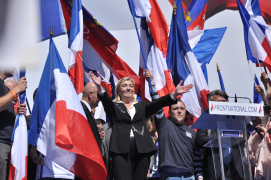
    meeting_1er_mai_2012_front_national_paris_46

    Image credit: Blandine Le Cain/Wikimedia Commons.

    Since Marine Le Pen took over party leadership from her father in 2011, the FN has entered a new stage of its political development, which demonstrates its adaptability and an ability to survive its founding leader: Jean-Marie Le Pen. However, the party has an even longer history in French politics. It was founded in 1972 from a small neo-fascist organization, Ordre Nouveau, as an electoral umbrella for nationalist groups to run in the 1973 legislative elections. The FN remained electorally irrelevant during the first decade of its starting phase. Its turning point was the 1984 European elections where it obtained about 11% of the vote. From the mid-1980s, the party maintained a sort of electoral stability (between 11 and 15% of electoral support). Since 1984, the FN has also fielded candidates in all local and regional elections, winning representation in regional, departmental and municipal councils, as well as in the European Parliament.

    The change of leader in 2011 reinforced the party’s electoral appeal: the FN under Marine Le Pen has enlarged its base of support, reaching new heights in the 2012 Presidential election with about 18% of the vote. The FN also topped the 2014 European election winning a quarter of the national vote and 24 seats, which allowed Marine Le Pen to establish leadership over the pan-European nationalist right. Success at the national level has been corroborated locally. In the 2014 municipal election, the party won 11 municipal councils and 1,544 councillors, outperforming its previous record (1995). The departmental elections of March 2015 showed another surge in FN support at 25% of the vote, with 62 local councillors. In 2015 again (December) the party participated in the regional elections and it obtained a new record. In particular in two regions (Provence-Alpes-Côte d’Azur and Nord-Pas-de-Calais-Picardie) the FN arrived at 40% of the vote during the first round of elections.

    Under Marine Le Pen’s leadership, party change has been embedded in the concept of “de-demonization” (dédiabolisation). As Gilles Ivaldi suggests, de-demonization is primarily characterized by the attempt to detoxify the party’s extremist reputation, while simultaneously preserving its populist radical right potential for voter mobilization. The current FN seeks to improve its credibility through party modernization and professionalization. Whilst the 2011 leadership election represented a first notable step towards greater intra party democracy, there is little evidence of a more substantial move towards a party “normalization”, neither ideologically nor organizationally. Instead, the party has taken a process of “Marinization” (personalization) whereby Marine Le Pen has successfully replaced her father as charismatic leader, both inside and outside the party.

    The 2011 congress represented probably the most important change in the French Front National organizational path, with Marine Le Pen taking over the party. Following Jean-Marie Le Pen’s decision to step down, the party had initiated an internal leadership campaign. During the same campaign against Bruno Gollnisch, Marine Le Pen had indicated that she would turn the party into a professionalized and more effective party organization: “I want to create a renewed, opened and well-functioning party”, she said. In 2011, the FN had experienced its first change of leader since 1972, together with a new executive team and a new logo. The “new” FN has pushed an agenda, which aims primarily to shed its extreme right profile and to achieve agency credibility.

    A “Europe of Nations”

    The FN articulates a strong populist anti-establishment agenda. It opposes European integration, exemplifying the “hard Euro-scepticism” defined by Aleks Szczerbiak and Paul Taggart as “a principled opposition to the EU and European integration”. Its opposition to Europe concerns a wide range of institutional, economic and national identity issues. The FN’s concept of a “Europe of Nations”, argues that institutional cooperation should only take place between sovereign nation-states, opposes the EU as a supranational entity, and criticizes the EU as elitist and bureaucratic. A pledge for a return of competences and powers to the national level has been central to the FN electoral platforms since the early 1990s. The 2014 FN ’s programme featured primarily the promise to shed the Euro which was portrayed as “ a jail” serving the “sole interests of bankers and the wealthy”, and from which the French people “should free themselves”.

    The FN’s distrust of European integration revolves around immigration and issues of national identity, and it is often linked with welfare-chauvinist positions. The FN’s hostility towards the EU is underpinned by the party’s traditional ethno-nationalist policies. As Mudde suggests, the FN’s anti-EU positions are incorporated into a typical populist radical right agenda, which combines nativism, authoritarianism and anti-establishment populism.

    The party is notorious for its politicization of immigration issues. During the 1980s, Jean Marie Le Pen laid out the basis for a potent ethno-nationalist and welfare-chauvinist “master frame”, which later diffused throughout Europe. In 2014, the European campaign by the FN was marked by the continuation of xenophobia and welfare-chauvinism, showing no significant departure from the party’s traditional ethno-nationalist ideology.

    The FN committed to “defending, in all circumstances, France’s values, identity, traditions and way of life” against what would be stigmatized as a “sieve Europe”. The party’s 2014 platform lashed out at the Schengen agreement, campaigning on withdrawal, and claiming that the FN would close France’s borders to “stop uncontrolled immigration and put an end to the free movement of Roma and delinquents across Europe”. In line with its 2012 manifesto, the FN proposedpolicies, which would remove the possibility within French law to regularize illegal migrants. The party’s 2012 presidential platform featured a range of nativist policies, including the FN’s traditional “national preference” scheme, which seeks to give priority to the French people over foreigners in welfare, jobs and housing.

    A product of France’s political system and climate?

    French political parties are characterized by their instability, organizational weakness and fragmentation. As one of the oldest parties in France, FN has shown greater signs of stability over time. Since 1972, it has experienced only one change at the top and it has retained its name. The Parti Socialiste (PS – Socialist Party), currently the most important centre-left party in France, underwent important organizational changes since 1971 as it opened itself to other political forces. Parties of the right exhibit an even greater degree of volatility over time. In 2002, the loose electoral alliances of the 1980s and the 1990s between the Gaullists and the Centre-Right gave way to organizational merger with the creation of the Union pour un Mouvement Populaire (UMP – Union for a Popular Rally), which was an attempt by the centre-right to consolidate its identity.

    In 2007, the new president of the UMP, Nicolas Sarkozy, was elected in the presidential election. In 2011, however, disgruntled liberals and Christian Democrats left the UMP to form an independent party, the Union des démocrates et indépendants (UDI). Following Sarkozy’s defeat in 2012, the UMP entered a period of high ideological, leadership and strategic factionalism. In November 2014, Sarkozy returned to the UMP and won the leadership election with a large internal consensus. He pushed important changes to the party statutes, including a renaming of the party to Les Républicains (The Republicans). Recently, the party reorganized itself around a new right-wing leader, François Fillon, who became the Presidential candidate in view of 2017 appointment and after a victory during an open primary election.

    The same event has generated a new political and social weakness in France, also fuelled by the election of Donald Trump as US president in November 2016. In current context, France is faced with another crucial battle between populist radical right and establishment (right again) forces. The unexpected victory of Fillon in the Republican primary, Socialist President François Hollande’s decision not to run again, may be complicating Le Pen’s efforts to turn her political success into an electoral victory in the two rounds of voting scheduled for April 23 and May 7, 2017. In fact, there are themes, such as Islam, insecurity and immigration, with which the FN is able to rule the debate in general and worry public opinion.

    The FN has been able to aquire a new agenda, a sort of “cultural hegemony”, a “vocabulary” even more used also by other traditional party from the centre-right area. France remains, therefore, pervaded by a strong wave of right-wing extremism. In this changed and menacing context, the FN maintains a high appeal and it is ready to prepare its battle in the 2017 Presidential election and probably it is going to reinforce its campaign and its strategies. In any case, it has become (and  remained) a constant presence in the French political system.

    Maria Elisabetta Lanzone, PhD, is Research Fellow and Teaching Assistant at University of Genoa (Italy). She is expert in comparative populism, Euro-scepticism and migration policies. She is the author, with Gilles Ivaldi, of the book chapter From Jean-Marie to Marine Le Pen: Organizational Change and Adaptation in the French Front National (2016, Palgrave Macmillan). From April 2015 she is also member of the ERMES Laboratory at University of Nice-Sophia Antipolis (France).

  • The French Front National: Between the Old and the New

    The French Front National is now one of the most successful political protest forces in Western Europe. The party is preparing to participate in the April 2017 Presidential election where the migrant crisis and the capacity of the government to provide security from terrorist attacks will be pressing issues.

    According to some scholars, such as Cas Mudde, the French Front National (FN) now appears to be one of the most successful populist radical right parties in Western Europe. Since the mid-1980s, the FN has established itself as a permanent force in French politics. Nowadays, the party appears to offer strength in a climate where European security appears weak and vulnerable. Flourishing in a France characterized by strong concerns about the migrant/refuges crisis and recent terrorist attacks by Islamic extremists, the party is currently placed in a European ideological space of extreme right protest, often dominated by racism and xenophobia. The FN supports a concept of “Europe of Nations” and protectionism. These ideas have been encouraged by the recent winning of the “leave” campaign in the UK referendum and the Donald Trump’s rise in the USA. What are the origins of the FN, its current strategies and its role in the contemporary political landscape (at national and supranational level)?

    From Jean-Marie to Marine: a family party

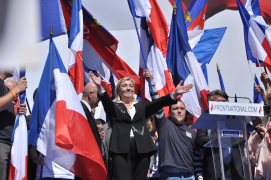
    meeting_1er_mai_2012_front_national_paris_46

    Image credit: Blandine Le Cain/Wikimedia Commons.

    Since Marine Le Pen took over party leadership from her father in 2011, the FN has entered a new stage of its political development, which demonstrates its adaptability and an ability to survive its founding leader: Jean-Marie Le Pen. However, the party has an even longer history in French politics. It was founded in 1972 from a small neo-fascist organization, Ordre Nouveau, as an electoral umbrella for nationalist groups to run in the 1973 legislative elections. The FN remained electorally irrelevant during the first decade of its starting phase. Its turning point was the 1984 European elections where it obtained about 11% of the vote. From the mid-1980s, the party maintained a sort of electoral stability (between 11 and 15% of electoral support). Since 1984, the FN has also fielded candidates in all local and regional elections, winning representation in regional, departmental and municipal councils, as well as in the European Parliament.

    The change of leader in 2011 reinforced the party’s electoral appeal: the FN under Marine Le Pen has enlarged its base of support, reaching new heights in the 2012 Presidential election with about 18% of the vote. The FN also topped the 2014 European election winning a quarter of the national vote and 24 seats, which allowed Marine Le Pen to establish leadership over the pan-European nationalist right. Success at the national level has been corroborated locally. In the 2014 municipal election, the party won 11 municipal councils and 1,544 councillors, outperforming its previous record (1995). The departmental elections of March 2015 showed another surge in FN support at 25% of the vote, with 62 local councillors. In 2015 again (December) the party participated in the regional elections and it obtained a new record. In particular in two regions (Provence-Alpes-Côte d’Azur and Nord-Pas-de-Calais-Picardie) the FN arrived at 40% of the vote during the first round of elections.

    Under Marine Le Pen’s leadership, party change has been embedded in the concept of “de-demonization” (dédiabolisation). As Gilles Ivaldi suggests, de-demonization is primarily characterized by the attempt to detoxify the party’s extremist reputation, while simultaneously preserving its populist radical right potential for voter mobilization. The current FN seeks to improve its credibility through party modernization and professionalization. Whilst the 2011 leadership election represented a first notable step towards greater intra party democracy, there is little evidence of a more substantial move towards a party “normalization”, neither ideologically nor organizationally. Instead, the party has taken a process of “Marinization” (personalization) whereby Marine Le Pen has successfully replaced her father as charismatic leader, both inside and outside the party.

    The 2011 congress represented probably the most important change in the French Front National organizational path, with Marine Le Pen taking over the party. Following Jean-Marie Le Pen’s decision to step down, the party had initiated an internal leadership campaign. During the same campaign against Bruno Gollnisch, Marine Le Pen had indicated that she would turn the party into a professionalized and more effective party organization: “I want to create a renewed, opened and well-functioning party”, she said. In 2011, the FN had experienced its first change of leader since 1972, together with a new executive team and a new logo. The “new” FN has pushed an agenda, which aims primarily to shed its extreme right profile and to achieve agency credibility.

    A “Europe of Nations”

    The FN articulates a strong populist anti-establishment agenda. It opposes European integration, exemplifying the “hard Euro-scepticism” defined by Aleks Szczerbiak and Paul Taggart as “a principled opposition to the EU and European integration”. Its opposition to Europe concerns a wide range of institutional, economic and national identity issues. The FN’s concept of a “Europe of Nations”, argues that institutional cooperation should only take place between sovereign nation-states, opposes the EU as a supranational entity, and criticizes the EU as elitist and bureaucratic. A pledge for a return of competences and powers to the national level has been central to the FN electoral platforms since the early 1990s. The 2014 FN ’s programme featured primarily the promise to shed the Euro which was portrayed as “ a jail” serving the “sole interests of bankers and the wealthy”, and from which the French people “should free themselves”.

    The FN’s distrust of European integration revolves around immigration and issues of national identity, and it is often linked with welfare-chauvinist positions. The FN’s hostility towards the EU is underpinned by the party’s traditional ethno-nationalist policies. As Mudde suggests, the FN’s anti-EU positions are incorporated into a typical populist radical right agenda, which combines nativism, authoritarianism and anti-establishment populism.

    The party is notorious for its politicization of immigration issues. During the 1980s, Jean Marie Le Pen laid out the basis for a potent ethno-nationalist and welfare-chauvinist “master frame”, which later diffused throughout Europe. In 2014, the European campaign by the FN was marked by the continuation of xenophobia and welfare-chauvinism, showing no significant departure from the party’s traditional ethno-nationalist ideology.

    The FN committed to “defending, in all circumstances, France’s values, identity, traditions and way of life” against what would be stigmatized as a “sieve Europe”. The party’s 2014 platform lashed out at the Schengen agreement, campaigning on withdrawal, and claiming that the FN would close France’s borders to “stop uncontrolled immigration and put an end to the free movement of Roma and delinquents across Europe”. In line with its 2012 manifesto, the FN proposedpolicies, which would remove the possibility within French law to regularize illegal migrants. The party’s 2012 presidential platform featured a range of nativist policies, including the FN’s traditional “national preference” scheme, which seeks to give priority to the French people over foreigners in welfare, jobs and housing.

    A product of France’s political system and climate?

    French political parties are characterized by their instability, organizational weakness and fragmentation. As one of the oldest parties in France, FN has shown greater signs of stability over time. Since 1972, it has experienced only one change at the top and it has retained its name. The Parti Socialiste (PS – Socialist Party), currently the most important centre-left party in France, underwent important organizational changes since 1971 as it opened itself to other political forces. Parties of the right exhibit an even greater degree of volatility over time. In 2002, the loose electoral alliances of the 1980s and the 1990s between the Gaullists and the Centre-Right gave way to organizational merger with the creation of the Union pour un Mouvement Populaire (UMP – Union for a Popular Rally), which was an attempt by the centre-right to consolidate its identity.

    In 2007, the new president of the UMP, Nicolas Sarkozy, was elected in the presidential election. In 2011, however, disgruntled liberals and Christian Democrats left the UMP to form an independent party, the Union des démocrates et indépendants (UDI). Following Sarkozy’s defeat in 2012, the UMP entered a period of high ideological, leadership and strategic factionalism. In November 2014, Sarkozy returned to the UMP and won the leadership election with a large internal consensus. He pushed important changes to the party statutes, including a renaming of the party to Les Républicains (The Republicans). Recently, the party reorganized itself around a new right-wing leader, François Fillon, who became the Presidential candidate in view of 2017 appointment and after a victory during an open primary election.

    The same event has generated a new political and social weakness in France, also fuelled by the election of Donald Trump as US president in November 2016. In current context, France is faced with another crucial battle between populist radical right and establishment (right again) forces. The unexpected victory of Fillon in the Republican primary, Socialist President François Hollande’s decision not to run again, may be complicating Le Pen’s efforts to turn her political success into an electoral victory in the two rounds of voting scheduled for April 23 and May 7, 2017. In fact, there are themes, such as Islam, insecurity and immigration, with which the FN is able to rule the debate in general and worry public opinion.

    The FN has been able to aquire a new agenda, a sort of “cultural hegemony”, a “vocabulary” even more used also by other traditional party from the centre-right area. France remains, therefore, pervaded by a strong wave of right-wing extremism. In this changed and menacing context, the FN maintains a high appeal and it is ready to prepare its battle in the 2017 Presidential election and probably it is going to reinforce its campaign and its strategies. In any case, it has become (and  remained) a constant presence in the French political system.

    Maria Elisabetta Lanzone, PhD, is Research Fellow and Teaching Assistant at University of Genoa (Italy). She is expert in comparative populism, Euro-scepticism and migration policies. She is the author, with Gilles Ivaldi, of the book chapter From Jean-Marie to Marine Le Pen: Organizational Change and Adaptation in the French Front National (2016, Palgrave Macmillan). From April 2015 she is also member of the ERMES Laboratory at University of Nice-Sophia Antipolis (France).

  • The European Union and Conflict Resolution

    Authors’ note: This piece presents a summary of the article: Gëzim Visoka and John Doyle, ‘Neo-Functional Peace: The European Union Way of Resolving Conflicts’, Journal of Common Market Studies. Vol. 54, No. 4, 2016, pp. 862-877. Free access link: http://onlinelibrary.wiley.com/doi/10.1111/jcms.12342/epdf.

    Today, the European Union (EU) plays an important role in preventing conflicts, as the EU’s role facilitating dialogue between Kosovo and Serbia shows. But the EU’s role as regional peacebuilder could suffer drawbacks as a result of internal turbulences cases by the Brexit and other lingering disintegrationalist forces.

    Introduction

    The European Union has expanded its role in preventing conflicts and building peace, but its institutional practices remain insufficiently conceptualized. In this piece we argue that, drawing from a strong self-perception toward a neo-functionalist interpretation of its own history, the EU has started to use its own internal model of governance as an approach for resolving protracted disputes, through deconstructing highly political issues into technical meanings in order to achieve mutually acceptable agreements. We illustrate this by examining the EU’s approach in facilitating a dialogue for normalising relations between Kosovo and Serbia. However, the EU’s role as regional peacebuilder can suffer drawbacks as a result of internal turbulences cases by the Brexit and other lingering disintegrationalist forces.

    The EU’s approach to resolving conflicts and building peace

    Nicolas Raymond

    Image by Nicolas Raymond via Flickr.

    In the past ten years, the European Union (EU) has increased its role in resolving conflicts and building peace in its neighbouring regions and beyond. However, analysis of the EU peacebuilding work has placed EU practice almost entirely within traditional instruments of security governance, such as conflict prevention and mediation, crisis management, post-conflict stabilization and normative frameworks, such as human rights, human security and civilian protection. This is largely because scholars have argued that the EU’s peacebuilding framework does not yet represent a coherent intellectual project and relies on existing liberal peacebuilding frameworks affiliated with restoring security, strengthening the rule of law, supporting democratic processes, delivering humanitarian assistance, and supporting economic recovery. Yet the EU’s peace support operations should not only be studied through the lens of liberal peacebuilding, but should also be seen as self-mirroring its internal dynamics of neo-functional integration and consolidation. Thus, the EU’s external actions are partly based on the externalization of its own model of integration, especially neo-functionalism which accounts for the incremental convergence of self-interest through economic and technocratic co-operation in a particular sector, which then can spill over to other sectors and enable broader political co-operation and integration.

    The EU’s peacebuilding approach is different to that of other international actors, mainly due to the contextual factors regarding how it has transformed internally, how its complex institutional and multi-layered governance works and what capacities, norms and practices it invokes in dealing with external situations. The domination of new alternative accounts, such as liberal intergovernmentalism, in explaining the EU’s common foreign and security policy, as well as the complex unfolding of EU enlargement, development, and peacebuilding policies, have overshadowed neo-functionalism’s space in exploring developments in EU peacebuilding. Liberal intergovernmentalism grants more agency to the national preferences of member states than the EU institutions in shaping internal and external policy.

    In peacebuilding studies, there is a tendency to avoid neo-functionalism, because it can be associated with technocracy – the rule of experts and bureaucratic procedures, based on universal blueprints, privileging of external knowledge and imposition of frameworks for governing societies.

    Despite its overshadowed academic relevance, neo-functionalism continues to be an underlining frame of reference and culture of practice among EU policy-makers and bureaucrats. Neo-functionalism accounts for the incremental convergence of self-interest through economic and technocratic co-operation in a particular sector, which can spill over to other sectors and enable broader political co-operation and integration. The increased role of the EU in merging peace, development and security speaks to the neo-functionalist evaluation of EU governance of external security. Neo-functionalism, therefore, is not only relevant for theorizing regional integration, but can also help us understand the EU’s peace support practices.

    Neo-functional peace: Kosovo-Serbia Dialogue

    The EU’s neo-functionalist approach has played a crucial role in normalizing relations between Kosovo and Serbia, and in resolving a range of outstanding political disputes. In policy discourse, the Kosovo–Serbia dialogue was presented as a major success of European foreign policy and evidence that the EU was a reliable partner of the UN. But, how has the EU managed to resolve one of the protracted conflicts in Europe?

    First, as prescribed by neo-functionalists, background conditions need to be conducive for a peace process to work. In the case of Kosovo and Serbia, the background conditions were ripe for both sides to initiate a peace process, whereby the normalization of relations between Kosovo and Serbia emerged as a key condition for advancing the stalled EU integration process for both countries. The peace processes between Kosovo and Serbia in the past two decades are marked by several missed opportunities. The EU’s integration perspective for Kosovo and Serbia has been the driving force for both sides to engage in dialogue. Hence, despite its unpopularity now in Europe, the enlargement of the EU in the Western Balkans is key to transforming protracted conflicts.

    Second, neo-functionalist approaches prefer technical dialogue and agreements in areas of ‘low politics’, which permit confidence-building, socialization and development of mutual commitments. A key feature of Kosovo–Serbia Dialogue was the conversion of sensitive political issues into technocratic process. The essence of this process was to find a mutually agreeable solution, leading to Serbia’s removal of its parallel institutions in Kosovo and de facto acceptance of Kosovo’s legal and political authority territory Kosovan territory, but also as an independent state in the region. Equally important and sensitive was Serbia’s demand to expand political rights and the scope of local self-governance of the Serb community living in Kosovo. The technical dialogue has resulted in a number of important agreements on regional co-operation and representations, integrated border management, regulation of customs steps, return of cadastral records and civil registry and recognition of university diplomas. The agreements were written in technical language but had far-reaching political implications.

    Third, in neo-functionalist logic, technical agreements had a spill over effect which launched a high-level political dialogue and resolved numerous outstanding sensitive political issues. After each agreement, the EU outlined the need for continuing dialogue, for pragmatism and for new agreements. The technical dialogue has facilitated a high-level political dialogue and in turn, the political dialogue later allowed new technical agreements.  In fact, technical dialogue proved to be insufficient without upgrading the process to the highest political level that would ensure stronger political commitment, domestic legitimacy and faster progress in implementing the outcomes of the dialogue. The key breakthrough in the Kosovo–Serbia Dialogue was the negotiation of the ‘First Agreement Governing the Principles for Normalisation of Relations’, which permitted progress on sensitive political issues, such as sovereignty and regional membership, without negatively affecting the self-interest and domestic legitimacy of parties.

    Fourth, neo-functionalist interactions are often embedded in multi-meaning liminalities to enable each party to interpret agreements in their own terms. While Kosovo utilized them to strengthen sovereignty, Serbia utilized the agreements to improve and advance the rights of Serbs in Kosovo and enhance its EU accession agenda.  If, however, a highly political vocabulary was used to describe the contentious issues, neither party would have been able to reach any agreement. Liminality was chosen to reduce the potential politicization of these issues and create space for both parties to sell to their domestic audiences these technical agreements as favourable deals in their national interest. For instance, the agreement on the freedom of movement provides that citizens of Kosovo and Serbia would cross the border not with passports but with ID cards, accompanied only by a written entry/exit. In this way the question of recognizing the Kosovo passport was avoided, by using alternative national documents.

    Another interesting example is the IBM agreement, which for Kosovo is referred to as integrated border management, while Serbia refers to it as integrated boundary management. The substance of this agreement is in favour of Kosovan sovereignty, as it is a de facto demarcation of the border, setting the permanent border crossing between two countries where each party recognizes the jurisdiction on their respective sides.

    Fifth and final feature, as the EU’s desire to reward intentions and rhetorical commitments, rather than tangible results and outcomes of the peace process, which does not exclude the possibility for encapsulation, spillback and retrenchment of all sides in the peace process. From the EU’s perspective, just the fact that the parties are talking to each other and the dialogue has not failed completely constitutes a promising basis for success. The EU has tried to promote positive conditionality and delivered some benefits irrespective of actual implementation. The facilitative role of the EU has proven to be more effective than the previous imposing nature of UNMIK in Kosovo. Nevertheless, conditionality and incentives for EU integration have certainly been key ingredients that have transformed the conflicting positions of actors.

    Conclusion

    Despite numerous achievements, the dialogue between Kosovo and Serbia was not without challenges. The agreements deriving from technical dialogue have only partially been implemented. Each side has delayed the implementation of certain parts of agreements that were not seen to be in their best interests. Both Kosovo and Serbia ran into domestic legal and institutional complications, especially in cases which required legislative change. There is some evidence (but still limited to date) that the agreements have improved people’s lives. The main critical uncertainty is how the implementation of agreements will reshape political and institutional life in Kosovo and what role it will have in fostering local peacebuilding and ethnic reconciliation. Another critical uncertainty is the EU integration dynamics of Serbia and Kosovo, which serve as a key incentive for both sides’ engagement in the normalization dialogue. The rise of euroscepticism, refugee crises and regional instability has made enlargement unpopular within the European Union. Most importantly, Brexit and other internal challenges can hold back EU’s role as regional peacebuilder. Moreover, it remains uncertain what the endgame of the dialogue will be, especially the regulation of diplomatic relations between Kosovo and Serbia. Despite these difficulties, the progress made since 2011 compared to previous international engagement is clear, especially in opening the prospects for resolving key outstanding issues. Nevertheless, these future uncertainties show that this neo-functional peace could experience setbacks, but is a promising approach through which to view the EU’s engagement in the resolution of protracted conflicts.

    The key principles of neo-functionalism, such as the interplay between technical and political, deconstructing of larger political issues into smaller technical decisions, spillover effects and shifting grounds of interests – when decontextualized and modified from their original usage to describe the EU integration process – are a useful means to conceptualize how the EU addressed the protracted conflict around the sensitive questions of sovereignty, recognition and political autonomy. This neo-functional approach does not seek to make progress by avoiding sensitive issues and focusing on something else; rather, it seeks to deconstruct the contentious issues into acceptable technical and everyday decisions. Another distinct feature of EU’s neo-functionalist approach is the extensive involvement of local actors and ownership of the process. While liberal and technocratic peacebuilding is often associated with the imposition of external blueprints and template-like solutions, and suppressing local alternative dispute resolution approaches, EU’s approach can be different. It can be a situational strategy, where the local actors are the main parties that decide on the form and substance of agreements and implementation.

    EU’s neo-functionalist distinctiveness lies in its ability to transform disagreement by deconstructing language and practice and translating their meaning differently, by providing facilitative space through third parties. This sequential approach to the peace process has been first and foremost a practice and process-driven approach. Technocracy in this context does not depoliticize issues, but it helps reframe, temporarily at least, the meaning of things in such a fashion that it enables the transformation of hostilities and building of interdependent co-operation. It is this logic from its own history which makes neo-functional approach again a useful way to think about EU peace support practices. This approach deserves more merit and needs to explore how it can be utilised in contemporary peace-making and mediation efforts, especially in frozen and protracted conflicts.

    Dr Gëzim Visoka is a Lecturer in Peace and Conflict Studies at Dublin City University. His latest book entitled “Peace Figuration after International Intervention: Intentions, Events, and Consequences of Liberal Peacebuilding” is out this month with Routledge.

    Professor John Doyle is Director of the Institute for International Conflict Resolution and Reconstruction and the Executive Dean in the Faculty of Humanities and Social Sciences at Dublin City University.