Blog

  • Brexit and the Irish Nationalist Reaction

    Brexit has called into question Britain’s relationship with Northern Ireland. Whilst the possibility of sporadic inter-communal violence in Northern Ireland is small, the Brexit vote has certainly placed a strain upon the hard-won stability of British-Irish relations.

    Introduction

    Whilst the full implications of so-called ‘Brexit’ for the future of the United Kingdom (UK)’s relationship (if any) with the European Union (EU) remain profoundly uncertain, it is also the case that the UK-wide vote to Leave has exacerbated the already existing sense of fluidity regarding the future constitutional relationships between the constituent parts of the multi-national UK state. Of course, the majority votes to Remain in Scotland and Northern Ireland do not, of themselves, create a new constitutional arrangement, but if the new Conservative administration of Theresa May were to decide to push on with a UK-wide ‘hard Brexit’, perhaps involving leaving the single market in a bid to establish control over the free movement of persons, then it is difficult to see how the stability of the UK’s constitutional status quo could be guaranteed. As Brendan O’Leary has argued, ‘those who insist that a 52-48 vote is good enough to take the entire UK out of the EU would trigger a serious legitimacy crisis.’  A key lesson that needs to be understood by Westminster in the coming months or years of negotiation (with Brussels and the EU member states, particularly the Republic of Ireland, but also within the divided UK) is that, as O’Leary puts it, multi-national states are not usually ‘destroyed by secessionists alone’ (Ibid.). It is the ‘unilateral adjustment of the terms of the union by the centre’ that can provoke such an outcome. This may be an unintended consequence of such unilateralism, even if some at the centre profess the view (as David Cameron did after the Scottish referendum on independence in 2014) that the multi-national union is ‘precious beyond words’.

    Great Britain and Northern Ireland: A ‘Place Apart’
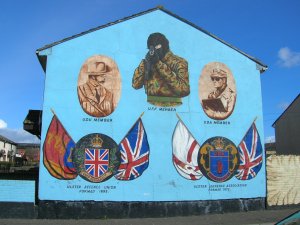
    unionist mural

    Image by Miss Copenhagen via Flickr

    It is unsurprising that during the campaign neither the public nor the political class in Great Britain (GB) appeared to give much serious consideration to the effect of a Brexit vote upon three crucial interlocking relationships: the fragile state of communal relations within Northern Ireland in the post-Good Friday Agreement (GFA) era; the North-South relationships on the island of Ireland, and the questions Brexit was likely to raise concerning the 300-mile land border; the wider UK relationship with its closest neighbour. This ‘reflexive forgetfulness’ of the GB public with regard to the unloved province of Northern Ireland may have been unsurprising, but it was lamentable, and possibly destabilising, nonetheless. If there was engagement with the potential repercussions of a Leave vote on the internal, already fragile, relations between the constituent parts of the UK, the focus tended to be on Scotland, rather than Northern Ireland. This neglect, by no means benign, reflects a deep-rooted sense that Northern Ireland is, in Dervla Murphy’s phrase, a ‘place apart’.  In the short and medium-term the ‘peace process’ has not been jeopardised directly, and there is no immediate prospect of a return to widespread violent confrontation between Irish nationalists and British unionists in Northern Ireland. Aside from a number of weak and fragmented ‘dissident’ republican groups, there is no appetite for the resumption of an armed campaign among ‘mainstream’ republicans. There is always a possibility of sporadic inter-communal violence in Northern Ireland, but this looks remote at present. Nevertheless the Brexit vote has certainly placed a strain upon the hard-won stability of these relationships since 1998.

    The Republic of Ireland and ‘Brexit’

    For the Dublin government of Fine Gael (supported by several independent TDs), there was a fear that the critically important trading relationships with the UK would be damaged, and that any imposition of a ‘hard’ border (involving customs posts and possibly restrictions upon free movement) would further complicate and hamper economic activity. Allied to this hard-nosed economic concern, Dublin was also anxious that Northern Ireland’s fragile community relations and the institutional balance reflected in the GFA could be under threat, as ‘the border’ and potential constitutional change were placed, once again, on the agenda. Related to this anxiety was, perhaps, the unspoken fear of Taoiseach Enda Kenny that Dublin’s sense of being an equal partner with the UK in the lengthy years of the peace process might be compromised. The harmonious co-operation between the Dublin and London governments, built up over several decades stretching back to the Anglo-Irish Agreement of 1985, might begin to unravel, if London took the Brexit vote as a green light to marginalise the concerns of the Irish. Those concerns were three-fold: maintaining the open border between the Republic and Northern Ireland; keeping the ‘common travel area’ between Ireland and the UK (first agreed in the aftermath of partition in 1922); and, safeguarding the trading relationships (worth approximately £1 billion a week). As Pat Leahy argued in the Irish Times, ‘underpinning all these was the need above all else to protect the peace process.’

    Kenny was keen to confirm that this bilateralism, and the ‘special relationship’ between the two states would survive Brexit, and his meeting with Theresa May in late July assuaged these doubts somewhat. But, as with that other fabled ‘special relationship’ between London and Washington, this one is also fundamentally asymmetrical, intrinsically of more significance for one side than the other. When it comes to tackling the enormous fallout from the Brexit decision, neither the relationship with Dublin, nor indeed the impact upon Northern Ireland, are at the top of London’s to-do list. It may even be the case that these issues are closer to the bottom of that list. Having said this, the new Prime Minister’s willingness to meet with Kenny, and her declaration in Belfast that ‘no-one wants to return to the borders of the past’ have calmed these fears to at least some extent.

    However, hard choices remain to be made, and there is no guarantee that May’s government will be able to square the circle between impatient Conservative back-benchers and pragmatists in Whitehall who are concerned about softening the impact of the decision, both economically and diplomatically. The former group, buoyed by the momentum of victory, believe that Brexit should be swift, complete and irrevocable; they are watching hawkishly for any signs of back-tracking. This is the context in which Enda Kenny made a speech at the MacGill summer school in Co. Donegal, which speculated on the prospect, at some time in the indeterminate future (perhaps ‘10, 15 or 20 years from now’), that Northern Ireland might vote to join with the Republic. Of course, this was ‘controversial’, but almost certainly was designed to ensure that others, in the UK and Europe, take seriously the concerns of the Dublin administration. More parochially, Kenny perhaps felt that he needed to respond to the pressure being applied by opposition parties Fianna Fáil and Sinn Féin (SF).

    Sinn Féin and ‘Brexit’

    Having campaigned for a Remain vote, on the basis of its ‘critical engagement’ position with respect to the EU, SF’s first response to the referendum result was to demand a border poll in Northern Ireland, as provided for in the GFA, if there is a realistic prospect of a majority vote in favour of constitutional change. Gerry Adams, SF President, claimed that the result meant that the ‘British government had forfeited the claim to represent the North at an EU level. Its policy has been rejected by the people.’ When this demand was predictably dismissed by the outgoing Secretary of State for Northern Ireland, Theresa Villiers, SF quietly moved on, instead focusing its attention on a mooted ‘national forum’ (modelled on the New Ireland Forum of the early 1980s and the Forum for Peace and Reconciliation of the early years of the peace process) to discuss how ‘the vote of the clear majority of citizens in the North who want to remain in the EU can be respected and defended.’ Although this proposal was effectively adopted by the Dublin government, it was also immediately rejected by Arlene Foster, the Democratic Unionist First Minister of Northern Ireland. Nevertheless, SF senses that Brexit could present republicans with a real opportunity to break out of the sterile impasse that had threatened its ‘project of transformation’ in Northern Ireland. SF has always characterised the GFA as ‘transitional’ and the peace process as ‘dynamic’, reflecting the party’s teleological belief that the ‘natural’ end-point of the process will be a united Ireland. It remains to be seen whether or not Brexit helps to make this vision any more realistic, but for the moment it has certainly breathed new life into the notion that the ‘border’ continues to be a key issue for the peoples of the island.

    Since June 23rd, there have been emollient words and symbolic gestures from Theresa May, but sooner or later some difficult and potentially painful choices will have to be taken. In a joint letter on August 10th to Theresa May, Arlene Foster and Martin McGuinness, the First and Deputy First Minister of the Northern Ireland Executive, argued that the UK government should take into full account four issues of particular significance for Northern Ireland: the border should not become an impediment to the movement of goods, people and services; both private and public sectors need to retain access to unskilled as well as skilled labour; the energy requirements of Northern Ireland should not be affected; the potential loss of EU funds (over 3.5 billion Euros during 2014-2020) needs to be addressed.  The Dublin government, and the parties in Northern Ireland, will be hoping to have a genuine input into this decision-making, but it looks highly improbable that all the political forces in play will, or can, be satisfied simultaneously. Despite the constructive initial discussions, the Foster/McGuinness letter recognises that ‘it cannot be guaranteed that outcomes that suit our common interests are ultimately deliverable.’ Will the centre hold, and if so, how?

    Stephen Hopkins is Lecturer in Politics in the Department of Politics and International Relations at the University of Leicester, UK. His book, The Politics of Memoir and the Northern Ireland Conflict, was published in 2013 by Liverpool University Press.

  • Gender and Private Security

    Drugs and Drones: The Crime Empire Strikes Back

    Ever advancing remote warfare technology is being increasingly used by law enforcement agencies to counter drug trafficking. In response, drug cartels are also adopting new technology to smuggle and distribute drugs. However, the technological superiority of law enforcement-military actors is also causing criminal and militant groups to adapt by employing the very opposite tactic, by resorting to highly primitive technology and methods. In turn, society is doing the same thing, adopting its own back-to-the-past response to drug trafficking and crime.

    Read Article →

    From Surveillance to Smuggling: Drones in the War on Drugs

    In Latin America drones are being used as part of the War on Drugs as both regional governments and the US are using surveillance drones to monitor drug trafficking and find smuggling routes.. However, as drones are increasingly being used by drug cartels themselves to transport drugs between countries, could Latin America find itself at the forefront of emerging drone countermeasures?

    Read Article →

    Privatising the War on Drugs: PMSCs in Colombia and Mexico

    US drug policy has become increasingly privatised in recent years as the US government contracts private military and security companies (PMSCs) to provide intelligence, logistical support and training to state security forces in drug-producing and –transit states. As the cases of Colombia and Mexico illustrate, this privatisation strategy is having a damaging impact on these already fragile environments.

    Read Article →

    Beyond Privacy: The Costs and Consequences of Mass Surveillance

    Last week the new UN privacy chief said UK surveillance was “worse than [George Orwell’s novel] 1984”. In the two years since the Snowden leaks revealed the existence of bulk internet and phone surveillance by US intelligence services and their partners, including the UK, the British government continues to engage in the mass collection of citizens’ communications data.

    Read Article →

    Losing control over the use of force: fully autonomous weapons systems and the international movement to ban them

    Later this month, governments will meet in Geneva to discuss lethal autonomous weapons systems. Previous talks – and growing pressure from civil society – have not yet galvanised governments into action. Meanwhile the development of these so-called “killer robots” is already being considered in military roadmaps. Their prohibition is therefore an increasingly urgent task.

    Read Article →

  • From The Great War to Drone Wars: The imperative to record casualties

    The centenary of the First World War also marks the anniversary of the practice of recording and naming casualties of war. But a century on, new forms of ‘shadow warfare’ limit the ability to record casualties of conflict and thus threaten to allow states a free hand to employ dangerous new tactics without threat of individual or international accountability. Without verifiable casualty figures – including information on who is being killed and how – we cannot evaluate the acceptability, effectiveness or impact of ‘remote control’ tactics as they are rolled out among civilian populations.

    A Humanizing Legacy

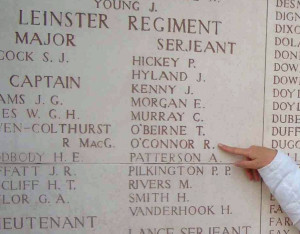
    Image of the name of Sgt. Robert O'Connor of The Leinster Regiment on the Menin Gate wall, who was killed on 31 July 1917 during the First World War. Source: Wikipedia

    Image of the name of Sgt. Robert O’Connor of The Leinster Regiment on the Menin Gate wall, killed on 31 July 1917 during the WWI. WWI saw the start of practice of recognizing by name each and every soldier killed during battle. Source: Wikipedia

    As the world marks the centenary of the commencement of the First World War,  we remember not the war that ended all wars, but instead the war that changed them forever. Introducing new forms of mechanized warfare – including the machine gun, u-boat, tank and airplane – WWI increased exponentially the lethal force of the individual soldier, bringing about an era of death and destruction on an industrial scale.  Yet, even as it ushered in the means of mass and impersonal killing, the ‘Great War’ also initiated the humanizing practice of recognizing by name each and every soldier who lost their lives, burying them in marked graves alongside those of their officers. Not only does such identification and public acknowledgement of victims dignify their memory, in today’s conflicts it can also provide vital information for humanitarian response and for monitoring compliance with – or tracking violations of – international law.

    Today we are again witnessing the introduction of new forms of warfare – including armed drones, lethal autonomous weapons, special operations forces and use of private military and security companies.  Like their WWI counterparts, these new tactics will reshape the face of conflict, yet as they do so they also threaten to destroy the humanizing legacy of casualty recording. Pushing global warfare deep into the shadows, these new ‘remote-control’ tactics are replacing public military campaigns with covert and contracted force. This shift to a ‘light-footprint’ approach, primarily by the United States, but also by France, Russia and the United Kingdom, reflects not only the changing nature of security threats, which have become mercurial at best, but also the lessening appetite for long military campaigns with high military casualties. A recent report from the Every Casualty Programme at Oxford Research Group and the Remote Control Project finds that the prioritisation of ‘remote control’ tactics presents serious obstacles to the recording of casualties, and subsequently, accountability for the civilians impacted by their use.

    Issues of capacity, political will, and access challenge efforts to record the casualties of any type of conflict. Yet, in conventional warfare, where identifiable or recognised conflict parties conduct attacks, such recording is not impossible: militaries generally record their own fatalities in these instances, while civilian deaths are often recorded by small civil society organizations around the world.  One need only look to the names of the hundreds of civilians killed in recent conflict in Gaza published by major news outlets to see the result of such efforts. In covert conflicts, however, or in conflicts where ‘remote control’ tactics are used, the ability to record casualties – including information on who is killed and how – is greatly diminished.

    The merging of intelligence operations with the use of force – seen currently in countries such as Yemen, Pakistan and Afghanistan with the use of armed drones and special operations forces by the United States – is a particularly problematic trend for casualty recorders. By greatly increasing the opacity – or outright deniability – of state force, covert operations erect a seemingly impenetrable wall of ‘classified information’, impeding recorders’ ability to conduct field investigations and verify their data. In 2010, the United Nations Mission in Afghanistan (UNAMA), which has conducted systematic casualty recording since 2007, reported that due to “tactical reasons and deliberate lack of information about such operations” they found it “very difficult to monitor and adequately document the activities of Special Forces” operating in the country. Gathering data on civilian and combatant casualties of drone strikes has also proved problematic – with ORG’s report finding that recorders are challenged by a lack of official disclosure of information about strikes, blocking of access to strike sites, and a near monopoly of information by anonymous officials on information coming from affected areas.

    The consequent lack of reliable casualty data impedes the impartial evaluation of the tactics’ impacts on civilian populations. It also limits the ability to scrutinise the tactics acceptability and effectiveness using evidence-based analysis. The United States – the primary user of armed drones – has repeatedly claimed that drones allow for precision targeting, capable of surgically eliminating targets with minimal civilian casualties. Yet, as a recent report from the Bureau of Investigate Journalism on drone use in Afghanistan has shown, “the armed forces that operate drones publish no data on casualties to corroborate these claims.” Although the United States claims to record data on casualties itself, its failure to make such records transparent not only prevents an analysis of the acceptability of drone strikes, but also denies the victims and their families the opportunity for accountability or redress.

    Bringing Remote-Control warfare out of the shadows

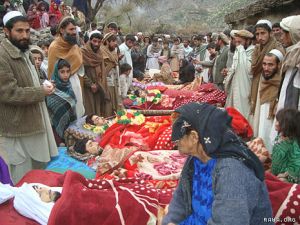
    People of Narang district mourning for the students killed in a night raid in the village Ghazi Khan on December 27, 2009. Although the operation was authorised by NATO, it is still not publicly known who carried out the attack. Source: Wikipedia

    People of Narang district mourning for the students killed in a night raid in the village Ghazi Khan on December 27, 2009. Although the operation was authorised by NATO, it is still not publicly known who carried out the attack. Source: Wikipedia

    Data documenting the casualties of particular weapons – from chemical gas in WW1 to landmines and cluster munitions more recently – has been instrumental in evaluating these weapons’ impact and acceptability, and ultimately ensuring their regulation through international treaty. Yet, as new tactics are employed under the cloak of ‘covert action’, the ability of the international community to measure and regulate their impact is increasingly limited. Without verifiable casualty figures, states may be given a free hand to employ dangerous new tactics without threat of individual or international accountability. Indeed a recent report from Amnesty International has found that as a result of an almost complete lack of transparency from the US government regarding civilian casualties in Afghanistan – specifically around those killed in night raids by SOFs or by missiles from drones strikes – victims are already facing a major accountability vacuum.

    States must take greater responsibility for recording and acknowledging the casualties – both civilian and combatant – of these new tactics. They must not seek to block public investigation and accountability, even though these tactics may be adopted for the lower profile they afford armed force. Furthermore the United Nations, alongside civil society groups or other entities, must enhance their recording efforts so as to provide independently verifiable data on casualties. Such data is essential for developing an accurate, complete and impartial record, and for facilitating scrutiny in circumstances where casualties are highly politicized. Civil society-led casualty recording and analysis, despite its limitations, has already highlighted policies within the use of remote control tactics that need greater examination: for example, the practice of ‘double-tap’ or rescuer drone strikes in Pakistan on those coming to the assistance of individuals at the site of a previous strike. Only by ensuring that casualty recording is conducted systematically and to a high standard can we bring the impact of remote control warfare out of the shadows and into the public eye.

    If we are to take a lesson from the commemoration ceremonies resounding across Europe it is simply that to learn from the past, and to honor it, we must first know that past. Details regarding the identites of those killed in conflict, both on the battlefield and in their homes, are essential to understanding the impact of violence, and to telling the full story of a conflict, to both current and future generations. The risks, then, of wars waged in secret, their battles and casualties concealed, are profound. Not only will there be no monuments at which to mourn their dead, there will be no lessons to be gleaned from their history: the wisdom of hindsight – both for policymakers deploying force and the public – may be lost completely.

    Kate Hofstra is Research and Communications Consultant of the Every Casualty Programme at Oxford Research Group and co-author of Losing Sight of the Human Cost: Casualty Recording and Remote Control Warfare. Kate previously worked for TLG,a London-based communications consultancy, where she was the editor of a digital magazine on business and development. She has also worked with the OSCE Mission to Bosnia and Herzegovina in Sarajevo and hasa background in transitional justice. Kate has an MSc in Human Rights from the London School of Economics.

    Featured Image: Deputy chief minister of Pakistan’s North West Frontier Province and tribesmen offer funeral prayers in front of dead bodies who were killed in army operation in Khar, the main town in Bajaur tribal agency, 30 October 2006. Source: The Bureau of Investigative Journalism, Naming the Dead Project

  • Recent Authors

    Our expanding group of contributors comes from a wide range of specialist backgrounds, and includes researchers,  academics, security and development practitioners and NGO staff based around the world. Some of our most recent authors include:

    Chris Abbott
    Chris is the founder and executive director of Open Briefing, the world’s first civil society intelligence agency.  He is an Honorary Visiting Research Fellow in the School of Social and International Studies at the University of Bradford and the former deputy director of Oxford Research Group.

    Phillip Bruner
    Phillip is Founder of the Green Investment Forum and a guest lecturer in global political economy at the University of Edinburgh.

    Matt Budd
    Matt is a security analyst at RESDAL (Red de Seguridad y Defensa de America Latina – Latin American Security and Defense Network) in Buenos Aires, where he focuses on public security issues in Central America. Matt holds an honours degree in International Relations from the London School of Economics. Matt has most recently been working on RESDAL’s  Public Security Index, which provides information on public security challenges and institutional responses to them in Central America.

    Mabel González Bustelo
    Mabel is a journalist, researcher and international consultant specialized in international peace and security, with a focus on non-State actors in world politics, organized violence, conflict and peacebuilding. She has worked as a researcher on peace and security  in Colombia, Ecuador, Mexico, Angola and the Palestinian territories and holds an MLitt in terrorism Studies from the University of St Andrews. Mabel blogs at The Making of War and Peace.

    David Cliff
    David Cliff works as a researcher at the Verification Research, Training and Information Centre (VERTIC) in London. There, his work focuses on research into the verification, implementation and compliance aspects of nuclear and chemical arms control and disarmament treaties. He holds a BA in Geography and an MA in International Affairs, both from the University of Exeter in the UK.

    Lisa Dittmar
    Lisa is the CEO and founder of NitrogenWise,  a website that brings together research and straightforward communication to explain the complexities of nitrogen in a meaningful and relevant way.

    Bernard Harborne
    Bernard Harborne is lead of the Violence Prevention Team in the World Bank, having joined in 2004. He has worked for over 20 years on conflict-affected countries for the UN, World Bank, NGOs and the British Government. He has a background in law, including a Masters in International Law from the LSE, and is an adjunct professor at George Washington University. Opinions expressed in his article represent his personal views and not those of the World Bank.

    Cameron Harrington
    Cameron  is an Adjunct Professor of Political Science at King’s University College and Brescia University College, at Western University (Canada), where he teaches in the areas of environmental politics and international relations. His Ph.D thesisbuilds a framework to combat water insecurity in the 21st century by focusing on the ethics of security.

    Anna Alissa Hitzemann
    Alissa is a Peaceworker with Quaker Peace and Social Witness. In this capacity, she previously wortked with Oxford Research Group as a Project Officer for the Sustainable Security Programme, with a focus on the  ‘Marginalisation of the Majority World’ project.

    Andrew Holland
    Andy is Senior Fellow for Energy and Climate at American Security Project, a Washington D.C based think tank. He is an expert on energy, climate change, and infrastructure policy. He has over seven years of experience working at the center of debates about how to achieve sustainable energy security and how to effectively address climate change. He tweets regularly via @TheAndyHolland.

    Sarah Kinosian
    Sarah is a program associate for Latin America at the Center for International Policy, a nongovernmental organization based in Washington D.C. that promotes transparency and accountability in U.S. foreign policy and global relations. She works on their Just the Facts project, monitoring U.S. defense and security assistance to Latin America and the Caribbean.

    Jenny Nielsen
    Jenny Nielsen is a Research Analyst with the Non-proliferation and Disarmament Programme at the International Institute for Strategic Studies (IISS). Previously, she was a Programme Manager for the Defence & Security Programme at Wilton Park and a Research Assistant for the Mountbatten Centre for International Studies (MCIS) at the University of Southampton. At MCIS, Jenny was tasked with the co-editing the 2004-2012 editions of the NPT Briefing Book. She holds a PhD from the University of Southampton which focused on US nuclear non-proliferation policy vis-à-vis Iran in the 1970s.

    Zoë Pelter
    Zoë is a Research Officer of Oxford Research Group’s (ORG) Sustainable Security Programme, where she works on a number of projects including ‘Rethinking UK Security and Defence’ and Sustainable Security and the Global South’.

    Edward Rackley
    Edward Rackley is a Security and Governance consultant for the World Bank, based in Washington DC. He provides periodic technical and strategic advice to the Security Sector Accountability and Police Reform Programme program  in Democratic Republic of Congo via DAI Europe, one of the program’s managing agents.

    Richard Reeve
    Richard  is the Director of Oxford Research Group’s Sustainable Security programme. He works across a wide range of defence and security issues and is responsible for the strategic direction of the programme. Richard has particular expertise in global security, Sub-Saharan Africa, peace and conflict analysis, and the security role of regional organisations.

    Rachel Staley
    Rachel Staley is currently the Programme Manager for the British American Security Information Council (BASIC) in their London office. Since 2011, Rachel has managed the operations of the office and assisted in developing the organisation’s programmes working on nuclear non-proliferation and disarmament in the Middle East, as well as engaging directly in the Trident renewal debate in the United Kingdom. Rachel holds an MA with Distinction in Non-Proliferation and International Security from King’s College London and a BA with Honours in International Affairs and Anthropology from Northeastern University.

    Sonja Wolf 
    Sonja Wolf is a researcher at the Institute for Security and Democracy (INSYDE), Mexico City. She has acted as project coordinator and principal investigator of INSYDE’s Assessment Study of Mexico’s National Migration Institute (INM), the first comprehensive study to examine the INM’s institutional and migration management and the ways in which it facilitates corruption and migrant abuse.

    Ben Zala
    Ben is a Lecturer in International Politics at the University of Leicester and former Director of the Sustainable Security Programme at Oxford Research Group.


  • UN Peacekeeping and Counter-Terrorism

    There are strong calls to give UN peacekeeping operations more robust mandates to engage in counter-terrorism tasks. But the idea of UN peacekeepers conducting counter-terrorism operations is not without its problems.

    Terrorist attacks have been increasing rapidly over the last decade. According to the Global Terrorism Index, 29,376 people were killed in terrorist attacks in 2015. This was the second deadliest year after 2014, when 32,765 people were killed. The spike in 2014 and decline in 2015 is largely a result of the rise and subsequent weakening of Boko Haram and the Islamic State (IS).

    Fatigue after long engagements in Afghanistan and Iraq and the continued impact of the financial crisis has significantly dampened the interest in new out-of-area operations among Western member states. At the same time, the threats of terrorism and migration remain at the top of the foreign policy agenda. It is in this environment that policy makers are turning to the UN, to see what role it can play in the global security burden-sharing. This means a more transactional relationship with the UN, not necessarily considering the longer-term impact of undermining its impartiality and legitimacy.

    UN peacekeeping operations have, during the last decade, been deployed to protect civilians in increasingly unstable conflicts, most often without a peace to keep. However, although the conflicts have been asymmetrical in nature, armed groups have seldom perceived the UN as a party to the conflict, and pursued a strategy of strategic targeting of its troops, police and civilians.

    The Case of Mali

    Image credit: MINUSMA/Flickr.

    In March 2012, a coalition of rebel and Islamist groups took control of the north of Mali in the wake of a coup. On April 6, 2012, the rebels proclaimed the independence of the ‘Republic of Azawad’ and the imposition of sharia law in northern Mali. 412,000 persons had fled their homes and had become internally displaced or moved across the border to Mauritania, the Niger and Burkina Faso. By November 2012, Al Qaida in the Islamic Maghreb (AQIM) had taken control of Timbuktu and Tessalit, the Movement for Unity and Jihad in West Africa (MUJAO) had taken control of Douentza, Gao, Menaka, Ansongo and Gourma, and Kidal was under the control of the Islamist group Ansar Dine (“defenders of the faith”).

    The Islamists and rebel groups were quickly conquered and fled to the far north of Mali after a short and swift intervention in the beginning of 2013 by the French Opération Serval, in cooperation with the African-led International Support Mission in Mali (AFISMA). To avoid being stuck in a long and bloody counterinsurgency, the French had pushed for a swift handover to the UN.

    On 1 July 2013, AFISMA handed over authority to the UN multidimensional integrated stabilisation mission in Mali (MINUSMA). However, the Islamist groups have proven resilient and the operation has been struggling to deploy and implement its mandate. From its inception in 2013 until 31 January 2017, it has endured 72 fatalities due to hostile actions, including suicide attacks, mortar attacks and improvised explosive devices (IEDs). The mission has been given increasingly robust mandates, and its most recent mandate ordered the mission to “…to stabilize the key population centres and other areas where civilians are at risk, notably in the North and Centre of Mali, and, in this regard, to enhance early warning, to anticipate, deter and counter threats, including asymmetric threats…”.

    The mission is actively supporting counter-terrorism actions, as it has been preparing “targeting packs” and has been informally sharing information with the French parallel counter-terrorism operation Barkhane  (the French follow-on mission from Serval). This follows a trend towards peace enforcement that started with MONUSCO, where the UN peacekeeping mission in the Democratic Republic of Congo (DRC) is now being mandated to “neutralize” identified rebel groups.

    Future missions may be deployed to Libya, Syria and Yemen – countries that are also marked by asymmetric conflict and violent religious extremism. Against this backdrop, many member states are now arguing that UN peacekeeping operations need to reform to not only deal better with the challenges it faces in Mali, but also in future operations.

    The high-level panel on peace operations, nominated by former UN Secretary-General Ban Ki-moon, strongly underscored that UN peacekeeping operations should not undertake “counter-terrorism operations”. However, the report left the back-door open, insofar as it argued that “UN peacekeeping missions, due to their composition and character, are not suited to engage in military counter-terrorism operations. They lack the specific equipment, intelligence, logistics, capabilities and specialized military preparation required, among other aspects.” Disregarding the principled arguments against moving UN peacekeeping in such a direction, this could indeed be read as a list of areas where reform is needed to enable UN peacekeeping to take on counter-terrorism tasks.

    A Desirable Shift?

    But what may the consequences be of taking UN peacekeeping operations in such a direction? First, UN peacekeeping missions are not likely to be able to perform counter-terrorism tasks in a satisfactory manner, militarily speaking. They are composed of troops from many different countries, and although they should provide a military deterrent against armed groups, they are not likely to be able to protect themselves against asymmetric attacks. Even small attacks can lead to the withdrawal of troops by troop-contributing countries, as most of these do not have the political interest needed to be able to sustain losses. The exception to this are neighbouring countries, as these may have a political interest in the conflict, but precisely because of this fact they may also be interested to use force only against some and not all parties that threaten the peace.

    The UN has been strongly criticised for not taking action to protect civilians, and the continued inaction has been used as an argument to make the UN more robust, as well as able to take on counter-terrorism tasks. However, this argument confuses the ability of the UN to protect civilians with counter-terrorism. In Mali, the mission is much busier protecting itself than protecting civilians. In fact, the recruitment to the terrorist groups is increasingly moving south in the country, as local populations are not experiencing a peace dividend or improving levels of participation and inclusion after the deployment of MINUSMA. Rather, they are experiencing a government that is continuing to marginalize significant groups of the population such as the Tuaregs in the North and the Fulani (also known as Peul) in the central regions of the country, and employ draconian counter-terrorism tactics.

    The inclusion of neighbouring countries’ troops in UN peacekeeping missions was previously considered a red line. As seen with the example of MINUSMA, as well as UN peacekeeping missions in the Democratic Republic of Congo and South Sudan (to mention a few), this principle has fallen by the wayside. Taken together with the move towards UN peacekeeping missions taking on counter-terrorism tasks, this shows a trend towards a more partial UN in these situations, which may increasingly be rendered unable to play its vital good offices and humanitarian roles, and be a UN for all the people, not only the government of the day. The UN and member states should reverse this trend, and make sure that UN peacekeeping operations can serve in their most effective way – as a tool to keep the peace while institutions, service delivery and an inclusive and participatory state is being built.

    John Karlsrud is the Manager of the Training for Peace program. He is on Twitter at @johnkarlsrud.

  • Towards sustainable civilian security in South Sudan


    South Sudan smallLast week saw the start of yet another armed anti-government revolt in South Sudan’s Jonglei state.  Reportedly led by Murle militia leader Major General David Yau Yau, there are now fears that the revolt will escalate as a result of longstanding local grievances with the army of South Sudan, the Sudan People’s Liberation Army (SPLA).
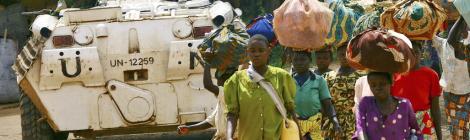
    The unrest comes as a result of a widely criticised government-led civilian disarmament campaign in Jonglei state – so-called ‘Operation Restore Peace’ – which was launched after violent clashes between Lou Nuer and Murle communities in January. Carried out by the SPLA, with an additional 15,000 soldiers and 5,000 members of the South Sudan Police Service, the campaign has been condemned by the United Nations Mission in South Sudan and groups such as Human Rights Watch for alleged human rights violations including killings; allegations of torture, simulated drowning and beatings; rape and attempted rape; and abductions. On October 3rd, Amnesty International issued a press statement calling on the government to take immediate action to end these reported human rights violations, launching a new report ‘Lethal Disarmament’ which highlights abuses in Pibor County of Jonglei State.

    Not for the first time, the Government of South Sudan’s  civilian disarmament initiative has failed to improve security in South Sudan. In 2006, as described by the Human Security Baseline Assessment at Small Arms Survey, the SPLA’s forcible civilian disarmament operation in northern Jonglei State succeeded in collecting 3,000 weapons from the local community. However, as a result of the campaign’s focus on the Lou Nuer community and martial and poorly planned approach, as well as a lack of subsequent security guarantees for the community, heavy fighting ensued and more than 1,600 people were killed.

    In 2008, Interim President  of Southern Sudan, Salva Kiir issued a decree to start a six month disarmament period across the country. Conducted by the SPLA, the aim of the operation was to get all civilians to surrender their weapons in a peaceful manner, although ‘appropriate force’ could be used. However, as operational logistics were not outlined after the decree, a lack of centralised strategy resulted in various outcomes and in many places, an increased sense of insecurity. For example, in Lakes State local police had their weapons confiscated and weapons searches became violent as reportedly drunken soldiers stole from people’s homes.

    Thus far, civilian disarmament operations in South Sudan have done little to increase long term security. After decades of war, small arms and light weapons are notoriously rife in the young country, but attempts to solve this problem by confiscating these weapons does little to deal with the root causes of insecurity and communities’ need for self-protection.  Small Arms Survey estimates that prior to the interim separation of Sudan and South Sudan after the Comprehensive Peace Agreement in 2005, there were between 1.9 and 3.2 million small arms in circulation, with about two-thirds of these in civilian hands.  While these weapons come from a number of sources – including the SPLA during the Second Civil War – it is also important to understand why civilians feel they must arm themselves.

    South Sudan’s severe underdevelopment, lack of infrastructure – with only 300km of paved road  – seasonal floods, and subsequent lack of service provision and security capacity, means that there is a considerable absence of established security services across the country.  Persistent, and often deadly, cattle raiding and escalating inter-communal armed conflict between groups such as the Lou Nuer and Murle in Jonglei State leave individuals and communities to seek ways to protect themselves and their property. Subsequently, informal community security structures are common; ranging from community initiatives to groups such as the Lou Nuer’s ‘White Army’, which was originally formed to protect cattle and now constitutes a major threat to Murle communities in Jonglei. In effect, the Government’s inability to ensure security at the community level means that groups are forced to take matters into their own hands, often challenging the state’s right to a monopoly of violence because of a lack of confidence in its ability to provide adequate protection.

    In current approaches to civilian disarmament, communities are often left in a ‘security vacuum’, without the means to protect themselves from immediate security threats but without any guarantees that even short term immediate security assistance will be provided.  This state of vulnerability in turn leads to community backlashes, rapid re-arming or attempts not to turn weapons in.

    As stated in a report by Saferworld in February 2012, ‘on its own, civilian disarmament does virtually nothing to address the factors fuelling demand and supply of these weapons, which requires a much more complex and long-term strategy.’  Reducing and managing the proliferation of civilian use of small arms and light weapons will require the Government of South Sudan to create a holistic strategy that addresses the demand for weapons as well as their supply. As has been proven in efforts until now, addressing the single issue of weapons supply without dealing with the underlying need for guns undermines attempts to decrease proliferation of small arms and light weapons. A government strategy would necessarily address structural issues, including the state’s capacity to provide professional security services that can be relied upon for protection, such that communities feel safe from immediate threats.

    In no small measure, this will involve degrees of security sector reform, particularly with focused training on civilian interaction and ethnic impartiality in operations if the army is to be used for future operations. As the latest Amnesty report demands, the Government must ‘provide security forces carrying out civilian disarmament with the necessary training and resources to enable them to have a clear understanding of how to carry out disarmament in accordance with international human rights standards’. This must also include measures to address the structural issues facilitating civilian arms possession, including sales of weapons to civilians by government security forces because of lack of pay and porous regional borders that allow illicit trade. Such augmentation of basic infrastructure and security capacity in South Sudan will take years, and so attempts to reduce proliferation must also include measures to address immediate security threats, in addition to tackling longer term structural, capacity and training issues.

    Civilian disarmament campaigns in South Sudan currently attempt to tackle one of the many symptoms of the country’s militarised post-war society. Instead, these campaigns must be seen as one aspect of an overarching and sustainable disarmament and security sector reform strategy that must be undertaken long term, while ensuring that the immediate security of communities is safeguarded and that their need for weapons to protect themselves is adequately addressed and reduced.

    Zoë Pelter is a Research Officer of Oxford Research Group’s (ORG) Sustainable Security Programme. 

    Image Source: ENOUGH Project

  • The Coming Peace: Africa’s Declining Conflicts

  • Britain’s Strategic Pause: Lessons from an insecure and interventionist century

    This article was originally published on openSecurity’s monthly Sustainable Security column on 26th February 2014. Every month, a rotating network of experts from Oxford Research Group’s Sustainable Security programme explore pertinent issues of global and regional insecurity.

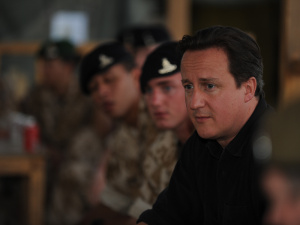
    Prime Minister David Cameron visits British troops in South Afghanistan, 10 June 2010. Source: No. 10 (Flickr)

    Prime Minister David Cameron visits British troops in South Afghanistan, 10 June 2010. Source: No. 10 (Flickr)

    The 100th anniversary of the start of the First World War has kick-started a period of national self-reflection for the British public and political establishment. The timing seems almost scripted: as the country prepares to look back at the tragic events of 100 years ago, so we prepare for the first incidence of peace in a century. Following final pull-out from Afghanistan later this year, the UK should cease to be engaged in combat operations anywhere in the world for the first time since 1914.

    This “strategic pause”, as Ministry of Defence (MoD) insiders are calling it, comes on the heels of last summer’s controversial parliamentary vote against possible military intervention in Syria. Public and Parliament alike seem wearied by the diminishing returns of a “fight first, fix later” strategic approach. With national elections and scheduled reviews of defence and security strategies fast approaching, this national mood for reflection is an opportunity to reframe British thinking on national and international security – and get it right in 2015.

    Limits of military action

    The threats facing the UK today are a world away from those that instigated the First World War. A century on, a distinct lack of interstate war, the rise of global networks of terrorists and organised criminals, and the inability of many fragile states to respond to such challenges characterise an increasingly complex security landscape. There is also growing recognition of the role of a number of “non-traditional” drivers of global insecurity which act to multiply other threats. As with the localised devastation seen in the UK this winter, climate change is exacerbating economic, social and resource stresses. Thanks to the communications revolution, the world’s marginalised majority is suddenly and drastically aware of its inequality. Such risks highlight the increasing implausibility of military force being effective in tackling insecurity. What use are armies and navies in reducing the gap between elites and a disenfranchised underclass that is both local and global?  How can air forces address the myriad impacts of concentrated greenhouse gases in the atmosphere?

    As much as the global security landscape has changed, there remains an exceptional continuity in the British response to insecurity: a dogged, increasingly ineffective – and recently highly counter-productive – militarised approach. Given that, like World War I, the operation to dislodge the Taliban was originally intended to be “over by Christmas” in 2001, the war in Afghanistan is a case in point. The war has lasted 13 years, resulting in the deaths of 447 British troops, serious injury of thousands more, and costing the UK over £37bn, according to recent estimates from former Helmand adviser Frank Ledwidge.

    Moreover, Ledwidge estimates that British troops in Helmand province have killed at least 500 non-combatants and the Costs of War project estimates that at least 16,725 Afghan civilians have been killed directly by the war’s violence, not including indirect deaths from reduced access to health care, malnutrition and lack of clean drinking water that have been exacerbated in the country’s war zones. For all these costs, military action has done little to decrease Taliban influence or stabilise Afghanistan. A recent review by CNA on behalf of the Pentagon’s policy directorate predicts a sharp post-withdrawal resurgence of Taliban influence and would require far more Afghan troops and police capacity than planned for.

    Learning something from the Afghanistan and Iraq debacles, the UK has shifted towards a more streamlined version of the same interventionist thinking. This “no boots on the ground” approach, such as we saw in Libya (2011), also comes with unforeseen consequences. While NATO operations in Libya were deemed successful within the narrow definitions of the UN mandate, limited intervention there sowed the seeds of further intervention in Mali as weapons and fighters spread south, prompting the declaration of commitment by the prime minister, David Cameron, to the next “generational struggle” against Islamist terrorism.

    A similar rhetoric of limited intervention was noticeable last summer during debates on possible military action in Syria, when the prime minister assured the British public that intended air strikes would be strictly “punitive”. Again, considerations of the potential ineffectiveness and future blowback of military action – on the people of Syria as well as the UK – took a back seat to the political visibility of military action as British agency.

    Room to reflect?

    There is a clear need for more nuanced approaches to tackle insecurity in the coming decades. The struggle against violent extremism, for example, requires approaches which seek to address the conditions that allow such ideologies and instability to thrive. However, the overarching message from British leaders is that we can expect more of the same. Earlier this month, the UK Government confirmed the upcoming purchase of fourteen F-35B Joint Strike Fighter jets, with a price tag of £2.5bn, in addition to new aircraft carriers costing at least £6.2bn. Neither system will be operational before 2019, almost a decade after the last British carriers were retired. Similarly, plans to renew the Trident nuclear deterrent with a like-for-like system will cost at least £25bn, with whole-life costs of replacement exceeding £100bn.

    Decision is due in 2016. Such heavy budgetary weighting in defence spending towards nuclear deterrence and offensive force projection limit the country’s ability to assess strategic balance and diminish the opportunity to develop a wider range of security management options for the UK on the international stage. Investing over half a billion pounds on armed Reaper drones by 2015 predisposes the UK to this form of military action while the jury is still out on its legitimacy, ethics, legality and long term impact. The possibilities for constructive debate on alternatives to the current offensive defence approach are constrained by such massive forward commitments to next generation equipment that prioritises force projection.

    There is also uncertainty over the review of the National Security Strategy (NSS), which defines the threat environment that UK defence and security policy responds to through the Strategic Defence and Security Review (SDSR). Both documents are scheduled to be reviewed and updated following the May 2015 general election. While thinking on changes to the next SDSR is already underway, National Security Adviser Sir Kim Darroch indicated to the House of Commons on 11 September “no precise timetable” for the next NSS. On 30 January, Cameron told the parliamentary Joint Committee on the National Security Strategy that the NSS review process – led by his Cabinet Office – was “now beginning” but implied that the SDSR was further advanced.

    The 2010 NSS made a number of important observations about the changing nature of British security challenges – including climate change and the importance of conflict prevention – but these failed to translate into actionable policy prescriptions in the SDSR. This was in part the result of poor timing; while the SDSR should be a subsidiary document informed by the NSS, the documents were released a day apart in October 2010 after a rushed four month process.

    If the UK is to engage in meaningful debate on approaching complex security challenges and subsequently turn that debate into relevant policy options, it must avoid the mistiming of 2010 and be open to dialogue with UK civil society and foreign partners on the nature of threats and opportunities. With uncertainty over the timing and scope of the NSS review it is difficult to see what room exists for UK to develop policies that genuinely reflect changes in international security.

    Getting it right ahead of 2015

    If British approaches are to respond effectively to changing security threats, the scheduled 2015 SDSR process will need to rebalance priorities, with a shift towards conflict prevention and provision of early and non-combat security support in fragile states. Progressive thinking in the current NSS and initiatives, such as the 2011 Building Stability Overseas Strategy, must now translate into a change of priorities in British security, including spending, decisions on deterrence and intervention.

    The coinciding anniversary of the First World War and final withdrawal from Afghanistan may well provide a much overdue period of reflection on past lessons and future approaches to British security and defence. But if the UK is to learn the lessons of the past century – that unparalleled military interventionism cannot yield long term national nor global security – it must make 2014 a year of genuine consideration of the threats it faces in the next years. In turn, committing to an open process of reflection will allow the decisions of 2015-16 to positively contribute to sustainable peace and security for years to come.

    Zoë Pelter is the Research Officer of Oxford Research Group’s (ORG) Sustainable Security programme. She works on a number of projects across the programme, including ‘Rethinking UK Defence and Security Policies’ and ‘Sustainable Security and the Global South’. Zoë  co-authored ORG’s recent submission to the House of Commons Defence Select Committee inquiry ‘Towards the Next Defence and Security Review’.