Blog

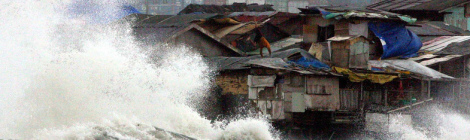
  • Climate refugees: Human insecurity in a warming world

    Mexico’s Conflicting Migration Policy Goals: National Security and Human Rights

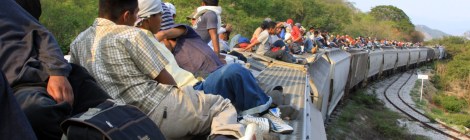
    Mexico has rapidly become a major site of transmigration from Central America to the United States, as people move in search of employment opportunities or escape from social violence. This rise in migrant flows from Mexico’s southern border overlaps with problems of control of contraband, organised crime, and the trafficking of drugs and arms. However, the government’s militarised approach to the phenomenon means that the use of force and human rights violations go unresolved and military approaches to preserving public order go unchecked. As long as migration remains a security issue, instead of a developmental and human rights matter, it will not be tackled appropriately. Instead, the government must start to view the matter through a citizen, not national, security lens.

    Read Article →

  • The Environment and Conflict in 2016: A Year in Review

    Breaking the silence: Protecting civilians from toxic remnants of war

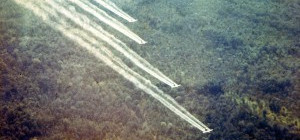
    Toxic remnants of war and their legacy of civilian harm is seriously under-explored as an area of conflict. There is a growing consensus that the current legal framework governing conflict and the environment is not fit for purpose – so how could new international norms that merge environmental protection with civilian protection come into effect?

    Read Article →

    Environment, Energy, Economy: a threefold challenge to sustainable security

    Whether it’s the economy, energy or the environment which you value most, when it comes to security, each holds equal weight. If security can be defined in terms of what is or isn’t sustainable, then it must evolve to incorporate additional elements that transcend more traditional views on geopolitics.

    Read Article →

  • Environmental security in the Arctic: the ‘Great Game’ vs. sustainable security

    Arctic InsecurityGenerally, the Arctic has elicited only minor attention outside the countries whose borders or territories fall within the loosely-defined region. But that is changing rapidly. As Kuupik Kleist, the former Prime Minister of Greenland, put it,

     “The Arctic used to be the last frontier. Now it seems we are at the center of the world.”

    While rapidly deteriorating environmental security in the region poses a grave threat to many regions of the world, the focus on militarized control of the area masks the very real need to mitigate further damage to the climate and increase our adaptive capacities to the inevitable climatic changes that will come in the 21st century.

    Realpolitik or Environmental Security?

    Indeed, much has been made lately about the ongoing and profound changes that are reshaping the Arctic region. There is no shortage of reports that detail the ways that climate change is forcing the region’s physical, social, and political environments into flux. Arctic sea ice is melting at an increasingly rapid rate, with the very real possibility that sometime between 2020-2050, the Arctic will soon experience its first (and undoubtedly not its last) sea ice-free summer. The effects of warming temperatures are likely to be dramatic: it will degrade habitats for vulnerable species, including polar bears and seals, and will accelerate and compound the effects of climate change, like volatile weather patterns and rising sea levels. A recent article in the journal Nature concluded that the long-term economic costs from a warming Arctic could reach $60 trillion, almost equal to the entire economic value of the world economy in 2012.

    But in the face of these worrying trends, discussion has instead focused on the economic opportunities offered by the ‘opening up’ of the Arctic, including the creation of new shipping routes and increasing the accessibility of fossil fuel reserves. The area north of the Arctic Circle is said to contain about 30% of the world’s undiscovered gas and 13% of the world’s undiscovered oil. The Governance of newly opened shipping lanes like the Northwest Passage will remain a contentious political question. While the region has thus far suffered from general neglect and inattention, it is unrealistic to expect that to continue in the future.

    Indeed, it is already becoming clear that the Arctic is the site of ongoing militarization. Recent security maneuvers have increased state control over the farthest reaches of state territory. In 2007, Russia planted its flag underneath the North Pole and resumed strategic bomber patrols over the area, echoing  its Cold War past. Canada’s official Arctic Foreign Policy proclaims “the first and most important pillar towards recognizing the potential of Canada’s Arctic is the exercise of our sovereignty over the far north.” Border disputes in the Arctic have led to strained relations for decades between Canada and Denmark as well as between Russia and Norway. Both cases have been peacefully resolved in the last few years. Yet, sovereignty and security have both been used to justify the proliferation of military ice-breakers, patrol ships, the creation of new deep water ports, and the deployment of military personnel including the Northern Rangers in Canada and the Danish Arctic command (which are both relatively small in terms of active personnel). Joint military operations conducted by Arctic countries (excluding Russia) such as Operation Cold Response and Operation Nanook have also contributed to the militarization of the Arctic.

    It is worthwhile then to examine how sustainable forms of security are useful in the Artic context. What is needed principally is an increased awareness of the integrated connections between the natural environment and security. Large-scale changes to the natural environment are security threats.  Whether through an increase in extreme weather events causing enormous health and economic costs; rising sea levels leading to coastal flooding and climate-induced migration; or desertification, which devastates crop production, the effects of environmental change are severe. The task then in the Arctic is to combat the tendency to view environmental degradation as an opportunity for national gain, which will do little to counter-act the severe global effects. Such conventional, strategic responses inevitably lead only to further suspicion, distrust, and discord. The Arctic is one of the clearest manifestations of this tendency.

    The Arctic will be without question a region of high strategic importance in the 21st century. Unfortunately, countries are likely to view the Arctic with an eye to using the region to bolster domestic support for increased militarization, surveillance, and sovereign control over vast, distant, territorial ‘frontiers’.  All told, Arctic security remains wedded to traditional, state-centric military threats despite the fact that the threat of outright conflict is as remote as the farthest reaches of the Arctic region itself. These approaches may be predictable, but they will contribute little to alleviating the complex, interrelated, and underlying drivers of insecurity in the Arctic region.

    Demilitarizing the Arctic

    So is the goal then to “demilitarize” the Arctic? Would the diverse sets of international issues arising from changes in the Arctic be better positioned in political terms, away from the exceptional demands that military thinking requires? Perhaps strengthening political institutions like the Arctic Council can alleviate the Arctic “rush” and ensure a lawful forum for state and indigenous negotiations in the Arctic. Formed in 1996, the Arctic Council has been the primary diplomatic forum used to facilitate cooperation, discussion, and negotiation. It was formed by eight Arctic countries (Canada, Denmark [Greenland], Finland, Iceland, Norway, Russia, Sweden, and the United States) and includes six Arctic indigenous organizations and other Arctic inhabitants. Recently, the Council accepted six new non-Arctic states as non-voting Observer states, joining six others already granted observer status. The new inclusions, China, India, Italy, Japan, Singapore, and South Korea, may appear at first glance to be curious admissions. Certainly they represent important economic and military powers but most exist far from region itself. However, after initial reticence from members like Canada, the Council accepted their inclusion on the basis of strengthening the Council’s legitimacy by undercutting any emerging alternative organizations, like the Arctic Circle Forum from usurping its authority.

    We should celebrate the decision by Council members to include new observer states: it allows these states to increase their awareness of Arctic issues and vulnerabilities, it opens up new avenues for cooperation and confidence-building measures, and it rightly spreads the responsibility for protecting the Arctic across the world. But while the Arctic Council remains an enduring and hopeful sign for managing political relations, the Council alone should not be expected to transform the underlying logic that continuously renders environmental security in strategic terms, obscuring the practices which have led to Arctic insecurity in the 21st century.

    The driver of Arctic insecurity is not simply the continued militarization or the politicization of the region by its encircling states. The reality is much more complex and multifaceted. In effect, by continuously focusing on security in these strategic terms, we can’t see the forest for the trees. The Arctic “great game” is not simply a metaphor we might use to romanticize geopolitical maneuvers; it is an expression of the profound material environmental shifts that are occurring rapidly and are a result of anthropogenic drivers related to modern carbon-based societies. The continual free-fall in terms of Arctic ice levels and the fact that the region has been warming twice as fast as lower latitudes is likely to have far more important, long-lastingand damaging global effects than a hypothetical, always-over-the-horizon conflict between states competing to protect their localized interests. That is a popular story that obscures the much more difficult and insidious problems related to diagnosing and combatting climate change.

    The fact that most states view the opening up of new Arctic sea lanes as a means to exploit vast and newly accessible energy sources reflects long-dominant understandings of both security and the environment. If our understanding of both Arctic security and the Arctic environment continues to be reduced to the international scramble for untapped resources and for newly opened “shipping lanes” (or melted sea ice, if you will), it is unlikely that the hugely alarming and damaging environmental effects of climate change will ever be truly overcome.

    It is essential then that environmental security in the Arctic is recast away from traditional and dominant security practices of resource development, national sovereignty promotion, and increased surveillance. While these practices will remain in the future, we still should encourage a much more profound rethink that places greater value not simply on increasing cooperative intergrovernmental forums (though these are important), but on greater collaboration with indigenous populations, on studying the global environmental interconnections between the Arctic and other regions, and on aggressively combatting climate change. Adaptation to the inevitable changes occurring in the region will of course require coordination and strategic planning, and the potential for conflict will be ever-present. But an overreliance on familiar narratives of climate change-induced conflict obscures the much more complex drivers of Arctic insecurity, namely our destructive relationship with the environment and its connection to conventional, strategic security logic.

    Cameron Harrington is an Adjunct Professor of Political Science at King’s University College and Brescia University College, at Western University (Canada), where he teaches in the areas of environmental politics and international relations. His Ph.D thesis, (pending completion September 2013) builds a framework to combat water insecurity in the 21st century by focusing on the ethics of security.

    Cameron tweets via @camharrington and can be reached at [email protected] 

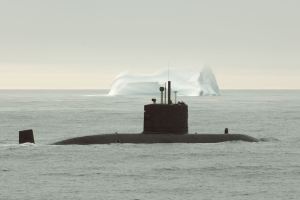
    Image source: lafrancevi (HMCS CORNER BROOK on arctic patrol during Operation Nanook)

  • Afghanistan Propoganda Deed

    The military campaign now being waged in the Afghan province of Helmand is being described in much of the world’s media as the biggest such operation since the one which secured “regime-change” in Kabul in October-November 2001. A coordinated military assault involving 15,000 troops – from the United States, Britain and Afghanistan itself – aims to seize the town of Marjah and surrounding areas, which are described as the Taliban’s last stronghold in Helmand.

    Operation Moshtarak (the word means “together” in the Dari language), even before its launch, has been the subject of a series of high-profile news stories with an almost uniformly positive “spin”. Their consistent core is that the operation’s purpose is to curb Taliban influence over Helmand as a whole; that the province is, alongside neighbouring Kandahar, the pivot of Taliban power in Afghanistan; and, therefore, that victory would be likely to turn the whole course of the war in Afghanistan in favour of the Nato/Isaf project.

    The herald of success

    The task of reaching an accurate assessment of the real state of the conflict must look beyond such public-relations campaigns from military sources. The starting-point here is to acknowledge that after a long process of internal deliberation the Barack Obama administration has embarked on a policy markedly different from its predecessor. Washington’s new approach combines a readiness to negotiate and compromise (even with significant elements of the Taliban leadership) in order to end the war with a belief that it needs to do so from a position of clear military strength. Operation Moshtarak is the first major step in this military-diplomatic process.

    Why, though, is the assault getting so much advance publicity? At first sight this seems puzzling, for it evidently gives Taliban strategists detailed warnings of what they are about to face. The rationale is fourfold: to intimidate some militants into abandoning the fight; to encourage civilians to evacuate the area (thereby reducing casualties); to make the best of the fact that the Afghan security services are so penetrated by Taliban sympathisers that it is pointless to keep operations secret; and – a crucial domestic consideration in the United States and Britain – to wring some positive publicity from a situation of diminishing popular support for the war. For Nato’s military planners and their political overlords, it is essential to demonstrate that the war can be won; what better way than to depict Operation Moshtarak as the instrument that breaks Taliban control of a key province?

    The problem is that this narrative of anticipatory semi-triumphalism in no way corresponds to current signals from elsewhere in Afghanistan, including Helmand. For example, a new report from the Center for A New American Security co-authored by Major-General Michael T Flynn (Isaf’s director of intelligence) highlights the remarkable capabilities of the Taliban and is very cautious about progress (see Fixing Intel: A Blueprint for Making Intelligence Relevant in Afghanistan, 4 January 2010). A number of other recent reports similarly point to a versatile and resilient opponent (see CJ Chivers, “As Marines Move In, Taliban Fight a Shadowy War”, New York Times, 1 February 2010).

    Two senior military officers – Major-General Andrew Mackay, a former commander of Britain’s task-force in Helmand, and Steve Tatham – make an especially potent criticism of the country’s war-fighting approach. They argue that “a fresh ‘hearts and minds’ strategy is required which focuses less on winning bloody battles against the enemy, and more on understanding their culture, economy and psychology” (see Eddie Barnes, “MoD ‘is not capable’ of winning war”, Scotland on Sunday, 3 January 2010).

    Such critical, topical and ground-level analyses at least suggest that the intense and positive publicity devoted to Moshtarak is more a public-relations exercise than a realistic estimate of the current situation. In this respect, the experience of an earlier military operation of comparable scale – the attempt to send a giant turbine to the Kajaki dam in northern Helmand in August-September 2008 – casts an interesting light.

    What comes after

    This operation received huge publicity in the British media, most of which hailed it as one of the great successes of the war. The plan was to supplement the dam’s already working turbine with another that would be divided into seven large sections (of over twenty tonnes each), then carried by road from Kandahar airbase to Kajaki through 280 kilometres of largely hostile territory. No less than 5,000 troops were involved to ensure the safe transfer of the turbine: from Britain (3,000), the United States, Australia, Denmark and Canada (a total of 1,000), and Afghanistan (1,000).

    The logistics were enormous: a 4-kilometre convoy of 100 vehicles – supported by fifty Viking armoured vehicles and constant air-cover from British, American, French and Dutch planes and American drones – took six days to travel the route, deliver the turbine, and (again over six days) return to secure bases. Along the way, one Canadian soldier and a reported 200 Taliban were killed. The way was now ready to import Chinese technicians to instal the turbine (which was a Chinese design), and for Nato/Isaf to bask in the secure knowledge that this part of Helmand province had been made safe and was on the development path.

    The British ministry of defence (MoD) was upbeat about the result:

    • “With the delivery of the turbine complete, work can now begin on its installation and the much larger programme of the rejuvenation of the electrical distribution network needed to pass the extra power to the areas of Sangin, Musa Qaleh, Kandahar and the provincial capital of Helmand, Lashkar Gah. The new turbine is capable of producing 18.5MW of economically viable, renewable energy, which will be in addition to the dam’s current 16.5MW output”

    • “The additional electricity it will eventually provide will light up classrooms, allowing Afghans across southern Afghanistan to learn to read and write in evening classes; farmers to store their produce in chilled storage, allowing greater export opportunities for the booming wheat markets; and clinics to provide improved health services” (see “Kajaki dam troops return to base”, Military Operations [Ministry of Defence, 8 September 2008]).

    The MoD concluded its report on the successful operation by quoting George Wilder, a contractor working on the USAID contract to upgrade the power- plant:

    • “There’s still a lot to do, but I’ve been waiting for this for a long time. It’s a great day for Afghanistan and it feels like my birthday.”

    The entire operation was portrayed both as a success in itself and as the start of a process that would have a ripple-effect across much of southern Afghanistan. It could, it was claimed, be a turning-point in the war.

    What happened next? By March 2009, six months on, there were reports that the turbine was still waiting to be unpacked (yet alone installed); and that security concerns were delaying progress in the work. Now the whole project has been abandoned (see “US postpones Afghan dam project”, BBC News, 14 December 2009).

    The immediate trigger of the decision was that the Chinese contractor charged with installing the turbines withdrew overnight because of poor security. The job was always going to be huge; it would have involved the deployment of several hundred tonnes of cement and other supplies, and the mobilisation of a large team of engineers, technicians and labourers. At last, USAID has accepted that a further operation on this scale across land still controlled by the Taliban is unfeasible. It has reluctantly arranged for the turbine sections to be put into storage, and is now seeking energy projects elsewhere in Afghanistan in which it can invest.

    A complex reality

    The Kajaki power-plant experience has implications, direct and indirect, for Operation Moshtarak. First, it reveals the possibility of Nato using its huge firepower advantages to push Taliban paramilitaries out of larger towns – but being unable to prevent the Taliban from retaining control of many rural areas, to the degree that the movement can prevent the completion of an important infrastructure project.

    Second, what might come after the impending operation is likely to be much more significant than what happens during it. As Moshtarak unfolds, it is almost certain that the Taliban will be evicted from Marjah and the surrounding areas; indeed, there may even be relatively little fighting as local Taliban commanders avoid localised conflicts that they cannot win. The great risk then is that Taliban rule will be replaced by regional governance of a kind that is all too typical of the Hamid Karzai regime’s record elsewhere: corrupt, dysfunctional, incompetent, with a police force that may be be infiltrated by Taliban sympathisers.

    This is not to denigrate the efforts of defence ministries and departments yet again to represent the current operation as a decisive turning-point. Such efforts are, from their perspective, a necessary part of their work that becomes especially important at a time when support for the war is diminishing.

    But it has always to be remembered is that the official representation of Afghanistan’s condition is just one part of a much wider picture; and that any worthwhile assessment of what is happening in the country must take into account many other factors. In this respect, the dismaying outcome of the Kajaki operation may be a more accurate reflection of Afghan realities than the publicity accompanying Operation Moshtarak.

  • Did Operation Unified Protector in Libya Strengthen R2P?

  • Security Sector Roles in Sexual and Gender-based Violence

    Security Sector Roles in Sexual and Gender-based Violence

    Democratic Republic of Congo’s sexual violence epidemic is not only a weapon of ongoing violent conflict but an expression of entrenched systemic problems. Indeed, sexual and gender-based violence (SGBV) is most commonly perpetrated by the security services in place to protect civilians. In Quartier Panzi in South Kivu province, innovative processes of security sector reform and strengthened police-civilian channels of communication may be providing an opportunity for change, argues World Bank adviser Edward Rackley.

    Read Article →

  • In piaffe: multilateral nuclear disarmament dialogue in the year of the horse

    Shortly after the lunar New Year, UN Secretary-General Ban Ki-moon challenged the Conference on Disarmament to run with the ‘spirit of the blue horse’ towards substantive engagement on multilateral nuclear disarmament in 2014. While the regime may not achieve this speed, there are initiatives underway this year that may well help nuclear disarmament dialogues pick up speed ahead of the 2015 NPT review conference.  

    Secretary-General Ban Ki-Moon speaks at the first plenary session the 2014 Conference on Disarmament. Source: UN Geneva

    Secretary-General Ban Ki-Moon speaks at the first plenary session the 2014 Conference on Disarmament.
    Source: UN Geneva

    On 21 January, on his way to the Geneva Conference on Syria, UN Secretary-General Ban Ki-moon stopped in at the Palais des Nations to address the Conference on Disarmament (CD). In doing so, the UNSG affirmed his support for multilateralism and encouraged the CD—the single multilateral disarmament forum—to break the deadlock and commence substantive negotiations. On the occasion of the lunar New Year, the Secretary-General challenged the CD delegations to ‘arm yourself with the spirit of [the] blue horse and…run fast and run far’.  But instead of running fast or far, the current status of the multilateral global nuclear disarmament dialogue is ‘in piaffe’ – trotting elaborately on the spot.

    However, some, including Angela Kane, the UN’s High Representative for Disarmament Affairs, question whether a nuclear disarmament regime even exists. In her prepared speech to the 2013 EU Non-proliferation and Disarmament Conference, Kane argued that the current “system of institutions and norms to prevent the spread of nuclear weapons, coupled with a promise to pursue the elimination of such weapons at some uncertain but distant time—if ever—subject to preconditions” should be more accurately called a ‘Partial Nuclear Arms Control Regime’ rather than a nuclear disarmament regime.

    Kane posited that the “negotiated ceilings on deployments of strategic nuclear weapons of two countries, with no international verification, and no participation by the other three recognized nuclear-weapons States…or the non-NPT states” are not global, nor constitute disarmament or a regime. The sustainability of the nuclear non-proliferation regime and the credibility of the NPT review process is often questioned in light of efforts which ‘seek just to tighten non-proliferation controls’ and address horizontal proliferation. In her September 2013 speech, Kane warned that such an approach ‘would erode what is left of the legitimacy of the regime’.

    The CD’s impasse continues…

    In 2014, the continuing deadlock in the CD may lead to such erosion of legitimacy, as well as frustration with existing forums for dialogue and progress. This year’s President of the first session of the CD, Israeli Ambassador Eviatar Manor, met with lack of consensus on a programme of work for 2014, due to diverging views. The formal programme of work at the CD remains deadlocked over the inclusion of a call for measures to start negotiation for a Fissile Materials Cut-off Treaty (FMCT), a proposed international agreement that would prohibit the production of highly-enriched uranium and plutonium. Pakistan objects to this as it would cap its fissile material stocks at a disadvantageous level vis-à-vis India.

    As US Acting Under-Secretary of State for Arms Control and International Security, Rose Gottemoeller, declared at the CD on 4 February, the FMCT is ‘the next logical – and necessary – step in creating the conditions for a world without nuclear weapons’ and remains ‘an essential prerequisite for global nuclear disarmament’. Gottemoeller reminded the CD that Action 15 of the 2010 NPT Review Conference (RevCon) Action Plan mandated that the CD begin immediate negotiation of the FMCT. As the 2015 NPT RevCon approaches, this Action seems to remain aspirational.

    The Nayarit Conference on the Humanitarian Impact of Nuclear Weapons

    Many NPT non-nuclear weapon states (NNWS) remain frustrated with the lack of transparency and progress around the P5’s implementation of NPT Article VI commitments. These stipulate that all NPT states parties shall pursue negotiations towards ending the arms race and to nuclear disarmament ‘in good faith’. They see the ‘humanitarian dimension’ initiative on nuclear disarmament and the Open Ended Working Group, a UN General Assembly initiative to develop proposals for multilateral nuclear disarmament, as alternative means to address such concerns. The lack of engagement with —and arguable outright dismissal of – such initiatives by the P5 will continue to widen existing fissures and discord in the NPT review process.

    Oslo nuclear conference

    ICAN and BANg! campaigners thank delegates at the Oslo conference in 2013 Source: Peaceboat

    The Second Conference on the Humanitarian Impact of Nuclear Weapons was held in Nayarit, Mexico on 13-14 February. The conference aimed to deepen ‘our understanding of the effects of nuclear weapons, by approaching the global and long-term consequences of a nuclear detonation, accidental or deliberate, from the perspective and variables of the 21st Century society’. As in its 2013 inaugural conference in Oslo, government officials, IGOs and civil society participated with ‘multi-sectorial delegations, at expert-level, with specialists in areas such as public health, humanitarian assistance, environmental issues, and civilian protection, among others, as well as diplomats and military experts’. As clarified on the official website, the Nayarit Conference did ‘not produce a negotiated outcome, but a factual summary under the responsibility of the Chair’.

    146 states participated in the Nayarit Conference, including India and Pakistan. Notably, as in the Oslo conference, the five NPT nuclear weapons states did not attend.  In 2013, the P5, in solidarity and following consultations amongst each other, boycotted the conference in what could be described as bloc policy, claiming the Oslo conference would ‘divert discussion away from practical steps to create conditions for further nuclear reductions’. This P5 declaratory rationale is also expressed in relation to the Open Ended Working Group and the humanitarian initiative more broadly. Many perceive the lack of P5 engagement with such initiative as a P5 concern that the initiative is a fast-track to a ban on nuclear weapons – as advocated by many civil society groups and some NNWS.

    This concern was confirmed by the UK FCO Minister Hugh Robertson who on 12 February elaborated that the UK remains ‘concerned that some efforts under the humanitarian consequences initiative appear increasingly aimed at pursuing a Nuclear Weapons Convention prohibiting nuclear weapons outright’. UK MPs, including James Arubuthnot, the Chairman of the Commons Defence Committee, and Sir Nick Harvey have already strongly criticized the UK government’s decision not to participate in Nayarit.

    Nayarit

    Chair of the Second Conference on the Humanitarian Impacts of Nuclear Weapons Chair, Juan Manuel Gómez Robledo, presenting his factual summary of the Conference. Source: Ministry of Foreign Affairs, Mexico

    The final five paragraphs of the Chair’s “factual” summary from the Nayarit conference, which veer off to include the chair’s perceptions certainly lend some validity to the perceptions, confusion, and concerns voiced by the P5 about the aims of the initiative. However, to be clear, such support for pre-emptive ‘outlawing’ of nuclear weapons was not representative of views and interventions voiced by several states that participated in the Nayarit conference, including Germany, Australia, the Netherlands and Canada. Such mixed signalling and conflicting narratives about the conferences and the broader purpose of the initiative may have implications for the future continued—and broader engagement—by those NNWS who support the ethos of the humanitarian dimension initiative but who are not on board the ‘ban-express’.

    In a January 2014 statement to the CD by Ambassador Alexey Borodavkin, the Russian perspective is expressed clearly: ‘the catastrophic character and unacceptability of any use of nuclear weapons is self-evident and requires no further discussions’. Ambassdor Borodavkin, further warned that ‘we should not be distracted by the discussion of humanitarian consequences from the primary goal of creating due conditions for further nuclear reductions’. Highlighting the diverse perspectives on what constitutes obstacles to progress towards dialogue on nuclear disarmament, Russia, as outlined by Borodavkin last month, considers plans to build a global missile defence system as a ‘negative factor which is undermining strategic stability’, and ‘the most tremendous challenge standing in the way to [a] nuclear-free world’.

    P5 preference for the ‘step-by-step’ process

    Amb. Rose Gottemoeller, speaking at a joint press conference by the five Nuclear Non-Proliferation Treaty (NPT) nuclear-weapon states at the United Nations. Source: United States Mission Geneva

    Amb. Rose Gottemoeller, speaking at a joint press conference by the five Nuclear Non-Proliferation Treaty (NPT) nuclear-weapon states at the United Nations. Source: United States Mission Geneva

    The consensus among the P5 is that progress in fulfilling NPT Article VI commitments, is via the P5 ‘step-by-step’ process in line with the 2010 NPT Action Plan.  As Rose Gottemoeller, declared in February at the CD, ‘there are no shortcuts to reaching our shared goal of a world without nuclear weapons’ and the pathway is an ‘incremental process’. She describes these P5 conferences as ‘essential means for laying the foundation for future agreements’ that could envelope NWS beyond the bilateral arms control process. The Chinese government will host the fifth conference of the P5 process in April 2014 ahead of the third Preparatory Committee to the 2015 NPT RevCon.

    The P5 are developing a common glossary of nuclear weapons-related terms. Gottemoeller admits this ‘may not sound important or interesting, until you consider that verifiable multilateral nuclear disarmament will require clear agreement on the definitions and concepts for the vital aspects that must be covered in future treaties.’

    Transitioning from piaffe to trot

    While dialogue on nuclear disarmament is currently in piaffe, and Ban Ki-moon’s ‘fast run’ in 2014 may remain aspirational, engagement and confidence-building measures could yet advance dialogue to a forward ‘trot’ ahead of the 2015 NPT Review Conference. Significant regime measures which could catalyse a shift towards improved dialogue and consensus-building on multilateral nuclear disarmament include:

    • Comprehensive Nuclear Test Ban Treaty (CTBT) ratifications (or overtures towards ratification) by Annex 2 states—the eight states remaining (China, Egypt, India, Iran, Israel, North Korea, Pakistan, US) for CTBT entry into force;
    • Adoption of a programme of work at the CD; or even
    • Progress on the Helsinki conference for an establishment for a Weapons of Mass Destruction-Free Zone in the Middle East (including CWC accession by Israel).

    In support of restoring legitimacy and boosting credibility in the non-proliferation regime beyond this NPT review cycle, there is an underlying need to bridge existing divides and boost engagement between the two separate constituencies on the nuclear weapons policy debate: those advocating for nuclear deterrence postures and those advocating for nuclear disarmament. Both constituencies ultimately seek security, but there is a distinct lack of informed, respectful and frank dialogue.

    The two constituencies rarely engage in sincere dialogue on core issues at the basis of each posture, including on how security is provided. Their discourses remain distinct and divergent. One could characterise them as being engaged only in ‘enclaved deliberation’. By addressing key assumptions, social constructs and understandings of each policy posture on the nuclear weapons debate — including an assessment of notions of what constitutes strategic stability and options for security not based on an ultimate reliance on nuclear weapons—perhaps honest dialogue can take shape instead of mere regurgitation and mutual dismissal of postures.

    Jenny Nielsen is a Research Analyst with the Non-proliferation and Disarmament Programme at the International Institute for Strategic Studies (IISS). Previously, she was a Programme Manager for the Defence & Security Programme at Wilton Park and a Research Assistant for the Mountbatten Centre for International Studies (MCIS) at the University of Southampton. At MCIS, Jenny was tasked with the co-editing the 2004-2012 editions of the NPT Briefing Book. She holds a PhD from the University of Southampton which focused on US nuclear non-proliferation policy vis-à-vis Iran in the 1970s.

    Featured image:   UN Secretary-General Ban Ki-Moon speaks at the  High Level review Conference of the Parties to the Treaty on the Non-proliferation on Nuclear Weapons (NPT) Source: United Nations Photo
  • Deer Poaching and Food Insecurity

    In the UK, tens of thousands of deer are poached annually. This has significant implications for the sustainability of British deer populations and human health.

    Recessions and economic slumps have effects on various aspects of people’s security and presumably, people’s food security is a part of this. In order to cope with food insecurity, some people may steal food or other items for money to buy food, but there is also the possibility that some people will turn to poaching. The British Deer Society places the number of poached deer in the UK as high as 50,000 each year yet in 2009 only 335 incidents were reported to the police.

    In 2013, I undertook a study to gather information as to whether deer poaching in the UK is linked purely to economics or if people who poach deer have other motivations beyond food or money. I sent online questionnaires to all police constabularies and the questionnaire was advertised in the monthly publication of the British Association for Shooting and Conservation. I received responses from 27 wildlife crime officers and six gamekeepers. Drawing on Nurse’s (2013) typologies of wildlife crime offenders, I asked respondents about the change in poaching around the time of the 2008 recession and about their perspective on the motivations of poachers. The four typologies consist of traditional profit motive, external economic pressure, masculinity and as a hobby. In particular, the traditional profit-driven motivation of offenders was explored by attempting to uncover if there is, as suspected, a black market in venison. From this data, I hoped to create a more detailed picture of deer poaching and to further inform wildlife law and poaching prevention.

    UK deer poaching: why it matters

    Image credit: Peter Trimming

    Understanding more about deer poaching is important for two main reasons. The first is in relation to human health. Presumably, experienced hunters are trained to inspect the deer they kill or poach for diseases. There is the possibility though of poachers infecting themselves with Bovine Tuberculosis or Foot and Mouth disease, which are known to occur in deer in the UK, though no data indicating deer meat has been found with these diseases. Additionally, if the poacher is selling the meat on the black market, there is the further possibility that any disease could be passed on to other people and the public.

    The respondents suspected some poached deer meat makes it way to pubs and restaurants, so disease transmission to the public, whilst unlikely, is not impossible. The second point is in regards to the sustainability of deer populations. It is difficult to manage wildlife populations where there is a significant amount of poaching, such as is suspected in the UK. Hunting licences and potentially other management strategies, like culling, need to be grounded in accurate population numbers in order to not over exploit the species in question. If too many individuals are killed through hunting and poaching, this could endanger the stability and survival of the population. With tens of thousands of deer potentially being poached each year, it is difficult to see how deer populations can be properly estimated and therefore managed.

    The police and gamekeepers who responded stated there are individual poachers and groups of poachers who do so for profit and financial reasons. As suspected, poachers personally consume the poached deer, but probably also sell the meat to make money. This fits Nurse’s (2013) first typology, ‘Model A’, where offenders are driven by traditional profit motives. ‘Model B’ wildlife crime offenders are also financially driven, but the pressure on the offender is from an external source like an employer. In the context of deer poaching, this helps to explain the poaching undertaken by some gamekeepers. Landowners pressure gamekeepers to maintain the landscape in particular way. The respondents indicated though there is more driving poaching than simply economics. Nurse (2013) proposes there are also offenders who do so to maintain or assert their masculinity, ‘Model C’, and those who offend as a hobby, ‘Model D’. The data confirm these typologies. Men carry out nearly all poaching. Apparently, often these men poach together as a form of male bonding, as a form of ‘sport’, or as one respondent stated ‘just for the hell of it!’.

    Each of Nurse’s (2013) typologies then were found within the respondents’ answers. The implications of this are two-fold. First, deer poaching, and presumably other poaching, is not only driven by food insecurity and money and therefore the motivations, and uncovering those motivations, are complex. Even when money is at the heart of the motivation, there are further distinctions to be made. The food and/or profit from the poaching may be for an individual, for an organized crime group or for an employer. For non-profit driven poaching such as for status, sport and/or fun, the motivations can be equally challenging to uncover.  Uncovering motivations though is an important and useful endeavour as this data can be used to improve policy and prevention strategies. Second, that motivations are varied means that policy and prevention strategies also need to be varied. To have policy interventions and wildlife law enforcement strategies targeted solely at food insecurity or profit motivations are likely to be ineffective.

    Addressing the problem

    Poaching, of deer and other non-human animals, must then be addressed through a multi-faceted approach. In the first instance, the punishment for poaching in the UK is not a deterrent and the risk of being caught or prosecuted is low (Nurse 2013). This is partly because wildlife crime is not a concern for most police constabularies and not an offense that is prioritized. Making the fines higher, sentences harsher and confiscation of poaching equipment mandatory may help to address this aspect. Nurse (2013) suggests banning hunters and gamekeepers who are caught poaching from being able to receive licences in the future and/or from working in the industry. Second, wildlife crime is viewed as a victimless crime. This is not the case. Deer are shot by bullets and arrows, trapped in snares and/or torn apart by dogs. People can potentially eat uninspected diseased venison.

    The environment as a whole or at least the ecosystem where deer live can be disrupted by overexploitation – people and non-human animals are victims of this too from the loss of a healthy environment. Public awareness needs to be raised through concentrated media campaigns as to the value and impact of biodiversity and the environment. Whereas regard for the environment has increased in recent years, there is still much more to be done to increase the knowledge of our connection to the planet. Additionally, there should be wide spread information about the danger of consuming uninspected meat and venison. In conjunction with these strategies in times of particular economic hardship, extra support should be put in place to assist people who may poach because of food insecurity. Addressing the enforcement side of deer poaching can help to impact upon economic motivations. Changing the view that poaching is victimless may help to alter motivations related to status and sport.

    Deer poaching and wildlife crime are worthy of being made more of a priority not only because of the victimisation to the non-human animals and the environment, but also because these crimes impact upon people and communities. A multi-faceted approach increasing the attention on and penalties for wildlife crime as well as educating the public to the nature and risks associated with wildlife crime are necessary first steps to reducing the harm and suffering linked to wildlife crime in general and poaching in particular.

    Tanya Wyatt is a lecturer at the University of Northumbria.

  • The UK’s foreign fighters in Syria: rethinking the threat

  • The UK’s foreign fighters in Syria: rethinking the threat