Blog

  • Challenges Facing Women in Peacekeeping

  • VIDEO – Transforming Food Systems in a Global Context

    The United States, Niger & Jamaica: Food (In)Security & Violence in a Globalised World

    due to a complex range of interconnected issues from climate change to misguided economic policies, political failure and social marginalisation, over 2 billion people across the world live in constant food insecurity. Anna Alissa hitzemann takes a sustainable security approach to look at the importance of “physical and economic access to basic food” by exploring the links between food insecurity and violence.

    Read Article →

    The Global Land Rush: Catalyst for Resource-Driven Conflict?

    Michael Kugelman of the Woodrow Wilson International Center, argues that the factors that first sparked many of the land acquisitions during the global food crisis of 2007-08 — population growth, high food prices, unpredictable commodities markets, water shortages, and above all a plummeting supply of arable land — remain firmly in place today. He writes that land-lusting nations and investors are driven by immediate needs, and they have neither the incentive nor the obligation to slow down and adjust their investments in response to the wishes of distant international bureaucrats. This, he argues, has serious consequences for global security.

    Read Article →

  • Mission Impossible: The Elusive Search for Peace in Syria

  • Mission Impossible: The Elusive Search for Peace in Syria

  • The Ukraine conflict’s legacy of environmental damage and pollutants

    The Ukraine conflict’s legacy of environmental damage and pollutants

    One year after violent conflict began, information is now emerging on the specific environmental impact of war in Ukraine’s highly industrialised Donbas region. Although obtaining accurate data is difficult, indications are that the conflict has resulted in a number of civilian health risks, and potentially long-term damage to its environment. In order to mitigate these long-term risks, international and domestic agencies will have to find ways to coordinate their efforts on documenting, assessing and addressing the damage.

    Read Article →

  • UN Peacekeeping and Counter-Terrorism

  • Can Former Combatants Assist in Preventing Violence?

    Former combatants can play a powerful role in preventing violence, as the case of former combatants in Northern Ireland shows. Former Islamic State fighters could have a role to play in counter-terrorism, however there are potential limits to this.

    The value in re-integrating former combatants in post-conflict environments has been widely recognised in terms of reducing the risk of recidivism and fostering stability in a peace process. While there are examples of former combatant in larger scale post-conflict environments following the path of a de-politicised re-integration into society, there are also examples of former combatants – or ‘former terrorists’ – taking a much more active role in preventing future violence.  Former combatants in Northern Ireland, for example, have had some notable success in delivering restorative justice programmes, de-militarising communities, preventing inter-communal violence and articulating counter-narratives against the use of violence. If former combatants are having some success in preventing terrorism and political violence in Northern Ireland, what are the criteria for successfully utilising former combatants, and does this point to a potential role for former Islamic State combatants in the UK?

    Utilising Former Islamic State Combatants

    The question of utilising former Islamic State combatants is not entirely left-field as there has been a range of voices expression different potential ways of their utilisation to serve preventative ends. One emerging perspective has emphasised how former combatants can play a preventative role, with former MI5 and MI6 chief, Richard Barrett, arguing that they can help explain “why going to fight abroad is a bad idea” and that ex-extremists are often the most successful at “undermining the terrorist narrative.” The ability to use extremists who “renounce violence” and are “genuinely remorseful,” according to this perspective, can provide a credible and persuasive message to stop the flow of people engaging in IS-related terrorism. Terrorism expert Peter Neumann argues that IS defector narratives can encourage others to leave the group and deter others from joining on the basis of their experience and credibility. Subsequently, he has recommended that the U.K. government needs to provide defectors the opportunity to speak out, assist them in their resettlement, and to remove legal disincentives that prevent them going public. An alternative would be to do nothing or continue with the current approach; however former Islamic State combatants are already returning and not all of them are prosecuted. In other words, these former combatant networks exist, they risk solidifying, and will be sharing their views and experiences, therefore it may be more effective in the long-run to co-opt and utilise them for positive ends.

    There is clearly a potential role for former Islamic State combatants in preventing others engaging in such activities. The nature of utilisation could be minimalist (narrative-based), whereby third parties disseminate former combatant narratives. For example, one UK counter-terrorism official mentioned how they have distributed one specific article on Islamic State defector narratives to help people play a preventative role. A more controversial role would be a maximalist approach (narrative and network-based) like in Northern Ireland, whereby former combatants themselves engage in activities with the goal of prevention. Should the UK government consider enabling or facilitating former Islamic State combatants in a preventative capacity?

    Former Combatants as a Conveyor-Belt to Terrorism?

    isis

    Image by Day Donaldson via Flickr.

    One of the potentially biggest arguments against a maximalist approach is that such activities could be counter-productive and could risk serving as a conveyor-belt to engaging in violence rather than act as a fire-wall. A common trend with former combatants is they often do not de-radicalise: while they may disengage from terrorism because of dissatisfaction, disillusionment or burnout, they tend to maintain their ideological views. From this perspective – and endorsed by the UK government’s counter-terrorism policy – even non-violent extremist ideology can encourage others to engage in violence. While the conveyor-belt perspective has been heavily critiqued, the experiences of former combatants in Northern Ireland actually points to a middle-ground between these two perspectives. This consequently contributes to the debate on radicalisation but also on the potential role of former combatants in a preventative capacity.

    The findings of my own research on former combatants in Northern Ireland placed emphasis, not on ideology or attitudes to violence, but the framing process – in other words, how is violence and non-violence represented by actors and how it resonates with an audience, and what structural factors facilitate this resonance. Former combatants in Northern Ireland interact on a regular basis with young people through a number of programmes. Interestingly, despite the former combatants having maintained an ideology similar to violent groups, and despite the former combatants not supporting violence in the current conditions, it was realised that the interaction between former combatants and young people led the latter to view the use of violence positively. However, while this may seem to corroborate the conveyor-belt perspective, it actually showed that it was how former combatants framed violence that produced the conveyor-belt effect, not ideology on its own but also not simply that the former combatants were anti-violence.

    Re-Framing Violence

    In the past, former combatants explained their transition away from violence by framing violence it as conditionally acceptable during the 1960s civil rights protest period and that since these grievances were addressed in today’s conditions that violence was no longer legitimate. There are many reasons why the former combatants re-framed violence in this particular way, and it was particularly effective at ensuring the majority of the Provisional IRA disengaged; however this particular framing of violence to a younger audience without such experiences interpreted the framing as glamourising violence. Reflecting upon this, former combatants actively reframed violence when in dialogue with young people by emphasising the less glamorous aspects of violence more. One study showed that the former combatant reframing of violence in this manner has discouraged young people in engaging in violence. Former combatants were persuasive because they had credibility in the ‘hard to reach’ areas and they maintained narrative fidelity with audiences on ideology and identity.

    The point here is that there is some truth to the conveyor-belt perspective – that former combatants opposed to violence can encourage young people to engage in violence – but it has little to do with the ideology more broadly and much more to do with the framing process between the former combatants and the audience. Those who advocate the conveyor-belt perspective underplay the organisational interests in not having potential members becoming violent. In the Northern Irish case, former combatants had the time to reflect upon the effects of interacting with the younger generation and to engage in a re-framing process. Their reflexivity was encouraged by organisational interest as well as network structures which ensured they would be in regular interaction with young people and an environment in which funding was available to engage in projects.

    Empowering Reflexive Networks

    Thus, ideology is a crude means of determining the success of former combatants in a preventative role. Former combatants can be utilised in this capacity – or at the very least not discouraged – and the enablement of reflexive networks which resonate with young people can act as a firewall to participation in violence. However, there are a number of potential constraints and objections when this is applied to former Islamic State combatants. Working on the assumption that the purpose of counter-terrorism is to ‘counter terrorism’ and not to counter ideologies which a state does not like, and leaving aside the normative dimension of the rights of victims which Alonso excellently covers, the article focuses on two main points on the pragmatism and efficacy of using former combatants to prevent violence.

    Firstly, the UK government’s wholesale adoption of the conveyor-belt perspective makes the provision of funding much more rigid than in Northern Ireland. Interestingly, Northern Ireland’s very own prevent policy in the 1980s curtailed which organisations could receive funding on the basis of their ideology, but this was gradually dropped in recognition that the development of the community route could help to facilitate disengagement. The funding former combatants receive in Northern Ireland is detached from the government, thus increasing buy-in across communities, and the conditions of the funding are pragmatically based (often turning a blind eye to paramilitary behaviour in anticipation that funding and accreditation would incentivise moving away from such behaviour). Ideology is not factored in – alternative identities are strengthened and shown they can be non-violent rather than trying to encourage the ‘centrefication’ of political identities. In the current UK context, similar changes would be required before former combatants and former extremists could be fully utilised.

    A second objection is that the network and community structure – while a crucial factor in determining the efficacy of former combatants in a preventative role – is completely different in the Islamic State context. Former Islamic State combatants are smaller in numbers, they are set apart from their returning communities, and they may be politically disengaged (so why not just leave them like that). However, the size of networks is not important – a network of about a dozen former combatants in Belfast has been sufficient in preventing interface violence. Indeed, following the conveyor-belt logic limits the number of potential partners for the government to work with, in addition to its policies eroding trust through creating the perception of ‘suspect communities’. While the utilisation of former combatants (and extremists) can challenge and disrupt moderate communities, the target audience of these initiatives are individuals this moderate community struggle to meet. Finally, while we don’t know what former Islamic State combatants are doing upon their return, political passivism should not be viewed as a boat not to be rocked. In the case of Northern Ireland, it was the lack of active framing in combination with stories of the Troubles (often told in a social environment) in the context of parents and teachers not actively speaking about the Troubles, which led young people to view violence as attractive.

    Minimalist and Maximalist Roles for Forrmer Combatants

    In conclusion, former combatants can play a powerful role in preventing violence. The factors which determine whether this will be successful is not based on ideology but neither is it solely on whether they are non-violent. The network structure and incentivising environment can enable former combatants to be reflexive of the narratives they impart and how to best re-frame anti-violence narratives to ensure these resonate with young people in ‘hard to reach areas’. Former Islamic State combatants also have a potential role to play, however the lack of an enabling environment would limit this to minimalist interventions in the short term until the infrastructure for maximalist interventions are developed. Maximalist interventions are more effective at resonating with ‘hard to reach’ audiences as they decrease the likelihood of a conveyor belt effect, an effect which is likely to occur without interventions.

    Gordon Clubb is Lecturer in International Security at the University of Leeds and is co-leading the interdisciplinary Radicalisation and Violent Extremism Network. His recent book focuses on Social Movement De-Radicalisation and he has also written on the role of former combatants in preventing violence, how militant groups frame disengagement, and on whether non-violent radical ideology acts as a conveyor-belt to terrorism.

  • Drugs and Drones: The Crime Empire Strikes Back

    RC_long_logo_small_4webThis article is part of the Remote Control Warfare series, a collaboration with Remote Control, a project of the Network for Social Change hosted by Oxford Research Group.

    Editor’s note: Remote Warfare and the War on Drugs mini-series: This series of articles explores how remote warfare is being used in the war on drugs. To date, much of the debate on remote warfare has focused on its use in the war on terror. However, the use of drones, private military and security companies (PMSCs), special forces and mass surveillance are all emerging trends found in the US’s other long standing war, the War on Drugs. The articles in this series seek to explore these methods in more depth, looking at what impact and long term consequences they may have on the theatre in which they’re being used. Read other articles in the series.

    Ever advancing remote warfare technology is being increasingly used by law enforcement agencies to counter drug trafficking. In response, drug cartels are also adopting new technology to smuggle and distribute drugs. However, the technological superiority of law enforcement-military actors is also causing criminal and militant groups to adapt by employing the very opposite tactic, by resorting to highly primitive technology and methods. In turn, society is doing the same thing, adopting its own back-to-the-past response to drug trafficking and crime.

    The history of drug trafficking and crime more broadly is a history of adaptation on the part of criminal groups in response to advances in methods and technology on the part of law enforcement agencies, and vice versa. Sometimes, technology trumps crime: The spread of anti-theft devices in cars radically reduced car theft. The adoption of citadels (essentially saferooms) aboard ships, combined with intense naval patrolling, radically reduced the incidence of piracy off Somalia. Often, however, certainly in the case of many transactional crimes such as drug trafficking, law enforcement efforts have tended to weed out the least competent traffickers, and to leave behind the toughest, meanest, leanest, and most adaptable organized crime groups.

    Increasingly, organized crime actors have adopted advanced technologies, such as semi-submersible and fully-submersible vehicles to carry drugs and other contraband, and cybercrime and virtual currencies for money-laundering. Adaptations in the technology of smuggling by criminal groups in turn lead to further evolution and improvement of methods by law enforcement agencies. However, the use of ever fancier-technology is only a part of the story. The future lies as much behind as ahead (to paraphrase J.P. Wodehouse), with the asymmetric use of primitive technologies and methods by criminal groups to counter the advanced technologies used by law enforcement.

    The Seduction of SIGINT and HVT

    The improvements in signal intelligence (SIGINT) (information gained by the collection and analysis of the electronic signals and communications of a given target) and big-data mining (the extracting of useful information from large datasets or streams of data) over the past two decades have dramatically increased tactical intelligence flows to law enforcement agencies and military actors, creating a more transparent anti-crime, anti-terrorism, and counterinsurgency battlefield than before. The bonanza of communications intercepts of targeted criminals and militants that SIGINT has come to provide over the past decades in Colombia, Mexico, Iraq, Pakistan, Afghanistan, and other parts of the world has also strongly privileged high-value targeting (HVT) and decapitation policies-i.e., principally targeting the presumed leaders of criminal and militant organizations.
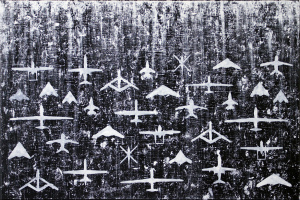
    JJprogects

    Artwork of drone warfare by JJprojegts.

    The proliferation of SIGINT and advances in big-data trawling, combined with some highly visible successes of HVT, has come with significant downsides. Although high-value targeting has been effective, this has only occurred under certain circumstances. In many contexts, such as in Mexico, HVT has been counterproductive, fragmenting criminal groups without reducing their proclivity to violence; in fact, exacerbating violence in the market. Other interdiction (the targeting of opponent’s organizational structures or disrupting their logistical chains) patterns and postures, such as middle-level targeting and focused-deterrence, would be more effective policy choices.

    A large part of the problem is that the allure of signal intelligence has led to the discounting of other key intelligence techniques, including developing a strategic understanding of criminal groups’ decision-making in order to anticipate the responses of targeted nonstate actors to law enforcement actions (here Mexico provides a disturbing example). It also requires the cultivation of human intelligence assets (sorely lacking in Somalia, for example) and obtaining a broad and comprehensive understanding of the motivations and interests of local populations that interact with criminal and insurgent groups (notably deficient in Iraq, Afghanistan, and Pakistan). Finally, establishing good relationships with local populations to advance anti-crime and counterinsurgency policies is essential. In Colombia, for example, drug eradication policy antagonized local populations from national government and strengthened the bonds between them and rebel groups.

    In other words, the tactical tool, technology – in the form of signal intelligence and big-data mining – has trumped strategic analysis. Instead, strategic intelligence analysis needs to be brought back, to drive interdiction targeting patterns, instead of letting the seduction of signal data drive intelligence, analysis and targeting action. Indeed, the political effects, as well as the anticipated responses by criminal and militant groups, and any other outcomes of targeting patterns, need to be incorporated into the strategic analysis. Questions to be assessed need to include: Can interdiction hope to incapacitate – arrest and kill – all of the enemy or should it seek to shape the enemy? What kind of criminals and militants, such as how fractured or unified, how radicalized or restrained in their ambitions, and how closely aligned with local populations against the state, does interdiction want to produce?

    Dogs Fights or Drone Fights: Remote Lethal Action by Criminals

    Criminal groups have used technology not merely to foil law enforcement actions, but also to fight each other and dominate the criminal markets and control local populations. In response to the so-called Pacification (UPP) policy in Rio de Janeiro through which the Rio government has sought to wrestle control over slums from violent criminal gangs, the Comando Vermelho (one of such gangs), for example, claimed to deploy remote-sensor cameras in the Complexo do Alemão slum to identify police collaborators, defined as those who went into newly-established police stations. Whether this specific threat was credible or not, the UPP police units have struggled to establish a good working relationship with the locals in Alemão.

    The new radical remote-warfare development on the horizon is for criminal groups to start using drones and other remote platforms not merely to smuggle and distribute contraband, as they are starting to do already, but to deliver lethal action against their enemies – whether government officials, law enforcement forces, or rival crime groups.

    Eventually, both law enforcement and rival groups will develop defenses against such remote lethal action, perhaps also employing remote platforms (drones to attack the drones). Even so, the proliferation of lethal remote warfare capabilities among criminal groups will undermine deterrence, including deterrence among criminal groups themselves over the division of the criminal market and its turfs. This is because remotely delivered hits will complicate the attribution problem – i.e., who authorized the lethal action — and hence the certainty of sufficiently painful retaliation against the source and thus a stable equilibrium.

    More than before, criminal groups will be tempted to instigate wars over the criminal market with the hope that they will emerge as the most powerful criminal actors and able to exercise even greater power over the criminal market – the way the Sinaloa Cartel has attempted to do in Mexico even without the use of fancy technology. Stabilizing a highly violent and contested – dysfunctional – criminal market will become all the more difficult the more remote lethal platforms have proliferated among criminal groups.

    Back to the Past: The Ewoks of Crime and Anti-Crime

    In addition to adopting ever-advancing technologies, criminal and militant groups also adapt to the technological superiority of law enforcement-military actors by the very opposite tactic — resorting asymmetrically to highly primitive deception and smuggling measures. Thus, both militant and criminal groups have adapted to signal intelligence not just by using better encryption, but also by not using cell phones and electronic communications at all, relying instead on personal couriers, for example, or by flooding the e-waves with a lot of white noise. Similarly, in addition to loading drugs on drones, airplanes, and submersibles, drug trafficking groups are going back to very old-methods such as smuggling by boats (including through the Gulf of Mexico), by human couriers, or through tunnels.

    Conversely, society sometimes adapts to the presence of criminal groups and intense, particularly highly violent criminality by adopting its own back-to-the-past response – i.e., by standing up militias (which in a developed state should have been supplanted by state law enforcement forces). The rise of anti-crime militias in Mexico, in places such as Michoacán and Guerrero, provides a rich example of such populist responses and the profound collapse of official law enforcement. The inability of law enforcement there to stop violent criminality – and in fact, the inadvertent exacerbation of violence by criminal groups as a result of HVT – and the distrust of citizens toward highly corrupt law enforcement agencies and state administrations led to the emergence of citizens’ anti-crime militias. The militias originally sought to fight extortion, robberies, theft, kidnapping, and homicides by criminal groups and provide public safety to communities. Rapidly, however, most of the militias resorted to the very same criminal behavior they purported to fight – including extortion, kidnapping, robberies, and homicides. The militias were also appropriated by criminal groups themselves: the criminal groups stood up their own militias claiming to fight crime, where in fact, they were merely fighting the rival criminals. Just as when external or internal military forces resort to using extralegal militias, citizens’ militias fundamentally weaken the rule of law and the authority and legitimacy of the state. They may be the ewoks’ response to the crime empire, but they represent a dangerous and slippery slope to greater breakdown of order.

    In short, technology, including remote warfare, and innovations in smuggling and enforcement methods are malleable and can be appropriated by both criminal and militant groups as well as law enforcement actors. Often, however, such adoption and adaptation produces outcomes that neither criminal groups nor law enforcement actors have anticipated and can fully control. Technology cannot fix defecting anti-crime and anti-drug policies, such as preoccupation with drug seizures , or absent rule of law and culture of lawfulness. Advances in technology do not obviate the need to strengthen bonds between citizens and the state and to create law enforcement and socio-economic conditions which allow citizens to internalize laws. Nonetheless, crime and some illegal economies will always persist and law enforcements and criminals will compete with each other in adopting improving technologies and finding measures to counter them, including most primitive but effective ones. The criminal landscape and military battlefields will thus increasingly resemble the Star Wars moon of Endor: drone and remote platforms battling it out with sticks, stones, and ropes.

    Dr. Vanda Felbab-Brown is a senior fellow in Foreign Policy at the Brookings Institution and co-director of the Brookings projects on Improving Global Drug Policy: Comparative Perspectives and UNGASS 2016 and Reconstituting Local Orders. Dr. Felbab-Brown is an expert on illicit economies and organized crime and international and internal conflicts and their management, including counterinsurgency and statebuilding. Her research focuses particularly on South Asia, Burma, the Andean region, Mexico, and Somalia, and she has conducted fieldwork in some of the most dangerous parts of the world. Dr. Felbab-Brown has an extensive publication list of books, policy reports, academic articles, and opinion pieces, including Poached: Combating Wildlife Trafficking, with Lessons from the War on Drugs (forthcoming 2016); Narco Noir: Mexico’s Cartels, Cops, and Corruption (forthcoming 2016); Aspiration and Ambivalence: Strategies and Realities of Counterinsurgency and State-building in Afghanistan (2013); and Shooting Up: Counterinsurgency and the War on Drugs (2010). Dr. Felbab-Brown is a frequent consultant for national, multilateral, and non-governmental organizations and a frequent commentator in U.S. and international media. She also regularly provides expert testimony to the US Congress. Prior to joining the Brookings Institution, Dr. Felbab-Brown was an Assistant Professor at the Georgetown University School for Foreign Service. She received her PhD in political science from MIT and her BA from Harvard University.

  • The United States, Niger & Jamaica: Food (In)Security & Violence in a Globalised World

    The United States, Niger & Jamaica: Food (In)Security & Violence in a Globalised World

    due to a complex range of interconnected issues from climate change to misguided economic policies, political failure and social marginalisation, over 2 billion people across the world live in constant food insecurity. Anna Alissa hitzemann takes a sustainable security approach to look at the importance of “physical and economic access to basic food” by exploring the links between food insecurity and violence.

    Read Article →

    The New Insecurity in a Globalized World

    Writing exclusively for SustainableSsecurity.org, Elizabeth Wilke argues that a new conceptualization of insecurity and instability is needed in a world with greater and freer movement of goods, services and people – both legal and illicit – greater demands on weakening governments and the internationalization of local conflicts. The new insecurity is fundamentally derived from the responses of people and groups to greater uncertainty in an increasingly volatile world. Governments, and increasingly other actors need to recognize this in order to promote sustained stability in the long-term, locally and internationally.

    Read Article →

  • The Kurds as Proxies in Iraq and Syria: A Problematic Relationship for Western Powers

    Scarred in recent years by questionable involvements in the likes of Afghanistan and Iraq – and by the casualties they wrought – risk-averse Western governments have begun to look to others to do the shedding of blood in their ‘wars of choice’. The risky boots-on-the-ground role that was once the proud preserve of NATO armies anxious to showcase their abilities is now politically unpalatable. Proxies appear to be the answer. Biddable local allies who are of a mind to work in collaboration with Western militaries are very much in demand: the former supply the troops, the latter the training and the technological support – if not, indeed, the weapons as well. A symbiosis based on the principle that my-enemy’s-enemy-is-my-friend is the goal. This simple formula, though, is one that is not always bound to produce positive results. Proxies should always carry a health warning; they tend not to be as biddable as hoped.

    Take the Kurds. They are an ethnic group inhabiting a region – Iraq and Syria – where suitable proxies for Western powers are very much in demand for use against Islamic State (IS). The Kurds appear to be ideal candidates as proxy fighters: they are numerous; of a warrior-caste; are politically acceptable to Western audiences, and have a natural enemy in IS. As a militant group intent on territorial expansion, IS threatens Kurdish communities. The case for synergy is thus obvious: Western militaries and the Kurds can work together for mutual benefit. Not quite so obvious, however, are the various reasons why the relationship between Kurd and Western militaries is one that has the ready capacity to go awry. The chief driver of any breakdown is that Kurdish proxies can and will have their own priorities that clash with those of their sponsors.

    Image of Peshmerga replacing the ISIS flag with  the Kurdish flag by Kurdishstruggle via Flickr.

    The first point to note here is that the Kurds are a people divided. A fractiousness has historically long been evident between the various clans, tribes and families that make up this nation. These differences may have now mellowed but they have never completely dissipated. And then there are the differences created by linguistic schisms – Sorani and Kurmanji – and sectarianism – Sunni and Shia. Differences also developed due to the politics of whichever state the Kurds found themselves in after the demise of the Ottoman Empire. The Kurds within Syria developed under the tutelage firstly of French colonial rulers and then under a succession of socialist governments in Damascus. Both influences – or rather impositions – shaped a Kurdish community that was very much secular in make-up. It was the same in Turkey; Kemalist policies pushed secularism. In contrast, however, in Iraq, the laissez-faire approach of British colonial masters and then the inability of Iraqi governments to penetrate and shape attitudes in its northern Kurdish region left in place a largely tribal-based, conservative structure that is still today strong on religious (Sunni) influences.

    Today, the Kurdish area of northern Iraq, known as the Kurdish Regional Government (KRG), is riven by a split between a Western region dominated by the party of President Masoud Barzani – the Kurdish Democratic Party (KDP) – and an eastern region where the party of former Iraqi president, Jalal Talabani – the Patriotic Union of Kurdistan (PUK) – holds sway. The KDP, dominated by the Barzani tribe and with strong links north to its political patron, Turkey, maintains the strings of power in the KRG. It is based in the ‘capital’ of Erbil. The PUK, more left-of-centre, modernist and leaning towards Iran, holds sway around Suleimaniyeh. These two parties, indeed, and using their peshmerga forces, fought a civil war in the 1990s. And while there is currently what might be seen as a national KRG peshmerga force, these two parties still maintain their own peshmerga units and there is thus always the possibility that tensions may lead to some renewed clashes. Moreover, with future independence in mind, one eye is constantly being kept on the need to prepare for a possible future conflict with the Iraqi army and its associated Shia militia. Here is one particular problem for the Kurds of Iraq – who is the real enemy? Is it IS; is it fellow Kurds, or is it Baghdad? This then also becomes a problem for any power that seeks to use these Iraqi Kurds as proxies against IS – as the United States and others do. Can they be made to keep their eyes focused on IS and not elsewhere? And will the training and weapons they might be supplied with be directed at IS, or could they be used against other US proxies – such as other groups of Kurds and/or the Iraqi army?

    In Iraq, for instance, any future push on IS-held Mosul will, the US military hopes, involve the KRG’s peshmerga forces supported by US artillery and air power. Washington does not want the Shia-dominated Iraqi army to be seizing, on its own, the Sunni city of Mosul. Re-occupation of the city should be leavened, ideally from the US viewpoint, by the employment of Sunni Kurds. As things stand, however, there is a reluctance on the part of Erbil to push forward. The KRG has now, to a large degree, stabilised its own ‘borders’ (including the internal one within Iraq), which they see forming the basis of a future independent Kurdistan. Assaulting the Arab city of Mosul will doubtless involve a major loss of life and of treasure (in a cash-strapped KRG) that will produce little in the way of obvious gain for the Kurds while there is a bigger prize in mind.

    Then there are the Kurds in Turkey. The Kurdistan Workers’ Party (Kurdish: Partiya Karkerên Kurdistanê‎, PKK) is a left-wing Kurdish militant group that has long been fighting for more autonomy for the Kurdish-majority region of south-east Turkey. Ankara looks upon the PKK, not unnaturally, as a terrorist group. Recently, during the IS-generated chaos in northern Iraq, battle-hardened PKK units moved across the area and have proved to be some of the best fighters against IS; certainly better than the peshmerga. So here, logically, should be the ultimate proxy of choice for the US inside Iraq – the PKK. The idea, though, that US forces should assist the PKK in any way would bring paroxysms of protest from Turkey – a NATO ally. The KDP government in Erbil (with its own allies in Ankara in mind) is itself ardently agitating to prevent the PKK from setting up any zones within Iraq that it will come to control politically (such as around Sinjar). The PUK, on the other hand, has long supported the PKK, mostly because of the commonality of their left-wing politics.

    There are also the Kurds in northern Syria to consider. There are dozens of bickering Kurdish political parties jockeying for control there. The only force there that is armed, though, is the militia – the People’s Protection Units (Kurdish: Yekîneyên Parastina Gel, YPG) – of the main party, the Democratic Union Party (Kurdish: Partiya Yekîtiya Demokrat‎, PYD). The PYD – again, avowedly secular and actively left-wing – was formed mainly from PKK members who had fled from Turkey in the 1990s. The PYD is thus looked upon by Turkey as just an offshoot of the PKK and is, therefore, also a ‘terrorist’ group. But again, its YPG militia have proved very effective – certainly more effective than US-allied Arab groups in Syria – at confronting and besting IS. The YPG have also shown a penchant for actually taking the fight to IS by moving into Arab-majority areas of Syria (something the peshmerga in Iraq are reluctant to do). Here is another proxy that seems ideal. But how is the US to support the YPG effectively without incurring the wrath of Ankara? Moreover, there will probably come a time soon when Turkey will try and seize Kurdish areas of northern Syria in order to eliminate what it sees as the PYD’s terrorist threat. The PYD’s main enemy would then be Turkey, and not IS. What would the US do then?

    And then there is the cross-border relationship between the Iraqi and Syrian Kurds. It would seem natural for the Kurds in Iraq to support their ‘compatriots’ in Syria. Beyond natural kinship would also be the fact that both are fighting IS. But the KDP in the KRG, having allied itself with Turkey and being more tribal and religiously conservative, wants no truck with the ‘communist’ PYD. Indeed, it has even tried to prevent any assistance reaching the PYD across the Euphrates. To this end, a large trench system has been built by KDP peshmerga to act as a physical barrier designed to prevent any help from the PUK – who do support the PYD (mostly, again, for ideological reasons) – being sent across the border into Syria. Thus the US military is providing assistance to two armed Kurdish groups – the YPG and the KDP’s peshmerga – who are highly likely to one day become engaged in combat with one another.

    Thus when Western military organisations look to the Kurds to provide suitable proxies against IS, problems abound. The notion of a symbiosis created by a common enemy is tempered by the fact that the Kurds, of whatever ilk, tend to have more than just one enemy. This is not a good basis for the role of reliable proxy. But apart from the Kurds, who else is there?


    Rod Thornton is a Senior Lecturer at King’s College London based in Qatar. He spent nine years in the British Army before moving into academia. His research interests focus on terrorism, low-intensity warfare and new forms of warfare – particularly, as a Russian-speaker, on Russian hybrid warfare.  He has lived in the Middle East for four years, including one year at the University of Hewler in Erbil, Kurdish region of Iraq. He is the author of many articles and a book, Asymmetric Warfare: Threat and Response in the 21st Century (Polity Press 2007).