Blog

  • Countering Al-Shabaab in Somalia

    Due to the absence of a functioning government, a counterinsurgency in a failed state can be a difficult enterprise. Since Somalia’s state collapse in 1991, various actors have been combating the threat of Al-Shabaab with mixed results.

    Counterinsurgency measures, as the name suggests, are meant to suppress an insurgency and in the long run create an enabling political environment for the establishment of a functional state capable of ensuring sustainable security. These goals are, however, difficult to achieve under conditions of state collapse given the virtual absence of a functional government. As a collapsed state that has had no functional government since the end of Siad Barre’s rule in 1991, Somalia represents an interesting case.

    Since 1991, many of Somalia’s counterinsurgency operations launched have been driven by concerns regarding the impact of Somalia’s conflict on regional security and the desire to create a functional state capable of providing basic human and physical security to its citizens. Given that Somalia is a collapsed state, the initiative of adopting and effecting counterinsurgency measures in the country has been externally driven by regional and international organisations such as the African Union (AU) and the United Nations (UN), as well as Western countries such as the United States (US) rather than by the Federal Government of Somalia (FGS).

    This article focuses on the military component of the peace enforcement African Union Mission in Somalia (AMISOM), which has positioned itself as a counterinsurgency force against the armed insurgency group Harakat Al-Shabaab Al Mujaheddin group, commonly known as Al-Shabaab.

    Somalia’s insurgency and counterinsurgency
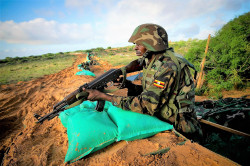
    aminson-somalia

    Image of AMISON troop via UN Photo/Flickr.

    The nature of insurgency and counterinsurgency in Somalia is complex as it involves a variety of non-state, state and international actors. The militant Islamist group Al-Shabaab, the most significant armed non state actor, describes and perceives itself as an insurgent movement but is labelled and depicted by the FGS and external actors as a terrorist group as they see it as a transnational violent armed non-state actor. The conceptualisation and labelling of Al-Shabaab both simultaneously as an insurgent and terrorist group only complicates counterinsurgency operations in the country. This is so, in that it is not effective enough to conduct counterinsurgency as counterterrorism to suppress a group that perceives itself and thereby conducts its operations as an insurgent rather than a terrorist one.

    The combination of state collapse with the complexity and paradoxical nature of insurgency and counterinsurgency operations in Somalia has adversely affected human and physical security in the country and has provided Al-Shabaab with new political opportunities to sustain violent action. The AMISOM’s strategic concept of operations (CONOPS) and rules of engagement (ROE) indicate that its short-term repressive security measures are better clarified as counterterrorism rather than counterinsurgency, as they appear to focus on both simultaneously national and transnational terrorist activities, rather than efforts to defeat the insurgency in Somalia and ultimately create a functional state.

    The AMISON’s CONOPS combine all ongoing separate military operations in Somalia into a coordinated and coherent effort against Al-Shabaab so as to extend the authority of the FGS country-wide. It also aims at creating an enabling environment for the effective implementation of AMISOM’s mandate. AMISOM’s CONOPS have, however, been adversely hindered by the mission’s lack of adequate financial, human and military resources, thereby rendering it ineffective in its mandated operations. AMISOM’s ROE are key to ensuring that military operations are conducted in compliance with international humanitarian law obligations in Somalia’s socio-political context.

    Though the ROE are in conformity with the operational realities of the mission, AMISOM continues to operate in extremely volatile conditions created by state collapse, whereby Al-Shabaab’s asymmetrical warfare targets civilians within populated areas. This situation makes it extremely difficult for AMISOM to ensure civilian protection in the conduct of its operations and to consistently apply the mission’s ROE Counterinsurgency operations that cannot consistently sustain themselves for long periods are ineffective and will not achieve the intended outcome of enhancing sustainable security.

    A success or failure?

    The successes or failures of insurgency and counterinsurgency operations in Somalia depend on population support.  So far, the counterinsurgency strategies in Somalia conducted by AMISOM and its coalition forces, especially the Somali National Army, have been unable to gain the support of the people. Al-Shabaab’s led insurgency has gained popular support among the local-level communities, largely due to the social services and more importantly the local-level security governance it provides, in the absence of a functional state. All these strategies of Al-Shabaab, which are aimed at legitimising itself, are implemented through variants of Islamism. The movement was very effective in the provision of alternative governance structures at the local-level prior to the pre-2010 military intervention of AMISOM. The literature on counterinsurgency operations in Somalia indicates that the security vacuum created by Al-Shabaab’s departure as a result of AMISOM’s operations in these areas has led to an increase in the levels of insecurity thereby questioning the legitimacy of the latter’s operations.

    The Somali populace also perceives these counterinsurgency efforts as externally driven and extremely hesitant to engage, positively, with the fundamental Somali socio-political structures such as the clan structure and Islam. In order to be effective counterinsurgency measures, should take into account the legitimacy of these socio-political structures that play a significant role in local-level peacebuilding and governance processes.

    Doomed from the start?

    Counterinsurgency operations in Somalia have also been adversely affected by poor planning and their inability, so far, to create an enabling environment which enhances state capacity. Any credible counterinsurgency operation with a military component requires careful planning before any military incursion begins. A number of indicators suggest that, in the early stages, AMISOM neither planned nor implemented an effective counterinsurgency strategy. The initial objective of Kenya’s military incursion into Somalia through Operation Linda Nchi and subsequent incorporation into AMISOM was not peace enforcement countering the direct physical threats posed by Al-Shabaab on its territory.

    Counterinsurgency measures were later driven by socio-political and economic interests rather than peacebuilding in Somalia. Kenya’s military intervention in Somalia can be perceived as counterterrorism rather than counterinsurgency efforts given that they were initially driven by short-term strategic interests.  The establishment of a functional state has so far not been achieved in Somalia as it has been has been compromised by the manner in which regional and international peacekeeping efforts, have been conducted in the country. Most of these, if not all have been characterised by failures rather than successes. For example, the UN Monitoring Group on Somalia constantly accuses the Kenya Defence Forces component of violating AMISOM’s mandate. AMISOM has not been effectively taking the appropriate measures aimed at supporting the creation of a functionally effective state due to the strategic interests of its member states. This has compromised peacebuilding and security governance in the country.

    The resilience of Al-Shabaab as a transnational violent non-state armed actor, is partly a function of ineffective repressive counterinsurgency measures in Somalia. The repressive counterinsurgency operations conducted largely by external actors in the country are reactive, achieve unintended consequences ande hence counterproductive. A political strategy supported by security operations in the formulation and implementation of counterinsurgency operations is still ideal for any country facing an insurgency.

    Counterinsurgency measures, however, that do not require repressive security operations that focus on causes not symptoms are best suited for Somalia in the medium and long-term.  Since Somalia does not have a functional government capable of providing effective counterinsurgency operations let alone human and physical security, non-repressive measures would best be conducted by non-state actors such clan leaders and clans, and Islamic civil society organisations.

    Non-state actors are appropriate in the implementation of non-repressive counterinsurgency measures in that they not only located within fundamental Somali socio-political structures, but also have the capacity to use informal process oriented means rather than formal goal-oriented ones. Informal process-oriented methods are more appropriate when it comes to addressing the root causes of the insurgency while formal goal-oriented ones are reactive focussing on symptoms. These measures, such as those that focus on countering violent extremism, take into account fundamental Somali socio-political structures, and their corresponding customs norms and traditions thereby gaining population support and subsequently legitimacy. Such counterinsurgency measures will achieve their intended outcome of dealing with insurgency, the grievances of that insurgency and ultimately create the socio-political environment required to establish a functional state.

    Oscar Gakuo Mwangi (PhD) is an Associate Professor at the Department of Political & Administrative Studies National University of Lesotho.
  • After Brussels – It’s Time to Challenge Our Authorities and Move Beyond Prevent

    Another year has confronted us with yet another tragedy in another European Capital – Madrid in 2004, London in 2007, Paris last year – and, most recently, Brussels. The litany of such incidents, augmented by countless other atrocities further afield and perpetrated originally by those claiming connections to Al Qaeda but now eclipsed by similarly asserted affiliations to ISIS, seems set to continue. Accordingly, it makes sense for a publication called Sustainable Security to ask what, if anything, has been sustainable about responses to terrorism worldwide since 9/11?

    After Brussels, many of the usual suspects with connections to the world of security have been wheeled out as usual to offer advice on the need for ever greater scrutiny at airports. But, having made air-side a challenge to reach through a panoply of checks and scanners, it seemed inevitable to those who understood displacement that attacks would simply migrate to the less scrutinised entrance spaces. We could turn these into fortified complexes too – only for the locus of atrocities to move on again – or we could begin to ask more challenging questions of our authorities.

    Of course, none of us wishes to sit next to a deluded individual about to detonate their device on a plane or Metro train. In that regard, security and intelligence gathering are absolutely necessary. But they are clearly not sufficient as, despite the billions spent in hardening private facilities and civic spaces, including transport hubs since 2001, the evidence still serves to remind us that determined individuals – and even a few chancers – will get through. It is simply not possible to secure all of society, all of the time. Prevention – in this sense at least – is far too limited a goal.

    What’s more it has often been the authorities who have ended up ‘doing the terrorists’ job for them’. To call for three days of national mourning after the latest disasters may seem sensitive to those who lost a loved one – but it flies in the face of the rhetoric of resilience and those who claim the need for a rapid return to normalcy. In that respect, the public often display considerably greater courage by determinedly meeting together for vigils in open spaces, whilst the authorities advise against collective gatherings and look to cancel concerts and sporting events.

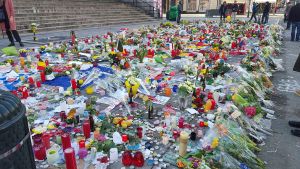
    Brussels_after_the_attacks_(4)

    Image of Bourse, Brussels after terrorist attacks in March 2016. Image by Romaine via Wikimedia Commons.

    There can never be security solutions to social problems. At best, these conceal the underlying challenges that lie ahead. Worse, operational fixations allow those in charge to evade articulating a broader vision for their societies. This latter aspect shapes both the perpetrators – who appear sometimes to almost drift into becoming radicalised through their being disengaged from a world that offers them (and others) little by way of vision or ambition – and the respondents – who are lulled into a phoney sense of knowing what they are doing and why, when in fact they have little appreciation for, or understanding of, the dynamic they seek to redress.

    In such a situation, it may indeed only be the public who can maintain a modicum of humanity through their determination – albeit unavoidable in most instances – to get on with life. They are also apparently not so readily fooled by the rhetoric of the self-styled ‘jihadists’ who represent no-one and whose actions in the name of Islam most Muslims deplore, nor by the actions of the authorities who, by securitising the world, hope to make their task easier whilst providing themselves with a flimsy – if largely unconscious – sense of purpose in an age when they seem to lack any other.

    But there are others, critical of the authorities, whose narrative and interpretative framework we should be just as critical of and interrogate too. If, as we are often told, alienated individuals in corroded communities in run-down districts have a supposedly understandable sense of grievance – at the racist hostility they encounter, as well as with regards to Western foreign policy – then why is it that not all brought up under such conditions respond the same way, or that the terrorists target civilians, including children as in Lahore, rather than government ministries?

    In the aftermath of the Cold War, security increasingly became represented through the prism of human security whereby the referent for security shifted from the state to the individual and, in particular, the latter’s assumed existential sense of vulnerability. This, in turn, opened the door to securitisation – the possibility that the state and other actors might transform specific problems into security-related concerns in the pursuit of their agendas. Foremost among these have been the securitisation of health and the securitisation of development. So might there now be a securitisation of education too?

    Securitisation allows challenges to be ‘constructed as a matter of national security’, encouraging a demands for perpetual preparedness, constant surveillance and eternal vigilance. It offers unfocused authorities clear actions to engage in, thereby making ‘an uncertain future available to intervention in the present’. This coincides with the rise of risk management that also readily become an organising framework in periods lacking clear direction. Worse, by promoting an emphasis on procedural management through expert knowledge these both disenfranchise people from the possibility of solving their own problems and allows the authorities ‘to become fixated on external threats rather than examining their own internal confusions’.

    Another critical factor here appears to be the race to the bottom that best describes identity politics today. The end of the Cold War, and with it the gradual erosion of the politics of Left and Right that had defined it, left a big gap where collective social discourse, debate and deliberation ought to be. It is this hole in values and vision that the use of identity as a claim on resources – particularly through attempts to define particular groups as being the most oppressed or victimised – has sought to fill. Many campaigners have now learnt to play this game. There is evidence to suggest that today’s terrorists do so too.

    But, rather than challenge such approaches, governments the world over have often indulged the claims and patronised the claimants accordingly. Far better to deal with individuals and groups prostrating themselves to you and making claims for remedy or therapy than having to confront those who are being Bolshie and demanding more. In an age when the authorities are not so sure of whom they are themselves – having sought to disown aspects of their imperialist past to the point of self-loathing and confusion – as well as sensing themselves isolated, it makes for a perfect match.

    While campaigners understandably concern themselves with government moves to introduce a Communications Data Bill – the so-called ‘Snoopers’ Charter’, now renamed the Investigatory Powers Bill – what many fail to recognise is the extent to which such a push from above has been facilitated by erosions to absolute freedom of expression down below. The notion, for instance, that students are vulnerable and need to be protected by the authorities, whilst appearing in the new Prevent Duty, first emerged as the gradual extension of various campaigns for ‘no platform’, ‘safe space’ and ‘trigger warnings’ promoted by Students’ Unions across the UK and US.

    Prevent is an affront to liberty, not least in its infringements on academic freedom, but the notion that everyday social relations are ‘toxic’ and ought to be scrutinised by the powers-that-be is entirely mainstream. This latter has served as a mechanism whereby febrile individuals and institutions, as well as directionless authorities have been able to catch up with the popular mood that fears active engagement and robust exchanges of opinion by playing the ‘victim card’ and looking for protection. Notably, the language is one that presumes a passive, innocent and sponge-like public – young people and others are (it would seem) simply ‘drawn into terrorism’ by those who groom them, thereby diminishing their agency and, inadvertently, absolving them of accountability for their actions.

    At a recent dissemination session I attended relating to the Prevent Duty at which an eager regional coordinator presented upon its trajectory and implications, I was particularly struck by this use of the language of protection. Authorities are merely implementing a ‘duty of care’ we were advised, for people who might be ‘influenced by’ ideology. The notion that it might be the specific role of Higher Education to influence young people, or of the state to inspire us all with ideas, was not countenanced. And, ironically for institutions now driven by the need for so-called evidence-based policies, the positivist ‘what is’ question was replaced by a speculative ‘what if’?

    As I have also noted elsewhere, we were advised that Prevent had now shifted ‘from a moral duty to a legal duty’. In that regards, the presenter, who described themselves (and us) as a practitioner (as opposed to a planner maybe) was at least refreshingly honest. But that we now invoke the law to attempt to prevent terror should alert us more significantly to the failure of the authorities to win the moral argument or to engage their own public. Free speech and privacy are messy matters of course, as is real life. But attempts to shy away from this are worse for us all.

    That is the real challenge ahead – one that no amount of legislation or intelligence and security can by-pass. Academics will continue to debate what the real causes of terrorism today are, as well as how best to address these. In the meantime, the authorities, following the cue of a nervous culture and lacking any coherent vision for society of their own have assumed that they know what to do and are acting accordingly through their enthusiastic practitioners.

    It is what we want for society beyond the terror and our responses to it that really needs debating.

    Professor Bill Durodie is Chair of International Relations and Head of the Department of Politics, Languages and International Studies at the University of Bath. His most recent journal article was ‘Securitising Education to Prevent Terrorism or Losing Direction?’ published in the British Journal of Educational Studies in March 2016. His work focuses on risk, resilience, radicalisation and the politics of fear.

  • The Threat of Nuclear Disconnect: Engaging the Next Generation

    The Threat of Nuclear Disconnect: Engaging the Next Generation

    The dramatic decrease in public awareness and engagement in the nuclear weapons debate since the 1980s poses a risk to our future, as younger generations and future policy shapers will be less familiar with the challenges posed by nuclear weapons when they take the helm. But nuclear weapons are too dangerous a threat for an entire generation to disconnect from. BASIC’s Rachel Staley explores the ramifications of not updating the nuclear debate.

    Read Article →

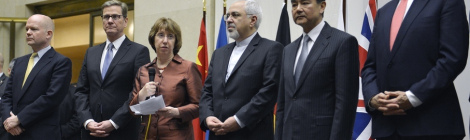
    The Iran Interim Deal: Responses, Potential Impacts, and Moving Forward

    Implementation of the interim deal with Iran, which freezes the country’s nuclear enrichment in exchange for limited sanctions relief, began in January. As a result, we are witnessing a substantial shift in diplomatic relations between Iran and its regional neighbours – some positive, some not. This deal marks a significant step for the international non-proliferation regime, but will it achieve the trust and confidence-building goals intended? As the US and Iran face increasing domestic pushback on the terms of the agreement, questions remain on the interim deal’s impact on relations in the region and abroad, and the effect these relations may have on the prospects of coming to a full comprehensive follow-up agreement between Iran and the P5+1 countries.

    Read Article →

  • How ISIS Survives Defeat: Propaganda and Decisive Minorities

  • The Kurds as Proxies in Iraq and Syria: A Problematic Relationship for Western Powers

  • 2015: Towards a brave new nuclear world?

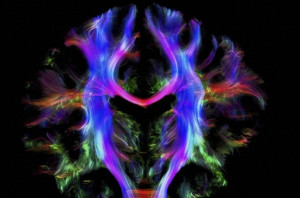
  • What Does Neuroscience Have to Offer Peacebuilders?

    Neuroscience, the scientific study of the nervous system, is a rapidly emerging interdisciplinary scientific approach, offering exciting new insights into our understanding of human behaviour. Could it also help us overcome many of the difficulties of peacebuilding?

    Why do violent conflicts arise so easily? Why do groups and nations believe that their own violence is justified but not that of the other sides? How do political or religious fundamentalist ideologies capture the minds and hearts of people and groups, often beyond the value of their own lives?  Why do people often believe, or create, their own versions of ‘truth’? Why does peacebuilding take so long  – and be so darned difficult?

    As a social and political psychologist, these questions have absorbed and challenged me for decades. Then, some years ago I came across a relatively new science – or parts of other sciences – which helped me to re-think many of my ideas about the difficulties of peacebuilding.  These were the emerging ideas that question whether or the not the ways in which we as humans have been physically shaped by the exigencies of evolution, have left us with some body/brain legacies which, if left unattended, seem to hamper our capacities to live together and to resolve our conflicts peacefully. Many of these processes are currently being studied by businesses, educational institutions, governments and others for their possible use in shaping human behavior, but not as yet in any conscious way by social and international conflict resolvers.  These new fields are called variously biopsychology, genopolitics, political physiology, behavioral genetics, cognitive neuroscience, etc. What do they suggest to us that may be of use to those in the peacebuilding professions?

    We are strangers to ourselves

    Contrary to what most of us believe, our human capacity for rational judgment is much (much!)  shallower than we think. We are limited by our nature as human beings whose very existence throughout history was often dependent upon instincts and emotions to survive.  Mostly, it is the emotional brain that drives us, in this case the amygdala, the part of our brain that deals with our memories, pleasures and fears. Millennia of evolution have shaped us to feel first and think (if at all) afterwards. Research using Functional Magnetic Resonance Imaging (fMRI shows) that feelings usually precede the analytic and logical reasoning that comes from our anterior cingulate cortex, which controls our logical thinking, and this is true particularly in times of stress.  Our ‘emotional’ and ‘reasoning’ minds coexist uneasily. Our choices are often instinctual, dictated not only by our brain structures, but also by hormones such as adrenaline, norepinephrine and cortisol, which inform our response to fear messages. Thus when we feel threatened, or someone – and particularly a leader, or would be leader  – tells us that we are being threatened, our amygdala fears overwhelm the cortex thinking that is needed to rationally respond to complex and changing situations. This supremacy of emotions is particularly relevant in situations termed “weak psychological situations” such as crises or situations characterized by uncertainty or conflict.

    Our brains differ

    B0010280 Healthy human brain from a young adult, tractography Credit: Alfred Anwander, MPI-CBS. Wellcome Images images@wellcome.ac.uk http://wellcomeimages.org Coronal view of nerve fibres in the brain of a young healthy adult, which has been virtually sliced down a vertical axis to divide it into front and back. The brain is viewed from behind, with the left side of the brain on the left of the image. This image was created by virtually dissecting the brain using data obtained from diffusion magnetic resonance imaging (MRI). Diffusion weighted imaging is a specialised type of MRI scan which measures water diffusion in many directions in order to reconstruct the orientation of bundles of nerve fibres. Tractography is used to indirectly model these nerve fibres, which transmit information between different regions of the brain. These have been colour-coded to help distinguish between different tracts which pass close to each other. For example, fibres connecting the left and right hemispheres (red), fibres travelling from top to bottom (blue) connecting to the spinal cord, and fibres running from front to back (green) are visible here. Reconstructing these connections between different parts of the brain will aid our understanding of how the brain functions in health and disease, and could ultimately become a tool in the same way as the human genome. Width of image is approximately 165 mm. Magnetic resonance imaging 2015 Published: - Copyrighted work available under Creative Commons by-nc-nd 4.0, see http://wellcomeimages.org/indexplus/page/Prices.html

    Healthy human brain from a young adult, tractography. Image by Wellcome Images via Flickr.

    Genetically, the power of the amygdala can differ from person to person, and enables some of us to tolerate uncertainty more easily, and to be more open to those we see as ‘others’. fMRI scans have shown that these differences in biology, and in genetics, influence differences in attitudes and beliefs.

    At one end of the spectrum, people, often called traditionalists, or conservatives, are influenced more by their amygdala. Having genetically greater sensitivity to fear and uncertainty they are more likely to advocate policies that protect the existing social structure from both external out groups and internal, norm-violator threats. They have a greater need for order, structure, and certainty in their lives, resist change more often, and are less open to risk taking. Researchers have shown that they are usually more supportive of policies that provide them with a sense of security:  hence their greater backing for e.g. military spending, capital punishment, patriotism, and tougher laws on immigration.

    On the other end of the continuum, there are people who are genetically more open to new things, and to new experiences – these are often termed ‘liberals’. fMRI scans have shown that they can better tolerate uncertainty, and cognitive complexity,  take risks more often, and have wider and more diverse friendships.  They often exhibit stronger preferences for social change and for equality when compared with traditionalists. Researchers have identified a variant called DRD4-7R, which affects the neurotransmitter called dopamine and a further 11 genes which are responsible for inclining people towards liberal or conservative beliefs: these are genes involved in the regulation of three neurotransmitters—dopamine, glutamate and serotonin—and also G-protein-coupled. There is speculation that evolutionary wise it may have proved useful to have such varied types of individuals in a society so as to ensure the best survival responses to different sets of societal and group challenges.

    We are ‘groupish” people

    There is a now an increasing, and welcome, body of literature stressing the innate tendencies for cooperation between people, in contrast to the competitiveness that previous evolutionary psychology has suggested is the norm. However, it appears that although biologically humans have evolved for cooperation, it is mainly with those people they perceive as their own group. Experiments have shown that bonding within groups is assisted by the hormone oxytocin, a rise in the level of which appears to provide a ‘glue’ between people, making them demonstrably more generous, trusting and compassionate towards their neighbours.

    Spraying oxytocin into people’s noses increases a sense of belonging, or connectedness to a group, and makes them more willing to cooperate with them. However, research has also shown that while oxytocin can increase levels of cooperation within a group, it can also promote ethnocentric behavior, increase our suspicion and rejection of ‘others’ outside the group, and make people less likely to cooperate with members of an out-group.

    Brain imaging experiments (fMRI) have also shown that our attitude towards out-groups is affected by what scientists call ‘mirror neurons’, which are linked to our capacity for empathy, which helps us to better understand other peoples intentions, feelings and emotions.

    Unfortunately, when we encounter people from groups we perceive as others, the brain often switches off the empathetic neurons and actively resists any emotional connection with the perceived other group. There is also some research from MIT on Israeli/Palestinians and US/Mexican group processes using fMRI scans during group dialogues that suggests it is particularly hard for groups who see themselves as ‘oppressed’ groups to feel any empathy with those they see as having more power than they have.

    Mirror neurons also have the effect of increasing emotional contagion so e.g. during a political landscape where fear is high and emotions are strong, there is quite a bit of emotional contagion occurring between individuals, which will drive them to group behaviour that can be contrary to their ‘normal’ characteristics.

    Truth is as  we see it

    What we see as ‘truth’ is often determined by our innate needs for beliefs and values, our capacity to tolerate uncertainty and fear, and the cultural context in which we live – thus they have often been what is termed  ’groupish’ rather than necessarily true. We often rationalize what our guts tell us rather than care too much about fact checking. The number of would be ISIS recruits who have been caught with a copy of ”Islam for Dummies” and “The Koran for Dummies”  in their rucksacks is legendary. Suggestions that such recruits are conversant with, and committed to Islam, are therefore questionable, suggesting that alternative reasons such as a search for meaning and for a group belonging  in their lives. Once we form our beliefs, we have a tendency to see and find evidence to support them, and ignore evidence that challenges them. When faced with logical contradictions to their very deeply held beliefs, fMRI scans  show that although people may feel negative emotions, there is no actual increase in their reasoning cortex, which becomes quiescent.  Our memories too are also notoriously faulty – they often reframe and edit events so as to create a story that will fit our current situation, conflating the past and present to suggest a story to us that suits what we need to believe today, rather than what is true

    So – what does this mean for peacebuilding?

    For change to happen, people need to be both emotionally and rationally engaged. As peacebuilders we often fail to understand how little actual sway logical thinking has on the actors concerned, and on their constituencies in the field. Peace agreements fall apart because, although the cognitive skills of those involved have crafted clever political and social compromises, constituents fail to feel they are winning through peace agreements.

    Peacebuilding processes need to particularly appeal to traditionalists who are more afraid of change.  For traditionalists, such processes will often involve leaders from trusted faith, community or political leaders who can reassure their constituencies about the advantages of various change measures, and of how such measures can ensure their future security.

    We need to find ways of increasing oxytocin levels between conflicting groups at both individual and social levels.  These include factors such as empathetic responses to others family/national crises, and gestures such as gift giving, meal sharing, alcohol, where such is culturally permitted (just a modicum – too much can make us belligerent!) positive physical gestures, expressions of understanding and appreciation, sharing of family stories, group singing, etc. Note that none, or almost none of these are mentioned in the mediator’s guidebooks, but fMRI and hormonal testing indicate that perhaps they should be. Also, given the challenges of achieving empathy as shown by the patterning of mirror neurons, we need to ensure that dialogue processes address, or promise to address, structural societal differences, as little empathy between perceived victims/oppressor groups can be achieved without such promises.

    We should not get too hung up on issues of ‘factual’ differences, but should try and see why it is important for some people or groups to hold on to a version of facts that seems incontrovertibly incorrect to ‘experts’.  It may be more helpful to see such beliefs as a need for personal or group safety or congruence, or as a lack of trust in the sources and the filters through which people learn about facts, rather than of a lack of intelligence.

    Conclusion

    In recognizing the bio-psychological sciences as important, we need to be careful not to turn the spotlight away from structural and societal contexts that are unfair to certain groups: such contexts often bring out our worst bio-psychological feelings rather than our best. We also need to appreciate that much of the research about these processes is very tentative, and many of the mechanisms used to measure such processes are still in their infancy. Finally, and most importantly, there is nothing determinist about what is revealed by fMRI scans. While our genes can predispose us to certain ideas, they are not predestined: brains can be relatively plastic in their nature, and our bio-psychological and genetic tendencies can be altered (somewhat) by our environments.

    My hope is that a greater appreciation of how our genetic and physical predispositions, allied to environmental factors, can affect our human behaviour, and can help make our work more effective and sustainable. Building our programs on the realities of our neural legacies, rather than ignoring them, may help us to relate more realistically, and more compassionately to conflicted groups whose behavior is often dictated to, and limited by, human physical processes whose consequences we are only just beginning to understand and appreciate.

    Mari  Fitzduff was the founding Chief Executive of the Northern Ireland Community Relations Council (CRC). The CRC was set up in 1990 to fund and work with government, trade unions, community groups, police and army, paramilitaries, prisoners, businesses and politicians on issues of peacebuilding in N Ireland. Mari has also worked on programs on conflict issues  in the Basque Country, the Caucasus, Sri Lanka, Middle East, Indonesia, Russia, Crimea, Cameroon, Philippines, Peru and Columbia. From 1997-2003, she held a Chair of Conflict Studies at the University of Ulster where she was Director of a United Nations University researching peacebuilding program and practice development around the world. She is Founding Director of the MA professional programs in Conflict Resolution and Coexistence at the Heller School at Brandeis University. Her publications include: (2015) An Introduction to Neuroscience for Peacebuilders, Public Policy for Shared Societies Palgrave MacMillan (2013), Fitzduff, M and Stout, C: (Eds) (2006) The Psychology of Resolving Global Conflicts: From War to Peace. 3 Vols Praegar Press and Fitzduff, M and Church (Eds): (2003) NGO’s at the Table Rowan and Littlefield.  She is just finished editing a political psychology book for Praegar Press on the phenomenon of Trumpism, and why it has been so successful in engaging with so many possible voters.

  • Sustainable Security in the Arctic

  • The Iran Interim Deal: Responses, Potential Impacts, and Moving Forward

    The Iran Interim Deal: Responses, Potential Impacts, and Moving Forward

    Implementation of the interim deal with Iran, which freezes the country’s nuclear enrichment in exchange for limited sanctions relief, began in January. As a result, we are witnessing a substantial shift in diplomatic relations between Iran and its regional neighbours – some positive, some not. This deal marks a significant step for the international non-proliferation regime, but will it achieve the trust and confidence-building goals intended? As the US and Iran face increasing domestic pushback on the terms of the agreement, questions remain on the interim deal’s impact on relations in the region and abroad, and the effect these relations may have on the prospects of coming to a full comprehensive follow-up agreement between Iran and the P5+1 countries.

    Read Article →

    Sustainable Security and the Challenges of 2014

    2014 is a time for looking backwards and forwards. While the dynamics of the war on terror are still very much in play, the withdrawal from Afghanistan and the re-escalation of violence in Iraq and Libya present an opportune context for sincere reflections on the disastrous consequences of war without borders. Such inquiry needs to look forward too, to the implications of the current administration’s ‘war-lite’ and the unstoppable proliferation of remote control technologies.

    Read Article →

    What next for Iran? Foreign Policy after a Nuclear Agreement

    If Iran and the P5+1 succeed in negotiating a robust agreement on the nuclear issue, then Iran will be less preoccupied with rebalancing its relationship with antagonistic western powers and its role in the Middle East and the wider region has scope for developing in many new directions. This briefing looks ahead to a post-agreement environment and assesses where Iran might chose to concentrate its resources. A key question is whether it will work to build better links with the US and selected European states or whether it will be more interested in the BRIC and other states, not least Turkey. Its choice will be influenced strongly by domestic politics and the urgent need for a more stable region.

    Read Article →

  • A top-down approach to sustainable security: the Arms Trade Treaty

    A top-down approach to sustainable security: the Arms Trade Treaty

    2012 has been hailed as a potential landmark year in the push for greater regulation of the global trade in conventional arms. After more than a decade of advocacy to this end, negotiations took place throughout July towards the world’s first Arms Trade Treaty (ATT), which is intended to establish the highest possible common international standards for the transfer of conventional weapons. However, although significant progress was made during the month of intense negotiations, the ATT is not yet open for signature. In this article, Zoë Pelter explores what role a potential treaty – if reopened for further negotiation – could play in a move towards sustainable security.

    Read Article →