Blog

  • Why Does UN Humanitarian Intervention Remain Selective?

    Over the past two decades, the United Nations Security Council has responded more strongly to some humanitarian crises than to others. This variation in Security Council action raises the important question of what factors motivate United Nations intervention.

    The United Nations (UN) selective response to humanitarian crises—as evidenced most recently by the organisation’s uneven reaction to the conflicts in Libya and Syria—is arguably among the most contentious issues in international politics. Some scholars and observers heavily criticize this practice, arguing that the selectiveness of humanitarian interventions undermines their legitimacy and ultimately their success; that the uneven response to humanitarian emergencies suggests that these intervention are motivated not by humanitarian concerns but by the military and economic interests of powerful states; and that the selective enforcement of human rights norms undermines the emerging rule of law in international politics (for examples see Archibugi 2004, Chomsky 1999)

    Others disagree and claim that selectivity is not only unavoidable for the UN but also desirable. The selectivity of humanitarian intervention, so the argument goes, reduces the risk of over commitment; it helps to maintain cooperation among the great powers; and it prevents the UN from becoming involved in ill-conceived operations (see Roberts and Zaum 2008)

    But what explains why UN humanitarian interventions remain selective in the first place? Why is it that the UN has taken strong action to respond to some crises, like those in Northern Iraq, Somalia, Bosnia, Sierra Leone or—more recently Libya—but not to other like those in Colombia, Myanmar, Sudan, or—currently—Syria?

    The scholarship on humanitarian intervention often argues that each humanitarian crisis (and the responses to them) is historically unique and therefore requires a case-by-case explanation. While I agree that attention should be paid to the specificities of each crisis, my research shows that the UN’s response to them is not random but follows remarkably consistent patterns (see Binder 2015, 2017). More specifically, I argue that a combination of four factors explains whether the United Nations does or does not take strong action (sanctions, ‘robust’ peacekeeping operations, military action) in response to a humanitarian crisis. This explanation has been developed and tested through a systematic comparative analysis of the UN’s response to more than 30 humanitarian crises after the end of the Cold War combined with several in-depth case studies of intervention decisions in the UN Security Council.

    • The first explanatory factor is the extent of human suffering in a crisis. In a humanitarian crisis people suffer and die while human rights norms are massively violated. This generates a morally motivated pressure to come to the rescue of threatened populations and to defend international norms.
    • Secondly, whether the UN intervenes depends on the extent to which a crisis spills over to neighbouring countries and regions. Humanitarian crises often affect neighbouring countries or regions in negative ways. Spill over effects include regional conflict diffusion, refugee flows, terrorism or economic downturn. Spill over effects create a material interest to intervene.
    • The third explanatory factor for UN intervention is the ability of a target state to resist outside intervention. Militarily strong target states, or target states that have powerful allies, can raise the costs and risks of UN intervention and affect its chances of success.
    • Fourth and finally, UN intervention is explained by the level of material and reputational resources the UN has committed to the resolution of a crisis in the past (sunk costs). To the extent that the UN have invested time, money, and diplomatic prestige in the resolution of the crisis, this creates the wish to protect these investments through continued or escalated involvement.

    None of these explanatory factors is sufficient in itself to explain selective intervention. In combination, however, they provide a powerful explanation for the UN’s uneven response to humanitarian crises.

    When does the UN take strong action?
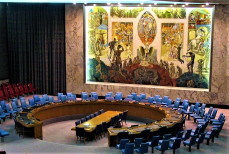
    Image credit: Bernd Untiedt/Wikimedia.

    The UN can be expected to take strong action—coercive measures including economic sanctions, ‘robust’ peacekeeping operation or (the authorization of) military action—if the extent of a humanitarian crisis (in terms of victims and internally displaced persons) is large, and if the organisation has committed substantial resources to its resolution. This, however, leads to intervention only when the crisis also generates substantial negative spill over effects (e.g., refugee flows) or when the target state of an intervention is weak and therefore unable to resist to outside intervention.

    Explaining limited UN action (or inaction)

    A limited response of the UN to a humanitarian crisis, such as UN observer missions, humanitarian assistance, or even complete inaction of the UN, is best explained by the ability of a potential target state to resist outside intervention (e.g., through military capabilities). However, other factors must be present as well. Military capabilities must be either complemented by a low level of previous UN involvement; or by a relatively low level of human suffering and spill over effect to neighbouring countries.

    A few brief examples may help to illustrate how these four factors interact to lead to strong or limited UN action.

    Bosnia

    UN intervention in Bosnian crisis was clearly driven by a combination of motivational factors. For one, UN members were strongly concerned by the large-scale plight of the Bosnian civilian population and the grave human rights violations committed by the parties to the conflict (ethnic cleansing, the installation of concentration camps, the siege of Sarajevo, and the massacres at Srebrenica). Second, the intervention was motivated by the wish to prevent the crisis from spilling over to Western European countries, most notably in form of refugee flows, and to stop a more generalized destabilization of the Balkan region. A third important driver of UN intervention in Bosnia was the wish of UN member states to protect the tremendous investments both material (through humanitarian assistance and peacekeeping) and reputational (diplomatic efforts) the UN had made over the course of the conflict. However, when the Bosnian Serbs took hundreds of UNPROFOR blue helmets hostage, this brought the UN to the brink of failure and put the UN’s efforts in the Bosnian crisis in jeopardy. In this situation, rather than withdraw, the organisation escalated its response. Finally, outside intervention was facilitated by the inability of the Bosnian Serbs and the Serbian government to generate sufficient resistance against outside intervention by the UN (and later by NATO).

    Cote d’Ivoire

    Very similar motivational patterns can be observed with respect to the UN’s decision to authorize military intervention in the context of post-election violence in Côte d’Ivoire in 2010. The dramatic levels of internal displacement and the fears of genocide, given the xenophobic politics of ‘Ivoirité’ that characterized the conflict, raised strong humanitarian concern in the UN. At the same time, UN members wished to prevent the conflict from spilling over to other Western African countries, most notably to Liberia which was slowly recovering from a long and brutal civil war. Moreover, the substantial and longstanding involvement of the UN in the country generated an additional institutional dynamic pushing towards intervention. The UN had invested heavily in the resolution of the crisis in Côte d’Ivoire—most notably through peacekeeping and peacebuilding. UN members wished to protect these investments they saw at stake, should country relapse into civil war. Finally, former President Laurent Gbagbo and his supporters were too weak to effectively resist outside intervention in in the country. By the time the UN decided to authorize military action, large parts of the country were controlled by forces loyal to Gbagbo’s opponent Alassane Ouattara.

    Libya

    As in the crises in Bosnia and in Côte d’Ivoire, humanitarian intervention in Libya was driven by more than one factor. Muammar al Gaddafi’s public announcement to commit a massacre in the town of Benghazi generated particular pressure on the part of UN members to act. Concerns to prevent spill over effects also played an important role. In addition to destabilizing effects for neighbouring Egypt and Tunisia—both of which are undergoing important political change in the wake of the ‘Arab Spring’—Western UN members feared that hundreds of thousands of Libyan refugees would cross the Mediterranean towards Europe. At the same time, the Gaddafi regime was not in a strong position to resist outside intervention. Not only was there a capable opposition movement in the country, but also Tripoli had managed to alienate nearly all of its former Arab and African allies. Libya also lacked partners in the Security Council who might have opposed or blocked UN intervention. However, the Libyan case fails to provide strong support for the previous institutional involvement explanation in that the UN did not invest substantial material and immaterial resources to the resolution of the crisis prior to the intervention.

    Syria

    The ongoing crisis in Syria illustrates how a combination of factors prevents strong UN action. The available evidence suggests that massive human rights violations, the spiralling violence in the country as well as the severe spill over effect of the Syrian conflict for neighbouring countries, most notably Lebanon, raised strong concerns on the part of UN members. A majority of UN members have pushed for sanctions against the Assad regime in the UN Security Council. That the UN has nevertheless not taken strong action in Syria can be explained by two factors. First, unlike the cases discussed before, Syria is more able to resist outside intervention—most notably because the Assad regime enjoys the continued support of its Russian and Chinese allies, who block any coercive measures against Syria in the UN. Second, the UN has not been substantially involved in Syria in the past and has not committed substantial resources to the resolution of the crisis. As such, a complementary dynamic of escalating commitment could not unfold in the UN to push towards coercive measures.

    Summary

    Whether the UN intervenes or does not intervene in a humanitarian crisis cannot be explained by a single factor. Rather, a combination of conditions – the extent of human suffering, the level of spill over effects, the military strength of a target state and the extent to which the UN has been involved in a crisis before – accounts for this variation in UN action to a large extent. While the explanation I suggest here does not account for all UN responses to humanitarian crises, it covers more than 80% of the UN humanitarian interventions after the Cold War.

    Martin Binder is Associate Professor in International Relations at the University of Reading. His research focuses on humanitarian intervention, the authority and legitimacy of international institutions, and rising powers. His work has been published in the Journal of Peace Research, International Studies Quarterly and International Theory, among others. His recent book The United Nations and the Politics of Selective Humanitarian Intervention has been published in 2017 with Palgrave Macmillan.
  • The Missing Link(s) Between Military Integration and Civil War Resumption

    Does military integration make renewed civil wars less likely? Evidence from several cases of postwar military integration over four decades reveal little evidence that it contributes to the durability of postwar peace.

    Author’s Note: This article derives from a larger project which was intellectually indebted to the Security Sector Reform Workgroup of the Folke Bernadotte Academy and funded by grant BCS 0904905 from the Social and Behavioral Dimensions of National Security, Conflict, and Cooperation, a joint program of the National Science Foundation and the Department of Defense/Department of the Army/Army Research Office (the Minerva program). That grant funded a conference on military integration after civil wars, which the Peacekeeping and Stability Operations Institute of the U.S. Army War College graciously provided hospitality for and supported; special thanks are due to Raymond Millen and Col. Stephen T. Smith. I am especially grateful to all the participants in that conference, whose research and thinking so deeply informed the project.

    Military integration following a civil war is a common practice, evidenced by the fact that nearly 40 percent of peace settlements for the 128 civil wars from 1945 to 2006 called for some form of integration of combatant military forces. It has become accepted wisdom that integration is crucial to preventing a society’s relapse into war and there is much about this that feels like common sense. After all, a professional, communally representative force could conceivably diminish vulnerable groups’ security fears in a post-civil war environment by:

    • serving as a credible signal of the government’s commitment to power sharing which would make an army less likely to employ violence against the society’s constituent communal groups;
    • protecting populations against potentially dangerous militias;
    • providing employment to former fighters from all sides;
    • and facilitating, through symbolic power, popular identification and unity with an inclusive vision of a nation.

    But is this faith regarding military integration and civil wars actually true based on the research or is it fundamentally misplaced?

    The empirical evidence

    burundi-peace

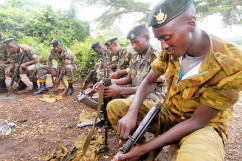
    Image credit: US Army Africa/Wikimedia.

    Quantitative studies generally find a correlation between military integration and the likelihood of renewed civil wars (Walter 2002; Hoddie and Hartzell 2003; DeRouen, Lea, and Wallensteen 2009; Toft 2010).  However, aside from one notable dissent (Glassmyer and Sambanis 2008) the studies assumed that all military integration efforts were equivalent. They focused on agreements to integrate rather than their actual implementation, and it was possible that the causal arrow was reversed, that easier cases would allow military integration than those more likely to fail.  Two comparative case study analyses reached opposing conclusions (Knight 2011; Call 2012).

    My study of eleven cases began with the expectation that military integration would be difficult to carry out (bringing people who have been killing one another with considerable skill and enthusiasm and giving them weapons did not seem like a bright idea) but that doing so successfully would reduce the likelihood of renewed civil war.  I ended with precisely the opposite conclusions.

    The study – does military integration make renewed civil wars less likely?

    The study specified five plausible causal mechanisms linking the phenomena:

    1. The willingness of leaders on both sides to commit to this risky strategy persuades others that they are sincere in desiring peace and can be trusted on other difficult issues.
    2. The new force provides security for the elites (and perhaps the masses), allowing them to resolve other issues.
    3. The new force employs substantial numbers of veterans who might otherwise be available for recruitment by spoilers planning to restart the war.
    4. It is a powerful symbol of legitimacy and integration for the new regime—if people who have been killing one another can work together, surely civilians should be able to as well.
    5. The successful negotiation of military integration would build trust among members of the different groups, making it easier to resolve other issues.

    Cases and Authors

    Sudan 1972-1983—Matthew LeRiche

    Rhodesia to Zimbabwe—Paul Jackson

    Lebanon—Florence Gaub

    Rwanda—Stephen Burgess

    Philippines—Rosalie Arcala Hall

    South Africa—Roy Licklider

    Democratic Republic of the Congo—Judith Verweijen

    Mozambique—Andrea Bartoli and Martha Mutisi

    Bosnia-Herzegovina—Rohan Maxwell

    Sierra Leone—Mimmi Söderberg Kovacs

    Burundi 2000-2006—Cyrus Samii

    In lieu of more sophisticated methodologies, case authors were asked whether they had observed these mechanisms in their cases.  The only one which received even a few assents was increased legitimacy of integration in other functional areas, perhaps the most difficult to observe.

    None of our cases collapsed from violence among the new recruits but even successful integrations could not withstand the actions of civilian politicians which created new violence in places like Zimbabwe and Sudan.  Moreover, creating a strong security sector in a weak government is a recipe for military domination and less democracy in places like Rwanda.  So why do combatants adopt this policy after civil wars so often?  The single best predictor that a civil war would end with military integration was international mediation of the conflict (Hartzell 2014).

    Conclusion

    Ronald Krebs and I concluded that this suggests an ethical problem for peacemakers.  Military integration is relatively easy for outsiders to implement; we have substantial numbers of unemployed military to do the work, and it requires much less adaption in the target society than other actions like creating a working justice or taxation system.

    Moreover, in some wars the nature of the postwar military is a critical issue (Burundi is a good example) and in such cases, when the locals have decided they want military integration, internationals can give useful assistance.  But military integration is expensive to implement and support over time and may have regrettable political consequences so outsiders should not actively advocate it.  At this point, the evidence does not support the assumption that military integration will make renewed civil war less likely.

    Roy Licklider is Professor of Political Science at Rutgers University and Adjunct Senior Research Scholar in the Arnold A. Saltzman Institute of War and Peace Studies at Columbia University.

  • Language, Religion, and Ethnic Civil Wars

  • Behind the Veils: The Forgotten Women of ISIS

    Engendering Peace? The militarized implementation of the women, peace and security agenda

    Almost 15 years after the first resolution to address women, peace and security, the agenda’s implementation is increasingly subverted by the militarised security paradigm. Implementing UNSCR 1325 has been interpreted as being about fitting women into the current peace and security paradigm and system; rather than about assessing and redefining peace and security through a gender lens. As a result, the opportunity to create a new recipe for peace and security, based on taking women’s perspectives into account, is being lost.

    Read Article →

    No Sustainable Peace and Security Without Women

    There will be no sustainable security if we do not equally value the needs, experiences and input of men and women. A new report published by the Institute of Development Studies (IDS), funded by ActionAid and Womankind Worldwide, examines the role women play in local community peacebuilding in Afghanistan, Liberia, Nepal, Pakistan and Sierra Leone. The report states “despite the increased international attention to women’s participation in peacebuilding, the achievements and challenges facing women building peace at the local level have been largely overlooked”.

    Read Article →

  • A Sharper Edge: QME, the Iran Deal and the Gulf Arms Race

    DU-turn? The changing political environment around toxic munitions

    Is the US backpedalling on its use of depleted uranium (DU) rounds? There are indications that the use of these highly toxic munitions could increasingly be a political liability for the US, with countries affected by DU, like Iraq, other UN Member States, and populations in contaminated areas all expressing concerns over its use and impact. But stigmatisation, although important, is not enough on its own – in order to make sustained progress on accountability and in reducing civilian harm, a broader framework that addresses all toxic remnants of war is needed.

    Read Article →

    Too Quiet on the Western Front? The Sahel-Sahara between Arab Spring and Black Spring

    While the world’s attention has been focused on the US-led military interventions in Iraq and Syria a quieter build-up of military assets has been ongoing along the newer, western front of the War on Terror as the security crises in Libya and northeast Nigeria escalate and the conflict in northern Mali proves to be far from over. In the face of revolutionary change in Burkina Faso, the efforts of outsiders to enforce an authoritarian and exclusionary status quo across the Sahel-Sahara look increasingly fragile and misdirected.

    Read Article →

    Drone-tocracy? Mapping the proliferation of unmanned systems

    While the US and its allies have had a monopoly on drone technology until recently, the uptake of military and civilian drones by a much wider range of state and non-state actors shows that this playing field is quickly levelling. Current international agreements on arms control and use lack efficacy in responding to the legal, ethical, strategic and political problems with military drone proliferation. The huge expansion of this technology must push the international community to adopt strong norms on the use of drones on the battlefield.

    Read Article →

    Nuclear Weapons: From Comprehensive Test Ban to Disarmament

    Despite not yet entering into force, the 1996 Comprehensive Test Ban Treaty has succeeded in almost eliminating nuclear weapons testing and in establishing a robust international monitoring and verification system. A breakthrough in its ratification by the few hold-out states could have important positive repercussions for the Nuclear Non-Proliferation Treaty or nuclear disarmament in the Middle East.

    Read Article →

    From The Great War to Drone Wars: The imperative to record casualties

    The centenary of the First World War also marks the anniversary of the practice of recording and naming casualties of war. But a century on, new forms of ‘shadow warfare’ limit the ability to record casualties of conflict and thus threaten to allow states a free hand to employ dangerous new tactics without threat of individual or international accountability. Without verifiable casualty figures, – including information on who is being killed and how – we cannot evaluate the acceptability, effectiveness or impact of ‘remote control’ tactics as they are rolled out among civilian populations.

    Read Article →

    In Deep Water: China tests its neighbours’ patience

    Control of water, including navigation rights, resource extraction and the exploitation of shared watercourses is at the heart of today’s geopolitical tensions in Asia. China’s recent actions in the South China Sea and Himalayas have given rise to further—and at times violent—conflict over the region’s natural resources. So will water insecurity lead to greater partnership in Asia? Or will it lead to a revival of China’s traditional sense of regional dominance and undercut efforts to build a rules-based approach to growing resource conflicts?

    Read Article →

    Humanitarian Consequences of Nuclear Weapons: Five Reasons for the P5 to participate in Vienna

    The ‘humanitarian dimension’ initiative highlighting the consequences of nuclear weapons has evolved and consolidated itself in the non-proliferation regime since 2010. The five nuclear weapons states (NWS or P5) under the NPT – China, France, Russia, UK and US – boycotted the first two international conferences on the humanitarian consequences of nuclear weapons. A third conference will be held in Vienna on 8-9 December 2014. This article gives five reasons why the P5 should consider participating.

    Read Article →

  • The Costs of Security Sector Reform: Questions of Affordability and Purpose

    In considering security sector reform, questions of affordability have often been subordinated to questions of effectiveness and expediency.  A recent series of reviews of security expenditures by the World Bank and other actors in Liberia, Mali, Niger and Somalia has highlighted several emerging issues around the (re)construction of security institutions in fragile and conflict-affected states.

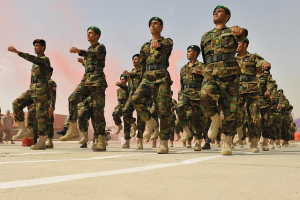
    Afghan National Army soldiers march during the 3rd term graduation oath ceremony at Ghazi Military Training Center in Kabul, Afghanistan, Sept. 6, 2010. During the ceremony 379 non-commissioned officers graduated and joined the Afghan Army. Source: ISAF Media (Flickr)

    Afghan National Army soldiers march during the 3rd term graduation oath ceremony at Ghazi Military Training Center in Kabul, Afghanistan, Sept. 6, 2010. During the ceremony 379 non-commissioned officers graduated and joined the Afghan Army. Source: ISAF Media (Flickr)

    When in late 2005 a team of international financial experts in Kabul put the numbers together on how much the Afghanistan security sector was costing they were astounded by the results. So were the Afghan government and its partners. Running at some $1.3 billion per year, or 23 % of GDP, just over three-quarters of it financed by donors, Afghan security spending (not including counter-narcotics) exceeded domestic revenues by over 500%.

    Simple number crunching put into stark focus the unsustainability of the security sector and the need to look at options for changing the posture of the military and police (the two largest spenders) and bringing costs under control. This analysis did not even touch the international costs of ongoing conflict (such as the NATO-led International Security Assistance Force – ISAF) in the country.

    Such a financial perspective is increasingly being added to emerging practice on internationally driven security sector reform (SSR) with interesting results. One particular aspect that has largely been missing from the international SSR agenda since its beginning in the 1990s has been the nexus between financial resources and security. While general aspirations for affordability are often stressed with regard to SSR, there has been little guidance supporting governments to better understand whether security sector financing is sustainable, let alone efficiently and effectively allocated.

    National budgets are, after all, the most important policy vehicle for articulating and ultimately meeting a country’s priorities within scarce public resources; it is through the budget process that competing priorities are reconciled and implemented. One of the core priorities for many countries is security and justice provision and yet to date there has not been much work on the composition of security sector budgets as well as the processes of how they are planned and managed.

    This is beginning to change for a number of possible reasons, not least that the ‘suits’ responsible for the national purse rather than those ‘in uniform’ are advocating change. A quick overview of a number of recent exercises in conflict-affected African states suggests a number of different contexts in which such scrutiny is being requested.

    Transitions and UN peacekeeping drawdowns: Liberia

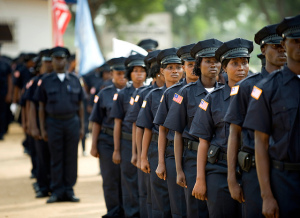
    The thirty-third class of police officers of the Liberian National Police (LNP) participate in a graduation ceremony. Source: Africa Renewal (Flickr)

    Police officers of the Liberian National Police (LNP) participate in a graduation ceremony. Source: Africa Renewal (Flickr)

    In a recent example of United Nations, World Bank and government collaboration, a public expenditure review was undertaken for Liberia in mid-2013 in order to identify the funding requirements necessary for a national security strategy to be put in place in anticipation of the gradual reduction and exit of the UN peacekeeping operation (UNMIL).

    What this immediately revealed was that there was a financing gap between domestic revenues, anticipated foreign assistance and the targets set by the national strategy. In the short term, recommendations focused upon savings through strengthening public financial management systems as well as mobilising additional resources.

    More significantly, the joint review raised questions about the effectiveness of a strategy that relied on the establishment of regional ‘law and order’ hubs which could deploy law enforcement personnel as well as extend the reach of judicial services. Was this the best way to use scarce resources? Were such regional hubs the solution to providing accessible security and justice services to a general public that held in distrust the state and particularly those in uniform? In turn, were there more effective ways to use those scarce resources to address some of the underlying structural causes of grievance and disorder, such as contestation over land and land concessions?

    The debates around those policy tensions and trade-offs continue;  but this was an interesting example of how the money question – whether a proposed security and justice model could be paid for – raised more fundamental questions about the effectiveness and ultimately the purpose of the security and justice system.

    Interestingly, an important side-question was not asked: the affordability of the national army. The review was simply focused on public order and internal security and not on the small (and largely US funded) Armed Forces of Liberia. Indeed, this omission was characteristic of the bifurcated Liberian SSR process, with US (military) and UN (police and justice) pursuing separate programmes since 2004.

    Domestic resource constraints vs existential threats: the Sahel

    Long a focus of international support to national militaries and counter-terrorist capacity, the western Sahel region suffered a major crisis in 2012 with a coup in Mali precipitating the take-over of the country’s north by regional jihadist and local Tuareg and Arab nationalist armed groups.

    As part of the return to ‘normalcy’ and seeking to address historical concerns relating to public mismanagement, the Malian transitional government requested a review of the defence sector in early 2013. This was in part to respond to grievances that had resulted in the coup, particularly relating to reports of an inflated senior officer corps and poor equipping of frontline troops. In turn, donors that had long treated Mali as an ‘aid-darling’ were becoming super sensitive to reports of public sector corruption.

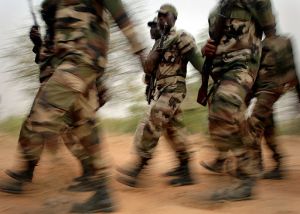
    Nigerien soldiers from the 322nd Parachute Regiment march to a training site during Operation Flintlock 2007. Source: US Navy (Wikipedia)

    Nigerien soldiers from the 322nd Parachute Regiment march to a training site during Operation Flintlock 2007. Source: US Navy (Wikipedia)

    Across the border, Niger, which to date has managed its ‘northern problem’ and the Libyan ‘spillover’ by ways of political accommodation, was also seeking an expanded security sector and additional resources. In so doing, the Nigerien government realised that the quid pro quo was to conduct a review of its security sector.

    Both country reviews were undertaken by the World Bank working on its own; and for its own mandate reasons the Bank reviews were focused exclusively on the public financial management of the sector. This meant that more fundamental policy issues about the effectiveness of the respective militaries and the complementary roles played by key bilateral and multilateral (in Mali’s case) security actors were left aside. However, the reviews did serve to push for more accountable and transparent use of such resources as well as identifying resourcing gaps.

    Management of external financial flows and shaping an emerging security sector: Somalia

    Somalia in many senses confronts all of the challenges outlined above; the newly selected Federal Government (FGS) faces the existential threat posed by the al-Shabab insurgency while also hosting the African Union’s largest peacekeeping force (AMISOM) as well as a number of other onshore and offshore security interventions, such as by US and French forces. At the same time, the FGS is undergoing its own constitutional review process on how it relates to other entities within Somalia on key questions regarding the nature of the state and in particular the very scope, shape and purpose of a formal security and justice system.

    The FGS is keen to take on greater responsibility, expand its remit beyond Mogadishu, and put a variety of external financial flows into the security forces on budget. It is also conscious of the significant resources going to external security providers, such as AMISOM, and would like increasingly to take over the functions of those actors as well as some of their funding.

    For this reason it has turned to the World Bank and the UN Assistance Mission (UNSOM) for support in trying to strengthen public financial management systems, particularly but not exclusively for the Somali National Army and Somali Police Force, as well as to examine some scenarios for the sector and issues of affordability. This review is still ongoing but it is clear that Somalia faces similar questions posed in Kabul about what is a sustainable security sector, and are there alternative ‘cost-effective’ means to reach political settlement with other regional entities in Somalia while tackling an ongoing insurgency.

    Emerging Issues

    It is too early to say whether these recent government requests are turning into a systemic trend; there remain many countries for which such an opening-up of books would be out of the question. However, what this body of work does point to is a number of challenging issues particularly relating to the peace- and state-building agenda.

    Accountability of external support: While many African militaries and security forces are still receiving significant external support, little of this is being formalised within the national budget and in turn discussed with parliaments and civil society. While transparent, accountable and open government is part of the official development discourse, foreign bilateral security arrangements are still kept more often closed and off the books. Foreign governments are not speaking with one voice: foreign assistance is coupled with calls for good-governance that can often be trumped or undermined by bilateral security arrangements.

    Transparency as a process: Budget amounts to policy; it reflects what states actually do and are accountable for. Such reviews are critical entry points for the civilian side of governments to be more empowered in looking at various financing gaps and pose questions about how those gaps can be filled. Security budgets in developed countries often remain opaque and weakly scrutinised, no less than those in the developing world. There is no doubt that security expenditures can remain secret as they touch upon sensitive issues of national security; yet the sector can also harbour serious corruption, off-budget expenditure and unclear procurement practice. Transparency is therefore a bit-by-bit process. Better use of domestic resources could be one prize of greater scrutiny; another could ultimately be greater sharing of data at the regional level in order to build confidence amongst neighbours.

    Revenues, security functions and state-building: Too often, classic SSR approaches can be a Weberian analysis of what a security apparatus should look like in any given country and how external actors can support the establishment of such a system. This is often blind to the actual functions of domestic security actors and their access to resources and exaction of revenues. A political economic inquiry can obtain a better understanding of how security forces raise revenues, from large-scale exploitation of natural resources to illicit taxation, and in turn what the functions of such forces are in practice. A greater understanding of these dynamics enables a clearer policy dialogue around, first, what is affordable in relation to revenues being exacted and, second, what incentives are required to transform those functions into provision of a public good – security.

    Two examples come to mind. At the more micro-level, in 2008, a study on checkpoints in Côte d’Ivoire revealed that the military, gendarmerie and police were raising up to $100 million a year in illicit taxes on local traffic. This study enabled a more open discussion on what steps were needed to clear the checkpoints and remove the burden on commerce and public alike.

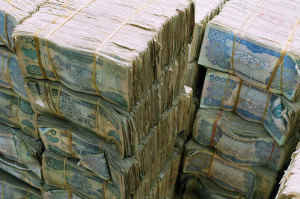
    Somaliland Shillings, Hargeisa, 2008. Source: Tristam Sparks (Flickr)

    Somaliland Shillings, Hargeisa, 2008. Source: Tristam Sparks (Flickr)

    The more meta-level example is that of Somaliland in which security sector reform without external support has ‘worked,’ in the sense of providing stability and the conditions for successful democratic transitions of power. Local business and political elites forged a co-dependent coalition in the mid-1990s that allowed sufficient funds (initially some $6m) to pay for the stand-down and demoblisation of the clan militias. To this day some 30-50% of the regular budget is estimated to be payments to these forces; the high price for peace. Analysts have remarked on the way in which domestic revenue (business donations) were utilised to pay off militias (to stand-down and secure stability) that, in turn, no-longer exacted revenues from infrastructure points such as air or seaports. This allowed the government to raise its own revenues (albeit with the largest share of expenditures to pay for the army or demobilised militia) and the business sector to flourish.

    Standards of affordability and effectiveness: ultimately this work asks questions around what is affordable and what is an effective security and justice sector. The former US Secretary for Defense (1961-68, when US military spending averaged over 8% of GDP) and President of the World Bank (1968-81), Robert McNamara, famously posited the idea of an ideal ceiling of 2% of GDP for security. Although that is a standard no longer referred to, the international financial institutions continue to discuss with client governments the size of the public sector in relation to the fiscal framework (revenues vs spending) and, in turn, the sectoral trade-offs such as those between national defence and provision of basic social services such as health or education.

    A more important question is: what is effective security? This relates to a more rigorous management of public finances, greater accountability, transparency and measures against corruption. Yet, it also points to value-for-money performance standards for security and justice providers such as the police. Ultimately, it can potentially pave the way to a more participatory discussion among end-users (citizens) and providers (the state) about how to be cost-effective, which may include sustainable approaches to violence and conflict prevention, including addressing underlying causes of grievance and disorder.

    Afghanistan is now going through another turbulent electoral cycle while donors seek some $3.5 billion to meet the costs of the Afghan army and police – now estimated at over $4 billion per year, or 20% of GDP – as the US and ISAF forces exit by the end of 2014. External security imperatives have superseded questions around affordability and effectiveness: and what is working and what is not. However, a number of African governments have at least started asking the right questions to obtain information to begin to address the challenge of creating affordable and effective security systems for citizens.

    Bernard Harborne is lead of the Violence Prevention Team in the World Bank, having joined in 2004. He has worked for over 20 years on conflict-affected countries for the UN, World Bank, NGOs and the British Government. He has a background in law, including a Masters in International Law from the LSE, and is an adjunct professor at George Washington University. Opinions expressed in this article represent his personal views and not those of the World Bank.

  • Mexico’s Conflicting Migration Policy Goals: National Security and Human Rights

    Mexico’s Conflicting Migration Policy Goals: National Security and Human Rights

    Mexico has rapidly become a major site of transmigration from Central America to the United States, as people move in search of employment opportunities or escape from social violence. This rise in migrant flows from Mexico’s southern border overlaps with problems of control of contraband, organised crime, and the trafficking of drugs and arms. However, the government’s militarised approach to the phenomenon means that the use of force and human rights violations go unresolved and military approaches to preserving public order go unchecked. As long as migration remains a security issue, instead of a developmental and human rights matter, it will not be tackled appropriately. Instead, the government must start to view the matter through a citizen, not national, security lens.

    Read Article →

    Mano Dura: Gang Suppression in El Salvador

    Widespread social exclusion makes El Salvador fertile ground for gang proliferation and, over time, gang members have resorted to greater levels of violence and drug activity. Yet, government approaches have proved spectacularly ineffective: the homicide rate escalated, and gangs have adapted to the climate of repression by toughening their entry requirements, adopting a more conventional look, and using heavier weaponry. Sonja Wolf argues for approaches which focus on prevention and rehabilitation and looks at why such approaches have been continually sidelined.

    Read Article →

  • Learning the Lessons: 11 Years of Drones in Pakistan

    RC_long_logo_small_4webThis article is part of the Remote Control Warfare series, a collaboration with Remote Control, a project of the Network for Social Change hosted by Oxford Research Group. It originally appeared on openDemocracy on 19 June 2015.

    pakistan_tehreek-e-Insaf_protest_against_drones

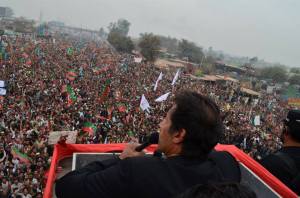
    Imran Khan addressing a crowd at a Pakistan Tehreek-e-Insaf protest against drones, Peshawar, in November 2013. Source: Wikimedia

    Last Wednesday marked 11 years since the first reported US drone strike in Pakistan. Since 2004, the US has launched more than 419 strikes in the Federally Administrated Tribal Areas (FATA) as part of its global war on terror. Whilst much debate has focused on the ethics, legality and civilian costs of this new technology, little attention has been given to the broader repercussions drones have had on Pakistan as a whole and how they have shaped the country in the past decade.

    New research into the impact of drone strikes on terrorist behaviour, published this week, shows that drones are having a far wider and more damaging impact on civilian populations beyond those directly killed in the drone strikes themselves. The report, by Dr Paul Gill (UCL) commissioned by the Remote Control project, analyses data on drone strikes and terrorist attacks in Pakistan between 2004 and 2013 at the monthly, weekly and daily levels, finding that terrorist reprisals following a drone strike are disproportionally more likely to target civilians.

    This is because, although terror groups slow down their activities in the immediate aftermath of a drone strike for basic security reasons, when they do re-emerge the attack that follows will likely be one that doesn’t necessitate the lengthy planning of high value targets, due to the damage done to the terrorist group by a drone strike. The focus instead will be on “softer targets”, i.e. civilians, leading to an increase in fatality rates.  When assessing the human costs of drone warfare it is these indirect victims – those who die in terrorist reprisals – that must be factored in.

    Beyond terror attacks, drones are having a broader and more profound impact on Pakistani society in other ways too. A report last year from Dr Wali Aslam (University of Bath) found that drone strikes, whist pursuing some “high value” targets and decreasing the number of fighters in the tribal areas, has caused militants to relocate to other parts of the country, thus displacing rather than eliminating terrorists.

    In turn, this relocation has brought an increase in radicalisation, violence and crime to the regions of Pakistan where the militants have resettled, bringing increased instability to areas such as the Punjab, Karachi and Kurram Agency. Furthermore, the deeply unpopular nature of drones in Pakistan, caused by the civilian casualties, psychological damage and the infringement of sovereignty they entail, has led to growing anti-American sentiment that has provided an effective recruitment tool for extremists, fuelling rather than minimising radicalisation.

    As the UK and US increasingly rely on drones in their air campaign against Islamic State and as a growing number of states are now developing armed drones (the global export market for drones is predicted to grow nearly three-fold over the next decade), we must learn the lessons of Pakistan.

    Drones, like other forms of remote warfare, may be technologically advanced but in reality they are no more effective at ending conflict than boots on the ground were. Both seek to solve insecurity with a military solution, failing to address the root causes of conflict, or to devise any long-term strategy for what comes next. It is the covert nature of remote control warfare – operating in the shadows with minimal transparency, accountability or oversight – that make this warfare even more concerning.

    The case of Pakistan, after a decade long drone war, shows how the appeal of drones as a “cost free” form of warfare is misguided, failing to take into consideration their long term implications. In Pakistan, drones have not only been an ineffective counter-terrorism strategy but they have also had far reaching, negative repercussions on wider society.  It is these long term consequences – in many cases still largely unknown – that will prove to be the most damaging for any long-term, sustainable resolution to conflict.

    Esther Kersley is the Research and Communications Officer for the Remote Control project. Prior to joining ORG, Esther worked in Berlin for the anti-corruption NGO Transparency International as an editorial and online communications officer. She has a particular interest in counter-terrorism and conflict resolution in the Middle East, having previously worked with the Quilliam Foundation and IPCRI (Israel/Palestine Center for Research and Information), a Jerusalem based think tank.

    Featured Image: Imran Khan addressing a crowd at a Pakistan Tehreek-e-Insaf protest against drones, Peshawar, in November 2013. Source: Wikimedia

  • The Arctic: Hot or Not?

  • Interview – Alex Bellamy

    Alex J. Bellamy is professor of peace and conflict studies at the University of Queensland. His books include Kosovo and International Society (2002), Security Communities and Their Neighbours: Regional Fortresses or Global Integrators? (2004), Understanding Peacekeeping (edited with Paul D. Williams and Stuart Griffin, 2004), International Society and Its Critics (editor, 2004), Just Wars: From Cicero to Iraq (2006), and Fighting Terror: Ethical Dilemmas (2008), and Responsibility to Protect (2009). He serves on the editorial board of Ethics & International Affairs.

    In this interview Professor Bellamy discusses the successes and failures of the Responsibility to Protect and the future of this doctrine.

    Q. The Responsibility to Protect (R2P) is commonly understood to be a global political commitment, endorsed by all Member States of the United Nations at the 2005 World Summit, to prevent genocide, war crimes, ethnic cleansing and crimes against humanity. Since the endorsement of this concept in 2005, how successful do you feel the international community has been in honouring this commitment?

    It all, of course, depends on what we mean by ‘success’. To text for underlying progress, I tend to use three measures:

    1. Are states more or less likely to commit atrocities? Here we’ve seen a steady decline that, of course, predates R2P (the commitment to R2P itself being a manifestation of changing international commitment to norms) – there’s been a blip in the past couple of years owing largely to Syria and South Sudan but the overall trends are still downwards and the ‘norm’ is a much lower rate of atrocities than in any other decade since WWII.
    2. Is the international community more, or less, willing to become engaged when atrocities are committed? For this, I’ve used the simple proxy of whether the UNSC passes a resolution in response to atrocity crimes (my dataset works on a threshold of 5,000 deliberately caused civilian deaths). Here we’ve seen clear progress linked to R2P – in the decade prior to R2P the council responded to around three quarters of all qualifying cases (itself up from two thirds in the 1990s), since 2005 that figure has climbed to 100%. In other words, the Council responds in some way or other to every major case of mass atrocity – that is quite a change from past practice.
    3. When the international community responds, is protection a priority? Here the change is still more noticeable. Even when the UNSC did act in times of mass atrocity, until quite recently protection was not a priority. In only around a quarter of its responses to civil wars in the 1990s was some form of protection specifically mandated. That grew to around a half in the 2000s, but has now climbed to somewhere north of 90% – i.e. Since R2P not only is the UNSC likely to respond to atrocities, it is also likely to foreground protection in that response.

    So, I think the underlying evidence is that R2P has been associated with positive shifts in international behaviour with respect to protection. That doesn’t, of course, mean that all of these responses are effective (in some senses since we are talking only of the world’s hardest and most difficult crises, we should expect a low success rate) – but if R2P is understood as a ‘responsibility to try’ to take measures at reasonable cost to protect civilians from atrocities then we have seen positive overall shifts.

    Q. Looking at a specific case of a response by the international community to a humanitarian crisis, the 2011 intervention in Libya was, at the time, heralded as a successful first true test of the R2P. In this instance, the Security Council authorized an intervention to protect civilians citing the R2P. The intervention may have stopped the massacre of civilians, but since 2011 Libya has experienced serious instability. Do you feel that the Libyan case harmed the R2P norm?

    First, I’d start with the caveat that the use of force is always controversial, whether in the name of R2P or not, and it was always going to be the case that the use of force connected to R2P would prove controversial.  Second, it is important to stress how significant Resolution 1973 was not just for R2P but for the UN Security Council – the first time in its history that it had authorised force against a de jure state for human protection purposes – this is an important precedent of principle. Third, that said, this was never going to be a precedent that would be followed very often – it was caused by a range of contingent factors unlikely to be repeated often.

    I’d agree with your assessment of the campaign itself – the intervention prevented a massacre and shortened the civil war. By doing these things, it undoubtedly saved a lot of lives. We need only look at Syria to see what happens when a country falls into protracted civil war. As unstable as Libya is today, it is better than Syria.  The problems with Libya were twofold – first, the linking of R2P with regime change, which was done for understandable domestic political reasons, muddied the international normative waters. Second, the failure to sustain the peace raised questions about the efficacy of the intervention. On the latter point, it should be stressed that the UN developed plans for a follow-on mission but these were rejected by the Libyan authorities themselves. Certainly, however, more pressure should have been brought to bear to get peacekeepers on the ground.

    As for the longer terms impacts on R2P, the effects were paradoxical. On the one hand, there was significant fallout and criticism of the campaign and the link with regime change. On the other hand and at the same time, the use of R2P has become much less controversial in the UN’s political organs. The UNSC has become much more willing to use R2P post-Libya than it was pre-Libya (in fact, subsequent to 1973, the Council issues two more resolutions on Libya itself that contained R2P) and it has even started writing R2P into mission mandates (UNMISS, MINUSMA). Other organs, such as the Human Rights Council and General Assembly have also become more actively engaged (look, for example, at the UNGA’s resolutions on Syria and DPRK).  So, what’s going on here? I think we need to distinguish R2P from the use of force. The former is, by itself, no longer considered controversial and is now a part of common working practice. The latter – whether it is related to R2P or not – remains controversial. What was controversial about Libya was not the invocation of R2P, but the manner in which force was employed. So we have some additional caution on the latter (though I firmly believe that Syria would have panned out exactly as it did had Libya not happened) – in a context where the bar was already set high – but that hasn’t stymied the progress of R2P short of coercive force.

    Q. Obama has recently said that the biggest mistake of his presidency was the lack of planning for the aftermath of Gaddafi’s ouster in Libya. Obviously, effective exit strategies which allow a transition into peace are extremely difficult things to develop. But, aside from putting more pressure on the Libyan authorities to get peacekeepers on the ground, what work could the international community have done to build peace in Libya?

    That’s a good question, that I’m not sufficiently well qualified to answer I’m afraid, being an expert on neither Libya nor peacebuilding. I would say two things, however. First, we need to be more modest in our expectations of what outsiders can achieve – incremental change is possible, but rapid development and political harmony was always going to be unlikely. Second, though, clearly the Western powers dropped the ball too rapidly and dramatically, and more could have been done to support the new authorities to establish and maintain order and facilitate political dialogue. Greater and more sustained political engagement might have helped produce better results. Also, the international community – through the UN or EU – could have looked at better options for civilian support for the new authorities.

    Q. One of the most notable, and perhaps lamentable, changes to R2P since the 2001  International Commission on Intervention and State Sovereignty report, was the dropping of the ‘Responsibility to Rebuild’ – which focused on peacebuilding and exit strategies. Do you feel that getting this component of R2P back on the agenda might help avoid situations like those witnessed in Libya and, if so, how likely do you feel it would be for the international community to commit to this responsibility?   

    Good question. First, I don’t think that Libya panned out the way it did because of the absence of a responsibility to rebuild – it wasn’t that relevant actors ‘forgot’ about peacebuilding, it was simply that the political commitment, strategy and resources from both sides (Libyan and international) were not present. Second, R2P is not a stand alone principle; it exists within a broader framework of international peace and security. The World Summit may not have included a ‘responsibility to rebuild’ but it did say quite a bit about peacebuilding and established an entirely new architecture within the UN system for it — the Peacebuilding Commission. Last year we had the system wide review of that architecture and there are signs that Member States are quite responsive to, for example, broadening the scope of the Peacebuilding Commission’s work.  In terms of understanding post-intervention Libya, I’d suggest that the best lessons to be learned are those from within this peacebuilding architecture and there does seem to be a sense that the key recommendations stemming from the review have purchase in that regard. So that gets me to the third point, which is about political capital. Since 2005, and especially since 2011, the international community’s deeper consensus on R2P has been prefaced on the precise configuration agreed in 2005. I think there’s no will to consider opening that up to include peacebuilding and doing so would, I think, help neither R2P not the peacebuilding architecture. Much better, I think, to see the two as aligned parts of a common whole agreed in 2005 and to focus on learning the lessons of Libya and reforming peacebuilding as fits that rather than trying to reverse engineer the concepts.

    Q. Concerning the legacy of Libya, there have been some analyses that have argued that the Libyan case may have seriously affected the international community’s capacity to respond in a timely and effective fashion to the Syrian crisis. Do you feel that this is the case?

    Simple answer; no. I think the international response to Syria would have been pretty much the same had Libya not happened.  That’s because the factors actually driving Russian thinking, Western thinking and the positions of relevant regional actors are very much driven by Syrian related concerns and interests that would have been in play irrespective of Libya.

    Q. Looking to the future, what do you see as being the greatest challenges for R2P in the next 5-10 years?

    1. Conceptual challenges – clarifying the relationship between R2P and non-state armed groups and the relationship between the R2P, counter-terrorism and countering violent extremism policy agendas.
    2. Political challenges – the ongoing challenge of persuading states to comply with their obligations under international humanitarian law and also commit the resources and personnel needed to protect populations in need. This will be an ongoing political challenge requiring leadership and involves not just persuading cautious states to get on board but also working with committed states to deepen their engagement.
    3. Practical challenges – a) fine tuning early warning and linking it to good understandings of effective early response, so policymakers can be advised of conditions and options with greater confidence; b) developing evidence based guidance on the steps that different sorts of actors (Int Orgs, states, civil society, private sector etc.) can and ought to take to prevent atrocities; c) developing and implementing better strategies for the protection of people from imminent harm, including better approaches to displacement that puts protection at the fore.