Blog

  • Beyond crime and punishment: UK non-military options in Syria

    This piece by sustainablesecurity.org’s Zoë Pelter and Richard Reeve was originally published on 5 September, 2013 on openDemocracy 

    4815774738_b9962f4875_b

    Image: The Prime Minister during a joint press conference with US President Barack Obama. Source: The Prime Minister’s Office

    The narrow defeat on 29th August of the UK government’s parliamentary motion on support in principle for military action against the Syrian regime has forced Prime Minister David Cameron to concede that Britain will play no part in any direct attack on Syria. If the UK is to play no military role in ‘punitive’ responses to the regime’s alleged use of chemical weapons, what options are open to the UK in terms of resolving the Syrian conflict, protecting civilians and punishing those responsible for war crimes there? And how does Cameron’s overt preference for the military option, with or without UN mandate, condition these non-military options?

    Pushing for peace

    The possibility of a negotiated peace in Syria should not be dismissed. Neither the regime’s military, militia and foreign allies, nor the variety of armed factions ranged against them (and, increasingly, each other) are exhausted. Nor do the Assad regime’s mid-year successes in central Syria presage any imminent likelihood of it regaining control of the north and east. The strategic stalemate that appeared to set in to the conflict in June, after pro-Assad forces retook al-Qusayr, arguably presented a breathing space for negotiations and the so-called Geneva II conference, proposed by the US and Russia, with UN and Arab League backing, the previous month. As recently as mid-August, the Geneva talks were expected to resume in September.

    But even convening these talks will now prove far harder. Expectation of Western intervention against President Bashar al-Assad, as well as their own increasing divisions, gives the Western-backed armed opposition groups an incentive to delay talks. Jihadist groups that have proved effective militarily are largely excluded. US and Russian facilitation of the Geneva process, however fraught, also tends to exclude the voices of regional actors like Turkey, Iran, Iraq and Saudi Arabia, each of which feels its interests very directly threatened in Syria and gives active support to one or more armed faction.

    This calls for a rethinking of the Geneva process, if not the 2012 transition roadmap, to bring in the full range of actors, not the abandonment of peace talks. Threat of US-led intervention and its own increasing international marginalisation, should it be proved to have launched a chemical attack on 21st August, could incline the Assad regime towards a negotiated settlement, perhaps even an exit and exile strategy.
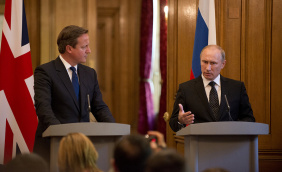
    Cameron and Putin

    Image: The Prime Minister welcomes President Vladimir Putin to Downing Street ahead of the G8 Summit. Source: The Prime Minister’s Office

    This will not happen without pressure from Iran and Russia. Both have much to lose in Syria, but neither is entirely closed. Iran is still in its post-electoral opening and under severe economic pressure, looking to cut a wider deal with the West. Russia may not be comfortable with its isolated position defending the alleged user of chemical weapons. Like the US, it fears the growing influence of jihadi groups while the current stalemate continues. While there is little hope of Moscow abandoning its Security Council veto over action against Syria, it will be embarrassed if it stands almost alone defending Assad in the Council or against a General Assembly resolution. Neutrally collected and analysed evidence of Syrian regime culpability for chemical weapons attack will be crucial to shifting Russia’s position.

    Having made clear its preference for ‘punitive’ military action, and been frustrated by parliament in pursuing such action, the UK government is not ideally placed to broker negotiations. Yet the UK does have influence with Syrian opposition groups, in the Gulf States and, when it acts in concert with its less interventionist EU partners, with Russia, Turkey and Iran.

    Fighting impunity

    Again, the importance of due investigative and legal process through UN Fora is crucial. When asked on 29 August if he agreed that Assad should be prosecuted at the International Criminal Court (ICC), David Cameron replied curtly that these processes take time. Yes, the wheels of institutional responses turn slowly, not least justice institutions. Yet the most obvious response to any breach of customary international law on the use of chemical weapons (Syria is one of just five states not to have signed the 1993 Chemical Weapons Convention) is a war crimes prosecution through the ICC. It is not important that Syria has not signed the Court’s establishing Rome Statute. Assad and any responsible commanders could still be subject to international prosecution if the Security Council referred Syria formally to the ICC.

    The UN has been investigating a wide range of alleged crimes committed by both sides with a view to future prosecutions. Clearly, the presence on the Security Council of Syrian allies and a majority of non-signatories to the Rome Statute presents obstacles to referral, but the Council has overcome such obstacles before, notably China’s reluctance to see its Sudanese allies prosecuted over actions in Darfur. With France and other allies, the UK should take the lead within the Security Council in pushing to refer Syria to the ICC based on the same ‘moral minimum’ or red line that has been deployed in favour of armed intervention. This, in turn, may provide leverage to persuade pro- and anti-Assad factions alike to take peace negotiations more seriously.

    Notwithstanding the heavy shadow of its past action in Iraq, the UK’s moral standing is bolstered by commitment to legal and democratic process. The UK should take a breath, step back from punitive reaction and recommit itself to a multilateral, inclusive and legally rigorous approach to resolving the war in Syria and its many affiliated regional conflicts. No other form of intervention will effectively protect the lives and rights of Syrian civilians either in the current war or the difficult peace that must follow.

    Richard Reeve is the Director of Oxford Research Group’s Sustainable Security Programme. He works across a wide range of defence and security issues and has particular expertise in Sub-Saharan Africa, peace and conflict analysis, and the security role of regional organisations.

    Zoë Pelter is the Research Officer of Oxford Research Group’s Sustainable Security Programme. She works on a number of projects across the programme, including Rethinking UK Defence and Security Policies and Sustainable Security and the Global South.

  • No Joy in Juba: South Sudan and R2P

  • Expanding Contracting: The Private Sector’s Role in Drone Surveillance and Targeting

    RC_long_logo_small_4webThis article is part of the Remote Control Warfare series, a collaboration with Remote Control, a project of the Network for Social Change hosted by Oxford Research Group.

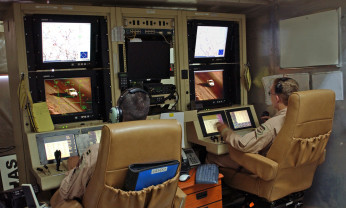
    Capt. Richard Koll, left, and Airman 1st Class Mike Eulo perform function checks after launching an MQ-1 Predator unmanned aerial vehicle Aug. 7 at Balad Air Base, Iraq. Captain Koll, the pilot, and Airman Eulo, the sensor operator, will handle the Predator in a radius of approximately 25 miles around the base before handing it off to personnel stationed in the United States to continue its mission. Both are assigned to the 46th Expeditionary Reconnaissance Squadron. https://en.wikipedia.org/wiki/General_Atomics_MQ-1_Predator#/media/File:MQ-1_Predator_controls_2007-08-07.jpg

    Drone pilots perform function checks after launching an MQ-1 Predator unmanned aerial vehicle Aug. 7 at Balad Air Base, Iraq. Source: Wikipedia

    Over-burdened in its requests for continuous surveillance of an expanding battlefield, the US military is increasingly turning to private contractors to fill key roles in its drone operations.

    In March this year, US Air Force Secretary Deborah James appeared before the Senate Armed Services Committee, looking for a $10 billion funding hike. “I can tell you the number one thing that the combatant commanders say they want from our Air Force is more ISR, ISR, ISR,” she told the committee. “That is the number one priority.”

    ISR is Intelligence, Surveillance, Reconnaissance, and encompasses a complex array of functions. It includes spyplanes and drones with special sensors and cameras, the satellites which control them, and the analysts who turn this information into “products”.  It also includes the “distributed common ground system”, an unwieldy term for the network of devices which allows personnel to access this information and the “products” derived from it.

    The volumes of data being passed back from surveillance flights is now so vast that the military can no longer deal with it in-house. So, The Bureau of Investigative Journalism (‘The Bureau’) found in a six-month investigation, the Pentagon has turned to the private sector to plug the gaps, employing contractors as imagery analysts or “screeners”.

    Screening

    The screener’s task is not a simple one. Like much of military life, it involves long spells of tedium – twelve hour shifts in front of a screen – interspersed with occasional spikes of activity. But it demands high and continuous levels of concentration. As one screener told us: “A misidentification of an enemy combatant with a weapon and a female carrying a broom can have dire consequences.”

    Screeners can have an important safety function in reducing collateral damage – the proverbial “busload of nuns” which appears out of nowhere into the field of fire. But their interpretations of video imagery – “calls”, in military parlance – can also influence drone pilots to take shots. As one screener commented, once you’ve influenced the mentality of the pilot by indicating the presence of something hostile, it’s hard to retract it.

    In one notorious incident, the crew of a MQ-1 Predator drone flying over Afghanistan’s Uruzgan province in February 2010 ignored ambiguities in their screeners’ assessments as to whether the trucks they were tracking contained combatants. As a result, at least 15 civilians were killed.

    “When you mess up,” The Bureau was told, “people die.”

    Contractors

    The companies being paid to undertake this work range from industry leviathans like BAE to specialist tech firms like Zel Technologies and Advanced Concepts Enterprises.

    Finding out who was performing this work was itself an arduous task. The Department of Defense records thousands of procurement transactions most days every year. From 2009 to the end of 2014 there have been over 8 million transactions between the Pentagon and the private sector. The Bureau analysed these transactions through its own specially constructed database, which allowed it to identify activities relating to ISR and then build up profiles of the contracts and companies carrying out those activities.

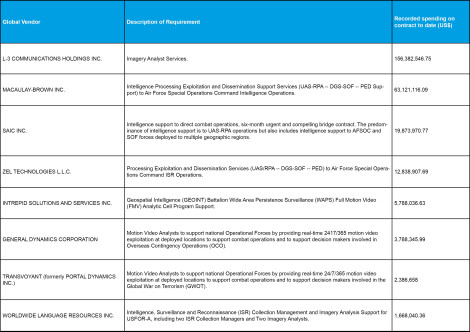
    Table: US Military Imagery Analysis Contracts since 2010 (click to enlarge)

    Data in this table is drawn from public sources including the Federal Procurement Data System (fpds.gov), Federal Business Opportunities (fbo.gov) and contractual material released under the Freedom of Information Act. Business information is taken from Bloomberg, Hoovers and Orbis. Companies named in the reporting but not included in this table are BAE, Booz Allen Hamilton and Advanced Concepts Enterprises. The Bureau has documented evidence of their involvement in ISR from sources other than contracts and transaction records. For the full dataset please see https://docs.google.com/spreadsheets/u/1/d/1WpSvDKGyraU5koQheFIgO7fUCIrSUxG5o7R9cS042_I/pubhtml

    Data in this table is drawn from public sources including the Federal Procurement Data System (fpds.gov), Federal Business Opportunities (fbo.gov) and contractual material released under the Freedom of Information Act. Business information is taken from Bloomberg, Hoovers and Orbis.
    Companies named in the reporting but not included in this table are BAE, Booz Allen Hamilton and Advanced Concepts Enterprises. The Bureau has documented evidence of their involvement in ISR from sources other than contracts and transaction records.
    Click here for the full dataset

    The Bureau identified over $260 million of screening transactions. But this is a niche market compared to the wider outsourced ISR effort. The private sector has been operating smaller surveillance drones over Afghanistan and other countries, managing communications between drones and their bases in the US and elsewhere, maintaining data collection systems and servicing sensors, to name just some functions. Procurement costs for these services run into billions of dollars.

    Questions of accountability come to the fore in this type of outsourced warfare. Following considerable pressure, the military now publishes figures of contractors on the ground in Iraq and Afghanistan. But this transparency does not extend to ISR missions conducted in those countries – or elsewhere – from behind computer screens in Florida and Nevada.

    From Screening to Targeting?

    Although contractors are so far not supposed to have their fingers on the drones’ triggers, fears have been expressed that this distinction might be harder to maintain in practice. One military outsourcing specialist, Laura Dickinson, told us that if the ratio of contractors to government personnel swells, “oversight could easily break down, and the current prohibition on contractors making targeting decisions could become meaningless.”

    Shortly after The Bureau published its investigation in The Guardian, the Pentagon announced that it would ramp up the number of ISR missions with ten new contractor-operated MQ-9 Reaper Combat Air Patrols. This puts contractors into the driving seat of large, combat-capable drones for the first time, although the Pentagon says these will be “ISR only”. The private sector’s involvement in drone warfare, it seems, is just taking off.


    Crofton Black is a researcher, journalist and writer with extensive experience of complex investigations in the field of human rights abuses and counter-terrorism. He is a leading expert on the CIA’s rendition, detention and interrogation programme and a specialist in military and intelligence corporate contracting. He has a PhD in the history of philosophy from the University of London.

    Crofton completed a report for the Remote Control Project last year on the use of contractors in US special forces operations.

  • The Kurds as Proxies in Iraq and Syria: A Problematic Relationship for Western Powers

  • DU-turn? The changing political environment around toxic munitions

    By Wim Zwijnenburg and Doug Weir

    Is the US backpedalling on its use of depleted uranium (DU) rounds? There are indications that the use of these highly toxic munitions could increasingly be a political liability for the US, with countries affected by DU, like Iraq, other UN Member States, and populations in contaminated areas all expressing concerns over its use and impact. But stigmatisation, although important, is not enough on its own – in order to make sustained progress on accountability and in reducing civilian harm, a broader framework that addresses all toxic remnants of war is needed.

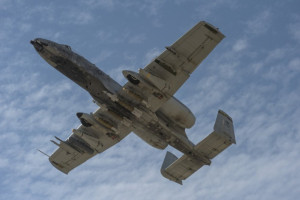
    A US Air Force A-10 being deployed to support Operation Inherent Resolve.

    A US Air Force A-10 being deployed to support Operation Inherent Resolve. Credit: US Air Force

    In a recent policy change, the Pentagon stated that it has not, and will not use DU in Iraq and Syria during Operation Inherent Resolve. The decision, which was cautiously welcomed by campaigners, contrasted with a statement made in October 2014, when the US announced the deployment of A-10 gunships to the conflict. The standard combat load for the A-10’s cannon includes a 30mm DU armour-piercing incendiary round, and in autumn 2014 a US Air Forces spokesperson said that the Air Force was ready to use DU again in Iraq and Syria.

    Iraq is no stranger to DU: at least 404,000kg of the radioactive and chemically toxic heavy metal was fired in the country in 1991 and 2003. The fine dust created by DU impacts presents a hazard to civilians if inhaled, and both the dust and fragments of the ammunition can contaminate soil, vehicles and buildings. As DU particles are environmentally persistent, DU’s legacy can last long after conflicts end. Exposure to DU has been linked to increases of cancers and congenital birth defects in areas of Iraq that saw heavy fighting.

    Yet despite long-running concerns voiced by Iraqi civilians and international advocates, no robust civilian health studies have ever been undertaken in Iraq to determine this link. Progress on clean-up operations has been slow, and has been hindered by the US’ refusal to provide comprehensive targeting data to UN organisations and the Iraqi government.

    The evolving use of DU

    The A-10 gunship has long been promoted as a “tank killer”, with the US arguing that DU ammunition is crucial for this function. Justifying the apparent U-turn over Inherent Resolve, a US public affairs official explained that: “The ammunition is developed to destroy tanks on a conventional battlefield. Daesh [Islamic State] does not possess large numbers of tanks.”

    While its original Cold War close air support role did primarily concern the destruction of Soviet tanks and armoured vehicles, even then there were questions over the legality of DU. As a result, a 1976 legal review undertaken by the United States Air Force of the A-10’s DU ammunition sought to ensure that it was not used in populated areas and to restrict its use to armoured targets.

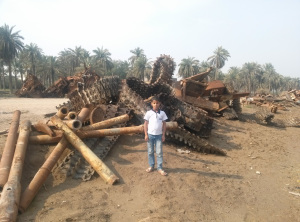
    A boy standing in front of military scrap metal in Shat’l arab, an area near Basrah.

    A boy standing in front of military scrap metal in Shat’l arab, near Basrah. Credit: Wim Zwijnenburg

    However, the role of the A-10 has evolved since the 1970s, as has its range of targets. This was clear from data from the 2003 Iraq War, acquired by PAX in 2014. It revealed DU use by A-10s against anti-aircraft guns, buildings, trucks and un-mounted troops. Data on targets from the conflicts in the Balkans painted a similar picture. With the A-10s role evolving from attacks on armour to more general close air support, aircraft were often called in for a broader range of operations, this led to DU being used against other targets, even in densely populated areas. Once loaded with the standard combat mix, a mixture of DU and high explosive rounds, it is impossible to change the type of munitions in flight for attacks against non-armoured targets of opportunity, thus heightening the risk of exposure to civilians close to other targets.

    Recently published figures on the 4,817 targets selected by US CENTCOM show that more than 120 tanks and armoured vehicles were destroyed in the first six months of the air campaign. There was therefore ample opportunity for the A-10 and its DU rounds to “kill tanks”, yet the US subsequently chose not to equip its A-10s with DU. Could this change in posture have more to do with a changing political environment, and in particular the growing stigmatisation of DU, than military calculations alone?

    Stigmatisation

    More than two decades after its first use in Kuwait and Iraq in the 1991 Gulf War, concern over the humanitarian and environmental legacy of DU has gradually increased.

    In recent years, legislation banning the weapons has been introduced in Belgium and Costa Rica. The European Parliament has also issued a number of resolutions calling for a moratorium on use and, most recently, a common EU position in favour of a ban. Since 2007, five UN General Assembly resolutions have been passed by large majorities. These have highlighted DU’s potential health risks, called for the release of targeting data to allow clean-up, for a precautionary approach to DU’s post-conflict management and, in 2014, for international assistance for states affected by DU use. This last resolution was supported by 150 states and opposed by just four, including the US. In addition to establishing soft law norms on DU, the process has also created a platform for an increasing number of states to voice their concerns over the weapons.

    Perhaps the most influential of these was from Iraq in March 2014, where its government expressed:

    [D]eep concern over the harmful effects of the use in wars and armed struggles of armaments and ammunitions containing depleted uranium, which constitute a danger to human beings and the environment.

    The Iraqi government called for the UN, its specialised agencies, member states and civil society to take a proactive approach to the issue and to condemn DU use. They also argued for:

    [A] binding and verifiable international treaty prohibiting the use, possession, transfer and trafficking of such armaments and ammunitions.

    Clearly then, the further use of DU munitions by the US in Iraq would have been viewed as unacceptable by the Iraqi government, and would have been likely to result in further criticism of the increasingly controversial munitions.

    Leaving through the back door?

    Could the changing political climate be influencing US policy on DU? The US had previously come under pressure from civil society campaign the International Coalition to Ban Uranium Weapons (ICBUW) in 2011 over fears that DU would be used against Gaddafi’s tanks in Libya. Recent evidence of DU’s international stigmatisation has come, ironically, from the Joint Strike Fighter, which is supposed to replace the ageing A-10 in its close air support role – a decision that is proving controversial in the US. During the fighter’s development, project partners including Australia, Norway and Denmark expressed concern over the US proposal that it would use a DU round, insisting that an alternative material be found. DU was eventually ruled out, as were other toxic metals such as beryllium. Elsewhere there are signs of shift away from DU in the US’s other medium-calibre ammunition.

    In 2008, just a year after the first UN General Assembly resolution, the US Army Environmental Policy Institute (AEPI) argued that alternatives were needed, stating that ‘the military should continue pursuing R&D for substitutes and be prepared for increased political pressure for current and past battlefield cleanup’. The Massachusetts Institute of Technology is one of several bodies researching less toxic materials, and in December 2014, published a new advance in manufacturing nanocrystalline tungsten alloys, which results in a material with similar properties to DU. DU’s toxicity is a key driver for this research.

    While changes in procurement policies are slow, decisions like that taken over Inherent Resolve are tangible signs that international pressure is changing DU policy. Nevertheless, the emerging threshold of acceptability for DU use remains poorly defined and it is unlikely that the US will seek to clarify it any time soon. Operation-specific factors – such as Iraq’s clear position in favour of a ban – are also likely to remain important in determining whether DU is used or not. Backlash over veteran exposure, community opposition and financial liabilities associated with former testing ranges may also influence policy within the US.

    The way forward

    Welcome as these developments are, they serve to highlight the current lack of formal obligations for post-conflict DU clearance and victim assistance. Unlike explosive remnants of war, and in spite of the soft norms developing at the UN General Assembly, accountability and assistance for past DU use is underdeveloped and requires attention from both civil society and the international community.

    As was the case with anti-personnel landmines, it will not be enough to simply stop DU being deployed. Protecting civilians requires that its legacy is also dealt with. DU remediation is costly and technically challenging, and states recovering from conflict require assistance to implement effective programmes.

    More broadly, DU is just one of a number of toxic munitions constituents, and munitions just one of a wide range of pollutants generated by conflict. These toxic remnants of war pose a threat to human and environmental health before, during and after conflict. Efforts to minimise the practices that generate them and work to ensure that their impact is properly assessed and responded to could contribute greatly to not only the protection of civilians but also of the environment upon which they depend. Tackling the causes and legacy of conflict pollution also provides a welcome opportunity to creatively merge the environment, public health, human rights and humanitarian disarmament in response to the toxic footprint of modern warfare.

    Wim Zwijnenburg works as a Program Leader Security & Disarmament for PAX, a Dutch peace organisation. He has a research program in Iraq on the impact of depleted uranium munitions, works on Toxic Remnants of War in Syria, emerging military technologies such as (armed) drones, and is supporting the Control Arms campaign in regulating the global arms trade.

    Doug Weir is the Coordinator of the International Coalition to Ban Uranium Weapons, a global coalition seeking a ban on the use of DU and for assistance to communities affected by its use. He also manages the Toxic Remnants of War Project, which explores state responsibility for the toxic legacy of military activities. 


    Featured image: A tank destroyed and contaminated with DU in 2003 near Basrah. Credit: UK Ministry of Defence

  • Is Trident Influencing UK Energy Policy? Part 2

    Momentum towards a nuclear weapons ban treaty: what does it mean for the UK?

    International momentum towards a treaty to ban nuclear weapons reached a milestone in the December 2014 Vienna conference. Even assuming that the UK does not initially sign up to such a treaty, it is subject to the pressures of a changing legal and political environment and could find its present position increasingly untenable – not least on the issue of Trident renewal.

    Read Article →

  • About the blog

    Sustainablesecurity.org is space to debate, discuss and develop understandings of modern insecurity within a  ‘sustainable security’ framework, which realises the interconnected underlying drivers of challenges to global security and seeks to counter them with preventive policy solutions.

    The blog is a project of the Sustainable Security programme of Oxford Research Group, originally launched in September 2009, and re-launched with a new look in 2013.

    Sustainablesecurity.org is space to debate, discuss and develop understandings of modern insecurity within a  ‘sustainable security’ framework, which realises the interconnected underlying drivers of challenges to global security in the 21st century. Through topical discussion pieces, we aim to explore the integrated, preventive policies that are needed to solve these threats at source.

    As well as covering a range of pertinent modern security challenges, the website highlights four key interconnected drivers of global insecurity:

    Articles and resources are allocated to one or more of these headings, but the overall emphasis is on the interconnected nature of these threats and the need for comprehensive, multilateral approaches to them.

    The views and opinions discussed do not necessarily reflect the views of Oxford Research Group or the Remote Control project, which collaborates with us on the Remote Control Warfare series.

    Editorial Staff

    Alasdair McKay is the Communications Officer for ORG.

    Alasdair is available at [email protected]

  • Resilience and Environmental Security in Peacebuilding

    Author’s Note: This contribution is a shorter version of the article “Resilience and environmental security: towards joint application in peacebuilding” by Schilling et al. 2017

    Resilience is a widely used concept among development, environmental, security and peacebuilding organisations. However, it has rarely been applied together with the concept of environmental security, despite the obvious ways in which the concepts complement each other. These concepts can be jointly applied in the peacebuilding sector. Environmental security sharpens the scope of resilience, while resilience allows for taking issues into account that a traditional environmental security perspective might miss.

    ‘Resilient communities’, ‘climate-resilient pathways’, ‘resilient future’, ‘resilient planet’: there are hardly any key terms in the development, climate change, security, and peacebuilding sectors that have not been combined with ‘resilience’. Due to the malleability of and enthusiasm for this concept, it has been depicted as the ‘new superhero in town’ replacing sustainability as the key guiding concept and buzzword in the international development community.

    Less prominent but still widely used, at least implicitly, is the concept of environmental security. The term can relate to the absence of risks posed by environmental changes or events to individuals, groups or nations. But it can also focus on the environment itself and how human behaviour, including conflict, affects the security and integrity of the environment.

    Several international organisations, including International Alert, adelphi, and the United States Agency for International Development (USAID) are working on combined approaches to environment, conflict and security issues. However, resilience has hardly ever been applied in conjunction with the concept of environmental security, despite their potential complementarity. Particularly in the peacebuilding sector, joint application of the concepts is promising because it could help to create an understanding of the extent to which people are at risk due to environmental factors (environmental security), and the extent to which people are able to adapt to environmental risks (resilience).  Further, a joint application could help to understand the impacts of environmental factors on conflict dynamics and vice versa. Against this background, develop a framework which allows non-governmental organisations (NGOs) working to implement peacebuilding projects in developing countries to jointly apply resilience and environmental security.

    Joint framework for environmental security and resilience in peacebuilding

    Natural resources and the environment are the key elements linking environmental security and resilience to peacebuilding (see figure). Based on a six-step process, we combine the key strength of environmental security, its emphasis on the importance of the environment, and the key strength of resilience, namely the appreciation of complexity and local agency. The purpose of the process is to identify the states, changes, risks and disturbances, drivers and mechanisms, impacts, and measures and responses from an environmental security and resilience perspective to gain a better understanding of conflict dynamics and identify entry points for peacebuilding.

    Figure 1 – Framework for Environmental Security and Resilience in Peacebuilding.

    In step one we use the environmental security perspective to determine the key elements of the environment and natural resources that are important to a specific community or group of people, while the resilience perspective identifies how and by whom natural resources and the environment are managed. Together the environmental security and resilience perspectives help to answer the question of whether tensions or conflicts over the identified resources exist.

    In step two, we determine changes in natural resources and the environment before identifying the losers and winners of these changes. The resilience perspective allows us to take the overall complexity of the socio-economic and political context into account.

    The objective of step three is to understand the interaction of different risks. The environmental security perspective pays particular attention to risks to the environment as well as risks caused by the environment. The resilience perspective adds socio-economic and political considerations, such as strong increases in food prices, regime changes and social instability.

    Step four aims to identify the key drivers and mechanisms of the changes and risks, identified under step 2 and 3. For example, if a reduction of rainfall is identified under step 2 and in step 3 an increased drought risk is noted, then step 4 explores whether the reduction of rainfall and drought risk can be attributed to global climate change or local factors such as deforestation.

    Step five focuses on impacts. For example, one can ask whether the droughts and loss of harvest identified on the environmental security side and/or the increases in food prices identified on the resilience side, lead to hunger and how hunger in turn interacts with impacts of existing conflicts identified in the peacebuilding column.

    Step six is particularly important because at that point we consider the actual measures and responses to environmental, socio-economic and political changes at different scales in order to determine the effects on conflict potential as well as to identify entry points for peacebuilding.

    For example, if we identify hunger as a key impact under step five, the government could invest into irrigation schemes or (temporarily) subsidise staple food. This could reduce the conflict potential and strengthen the social contract between the government and the affected communities. However, for each measure taken, consideration must be given to who is affected, either positively or negatively (see dashed arrow connecting step six and two). On the resilience side, the capabilities (including knowledge, technology, networks and financial assets) and responses of the communities strongly depend on the social capital of the group concerned. For example, a loss of harvest might not result in hunger because the affected community might receive remittances from family members living outside the drought affected area. Our framework enables peacebuilding organisations and other stakeholders from development organisations and humanitarian assistance to identify core risks to environmental security without losing sight of the wider political and cultural structures into which these insecurities are embedded.

    In Practice: Palestine’s Good Water Neighbor’s Project

    The Good Water Neighbors (GWN) project in Palestine shows the advantages of combining a resilience and an environmental security perspective in peacebuilding. Palestine suffers from a number of environmental insecurities, most of which are related to water scarcity and pollution. But these insecurities are embedded in and interact with wider political contexts, such as the Israeli occupation of the West Bank, tensions between various Palestinian groups, and dominance of technocratic, liberal peacebuilding approaches. In order to address this complex reality, GWN facilitates cooperation on environmental issues between Israeli and various Palestinian groups, thus increasing resilience to socio-political and environmental shocks simultaneously. Examples of such activities include transnational environmental education, establishing water infrastructure shared between both sides, and common protests against environmentally harmful infrastructure (such as the Israeli separation barrier).

    Conclusion

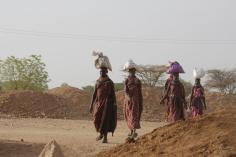
    Image credit: Traynor Tumwa.

    Overall, the framework offers a possibility for environmental security to sharpen the scope of resilience, while resilience allows for taking issues such as governance into account that a traditional environmental security perspective might miss. The framework helps identifying the states, changes, risks and disturbances, drivers and mechanisms, impacts, and measures and responses from an environmental security and resilience perspective to gain a better understanding of conflict dynamics. However, when applying the framework continuous attention should be also paid to ambivalent effect of depoliticisation which is a risk both concepts entail.

    On the one hand, steering away from contentious political debates, such as those related to the wider Israeli-Palestinian conflict, provides an entry point for peacebuilding projects. Social groups and even official actors can be involved without taking a stance on contentious political questions. On the other hand, avoiding discussions on structural inequalities means that some root causes of environmental insecurities, such as the unequal distribution of water resources between Israel and Palestine, are difficult to address. When applying the framework further attention needs to be paid to other pitfalls of resilience and environmental security, namely the redistribution of responsibility to the local level and potentially justifying external intervention. If these issues are kept in mind, the framework can be a useful tool, especially when analysing conflicts where natural resources and the environment play key roles.

    Rebecca Froese is a PhD candidate in the Department of Earth System Sciences at the University of Hamburg and a member of the research group Climate Change and Security (CLISEC) at the University of Hamburg. Her research focuses on development cooperation and the role of non-party stakeholders in implementing and financing climate action.

    Janpeter Schilling holds a Klaus Töpfer Junior Professorship for Landuse Conflicts at the University of Koblenz-Landau. He is an associated researcher at the research group Climate Change and Security (CLISEC) at the University of Hamburg, the peacebuilding organisation International Alert in London and the Peace Academy Rhineland-Palatinate in Landau. His research focuses on environmental security, conflict and resilience.  

    Tobias Ide is head of the Research Field Peace and Conflict at the Georg Eckert Institute and currently a visiting researcher at the School of Geography, University of Melbourne. He is an associated researcher with the reserach group Climate Change and Security (CLISEC) at the University of Hamburg. He works on environmental conflicts, climate security, environmental peacebuilding, and the representation of peace and conflict, especially in school textbooks.

    Sarah Louise Nash is a 2016/17 Mercator-IPC fellow at Istanbul Policy Center, Sabanci University and an associated researcher with the research group Climate Change and Security (CLISEC) at the University of Hamburg. Her research focuses on the politics of climate change and human mobility.

    Jürgen Scheffran is professor of geography and head of the Research Group Climate Change and Security (CLISEC) at the University of Hamburg, Cluster of Excellence ‘Integrated Climate System Analysis and Prediction (CliSAP) and the Center for Earth System Research and Sustainability (CEN). His research specialities are climate and conflict research, sustainability science, resilience and energy and human security.

  • Too Quiet on the Western Front? The Sahel-Sahara between Arab Spring and Black Spring

    Too Quiet on the Western Front? The Sahel-Sahara between Arab Spring and Black Spring

    While the world’s attention has been focused on the US-led military interventions in Iraq and Syria a quieter build-up of military assets has been ongoing along the newer, western front of the War on Terror as the security crises in Libya and northeast Nigeria escalate and the conflict in northern Mali proves to be far from over. In the face of revolutionary change in Burkina Faso, the efforts of outsiders to enforce an authoritarian and exclusionary status quo across the Sahel-Sahara look increasingly fragile and misdirected.

    Read Article →

    Beaux Gestes and Castles in the Sand: The Militarisation of the Sahara

    Whatever the benefits for Mali, the French-led eviction of jihadist groups from northern Mali may have made the wider Sahara a less safe place, and has done little to lower the capacity of such groups to threaten European interests.. In 2014, France is implementing a major redeployment of its forces in Africa into the Sahel and Sahara. Meanwhile, the US has been quietly extending its military reach from Djibouti to Mauritania. However, as elsewhere, the western military approach to countering Islamist insurgency in the Sahel rests on very unsteady foundations and the potential to provoke wider alienation and radicalisation is strong.

    Read Article →

    Sustainable Security and the Challenges of 2014

    2014 is a time for looking backwards and forwards. While the dynamics of the war on terror are still very much in play, the withdrawal from Afghanistan and the re-escalation of violence in Iraq and Libya present an opportune context for sincere reflections on the disastrous consequences of war without borders. Such inquiry needs to look forward too, to the implications of the current administration’s ‘war-lite’ and the unstoppable proliferation of remote control technologies.

    Read Article →

    Geneva II: Prospects for a Negotiated Peace in Syria

    The recent announcement that the so-called Geneva II conference would finally convene on 22 January 2014 is overdue but good news. What are the chances of it bringing peace? With an interim deal signed on Iran’s nuclear programme, Richard Reeve discusses what chance the great powers, Middle Eastern diplomats and the mediators of Geneva have as they turn their attention to ending the war in Syria.

    Read Article →