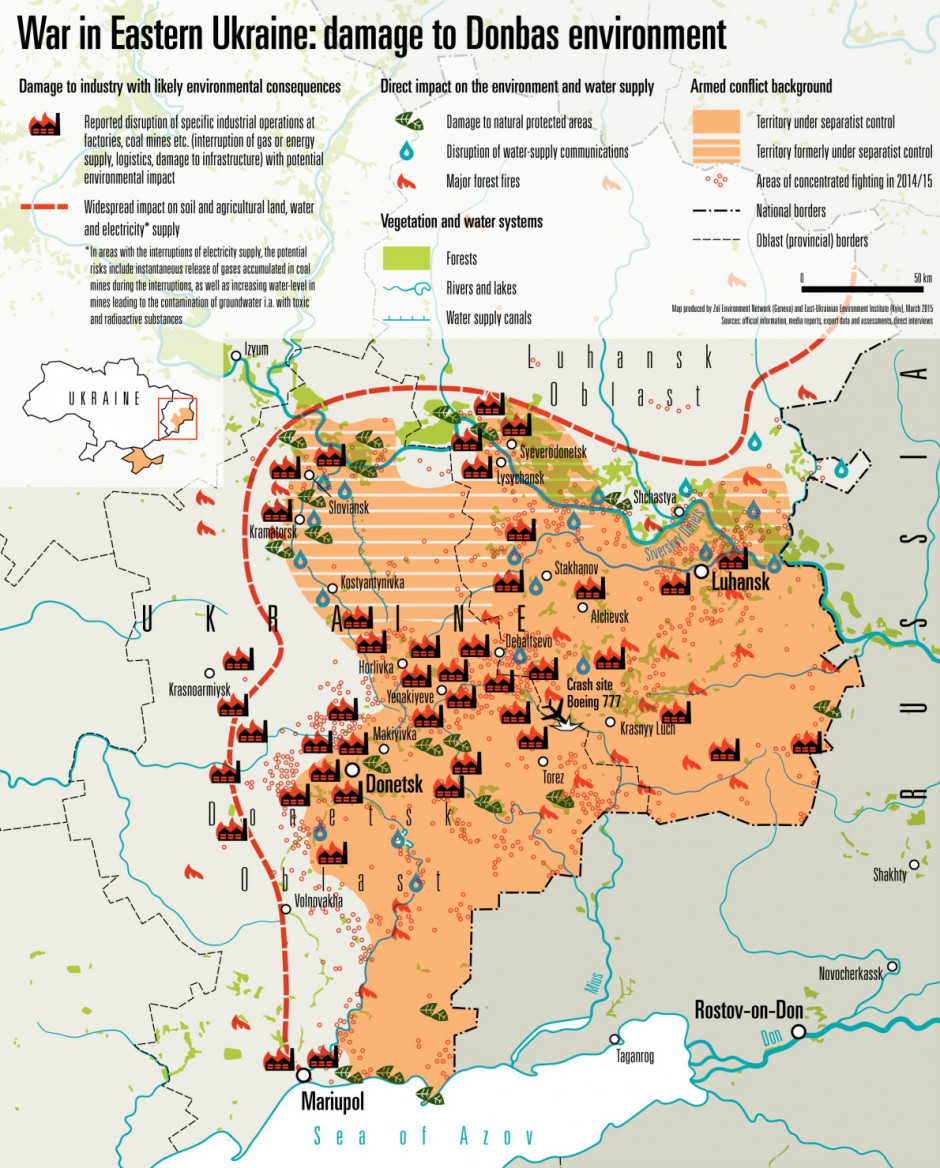
Return to reading The Ukraine Conflict’s Legacy of Environmental Damage and Pollutants
Our expanding group of contributors comes from a wide range of specialist backgrounds, and includes researchers, academics, security and development practitioners and NGO staff based around the world. Some of our most recent authors include:
Chris Abbott
Chris is the founder and executive director of Open Briefing, the world’s first civil society intelligence agency. He is an Honorary Visiting Research Fellow in the School of Social and International Studies at the University of Bradford and the former deputy director of Oxford Research Group.
Phillip Bruner
Phillip is Founder of the Green Investment Forum and a guest lecturer in global political economy at the University of Edinburgh.
Matt Budd
Matt is a security analyst at RESDAL (Red de Seguridad y Defensa de America Latina – Latin American Security and Defense Network) in Buenos Aires, where he focuses on public security issues in Central America. Matt holds an honours degree in International Relations from the London School of Economics. Matt has most recently been working on RESDAL’s Public Security Index, which provides information on public security challenges and institutional responses to them in Central America.
Mabel González Bustelo
Mabel is a journalist, researcher and international consultant specialized in international peace and security, with a focus on non-State actors in world politics, organized violence, conflict and peacebuilding. She has worked as a researcher on peace and security in Colombia, Ecuador, Mexico, Angola and the Palestinian territories and holds an MLitt in terrorism Studies from the University of St Andrews. Mabel blogs at The Making of War and Peace.
David Cliff
David Cliff works as a researcher at the Verification Research, Training and Information Centre (VERTIC) in London. There, his work focuses on research into the verification, implementation and compliance aspects of nuclear and chemical arms control and disarmament treaties. He holds a BA in Geography and an MA in International Affairs, both from the University of Exeter in the UK.
Lisa Dittmar
Lisa is the CEO and founder of NitrogenWise, a website that brings together research and straightforward communication to explain the complexities of nitrogen in a meaningful and relevant way.
Bernard Harborne
Bernard Harborne is lead of the Violence Prevention Team in the World Bank, having joined in 2004. He has worked for over 20 years on conflict-affected countries for the UN, World Bank, NGOs and the British Government. He has a background in law, including a Masters in International Law from the LSE, and is an adjunct professor at George Washington University. Opinions expressed in his article represent his personal views and not those of the World Bank.
Cameron Harrington
Cameron is an Adjunct Professor of Political Science at King’s University College and Brescia University College, at Western University (Canada), where he teaches in the areas of environmental politics and international relations. His Ph.D thesisbuilds a framework to combat water insecurity in the 21st century by focusing on the ethics of security.
Anna Alissa Hitzemann
Alissa is a Peaceworker with Quaker Peace and Social Witness. In this capacity, she previously wortked with Oxford Research Group as a Project Officer for the Sustainable Security Programme, with a focus on the ‘Marginalisation of the Majority World’ project.
Andrew Holland
Andy is Senior Fellow for Energy and Climate at American Security Project, a Washington D.C based think tank. He is an expert on energy, climate change, and infrastructure policy. He has over seven years of experience working at the center of debates about how to achieve sustainable energy security and how to effectively address climate change. He tweets regularly via @TheAndyHolland.
Sarah Kinosian
Sarah is a program associate for Latin America at the Center for International Policy, a nongovernmental organization based in Washington D.C. that promotes transparency and accountability in U.S. foreign policy and global relations. She works on their Just the Facts project, monitoring U.S. defense and security assistance to Latin America and the Caribbean.
Jenny Nielsen
Jenny Nielsen is a Research Analyst with the Non-proliferation and Disarmament Programme at the International Institute for Strategic Studies (IISS). Previously, she was a Programme Manager for the Defence & Security Programme at Wilton Park and a Research Assistant for the Mountbatten Centre for International Studies (MCIS) at the University of Southampton. At MCIS, Jenny was tasked with the co-editing the 2004-2012 editions of the NPT Briefing Book. She holds a PhD from the University of Southampton which focused on US nuclear non-proliferation policy vis-à-vis Iran in the 1970s.
Zoë Pelter
Zoë is a Research Officer of Oxford Research Group’s (ORG) Sustainable Security Programme, where she works on a number of projects including ‘Rethinking UK Security and Defence’ and Sustainable Security and the Global South’.
Edward Rackley
Edward Rackley is a Security and Governance consultant for the World Bank, based in Washington DC. He provides periodic technical and strategic advice to the Security Sector Accountability and Police Reform Programme program in Democratic Republic of Congo via DAI Europe, one of the program’s managing agents.
Richard Reeve
Richard is the Director of Oxford Research Group’s Sustainable Security programme. He works across a wide range of defence and security issues and is responsible for the strategic direction of the programme. Richard has particular expertise in global security, Sub-Saharan Africa, peace and conflict analysis, and the security role of regional organisations.
Rachel Staley
Rachel Staley is currently the Programme Manager for the British American Security Information Council (BASIC) in their London office. Since 2011, Rachel has managed the operations of the office and assisted in developing the organisation’s programmes working on nuclear non-proliferation and disarmament in the Middle East, as well as engaging directly in the Trident renewal debate in the United Kingdom. Rachel holds an MA with Distinction in Non-Proliferation and International Security from King’s College London and a BA with Honours in International Affairs and Anthropology from Northeastern University.
Sonja Wolf
Sonja Wolf is a researcher at the Institute for Security and Democracy (INSYDE), Mexico City. She has acted as project coordinator and principal investigator of INSYDE’s Assessment Study of Mexico’s National Migration Institute (INM), the first comprehensive study to examine the INM’s institutional and migration management and the ways in which it facilitates corruption and migrant abuse.
Ben Zala
Ben is a Lecturer in International Politics at the University of Leicester and former Director of the Sustainable Security Programme at Oxford Research Group.
There are strong calls to give UN peacekeeping operations more robust mandates to engage in counter-terrorism tasks. But the idea of UN peacekeepers conducting counter-terrorism operations is not without its problems.
Terrorist attacks have been increasing rapidly over the last decade. According to the Global Terrorism Index, 29,376 people were killed in terrorist attacks in 2015. This was the second deadliest year after 2014, when 32,765 people were killed. The spike in 2014 and decline in 2015 is largely a result of the rise and subsequent weakening of Boko Haram and the Islamic State (IS).
Fatigue after long engagements in Afghanistan and Iraq and the continued impact of the financial crisis has significantly dampened the interest in new out-of-area operations among Western member states. At the same time, the threats of terrorism and migration remain at the top of the foreign policy agenda. It is in this environment that policy makers are turning to the UN, to see what role it can play in the global security burden-sharing. This means a more transactional relationship with the UN, not necessarily considering the longer-term impact of undermining its impartiality and legitimacy.
UN peacekeeping operations have, during the last decade, been deployed to protect civilians in increasingly unstable conflicts, most often without a peace to keep. However, although the conflicts have been asymmetrical in nature, armed groups have seldom perceived the UN as a party to the conflict, and pursued a strategy of strategic targeting of its troops, police and civilians.
The Case of Mali

Image credit: MINUSMA/Flickr.
In March 2012, a coalition of rebel and Islamist groups took control of the north of Mali in the wake of a coup. On April 6, 2012, the rebels proclaimed the independence of the ‘Republic of Azawad’ and the imposition of sharia law in northern Mali. 412,000 persons had fled their homes and had become internally displaced or moved across the border to Mauritania, the Niger and Burkina Faso. By November 2012, Al Qaida in the Islamic Maghreb (AQIM) had taken control of Timbuktu and Tessalit, the Movement for Unity and Jihad in West Africa (MUJAO) had taken control of Douentza, Gao, Menaka, Ansongo and Gourma, and Kidal was under the control of the Islamist group Ansar Dine (“defenders of the faith”).
The Islamists and rebel groups were quickly conquered and fled to the far north of Mali after a short and swift intervention in the beginning of 2013 by the French Opération Serval, in cooperation with the African-led International Support Mission in Mali (AFISMA). To avoid being stuck in a long and bloody counterinsurgency, the French had pushed for a swift handover to the UN.
On 1 July 2013, AFISMA handed over authority to the UN multidimensional integrated stabilisation mission in Mali (MINUSMA). However, the Islamist groups have proven resilient and the operation has been struggling to deploy and implement its mandate. From its inception in 2013 until 31 January 2017, it has endured 72 fatalities due to hostile actions, including suicide attacks, mortar attacks and improvised explosive devices (IEDs). The mission has been given increasingly robust mandates, and its most recent mandate ordered the mission to “…to stabilize the key population centres and other areas where civilians are at risk, notably in the North and Centre of Mali, and, in this regard, to enhance early warning, to anticipate, deter and counter threats, including asymmetric threats…”.
The mission is actively supporting counter-terrorism actions, as it has been preparing “targeting packs” and has been informally sharing information with the French parallel counter-terrorism operation Barkhane (the French follow-on mission from Serval). This follows a trend towards peace enforcement that started with MONUSCO, where the UN peacekeeping mission in the Democratic Republic of Congo (DRC) is now being mandated to “neutralize” identified rebel groups.
Future missions may be deployed to Libya, Syria and Yemen – countries that are also marked by asymmetric conflict and violent religious extremism. Against this backdrop, many member states are now arguing that UN peacekeeping operations need to reform to not only deal better with the challenges it faces in Mali, but also in future operations.
The high-level panel on peace operations, nominated by former UN Secretary-General Ban Ki-moon, strongly underscored that UN peacekeeping operations should not undertake “counter-terrorism operations”. However, the report left the back-door open, insofar as it argued that “UN peacekeeping missions, due to their composition and character, are not suited to engage in military counter-terrorism operations. They lack the specific equipment, intelligence, logistics, capabilities and specialized military preparation required, among other aspects.” Disregarding the principled arguments against moving UN peacekeeping in such a direction, this could indeed be read as a list of areas where reform is needed to enable UN peacekeeping to take on counter-terrorism tasks.
A Desirable Shift?
But what may the consequences be of taking UN peacekeeping operations in such a direction? First, UN peacekeeping missions are not likely to be able to perform counter-terrorism tasks in a satisfactory manner, militarily speaking. They are composed of troops from many different countries, and although they should provide a military deterrent against armed groups, they are not likely to be able to protect themselves against asymmetric attacks. Even small attacks can lead to the withdrawal of troops by troop-contributing countries, as most of these do not have the political interest needed to be able to sustain losses. The exception to this are neighbouring countries, as these may have a political interest in the conflict, but precisely because of this fact they may also be interested to use force only against some and not all parties that threaten the peace.
The UN has been strongly criticised for not taking action to protect civilians, and the continued inaction has been used as an argument to make the UN more robust, as well as able to take on counter-terrorism tasks. However, this argument confuses the ability of the UN to protect civilians with counter-terrorism. In Mali, the mission is much busier protecting itself than protecting civilians. In fact, the recruitment to the terrorist groups is increasingly moving south in the country, as local populations are not experiencing a peace dividend or improving levels of participation and inclusion after the deployment of MINUSMA. Rather, they are experiencing a government that is continuing to marginalize significant groups of the population such as the Tuaregs in the North and the Fulani (also known as Peul) in the central regions of the country, and employ draconian counter-terrorism tactics.
The inclusion of neighbouring countries’ troops in UN peacekeeping missions was previously considered a red line. As seen with the example of MINUSMA, as well as UN peacekeeping missions in the Democratic Republic of Congo and South Sudan (to mention a few), this principle has fallen by the wayside. Taken together with the move towards UN peacekeeping missions taking on counter-terrorism tasks, this shows a trend towards a more partial UN in these situations, which may increasingly be rendered unable to play its vital good offices and humanitarian roles, and be a UN for all the people, not only the government of the day. The UN and member states should reverse this trend, and make sure that UN peacekeeping operations can serve in their most effective way – as a tool to keep the peace while institutions, service delivery and an inclusive and participatory state is being built.
John Karlsrud is the Manager of the Training for Peace program. He is on Twitter at @johnkarlsrud.
 Last week saw the start of yet another armed anti-government revolt in South Sudan’s Jonglei state. Reportedly led by Murle militia leader Major General David Yau Yau, there are now fears that the revolt will escalate as a result of longstanding local grievances with the army of South Sudan, the Sudan People’s Liberation Army (SPLA).
The unrest comes as a result of a widely criticised government-led civilian disarmament campaign in Jonglei state – so-called ‘Operation Restore Peace’ – which was launched after violent clashes between Lou Nuer and Murle communities in January. Carried out by the SPLA, with an additional 15,000 soldiers and 5,000 members of the South Sudan Police Service, the campaign has been condemned by the United Nations Mission in South Sudan and groups such as Human Rights Watch for alleged human rights violations including killings; allegations of torture, simulated drowning and beatings; rape and attempted rape; and abductions. On October 3rd, Amnesty International issued a press statement calling on the government to take immediate action to end these reported human rights violations, launching a new report ‘Lethal Disarmament’ which highlights abuses in Pibor County of Jonglei State.
Not for the first time, the Government of South Sudan’s civilian disarmament initiative has failed to improve security in South Sudan. In 2006, as described by the Human Security Baseline Assessment at Small Arms Survey, the SPLA’s forcible civilian disarmament operation in northern Jonglei State succeeded in collecting 3,000 weapons from the local community. However, as a result of the campaign’s focus on the Lou Nuer community and martial and poorly planned approach, as well as a lack of subsequent security guarantees for the community, heavy fighting ensued and more than 1,600 people were killed.
In 2008, Interim President of Southern Sudan, Salva Kiir issued a decree to start a six month disarmament period across the country. Conducted by the SPLA, the aim of the operation was to get all civilians to surrender their weapons in a peaceful manner, although ‘appropriate force’ could be used. However, as operational logistics were not outlined after the decree, a lack of centralised strategy resulted in various outcomes and in many places, an increased sense of insecurity. For example, in Lakes State local police had their weapons confiscated and weapons searches became violent as reportedly drunken soldiers stole from people’s homes.
Thus far, civilian disarmament operations in South Sudan have done little to increase long term security. After decades of war, small arms and light weapons are notoriously rife in the young country, but attempts to solve this problem by confiscating these weapons does little to deal with the root causes of insecurity and communities’ need for self-protection. Small Arms Survey estimates that prior to the interim separation of Sudan and South Sudan after the Comprehensive Peace Agreement in 2005, there were between 1.9 and 3.2 million small arms in circulation, with about two-thirds of these in civilian hands. While these weapons come from a number of sources – including the SPLA during the Second Civil War – it is also important to understand why civilians feel they must arm themselves.
South Sudan’s severe underdevelopment, lack of infrastructure – with only 300km of paved road – seasonal floods, and subsequent lack of service provision and security capacity, means that there is a considerable absence of established security services across the country. Persistent, and often deadly, cattle raiding and escalating inter-communal armed conflict between groups such as the Lou Nuer and Murle in Jonglei State leave individuals and communities to seek ways to protect themselves and their property. Subsequently, informal community security structures are common; ranging from community initiatives to groups such as the Lou Nuer’s ‘White Army’, which was originally formed to protect cattle and now constitutes a major threat to Murle communities in Jonglei. In effect, the Government’s inability to ensure security at the community level means that groups are forced to take matters into their own hands, often challenging the state’s right to a monopoly of violence because of a lack of confidence in its ability to provide adequate protection.
In current approaches to civilian disarmament, communities are often left in a ‘security vacuum’, without the means to protect themselves from immediate security threats but without any guarantees that even short term immediate security assistance will be provided. This state of vulnerability in turn leads to community backlashes, rapid re-arming or attempts not to turn weapons in.
As stated in a report by Saferworld in February 2012, ‘on its own, civilian disarmament does virtually nothing to address the factors fuelling demand and supply of these weapons, which requires a much more complex and long-term strategy.’ Reducing and managing the proliferation of civilian use of small arms and light weapons will require the Government of South Sudan to create a holistic strategy that addresses the demand for weapons as well as their supply. As has been proven in efforts until now, addressing the single issue of weapons supply without dealing with the underlying need for guns undermines attempts to decrease proliferation of small arms and light weapons. A government strategy would necessarily address structural issues, including the state’s capacity to provide professional security services that can be relied upon for protection, such that communities feel safe from immediate threats.
In no small measure, this will involve degrees of security sector reform, particularly with focused training on civilian interaction and ethnic impartiality in operations if the army is to be used for future operations. As the latest Amnesty report demands, the Government must ‘provide security forces carrying out civilian disarmament with the necessary training and resources to enable them to have a clear understanding of how to carry out disarmament in accordance with international human rights standards’. This must also include measures to address the structural issues facilitating civilian arms possession, including sales of weapons to civilians by government security forces because of lack of pay and porous regional borders that allow illicit trade. Such augmentation of basic infrastructure and security capacity in South Sudan will take years, and so attempts to reduce proliferation must also include measures to address immediate security threats, in addition to tackling longer term structural, capacity and training issues.
Civilian disarmament campaigns in South Sudan currently attempt to tackle one of the many symptoms of the country’s militarised post-war society. Instead, these campaigns must be seen as one aspect of an overarching and sustainable disarmament and security sector reform strategy that must be undertaken long term, while ensuring that the immediate security of communities is safeguarded and that their need for weapons to protect themselves is adequately addressed and reduced.
Zoë Pelter is a Research Officer of Oxford Research Group’s (ORG) Sustainable Security Programme.
Image Source: ENOUGH Project
Africa is often presented as a war-ridden continent, but this depiction is becoming outdated. In the 21st century, the amount of warfare in Africa has declined dramatically, and today most […]

Kristian Skrede Gleditsch is Professor in the Department of Government at the University of Essex, director of the Michael Nicholson Centre for Conflict and Cooperation, and a research associate at […]
This article was originally published on openSecurity’s monthly Sustainable Security column on 26th February 2014. Every month, a rotating network of experts from Oxford Research Group’s Sustainable Security programme explore pertinent issues of global and regional insecurity.
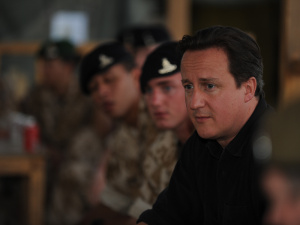
Prime Minister David Cameron visits British troops in South Afghanistan, 10 June 2010. Source: No. 10 (Flickr)
The 100th anniversary of the start of the First World War has kick-started a period of national self-reflection for the British public and political establishment. The timing seems almost scripted: as the country prepares to look back at the tragic events of 100 years ago, so we prepare for the first incidence of peace in a century. Following final pull-out from Afghanistan later this year, the UK should cease to be engaged in combat operations anywhere in the world for the first time since 1914.
This “strategic pause”, as Ministry of Defence (MoD) insiders are calling it, comes on the heels of last summer’s controversial parliamentary vote against possible military intervention in Syria. Public and Parliament alike seem wearied by the diminishing returns of a “fight first, fix later” strategic approach. With national elections and scheduled reviews of defence and security strategies fast approaching, this national mood for reflection is an opportunity to reframe British thinking on national and international security – and get it right in 2015.
The threats facing the UK today are a world away from those that instigated the First World War. A century on, a distinct lack of interstate war, the rise of global networks of terrorists and organised criminals, and the inability of many fragile states to respond to such challenges characterise an increasingly complex security landscape. There is also growing recognition of the role of a number of “non-traditional” drivers of global insecurity which act to multiply other threats. As with the localised devastation seen in the UK this winter, climate change is exacerbating economic, social and resource stresses. Thanks to the communications revolution, the world’s marginalised majority is suddenly and drastically aware of its inequality. Such risks highlight the increasing implausibility of military force being effective in tackling insecurity. What use are armies and navies in reducing the gap between elites and a disenfranchised underclass that is both local and global? How can air forces address the myriad impacts of concentrated greenhouse gases in the atmosphere?
As much as the global security landscape has changed, there remains an exceptional continuity in the British response to insecurity: a dogged, increasingly ineffective – and recently highly counter-productive – militarised approach. Given that, like World War I, the operation to dislodge the Taliban was originally intended to be “over by Christmas” in 2001, the war in Afghanistan is a case in point. The war has lasted 13 years, resulting in the deaths of 447 British troops, serious injury of thousands more, and costing the UK over £37bn, according to recent estimates from former Helmand adviser Frank Ledwidge.
Moreover, Ledwidge estimates that British troops in Helmand province have killed at least 500 non-combatants and the Costs of War project estimates that at least 16,725 Afghan civilians have been killed directly by the war’s violence, not including indirect deaths from reduced access to health care, malnutrition and lack of clean drinking water that have been exacerbated in the country’s war zones. For all these costs, military action has done little to decrease Taliban influence or stabilise Afghanistan. A recent review by CNA on behalf of the Pentagon’s policy directorate predicts a sharp post-withdrawal resurgence of Taliban influence and would require far more Afghan troops and police capacity than planned for.
Learning something from the Afghanistan and Iraq debacles, the UK has shifted towards a more streamlined version of the same interventionist thinking. This “no boots on the ground” approach, such as we saw in Libya (2011), also comes with unforeseen consequences. While NATO operations in Libya were deemed successful within the narrow definitions of the UN mandate, limited intervention there sowed the seeds of further intervention in Mali as weapons and fighters spread south, prompting the declaration of commitment by the prime minister, David Cameron, to the next “generational struggle” against Islamist terrorism.
A similar rhetoric of limited intervention was noticeable last summer during debates on possible military action in Syria, when the prime minister assured the British public that intended air strikes would be strictly “punitive”. Again, considerations of the potential ineffectiveness and future blowback of military action – on the people of Syria as well as the UK – took a back seat to the political visibility of military action as British agency.
There is a clear need for more nuanced approaches to tackle insecurity in the coming decades. The struggle against violent extremism, for example, requires approaches which seek to address the conditions that allow such ideologies and instability to thrive. However, the overarching message from British leaders is that we can expect more of the same. Earlier this month, the UK Government confirmed the upcoming purchase of fourteen F-35B Joint Strike Fighter jets, with a price tag of £2.5bn, in addition to new aircraft carriers costing at least £6.2bn. Neither system will be operational before 2019, almost a decade after the last British carriers were retired. Similarly, plans to renew the Trident nuclear deterrent with a like-for-like system will cost at least £25bn, with whole-life costs of replacement exceeding £100bn.
Decision is due in 2016. Such heavy budgetary weighting in defence spending towards nuclear deterrence and offensive force projection limit the country’s ability to assess strategic balance and diminish the opportunity to develop a wider range of security management options for the UK on the international stage. Investing over half a billion pounds on armed Reaper drones by 2015 predisposes the UK to this form of military action while the jury is still out on its legitimacy, ethics, legality and long term impact. The possibilities for constructive debate on alternatives to the current offensive defence approach are constrained by such massive forward commitments to next generation equipment that prioritises force projection.
There is also uncertainty over the review of the National Security Strategy (NSS), which defines the threat environment that UK defence and security policy responds to through the Strategic Defence and Security Review (SDSR). Both documents are scheduled to be reviewed and updated following the May 2015 general election. While thinking on changes to the next SDSR is already underway, National Security Adviser Sir Kim Darroch indicated to the House of Commons on 11 September “no precise timetable” for the next NSS. On 30 January, Cameron told the parliamentary Joint Committee on the National Security Strategy that the NSS review process – led by his Cabinet Office – was “now beginning” but implied that the SDSR was further advanced.
The 2010 NSS made a number of important observations about the changing nature of British security challenges – including climate change and the importance of conflict prevention – but these failed to translate into actionable policy prescriptions in the SDSR. This was in part the result of poor timing; while the SDSR should be a subsidiary document informed by the NSS, the documents were released a day apart in October 2010 after a rushed four month process.
If the UK is to engage in meaningful debate on approaching complex security challenges and subsequently turn that debate into relevant policy options, it must avoid the mistiming of 2010 and be open to dialogue with UK civil society and foreign partners on the nature of threats and opportunities. With uncertainty over the timing and scope of the NSS review it is difficult to see what room exists for UK to develop policies that genuinely reflect changes in international security.
If British approaches are to respond effectively to changing security threats, the scheduled 2015 SDSR process will need to rebalance priorities, with a shift towards conflict prevention and provision of early and non-combat security support in fragile states. Progressive thinking in the current NSS and initiatives, such as the 2011 Building Stability Overseas Strategy, must now translate into a change of priorities in British security, including spending, decisions on deterrence and intervention.
The coinciding anniversary of the First World War and final withdrawal from Afghanistan may well provide a much overdue period of reflection on past lessons and future approaches to British security and defence. But if the UK is to learn the lessons of the past century – that unparalleled military interventionism cannot yield long term national nor global security – it must make 2014 a year of genuine consideration of the threats it faces in the next years. In turn, committing to an open process of reflection will allow the decisions of 2015-16 to positively contribute to sustainable peace and security for years to come.
Zoë Pelter is the Research Officer of Oxford Research Group’s (ORG) Sustainable Security programme. She works on a number of projects across the programme, including ‘Rethinking UK Defence and Security Policies’ and ‘Sustainable Security and the Global South’. Zoë co-authored ORG’s recent submission to the House of Commons Defence Select Committee inquiry ‘Towards the Next Defence and Security Review’.
This article was originally published on openSecurity’s monthly Sustainable Security column on 18 May 2015. Every month, a rotating network of experts from Oxford Research Group’s Sustainable Security programme explore pertinent issues of global and regional insecurity.
The truce declared in 2012 may have been imperfect and controversial but positive lessons must be learned amid the country’s current crisis of violence.
Violence is escalating again in El Salvador. March 2015 was the most violent month in over a decade, and the government is preparing army and police battalions to fight the gangs. These trends mark the definitive end of a process which started in 2012 with a truce between the two main gangs—MS-13 and Barrio 18—and evolved into a more complex and multidimensional approach to reducing violence, with a degree of international support.
The process was complicated, imperfect and subject to public controversy but it stands as one of the most significant examples worldwide of an effort to reduce violence through negotiation with criminal groups. With an annual homicide rate of 60 murders per 100,000 inhabitants, El Salvador is one of the most violent countries in the world. It is also a notable example of the trend towards non-conventional, hybrid and criminal violence.
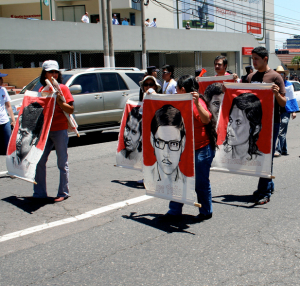
On a march organised by the FMLN, people carry pictures of the faces of those disappeared during El Salvador’s civil war. Source: Flickr | Laura
A peace agreement reached in 1992 put an end to civil war and initiated a peacebuilding process, which saw rebels of the leftist Farabundo Martí National Liberation Front (FMLN) make a successful transition to civilian and political life. The FMLN finally won the presidency by a tiny margin in 2009, and by an even smaller sliver in 2014, overturning 20 years of rule by the right-wing Nationalist Republican Alliance (ARENA).
Meanwhile, a complex set of factors triggered a transformation of violence, which became criminal and perpetrated by illegal armed groups, most notably the gangs (maras). A profound crisis of public security has since shaken the country, as well as neighbours Honduras and Guatemala. Successive governments have responded with ‘iron-fist’ approaches focused on crime suppression and militarisation of security. These policies, although of limited effectiveness, have helped to cement the electoral support of a population angered and traumatised by decades of violence.
In March 2012 the country was taken by surprise by news of a truce between Barrio 18 and MS-13, facilitated by two mediators (a former insurgent and government advisor, and a Catholic bishop) and tacitly supported by the government of the FMLN president, Mauricio Funes. Imprisoned gang leaders were transferred from a maximum-security prison to other jails in exchange for a reduction in violence. The gangs agreed to end forced recruitment of children and young people, respect schools and buses as zones of peace and reduce attacks on the security forces.
In the succeeding months, the gangs surrendered limited amounts of weapons and the government acted to address shortcomings in the overcrowded prison system, such as softening visitor searches and removing the army from the task. For the first time since the war, the International Committee of the Red Cross (ICRC) was invited to contribute and in October 2012 it established a special mission to monitor human rights in prison. The drop in homicides was immediate—from 14 per day to five.
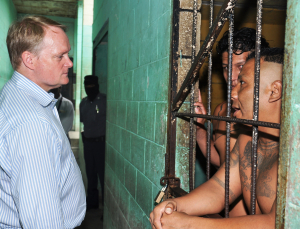
Organization of American States (OAS) visit to a prison in Quezaltepeque, 2012. Source: Flickr | Arena Ortega
The gangs’ leaderships and the mediators were discussing a list of issues to be included in an enlarged process with a wider pacification agenda. Their Proposal for a Framework Agreement for the Recovery of Social Peace in El Salvador included reform of the prison system, a public-private body with gang participation to oversee rehabilitation and reinsertion, derogation of the anti-gang law and removal of the army from public-security duties. Notably absent was any demand for amnesty or reduction of prison sentences. The proposals included suspension of all acts of violence, voluntary surrender to security forces, decommissioning of weapons and explosives, and an end to forced disappearances.
As more details emerged, however, public opinion about the truce became increasingly polarised. The main opposition came from conservative sectors, parts of the legal establishment and law enforcement, and the media. Contributing to scepticism were unabated extortion and other violent crimes, such as ‘disappearances’—allied to concern about the potential empowerment and legitimisation of criminal structures and a widely-held perception that violence was being rewarded.
But a second school of thought saw the truce as a way to reduce violence and reintegrate gang members. This vision was shared by segments of civil society and the Organization of American States, which became an observer and guarantor of the process. A formal agreement with the government resulted in the creation of a Technical Committee for the Co-ordination of the Process of Violence Reduction in El Salvador.
Nevertheless, the government remained equivocal. Funes and other members refused to admit any participation and delivered contradictory statements, which fed distrust and confusion. But the sustained impact on violence and better understanding of the process gradually legitimised it and allowed the government to acknowledge involvement.
The government’s ambivalence can be contextualised. This was the first FMLN administration and conservatives controlled the National Assembly. The United States prohibits negotiations between a government and a criminal organisation and in November 2012 it so labelled the MS-13. The US is El Salvador’s main trading partner and co-operation in trade and security has resulted in US support and military and police aid from programmes such as the Central America Regional Security Initiative. In what has been described as the performance of “a trapeze artist”, the FMLN has thus tried to develop progressive policies while not antagonising the US, foreign capital and the Salvadoran establishment (in control of the media).
The truce was supported by the minister of justice and public security, David Munguía, a retired general and former minister of defence. Although his appointment in 2011 (and the removal of FMLN members from those positions) was largely interpreted as a move towards remilitarisation, he surprised his critics by encouraging the first steps of the truce—authorising the transfer of gang leaders to other jails. According to the analyst of Salvadoran politics Paolo Lubers, he and other generals took the initiative after improved intelligence co-ordination convinced them that most violence was gang-driven.
Opposition came, however, from the Office of the Prosecutor and, later, sections of the police. They alleged that the truce was an opportunity for the gangs to reorganise, and that the drop in homicides was driving other crimes such as ‘disappearances’ and extortion. Some of this was a legacy of the peace accords, which disbanded the old security forces, established the National Civil Police (PNC) and reined in the armed forces.
The PNC comprised civilians, demobilised guerrilla fighters and vetted members of the prior security forces—whose most authoritarian members, however, were able to secure the most prominent positions in the new service, particularly during the two decades of ARENA governments. The police force is thus politicised and plagued by poor performance, corruption and authoritarian practices. Meanwhile, the Office of the Attorney-General (as with Supreme Court judges) is marked by political appointments by the Legislative Assembly, which have benefited ARENA hitherto.
In 2013, the process entered a more complex second phase, centred on the creation of violence-free municipalities. These ‘peace zones’ were based on agreement among local authorities, gangs and facilitators, with groups committing to cease violence and crime in exchange for a reduction in police operations and raids and reinsertion programmes. The first four municipalities, presented in January 2013, were soon extended to 11, with a combined population of more than 1m (out of 6m in all in El Salvador) and support from the OAS and the European Commission.
Mayors from both main parties, the FMLN and ARENA, participated in the initiative. Again, an ambivalent government promised, but then failed to deliver, grants and loans for prevention and rehabilitation. In Ilopango, the first peace zone, reduced violence presented an opportunity for the creation of a bakery and a chicken farm to generate employment, and the local government set up education centres and sports fields in marginalised neighbourhoods. But the mayor complained that the municipality had not received any of the $9 million promised by the government. Other cities were also left to their own devices.
In May 2013, the process suffered a major blow: the Constitutional Court nullified the appointment of Munguía as minister of justice and public security and forced Funes to restructure the security cabinet. The new minister, Ricardo Perdomo, proved a sharp critic of the truce. Amidst a polarised debate leading up to the February 2014 presidential election, his hard-line discourse and the restrictions placed on the mediation mechanisms weakened the process. The downward trend in murder rates began to reverse, amid a turf war between two factions of Barrio 18.
At the beginning of 2015, the new president, the former rebel Salvador Sánchez Ceren, said he would discontinue support for the truce. Leaders of the gangs were returned to the maximum security prison of Zacatecoluca.
In March 2015 481 homicides were reported by the PNC (16 per day), a 52% increase on a year earlier. There were six massacres and on average 4.5 persons ‘disappeared’ each day.
A recent report however suggests that the truce has had a lasting effect on the geographical distribution of violence. Murder figures remain lower than average in regions where the truce was strong and coalitions of local actors (such as mayors, churches and NGOs) took advantage of the opportunity to promote new policies. The trend is even more striking in the ‘peace zones’: in seven the drop in murders has been sustained in spite of the setbacks.
But in other areas violence is soaring and tough positions are gaining a foothold. Sánchez Ceren has announced the creation of three battalions, with more than 1,200 troops, to fight crime in areas most affected by violence. And the rightist business association ANEP has hired the former New York mayor Rudolph Giuliani as an adviser.
This truce can be counted among so-called second-generation security promotion activities, which depart from conventional top-down approaches and are forged on “formal and informal cooperation with existing (including customary) sub-national institutions”. But making peace with criminal (as against political) actors poses particular problems.
As James Cockayne put it, these cases are fraught with moral and political hazards, and there are critical questions. What is the desired end-state of negotiation? Is it a reduction of violence, a reduction of all criminal activities or dissolution of the illegal actor? The response to these questions will largely determine the contours of any negotiation in El Salvador and elsewhere.
Despite its flaws and shortcomings, the experience can however provide invaluable lessons. Apart from a drastic reduction in homicides, it contributed to a recognition of the social contours of the gang phenomenon and opened discussions at national and international levels about prevention, reintegration and rehabilitation.
The truce also demonstrated that a vast proportion of the violence afflicting the country was due to inter-gang confrontation. It revealed gang leaderships with a capacity for command-and-control and a sophisticated understanding of their role in society. Their ability to articulate demands surprised many, and to some extent changed conventional thinking.
But exploitation of public security in electoral politics tends to favour hard-line approaches. As criticism and polarisation grew to politically untenable levels, the government adopted contradictory statements and policies and later distanced itself from the process. An overall lack of planning and co-ordination hampered effectiveness—not least because the civil-society actors with more experience in working with gangs and communities were not involved.
Fear that the gangs might use the truce to rearm and reorganise, and anger towards perceived preferential treatment, is common in countries in transition from war to peace and with schemes of disarmament, demobilisation and reintegration (DDR) of former combatants. The accumulated experience of the global peacebuilding community can provide useful insights, including the adoption of community-based approaches to reintegration. Similarly, adaptation and use of mechanisms of transitional justice can help find a balance between security, justice and reconciliation.
The truce in El Salvador has been a lost opportunity to take advantage of reduced violence to strengthen the institutional presence in communities affected by gangs and implement comprehensive approaches to prevention, reintegration and reconciliation. Any future attempt will need stronger political commitment, a long-term strategy and engagement with civil society and public opinion. Given the scope of the problem and an estimated gang membership in the tens of thousands, socio-economic programmes and opportunities are also imperative for sustainability. But, for the time being, the horses of war are riding again.
Mabel González Bustelo (@MabelBustelo) is a journalist, researcher and international consultant specialising in international peace and security. She is author of Narcotráfico y crimen organizado: ¿Hay alternativas? (Narco-trafficking and Organized Crime: Are There Alternatives?), Icaria, Barcelona, 2014.
Featured image: Salvadoran police officers. Source: Flickr | Paulien Osse
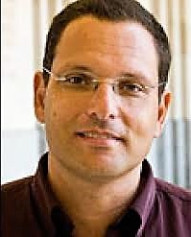
Raphael Cohen-Almagor received his DPhil in political theory from Oxford University. He is Professor/Chair in Politics, and Founder and Director of the Middle East Study Group, University of Hull. He was the Director of the Center for Democratic Studies, University of Haifa, Fulbright-Yitzhak Rabin Visiting Professor at UCLA School of Law, Visiting Professor at Johns Hopkins University, and Fellow at the Woodrow Wilson International Center for Scholars. Raphael is the author of more than 200 publications in politics, law, media and ethics, including most recently Confronting the Internet’s Dark Side (NY and Washington DC.: Woodrow Wilson Center Press and Cambridge University Press, 2015), the first comprehensive book on social responsibility on the Internet. https://www.wilsoncenter.org/book/confronting-the-internets-dark-side-moral-and-social-responsibility-the-free-highway. Blog: http://almagor.blogspot.com Twitter: @almagor35
This interview examines the rise of hate speech on the Internet, how it can be countered and how the battle against hate speech can be balanced with freedom of expression.
Q. Your recent book, Confronting the Internet’s Dark Side: Moral and Social Responsibility on the Free Highway, examines the dark side of the internet and the issue of social responsibility on the net. Why did you choose to examine this subject as a research project?
In answering the question, I will explain three issues: Why I chose to write about the Internet? Why I emphasise the concept of responsibility? Why the themes of terrorism, child pornography, hate and cyberbullying are at the center of attention?
Why the Internet?
This is my fifth book in a series of books in the fields of tolerance, freedom of expression and media ethics. It started with The Boundaries of Liberty and Tolerance (1994) continued with Speech, Media and Ethics: The Limits of Free Expression (2001) and then The Scope of Tolerance (2006) and The Democratic Catch (2007). Upon completing my research for the last two books in 2006, it was clear to me that my next big project would concern the Internet, a fascinating growing phenomenon that required close probing. I wished to examine the extent to which the mode of communication makes a difference, and whether the Internet constitutes a totally different issue that makes the theory that I have been developing over the years, the Democratic Catch, irrelevant.
Why responsibility?
I have done the majority of research during 2007-2008, when I was a Fellow at The Woodrow Wilson International Center for Scholars in Washington DC. The United States puts great emphasis on freedom of expression. The First Amendment is enshrined in the nation’s psyche. I was looking for a way to connect with my American colleagues in addressing the very delicate issue of boundaries to Internet’s freedom of expression. My book acknowledges the great importance assigned to the value of freedom of expression and supports balancing it against no less important value: social responsibility.
The forefathers of the Internet had the vision of creating a free highway, a public space where everyone can say what he or she has in mind. This wonderful innovation of unfettered platform has backfired. The Internet is open for use but unfortunately also for abuse. We should provide and promote responsible use and we should also fight against those who abuse. The abuse corrupt public space and has posed many challenges on all levels: individual, the community, the state and the international community. We are in the early stages of learning how to cope and how to combat Internet abuse. Slowly we are developing the necessary tools to enjoy innovation and freedom while, at the same time, we are adopting safeguards and rules of responsible conduct.
Confronting the Internet’s Dark Side makes a distinction between Netusers and Netcitizens. The term “Netuser” refers to people who use the Internet. It is a neutral term. It does not convey any clue as to how people use the Internet. It does not suggest any appraisal of their use. On the other hand, the term “netcitizen” is not neutral. It describes a responsible use of the Internet. Netcitizens are people who use the Internet as an integral part of their real life. That is to say, their virtual life is not separated from their real life.
Even if they invent an identity for themselves on social networks, they do it in a responsible manner. They still hold themselves accountable for the consequences of their Internet use. In other words, netcitizens are good citizens of the Internet. They contribute to the Internet’s use and growth while making an effort to ensure that their communications and Net use are constructive. They foster free speech, open access and social culture of respecting others, and of not harming others. Netcitizens are Netusers with a sense of responsibility.
Why the themes of terrorism, child pornography, hate and cyberbullying are at the center of attention?
At the outset, it was clear to me that I cannot possibly tackle all the problematic information that we find on the Internet. I asked myself: What troubles you the most, and what issues may present a compelling case for social responsibility? I thought that if I am able to reach some conclusions and suggestions about confronting some highly problematic issues, maybe the discussion can then serve as a spring-board to drive forward a motion for Internet social responsibility. After long and careful probing I decided to concentrate attention on violent, anti-social forms of Internet expression: hate speech and racism, use of the Internet by terrorist organizations, and child pornography. Later, another concern was added: Cyberbullying.
When I started my research for this book in 2006, cyberbullying was not on my radar. In 2010, I could no longer ignore it. Cyberbullying became a major concern. I changed the book structure to accommodate comprehensive research on this sensitive and most tragic topic.
Q. Sometimes the line between free speech and hate speech is not as clear cut as we would like it to be. How do you identify hate speech?
There is no single definition of hate speech and hate speech legislation varies from one country to another. The same speech might be illegal in the United Kingdom and legal in the United States. The United Kingdom passed the Public Order Act 1936 to protect minorities from hate speech and harassment while the United States permits the American Nazi Party and allowed them to march in Skokie, a Jewish neighbourhood that was heavily populated with Holocaust survivors. I find it hard to believe that such a march would be allowed in the UK. My definition of hate speech is: Bias-motivated, hostile, malicious speech aimed at a person or a group of people because of some of their actual or perceived innate characteristics. Hate speech expresses discriminatory, intimidating, disapproving, antagonistic and/or prejudicial attitudes toward those characteristics which include sex, race, religion, ethnicity, colour, national origin, disability, or sexual orientation. Hate speech is intended to injure, dehumanize, harass, debase, degrade, and/or victimise the targeted groups, and to foment insensitivity and brutality towards them.
Q. There could be a counter argument made that much information could be interpreted as “bias-motivated, hostile, malicious”. So, for example, a person could publish a study or statistics on the internet which claims that a certain racial, ethnic or religious group is less intelligent or commits more crime than another group. It is highly likely that some individuals would see this as “bias-motivated, hostile, malicious” behaviour. Yet the publisher of the data might simply claim that they are merely presenting their evidence and that they had no intention to “injure, dehumanize, harass, debase, degrade, and/or victimise the targeted groups”. Where would a case such as this fall in the hate speech/free speech distinction?
This is a very interesting question. Let me answer it with an example. For many years, I have related in my teaching on freedom of expression the case of Jean-Philippe Rushton, a Canadian psychology professor who has argued about hierarchy of races: Asians are smarter than whites, who are in turn smarter than blacks. In his 1999 book Race, Evolution, and Behavior, Rushton explained that brain and genital size are inversely related, and that races differ in brain size, intelligence, sexual behaviour, fertility, personality, maturation, lifespan, crime and in family stability. He explained that blacks are less intelligent than Orientals and Whites and they are more involved in criminal activities. While the IQ of Orientals is about 106, the IQ of Black people is around 70 to 75. Black people are also more sexually promiscuous and they lack social organization.
The science behind these assertions is debatable. Rushton’s theory evoked much criticism and has been perceived as racist. His theory attempts to explain everything by the sole criterion of race. It ignores social circumstances and social construction. It does not take into account other, no less important factors, such as individual abilities, class, poverty, education and family infrastructure. But is it hate speech?
In the spirit of the liberal marketplace of ideas, the search for the truth and open disputation of ideas with contrasting ideas, one may think that Rushton’s theory is problematic but it should be tolerated and debated. Its scientific facade needs to be exposed and simultaneously the true motives that guide Rushton should be explored. This, indeed, is my belief. Rushton’s theory is a hard case. It is opened to interpretations but it should not be silenced.
I also believe that Rushton’s theory was not guided only by scientific methods, that it had underpinning agenda which was not innocent, that it was motivated by other reasons rather than the urge to discover a scientific truth. Rushton was asked “Weren’t theories about race differences the reason for racism, genocide and the Holocaust?” Rushton answered: “The Nazis and others used their supposed racial superiority to justify war and genocide. But just about every idea – nationalism, religion, egalitarianism, even self-defence – has been used as an excuse for war, oppression or genocide. Science, however, is objective. It can’t give us our goals, but it can tell us how easy or difficult it will be to reach our goal. Knowing more about race differences may help us to give every child the best possible education and help us to understand some of our chronic social problems better”.
With this answer, Rushton was trivializing the Nazi crimes. Nazism was equated with nationalism, religion, egalitarianism, “even self-defence”. Rushton says nothing about the evil ideas of Nazism per se but how they were used for evil deeds, in the same way that other ideas, including noble ideas such as egalitarianism and well-established ideas such as self-defence, have been used for evil deeds. Then Rushton declares that his science is objective. His commitment is to scientific truth, no matter how crude that truth might be. And then he goes on to argue that his ideas may better children education. But surely not the education of every child. No matter how much you invest in the education of black children, they would not be able to escape their lot. They belong to the inferior race and therefore they are doomed to suffer the consequences of their brute luck.
What can help us understand Rushton’s reasoning is his behaviour and conduct outside the scientific world. Rushton was embraced by anti-black associations, by racists and bigots. Rushton not only did not flinch; he accepted their attention and the honour of being their star scientist.
In 2002, Rushton was appointed president of the Pioneer Fund, which has for decades funded dubious studies linking race to characteristics like criminality, sexuality and intelligence. Pioneer has long promoted eugenics, or the “science” of creating “better” humans through selective breeding. Set up in 1937 and headed by Nazi sympathizers, the Pioneer Fund’s mission was “to advance the scientific study of heredity and human differences”. It strove to improve the character of the American people through eugenics and procreation by people of white colonial stock. Rushton has spoken on the alleged IQ deficiencies of minorities at conferences of the racist American Renaissance magazine and website, and he has published a number of articles in the group’s newsletter. His work is often published on racist websites, including the anti-immigrant hate site, Vdare.com.
While appearing before and in support of racist groups, the above-mentioned sensitive and debatable statements then amount to hate speech. The context, as we learned from JS Mill’s theory On Liberty makes a great difference. A questionable race theory when invoked in Nazi and other radical extremist rallies is the fuel for their raging hatred, the validating force for their twisted beliefs, the scientific cloth that legitimized crude beliefs about hierarchy of races. Expressed in such forums, Rushton’s ideas become hate speech.
Q. Staying with the distinction between hate speech and free speech, religious criticism is commonly seen as an area where the lines become blurred. For example, sometimes actual bigotry towards religious minorities is dressed up as critique of religious beliefs and scripture. Where do you see the line being drawn on this issue?
Two separate issues are relevant:
Both have taken place in Britain. As for the first scenario:
The state cannot sit idly by while religious authorities incite violence. Such public figures need to decide: either they are public servants who adhere to the laws and values of the state or they incite to violence. If they chose the latter, they should resign immediately. And if they do not see the necessity in doing so, then the state should discharge them from all public responsibilities. This is true for all religious authorities and more so for popular public figures with a large crowd of adherents. The justice system should act and crack down on the phenomena that might lead to violence. Violent religious preachers might pose a real danger to the well-being of society.
As for the second scenario, I think offence should be taken more seriously than it is considered today. Much blood was shed unnecessarily because of the Danish cartoons. We should be respectful of all religions, understand and appreciate the power of religion to bring about change, positive and negative. One of Karl Marx’s greatest mistakes was underestimating the power of religion. Religion can motivate people to help others, and it can motivate people to destroy. This is true for any religion. Pushed to its extreme, fundamental religion can create a lot of damage. As extremes tend to feed each other, speakers should be cautious of the power of the word and avoid inflaming tensions, emphasising those things that bring people together, not that divides them, creating bridges rather than obstacles and alienation.
In this age, many terrorists were Muslim. But, of course, not all Muslims are terrorists. Only a small number of Muslims are terrorists and they represent Islam to the same extent that the KKK represents Christianity and the Kahane movement represents Judaism. To tag Islam as a terrorist religion is to defame religion unjustly. Such statements are unwarranted and only inflame an already tense environment.
Let me mention the work of organisations such as ‘TELL MAMA’, an Anti-Muslim Hatred group that seeks to consider and takes forward proposals to tackle anti-Muslim hatred. Its action plan aims to create an environment that prevents hate crime from happening.
Free expression is not a recipe for lawlessness. The balance between free speech and protecting the public should not, on such matters, lean to the former. Liberal democracies have an obligation to secure the well-being of its population, especially vulnerable minorities. Indeed, the litmus test of a decent or civilized liberal democracy is the status of minorities.
Q. In your research, have you observed a connection between hate speech and violent acts?
Yes, I did.
In 1999, 21-year-old Benjamin Nathaniel Smith, an avowed Aryan supremacist, went on a racially-motivated shooting spree in Illinois and Indiana over the July 4th weekend. Targeting Jews, African-Americans, and Asian-Americans, Smith killed two and wounded eight before taking his own life, just as law enforcement officers prepared to apprehend him. Smith embarked on his killing spree after being exposed to Internet racial propaganda. He regularly visited the World Church of the Creator (WCOTC) website, a notorious racist and hateful organisation founded in Florida in the early 1970s. Smith was so consumed by the hate rhetoric of WCOTC that he was willing to murder and to take his own life in pursuit of his debased hate devotion.
The same year there were two other hate-motivated murders. Buford Furrow used to visit hate sites, including Stormfront.org and a macabre site called Gore Gallery, on which explicit photos of brutal murders were posted. Whether inspirational or instructional, the Internet supplied information that clearly helped fuel the explosion of a ticking human time bomb. Furrow decided to move to action. He drove to the North Valley Jewish Community Center and shot an elderly receptionist and a teenage girl who cared for the young students attending the summer day school. He continued shooting, hitting three children, one as young as 5 years old, before leaving the facility. Shortly thereafter Furrow fatally shot a Filipino American postal delivery worker because he worked for the federal government and was not White.
In turn, Matthew Williams, a solitary student at the University of Idaho, turned to the Internet in search of a new spiritual path. Described as a “born fanatic” by acquaintances, Williams reportedly embraced a number of the radical-right philosophies he encountered online, from the anti-government views of militias to the racist and anti-Semitic beliefs of the Identity movement. He regularly downloaded pages from extremist sites and continually used printouts of these pages to convince his friends to also adopt these beliefs. At age 31, Matthew Williams and his 29-year-old brother, Tyler, were charged with murdering a gay couple, Gary Matson and Winfield Mowder, and with involvement in setting fire to three Sacramento-area synagogues. The police discovered boxes of hate literature at the home of the brothers.
In early 2001, Richard Baumhammers, another Aryan supremacist, shot down six people, all members of minorities, in suburban Philadelphia, inspired by material on the Internet. Tim Haney of the Allegheny County Police Department in Pennsylvania testified that computer records confiscated at Baumhammers’ home indicated his frequent visits to white supremacist Internet sites.
Michael Brad Magleby burned a cross on an interracial couple’s property. He also visited hate sites prior transmitting this hateful message. In 2002, Michael Kenneth Faust, a white supremacist who spent several hours a day on the Internet soliciting teens to take his classes on firearm use, shot and killed a teenager.
More recently, a 22-year-old man Keith Luke murdered two black people, and raped and nearly killed a third, on the morning after Barack Obama was inaugurated as president (January 21, 2009). When he was captured, Luke told police that he intended to go to a synagogue that night and kill as many Orthodox Jews as possible. Luke told the police that he had been reading white power websites for about six months (in other words, from about the time that Obama won the Democratic nomination) and had concluded that the white race was being subjected to a genocide in America. Therefore he had to act. This is a clear-cut case of propaganda translating directly into criminal violence.
Later the same year, on June 10, 2009, James von Brunn entered the U.S. Holocaust Memorial Museum in Washington DC and opened fire, killing Security Guard Stephen Tyrone Johns before he was stopped by other security guards. Von Brunn, a die-hard white supremacist anti-Semite, was an active neo-Nazi for decades long before the Internet became a viable public platform during the early 1990s. He utilized the Internet to publish his tracts and to spew hatred. Von Brunn ran a hate website called holywesternempire.org and had a long history of associations with prominent neo-Nazis and Holocaust deniers. For a period of time, he was employed by Noontide Press, a part of the Holocaust denying Institute of Historical Review, which was then run by Willis Carto, one of America’s most prominent anti-Semites.
In Canada, Craig Harrison was found guilty of an assault causing bodily harm to an individual whose race he did not like and was sentenced to two years less a day in jail. Observing the content of messages posted on the Net by him, the Canadian Human Rights Commission concluded that the materials were likely to expose those of the Jewish faith, Aboriginal peoples, francophones, blacks and others to hatred and contempt: “They are undoubtedly as vile as one can imagine and not only discriminatory but threatening to the victims they target”.
In 2014, The Southern Poverty Law Center (SPLC) published a two-year study that details incidents in which active users on one website, Stormfront.org, murdered nearly 100 people in the last five years. These incidents include: (a) the killing of three Pittsburgh police officers by Richard Poplawski in 2009. (b) Two years later, in 2011, Anders Behring Breivik’s murderous journey in which he detonated a truck bomb in front of a government building in Oslo, killing eight, and then went on a shooting spree in Utoya Island, murdering 69 others. (c) In May 2012, Jason Todd Ready killed four people before killing himself. (d) That same month, Eric Clinton Kirk Newman, also known as Luca Rocco Magnotta, was accused of torturing and dismembering a Chinese immigrant; (e) three months later, Wade Michael Page shot and killed six people at a Sikh temple before killing himself during a shootout with police.
Q. What practical actions can be taken to counter hate on the Internet and are there any promising initiatives currently underway to tackle this issue?
Speech v. Speech – This is the favourite American response, espoused by many Internet experts and human rights activists who argue that the way to tackle hate on the Net is by more communication, by openness and by exposing the problem. We need to show that all human beings deserve respect and concern, all have dignity, and that a racially based society negates liberal-democratic values that we all hold dear: pluralism, diversity, individuality, liberty, equality, tolerance, justice. Counter-speech includes expressive support for the targets of hate, highlighting the values of tolerance, pluralism, individualism and respect for others.
Education – activity at primary and high schools alerting about hate on the Internet; its forms and attractions (music, video games, activities for kids); why racism is logically incoherent, empirically unattainable, anti-democratic and inhumane; why it is harmful; who is targeted; history of hate and the connection between hate and some of the most horrific human catastrophes men inflicted upon other men.
In the USA, Partners Against Hate, an innovative collaboration of the Anti-Defamation League, the Leadership Conference on Civil Rights Education Fund, and the Center for the Prevention of Hate Violence, offers promising education and counteraction strategies for young people and the wide range of community-based professionals who work and interact with youth, including parents, law enforcement officials, educators, and community/business leaders. In turn, Family Online Safety Institute focuses on making the online safer for kids through the promotion of best practices, tools and education.
Adopting and enforcing school, university and workplace policies – institutions and organizations should adopt policies that exclude hate and bigotry off and online. They should ascertain that their computers are not used for purposes that are incompatible with these policies. Students and workers should not abuse their time at the education system and at the workplace and exploit the technology that is made available to them to preach hatred against others, or to engage in expressions that contravene and undermine civility and respect for others. Hate is destructive. There is no reason to provide scope for hate speech in schools and the workplace.
Netcitizenship – the term “Netcitizenship” means good citizenship on the Internet. It is about developing responsible modes of conduct when surfing the Internet which include positive contributions to debates and discussions, and raising caution and alarm against dangerous Net expressions. Netcitizenship encourages counter-speech against hate speech, working together to provide a safe and comfortable virtual community, free of intimidation and bigotry. One example is Wipeout Homophobia (WHOF) which was originated as a response to gay hatred on the Internet. Wipeout Homophobia provides communal support and promotes a vision of a more tolerant and just world. In 2012, this Facebook page had more than 300,000 members and 6 million visitors.
ISPs’ responsibility – ISPs and web-hosting companies should develop standards for responsible and acceptable practices for Net users. They should adopt clear and transparent hate speech policies and include them in their terms of service. ISPs should also devise friendly and easy-to-use mechanisms for Netusers to report violations of their terms of service. With continued development of technical solutions and innovation and with increased awareness of and adherence to basic Corporate Social Responsibility (CSR) we will assure a certain security level on the Internet, like in any other industry. What is required is more structure. CSR should be part of the web company’s strategy, in the frame of mind of the day-to-day operations. Indeed, CSR is a continuous living process.
Social media companies have teams of only a few hundred employees to monitor networks of billions of accounts. This is insufficient and it is also irresponsible. Social media companies need to address the problem far more seriously. Each company should have a group of highly-talented software engineers to devise a search algorithm that would flag out a string of words that may indicate that a person is engaged with anti-social and dangerous expressions. Facebook has such a team of specialists to deal with suspected fake identities. Facebook takes this issue very seriously. It is suggested to adopt a similar attitude to combat radical, extremist expressions as human lives are no less significant than fake identities. After flagging a string of violent words, a team of people who monitor social networks will then look at the context and, if they come to believe that the speech is dangerous, they will swiftly intervene, remove the dangerous content and block the extremist from continuing the dangerous activity. By such proactivity, social media companies can save many lives.
Affecting search engines results — If you Google the words “Martin Luther King”, one of the results you will receive is http://www.martinlutherking.org/, a hate site masquerading as an objective historical source about the American human rights leader. High school students who are asked to conduct research on the life and leadership of Mr King are likely to come across this site. Some of them might think this is a legitimate site, with credible eye-opener information. The Google algorithm used to determine search ranking does not evaluate the accuracy of information thus the site’s high ranking can potentially mislead many users, especially young users who conduct their very first research.
Google was under pressure to manipulate its search engine so as to boost or reduce websites’ page ranking. The controversy revolved around a clearly anti-Semitic website, http://www.jewwatch.com/, which sometimes was ranked first if you searched the word “Jew”. Thousands of netusers petitioned Google to remove the site.
Labelling, naming and shaming – Web-hosting companies like First Amendment, Go Daddy and Xanga.com (blog hosting) that are friendly to racial propaganda should be named and shamed.
International cooperation – In Europe, a continent that suffered a great deal from the horror of hate and bigotry, much less tolerance is afforded to such phenomenon compared to the United States. In 1996, a governmental organization in Germany, Jugendschutz.net, and a non-governmental organization in the Netherlands, Stichting Magenta, were the first organizations in the world to start a dedicated team to address the problems of racism, anti-Semitism, hate against Muslims, gays, and other discrimination or incitement to hatred, each in their own country.
In 2002, they founded the International Network Against Cyber Hate (INACH) whose vision is the international co-operation between complaints bureaus against discrimination, which allows the sharing of knowledge, the exchange of best practices and coordinated measures against hate speech, promoting respect, citizenship and responsibility, enabling Internet users to exercise their right of freedom of speech with respect for the rights and reputations of others, and to freely use the Internet without experiencing cyber hate. The mission of INACH is to unite and empower organizations fighting cyber hate, to create awareness and promote attitude change about on-line discrimination and to reinforce the rights of all Internet users. INACH monitors the Internet and publishes overviews and reports about the situation in different countries. INACH acts as an umbrella organization for hotlines specializing in racist and hateful content.
Other notable organizations fighting against hate are LICRA.org and the Dutch Centre Information and Documentation on Israel (CIDI). LICRA is the French International League against Racism and Anti-Semitism (Ligue Internationale Contre le Racisme et l’Antisémitisme). It was created in May 1926 in Paris. LICRA fights discrimination, racism and xenophobia especially as they are manifested on the electronic and print media. CIDI is the Netherlands’ prime source of information about Israel and the Jewish people. CIDI has published instructions explaining how to get anti-Semitic material removed from the Internet. CIDI believes that individual surfers have a responsibility to take action against hate.
Publishing overviews and reports on a regular basis –- publishing names of hate sites, highlights of their content, their locations, their ISPs, both successful and unsuccessful attempts to curtail their activities.
Law and adherence to international conventions — On global issues such as hate there is a need for international cooperation to respond to global concerns. As the Internet is an international medium, countries realize the urgency for transnational coordination. The Ministerial Council Decision 9/09 of the Organization for Security and Co-operation in Europe (OSCE) of December 2, 2009, on Combating Hate Crimes calls on the participating States to seek opportunities to co-operate and thereby address the increasing use of the Internet to advocate views constituting an incitement to bias-motivated violence including hate crimes and, in so doing, to reduce the harm caused by the dissemination of such material, while ensuring that any relevant measures taken are in line with OSCE commitments, in particular with regard to freedom of expression.
Further research may analyse the ways social media apps are used in spreading hate speech, the way modern technologies are exploited to spread hate speech and whether search engines and social networking sites should continue to assist hate groups in their agenda.
Future research may also compare between the utilization of the Internet to spout hatred to the way the Internet is being utilized to other anti-social groups: criminals, paedophiles and terrorists. There seem to be many commonalities between the modes of operation of these groups. Such comparative studies may help security agencies in the fighting against these phenomena.

Arctic security remains wedded to traditional, state-centric military threats despite the fact that the threat of outright conflict is as remote as the farthest reaches of the Arctic region itself. These approaches are predictable, but they will contribute little to alleviating the complex, interrelated, and underlying drivers of insecurity in the Arctic region. Cameron Harrington argues that if our understanding of both Arctic security and the Arctic environment continues to be reduced to the international scramble for untapped resources and for newly opened “shipping lanes”, it is unlikely that the hugely alarming and damaging environmental effects of climate change will ever be truly overcome.

While volatility and uncertainty might be the ‘new normal’ in global resource politics, one thing is entirely certain – inaction and ‘business-as-usual’ when facing “a critical juncture in human history” is a recipe for disaster.
 As the long running tensions over the set of islands in the East China Sea appear to be coming to a head, the time for thinking through the alternatives to the militarisation of this conflict seems to be well and truly upon us.
The conflict raises interesting issues about sovereignty claims based on offshore territories, particularly as we face a climate-constrained future as well as the increasing importance of competition over scarce resources. The latter is fast becoming one of the most important global trends if one thinks about the potential ‘drivers’ of conflict and even war.
Spiralling naval spending in the region has been tracked by analysts for some years now, and flashpoints such as the dispute over the Senkaku/Diaoyu islands could show rampant military spending and arms racing for the dangerous trends that they are if things deteriorate rapidly. Arms racing helps to reinforce security dilemmas (the problems of interpreting the motives of potential adversaries and responding in-kind by arming yourself thus creating a spiral towards ever increasing militarisation). Arms racing also discourages the development of what Ken Booth and Nicholas Wheeler refer to as ‘security dilemma sensibility’ – the ability to “perceive the motives behind, and to show responsiveness towards, the potential complexity of the military intentions of others. In particular, it refers to the ability to understand the role that fear might play in their attitudes and behaviour, including, crucially, the role that one’s own actions may play in provoking that fear.”
But what is particularly important to note in relation to this crisis is the interaction between the trends of increasing militarisation and competition over resources. The potential hydrocarbon resources beneath the ground around the islands as well as the rich fishing grounds in the surrounding waters gives the competing claims to sovereignty a particular strategic bite.
Imposed on top of this is the effect of unresolved historical tensions and fierce nationalist sentiment in some quarters of both Japan and China. The coverage of the dispute in the media has been particularly important. Kevin Clements and Ria Shibata have noted that “this might be expected in China, which has a state-run media. In democratic Japan and Taiwan, however, the media have also promoted official and unofficial nationalist positions on the conflict. This has been accompanied by a marginalising or silencing of moderate voices favouring negotiated non-violent solutions to the conflict.” Interestingly, the most constructive voices calling for calm who have been able to cut through the jingoism and sabre rattling have been the business community concerned with the bigger picture issues of losing trade and tourism between China, Taiwan, Japan and South Korea.
Clements and Shibata have outlined five initial steps that could be used to de-escalate the issue and begin the difficult but unavoidable process of a negotiated solution. In the longer-term, both regional powers and important external players will need to put addressing the inter-linked trends of militarisation and increasing competition over strategic resources at the heart of any attempts to avoid the worst case scenarios playing out.
Ben Zala is a Lecturer in International Politics at the University of Leicester.
Image source: Al Jazeera English.