Blog

  • Honduras, the Perfect Storm?

    Privatising the War on Drugs: PMSCs in Colombia and Mexico

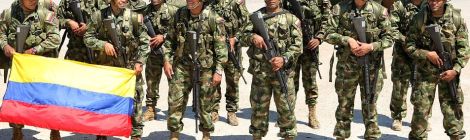
    US drug policy has become increasingly privatised in recent years as the US government contracts private military and security companies (PMSCs) to provide intelligence, logistical support and training to state security forces in drug-producing and –transit states. As the cases of Colombia and Mexico illustrate, this privatisation strategy is having a damaging impact on these already fragile environments.

    Read Article →

    Belize: challenges and contradictions in gang policy

    Like its neighbours in the northern triangle (El Salvador, Honduras and Guatemala), Belize has a high murder rate that is closely connected to the strong presence of gangs. But the character of gang activity in Belize is quite different from its Central American neighbours. Belize has pioneered some innovative solutions to the problem it is facing. But it will need to overcome the challenges of internal resistance and an acute lack of resources in order to address the political, economic and social issues that marginalise Belize’s large youth population.

    Read Article →

    Colombia and Mexico: The Wrong Lessons from the War on Drugs

    As activists around the world participate in a Global Day of Action against criminalisation of drug use, evidence from the multi-billion dollar War on Drugs in Colombia suggests that militarized suppression of production and supply has displaced millions of people as well as the problem, not least to Mexico. The wrong lessons are being exported to Central America and beyond, but a groundswell of expert and popular opinion internationally is calling for alternative approaches to regulating the use and trade in drugs.

    Read Article →

    Mexico’s Conflicting Migration Policy Goals: National Security and Human Rights

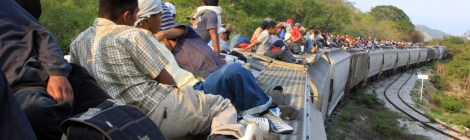
    Mexico has rapidly become a major site of transmigration from Central America to the United States, as people move in search of employment opportunities or escape from social violence. This rise in migrant flows from Mexico’s southern border overlaps with problems of control of contraband, organised crime, and the trafficking of drugs and arms. However, the government’s militarised approach to the phenomenon means that the use of force and human rights violations go unresolved and military approaches to preserving public order go unchecked. As long as migration remains a security issue, instead of a developmental and human rights matter, it will not be tackled appropriately. Instead, the government must start to view the matter through a citizen, not national, security lens.

    Read Article →

    Exporting (in)Security? Questioning Colombian Military Engagement in West Africa

    With skills and expertise in fighting insurgencies and drug trafficking networks, Colombia’s armed forces are increasingly being sought for engagement in similar security challenges in West Africa. But increasing Colombian engagement gives rise to a number of important questions – not least of which is the goal and expected outcomes of replicating militarised approaches to the war on drugs that have already failed in Latin America.

    Read Article →

    Militarised Public Security in Latin America in Venezuela

    Across Latin America, governments are sending their militaries into the streets to act as de facto police forces in the face of disproportionally high crime and violence rates. This trend has been going on for several years, but has accelerated in 2013. With the move to deploy over 40,000 troops for citizen security in Venezuela, President Nicolás Maduro joined a growing list of leaders throughout the region that have relied on their militaries to carry out police duties. In the first of our two-part discussion ‘Countering Militarisation of Public Security in Latin America’, Sarah Kinosian discusses the conditions that are causing the trend to thrive.

    Read Article →

    Countering Militarised Public Security in Latin America: Lessons from Nicaragua

    Facing a myriad of public security challenges that have provoked some of the highest indices of crime and violence in the world, authorities in Central America have followed a variety of different responses, ranging from repressive and reactive policies to grass roots prevention. Of these approaches, the Nicaraguan National Police’s Proactive Community Policing model stands out due to the results it has achieved. In the second of our two-part discussion, ‘Countering Militarisation of Public Security in Latin America’, Matt Budd explores the lessons that Latin American countries can extract from Nicaragua’s unique approach to public security.

    Read Article →

  • Syria’s Uneven Aid Distribution Threatens Future Peace

    The significant imbalances in the distribution of aid between different geographical areas in the current Syrian war threaten not only the immediate survival of civilians, but also the future prospects for peace.

    The Syrian crisis counts among the direst of our times, and never has there been a humanitarian emergency reaching comparable volumes of assistance. Formerly a relatively prosperous middle income country of about 21 million people, more than five years of war have plunged Syria into staggering poverty. Having lost their livelihoods, 13.5 million people are dependent on humanitarian aid.

    Irrespective of International Humanitarian Law (IHL), belligerents have targeted residential areas and vital infrastructure such as water and electricity supplies, as well as medical facilities. In a desperate effort to survive, half the country’s population have been forced to leave their homes, not knowing whether they will ever be able to return. Of these, 4.8 million have crossed the borders as refugees, while a further 6.1 million people remain uprooted within the country.

    While humanitarian assistance such as food and water, shelter, and medical aid are indispensable, it is deeply problematic that the distribution of aid in different areas in the country is highly uneven. Needs are estimated to be greatest in territory controlled by opposition forces – yet it is here that least aid is being delivered. In 2015, for example, only 27% of World Health Organisation administered medical aid reached opposition areas, as did the same share of food aid delivered by the World Food Programme only last month. Under the umbrella of the UN, both are the biggest humanitarian actors in their fields. Why are these imbalances occurring, and why are they critical for future peace negotiations and reconstruction?

    The Syrian war

    In Syria, the multitude of armed groups, estimated to number several hundred, complicates the distribution of aid as much as the fact that the country is now engulfed in not one, but two wars. Since 2011, civilians have been caught up in the original conflict between the regime and opposition groups seeking a change of government. But another battle is being fought between these opposition groups and Daesh, which proclaimed the establishment of their so-called Islamic State in July 2014. In areas controlled by the latter, the US-led international alliance is attacking Daesh positions across Syria and Iraq, while the Syrian and Russian air forces target other opposition-held areas.

    Given that the presence of armed groups, their alliances and infighting differ significantly at the local level, humanitarian actors are thus operating in a highly fragmented terrain that requires often daily negotiations and re-evaluation of safety concerns for their own staff.

    An aid system controlled by the government
    eu-aid

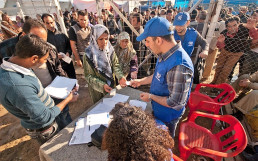
    Image credit: IOM Iraq/Flickr.

    To some extent, aid imbalances occur in war zones anywhere in the world. Generally, humanitarian aid can only be delivered when belligerents grant aid organisations permission to access people in need and guarantee for the security of their staff. Syria is exceptional, however, in the severity and persistence of aid imbalances. Although belligerents on all sides have interfered with aid deliveries, the Syrian government still controls about half the Syrian territory, thus presenting the single largest threat to impartial aid. By claiming to uphold Syrian sovereignty, it has quietly retained tight control over the aid system in place.

    Only 17 INGOs are permitted to operate in designated areas of the country with limited reach, and their choice of local partners is limited to NGOs licensed by the government. Even after more than five years, the UN are still not allowed to carry out needs assessments in the country independently of the government, and they have remained obliged to issue the annual Syrian Humanitarian Response Plan (SHARP) – which is the basis for planning and monitoring the response each year – jointly with them. Even if convoys are approved for deliveries into opposition areas through rapidly changing bureaucratic procedures which can stretch over months, they are regularly stripped of surgical equipment and even delivery kits at government checkpoints.

    Contravening the Hippocratic Oath and IHL, anti-terrorism legislation has rendered the medical treatment of anyone associated with the opposition a crime since June 2012. Intimidation, arrests and killings of medical staff, such as ambulance drivers, doctors and nurses were common at the beginning of the war, while medical facilities including hospitals, blood banks and coordination centres are regularly being subjected to targeted attacks.

    Horrifying accounts have emerged from those trapped in such conditions, such as in Eastern Aleppo, where the remaining population was evacuated over the past week after years of heavy assault. By designating all opposition-held areas as being controlled by “terrorists” – an expression which is by no means limited to Daesh – the regime has portrayed the populations in these territories as undeserving of aid. In so doing, it puts the lives of millions in need at risk.

    Fear of losing access

    Although the UN have long denounced the blockade of aid to opposition areas as an illicit  war tactic, they have continued to compromise for fear of losing access, which is becoming more and more restricted. Today, 5.47 million live in hard-to-reach areas and 861,200 are trapped in areas under siege in Syria alone. Although, again, it is not only the government conducting sieges, 15 out of 18 areas are currently besieged by its armed forces. Sieges seek to enforce surrender – just as as Darayya did after 2.5 years without aid to civilians. Where humanitarian aid does reach opposition areas, airstrikes by Syrian and Russian government forces destroy residential neighborhoods and carry out targeted strikes on medical facilities, leaving not only wounded fighters, but also civilians without resort.

    Conversely, not only has the government ensured that the vast majority of aid is channeled towards areas under its own control, but it has also used its leverage to strengthen its economy. Citing a lack of alternatives, the UN have paid tens of millions of US-dollars to implementing organisations and suppliers owned or run by individuals associated with the government who are under EU sanctions. These are not legally binding for the UN – yet current practice render them devoid of meaning. All these measures are without consequences for the government.

    A parallel system: the unofficial humanitarian response

    While opposition areas are systemically being deprived of direly needed humanitarian aid, an unofficial response has quietly emerged in parallel to the UN-led response which is co-ordinated with the government through SHARP. Early in the conflict, hundreds of local NGOs and expat-founded NGOs abroad sought to fill the gap the UN-led response left in opposition-held territory. From the conflict’s onset, the government refused to licence local NGOs in these areas, knowing full well that these are indispensable partners for major INGOs, most of whom had no prior experience of working in the country.

    While it is impossible to establish the actual financial volume of the unofficial deliveries, which are not accounted for in the annual SHARPs, they are highly unlikely to reach levels anywhere near that of the official UN-led response. Although Médecins Sans Frontières (Doctors without Borders) warned that since the beginning of the war that opposition-areas were being strongly disadvantaged in life-saving aid, it took three years until UN resolution 2156 was implemented, which allowed for additional cross-border deliveries mainly from Turkey – with deeply insufficient results, as present figures show. If local NGOs are permitted to work with the official response at all, strict monitoring processes are put in place on money spent, and rightly so. In the view of some, however, the recent revelations on UN-suppliers render these requirements into a farce.

    Why do belligerents seek to control aid?

    Where belligerents can ensure access to aid in areas under their own control, a resemblance of normality can be maintained in which former state services are being replaced by external assistance. Before the war, the Syrian government implemented socialist-inspired welfare programmes over the course of decades, including needs assessments, which aimed to maintain political consent even within a highly repressive dictatorship. It is now drawing on humanitarian aid as a substitute. In a similarly systemic manner, Daesh have sought to control humanitarian actors, of which only very few are managing to uphold access and operational independence. In areas controlled by Kurdish forces and different groups affiliated with the Free Syrian Army, aid deliveries are often facilitated and coordinated by the Local People’s Committees or Local Administrative Councils, respectively.

    While these are often credited for their efficiency, they are nonetheless political bodies who should not seek to monopolise aid deliveries for political gain. Belligerents seek to portray access to aid as a testimony to their ability to fulfill basic needs and protect survival. Where they manage to secure regular access to aid, the result is an order which is functional and might appear as either a continuation of the previous status quo or as a credible alternative to the latter. It is that perception which, by blocking aid deliveries to populations in territories under the control of the enemy, is sought to be destroyed with the aim of undermining their respective quest for legitimacy.

    The dangers of Syria’s aid imbalances

    Aid imbalances are dangerous not only because they raise the question as to who is most disadvantaged in receiving aid, but also because other wars have shown that access to social services and aid influence the directions in which people move. Demographic changes are a decisive factor in the outcome of war. From the viewpoint of belligerents, deserted neighborhoods are more difficult to defend because they lower the morale amongst fighters. For civilians, aid imbalances which privilege areas under the control of a given warring party over others deepen existing divides. Populations in areas less reached – especially if imbalances occur over long periods of time – will be physically and mentally weaker, exposed to poorer living conditions, and with comparatively fewer options to reach out for assistance. Violence, and in the Syrian case aerial bombardments in particular, prompt populations to flee; access to life-saving resources influence where they seek refuge.

    In Syria, data on population movements within the country are still scarce, but the key question is whether those who cannot afford to leave the country are drawn from opposition- into government-held areas out of sheer need. If so, the international aid system threatens to not only enhance social fragmentation, but also further depopulation. In a country where a third of the population has been forced to flee, how will peace negotiations allow for their voices to be heard? For those who remain in the country, in which areas are residents still strong enough to engage, where do factories and business remain functioning that can stem the unfathomable project of future reconstruction, and how will the divides that have been deepening for so long now be bridged?

    Future outlook

    With every day passing, the aid delivered contributes to shaping the conditions under which peace will be concluded and reconstruction will begin. Aid imbalances are no new phenomenon, but the scale at which opposition-held areas are being disadvantaged in the Syrian case is. The present war has plunged organisations in the official response into a most severe crisis.

    In an unprecedented decision, 73 local NGOs declared stopping all collaboration with the UN in October this year in protest against their perceived partiality. It has long been argued that in line with IHL, humanitarian aid must be carried out independently and it must be neutral and impartial in intent, but it is inevitably political in effect. In the Syrian war, however, humanitarian aid has become politicised to the point that it may severely impact on the outcome of the war.

    The idea that delivering some aid is better than no aid at all thus represents a dangerous approach. Although slow progress has been made in raising awareness of government interference over the course of this year, the struggles of the unofficial response in opposition areas in particular remain underestimated and underreported. With added pressures resulting from chronic shortages of funding, humanitarian organisations on all sides are caught up in having to reach as many recipients as possible – regardless of where they are located – to meet donor expectations. As a result, there is little room for self-critical reflection, and internal divides on the present responses remain largely invisible for the public.

    In contrast to these trends, concrete measures to counter present imbalances are urgently required. These could mean greater numbers of aid drops — similar to those recently resumed in Dayr al-Zur — in areas under siege, hard-to-reach areas, and others where ground access cannot be secured. They also require a coherent approach which does not tolerate interference by any warring party – including the government. For cases where belligerents insist on unacceptable compromises, protocols are needed which allow for humanitarian deliveries to be stopped as result.

    If it comes to a point where these measures are being taken, it must be clear that responsibility does not lie with the humanitarian system, but the warring party refusing to abide by the very principles on which humanitarian aid  is based. Addressing these challenges remains an indispensable condition for ensuring even and fair access to humanitarian aid for those in dire need now, and for their prospects of living in the country in the future.

    Dr. Esther Meininghaus is a Senior Researcher at the Bonn International Center for Conversion. 

  • Q&A: Boko Haram in Cameroon

    In May 2014, Cameroon declared war on Boko Haram at the Paris Summit. Since then, Boko Haram has intensified its activities in the Far North Region of the country, making Cameroon the second most targeted country, in terms of attacks, by the sect. Hans De Marie Heungoup, Cameroon analyst at the International Crisis Group, provides insights on the rise of Boko Haram in Cameroon, the stakes for the country and efforts made by the Government to overcome the jihadist organisation.

    How would you describe the rise of Boko Haram in Cameroon?

    The penetration of Boko Haram in Cameroon took place gradually and in several phases. At each phase, the group has been able to change its modus operandi and adapt to the response of Cameroonian defence forces. While the first frontal attack of Boko Haram against Cameroon dates back to March 2014, the presence of members of the sect in the Far North was signaled as far back as 2009. In fact, in July 2009, after clashes between Boko Haram militants and security forces at Maiduguri in which more than 800 members of the sect were killed, including the founder Mohamed Yusuf, several members of Boko Haram found refuge in and/or transited through the Far North of Cameroon. But up until then, Cameroon had shown only little interest in the Islamist group.

    Boko Soosay

    Artwork of Boko Haram insurgent. Image by Surian Soosay via Flickr.

    Boko Haram’s interest in Cameroon grew between 2011 and 2013. This is an interesting phase because it is during this period that Boko Haram started spreading its religious ideology, mainly in the Logone and Chari and Mayo Sava divisions of the Far North, recruiting Cameroonians as fighters and using this part of the territory as a rear base or safe haven. Specifically, from 2011, in addition to seeking refuge on Cameroonian territory after attacks in Nigeria, members of Boko Haram regularly bought foodstuffs on different markets in the Far North. They also infiltrated former networks involved in trafficking, smuggling of motorbikes, adulterated fuel (zoua-zoua) and Tramol (drug) in the far north. It was also between 2011 and 2013 that they established most of their networks of arms caches on Cameroonian territory, with Kousseri serving as their logistics base. At the same time, like Chad, the Far North of Cameroon served as transit points for weapons bought by Boko Haram from Libya and Sudan. Fotokol in Cameroon has been one of the entry points of these arms into Nigeria.

    While until 2012 the presence of Boko Haram in the Far North was rather passive and unknown to the public, despite a few targeted killings and abductions of Cameroonians in the Mayo Sava and Logone and Chari divisions, the practice of kidnapping of foreigners, adopted from February 2013, marks a shift by Boko Haram to a more active approach on Cameroonian soil. Between 2013 and 2014, the jihadist group abducted 22 foreigners (French, Chinese, Canadians and Italians) in Cameroon and released them each time after the payment of ransoms the total amount of which was at least $11 million and the release of about forty of its members detained in Cameroon. In 2014, Boko Haram moved from the active approach to a frontal approach with attacks on police stations and military bases. Thus, from March 2014 to March 2016, Boko Haram carried out more than 400 attacks and incursions in Cameroon, as well as about fifty suicide bombings that left 92 members of security forces dead, injured more than 120 others and  killed more than 1350 civilians.

    Over the last two years, Boko Haram has been able to alternate between low-intensity attacks requiring only about ten fighters on motorbikes and conventional attacks that can mobilise more than 1000 fighters, as well as armored vehicles and mortars. Up to now, the abduction of the Vice-Prime Minister’s wife in July 2014, the thirty or so conventional attacks on Fotokol, Amchide and Kolofata in 2014 and 2015, as well as a series of suicide attacks that hit Maroua in July and August 2015 are the most spectacular actions carried out by Boko Haram in Cameroon.

    After this peak period, Boko Haram, whose firepower was at its best between July 2014 and March 2015 when it also controlled more than 30 000 square kilometers of territory in northeast Nigeria, gradually declined from January 2015 following renewed engagement of the Nigerian army ahead of the presidential election, and then the coming to power of Muhammadu Buhari who overhauled the apparatus to fight Boko Haram in Nigeria.

    Furthermore, the engagement of Chadian and Cameroonian troops, who inflicted huge losses and setbacks on Boko Haram, significantly weakened the group to the extent that, for the past nine months, it has not been able to carry out any conventional attacks in Cameroon and has lost most of the territories that it was holding in Nigeria (Cameroonian troops declare that they have killed more than 1500 members of Boko Haram in fights and arrested more than 900 suspected members. The Islamist group has also suffered huge logistical losses). Conscious of the new power balance, the jihadist organisation has resorted to purely asymmetric warfare, giving preference to suicide bombings and low-intensity attacks. From July 2015 to March 2016, Boko Haram carried out more than 50 suicide attacks in Cameroon, killing more than 230 people and wounding 500 others. This war has had an adverse effect on the economy of the Far North of Cameroon which was already the poorest and the region with the lowest school enrolment rate in the country before the war. It also led to an influx of 65 000 Nigerian refugees to Cameroon and caused the internal displacement of more than 93 000 people.

    Why did Boko Haram start attacking Cameroon?

    Boko Haram started launching a frontal attack on Cameroon because the Government strengthened the security apparatus in the Far North and dismantled about ten arms caches of the sect, as well as corridors for the transit of weapons. In fact, Cameroonian authorities were in an increasingly untenable situation at the beginning of 2014. Despite the head-in-the-sand policy adopted at the beginning which consisted of turning a blind eye on the presence of Boko Haram members in the Far North in the hope that they would not take on Cameroon, the sect continued to abduct foreigners and Cameroonians. Moreover, the Nigerian Government and press accused Cameroon of serving as a rear base and support for Boko Haram. Faced with such pressures and following the abduction of ten Chinese nationals at Waza, the only rational option for Cameroon was to declare war on the sect. Of course, once war was declared in May 2014, Boko Haram, in turn, increased its attacks in Cameroon to the extent that the country became the second major target of the Islamist group.

    How effective are the Cameroonian government’s counterinsurgency efforts?

    To combat Boko Haram, Cameroon has deployed two military operations, namely Operation EMERGENCE 4 made up of units of the regular army and Operation ALPHA comprising of units of the Rapid Intervention Battalion (BIR), the elite corps of the Cameroonian army. In addition to these operations, we have the multinational joint task force whose first military sector is based in Mora and comprises of 2450 Cameroonian troops. On the whole, about 7000 men have been deployed by Cameroonian defence forces in both operations they and the regional joint task force have efficiently warded off conventional attacks by Boko Haram. However, Cameroonian troops find it more difficult to thwart suicide bombings.

    Moreover, the weakness of Cameroon’s response against Boko Haram is the absence of a policy and measures to combat radicalization and a program for de-radicalization. Similarly, given that this region is the poorest and has the lowest school enrolment rate in the country, and that these factors have facilitated recruitment and indoctrination by Boko Haram, the Government’s response on the socioeconomic development level in the Far North is still fragmented, poor and ill-adapted to the stakes.

    How do you analyse the state of the regional cooperation against Boko Haram?

    To address the threat posed by Boko Haram, the states in the region (Nigeria, Cameroon, Chad, Niger and Benin) under the aegis of the Lake Chad Basin Commission set up a multinational joint task force. The regional task force has been slow to put in place, but after several delays, the multinational task force was set up and only finally went operational later in 2015. However, the multinational force is witnessing financial and logistical difficulties that are affecting its full operationalisation and few donors have so far delivered on their pledges. As such, only the first sector of the force is operational as of now.

    The other specificity of the regional response is that it has assumed more of a bilateral rather than multilateral orientation: like the military cooperation between Chad and Nigeria or Nigeria and Cameroon that, despite the bottlenecks recorded at the beginning, has improved significantly over recent months to the extent that the right of hot pursuit is now a reality. However, the major shortcoming of this regional response is that it focuses on military aspects. No serious brainstorming is done on development issues and the fight against radicalization at the regional level. In the same light, no reflection has been initiated on the ways to end this crisis now that Boko Haram is weakened.

    What do you see as the future of Boko Haram in the region and what will this mean for counterinsurgency efforts?

    The most likely scenario, in my view, is that Boko Haram will become a sort of criminal network with several small independent leaders. This network will comprise of fake religious leaders, real traffickers and criminals and remain in the area for several years until the states of the region resolve to adopt an African Marshall plan to boost trans-regional development: that will require investestment in social sectors such as schools, health centers; and development of high intensity labor force projects in the region to sustain fishing and agriculture around Lake Chad, to support the local industrial sector and build roads between and within provinces of the area. All these should be accompanied by a de-radicalization and counter radicalization project at the transregional level.

    Hans De Marie Heungoup is Cameroon analyst at the International Crisis Group. He conducts field research and provides analysis on prevailing security, social, legal, governance and political issues; proposes policy initiatives for governmental, intergovernmental, political, and nongovernmental stakeholders to address and resolve sources of conflict; and prepares detailed reports and briefing papers setting out relevant research findings and policy recommendations.

  • After Mosul: Islamic State’s Asian and African Future

    Summary

    After three years and over 22,000 air strikes, the Levantine ‘Caliphate’ manifestation of the Islamic State seems destined for destruction in 2017. Yet the revolt of radicalised Sunni Arabs is unlikely to abate in Iraq or Syria, with the battlefield shifting to localised guerrilla insurgency, increasing attacks within western states, and the opening of new fronts in the global margins, not least Asia and Africa. Such revolutions of frustrated expectations will be a major part of the geopolitical landscape for decades to come.

    Introduction

    By 28 June the Iraqi Army had largely re-established control of the city of Mosul which had been taken over by the so-called Islamic State (IS) three years earlier. In the process the army was aided hugely by coalition air power and artillery support, as well as the actions of a number of Shi’a militias and assistance from personnel linked to the Iranian Revolutionary Guards Corps. This closing phase of the Mosul operation coincided with the early stages of an assault on the city of Raqqa in northern Syria by a range of Kurdish and Syrian militias, again supported by the coalition. The two operations seemed likely to mark the end of the IS “caliphate” and raised the question of the future of the movement.

    Oxford Research Group has tracked and analysed the development of IS and its predecessor groups such as al-Qaida in Iraq (AQI) since the early 2000s, and two monthly briefings last summer (July and August 2016) made an initial assessment of the status of IS through a two-part analysis – A World After IS. There was some updating of this analysis in the briefings of January and February 2017, but the rapid changes in the status of the movement make it useful to take a broader view once more.

    The four articles taken together covered the recent experience and the current direction of IS and this briefing seeks to develop the analysis further, with an emphasis on longer term trends in global Jihadist movements, especially the advance of IS affiliates in South and South East Asia.

    Context

    IS as a territorial movement is under severe pressure as a result of the coalition’s extensive use of air power since August 2014. There have so far been over 22,000 air strikes, mostly on multiple targets and using over 80,000 precision bombs and missiles. Six months ago, the US Department of Defence reported that over 50,000 IS personnel had been killed, and the independent AirWars monitoring group has recently given a figure of close to 4,000 civilians killed. That last number will most likely have to be revised upwards substantially when the number of civilian casualties in Mosul is known.

    IS has lost control of most of its territory in Iraq and a substantial part of its territory in Syria. At the time of writing (28 June) the Iraqi government is reporting that the final defeat of IS in Mosul is only days away, albeit not the first time it has made (and revised) such projections. There remain reports of IS personnel staging attacks in parts of Mosul that have supposedly been liberated by government forces. Meanwhile, the battle to retake Raqqa, in Syria, is in its early stages and while Syrian and Kurdish forces backed up by coalition air strikes are reported to be making progress, independent verification is difficult.

    The operation to defeat IS in Mosul has actually taken over eight months rather than the two and a half months planned, and the elite Iraqi Army forces spearheading the attack have taken serious casualties. Since these forces will be crucial in ensuring the stability of the country after IS loses Mosul, the transition of IS from a force controlling territory to an anti-government insurgency will be easier for it.

    That task will further be aided by the near-certain role of Shi’a militias and Iranian forces in maintaining national stability, as well as the creeping advance of the Iraqi Kurdish presence in northern Iraq. These eventualities are deeply worrying to Iraq’s Sunni Arab minority and likely to make some elements of that minority more sympathetic to IS as it re-embraces an insurgent role.

    The Evolving IS Strategy

    It is clear that IS is in the process of re-inventing itself for the post-caliphate era and it is useful to tease out the more significant elements of its post-Mosul and post-Raqqa evolution.

    Firstly, it is probable that it will modify its claim of ruling a caliphate that is, from its perspective, a true exemplar of a new Islamist world order. Instead it will change that to a demonstration of what it was possible to achieve for three years, even against overwhelming force used by regional regimes strongly supported by the western coalition – the “near enemy” allied to the “far enemy”. Thus, the short-lived caliphate will be presented as a rich symbol of another world which will surely develop again and will eventually be victorious.

    IS propagandists will most likely focus on this approach and will also make much of the numbers of young people who were willing to die for the cause. In relation to that last point it is certainly the case that the Iraqi government and its coalition partners have been shocked and daunted by the sheer numbers of suicide bombers, well over a thousand, that could be gathered together to help defend Mosul. It is strange that the eschatological nature of IS is still not fully appreciated by its opponents.

    While the transition of IS in Iraq and Syria into a guerrilla force is one element of its strategy, the other two are also important. One, which has been much discussed in recent briefings, is the move to encourage, incite and even assist in attacking the far enemy. This is reminiscent of the al-Qaida approach between 2002 and 2006 and differs fundamentally from the IS focus on an actual caliphate prior to 2015. Then it was concentrating on the creation and strengthening of this caliphate and had little interest in attacking the far enemy. The sheer intensity of the coalition’s air assault changed that and one outcome was that attacks on western states increased substantially, as shown first in France, Belgium and Germany and more recently by the Westminster Bridge, Manchester and London Bridge attacks and the failed attempt in Brussels which, had it succeeded, would have killed many people.

    These attacks have three aims. One is demonstrating that IS remains a significant part of the response to what is seen as the western threat to Islam, and another is to show revenge and a capacity for retaliation against the perpetrators of the air assault in Iraq and Syria. Most important, though, is the intention of damaging community relations and catalysing Islamophobia and anti-Muslim bigotry. The aim is to polarise, destabilise and damage western societies by inciting inter-communal violence. In this context the substantial increase in the number of hate crimes in Britain, and especially the recent terror attack on a group of Muslim worshippers during Ramadan at the Finsbury Park Mosque, will have been welcome developments for the IS leadership.

    IS and the Global Margins

    Finally, there is the manner in which the IS outlook is gaining adherents in other parts of the world, especially across the Global South. Again, this trend has been touched on in some recent ORG briefings but may now be the most important element in IS’s revised strategy. As well as Bangladesh, northern Nigeria and the Lake Chad basin, Yemen and Somalia, there are three other countries to watch.

    In Afghanistan the US Department of Defence is concerned at the effectiveness of IS paramilitary groups and sees this as an added reason to deploy several thousand more US troops into the country, reversing the long-term withdrawal undertaken by the previous Obama administration. This ‘Khorasan’ branch of IS is also increasingly active in Pakistan, particularly against civilian Shi’a targets.

    In Egypt the Sisi government is reacting to the increased threat of violence from Islamist groups linked to IS with a firm policy of suppression, but this is being applied to a wide range of Islamic movements, not least the Muslim Brotherhood, and it is highly likely that it will simply increase support for more extreme elements. Egypt’s growing anti-Islamist intervention in Libya has at best dispersed IS elements there into the cities or neighbouring countries.

    Of even greater concern is the Philippines, where a coalition of extreme Islamist groups pledging links to IS took control of the southern city of Marawi in late May. Since then the Philippine Army has struggled to regain control, even though it is being supported by US Special Forces and US and Australian navy surveillance aircraft. The operation is now in its sixth week with mortar fire and air strikes directed largely at paramilitary sniper positions resulting in a rising toll of civilian casualties. Although not much covered in the western media, the Marawi situation has caused consternation across South East Asia, not least in Indonesia and Thailand.

    Conclusion

    As IS loses its caliphate it is making the transition to a guerrilla insurgency in Iraq and Syria, is escalating its attempts to damage social cohesion in western states and it is doing what it can to spread the message and gather supporters across the Global South.

    While the emphasis among western security analysts may be on the first two trends it may actually be the third which is most significant. This is because of underlying demographic and socio-economic trends that have been discussed repeatedly in ORG analyses over nearly two decades. A movement such as IS can successfully draw support from what may be described as the “majority margins” across the Global South – many tens of millions of mostly young people, fairly well-educated but with minimal life prospects. In the Middle East and Africa, in particular, this is exacerbated by the demographic bulge, with an especially high proportion of the population under the age of 30, but this also applies to an extent across South and South East Asia.

    While most of the focus is on IS and a presumed problem with Islam, it is worth noting that neo-Maoist movements persist, not least with the Naxalite rebellion in India. Perhaps the wise conclusion has to be that IS, the Naxalites, Boko Haram and others should all be seen as examples of an evolving era of revolts from the margins, revolts that may simply not be amenable to control and suppression by military action.


    Image credit: Mstyslav Chernov/Wikimedia


    Paul Rogers is Global Security Consultant to Oxford Research Group and Professor of Peace Studies at the University of Bradford. His ‘Monthly Global Security Briefings’ are available from our website. His new book Irregular War: ISIS and the New Threats from the Margins will be published by I B Tauris in June 2016. These briefings are circulated free of charge for non-profit use, but please consider making a donation to ORG, if you are able to do so.

  • Resilience and Environmental Security in Peacebuilding

    Author’s Note: This contribution is a shorter version of the article “Resilience and environmental security: towards joint application in peacebuilding” by Schilling et al. 2017

    Resilience is a widely used concept among development, environmental, security and peacebuilding organisations. However, it has rarely been applied together with the concept of environmental security, despite the obvious ways in which the concepts complement each other. These concepts can be jointly applied in the peacebuilding sector. Environmental security sharpens the scope of resilience, while resilience allows for taking issues into account that a traditional environmental security perspective might miss.

    ‘Resilient communities’, ‘climate-resilient pathways’, ‘resilient future’, ‘resilient planet’: there are hardly any key terms in the development, climate change, security, and peacebuilding sectors that have not been combined with ‘resilience’. Due to the malleability of and enthusiasm for this concept, it has been depicted as the ‘new superhero in town’ replacing sustainability as the key guiding concept and buzzword in the international development community.

    Less prominent but still widely used, at least implicitly, is the concept of environmental security. The term can relate to the absence of risks posed by environmental changes or events to individuals, groups or nations. But it can also focus on the environment itself and how human behaviour, including conflict, affects the security and integrity of the environment.

    Several international organisations, including International Alert, adelphi, and the United States Agency for International Development (USAID) are working on combined approaches to environment, conflict and security issues. However, resilience has hardly ever been applied in conjunction with the concept of environmental security, despite their potential complementarity. Particularly in the peacebuilding sector, joint application of the concepts is promising because it could help to create an understanding of the extent to which people are at risk due to environmental factors (environmental security), and the extent to which people are able to adapt to environmental risks (resilience).  Further, a joint application could help to understand the impacts of environmental factors on conflict dynamics and vice versa. Against this background, develop a framework which allows non-governmental organisations (NGOs) working to implement peacebuilding projects in developing countries to jointly apply resilience and environmental security.

    Joint framework for environmental security and resilience in peacebuilding

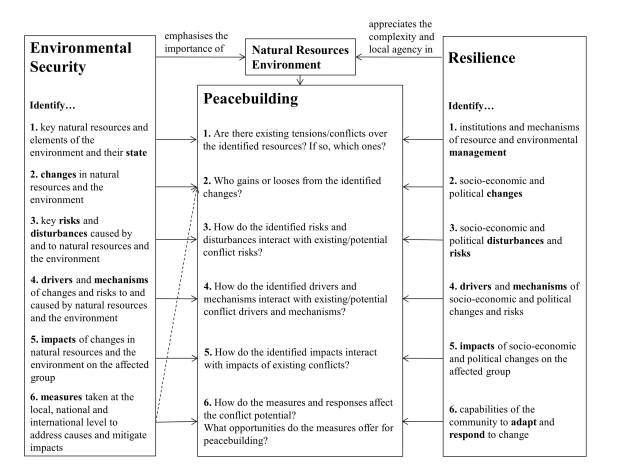
    Natural resources and the environment are the key elements linking environmental security and resilience to peacebuilding (see figure). Based on a six-step process, we combine the key strength of environmental security, its emphasis on the importance of the environment, and the key strength of resilience, namely the appreciation of complexity and local agency. The purpose of the process is to identify the states, changes, risks and disturbances, drivers and mechanisms, impacts, and measures and responses from an environmental security and resilience perspective to gain a better understanding of conflict dynamics and identify entry points for peacebuilding.

    Figure 1 – Framework for Environmental Security and Resilience in Peacebuilding.

    In step one we use the environmental security perspective to determine the key elements of the environment and natural resources that are important to a specific community or group of people, while the resilience perspective identifies how and by whom natural resources and the environment are managed. Together the environmental security and resilience perspectives help to answer the question of whether tensions or conflicts over the identified resources exist.

    In step two, we determine changes in natural resources and the environment before identifying the losers and winners of these changes. The resilience perspective allows us to take the overall complexity of the socio-economic and political context into account.

    The objective of step three is to understand the interaction of different risks. The environmental security perspective pays particular attention to risks to the environment as well as risks caused by the environment. The resilience perspective adds socio-economic and political considerations, such as strong increases in food prices, regime changes and social instability.

    Step four aims to identify the key drivers and mechanisms of the changes and risks, identified under step 2 and 3. For example, if a reduction of rainfall is identified under step 2 and in step 3 an increased drought risk is noted, then step 4 explores whether the reduction of rainfall and drought risk can be attributed to global climate change or local factors such as deforestation.

    Step five focuses on impacts. For example, one can ask whether the droughts and loss of harvest identified on the environmental security side and/or the increases in food prices identified on the resilience side, lead to hunger and how hunger in turn interacts with impacts of existing conflicts identified in the peacebuilding column.

    Step six is particularly important because at that point we consider the actual measures and responses to environmental, socio-economic and political changes at different scales in order to determine the effects on conflict potential as well as to identify entry points for peacebuilding.

    For example, if we identify hunger as a key impact under step five, the government could invest into irrigation schemes or (temporarily) subsidise staple food. This could reduce the conflict potential and strengthen the social contract between the government and the affected communities. However, for each measure taken, consideration must be given to who is affected, either positively or negatively (see dashed arrow connecting step six and two). On the resilience side, the capabilities (including knowledge, technology, networks and financial assets) and responses of the communities strongly depend on the social capital of the group concerned. For example, a loss of harvest might not result in hunger because the affected community might receive remittances from family members living outside the drought affected area. Our framework enables peacebuilding organisations and other stakeholders from development organisations and humanitarian assistance to identify core risks to environmental security without losing sight of the wider political and cultural structures into which these insecurities are embedded.

    In Practice: Palestine’s Good Water Neighbor’s Project

    The Good Water Neighbors (GWN) project in Palestine shows the advantages of combining a resilience and an environmental security perspective in peacebuilding. Palestine suffers from a number of environmental insecurities, most of which are related to water scarcity and pollution. But these insecurities are embedded in and interact with wider political contexts, such as the Israeli occupation of the West Bank, tensions between various Palestinian groups, and dominance of technocratic, liberal peacebuilding approaches. In order to address this complex reality, GWN facilitates cooperation on environmental issues between Israeli and various Palestinian groups, thus increasing resilience to socio-political and environmental shocks simultaneously. Examples of such activities include transnational environmental education, establishing water infrastructure shared between both sides, and common protests against environmentally harmful infrastructure (such as the Israeli separation barrier).

    Conclusion

    Image credit: Traynor Tumwa.

    Overall, the framework offers a possibility for environmental security to sharpen the scope of resilience, while resilience allows for taking issues such as governance into account that a traditional environmental security perspective might miss. The framework helps identifying the states, changes, risks and disturbances, drivers and mechanisms, impacts, and measures and responses from an environmental security and resilience perspective to gain a better understanding of conflict dynamics. However, when applying the framework continuous attention should be also paid to ambivalent effect of depoliticisation which is a risk both concepts entail.

    On the one hand, steering away from contentious political debates, such as those related to the wider Israeli-Palestinian conflict, provides an entry point for peacebuilding projects. Social groups and even official actors can be involved without taking a stance on contentious political questions. On the other hand, avoiding discussions on structural inequalities means that some root causes of environmental insecurities, such as the unequal distribution of water resources between Israel and Palestine, are difficult to address. When applying the framework further attention needs to be paid to other pitfalls of resilience and environmental security, namely the redistribution of responsibility to the local level and potentially justifying external intervention. If these issues are kept in mind, the framework can be a useful tool, especially when analysing conflicts where natural resources and the environment play key roles.

    Rebecca Froese is a PhD candidate in the Department of Earth System Sciences at the University of Hamburg and a member of the research group Climate Change and Security (CLISEC) at the University of Hamburg. Her research focuses on development cooperation and the role of non-party stakeholders in implementing and financing climate action.

    Janpeter Schilling holds a Klaus Töpfer Junior Professorship for Landuse Conflicts at the University of Koblenz-Landau. He is an associated researcher at the research group Climate Change and Security (CLISEC) at the University of Hamburg, the peacebuilding organisation International Alert in London and the Peace Academy Rhineland-Palatinate in Landau. His research focuses on environmental security, conflict and resilience.  

    Tobias Ide is head of the Research Field Peace and Conflict at the Georg Eckert Institute and currently a visiting researcher at the School of Geography, University of Melbourne. He is an associated researcher with the reserach group Climate Change and Security (CLISEC) at the University of Hamburg. He works on environmental conflicts, climate security, environmental peacebuilding, and the representation of peace and conflict, especially in school textbooks.

    Sarah Louise Nash is a 2016/17 Mercator-IPC fellow at Istanbul Policy Center, Sabanci University and an associated researcher with the research group Climate Change and Security (CLISEC) at the University of Hamburg. Her research focuses on the politics of climate change and human mobility.

    Jürgen Scheffran is professor of geography and head of the Research Group Climate Change and Security (CLISEC) at the University of Hamburg, Cluster of Excellence ‘Integrated Climate System Analysis and Prediction (CliSAP) and the Center for Earth System Research and Sustainability (CEN). His research specialities are climate and conflict research, sustainability science, resilience and energy and human security.

  • National security and the paradox of sustainable energy systems

    National security and the paradox of sustainable energy systems

    The transition away from a centralised global economy built around conventional energy sources to a decentralised global economy mostly fuelled by renewable resources is one we must make for the sake of our children’s futures and that of our planet. Writing for sustainablesecurity.org, Phillip Bruner asks if national security is at present, deeply concerned with preserving access to conventional energy, then how would national security for a decentralised renewable energy Internet be managed? Who would manage it? And what role, if any, could the public play in helping to alleviate some of the burdens of 21st century threat mitigation?

    Read Article →

    Causes of Conflict: A Strategic Perspective on US–Sino Relations in the Caribbean

    Author and former High Commissioner of Trinidad and Tobago to the Court of St. James, Serena Joseph-Harris writes that China’s increasing regional profile in the Caribbean highlights the challenges now posed to American exceptionalism as Beijing defines its own course in the region. This article focuses on the potential within the Caribbean Basin for the burgeoning proceeds presently derived from increases in the legitimate investment, trade, and commerce emanating from Beijing and Washington to become entwined with illicitly derived funds generated from transnational crime activities, specifically the trafficking of drugs.

    Read Article →

  • Jihadists, Rebels or Bandits? The Threat of the Allied Democratic Forces

    Author’s note: This contribution is partly based on an article published by Weeraratne and Recker in 2016 and provides an updated assessment of the security threat posed by the ADF in the Ugandan/Congolese borderland.

    The Allied Democratic Forces—a militant Islamist group in the Ugandan-Congolese borderland—have been depicted as a serious threat to regional security with links to transnational Jihadist groups. But how accurate is this story and what threat does this group actually pose? 

    The Allied Democratic Forces (ADF), commonly perceived as a “militant Islamist group,” is a violent non-state movement operating in the Ugandan-Congolese borderland. The group has increasingly been in the spotlight and stands accused of carrying out numerous attacks since late 2014, mostly in and around the city of Beni in the northeastern province of North Kivu in the Democratic Republic of Congo (DRC).  According to data from the Global Terrorism Database, the ADF carried out 80 separate attacks against civilians and government/military targets from October 2014 to December 2015, resulting in a cumulative total of 507 fatalities. Similarly, Human Rights Watch and a report published by the UN Group of Experts on the DRC  estimate well over 600 fatalities in attacks attributed to the group over the last two years.

    The Ugandan regime and their Congolese counterparts have been quick to highlight the growing security menace presented by the ADF and often portray the group as a militant Jihadist movement with a litany of ties to transnational Jihadist groups like Al-Qaeda, Al-Shabaab and Boko Haram. However, many analysts caution that the deteriorating security situation in Beni is not entirely due to the ADF and present mounting evidence of complicity of several other actors in the violence. Furthermore, the dogged portrayal of the ADF as a predominantly Islamist militant group with ties to transnational terrorists is a simplistic and overly opportunistic narrative that overplays the role of religion and mischaracterizes the varied objectives of the many disparate elements that increasingly constitute the ADF.

    Origins and evolution of the ADF

    The ideological roots of the ADF grew in the 1980s in central Uganda as a response to the Museveni government’s perceived discrimination towards its Muslim population. The precursor to the ADF was the Ugandan Mujahidin Freedom Fighters, an armed group instituted by The Islamic Salaf Foundation and composed mainly of members of the puritanical Tabliq sect. A controversial decision by the Ugandan Supreme Court in 1992 to rule in favor of a rival Muslim group further radicalized the Tabliq movement. They retaliated violently, fled to western Uganda and engaged the Ugandan military in sustained fighting. After a series of defeats, the Tabliq retreated to the DRC, from where they established the ADF in 1996, under the leadership of Jamil Mukulu.

    Despite its central Ugandan origins, the ADF’s principal theatre of operations has long been the Rwenzori mountainous region straddling western Uganda and the eastern DRC. This choice of location as a base was influenced by the region’s celebrated history of contentious mobilization, weak central government control on either side of the border, similar cross-cultural traits and ample opportunities for collusion with numerous other militant groups embroiled in the larger Congolese war. One such group was the National Liberation Movement for Uganda (NALU), which fled to the DRC following military defeat by the Ugandan army. In 1996, NALU formed an association with the ADF in the city of Beni. Several common denominators united the two groups; distrust of the Museveni regime, their presence on Congolese soil and external support provided by the Sudanese and Congolese governments. The ADF-NALU partnership carried out numerous attacks in the 1990s; conservative estimates indicate that over 1,000 people were killed and over 100,000 displaced from 1996-2001. Prominent targets included police stations, administrative buildings and schools.

    The Ugandan military deployed troops across the border in eastern Congo in 1998 to combat the ADF threat. Multiple leaders were killed or captured and the movement was largely destabilized by 2002. The rebels retreated deeper into the DRC and the departure of the Ugandan troops in 2003 allowed the ADF-NALU alliance to regroup through vigorous recruitment.  The next few years were punctuated by intermittent attacks by the ADF and military offensives launched by the Ugandan army, Congolese army and the UN Mission in the DRC. In 2007, the ADF lost its NALU component as the latter surrendered and acquiesced to a political settlement with the Ugandan government.

    Recent escalation in violence

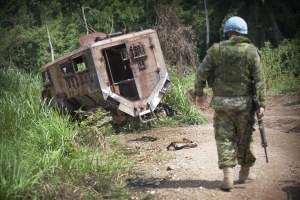
    UN vehicle ambushed by the Allied Democratic Forces (ADF). Image credit: UN Photo/Flickr.

    After a period of relative dormancy from 2007 to 2013 that was interspersed with occasional bouts of violence, there has been a significant resurgence in ADF activity over the last two years. A series of devastating attacks on civilians in the eastern Congo since October 2014 has left over 600 dead, tens of thousands displaced and many of the attacks have been marked by high levels of brutality. Survivors and witnesses have spoken of kidnappings, rape, torture, abduction of children and rampant destruction of property. Furthermore, the ADF was accused of killing Muslim clergy members in Uganda in early 2015. Also contributing to the escalation in violence has been Operation Sukola I, launched against the ADF by the Congolese army and the UN Stabilization Mission in the DRC (MONUSCO), in January 2014. Continued military operations have seen the ADF suffer several battlefield defeats and the militants have been forced to flee into the forest.  It is reported that the ADF fragmented into smaller groups to improve their chances of avoiding detection from the advancing Congolese forces. Many senior commanders are still missing; however, after a protracted search, ADF’s leader, Mukulu, was arrested by the Tanzanian police in Dares Salaam in April 2015 and later extradited to Uganda where he was convicted on charges of treason.

    There is little doubt that the ADF has been responsible for at least some of the attacks in and around Beni. While the ADF did carry out intermittent acts of violence against civilians, the arrangement between the ADF and the local community, at least until 2013, was one of “cooperative (if oftentimes) reluctant coexistence.” In general, the ADF respected the “traditional hierarchy of the host communities” and in 2011, was estimated to command “the popular support of nearly half of the population of Beni territory.”  The increasing focus on civilian targets since 2014 may partly be due to the fact that as the military offensive against the ADF intensified, the group carried out numerous reprisal attacks on civilian informants alleged to have collaborated with the UN and Congolese forces. As one scholar noted, “people are being punished and killed when they don’t want to collaborate” with the ADF.

    While the Ugandan and Congolese governments have portrayed the ADF as the primary culprit (for a variety of instrumental motivations), it is increasingly apparent that other actors have been involved in the massacres in North Kivu, including members of the Congolese armed forces, other rebel groups and communal militia. Moreover, as the ADF fragmented into smaller units, the absence of a centralized chain of command resulted in different groups pursuing diverse agendas. Some ADF factions, accused of violence, formed ties with local militia and outside elements who were then also involved in some of the killings. Indeed, interviews with survivors and witnesses suggest that many attackers spoke languages not normally used in this part of the Congo.  Further, the breadth and the scope of violence as well as the nature of weapons used are suggestive of the involvement of multiple armed actors.  The UN Group also concluded that some Congolese army officers played an overt and covert role in support of certain incidents of violence. While the precise underlying triggers for the violence are not clear, there is evidence that localized conflicts over land and power struggles over leadership contributed to at least some of the attacks. The dominant narrative of blaming the ADF is widely entrenched and largely unquestioned and has hampered efforts to dig deeper into the causes of the violence.

    The “Islamist” character of the ADF

    The ADF are commonly depicted as  an Islamist terrorist organization with a complex array of ties to regional jihadist groups. Consequently, it is seen to pose an existential security threat to the region. The Ugandan government in particular has aggressively peddled this misleading narrative. It is true that ADF’s inception can be traced to a core group of puritanical Muslims from the Salaf Tabliq movement. ADF’s erstwhile leader, Jamil Mukulu, is a strong adherent of Salafi Islam and has indicated his desire to overthrow the government of Uganda and establish an Islamist state based on Sharia law. The ADF has distributed incendiary tape recordings of Mukulu that urge followers to wage a holy Jihad, carried out forcible conversions of non-Muslims, conducted Islamic instruction in training camps and meted punishments in accordance with Islamic law.

    However, Scorgie-Porter argues forcefully that an exclusive focus on the religious aspect provides a limited account of the group’s motives and neglects other important strands to the development of the ADF. Some suggest that the group was mainly driven by a political agenda of removing the Museveni regime and used its Islamic identity instrumentally. A former ADF militant contended that “the agenda of the ADF was purely political…the ADF adapted the grievances of Islam in order to appeal to these people. Islam was a ticket, so the leaders disguised their political motives in religion.” Titeca and Vlassenroot resist reducing the role of Islam to instrumental usage, but suggest that the religious reference co-existed with other agendas such as regime change. They describe the ADF as a “rebellion without cause,” and contend that the movement’s agendas have changed over time.  For instance, during recent peace talks, the principal ADF demands revolved around socioeconomic issues such as reintegration of demobilized soldiers rather than effecting regime change or Islamic governance.

    ADF is often described as a multi-layered entity comprising several different elements with varying agendas. While the Tabliq network served a vital role in recruitment and was largely responsible for securing funds from Islamic charities and foreign countries during the group’s formative stages, ADF is considerably less reliant on the Tabliq now.  Recruitment in the ADF has also been heavily contingent on non-religious factors such as the exploitation of deep-seated perceptions of marginalization, poverty and the lack of alternative opportunity in the Rwenzori borderland. ADF’s economic embeddedness in the local community provides the group with its primary avenues of funding and material support at present and the group’s financial contributions from Islamic sources have considerably dwindled over time. Due to the group’s tendency to seize resources from local populations, some have gone as far as to describe the group as little more than “bandits”.

    Conclusion

    The Ugandan government has consistently attempted to link the ADF to global Jihadi groups and, in turn, depict the group as a serious threat to regional security. Some sources do suggest that elements of Al-Qaeda had sporadic ties with the ADF in the 1990s and provided some financial assistance. Reportedly, Osama bin Laden even met Mukulu while they were both in Sudan in the early 1990s. Similarly, there has been occasional correspondence with Al-Shabaab operatives.  However, such ties have been infrequent and there is little concrete evidence that regional Jihadists have any meaningful ties with the ADF. Indeed, Weeraratne and Recker argue that ideological incongruence, lack of salience to the local community and the fear of attracting more attention from counter-terrorism operatives reduce the likelihood of the ADF forming significant connections with transnational Islamists. Moreover, given that less than 10% of the population is Muslim in ADF’s chief operating environment in eastern Congo (a region that has shown very few signs of radicalization), it is unclear how foreign Jihadists would benefit from a union with the ADF.

    Museveni’s regime has a vested interest in embellishing real or perceived links between the ADF and foreign Jihadists. First, it allows the regime to deflect attention from its authoritarian tendencies and project itself as a key ally in the US led war on terror; in turn, making it easier to attract American military and diplomatic assistance. Second, exaggerating links also justifies the maintenance of high levels of military spending and gives the government a convenient alibi to continue raids on the eastern DRC where it has a range of interests.

    In summation, the portrayal of the ADF as a mainly Jihadist group is incomplete at best and deceptive at worst. It is clear that the ADF is not a monolithic organization with a dominant preference for executing a puritanical Islamist agenda.  The group has moved away from its earlier stated ambition of overthrowing the Museveni regime and replacing it with Islamist governance. The present day ADF constitutes a motely array of disparate interests, many of which are linked to economic and local political issues.  To be clear, this is not to say that the ADF does not pose a security threat. As discussed earlier, the group was responsible for several of the attacks over the last two years. However, at least for the foreseeable future, ADF’s threat is likely to be confined to the rural areas in Beni. Hence, the group is unlikely to pose an existential security threat to either the Ugandan government or their Congolese counterparts.

    Suranjan Weeraratne is a faculty member in the Department of Political Science, Southern Illinois University Edwardsville. His research focuses on various aspects of terrorism, including examining linkages between transnational militant groups and studying patterns of terrorist funding.

  • How to Respond to the Threat from Hostile Drones in the UK

    RC_long_logo_small_4webThis article is part of the Remote Control Warfare series, a collaboration with Remote Control, a project of the Network for Social Change hosted by Oxford Research Group.


    Islamic State (IS) has used aerial drones for reconnaissance and battlefield intelligence in Iraq and Syria and has attempted to use aerial and ground drones with explosive payloads to attack Kurdish troops. IS-directed or -inspired attacks in Australia, Canada, Denmark, the United States and France and failed or foiled attacks elsewhere, including the United Kingdom, have demonstrated the group’s desire to attack targets outside the Middle East. Given that threat is a function of capability and intent, should we therefore be concerned about the possibility of Islamic State or another terrorist group using drones to attack Western cities? A recent report from the Remote Control project and Open Briefing examined this scenario, among others.

    The Drone Threat

    For Hostile drones, the Open Briefing team assessed the capabilities of over 200 commercial and consumer/hobbyist drones capable of operating in the air, on the ground or on or under the sea. Although limited at present, they found that there are consumer drones available today that are capable of delivering an explosive payload equivalent to a pipe bomb (1-4 kilograms) or a suicide vest (4-10 kilograms). Many more could be modified with readily-available components to increase their stated payload capacity. If used in a swarm against the crowd at a major sporting event, for example, they would cause serious injury and multiple fatalities. If one or more of the drones carried on-board cameras to record the event, it would also provide a group such as Islamic State with prime propaganda material.

    Using drones for terrorist attacks has several advantages over conventional methods, including removing the need to convince a suicide bomber to carry out an attack and opening up targets a bomber would not usually be able to access due to security. An attacker would not even necessarily need to weaponise a drone, as the vehicle itself could be used as a projectile to target a light aircraft’s engines on take-off or landing, for example. In addition to attack, Open Briefing identified intelligence gathering as another major capability that drones offer terrorists or insurgents, as demonstrated by Hezbollah, Hamas and Donetsk separatists. For example, Donetsk People’s Republic militias reportedly possess and deploy sophisticated Russian-made Eleron-3SV drones for intelligence, surveillance and reconnaissance (ISR) in eastern Ukraine. Drones provide insurgent groups with an excellent level of battlefield awareness and provide terrorist groups the ability to reconnoitre a target before an attack These same capabilities are also of interest to criminal, corporate and activist threat groups. For example, aerial drones have been used to transport illicit drugs over the Mexico-US border and in April 2015 a man protesting over the Japanese government’s nuclear energy policy landed a drone containing radioactive sand on the roof of the prime minister’s office in Tokyo.

    The same technology Western militaries have been controversially employing to target terrorists in Afghanistan, Pakistan, Yemen, Iraq and elsewhere for years is now being used by various threat groups to target Western interests. This is a prime example of how the tactics and technologies of remote-control warfare have created unintended consequences for those countries that have embraced them.

    Towards Drone Countermeasures

    No single countermeasure is completely effective at limiting the hostile use of drones by non-state actors. Open Briefing therefore proposes the United Kingdom adopt a hierarchy of countermeasures encompassing regulatory, passive and active countermeasures, which provides a layered defence. Regulatory countermeasures include point of sale regulations, civil aviation rules and manufacturing standards and restrictions. Passive countermeasures include early warning systems and signal jamming. Active countermeasures include kinetic defence systems, such as missiles, rockets and bullets, and less-lethal systems, such as projectile weapons and net guns. Each stage of the hierarchy of countermeasures requires government action, but it is the regulatory countermeasures upon which it can affect the greatest change.

    Any changes to the laws surrounding the use of drones need to be proportionate to the risks and balance interests relating to privacy, individual freedoms, safety and commercial interest. In addition to the existing regulations around drones needing to be flown within visual line of sight, below 400 feet and not within 50 metres or a person, vehicle or building, there have been calls from airline pilots and politicians for a registration scheme for consumer drones and for the adoption of firmware limitations that restrict the ability of drones to travel near geofenced no fly zones around sensitive sites, such as airports or nuclear power stations. These are reasonable demands that should be implemented as soon as possible.

    However, these regulations may have limited impact beyond reducing accidental incidents. Unless coupled with some kind of identification/tracking technology built in to drones, a registration scheme would not remove consumer drones from the terrorist arsenal altogether (in any case, such technology would be a step too far in terms of state surveillance and could be easily disabled). What registration would do is impose some control on a presently uncontrolled market and impress upon drone operators the responsibility they must take for their actions. It may also reduce the supply of readily-available drones that could be used for nefarious purposes. In the case of geofenced no fly zones, those wishing to carry out an intentional attack could still purchase open-source controllers that can bypass geofencing, and inertial navigation systems (using dead reckoning) would allow a drone to continue to a static target with reasonable accuracy even if it were possible to jam controller frequencies and GPS signals within the target perimeter. What geofencing would allow is for security to assume that any drone operating within the no fly zone is unauthorised and potentially hostile, allowing them to react appropriately (evacuation and/or deploying active defences).

    Beth Cortez Neavel

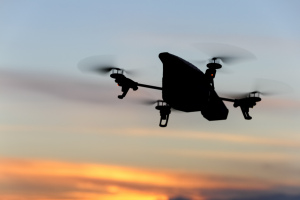
    Image of drone by Beth Cortez-Neavel via Flickr.

    There are two further regulations that have received little attention but which should also be considered. Firstly, the payload capacity of the consumer drones available for purchase or import in the United Kingdom without licence should be legally limited to that reasonably required to carry a camera and nothing else. This would mean these types of drones could not be used to carry explosive payloads without further modification. Secondly, owners of commercial drones capable of carrying heavier payloads for legitimate reasons (such as in agriculture or search and rescue) should be legally required to store them securely (in the same way fertiliser must be appropriately secured to prevent its use in homemade bombs, for example). This would prevent the theft and use of drones capable of carrying considerable explosive payloads by terrorists and other threat groups.

    A Layered Defence

    The current regulatory regime around drones in the United Kingdom is very limited. The adoption of the four regulations outlined above would balance the various interests and address specific risks without being unduly restrictive. However, regulations are not a panacea – they would merely limit the ability of terrorists and others to acquire drones with the capabilities needed for attack or intelligence gathering. That is why the government must also work with the police, security services and industry to explore the passive and active countermeasures that are needed to protect VIPs or sensitive sites and ensure that procurement and R&D funding is made available to purchase or develop the required systems. This should include the development of less-lethal systems for destroying or disabling hostile drones in urban environments, where little warning of an attack and the risk of collateral damage limits the usefulness of conventional kinetic countermeasures, such as missiles or bullets. Again, though, this will not be a panacea: the less-lethal systems currently available are of limited effectiveness against one or more fast-moving, small drones. As with all the possible countermeasures, such systems – if coupled with early-warning – would form part of an effective layered defence.

    Ultimately, the regulations and technology needed to reduce the threat from the hostile use of drones are either available now or are under development. The British government has to act now to bring drone regulations up to date and invest in the technologies needed to keep us safe. In the meantime, the threat from the malicious use of civilian drones is only going to increase.

     Chris Abbott is the founder and executive director of Open Briefing (www.openbriefing.org). Matthew Clarke is an associate researcher at Open Briefing. Hostile drones: The hostile use of drones by non-state actors against British targets was published by the Remote Control project on 11 January 2016.

  • The Concept

    The central premise of sustainable security is that we cannot successfully control all the consequences of insecurity, but must work to resolve the causes. In other words, ‘fighting the symptoms’ will not work, we must instead ‘cure the disease’.

    Current approaches to national and international security are based on the premise that insecurity can be controlled through military force or balance of power politics and containment. The most obvious recent example of this approach has been the so-called ‘war on terror’, which essentially aims to ‘keep the lid’ on terrorism and insecurity, without actually addressing the root causes.  Such approaches to security are deeply flawed and are distracting the world’s politicians from developing realistic and sustainable solutions to the new threats facing the world in the 21st century.

    An alternative approach is needed: that of ‘sustainable security’. The central premise of sustainable security is that we cannot successfully control all the consequences of insecurity, but must work to resolve the causes. In other words, ‘fighting the symptoms’ will not work, we must instead ‘cure the disease’. Such a framework must be based on an integrated analysis of security threats and a preventative approach to responses.

    Sustainable security focuses on the interconnected, long-term drivers of insecurity, including:

    • Climate change: Loss of infrastructure, resource scarcity and the mass displacement of peoples, leading to civil unrest, inter-communal violence and international instability.
    • Competition over resources: Competition for increasingly scarce resources – including food, water and energy – especially in already unstable parts of the world.
    • Marginalisation of the majority world: Increasing socio-economic divisions and the political, economic and cultural marginalisation of the vast majority of the world’s population.
    • Global militarisation: The increased use of military force as a security measure and the further spread of military technologies (including chemical, biological, radiological and nuclear weapons).

    There are many other factors that can threaten the security of humans around the world (such as radicalisation , rapid increases in the global population and the shortcomings of current forms of global governance ), but these four drivers reflect the deep complexity of modern insecurity.  The world has never been so interconnected and yet so socio-economically divided, with such apparent environmental limits. And never before have traditional approaches to warfare and use of force proved so counter-productive.

    Sustainable security makes a distinction between these trends and other security threats, which might instead be considered symptoms of the underlying causes and tend to be more localised and immediate (for example terrorism or organised crime). It promotes a comprehensive, systemic approach that takes into account the interaction of different trends which are too often analysed in isolation. It also places particular attention on how the current behaviour of international actors and western governments is contributing to, rather than reducing, insecurity.

    The world has never been so interconnected and yet so socio-economically divided, with such apparent environmental limits. And never before have traditional approaches to warfare and use of force proved so counter-productive.

    Sustainable security goes beyond analysis of threats to the development of a framework for new security policies. It takes global justice and equity as the key requirements of any sustainable response, together with progress towards reform of the global systems of trade, aid and debt relief; a rapid move away from carbon-based economies; bold, visible and substantial steps towards nuclear disarmament (and the control of biological and chemical weapons); and a shift in defence spending to focus on the non-military elements of security. This takes into account the underlying structural problems in national and international systems, and the institutional changes that are needed to develop and implement effective solutions.

    By aiming to cooperatively resolve the root causes of threats using the most effective means available, sustainable security is inherently preventative in that it addresses the likely causes of conflict and instability well before the ill-effects are felt.

    The sustainable security framework is being developed and promoted by Oxford Research Group. For more information on the work of the Sustainable Security programme, click here.

  • Neglected or Criminalized: The Need for Youth Inclusion in Peacebuilding

    The inclusion and participation of young people in societies is a necessary condition for sustainable peace. The neglect of young people’s current needs and future livelihoods is a recipe for renewed conflict.

    Despite all the sermonizing on the important role of young people for a society’s future and the United Nations Security Council Resolution 2250 (December 2015) on the importance to include youth in peacebuilding, the active and independent participation of youth is rarely welcomed. Across the globe youths are criticized either for their political apathy or their open political protest that travelled around the world in 2011 and 2012. In the debate on peace and conflict especially there is a significant divide: children are mostly seen as victims and the United Nations have an important advocacy role. At the same time, many governments perceive youths (age 15 to 25) as perpetrators of violence and potential troublemakers. While there have been calls to include youths in peacebuilding by giving them voice and agency, the inclusion of youth in current peacebuilding programs rarely includes elements other than education or training.

    Colombia’s comprehensive peace accord is an example. Youths appear 13 times in the 310 pages but only as part of other marginalized or excluded groups such as women, elderly, or the indigenous people. Under a broader perspective of peace being defined as more than the mere absence of war and armed conflict, this lack of youth’s political citizenship is counterproductive for sustainable peace. Neglected and/or criminalized young people either leave their countries and seek a better life elsewhere or they use violence to survive or to get attention from adults. They do not develop trust in the government and its institutions.

    The mismatch between formal possibilities and realities

    Image credit: wjgomes/Pixabay.

    A research project of the German Institute of Global and Area Studies on youth participation in postwar societies funded by the Federal Ministry of Economic Cooperation and Development  has provided interesting evidence for there being a significant mismatch between increasing formal possibilities of political participation of youths and their neglect and criminalization by adult society. In a first step, we collected data on the risks and opportunities for youth social, economic, and political participation – such as education, elections, employment– in 21 post-war societies (10 in Sub-Saharan Africa, six in Asia, four in Latin America, one in the Middle East). Many post-war societies liberalize their political regimes after the end of war.

    Political and civil rights are expanded, elections are introduced as a means of formal participation at the national as well as the local level. Consequently, young people in these countries – often the first generation that grew up and was socialized after the end of war –  should have bright perspectives. While youths participate in society, they do so overwhelmingly in civil society organizations (sports clubs, religious organizations and cultural activities) but to a much lesser extent in the political system. In a second step we conducted field research in three countries – El Salvador, Nicaragua, and South Africa – all perceived as rather successful cases of liberal peacebuilding at least in the first decade after war’s end. But even there young people feel marginalized.

    Youths in El Salvador, Nicaragua, and South Africa face a set of common challenges: The most pressing problem is finding decent work. While the first post-war generations have a significantly better formal education than their parents, youth unemployment is higher than adult unemployment. Even if young people can find work, available jobs offer low pay, long working hours, short contracts and few social benefits. Many youths are not able to make the important transition to adulthood and are unable to form a family. Political activism and citizenship should provide perspectives for change in demographically young societies. But a set of structural conditions influences youth political participation negatively: Poverty and inequality limit youth political activism, most of all in the rural areas and especially for young women.

    Overall, young people confront a generational bottleneck due to the war generation remaining in power, dominating economy, society, and politics, shaping the rules of post-war order and the possibilities for youth political participation. Although young people are interested in political participation they do not trust politicians and existing institutions. They do not “see benefits in participating” as change does not happen; they feel existing political parties only approach them during campaigns for their votes; and that they have neither real voice nor impact. Hence, they do not trust in elections as a mechanism of change. If and where young people organize as autonomous and independent actors, adults and elders view their political activism as problematic and as a challenge to their own status. They aim at integrating young people in a subordinate position for example in youth wings of political parties or other forms of controlled and supervised participation.

    Blocked transitions

    How do young people cope with these problems? Based on A.O. Hirschman’s classic book we can distinguish various strategies of exit, voice, and loyalty. Confronted with little future options and opportunities many youths exit through inner migration as well as out of country. El Salvador is an extreme example as a fifth of the population lives outside of its borders. While this may be an option for individual survival and upward social mobility, its potential for promoting change is limited. Other forms of exit are related to individual withdrawal from society via apathy, drug abuse or by joining a gang.

    Nicaraguan and South African youths have fewer options to leave. In these cases, the majority of young people are mostly muddling through taking the few chances they have to survive. South African participants in our project’s focus group discussions stated that change was only possible through the ruling African National Congress. Becoming a member is not necessarily a sign of confidence in the party but could rather signal high levels of realism regarding existing power relations. In this sense, the strategy of displaying loyalty might not be the best but a viable way of getting along regarding access to the labor market and other important public goods.

    Last but not least, there is the possibility of youth acquiring a voice. While political citizenship through the existing formal channels does rarely allow for significant changes, young people opt for non-violent as well as violent protest.  Salvadorian and Nicaraguan youths are at the forefront of ecological protests about problems such as water scarcity and the canal project linking the Pacific and the Atlantic.

    In South Africa, youths protest against corruption. While most young people prefer non-violent protest, they also acknowledge that violence can be used to get attention by the governmental institutions. As a girl living in a high crime area stated: “If you want to get the attention of the government you have to ‘toi toi’ – make a lot of noise”. But protesting also bears the risk that young people and their claims are criminalized and repressed.

    Youth needs to be included for sustainable peacebuilding

    The active and participatory inclusion of young people is a necessary condition for sustainable peace. Post-war societies produce high risks for sustainable peace if the society fails to integrate young people into the political system and to allow them to participate in political decisions and actions. Where the war-time generation has an exclusive control of social and political resources generational conflict will arise. This might lead to renewed armed conflict and war or shift violence from the political arena to society and crime.

    El Salvador provides evidence of the escalation of violence due to a lack of social and economic integration of young people. Despite a formally democratic political system the country remains one of the most violent worldwide. These changing patterns of violence provide important lessons for other processes of peacebuilding. Where protest is criminalized and violence is answered with state repression, armed groups tend to institutionalize. Giving young people a chance to voice their concerns as well as express their hopes – and acting on them in concert with them – is much cheaper and provides an important pattern of conflict prevention and sustainable peace. Implementation of UN  Resolution 2250 at different levels thus needs to open space for youth active participation and shared decision making for a peaceful future.

    Sabine Kurtenbach is a Senior Research Fellow at the German Institute of Global and Area Studies.