Blog

  • Alternative for Germany and the Rise of Right-Wing Populism

    With right-wing populism growing across Europe, Germany was thought to be an exemption to this trend. However, the rise of Alternative for Germany could potentially change this.

    While far right parties have been on the rise throughout Europe for decades, it seemed like Germany was immune to the seduction of the far-right. Whereas, among others, the National Front in France, the Dansk Folkeparti, Flemish Interest in Belgium and the Freedom Party in Austria recorded growing electoral results, parties such as the Republicans (REP), the National Democratic Party (NPD) or the German People’s Union (DVU) were unable to overcome the electoral threshold. Although successful at the national level and represented in several regional parliaments (Landtage), no party to the right of the Christian Democrats has managed to gain seats in the Bundestag since 1949. Why has this been the case in Germany?

    Germany’s “special status”

    Political scientists and other observers both in and outside the country were puzzled by the ‘special status’ of the German party system, all the more so because the key conditions for the electoral success of right-wing populist and radical right parties were not that different from the European neighbors. Several studies have shown a small but relatively stable presence of nativist, even xenophobic attitudes within the German society. However, although right-wing populist parties profited from these preconditions in several state elections – e.g. in Baden-Württemberg in the early 1990s and some East German states from the beginning the new millennium onwards – they were not able to establish at the federal level. One can hardly identify one single reason for this mismatch, but according to most scholars, the answer lies in three German characteristics.

    Firstly, the German political right was divided and fractioned. While in France, Austria, Switzerland and other European countries, major far right parties were able to unify the right beyond the Conservatives, the right spectrum in Germany was distinguished by a high degree of competition. For instance, with NPD and DVU, two main players of the extreme right competed against each other in several Land elections until their consolidation in 2011. At the same time, the populist radical right spectrum was marked by the coexistence of various small parties, such as The Freedom or the so-called ‘Pro’ Movement, a minuscule group that basically operates in North Rhine-Westphalia.

    Secondly, the yearlong strategy of the Christian Democrats, which consisted in the integration of conservative streams within the German society, might have had a negative impact on newcomers on the right. Especially the Bavarian CSU, an autonomous party that is embedded in the Christian Democratic Union at the federal level—the CDU, in turn, holds no regional branch in Bavaria—was able to address conservative voters beyond the Bavarian borders and helped to maintain the strategy of the Union.

    The third reason relates to German history. Since the end of World War II, radical or extreme right parties have been dealing with stigmatization and exclusion from the political discourse.  While far right parties are treated as outsiders in almost all countries, in Germany, they are suspected of standing in the tradition of historical Nazism and thus barred. For instance, when the NPD found its way into the state parliament of Mecklenburg-West Pomerania in 2006, the other parties decided to not to support any of the NPD’s parliamentary initiatives (so-called ‘Schweriner Weg’ – ‘Way of Schwerin’).

    These unfavorable conditions contributed a great deal to keeping far right parties out of the German party system for more than six decades. At the beginning of 2017, however, it seems like the ‘anti-fascist consensus’ of the German post-war era has begun to totter. Violent acts against refugees have risen. In 2015, the German Federal Office of Criminal Investigation (Bundeskriminalamt) had registered a right-wing populist political movement (‘Pegida’), although solely a regional phenomenon in the city of Dresden, has dominated media coverage on East Germany. The most impressive evidence for the establishment of a far right stream is the ongoing success of a new right-wing populist party: the Alternative for Germany (AfD).

    Accounting for the AfD’s rise
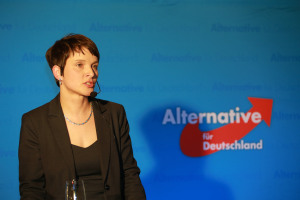
    afd

    Image credit: Metropollco.org/Flickr.

    Since its foundation in the first quarter of 2013, the AfD has been denoting growing electoral support. Whereas it had failed to jump over the electoral threshold in the 2013 general election, the party won seats in every state election since that time. With partly extremely high results—such as 24.3 percent in Saxony-Anhalt and 20.8 percent in Mecklenburg-West Pomerania—the AfD is already the most successful new party in the history of the Federal Republic.

    To some scholars—including the author of this piece—one crucial reason for the popularity of the AfD are the arbitrary features of its ideology in the first two years of its existence. While clearly Eurosceptic and populist in terms of its anti-elitist appeal, the official program of the AfD in 2013/2014 did not include any nativist or xenophobic components.

    However, studies diagnose a clearly right-wing populist profile for both the sympathizers and the members of the AfD from the start. Other inquiries illustrate that in 2013, the public opinion as well as the first studies on the party located the AfD firmly at the right of CDU and CSU but did not imply a far right profile. The party therefore profited from its moderate but populist program while at the same time, as it was slightly more conservative than the Christian Democrats, the AfD was attractive for far right voters and activists from the very beginning. At the same time, the success of the AfD mirrors the evolution of the Christian Democrats, which have turned to a more liberal party under the leadership of Chancellor Angela Merkel. While this strategy has clearly marginalized the SPD, which scores just under 21 percent in the national polls, it has annoyed a great deal of more conservative voters, who now lean towards the AfD.

    It is not surprising that that the agenda of the AfD changed after the 2014 European election. Whereas anti-Euro and anti-EU positions had dominated its program until May or so, the party highlighted its conservative social values in the face of the state elections in autumn 2014. During this phase of the party’s history, growing tensions about the leadership of its founder Bernd Lucke, an economist from the University of Hamburg and the ideological direction of the AfD, including its relationship to Pegida, occurred. In summer 2015, Mr Lucke lost the election to the party executive against the leader of the Saxonian regional branch and parliamentary party, Frauke Petry, who chairs the party until today together with co-speaker Jörg Meuthen. Even though scandals and internal conflicts have been shattering the party, some observers’ expectation that the party will break down did not prove true. At the beginning of the election year 2017, the polls indicate high electoral support (around 12 percent) for the AfD at the general election in September.

    While it is right that a successful far right party in Germany mirrors a normalcy in Europe, it is also a benchmark for the crisis of representative democracy and the elites and the parties that underpin it. Populist far right parties—including Donald Trump in the United States by the way—benefit from growing contempt towards the political elites and the perception of individual powerlessness in the political process. In that sense, parties like the FPÖ in Austria, the French Front National or the AfD in Germany are phenomena of modernization, although they do not directly profit from its negative economic consequences (e.g. unemployment), as scholars have argued for years.

    Not surprisingly, recent studies show that electoral support for the AfD is not entirely based on protest—in fact, there is a great deal of convergence between the political positions of the voters and the ideology of the party. Empirical results also illustrate that the share of losers of the modernization process within the AfD electorate is high, but they do not represent the majority of their voters. In other words, the AfD is at least as much the exponent of a latent new right movement as it is the vehicle of discontent. At the same time, it represents to a certain extent an invisible coalition of middle-class and lower-class voters.

    In contrast to its predecessors in the far right spectrum, the AfD faces hardly any competitors in its niche. Founded by both neo-liberal, Eurosceptical economists (e.g. former party leader Bernd Luck and Joachim Starbatty) and socially conservative activists (e.g. Beatrix von Storch), the AfD became the center of attraction for right-wing networks without being right-wing extremist on its own terms. Due to its electoral successes, the AfD became a much more attractive player in the spectrum than other, much less successful parties did.

    The political public, especially the established parties, still seem somehow paralyzed and helpless. Strategies oscillate between stigmatization—the approach that embossed the exposure to the far right for sixty years—and dispute. While some argue that the—in part—extreme ideology of the party prohibits its inclusion in the democratic discourse, approaches that are more pragmatic allude to three crucial facts.

    First, they highlight the ‘normative power of the factual’: by being represented in more than half of the state parliaments and likely to master the electoral threshold in the upcoming federal election, the AfD is already an established actor, at least in the medium term. Ignoring is thus no strategic option. Secondly, while it was easy to demonize other right-wing parties, such as the NPD, due to their extremist ideology and appeal, the AfD, although clearly part of the far right, is not a fascist party. Even if the party has evolved from a moderate conservative-Eurosceptic to a far right party, it still lacks a clear racist and anti-system agenda. Neither its anti-elitist appeal to the people nor its Islamophobia resemble the neo-Nazi agenda of the NPD or other parties of this spectrum. It is thus not surprising that the anti-fascist reflexes of the political public failed.

    Finally, the common strategy of demonization (or stigmatization) could even prove to be counterproductive: populist far right parties feed on their perception as political outsiders. Therefore, any attempt to exclude the AfD from the political discourse can be interpreted as another move by the ‘aloof’ political class and strengthen the bond between the party and its supporters.

    Outlook

    In the face of the increasing establishment of the AfD and constantly high results in the polls, the prospects for the newcomer party are auspicious. The AfD will almost certainly be represented in the next German Bundestag. This will pose a challenge to the established parties. As to parliamentary strategies, a strong far right fraction could prevent the realization of preferred coalitions. While the SPD is unlikely to gain enough seats to claim the chancellorship, the CDU/CSU might become the strongest party but without the perspective of a two-party alliance other than a grand coalition. However, the only possible outcome might as well be the worst.

    Not only is the grand coalition highly unpopular among Social Democrats. As the case of Austria shows, grand coalitions in persistence lead to the increasing perception of the ‘cartelization’ of the political class, which fosters support for the far right. Considering the options of government formation after the 2017 general election, the AfD might well become the beneficiary of the situation it contributed to: political sclerosis. In that case, Germany might face a long period of bounded competition between the major mainstream parties and growing polarization in terms of increasing successes of the far right.

    Dr. Marcel Lewandowsky (* 1982) is a political scientist and research fellow and the University of the Federal Armed Forces in Hamburg, Germany. His current research focuses on right-wing populism in Europe with special consideration to the AfD in Germany.
  • In Deep Water: China tests its neighbours’ patience

    This article was originally published on openSecurity’s monthly Sustainable Security column on 15 August 2014. Every month, a rotating network of experts from Oxford Research Group’s Sustainable Security programme explore pertinent issues of global and regional insecurity.

    Control of water, including navigation rights, resource extraction and the exploitation of shared watercourses is at the heart of today’s geopolitical tensions in Asia. China’s recent actions in the South China Sea and Himalayas have given rise to further—and at times violent—conflict over the region’s natural resources. So will water insecurity lead to greater partnership in Asia? Or will it lead to a revival of China’s traditional sense of regional dominance and undercut efforts to build a rules-based approach to growing resource conflicts?

    Little by little

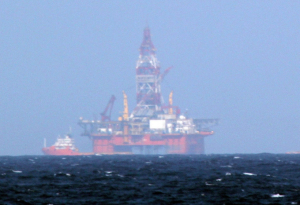
    China National Petroleum Corporation's Haiyang Shiyou-981 oil rig is situated close to the Paracel Islands, which Vietnam claims fall inside its exclusive economic zone. Source: East Asia Forum

    China National Petroleum Corporation’s Haiyang Shiyou-981 oil rig is situated close to the Paracel Islands, which Vietnam claims fall inside its exclusive economic zone. Source: East Asia Forum

    On 15 July, a month earlier than scheduled, the China National Petroleum Corporation (CNPC) announced that it was removing its Haiyang Shiyou-981 oil rig—40 storeys high and worth an estimated $1 billion—from waters close to the Paracel Islands which Vietnam claims fall inside its exclusive economic zone.

    There were four possible explanations. The first was the one the CNPC offered: the rig had completed its work early. The second was the approach of Typhoon Rammasun, signalling an early start to the region’s storm season. A third was that the US-China Strategic Dialogue the previous week had put pressure on China to lower the temperature in the South China Sea and China had taken the opportunity to demonstrate that it was a responsible international player.

    The fourth interpretation was that the rig had accomplished its purpose—not prospecting for hydrocarbons but promoting a steady advance of Chinese claims on the South China Sea through a series of assertive steps, none so provocative as to bring in outside players. With each little step, this story goes, China is building its case for singular rights to navigation and resource extraction there.

    The other players on the regional chessboard—the Philippines, Vietnam, Brunei, Taiwan, Indonesia and Malaysia—have grown increasingly agitated. With the memory of violent clashes between Vietnam and China over the Paracel Islands in 1974 and 1988, the installation of the oil rig in May provoked outbreaks of violence in Vietnam against Chinese citizens and businesses. Vietnamese fishing boats and Chinese ships harassed each other throughout the drilling.

    It is a dangerous ploy, but China calculates that the dangers are containable. If ethnic Chinese or Chinese citizens suffer harm in the backlash, the host country is to blame. If two ships collide in the course of the hazardous games of “chicken” that have become routine in this contest, Chinese citizens can be mobilised to shout their indignation against the “aggressor”.

    Overlapping claims

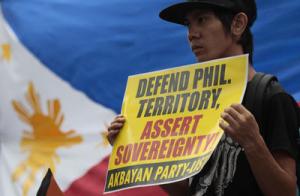
    A Fililipino protester holds a slogan beside a Philippine flag during a rally outside the Chinese Consulate in suburban Makati, south of Manila, Philippines on Tuesday June 11, 2013. Source: East Asia Forum

    A Fililipino protester holds a slogan beside a Philippine flag during a rally outside the Chinese Consulate in suburban Makati, south of Manila, Philippines on Tuesday June 11, 2013. Source: East Asia Forum

    The waters to which China lays claim are divided under the United Nations Convention on the Law of the Sea (UNCLOS) into exclusive economic zones for Brunei, Indonesia, Malaysia and Taiwan, each of which argues it has been adversely affected by China’s oil rig and claims of sovereignty. The zones, running 200 nautical miles into the South China Sea, allow these states special rights of exploration and exploitation of marine resources in specific areas.

    The sea is a major shipping route and fishing area, accounting for around one-tenth of the global fish catch and believed to have substantial untapped natural resources. Notably, China’s claims (outlined in a map in 1947) overlap a large portion of these zones. Malaysia also lays claim to a small number of islands in the Spratlys archipelago. With such a concentration of multifaceted and overlapping claims, China’s oil-rig foray heightened tensions and raised fears.

    In an attempt to settle its resource conflict with China peacefully , the Philippines has filed a case before the UN Permanent Court of Arbitration in The Hague on its own exclusive economic zone. However, even if, , as Manila expects, the court rules in its favour, China will ignore this—preferring to use its superior weight in bilateral negotiations rather than submit to third-party or multilateral processes where it is the rules that count. Diplomatic efforts by the Philippines to co-ordinate other claimants to take a common position vis-à-vis China have so far met little success.

    China’s behaviour has made its smaller neighbours, including Vietnam, reach out to the US for reassurance. But what can it really offer?

    For the US, the fading Pacific power, the disputes in the South and East China Sea pose a particular dilemma. In the East China Sea, China and Japan have overlapping territorial claims, including to the Diaoyu/Senkaku Islands which Japan controls and does not recognise as contested. The US has maintained neutrality on the islands but has a treaty commitment to defend Japan as the quid pro quo for its post-war pacifism.

    China might be uncertain about the depth of US enthusiasm for that commitment today but limits its provocation, nevertheless, to such moves as the declaration in November 2013, without consultation, of an “air defence identification zone” which covers territory claimed by its neighbours. International flights are now required to report their identity and flight plans to China when crossing the zone, at risk of “defensive emergency measures”.

    The strengths and limitations of the US position were clear in May, at the Shangri-La Dialogue in Singapore, the region’s annual multilateral “track two” security summit, where the US retains the power to mobilise a chorus of allies to uphold rules and laws and to criticise China’s behaviour. A series of speakers, including the Japanese prime minister, Shinzo Abe, and the US defence secretary, Chuck Hagel, condemned the use of muscle to enforce claims to the China seas, calling instead for freedom of navigation and overflight and a system based on international rules.

    General Wang Guanzhong, leader of the Chinese delegation, accused the US and Japan of ganging up on China. He was not sufficiently moved to answer pertinent questions on the rules of engagement for Chinese patrol vessels in the East China Sea, but he did make it clear that China saw no place for the US in 21st-century Asia.

    China is by far the largest trading partner of all the ASEAN members, which are caught in the small-neighbour dilemma, somewhere between the fear that China will come to rule their lives and consume their resources and the fear of giving offence to the region’s most important economic power. For them, the game is to try to stay on good terms with both sides.

    Himalayan watershed

    The dilemma is also evident among a different set of China’s neighbours—those that depend on the rivers that rise in the mountains and on the high plateau of Tibet. China’s largest downstream neighbour is, of course, India. India-China relations are bedevilled by unsettled borders-status rivalries, the subject of relatively recent skirmishes, but their most intractable potential conflict is over the shared resource of the Himalayan watershed.

    In its eagerness to promote new Asian alliances, Beijing dispatched the foreign minister, Wang Yi, to Delhi in June, to reach out early to the administration of the newly-elected Narendra Modi. Wang presented himself as the personal envoy of China’s president, Xi Jinping, and startled the Indian press by claiming that the two countries were ready to settle their long-running border dispute. The announcement was however short on detail—and, since the Indian state of Arunachal Pradesh is claimed by China while China’s Aksai Chin is claimed by India, details matter.

    There has been no further hint of an imminent deal but India, like all of China’s downstream neighbours, is more concerned by the impact Chinese activities are having on the quality and quantity of water that crosses its borders than the exact position of the borders themselves. The Himalayan cryosphere contains the largest store of fresh water outside the two polar regions and is a significant influence on the region’s climate, including its monsoons. As in the polar regions, rising temperatures are affecting the glaciers and snow fields that give birth to Asia’s rivers and future impacts on monsoons, though hard to predict, are highly likely.

    In the shorter term, China’s expansion of development westward is affecting the Qinghai Tibet plateau and everything that flows from it. Increased mineral extraction in Tibet and a renewed frenzy of big-hydro construction on trans-boundary rivers are changing Asia’s water flows for ever. There is increasing awareness of the risk of the downstream disasters that could result from building mega-dams in one of the world’s most active earthquake zones.

    There are no trans-boundary agreements between China and any lower riparian country on the shared use of Asia’s great rivers, even though 1.6 billion people depend on them and China is building dams on all their head waters. For India, dams and threatened water diversions on the Brahmaputra are a particular concern. For the countries of the Mekong, China’s dam-building upstream poses a series of potential dangers. Meanwhile, India and others are running to catch up in the dam race, fearful of allowing de facto rights to be created unchallenged.

    There has been no source-to-sink assessment of the impact on river ecosystems of any single dam—let alone of the massive cascades planned or under construction—and there are no mechanisms for resolving disputes. China has refused to enter into discussions with lower riparian countries, beyond agreeing to share limited water-flow data with India.

    Clear rules

    But, as in the South China Sea, limited bilateral discussions are not enough to ensure that the ecosystems of the watershed are protected and the legitimate interests of all those whose livelihoods depend on the rivers are recognised. From the high Himalaya to the teeming deltas, life will be affected.

    If ever there was a case for clear rules and co-operation, it can be found in the South China Sea and the Himalayan watershed. Both raise the essential question of whether the region’s resource conflicts will be settled by arbitration and law or by force. China’s challenge to US influence is also a challenge to an international order that values arbitration as a way of defending the weak against abuse by the strong.

    Isabel Hilton is the editor of chinadialogue.net, and Advisor to Oxford Research Group’s Sustainable Security Programme. She is a journalist, broadcaster, writer and commentator

  • The Syrian War and the Foreign Fighters from the Muslim World

    Foreign fighting in Syria is not driven primarily by devotion to Islam, nor is it motivated mainly by socioeconomic grievances. Rather, foreign fighters join the Syrian civil war to defend their Muslim brethren. Framing the war as a threat to the Muslim (Sunni) community, transnational Islamist movements offer alternative identities and a sense of belonging for alienated people from across the Muslim world.

    In recent years the conflict in Syria has become a lodestone for young Muslims who travel to join the fight. According to estimates from the U.S. National Counterterrorism Center, and reports by The Soufan Group (TSG), foreign fighters from more than 90 countries have joined the Syrian civil war since its inception in 2011, and their numbers already exceed the rate of volunteers who went to Afghanistan, Pakistan, Iraq, Yemen or Somalia at any point in the last 20 years. While the actual figures of foreign fighters in these and other sources vary, and though we do not know how many of them actually engage in the fighting, there are consistent estimates of the numbers of volunteering fighters and the distribution of their countries of origin.

    To be sure, volunteering fighters join various parties in the complex war, like Hezbollah combatants who fight for the Syrian army and foreigners who fight for the Kurdish YPG forces, yet, the concept of foreign fighters relates here to those volunteers joining jihadi movements, mainly the Islamic State and Jabhat Fath al-Sham (formerly known as Jabhat al-Nusra) organizations. Special attention is afforded to the growing stream of European Muslims to these jihadi groups in Syria, and their potential extremist actions upon return to their home countries. However, most foreign volunteers have come from Muslim countries in the Middle East and North Africa. The recruitment process is generally conducted on an individual basis. Taking place across the world, the recruitment relies largely on social media, with videos and appeals produced in a range of languages, describing the caliphate as a utopian political venture, and providing young men and women with an adventurous trip. Salafi mosques and associations also seem to take an active role in recruiting and trafficking volunteers to fight the Syrian war in the name of Islam.

    Although by no means a new phenomenon, the causes of the widening spread of foreign fighting remain unclear. As most of these foreigners are utterly detached from the events in the countries to which they journey, and have little political and material benefit to gain from these wars, the opportunity to attain martyrdom in the next life appears to be a major appeal. Yet, Islam in and of itself is not the primary factor behind foreign fighters joining the jihad. Examination at the individual level indicates that many of those who choose to join extremist groups in Syria have only basic knowledge of Sharia. Islamic State entry forms leaked in early 2016, also demonstrate that while some characteristics of the volunteers (like age and marital status) can be traced, there are no discernible demographic and socioeconomic profiles of foreign fighters in Syria.

    An inspection of the foreign fighters’ countries of origin adds to this confusion, as the spate of volunteering warriors does not originate primarily in countries dominated by radical Islamist movements, nor is it confined to countries where economic and political conditions are the worst. Rather, foreign fighters join the Syrian civil war from countries with different profiles in terms of both the role of Islamism in socio-political life, and the political authority of the regime. Four countries are notable among the home countries of the foreign fighters in Syria: Tunisia, Saudi Arabia, Morocco and Jordan. Tunisia, where the “Arab Spring” revolt was initially ignited, has become the largest source of foreign fighters joining the jihadi groups in Syria, with roughly 3,000 Tunisian warriors recorded between 2011 and 2014; Saudi Arabia is next with estimates of 2,500 fighters during that period. On the other hand, countries like Egypt, Yemen and Sudan produced far fewer volunteering fighters.

    The role of identity

    Image (cropped) credit: Freedom House/Flickr.

    Why then do foreign fighters travel from the Muslim world to fight in Syria? Foreign fighters are motivated by the quest for identity and belonging. Their recruitment is based on religious sentiments, sparked by Islamist movements striving to defend cultural and religious values of the Muslim community. Alienated individuals who seek alternative identities and a sense of belonging find them in their transnational communities. The combination of these factors has stimulated the shift from nationalist identities to pan-Islamist orientations, promoted through a fear-provoking discourse.

    This process was coupled with the emergence of transnational jihadi networks, which carried out political activism aimed at defending the Muslim nation. Recruitment of Muslim fighters thus relies on established messaging practices, by which the recruiting groups frame distant civil conflicts as posing a direct threat to the larger transnational community. Interestingly, these messages are most effective in countries like Tunisia and Saudi Arabia where major Islamist movements are co-opted, taking part in negotiated relations with the ruling elite vis-à-vis implementing Islamic norms in socio-political life. In these countries, legal or semi-legal Islamist movements embrace relatively moderate discourses of sectarian identity, remaining pragmatic and non-violent toward the state. Under such restrained relationships, Islamist sentiments of alienated groups evolve into transnationalist inclinations.

    Alienated individuals then aim their rage and frustration at external enemies. That is, restrained relations between the state and Islamist movements at the national level may well explain the relatively large number of foreign fighters recruited from subnational regions that are alienated from the state, as these fighters see transnational jihad as a way to vent socio-political rage and Islamic sentiments that find limited local opportunities for expression.

    Possible solutions

    To counter the appeal of transnationalist messages, home countries need to establish civic identities and offer competing national narratives. Governments should encourage the inclusion of alienated groups in national discourses and strengthen their sense of belonging to the state. To be sure, the establishment of civic identities is conditioned by state effectiveness and legitimacy — it can be achieved only if the state reconstitutes its position as an institution that provides the needs of its citizens.

    Indeed, state ideology and policies also affect people’s choice to join foreign fighting. Preferring to allow troublesome elements to leave the country, some governments turn a blind eye to efforts to recruit their citizens to join transnational wars. Some countries even encourage the phenomenon. Consider for example the dual policy vis-à-vis Islamism which is well-embodied in the Saudi stance toward foreign fighting in the Syrian civil war. While actively involved in the regime’s domestic de-radicalization efforts, Saudi clerics offer contradicting messages about fighting jihad in foreign countries, with some of them openly calling upon the Muslim world to fight Bashar al-Assad’s supporters, including Syrian Alawites, Iran and Hezbollah. Egypt’s clerics, on the other hand, promote clear anti-jihadist ideology, with multiple campaigns launched by Al-Azhar to renounce the radical ideas spread among young people by groups like Islamic State. Directed by Egyptian President al-Sisi, Al-Azhar leaders hold talks with religious leaders in other countries in the region to thwart Islamic State ideology and to diminish the phenomenon of foreign fighters’ volunteering in the Syrian civil war.

    The policy implication from the multifaceted causes of foreign fighting in Syria is that governments in the Muslim world should not only raise the constrains on going to Syria but also take preventive measures including information campaigns aimed at radicalized and alienated young people, offering opportunities for local expression of their socio-political needs and encouraging their sense of belonging to the state.

    Meirav Mishali-Ram is a lecturer at Bar Ilan University. Her research interests focus on international conflict and civil war, particularly in the Middle East and South Asia. She is the author of many articles and a forthcoming book on the Arab-Israel and India-Pakistan protracted conflicts. Her most recent article on foreign fighting in Syria is available at Taylor and Francis Online: “Foreign Fighters and Transnational Jihad in Syria,” Studies in Conflict & Terrorism.

  • Food Security in South Sudan

    The United States, Niger & Jamaica: Food (In)Security & Violence in a Globalised World

    due to a complex range of interconnected issues from climate change to misguided economic policies, political failure and social marginalisation, over 2 billion people across the world live in constant food insecurity. Anna Alissa hitzemann takes a sustainable security approach to look at the importance of “physical and economic access to basic food” by exploring the links between food insecurity and violence.

    Read Article →

    The Global Land Rush: Catalyst for Resource-Driven Conflict?

    Michael Kugelman of the Woodrow Wilson International Center, argues that the factors that first sparked many of the land acquisitions during the global food crisis of 2007-08 — population growth, high food prices, unpredictable commodities markets, water shortages, and above all a plummeting supply of arable land — remain firmly in place today. He writes that land-lusting nations and investors are driven by immediate needs, and they have neither the incentive nor the obligation to slow down and adjust their investments in response to the wishes of distant international bureaucrats. This, he argues, has serious consequences for global security.

    Read Article →

    Human Security and Marginalisation: A case of Pastoralists in the Mandera triangle

    This paper seeks to bring out the relevance of human security in pastoral areas of Mandera triangle and the relationships and contradictions that exist between it and national security. The “Mandera Triangle” encompasses a tri-border region of Ethiopia, Somalia, and Kenya that exemplifies, in a microcosm, both a complex and a chronic humanitarian crisis that transcends national boundaries.

    Read Article →

  • Interview – Kristian Skrede Gleditsch

    Kristian Skrede Gleditsch is Professor in the Department of Government at the University of Essex, director of the Michael Nicholson Centre for Conflict and Cooperation, and a research associate at the International Peace Research Institute, Oslo (PRIO). His research interests include conflict and cooperation, democratization, and spatial dimensions of social and political processes. He is the author of All International Politics is Local: The Diffusion of Conflict, Integration, and Democratization (University of Michigan Press, 2002), Spatial Regression Models (Sage, 2008, with Michael D. Ward), Inequality, Grievances, and Civil War (Cambridge University Press, 2013, with Lars-Erik Cederman and Halvard Buhaug), and journal articles in the American Journal of Political Science, American Political Science Review, Annals of the Association of American Geographers, Biological Reviews, Comparative Political Studies, Conflict and Cooperation, Defence and Peace Economics, Economic History Review, European Journal of International Relations, International Interactions, International Organization, Internasjonal Politikk, International Studies Quarterly, Journal of Conflict Resolution, Journal of Peace Research, Journal of Politics, PLOS One, Political Analysis, Political Psychology, R Journal, and World Politics.

    In this interview, Professor Gleditsch discusses the global decline of violence since World War II and some of the challenges to this trend.

    Recently, several authors have declared that there has been a decline in armed conflict since the end of World War II. From your research on this topic, what does the data say about the global patterns of violence and is war really waning?

    On the question, yes, I think war is declining in most common data sources, although the causes remain contested. For civil wars there is at least some evidence that accommodation and conflict management has promoted a decline of war. Although Syria is a sever conflict, it is not by itself sufficient to say that we have a clear reversal. Perhaps the greatest current challenge is the alleged increase in terrorism. However, it is not obvious why we should see an increase in less severe and less organized conflict, and there is also some evidence that ethic terrorism has declined following accommodation in ways similar to civil war.

    You mention that the causes of this decline in war remain contested. What are some of the main explanations offered by scholars for this development and what do you feel are the main areas of disagreement on this issue?

    I think some of the key explanations include more democratization, less ethnic discrimination, globalization/increase in trade, and greater scope for conflict management by the UN and other regional organizations. All of these in my view are plausible and likely to be part of the explanation, but I think it is also fair to say that none of these alone provide a clear explanation for the decline in conflict.

    There has been a great deal of skepticism about some of these factors, especially democratization, as many point to examples where conflict has followed after elections. However, some of this research takes a very binary approach to violence, where any conflict is regarded as a failure even if the level of conflict declines or fewer actors engage in violence. To use another example, although some dissident republicans in Norther Ireland continue to use terrorist tactics, it would be absurd to say that there has been no decline in the volume terrorism after the Good Friday agreement.

    Do you feel that there has been a gradual shift in the attitudes of people towards war and, if so, that this might have also contributed to this decline of war?

    I think there has been a dramatic shift in attitudes to war. At least a 100 years ago it was common to glorify war as heroic and character forming. Countries had ministries of war. Now war tends to be seen as a regrettable last resort, and we have ministries of defense, and literature on the horrors of war. All of this contributes to make war a much harder sell. That is not to say that aversion to war is universal or that people have never approve of conflict, and attitudes can influenced, in both directions. Moreover, attitudes are probably influenced by views on the costs of war and feasibility of alternatives.

    I have been involved in some experiments on support for escalatory actions in territorial conflict with China among Japanese respondents, and there is some evidence that although people are generally quite hard line they become less belligerent when provided with information on the military or economic costs of conflict.

    With regards to democratization, why do you feel that democracy reduces the risk of war?

    For interstate war, then I think it is fairly well established that democracies rarely fight severe wars with each other. Of course, the risk of interstate conflict is low in general, at least for severe conflicts. Moreover, democracies may fight other states, and the democratic major superpowers are much more likely to be involved in conflict. However, I think there is also some evidence that the increased role of public opinion can constrain the use of force more generally, and that democratic states have supported a liberal order with emphasis on stronger international institutions and conflict management approaches that have helped reduce the risk of conflict more generally.

    I also believe that transitions to democracy reduce the risk of civil war, despite widespread pessimism and fears of democracies increasing conflict. Democracies provide alternative political avenues for conflict, and decrease the motivation to use violence compared to autocracies. Transitions to democracy may not eradicate all domestic violence. Many democracies have inherited ethnic separatist conflicts that started before democratization, and established organizations may remain active after transitions (ETA in Spain and the IRA can be interpreted in this perspective). Moreover, we may see violence around elections, under a climate of mistrust. However, the overall magnitude of civil violence tends to be lower under democracies.

    Whilst civil war is in decline, it became the principle form of armed conflict after the end of the Second World War. What were the main drivers for civil war becoming the main form of conflict?

    Civil wars became particularly common with decolonialization. Some anti-colonial movements turned violent, and, in some cases, competing factions continued to fight each other after independence (e.g., Angola). Moreover, after independence, many colonial states were prone to violence for a host of reasons. One the one hand, state weakness can by itself encourage violence as the barriers for taking on the state are lower. Moreover, the post-colonial states often had various features that could encourage violence such as ethnic nepotism, poor governance, or lack of legitimacy. Finally, although the Cold War did not escalate to a direct confrontation between the superpowers, many civil wars escalated as the opposing sides could obtain support from the superpowers.

    The end of the Cold War coincided with a spike in civil wars for somewhat similar reasons. Many weak states faced a loss of external support that weakened the central government (e.g., Somalia), and some larger federal units faced challenges form ethnic groups who sought independence and who might be willing to use violence (e.g., former USSR and Yugoslavia). However, other factors such as democratizations, decrease ethnic discrimination and powersharing, as well as more active UN conflict management efforts have likely all helped reduce the incidence of civil war from the immediate post cold war peak.

    Some studies have discussed an apparent revolution in warfare in the post-Cold War world, described using terms such as ‘new wars’, ‘hybrid wars’, and ‘post-modern wars’. Some of the characteristics of these wars include blurred distinctions between public and private combatants, warlords, and criminals; regular targeting of civilians and other war atrocities; war economies sustained by illegal trade in drugs, weapons, resources such as oil or diamonds; and violence being driven more by identity than ideology. Do you feel that these so called ‘new wars’ represent a revolution in warfare and have they also marked a shift in the nature of warfare?

    I am actually very skeptical of whether the concept of new wars is very helpful or whether the alleged trends exist at all. It is certainly not the case that targeting of civilians is a new feature – recall the shelling of cities during sieges in the 30 years war. The opium war was thus named for a reason. And the blurred lines between criminal gangs and warfare cannot be a new thing – the North African coast was known as the barbary coast due to the endemic piracy and the Mongol hordes probably picked up some things along the way too.

    I suppose this raises the question of why some find this concept so compelling. I can only speculate on this since I do not share this myself, but I believe that the decline of a master narrative of conflict after the Cold War increases people’s sense of new wars as different from old war. However, all systematic research that I have seen raises serious question over this.

    In addition to the alleged increase in terrorism, what do you see as the other greatest challenges to the decline in violence in the near and distant future?

     I actually think the long-term outlooks is relatively favorable, but I can imagine some cases that may contribute to long-term challenges

    1. increasing tension between the major power is unlikely to lead to direct conflict, but it may increase support to opposing sides in civil war and decrease the prospects for the UN to become involved.
    2. globalization has in all likelihood increased the costs of conflict and increased the value of peace, but there is a chance that globalization could be rolled back with increasing protectionism. This can make it more difficult to contain some territorial conflicts, such as the ones seen in Asia
    3. global challenges such as refugees change require cooperation, and if states fail to cooperate on these then poorer relations may weaken the ties that prevent conflict
    4. the consequences of climate change could increase the risk of conflict by undermining livelihoods and increasing competition between states. My own reading of the evidence says that there is little evidence of this happening so far, but skeptics would argue that dramatic consequences would move us into a new scenario.

    These are serious concerns, but at best indicate risk, and none of them imply that the decline of violence must be reversed.

  • Has Paris Opened the Door for a UNSC Climate Court?

    Historically, permanent members of the UN Security Council have variously rejected the idea that it was the proper venue to address international cooperation on climate change. The notable cooperation between China and the United States to secure the Paris Agreement, however, may signal a greater openness to UNSC climate securitization, including the creation of a UNSC-enforced Climate Court.

    Paris and Binding-Voluntary Climate Obligations

    The UNFCCC was finalized at the 1992 Rio Summit amidst significant North/South contestation. The 1997 Kyoto Protocol codified this arrangement with legally binding obligations for the global North, and no clear schedule for obligations for the global South. The US Senate made it clear, however, that it would not agree to treaty obligations that exempted the emerging economies. This, coupled with the continued refusal by the developing world to accept legal obligations, produced an entrenched diplomatic gridlock.

    Initiated by the voluntary 2009 Copenhagen Accord, the 2011 Durban Platform saw agreement on the need for obligations “applicable to all,” which framed the 2015 negotiations that culminated in Paris this past December.

    UN Photo

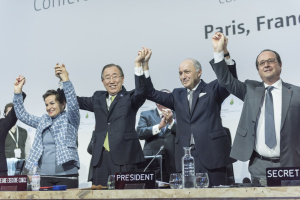
    Image of closing ceremony of the twenty-first session of the UN Framework Convention on Climate Change, December 2015. Image by UN Photos.

    Agreed by a consensus of 196 nations at the 21st Conference of the Parties to the UNFCCC, the Paris Agreement (COP 21) provides no legally binding emissions reduction obligations. However, it did produce a hybrid agreement (with a mix of voluntary and binding obligations) that is applicable to all parties (breaking the firewall between developed and developing states) for the post-Paris climate regime.

    The architecture is remarkably simple; all states are asked to volunteer the emissions targets they are able to meet, and then agree to be bound by transparency obligations and to take stock of their commitments at regular intervals. These legal responsibilities provide a ratchet mechanism for states to increase ambition in the knowledge their competitors’ commitments will also be monitored.

    The Paris Agreement creates a solid foundation upon which to build a strong climate regime because it assumes that all states finally share an interest in participating in the reduction of global carbon emissions.

    Frustration, Securitization, and the Judicial Route to Climate Obligations

    In response to the frustration of many years of gridlock, norm entrepreneurs have argued that the security threat from climate change is sufficiently large that we should impose obligations on uncooperative polluters. The international community should, in other words, set aside traditional notions of sovereignty (not unlike the Responsibility to Protect) and impose international obligations on the domestic regulatory policies of nation states.

    With multilateral negotiations unable to allocate a suitable distribution of climate rights and responsibilities, numerous proposals have argued that we should delegate that legislative authority to international courts.

    Bolivia, for example, proposes a Climate Justice Tribunal that punishes climate criminals for their historic carbon emissions. It would strenuously enforce the “common but differentiated responsibilities” approach of the UNFCCC and the Kyoto Protocol. As such, China and the other high-emitting emerging economies would remain exempt from prosecution.

    There are a number of groups calling for the crime of Ecocide to be included in the Rome Statute of the ICC. This mechanism would seek to prosecute individual corporations, and potentially states, for environmental damage and presumably excessive carbon emissions. Jurisdiction over corporations garners support for this initiative from many in the environmental movement, but as it would apply equally to state-owned enterprises in the developing world this amendment is unlikely to be ratified by two thirds of the ICC membership. Crucially, of course, the largest carbon emitters (the United States and China) are not parties to the ICC.

    As an alternative to contentious cases, the ICJ may be called upon to provide advisory opinions at the request of the UN General Assembly. In theory, this route may offer valuable clarification of general principles of international law, but advisory opinions are not considered binding, perhaps especially on great powers.

    The geopolitical reality ignored by these proposals is that, unless states consent to be bound, the only existing international institution with the power to impose binding obligations on all states and enforce them in a credible manner is the UNSC.

    Climate Securitization and UNSC Legislation

    While unable to force states to ratify entire treaties, the UNSC is able to impose binding obligations on the global community as a response to threats to international peace and security. This ability to act as a climate legislator offers a solution to the horizontal nature of the international legal order, if the P-5 can agree to securitize climate obligations.

    Much of the gridlock of climate diplomacy has been a result of the US and China disagreeing on an equitable distribution of responsibility for addressing climate mitigation. As such, the Paris Agreement represents considerable diplomatic efforts to overcome calcified negotiating positions between these major powers.

    It is worth noting that Russia remains a UNSC wild card on climate change. Kyoto offered Russia an allocation far in excess of its post-Soviet needs and the recent Russian INDC voluntary pledge is to reduce carbon emission 30% below a 1990 baseline. A conservative assessment that they are currently at 35% below baseline suggests a weak commitment to mitigation.

    However, Russian leadership in reducing the production of oil within the G-20 may become a necessary condition for similar coordination among OPEC states. Credible coordination of global production quotas is increasingly a high priority of Russian foreign policy, as it is for the future of the climate regime.

    If the P-5 could agree on a suitable regulatory standard, obstacles to G-7 and NATO members accepting binding obligations would be greatly reduced. If the G-20 could be persuaded to voluntarily accept this proposed agreement, this would represent 76 percent of global carbon emissions and the combined market power of 85 percent of global GDP.

    Forced to respond to an unanticipated climatic disaster the interests of the P-5 could align even further to initiate an institutional response to the crisis. Although doing so may stretch its delegatory powers, to increase the legitimacy of any UNSC climate legislation, it could, and perhaps should, create a Climate Court to address non-compliance within the post-Paris climate regime.

    A UNSC-enforced Climate Court

    Created by the UNSC, a legitimate and effective Climate Court would benefit from (1) compulsory jurisdiction; (2) a specialized judiciary able to digest complex scientific evidence and supported by issue-area expert advisors; and (3) legal standing for both state and non-state actors to challenge the non-compliance of state obligations.

    • Compulsory jurisdiction is rare in international law but in theory as the cost of legal obligations grow, so do incentives to shirk responsibility. States making good faith sacrifices to comply with specific obligations will only support strong enforcement mechanisms as long they see standards enforced on everyone. The UNSC has more tools than any other international institution to credibly ensure the enforcement of international legal obligations.
    • When environmental disputes arise, a scientifically literate judiciary is better able to weigh the importance of scientific evidence among competing factors: economic, human rights, security, etc… In the same way that complex biotechnology litigation requires very specific judicial expertise, so will transboundary climate disputes.
    • Regarding standing, the potential fallout from a weaker state pursuing litigation against a great power is significant. Allowing non-state actors standing to bring cases before an international court begins to address this problem, as long as there are minimum thresholds to prevent spurious litigation. Moreover, this “access to justice” approach supports the concept of erga omnes obligations (“owed to all”). If all states have clear, specific, and actionable climate obligations, litigation needn’t be bilateral. Each state’s responsibility is owed to the international community.

    Judicial determinations of willful non-compliance would be enforced by the UNSC acting in the interests of the international community to address a collective threat to international peace and security.

    Conclusion

    Historically, mirroring the firewall between developed and developing states in the UNFCCC negotiations, there has been considerable resistance within the P-5 to using the power of the UNSC to securitize the climate regime. However, with increasing recognition of climate change as a significant human and systemic security threat multiplier, the likelihood of UNSC intervention in the enforcement of the climate regime may now be moving from impossibility to inevitability. The increased alignment within the P-5, as reflected in the Paris Agreement, may represent a clearer path to the UNSC acting as a climate legislator and creating a corresponding Climate Court.

    The Paris Agreement, in other words, may have broken the UNSC climate firewall.

    Murray Carroll is a co-founder and director of the International Court for the Environment Coalition. He has a law degree from the London School of Economics, and is a graduate student of international relations at Harvard University and international law at the University of London. Responsibility for the views expressed in this commentary rest exclusively with the author. An expanded version of this commentary is available in the latest issue of the Journal of Energy and Natural Resources Law.

  • The UN’s Meetings on Autonomous Weapons: Biting the Bullet, or Lost in Abstraction?

    RC_long_logo_small_4webThis article is part of the Remote Control Warfare series, a collaboration with Remote Control, a project of the Network for Social Change hosted by Oxford Research Group.

    States’ ability to move forward on the issue of lethal autonomous weapons will depend on not only finding consensus on key concepts but also having the will to find concrete outcomes.

    UN_Meeting_of_Experts_Lethal_Autonomous_Weapons_CCW_April_2015

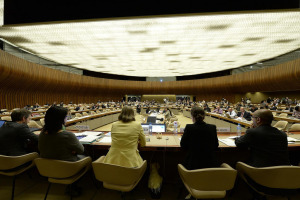
    UN Meeting of Experts on Lethal Autonomous Weapons in April 2015. Source: Flickr | UN Geneva

    April’s meeting of experts at the UN on lethal autonomous weapons systems (often shortened to LAWS or AWS) set out to consider questions relating to this emerging military technology, a continuation of UN talks begun in May 2014. These meetings took place under the aegis of the Convention on Certain Conventional Weapons (CCW), and brought together state representatives, NGOs and academics. The CCW meetings have demonstrated a divergence of views on the ethical and legal concepts that should be employed, and a complex debate that at times felt detached from reality; moreover, without a negotiating mandate there is a fear that the meetings could simply mire the issue in abstract debate, leaving states free to continue developing the technology in the meantime.

    The UN Convention on Certain Conventional Weapons

    For a long time the CCW was a neglected treaty; regarded by states and NGOs as an overambitious and failed attempt to combine elements of international humanitarian law with arms control. By the end of the 1980’s, the CCW appeared to be floundering with only 29 state parties. Yet in recent years, participation has increased and there are now 121 state parties to the convention. A total of 87 countries sent representatives to the first meeting on autonomous weapons, marking a record high level of participation for the CCW. Eighty-eight countries were present at April’s meeting.

    The purpose of the CCW is explicitly “to ban or restrict the use of specific types of weapons that are considered to cause unnecessary or unjustifiable suffering to combatants or to affect civilians indiscriminately.” The CCW is an evolving body of international humanitarian law, with a framework that is dynamically structured to be responsive to the concerns raised by the international community. The recognition that the law is not static is therefore a particular strength, indeed a cornerstone of the CCW.

    The CCW’s talks in May 2014 and April 2015 were undertaken with a mandate “to discuss the questions related to emerging technologies in the area of lethal autonomous weapons systems, in the context of the objectives and purposes of the convention.” A ban on autonomous weapons would join five other CCW protocols on non-detectable fragments, landmines, incendiary weapons, laser weapons and explosive remnants of war. The uptake of the issue of lethal autonomous weapons by the CCW has been unprecedented in its speed, and could indicate a move towards prohibition. However, because there is no negotiating mandate, it could also be a strategic move to engage in these discussions on the part of states keen to engage in the debate of abstract principles, while at the same time continuing to develop the technology. The annual meeting of the CCW in November 2015 will decide formally whether to continue the talks, based largely on the content of the April meeting.

    Autonomy

    The most contentious issue discussed so far is the issue autonomous weapons pose with regard to human control. This issue was discussed through reference to the contested concepts of ‘autonomy’ and ‘meaningful human control’. The United States, the UK, France and Germany are all in favor of the notion of autonomy as a guiding principle. The US was one of the first states to advocate for this concept when its Department of Defense issued the first policy announcement by any country on autonomous weapons systems in November 2012, just three days after Human Rights Watch had brought the issue into the global spotlight.  Interestingly, the directive refers not to ‘fully autonomous’, but to ‘autonomous weapon systems’ that include human supervision. This supports the view advocated by the US at April’s CCW meeting: as long as humans are ‘in the loop’, weapons systems are not fully autonomous and therefore compliant with international humanitarian law. The UK, France and Germany attach human involvement to autonomous weapons systems as well. In a general exchange of views the UK representative assured, “there will be human oversight in this new territory where lethal autonomous weapons systems can go […] Autonomous systems do not exist, and will never exist” (author’s own transcription).

    However, some objected that this was a ‘knockdown’ argument intended to rhetorically shut down the controversy about the lack of human control. The International Committee for Robot Arms Control (ICRAC) is an international association of experts that was sat up with the specific goal of getting governments to talk to each other about the continuous automation of warfare, and was present at both the 2014 and 2015 meetings. ICRAC’s interpretation of the DoD policy was that it was designed to “green-light” weapon systems able to select and engage human targets. Together with 272 experts in computer science, engineering, artificial intelligence, robotics, and related disciplines from 37 countries, ICRAC issued ‘The Scientists’ Call’,  stating: “[G]iven the limitations and unknown future risks of autonomous robot weapons technology, we call for a prohibition on their development and deployment. Decisions about the application of violent force must not be delegated to machines”. Their message was clear, that within such systems, human control would not be ‘meaningful’.

    Meaningful human control

    India and Pakistan expressed confusion over this idea of meaningful human control, observing that the presence of meaningful human control would mean the weapons systems would not then be ‘autonomous’. In their opinion the question should be whether or not independent weapon systems can comply with international humanitarian law: whether they can distinguish between civilians and combatants, make proportionality assessments, and comply with other time-tested legal principles. A counter-argument was raised by Richard Moyes from Article 36 that if discussion is too focused on undefined hypothetical systems’ ability to comply with international humanitarian law, then legal arguments could become separated from reality. In particular, he argued that the law is a human framework applied to humans. A state representative from Greece agreed, saying that autonomous weapons should be addressed ethically rather than legally or technically, as the question is whether or not humans should delegate life and death decisions to a machine. The debate around autonomous weapons’ ability to comply with international humanitarian law is a misguided one if it fails to grapple with the bigger, underlying issues that would be raised. Banning such systems, in fact, is about maintaining something unique in the decision-making process: a human with intent behind the act of killing. Cuba, Ecuador, Pakistan, Sri Lanka and Palestine agreed with this argument and called for a prohibition.

    Potential for convergence

    Consensus was reached on the undesirability of fully autonomous weapons systems. Ambassador Michael Biontino of Germany, who chaired the April meeting, wrote in his report that the following area of common understanding had emerged: “machines or systems tasked with making fully autonomous decisions on life and death without any human intervention, were they to be developed, would be in breach of international humanitarian law, unethical and to possibly even pose a risk to humanity itself.” However, because parties largely disagree about what constitutes human intervention, this statement is of limited value. The contradictory definitions used at the CCW meetings have created a lack of clarity for policymakers; it remains largely undecided what the world would look like if autonomous weapons came into existence.

    The April talks not only give some idea of the shape of the debate going forward, but also of the potential limitations of the CCW talks themselves, as a forum for discussion, but without a negotiating mandate. One significant milestone would be the establishment of a broad, representative and universal Group of Governmental Experts (GGE) next year that would move the discussion from an informal to a formal setting. It has been suggested that the current lack of common language makes this discussion challenging, and that it is critical to avoid rushing into formal discussions. However, it does not seem premature for prohibition to be on the agenda in a body that has been designed to create prohibitions. A GGE seems a necessary next step to keep states focused on a practical outcome.

    Lene Grimstad served as an observer at the 2014 and 2015 Geneva Meetings of Experts on Lethal Autonomous Weapons Systems, and holds a MA in Society, Science and Technology in Europe from the University of Oslo and ESST (European Inter-University Association on Society, Science & Technology) .

    Featured Image: Meeting of Experts on Lethal Autonomous Weapons Systems in April 2015. Source: Flickr | UN Geneva

  • Resources and Militarisation in the East China Sea (Re-upload)

    The Global Land Rush: Catalyst for Resource-Driven Conflict?

    Michael Kugelman of the Woodrow Wilson International Center, argues that the factors that first sparked many of the land acquisitions during the global food crisis of 2007-08 — population growth, high food prices, unpredictable commodities markets, water shortages, and above all a plummeting supply of arable land — remain firmly in place today. He writes that land-lusting nations and investors are driven by immediate needs, and they have neither the incentive nor the obligation to slow down and adjust their investments in response to the wishes of distant international bureaucrats. This, he argues, has serious consequences for global security.

    Read Article →

  • Beyond crime and punishment: UK non-military options in Syria


    This piece by sustainablesecurity.org’s Zoë Pelter and Richard Reeve was originally published on 5 September, 2013 on openDemocracy 

    4815774738_b9962f4875_bThe narrow defeat on 29th August of the UK government’s parliamentary motion on support in principle for military action against the Syrian regime has forced Prime Minister David Cameron to concede that Britain will play no part in any direct attack on Syria. If the UK is to play no military role in ‘punitive’ responses to the regime’s alleged use of chemical weapons, what options are open to the UK in terms of resolving the Syrian conflict, protecting civilians and punishing those responsible for war crimes there? And how does Cameron’s overt preference for the military option, with or without UN mandate, condition these non-military options?

    Pushing for peace

    The possibility of a negotiated peace in Syria should not be dismissed. Neither the regime’s military, militia and foreign allies, nor the variety of armed factions ranged against them (and, increasingly, each other) are exhausted. Nor do the Assad regime’s mid-year successes in central Syria presage any imminent likelihood of it regaining control of the north and east. The strategic stalemate that appeared to set in to the conflict in June, after pro-Assad forces retook al-Qusayr, arguably presented a breathing space for negotiations and the so-called Geneva II conference, proposed by the US and Russia, with UN and Arab League backing, the previous month. As recently as mid-August, the Geneva talks were expected to resume in September.

    But even convening these talks will now prove far harder. Expectation of Western intervention against President Bashar al-Assad, as well as their own increasing divisions, gives the Western-backed armed opposition groups an incentive to delay talks. Jihadist groups that have proved effective militarily are largely excluded. US and Russian facilitation of the Geneva process, however fraught, also tends to exclude the voices of regional actors like Turkey, Iran, Iraq and Saudi Arabia, each of which feels its interests very directly threatened in Syria and gives active support to one or more armed faction.

    This calls for a rethinking of the Geneva process, if not the 2012 transition roadmap, to bring in the full range of actors, not the abandonment of peace talks. Threat of US-led intervention and its own increasing international marginalisation, should it be proved to have launched a chemical attack on 21st August, could incline the Assad regime towards a negotiated settlement, perhaps even an exit and exile strategy.

    Cameron and PutinThis will not happen without pressure from Iran and Russia. Both have much to lose in Syria, but neither is entirely closed. Iran is still in its post-electoral opening and under severe economic pressure, looking to cut a wider deal with the West. Russia may not be comfortable with its isolated position defending the alleged user of chemical weapons. Like the US, it fears the growing influence of jihadi groups while the current stalemate continues. While there is little hope of Moscow abandoning its Security Council veto over action against Syria, it will be embarrassed if it stands almost alone defending Assad in the Council or against a General Assembly resolution. Neutrally collected and analysed evidence of Syrian regime culpability for chemical weapons attack will be crucial to shifting Russia’s position.

    Having made clear its preference for ‘punitive’ military action, and been frustrated by parliament in pursuing such action, the UK government is not ideally placed to broker negotiations. Yet the UK does have influence with Syrian opposition groups, in the Gulf States and, when it acts in concert with its less interventionist EU partners, with Russia, Turkey and Iran.

    Fighting impunity

    Again, the importance of due investigative and legal process through UN Fora is crucial. When asked on 29 August if he agreed that Assad should be prosecuted at the International Criminal Court (ICC), David Cameron replied curtly that these processes take time. Yes, the wheels of institutional responses turn slowly, not least justice institutions. Yet the most obvious response to any breach of customary international law on the use of chemical weapons (Syria is one of just five states not to have signed the 1993 Chemical Weapons Convention) is a war crimes prosecution through the ICC. It is not important that Syria has not signed the Court’s establishing Rome Statute. Assad and any responsible commanders could still be subject to international prosecution if the Security Council referred Syria formally to the ICC.

    The UN has been investigating a wide range of alleged crimes committed by both sides with a view to future prosecutions. Clearly, the presence on the Security Council of Syrian allies and a majority of non-signatories to the Rome Statute presents obstacles to referral, but the Council has overcome such obstacles before, notably China’s reluctance to see its Sudanese allies prosecuted over actions in Darfur. With France and other allies, the UK should take the lead within the Security Council in pushing to refer Syria to the ICC based on the same ‘moral minimum’ or red line that has been deployed in favour of armed intervention. This, in turn, may provide leverage to persuade pro- and anti-Assad factions alike to take peace negotiations more seriously.

    Notwithstanding the heavy shadow of its past action in Iraq, the UK’s moral standing is bolstered by commitment to legal and democratic process. The UK should take a breath, step back from punitive reaction and recommit itself to a multilateral, inclusive and legally rigorous approach to resolving the war in Syria and its many affiliated regional conflicts. No other form of intervention will effectively protect the lives and rights of Syrian civilians either in the current war or the difficult peace that must follow.

    Richard Reeve is the Director of Oxford Research Group’s Sustainable Security Programme. He works across a wide range of defence and security issues and has particular expertise in Sub-Saharan Africa, peace and conflict analysis, and the security role of regional organisations.

    Zoë Pelter is the Research Officer of Oxford Research Group’s (ORG) Sustainable Security Programme. She works on a number of projects across the programme, including Rethinking UK Defence and Security Policies and Sustainable Security and the Global South.

    Image sources:

    Image: The Prime Minister welcomes President Vladimir Putin to Downing Street ahead of the G8 Summit. Source: The Prime Minister’s Office

    Image: The Prime Minister during a joint press conference with US President Barack Obama. Source: The Prime Minister’s Office

  • The UN Security Council and Climate Change

    Whether the UN Security Council should address climate change is a highly politicized issue. But a more fundamental question has been lost in this debate—what exactly could the Council do about climate change?

    Given growing concerns about the links between climate change, instability and conflict, it is no surprise that the issue has spilled over into the UN Security Council. Since 2007, the Council has conducted two formal and several informal (“Arria-formula”) sessions on the topic. Bringing the climate issue into the Council has been contentious: proponents, including several European member-states, small island developing states, and other vulnerable developing countries, have sought to use the Council’s agenda-setting power and inject a sense of urgency into global climate politics, particularly at moments when global progress on climate action seems stalled.

    Opponents have raised a range of concerns, including longstanding objections to the Council’s composition and procedures; fears of stretching the Council’s mandate beyond recognition, such that anything could be regarded as a security issue; and concerns about negatively impacting the “legitimate” forum for climate discussions, the UN Framework Convention on Climate Change (UNFCCC) and the Paris Agreement. These objections almost blocked a 2011 thematic debate on the issue, leading the Obama administration to rebuke reluctant Council members for “dereliction of duty”. Only informal sessions have been held since then. At the most recent, in May of this year, several member-states urged that the Council revisit the issue in formal session.

    Too often lost in such political maneuvering is a fundamental question: what might the Council actually do on climate, peace and global security? Surveying the record, one finds a range of different ideas that have been floated by academics, advocates, and some individual member-states. These include relatively modest add-ons, such as keeping the Council apprised of how climate change affects current peacekeeping operations or developing better early-warning capabilities. Bolder roles have also been floated: engaging the Council in proactive, preventive diplomacy on emergent challenges such as competition for Arctic resources or water in international river basins, or even creating a climate analogue to the Responsibility to Protect. There have also been calls to inject the Council into complex political challenges for which no obvious institutional home exists within the UN system, such as the existential plight facing several small-island states and the challenge of climate-driven displacement and refugees.

    There are real questions about whether the Council, as currently constituted, can play such roles productively. One basic challenge is how the Council manages information. Conceptually, early warning fits well with current Council efforts around issues such as famine and human rights emergencies. But in practice, past efforts to extend the gaze of early warning into new issue areas, such as conflict-related sexual violence, have met with opposition, narrow framing, and poor follow-through. There are also many practical challenges yet to be resolved, including how to effectively incorporate environmental variables into conflict-assessment tools, or even deciding which variables matter and by what mechanisms they operate. For an early-warning mechanism to have foreseen the role of drought in the Syrian conflict (a causal role about which there remains no consensus among scholars), it would have had to be able to see not just rainfall or run-off data, but also the water-policy choices of the Syrian regime and the impacts of declining rural subsidies on smallholder farmers.

    Challenges facing the Security Council on climate change

    Image credit: The White House/Wikimedia.

    Even the seemingly straightforward exercise of informing the Council about aspects of climate change directly relevant to its ongoing activities around peacekeeping and fragile states has been challenging. The contentious 2011 session yielded a compromise that called on the Secretary-General to use his reporting function to keep the Council apprised about relevant “contextual information” on climate-conflict links. A review my colleagues and I conducted of 446 subsequent Secretary-General reports to the Council (through January 2016) found only 12 references linking climate change to some aspect of conflict or security (with 11 focused on Africa). Most of the content was highly generalized, noting general contextual trends such as urbanization, land tenure conflicts, or farmer-pastoralist tensions that might bear a climate signature. Even the handful of instances of specific reporting lacked the fine-grained subnational and temporal detail necessary for it to be of any operational or decision-making use. Climate-related references were also highly sporadic, with only one in 2012 and none in 2013.

    A second challenge resides in the Council’s largely reactive nature (when it can agree to react at all). Conflict prevention falls squarely within the Council’s mandate, and the high monetary cost of peacekeeping operations creates a strong incentive for prevention. The concept notes circulated by Council chairs for the 2007 and 2011 thematic debates (the UK and Germany, respectively) stressed conflict prevention as a key rationale for conflict engagement on climate. But for interstate preventive diplomacy, such as might be needed in shared river basins, the Secretary-General’s office has generally been a more effective tool than the Council. And on intrastate conflict, the Council has historically been reluctant to take preventive action. Efforts beginning in 2016 to implement a ‘horizon scan’ briefing from the Secretariat, focused on instability and emergent conflict, revealed the great reluctance of many member-states to appear on the Council agenda as ‘fragile’.

    A third problem is the tricky challenge of managing the political division of labor with the UNFCCC. Proponents of Council climate action have used past debates to try to jump-start sluggish climate diplomacy, even as opponents have warned about encroachment on or perturbation of the institutionalized process of global climate negotiations. Initial optimism around the Paris Agreement cooled such polarization, but was blunted by the Trump administration’s recent withdrawal from the accord. The deeper problem is that the Paris process seems to be half-heartedly engaging some of the critical challenges that would most resonate within the Council: blocking space for the Council while failing to really address the issues. On the looming problem of sea-level rise and the existential threat to small-island nations, the Paris Agreement’s provisions on loss and damage explicitly created an opening to address several relevant challenges, including early warning, emergency preparedness, slow-onset events, risk management, and the resilience of communities, livelihoods, and ecosystems (Article 8.4). This may limit political space for the Council on the issue of small-island statelessness, even as the weakness of the UNFCCC process on “liability and compensation” makes it a poor vehicle for serious movement on the problem. A similar dynamic of blunting political momentum through half-hearted response may be shaping up on climate-induced displacement; the UNFCCC’s 21st Conference of the Parties authorized a task force to develop recommendations on how to address the issue, scheduled to make a preliminary report in 2018.

    What can be done?

    Given such challenges, it may be that the relevant question is not “What climate role for the Council?” but rather “How can climate be part of the process of transforming the Council into a more effective body for sustainable security?” A first step in that direction would be to improve the Secretary-General’s reporting function, as agreed to during the 2011 debate. The most useful information for the Council is probably neither localized crisis briefings nor long-range climate-change scenarios, but rather regional-scale, medium-term assessments. Working on those spatial and temporal scales is most likely to yield forward-looking initiatives that can be supported by those member-states that find themselves most directly affected or vulnerable, as in the case of the Integrated Strategy for the Sahel. The strategy stressed building long-term resilience as one of its three pillars, along with inclusive governance and managing cross-border threats. A Security Council briefing in this context, on links among climate trends, migration, and conflict across the region, was well-received for both its specificity and the backing it had from member states in the region.

    A second step would be to challenge countries seeking a seat on the Council to articulate a specific vision of how the Council should move forward on the issue. Several aspirants for an elected seat have raised the issue in recent campaigns, but the question is also pertinent for those countries aspiring to a permanent seat on an expanded, reformed Council—notably, Japan, Germany, Brazil, and India. How, precisely, do they see the climate issue in relation to the Council’s mandate, with particular reference to preventive diplomacy, disaster vulnerability and displacement?

    Finally, while it may seem challenging in the current political moment, a symbolic gesture from the five permanent members (P5) would acknowledge member-states’ multiple roles across the UN system. Done properly, this could help legitimize an active (but not overreaching) Council role as part of a system-wide response. During the 2011 debate, Nigeria noted the P5’s dual role: “Seated around the table are those who could encourage developed countries to implement their commitments to reducing emissions and supporting developing countries with the requisite technological and financial assistance to address climate change effectively.” Imagine the legitimizing value that would have resulted if the US-China climate deal of 2014 had identified conflict prevention as part of its rationale for cutting emissions. Going forward, such commitments could be incorporated into the Nationally Determined Contributions that states offer under the Paris Agreement, and as action on the Sustainable Development Goals.

    The purpose of such measures is to begin to use climate engagements as a vehicle to transform the Council—into a body that is more capable of legitimate action, more proactive in peacebuilding and conflict prevention, and better able to take the long view of risks and responses.

    Ken Conca is a Professor of International Relations at American University in Washington, DC. His most recent book is An Unfinished Foundation: The United Nations and Global Environmental Governance (Oxford University Press). A more detailed version of the arguments here may be found there, and also in Ken Conca, Joe Thwaites, and Goueun Lee, “Climate Change and the UN Security Council: Bully Pulpit or Bull in a China Shop?” Global Environmental Politics 17/2: 1-20. Conca has been a member of the Scientific Steering Committee on Global Environmental Change and Human Security (GECHS) and is a founding member of the UN Environment Programme’s Expert Advisory Group on Conflict and Peacebuilding. He is, with collaborator Geoffrey Dabelko, the 2017 recipient of the Al-Moumin Environmental Peacebuilding Award.