Category: 2016

  • Sustainable Security

    Droughts can potentially help escalate conflicts, but empirical evidence from the Sahel suggests that the root causes of land disputes are more historical and political than climate driven.

    The climate-conflict narrative
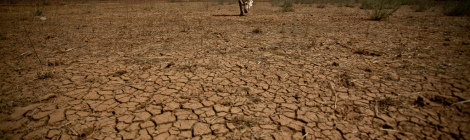
    Oxfam International

    Image by Oxfam International via Flickr.

    The Sahel is often highlighted as a hotspot of violent conflicts, typically occurring between farmers and pastoralists or between the state and armed groups. More recently, jihadist violence, in particular by groups associated with ISIL and Al Qaeda in Mali, Boko Haram in Nigeria and Al-Shabab in Somalia, has also added to this image of the Sahel as a conflict-ridden part of the world.

    With climate change becoming a leading global political issue, a powerful policy narrative has emerged which uses global warming to explain conflicts. In contrast to this narrative, most empirical research points to the role of political and historical factors as the root causes of conflicts in the Sahel.

    Many politicians, international civil servants and climate activists seem attracted to the idea of climate-driven conflicts. For instance, in a newspaper article in 2007 UN Secretary-General Ban Ki-moon made a connection between global warming and the Darfur conflict. In the same year, the idea was also at the crux of the decision to award the Nobel Peace Prize to former US Vice President Al Gore and the Intergovernmental Panel on Climate Change (IPCC). According to the Norwegian Nobel Committee, human-induced climate change is one of the main causes of violent conflict and war in the world today, and violence between farmers and herders in the Sahel are the most typical examples of what the committee calls ‘climate wars’. Also many climate activists champion the idea of climate-driven conflicts – for instance the idea has been repeatedly promoted by former executive director of Greenpeace Kumi Naidoo.

    This narrative about the climate-conflict link in the Sahel consists of two elements. First, it assumes that global climate change leads to drought and desertification, which in turn result in resource scarcity. Secondly, this resource scarcity is believed to cause migration and the emergence of new conflicts, or to trigger existing ones.

    The re-greening of the Sahel

    The claim that rainfall in the Sahel is decreasing is problematic, because the rains have increased again after the drought of the 1980s. Since it is largely rainfall that drives the Sahelian ecosystem, global warming might obviously in the long run produce desertification and resource scarcity – if it reduces rainfall. However, there is currently considerable uncertainty about current rainfall trends and projections in the Sahel. This uncertainty is generally stressed by climate scientists who model how global warming will affect the climate in the Sahel. While some models support the theory that this region will become drier, a majority of models actually suggest not only more abundant, but also possibly more delayed and concentrated rainfall in the future in the Sahel. This might lead to more vegetation over all, and more runoff and floods.

    In fact, because of increased rainfall since the 1980s, instead of desertification, the Sahel became greener again over this period. The re-greening of the Sahel has actually been observed for more than a decade. More recent research by French scientists has also confirmed this trend.  Based on long-term research in northern Mali, this French team observed not only strong resilience and recuperation of the vegetation on sandy soils, but also detected a transformation and thinning of the vegetation on shallow soils. This latter process is linked to stronger and more concentrated run-off resulting in increasing water levels in temporary streams and lakes that in some places have become permanent (see here).

    Hence, while there is a general re-greening of the Sahel caused by stronger rainfall trends since the droughts of the 1980s, there has also been the opposite, a thinning of vegetation on shallow soils, which again leads to more run-off and increased water bodies. In a similar vein and in parallel to the myth of the marching desert, the drying of Lake Chad, the largest lake in the Sahel, is also a myth according to recent research.

    Both these observed and opposing trends are in fact contrary to received wisdom and the dominating policy narrative on the Sahel represented, for instance, by the Great Green Wall Initiative, which aims to make the Sahel green and thereby to fight desertification. This initiative is funded by the Global Environment Facility at the tune of over 100 million USD.

    Political causes of conflicts

    The narrative of climate-driven conflicts first assumes desertification to be a widespread process in the Sahel, and second it postulates such resource scarcity increases conflict levels. This second link cannot be dismissed theoretically, even if empirical results from international research question the validity of this correlation. Most quantitative research undermines the existence of such a general link between climate and conflict, while case studies in central parts of the Sahel indicate that the conflicts have other causes such as rent seeking among government officials as well as policies and legislation that are marginalizing pastoralists.

    In the dry parts of Africa where pastoralism and farming overlap as the main forms of land use, there are continuous conflicts of varying scale. These conflicts have historical and political causes.  For instance, farmer-herder conflicts in Mali are associated with the state’s pastoral and land tenure policies and legislation, which generally are to the disadvantage of pastoralists and tend to lead to their marginalization. Three structural factors can be seen as the main drivers behind these conflicts: agricultural encroachment that has obstructed the mobility of herders and livestock, opportunistic behavior of rural actors as a consequence of an increasing political vacuum following decentralization and the disintegration and withdrawal of state services, and corruption and rent seeking among government officials (see here and here).

    Pastoral marginalization is also at the root of the Tuareg rebellion in Mali. The droughts of the 1970s and 1980s did, however, play an indirect role in the rebellion, because they led to the migration of young men to Algeria and Libya, where they were exposed to revolutionary discourses. There was already a strong feeling among nomads and Tuareg in Mali of being marginalized by state policies of modernization and sedentarization. Embezzlement of drought relief funds by government officials in Bamako added further to the anger felt by young Tuareg in Algeria and Libya who took up arms against the Malian state in 1990. The droughts of the 1970s and 1980s were probably not a necessary condition for the rebellion to take place. The first Tuareg rebellion in Mali took place in 1963 following an unusually humid period.

    Pastoralists are probably the group best adapted to climate variability through their opportunistic and flexible resource use strategies. But at the same time, pastoralists are suffering from state policies favoring settled agriculture in many countries in the Sahel. Even though pastoralists are losing access to land, livestock-keeping remains one of the economically most important activities throughout the Sahel and the large export of live animals to neighboring countries, especially on the West African coast, continues.

    Conclusion

    Even though droughts or flooding may potentially help escalate conflicts, empirical evidence from the Sahel, as well as from other parts of Africa, demonstrates a lack of correlation between climate and conflicts, and suggests that the root causes of land disputes are historical and political in character. While climate change remains a dangerous global challenge, over-stretching its causal responsibility may not only undermine long-term public engagement, but also depoliticize and thereby gloss over the real causes of conflicts, which could hinder the process of finding effective solutions to disputes.

    Tor A. Benjaminsen is Professor at the Department of International Environment and Development Studies, Norwegian University of Life Sciences

  • Sustainable Security

    Following civil war, re-establishing the legitimacy of a state’s army is a crucial part of security sector reform and international actors can aid this process. The capacity-building work of the United Nations Interim Force in Lebanon provides a useful example of this.

    Rebuilding a national army after civil war is an important part of security sector reform (SSR) to help ensure the survival of the institution and its effectiveness in the long-term. Based on a recent article in Contemporary Politics, this blog post discusses the strategies used by an international actor, the United Nations Interim Force in Lebanon (UNIFIL), to contribute to the capacity and legitimacy of a local institution, the Lebanese Armed Forces (LAF). This case study revealed that a sustainable strategy for SSR requires a long-term, flexible, and pragmatic approach; and that successful capacity building can take place when the normative values of the SSR project are accepted by key stakeholders and the local population.

    The United Nations Interim Force in Lebanon

    The UNIFIL mission has been present in South Lebanon since 1978. United Nations Security Council (UNSC) Resolution 1701 (11 August 2006) is the mandate under which UNIFIL has operated since 2006 after the July war between Hezbollah and Israel. It clearly states that a key objective of the mission is assisting with the reintroduction of LAF throughout Lebanon; prevent violations of the line of withdrawal ‒ called the Blue Line ‒ that borders Israel and Lebanon, and clear unauthorised weapons from the area of operations.

    UNIFIL has targeted three main areas in capacity building the LAF: building relationships through regular liaison and communication; lobbying for money and resources from the international community; and conducting a comprehensive strategic review of LAF’s operational capabilities. One of the biggest challenges has also been handling the political situation which UNIFIL has negotiated with a combination of flexibility and pragmatism. But underscoring UNIFIL’s success is the fact that the army is considered legitimate in Lebanon by the local population and at the national political level. Furthermore, the LAF share the normative assumptions of the international community in terms of how they wish to rebuild.

    Whilst LAF was not present in the south until 2006, its popularity has increased since the Syrian withdrawal in 2005. The Lebanese Armed Forces is the only national institution that is genuinely regarded as non-sectarian, and has an approval rating of over 75 per cent amongst the Lebanese population. A survey of civilians in the south of Lebanon found that 91.5 per cent of civilians stated that they thought that LAF should be responsible for national security.

    The Political Challenges

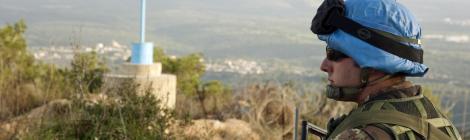
    An Italian peacekeeper of the United Nations Interim Force in Lebanon (UNIFIL) patrols the "Blue Line" that demarcates the border between Lebanon and Israel. 17/Jan/2009. UN Photo/Eskinder Debebe. www.unmultimedia.org/photo/

    An Italian peacekeeper of UNIFIL patrols the “Blue Line” that demarcates the border between Lebanon and Israel. Image credit: UN Photo

    The main challenge to both LAF and UNIFIL authority in South Lebanon is the presence of Hezbollah. LAF and UNIFIL must respect the legacy of Hezbollah’s military success in not losing the 2006 war, and its important role in ejecting Israel from Lebanon in 2000. Whilst Hezbollah agreed in 2006 to withdraw to positions north of the Litani River (outside the area of operations), it is commonly believed by many Lebanese, the Israel Defence Forces (IDF), and the Israeli government, that Hezbollah retains weapons caches within the area of operation.

    For many Lebanese citizens, the continued presence of Hezbollah’s armed faction ‒ who use a combination of traditional and guerrilla warfare techniques ‒ is considered a necessary deterrent to Israeli aggression. LAF, whilst respected is regarded as underfunded and under-equipped and therefore not able to be fully in control of the security situation at the present time. Interviews for this case study, however, revealed that after years of living under foreign occupation, southern Lebanese are happy to see LAF patrolling the area with UNIFIL.

    Whilst UNIFIL’s mandate requires the mission to rid the area of operations of all weapons not belonging to the Lebanese Armed Forces, it is not possible for either UNIFIL or LAF to aggressively hunt for weapons stored in the area without risking the loss of local support. Hence UNIFIL is pragmatic when negotiating the tension between its mandate and local perceptions of its role in relation to local security. When unauthorised weapons are found, UNIFIL interprets the mandate on this issue by asking LAF to retrieve the weapons. They report the findings to LAF and then wait for them to arrive and deal with the recovery. This means that UNIFIL does not have to deal directly with the removal of illegal weapons which may or may not belong to Hezbollah but which can be a contentious issue with the local population.

    Building relationships

    UNIFIL contributes to re-establishing LAF’s presence by conducting joint patrols, helping to build LAF’s CIMIC activities and ensuring LAF takes the lead in local disputes and in highly politicised situations. When patrolling alongside LAF, UNIFIL is careful to play the role of observer as much as possible. LAF is deliberately placed at the forefront of any Blue Line violations involving local civilians in order to empower LAF to deal with any situation in its own way and to help build its credibility. Furthermore, as UNIFIL is not allowed to physically restrain anyone who is violating the Blue Line, LAF plays a key role in deciding what measures (physical or verbal) they wish to take in regard to Lebanese citizens on Lebanese territory.

    Time has played an important role in maintaining good UNIFIL‒LAF relations. Interviews with LAF officers indicate that long-term UNIFIL staff who understand the local political and social culture in the region are valued highly. Constant staff rotations frustrate the LAF as personal relationships are considered highly important to successful liaison and cooperation. Flexibility has also been of benefit in helping UNIFIL build strong relationships with LAF, officers gave very positive reports of their relationship with UNIFIL staff and in particular their commitment to helping to resolve problems when they arose.

    Building capacity

    UNIFIL works to try and build LAF’s operational capabilities in a number of ways as this is regarded as an essential part of UNIFIL’s eventual exit strategy.  First of all it lobbies the international community independently to gain support and donations for LAF and requests donations from current battalions for example UNIFIL vehicles at the end of their lifecycle. UNIFIL also seeks funding from the EU and internationally for LAF battalions based throughout Lebanon, not in the area of operations.  Since the Syrian withdrawal from Lebanon in 2005, the EU has been supportive of UNIFIL’s efforts to capacity build LAF. Furthermore, since the emergence of IS in 2014, Lebanon has been seen as a key buffer state, so interest in providing assistance to LAF has further increased.

    Another example of UNIFIL’s flexible approach to interpreting its mandate is a joint project entitled the Strategic Dialogue. In recent years, UNIFIL Political Affairs Officers and LAF engaged in a full analysis of LAF’s structure and capabilities and produced a joint report that identified gaps in LAF’s structure. UNIFIL Political Affairs Officers have since organised a coordinating mechanism with UNSCOL and now work jointly to seek contributions from the US and European states to specifically fill these gaps. Finally, battalions within UNIFIL conduct joint exercises with the LAF which can include shooting, artillery, administrative tasks and computer exercises.

    Future lessons

    Lebanon’s SSR may carry useful lessons for the international community when looking to help other post-conflict countries transition into peace – namely Iraq, where the security environment remains both complex and challenging. The rise and territorial gains of so-called Islamic State in Iraq reflects a failed security sector reform policy which has seen 100 billion US Dollars invested in it. Implementing a more effective SSR policy in Iraq will be a crucial prerequisite for both long-term stability and peace.

    When rebuilding a national army after internecine warfare, obtaining support from the domestic constituency is as important as capacity building the force in order to present as a credible deterrent. The Lebanese Army has worked very hard to minimalize sectarian differences within the institution both during and after the civil war and this has been very helpful in enabling it to build a largely positive image amongst the people of Lebanon itself. But the sectarian nature of the armed forces in Iraq will make the rebuilding of the army a great deal more challenging in terms of winning broad popular support in Iraq.  A key task therefore will therefore be for the Iraqi national army to become openly inclusive of multiple ethnicities and religious sects as quickly as possible.

    Long term planning in SSR is crucial. One challenge faced in rebuilding the national army in Lebanon is ensuring a regular budget flow to the army and national political cover from politicians. Whilst UNIFIL has been successful in terms of identifying the gaps in LAF expertise and in seeking funding and training to assist in capacity building, the lack of a regular budget for the army still hampers the LAF’s ability to make long term plans for growth and development.

    In addition, politicians in Lebanon are broadly supportive of the LAF, but ongoing political cover remains important especially when the national military is faced with domestic disturbances, particularly outbreaks of sectarian violence. It is imperative the LAF are viewed as impartial by the Lebanese to avoid being drawn into domestic political conflict and thus far the LAF have managed this extremely well. These are considerations that Iraq may face in the future.

    Since the peace deal of 2006, UNIFIL has been successful in re-introducing LAF into the south of Lebanon. But this has required a nuanced approach because there is a delicate balance between the imposition of an agenda and local agency in peacebuilding projects. Ultimately the success of SSR depends on the degree to which the reforms resonate with institutional and local interests and ideas.

    Faced with the aforementioned myriad of sectarian and security challenges, any future attempts to capacity-build the Iraqi army would do well to take a pragmatic approach and be prepared to sacrifice quick wins for the sake of long-term objectives. The first step will involve a careful focus on making the army representative of the Iraqi people and beyond that ensuring national financial and political support is maintained to allow the army the political space to rebuild trust with the all-important domestic constituency of the Iraqi public.

    Vanessa Newby is a Research Fellow at the Australian National University. research focus is peacebuilding and peacekeeping in the Middle East. She has published on the normalisation of peace through everyday security practices, the role of time in successful peacebuilding and the use of technocracy and credibility to negotiate the politics of peacekeeping.  She holds a Masters and PhD in International Relations from Griffith University in Australia. She is an Arabic speaker and has spent over three years conducting research in Lebanon and Syria.  In 2013 she was a visiting researcher at the American University of Beirut.  Her undergraduate degree is in Psychology from the University of Westminster and she is trained in conducting quantitative and qualitative research methods for the social sciences. Dr Newby is currently writing up her book: Mission Impossible? Negotiating the Politics of Peacekeeping in the Middle East.

  • Sustainable Security

    In order to persuade its allies in Israel and Gulf Arab states to support the Iran nuclear deal, the United States is relying on inducements of weaponry sales; this regional militarisation is further destabilising the wider Middle East region.

    The July 2015 international deal on regulating Iran’s nuclear programme, the Joint Comprehensive Plan of Action (JCPOA), looks to be a triumph for international diplomacy in a region that all too often sees diplomacy lose out to military force. However, in order to persuade its allies in Israel, Saudi Arabia and other Gulf Arab states to support the deal, the United States is offering ‘consolation packages’ of ever-higher quantities and qualities of weaponry.  This regional militarisation is further destabilising the wider Middle East region by fuelling an arms race and by increasing the attractiveness of hybrid or proxy warfare.

    16908600218_5cf4667ed9_k

    A Saudi Air Force F-15. Image via Flickr

    Arms Sales to Gulf Arab States

    The six Arab monarchies that comprise the Gulf Cooperation Council (GCC: Bahrain, Kuwait, Oman, Qatar, Saudi Arabia, UAE) are enthusiastic consumers of weaponry, which they overwhelmingly procure from the US, UK and France. Saudi Arabia is by far the largest military spender and arms importer among them. According to the Stockholm International Peace Research Institute (SIPRI), the Kingdom’s record military expenditure of over $80 billion in 2014 made it the fourth highest military spender in the world, overtaking the UK and France. It is now the world’s second largest arms importer. The other GCC states are also major spenders: Oman is probably the world’s highest military spender by percentage of GDP, averaging 12% between 2010 and 2014; last year the United Arab Emirates’ military expenditure reached $23 billion and it has been the world’s fourth largest arms importer for a decade. Together, the GCC states account for about 12% of global arms imports. Only India imports more weapons.

    The Gulf States enjoy a close commercial and strategic relationship with the United States, which is manifested in the huge sums spent on US weaponry, and the fact that the US military overtly uses land, air and naval bases in at least five of the six Gulf Arab states; its ongoing presence in Saudi Arabia is much lower key. Despite this, there are limitations on the quality and quantity of weaponry that the US can sell to GCC states. This is because of the US’ ongoing commitment to maintain Israel’s ‘qualitative military edge’ (QME) over its regional adversaries.

    A term coined by Israel’s founding leader David Ben-Gurion in 1953, QME was formally written into US law by Congress in 2008. Legislation now states that the US President must carry out an ongoing ‘empirical and qualitative assessment’ of Israel’s QME over military threats to Israel, and this must be brought into consideration when assessing applications to provide military hardware or services to other countries in the Middle East. As the GCC states could in the future become adversaries to Israel, whose statehood none currently recognize and which Saudi Arabia and Kuwait opposed in the 1967 and 1973 wars, this has long restricted sales of the highest technology weapons, surveillance and targeting systems to Gulf Arab states.

    QME and anti-Iran Alignments

    Recent regional events, and the JCPOA in particular, have seen Israel and the Gulf States find themselves increasingly aligned against Iran. The Israeli leadership has been consistently critical of the deal while the Gulf States were hesitant to support it because of their fears that an economically, militarily and diplomatically resurgent Iran would dominate the Middle East region and potentially vie with them to become the US’ chief regional ally.

    Relations between Israel and the Gulf have long been shrouded in secrecy, although that does not mean they have not existed. From 1950 until Israel’s invasion of Lebanon in 1982, for instance, there was periodic Israeli involvement in the operation of the ‘Trans-Arabia Pipeline’ (Tapline), and throughout the 1990s Israel and various GCC states began to set up trade offices; various Gulf States have, at different times and to varying extents, had a hand in the Arab-Israeli peace process. In the last few years, Israel and the Gulf States have increasingly found their regional interests aligning; this came to the fore during the 2011 Arab uprisings when they argued that American policy was exacerbating regional instability.

    The coincidence of interests between Israel and the GCC was referenced by Israeli Prime Minister Binyamin Netanyahu in September; in a speech to the UN General Assembly he spent much of his time denigrating the Iran deal, but he also mentioned the ‘common dangers’ faced by Israel and Arab states, and his hope that they could build ‘lasting partnerships’ to counter such dangers. There has predictably been no discussion of any official agreement between Israel and any Gulf State, but rumours of potential partnerships have been germinating: one suggested that Bahrain, an island in the Persian Gulf, was looking to buy Iron Dome anti-missile defence systems from Israel; these reports were hotly denied by Bahraini officials.

    GCC Support for the Iran Deal

    Despite stiff and vocal opposition from the Republican majority in the Senate, Obama has recently signed waivers that would conditionally allow the lifting of US sanctions subject to Iran fulfilling its JCPOA obligations. An altogether different challenge for Obama was placating America’s allies in the Gulf.

    Although Obama was not reliant on the Gulf Arab States to approve the Iran deal, it was sufficiently controversial to dent relations between them and the United States. This was demonstrated in May of this year when Obama invited GCC leaders to Camp David, where he attempted to persuade them personally of the merits of the deal: new Saudi monarch King Salman pulled out of attending at the last minute. Those that remained were hoping for a formal security treaty that would bind the US to support the GCC militarily in the case of an attack, but the Obama administration eventually won their support with promises of ‘support and capacity-building’, which essentially boiled down to bigger, faster arms deals.

    King Salman has played a tough game with the Obama administration. After his no-show in May, the Saudis reminded the US that they do not rely exclusively on the American arms market when in June they conducted extensive talks with France, discussing the potential purchase of French civil nuclear technology and further arms deals, the immediate outcome of which was the French sale of $500 million worth of helicopters. Qatar and Egypt (likely financed by GCC patrons) have also made multi-billion dollar arms deals with France this year; as has Kuwait with Italy. There was also much talk of Saudi interest in Russian equipment during August.

    Salman eventually reconciled with the Obama administration during a lavish state visit to Washington in September. Before talks between the two heads of state, Obama administration officials confirmed that Israel would be the only regional recipient of the forthcoming F-35 stealth fighter; they can thus claim to be considering Israel’s QME. However, officials also said that Obama would discuss ‘a range of other options meant to bolster Saudi defences’. Salman ultimately professed to come away reassured that the Iran deal would ‘contribute to security and stability in the region’. His price for this statement was a reassurance from Obama that US weapons technology and systems would be fast-tracked to Saudi Arabia, and a free hand to use such weapons in the Saudi-led war in Yemen.

    Arms Sales and Geopolitics

    Obama’s solution to winning support for the Iran deal from the Gulf Arab States is inherently flawed. While Gulf Arab leaders, having been promised these deals, professed their conviction that the deal would lead to regional stability, the promise of further military hardware was nevertheless purported to be intended to help states repel potential attacks from Iran. Although the narrative of the Israeli and American right is that Iran wants nuclear weapons to destroy Israel, an alternative explanation is that it is the huge qualitative and quantitative superiority in conventional weapons by US-allied Sunni Arab states that has driven Iran’s desire to develop nuclear weapons capabilities.

    While the Iran nuclear deal may decrease the likelihood of a preemptive attack on Iran by either its Gulf Arab rivals or Israel, the escalating wars in Yemen and Syria indicate that Saudi Arabia and other conservative Arab monarchies (Morocco and Jordan have joined GCC allies in both interventions) are increasingly willing to employ a more interventionist approach in the region, both directly and via proxies, wherever they see the expansion of Iranian interests. This is facilitated by US weaponry, intelligence and diplomatic support.

    The war in Yemen has already had catastrophic humanitarian consequences, with at least 2,615 civilians killed and about 1.5 million people displaced. Reports suggest that larger quantities of US military hardware could be making their way to Syria after a 24 October meeting between US Secretary of State John Kerry and Saudi officials, including King Salman, to discuss greater support for ‘moderate’ Syrian rebels in response to Russian air strikes. The White House has claimed that Russia would not succeed in achieving a military solution to the conflict, but the United States is equally unlikely to enforce a military solution.

    The JCPOA is a diplomatic breakthrough that will likely be far more successful in reducing Iran’s capacity to develop nuclear weapons than air or missile strikes. However, while Iran can no longer look to the nuclear option to give it a military advantage, or parity, it may consider other options. The strategic alignment of Israel and the Gulf States means that Obama has greater leverage to use arms deals to maintain the support of his Gulf allies, but a result of these deals is that a huge amount of conventional weaponry is being poured into the Gulf and from there to regional conflicts.

    Many of these conflicts involve Iranian proxies, and Iran may compensate for its lack of either nuclear or conventional leverage by increasing military support for these proxies, including those in Syria and Yemen. The United States’ method of securing regional support for the JCPOA thus adds fuel to the fire of regional conflicts and humanitarian crises, and makes diplomatic outcomes, whether in Syria or Yemen, ever more distant.

    Finbar Anderson is Communications Intern with Oxford Research Group.  Having lived and studied in Egypt, he has recently completed a Master’s degree in History of International Relations, focusing on the politics of the Middle East, at the London School of Economics. 

  • Sustainable Security

    The Responsibility to Protect (R2P) is a significant, if controversial, development in international affairs. China has proposed its own semi-official version of R2P called “Responsible Protection”.

    Author’s Note: This article highlights issues discussed in more depth in various publications, including Andrew Garwood-Gowers, ‘China’s “Responsible Protection” Concept: Reinterpreting the Responsibility to Protect (R2P) and Military Intervention for Humanitarian Purposes’ (2016) 6 Asian Journal of International Law 89 and Andrew Garwood-Gowers, ‘R2P Ten Years after the World Summit: Explaining Ongoing Contestation over Pillar III’ (2015) 7 Global Responsibility to Protect 300.

    Introduction

    Over the last decade and a half the Responsibility to Protect (R2P) principle has emerged as a significant normative development in international efforts to prevent and respond to genocide and other mass atrocity crimes. Yet it has also been controversial, both in theory and in practice. R2P’s legal status and normative impact continue to be debated in academic and policy circles, while its implementation in Libya in 2011 reignited longstanding concerns among many non-Western states over its potential to be misused as a smokescreen for regime change. These misgivings prompted Brazil to launch its “Responsibility while Protecting” (RwP) concept as a means of complementing and tightening the existing R2P principle. China, too, has proposed its own semi-official version of R2P called “Responsible Protection” (RP). This contribution explores the key features and implications of the lesser known Chinese initiative.

    The R2P Principle

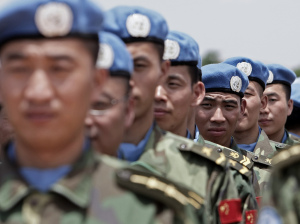
    Peacekeeping - UNAMID

    Image by UN Photo via Flickr.

    R2P first appeared in a 2001 report by the International Commission on Intervention and State Sovereignty (ICISS), a body set up by the Canadian government to consider how the international community should address intra-state humanitarian crises. However, after the initial concept proved contentious a modified version of R2P – labelled “R2P-lite” by one commentator – was unanimously endorsed by states at the 2005 World Summit. In its current form R2P consists of three mutually reinforcing pillars. The first is that each state has a responsibility to protect its populations from the four mass atrocity crimes (genocide, war crimes, crimes against humanity and ethnic cleansing). Pillar two stipulates that the international community should encourage and assist states in fulfilling their pillar one duties. Finally, pillar three provides that if a state is manifestly failing to protect its populations the international community is prepared to take collective action in a timely and decisive manner on a case-by-case basis, in accordance with Chapter VII of the UN Charter.

    Action under pillar three can encompass non-coercive tools such as diplomacy and humanitarian assistance, as well as coercive means including sanctions and the use of force. The international community’s pillar three responsibility is framed in conservative terms, creating only a duty to consider taking appropriate action, rather than a positive obligation to actually respond to a state’s manifest failure to protect. Crucially, the UN Security Council remains the only body that can authorise coercive, non-consensual measures under pillar three. R2P does not grant states a right to undertake unilateral humanitarian intervention outside the Charter’s collective security framework. Overall, R2P is best characterised as a multi-faceted political principle based on existing international law principles and mechanisms.

    The most well-known instance of pillar III action to date is the international community’s rapid and decisive response to the Libyan crisis in early 2011. The Security Council initially imposed sanctions and travel bans on members of the Gaddafi regime before passing resolution 1973 authorising the use of force to “protect civilians and civilian populated areas under threat of attack’’. China, Russia, Brazil and India each abstained on the vote to mandate military force against Libya. As the extent of NATO’s military targets and support for the Libyan rebels became apparent, many non-Western powers criticised the campaign for exceeding the terms of the Security Council resolution. For these states, the eventual removal of the Gaddafi regime confirmed their perception that R2P’s third pillar could be manipulated for the pursuit of ulterior motives such as the replacement of unfriendly governments.

    The post-Libya backlash against R2P was at least partly responsible for Security Council deadlock over Syria. Russia and China have exercised their vetoes on four separate occasions to block resolutions that sought to impose a range of non-forcible measures on the Syrian regime. At the same time, there has been renewed debate about the strengths and weaknesses of R2P’s third pillar. In late 2011 Brazil’s RwP initiative proposed a series of decision-making criteria and monitoring mechanisms to guide the implementation of coercive pillar three measures. While RwP initially attracted significant attention and discussion, Brazil’s foray into norm entrepreneurship was short-lived and R2P has remained unaltered.

    Reframing R2P as “Responsible Protection”

    China’s traditional insistence on a strict interpretation of sovereignty and non-intervention has made it uncomfortable with the coercive, non-consensual aspects of R2P’s third pillar. As a result, Beijing has consistently emphasised the primacy of pillars one and two, while downplaying the scope for pillar three action. In this respect, its decision not to veto resolution 1973 on Libya came as something of a surprise.

    China’s contribution to the post-Libya debate over R2P’s third pillar is less widely documented than Brazil’s efforts. In mid-2012 the notion of “Responsible Protection” was floated by Ruan Zongze, the Vice President of the China Institute for International Studies (CIIS),  which is the official think tank of China’s Ministry of Foreign Affairs. Although China has not explicitly adopted the concept as a formal policy statement on R2P, its implicit endorsement means it can be described as a “semi-official” initiative.

    RP is primarily concerned with R2P’s third pillar and, in particular, providing a set of guidelines to constrain the implementation of non-consensual, coercive measures. It consists of six elements or principles, which are drawn from just war theory and earlier R2P proposals such as the 2001 ICISS report and Brazil’s RwP. In this respect, RP represents a repackaging of previous ideas, rather than an entirely original initiative. However, by reframing these concepts in stricter terms it reflects a distinctive Chinese interpretation of R2P that seeks to narrow the circumstances in which non-consensual use of force can be applied for humanitarian purposes.

    The first element draws on the just war notion of “right intention”. It provides that the purpose of any intervention must be to protect civilian populations, rather than to support “specific political parties or armed forces”. This conveys Beijing’s concerns over the motives and objectives of those intervening under the banner of R2P, as expressed during the Libyan experience. Element two relates to the “right authority” criterion. It reiterates the longstanding Chinese position that only the Security Council can authorise the use of coercive measures, and that there is no right of unilateral humanitarian intervention granted to states.

    RP’s third element is based on the traditional principle that military intervention should be a “last resort”. Its call for “exhaustion of diplomatic and political means of solution” is consistent with Beijing’s broader policy preference for diplomacy and dialogue over forcible measures. However, insisting on a strict, chronological sequencing of responses may deprive the international community of the flexibility needed to ensure timely and decisive action on humanitarian crisis. For this reason, some clarification or refinement of element three may be needed. The fourth element of RP draws on aspects of the just war principles of “right intention” (like element one) and “reasonable prospects”. In relation to the latter, it provides that “it is absolutely forbidden to create greater humanitarian disasters” when carrying out international action. This stipulation reflects Beijing’s position that external intervention often exacerbates humanitarian crises and can ultimately cause more harm than good.

    Element five of RP provides that those who intervene “should be responsible for the post-intervention and post-protection reconstruction of the state concerned”. Although the notion of a responsibility to rebuild appeared in the original 2001 ICISS report it was not included in the text of the World Summit Outcome document in 2005 and therefore does not form a component of the current concept of R2P. It is unclear whether China’s RP concept is explicitly seeking to resurrect this dimension or whether this element is simply intended to emphasise Beijing’s broader perspective on peacebuilding and development in post-conflict societies. Finally, element six calls for greater supervision and accountability of those carrying out UN authorised civilian protection action. This is a similar demand to that made in Brazil’s RwP proposal, though little detail is given as to what form any such monitoring mechanism would take.

    Conclusion

    Overall, the Chinese notion of RP is an attempt to reinterpret and tighten the content of R2P’s third pillar so that it aligns more closely with Beijing’s own normative preferences and foreign policy objectives. Compared to RwP and the ICISS report, RP outlines a narrower set of circumstances in which military intervention for humanitarian purposes would be appropriate. Some aspects of the proposal would certainly benefit from clarification and refinement.

    However, it is notable that despite strongly criticising the way R2P was implemented in Libya, China has chosen to engage with, and actively shape, the future development of the norm. This illustrates the extent to which China, as a permanent member of the Security Council, is enmeshed in the ongoing debate over R2P. In fact, RP is explicitly framed as an example of China “contributing its public goods to the international community”. In the future we can expect China and other non-Western powers to play increasingly influential roles in the development of international security and global governance norms.

    Andrew Garwood-Gowers is a lecturer at the Faculty of Law at Queensland University of Technology (QUT) in Brisbane, Australia. He has written extensively on R2P and the law governing the use of military force, with publications in leading journals including Global Responsibility to Protect, the Asian Journal of International Law, Journal of Conflict and Security Law and the Melbourne Journal of International Law.

  • Sustainable Security

    In February 2016, two former military officers of the Guatemalan army were convicted of crimes against humanity based on cases of sexual and domestic slavery, perpetrated in the 1980s during the civil war. Together they received sentences of 360 years in prison, and ordered to pay reparations to the eleven victim-survivors on whose testimonies the case rested. The case, known as Sepur Zarco after the community where these crimes took place, is unique; it is the first domestic trial successfully prosecuting former military for sexual violence in conflict in the world. What happened in Sepur Zarco is less unique: the witness statements echo the experiences of women who gave their testimony to the Peruvian Truth and Reconciliation Committee (2001-2003), where women in embattled communities during the war between Shining Path and the state (1980-2000) were also systematically raped and/or enslaved. And there are other experiences; other genocides, war contexts, and rape camps in contemporary history, which would allow for a solid comparison with Sepur Zarco. Such an observation confirms the importance of the Sepur Zarco trial for the future of accountability and justice in cases of war-related sexual violence, in Guatemala, in Latin America, and indeed, globally.

    The testimonies of victim-survivors in the Sepur Zarco trial against military commanders in Guatemala shows once more that rape in war has specific meanings and intentions that are informed and shaped by the specific coordinates of conflict. In the 1980s, the Guatemalan military repeatedly attacked the population of the rural community Sepur Zarco. Local indigenous leaders who were trying to get their land titled by the state were kidnapped, tortured, and killed. Women who went to search for disappeared family members at the military base were captured, beaten and raped, and enslaved as sexual and domestic servants of soldiers. Several witnesses at the trial told details about how they were raped and beaten multiple times, in front of or alongside their children, sometimes in a pit where their husbands would be held before being buried. They also told about other victims, abused, enslaved, raped and killed in their presence. The statements show a world of extreme cruelty and suffering, facilitated by racism and sexism, and encouraged by a military campaign against indigenous communities that lasted three decades. All evidence shows that in the case of Sepur Zarco, rape was used as a weapon of war: to conquer, to reinforce victory, to send a message, humiliate, and fragment entire communities, in sum, to control.

    Of course, military commanders can only be prosecuted for systematic rape if we accept that rape in war is exceptional, different, and not inevitable. Perpetrators can only be held accountable if we recognise their agency in the act, their authority in allowing (or ordering) certain acts to happen. The extreme cruelty and violence that accompanies many of these acts further confirm that rape in war represents a rupture in a community’s history and in the lives of both perpetrators and victims. This is not normal, and hence, we can prosecute.

    And yet, there are others, including myself, who have emphasised the continuity in the history and possibility of sexual violence against women. I have argued, based on the testimonies of victim-survivors of rape in the Peruvian conflict, that while much of the scale and cruelty of these experiences were certainly exceptional and strongly conflict related, the script for these acts – immersed in racism and sexism, as in the case of Guatemala – pre-dated the conflict, and has yet to be dismantled. There is a continuum in the persistence of sexual violence against women that supersedes the categories of war and peace.

    In contemporary Guatemala, around 700 women are murdered each year because of sexism, killed by intimate partners or unknown others. This is what is known as femicidio in the region. Impunity is not absolute, but it is certainly very high and contributes to its prevalence, as public institutions are uninterested in pursuing cases of ‘private’ violence. The idea that violence against women, even if so large scale as in contemporary Guatemala (or elsewhere), can be private and thus irrelevant to national security (police, judiciary, policy) is strongly tied to perceptions of women being responsible somehow for the domestic sphere, the home, including the sexual gratification of men. Women are often perceived and portrayed as somehow complicit in their own abuse. Similar patterns of the domestication of violence are seen in conflict.

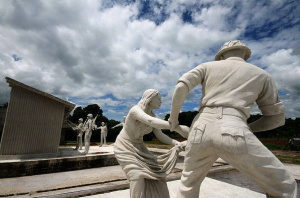
    Sculpture at Mujibnagar: A woman being raped by a Pakistani soldier during the 1971 war

    Sculpture at Mujibnagar: A woman being raped by a Pakistani soldier during the 1971 war. Image by Rahat Rahim via Wikimedia.

    For example, women held at military bases to sexually serve men are often also required to wash and cook. The Sepur Zarco case also heard a former military commissioner tell the court how the then head of the military base and the accused in the trial, Lieutenant Esteelmer Reyses Girón, ordered soldiers to gang rape a woman, and that the Lieutenant himself “took” this woman as his “wife”. In similar vein, in the case of Peru, few women used the words ‘rape’ (violación) to describe their experiences. Instead, some said ‘he used me as his wife’, indicating how domestic and sexual enslavement were part of the package of abuse. One witness even stated ‘he started to beat us as if we were their wives’, further blurring the boundaries between the domestic and the political, between wartime abuse and peacetime abuse, and arguably, between husband and abuser. In Sierra Leone, and Uganda, similar patterns can be found: sexual and domestic slavery go hand in hand, and is made possible because of the peacetime structures in which women’s roles are already defined by their service to men. Hence, girls forcibly recruited into rebel armies soon became ‘wives’.

    The idea that those who are violently enslaved could in fact be in a consensual relationship, albeit unequal, such as a marriage, provides a veil of legitimacy to an otherwise exceptional situation. It does, indeed, suggest a level of normality, a continuum, of life as one knows it. It might be the veil that makes survival possible. But many victim-survivors of conflict-related rape and sexual slavery are ostracised from their communities, exposed to a postconflict life of continuous abuse from their intimate partners, or choose to hide their trauma out of fear of retaliation. The women who testified in the Sepur Zarco case either did so behind closed doors, or they hid their faces behind veils during public sessions. What happened in war might have been exceptional, but not sufficiently so to erase the suggestion of complicity entirely, less so, stigma.

    In my book Sexual Violence in War and Peace, I identify a continuum in how sexual violence is understood and perpetrated in both war and peace, and hence, how such violence is dealt with post-conflict. The characteristics of rape regimes perpetrated by military in the high Andes of the 1980s and early 1990s showed many known features of power relations along lines of race, sex, class, age, and gender. Sexual violence, because of its intimate and potential reproductive qualities, helps produce and reproduce those unequal power relations. In war this might be strategic and large-scale, or it might be facilitated and condoned, in order to dominate over others (i.e., both to affirm power as well as subordination, both to destroy communities, as well as consolidate military loyalty and masculine strength). But in peacetime, it does the same: sexual violence produces dominance and subordination between genders, races, sexualities, classes and ages, be that catcalling, sexual harassment, marital rape or other forms of highly gendered and sexualised violence.

    Understanding sexual violence along a continuum does not say anything about the gravity of the violence or even how it might be experienced. On the contrary, while recognising and naming the differences between forms of sexual violence, experiences can be named as violence and as harmful, instead of normal or deserved. What the concept of a continuum of violence intends to highlight is how all forms of sexual violence are part of gendered social structures and patterns that have to be identified and transformed. Highlighting, combatting and prosecuting rape in war should arguably be part of a similarly linked set of measures that aim to eradicate gender inequality and the (often intersecting) violence with which such inequality is maintained and perpetuated, be that in war or in peace, at the level of families or in public space, in Guatemala or in the UK.

    Thinking in terms of a continuum does not aim to minimise rape in conflicts, gang rape, or the femicides we are seeing particularly in parts of contemporary Central America. But it gives us an analytical tool that allows us to connect sex, male violence, and gender inequality, both in the everyday as well as during armed conflict. Thinking in terms of a continuum allows us to see how much violence is hidden, institutionalised, and/or normalised in everyday life, both in peacetime and wartime, in homes, in intimate relationships, and in public spaces. The term allows us to see parallels between the extreme and the everyday, the public and the private, thereby not undermining the seriousness of the extreme, but undercutting the normality of the everyday.

    As such, the Sepur Zarco case is a milestone, and is hopefully a further step towards accountability for acts of sexual violence, and more broadly, gender-based violence, in both war and peace, in Guatemala and beyond.


    Jelke Boesten is Reader in Gender and Development at International Development Institute, King’s College London.

  • Sustainable Security

    In 2008, media outlets declared that a new Cold War was unfolding in the Arctic. This story was centred on a small, titanium Russian flag, fixed to the seabed below the North Pole.

    Planted in 2007 by a modest team of explorers and scientists, the flag triggered angry responses from Western politicians and media commentators, with the most vociferous coming from the then Canadian Foreign Minister, Peter MacKay, who declared: ‘This isn’t the 15th Century…You can’t go around the world and just plant flags and say “We’re claiming this territory”’.

    Nearly a decade later, this story remains emblematic of the geopolitical intrigue that refuses to go away in the Arctic, which continues to be stoked by uncertainties over sovereignty, ownership and access in the region.

    Carving up the Arctic, Carefully

    The Arctic Ocean, like every ocean, is governed by the UN Convention on the Law of the Sea’s (UNCLOS) provisions. The US has not ratified this treaty, but considers its provisions relevant as customary international law of the sea.

    Under UNCLOS, the Arctic Ocean littoral states are entitled to Exclusive Economic Zones (EEZ) stretching up to 200 nautical miles (nm) from their Arctic coastlines. Article 234 allows littoral states to develop and administer special regulations dealing with human activities in ice-covered waters. Russia and Canada use this to regulate shipping activity in their Arctic waters through environmental protection measures.

    UNCLOS also entitles a coastal state to extend the outer limit of its sovereign rights over the continental shelf (the seabed and subsoil of submarine areas–including, any oil and gas resources contained) beyond 200nm, if it can prove the shelf is a natural prolongation of the coastal states’ land mass. This has led Denmark and Russia to submit evidence (with Canada expected to follow this year) to the UN to support claims reaching all the way to the North Pole. Norway settled its continental shelf limits in 2009.

    As their claims overlap, the UN Commission on the Limits of the Continental Shelf (CLCS) is responsible for reviewing the evidence and issuing a final recommendation on where the borders should be drawn according to Articles 76 and 77. However, the CLSC has no legal authority or personality meaning it will be up to Canada, Denmark and Russia to reach an international agreement which will settle their claims. Any remaining space will be considered part of ‘the Area’ (see below), and falls under the purview of the International Seabed Authority.

    Although the decision on ‘who owns the North Pole’ will ultimately be determined by an agreement between Canada, Denmark and Russia,wherein lies a latent potential for conflict, the five Arctic littoral states’ public commitment to use UNCLOS as the basis for settling any sovereignty disputes is an important step towards ‘sustainable security’. It will take three to five years just for the CLCS to review the latest evidence submitted by Russia on 9 February 2016.The CLCS is already overwhelmed by the number of applications received globally. Since the prospects for oil and gas development further from shore are still highly uncertain, and claims to the North Pole are primarily symbolic, the CLCS arguably has time on its side.

    As long as the Arctic states maintain their trust in the process, UNCLOS should be able to prevent any ‘race’ to carve up the Arctic seabed, which could lead to tension between the littoral states.

    High Seas and the Area: Accommodating New Interests

    Where UNCLOS reaches its limits is in the parts of the Central Arctic Ocean (CAO), we will be dealing with High Seas,parts of the water column beyond the EEZs of coastal states,and ‘the Area’– seabed areas which cannot be claimed by any state (see map). Theoretically, anyone can fish and mine in these parts of the Arctic, but such activity is likely to be limited for the time being by the continued prevalence of thick sea-ice covering the surface of the ocean (and other environmental factors).

    In another step towards ‘sustainable security’, the five Arctic coastal states have initiated a process to create a governance framework to manage future fishing activity in the CAO.

    In July 2015, the littoral states signed a ‘Declaration’ preventing unregulated high seas fishing in the CAO, and promising to only authorise their own fleets to conduct commercial fishing in the CAO if it was in accordance with recognised international standards.

    The littoral states’ problem is that they do not have the authority to dictate the terms under which the rest of the international community can access CAO high seas fisheries. China’s, Japan’s, Korea’s, Iceland’s, and the EU’s finishing fleets are entitled under international law to fish in the CAO.

    Consequently, the littoral states took another preventative step by calling a second meeting in December 2015, where negotiations for fisheries agreement for the CAO’s high seas was opened up to these other parties. Other nations such as Taiwan are expected to join future deliberations, eventually ensuring buy-in for a governance framework from all nations with an interest in future Arctic fisheries.

    Again, this is a long-term process, providing another example of how governance structures developed now can prevent certain unwanted futures from becoming present, including, for exampletension and conflict over fisheries and continental shelves.

    Navigating Arctic Waters

    Can similar preventative steps be taken to ensure that disputes do not flare up over the problem of maritime activity in the Arctic? There are two issues to address. Firstly, the status of two ‘international straits’ in the Arctic: the North West Passage and the Northern Sea Route. Secondly, the regulating of ice-covered waters in littoral state EEZs as addressed by Article 234 of UNCLOS.

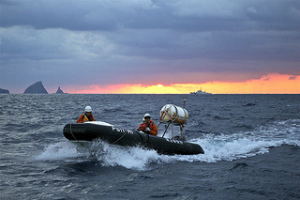
    Science team in the Arctic Sea. Image by NASA Goddard Space Flight Center.

    Science team in the Arctic. Image by NASA Goddard Space Flight Center.

    Canada and Russia do not consider the North West Passage (passing through the Canadian archipelago) and the Northern Sea Route (across northern Russia) to be ‘international straits’. Consequently, foreign vessels have no right of ‘transit passage’ through these waters–a right that entitles foreign ships to pass through without coastal state permission, and foreign submarines may remain submerged. Both countries claim that their sovereignty over nearby islands effectively means these waters should be considered ‘internal waters’, requiring foreign vessels to seek permission before entering.

    The US and the EU contest Canada and Russia’s claims, not least because of concerns about setting a legal precedent that could be applied to more important southerly shipping routes.

    There seems to be little ambition to settle the disagreement, because Arctic transit shipping is still a niche activity. Several uncertainties remain about whether large-scale transit shipping will ever become commercially viable, not least because of the competition posed by more southerly trade routes and the general unpredictability of seasonal sea-ice retreat that makes seasonal passages possible without expensive icebreaker escorts.

    The problem with the current stance is that Russia is actively investing in icebreakers, port infrastructure, marine services, search and rescue facilities and constabulary forces with the ambition of turning NSR into a viable shipping route. The more Russia builds up infrastructure around the route and offers to accommodate shipping on Russian terms, the greater the historical precedent it will set that the NSR is part of Russian-controlled waters. This feeds Western fears about Russian militarization of the Arctic building a security dilemma.

    While US and EU lawyers might question the validity of such a precedent, the de facto claim will remain and Russia will likely continue resisting attempts to change the status quo. It might therefore be worthwhile considering preventative steps sooner rather than later to resolve the NSR and the NWP’s legal status, before marine activity in the Arctic increases further and positions become more deeply entrenched.

    The issue is complicated by the second issue referred to above–the regulating of ice-covered waters by Arctic littoral states, notably Canada and Russia. As already noted, under Article 234 of UNCLOS, Arctic littoral states are entitled to regulate marine activities in ice-covered waters within their EEZs. Both the NSR and the NWP fall within these provisions, allowing Canada and Russia to regulate marine activity beyond their territorial waters regardless of whether they have the status of ‘international straits’ (see, for example, Canada’s Arctic Waters Pollution Prevent Act).

    So what happens when these waters are no longer ice-covered for a large part of the year? Article 234 indicates that ice-cover must be present for most of the year (i.e. 6 months and one day), while other points of contest exist in determining exactly what is meant by ‘severe climatic conditions’ and ‘exceptional hazards to navigation’ and who would decide whether such conditions prevailed (littoral states, non-littoral states, international organisations?).

    This remains a longer-term issue, but if as most scientists predict the amount of sea-ice cover each year continues to spiral downwards, the issue of whether littoral states can regulate in Arctic waters beyond 12 nm could become a significant point of tension with those seeking to benefit from new opportunities for regional marine activity. Currently, unlike in the cases of fisheries and continental shelves, few preventative steps are being taken to resolve this outstanding issue, despite its potential to cause future confrontation in Arctic waters. The situation is exacerbated by the deterioration of relations between Russia and the West over the Ukraine and Syria crises, likely making dialogue difficult.

    Prospects for Sustainable Security

    On the issues of resource competition and militarisation sustainable security’s prospects, in the Arctic for the most part look good. Since the end of the Cold War, international cooperation on various scientific and environmental protection initiatives have provided the basis for constructive engagement between the Arctic states and other interested actors (such as the UK) on many issues.

    Bilateral and multilateral arrangements have provided a governance structure that all Arctic states, and other interested actors, have indicated provides a firm basis for resolving inter-state disputes peacefully in accordance with international law, especially concerning fisheries and the delineation of the continental shelf. However,access to the NWP and NSR could lead to future contention. Potential flashpoints remain over how regional marine activity should be governed in EEZs where the sea-ice is in fast retreat, especially if Russia and Canada refuse to accept that Article 234 might lose purchase in the future.

    Whether preventative action is politically possible on this issue remains to be seen, but the sooner a constructive dialogue begins between Russia, Canada and potential users of the NWP and NSR, the more likely it will be to find a sustainable solution. Speculatively, an Arctic agreement on shipping activity negotiated under the Arctic Council’s auspices (but accommodating interested non-Arctic states as seen in the fisheries discussions) to complement the International Maritime Organisation’s Polar Code (due 2017) could be one way of consolidating international understanding that these waterways are to some extent shared spaces requiring the international community’s shared stewardship.

    An important dimension of sustainable security not discussed in this state-centric article is that of human security–especially of indigenous peoples and other local communities that live and work in the Arctic. The decline of traditional cultures, environmental pollution and other threats to human health and well-being are prevalent in nearly all of the Arctic states, and there has been a long history of marginalisation of Arctic residents. However, all of the Arctic states have readily admitted the need to address the challenges facing Arctic indigenous peoples and other local communities, and the Arctic Council is somewhat unique to the extent that it invites representatives of indigenous people’s organisations to sit at the table with government ministers.

    The sustainable security outlook is also weaker with regards to climate change. Huge uncertainty remains over how soon we are likely to see an ice-free Arctic in the summertime. The temperature spikes witnessed in January and February this year suggest this event horizon might be closer than we think. The impacts of climate change pose a particular risk to human security in the Arctic, threatening food, housing, infrastructure and livelihoods. It remains to be seen whether these communities will be able to adapt to the drastic changes that are being observed.

    Duncan Depledge is a Teaching Fellow in the Department of Politics and International Relations at Royal Holloway, University of London, and director of the secretariat to the UK All-Party Parliamentary Group for Polar Regions. He received his PhD from Royal Holloway for his research investigating contemporary developments in U.K. policy toward the Arctic.

  • Sustainable Security

    The peace process in Mindanao between the Philippine government and the Moro Islamic Liberation Front was an important step towards ending four decades of conflict in the south of the Philippines. But this initiative now faces many challenges.

    On March 27th 2014 the Philippine government and the Moro Islamic Liberation Front (MILF) signed the Comprehensive Agreement on the Bangsamoro. This ended an armed conflict that began in 1969, which saw at least 120,000 deaths and hundreds of thousands displaced.

    Civil society groups on Mindanao have played key roles in supporting a comprehensive and sustainable peace process. However, civilian groups and communities face challenges in the context of new outbreaks of Islamic State-inspired violence, and the recent (re-)imposition of martial law.

    The peace process in the southern Philippines carries great geopolitical importance, as an example of a Muslim armed group engaging in structured dialogue to address and resolve key political grievances. It is important that the Mindanao peace process succeeds, as it carries great significance beyond the Philippines.

    The Moro struggle

    The population of the Philippines is approximately 100 million, with twenty-two million people living on Mindanao, the largest island in the country. Of these, approximately 10% are Muslims, divided into thirteen ethnolinguistic subgroups, known collectively as the Moro; another 5% are upland ethnic minorities, generally referred to as indigenous people. To denote continuity with precolonial ethnic-religious identity, since the late 1960s Mindanao Muslim nationalists have used the epithet ‘Moro’ to describe themselves and ‘Bangsamoro’ for their homeland.

    Armed groups representing the predominantly Muslim Moros have been struggling for greater autonomy from the Philippines government since the late 1960s. Although narratives of the Spanish and American colonial periods often overplay the extent of conflict between Islamic and Christian communities, Moro groups nevertheless share a strong sense of historic injustice. For many conflict-affected Moro communities, the state is perceived as politically and economically intrusive and predatory, embodying a religious and cultural majority bent on forced assimilation of Muslim minorities. Moro grievances focus in particular on Manila-sponsored ‘internal colonization’, including transmigration of large numbers of Christian Filipinos to the southern Philippines, settled on land originally belonging to Muslim and other indigenous communities.

    A troubled peace process

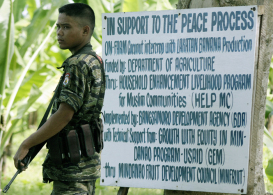
    Image credit: Wikimedia.

    The 1976 Tripoli Agreement between the government and Moro National Liberation Front (MNLF) seemed a breakthrough at the time, but was not properly implemented – although a subsequent 1996 agreement granted some autonomy to Muslim areas (in addition to decentralisation under the 1987 Constitution). However, the Autonomous Region for Muslim Mindanao was a largely hollow entity, undermined by poor governance. These setbacks discredited the MNLF, leading to a new round of insurgency by the 12-15,000 strong MILF, which adopted a more overtly Islamic identity.

    The following two decades in western Mindanao and the Sulu archipelago were characterized by low-intensity armed conflict, with occasional steep upsurges in fighting associated with human rights abuses and consequent episodes of forced migration. During this period, the MILF consolidated control over key elements of the Moro resistance, reinforcing its Islamic credentials, but always open to structured political engagement with the government.

    A 2008 pact with the Gloria Macapagal-Arroyo administration focused on Moro rights to their ‘ancestral domain’, or traditional lands. This could have been an important breakthrough addressing key grievances, but the agreement was struck down as unconstitutional by the Philippine Supreme Court, in part at the instigation of powerful politician-oligarchs on Mindanao. Following the breakdown of the 2008 peace agreement, the Armed Forces of the Philippines launched a major offensive against the MILF displacing hundreds of thousands of civilians.

    During this protracted period of progress towards peace, followed by relapses into violence, relations between civil society and Moro armed groups underwent important changes. Civil society actors have in the past complained about their lack of input in the peace process. One striking difference between the situation since 2012 is the extent to which the MILF has undertaken concerted and systematic efforts to engage with civil society actors, including through a series of community consultations. Nevertheless, questions remain regarding whether it will be possible for community-based organizations to work at the grassroots level without undue political interference or co-optation.

    How will civil society activities, some of which are framed within liberal-democratic norms and values, fit the Islamic agenda of some MILF leaders and supporters? Past experience of ineffective government-implemented development projects, and their appropriation by clientelist networks, has led grassroots activists to be sensitive about corruption and the politicization of aid, and the risks of being co-opted by powerful interests. Moro community activists are often wary of outsider (particularly secular) aid agencies, and sceptical about the international community being able to understand and respond effectively to local needs in the peace process – although some external actors have worked diligently to win local trust.

    Despite such challenges, the MILF has maintained its ceasefire – in part thanks to effective ceasefire monitoring on the ground. Mindanao civil society groups have played key roles in ceasefire monitoring, including networks such as the Bantay Ceasefire local volunteers, and through civilian participation with the International Monitoring Team (IMT). The IMT coordinates closely with the MILF and Armed Forces of the Philippines, on several occasions successfully preventing local incidents flaring up into large-scale clashes.

    For the MILF, internationalisation of the peace process has resulted in significantly enhanced legitimacy and political credibility, on the national and regional stages. Domestically, one of the MIF’s major challenges is to demonstrate its ability to represent not only Islamic Moro communities, but also the indigenous peoples of Mindanao. The MILF (and, to a degree, the MNLF) have included indigenous leaders in political discussions, and the sharia law envisaged for the Bangsamoro under the BBL would not apply to non-Muslims. Nevertheless, some indigenous people fear marginalization in the future Bangsamoro. There are important roles here also for civil society actors, to represent the often excluded voices of indigenous people, and continue building trust and confidence between ethno-linguistic and religious communities.

    Conclusion

    A key lesson from the southern Philippines for other peace process is the need to consult extensively with civil society actors, to ensure sustainable buy-in from local stakeholders. This is particularly important given the risks of widespread lawlessness in the post-conflict period, as government and non-state armed groups relax their authority on the ground.

    Ashley South is an independent researcher and consultant, specializing in peace and conflict, humanitarian and political issues in Southeast Asia (primarily Myanmar/Burma, and Mindanao). He has a PhD from the Australian National University, and is a Research Fellow at Chiang Mai University, Center for Ethnic Studies and Development. For a full list of Dr South’s publications, https://www.ashleysouth.co.uk

  • Sustainable Security

    In March 2016, Jaelyn Young, a 20-year-old student at Mississippi State University was accused of attempting to leave the United States and join the Islamic State (ISIS). She attempted to board a flight with Muhammed Dakhlalla and fly to Turkey with the intent to cross into Syria and join the terrorist group. Young, who pleaded guilty, was posting messages on Twitter about her desire to join the jihadist group, catching the attention of the FBI in May 2015. An agent posing as an Islamic State recruiter began corresponding with her and Dakhlalla. Young and Dakhlalla told the supposed recruiter they would help Islamic State “correct the falsehoods” about it in U.S. news media, such as reports that the group trades young girls as sex slaves. They also asked the recruiter whether ISIS would offer Koran classes in English, how they would be required to prove that they were Sunni Muslims, and what kind of military training Dakhlalla would receive.

    Young and Dakhlalla are just two of many cases of the new trend of terrorists using the newest online platforms, commonly known as the “new media” or “social media.” As several reports on online terrorism reveal, today 90 percent of terrorist activity on the Internet takes place using social networking tools. The growing attraction of social media for modern terrorists relies on the combined impact of several trends: the expansion of online social media and their advantages for terrorists, the virtual interactivity that terrorist propaganda and recruitment are using especially with the targeting of specific audiences (“narrowcasting”) and the emergence of “Lone Wolf” terrorist whose virtual pack is found in the terrorist social media. ISIS managed to recruit thousands of foreign fighters, many of them from Western societies. Many of them were radicalized and recruited on Western online social media. Modern terrorism is turning social media into a powerful anti-social platform of hate, destruction, suicide and mass murder.

    Terrorist Migration to Social Media

    Terrorist use of online platforms is not new. After the events of 9/11 and the antiterrorism campaign that followed, a large number of terrorist groups moved to cyberspace, establishing thousands of websites that promoted their messages and activities.  Many terrorist sites were targeted by intelligence and law enforcement agencies, counterterrorism services, and activists, who monitored the sites, attacked some of them, and forced their operators to seek new online alternatives. The relocation to social media followed. The main motivation to use Facebook and other social media was properly outlined by the terrorist themselves in a Jihadi online forum calling for “Facebook Invasion”:

    This [Facebook] is a great idea, and better than the forums. Instead of waiting for people to [come to you so you can] inform them, you go to them and teach them! …[I] mean, if you have a group of 5,000 people, with the press of a button you [can] send them a standardized message. I entreat you, by God, to begin registering for Facebook as soon as you [finish] reading this post”.

    Social media differentiates from traditional/conventional media in many aspects such as interactivity, reach, frequency, usability, immediacy, and permanence. They are comparatively inexpensive and easily accessible. They enable anyone to upload, download, share and access information. Social media depend on new communication technologies such as mobile and web-based networks to create highly interactive platforms. The global spread of cellular phone with online access to social media made these platforms so widely accessed and used, even in the poorest places in the world. There are 3.42 billion internet users, equaling 46% global penetration, 2.31 billion social media users, delivering 31% global penetration, 3.79 billion unique mobile users, representing 51% global penetration and 1.97 billion mobile social media users.

    These trends were noticed also by Internet-savvy terrorists who quickly learned how to harness the new social media for their purposes. Increasingly, terrorist groups and their sympathizers are shifting their online presence from websites, chatrooms and forums to the newer platforms, the social media.

    Backlit keyboard

    Image via Wikimedia Commons.

    Today, all terrorist groups are present on Facebook, Twitter, Instagram, YouTube, Telegram and other online platforms. Terrorists are encouraging their audiences, followers and operatives to join social media and use them. Maybe most successful is the Sunni terrorist group ISIS, which launched a multi-platform online campaign, covering the entire range of social media. ISIS is using social media to seduce, radicalize and recruit. Since the summer of 2014, ISIS has opened numerous social media accounts for distributing its videos, audios and images via various channels and in many languages, thereby avoiding online censorship. As part of these intensive propaganda efforts, it has launched Al-Hayat Media, a new media branch specifically targeting Western and non-Arabic speaking audiences. ISIS has developed an effective online propaganda machinery. On various social media platforms, ISIS has released numerous videos, photos, texts and music promoting different sides of the militant group. On the one hand is its face of cruel, bloody terror such as of beheadings and burnings of hostages; on the other are more humane and friendly videos of ISIS fighters posing with Nutella jars and kittens. Some of propaganda items on social media are about ISIS providing governance, social justice, and new construction.

    Going Dark: the Move to the Dark Web

    Social media, useful and beneficiary as they may be for terrorists, also involve risks for them: they could be monitored, traced and found. Many of the terrorist websites and social media on the so-called Surface Web are monitored by counter-terrorism agencies and are often shut down or hacked. That led to a recent terrorist migration to the Dark Web. One can describe the Internet as composed of layers: the “upper” layer, or the Surface Web, can easily be accessed by regular searches. However, “deeper” layers, the content of the Deep Web, are not indexed by traditional search engines such as Google. The deepest layers of the Deep Web, a segment known as the Dark Web, contain content that has been intentionally concealed. The Dark Web serves as Internet users for whom anonymity is essential, since they not only provide protection from unauthorized users, but also usually include encryption to prevent monitoring.

    The Dark Web is quite appealing for terrorist groups: While they may lose a broad audience that is available on the Surface Web, they can exploit the obscurity of the Dark Web to further their goals. Following the attacks in Paris (November 2015), ISIS has turned to the Dark Web to spread news and propaganda in an apparent attempt to protect the identities of the group’s supporters and safeguard its content from hacktivists. The move comes after hundreds of websites associated with ISIS were taken down as part of the campaign launched by the amorphous hacker collective Anonymous. ISIS’ media outlet, Al- Hayat Media Center, posted a link and explanations on how to get to their new Dark Web site on a forum associated with ISIS. The announcement was also distributed on ISIS’ Telegram channel, the encrypted communication application. The messages shared links to a Tor service with a “.onion” address, more commonly known as a website on the Dark Web. The ISIS site in the Dark Web contains an archive of the group’s propaganda materials, including its documentary-style film, The Flames of War. The site also includes a link to the terrorist group’s private messaging portal on Telegram. Telegram offers encrypted messaging, a slick, intuitive interface, and a big userbase: it hit 100 million active monthly users in February 2016.

    At this stage, terrorist presence in the Dark Web is rather modest: when propaganda, radicalization and recruitment are the chief goals of terror groups, the reach of Dark Web is limited. Yet, terrorists are already applying the newest privacy-preserving mobile applications like Telegram and are using the Tor browser to hide what they are browsing on the open web from prying eyes. This growing sophistication of terrorist’s use of the Dark Web presents a tough challenge for governments, counter-terrorism agencies and security services. DARPA, the Defense Advanced Research Projects Agency, believes the answer can be found in MEMEX, a software that allows for better cataloguing of Deep Web sites. Envisioned as an analog computer to supplement human memory, the MEMEX (a combination of “memory” and “index”) would poke around the Dark Web and also tune its knowledge to specific domains of interest. MEMEX was originally developed for monitoring human trafficking on the Deep Web, but the same principles can be applied to almost any illicit Deep Web activity. In 2014, an investigation of the source code in one NSA program called XKeyscore, (revealed by the Edward Snowden’s leaks), showed that any user simply attempting to download Tor was automatically fingerprinted, essentially enabling the NSA to know the identity of millions of Tor users. The NSA source code also revealed some of the behavior which users exhibit can immediately be tagged or “fingerprinted” for so-called deep packet inspection, an investigation into the content of data packages sent across the Internet, such as emails, web searches and browsing history.

    However,  there is another side to counter measures in the Dark Web which can serve terrorist communications and activities but also serves journalists, civil rights and democracy activists – all of which may be under threat of censorship or imprisonment.  Thus, the alarming infiltration of Internet-savvy terrorists to the “virtual caves” of the Dark Web should trigger an international search for a solution, but one that should not impair legitimate, lawful freedom of expression.

    Dr. Gabriel Weimann is a Full Professor of Communication at the University of Haifa, Israel. His research interests include the study of persuasion and propaganda, political campaigns, terrorism and the media, online terrorism and cyber-war. He is the author of nine books and over 180 scientific articles. His recent book, Terrorism in Cyberspace: The Next Generation, was published in 2015 by Columbia University Press.

  • Sustainable Security

    This article was first posted on 15 October 2012 and has been featured this week in light of renewed tensions in the region.

    East China Sea smallAs the long running tensions over the set of islands in the East China Sea appear to be coming to a head, the time for thinking through the alternatives to the militarisation of this conflict seems to be well and truly upon us.

    The conflict raises interesting issues about sovereignty claims based on offshore territories, particularly as we face a climate-constrained future as well as the increasing importance of competition over scarce resources. The latter is fast becoming one of the most important global trends if one thinks about the potential ‘drivers’ of conflict and even war.

    Spiralling naval spending in the region has been tracked by analysts for some years now, and flashpoints such as the dispute over the Senkaku/Diaoyu islands could show rampant military spending and arms racing for the dangerous trends that they are if things deteriorate rapidly. Arms racing helps to reinforce security dilemmas (the problems of interpreting the motives of potential adversaries and responding in-kind by arming yourself thus creating a spiral towards ever increasing militarisation). Arms racing also discourages the development of what Ken Booth and Nicholas Wheeler refer to as ‘security dilemma sensibility’ – the ability to “perceive the motives behind, and to show responsiveness towards, the potential complexity of the military intentions of others. In particular, it refers to the ability to understand the role that fear might play in their attitudes and behaviour, including, crucially, the role that one’s own actions may play in provoking that fear.”

    But what is particularly important to note in relation to this crisis is the interaction between the trends of increasing militarisation and competition over resources. The potential hydrocarbon resources beneath the ground around the islands as well as the rich fishing grounds in the surrounding waters gives the competing claims to sovereignty a particular strategic bite.

    Imposed on top of this is the effect of unresolved historical tensions and fierce nationalist sentiment in some quarters of both Japan and China. The coverage of the dispute in the media has been particularly important. Kevin Clements and Ria Shibata have noted that “this might be expected in China, which has a state-run media. In democratic Japan and Taiwan, however, the media have also promoted official and unofficial nationalist positions on the conflict. This has been accompanied by a marginalising or silencing of moderate voices favouring negotiated non-violent solutions to the conflict.” Interestingly, the most constructive voices calling for calm who have been able to cut through the jingoism and sabre rattling have been the business community concerned with the bigger picture issues of losing trade and tourism between China, Taiwan, Japan and South Korea.

    Clements and Shibata have outlined five initial steps that could be used to de-escalate the issue and begin the difficult but unavoidable process of a negotiated solution. In the longer-term, both regional powers and important external players will need to put addressing the inter-linked trends of militarisation and increasing competition over strategic resources at the heart of any attempts to avoid the worst case scenarios playing out.

    Ben Zala is a Lecturer in International Politics at the University of Leicester.

    Image source: Al Jazeera English.

  • Sustainable Security


    In our two-part discussion ‘Countering Militarised Public Security in Latin America’,  Sarah Kinosian and Matt Budd explore the roots of the increasing trend towards militarisation of  public security across Central and South America and ask what lessons can be learnt from alternative methods.

    Homeland Secure Plan already has over 40 000 military personnel deployed to ensure peace Source: Prensa Presidencial

    Plan Patria Suegura (Safe Homeland Plan)  already has over 40 000 military personnel deployed to ‘ensure peace’
    Source: Prensa Presidencial

    Across Latin America, governments are sending their militaries into the streets to act as de facto police forces in the face of disproportionally high crime and violence rates. This trend has been going on for several years, but has accelerated in 2013. With the move to deploy over 40,000 troops for citizen security in Venezuela, President Nicolás Maduro joined a growing list of leaders throughout the region – in Honduras, Guatemala, Mexico, and Dominican Republic, to name a few– that have relied on their militaries to carry out police duties. Yet, in the past 20 years, there are no regional examples in which relying on soldiers for the security of citizens for an extended period of time has brought crime rates down.

    Aside from being ineffective, there are other problems associated with militarization of law enforcement. This tactic might offer short-term political or security gains, but it does not provide a long-term solution to the causes of crime. While the presence of the armed forces can slow violence initially, it often just displaces crime to another area, which can return once the troops leave. Sending soldiers to the streets also raises human rights concerns, as the armed forces are trained to track and kill an enemy with as much force as necessary.

    Police, on the other hand, are theoretically trained to use minimal force, investigate crimes, and respect the rights of citizens. When governments deploy troops, the differences between the functions of the police and the military get lost and the line between citizen and enemy becomes blurred. Yet each of the countries mentioned above has weak, corrupt, public institutions, particularly penal and justice systems, which have yielded high rates of impunity and crime. Shifting tides in the drug trade, the expansion of organized crime and rampant inequality, has exacerbated these problems. While police reform efforts are underway, they are flagging, largely due to a lack of funding and/or political will.

    So why, instead of heavily investing in police reform, have governments in Latin America increasingly turned to the military to solve public security problems? With the highest murder rate in South America, and a corrupt government with a strong military tradition, Venezuela provides an ample case study.

    The shadow of Chávez

    When Hugo Chávez died in March, he left behind an economy in shambles, a dysfunctional judicial system, a broken prison system, security forces rife with corruption, and a politicized government bureaucracy incapable of tackling the resulting spike in organized crime, violence and drug trafficking. In the two decades since Chávez took power, murder rates doubled  – or tripled according to some sources  – and in 2012, Venezuela had the second-highest homicide rate in the world[1]. Caracas, the country’s capital, on its own registers one of the highest murder rates globally, as gang warfare and high levels of street crime plague most urban centers. The country also has become a major hub for drugs transiting from Colombia to the United States and Europe.

    In a post- Chávez Venezuela, the dire security situation appears to be getting worse. In May, just two months after taking office, Chávez’s handpicked successor, President Nicolás Maduro, sent 3,000 members of the military and police to man roadblocks, carry out raids and patrol the streets of Caracas. The deployment was part of an initiative known as “Plan Patria Segura,” (or “Safe Homeland Plan”) which has been expanded to include over 40,000 members of the security forces. Soon, about 80,000 security forces will have been deployed and the military will have an active role in every state. Although the initiative was set to end this October, it looks like troops will be on the streets well past 2013.

    Police Corruption
    Riot police line up at a student protest in Caracas Source: Rodrigo Suarez, Flickr

    Riot police line up at a student protest in Caracas Source: Rodrigo Suarez, Flickr

    One reason Maduro has turned to the troops is that Venezuela’s police are among the most corrupt in Latin America. As in Guatemala, Mexico and Honduras, police in Venezuela have been dismissed by the public as ineffective, corrupt, abusive and complicit with organized crime. In 2012, a Transparency International survey found Venezuelans considered the police to be the most corrupt entity in the country.

    This is not a recent problem – even before Chávez’s reign, the country’s police forces were accused of excessive use of force, unlawful killings of civilians, extortion, torture, forced disappearances and involvement in organized crime. By 2009, even the government admitted police were responsible for up to 20 percent of all crimes. In one poll, 70 percent of respondents agreed with the statement: “Police and criminals are practically the same.”

    As with many forces throughout Latin America, police are underfunded, poorly trained and many times outgunned by criminals. This, compounded by high levels of impunity for officers and officials and a lack of central government control over the country’s 134 police units, has allowed organized crime to penetrate state institutions at every governing level.

    Reform measures put into motion by Chávez in 2009 aimed to centralize law enforcement and create a professionalized national police force. The new body, the National Bolivarian Police (PNB), would be less militarized and given human rights training from a civilian-run policing university. Officers would be vetted and their salaries would be doubled while a council that included human rights activists would oversee the reform’s implementation.

    According to Venezuela experts David Smilde and Rebecca Hanson, while “Venezuelans do not seem to think police corruption or inefficiency are major causes of crime, they do seem to believe that a professional police force and improved judicial and penal system could reduce crime.”

    However, challenges still exist. With just under 14,500 officers, the reformed force lacks manpower, as well as the funding and political will necessary to tackle the spiraling violence. Also, several of the reforms, such as the increased wages, have yet to be implemented.

    Despite Venezuelans support for the idea of citizen security reform, public support for the PNB appears to be one of its obstacles. For many citizens, the PNB’s tactics appear ineffective and “soft,” according to Smilde. While many residents prefer the humanist theory behind the force, many people in poor, crime-heavy areas see a more hard-line approach as the only option to target the sky-high levels of insecurity.

    A History of Military culture 

    Part of this public acceptance lies in the country’s entrenched military culture. The military dominated politics in Venezuela throughout the 19th century until the fall of a military dictatorship in 1958. The institution’s role then subsided, until Hugo Chávez was elected in 1998. Under Chávez’s “Bolivarian Revolution,” strong civil-military ties were forged, with troops being deployed to oversee social projects like food distribution and housing construction. Military members also gained personal voting rights and were placed in top positions in the government.

    Although Chávez initiated police reform, he focused even more attention and resources on the armed forces. Around the same time that he created the PNB, he set up two more militarized initiatives: the Bolivarian National Militia, a military-trained group of civilians that would act as liaisons between the army and the people, and the Bicentennial Security Dispositive, a military unit intended to target high-crime areas.

    Maduro has continued the military’s social and political role by surrounding himself with former and current military members, increasing the armed forces’ salary budget, creating new “Bolivarian militias” headed by former military members and pledging $4 billion (USD) to “increase the defensive capacity of the country.” He has also announced the creation of a new bank, television channel and cargo company, all for the armed forces.

    Given this context, as Smilde has noted, it is no wonder that for the average Venezuelan citizen, the military “represents order and efficiency against a background of chaos and dysfunction, and giving it an important social role appears logical.”

    Political motivations
    President Maduro visit and meets with Aviation High Command Source; Prensa Presidencial

    President Maduro visit and meets with Aviation High Command
    Source: Prensa Presidencial

    Maduro also has political motivations for sending in the military. Stuck in Chávez’s image, Maduro has been parroting his predecessor’s strategies and playing up the tight links between the military and the “Bolivarian Revolution.” In part, the troop deployment is a way to continue Chávez’s legacy and rally support for the government. Because of lingering popular support for Chávismo, the public has not turned on him and despite high inflation, shortages of basic goods, power blackouts, soaring murder rates, and corruption scandals, most polls indicate Maduro maintains a 45-50 percent approval rating.

    By deploying the military, Maduro has shown the public he is responding to the security problem. In general, amid calls for security improvement, it becomes politically difficult to wait for the gradual progress of police reform. “It is a political response to a political problem” according to Venezuelan expert and NYU professor Alejandro Velasco.

    What impact?

    Although the Maduro administration claims murders have dropped by over 30 percent, the Venezuelan Observatory of Violence projects the country will record 25,000 homicides in 2013 – 4,000 more than in 2012. Even in the areas where military presence has mitigated crime, what happens when the military leaves?

    Another concern is the lack of accountability for the military in Venezuela. Unlike the PNB, the armed forces are given no civilian human rights training and there is no mechanism for civilians to report incidents of abuse. There have been at least ten incidents of violations since July, including the shooting of a mother and her daughter by the National Guard. And while Maduro’s approval ratings have barely dipped, those for Plan Patria Segura show a downward trend.

    What now?

    In Venezuela and elsewhere, there are not a lot of hopeful choices to curb the immediate high crime levels. However, police reform is a key part of improving the security situation. As one U.S. State Department official recently said of Honduras, where a military police unit was just created, “the creation of a military police force distracts attention from civilian police reform efforts and strains limited resources.” This same logic applies to Venezuela – Maduro must politically and financially invest in police reform to strengthen and expand the role of the PNB. Police must also receive sufficient training, resources and supervision to ensure transparency. The public can begin to trust the police when they are the ones enforcing the rule of law.

    A line must be drawn between civilian and military leadership, and the role of the armed forces clearly defined and distinct from that of the police. To curb corruption, improved mechanisms for investigating police and military criminality must be established while civilian-led vetting and oversight systems put in place for police and military members. Finally, strong justice and penal systems are fundamental, otherwise those committing crimes will have little reason to stop doing so and prisons will continue to be violent bastions of criminal education. Police reform must not be pushed aside due to short-sighted politics; without a concerted effort to get troops off the streets, Venezuela is vulnerable to descending into an unchecked cycle of criminality, both in society and within its security forces.

    Sarah Kinosian is a program associate for Latin America at the Center for International Policy, a nongovernmental organization based in Washington D.C. that promotes transparency and accountability in U.S. foreign policy and global relations. She works on their Just the Facts project, monitoring U.S. defense and security assistance to Latin America and the Caribbean. 


    [1]  The Venezuelan government reports a rate of 56 homicides per 100,000 people in 2012. The Venezuelan Observatory of Violence (Observatorio Venezuelano de Violencia), a respected non-governmental security organization, estimates the rate was 73 per 100,000.