Blog

  • Climate refugees: Human insecurity in a warming world

    Mexico’s Conflicting Migration Policy Goals: National Security and Human Rights

    Mexico has rapidly become a major site of transmigration from Central America to the United States, as people move in search of employment opportunities or escape from social violence. This rise in migrant flows from Mexico’s southern border overlaps with problems of control of contraband, organised crime, and the trafficking of drugs and arms. However, the government’s militarised approach to the phenomenon means that the use of force and human rights violations go unresolved and military approaches to preserving public order go unchecked. As long as migration remains a security issue, instead of a developmental and human rights matter, it will not be tackled appropriately. Instead, the government must start to view the matter through a citizen, not national, security lens.

    Read Article →

  • Honduras, the Perfect Storm?

    Colombia and Mexico: The Wrong Lessons from the War on Drugs

    As activists around the world participate in a Global Day of Action against criminalisation of drug use, evidence from the multi-billion dollar War on Drugs in Colombia suggests that militarized suppression of production and supply has displaced millions of people as well as the problem, not least to Mexico. The wrong lessons are being exported to Central America and beyond, but a groundswell of expert and popular opinion internationally is calling for alternative approaches to regulating the use and trade in drugs.

    Read Article →

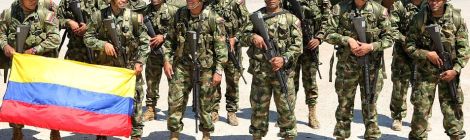
    Exporting (in)Security? Questioning Colombian Military Engagement in West Africa

    With skills and expertise in fighting insurgencies and drug trafficking networks, Colombia’s armed forces are increasingly being sought for engagement in similar security challenges in West Africa. But increasing Colombian engagement gives rise to a number of important questions – not least of which is the goal and expected outcomes of replicating militarised approaches to the war on drugs that have already failed in Latin America.

    Read Article →

  • Challenges Facing Women in Peacekeeping

    Author’s Note: This opinion peace is based on research conducted among South African Peacekeepers, published in the Journal of International Peacekeeping, 19 (2015) 227-248.

    The motivation to increase the number of women in peacekeeping is based on the assumption that women peacekeepers enhance the access of local women to services, improve community relations, reduce the incidence of sexual and gender-based violence, build the capacity of local women and break down traditional views that discriminate and marginalize women. The extent to which women are able to perform these functions needs to be interrogated, as much of this rhetoric does not reflect the realities that women face on the ground. This is reflected in the findings of a study conducted among South African male and female peacekeepers returning from missions in the Democratic Republic of Congo (DRC) and Darfur, Sudan. The findings are revealing, often countering many of the above-mentioned essentialist claims.

    While there was general consensus that women peacekeepers are generally better at interacting with the local community, especially women and children, these claims were mostly context-specific. In the DRC, the female peacekeepers felt that they could reach out to women and children more readily. This was because ‘Sousa’ (as the locals call the South African contingent) tended to interact with the local community more than other contingents because they are mostly black, and could understand Swahili. This was not the case in Darfur, Sudan. Here, it was as if the local population (especially the local women) were afraid to speak to the peacekeepers, whether men or women. What this indicates is that not only gender, but race, the ability to speak the local language, and respect for the local culture are crucial determinants in fostering relations with the local community. Similarly, their ability to serve as norm-breakers, challenging existing stereotypes was met with some misgivings, given the fact that most often their identity was concealed behind their helmets and because of their low numbers.

    In terms of improving the security of local women and children, female peacekeepers felt that locals placed more trust in male soldiers because they do not know how to judge female soldiers. Female peacekeepers also reported that they did not really know what the specific security concerns of women were, because little attention was paid to issues of gender in peacekeepers’ mission-readiness training. Thus, they had little understanding of the underlying gender power relations in the communities. Nor did they know how to address or assist victims of sexual violence. In fact, most knew very little if anything about the gender dynamics in these communities and in some cases there was a general lack of cultural awareness. This influenced their ability to identify what the specific security needs of women were, how to protect them, or where to refer them if they needed to deal with cases of sexual violence.

    Members of the Guatemalan contingent of the United Nations Stabilization Mission in Haiti (MINUSTAH) participate in a medal award ceremony in recognition of their service. 10/Jun/2009. Port au Prince, Haiti. UN Photo/Marco Dormino. www.unmultimedia.org/photo/

    Members of the Guatemalan contingent of the United Nations Stabilization Mission in Haiti participate in a medal award ceremony in recognition of their service. Image by UN Photo via Flickr.

    What this means is that the ability of female peacekeepers to make a difference is limited by their training, which is gender-neutral and where they are expected to act and perform functions ‘just like men’. The rationale for this is that when deployed on peace missions, all have to carry the same equipment, work in the same environment and face the same adversaries in the course of duty. This is specifically the case where they are drawn from the infantry environment and have to perform infantry-like functions. Added to this, women peacekeepers report being ‘othered’ on various levels. Physically, they are ridiculed for their lack of physical strength and endurance, especially on foot patrols. Psychologically and emotionally, the operational environment is seen to be more taxing for women, given the extreme forms of sexual violence against women. Women were also perceived to pose a ‘gendered’ security risk, especially in hyper-masculine contexts where women are seen as sexual objects, are used as weapons of war where they threaten existing gender power relations that affect male dominance.

    This results in female peacekeepers facing many different forms of gender and sexual harassment which are used to denigrate them. Some of the female peacekeepers who served in positions of authority explained how they were often not respected, ignored, undermined and faced frequent sexual advances. Such forms of gender harassment occurred often, but not considered serious enough to evoke punitive action. This was simply explained away in terms of existing patriarchal relations that could not be changed. However, in some cases this evoked open hostility towards them “because in Sudan it is considered disrespectful to their culture for women to be soldiers, carry rifles and wear trousers”. Besides this, the threat of being raped served to further erode women peacekeepers’ agency, especially where they were excluded from certain operations which were considered too dangerous by their commanders. In this way, not only were old gender stereotypes replicated, but they are used to undermine the prospect of an equal partnership between men and women.

    What this shows is that even where national armed forces espouse gender equality, the peacekeeping environment remains hostile to women. Multiple masculinities, patriarchy and sexism undermines the ability of women peacekeepers to imbue alternative ways of dealing with and resolving conflict. The only way to ‘regender’ the military is to stop privileging masculinity over femininity. This is unlikely to happen where peacekeeping remains steeped in the warrior ethos and where the ‘feminine’ is not valued, is suppressed, seen as a threat, or a liability. What is needed is for women to become less complicit and more assertive in making their voices heard. However, military women themselves typically do not embrace feminine values given the ‘nature’ of their work. They typically conform to and assimilate masculine values, norms and practices in order to be judged as capable soldiers. They have to assume what many term as a ‘militarized masculinity’, understood as the ability to ‘demonstrate an absence of emotion and a willingness to use violence’—they must excise all that is perceived to be feminine.

    This makes it difficult to achieve the ideals advocated by UNSC Resolution 1325. The aim of this resolution is not only to increase the number of women serving in the military, but to mainstream gender by bringing about a greater sensitivity to the different effect that war has on men and women. In this regard, there has been little progress as the number of military women serving on peacekeeping missions have remained around 3 per cent. Even in the South African armed forces where women now represent 26 % of uniformed personnel and up to 15% of those deployed on peacekeeping missions, there seems to be little qualitative change in bringing about a more acrogenous military culture. This necessitates a closer introspection in terms of how women are trained, deployed and supported on peacekeeping operations. It raises the question as to whether a gender-neutral approach to gender integration in the military does not in fact perpetuate gender inequality. Clearly one cannot bring about a different perspective to war and peace if women are expected to embrace masculine norms and values and where gender difference is not recognised and valued.

    Lindy Heinecken was formerly a researcher and Deputy Director of the Centre for Military Studies (CEMIS) at the South African Military Academy, where she worked for 17 years. Since 2006 she has been at the Department of Sociology and Social Anthropology, Stellenbosch University, South Africa and is currently Professor of Sociology lecturing in political and industrial sociology. The main focus of her research is in the domain of armed forces and society where she has published widely on a range of issues including military unionism, the management of diversity, gender integration, HIV/AIDS in the military and more recently on the experiences of military personnel on peace operations. She serves on numerous academic boards, including the Council of the Inter-University Seminar on Armed Forces and Society, the Board of the International Sociological Association’s (ISA) Armed Forces and Conflict Resolution Group, and the National Research Foundation (NRF). She serves on the editorial board of the journals Armed Forces and Society and Scientia Militaria: South African Journal of Military Studies. She is a NRF B rated researcher and serves as one of the pool of specialists conducting research for the South African Army.

  • Environmental security in the Arctic: the ‘Great Game’ vs. sustainable security


    Arctic InsecurityGenerally, the Arctic has elicited only minor attention outside the countries whose borders or territories fall within the loosely-defined region. But that is changing rapidly. As Kuupik Kleist, the former Prime Minister of Greenland, put it,

     “The Arctic used to be the last frontier. Now it seems we are at the center of the world.”

    While rapidly deteriorating environmental security in the region poses a grave threat to many regions of the world, the focus on militarized control of the area masks the very real need to mitigate further damage to the climate and increase our adaptive capacities to the inevitable climatic changes that will come in the 21st century.

    Realpolitik or Environmental Security?

    Indeed, much has been made lately about the ongoing and profound changes that are reshaping the Arctic region. There is no shortage of reports that detail the ways that climate change is forcing the region’s physical, social, and political environments into flux. Arctic sea ice is melting at an increasingly rapid rate, with the very real possibility that sometime between 2020-2050, the Arctic will soon experience its first (and undoubtedly not its last) sea ice-free summer. The effects of warming temperatures are likely to be dramatic: it will degrade habitats for vulnerable species, including polar bears and seals, and will accelerate and compound the effects of climate change, like volatile weather patterns and rising sea levels. A recent article in the journal Nature concluded that the long-term economic costs from a warming Arctic could reach $60 trillion, almost equal to the entire economic value of the world economy in 2012.

    But in the face of these worrying trends, discussion has instead focused on the economic opportunities offered by the ‘opening up’ of the Arctic, including the creation of new shipping routes and increasing the accessibility of fossil fuel reserves. The area north of the Arctic Circle is said to contain about 30% of the world’s undiscovered gas and 13% of the world’s undiscovered oil. The Governance of newly opened shipping lanes like the Northwest Passage will remain a contentious political question. While the region has thus far suffered from general neglect and inattention, it is unrealistic to expect that to continue in the future.

    Indeed, it is already becoming clear that the Arctic is the site of ongoing militarization. Recent security maneuvers have increased state control over the farthest reaches of state territory. In 2007, Russia planted its flag underneath the North Pole and resumed strategic bomber patrols over the area, echoing  its Cold War past. Canada’s official Arctic Foreign Policy proclaims “the first and most important pillar towards recognizing the potential of Canada’s Arctic is the exercise of our sovereignty over the far north.” Border disputes in the Arctic have led to strained relations for decades between Canada and Denmark as well as between Russia and Norway. Both cases have been peacefully resolved in the last few years. Yet, sovereignty and security have both been used to justify the proliferation of military ice-breakers, patrol ships, the creation of new deep water ports, and the deployment of military personnel including the Northern Rangers in Canada and the Danish Arctic command (which are both relatively small in terms of active personnel). Joint military operations conducted by Arctic countries (excluding Russia) such as Operation Cold Response and Operation Nanook have also contributed to the militarization of the Arctic.

    It is worthwhile then to examine how sustainable forms of security are useful in the Artic context. What is needed principally is an increased awareness of the integrated connections between the natural environment and security. Large-scale changes to the natural environment are security threats.  Whether through an increase in extreme weather events causing enormous health and economic costs; rising sea levels leading to coastal flooding and climate-induced migration; or desertification, which devastates crop production, the effects of environmental change are severe. The task then in the Arctic is to combat the tendency to view environmental degradation as an opportunity for national gain, which will do little to counter-act the severe global effects. Such conventional, strategic responses inevitably lead only to further suspicion, distrust, and discord. The Arctic is one of the clearest manifestations of this tendency.

    The Arctic will be without question a region of high strategic importance in the 21st century. Unfortunately, countries are likely to view the Arctic with an eye to using the region to bolster domestic support for increased militarization, surveillance, and sovereign control over vast, distant, territorial ‘frontiers’.  All told, Arctic security remains wedded to traditional, state-centric military threats despite the fact that the threat of outright conflict is as remote as the farthest reaches of the Arctic region itself. These approaches may be predictable, but they will contribute little to alleviating the complex, interrelated, and underlying drivers of insecurity in the Arctic region.

    Demilitarizing the Arctic

    So is the goal then to “demilitarize” the Arctic? Would the diverse sets of international issues arising from changes in the Arctic be better positioned in political terms, away from the exceptional demands that military thinking requires? Perhaps strengthening political institutions like the Arctic Council can alleviate the Arctic “rush” and ensure a lawful forum for state and indigenous negotiations in the Arctic. Formed in 1996, the Arctic Council has been the primary diplomatic forum used to facilitate cooperation, discussion, and negotiation. It was formed by eight Arctic countries (Canada, Denmark [Greenland], Finland, Iceland, Norway, Russia, Sweden, and the United States) and includes six Arctic indigenous organizations and other Arctic inhabitants. Recently, the Council accepted six new non-Arctic states as non-voting Observer states, joining six others already granted observer status. The new inclusions, China, India, Italy, Japan, Singapore, and South Korea, may appear at first glance to be curious admissions. Certainly they represent important economic and military powers but most exist far from region itself. However, after initial reticence from members like Canada, the Council accepted their inclusion on the basis of strengthening the Council’s legitimacy by undercutting any emerging alternative organizations, like the Arctic Circle Forum from usurping its authority.

    We should celebrate the decision by Council members to include new observer states: it allows these states to increase their awareness of Arctic issues and vulnerabilities, it opens up new avenues for cooperation and confidence-building measures, and it rightly spreads the responsibility for protecting the Arctic across the world. But while the Arctic Council remains an enduring and hopeful sign for managing political relations, the Council alone should not be expected to transform the underlying logic that continuously renders environmental security in strategic terms, obscuring the practices which have led to Arctic insecurity in the 21st century.

    The driver of Arctic insecurity is not simply the continued militarization or the politicization of the region by its encircling states. The reality is much more complex and multifaceted. In effect, by continuously focusing on security in these strategic terms, we can’t see the forest for the trees. The Arctic “great game” is not simply a metaphor we might use to romanticize geopolitical maneuvers; it is an expression of the profound material environmental shifts that are occurring rapidly and are a result of anthropogenic drivers related to modern carbon-based societies. The continual free-fall in terms of Arctic ice levels and the fact that the region has been warming twice as fast as lower latitudes is likely to have far more important, long-lastingand damaging global effects than a hypothetical, always-over-the-horizon conflict between states competing to protect their localized interests. That is a popular story that obscures the much more difficult and insidious problems related to diagnosing and combatting climate change.

    The fact that most states view the opening up of new Arctic sea lanes as a means to exploit vast and newly accessible energy sources reflects long-dominant understandings of both security and the environment. If our understanding of both Arctic security and the Arctic environment continues to be reduced to the international scramble for untapped resources and for newly opened “shipping lanes” (or melted sea ice, if you will), it is unlikely that the hugely alarming and damaging environmental effects of climate change will ever be truly overcome.

    It is essential then that environmental security in the Arctic is recast away from traditional and dominant security practices of resource development, national sovereignty promotion, and increased surveillance. While these practices will remain in the future, we still should encourage a much more profound rethink that places greater value not simply on increasing cooperative intergrovernmental forums (though these are important), but on greater collaboration with indigenous populations, on studying the global environmental interconnections between the Arctic and other regions, and on aggressively combatting climate change. Adaptation to the inevitable changes occurring in the region will of course require coordination and strategic planning, and the potential for conflict will be ever-present. But an overreliance on familiar narratives of climate change-induced conflict obscures the much more complex drivers of Arctic insecurity, namely our destructive relationship with the environment and its connection to conventional, strategic security logic.

    Cameron Harrington is an Adjunct Professor of Political Science at King’s University College and Brescia University College, at Western University (Canada), where he teaches in the areas of environmental politics and international relations. His Ph.D thesis, (pending completion September 2013) builds a framework to combat water insecurity in the 21st century by focusing on the ethics of security.

    Cameron tweets via @camharrington and can be reached at [email protected] 

    Image source: lafrancevi (HMCS CORNER BROOK on arctic patrol during Operation Nanook)

  • Expanding Contracting: The Private Sector’s Role in Drone Surveillance and Targeting

  • Targeted Killings: A Note on Effectiveness

    Since the 9/11 attacks, and the ensuing “war on terrorism,” the U.S. government has engaged in a series of controversial counterterrorism policies. One such policy has been targeted killings, which have been used to try and eliminate the senior leadership of the global jihadist movement. How effective has the practice been?

    The recent high profile terrorist attacks perpetrated in the U.K. have generated a resurgence in the debate surrounding counterterrorism tactics. Targeted killings, defined by Alston as the “intentional, premeditated and deliberate use of lethal force, by States or their agents…against a specific individual who is not in the physical custody of the perpetrator,” are one such tactic; frequently employed, yet extremely controversial.  This practice most often takes two forms: kill/capture missions and unmanned aerial vehicle assaults (UAVs). Certainly the most well known of the former is that of the May 2nd, 2011 Navy SEAL raid on Usama bin Laden’s Pakistan compound. The use of UAVs has become much more common, with a recent Director of National Intelligence report indicating that 473 drone strikes had resulted in the deaths of around 2,500 terrorists and between 64-114 civilians.  Such civilian fatalities, criticized by independent organizations to be a low estimate, illustrate the largest criticism of the policy; that it can be, as it is even from China’s perspective, “a blank space in international law (that is) subject to abuse”.

    These issues have kindled a spirited discussion among scholars, but have yet to influence the policy’s role as a favoured strategy amongst policymakers.  Former President Obama, whose administration was responsible for the program’s significant expansion, declared just last year that “none of ISIL’s leaders were safe” and they were “going to keep going after them”. President Trump has also indicated that he plans to continue with the program, recently noting that “the terrorists and extremists and those who give them aid and comfort must be driven out from our society forever”.

    It would seem that the moral and legal consequences of targeted killings have been, at the very least, overlooked given the intense focus and leeway that has been granted to combating the global jihadist movement (GJM). However, this preference for the use of targeted killings as counterterrorism has become increasingly hard to rectify given the mounting lack of empirical evidence to support its effectiveness.  Indeed, a host of previous investigations into contexts both within and outside of the GJM has yielded a complex picture. This picture is one that does not necessarily indicate resounding ineffectiveness, but one that does not garner particularly strong support for the strategy either. Rather, conclusions regarding the capability of targeted killings vary by how the incident is perceived (discriminate vs. indiscriminate violence), what outcome is studied (group desistance; frequency versus severity), the type of leader killed (position in the group; presence of a tribal elder), and characteristics of the organization (size, structure, and ideology).

    Evaluating effectiveness

    Image credit: U.S. Air Force photo/Lt Col Leslie Pratt.

    Taking into account these nuances, my own work demonstrates that this policy has largely failed to decrease GJM-related terrorism, utilizing the Global Terrorism Database’s definition of, “the threatened or actual use of illegal force and violence to attain a political, economic, religious, or social goal through fear, coercion, or intimidation.” Rather, such killings, in the form of both kill/capture and UAVs, have been unsuccessful at decreasing the especially noxious outcomes resulting from jihadi terrorism; namely, casualties, along with the more detrimental attacks involving high civilian deaths and suicide attackers. Perhaps even more disconcerting, the deaths of certain al Qa’ida leaders like that of al-Awlaki, the infamous cleric responsible for many a terrorist’s radicalization, have led to an increase in incidents, or a backlash effect.

    Examining a slightly varied predictor in the form of monthly killings has yielded similar conclusions, again in the form of an increase in casualties. Still other al Qa’ida leaders’ deaths have produced decreases in terrorism incidents, while at the same time increasing other types of attacks. This displacement phenomenon is not new to studies of crime and terrorism, but adds to the general conclusion that targeted killings have yet to render consistent successes.

    While I have also discovered support for the notion that targeted killings are an effective deterrent, these findings are largely outweighed by the above. It would appear that this tactic, as one of the leading scholars on leadership decapitation Jenna Jordan notes, “is not enough to effectively fight a strong and emboldened terrorist organization.” Nevertheless, it may be too early to designate targeted killings a complete failure.  As Brian Forst has argued, “a failure to find is not at all the same as a finding of failure.” Certainly, other research has noted the short-term benefits like those present in the work of Patrick Johnston and Anoop Sarbahi, the lack of attacks on the U.S. Homeland, and the possibility that there are other purposes to the policy like that of retribution.

    Although not directly assessed in my work, the totality of countermeasure evaluations have become increasingly supporting of Laura Dugan and Erica Chenoweth’s contention that conciliatory, rather than punitive efforts, are the key to fighting terrorism. Actions like that of removing curfews, releasing prisoners, or even meeting to discuss issues have demonstrated their effectiveness in decreasing violence within the Israel-Palestine conflict. Even investigations outside the context of terrorism, like Matthew Dickenson’s study of Mexican drug-traffickers, are similarly reflective of the idea that incentives rather than punishments offer the most promise. Specifically, Dickensen has suggested that improving both the economic and law enforcement environments are better counter-narcos strategies than that of leadership removal. Jordan has also suggested that al Qa’ida’s organization, which tends to be bureaucratic, and its communal support, have been integral to its ability to rebound from killings. While such killings have the potential to affect the former, it is the opinion of this researcher that conciliatory efforts may have the best shot at addressing the latter.

    Conclusion

    All in all, and given the issues surrounding terrorist negotiation coupled with an ideology that is fraught with human rights’ violations, conciliatory actions are likely to remain unpopular. As the U.S. continues to fight a movement that has been responsible for a quarter of all deaths and injuries from terrorism, the policy of targeted killing is likely to remain.  Perhaps, at the very least, this strategy could be coupled with other efforts that address the larger causes and correlates of terrorism, like that of larger macro-level predictors.

    Jennifer Varriale Carson is an Associate Professor of Criminal Justice and the Coordinator of Undergraduate Research at the University of Central Missouri.  She holds a Ph.D. from the University of Maryland in Criminology and Criminal Justice.  Her work focuses on policy evaluation, particularly the use of quasi-experimental methods in assessing counterterrorism efforts, and can be found in a number of outlets including Criminology and Public Policy, Journal of Quantitative Criminology, and Deviant Behavior.

  • The Political and Emotional Power of Chemical Weapons

    Chemical weapons elicit a very specific emotive and political response from populations, namely, anxiety. What are the drivers behind the fears surrounding chemical weapons? 

    “War, like revolution, is founded upon intimidation. A victorious war…destroys only an insignificant part of the conquered army, intimidating the remainder and breaking their will…Terror…kills individuals, and intimidates thousands”.

    Writing in 1920, Leon Trotsky thus attributed the power of war and terrorism to its psychological effect. The ability to intimidate and coerce is the key strategy in a world in flux; fear and uncertainty are the weapons of choice for terrorist groups. The observation that terrorists endeavour to kill few and create fear among many has been woven tightly into the fabric of terrorism discourse for decades.  

    But the current century has witnessed an evolved threat paradigm in which the aim of a new type of terrorist group is to achieve “a lot of people watching and a lot of people dead”. Chemical weapons are often presented as the apex of such a goal. Yet increasingly it is argued that chemical weapons are merely a tool to elicit fear that far exceeds their actual destructive clout. This fear is a very human response. The psychological power of chemical weapons is intrinsically linked to their contaminant nature, indiscriminate harm and ability to undermine an individual’s sense of security.

    Are chemical weapons really weapons of mass destruction, with a devastating impact on infrastructure, life, and property? Or, are they weapons of terror? Distinguishing between the two, this article queries how uncertainty feeds the fears surrounding chemical weapons. To what extent does the weapon of terror moniker depend on the concept of mass destruction?

    The enduring power of contamination
    new-york-national-guard

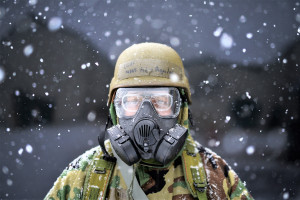
    Image credit: New York National Guard/Flickr.

    Chemical weapons have an ancient history. Early hunter-gatherers learned to poison their arrows to ensure an effective kill. Poison gas as a weapon of war was recorded by Thucydides in 428 BCE. The scorched earth tactic of poisoning wells using the rotten corpses of people who had died from infectious disease was used across the Ottoman era and Middle Ages. Chemical weapons have been utilised – or attempted – in many conflicts since then. The British government, for example, approved the use of sulphur fumes at the siege of Sebastopol during the Crimean War. Even in Afghanistan and Iraq, the US Army used white phosphorous grenades, as did the British.

    As scientific advances began to allow a greater multiplicity of chemical agents in industrial quantities, concerns mounted over potential consequences. In recognition of the sentiment that injury or death by poison is inhumane, the Hague Conventions (1899 & 1907) outlawed the battlefield use of poisoned weapons and toxic gas via projectiles. The declaration prohibiting the dissemination of asphyxiating and deleterious gases was ratified by all major powers except the US which refused to sign, arguing that projectiles as detailed in the convention had not yet been fully developed.

    The use of poison has long been regarded as morally reprehensible. This harks back to disdain inherent to poisoning and its associations with chemical weapons: in contrast to the hero’s death by sword in battle, poisoning is regarded as cowardly and secretive. Yet this became more acute in the aftermath of the Hague Conventions: moral indignation follows the breaking of accepted conventions, shattering indoctrinated agreement as to non-use. In the early 20th century, both Allies and Axis powers were reluctant to be the first to breach the law.

    Even General John Pershing, having established the U.S. military’s first gas warfare unit in 1917, denounced chemical weapons as “abhorrent to civilization…a cruel, unfair and improper use of science…fraught with the gravest danger to non-combatants”. By the end of WWI, over 124,000 tonnes of chlorine, phosgene and mustard gases had been dispersed, causing approximately 90,000 deaths and 1,230,853 injuries and earning WWI the moniker, “the chemist’s war”. Though the development of gas masks reduced the number of casualties in the later years, the scale of chemical warfare had set the precedent for a lingering psychological and moral response. That even Hitler refused to use chemical weapons on the battlefield (if not in the gas chambers) cemented their standing as a wholly unacceptable weapon of war.

    For decades, the threat from chemical weapons remained largely in the hands of states. Almost two decades since the Chemical Weapons Convention came into force outlawing the production, stockpiling, and use of chemical weapons, the threat of non-state actors obtaining or producing chemical weapons has become of increasing concern. Large quantities of improperly disposed unconventional weapons have been unearthed in recent decades. After WWII, for instance, tons of mustard gas, sarin, soman, tabun, hydrogen cyanide and many other agents were left in storage facilities near towns and cities, buried in landfills across the world or dumped at sea. During the Cold War, chemical weapons facilities proliferated across the world, shrouded in secrecy. Throughout this time, in the Soviet Union thousands of tonnes of chemical materials were simply dumped in undisclosed, unchartered locations. With the collapse of the Soviet Union, some chemical research units were abandoned, leaving available a mass of untraced and unacknowledged weaponry.

    Chemical weapons and non-state actors

    Various terrorist organisations have spent years working on developing chemical weapons, of which the so-called Islamic State (IS) is but one. The eleventh volume of al-Qaida’s Encyclopaedia of Jihad provides instructions on how to construct chemical and biological weapons, although al-Qaida seems to have balked at actually using such weapons. Where groups have succeeded in their use, they have created vast shockwaves, with minimal outlay. In 1978, a Palestinian group injected non-lethal quantities of mercury into Jaffa oranges leading many countries to cease imports, jeopardising a market worth $172 million to Israel at the time. In 1989, terrorists reportedly laced Chilean grapes with cyanide, costing the Chilean fruit industry $333 million, despite the chemical only having been identified in two grapes.

    In 1995, Aum Shinrikyo unleashed the largest gas attack in peacetime history on several lines of the Tokyo subway, killing 12 people and injuring thousands. Though the proportion of people killed was relatively low compared to numbers injured, the attack demonstrated the ability of non-state actors to obtain and use significant quantities of non-conventional weapons. It has subsequently been cast as a “crossing of the Rubicon” (to pass a point of no return), foreshadowing further similar attacks.

    Chemical anxieties

    Chemical weapons elicit a very specific emotive and political response. When the threat and impact of terrorist attacks using conventional weapons against Western targets is so real, why does the as-yet unrealised potential for chemical terror attacks in the West retain a particular power over our thinking?

    Attempts to explain the anxieties surrounding chemical weapons remain incomplete when considered alongside conventional weapons with similarly cruel capabilities. Why, as in Aleppo or Homs, do we regard using explosives to tear people apart as more humane than burning or asphyxiating them to death? Weapons such as “soft nosed” bullets (which disintegrate upon entry to the body) were banned alongside asphyxiating gases by the 1899 Hague Conventions, yet they do not receive such global censure.

    Part of the concern specifically attributed to chemical weapons lies in the human fear of unpredictable, adverse events such as the potential to develop illness after exposure. The most terrifying threats are those perceived not just as lethal but as dehumanising. The fear of chemical weapons is therefore, at least partially, a result of their potential to cause insidious harm.

    So the potency of chemical weapons lies in the unknown and in how they fester in the imagination of those who have felt threatened by them. Chemical weapons attacks are distinguished by the propagation of functional somatic – medically unexplained – physical symptoms, bestowing unconventional weapons a “psychogenic” hallmark. A result of the potential for chemical weapons to yield psychiatric illness, the notion that the long-term psychological consequences of unconventional weapons may be worse than acute physical, is popular in psychological circles. The many chemical incidents in which low-risk patients far outnumbered those whose exposure could be confirmed, contribute to this “weapon of terror” epithet: the perception of exposure to a toxin is a greater determinant of health status and anxiety than actual exposure. After the Aum Shinrikyo attack, over 4,000 people with no sign of exposure sought medical care.

    Many chemicals are perceived by the public as having a high to extreme degree of uncertainty; many, too, elicit strong anxiety, which can drive somatic symptoms. In order to form judgement under uncertainty, people form intuitive assessments upon relevant information. Attempting to decrease their uncertainty, people may apply preconceived beliefs (for instance, that chemicals are dangerous) to symptoms, even if benign, constructing a causal link between symptom and event.

    Consider, for instance, cases in Israel, a nation so subject to the corollaries of war that it has been termed a natural station for the study of stress. During the 1991 Gulf War, Israel endured 18 Scud ballistic missile attacks from Iraq. The stress of conventional bombardment was compounded by the fear that the missiles contained nerve agents; residents had been instructed to carry gas masks and prepare for Iraqi use of biological or chemical weapons. Fearing contamination, over 1,000 patients attended medical facilities with symptoms such as tremors and breathing difficulties. Only 22% of patients had been genuinely injured: none by biochemical agents. 27% of casualties had mistakenly injected themselves with atropine, an antidote to nerve agents.

    Conclusion

    There are two schools of thought explaining the power of chemical weapons. On one hand is the argument that chemical weapons can be harnessed as weapons of mass destruction. This bears significant political pull. On the other, there is scepticism as to their capabilities, where instead they are branded weapons of psychological terror. The schism between “weapon of terror” and “weapon of mass destruction” is rarely acknowledged. Conflation of the two allowed Tony Blair to drawn upon their psychological power to justify the 2003 invasion of Iraq, which shattered the Middle East.

    The truth lies somewhere in between. The psychological and physical fallout of chemical weapons are, essentially, two sides of the same coin. Feared or sustained physical harm gives rise to short-term anxiety and long-term psychological distress. Chemical weapons victims may never be definitively free from the physical effect, thus the psychological effects may endure. Uncertainty directly impacts upon fear, and is thus one of the most influential features of human history. As human experience is a complex nexus of affect, behaviour, cognition and physiology, chemical weapons are disturbing for their ability to bear upon each, fracturing this integration. Uncertainty can become visceral. While war does not accommodate certainty, the potential use of chemical weapons will feed doubt and continue to draw substantial political influence.

    Clare Henley divides her time between acting as Assistant to the Director of the Oxford Process, and as Project Officer at Refugee Trauma Initiative. She previously worked on the Humanitarian Impact of Nuclear Weapons Initiative at Chatham House, and at the Maudsley Hospital’s Centre for Anxiety Disorders and Trauma. Prior to this, she interned on a decontamination project with the Behavioural Science team at Porton Down, Public Health England. Clare has an MSc in War and Psychiatry from King’s College London, where her thesis focused on the psychological impact of chemical, biological, radiological and nuclear weapons. Her other work focused on topics such as the impact of war on child soldiers and of being held hostage. She also has a BSc in Psychology from the University of Exeter.

  • Intersecting Commitments: the Responsibility to Protect and the Women, Peace and Security Agenda

    Introduction

    The acknowledgement of gender issues through the Women, Peace and Security (WPS) agenda marked a watershed moment for women’s rights. Despite this, the Responsibility to Protect (R2P) framework remains gender-blind. I argue that R2P and the WPS agenda share overlapping commitments and mutually beneficial and reinforcing protection mandates. Through three intersecting commitments – prevention and early warning systems, gender protection in peacekeeping, and women’s participation in post-conflict reconstruction – careful alignment between R2P and the WPS agenda could overcome this silence and move towards achieving more sustainable security.

    The Responsibility to Protect and Women Peace and Security

    Systematic human rights atrocities perpetrated against individuals based on their ethnicity, gender, and race have framed contemporary political discourses. With the international community’s inability to collectively respond to prevent mass atrocities and other severe humanitarian emergencies, former United Nations (UN) Secretary-General Kofi Annan spearheaded the challenge to create a norm permitting states to intervene in another sovereign state in the event of ‘gross and systematic violations of human rights that affect every precept of our common humanity’. Spurred on by  failures of the international community to prevent genocides in Rwanda (1994) and Srebrenica (1995), the International Commission on Intervention and State Sovereignty (ICISS) was established in September 2000 to address how and when the international community should act to prevent genocide, war crimes, ethnic cleansing and crimes against humanity. The report entitled “The Responsibility to Protect” (R2P) was released in December 2001. The unanimous adoption of R2P at the World Summit in 2005 established its prominence as a normative framework within the international community. The use of R2P as rhetorical backdrop to the Libyan intervention in 2011 via UNSC Resolutions 1970 and 1973 and the inaction in responding to the crisis in Syria demonstrates the prevalence of R2P in international discourse. Furthermore, R2P is interwoven with existing international principles, obligations, and peacebuilding initiatives. UN Secretary-General Ban Ki Moon asserts that R2P rests upon three interrelated, central pillars – responsibilities of the state to protect its population from mass atrocities; international capacity building to ensure states meet their protection responsibilities and prevent mass atrocities; and collective and timely responses through diplomatic, humanitarian and political means with coercive military action as a last resort.

    Female United Nations police officers of the United Nations Mission in Timor-Leste (UNMIT). 29/Nov/2007. UN Photo/Martine Perret. www.unmultimedia.org/photo/

    Female United Nations police officers of the United Nations Mission in Timor-Leste (UNMIT). Image by UN photo via Flickr.

    The Women, Peace and Security (WPS) agenda gained traction on the international peace and security platform following the adoption of UN Security Council Resolution 1325 in October 2000. The WPS agenda is the most comprehensive articulation of women’s rights and gender issues in international peace and security. It establishes a nexus between conflict prevention and women’s rights, highlighting the relationship between gender inequality and conflict. Resulting from the Fourth World Conference on Women in 1995 in Beijing, and the pivotal Beijing Platform for Action which named ‘Women and Armed Conflict’ as one of twelve areas of critical concern, the NGO Working Group on Women, Peace and Security was formed to advocate a UNSC Resolution focused on women’s unique contribution and experiences of conflict. Through lobbying and advocacy, the NGO Working Group played a vital role in drafting the resolution and through UN Resolution 1325 successfully complicated the popular narratives that stereotyped women as either victims or inclusive peacebuilders. UN Resolution 1325 directs policymakers to consider all of women’s experiences in conflict and links women’s rights to international peace and security. The adoption of an additional seven resolutions builds upon 1325 and make up the WPS agenda. It rests upon a four-pillar mandate; prevention of violence and derogation of rights; protection from violence; participation in peacebuilding and post-conflict reconstruction; and relief and recovery. Laura Shepherd and Jacqui True broaden ‘relief and recovery’, to include identifying the structural social, political and economic conditions required for sustainable and lasting peace. Specifically the WPS agenda addresses sexual and gender-based violence (SGBV) in conflict, measures to ensure women’s participation in decision-making processes and post-conflict programs, gender mainstreaming in UN activities and peacekeeping operations, and gender-sensitive prevention frameworks. The WPS agenda provides basis for international engagement with gender issues. With R2P, the WPS shares a commitment to improve human security and revealing and preventing women’s human rights abuses through international engagement. Disappointingly, despite both frameworks emerging sharing similar underpinnings, R2P and its community continue to fail to address gender issues encompassed within the WPS agenda.

    R2P did not embrace the central messages of Resolution 1325 nor were points of synergies explored where there was a lack of dialogue and acknowledgement towards gender issues. From the outset, gender was excluded from the original formulation of R2P with only one of the 12 commissioners being a woman and only seven of 2000 sources consulted including gender. Women within the original R2P document were framed in terms of vulnerable populations in need of protection. ‘Women’ were mentioned three times only in reference to ‘rape and sexual violence’, which was mentioned seven times, where SGBV falls under crimes against humanity, war crimes and ethnic cleansing. No reference was made of women being active participants and agents in conflict prevention, protection and post-conflict reconstruction. This is despite the transformative possibilities of including aspects of the WPS agenda. R2P disregards WPS as a paradigm for conflict prevention and its centrality to peace and security. Here, as discussed below, three common intersecting commitments could overcome this disconnect.

    Intersecting Commitments

    • Prevention and early warning systems

    The inclusion of gender issues into existing early-warning frameworks and systems may illuminate potential and/or existing R2P situations. Studying macro- and micro-level changes to women’s lives reveals the escalation of violence and derogation of individual rights in hyper-masculinised and militarised societies. Gender-sensitive indicators include average levels of female education, impunity towards SGBV, increased kidnappings, sex work, female heads of households and domestic violence. Moreover, gender-sensitive indicators are not synonymous with women-sensitive indicators, but can monitor aggression and militarisation within a society, such as the persecution of men that do not take up arms. UN Women implemented several context-specific programs that have resulted in a comprehensive how-to guide of 85 gender-sensitive indicators that provide a holistic early warning system. Furthermore, through empirical analysis Sara Davies and Jacqui True found strong connections between systemic gender inequality and discrimination and the use of SGBV in conflict and non-conflict settings.

    Despite the benefits of including gender-sensitive indicators, gaps in women’s participation in early-warning initiatives have not been overcome. The UN Office of the Special Adviser on the Prevention of Genocide and the Responsibility to Protect have not addressed the role of gender inequality or gendered violence in early warning systems. A recent framework of analysis on the prevention of R2P crimes continues to situate women in the narrative of ‘vulnerable population’ with children and the elderly, and in regards to sexual violence and reproductive rights. This is despite, as Davies and True argue, systemic and structural gender inequality is a potential early warning factor for preventing mass SGBV.

    Since gender inequality increases the likelihood of R2P crimes any strategy of prevention must address gender norms that oppress and marginalise women. Gender-sensitive indicators highlight structural political, economic and social inequalities that maintain gender inequality in a given society that impacts post-conflict reconstruction and conflict protection.

    • Gender-sensitive Protection in Peacekeeping Operations

    The protection pillar of WPS stresses the full involvement and participation of women in the maintenance and promotion of international peace and security. This includes gender mainstreaming in all peacekeeping missions and the addition of gender units and advisers. Providing an official female presence in conflict areas, refugee and Internally Displaced Persons (IDPs) camps is essential to improve access and support for local women to communicate in an official capacity. Women can approach each other more easily in female-only settings where women may be prohibited to talk to male strangers. Moreover, SGBV is more likely to be reported between women. However, as of February 2016, only 3.34 per cent of military and 9 per cent of police were female. Although there is at least one female in every peacekeeping force, the number varies from 1 woman out of 17 deployed in the UN mission in Afghanistan to 799 women out of 17,453 deployed in the UN-African Union Mission in Darfur. Of 105,315 deployed peacekeepers, women only comprise 4.05 per cent. Although numbers have improved since the adoption of UN Resolution 1325, increases have been marginal and reflect the low number of women included in UN peace building efforts.

    Furthermore, implementation of gender-sensitive protection needs to move beyond the ‘add women and stir’ policy. Rather, WPS knowledge needs to be utilised in peacekeeping operations and wider UN peacebuilding efforts. For instance, the assumption that men are heads of households and therefore assistance being distributed to mainly men does not reflect post-conflict realities. Women are often widowed during and after conflict and adopt non-traditional roles such as heads of households. Since post-conflict programs and assistance does not recognise this, women are forced to take drastic measures to support their family and may take part in exploitive aspects of peacekeeping economies, like the sex industry. The misconception could be countered through gender units, gender-awareness training on more than an ad hoc basis and extensive comprehension of WPS.

    • Women’s participation in post-conflict reconstruction.

    The post-conflict phase is complex with many overlaps where the WPS agenda would assist states and the international community in post-conflict responsibilities. However, here I will focus on women’s participation in peace processes. Women’s involvement in peace processes is mentioned in every resolution of the WPS agenda. Evidence suggests that the inclusion of women at the peace table as witnesses, signatories, negotiators and mediators makes it 35 per cent more likely a peace agreement will last. Nevertheless, women’s quality participation in official capacities remains insufficient. Women and gender provisions have slowly started to be incorporated into peace agreements with a textual increase since the passing of Resolution 1325.

    However, by essentialising women as mothers, caregivers and victims, women are excluded from peace negotiations where, ironically, the cessation of hostilities is reliant on those who took up arms. I am not arguing that women are better peacemakers, but that their participation is vital to ensure that their experiences of conflict are acknowledged. Around the world, women lobby for participation to ensure their needs and security concerns are addressed. In Somalia, the Sixth Clan was formed in response to the five traditional Somali clans failure to include women in negotiating teams. Asha Hagi Elmi became the representative of the Sixth Clan in 2000 and in peace talks in 2002, becoming the first female signatory to a peace agreement in 2004. Peace processes must include women as more than lip service to inclusivity.

    Conflict transition provides a chance to create a more equal society by transforming the gendered relationships and identities that contributed to the production of violence. Women’s participation is essential to represent half the population during peace negotiations, to ensure explicit inclusion of women’s rights and gender provisions, and could have major implications for women’s social, political and economic status, and involvement in wider post-conflict initiatives. It is imperative that women are involved during that critical post-conflict transition to be enabled to affect positive changes.

    Conclusion

    Despite these areas of common engagement, R2P remains silent towards analysis and discourse surrounding the WPS platform. Both frameworks emerged at similar times and share central tenets of prevention, participation and protection, however women’s involvement in R2P has been grossly deficient. I have briefly demonstrated here, and examine in depth elsewhere, three areas of common engagement between R2P and the WPS agenda. I identify three common intersecting commitments – prevention and early warning frameworks, protection and gender-sensitive peacekeeping, and women’s participation in peace processes. Implementing gender-sensitive policies, legislations and programs will highlight the different lived experiences of men and women and the insecurities that arise during conflict and post-conflict reconstruction. R2P has much to gain from the WPS agenda and vice versa, where alliance with R2P and its community could aid the WPS agenda in addressing major gaps in its implementation. Alignment, both practical and normative, could provide an inclusive and holistic protection platform and encourage sustainable peace.

    Sarah Hewitt is a PhD candidate at Monash University, Australia with the Monash Gender, Peace and Security Centre. Her article,  ‘Overcoming the Gender gap: The Possibilities of Alignment between the Responsibility to Protect and the Women, Peace and Security Agenda’, was recently published in the Global Responsibility to Protect Journal. Sarah has also posted on Protection Gateway.

  • Shrinking space: The impact of counter-terrorism measures on the Women, Peace and Security agenda

    In an important year for the Women, Peace and Security agenda, women’s civil society organising is increasingly being impacted by global and national counter-terrorism regimes.

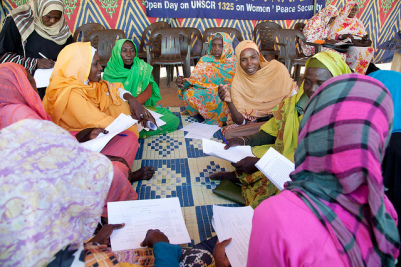
    2015 is a key year for women peace activists around the world. United Nations Security Council members will convene a high-level review in October 2015 to assess progress at the global, regional and national levels in implementing Security Council Resolution (UNSCR) 1325, renew commitments, and address obstacles and constraints.

    Women, Peace and Security conference

    North Darfur Committee on Women session on the UNSCR 1325 in Dar El Salaam, Darfur, 2011 Source: Flickr | UNAMID

    Fifteen years since UNSCR 1325 was passed, there are still a lot of challenges to overcome. However, women peacemakers and activists are as resilient as ever. They continue to push the Women, Peace and Security agenda’s important message forward, in environments that can be risky, unsupportive, or outright hostile.

    However, this resilience is closely tied to the existence of a vibrant civil society space. It is therefore important to assess new challenges to the building of peace and women’s rights posed by counter-terrorism measures.  This assessment must overcome the hesitancy that many peacemakers feel about discussing their experiences openly, fearing damage to their reputation as well as other repercussions.

    To this end, in early 2015 the Women Peacemakers Program (WPP), together with Human Security Collective (HSC) contacted a selection of partners in ten countries to gain insight into the multiple ways the counter-terrorism agenda is affecting their work for peace and women’s rights.  This article is based on the perspectives of the respondents from a range of countries worldwide, who were guaranteed anonymity.

    Global framework

    Post 9/11 counter-terrorism measures have impacted on civil society’s operational and political space in several ways. Legislation, although enacted at the national level, is enacted within, and responsive to, a global framework of measures. Terrorist listing regimes and partner vetting systems may hinder peace work in a variety of complex ways.

    One of the most significant areas for peace organizations is the framework that governs the prevention of terrorism financing through the non-profit sector. The Financial Action Task Force (FATF), a highly influential global consortium established in 1989 by the G7, has developed specific recommendations for non-profit organizations (Recommendation 8 – Best Practices: Combating the Abuse of Non-Profit Organisations) in its Anti Money Laundering/Countering Financing of Terrorism standard. This standard assumes that non-profits are vulnerable to abuse for terrorism financing. To date, over 180 countries have endorsed the standard and as such are subject to a peer evaluation by the FATF every 6 to 7 years. Receiving a low FATF rating immediately influences a country’s international financial standing.

    In recent years, a number of countries have started to use the FATF standard, and specifically Recommendation 8, as a pretext to clamp down on civil society space. Although countries often deny that it is the case, evidence is growing that upcoming FATF evaluations can have a preemptive chilling effect on civil society space. This is a direct result of governments’ desire to show the FATF that they are capable of preventing terrorist financing abuse through their non-profit sectors. In addition, some states are starting to pass more restrictive non-profit laws after an FATF evaluation – as if the evaluation itself serves to legitimize the drafting of such laws.

    Shrinking space

    The WPP research indicates that as a result of these mechanisms, a growing number of women activists around the world are experiencing growing pressures on their capacity to undertake peace and human rights activism, including restrictive NGO legislation, suffocating financial regulations, intimidating surveillance practices and exhaustive reporting requirements.

    Many women peace activists engage in civil society work that is critical and political. They often operate in high-risk settings, where they face repercussions because of the very nature of their activist work, which challenges established notions and bastions of patriarchal power. Several respondents reported that their governments are trying to control, limit, or stop critical civil society work through the development and passing of new NGO legislation. This new legislation is impacting on their space to operate, for example by putting restrictions on receiving funding support. As one activist from the Middle East and North Africa (MENA) region shared:

    The Rights and Liberties Committee at the Constitution Drafting Assembly has released their suggestion for the Constitution… namely that local civil society should be banned from receiving any foreign government funds.

    A women’s organisation based in South Asia observed a difference between the difficulties experienced by various organisations:

    There is enough funding for service delivery organizations and those who follow right wing politicians. However, there is no funding for the rights-based organizations, or for those that work towards alternatives.

    Some respondents described nationwide campaigns of invasive NGO inspections undertaken by national governments, using harassment tactics such as personal intimidation and threatening activists with the closing down of their organizations. One respondent reported:

    When I received a grant from one (domestic) Foundation, I was getting calls from the intelligence bureau and had to supply them with three-years of audited statements, a list of Governing Board Members and staff members. […] They visited my home three times, to ask me questions.

    Some women’s groups also faced demanding reporting requirements because of government regulations:

    In some locations, all civil society organizations have to submit a copy of their annual report to the police, armed forces, and intelligence offices of the state.

    Better safe than sorry?

    Aside from the general worsening atmosphere for political or rights-based peace work in many contexts, the FATF standard has also had a great impact on the financial service industry, particularly on banks. Banks can be sanctioned when not abiding by the FATF standard, which may include the withdrawal of their banking license, freezing of assets, or hefty fines.

    There is a growing body of evidence that shows that banks’ risk averse behavior has resulted in the withdrawal of bank services to civil society active in conflict areas. As a result of this “better safe than sorry” attitude of the banks, a growing number of civil society organizations are experiencing great difficulties in making or receiving money transfers. Over the years, many donors have become cautious  with grants. Some donors are avoiding partners in high risk, terrorist prone areas, and a number of others are tightening their own due diligence.

    Women’s peace organizations more easily fall prey to these restrictions. This is partly because women’s organizations usually operate on small budgets, which means they often do not have the leverage to negotiate a solution with their banks, which big donor organizations and charities are often still able to do. Several respondents mentioned facing challenges with their banks, ranging from delays in receiving their funds to banks requesting additional project information before releasing the funds. Some activists reported that certain banks would no longer release foreign funds to their organizations or had refused to provide their organization with a bank account. One activist reported that another organization in her network had had its account closed by the bank. A respondent from the MENA region shared:

    Sometimes we are facing difficulties during the money transfer process, it takes a long time for us to receive the funds, and some correspondent banks reject the amount. Recently a new system has been introduced: there is a limit on the amount we can withdraw on a weekly basis from the bank. This means we cannot pay all our organizational expenses on time, such as staff salary, rent, activity expenses… Everyone is calling us for their money, and we have to promise them that we will pay them next week… Sometimes we are taking loans from other people just to cover our expenses.

    In addition, several reported that direct access to funding is getting more difficult. This is partly due to donors increasingly prefering to channel funds via large organizations capable of producing grant proposals according to their demanding guidelines, as well as able to absorb rigorous reporting and auditing requirements. An organization based in Europe reported significantly increased pressures on human resources regarding donor reporting. Staff found themselves working overtime to meet the requirements of this related additional bureacracy, and on some occasions had to seek external advice.

    Cumulative effect

    Increasingly, these complex and time-consuming requirements are clashing with the reality on the ground: that many women’s organizations are operating on very modest budgets with a combination of limited paid staff capacity and/or volunteer efforts, in a demanding environment that is at best challenging and at worst highly insecure and hostile.

    As such, counter-terrorism measures – whether subtly or bluntly – are having an impact on a number of levels that, in combination, restrict civil society space. As one respondent, whose organization had been severely impacted, summarized:

    We face an increase in expenditure (because we want to avoid targeting, we now travel in groups, which is more costly); increased surveillance of our movement and programs (officials are asking for reports and bank advices, including that of our personal bank accounts); postponing or cancelling of some of our programs or keeping low profile for some time; mental unrest of our members; impact on the reputation of our organization as our work was projected as “anti-national”, which has affected the outreach of our member organizations. Also, a few partner organizations have left the network fearing repercussions by the government.

    The cumulative effect of the range of pressures is that the enabling space for women’s civil society work is shrinking and therefore progressive and pioneering work for inclusive development, peace and women’s rights becomes frustrated. The implications for broader security concerns are worrying. When alternative civil society voices and constructive seeds of change are not provided with the soil to take root, threats to the daily security of people and communities are given free reign. As such, opportunities for actors looking to exploit these vulnerabilities increase.

    It is important for civil society to come together to exchange experiences as well as document and monitor the impact counter-terrorism measures are having on their peace and human rights work, in order to engage in collective advocacy. It is equally important for the Women, Peace and Security community to engage with the different counter-terrorism measures and stakeholders. Conversely, it is crucial to raise awareness about the importance of safeguarding critical civil society space worldwide so that women’s voices and actions for peace and human rights can continue to change the world for the better.

    Isabelle Geuskens serves as Executive Director of the Women’s Peacemakers Program (WPP), a Dutch NGO that works for the nonviolent resolution of conflict, and the inclusion of women’s voice and leadership in nonviolent conflict resolution processes. In early 2015 the WPP, together with Human Security Collective (HSC), contacted a selection of partners in the field, to gain insight into the multiple ways the counter-terrorism agenda is affecting their work for peace and women’s rights. The findings are summarised in WPP’s Policy Brief: Counterterrorism Measures and their Effects on the Implementation of the Women, Peace and Security Agenda.

    Featured Image: Women’s group in Badakhshan, Afghanistan. Source: Flickr | Canada in Afghanistan

  • Drone-tocracy? Mapping the proliferation of unmanned systems

    by Wim Zwijnenburg

    RC_long_logo_small_4webThis article is part of the Remote Control Warfare series, a collaboration with Remote Control, a project of the Network for Social Change hosted by Oxford Research Group.

    While the US and its allies have had a monopoly on drone technology until recently, the uptake of military and civilian drones by a much wider range of state and non-state actors shows that this playing field is quickly levelling. Current international agreements on arms control and use lack efficacy in responding to the legal, ethical, strategic and political problems with military drone proliferation. The huge expansion of this technology must push the international community to adopt strong norms on the use of drones on the battlefield.

    Media outlets around the world reported on a new Islamic State (IS) video in August, which made use of a quad copter surveillance drone to film a military base near Raqqa, Syria. ‘Drones and Da’ash: a new terror threat’, headlines suggested. But that’s old news. Drones have been operated by non-state armed groups for years. Indeed, IS had already put up a drone-filmed video in February 2014 of a convoy with armoured vehicles, SUVs and trucks in Fallujah, and Hezbollah has been investing in their drone arsenal since before the 2006 Lebanon war.