Blog

  • The Islamic State: Caliphate Interrupted, But Not Defeated

  • The Climate Security Council?


    by Joe Thwaites

    UN Climate Change Talks Conclude with Copenhagen AccordLast Wednesday, the United Nations Security Council held its second ever debate on climate change, at the request of Germany, who holds the monthly presidency. UN Secretary General Ban Ki-Moon, Director of the UN Environment Program Achim Steiner, President of Nauru Marcus Stephen, and Australia’s Parliamentary Secretary for Pacific Island Affairs Richard Marles all addressed the Council, along with representatives of 62 member states.

    Stephen wrote powerfully in the New York Times last week about the threat rising sea levels pose to his Pacific island country’s existence, and did not hold back in the Council, usually a place of diplomatic stoicism. Speaking on behalf of the Pacific Small Island Developing States, he said they were facing “the single greatest security challenge of all – that is, our survival” and put the question: “Where would we be if the roles were reversed? What if the pollution coming from our island nations was threatening the very existence of the major emitters? What would be the nature of today’s debate under those circumstances?”

    As it happened, the nature of the debate was twofold. On the ostensible subject, “Maintenance of international peace and security: impact of climate change”, most states agreed that it would have – and in some cases already is having – profound implications for international peace and security, and that the UN had a key role to play coordinating efforts on mitigation and adaptation to climate change. But discussion on this remained secondary to complex political wrangling over the role of the Security Council in addressing the topic. Whilst this is the case for any issue before the body – in discussions on whether to mandate armed intervention into a specific country, for example, the debate focuses not just on the rights and wrongs in that instance, but also the wider precedent it may set – there were added complexities with climate change.

    China and Russia displayed their usual reticence about extending the Security Council’s competencies into new areas. They were joined by Brazil, India, and many developing countries in the G77 bloc, who opposed attempts to move the issue away from the General Assembly-mandated UN Framework Convention on Climate Change (UNFCCC), in which all member states have equal footing and decisions are made by consensus, and into the 15 member body where China, Russia, France, the UK and U.S. hold veto power, and are some of the biggest greenhouse gas emitters, on either cumulative or per capita bases. The underlying fear of developing countries was that such a move would circumvent the core principles which make the existing climate change regime palatable – namely, the recognition of states’ “common but differentiated responsibilities” to act on climate change, and the right to sustainable development.

    Indeed, if the Security Council were to take overall control of climate action, this would be a regressive step, potentially allowing developed countries off the hook for their failure to meet existing targets under the Kyoto Protocol, and removing the impetus to agree a further UNFCCC commitment period. States proposing that the Security Council address the issue (primarily the EU, U.S. and small island states) were therefore at pains to stress that it would be complementary to existing UN bodies and processes, and should not encroach upon their remits. They argued that as a major security threat, it was right that the Council afford these dimensions of climate change due consideration. But as the UN body with the most diplomatic bite – only the Security Council has the power to authorise military force – it is easy to see why there are concerns that it could dominate the issue.

    During the debate there was related apprehension about the excessive securitisation of climate change. Many states pointed out that climate change was a cross-cutting issue, as much related to sustainable development and humanitarian relief as security, and that looking at it as a security issue would not address the underlying causes of the problem. Bolivia noted that developed countries gave $10 billion in climate change finance annually, which amounted to just 1% of defence spending, and suggested the Council adopt a resolution to cut defence and security spending by 20%, using the money saved to address the impacts of climate change. Papua New Guinea echoed Nauru’s Marcus Stephen, pointing out that if the Security Council could address issues such as development and HIV/AIDs as security problems (without them becoming militarised), then why not climate change?

    The non-binding Presidential Statement which was finally agreed did not include mention of a Special Representative on Climate Change and Security, which had been one of Germany’s original proposals. Many countries remained open to the idea of a representative, but opposed them being answerable to the Security Council, instead suggesting they be appointed by the General Assembly.

    On one level, the outcome was disappointing. Russia initially vetoed adoption of the statement, later agreeing to a watered down version merely noting the “possible security implications” of climate change. Ambassador Susan Rice of the U.S. lambasted the lack of stronger action as “pathetic”, “short sighted” and “a dereliction of duty”. However, given that the first Council debate on climate change in 2007 was unable to agree any formal outcome, getting a Presidential Statement was something of a success.

    There remains wide disagreement between states over whether climate change merely exacerbates conflict, or is a distinct threat itself. Academic opinion is still divided, and the Security Council’s position often lags a good ten years behind the latest research on peacebuilding and conflict prevention, so this is not hugely surprising. It is also difficult to untangle the opposition to climate-security links on conceptual grounds from opposition for political reasons related to Security Council ‘mission creep’, as discussed above.

    In 2009, the General Assembly requested that the Secretary General produce a report on the possible security implications of climate change. A few states strongly disputed its findings on Wednesday. Nevertheless, the Presidential Statement recommended that in his regular reports to the Council, the Secretary General begin to include information on the possible influence of climate change upon conflict situations around the world. These are important first steps towards mainstreaming climate change in conflict assessments, even if we are a long way from any legally binding resolution.

    Another reason for optimism is the level of participation in the debate. I followed many Security Council meetings whilst working in the UN community last year, and never saw so many member states request to speak. Most countries took the discussion seriously, and even where they disagreed on whether the Council had a mandate to act, they spoke strongly on the devastating impacts of climate change.

    The question now is: how long will it take for states to take this rhetoric seriously; to realise the gravity of the situation, break the cycle of mistrust in international negotiations and commit to unified multilateral action to address this issue – in whatever forum they choose? The answer is unclear.
    There is one thing we can be confident about – this won’t be the last time the Security Council discusses climate change.

    Joe Thwaites is a graduate in politics from the University of York, UK. He has worked on conflict prevention at the Quaker United Nations Office and represented Friends of the Earth at the UNFCCC.

    Image Source: United Nations Photo

  • Privatised Peacekeeping?

    Over 10 years ago, the Cathedral Peak Hotel, which nestles among the peaks of South Africa’s majestic Drakensburg Mountains, played host to what was, at the time, a unique gathering. Scholars from around the globe (the United States, Britain, Switzerland, Australia, Germany, South Africa, and Israel) met with representatives of international NGOs (the International committee of the Red Cross and the Geneva Center for the Democratic Study of Armed Forces, among others) and members of the private military and security industry to discuss and debate the growing role of private contractors in contemporary conflict zones. I was the convener of that conference and co-editor of the subsequent volume of the same title, Private Military and Security Companies: Ethics, Policies and Civil-Military Relations (Routledge 2008).

    Though the modern private military company can be traced back to companies such as David Stirling’s WatchGuard International in the 1960’s, and though there was some related early scholarly research, it was the massive use of contractors by the United States in Iraq in the civil war that emerged after the 2003 invasion which ultimately sparked serious public and scholarly interest in the sector. Just a year before the conference, the killing and gruesome mutilation of four Blackwater contractors by insurgents had been a major cause of the bloody and ultimately fruitless first battle of Fallujah. Given the context, it’s particularly interesting that Doug Brooks – then the President of the largest industry body for PMSCs, the International Peace Operations Association (now the International Stability Operations Association) – chose to focus his contribution to the conference, and his co-authored contribution to the book, on peacekeeping operations.

    Brooks argued then that, with the growth of what he called ‘Westernless peacekeeping’ (i.e. UN and African Union peacekeeping operations carried out without major support from NATO and ‘NATO-class’ military forces) PMSCs should have an increasing role in peacekeeping operations, contributing capabilities not possessed by the military forces of developing world countries like Bangladesh, Ethiopia, Nepal, Indonesia and Rwanda, who contribute the bulk of peacekeepers for UN operations.  Contractors, Brooks contended, offer ‘faster, better and cheaper’ solutions to capability challenges in peacekeeping operations, operate with a smaller and less culturally sensitive footprint than equivalent military forces, and act as a force-multiplier through the provision of specialist and niche capabilities.

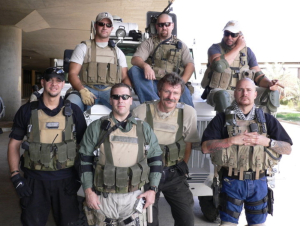
    private-miltary

    Private military contractors in Baghdad, Iraq. Image by Babeltravel via Flickr.

    A decade on and Iraq is still in the news, but Western boots on the ground are largely absent, and the previously booming market for contractors there and in Afghanistan has shrunk dramatically. As Molly Dunigan and Ulrich Petersohn and their collaborators show in a recent edited collection, the once-championed ‘global market for force’ has proven itself to be, in fact, a conglomeration of quite different markets for force, and it is a mistake to conflate the legitimate with the illegitimate. The United States, Britain and other nations continue to employ the services of private military contractors for lower priority tasks where doing so is (or at least appears to be) cost and manpower effective.

    The US State Department’s five-year $10.2 billion Worldwide Protective Services contract, the next phase of which was announced in mid February, is distributed largely among companies like SOC, Triple Canopy and Aegis Services which made their names during the Iraq post-invasion boom. And the old stomping ground is showing signs of a revival – according to a report by Bloomberg Business week, “Operation Inherent Resolve, the Pentagon’s anti-Islamic State initiative, employed 7,773 contractors in the second quarter of 2016, up from 5,000 in the first quarter of 2015.” Many of those contracts are for logistical, training and advisory roles in conflict and post-conflict environments in Africa and the developed world. And, quietly, the United Nations has also become a significant employer of PMSCs, as a careful reading of the UN Department of Procurement’s list of registered vendors reveals. As long ago as 2011 the Geneva Center for the Democratic Control of Armed Forces (DCAF) released a report showing that, despite the sensitivities involved, “the UN has increasingly paid private military and security companies (PMSCs) for a range of services in the areas of humanitarian affairs, peacebuilding and development.” The companies themselves have become increasingly corporatized and professional in their structures and practices, an evolutionary necessity for those companies which survived the ‘gold rush’ days of post-invasion Iraq.

    The more dramatic pronouncements by both proponents and opponents of the PMSC industry have failed to come to pass. Contractors have neither rendered state-based peacekeeping and stability operations obsolete, nor have they radically undermined the monopoly on force of the states that employ them or created greater instability in the international sphere.

    Looking to the future, what might we expect regarding the involvement of PMSCs in peacekeeping and stabilization operations? Despite their popularity as ‘bad guys’ in television dramas and Hollywood films, and an uncomfortable legacy of past serious human rights abuses committed by contractors, the evidence suggests that in the real world the use of PMSCs is increasingly becoming normalized, and that in policy circles there is a growing understanding of the potential value contractors can provide if properly employed. While there are still contractors operating in the global periphery who better fit the old ‘mercenary’ moniker, we can expect this process of normalization to lead to an increase in the employment, and more open employment, of PMSC’s in peacekeeping operations (though the term ‘PMSC’ will likely decline in usage).

    The improved clarity about the status and responsibilities of contractors in zones of armed conflict that resulted from the publication of the ICRC sponsored Montreaux Document of 2008 has played an important role in this process of normalization. Though this was unquestionably not the intended purpose of the creation of the document (which carries no legal weight but summarizes the status of contractors under international law and gives recommendations to both PMSCs and the states that contract them), the Montreaux process cleared up numerous misconceptions and provided a firm framework to which companies could attach their claims to legitimacy.

    Over the past decade there has been much debate and discussion over what functions ought to be considered by states to be ‘inherently governmental’ and which therefore ought not to be contracted out. A similar discussion will likely occur as the outsourcing of peacekeeping functions becomes more publicly acknowledge. However, it will likely be pragmatic factors which establish the limits of outsourcing.  Whatever those limits turn out to be in practice, it is certain that there will be limits. Even in today’s complex and spoiler afflicted environment, effective peacekeeping relies heavily on the perception of legitimacy, and that means blue UN helmets or the green berets of the African Union, not beards and Oakley sunglasses.

    Dr Deane-Peter Baker is a Senior Lecturer in the School of Humanities and Social Sciences at UNSW Canberra, located at the Australian Defence Force Academy. He is also a Researcher in the Australian Center for the Study of Armed Conflict and Society. His research interests include military ethics, private military and security companies, special operations, military strategy and the ethics of public policy. He is the author of Just Warriors Inc.: The Ethics of Privatized Force and Citizen Killings: Liberalism, State Policy and Moral Risk.

  • El Salvador’s gang truce: a lost opportunity?

    Colombia and Mexico: The Wrong Lessons from the War on Drugs

    As activists around the world participate in a Global Day of Action against criminalisation of drug use, evidence from the multi-billion dollar War on Drugs in Colombia suggests that militarized suppression of production and supply has displaced millions of people as well as the problem, not least to Mexico. The wrong lessons are being exported to Central America and beyond, but a groundswell of expert and popular opinion internationally is calling for alternative approaches to regulating the use and trade in drugs.

    Read Article →

    The New Insecurity in a Globalized World

    Writing exclusively for SustainableSsecurity.org, Elizabeth Wilke argues that a new conceptualization of insecurity and instability is needed in a world with greater and freer movement of goods, services and people – both legal and illicit – greater demands on weakening governments and the internationalization of local conflicts. The new insecurity is fundamentally derived from the responses of people and groups to greater uncertainty in an increasingly volatile world. Governments, and increasingly other actors need to recognize this in order to promote sustained stability in the long-term, locally and internationally.

    Read Article →

  • Sino-Russian Border Security

    Contrary to the claims of analysts and pundits, the China-Russia relationship is not as friendly as it seems and there is mistrust between Beijing and Moscow. But changes to Sino-Russian border security could help alleviate tensions between the two powers. 

    Seeking to build their own respective influence in East Asia, China and Russia have entered into an ostensible mutual embrace. For Russia, this is part of its so-called “pivot to the East”. The two sides have sought to increase their cooperation in the defense and economic realms, especially in terms of closer economic integration, joint military exercises, and coordinating responses on issues of global concern such as placing restrictions on arms proliferation and militarization. In May 2015, Russian Ambassador to China Andrei Denisov highlighted the need for a Sino-Russian relationship built on the basis of economic development and sustainable security.

    At present, the China-Russia relationship is not as profound as many analysts and pundits suggest. Such is the nature of a relationship built on oil markets and the whims of global politics. Nevertheless, no matter what shifts or weaknesses in China-Russia ties may occur, one thing that the two countries cannot escape is the reality of geographic proximity. The Russian Far East’s closeness to the economic powerhouses of China and Japan opens the region to investment from these areas. The Russian Far East’s sparse population combined with a wealth of natural resources presents Moscow with a unique quandary. For Russia, the task at hand is to develop the Russian Far East to a sufficient degree while also securitizing it from external exploitation.

    Geopolitics casts a shadow over the border
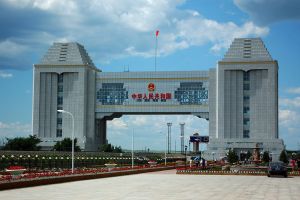
    Manzhouli_Gate_01

    Manzhouli Gate on Sino-Russian border. Image by Quatro Valvole via Wikimedia.

    One of the major stumbling blocks to a culture of sustainable security is persistent mistrust at the highest levels of government in Beijing and Moscow. Despite public displays of solidarity at the diplomatic level in China and Russia, the two countries remain wary of one another. Internal and external observers often view the China-Russia relationship through the lens of geopolitics, namely, that the China-Russia relationship is driven by rivalries both within their bilateral relationship, as well as outside, in terms of a desire to contain the United States’ power in global affairs.

    Much of the modern China-Russia relationship, despite the alarmism propagated by some observers, remains opportunistic for both parties. No number of agreements-neither on the energy trade nor economic initiatives such as the agreement to jointly develop China’s “New Silk Road” economic initiative with the Russia-led Eurasian Economic Union integration structure- can assuage the lingering feelings of strategic mistrust between the two countries, be it in the economic or military realm.

    Despite the post-Cold War drawdown of armed forces on the frontier, the Sino-Russian border remains militarized, exemplified by the deployment of 12,000 Chinese troops to the border in 2014, possibly in response to Russian nuclear drills near the border due to take place later that month. The failure to move beyond a geopolitical worldview in the China-Russia relationship will make sustainable security all the more difficult. Not only will persistent mistrust between China and Russia perpetuate fears based on traditional, military security, but it will also make it more difficult for the two sides to cooperate on border security. Indeed, security tensions on the Sino-Russian border are nothing new, as the two sides engaged in a border conflict that lasted throughout 1969. Despite the end of open conflict after approximately six months, the tense atmosphere on the border persisted until 1991 when the two sides finally resolved their border demarcation disagreement.

    In spite of the ostensible resolution of border disagreements between the two countries in 2001, anger arose among Chinese netizens in late 2015 when news reports highlighted the construction of border markers signifying the return of 4.7 square kilometers of land from Russia to China. The anger came from what appeared to be China’s inability to demand more land from Russia, which Chinese nationalists believe to be rightfully theirs in light of acquisition of land belonging to the Chinese Empire by the former Russian Empire in the 19th century.

    Necessity overrides high politics

    Far removed from the mechanism of high politics at the official level is the day-to-day reality of cross-border interaction between Chinese and Russians living along the border, as well as the issue of Chinese migration to the Russian Far East.  According to a report on life in the Russian Far East many Russians remain skeptical and wary of Chinese consumption of Russian land and material assets. But many locals also protest the heavy-handed and centralized nature in which Moscow conducts its governance over the Far East. The region’s increasing economic dependence on China and continuing political subjugation to Moscow means that many local residents are increasingly turning to China for their everyday needs, which includes engaging in shuttle trading and importing Chinese cars.

    Two major changes in the management of Sino-Russian border security should therefore occur. One is a move away from a strict dependence on reactive measures, to a more proactive approach, explained below. A second is to divorce the happenings of high geopolitics between the two nations’ capitals from realities on the ground, especially by building interethnic relations so as to create a culture of trust and cooperation during times of geopolitical uncertainty in the China-Russia relationship.

    Aside from regular border patrol and law enforcement activities along Russia’s Far Eastern borders, Russian security authorities also utilize the concept of Border Security Zones. Dating back to the Soviet era, these are essentially small, barely-populated areas along the Russian borders with several countries, including China and North Korea prohibited from entry without permission from the local FSB (Russia’s federal domestic security service). Nevertheless, with not only the existing and growing presence of Chinese living in Russia but also the increased trade relationship between the two countries, border security based strictly and exclusively on prevention and interception on the part of Russian law enforcement is not a viable means of border security. One solution to this problem is concentrating on developing the interrelationship between the Chinese and Russian border communities.

    Community relations in border enforcement and security

    Russian authorities could potentially pursue a border security policy based in the concept of community policing. The concept of community policing is based on the notion of building working relationships between law enforcement and local communities. Instead of trying to catch and apprehend criminals, community policing entails interaction between civilians and law enforcement as part of the latter’s patrol duties. This has been implemented with relative success in American cities with high racial tensions such as Philadelphia. Not only does it increase public trust in the police, but it makes communities more willing to be forthcoming about criminal activity in their areas.

    One particular fear for Sino-Russian border security is the potential for organized crime groups to exploit cross-border activity and border communities. It can be easy for criminal elements, ranging from petty smugglers to larger criminal enterprises to blend into local Chinese border communities. In fact, Chinese organized crime groups such as the triads have become increasingly more powerful in the Russian Far East than the traditional Russian mafiya. While that is not a problem specific to border security, a Sino-Russian boundary line that is difficult to protect can only make the jobs of criminals operating in the region easier. Many Chinese migrants in the region end up being caught up in the machinations of criminal organizations as a way of contending with racial discrimination and the possibility of deportation.

    Through members of Russian law enforcement in border areas interacting with members of the Chinese communities in Russia’s borderlands, trust between the two sides can be built. Over the long term, if mutual feelings of respect and good working relationships between law enforcement and the community are established, the ability for the two sides to cooperate on the prevention and interdiction of criminal activities such as drug smuggling and human trafficking can hopefully weather any major potential shifts in geopolitical realities. Elsewhere, Tadaatsu Mohri, writing for the Brookings Institution, asserts that Japan-Russia cooperation on combating trans-national crime can be a way of reducing the greater strategic tensions inherent in the Japan-Russia bilateral relationship due to the ongoing territorial dispute over the Kuril Islands/Northern Territories. Mohri specifically cites existing cooperation on the Sino-Russian border as a case of successful trans-boundary collaboration.

    Yet while this relative success with respect to the Chinese-Russian border may have helped to alleviate tensions on the strategic level, the distance of the common Sino-Russian border and their respective populations from officials in Beijing and Moscow necessitates an even more community-focused approach. This will require the development of language and cultural skills among members of the Russian law enforcement community. For example, Russian education officials are working to implement Chinese language study as a component of education in preparation for Russia’s United State Examination.

    The establishment of working relationships between Russian law enforcement and members of the Sino-Russian border community will take time. Yet in the long term interests of Russia’s far eastern border security, it is a worthy endeavor for Russian border security services to pursue. While political relations between states at the elite level are often unstable or at least inconsistent, ties between populations are often more stable. Given the distance between the Sino-Russian border populations and the governments in Beijing and Moscow, an approach distanced from high politics will likely provide a better solution for sustainable border security. Such an approach would entail fostering relationships between law enforcement and border communities, particularly among immigrant and ethnic minority groups on the frontier.

    Anthony V. Rinna is a specialist on Russian security policy in East Asia with the Sino-NK scholarly research group. He currently resides in South Korea. 

  • Hello world!

    Welcome to WordPress. This is your first post. Edit or delete it, then start writing!