Blog

  • Drone Strikes and Never-Ending Wars

    Too Quiet on the Western Front? The Sahel-Sahara between Arab Spring and Black Spring

    While the world’s attention has been focused on the US-led military interventions in Iraq and Syria a quieter build-up of military assets has been ongoing along the newer, western front of the War on Terror as the security crises in Libya and northeast Nigeria escalate and the conflict in northern Mali proves to be far from over. In the face of revolutionary change in Burkina Faso, the efforts of outsiders to enforce an authoritarian and exclusionary status quo across the Sahel-Sahara look increasingly fragile and misdirected.

    Read Article →

    VIDEO – Militarisation of the Sahel: An interview with Richard Reeve

    Sustainable Security programme Director Richard Reeve discusses our latest report ‘From New Frontier to New Normal: Counter-terrorism operations in the Sahel-Sahara’. The report, commissioned by the Remote Control project, finds that 2014 is a critical year for militarisation of the Sahel-Sahara and the entrenchment of foreign powers there.

    Read Article →

    10 years of US Drone Strikes in Pakistan – What Impact Has it Had?

    This week marks 10 years since the first reported US drone strike in Pakistan. It has also seen the resumption of US drone strikes in the country following a five-month pause. Considering the length of time the CIA-led programme has been running, a number of questions deserve consideration: namely, how effective has the decade long covert drone programme been in Pakistan and what impact have drones had on wider Pakistani society? As the military technology for remote-control warfare spreads, there is a need to question whether drones provide significant tactical advantage or whether their proliferation could lead to greater long-term global insecurity.

    Read Article →

  • After Brussels – It’s Time to Challenge Our Authorities and Move Beyond Prevent

  • US Foreign Policy Bureaucracy in Afghanistan

    Why has the US failed so dramatically in Afghanistan since 2001? Dominant explanations have ignored the impact of bureaucratic divisions and personality conflicts on nation-building in Afghanistan. These divisions meant the battle was virtually lost before it even began.

    This article presents alternative findings about US efforts to construct a stable and prosperous Afghan state. It concentrates on the bureaucratic conflict surging beneath the surface of the mission, which compromised state-building goals and bedevilled the implementation of policies across a wide range of issues linked to law and order, development, governance and counter-narcotics. The fact that internal bureaucratic problems were an important explanation for the lack of progress has been underestimated in the current scholarship. With this in mind it is stressed here that the machinations of the agencies and individuals who make up the US foreign policy bureaucracy must be recognised alongside external factors in order to provide a complete picture of the difficulties and frustrations characteristic of US state-building in Afghanistan.

    Afghanistan: a twenty-first century state-building project

    taskforce-stan

    Image by DVIDSHUB via Flickr.

    Afghanistan has been considered the first major test case for state-building in the twenty-first century. From 2001 onwards, there were some significant achievements as a result of efforts on the part of the United States and its allies. A variety of actors collaborated to sink hundreds of wells and construct many health clinics. According to some estimates, death rates among adult males have declined, and access to clean water has helped to curb disease and improve life expectancy. Millions of Afghan children are now enrolled in schools.

    But given the vast expenditure of the international community these achievements are underwhelming. Close to a quarter of Afghanistan’s population still do not have access to clean water, and nearly half of Afghan children are malnourished. Hunger is widespread and there is rampant unemployment. Schools lack equipment and sometimes even a schoolroom, and sewerage or electricity infrastructure outside of Kabul is practically non-existent.  Corruption is endemic at all levels of government and brutal strongmen, such as the capricious Gulbuddin Hekmatyar, continue to play a central role in national politics. Afghanistan also remains a narcostate that produces an alarming 90% of the world’s heroin with the Taliban now functioning a veritable drug cartel.

    What, then, explains this lack of progress? A smooth transition to Western-style democracy was always an unlikely, given Afghanistan’s ethno-sectarian fissures, economic underdevelopment and institutional fragility. It is now widely accepted that the strength of cultural, religious, and political traditions was underestimated. US insouciance in the years immediately after the invasion, thinly disguised beneath the euphemistic language of having a ‘light footprint’, also contributed to the rise of a ferocious and destabilizing insurgency. This heralded the return of the Taliban as a violent, tenacious and seditious force. In a more general sense, externally generated state-building would have been an ambiguous and difficult process in any country, let alone Afghanistan; the graveyard of empires.

    A bureaucratic tangle

    All of the above issues have been mentioned in media reports and scholarly works. Less attention, however, has been directed to the fact that the responsibilities of the various actors within the US state remained undefined or ambiguous. State-building was compromised by each agency’s unique culture, interests, norms and past experiences; all of which encouraged particular patterns of behaviour. In Afghanistan bureaucratic conflict circumscribed the capacity of the US government to act as a homogeneous and purposeful unit. The impact of this disorder was widespread, but it was particularly problematic in respect to counter-narcotics, law & order and infrastructure projects.

    The US government was not paralysed by the complexity of Afghanistan’s drug problem; however, there was no common conception or understanding of that problem between the relevant parties. During the Bush Administration’s time in office in particular, eradication, interdiction, and the Alternative Livelihoods Program were not subjected to a single calculated counter-narcotics policy, nor was there consensus in regards to the strengths and weaknesses of the three strategies. A lack of leadership from the White House and Congress augmented the capacity of agency rivalry to ensure that the United States failed to pursue a counter-narcotics effort that was united or reflective of Afghanistan’s needs.

    The Bush Administration’s approach to Afghanistan’s drug problem was not only ambiguous but also sporadic, and congressional engagement was not simply selective but also obsessive, advocating short-term solutions that revealed a limited knowledge of the situation on the ground (akin to the 10,000 mile screwdriver). Meanwhile, elements within the civilian wing of the US foreign policy bureaucracy, meanwhile, had their own ideas about Afghanistan’s drug problem. The Bureau of International Narcotics and Law Enforcement Affairs (INL) was influenced by its previous experiences in Columbia and elsewhere, so it prioritized eradication above all else.

    The Drug Enforcement Administration (DEA) favoured interdiction, but much like the INL, the agency struggled to convince other bureaucratic factions that its conceptualization of Afghanistan’s drug problem was the most accurate one. The United States Agency for International Development (USAID) is an actor not normally associated with drug prevention, and it was more concerned with the preservation and protection of its developmental mandate than using agricultural projects to prevent poppy farming. For the US military, counter-narcotics was only valid if it was subordinate to counterinsurgency, and even then both the Defense Department and the US Armed Forces were reluctant to commit resources and manpower to the task.

    The disharmony that plagued the US counter-narcotics program was also characteristic of US efforts to promote the rule of law. US agencies were placed under no significant pressure to initiate rule of law projects by the White House, nor was it in the interest of any agency to spearhead legal reform, given the array of other (often competing) responsibilities that they had already accepted. Other issues took priority: development projects for USAID; diplomacy for the State Department and counterinsurgency for the military. The State Department employed separate contractors and also paid prosecutors on loan from the Department of Justice, who operated independently; while USAID ran its programs through separate contractors. No effort was undertaken by any agency to identify duplicate or conflicting programs and none of them could provide a clear picture of US expenditures.

    Competing ideas about how infrastructure development should be undertaken engendered another web of conflict. Namely, USAID’s perspective clashed with that of the rest of the State Department and US military. USAID considered projects that were conducted by the State Department and the military to be out of tune with the ‘developmental reality.’ Its preference for long-term initiatives coupled with a perceived lack of man-power fostered the impression among military officials that it was ineffective and unreliable. Similarly, the relationship between the State Department and USAID was often characterized by indecision and competing priorities, which precluded the two agencies from establishing a united development front.

    As the insurgency intensified, the US military and the State Department used their influence in Washington to convince USAID to prioritize road-building and agriculture projects in Afghanistan’s most dangerous provinces: Helmand and Kandahar. Often, but not always, USAID yielded to the pressure of more powerful bureaucratic forces and implemented projects that it perceived to be cosmetic. But in order to fulfil these obligations, USAID relied on contractors. These contractors operated in a nebulous area between the private sphere and the foreign policy bureaucracy. They added another layer of confusion to already divided development efforts. Many of the contractors left an array of unfinished school, roads, power supplies and medical clinics. USAID was criticized by the State Department and the US military for delegating projects to Berger, Chemonics and other contractors, but then failing to sufficiently monitor their activities.

    Lessons learned

    No single US official or agency is to blame for the problems outlined in this article, but it meant the battle in Afghanistan was virtually lost before it began. To overcome such bureaucratic conflict, more effort—both in Washington and the field—must be directed toward encouraging a whole-of-government approach to complex foreign policy issues. This should involve staff exchange programs, compulsory inter-departmental meetings and a greater emphasis on aligning interests with policy platforms from senior figures within each agency and, most importantly, the White House. Political will and dedication from the US leadership is certainly essential, but government-based training programs must also infuse prospective US public servants with an understanding of the structure and nuances of the foreign policy bureaucracy in order to promulgate practices that encourage empathy and flexibility. Given the criticism the United States has faced for its state-building efforts in Afghanistan and Iraq, it is unlikely that a similar mission will be attempted in the near future. However, US policy-makers should be careful not to forget these experiences; as was the case following the Vietnam war. The United States still considers ‘fixing’ failed states to be an important foreign policy goal. With is in mind, it is probable a situation will arise requiring the mobilisation of resources and agencies towards state-building. In such a scenario, a cohesive intra-governmental front will be help the US to avoid the bureaucratic disorder that pervaded state-building in Afghanistan.

    Dr Conor Keane has degrees in law and politics, and a doctorate on nation-building in Afghanistan from Macquarie University. His research interests include counter terrorism, state building, bureaucratic politics and US foreign policy. He has published several articles on these topics in journals such as Armed Forces & Society and International Peacekeeping.

  • The Anthropocene and Global Environmental Governance

  • Reviewing the Comprehensive Nuclear-Test-Ban Treaty at 20

    Momentum towards a nuclear weapons ban treaty: what does it mean for the UK?

    International momentum towards a treaty to ban nuclear weapons reached a milestone in the December 2014 Vienna conference. Even assuming that the UK does not initially sign up to such a treaty, it is subject to the pressures of a changing legal and political environment and could find its present position increasingly untenable – not least on the issue of Trident renewal.

    Read Article →

    Nuclear Weapons: From Comprehensive Test Ban to Disarmament

    Despite not yet entering into force, the 1996 Comprehensive Test Ban Treaty has succeeded in almost eliminating nuclear weapons testing and in establishing a robust international monitoring and verification system. A breakthrough in its ratification by the few hold-out states could have important positive repercussions for the Nuclear Non-Proliferation Treaty or nuclear disarmament in the Middle East.

    Read Article →

    Humanitarian Consequences of Nuclear Weapons: Five Reasons for the P5 to participate in Vienna

    The ‘humanitarian dimension’ initiative highlighting the consequences of nuclear weapons has evolved and consolidated itself in the non-proliferation regime since 2010. The five nuclear weapons states (NWS or P5) under the NPT – China, France, Russia, UK and US – boycotted the first two international conferences on the humanitarian consequences of nuclear weapons. A third conference will be held in Vienna on 8-9 December 2014. This article gives five reasons why the P5 should consider participating.

    Read Article →

    Building the Case for Nuclear Disarmament: The 2014 NPT PrepCom

    The humanitarian impact of nuclear weapons, highlighted by a wide-ranging, cross-grouping, multi-aim initiative which continues to consolidate itself in the non-proliferation regime, has come to the fore in the 3rd Prepatory Committe for the 2015 NPT Review Conference. Frustrated with the lack of progress towards NPT Article VI commitments to complete nuclear disarmament, the initiative has invigorated attention to the urgency of nuclear disarmament and a need for a change in the status quo. NPT member states and civil society continue to engage actively in publicizing the humanitarian consequences of nuclear weapons as an impetus to progress towards nuclear disarmament.

    Read Article →

    The ‘High Politics’ of Sustainable Security

    If events like those in Ukraine have taught us anything it is that, despite the predictions of many, the potential for conflict between the major powers is still one of the defining characteristics of world politics. Crisis diplomacy and inter-state rivalry is back on the global agenda. But if policymakers, analysts and civil society actors are to try and come up with ways of reversing the trend towards an increasingly competitive, militarised and crisis-driven inter-state order, then thinking carefully through the implications of a sustainable security approach to great power politics would appear to be a most useful starting point.

    Read Article →

    International Dimensions of the Ukraine Crisis: Syria and Iran

    The Russian annexation of Crimea may be in direct contravention of international agreements but is popular in Russia and almost certain to hold. Given tensions within Ukrainian society and its weak transitional government, there remains some risk of further intervention in eastern Ukraine and possibly the Trans-Dniester break-away region of Moldova. Even if there is no further escalation in the crisis, the deterioration in EU/Russian and US/Russian relations is of great concern, not least in relation to two aspects of Middle East security – the Syrian civil war and the Iran nuclear negotiations.

    Read Article →

    The Threat of Nuclear Disconnect: Engaging the Next Generation

    The dramatic decrease in public awareness and engagement in the nuclear weapons debate since the 1980s poses a risk to our future, as younger generations and future policy shapers will be less familiar with the challenges posed by nuclear weapons when they take the helm. But nuclear weapons are too dangerous a threat for an entire generation to disconnect from. BASIC’s Rachel Staley explores the ramifications of not updating the nuclear debate.

    Read Article →

  • Climate Change and Security Threats: Time to Call a Spade a Spade?

  • Interreligious Peacebuilding: An Emerging Field of Research and Practice

  • Islamic State and Dream Warfare

    Islamic State (IS) appear to attach considerable importance to dreams and have started publishing dream accounts of martyred jihadists. Do IS see this as a way of ‘calling’ potential lone wolf jihadists to action?

    Over the last decade, several studies have shown that militant Islamists make extensive use of reported night dreams to inspire, announce, and validate violent jihad. Bin Laden himself brought up dreams in one of the first videos released after 9/11. Mullah Omar was understood by his followers to have founded the Taliban, and run his campaign, inspired and even guided by his dreams. Dream accounts can be found of numerous other well-known militants, including Richard Reid, the failed shoe bomber, the two core 9/11 planners, Ramzi bin al-Shibh and Khalid Sheikh Muhammad, and the ‘20th’ suicide bomber, Zacarious Moussaoui.

    This tradition has continued with Islamic State (IS) members and sympathisers who appear to attach considerable importance to dreams. This article updates the discussion and analysis of the role of dreams for IS jihadists, and, through looking at some recent case studies, asks whether IS is publishing martyred jihadist dreams as a way of ‘calling’ potential lone wolf jihadists to action.

    Dreaming in Islam
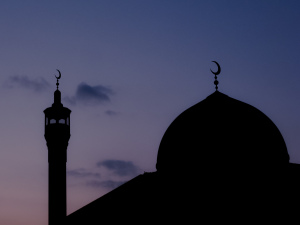
    mosque-night

    Image by four12 via Flickr

    To understand the jihadi appreciation for dreams, it is important to first understand that dreams are both historically and contemporaneously important in Islam. Indeed, today, Arabic TV programs are replete with dream interpretation programs and the internet is awash with Islamic dream interpretation websites.

    The dream tradition is similar across all the main branches of Islam: Sunni, Shia, Salafi and Sufi, as well as amongst the minority Alevi and Ahmadiyya sects. In the Sufi mystical traditions, dreaming is highly regarded. While Sufis have traditionally paid the most attention to dreams, the more literalist Salafis appear to have become more interested in them over time.

    The Islamic tradition distinguishes between three types of dreams: the true dream (al-ru’ya), the false dream, which may come from the devil (shatan), and the meaningless everyday dream (hulm) which could be caused by what has been eaten by the dreamer and comes from the nafs (ego, or lower self).  The interpretive tradition regarding the “true dream” (al-ru’ya) is a fundamental feature of Islamic theology. The true dream tradition is reported more extensively in the hadith. 

    Islamic dream interpretation differs from Western attitudes to dreams, which, being largely shaped by a scientific materialist outlook of the world, generally see dreams as bearing little or no relevance for people. But in Islam, dreams are understood as, on occasion, offering a portal to the divine will, and are seen as the only appropriate form of future divination. Dreams have a special authority as they are believed to communicate truth from the supernatural world (dar al-haq).  Lamoreux summarises the importance of dreaming in Islamic societies:

    Dream interpretation offered Muslims a royal road that led not inward but outward, providing insight not into the dreamer’s psyche but into the hidden affairs of the world. In short, the aim of dream interpretation was not diagnosis, but divination.

    Based on his anthropological research in Egypt, Gilsenan offers further insights:

    In dreams began responsibilities. Judgements were made. Commands issues. Justifications provided. Hope renewed. Conduct was commented on by holy figures, by the Prophet himself, by the founding Sheik who had died some years before but who appeared with his son and successor.

    Dreams were public goods, circulated in conversational exchanges, valorizing the person, authoring and authorizing experience, at once unique and collective visual epiphanies. Dreams thus constituted a field of force and framed interchange between the living and the only apparently dead.

    There is extensive literature on the art and science of dream interpretation in Islam going back over a thousand years, and scholars like Sirriyeh are emphatic about the importance of the Prophet Mohammed’s God-guided interpretation of dreams. Mohammed’s and his companions’ dreams played a significant role before, during and after the Qur’anic revelation. In the six months before the  revelation began, his wife Aisha said his dreams came true like the ocean’s waves. The Prophet’s famous night journey from Mecca to Jerusalem (Laylat ul-isra wal miraj), in which Muhammed ascended to heaven and was initiated into the mysteries of the cosmos, is understood by many Muslims, though not all, as being in a dream vision (al-ruya can refer to vision and or dream). Mohammed would start the day asking about his companions’ dreams as a source of possible illumination and spiritual guidance. The Prophet’s companion, Abd Allah b. Zayd, is understood to have dreamt the Islamic call to prayer. There are three dream reports in the Qur’an, two reported as received by the Prophet Mohammed. One of these directly relates to the decisive Battle of Badr  (624 CE). The Joseph Sura contains the reported dream experiences of the Prophet Joseph, such as that of the seven fat and seven lean cows.

    The continued vitality and relevance of dreams in the Islam is well shown in the following examples of Islamic State fighters drawn from Dabiq, the Islamic State magazine.

    Recent dream accounts published by Islamic State

    In April 2016 (issue 14) Dabiq published three dream accounts purporting to have inspired Khalid El Bakraoui in his martyrdom operation on the Brussels metro killing 14 people. Khalid’s first dream was a ‘life-changing’ dream in prison in which he fought alongside the Prophet Mohammed against unbelievers. After the Paris 2016 attacks he is reported in the same Dabiq as having had two further motivational dreams. In the second, he ‘arose to a high place, as if I was in space, surrounded by stars; but the sky was the blue of night’. He says he heard a voice telling him he was only created to worship Allah and ordering him to fight for his cause and make his word supreme’. The third dream follows on almost in a sequence as Khalid dreams of his own martyrdom:

    I saw myself on a boat along with Abu Sulayman and another brother. Each of us had a Turkish soldier as a hostage. I had a pistol and Abu Sulayman had a belt. I told him to give me his belt, as I would feel better having it. So he gave me the belt and I gave him my pistol. I then quickly advanced with the Turkish hostage in order to close in other soldiers, two of whom were in front of us. I detonated my belt, killing the soldiers. My head then descended to the ground. One of the brothers working on the operation and Shaykh al-Adnani took my head and said, ‘check to see if he is smiling or not’. I then saw my soul and those of the three soldiers. All of a sudden, the soldiers souls burned and vanished and, suddenly, the banner of Islam – represented in the dream by the flag of the Islamic State – came out of the earth and was shining brightly. My soul then became full of light’.

    He then claimed he heard a voice telling him he had achieved deliverance.

    This tripartite dream account sequence evokes familiar Islamic dream tropes, images and ideas. In the first dream we see the dreamt and visualised conversion to violent jihad, including the ‘presence’ of the Prophet Mohammed which is understood in Islam as denoting a holy dream if the dream message is congruent with the teachings of the Qur’an and hadiths. Prison surroundings are famous, or infamous, for religious conversion dreams as many customary behaviours are circumscribed.

    The second dream report reads as almost from an ancient holy text; high places and mountain tops are traditionally sites of vision. Indeed Attar’s famous C12 epic Sufi poem ‘The Conference of the Birds’ (Farid ud-Din Attar, 1984 (written 1177) is a tale of Islamic revelation and enlightenment, symbolised by the human journey to the mountain top from where and from within Allah/God can be directly known and joined. The instruction to worship, fight and ‘make his word supreme’ would make excellent sense to a pious Muslim as long as the notion of fighting was referenced to the greater jihad of fighting the lower self, the nafs or selfishly orientated ego. Khalid’s membership of IS and the bloody and relentless killing of all peoples of a different religious persuasion (or none) by IS will have been experienced and apparently shared by militant jihadists as an example of the highest call to arms and martyrdom.

    The third dream completes the sequence from the first calling dream to his visualised death and the spiritual testing of the martyrdom operation. Authorisation and sanctity are communicated via the imagery of Khalid’s soul being composed of, or infused with, light while the enemies (Turkish soldiers) clearly have weaker or non-existent souls which may help validate (to themselves and others) their killing even though they are also Muslims. The dream also conveniently defines Islam as Islamic State. And then ‘deliverance’ is signified at the end of this epic dream narration sequence. As propaganda, now to be read by thousands of jihadist and interested potential recruits, almost all of whom may be aware of the potentially sacred nature in Islam of at least some dreams as being divine emanations and commands, this dream story is a classic. Remove the IS context and many Muslims would feel blessed to have received such dreams.

    In the following Dabiq (no 15) a future paradise dream example is quoted:

    Abul-Muthanna as-Sumali (Ali Dirie) was a man of great character and worship. After being imprisoned by the Crusaders for seven years, he was able to flee Canada despite being banned from travel. Upon the official expansion of the Islamic State to the Levant, he rushed to revive the Muslim Jama’ah through his bay’ah. Several weeks later, he had a dream in which the Hur (the maidens of Paradise) gave him glad tidings of martyrdom on a specific date (one which I have forgotten). A week before his martyrdom, several of our friends decided to go shopping for new military attire. He told them he wouldn’t be going with them, because he was expecting martyrdom soon, and narrated to them his dream. When that day arrived ….Abul-Muthanna rushed to battle ….fighting, until he was severely wounded, bleeding until he surrendered his soul to his Lord….May Allah accept him and add the blessing of caliphate we enjoy today to the scroll of his good deeds and that of all other martyrs.

    These issues are the first times Dabiq has contained personal dream reports of significant IS members intending to demonstrate the glorious Allah inspired sacrifice of their martyrs.

    Dreams may also feature in decision-making processes at different levels in the Islamic State organization. It was reported that Abu Bakr al-Baghdadi’s decision to withdraw forces from Mosul in late 2014 was inspired by a dream in which Prophet Mohammed ordered al-Baghdadi to evacuate the city.

    Both IS leaders and members strongly relate to their night dreams and IS have started recently publishing them. Is there a particular purpose to this new propaganda practice using dreams?

    The transpersonal communication of night dreams in Islam

    ‘Heroic’ (in an Islamic form/genre) dream accounts are now being ‘weaponised’ to influence other IS members, followers and jihadi wannabees. We know the media has enormous effect on our dreams. We also know, though this is maybe irrelevant as IS hate Sufis due to their shrine and Shaykh workship, that in the mystical Sufi Islamic groups it is normative for the top Shaykhs to ‘send’ dreams to their followers.

    In April 2005 I interviewed Shaykh Nazim, a famous Naqshbandi Shaykh, who is now deceased, following numerous reports by his UK followers that he was sending them night dreams of spiritual advice. He told me, “Yes, sometimes I send my power in dreams, when necessary.” I asked how he did this, and he said, “First you must take a step, even half a step, away from the material world, and we Sufis have ways to do this”; enigmatic indeed!. Can dreams be implicitly or even explicitly ‘sent’ in some form, or maybe just believed to be so communicated? Such a thought may well seem farfetched and fanciful to Western post-enlightenment minds, but certainly many Sufis think so and such practices have a long history in Sufism.

     Conclusion

    The last two Dabiqs have contained personal dream reports of significant IS members seemingly for the first time. IS recognise and value some kinds of night dream accounts and see a role for them in their movement’s public propaganda war; so why now for this high tech, high media skills Caliphate-named organisation? IS are slowly being degraded from without and are ruthlessly striking at Western symbolic soft population centres; IS are now strongly encouraging their followers to attack western centres; we see a rise in the self-inspired, via the internet and perhaps dreams, of the lone wolf who is previous to their attack, untraceable. A few lone wolves in summer 2016 seem to have responded to IS media exhortations to attack western targets and some seem clearly to have a history of prior mental illness. Does this make them more vulnerable to being influenced by dreams? We don’t know yet. But vulnerable young people on the net who spend a lot of time reading about the ‘heroic’ caliphate and its actions may well start having related dreams.

    Intelligence agents have spoken to me (2012) of the critical role of dreams in motivating potential jihadis from contemplation to decisive action. I was once told of a jihadi dreaming of his future death during anticipated jihad in Somalia, and another agent told me about a prospective jihadist experiencing two different peoples’ contradictory voices debating with him in his dream about whether he should go on jihad. Such uninterpreted and undigested dream images and accounts may conceivably convince a vulnerable young person, possibly after their consulting an IS dream interpretation twitter account and/or their baqiya (IS ‘family’), that their holy mission is through violent jihad. Is it possible then that potential lone wolves, perhaps with histories of mental health problems, believe themselves as being ‘called’ and then in part recruited not only through the internet, but through the sublime power of ‘glorious’ dream accounts of recent jihadi martyrs? We will have to wait for more autobiographical, media and trial accounts to emerge to know.

    Dr Iain R. Edgar is Emeritus Reader at the Department of Anthropology, University of Durham, UK.

  • The Costs of Security Sector Reform: Questions of Affordability and Purpose

    The Costs of Security Sector Reform: Questions of Affordability and Purpose

    In considering security sector reform, questions of affordability have often been subordinated to questions of effectiveness and expediency. A recent series of reviews of security expenditures by the World Bank and other actors in Liberia, Mali, Niger and Somalia has highlighted several emerging issues around the (re)construction of security institutions in fragile and conflict-affected states.

    Read Article →

    Human Security and Marginalisation: A case of Pastoralists in the Mandera triangle

    This paper seeks to bring out the relevance of human security in pastoral areas of Mandera triangle and the relationships and contradictions that exist between it and national security. The “Mandera Triangle” encompasses a tri-border region of Ethiopia, Somalia, and Kenya that exemplifies, in a microcosm, both a complex and a chronic humanitarian crisis that transcends national boundaries.

    Read Article →

  • Denmark’s Limited Support For UN peacekeeping Is Here to Stay

    Author’s Note: This post is based on a journal article which first appeared in International Peacekeeping in 2016.

    During the Cold War, Denmark was a staunch supporter of UN peacekeeping. Following the fall of the Berlin Wall, however, Denmark gradually turned its back on peacekeeping. More recently, Denmark has given priority to NATO- and US-led operations. This shift was driven by a number of interweaving factors. 

    In its 2015 input to the High-Level Independent Panel on Peace Operations (HIPPO) chaired by Ramos-Horta, Denmark characterized itself as ‘a dedicated and engaged contributor to United Nations (UN) Peace Operations’. It also stated that ‘UN peace operation activities remain a central pillar of Denmark’s foreign and security policy’, and that Denmark since 1948 has provided more than 84,000 soldiers and staff members to more than 30 UN peacekeeping operations. The input to HIPPO did not mention that since 2001 Denmark has primarily made symbolic contributions of some 40-60 military observers, staff officers and advisors to UN operations, or that Denmark since 1995 has prioritized military operations led by other actors, notably the North Atlantic Treaty Organization (NATO) and the United States (US).

    Two drivers have shaped Denmark’s evolving support for UN-led blue helmet peace operations since the beginning: a national interest in preserving Denmark’s security and welfare and an altruistic desire to do good. The mutually reinforcing interaction between interests and altruism meant that peacekeeping became internalized into Denmark’s foreign policy identity. As a result, a third driver materialized by the late 1950s: an identity-driven urge to contribute to peacekeeping because it was the ‘natural’ thing, which constituted a source of national pride and made Danish policy makers feel good.

    When these three drivers “clicked” and reinforced one another, support for UN peace operations was strong and internalized as a major component of Danish foreign policy. When they stopped doing that, support for UN peacekeeping fell dramatically. This is the situation now, and it seems unlikely to change in the near future.

    Denmark’s history of peacekeeping during and after the Cold War

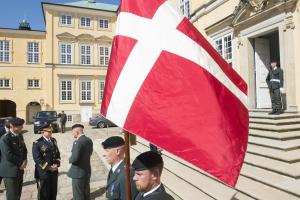
    Image credit: Danish Government.

    Denmark began supporting UN peacekeeping during the Cold War because it allowed Danish decision makers to promote their interests and values at the same time. UN peacekeeping was regarded as good for national security because it lowered international tension and provided a way of supporting Denmark’s key NATO allies without angering the Soviet Union. UN peacekeeping was also good for Danish values as it supported Denmark’s vison of a rule-based international society characterized by peaceful conflict resolution. The successful peacekeeping operation launched in 1956 in order to defuse the Suez crisis strengthened Denmark’s support for peacekeeping.

    The praise earned for the participation in this mission made Danish decision-makers realize that UN peacekeeping also provided an effective way of enhancing Denmark’s international prestige and influence. By the late 1950s peacekeeping had been internalized as part of Denmark’s foreign policy identity. Danish governments now portrayed UN peacekeeping as something ‘natural’ that Denmark should be proud to support. In 1964, Danish Foreign Minister Per Haekkerup even stated that it was a ‘duty’ for small nations like Denmark to support UN peacekeeping. This was not mere rhetoric. A feeling that one could not turn down a UN request thus influenced the 1964-decision to provide 1,000 personnel for a new UN peacekeeping operation on Cyprus.

    This mutually reinforcing interaction between interests, values and identity meant that Danish support for UN peacekeeping operations became routine. The absence of operational setbacks and casualties allowed this routine to produce a steady supply of Danish peacekeepers for the remainder of the Cold War. 34,100 Danish soldiers served on UN operations in the 1948-1989 period. Denmark had an average of 811 soldiers continuously deployed abroad and contributed eight percent of the total number of UN peacekeepers (419,100) during this period, making it one of the largest UN troop contributors per capita.

    The operational difficulties that the UN encountered in the Balkans in the early 1990s broke this routine. They served as an external shock undermining Denmark’s positive perception of UN peace operations. NATO’s successful bombing campaign and subsequent takeover of the UN operation in Bosnia in 1995 made the UN less attractive from an interest perspective. Denmark had always used UN peacekeeping as a way supporting its great power allies in NATO, and when they chose to abandon the UN in favour of NATO, Denmark followed suit.

    The strategic failure of the UN operation in Bosnia, culminating in the Srebrenica massacre, also gave rise to the perception in Denmark that UN peacekeeping was ill-suited for ‘doing good’ in the post-Cold War era. The tactical success enjoyed by the Danish tank squadron in Bosnia in 1994 reinforced this perception. One engagement (Operation Hooligan Buster) made international headlines. On 29 April 1994, the Danish tanks successfully fought their way out of a Serb ambush firing their 105 mm canons 72 times. They also blew up an ammunitions depot killing an estimated 150 Serb soldiers. This skirmish became a watershed. Denmark’s great power allies showered Denmark with praise, and the Danish use of tanks influenced NATO’s and UN approaches to ‘robust peacekeeping’. The charismatic Danish tank commander, Lars R. Møller, became a national hero, and Danish decision makers became convinced that peacekeeping was best conducted with combat capable units; a perception subsequently reinforced by NATO’s successful enforcement missions in the Balkans.

    Operation Hooligan Buster set in motion a process that in the course of the next two decades transformed Denmark’s foreign policy identity. The Danish peacekeeper, hailed for his ability to keep the peace without firing his weapon, was replaced by a new hero: the Danish warrior who made a difference on the battlefield. After Operation Hooligan Buster Danish politicians displayed far greater willingness to use force beyond self-defence. Denmark made large army contributions to NATO’s enforcement operations in the Balkans, advocated military invention in Albania as OSCE chairman in 1997, and allowed Danish fighter aircraft to conduct strike missions during NATO’s Kosovo War in 1999. Public support for the Kosovo war was higher in Denmark than anywhere else, and a large majority favoured contributing to a land war in case the air campaign failed. The strong public support for the war took Danish decision makers by surprise. Danish Minister of Defence Hans Haekkerup interpreted it as ‘a breakthrough in the history of Denmark’ and as proof that the Danish foreign policy identity had changed.

    Denmark and the War on Terror

    The US-led war on terror launched in response to the September 11 attacks in 2001 reinforced the Danish preference for NATO- and US-led operations and the emerging warrior identity. Denmark provided forces for the US-led wars against the Taleban and Iraq as well as the subsequent stabilization missions. The lion’s share of the approximately 20,000 Danish military personnel serving on international missions in the decade following 9/11 served in these two missions.

    The Danish participation in the NATO and US missions in Afghanistan proved very costly. Denmark lost more soldiers in Afghanistan (43) than on all other international missions conducted by the Danish armed forces since World War Two, and a 20 billion DDK price tag (2001-2017) made it the most expensive international operation ever conducted by Denmark.

    Surprisingly, the high costs and the less than satisfactory outcome of the Afghanistan war did not undermine domestic support for the mission. By 2011 when all 43 fatalities had occurred and it was clear that the mission would not succeed, 46% of the Danish population and a large majority in parliament continued to support it.

    The predominant understandings of Danish interests, altruism and foreign policy identity explain why. The government narrative portrayed the war as being in Denmark’s interest because it supported the United States and NATO and reduced the risk of terror attacks on Danish soil. The narrative also emphasized that the operation enhanced Denmark’s standing and influence in NATO and in Washington. The mission was portrayed as the right thing to do in altruistic terms, because it helped the Afghan people and in particular the Afghan women. Finally, the war reinforced the warrior ethos in the armed forces and their martial prowess, highlighted in a series of bestselling books, was a source of considerable national pride.

    Conclusion

    The current high level of Danish support for NATO- and US-led operations is driven by a mutually reinforcing combination of interest, altruism and identity that resembles the one that underpinned Denmark’s strong support for UN peace operations during the Cold War. An interest in supporting Denmark’s great power allies was an important driver then and now. A major Danish return to UN peace operations NATO has enhanced its military presence in Eastern Europe significantly since then, and it is currently asking Denmark to make a greater army commitment to deter Russia in Eastern Europe than it ever made in Afghanistan. This makes it impossible for Denmark to contribute to UN-led operations with anything but small personnel contributions officers and critical enables. In sum, all indications are that Denmark’s military support for UN peacekeeping will remain at the low level that has characterized it since 2001.

    Dr. Peter Viggo Jakobsen is an Associate Professor at the Royal Danish Defence College and a Professor (part-time) at the Center for War Studies at University of Southern Denmark. His is the author of Nordic Approaches to Peace Operations: A New Model in the Making? (London and New York: Routledge, 2009) and several other publications on (UN) peace and stabilization operations.