Category: 2016

  • Sustainable Security

    Far-right terrorism has re-emerged as a serious security issue in the United States. What are is the drivers behind this phenomenon?

    The recent violence in Charlottesville Virginia, perpetrated by white supremacists and neo-Nazis that had gathered for a “Unite the Right” rally, has refocused attention on right-wing terrorism in the United States.  During the rally, James Alex Fields Jr., a possible neo-Nazi sympathizer, drove a car into a crowd of counter-demonstrators, killing one person and seriously wounding 19 others.  The car attack has been described by U.S. Attorney General Jeff Sessions and Republican and Democratic elected officials alike as an (alleged) act of right-wing domestic terrorism, and the U.S. Justice Department has promised to open an official civil rights investigation of the incident.

    What are the macro-causes of domestic right-wing terrorism in the United States?  In a published study, I attempted to address this question by statistically evaluating all identifiable “right-wing” terrorist attacks in the United States for the period 1970 to 2011.  My goal was to try to determine the economic, social and political factors that drive right-wing terrorism.  In the study, terrorism is defined as an act of premeditated political violence perpetrated by nongovernment organizations intended to influence a wider audience.  I identified domestic terrorist incidents as “right-wing” if they were perpetrated by groups or individuals that were motivated by racist, white supremacist, antiabortion and violent, extreme antigovernment ideologies.

    It is important to distinguish the events in my analysis from hate crimes, which are spontaneous rather than premeditated or strategically-calculated acts, and from legal, nonviolent far-right political activities.  The groups and individuals in the analysis are outside of mainstream politics in the United States and have deliberately adopted the use of violence to achieve their goals, rather than nonviolent political strategies such as voting, lobbying and forming protest movements.

    The drivers of US far-right terrorism
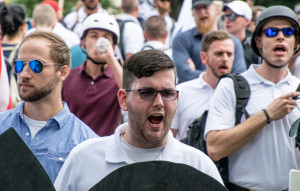
    James Alex Fields, Jr., who conducted the Charlottesville car attack. Image credit: Rodney Dunning/Flickr.

    It does not seem that right-wing terrorism is driven by economic grievances or distress.  Across the board, socioeconomic factors that are commonly argued to produce resentments that fuel right-wing terrorism were not significant.  For example, right-wing terrorism is not more likely to occur in U.S. states that have a larger percentage of their populations below the poverty line or that have higher levels of unemployment or income inequality.  I specifically examined two economic factors commonly argued by scholars to be associated with the rise of violent right-wing extremism: the structural decline of blue-collar manufacturing and the “Farm Crisis” that took hold of the United States in the 1980s.  Both of these are said to have produced strong resentments that violent right-wing groups exploited to garner recruits, thereby becoming more active and dangerous.  Neither of these factors, however, do a good job predicting when and where right-wing terrorism occurs in the United States.

    States that have suffered heavy industrial manufacturing job losses in a given year or a decline in family farms due to foreclosure do not disproportionately experience right-wing terrorism.  The apparent lack of a direct relationship between economic distress in the United States and right-wing terrorism mirrors findings for terrorism writ-large, globally.  Other studies of economically-aggrieved countries or individuals have not found them to be more terrorism-prone.

    I also examined a series of social factors.  The propaganda of right-wing extremist groups often mentions immigration, growing ethnic diversity and the decline of white demographic dominance in the United States as motivating threats.  Far-right protestors in Charlottesville illustrated this by chanting “You Will Not Replace Us!” and “Blood and Soil!”  However, I did not find actual racial and ethnic diversity on the ground to be a statistically significant driver of right-wing terrorism.

    Nationwide, the increase in the nonwhite population, and the growth of the nonwhite Hispanic or Latino population, in the United States, bears little relation with ebbs and flows of right-wing terrorist attacks.  Similarly, states with rapidly growing nonwhite population were not found to experience more right-wing attacks.  This does not foreclose the possibility that growing ethnic diversity in the U.S. is a driver of right-wing terrorism.  However, it is possible that the perceived rather than actual threat of demographic change and growing diversity fuels violent extremism.  This effect might be better revealed by a study of individual attitudes as drivers of terrorism.

    Related to fears among violent right-wing extremists that whites are being “replaced” by nonwhite immigrants and others is the belief among extremists that traditional male roles have been undermined by the empowerment and enhanced personal autonomy of women in contemporary America.  I investigated this by testing two measures of women’s status: the national rate of female participation in the workforce and the rate at which women seek abortions.  Both of these are frequently-used measures of actual women’s empowerment and are also potent political and cultural symbols of women’s equality.  I find both to be associated with a significant increase in right-wing terrorism.

    Holding constant other factors such as past experience of right-wing terrorism at the state level, unemployment, income, population, urbanization, size and growth of the economy and region of the country, I found that for each five percent increase in women’s employment nationally, the U.S. states experienced a 50 percent increase in rates of domestic right-wing terrorist attacks.  Similarly, for every increase of 10 medical abortions per 10,000 live births, a state experienced a 24 percent increase in right-wing terrorist attacks.  Of course it is possible that this latter abortion rate finding is simply reflecting abortion clinics being targeted by anti-abortion extremists.  However, when I removed attacks on abortion clinics from the data, the abortion rate in a state still is a statistically significant predictor of terrorism. This suggests that the controversy of abortion itself is a driver of all types of right-wing terrorism.

    Figures 1 and 2 help to illustrate these effects.
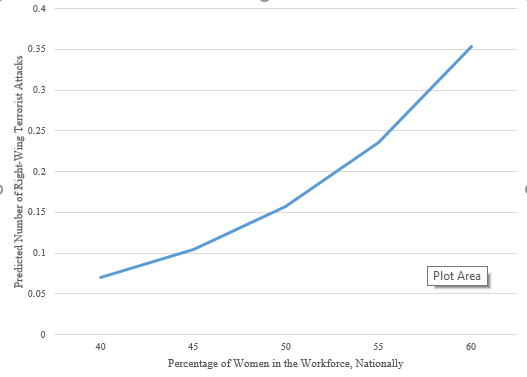
    Figure 1. Impact of Women’s Employment on Right-Wing Terrorism
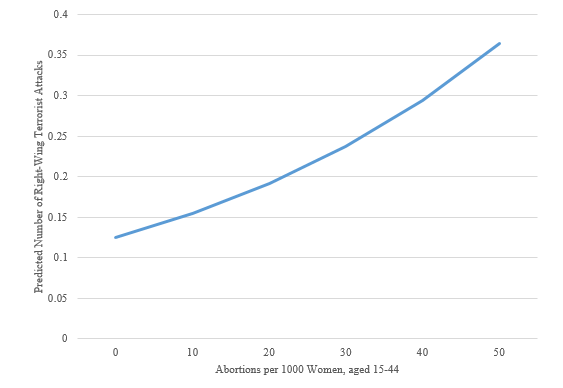
     

    Figure 2. Impact of Abortion Rates on Right-Wing Terrorism


    Finally, I considered some political and policy factors that have been hypothesized to drive right-wing terrorism. There are several schools of thought on the impact that partisan control of government might have on violent right-wing extremism.  One holds that when Republicans win elections and hold public offices, violent far-right extremists increase their activities because they feel emboldened.

    The other school argues that Democratic Party control, and policies that Democratic politicians frequently seek to enact such as gun control or enhanced social policies that increase the size of the federal government, antagonizes right-wing extremists, prompting them to strike back by launching terrorist attacks.  I tested for both and found that right-wing terrorist attacks were more common when a Democrat controlled the White House, and increased dramatically after the elections of both Bill Clinton and Barack Obama.

    In fact, Democratic control over the White House increases right-wing attacks by almost 73 percent.  Figure 3 presents the different projected rates of right-wing terrorism under Democratic versus Republican presidencies.  The partisan effect, however, seems limited to national politics.  Partisan control over state government does not significantly affect patterns of right-wing terrorism.
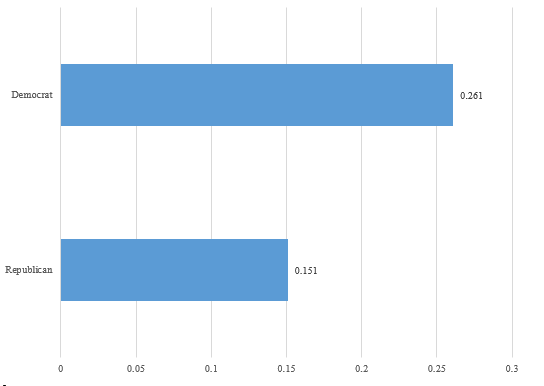
    Figure 3. Predicted Right-Wing Terrorism Under Democratic and Republican Presidencies


    This particular finding is interesting given the argument that U.S. President Trump has emboldened right-wing extremists through his rhetoric and his policies and policy proposals.  However, the impact of the Trump presidency cannot be assessed by the study as the analysis does not cover terrorism after 2011.  The data I used to conduct the original analysis has not yet been updated through 2017, when Trump assumed office.  It will be critical to retest the role of partisan control over the White House once this data is available.

    While who controls the White House is found to affect patterns of right-wing terrorism, the national partisan effect seems to not be linked to specific federal government policies.  Policies such as increases in federal income taxes or the 1994 federal ban on the sale assault weapons – both of which were an anathema for right-wing extremists – are not statistically significant predictors of attacks.

    Conclusion

    The sum of these findings is that several of the more symbolic factors, such as reaction against the empowerment of women or control over the government by an ideological “enemy,” that are significant drivers of terrorism rather than structural economic factors, demographic change or government polices enacted.  This finding is, perhaps, not so surprising.  On a general level, symbolic issues are frequently important motivators for terrorists world-wide.  Consider, for example, the symbolic importance of cleansing Muslim society from the influence of Western culture for a movement like Boko Haram in Nigeria or reconstructing an imagined Caliphate for the Islamic State (ISIL) movement.  More specific to the phenomenon of right-wing terrorism, the results underscore the potency of the U.S. President as a (singular) symbol of government and political direction of the country as well as the cultural impact of changing women’s statuses.

    It is also important to consider that the study is very much a preliminary investigation into the drivers of domestic right-wing terrorism.  The study focused on the most basic structural factors that precipitate right-wing terrorism.  Future research might look beyond structural precipitants to examine factors that facilitate the motivation, planning and execution of right-wing terrorist attacks, such as the role played by social media, hate speech online, etc.

    Author’s Note: Graphs of marginal effects of a 5-unit change (Women’s Employment), 10-unit change (Abortion Rates) and 1-unit change (Republican to Democrat) on counts of right-wing terrorist events. In models, state unemployment rate, inequality, population, population growth, urbanization rate, area, gross state product per capita, growth of gross state product per capita, region (Midwest, South, West) and previous year right-wing attacks are controlled for.

    James A. Piazza is Liberal Arts Research Professor of Political Science at the Pennsylvania State University. Piazza’s research focuses on terrorism, counterterrorism, political violence and intra-state armed conflict. His published work has appeared in the American Journal of Political Science, the Journal of Politics,International Organization, Comparative Political Studies, International Studies Quarterly, Journal of Conflict Resolution, Public Choice, Journal of Peace Research, Political Psychology, Conflict Management and Peace Science, Political Research Quarterly, Foreign Policy Analysis, International Interactions, Defence and Peace Economics, Southern Economic Journal, Security Studies, Terrorism and Political Violence and Studies in Conflict and Terrorism. He can be contacted at . His website:  http://polisci.la.psu.edu/people/jap45
  • Sustainable Security

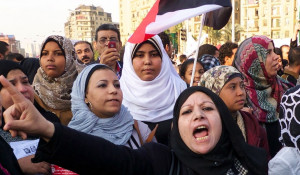
    Throughout the Muslim world, Islamic Feminism is taking shape. It presents alternative discourses on gender and Islam and aims to advance women’s rights within larger issues of social justice and minority rights.

    Throughout the Muslim world a counter discourse to western, mostly secular, feminism and Islamic fundamentalism is taking shape in the form of Islamic Feminism. While this is not a new phenomenon, having started primarily in Egypt in the 1950s, Islamic Feminism is increasingly gaining ground. The North African kingdom of Morocco and Malaysia form the bookends of this discourse that proposes to embed the advancement of women’s rights within larger issues of social justice and minority rights. It explores new readings of sacred scriptures that challenge historic patriarchy within Muslim tradition. At the forefront of this approach is Musawah (Equality in Arabic), an international network of scholars, activists, and lawyers. Musawah grew out of the groups Sisters in Islam and Karama (Dignity), both of which promote understandings of Islam that foster justice, equality, freedom, and dignity, especially for women. Founded in 2009 in Malaysia, Musawah’s headquarters moved to Morocco in 2015.

    The Moroccan King and Women’s Rights

    Islam is one of the pillars of Moroccan identity, and King Mohamed VI is a strong advocate of an “open, moderate Islam” based on the Maliki School of Islamic jurisprudence and Sunni Sufism. Since 2013, the Moroccan government has actively sought to train imam students from Tunisia and Libya as well as several West African countries, thus exporting Morocco’s Islam as a counterpoint to more radical or fundamentalist versions. In his dual capacity as Head of State and Commander of the Faithful (amir al mu’minin), the king is in the unique position of shaping religious discourse concerning women without resorting to authoritarian state-imposed feminism, as was the case in pre-revolution Tunisia. There, the government under dictator Zine El Abindine Ben Ali repressed religious discourse on women’s rights, a course that was reversed when, in the first free and democratic post-uprising elections in 2011, the religiously based Ennahda party was elected to government, allowing for a religiously inspired discourse on gender equality.

    Meanwhile in Morocco, under the auspices of the Moroccan King, a Center of Feminine Studies in Islam within the Rabita mohammadia des Oulémas (Royal Council of Religious Scholars) was established. Asma Lambrabet, a medical doctor and vocal proponent of Islamic Feminism, was the appointed director of this Center.

    Islam as a dynamic religion

    6444263899_3382108d6b_b

    Image by Iokha via Flickr.

    Islamic feminism is based on the idea that Islam is a dynamic religion, the eternal message of which needs to be adapted to changing historical circumstances. This interpretive process, called ijtihad (independent reasoning of the sources of Islamic law) involves the sacred texts of the Qur’an, sunnah (sayings and doings of the Prophet) and hadith (saying attributed to the Prophet). Islamic feminist ideas challenge predominant androcentric, absolutist theological concepts of authority. In so doing, women are appropriating religious authority, historically a domain controlled by men.

    The Moroccan Asma Lamrabet’s and U.S. scholar Amina Wadud’s writings enjoy wide popularity, especially among young Muslims who want to find answers to the question what it means to be a Muslim in the modern world. Faced with increasingly conservative and radical interpretations of sacred texts, these two scholars offer a religious perspective on modern identity formation that is not primarily western or secular. They exemplify how Muslim women can appropriate sacred texts, a fundamental strategy of their empowerment and personal development.

    Who holds religious authority?

    Lamrabet and Wadud address head-on an age-old question: Who has the authority to interpret the sacred texts? Each scholar in her own way is appropriating authority over textual analysis and, in doing so, is creating a new voice, a new way of approaching gender and women’s rights within an Islamic context. Together, their work exists within the larger context of challenges to conventional religious authorities in contemporary Muslim societies. Just as the role of the traditional ulama (Islamic scholars) has been challenged by the rise of alternative sources of religious authority – such as Internet fatwas and satellite TV imams – that claim equal legitimacy, Islamic feminists demand this right for themselves. If men with limited scholarly theological training can exert influence—uncontested by conservative scholars—why would alternative interpretations by women not fit into this colorful landscape of religious authorities?

    One of the earliest and most important pioneers of Muslim feminist scholarship is Morocco’s Fatema Mernissi (1945-2015). She was among the first to turn to the Qur’an to advance a reformist interpretation of the sacred texts with a view to supporting gender equality. In addition, Mernissi placed women’s rights within a larger context of social and economic justice. Today, Mernissi is Morocco’s most widely translated and internationally read author. Ironically, it was only after her death a year ago that she became widely known in her home country and finally gained publicly acknowledgement for her contributions.

    Islamic feminist hermeneutics considers the Qur’an as a historical text, revealed at a particular time and place. Over time, then, certain interpretations need to be reconsidered or refuted in accordance with the principles and egalitarian spirit of the texts. As Mernissi has repeatedly argued, sacred texts have been used as a political weapon to uphold laws that treat women as legal minors. This action is possible because traditional Islamic theological scholarship lacks fundamental historic contextualization, fails to acknowledge that knowledge production always occurs within a given historical context, and downplays the possibility of human fallibility in any hermeneutics. Recognizing such limitations is an important element of Islamic Feminist thought. Inasmuch as Mernissi critiqued the gender inegalitarian reality, she also was critical of promoting women’s rights without simultaneously advocating for social and economic justice.

    Pioneers of Islamic Feminism

    Thus, Mernissi, Lamrabet, and Wadud represent important alternative voices in scholarly discourses on gender and Islam. There certainly are other, important proponents of Islamic feminism. Margot Badran has written about Islamic Feminism for more than a decade, mostly focusing on Egypt. One of the founders of Musawah, the Malaysan Zainah Anwar, Iranian born scholar Ziba Mir-Hosseini and South African Farid Esack have also emerged as important advocates and scholars in re-interpreting concepts that traditionally have undergirded male superiority such as quiwamah (male authority), wialya (guardianship), mixed marriages and one of the cornerstones of inequality: inheritance laws.

    Thus, Islamic Feminism aims to liberate Muslim women from archaic and limited roles with negative social and economic consequences. Islamic Feminism argues for pluralistic interpretations of sacred scriptures, as a means by which global feminists can establish a dialogue based on the deconstruction of traditional knowledge that is masculine and patriarchal. It allows the reconciliation of Islam and modernity and goes beyond the false dichotomies of Muslim and secular, modernist and traditionalist, East and West.

    Dr Doris H. Gray directs the Hillary Clinton Center for Women’s Empowerment at Al Akhawayn University in Ifrane, Morocco where she is also Assoc. Professor of Gender Studies. She is the author of “Beyond Feminism and Islamism – Gender and Equality in North Africa” (I.B. Tauris 2102, second revised edition 2014) and “Muslim Women on the Move – Women of Moroccan and French Origin speak out (Rowman and Littlefield, 2008) and editor of “Gender, Law and Social Change in North Africa” (Cambridge University Press, 2017)

  • Sustainable Security

     (This piece was originally published by Channel 4 News on  January 22, 2013 and is the first of two parts by Anna Alissa Hitzemann and Ben Zala)

    France Mali smallBritain is on standby and the US is already transporting French troops into Mali. But a new paper says the west is “betting on the wrong horse” by intervening in the region.


    Now well over a decade after the beginning of the so-called war on terror, yet again, another western nation is leading a military intervention against Islamist paramilitaries based in a largely ungoverned region of a state in the Global South, write Anna Alissa Hitzemann and Ben Zala for the Oxford Research Group.

    The hostage situation in Algeria that developed late last week is just the latest in a series of western hostage takings in recent years, demonstrating the increasing radicalisation of elements in the region.

    The French-led intervention in Mali is only one of many in a growing list of attempts to control outbreaks of political violence and terrorism with military means.

    As the intervention gathers pace, it is worth reflecting on the lessons from similar operations over the past decade or so. From the US-led interventions in Afghanistan and Iraq to the attempts to control Islamist-inspired political violence in Yemen, Nigeria and Somalia and separatist rebellions in Burma, Indonesia and elsewhere, the resort to military force has singularly failed to achieve the aims set for it.

    Common to all of these examples is the reluctance to match military operations against rebel groups and insurgents with serious, long-term efforts to address the factors that underlie the feelings of resentment and marginalisation that drive such conflicts.

    As the commentary and analysis of events in Mali follow the fortunes of the military battles of France and its other western and African allies, it is worthwhile examining the political, socio-economic and cultural divisions which have sparked the uprising in the north of Mali.

    Background to the northern uprising

    The factors that led to the current Malian crisis are complex but can largely be attributed to unintended consequences of the war against Gaddafi. It is clear that the 2011 crisis in Libya, followed by foreign intervention and Nato’s military involvement, and the consequent fall of Gaddafi‘s regime, had a crucial role to play.

    After losing the war in Libya, hundreds of Malian mercenaries (many of whom had been recruited among former Tuareg rebels) who had been an integral part of Gaddafi’s army, returned home. They brought with them an arsenal of weapons and ammunition as well as experience.

    These soldiers who returned to Mali from Libya played a key role in the formation of the largely Tuareg-led secular MNLA (Azawad National Liberation Movement), which in a matter of months, took over several key towns in the north of Mali, declaring an independent Azawad state.

    The situation in the north of Mali led to widespread frustration within the military over the government’s incompetence or unwillingness to deal with the issue and reclaim their territory. Ultimately, it led to the April 2012 military coup by Amadou Sanogo against Mali’s elected government and president Amadou Toumanie Touré.

    Interestingly enough, Sanogo himself had received extensive training by the United States as part of the $600m (£380m) spent by the US government in efforts to train military of the region to combat Islamic militancy.

    The actions of the separatist MNLA group and the consequent military coup and inability of the Malian government and military forces to control the situation led to a violent conflict in Mali’s north which includes four main groups: the secular MNLA and the religiously motivated AQMI (Al-Qaeda of the Islamic Maghreb), Ansar Dine and MUJAO (Movement for Unity and Jihad in West Africa).

    AQIM, the group most closely linked to the international terrorist network Al-Qaeda, has been present in Mali for several years now, has taken several European hostages over the last few years and is said to be made up of mostly Algerians and Mauritanians with much financial support from abroad.

    Tuareg rebellion and the paths not taken

    The formation of the Tuareg-led MNLA movement and its desire for an independent Azawad state has in fact deep roots and a history going back to the first Tuareg rebellion of 1963. Tuaregs led significant armed struggle and resistant movements against colonisation by the French and later the central Malian government.

    Long-term sustainable security and stability for Mali will not be possible without seriously addressing the long-standing and deep-seated grievances that stem from the marginalisation of the northern territories and their peoples.

    The political, socio-economic, educational and cultural marginalisation of the north cannot be ignored. With the effects of climate change, increasing desertification and the government’s reluctance to implement meaningful development programmes, Tuareg and other nomadic communities see no viable future and feel abandoned by the Malian state.

    Grievances also stem from past brutal repressions of Tuareg movements, as well as the state’s failure to adhere to the Algerian brokered peace agreements between Tuareg rebels and the government.

    Even after the Tuareg rebellions of the early to mid 1990s, the Malian government still remained unwilling or unable to implement the education programmes and development projects which were promised and are necessary to alleviate poverty and a deep sense of disenfranchisement.

    The political, socio-economic, educational and cultural marginalisation of the North cannot be ignored.

    It would have been wise to negotiate and come to an agreement with the MNLA at the early stages of the current crisis. Both Burkina Faso and Algeria pushed for a diplomatic solution to this crisis instead of military intervention.

    Burkina Faso’s president, Blaise Compaore, West Africa’s mediator on the Malian crisis, had organised talks between MNLA, Ansar Dine and the Malian government in Ouagadougou in December. A ceasefire was agreed and all parties approved to adhere to further peaceful negotiations.

    The talks which had been planned to continue this January have now been interrupted due to the French military intervention in Mali.

    The chance of finding a solution to combating Islamic extremism in northern Mali would be significantly better if the Malian and French military sought a way of collaborating with the Tuaregs. This is a challenging task but a task that is unavoidable over the long-term.

    It is the resentment towards the central government over the marginalisation of the northern territories and its population that in part has helped Islamists gain strength.

    Dr Ben Zala is Ben Zala is a Lecturer in International Politics at the University of Leicester.

    Anna Alissa Hitzemann is a  Peaceworker with Quaker Peace and Social Witness. She currently works with Oxford Research Group as a Project Officer for the Sustainable Security Programme, with a focus on our ‘Marginalisation of the Majority World’ project.

    Image source: Defence Images

  • Sustainable Security

    Environmental changes in the Arctic are making the region more accessible which many believe will lead to competition and conflict over its resources. But is this really the case?

    The Great Game moves North

    A battle to ‘carve up’ the Arctic

    ‘Ice Wars’ heating up the Arctic

    Melting ice caps open up Arctic for ‘white gold rush’

    Warming Arctic opens way to competition for resources

    Conflict ahead in Arctic waters

    The above are just some of the many headlines and titles that have described the state of the Arctic over the last decade. Ever since a Russian flag was planted on the seabed at the North Pole in 2007, media outlets, academics and policy-makers have been pondering the conflict potential of a warming Arctic.

    Their concerns surely have a dramatic background. The Arctic, the region commonly defined as all land and water areas above the Arctic Circle at 66 degrees north, has over the past 50 years warmed twice as fast as the global average. Consequently, the Arctic ice sheet has retreated significantly. In September 2012, the ice extend dropped to around half of what it was in the late 1970s, and is lingering on low extent numbers ever since. The diminishing sea ice has made the resources of the Arctic, such as oil and gas, increasingly accessible for exploration and exploitation.

    This increasing accessibility of the region combined with, thus far, inaccessible and high-in-demand resources and still existing boundary disputes between the Arctic coastal states, made (and still makes) many believe that we are heading towards a region of conflict.

    But is this really so? Should we expect the region in the north to erupt into hot conflicts about access to oil and gas, shipping lanes and fishing grounds that the retreating ice lays open? Does a warming Arctic inevitably mean increasing conflict potential with little hope for cooperation to emerge?

    Cooperation and conflict: a misleading dichotomy

    arctic

    Image credit: Fulbright Arctic Initiative/Flickr.

    Most of the debates aiming to answer these questions circle around the issue of whether the Arctic is a region of “conflict” or “cooperation”. The cardinal error of this debate is that “cooperation” and “conflict” are taken as two sides of the same coin. Taking cooperation and conflict as the two ends of a continuum inadequately twists the empirical perceptions and expectations as to future developments in the Arctic.

    As a matter of fact, cooperation and conflict are part of two different coins. Conflict is first of all a situation in which the interests of two or more actors overlap in the sense that they pursue different goals or that they prefer different means to achieve a specific goal. The opposite of conflict is then harmony, a situation in which actors’ interests do not touch each other. This is one coin.

    If there is a case of conflict, actors can react to this situation in different ways. Roughly speaking, they can either react with “cooperation” or “confrontation”. They can decide to solve the conflict through negotiation and looking for compromises, or they can revert to using force of some kind, such as sanctions or military actions. These possible options for actions in a situation of conflict are the second coin.

    Once one has understood the difference between these two coins, it is possible to analyze how actors have reacted to Arctic conflict cases in the past (like open boundary disputes, of which many have been solved since the 1970s), and which options for resolution exist in response to possible future Arctic conflict cases (like still open boundary disputes, competing interests for access to resources or shipping lanes etc.).

    Unfortunately, in the past and current Arctic conflict debate the existence of a conflict is usually treated the same as a confrontation– a situation in which breakdown of relations and even violent actions are imminent. But if we equalize conflict and confrontation, we face a very alarming situation in the Arctic since there are cases where the interests of Arctic actors (including those from south of the Arctic Circle) overlap. The open maritime delimitations around the area of the North Pole and the question how much of the Arctic is to be legally treated as a common heritage of mankind are just two examples of Arctic conflicts.

    But if we were to conduct a sound analysis with the two-coin understanding as outlined above, we would understand that conflict is the very prerequisite to make cooperation and confrontation happen in the first place. In other words, there is no cooperation or confrontation if there is no conflict (since actors do not interact in a situation of harmony). Then we can look at the Arctic world out there and check which options for action Arctic actors choose to react to conflict situations.

    The Arctic Council – A prime example of Arctic cooperation

    We find a multitude of examples for actors choosing cooperative options for actions, especially among the members of the Arctic Council, which are the eight Arctic states Canada, Denmark, Finland, Iceland, Norway, Russia, Sweden and the United States. Since the flag-planting in 2007, and also since Russia’s more recent assertive actions elsewhere in the world, cooperation in the preeminent political forum of the region, the Arctic Council, has been strengthened. The Council has evolved from a forum for debate to a policy-shaping body through the adoption of several intergovernmental agreements under its auspices. These range from provisions for preparedness and response for oil spills in Arctic waters, a search and rescue cooperation agreement, and will soon be added by an agreement on Arctic scientific cooperation.

    On the international level, an “International Code of Safety for Ships Operating in Polar Waters” or short “Polar Code” has been negotiated under the International Maritime Organization to regulate the increasing shipping activity in the Arctic. Arctic countries are working on their submissions to the UN to verify their extensions of their continental shelves, and have in unison pledged to settle any overlapping claims peacefully and in close consultation with each other.

    All these cooperative actions have included the Arctic states as well as many state and non-state actors beyond the region, for example in the form of observers to the Arctic Council. The short result of this analysis is: Yes, the Arctic is full of conflict but also full of cooperation since across the board actors are reacting cooperatively to cases of conflict.

    The crux is that these instances of cooperation can be observed. In contrast, most foreboding of a confrontation in the Arctic only refers to what could happen now that the Arctic is accessible and its resources up for grasp. In other words, these contributions can only be speculative.

    A lingering problem of the Arctic conflict debate is that a conflict over Arctic issues is usually very easily and quickly proclaimed and seldom reflected upon or questioned again. So once a conflict is said to exist, it is hard to get rid of again, even if observations show that there is no real ground for the conflict or if actors react cooperatively to it. A prominent example is the rising Chinese interest in Arctic issues, which peaked 2013 when China was admitted as an observer to the Arctic Council. Since then, many have depicted Chinese Arctic interests as a “conflict” since China as a powerful player would undermine other Arctic voices and generally would bring turmoil to Arctic affairs. In contrast, when talking to the members and Permanent Participants (the representatives of Indigenous Peoples’ Organizations) of the Council, one hears that after some initial concerns everyone is pretty happy about the presence of important players like China. Not least, China has to be part of the solution to the global climate change problem, which heavily affects the Arctic. And having China present at Arctic Council meetings is a rare opportunity for small, Indigenous organizations to get into a direct conversation with countries like China.

    Conclusion

    In sum, if we consider how often the “next Cold War” in the Arctic has been proclaimed now that we have entered the tenth (!) year after the Russian flag-planting, one keeps wondering why this war has failed to materialize. This may be sign that the assessment of the Arctic as a region of confrontational conflict is not for nothing predominantly based on speculation. In fact, the predication of a next Cold War in the Arctic may be exactly that: a wild guess.

    Dr. Kathrin Keil is Scientific Project Leader at the Institute for Advanced Sustainability Studies (IASS) in Potsdam, Germany, where she is leading the Arctic research work on Sustainable Arctic Futures: A Regional and Global Challenge. She is also Senior Fellow at The Arctic Institute – Center for Circumpolar Security Studies where she regularly writes about and comments on current Arctic developments. Further, Kathrin is part of the official German observer delegation to the Sustainable Development Working Group (SDWG) of the Arctic Council.

  • Sustainable Security

    A recurring feature of Western counter-radicalisation discourse is the ‘Muslim paranoia narrative’, a belief that resentment towards Western societies is motivated by a paranoid and conspiracy-riven worldview. This association between radicalisation and paranoia appears repeatedly through official statements and policy documents.

    Radicalisation is at the forefront of policy debates as ISIS continues to draw recruits from Western democracies. Recent summits in Washington and Sydney on countering violent extremism have highlighted the importance of undermining extremist narratives, mobilising moderate Muslims who oppose ISIS, and working to address underlying drivers of radicalisation. Yet representatives of Muslim communities have met this approach with considerable scepticism, both in Western states and across the Muslim world. A common complaint is that Muslims are singled out and caricatured as a unique danger, which only increases the level of vilification experienced by Muslims.

    The Muslim paranoia narrative

    islamic_center_of_murfreesboro_with_flag

    Image by Saleh M. Sbenaty via Wikimedia.

    In recent research published in Critical Studies on Terrorism, I explore the underlying ideological conditions that work against engagement with Muslim communities thought vulnerable to radicalisation. I examine what I call the “Muslim paranoia narrative”, a recurring feature of Western counter-radicalisation discourse that helpfully captures these underlying ideological dynamics. In the Muslim paranoia narrative, resentment towards Western societies is said to be motivated to some degree by a paranoid and conspiracy-riven worldview, which is thought to thrive in alienated and disempowered communities. Terrorist recruiters exploit distorted outlooks to fuel a sense of injustice about the plight of Muslims abroad. This association between radicalisation and paranoia appears repeatedly through official statements and policy documents, including those associated with ongoing counter-radicalisation strategies like the US State Department’s Digital Outreach Team.

    The Muslim paranoia narrative is worth examining because it is a clear tension point in contemporary radicalisation strategies that are increasingly focused on engagement and collaboration. The negative connotations associated with paranoia connect palpably with the sense of vilification often highlighted by Muslim critics of these programs. And the paranoia narrative can be connected to a broader ideological imaginary. Tracing the Muslim paranoia narrative from its ideological roots provides a window into the assumptions and priorities informing radicalisation discourse and contextualises the reticence of Muslim communities towards it.

    The Muslim paranoia narrative is especially intense in the United States where my research is focused. Richard Hofstadter is widely understood to have established the now commonplace account of political paranoia in his famous essay “The Paranoid Style in American Politics”, which identified a recurring strain in American politics characterised by a “sense of heated exaggeration, suspiciousness, and conspiratorial fantasy”. Hofstadter positioned political paranoia on the periphery of pluralistic American democracy as the irrational pathology of angry extremists, and contrasted it with a rational political centre where sensible politics occurred. Although Hofstadter wrote this seminal piece in 1964, it is difficult to overestimate its traction and influence. This is in large part due to the fact that Hofstadter deployed many of the most common conceptual features of post-War liberalism, which abhorred populism and focused on the mediation of competing interests through bargain and compromise. America was situated as a moderate democracy, pragmatic, centrist and non-ideological, in contrast to the radical politics sweeping the post-War Europe. Although liberalism has evolved significantly over the intervening years, the basic conceptual features set out by Hofstadter have remained pervasive in contemporary perspectives on political paranoia.

    One reason for this is that political extremism is still largely understood through the same centre/periphery framework. This dynamic is at the heart of radicalisation discourse in the US, where the political and religious beliefs of Muslim communities have emerged as a subject of concern. In this context, the Muslim paranoia narrative locates paranoia not just on the fringe of liberal democracies, but also on the periphery of international power and legitimacy from the point of view of political leaders and security experts. Here the pervasive perspective on political paranoia folds together with a long-running orientalist narrative about the supposedly dysfunctional characteristics of Muslim cultures, particularly in the Middle East, which has often framed America’s regional encounters.

    A problematic narrative

    The Muslim paranoia narrative is involved in a powerful process of ideological reproduction that works against engagement and collaboration with Muslim communities. Underlying liberal and orientalist frameworks situate Muslim cultures as dysfunctional and anti-modern, while associating Muslim resentment about Western foreign policies with problematic and potentially pathological modes of thought. Like post-War liberal orthodoxy secured by contrast with paranoid populism, contemporary liberal modernity is secured by contrast with the paranoia of alienated Muslims.

    At the same time, contemporary radicalisation discourse disciplines the wider public against consideration of Muslim grievances and associated criticisms of US policy. For instance, the identification of political paranoia as a subject of concern has the double effect of producing a strong general deterrent against the interrogation of elite power and political controversy, when the personal and professional costs of such engagements are potentially catastrophic. The taint of irrationality can be devastating, even by association – undermining credibility and calling motivations into question.

    In this sense, the Muslim paranoia narrative can be understood in terms of powerful ideological scripts in American political culture, rather than as an objective description of an ideational precursor to radicalisation in Muslim communities. The broader point is that potent narratives around extremism and oriental otherness have undermined the approach of successive US administrations to counter-radicalisation. These scripts have worked against a persuasive encounter with Muslims critical of American foreign policy, when such criticisms are framed as the product of a problematic thoughts and dysfunctional culture.

    This problem is clear enough in the practical setting of counter-radicalisation programs like the US State Department’s Digital Outreach Team (DOT), a group of bloggers tasked with confronting views critical of American policy on foreign language websites, and, more recently, discrediting ISIS affiliated users on social media. For our purposes it is interesting to note that according to the State Department “the Digital Outreach Team contrasts objective facts with the often emotive, conspiracy-laden arguments of US critics in the hope that online users will take a fresh at their opinions of the US”.  And this frame manifested in the online activities of the DOT where time was spent “ridiculing myths and conspiracy theories and calling users with extreme views radicals, but claiming to enjoy engaging with users who post objective views.” Perhaps unsurprisingly, a close analysis of DOT work following President Obama’s 2009 Cairo Address found that a large majority of people who expressed a view about the DOT were negative in their comments, with half openly “ridiculing and condescending”. Although there were no doubt many reasons for the widespread hostility to the DOT, it should be obvious that labelling people paranoid and irrational is highly antagonistic, particularly when considered in the context of the wider set of intimations that have historically been associated with such language.

    Indeed, it is critical to acknowledge that although the identities and relations highlighted in my analysis of the Muslim paranoia narrative exist within a specific policy discourse, they bear no necessary relationship to the lived experience of differentiated Muslim people, who often refuse classification in these terms. Moreover, it is critical to acknowledge that there is still no conclusive evidence for a particular terrorist profile; for a common pathway or pattern to radicalisation; or for predicting which holders of radical views will become violent. Without critical awareness of the ideological conditions identified here and a sustained attempt to move beyond them, the crucial work of engagement, partnership and community building will be likely ineffectual.

    Tim Aistrope is Lecturer in the School of Political Science and International Studies at the University of Queensland.

  • Sustainable Security

    In June,  a judicial review into the legality of UK arms sales to Saudi Arabia was announced. This will be the first time that UK arms export policy has been put under the spotlight and scrutinised in this way. Campaign Against Arms Trade discuss this historic decision.

    On 30th June there was a heavy silence in the moments before High Court Judge Justice Gilbart announced that he was granting a judicial review into the legality of UK arms sales to Saudi Arabia. A quiet relief fell over those of us in the public gallery. Decorum ensured that the response was muted, but the decision was historic. This will be the first time that UK arms export policy has been put under the spotlight and scrutinised in this way. It is an unprecedented step that is likely to focus on not just the extent of UK arms sales to Saudi, but also the scale of collusion and government support that goes with it.

    Our claim calls on the government to suspend all extant licences and stop issuing further arms export licences to Saudi Arabia for use in Yemen while the court holds a full review into whether the weapons sales are compatible with UK and EU legislation. The UK’s arms export policy will thus now undergo a full three-day investigation in front of two judges, which must take place before February 1st 2017.

    Fuelling the flames in Yemen

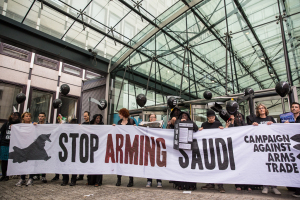
    London, UK. 11th July, 2016. Human rights campaigners protest against arms sales to Saudi Arabia outside the Defence and Security Organisation (DSO), the Government department responsible for arms export promotions.

    London, UK. 11th July, 2016. Human rights campaigners protest against arms sales to Saudi Arabia outside the Defence and Security Organisation building. Image by CAAT via Flickr.

    UK arms exports have been central to the ongoing Saudi-led bombardment of Yemen. As we write this, UK-licensed Eurofighter jets may well be over Yemeni airspace, guided by UK-trained military personnel and dropping UK-made bombs from the skies. It would be hard to overstate the humanitarian crisis that has been unleashed, with the UN having ranked the humanitarian situation in the war-torn country as a “Level 3” emergency – the highest possible emergency ranking. The bombing campaign has lasted over 15 months following a Saudi Arabian-led intervention into Yemen’s civil war. Saudi forces are acting alongside Yemen’s government against forces led by the former president, Ali Abdullah Saleh, and the Houthis, a northern Shia militia. There is no question that atrocities have been committed on all sides, although the UN has accused Saudi forces of killing twice as many civilians as all other forces.

    More than 2.5 million people have been displaced, and vital infrastructure, including schools, hospitals and cultural heritages sites have been destroyed. Of those who remain in Yemen, millions have been left without access to clean water or electricity, and 80% of the population has been left in need of aid. Even the Home Office has acknowledged the scale of the destruction, concluding that to allow people to return to Yemen could be a breach of their human rights.

    The need for legal accountability

    The destruction hasn’t only been immoral, it has also been illegal. A UN panel of experts, the European Parliament and many of the most respected humanitarian NGOs in the world, including Human Rights Watch and Amnesty International, have accused Saudi forces of serious breaches of international humanitarian law (IHL).

    The UN report “documented 119 sorties relating to violations of international humanitarian law” and reported “starvation being used as a war tactic.” More recently, Human Rights Watch has linked UK arms to specific attacks on businesses and civilian targets. The reports have been thorough and in-depth and their evidence has been compelling, but they have fallen on deaf ears in Whitehall.

    Arms exports control regulations are very clear: a licence should not be granted in the circumstances where there is a “clear risk” that it “might” be used to violate IHL. In spite of this, the UK has licensed over £3.3 billion worth of arms sales to Saudi Arabia since the bombing began, including fighter jets, bombs and missiles.

    There can be little, if any, control over how and when these arms will be used. A recent report from Amnesty International found that cluster bombs sold decades ago by the UK are being used in Yemen, a terrible reminder that the shelf life of arms is very often longer than the two year licence under which they are sold.

    Moreover, even if such control was possible, there is no reason to believe it would be applied. This is because if arms were found to be used in a way that violated the terms of their sale agreement this would result in licences being cancelled—which could affect the profitability of exports.

    Burying the truth

    In the last hours of the last day of the most recent session of parliament, the government performed a major U-turn by publishing written corrections that reveal, contrary to earlier claims, that there has been no oversight of how arms are being used. At best it represented staggering incompetence on the part of government ministers— at worst it was a cynically timed admission of how they had previously distorted the truth.

    Either way, it underpins the point that the Saudi government hasn’t just bought arms and military support, it has also bought silence, compliance and a seal of political approval. That’s why, only nine months ago, we saw the despicable, but ultimately unsurprising, revelations that UK diplomats had lobbied and campaigned behind the scenes for Saudi Arabia to Chair the UN Human Rights Council.

    So who benefits from the current situation? Certainly not the Yemeni people living under bombs, or the Saudi people being persecuted and oppressed. One obvious beneficiary is the arms companies. BAE Systems, for example, enjoys the full support of the UK government in its arms sales to Saudi. Earlier this year, BAE Chairman Roger Carr told Channel 4 News that he sees Saudi Arabia as “a very important customer with which we have a very strong relationship.” This point is alluded to in the last BAE annual report. The ‘principal risks’ section of the report identifies the commercial risk that state buyers may consider cutting their military budgets, before suggesting this will be mitigated in part because “in Saudi Arabia regional tensions continue to dictate that defence remains a high priority.”

    BAE and the UK’s special relationship

    For decades now, UK governments of all political colours have worked hand in glove with the arms companies and Saudi authorities, continuing to sell arms and provide political support while turning a blind eye to the grotesque human rights abuses that are being carried out every single day.

    Regardless of who has been in charge, the Saudi Royal Family’s influence and interests have been core to Whitehall’s approach to arms sales and the Middle East. Over recent years we have seen Tony Blair intervening to stop a corruption investigation into arms exports to Saudi, David Cameron flying out to Riyadh to meet with Royalty, and the outlandish and humiliating spectacle of Prince Charles sword dancing to secure sales for BAE Systems.

    The government’s inability to uphold its responsibility in regards to human rights and domestic law is evidence of just how far it is willing to go to maintain this toxic relationship. Despite the legal action, there has been no change to the government’s policy. Only two weeks after the judicial review was ordered, Saudi military representatives were in the UK for the Farnborough Airshow where they were shopping for weapons.

    Stop arming Saudi Arabia

    At a time when the UK should be using its close relationship with Saudi to apply pressure and push for meaningful peace negotiations and vital reform, it is instead carrying on with business as usual. The government’s refusal to act responsibly underlines the enormous power of the arms trade lobby and the pernicious nature of the UK-Saudi relationship, a relationship that fuels instability and repression and corrupts our political system.

    Whatever the outcome of the review, the campaign will go on. As long as terrible crimes are being committed with UK weapons and with our government’s support, we will continue. The UK’s shameful relationship with Saudi Arabia and the terrible examples above show just how far (and how low) the machinery of government will go to protect the Saudi Royal Family’s interests.

    The UK-Saudi alliance has boosted the Saudi regime while lining the pockets of arms company executives, but it has had devastating consequences for the people of Saudi Arabia and Yemen. For the sake of those people, the UK government must finally stop arming and empowering the brutal Saudi monarchy.


    Andrew Smith and Vyara Gylsen are writing on behalf of Campaign Against Arms Trade (CAAT). Andrew Smith is Head of Media for Campaign Against Arms Trade. Vyara Gylsen is an anti arms-trade campaigner that volunteers and works with Campaign Against Arms Trade. You can follow CAAT on Twitter at
    @CAATuk.

  • Sustainable Security

    Much has been written about the prevalence of sexual violence in the Democratic Republic of Congo (DRC), and in particular about the use of rape as a “weapon of war”. The horrific stories of rape and sexual violence published worldwide have led to the DRC being labeled the “worst place in the world for women” and the “rape capital of the world”. Feminists have long decried the silence which has historically surrounded rape and sexual violence during conflict, and so the fact that political leaders and world media are now talking about sexual violence in the DRC and pushing for solutions to this problem should be applauded. However, much of the discourse and reporting reduces this to a simple narrative of “bestial” or uncontrolled soldiers or militias raping the women and girls in villages which they attack. This narrative, in addition to employing colonialist and racist stereotypes about the behaviour of Congolese men and women, fails to grasp the complexities of gender relations in the DRC, the multiple and varied nature of sexual and gender-based violence, and of the social structures and norms which underlie this violence.

    One of the common perceptions about gender-based violence in the DRC, is that rape is the prevalent form of this violence and that sexual violence committed as a direct consequence and/or a strategy of war. It is undeniable that Forces Armées de la République Démocratique du Congo (the official army of the DRC) soldiers as well as numerous other rebel fighting groups have committed acts of sexual violence during the multiple and ongoing conflicts in the country, and continue to do so, as demonstrated by an attack in 2015 on the town of Kikamba in South Kivu during which over 100 women were raped. But to think of gender-based violence only as war rape is to miss the multiple other forms of violence, and the fact that these persist not only in areas of the country most directly affected by the conflict (notably the Eastern Regions) but across the whole country.  Common barriers to reporting GBV, such as stigma and fear of reprisals of the survivors, as well as poor infrastructure within the DRC mean that there is a lack of accurate statistics on GBV. But studies that do exist have shown that most of the incidences of GBV recorded in recent years are committed by civilians and not by soldiers, and that the most prevalent forms of GBV are domestic or intimate partner violence. A recent study by UNFPA listed multiple forms of GBV which are common in DRC including domestic  violence, rape and sexual violence, forced and early marriage, mistreatment of widows, psychological violence, economic violence and deprivation of resources.

    Meeting of victims of Sexual violence in the Democratic Republic of the Congo.

    Meeting of victims of Sexual violence in the Democratic Republic of the Congo. Image by USAID via Wikimedia.

    So although armed conflict has exacerbated gender-based forms of violence in the DRC, it cannot be the only explanation for the existence or persistence of this violence. Instead, we should look to the country’s underlying gender norms, discriminatory laws and policies, and socio-economic structures. Although the new  2006 constitution of the DRC has made some progress towards recognizing gender equality, such as in article 14 which states that the public authorities should ensure the promotion and protection of women’s rights,  discriminatory laws still remain, which reinforce persistent norms and beliefs about the roles of men and women in society. The Family Code of the DRC still maintains that a man is the head of the household who has authority over all other members of the household including his wife who must obey him. Women must obtain their husband’s permission before performing any legal act such as selling or leasing property, opening a bank account or applying for a visa or passport. The idea that men are heads of the household is strongly engrained and supported by many Congolese who see it as a part of the national “family values”. This persistence of a family code which legitimates men’s control over women and the symbolic and normative values which it perpetuates are key barriers to the achievement of gender equality. Further, research has shown that prevalent gender norms seem to accept a certain level of violence within couples as normal and even desirable.

    A new law on sexual violence passed in 2006, showed progress in criminalizing forms of violence not previously recognized such as sexual harassment, sexual slavery or forced pregnancy, but it still fails to recognize marital rape. This reflects that fact that many men and women think it is part of a woman’s duty to have sex with her husband whenever he wishes. And, for many, a certain level of violence within couples is “normal”, so that a man giving a “light tap” to his wife or girlfriend to keep her in line is perfectly acceptable.  Some even share the belief that if a man does not hit his partner, then he does not really love her. This normalization of a certain level of violence in intra-personal relationships is just part of a wider continuum of gender-based violence which is normalized and accepted. There are also various forms of violence which are condoned or encouraged by customary law which remains strong in some areas of the country, such as the rules of sororate and levirate under which women may be forced to marry the brother of their dead husband or the widow of their dead sister.  The continuum of these different forms of violence, which are accepted and normalized within Congolese society, can be seen to provide the context within which the rape and sexual violence, that has occurred during the armed conflicts, should be understood.

    The normalization of GBV also contributes to the continuing impunity of perpetrators, as do the weak police and judicial systems in the country. As noted above, many incidences of GBV are not even recognized as such, and even when it is acknowledged that an act of gender-based violence has been committed, it is unlikely that he perpetrator will be prosecuted or punished. And in the absence of a robust judicial system, many cases are still settled through “amicable” arrangements between perpetrator and victim.

    Gender inequalities are also obvious in many areas of public life, such as the lack of women in decision making positions in the government. Women make up only 8.9% of representatives in the National Assembly, 5.5% of Senators and 14.8% of government ministers (despite a strong recommendation from the national consultation held in Kinshasa in 2013 to appoint at least 30% of women to the government). Although a law on gender parity in political representation was passed by the National Assembly in April 2014, so far it has not had any noticeable impacts. There is still widespread opposition to women’s participation in public and political life because this is equated with a threat to the “traditional” family life and culture of the DRC. Women have also been under-represented in all of the various peace negotiations which have taken place to try and end the conflicts in the DRC, and remain a very small minority in the armed forces, the police and the judiciary.

    Much more can be written about the various forms of gender inequality which persist in the DRC and which provide foundations for the various forms of GBV which exist in the country. The necessary links between broader social gender inequalities and GBV are vital to understand if there is to be any effective response to the problem of GBV, and effective policies for prevention. The Women, Peace and Security agenda, has a focus on not only prevention of violence, but also of increased participation of women in public life and decision making. Increasing participation means considering women not only as “vulnerable victims” of sexual violence, but as actors should be given an equal role in political life.  All of the many complexities and layers of gender inequality need to be taken into account if real solutions to the problem of GBV are to be found, and in doing so Congolese women need to be actively engaged in making decisions and finding the solutions.

    Jane Freedman is Professor at the Université Paris 8, and member of the Centre de recherches sociologiques et politiques de Paris (CRESPPA). She has researched and published widely on issues relating to gender, violence, conflict and forced migration.

  • Sustainable Security

    Over 10 years ago, the Cathedral Peak Hotel, which nestles among the peaks of South Africa’s majestic Drakensburg Mountains, played host to what was, at the time, a unique gathering. Scholars from around the globe (the United States, Britain, Switzerland, Australia, Germany, South Africa, and Israel) met with representatives of international NGOs (the International committee of the Red Cross and the Geneva Center for the Democratic Study of Armed Forces, among others) and members of the private military and security industry to discuss and debate the growing role of private contractors in contemporary conflict zones. I was the convener of that conference and co-editor of the subsequent volume of the same title, Private Military and Security Companies: Ethics, Policies and Civil-Military Relations (Routledge 2008).

    Though the modern private military company can be traced back to companies such as David Stirling’s WatchGuard International in the 1960’s, and though there was some related early scholarly research, it was the massive use of contractors by the United States in Iraq in the civil war that emerged after the 2003 invasion which ultimately sparked serious public and scholarly interest in the sector. Just a year before the conference, the killing and gruesome mutilation of four Blackwater contractors by insurgents had been a major cause of the bloody and ultimately fruitless first battle of Fallujah. Given the context, it’s particularly interesting that Doug Brooks – then the President of the largest industry body for PMSCs, the International Peace Operations Association (now the International Stability Operations Association) – chose to focus his contribution to the conference, and his co-authored contribution to the book, on peacekeeping operations.

    Brooks argued then that, with the growth of what he called ‘Westernless peacekeeping’ (i.e. UN and African Union peacekeeping operations carried out without major support from NATO and ‘NATO-class’ military forces) PMSCs should have an increasing role in peacekeeping operations, contributing capabilities not possessed by the military forces of developing world countries like Bangladesh, Ethiopia, Nepal, Indonesia and Rwanda, who contribute the bulk of peacekeepers for UN operations.  Contractors, Brooks contended, offer ‘faster, better and cheaper’ solutions to capability challenges in peacekeeping operations, operate with a smaller and less culturally sensitive footprint than equivalent military forces, and act as a force-multiplier through the provision of specialist and niche capabilities.

    private-miltary

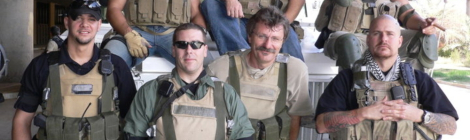
    Private military contractors in Baghdad, Iraq. Image by Babeltravel via Flickr.

    A decade on and Iraq is still in the news, but Western boots on the ground are largely absent, and the previously booming market for contractors there and in Afghanistan has shrunk dramatically. As Molly Dunigan and Ulrich Petersohn and their collaborators show in a recent edited collection, the once-championed ‘global market for force’ has proven itself to be, in fact, a conglomeration of quite different markets for force, and it is a mistake to conflate the legitimate with the illegitimate. The United States, Britain and other nations continue to employ the services of private military contractors for lower priority tasks where doing so is (or at least appears to be) cost and manpower effective.

    The US State Department’s five-year $10.2 billion Worldwide Protective Services contract, the next phase of which was announced in mid February, is distributed largely among companies like SOC, Triple Canopy and Aegis Services which made their names during the Iraq post-invasion boom. And the old stomping ground is showing signs of a revival – according to a report by Bloomberg Business week, “Operation Inherent Resolve, the Pentagon’s anti-Islamic State initiative, employed 7,773 contractors in the second quarter of 2016, up from 5,000 in the first quarter of 2015.” Many of those contracts are for logistical, training and advisory roles in conflict and post-conflict environments in Africa and the developed world. And, quietly, the United Nations has also become a significant employer of PMSCs, as a careful reading of the UN Department of Procurement’s list of registered vendors reveals. As long ago as 2011 the Geneva Center for the Democratic Control of Armed Forces (DCAF) released a report showing that, despite the sensitivities involved, “the UN has increasingly paid private military and security companies (PMSCs) for a range of services in the areas of humanitarian affairs, peacebuilding and development.” The companies themselves have become increasingly corporatized and professional in their structures and practices, an evolutionary necessity for those companies which survived the ‘gold rush’ days of post-invasion Iraq.

    The more dramatic pronouncements by both proponents and opponents of the PMSC industry have failed to come to pass. Contractors have neither rendered state-based peacekeeping and stability operations obsolete, nor have they radically undermined the monopoly on force of the states that employ them or created greater instability in the international sphere.

    Looking to the future, what might we expect regarding the involvement of PMSCs in peacekeeping and stabilization operations? Despite their popularity as ‘bad guys’ in television dramas and Hollywood films, and an uncomfortable legacy of past serious human rights abuses committed by contractors, the evidence suggests that in the real world the use of PMSCs is increasingly becoming normalized, and that in policy circles there is a growing understanding of the potential value contractors can provide if properly employed. While there are still contractors operating in the global periphery who better fit the old ‘mercenary’ moniker, we can expect this process of normalization to lead to an increase in the employment, and more open employment, of PMSC’s in peacekeeping operations (though the term ‘PMSC’ will likely decline in usage).

    The improved clarity about the status and responsibilities of contractors in zones of armed conflict that resulted from the publication of the ICRC sponsored Montreaux Document of 2008 has played an important role in this process of normalization. Though this was unquestionably not the intended purpose of the creation of the document (which carries no legal weight but summarizes the status of contractors under international law and gives recommendations to both PMSCs and the states that contract them), the Montreaux process cleared up numerous misconceptions and provided a firm framework to which companies could attach their claims to legitimacy.

    Over the past decade there has been much debate and discussion over what functions ought to be considered by states to be ‘inherently governmental’ and which therefore ought not to be contracted out. A similar discussion will likely occur as the outsourcing of peacekeeping functions becomes more publicly acknowledge. However, it will likely be pragmatic factors which establish the limits of outsourcing.  Whatever those limits turn out to be in practice, it is certain that there will be limits. Even in today’s complex and spoiler afflicted environment, effective peacekeeping relies heavily on the perception of legitimacy, and that means blue UN helmets or the green berets of the African Union, not beards and Oakley sunglasses.

    Dr Deane-Peter Baker is a Senior Lecturer in the School of Humanities and Social Sciences at UNSW Canberra, located at the Australian Defence Force Academy. He is also a Researcher in the Australian Center for the Study of Armed Conflict and Society. His research interests include military ethics, private military and security companies, special operations, military strategy and the ethics of public policy. He is the author of Just Warriors Inc.: The Ethics of Privatized Force and Citizen Killings: Liberalism, State Policy and Moral Risk.

  • Sustainable Security

    The centenary of the First World War also marks the anniversary of the practice of recording and naming casualties of war. But a century on, new forms of ‘shadow warfare’ limit the ability to record casualties of conflict and thus threaten to allow states a free hand to employ dangerous new tactics without threat of individual or international accountability. Without verifiable casualty figures – including information on who is being killed and how – we cannot evaluate the acceptability, effectiveness or impact of ‘remote control’ tactics as they are rolled out among civilian populations.

    A Humanizing Legacy

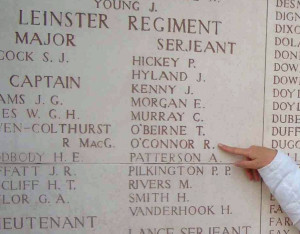
    Image of the name of Sgt. Robert O'Connor of The Leinster Regiment on the Menin Gate wall, who was killed on 31 July 1917 during the First World War. Source: Wikipedia

    Image of the name of Sgt. Robert O’Connor of The Leinster Regiment on the Menin Gate wall, killed on 31 July 1917 during the WWI. WWI saw the start of practice of recognizing by name each and every soldier killed during battle. Source: Wikipedia

    As the world marks the centenary of the commencement of the First World War,  we remember not the war that ended all wars, but instead the war that changed them forever. Introducing new forms of mechanized warfare – including the machine gun, u-boat, tank and airplane – WWI increased exponentially the lethal force of the individual soldier, bringing about an era of death and destruction on an industrial scale.  Yet, even as it ushered in the means of mass and impersonal killing, the ‘Great War’ also initiated the humanizing practice of recognizing by name each and every soldier who lost their lives, burying them in marked graves alongside those of their officers. Not only does such identification and public acknowledgement of victims dignify their memory, in today’s conflicts it can also provide vital information for humanitarian response and for monitoring compliance with – or tracking violations of – international law.

    Today we are again witnessing the introduction of new forms of warfare – including armed drones, lethal autonomous weapons, special operations forces and use of private military and security companies.  Like their WWI counterparts, these new tactics will reshape the face of conflict, yet as they do so they also threaten to destroy the humanizing legacy of casualty recording. Pushing global warfare deep into the shadows, these new ‘remote-control’ tactics are replacing public military campaigns with covert and contracted force. This shift to a ‘light-footprint’ approach, primarily by the United States, but also by France, Russia and the United Kingdom, reflects not only the changing nature of security threats, which have become mercurial at best, but also the lessening appetite for long military campaigns with high military casualties. A recent report from the Every Casualty Programme at Oxford Research Group and the Remote Control Project finds that the prioritisation of ‘remote control’ tactics presents serious obstacles to the recording of casualties, and subsequently, accountability for the civilians impacted by their use.

    Issues of capacity, political will, and access challenge efforts to record the casualties of any type of conflict. Yet, in conventional warfare, where identifiable or recognised conflict parties conduct attacks, such recording is not impossible: militaries generally record their own fatalities in these instances, while civilian deaths are often recorded by small civil society organizations around the world.  One need only look to the names of the hundreds of civilians killed in recent conflict in Gaza published by major news outlets to see the result of such efforts. In covert conflicts, however, or in conflicts where ‘remote control’ tactics are used, the ability to record casualties – including information on who is killed and how – is greatly diminished.

    The merging of intelligence operations with the use of force – seen currently in countries such as Yemen, Pakistan and Afghanistan with the use of armed drones and special operations forces by the United States – is a particularly problematic trend for casualty recorders. By greatly increasing the opacity – or outright deniability – of state force, covert operations erect a seemingly impenetrable wall of ‘classified information’, impeding recorders’ ability to conduct field investigations and verify their data. In 2010, the United Nations Mission in Afghanistan (UNAMA), which has conducted systematic casualty recording since 2007, reported that due to “tactical reasons and deliberate lack of information about such operations” they found it “very difficult to monitor and adequately document the activities of Special Forces” operating in the country. Gathering data on civilian and combatant casualties of drone strikes has also proved problematic – with ORG’s report finding that recorders are challenged by a lack of official disclosure of information about strikes, blocking of access to strike sites, and a near monopoly of information by anonymous officials on information coming from affected areas.

    The consequent lack of reliable casualty data impedes the impartial evaluation of the tactics’ impacts on civilian populations. It also limits the ability to scrutinise the tactics acceptability and effectiveness using evidence-based analysis. The United States – the primary user of armed drones – has repeatedly claimed that drones allow for precision targeting, capable of surgically eliminating targets with minimal civilian casualties. Yet, as a recent report from the Bureau of Investigate Journalism on drone use in Afghanistan has shown, “the armed forces that operate drones publish no data on casualties to corroborate these claims.” Although the United States claims to record data on casualties itself, its failure to make such records transparent not only prevents an analysis of the acceptability of drone strikes, but also denies the victims and their families the opportunity for accountability or redress.

    Bringing Remote-Control warfare out of the shadows

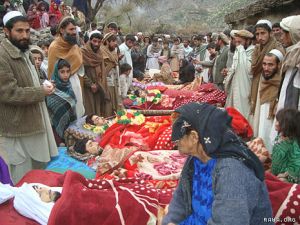
    People of Narang district mourning for the students killed in a night raid in the village Ghazi Khan on December 27, 2009. Although the operation was authorised by NATO, it is still not publicly known who carried out the attack. Source: Wikipedia

    People of Narang district mourning for the students killed in a night raid in the village Ghazi Khan on December 27, 2009. Although the operation was authorised by NATO, it is still not publicly known who carried out the attack. Source: Wikipedia

    Data documenting the casualties of particular weapons – from chemical gas in WW1 to landmines and cluster munitions more recently – has been instrumental in evaluating these weapons’ impact and acceptability, and ultimately ensuring their regulation through international treaty. Yet, as new tactics are employed under the cloak of ‘covert action’, the ability of the international community to measure and regulate their impact is increasingly limited. Without verifiable casualty figures, states may be given a free hand to employ dangerous new tactics without threat of individual or international accountability. Indeed a recent report from Amnesty International has found that as a result of an almost complete lack of transparency from the US government regarding civilian casualties in Afghanistan – specifically around those killed in night raids by SOFs or by missiles from drones strikes – victims are already facing a major accountability vacuum.

    States must take greater responsibility for recording and acknowledging the casualties – both civilian and combatant – of these new tactics. They must not seek to block public investigation and accountability, even though these tactics may be adopted for the lower profile they afford armed force. Furthermore the United Nations, alongside civil society groups or other entities, must enhance their recording efforts so as to provide independently verifiable data on casualties. Such data is essential for developing an accurate, complete and impartial record, and for facilitating scrutiny in circumstances where casualties are highly politicized. Civil society-led casualty recording and analysis, despite its limitations, has already highlighted policies within the use of remote control tactics that need greater examination: for example, the practice of ‘double-tap’ or rescuer drone strikes in Pakistan on those coming to the assistance of individuals at the site of a previous strike. Only by ensuring that casualty recording is conducted systematically and to a high standard can we bring the impact of remote control warfare out of the shadows and into the public eye.

    If we are to take a lesson from the commemoration ceremonies resounding across Europe it is simply that to learn from the past, and to honor it, we must first know that past. Details regarding the identites of those killed in conflict, both on the battlefield and in their homes, are essential to understanding the impact of violence, and to telling the full story of a conflict, to both current and future generations. The risks, then, of wars waged in secret, their battles and casualties concealed, are profound. Not only will there be no monuments at which to mourn their dead, there will be no lessons to be gleaned from their history: the wisdom of hindsight – both for policymakers deploying force and the public – may be lost completely.

    Kate Hofstra is Research and Communications Consultant of the Every Casualty Programme at Oxford Research Group and co-author of Losing Sight of the Human Cost: Casualty Recording and Remote Control Warfare. Kate previously worked for TLG,a London-based communications consultancy, where she was the editor of a digital magazine on business and development. She has also worked with the OSCE Mission to Bosnia and Herzegovina in Sarajevo and hasa background in transitional justice. Kate has an MSc in Human Rights from the London School of Economics.

    Featured Image: Deputy chief minister of Pakistan’s North West Frontier Province and tribesmen offer funeral prayers in front of dead bodies who were killed in army operation in Khar, the main town in Bajaur tribal agency, 30 October 2006. Source: The Bureau of Investigative Journalism, Naming the Dead Project

  • Sustainable Security

    In our two-part discussion ‘Countering Militarised Public Security in Latin America’,  Sarah Kinosian and Matt Budd explore the roots of the increasing trend towards militarisation of  public security across Central and South America and ask what lessons can be learnt from alternative methods. Part 1 is available here.

    Armed forces being transported in Mexico, where they are being used to fight the 'war on drugs'. Source: The Daily Gumboot

    Armed forces being transported in Mexico, where they are being used to fight the ‘war on drugs’.
    Source: The Daily Gumboot

    Over the past decade there has been a sharp and sustained increase in crime and violence across Central America. Fuelled by a rise in organised crime, the growth and expansion of domestic gangs, poor socioeconomic conditions and State institutions lacking in terms of their capacity and territorial coverage, crime and violence have rocketed. Homicide rates, taken as the main measure of insecurity in public debates in the region, have soared. In the Northern Triangle, where socioeconomic conditions and institutional capabilities are generally worse, a figure of 85.5 per 100,000 inhabitants makes Honduras the most dangerous country in the world, whilst figures of 34.3 and 41.5 for Guatemala and El Salvador place them within the upper echelons.

    In response to public and media pressure, there has been a notable tendency to resort to militarised responses focused on reactionary and repressive policies that seek immediate short-term results. This is particularly true of the Northern Triangle countries, which have an established history of involving the military in public security tasks. In El Salvador, following the ‘New Dawn’ campaign (Campaña Nuevo Amanecer), initiated in 2009 to reinforce security in response to the high incidence of crime, 39% of the Armed Forces are currently involved in public security tasks. This involves, for example, their collaboration in patrols to increase security in border areas and unofficial border crossings, the provision of perimeter security in penitentiary centres, and task forces that carry out patrols, apprehensions and joint operations with the national police. In Guatemala, the assistance, collaboration and coordination of the Armed Forces in public security has been further institutionalised through the Protocol for Inter-institutional Action, which regulates these activities. This approach is perhaps best epitomised, however, by the case of Honduras. Characterising a lack of political will to fully engage in the long and difficult task of reforming and developing existing police institutions, Honduras has placed its military at the centre of public security, and, with the recent creation of the Military Police of Public Order, located within the Ministry of Defence, a permanent policing role has effectively been handed to the institution. As such, prevention and reconciliation often take a back seat behind reactive and militarised approaches.

    A better way?
    Nicaragua National Police

    Nicaragua National Police
    Source: Insight crime

    While Nicaragua does not depart from this pattern of engaging the Armed Forces in public security tasks[1], the government has simultaneously invested in the long term development of a policing model that stands out due to its grass roots focus on prevention, and for the results it has achieved as a consequence (in 2010, in Panama, it was pronounced as the best in the region by a panel of public security experts). Closely linked to the Sandinista Revolution out of which it grew, Nicaragua’s community policing model has developed through a process of continual reform in the light of the identification of good police practice. As such, what began as a routine focus on community relations has since developed into a model characterised by broad and deep relations between the community and the police. These permeate not only the actions of individual police officers, but also guide the structure, organisation, deployment and entire philosophy of the institution. This is combined with a proactive focus on attention, which involves the continual identification of social factors driving crime and insecurity combined with the constant evaluation of police competencies to respond to them. By monitoring the relationship between security phenomena and police competences in an anticipated rather than reactive fashion, it allows for a concerted analysis, and response to, the conditions and circumstances that are driving crime and insecurity.

    The decentralised approach of the Nicaraguan National Police (PNN) is one of the keys to its success. It places emphasis on the local drivers and manifestations of both local and national security challenges. It does this by establishing broad and permanent channels of communication with the community, both through participation in community assemblies and maintaining direct links with local residents. One such example is the use of heads of sectors specialised in public security. They are police that are located in a particular territorial area, and their functions include cultivating close community ties through activities such as frequent door-to-door visits to speak to local residents.

    Similarly, the Social Prevention of Crime Committees, which are made up of 40,000 members, and the Cabinets of Citizen Power, which number 143 across the country, also provide a direct link with the community. Amongst their functions, they organise assemblies, work with local public and private institutions to find solutions to security problems, and collaborate on working plans to prevent crime.  These fluid links with the community allow the police to cultivate a close and trusting relationship with them, gain an understanding of the security perceptions of local residents and actors, and extract useful information regarding crimes, particularly regarding drugs, robberies and violence between groups of youths. Community policing therefore provides police with a specialised knowledge of the local situation and the drivers of insecurity.

    Tackling social drivers of crime
    http://www.policia.gob.ni/prensa_nota4.html

    On patrol in the community
    Source: Policía Nacional de Nicaragua

    The prevention of crime requires targeting the social conditions that cause it and instead, cultivating conditions which reduce it. In order to achieve this, the PNN has created specialist bodies that focus on two major causes of insecurity: youth violence and intra-family or sexual violence (20% of crimes).

    Specialised Police Stations for Women and Children were created as specialist units for prevention and attention to victims of intra-family, psychological or sexual violence. To combat these problems, attention is focused on the particular drivers of these forms of violence: the economic and social vulnerability of women and children, the attitudes of males in the community, and the lack of comprehensive victim support, which contributes to an unwillingness to denounce such crimes. Work is therefore carried out in a 3 stage response:

    1)      Transformation of the local environment, using education and training in detection and response to increase awareness of the problems and how to report them;

    2)      comprehensive victim support, through a leading role in coordinating with NGOs, health centres, shelters for victims, state institutions etc,  in the provision of health, psychological and legal support, in addition to the investigation and prosecution of crimes;

    3)      and empowerment of women and children through vocational training and education.

    By combining an understanding of local conditions driving insecurity with an integral response to them, the Police are better placed not only to respond to manifestations of intra-family violence, but to also reduce occurrences through preventive measures.

    The Directorate of Youth Affairs uses the same logic in its attention to at-risk youth, those with established links to gangs, or those who have previously been incarcerated. Through a highly personal and humanistic approach, it seeks to change the attitudes and values of these young people, increase their bonds with the local community, and create opportunities for them to reintegrate into society. Recipients begin by making a commitment to change and handing over any weapons they possess, with social and psychological support applied within the family environment to deal with personal issues, such as low self-esteem or personal identity. Training and education programmes are provided through private and public scholarships, as well as through the National Police’s Centre of Youth Training and Development, through which they gain skills to assist them in finding employment, and that contribute to the development of their community. Recipients also engage in community leisure and social activities and are assisted in finding work as part of their social reintegration. As a result, the number of gangs recorded in Managua has decreased from over 200 to approximately 20, according to the PNN, with a total of 42 gangs registered across the country in February 2012, and reductions in gang-related crime have been registered in neighbourhoods such as Bello Amanecer. By engaging in prevention programmes that focus on those conditions that drive youth into gangs and violence, and by coordinating these programmes within the family and community environment, the PNN has developed a model that seeks to reduce crime and insecurity in a sustainable and long term manner.

    Lessons to guide police reform in Latin America

    Whilst the contextual origins of the model and the particularities unique to each country would make attempts to duplicate the model in the region futile, the Nicaraguan model provides a number of clear lessons that can be extracted. At the foundation of each of these lessons is the community-police relationship, which has come to permeate throughout the institution and its programmes. It acts as a tool to both gain an understanding of the underlying drivers of insecurity and to provide a comprehensive response to them, through a combination of preventive strategies and comprehensive victim attention programmes. While the efficacy of involving special military units to target particular security challenges should not be negated, the benefits of a police force with strong community roots and a community policing philosophy are clear. For lasting gains to be made, these lessons, together with those to be extracted from other successful experiences in the region, should underpin reform processes.

    Matt Budd is a security analyst at RESDAL (Red de Seguridad y Defensa de America Latina – Latin American Security and Defense Network) in Buenos Aires, where he focuses on public security issues in Central America. Matt holds an honours degree in International Relations from the London School of Economics. Matt has most recently been working on RESDAL’s  Public Security Index, which provides information on public security challenges and institutional responses to them in Central America.


    [1] The Armed Forces of Nicaragua engage in a range of public security tasks, including rural security, border security, protection of the coffee harvest, and tasks against organised crime and drug trafficking.

    Featured Image:  Policeman consulting with a member of the local community in Managua, Nicaragua. Source:  John Holman, YouTube