Category: 02

  • Sustainable Security

    Tackling South African water insecurity will require addressing the technical deficiencies, governance gaps and social inequality that are currently having a dangerous and environmentally devastating impact. The links between environmental health and socio-political stability are clear in South Africa, where there has been an exponential increase in violent protests over poor or privatized service delivery, social marginalization, and unequal access to water. South Africa must act  to solidify the links between resilient societies and resilient ecosystems.
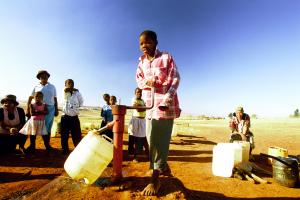
    Rural water pump near Ulundi, South Africa. Source: Trevor Samson / World Bank (via Flickr)

    Rural water pump near Ulundi, South Africa. Source: Trevor Samson / World Bank (via Flickr)

    Last month, the Intergovernmental Panel on Climate Change (IPCC) unveiled the third and final Working Groupreport from its from its landmark Fifth Assessment. This, together with the Second Working Group Report released on 31 March, 2014, is required reading for those wishing to examine the societal impacts of climate change and the potential pathways for twenty-first century resilience. For the first time, the IPCC included a chapter on human security. This is a significant achievement that should increase understanding of the increased threat and impacts on individual livelihoods that climate change is bringing, particularly in the developing world. It is clear that the connections between environmental security and human security run deep, but it is less clear just how societies can build resilience and whether the political will exists to pursue it.

    Adding to the complexity is the fact that these challenges manifest themselves uniquely across the world. Due to factors of geography, history, politics, and social development, each region and country experiences climate change in a distinctive way. For Africa, the picture is predictably bleak. The region as a whole has contributed the least to greenhouse gas emissions, faces some of the worst consequences of climate change, and has the weakest capacity to cope with the impacts.

    The country of South Africa provides a fascinating example of how difficult building ecological resilience can be. Already the 30th driest country in the world, it is expected to experience further drying trends, and an increase in extreme weather events, including cycles of extreme drought and sudden excessive rains. In relative terms, the country has in fact been a significant contributor to global climate change due to its energy-intensive economy. As such, the country has a global responsibility to engage fully with the IPCC reports and begin developing robust responses to environmental insecurity. However, doing so presents major challenges for a country that remains a “dual economy” with one of the highest rates of income inequality (and inequality of opportunity) in the world.

    This is all the more troubling given the country’s progressive stance on environmental issues. In fact, environmental security has been, and will remain, a vital component of the evolving South African identity following the end of apartheid in 1994. The issue of environmental security in South Africa is one that has for years resonated across diverse sections of the population. There are strong cultures of conservation and environmentalism running throughout the country. However, the “Rainbow Nation” continues to suffer from sustained environmental degradation in ways that alter the natural landscape, destroy necessary biodiversity, and hinder social development.

    Promises to Keep: water legislation and service delivery

    Take for instance the issue of water security. South Africa has long been seen as a world leader in progressive water policy, particularly given its need to address unequal water policies of the Apartheid era. Its Constitution and its National Water Act explicitly declares the human right to water, guaranteeing a minimum allocation of 6000 litres of free, clean water a month for every South African. Nelson Mandela championed the cause, claiming that access to water is “central in the social, economic and political affairs of the country, [African] continent and the world. It should be a lead sector of cooperation for world development.” The guiding vision for South African water policy is eloquently summed up by the former slogan for the Department of Water Affairs and Forestry: “some, for all, forever.” The progressive language of water rights enshrined in the country’s legal frameworks is a point of pride amongst South African citizens, but also a flashpoint around which grievances often converge.
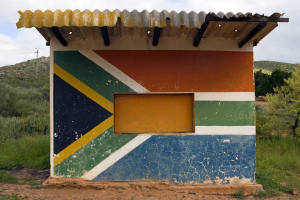
    Unused farm stall on the road between Clanwilliam and Citrusdal. Source: John Hogg/World Bank (via Flickr)

    Unused farm stall on the road between Clanwilliam and Citrusdal. Source: John Hogg/World Bank (via Flickr)

    However, while the Constitution and the National Water Act overturned the discriminatory water policies of the Apartheid era, they remain vague and non-committal on the delivery of their lofty promises. Given all the competing priorities and demands for investment, the country has neglected to invest the necessary resources to create, maintain and upgrade its water infrastructure and to adequately promote water conservation in the face of increased demands on the precious resource.

    In addition, the continued failure of sustainable agricultural practices and the promotion of economic growth in a business-as-usual and water-intensive manner have severely degraded South Africa’s water resources. All told, 48% of South Africa’s wetlands are critically endangered. Another telling example comes from the province of KwaZulu-Natal, where the pursuit of economic development and social advancement has led to a rapid rate of environmental transformation. The rate of loss of unprotected natural areas is approximately 1% per annum, meaning that if it continues at this rate they (and all of the attendant services they provide) will be lost by 2050. Pushing back against these trends requires significant efforts on the part of many different actors. This will be, of course, a very difficult task.

    Beyond technical deficiencies and economic tradeoffs, there remains a governance gap within the country that exacerbates the problems. The management of its water is largely disjointed and erratic. The various levels of government and the disparate non-state actors involved in water conservation and distribution are often arranged in Unsurprisingly, this leads to the multiplication of environmental stresses because stakeholders often lack technical knowledge, fail to adapt best environmental practices, contribute to spoiling common-pool resources, and contribute to social alienation from the natural world. This impedes economic development and hardens social cleavages between the rich, whose water flows freely and cheaply, and the poor, who suffer the debilitating effects brought upon by a lack of access to adequate water supplies. Thus, what is often lost in the discussion are the ways in which healthy ecosystems deliver valuable services to people. In essence, we are surrounded by ecological infrastructure.

    The social component of South African water security combines with technical deficiencies and governance gaps to create a dangerous and environmentally devastating impact. This reflects the connections between environmental health with socio-political stability. Unfortunately, for South Africa, the picture is troubling. Non-violent resistance has been a common tactic, but even more concerning has been the recent exponential increase in violent protests over poor service delivery, privatization of service delivery, social marginalization, and the persistent inequality in access to water. One of the ways that could assist the country avoid further civil strife is to significantly increase sustainable environmental management and adjust its governance priorities to deliver upon the laudatory promises of its environmental legislation.

    The Resilience of South Africa

    On May 7th, 2014, South Africans will head to the polls for national elections. This will be the fourth election since the fall of Apartheid, and the first for the “born frees” – the generation of young South Africans born and raised in a democratic South Africa. Most opinion polls indicate that the ruling African National Congress (ANC) party will be re-elected by a sizeable margin, though its support has dropped significantly in recent years. This is due in part to widening perceptions that the ANC has grown entrenched in its own privilege, reflected by ongoing corruption scandals and ineffective economic policies.

    As South Africa moves further away from the legacy of Apartheid, it must confront continued social alienation, the pervasive effects of deep inequality, and the monumental challenge of building ecological resilience and sustainability. As service delivery protests increase, it is clear how the social cleavages of modern-day South Africa often manifest themselves around issues of water, sanitation, the environment, and human dignity.

    The latest IPCC reports are remarkable achievements for a number of reasons. Not least, they clearly acknowledge the continued connections between human and environmental security. In this sense they reflect the growing awareness that to build resilient societies means to invest in resilient ecosystems, and vice versa. For South Africa, in possession of arguably the most progressive water legislation in the world, this requires actively investing in the ecological systems that builds and sustains human dignity. This will require the country to reconcile its rhetoric with its practice. A tall order to be sure, but one that is absolutely crucial for the country to fulfill the promise of its recent past.

    Cameron Harrington is a Post-Doctoral Fellow in the Global Risk Governance Programme at the University of Cape Town. His work is based upon research supported by the National Research Foundation of South Africa. Any opinion, findings and conclusions or recommendations expressed in this material are those of the author(s) and therefore the NRF does not accept any liability in regard thereto.




  • Sustainable Security

    This article was originally published on openSecurity’s monthly Sustainable Security column on 26th February 2014. Every month, a rotating network of experts from Oxford Research Group’s Sustainable Security programme explore pertinent issues of global and regional insecurity.

    Prime Minister David Cameron visits British troops in South Afghanistan, 10 June 2010. Source: No. 10 (Flickr)

    Prime Minister David Cameron visits British troops in South Afghanistan, 10 June 2010. Source: No. 10 (Flickr)

    The 100th anniversary of the start of the First World War has kick-started a period of national self-reflection for the British public and political establishment. The timing seems almost scripted: as the country prepares to look back at the tragic events of 100 years ago, so we prepare for the first incidence of peace in a century. Following final pull-out from Afghanistan later this year, the UK should cease to be engaged in combat operations anywhere in the world for the first time since 1914.

    This “strategic pause”, as Ministry of Defence (MoD) insiders are calling it, comes on the heels of last summer’s controversial parliamentary vote against possible military intervention in Syria. Public and Parliament alike seem wearied by the diminishing returns of a “fight first, fix later” strategic approach. With national elections and scheduled reviews of defence and security strategies fast approaching, this national mood for reflection is an opportunity to reframe British thinking on national and international security – and get it right in 2015.

    Limits of military action

    The threats facing the UK today are a world away from those that instigated the First World War. A century on, a distinct lack of interstate war, the rise of global networks of terrorists and organised criminals, and the inability of many fragile states to respond to such challenges characterise an increasingly complex security landscape. There is also growing recognition of the role of a number of “non-traditional” drivers of global insecurity which act to multiply other threats. As with the localised devastation seen in the UK this winter, climate change is exacerbating economic, social and resource stresses. Thanks to the communications revolution, the world’s marginalised majority is suddenly and drastically aware of its inequality. Such risks highlight the increasing implausibility of military force being effective in tackling insecurity. What use are armies and navies in reducing the gap between elites and a disenfranchised underclass that is both local and global?  How can air forces address the myriad impacts of concentrated greenhouse gases in the atmosphere?

    As much as the global security landscape has changed, there remains an exceptional continuity in the British response to insecurity: a dogged, increasingly ineffective – and recently highly counter-productive – militarised approach. Given that, like World War I, the operation to dislodge the Taliban was originally intended to be “over by Christmas” in 2001, the war in Afghanistan is a case in point. The war has lasted 13 years, resulting in the deaths of 447 British troops, serious injury of thousands more, and costing the UK over £37bn, according to recent estimates from former Helmand adviser Frank Ledwidge.

    Moreover, Ledwidge estimates that British troops in Helmand province have killed at least 500 non-combatants and the Costs of War project estimates that at least 16,725 Afghan civilians have been killed directly by the war’s violence, not including indirect deaths from reduced access to health care, malnutrition and lack of clean drinking water that have been exacerbated in the country’s war zones. For all these costs, military action has done little to decrease Taliban influence or stabilise Afghanistan. A recent review by CNA on behalf of the Pentagon’s policy directorate predicts a sharp post-withdrawal resurgence of Taliban influence and would require far more Afghan troops and police capacity than planned for.

    Learning something from the Afghanistan and Iraq debacles, the UK has shifted towards a more streamlined version of the same interventionist thinking. This “no boots on the ground” approach, such as we saw in Libya (2011), also comes with unforeseen consequences. While NATO operations in Libya were deemed successful within the narrow definitions of the UN mandate, limited intervention there sowed the seeds of further intervention in Mali as weapons and fighters spread south, prompting the declaration of commitment by the prime minister, David Cameron, to the next “generational struggle” against Islamist terrorism.

    A similar rhetoric of limited intervention was noticeable last summer during debates on possible military action in Syria, when the prime minister assured the British public that intended air strikes would be strictly “punitive”. Again, considerations of the potential ineffectiveness and future blowback of military action – on the people of Syria as well as the UK – took a back seat to the political visibility of military action as British agency.

    Room to reflect?

    There is a clear need for more nuanced approaches to tackle insecurity in the coming decades. The struggle against violent extremism, for example, requires approaches which seek to address the conditions that allow such ideologies and instability to thrive. However, the overarching message from British leaders is that we can expect more of the same. Earlier this month, the UK Government confirmed the upcoming purchase of fourteen F-35B Joint Strike Fighter jets, with a price tag of £2.5bn, in addition to new aircraft carriers costing at least £6.2bn. Neither system will be operational before 2019, almost a decade after the last British carriers were retired. Similarly, plans to renew the Trident nuclear deterrent with a like-for-like system will cost at least £25bn, with whole-life costs of replacement exceeding £100bn.

    Decision is due in 2016. Such heavy budgetary weighting in defence spending towards nuclear deterrence and offensive force projection limit the country’s ability to assess strategic balance and diminish the opportunity to develop a wider range of security management options for the UK on the international stage. Investing over half a billion pounds on armed Reaper drones by 2015 predisposes the UK to this form of military action while the jury is still out on its legitimacy, ethics, legality and long term impact. The possibilities for constructive debate on alternatives to the current offensive defence approach are constrained by such massive forward commitments to next generation equipment that prioritises force projection.

    There is also uncertainty over the review of the National Security Strategy (NSS), which defines the threat environment that UK defence and security policy responds to through the Strategic Defence and Security Review (SDSR). Both documents are scheduled to be reviewed and updated following the May 2015 general election. While thinking on changes to the next SDSR is already underway, National Security Adviser Sir Kim Darroch indicated to the House of Commons on 11 September “no precise timetable” for the next NSS. On 30 January, Cameron told the parliamentary Joint Committee on the National Security Strategy that the NSS review process – led by his Cabinet Office – was “now beginning” but implied that the SDSR was further advanced.

    The 2010 NSS made a number of important observations about the changing nature of British security challenges – including climate change and the importance of conflict prevention – but these failed to translate into actionable policy prescriptions in the SDSR. This was in part the result of poor timing; while the SDSR should be a subsidiary document informed by the NSS, the documents were released a day apart in October 2010 after a rushed four month process.

    If the UK is to engage in meaningful debate on approaching complex security challenges and subsequently turn that debate into relevant policy options, it must avoid the mistiming of 2010 and be open to dialogue with UK civil society and foreign partners on the nature of threats and opportunities. With uncertainty over the timing and scope of the NSS review it is difficult to see what room exists for UK to develop policies that genuinely reflect changes in international security.

    Getting it right ahead of 2015

    If British approaches are to respond effectively to changing security threats, the scheduled 2015 SDSR process will need to rebalance priorities, with a shift towards conflict prevention and provision of early and non-combat security support in fragile states. Progressive thinking in the current NSS and initiatives, such as the 2011 Building Stability Overseas Strategy, must now translate into a change of priorities in British security, including spending, decisions on deterrence and intervention.

    The coinciding anniversary of the First World War and final withdrawal from Afghanistan may well provide a much overdue period of reflection on past lessons and future approaches to British security and defence. But if the UK is to learn the lessons of the past century – that unparalleled military interventionism cannot yield long term national nor global security – it must make 2014 a year of genuine consideration of the threats it faces in the next years. In turn, committing to an open process of reflection will allow the decisions of 2015-16 to positively contribute to sustainable peace and security for years to come.

    Zoë Pelter is the Research Officer of Oxford Research Group’s (ORG) Sustainable Security programme. She works on a number of projects across the programme, including ‘Rethinking UK Defence and Security Policies’ and ‘Sustainable Security and the Global South’. Zoë  co-authored ORG’s recent submission to the House of Commons Defence Select Committee inquiry ‘Towards the Next Defence and Security Review’.

  • Sustainable Security

    RC_long_logo_small_4webThis article is part of the Remote Control Warfare series, a collaboration with Remote Control, a project of the Network for Social Change hosted by Oxford Research Group.

    Editor’s note: Remote Warfare and the War on Drugs mini-series: This series of articles explores how remote warfare is being used in the war on drugs. To date, much of the debate on remote warfare has focused on its use in the war on terror. However, the use of drones, private military and security companies (PMSCs), special forces and mass surveillance are all emerging trends found in the US’s other long standing war, the War on Drugs. The articles in this series seek to explore these methods in more depth, looking at what impact and long term consequences they may have on the theatre in which they’re being used. Read other articles in the series.

    Ever advancing remote warfare technology is being increasingly used by law enforcement agencies to counter drug trafficking. In response, drug cartels are also adopting new technology to smuggle and distribute drugs. However, the technological superiority of law enforcement-military actors is also causing criminal and militant groups to adapt by employing the very opposite tactic, by resorting to highly primitive technology and methods. In turn, society is doing the same thing, adopting its own back-to-the-past response to drug trafficking and crime.

    The history of drug trafficking and crime more broadly is a history of adaptation on the part of criminal groups in response to advances in methods and technology on the part of law enforcement agencies, and vice versa. Sometimes, technology trumps crime: The spread of anti-theft devices in cars radically reduced car theft. The adoption of citadels (essentially saferooms) aboard ships, combined with intense naval patrolling, radically reduced the incidence of piracy off Somalia. Often, however, certainly in the case of many transactional crimes such as drug trafficking, law enforcement efforts have tended to weed out the least competent traffickers, and to leave behind the toughest, meanest, leanest, and most adaptable organized crime groups.

    Increasingly, organized crime actors have adopted advanced technologies, such as semi-submersible and fully-submersible vehicles to carry drugs and other contraband, and cybercrime and virtual currencies for money-laundering. Adaptations in the technology of smuggling by criminal groups in turn lead to further evolution and improvement of methods by law enforcement agencies. However, the use of ever fancier-technology is only a part of the story. The future lies as much behind as ahead (to paraphrase J.P. Wodehouse), with the asymmetric use of primitive technologies and methods by criminal groups to counter the advanced technologies used by law enforcement.

    The Seduction of SIGINT and HVT

    The improvements in signal intelligence (SIGINT) (information gained by the collection and analysis of the electronic signals and communications of a given target) and big-data mining (the extracting of useful information from large datasets or streams of data) over the past two decades have dramatically increased tactical intelligence flows to law enforcement agencies and military actors, creating a more transparent anti-crime, anti-terrorism, and counterinsurgency battlefield than before. The bonanza of communications intercepts of targeted criminals and militants that SIGINT has come to provide over the past decades in Colombia, Mexico, Iraq, Pakistan, Afghanistan, and other parts of the world has also strongly privileged high-value targeting (HVT) and decapitation policies-i.e., principally targeting the presumed leaders of criminal and militant organizations.

    JJprogects

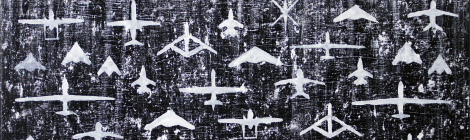
    Artwork of drone warfare by JJprojegts.

    The proliferation of SIGINT and advances in big-data trawling, combined with some highly visible successes of HVT, has come with significant downsides. Although high-value targeting has been effective, this has only occurred under certain circumstances. In many contexts, such as in Mexico, HVT has been counterproductive, fragmenting criminal groups without reducing their proclivity to violence; in fact, exacerbating violence in the market. Other interdiction (the targeting of opponent’s organizational structures or disrupting their logistical chains) patterns and postures, such as middle-level targeting and focused-deterrence, would be more effective policy choices.

    A large part of the problem is that the allure of signal intelligence has led to the discounting of other key intelligence techniques, including developing a strategic understanding of criminal groups’ decision-making in order to anticipate the responses of targeted nonstate actors to law enforcement actions (here Mexico provides a disturbing example). It also requires the cultivation of human intelligence assets (sorely lacking in Somalia, for example) and obtaining a broad and comprehensive understanding of the motivations and interests of local populations that interact with criminal and insurgent groups (notably deficient in Iraq, Afghanistan, and Pakistan). Finally, establishing good relationships with local populations to advance anti-crime and counterinsurgency policies is essential. In Colombia, for example, drug eradication policy antagonized local populations from national government and strengthened the bonds between them and rebel groups.

    In other words, the tactical tool, technology – in the form of signal intelligence and big-data mining – has trumped strategic analysis. Instead, strategic intelligence analysis needs to be brought back, to drive interdiction targeting patterns, instead of letting the seduction of signal data drive intelligence, analysis and targeting action. Indeed, the political effects, as well as the anticipated responses by criminal and militant groups, and any other outcomes of targeting patterns, need to be incorporated into the strategic analysis. Questions to be assessed need to include: Can interdiction hope to incapacitate – arrest and kill – all of the enemy or should it seek to shape the enemy? What kind of criminals and militants, such as how fractured or unified, how radicalized or restrained in their ambitions, and how closely aligned with local populations against the state, does interdiction want to produce?

    Dogs Fights or Drone Fights: Remote Lethal Action by Criminals

    Criminal groups have used technology not merely to foil law enforcement actions, but also to fight each other and dominate the criminal markets and control local populations. In response to the so-called Pacification (UPP) policy in Rio de Janeiro through which the Rio government has sought to wrestle control over slums from violent criminal gangs, the Comando Vermelho (one of such gangs), for example, claimed to deploy remote-sensor cameras in the Complexo do Alemão slum to identify police collaborators, defined as those who went into newly-established police stations. Whether this specific threat was credible or not, the UPP police units have struggled to establish a good working relationship with the locals in Alemão.

    The new radical remote-warfare development on the horizon is for criminal groups to start using drones and other remote platforms not merely to smuggle and distribute contraband, as they are starting to do already, but to deliver lethal action against their enemies – whether government officials, law enforcement forces, or rival crime groups.

    Eventually, both law enforcement and rival groups will develop defenses against such remote lethal action, perhaps also employing remote platforms (drones to attack the drones). Even so, the proliferation of lethal remote warfare capabilities among criminal groups will undermine deterrence, including deterrence among criminal groups themselves over the division of the criminal market and its turfs. This is because remotely delivered hits will complicate the attribution problem – i.e., who authorized the lethal action — and hence the certainty of sufficiently painful retaliation against the source and thus a stable equilibrium.

    More than before, criminal groups will be tempted to instigate wars over the criminal market with the hope that they will emerge as the most powerful criminal actors and able to exercise even greater power over the criminal market – the way the Sinaloa Cartel has attempted to do in Mexico even without the use of fancy technology. Stabilizing a highly violent and contested – dysfunctional – criminal market will become all the more difficult the more remote lethal platforms have proliferated among criminal groups.

    Back to the Past: The Ewoks of Crime and Anti-Crime

    In addition to adopting ever-advancing technologies, criminal and militant groups also adapt to the technological superiority of law enforcement-military actors by the very opposite tactic — resorting asymmetrically to highly primitive deception and smuggling measures. Thus, both militant and criminal groups have adapted to signal intelligence not just by using better encryption, but also by not using cell phones and electronic communications at all, relying instead on personal couriers, for example, or by flooding the e-waves with a lot of white noise. Similarly, in addition to loading drugs on drones, airplanes, and submersibles, drug trafficking groups are going back to very old-methods such as smuggling by boats (including through the Gulf of Mexico), by human couriers, or through tunnels.

    Conversely, society sometimes adapts to the presence of criminal groups and intense, particularly highly violent criminality by adopting its own back-to-the-past response – i.e., by standing up militias (which in a developed state should have been supplanted by state law enforcement forces). The rise of anti-crime militias in Mexico, in places such as Michoacán and Guerrero, provides a rich example of such populist responses and the profound collapse of official law enforcement. The inability of law enforcement there to stop violent criminality – and in fact, the inadvertent exacerbation of violence by criminal groups as a result of HVT – and the distrust of citizens toward highly corrupt law enforcement agencies and state administrations led to the emergence of citizens’ anti-crime militias. The militias originally sought to fight extortion, robberies, theft, kidnapping, and homicides by criminal groups and provide public safety to communities. Rapidly, however, most of the militias resorted to the very same criminal behavior they purported to fight – including extortion, kidnapping, robberies, and homicides. The militias were also appropriated by criminal groups themselves: the criminal groups stood up their own militias claiming to fight crime, where in fact, they were merely fighting the rival criminals. Just as when external or internal military forces resort to using extralegal militias, citizens’ militias fundamentally weaken the rule of law and the authority and legitimacy of the state. They may be the ewoks’ response to the crime empire, but they represent a dangerous and slippery slope to greater breakdown of order.

    In short, technology, including remote warfare, and innovations in smuggling and enforcement methods are malleable and can be appropriated by both criminal and militant groups as well as law enforcement actors. Often, however, such adoption and adaptation produces outcomes that neither criminal groups nor law enforcement actors have anticipated and can fully control. Technology cannot fix defecting anti-crime and anti-drug policies, such as preoccupation with drug seizures , or absent rule of law and culture of lawfulness. Advances in technology do not obviate the need to strengthen bonds between citizens and the state and to create law enforcement and socio-economic conditions which allow citizens to internalize laws. Nonetheless, crime and some illegal economies will always persist and law enforcements and criminals will compete with each other in adopting improving technologies and finding measures to counter them, including most primitive but effective ones. The criminal landscape and military battlefields will thus increasingly resemble the Star Wars moon of Endor: drone and remote platforms battling it out with sticks, stones, and ropes.

    Dr. Vanda Felbab-Brown is a senior fellow in Foreign Policy at the Brookings Institution and co-director of the Brookings projects on Improving Global Drug Policy: Comparative Perspectives and UNGASS 2016 and Reconstituting Local Orders. Dr. Felbab-Brown is an expert on illicit economies and organized crime and international and internal conflicts and their management, including counterinsurgency and statebuilding. Her research focuses particularly on South Asia, Burma, the Andean region, Mexico, and Somalia, and she has conducted fieldwork in some of the most dangerous parts of the world. Dr. Felbab-Brown has an extensive publication list of books, policy reports, academic articles, and opinion pieces, including Poached: Combating Wildlife Trafficking, with Lessons from the War on Drugs (forthcoming 2016); Narco Noir: Mexico’s Cartels, Cops, and Corruption (forthcoming 2016); Aspiration and Ambivalence: Strategies and Realities of Counterinsurgency and State-building in Afghanistan (2013); and Shooting Up: Counterinsurgency and the War on Drugs (2010). Dr. Felbab-Brown is a frequent consultant for national, multilateral, and non-governmental organizations and a frequent commentator in U.S. and international media. She also regularly provides expert testimony to the US Congress. Prior to joining the Brookings Institution, Dr. Felbab-Brown was an Assistant Professor at the Georgetown University School for Foreign Service. She received her PhD in political science from MIT and her BA from Harvard University.

  • Sustainable Security

    The vast majority of civil wars occur in a small number of countries. What causes conflicts to geographically cluster in this way?

    Studies of intrastate armed conflicts show that the majority of civil wars cluster in a small number of states. According to the widely-used Uppsala Conflict Data Program’s Armed Conflict Database, 30 states experienced more than 60 percent of all new armed conflict onsets between 1946 and 2013. In this period, Burma, Ethiopia, India, Indonesia, and Sudan alone account for about 30% of the world’s new ethnic conflicts.

    The conflict trap

    Conflict researchers and development economists such as Paul Collier attribute the clustering of internal war to state failure and conflict traps: weak states cannot deter rebellion. Civil war, in turn, impoverishes individuals, destroys institutions, and plants feelings of revenge. All of these factors increase the risk of conflict recurrence.

    Yet neither India and Burma nor Ethiopia and Indonesia qualify as failed states. Moreover, their political regimes cannot explain the frequency of rebellion either. Burma and Sudan have been repressive autocracies for most of the period but India has been democratic for the vast majority of its existence. Existing explanations, then, do not fully account for why armed conflict clusters in these countries.

    Civil war diffusion within states

    In a recent study in International Studies Quarterly, my co-author Jesse Hammond and I highlight an alternative explanation for the concentration of so many conflicts in these multi-ethnic states. We explore the diffusion of ethnic civil wars within one country. Unlike earlier research on the diffusion of armed conflict across international borders, we study how government’s decision to fight one rebel group can trigger additional rebellions by rebels from other ethnic groups.

    To separate diffusion from recurrence dynamics, we move from country-level to ethnic-group-level analysis. Our study includes all states between 1946 and 2009 that (1) experienced at least one civil war and (2) contain at least three distinct ethnic groups – two in conflict, and one potential challenger. This selection leaves us with 49 states, 415 ethnic groups, and 127 ethnic armed conflicts.

    On the basis of this data, we model the yearly probability of a new ethnic conflict breaking out. According to our theory of diffusion, the location of ongoing conflicts as well as the duration and number of armed challengers are the main factors that affect the probability of new conflicts. Nearby conflicts should increase the motivation for additional rebellions; longer conflicts and more rebels should increase the opportunity for fighting.

    To construct those measures of motivation and opportunity, we combined data on the geographic location of ethnic groups’ settlement areas from the Geographic Research of War – Unified Platform at ETH Zurich with data on conflict zones from the Peace Research Institute Oslo. Whereas the left panel in Figure 1 shows the settlement areas of ethnic groups in Chad, the right panel shows the extent of an active armed conflict between 1999 and 2002. For these years, we compute the distance between peaceful ethnic group and the conflicts zones and note whether some groups are directly affected by fighting. We repeat this for all ethnic groups in all states in our sample.

    Figure 1. Examples of ethnic groups’ settlement patterns (left) and conflict zones (right) in Chad


    Equipped with these measures our study argues that there are four pathways of conflict diffusion within states– two that affect the motivation of potential challengers, and two more that increase their opportunity to rebel.

    How armed conflict increases the motivation for additional rebellions

    On the motivation side, ongoing fighting may harm members of nearby but previously neutral ethnic groups. Even if fighting does not directly affect other ethnic groups, increased state repression that results from fear of additional uprisings might. In turn, members of previously peaceful ethnic groups become aggrieved about state violence and decide to take up arms to defend themselves. India’s repressive policy in its Northeastern states may have had exactly this effect.

    Our second motivational mechanism states that an ongoing civil war encourages already disaffected groups to take up rebellion as a strategy. Witnessing nearby groups’ rebellions provides a blueprint on how to potentially overcome political and economic inequalities such as exclusion from state power.

    On its own, political discrimination does not frequently trigger rebellion; disadvantaged groups exist for long periods of time without mobilizing. However, seeing nearby groups with similar political disadvantages rise up against repressive political regimes can provide the spark for additional rebellions.

    Patterns of armed uprising against the Burmese and Indonesian states soon after decolonization exemplify these patterns at the domestic level. Although it goes beyond the scope of our study, we argue that similar mechanisms operate at the international level.  Although the states in North Africa and the Middle East have been among the most repressive and ethnically discriminatory regimes in the world for decades, Arab citizens only rose up their rulers in 2011 after witnessing the Tunisian revolution.

    How armed conflict increases the opportunity for additional rebellions

    unimad-darfur

    Image credit: UNAMID/Flickr.

    Turning to our opportunity mechanisms, we argue that ongoing internal armed conflicts can provide important signals about the government’s repressive capacity. If the government is strong, it will crush any rebellion quickly. If it fails to quickly and decisively defeat one rebel organization, other ethnic groups may perceive the government as weak and rebel to gain concessions from the state.

    While the 2003 rebellion in Sudan’s Darfur region has various causes, our opportunity logic offers a good explanation for its timing. For two decades, the Sudanese government was unable to decisively defeat the Sudan People’s Liberation Army and its various offshoots. As the southern rebellion endured, aggrieved groups in the Darfur region realized that Khartoum might be vulnerable to extending concessions to them when facing additional violence.

    A similar dynamic is at play when the government fights multiple challengers at the same time. The economic and military costs of armed conflict drain governments’ resources. This makes it possible for additional ethnic challengers that were too weak to confront the government alone to join the fray. The increasing number of ethnic challengers in Burma exemplifies this last pathway to domestic conflict diffusion.

    Conclusion

    To summarize, governments that violently confront rebel groups rather than negotiate enter a slippery slope that may lead to even more civil wars. Armed conflicts with one ethnic rebel group have inspired members of other ethnic groups to rebel in Northeast India, Burma, Indonesia, Sudan, or the Democratic Republic of Congo.

    Why then do governments fight rebels rather than accommodate them? One answer may be that government leaders prefer monopolizing power rather than sharing it to extract more resources from the state or to reduce the risk of coups. Where the cost of conflict is not borne by elites but by citizens, such a strategy may pay off.

    Other research shows that giving in to rebel demands makes governments appear weak and potentially triggers additional challenges. Future research will have to uncover the exact conditions under which governments prefer one risk over the other.

    Our study adds to our understanding of countries caught in conflict traps. We believe that our study’s findings are particularly relevant for counterinsurgency and peacekeeping strategies. In addition to ending one civil war and keeping it peaceful, governments and international institutions need to contain armed conflicts in space. Otherwise, they are very likely to infect other ethnic groups in the same country.

    Nils-Christian Bormann is lecturer and Humanities and Social Science Fellow in the Politics Department at the University of Exeter.

    Jesse Hammond is assistant professor in the Department of Defense Analysis at the Naval Postgraduate School in Monterey, California.

  • Sustainable Security

    Sustainable security and peacebuilding remain elusive in northern Uganda. But gender-relational peacebuilding offers a potential avenue to strengthen post-conflict peacebuilding efforts.

    Sustainable peacebuilding in post-conflict northern Uganda is intricately interwoven into the fabric of regional security. Intrastate conflicts in South Sudan and the Democratic Republic of the Congo, as well as the multidirectional refugee and rebel army flows across borders contribute to destabilizing regional peacebuilding and security efforts. When taking these regional concerns and ongoing internal problems into consideration, it becomes clear that sustainable security and peacebuilding remain elusive in northern Uganda. One avenue to strengthen current post-conflict peacebuilding efforts is to appropriately gender interventions. Implementing appropriately gendered interventions will need to adequately address ongoing gendered violence that has become central to both regional and internal conflicts.

    The Conflict in Uganda

    During active conflict between the Government of Uganda (GoU) and Lord’s Resistance Army (1987-2006), approximately 1.8 million northern Ugandans were internally displaced, many of them into poorly maintained internal displacement (IDP) camps. The conflict, displacement, and subsequent return processes have been deeply gendered. During the conflict, young girls and boys were abducted by the Lord’s Resistance Army (LRA); many were forced to fight, carry LRA cargo long distances, and were subjected to sexual violence. Abductions ended in northern Uganda when the LRA was pushed out of the country, but the LRA continues to be a threat to regional security and peacebuilding. Abductions continue in the Central African Republic and Democratic Republic of the Congo, and the LRA’s regional presence is but one more complex component of ongoing conflicts in South Sudan, the CAR, and the DRC.

    Beyond LRA abductions, women were often subjected to sexual violence both as abductees and while living in IDP camps. During encampment, women, treated as heads of household, were given aid to distribute among their family members; this essentially cut men out of their traditional roles as the breadwinner. The gendered allocation of resources challenged cultural norms – a phenomenon which many rural residents blame as one reason for increasing domestic violence during and after conflict. Many men and women lost access to education and economic productivity during encampment, creating employment crises post-conflict. Simultaneously, people were displaced from their land holdings, devastating their economic livelihoods; this is compounded by the rampant killing and stealing of cattle, a source of economic and social wealth. Thus, displacement decimated men’s ability to be economically productive and their sources of wealth and authority, necessary social capital for rites such as marriage, were all stripped away. Unemployment continues to be a pervasive problem as people lost access to their land and do not have the educational attainment necessary for wage employment.

    Despite the far-reaching gendered dynamics of conflict and the post-conflict return process on economic production, political standing, and kin relations, peacebuilding efforts in the region concentrate on physical forms of violence, such as rape.

    Research conducted in 2013 shows that many rural residents cited economic violence, such as access to land and resources, equitable employment, and social services, as a pervasive and unaddressed concern. When combined with ongoing dissatisfaction with the current government, the result is a suite of peacebuilding approaches that may fail to generate sustainable peace in northern Uganda, with wider implications for regional security.

    Redefining “Gendered” Approaches to Peacebuilding

    widows-program-1

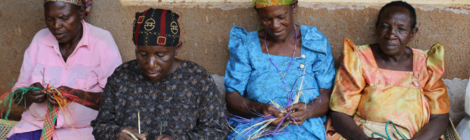
    Women from ‘The Widows’ Programme’ making crafts at the Twezimbe Development Centre, Mbikko, Uganda. Photo by Lisa Byrne via Flickr.

    “Gendered” peacebuilding approaches in past years became synonymous with women and conflict-related sexual violence, such as rape and defilement. Such ostensibly gender-sensitive approaches are inherently problematic; they ignore the experiences of men, the diverse experiences of women, and make women’s narratives valuable only insofar as they narrate conflict-related sexual violence. Resolutions, such as UNSCR 1820 and 1325, have made strides towards recognizing the impact of war on women; however, their operationalized emphasis on physical gendered violence continue to reflect this myopic perspective. Resolutions supporting gendered peacebuilding have historically failed to meaningfully include all genders, stereotype or homogenize the experiences of people in conflict, and may reflect non-local cultural values and understandings.

    Sexual violence is a serious concern during and after conflict, especially where it is a wartime tactic, there is little support for survivors of violence, and where local sociocultural norms and communities have broken down. However, homogenizing women as singularly vulnerable, passive, and the subject of violence obscures the diverse experiences of both women and men during and after conflict. These homogenous characterizations are paralleled by only addressing gendered violence among men as conflict is either an assault on or a reflection of masculinity. Both of these perspectives are imbued with often uncritical assumptions that fail to see genders as relational and embedded within complex social, political, and economic contexts.

    Thus, scholars developed a gender-relational approach to analyzing conflict and implementing peacebuilding frameworks. Gender-relational approaches stand in contrast to prior perspectives that rely on gender binaries and homogenous categories. Instead, gender-relational scholars examine gender as an intersectional category that is intimately bound up in social, political, and economic contexts before, during, and after conflict. Utilizing a gender-relational perspective allows researchers and peacebuilders to identify the most vulnerable in society, allowing precisely-targeted interventions and more effective implementation. Gendered peacebuilding in this way shifts the focus from women’s sexuality and sexual experiences and men’s masculinity, to identifying and targeting the contextually specific needs of the most vulnerable in post-conflict societies.

    Appropriately Gendering Peacebuilding to Promote Sustainable Peace

    Gendering peacebuilding in post-conflict northern Uganda must go beyond the censure of physical SGBV, such as rape, to take into account the complex experiences, relationships, and sociopolitical and socioeconomic needs prior to, during, and after conflict. In this local and regional context, gendering peacebuilding appropriately takes into account the various experiences of men and women as they are embedded within ancestral communities pre-conflict, during displacement and in the IDP camps, and post-conflict return process, and as they are affected by age, education, ability, and other intersectional categories.

    Engaging a gender-relational framework for peacebuilding in northern Uganda can illuminate a number of discrepancies between local needs and concerns and ongoing peacebuilding efforts. While traditional political systems, which predominately support and were led by men, degraded, the loss of property and cattle – traditionally for economic productivity, social status, and marriage and kinship – have negatively impacted all genders. Although the degradation of sociopolitical systems and loss of agricultural and pastoral productivity have disempowered men, it has simultaneously empowered women. Women have broken traditional gender roles by entering public workspaces and shouldering normatively male responsibilities. However, these shifts along with pervasive poverty have also contributed to domestic violence and local pushback against the implementation of international human rights standards.

    For example, although conflict-related sexual violence was, and remains, an entrenched concern in northern Uganda and the region more generally, many rural northern Ugandans are deeply concerned about economic forms of gendered violence. Both men and women cite land wrangling or grabbling – the forceful taking of land – as pervasive concerns that inhibit access to economic livelihoods, spiritual fulfillment, political authority, and kin networks. According to one resident in Nwoya District, before the war [SGBV] was there. During, it escalated and after has been added on because of land wrangles.” Although land is often wrangled by neighbors or even relatives, many rural residents fear land grabs from South Sudanese and other foreigners who are reportedly buying up large tracts of land for farming. Widows in particular cite the lack of support for them as they make claims with the legal, local political, or religious authorities to have their case heard and get their land back. Widowhood in rural northern Uganda is precarious – normally women rely on their husband for land ownership (not mandated by law) and when he passes away depend on the community to uphold their right to continue living and producing on the land. However, the unique challenges of the post-conflict region, including ongoing security concerns and a lack of arable land more generally, means that there is less support from elders, the legal system, and religious leaders for widows with land wrangling complaints. This example of widows demonstrates the power of gender-relational approaches to post-conflict peacebuilding.

    Land wrangling disproportionately affects women, widows, and the elderly, and remains a serious security and peace concern for residents throughout the northern reaches of Uganda. These ongoing conflicts are embedded within a nation-state that has consistent human rights violations and political uncertainty, and a region that is beset by internal and regional conflicts. Utilizing such data-driven approaches, we can better develop, implement, and target peacebuilding efforts towards those groups and the leaders that are in positions to help widows resolve such conflicts. As these conflicts are also intricately bound up in ongoing gendered divisions and reconfigurations, appropriately gendering peacebuilding has the potential to open avenues to contribute to regional conflicts and security concerns. Several organizations in the northern Uganda region have been conducting this difficult work, including the Refugee Law Project, Centre for Reparations and Rehabilitation, and the Women’s Advocacy Network. Each of these organizations were generated and are propelled forward by northern Ugandans and each reflects the myriad needs facing residents in the post-conflict period, such as economic violence and insecurity, education, social inequality, and lack of social services. By addressing these points as part of a gendered peacebuilding program, practitioners can grapple with pervasive concerns, such as land conflict, that affect both women and men; thus, they may also begin to unravel some of the regional security concerns tied to inter- and intrastate conflict.

    Amanda J. Reinke specializes in conflict resolution amid displacement. She received her PhD from the University of Tennessee’s Department of Anthropology and Disasters, Displacement, and Human Rights Program. Financial support provided by the W.K. McClure Scholarship and the Minority Health International Research Training Program (MHIRT) at Christian Brothers University (Grant Number T37MD001378; National Institute on Health and Health Disparities). Amanda can be contacted at or @LegalAnthro.

  • Sustainable Security

    The types of mediation techniques used by an international organization (IO) to settle an international crisis are crucial.  The North Atlantic Treaty Organization’s (NATO) mediation during the Cod Wars represents an interesting case.

    The Cod Wars were a series of disputes between Britain and Iceland lasting from the 1950s to the 1970s over fishing rights in Icelandic waters. The two states were part of NATO and this was the first time two NATO member states had come close to armed war. During the crisis, NATO adopted a combination of both formal and informal mediation techniques, which proved to be instrumental in resolving the Cod Wars conflict. This episode carries important lessons regarding the role of mediation in international relations and conflict.

    War, mediation and international organisations

    War primarily occurs when states perceive that the likely calculated benefits of combat outweigh the expected costs. In turn, scholars and practitioners have paid extensive attention to identifying the mechanisms that alleviate a crisis. The Democratic Peace, institutionalism, trade agreements and economic cooperation are some of the mechanisms that foster peace, because they tend to improve states’ relations by creating interdependence give incentives to cooperate rather than fight.

    Also, ties that states create between themselves or through third-party actors help in crisis alleviation because of the strong network structure that is thereby created. This is where the role of international organizations (IOs) comes into play. States can lower their military tensions in favor of expectations of future gains, based on the cooperation with their co- members in the same IO. If a crisis escalates between co-members of the same IO, the latter seeks to assist its members and restore peace and thus, the IO is turning to a mediator.

    A member state usually agrees to abide by the rules of the IO. For instance, members in NATO should commit to the following article:

    “The Parties will contribute toward the further development of peaceful and friendly international relations by strengthening their free institutions, by bringing about a better understanding of the principles upon which these institutions are founded, and by promoting conditions of stability and well-being. They will seek to eliminate conflict in their international economic policies and will encourage economic collaboration between any or all of them.”

    (North Atlantic Treaty; official texts; 1949)

    A mediator that enters a conflict aims to become part of the conflict by manipulating the actors’ behavior and, thus, the choices of the opposing parties.

    We do not know what would have happened if NATO had not mediated the Cod Wars. Nonetheless, we learned lessons from NATO’s approach in the Cod Wars that could potentially be used in other instances.

    The Cod Wars

    scylla-odinn

    Image credit: Issac Newton/Wikimedia.

    The UK and Iceland share waters over the Atlantic Ocean in the north. Both the UK and Iceland became charter members of NATO in 1949, with the reservation that they would never take part in offensive action against another NATO nation. Note, though, that the UK and Iceland have had interactions over fishery rights starting even before the 17th century. The Cod Wars comprised of a protracted series of conflicts between Iceland and the UK that began in 1945. The conflict was initially triggered by Iceland’s one-sided extension of its territorial waters.

    There was variation in NATO’s responses towards the crises.  For instance, NATO did not intervene in the first crisis of the Cod Wars (1952-1956). NATO only intervened in later instances, but with different techniques. That is, NATO employed a series of formal and informal mediation techniques over the course of the Cod Wars. A “formal technique” is any official action taken by the mediator that is visible to the public, for instance, all the actors involved in the conflict are aware of that action. Transparency can help the mediator increase their leverage in the conflict and help credibility. An “informal technique” is any action by the mediator that is not visible to the public and to one or both of the disputants. Formal and informal mediation techniques clearly have different advantages.

    Public (formal) actions can pose threats to the disputants’ reputations to convince them to stop fighting. On the other hand, informal techniques can improve parties’ mutual understanding and improve their relationship. This usually occurs when the mediator provides a neutral, low-key, safe, and non-judgmental environment. Informal mediation can also give parties opportunities to have earliest talks before reaching an agreement. But while formal mediation by an IO has more leverage and salience, it can also be restraining because it is limited by the organization’s rules, norms, and regulations. And while informal mediation is more flexible, it lacks credibility and thus leverage, as “power through the public” is not used in informal mediation. Mingling both techniques would then seem to be the most successful strategy.

    The Cod Wars comprised of four distinct crises, with mostly low tensions on both sides. NATO obliges its co-signers to resolve any mutual conflict peacefully. If the parties are not able to resolve the issue bilaterally, NATO intervenes. Different techniques generated different outcomes to a crisis: either recurrence or non-recurrence of the crisis. A failure to sufficiently address the issues arising from the belligerents’ incompatible goals at the post-conflict stage can ultimately lead to a recommencement of conflict. This happened in the case of the Cod Wars in the first three crises. The first pre-conflict incidents occurred between 1945 and 1948 when Iceland gained the control of its territorial waters. The situation then escalated to clash in the 1950s and became a higher-level crisis in 1952, without NATO intervention. In 1952, the crisis was initially “resolved” and the post-conflict period commenced in 1954. The second crisis began in 1955 and was resolved in 1961, following NATO’s use of formal and informal mediation techniques, with peace lasting for almost eleven years. When tensions exploded again in the early 1970s, NATO used informal mediation to resolve the crisis, but peace was short-lived and conflict recurred beginning in 1975. On this occasion, NATO intervened using both formal and informal mediation. The final crisis ended in 1976, and peace has endured.

    A combination of formal and information mediation techniques proved effective for the Cod Wars settlement. When NATO employed formal and informal mediation techniques in a combined manner, it was able to help the parties achieve the most durable resolution. Formal and informal techniques enabled NATO to be flexible (informal) and build trust among the parties but still use the legitimacy (formal) of its organization to gain leverage in the bargaining process.

    Conclusion

    NATO’s mediation efforts in the first three crises can be seen as failures because the peace that followed each intervention was of short duration. Of course, mediation success is not only determined by the mediator’s strategy, but also by the disputants’ desire to end the crisis. In the case of the Cod Wars, the UK faced risks to its international reputation. Iceland arguably had more leverage because of the strategic significance of its military base and because of the Soviet Union’s interest in developing an alliance with the country. Iceland triggered each crisis of the Cod Wars and eventually achieved all its claims. Nonetheless, in the final crisis, it was Iceland — economically troubled and politically volatile — that requested NATO’s intervention.

    Mediation strategies previously employed are to be considered as lessons for future instances, not only to not repeat the same mistakes but also learn from previous success. Take, for example, the Beagle Conflict of 1978 between Argentina and Chile with the Vatican as the eventual mediator. Although the Cod Wars is another isolated conflict that pertains to specific circumstances and features, one could consider relevant generalizations that apply to other/future instances, mostly regarding the mediation strategies used. It is indeed the case that co-members of IOs do not experience frequent conflicts. That said, strategies followed by NATO in the Cod Wars can be employed by individual mediators, countries that act as third party interveners, or other IOs regardless of the shared ties among the countries. Third party interveners who benefit from leverage and resources should have the flexibility to address the issue at stake under different mediation strategies which will depend on the interests, the positions, and the needs of the belligerents.

    Zorzeta Bakaki is a Lecturer in the Government Department at the University of Essex. She studied Political Science and Public Administration at the Law School of the University of Athens. She received a Master of Science in International Relations from the University of Essex.  Zeta also obtained her PhD from the University of Essex. Her research interests are international relations, the quantitative and qualitative analysis of conflict management and resolution, international cooperation and environmental politics.

  • Sustainable Security


    Arctic InsecurityGenerally, the Arctic has elicited only minor attention outside the countries whose borders or territories fall within the loosely-defined region. But that is changing rapidly. As Kuupik Kleist, the former Prime Minister of Greenland, put it,

     “The Arctic used to be the last frontier. Now it seems we are at the center of the world.”

    While rapidly deteriorating environmental security in the region poses a grave threat to many regions of the world, the focus on militarized control of the area masks the very real need to mitigate further damage to the climate and increase our adaptive capacities to the inevitable climatic changes that will come in the 21st century.

    Realpolitik or Environmental Security?

    Indeed, much has been made lately about the ongoing and profound changes that are reshaping the Arctic region. There is no shortage of reports that detail the ways that climate change is forcing the region’s physical, social, and political environments into flux. Arctic sea ice is melting at an increasingly rapid rate, with the very real possibility that sometime between 2020-2050, the Arctic will soon experience its first (and undoubtedly not its last) sea ice-free summer. The effects of warming temperatures are likely to be dramatic: it will degrade habitats for vulnerable species, including polar bears and seals, and will accelerate and compound the effects of climate change, like volatile weather patterns and rising sea levels. A recent article in the journal Nature concluded that the long-term economic costs from a warming Arctic could reach $60 trillion, almost equal to the entire economic value of the world economy in 2012.

    But in the face of these worrying trends, discussion has instead focused on the economic opportunities offered by the ‘opening up’ of the Arctic, including the creation of new shipping routes and increasing the accessibility of fossil fuel reserves. The area north of the Arctic Circle is said to contain about 30% of the world’s undiscovered gas and 13% of the world’s undiscovered oil. The Governance of newly opened shipping lanes like the Northwest Passage will remain a contentious political question. While the region has thus far suffered from general neglect and inattention, it is unrealistic to expect that to continue in the future.

    Indeed, it is already becoming clear that the Arctic is the site of ongoing militarization. Recent security maneuvers have increased state control over the farthest reaches of state territory. In 2007, Russia planted its flag underneath the North Pole and resumed strategic bomber patrols over the area, echoing  its Cold War past. Canada’s official Arctic Foreign Policy proclaims “the first and most important pillar towards recognizing the potential of Canada’s Arctic is the exercise of our sovereignty over the far north.” Border disputes in the Arctic have led to strained relations for decades between Canada and Denmark as well as between Russia and Norway. Both cases have been peacefully resolved in the last few years. Yet, sovereignty and security have both been used to justify the proliferation of military ice-breakers, patrol ships, the creation of new deep water ports, and the deployment of military personnel including the Northern Rangers in Canada and the Danish Arctic command (which are both relatively small in terms of active personnel). Joint military operations conducted by Arctic countries (excluding Russia) such as Operation Cold Response and Operation Nanook have also contributed to the militarization of the Arctic.

    It is worthwhile then to examine how sustainable forms of security are useful in the Artic context. What is needed principally is an increased awareness of the integrated connections between the natural environment and security. Large-scale changes to the natural environment are security threats.  Whether through an increase in extreme weather events causing enormous health and economic costs; rising sea levels leading to coastal flooding and climate-induced migration; or desertification, which devastates crop production, the effects of environmental change are severe. The task then in the Arctic is to combat the tendency to view environmental degradation as an opportunity for national gain, which will do little to counter-act the severe global effects. Such conventional, strategic responses inevitably lead only to further suspicion, distrust, and discord. The Arctic is one of the clearest manifestations of this tendency.

    The Arctic will be without question a region of high strategic importance in the 21st century. Unfortunately, countries are likely to view the Arctic with an eye to using the region to bolster domestic support for increased militarization, surveillance, and sovereign control over vast, distant, territorial ‘frontiers’.  All told, Arctic security remains wedded to traditional, state-centric military threats despite the fact that the threat of outright conflict is as remote as the farthest reaches of the Arctic region itself. These approaches may be predictable, but they will contribute little to alleviating the complex, interrelated, and underlying drivers of insecurity in the Arctic region.

    Demilitarizing the Arctic

    So is the goal then to “demilitarize” the Arctic? Would the diverse sets of international issues arising from changes in the Arctic be better positioned in political terms, away from the exceptional demands that military thinking requires? Perhaps strengthening political institutions like the Arctic Council can alleviate the Arctic “rush” and ensure a lawful forum for state and indigenous negotiations in the Arctic. Formed in 1996, the Arctic Council has been the primary diplomatic forum used to facilitate cooperation, discussion, and negotiation. It was formed by eight Arctic countries (Canada, Denmark [Greenland], Finland, Iceland, Norway, Russia, Sweden, and the United States) and includes six Arctic indigenous organizations and other Arctic inhabitants. Recently, the Council accepted six new non-Arctic states as non-voting Observer states, joining six others already granted observer status. The new inclusions, China, India, Italy, Japan, Singapore, and South Korea, may appear at first glance to be curious admissions. Certainly they represent important economic and military powers but most exist far from region itself. However, after initial reticence from members like Canada, the Council accepted their inclusion on the basis of strengthening the Council’s legitimacy by undercutting any emerging alternative organizations, like the Arctic Circle Forum from usurping its authority.

    We should celebrate the decision by Council members to include new observer states: it allows these states to increase their awareness of Arctic issues and vulnerabilities, it opens up new avenues for cooperation and confidence-building measures, and it rightly spreads the responsibility for protecting the Arctic across the world. But while the Arctic Council remains an enduring and hopeful sign for managing political relations, the Council alone should not be expected to transform the underlying logic that continuously renders environmental security in strategic terms, obscuring the practices which have led to Arctic insecurity in the 21st century.

    The driver of Arctic insecurity is not simply the continued militarization or the politicization of the region by its encircling states. The reality is much more complex and multifaceted. In effect, by continuously focusing on security in these strategic terms, we can’t see the forest for the trees. The Arctic “great game” is not simply a metaphor we might use to romanticize geopolitical maneuvers; it is an expression of the profound material environmental shifts that are occurring rapidly and are a result of anthropogenic drivers related to modern carbon-based societies. The continual free-fall in terms of Arctic ice levels and the fact that the region has been warming twice as fast as lower latitudes is likely to have far more important, long-lastingand damaging global effects than a hypothetical, always-over-the-horizon conflict between states competing to protect their localized interests. That is a popular story that obscures the much more difficult and insidious problems related to diagnosing and combatting climate change.

    The fact that most states view the opening up of new Arctic sea lanes as a means to exploit vast and newly accessible energy sources reflects long-dominant understandings of both security and the environment. If our understanding of both Arctic security and the Arctic environment continues to be reduced to the international scramble for untapped resources and for newly opened “shipping lanes” (or melted sea ice, if you will), it is unlikely that the hugely alarming and damaging environmental effects of climate change will ever be truly overcome.

    It is essential then that environmental security in the Arctic is recast away from traditional and dominant security practices of resource development, national sovereignty promotion, and increased surveillance. While these practices will remain in the future, we still should encourage a much more profound rethink that places greater value not simply on increasing cooperative intergrovernmental forums (though these are important), but on greater collaboration with indigenous populations, on studying the global environmental interconnections between the Arctic and other regions, and on aggressively combatting climate change. Adaptation to the inevitable changes occurring in the region will of course require coordination and strategic planning, and the potential for conflict will be ever-present. But an overreliance on familiar narratives of climate change-induced conflict obscures the much more complex drivers of Arctic insecurity, namely our destructive relationship with the environment and its connection to conventional, strategic security logic.

    Cameron Harrington is an Adjunct Professor of Political Science at King’s University College and Brescia University College, at Western University (Canada), where he teaches in the areas of environmental politics and international relations. His Ph.D thesis, (pending completion September 2013) builds a framework to combat water insecurity in the 21st century by focusing on the ethics of security.

    Cameron tweets via @camharrington and can be reached at [email protected] 

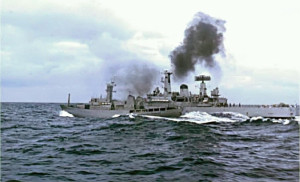
    Image source: lafrancevi (HMCS CORNER BROOK on arctic patrol during Operation Nanook)

  • Sustainable Security

    This post is taken from Paul Rogers’ Monthly Global Security Briefings and was originally posted by Oxford Research Group on 31 March, 2014.

    The Russian annexation of Crimea may be in direct contravention of international agreements but is popular in Russia and almost certain to hold. Given tensions within Ukrainian society and its weak transitional government, there remains some risk of further intervention in eastern Ukraine and possibly the Trans-Dniester break-away region of Moldova. Even if there is no further escalation in the crisis, the deterioration in EU/Russian and US/Russian relations is of great concern, not least in relation to two aspects of Middle East security – the Syrian civil war and the Iran nuclear negotiations.

    President Vladimir Putin’s recent actions have been generally popular in Russia where recent political developments in Kiev have been seen as a serious encroachment by the EU into a crucial Russian sphere of influence and a massive setback to Putin’s idea of creating a counter-weight Eurasian Union. Putin’s muscular approach to restoring Russia to its historic greatness, readily seen in the huge expenditure on the recent Winter Olympics as well as the Eurasian Union vision to reconnect former Soviet republics, is well received by many Russians.

    Whether there is further intervention depends very much on the weak government in Kiev’s capacity to limit civil disorder that might be fomented by ultra-nationalists, including around the 25 May presidential election. This will not be easy since it would be in Russia’s interest to be able to respond to just such disorder and it may well seek to encourage local militias in southern and eastern Ukraine. Understanding the perceptions of the Kremlin (and wider Russian society) towards both the rest of Europe and Ukrainian nationalism is critical in understanding how Moscow may act in the coming months.

    The Question of Perceptions

    A key issue in the crisis is the question of perceptions.  At the height of the Cold War, there were very few western analysts and politicians who were able to visualise the world from the Kremlin’s perspective. The so-called “Red Team” studies in NATO defence ministries were primarily concerned with how the Soviet Union might fight a war, not with its wider world view.  There was, for example, little understanding of the enduring impact of the Great Patriotic War on Soviet/Russian attitudes towards Germany and elements, including Ukrainian, Romanian/Moldovan and Baltic nationalists, which cooperated with its invasion of the USSR.

    While Russia sees itself as a once-great superpower that justifiably seeks to re-establish that status, there remains a deep resentment stemming from the experience of the 1990s.  The embrace of “turbo-capitalism”, the near collapse of the economy and, above all, the disdain with which Russia was treated by the West are all still deeply embedded in the political outlook, and it is this which does much to make the “tilt” of Ukraine towards the EU so unacceptable.

    The western perception of Russia, though, is also significant. Anyone over the age of forty, which includes almost the entire western political class, has deep memories of the Cold War era in which the Soviet Union was seen as the head of a hugely powerful bloc that had overwhelming military superiority in Europe, only counter-balanced by NATO’s nuclear forces.  The vision of massed tank armies deployed right into Eastern Europe was deep-seated but it also assumed that there was strength in depth within the Soviet heartland – Russia. Even now, Russia as the successor state of the Soviet Union is seen to retain some of those elements of power, but this is not supported either by its current economic strength or its conventional military capabilities.

    Russia: a Paper Bear?

    Although Russia has enjoyed reasonable economic growth over the past decade this has been from a very low base and does not bring Russia anywhere near the economic power of the United States, China, Japan or even Germany. Russian GDP is less than a seventh of that of the US, a quarter of that of China and much less than half of that of Japan. In spite of its (declining) population being more than double the size of the UK or France, its GDP matches neither country and is not even two-thirds that of Germany.

    Furthermore, much of Russia’s wealth is concentrated in and around Moscow and St Petersburg and is largely in the hands of a small elite. Most of Russia has benefited little from the growth of recent years, but control of the media by the state and its power over political processes limits the extent of the recognition of these divisions and of opposition to Putin.

    While Russia is still a substantial nuclear power, its conventional armed forces are singularly weak, as was shown by the considerable difficulties in mounting air operations against Georgia in August 2008. There is substantial spending now devoted to rebuilding Russia’s conventional armed forces but this is still at an early stage. To put it bluntly, Russia’s impressive array of forces used in Crimea and massed close to Ukraine hide a deep-seated conventional weakness in an economy which is heavily resource-dependent.

    In the short term, Putin can maintain control of Crimea and may increase Russian influence in the rest of Ukraine, but its recent actions actually militate against the development of the Eurasian Community. Furthermore, Western European states will now be far more cautious in their economic dealings with Russia and will work progressively to limit their dependence on Russian gas and oil. In the long term, the recent popular actions in Crimea are likely to damage Russia, and it is most likely that any further western sanctions will be represented by Putin as further proof of the need for Russia to be strong and independent.

    Context Implications for Syria and Iran

    Syria: The war in Syria continues to be bedevilled by the double proxy element, with regime support from Iran and Russia countered by rebel support from Saudi Arabia and the West.

    Western policy is in disarray:

    • Secular elements in the rebellion are weak and disunited, offering limited opposition to the regime.
    • Radical Islamist paramilitaries are offering much stronger resistance to the regime but are not themselves united even if some elements now control substantial territory.
    • The regime is firmly ensconced even if it is presiding over a terribly damaged country.

    Western policy seems now concentrated on providing support for the disunited rebels, especially south of Damascus, while ensuring that advanced weapons do not get into the hands of jihadist elements concentrated in the north and east. This may be so difficult that it is essentially impossible, meaning that the extent of the support will be limited. The Syrian War thus has no prospect of ending unless the major proxy players, the US and Russia, are prepared to work together. The Ukraine crisis makes this far less likely than even a month ago, when the Geneva II peace talks adjourned without progress.

    On present trends the war will continue. The main regime tactic is to use its considerable firepower advantage (in terms of artillery, rockets and air-dropped barrel bombs) to so damage rebel areas that they lose control of territory. Since the regime does not have the reliable ground forces available to hold such territory the policy is one of denial, but the human and economic costs are immense. As the regime continues with this approach, it becomes more likely that Gulf States such as Qatar and Saudi Arabia will resist US pressure and return to their policy of backing a wider range of Islamist rebels.

    Iran: The negotiations on the nuclear issue between the US and Iran are continuing, albeit at a low level, but have so far survived considerable opposition from within Iran and the US. They may be influenced by the domestic economic problems that the Rouhani government is currently experiencing and his honeymoon period is essentially over.

    US/Russian relations are less relevant here but will come to the fore if the negotiations do make progress because this may give Rouhani more room to improve relations with Saudi Arabia. Any improvement in the Saudi/Iranian relationship should be encouraged by any means possible – it is one of the few areas in the region with potential. However, if there is progress and this can serve to diminish the differences over Syria, then Russia’s influence over the Assad regime will become more significant.

    Conclusion

    The crisis that has erupted in Ukraine is an occasion for just the kind of analysis that was so missing in the Cold War period. Russian behaviour over Ukraine – and Crimea in particular – may be entirely unacceptable in the west but, given the nature of the Putin regime and its recognition of deep-seated and enduring Russian sensibilities over the loss of empire twenty years ago, it is entirely understandable. In spite of the problems it causes, there is a real need for caution, not least because Putin may prefer a continuing crisis in order to bolster domestic support. If the Ukraine crisis escalates further, the impact for European security is likely to be substantial but the limiting of prospects for any kind of progress in Syria will be an even greater human disaster.

    European policy-makers can help to mitigate the negative impacts of the crisis in three ways:

    • Urging caution on the part of NATO in response to the Ukraine crisis;
    • Encouraging in-depth analysis by European states of current Russian attitudes;
    • Endeavouring to support improvements in Iranian-Saudi relations in order to bypass the likely new deadlock in US-Russian relations over Iran and Syria.

    None is easy – all are necessary.

    Paul Rogers is Global Security Consultant to Oxford Research Group, for which he writes monthly security briefings.  He is Professor of Peace Studies at the University of Bradford and author of numerous books including ‘Beyond Terror’. Paul writes a weekly column for openDemocracy  and tweets regularly at @ProfPRogers.

    Featured image:Protester wearing Ukraine state flag colors facing the massive fire set by protesters to prevent internal forces from crossing the barricade line  Source: Wikimedia

  • Sustainable Security

    Donald Trump has recently been critising his democratic allies, but he has been eager to revive the special relationship with the UK. Likewise, Theresa May has pledged to “renew the special relationship for this new age”. What are the drivers behind this development?

    Donald Trump has a thing for rebuking America’s democratic allies and their leaders—his latest target being Australia’s Prime Minister, Malcolm Turnbull. The UK appears to be an exception to this trend. In his first interview with the British press as president-elect, Trump explained that the UK has a “special place” in his half-Scottish heart and pledged to support a post-Brexit UK-US trade deal. Reportedly a big fan of Winston Churchill—and of Boris Johnson’s Churchill Factor—he also asked the UK government to loan him a Churchill bust that his Republican predecessor George W. Bush kept in the Oval Office.

    This got some people in the UK excited—and not just Trump’s old friends like Nigel Farage. Indeed, shortly after Trump’s inauguration, Downing Street announced that Prime Minister Theresa May would be the first world leader to visit America’s new president. On January 23, four days ahead of May’s visit, Sean Spicer, the White House press secretary, confirmed that two leaders would talk trade (of course he called May “the British head of state”) and that the US has “always had that special relationship with Britain.” He then added, with a peculiar giggle: “We can always be closer.”

    Looking at the visual images the media coverage left behind in isolation, you might think that May’s visit was a roaring success—the beginning of a beautiful Conservative-Republican friendship à la Margaret Thatcher and Ronald Reagan. Image one depicts the two leaders shaking hands against the background of Trump’s main Oval Office redecorations—the Churchill bust and the portrait of Andrew Jackson. Image two shows Trump and May holding hands while walking from the Oval Office to the press conference. Image three: a well-attended, convivial press conference.

    These images now depict a day that will live in infamy in the history of British foreign policy. A day after May left Washington—that is, on the Holocaust Remembrance Day—Trump’s “Muslim ban” came into force, causing worldwide shock and pain. Now even her supporters had to wonder: How did we ever think we could we do business with this misogynistic, racist man? And why was the prime minister prevaricating instead out outright condemning Trump’s policy?

    The standard answer is cold realpolitik. Scheduled to formally take the country outside the EU’s single market in 2019, the UK government is desperately searching for new trade deals. The U.S. market is the primary target—this was implicit in May’s Lancaster House speech (“We will continue to be reliable partners, willing allies and close friends”) and explicit in her speech at the Republican Party conference in Philadelphia (“I am delighted that the new Administration has made a trade agreement between our countries one of its earliest priorities”). Viewed from this perspective, hugging Trump close, while doing so in an extremely unedifying manner, is in Britain’s best interest—it is certainly in the best of interest of some Britons, as George Monbiot pointed out in his latest weekend column for The Guardian.

    Most Conservatives and probably at least a third of the British voters are in quiet support of staying the course. On the same day Trump’s press secretary giggled about the need for an ever closer special relationship. William Hague, former British foreign secretary and no supporter of Brexit, penned in The Daily Telegraph that the special relationship was Britain’s only “indispensable alliance.” Subsequent events did little to make him change his mind. To Hague, rather than retaliating against Trump’s policies—which is a minority demand anyway—the UK government should host the American president this summer as planned. As for the image of the queen being “within grabbing distance of America’s helmsman,” Britons would do well to recall that she has dealt with thugs before, wrote Hague on January 31.

    theresa-may-donald-trump-900

    Image (modified) by UK Home Office and Gage Skidmore.

    Bannon’s rules

    The special relationship has always been asymmetric, with the Americans acting as rule-makers and the British as rule-takers. That said, the rules have never before been made by Stephen Bannon, the American president’s “chief strategist.” Having likened himself to revolutionaries such as Lenin and Thomas Cromwell (and also figures like Darth Vader and Satan)  Bannon appears to be bent on remaking international order by moving the US away from “multilateralism”, “liberalism” and “democracy” and towards America First-styled “sovereignty” and “traditional values.” In practice, this means that the US is now openly hostile to the UN, WTO, NATO, the Five Eyes, to say nothing of the fragile global governance regimes on climate, human rights and arms control—while simultaneously being “open-minded” about Putin’s Russia and Europe’s far right.

    Related, Bannon, former executive chairman of Breitbart News, an information hub for conspiracy theorists, ultra-conservatives, authoritarians, fascists, white supremacist and other “alt-right” aficionados, seems to think of international relations are fundamentally inter-racial relations. American politics and American foreign policy textbooks cannot shed light on this particular America. A combination of Samuel Huntington, Carl Schmidt and Jared Taylor’s White Identity might.

    In every generation for the past seventy years there were those who saw the special relationship as a Faustian bargain for Britain. Their arguments usually never made it into the mainstream, however. As of last week, this has changed—compare the aforementioned Monbiot or Paul Mason in The Guardian to Gideon Rachman in The Financial Times, for example.

    As thousands of Londoners surrounded the US embassy this past Saturday under the banner “Make America Think Again,” it is worth asking where May’s Trump policy might take Britain. Among several memorable statements the prime minister made in her Philadelphia speech, one that received no media scrutiny was the claim that the UK and the US together “defined the modern world.” Not a diplomatic thing to say, but not necessarily wrong either. The British Empire, in its many forms and iterations, transformed the globe by making Britain and “Neo-Britains” rich, and those on the outside poor. Britain also never challenged the rise of the U.S. the way it challenged other imperial rivals—before the democratic peace came the Anglo-Saxon peace. And once the US moved to establish the so-called liberal international order after World War II, a special role was reserved for Britain. “Whenever we want to subvert any place, we find the British own an island within an easy reach,” said one American spook in 1952. The statement has aged well—it helps explain British foreign policy after Suez, after East-of-Suez, after the end of the Cold War and after 9/11. It may well be valid in the Trump era as well, albeit this time the island in question is likely to be Britain itself—Oceania’s “Airstrip One,” as depicted by Orwell in 1984.

    Srdjan Vucetic is Associate Professor at the Graduate School of Public and International Affairs. His research interests involve American and Canadian foreign and defence policy and international security. Prior to joining the GSPIA, Srdjan was the Randall Dillard Research Fellow in International Studies at Pembroke College, University of Cambridge.

  • Sustainable Security

    For various reasons, South Sudan faces serious problems of food insecurity. What are the possible solutions to this issue? 

    South Sudan faces serious problems of food insecurity due to low per capita levels of domestic food production, periodic droughts, widespread poverty, political unrest, and, since late 2013, renewed armed conflict between the central government and rebel forces led by former vice-President Riek Machar.  Moreover, large fiscal deficits and expansionary monetary policy have led to high rates of inflation, balance of payments deficits and a sharp depreciation of the South Sudanese pound. This in turn has resulted in an economic crisis that has further worsened household welfare. In this context, enhancing food security (physical, social and economic access to sufficient, safe and nutritious food for all people at all times) will require a multi-faceted set of public and private investments, sound policies and targeted interventions for especially vulnerable households.

    South Sudan’s Food Insecurity                   

    Much of South Sudan receives little rainfall and only 5 percent of the arable land is currently cultivated. Nonetheless, the country has significant potential for increased cereal production, especially in the southern regions with the highest annual rainfall. Sorghum and maize account for most of the country’s domestically produced cereal, but there is little marketable surplus due to small farm size, low productivity and weak market incentives for sales.  Accurate data on crop area and production for South Sudan are scarce, and there is considerable uncertainty in the estimates, particularly since the renewal of armed conflict. According to annual FAO/WFP supply estimates, food production increased rapidly in recent years, from 660 thousand tons in 2009/10 to nearly 900 thousand tons in 2014/15, an average growth rate of 9.6 percent per year, due mainly to expansion of area harvested by 5.5 percent per year.

    Figure 1—South Sudan Cereal Production, 2009/10 – 2014/15

    sudan-figure-1

    Source: Based on FAO/WFP data.

    Alternative estimates of production derived from the household consumption data (2009 NBHS) suggest cereal production was 21 percent higher than the 2008/90 FAO/WFP estimate. Estimates of trade flows derived from the 2009 National Baseline Household Survey consumption figures, suggest that imports were a major source of supply just prior to Independence, reaching perhaps 700 thousand tons in that year.

    Independence and the nearly complete disruption of trade with northern Sudan resulted in a major shift in the composition of cereal imports between 2009 and 2013, however. In 2009, cereal imports (mainly sorghum) totaled about 700 thousand tons, mostly from northern Sudan. By 2013, cereal imports had risen to nearly one million tons, with sorghum imports following from about 450 thousand tons to 320 thousand tons, while maize imports rose to 580 thousand tons, with imports of rice and wheat each totaling about 200 thousand tons.

    Table 1—South Sudan Estimated Cereal Production, Consumption and Imports (‘000 tons), 2009 and 2013

    Source: Adapted from Table 2 in Dorosh et al., 2016.

    Perhaps not surprisingly given the large private sector import flows, maize and sorghum prices in South Sudan are closely linked with prices in northern Uganda.

    Figure 2—South Sudan: Domestic and Import Parity Prices of Maize, 2008-15

    Notes: The exchange rate of the South Sudanese Pound (SSP) to the US Dollar in January, 2015 was 2.95. Source: Adapted from Figure 3 (Dorosh et al., 2016).

    Notes: The exchange rate of the South Sudanese Pound (SSP) to the US Dollar in January, 2015 was 2.95.
    Source: Adapted from Figure 3 (Dorosh et al., 2016).

    Consumption of maize was nearly to that of sorghum (75.1 and 78.7 kgs/capita per year, respectively), as per capita maize consumption rose by 113 percent, while per capita sorghum consumption fell by 33 percent. Rice and wheat consumption also increased sharply, from 3.2 and 2.3 kgs/capita per year, respectively, in 2009 to 21.4 and 16.8 kgs/capita per year in 2013 – a 574 percent increase in per capita rice consumption and a 647 percent increase in per capita wheat consumption. The 2009 NHBS data, still the only source for detailed information on consumption patterns in South Sudan, show significant variation in consumption patterns across households. Throughout South Sudan, sorghum and maize are generally the major cereals consumed. Sorghum is the predominant cereal in rural areas, particularly in the north, while in Juba, maize and wheat are more widely consumed.

    Figure 3—South Sudan Average Monthly Kilogram Cereal Consumption Per Person

    south-sudan-figure-3

    Source: Calculated using data from South Sudan National Baseline Household Survey, 2009.

    Livestock are also a major source of income and food consumption in South Sudan, as well as a store of wealth, but the data on livestock are even more uncertain than the cereal data. Nationally, there were an estimated 11.74 million cattle in 2009, an average of 1.34 animals per person. Ownership is higher in the northern regions than in the south (1.58 and 0.88 animals per person, respectively). In 2013, approximately 45 percent of the population lived in households that consumed dairy products; consumption per capita in the northern regions is twice that of the south.

    Looking ahead

    oxfam-south-sudan

    Image credit: Oxfam International.

    In the medium term, increasing production of both crops and livestock is essential for food security in South Sudan, not only to reduce reliance on imports, but also to raise incomes of farmers. Rapid expansion of agricultural extension services, provision of improved seeds and increased fertilizer availability have led to large increases in agricultural production in neighboring Ethiopia, and have the potential to do likewise in South Sudan. Complementary investments in rural roads and other road infrastructure are also required, along with funds for maintenance.

    In the short term, though, food aid and targeted relief programs are badly needed to reduce the high levels of malnutrition in for the country as currently 31 percent of children under five are stunted and 23 percent are wasted. A national food security reserve system that ultimately would be supplied by domestic procurement of cereals was also proposed before the recent unrest, but such a system may take years to develop.

    In addition, maintaining incentives for the private sector import trade is essential to boost availability of cereals and minimize large spikes in prices. This would require a return to macro-economic stability in terms of both domestic inflation and exchange rates, as well as availability of foreign exchange. Keeping border controls and tariffs on cereal imports to a minimum could also help minimize transactions costs. Finally, none of these policies and investments will be effective in substantially improving food security without an end to armed conflict. Food security is possible for the people of South Sudan, but only with a restoration of peace, major new investments and sound government policies.

    Paul A. Dorosh is the Division Director of IFPRI’s Development Strategy and Governance Division. His previous positions include IFPRI Senior Research Fellow and Program Leader of the Ethiopia Strategy Support Program in Addis Ababa (2008-2010), Senior Economist at the World Bank (2003-2008), senior research fellow with IFPRI in Dhaka, Bangladesh (1997-2001) and Associate Professor at Cornell University (1994-97). He holds a Ph.D. in Applied Economics from the Food Research Institute, Stanford University and a B.A. in Applied Mathematics from Harvard University, and has published research on agricultural markets, food policy, international trade, economy-wide modeling and the rural-urban transformation.