Tag Archives: Remote Control Warfare
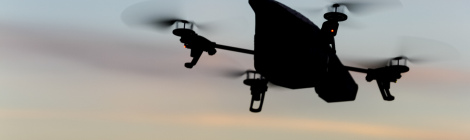
How to Respond to the Threat from Hostile Drones in the UK
This article is part of the Remote Control Warfare series, a collaboration with Remote Control, a project of the Network for Social Change hosted by Oxford Research Group. Islamic State (IS) […]

From Surveillance to Smuggling: Drones in the War on Drugs
In Latin America drones are being used as part of the War on Drugs as both regional governments and the US are using surveillance drones to monitor drug trafficking and find smuggling routes.. However, as drones are increasingly being used by drug cartels themselves to transport drugs between countries, could Latin America find itself at the forefront of emerging drone countermeasures?
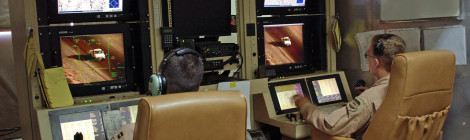
Expanding Contracting: The Private Sector’s Role in Drone Surveillance and Targeting
Over-burdened in its requests for continuous surveillance of an expanding battlefield, the US military is increasingly turning to private contractors to fill key roles in its operation of armed drones.

Learning the Lessons: 11 Years of Drones in Pakistan
Whilst much debate has focused on the ethics, legality and civilian costs of drone technology, little attention has been given to the broader repercussions US drone strikes have had on Pakistan as a whole in the last 11 years.

The UN’s Meetings on Autonomous Weapons: Biting the Bullet, or Lost in Abstraction?
States’ ability to move forward on the issue of lethal autonomous weapons will depend on not only finding consensus on key concepts but also having the will to find concrete outcomes.
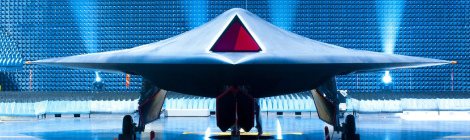
Losing control over the use of force: fully autonomous weapons systems and the international movement to ban them
Later this month, governments will meet in Geneva to discuss lethal autonomous weapons systems. Previous talks – and growing pressure from civil society – have not yet galvanised governments into action. Meanwhile the development of these so-called “killer robots” is already being considered in military roadmaps. Their prohibition is therefore an increasingly urgent task.

Floating liabilities? Maritime armouries, risks and solutions
The use of private security companies to combat piracy has led to a rise in the practice of converting vessels for the purposes of weapons storage. But these ‘floating armouries’ raise a number of concerns over security, oversight and transparency.

Too Quiet on the Western Front? The Sahel-Sahara between Arab Spring and Black Spring
While the world’s attention has been focused on the US-led military interventions in Iraq and Syria a quieter build-up of military assets has been ongoing along the newer, western front of the War on Terror as the security crises in Libya and northeast Nigeria escalate and the conflict in northern Mali proves to be far from over. In the face of revolutionary change in Burkina Faso, the efforts of outsiders to enforce an authoritarian and exclusionary status quo across the Sahel-Sahara look increasingly fragile and misdirected.

The cooling wars of cyber space in a remote era
As current discussions highlight the possibility of “major” cyber attacks causing a significant loss of life or large scale destruction, it is becoming harder to determine whether these claims are hype or are in fact justified fears. Esther Kersley, Katherine Tajer and Alberto Muti offer some clarity on the subject by assessing the major issues in cyber security today to help better inform the debate and assess what threats and challenges cyber issues really do pose to international peace and security.
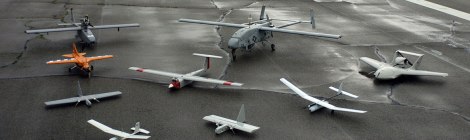
Drone-tocracy? Mapping the proliferation of unmanned systems
While the US and its allies have had a monopoly on drone technology until recently, the uptake of military and civilian drones by a much wider range of state and non-state actors shows that this playing field is quickly levelling. Current international agreements on arms control and use lack efficacy in responding to the legal, ethical, strategic and political problems with military drone proliferation. The huge expansion of this technology must push the international community to adopt strong norms on the use of drones on the battlefield.
Leave a Reply