Tag Archives: Asia-Pacific

Deforestation: REDD-y for peace or fuelling conflict?
REDD forestry efforts don’t pay enough attention to their influence on local conflict dynamics. For REDD+ to be an effective mechanism to curb deforestation and strengthen peace opportunities, it has to pay more attention to pre-existing land and forest conflicts linked to tenure, take into account the interests of the local communities and be more sensitive to the local context

The ‘High Politics’ of Sustainable Security
If events like those in Ukraine have taught us anything it is that, despite the predictions of many, the potential for conflict between the major powers is still one of the defining characteristics of world politics. Crisis diplomacy and inter-state rivalry is back on the global agenda. But if policymakers, analysts and civil society actors are to try and come up with ways of reversing the trend towards an increasingly competitive, militarised and crisis-driven inter-state order, then thinking carefully through the implications of a sustainable security approach to great power politics would appear to be a most useful starting point.

National Security, Climate Change and the Philippine Typhoon
Super Typhoon Haiyan made landfall in the Philippines on 8 November, and is possibly the most powerful tropical cyclone on record. Beyond the immediate impact of the typhoon, the natural disaster is already proving to be a threat to national security, with reports surfacing of massive looting and military engagement following attacks on government relief convoys. As US and UK naval convoys head to support the situation, Andrew Holland discusses climate change’s impact as a threat multiplier and what plans militaries and governments must make to prevent the insecurity that will come with future disasters of this scale.
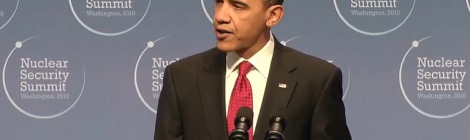
Can the Nuclear Non-Proliferation Treaty outrun its double standard forever?
The recent walkout by Egyptian negotiators at UN talks have demonstrated that, like a building with rotten foundations, the nuclear non-proliferation regime is far less stable than many believe it to be. Egypt’s actions make clear that anything less than a regime specifically geared towards addressing the reasons why some states seek nuclear weapons is a regime existing on borrowed time.
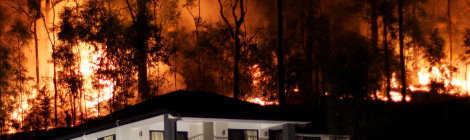
Climate Change and Security Threats: Time to Call a Spade a Spade?
As the devastating bushfires in Australia sharpen questions about the need for urgent action on climate change in that country, is it time to abandon the debate over the pitfalls of viewing climate change through a ‘security lens’?

Myanmar: peaceful transition to democracy or storm clouds on the horizon?
Analysing a recent report by International Crisis Group, Anna Alissa Hitzemann argues that in order for the transition from authoritarian rule to democracy to be stable, and for peace and security to be sustainable, the government of Myanmar will have to face and resolve major challenges such as idespread militarization and the political and social marginalization (past and present) of ethnic and religious groups.
Leave a Reply