Blog

  • Global militarisation

    As the long running tensions over the Senkaku/Diaoyu islands in the East China Sea appear to be coming to a head, the time for thinking through the alternatives to the militarisation of this conflict seems to be well and truly upon us. The conflict raises interesting issues about sovereignty claims based on offshore territories, particularly as we face a climate-constrained future as well as the increasing importance of competition over scarce resources. The latter is fast becoming one of the most important global trends if one thinks about the potential ‘drivers’ of conflict and even war.

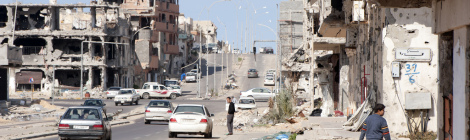
    Image source: Al Jazeera English. 

    Read more »

  • Sustainable Security

    The Responsibility to Protect (R2P) is a significant, if controversial, development in international affairs. China has proposed its own semi-official version of R2P called “Responsible Protection”.

    Author’s Note: This article highlights issues discussed in more depth in various publications, including Andrew Garwood-Gowers, ‘China’s “Responsible Protection” Concept: Reinterpreting the Responsibility to Protect (R2P) and Military Intervention for Humanitarian Purposes’ (2016) 6 Asian Journal of International Law 89 and Andrew Garwood-Gowers, ‘R2P Ten Years after the World Summit: Explaining Ongoing Contestation over Pillar III’ (2015) 7 Global Responsibility to Protect 300.

    Introduction

    Over the last decade and a half the Responsibility to Protect (R2P) principle has emerged as a significant normative development in international efforts to prevent and respond to genocide and other mass atrocity crimes. Yet it has also been controversial, both in theory and in practice. R2P’s legal status and normative impact continue to be debated in academic and policy circles, while its implementation in Libya in 2011 reignited longstanding concerns among many non-Western states over its potential to be misused as a smokescreen for regime change. These misgivings prompted Brazil to launch its “Responsibility while Protecting” (RwP) concept as a means of complementing and tightening the existing R2P principle. China, too, has proposed its own semi-official version of R2P called “Responsible Protection” (RP). This contribution explores the key features and implications of the lesser known Chinese initiative.

    The R2P Principle

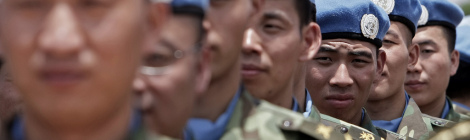
    Peacekeeping - UNAMID

    Image by UN Photo via Flickr.

    R2P first appeared in a 2001 report by the International Commission on Intervention and State Sovereignty (ICISS), a body set up by the Canadian government to consider how the international community should address intra-state humanitarian crises. However, after the initial concept proved contentious a modified version of R2P – labelled “R2P-lite” by one commentator – was unanimously endorsed by states at the 2005 World Summit. In its current form R2P consists of three mutually reinforcing pillars. The first is that each state has a responsibility to protect its populations from the four mass atrocity crimes (genocide, war crimes, crimes against humanity and ethnic cleansing). Pillar two stipulates that the international community should encourage and assist states in fulfilling their pillar one duties. Finally, pillar three provides that if a state is manifestly failing to protect its populations the international community is prepared to take collective action in a timely and decisive manner on a case-by-case basis, in accordance with Chapter VII of the UN Charter.

    Action under pillar three can encompass non-coercive tools such as diplomacy and humanitarian assistance, as well as coercive means including sanctions and the use of force. The international community’s pillar three responsibility is framed in conservative terms, creating only a duty to consider taking appropriate action, rather than a positive obligation to actually respond to a state’s manifest failure to protect. Crucially, the UN Security Council remains the only body that can authorise coercive, non-consensual measures under pillar three. R2P does not grant states a right to undertake unilateral humanitarian intervention outside the Charter’s collective security framework. Overall, R2P is best characterised as a multi-faceted political principle based on existing international law principles and mechanisms.

    The most well-known instance of pillar III action to date is the international community’s rapid and decisive response to the Libyan crisis in early 2011. The Security Council initially imposed sanctions and travel bans on members of the Gaddafi regime before passing resolution 1973 authorising the use of force to “protect civilians and civilian populated areas under threat of attack’’. China, Russia, Brazil and India each abstained on the vote to mandate military force against Libya. As the extent of NATO’s military targets and support for the Libyan rebels became apparent, many non-Western powers criticised the campaign for exceeding the terms of the Security Council resolution. For these states, the eventual removal of the Gaddafi regime confirmed their perception that R2P’s third pillar could be manipulated for the pursuit of ulterior motives such as the replacement of unfriendly governments.

    The post-Libya backlash against R2P was at least partly responsible for Security Council deadlock over Syria. Russia and China have exercised their vetoes on four separate occasions to block resolutions that sought to impose a range of non-forcible measures on the Syrian regime. At the same time, there has been renewed debate about the strengths and weaknesses of R2P’s third pillar. In late 2011 Brazil’s RwP initiative proposed a series of decision-making criteria and monitoring mechanisms to guide the implementation of coercive pillar three measures. While RwP initially attracted significant attention and discussion, Brazil’s foray into norm entrepreneurship was short-lived and R2P has remained unaltered.

    Reframing R2P as “Responsible Protection”

    China’s traditional insistence on a strict interpretation of sovereignty and non-intervention has made it uncomfortable with the coercive, non-consensual aspects of R2P’s third pillar. As a result, Beijing has consistently emphasised the primacy of pillars one and two, while downplaying the scope for pillar three action. In this respect, its decision not to veto resolution 1973 on Libya came as something of a surprise.

    China’s contribution to the post-Libya debate over R2P’s third pillar is less widely documented than Brazil’s efforts. In mid-2012 the notion of “Responsible Protection” was floated by Ruan Zongze, the Vice President of the China Institute for International Studies (CIIS),  which is the official think tank of China’s Ministry of Foreign Affairs. Although China has not explicitly adopted the concept as a formal policy statement on R2P, its implicit endorsement means it can be described as a “semi-official” initiative.

    RP is primarily concerned with R2P’s third pillar and, in particular, providing a set of guidelines to constrain the implementation of non-consensual, coercive measures. It consists of six elements or principles, which are drawn from just war theory and earlier R2P proposals such as the 2001 ICISS report and Brazil’s RwP. In this respect, RP represents a repackaging of previous ideas, rather than an entirely original initiative. However, by reframing these concepts in stricter terms it reflects a distinctive Chinese interpretation of R2P that seeks to narrow the circumstances in which non-consensual use of force can be applied for humanitarian purposes.

    The first element draws on the just war notion of “right intention”. It provides that the purpose of any intervention must be to protect civilian populations, rather than to support “specific political parties or armed forces”. This conveys Beijing’s concerns over the motives and objectives of those intervening under the banner of R2P, as expressed during the Libyan experience. Element two relates to the “right authority” criterion. It reiterates the longstanding Chinese position that only the Security Council can authorise the use of coercive measures, and that there is no right of unilateral humanitarian intervention granted to states.

    RP’s third element is based on the traditional principle that military intervention should be a “last resort”. Its call for “exhaustion of diplomatic and political means of solution” is consistent with Beijing’s broader policy preference for diplomacy and dialogue over forcible measures. However, insisting on a strict, chronological sequencing of responses may deprive the international community of the flexibility needed to ensure timely and decisive action on humanitarian crisis. For this reason, some clarification or refinement of element three may be needed. The fourth element of RP draws on aspects of the just war principles of “right intention” (like element one) and “reasonable prospects”. In relation to the latter, it provides that “it is absolutely forbidden to create greater humanitarian disasters” when carrying out international action. This stipulation reflects Beijing’s position that external intervention often exacerbates humanitarian crises and can ultimately cause more harm than good.

    Element five of RP provides that those who intervene “should be responsible for the post-intervention and post-protection reconstruction of the state concerned”. Although the notion of a responsibility to rebuild appeared in the original 2001 ICISS report it was not included in the text of the World Summit Outcome document in 2005 and therefore does not form a component of the current concept of R2P. It is unclear whether China’s RP concept is explicitly seeking to resurrect this dimension or whether this element is simply intended to emphasise Beijing’s broader perspective on peacebuilding and development in post-conflict societies. Finally, element six calls for greater supervision and accountability of those carrying out UN authorised civilian protection action. This is a similar demand to that made in Brazil’s RwP proposal, though little detail is given as to what form any such monitoring mechanism would take.

    Conclusion

    Overall, the Chinese notion of RP is an attempt to reinterpret and tighten the content of R2P’s third pillar so that it aligns more closely with Beijing’s own normative preferences and foreign policy objectives. Compared to RwP and the ICISS report, RP outlines a narrower set of circumstances in which military intervention for humanitarian purposes would be appropriate. Some aspects of the proposal would certainly benefit from clarification and refinement.

    However, it is notable that despite strongly criticising the way R2P was implemented in Libya, China has chosen to engage with, and actively shape, the future development of the norm. This illustrates the extent to which China, as a permanent member of the Security Council, is enmeshed in the ongoing debate over R2P. In fact, RP is explicitly framed as an example of China “contributing its public goods to the international community”. In the future we can expect China and other non-Western powers to play increasingly influential roles in the development of international security and global governance norms.

    Andrew Garwood-Gowers is a lecturer at the Faculty of Law at Queensland University of Technology (QUT) in Brisbane, Australia. He has written extensively on R2P and the law governing the use of military force, with publications in leading journals including Global Responsibility to Protect, the Asian Journal of International Law, Journal of Conflict and Security Law and the Melbourne Journal of International Law.

  • Sustainable Security

    Drugs and Drones: The Crime Empire Strikes Back

    Ever advancing remote warfare technology is being increasingly used by law enforcement agencies to counter drug trafficking. In response, drug cartels are also adopting new technology to smuggle and distribute drugs. However, the technological superiority of law enforcement-military actors is also causing criminal and militant groups to adapt by employing the very opposite tactic, by resorting to highly primitive technology and methods. In turn, society is doing the same thing, adopting its own back-to-the-past response to drug trafficking and crime.

    Read Article →

    From Surveillance to Smuggling: Drones in the War on Drugs

    In Latin America drones are being used as part of the War on Drugs as both regional governments and the US are using surveillance drones to monitor drug trafficking and find smuggling routes.. However, as drones are increasingly being used by drug cartels themselves to transport drugs between countries, could Latin America find itself at the forefront of emerging drone countermeasures?

    Read Article →

    Privatising the War on Drugs: PMSCs in Colombia and Mexico

    US drug policy has become increasingly privatised in recent years as the US government contracts private military and security companies (PMSCs) to provide intelligence, logistical support and training to state security forces in drug-producing and –transit states. As the cases of Colombia and Mexico illustrate, this privatisation strategy is having a damaging impact on these already fragile environments.

    Read Article →

    Beyond Privacy: The Costs and Consequences of Mass Surveillance

    Last week the new UN privacy chief said UK surveillance was “worse than [George Orwell’s novel] 1984”. In the two years since the Snowden leaks revealed the existence of bulk internet and phone surveillance by US intelligence services and their partners, including the UK, the British government continues to engage in the mass collection of citizens’ communications data.

    Read Article →

    Losing control over the use of force: fully autonomous weapons systems and the international movement to ban them

    Later this month, governments will meet in Geneva to discuss lethal autonomous weapons systems. Previous talks – and growing pressure from civil society – have not yet galvanised governments into action. Meanwhile the development of these so-called “killer robots” is already being considered in military roadmaps. Their prohibition is therefore an increasingly urgent task.

    Read Article →

  • Sustainable Security

    Since the 9/11 attacks, and the ensuing “war on terrorism,” the U.S. government has engaged in a series of controversial counterterrorism policies. One such policy has been targeted killings, which have been used to try and eliminate the senior leadership of the global jihadist movement. How effective has the practice been?

    The recent high profile terrorist attacks perpetrated in the U.K. have generated a resurgence in the debate surrounding counterterrorism tactics. Targeted killings, defined by Alston as the “intentional, premeditated and deliberate use of lethal force, by States or their agents…against a specific individual who is not in the physical custody of the perpetrator,” are one such tactic; frequently employed, yet extremely controversial.  This practice most often takes two forms: kill/capture missions and unmanned aerial vehicle assaults (UAVs). Certainly the most well known of the former is that of the May 2nd, 2011 Navy SEAL raid on Usama bin Laden’s Pakistan compound. The use of UAVs has become much more common, with a recent Director of National Intelligence report indicating that 473 drone strikes had resulted in the deaths of around 2,500 terrorists and between 64-114 civilians.  Such civilian fatalities, criticized by independent organizations to be a low estimate, illustrate the largest criticism of the policy; that it can be, as it is even from China’s perspective, “a blank space in international law (that is) subject to abuse”.

    These issues have kindled a spirited discussion among scholars, but have yet to influence the policy’s role as a favoured strategy amongst policymakers.  Former President Obama, whose administration was responsible for the program’s significant expansion, declared just last year that “none of ISIL’s leaders were safe” and they were “going to keep going after them”. President Trump has also indicated that he plans to continue with the program, recently noting that “the terrorists and extremists and those who give them aid and comfort must be driven out from our society forever”.

    It would seem that the moral and legal consequences of targeted killings have been, at the very least, overlooked given the intense focus and leeway that has been granted to combating the global jihadist movement (GJM). However, this preference for the use of targeted killings as counterterrorism has become increasingly hard to rectify given the mounting lack of empirical evidence to support its effectiveness.  Indeed, a host of previous investigations into contexts both within and outside of the GJM has yielded a complex picture. This picture is one that does not necessarily indicate resounding ineffectiveness, but one that does not garner particularly strong support for the strategy either. Rather, conclusions regarding the capability of targeted killings vary by how the incident is perceived (discriminate vs. indiscriminate violence), what outcome is studied (group desistance; frequency versus severity), the type of leader killed (position in the group; presence of a tribal elder), and characteristics of the organization (size, structure, and ideology).

    Evaluating effectiveness

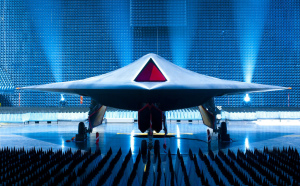
    Image credit: U.S. Air Force photo/Lt Col Leslie Pratt.

    Taking into account these nuances, my own work demonstrates that this policy has largely failed to decrease GJM-related terrorism, utilizing the Global Terrorism Database’s definition of, “the threatened or actual use of illegal force and violence to attain a political, economic, religious, or social goal through fear, coercion, or intimidation.” Rather, such killings, in the form of both kill/capture and UAVs, have been unsuccessful at decreasing the especially noxious outcomes resulting from jihadi terrorism; namely, casualties, along with the more detrimental attacks involving high civilian deaths and suicide attackers. Perhaps even more disconcerting, the deaths of certain al Qa’ida leaders like that of al-Awlaki, the infamous cleric responsible for many a terrorist’s radicalization, have led to an increase in incidents, or a backlash effect.

    Examining a slightly varied predictor in the form of monthly killings has yielded similar conclusions, again in the form of an increase in casualties. Still other al Qa’ida leaders’ deaths have produced decreases in terrorism incidents, while at the same time increasing other types of attacks. This displacement phenomenon is not new to studies of crime and terrorism, but adds to the general conclusion that targeted killings have yet to render consistent successes.

    While I have also discovered support for the notion that targeted killings are an effective deterrent, these findings are largely outweighed by the above. It would appear that this tactic, as one of the leading scholars on leadership decapitation Jenna Jordan notes, “is not enough to effectively fight a strong and emboldened terrorist organization.” Nevertheless, it may be too early to designate targeted killings a complete failure.  As Brian Forst has argued, “a failure to find is not at all the same as a finding of failure.” Certainly, other research has noted the short-term benefits like those present in the work of Patrick Johnston and Anoop Sarbahi, the lack of attacks on the U.S. Homeland, and the possibility that there are other purposes to the policy like that of retribution.

    Although not directly assessed in my work, the totality of countermeasure evaluations have become increasingly supporting of Laura Dugan and Erica Chenoweth’s contention that conciliatory, rather than punitive efforts, are the key to fighting terrorism. Actions like that of removing curfews, releasing prisoners, or even meeting to discuss issues have demonstrated their effectiveness in decreasing violence within the Israel-Palestine conflict. Even investigations outside the context of terrorism, like Matthew Dickenson’s study of Mexican drug-traffickers, are similarly reflective of the idea that incentives rather than punishments offer the most promise. Specifically, Dickensen has suggested that improving both the economic and law enforcement environments are better counter-narcos strategies than that of leadership removal. Jordan has also suggested that al Qa’ida’s organization, which tends to be bureaucratic, and its communal support, have been integral to its ability to rebound from killings. While such killings have the potential to affect the former, it is the opinion of this researcher that conciliatory efforts may have the best shot at addressing the latter.

    Conclusion

    All in all, and given the issues surrounding terrorist negotiation coupled with an ideology that is fraught with human rights’ violations, conciliatory actions are likely to remain unpopular. As the U.S. continues to fight a movement that has been responsible for a quarter of all deaths and injuries from terrorism, the policy of targeted killing is likely to remain.  Perhaps, at the very least, this strategy could be coupled with other efforts that address the larger causes and correlates of terrorism, like that of larger macro-level predictors.

    Jennifer Varriale Carson is an Associate Professor of Criminal Justice and the Coordinator of Undergraduate Research at the University of Central Missouri.  She holds a Ph.D. from the University of Maryland in Criminology and Criminal Justice.  Her work focuses on policy evaluation, particularly the use of quasi-experimental methods in assessing counterterrorism efforts, and can be found in a number of outlets including Criminology and Public Policy, Journal of Quantitative Criminology, and Deviant Behavior.

  • Sustainable Security

  • Reimagining Development

    Do recent crises in food, finance, fuel and climate – and the way that people are responding to them – present us with an opportunity to rethink or ‘reimagine’ what international development means and how it needs to change?

    A new initiative of the Institute of Development Studies at the University of Sussex brings together 34 research projects exploring crises and responses to crises. The initiative aims to identify new thoughts and ideas on international development from across the globe and to bring them together to build a new consensus on the conduct and performance of international development in the 21st century.

    The Reimagining Development initiative will focus on the following questions:

    What is the evidence of the impacts of the multiple crises (financial, energy, food, confidence) on lives and livelihoods?

    What is the evidence that significant shifts in values, relationships, ideas, methods, and behaviors are taking place?

    What are some alternatives to the status gap that a particular place/space proposes in terms of ideas, values, relationships, methods, behaviors and knowledge?

    Based on accumulated knowledge in the place/space what specifically has to change (or not) to support any alternatives emerging? And what are the best strategies and tactics for effecting change?

    More information on the initiative is available here.

  • Sustainable Security

    One of the leading sources of refugees in Europe is the impoverished east African nation of Eritrea. What role has the international community played in this crisis?

    Eritrea’s relationship with the international community (IC) has always been complicated. Eritreans see the IC’s history with their nation as one fraught with violation, neglect and, perhaps above all else, multiple betrayals. The first betrayal is seen to have taken place during the 1940s decolonisation process when Eritrea, against the wish of its people, was tied with Ethiopia in a UN enacted federal arrangement. The second betrayal occurred when the UN, who sponsored the federal arrangement, looked the other way when the Emperor of Ethiopia annexed Eritrea in violation of the arrangement. This was followed by another betrayal when the IC kept silent during the thirty years Eritrean War for Independence. Yet another betrayal occurred when the guarantors and witnesses of the Eritrea-Ethiopia Boundary Commission abdicated their responsibility to ensure its implementation. The recent imposition of sanctions by the IC on Eritrea added to this feeling of betrayal. All these events have certainly generated a psychology of victimhood among Eritreans and a belief that that the IC have sacrificed the interests of its people for geostrategic interests and politics. The IC’s response to Eritrea’s refuge crisis represents the latest chapter in this history of betrayal.

    This article argues that both the actions taken and those not taken by the IC contributed to the refugee/migration crisis in Eritrea. The actions taken included imposing sanctions and a concerted effort to isolate the country, while actions not taken include failure to implement a binding and final verdict of the International Court of Arbitration.

    Causes of the Exodus from Eritrea

    In recent years, the world has witnessed an unprecedented flow of people from Eritrea. The exodus, which has picked up momentum is the outcome of several factors that have been accumulating over the years. Relative to its population size, Eritrea has produced the largest flow of refugees/migrants in the world. What is driving people to leave the country in such large numbers? There are multiple causes of the exodus.

    • The no-war no-peace situation
    • The implementation of indefinite national service
    • A harsh political environment
    • Major economic difficulties such as mass unemployment
    • A lack of future opportunities and prospects for the country’s youth
    • The imposition of sanctions
    • A blanket asylum provision by host countries

    The rejection of the International Court of Arbitration verdict on the border issue by Ethiopia generated a no-war no-peace situation. The peace agreement was supposed to lead to peaceful coexistence between the Eritrea and Ethiopia. This no-war no-peace situation created constant tensions, a fear of an outbreak of war, and occasional engagement between the armies of the two countries along their common border. This means Eritrea has had to put itself in a constant state of high alert. It also compelled the Eritrean governement to extend its national service indefinitely. The majority of capable labour forces in the country are therefore tied to the national service system. Consequently, the economy suffered immensely because of a lack of a sufficient labour force. The youth who are in the national service have to pay a high price. They do not get proper salary; and they are not able to pursue a normal social and working life which could include education, building and supporting family, accumulating wealth, etc.

    The political environment has also hardened considerably. The country has been under an undeclared state of emergency since 2000. Gradually, the political climate became more authoritarian and less plural: political opposition was not tolerated; deviant views and political differences were perceived as dangers to national unity, stability and survival. Therefore, dissidence was harshly dealt with. Many ended up in prison accused of betraying or endangering the security of the nation. The economy, which was slowly recovering from the thirty years of independence war, suffered immensely from the two-year border war (1998-2000) between Eritrea and Ethiopia and the no-peace no-war situation. A major part of state budget now goes to military expenses and staggering unemployment overshadows the nation. What was primarily a subsistence economy spiralled down due to a shortage of an able workforce.

    The UNSC imposed sanctions further exacerbated the economic difficulties because they discouraged external investment and other bilateral relations with the wider world, particularly the West. The international community’s policy is geared towards isolation in order to force the Eritrean government to change its policy; however it achieved the opposite effect. Eritrea has been described as “hell on earth” and this was used to justify the blanket asylum provided by European governments. This open asylum policy further attracted a greater number of asylum and refugee seekers, even children who are not affected by the national service appeared at the doors of European countries claiming that they were fleeing from national service.

    Abdication of Responsibility

    The international community, represented by the UN, AU, EU and USA, assumed the responsibility of implementating of the of the EEBC’s verdict which it helped broker. The two-year war between Eritrea and Ethiopia was ended through the signing of the Algiers Agreement in December 2000. The UN AU, EU and USA put down their signatures as witnesses to and guarantors of the agreement. The main provisions of the agreement were:

    (i) The establishment of the Eritrea-Ethiopia Border Commission (EEBC). The EEBC consisting of eminent international judges was mandated to demarcate and delineate the border between the two countries. The EEBC was instructed, “The Commission shall not have the power to make decisions ex aequo et bono” (Article 4(2), Algiers Agreement 2000).

    (ii) That the verdict be final and binding. With regards to guaranteeing the implementation, the Cessation of Hostility Agreement of June 2000 notes, “The OAU and the United Nations commit themselves to guarantee the respect for this commitment of the two Parties until the determination of the common border on the basis of pertinent colonial treaties and applicable international laws” (Article 14).

    This guarantee shall be comprised of measures to be taken by the international community should one or both of the parties violate this commitment, including appropriate measures to be taken under Chapter VII of the United Nations Charter by the UN Security Council (Article 14 (a).

    The EEBC, per its mandate, issued its verdict on 13 April 2002 where it was stipulated to be implemented within a year, but to date it is still awaiting acceptance by Ethiopia. The verdict awarded the flashpoint of the conflict, the village of Badme, to Eritrea. Upon realising the decision, Ethiopia rejected it, calling it illegal, irresponsible and unjust. When the EEBC concluded its work in 2007 and announced that the border was virtually demarcated and the issue closed, the Prime Minister of Ethiopia called it legal nonsense and requested a renegotiation. The witnesses and guarantors, instead of honouring their solemn commitment and invoking Chapter II of the United Nation Charter, opted for appeasement. Indeed, US officials actively and systematically engaged in devising ways of renegotiating the verdict, particularly, Jandyi Frazer, George Bush’s Assistant Secretary of African Affairs, and Suzan Rice, Obama’s ambassador to the UN, who both played an important role in undermining the EEBC verdict.

    Eritrea is of the opinion that the border is delineated and demarcated, and therefore feels that Ethiopia should vacate from the Eritrean territories it illegally occupies. The juxtaposing Ethiopian stance is that the border issue can only be settled through bilateral dialogue, a position that declares the EEBC verdict null and void. Ethiopia has violated UNSC resolutions ordering it to implement the verdict without any consequence. This is because the USA tacitly sides with Ethiopia. Following the footsteps of the USA, the UN, AU and EU remain silent on the issue allowing the festering stalemate to continue with all the consequences effecting the people of the two countries and the region as a whole.

    The International Community’s Double Standards

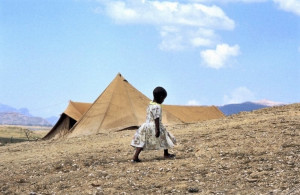
    N0027571 Life in Eritrea, North Africa, refugee ca

    Image credit: Wellcome Images/Flickr.

    After signing the agreement of cessation of hostility in Algiers, in December 2000, the parties directed their attention to conducting proxy wars. Both governments were actively involved in support of opposition to each other’s government in the hope of weakening or even deposing. In addition, they intervened in neighbouring countries. Somalia became the obvious victim of the proxy war between Ethiopia and Eritrea. While Eritrea ended up supporting Union of Islamic Court (UIC), Ethiopia sided with warlords and the Transitional Federal Government (TFG). Finally, Ethiopia invaded Somalia in December 2006 and vanquished the UIC. This contributed to the emergence of al-Shabaab , a radical Islamic extremist group operating in Southern Somalia.

    Proxy war has become a rule rather than exception in the Horn of Africa. What has also become a rule is the international community (IC), mostly driven by geostrategic interest of the big powers, punishing and rewarding regional actors participating in wars highly selectively. Many scholars have purported that the Ethiopia-Eritrea conflict is the epicentre of conflicts in the Horn of Africa. This means settling the Ethiopia-Eritrea conflict would go a a long way in helping the larger endeavour to settle all the intricate conflicts in the region. In this respect, it will be in the interests, as well as part of the moral, political and legal obligation, of the IC to address the conflict. There is an obligation the IC to be even-handed, objective, neutral and balanced in treating its members. The reality is, however, that the IC practices double standards and its dealing with Ethiopia and Eritrea is a vivid testimony to this double standard.

    Eritrea was accused of supporting al-Shabaab and destabilising the region. But most of the evidence for Eritrea’s involvement ironically originates from Ethiopia. For the last five years, the Somalia-Eritrea Monitoring Group (SEMG), established to check that the sanctions are not violated, has not found any evidence that Eritrea is supporting al-Shabaab, yet the sanctions have not been lifted. As stated, Eritrea supports Ethiopian opposition groups as Ethiopia supports Eritrean opposition groups. Eritrea supported UIC when Ethiopia invaded Somalia. Ethiopia frequently attacks targets inside Eritrea; it openly threatens to depose the Eritrean government, which is against international law. Eritrea violates human rights as does Ethiopia. However, it is only Eritrea that is under UNSC sanctions and being subjected to isolation from the international community. Ethiopia is considered an indispensable ally of the US global war on terror, therefore it is excused of whatever misdeeds. This is a double standard that damages the credibility and integrity of IC, particularly the UN.

    Conclusion

    The no-war no-peace situation created a serious sense of insecurity, tension and instability in Eritrea. This in turn necessitated the implementation of indefinite national service in order to not only to defend the country from Ethiopian invasion, but also to ensure the economic and social survival of the nation. Tying the able-bodied Eritreans to national service deprives the economy of vital labour force. This curtails development. The conflict with Ethiopia triggered a chain of causal factors affecting the refugee crisis: constant fear of war, indefinite national service, economic stagnation, political hardship, and hopelessness compelling people to flee the country. It is understandable that few would wish to live under such circumstances.

    If the international community had honored its responsibility and upheld the implementation of the International Court of Arbitration per its commitment in 2002, the chain of causal factors producing the exodus might have been avoided. By now the relationship between the two countries could have been pacified. It would also meant that the actual international pressure on the Eritrean government would have also been effective, morally defensive and legitimate as opposed to hypocritical. The failure of the international community to put pressure on Ethiopia to implement and uphold the final and binding border verdict affects not only Eritrea, but also the region as a whole and, as the recent development demonstrate, Ethiopia. For Eritreans the current behaviour of the IC is déjà vu, and brings back the ghost they have been trying exoricse for the last seventy years.

    Redie Bereketeab is Senior Researcher and Associate Professor at the Nordic Africa Institute.

  • WEF examines the Risks of Global Marginalisation

    A new report from the World Economic Forum highlights the increasing importance of marginalisation as a security issue over the coming decades. The seventh edition of the WEF’s Global Risks report describes what they see as the ‘seeds of dystopia’ threatening both social and political stability across the world.

    The report describes dystopia as “the opposite of a utopia, describes a place where life is full of hardship and devoid of hope.” The reality is that after years of unequal growth and a growing divide between elites and non-elites both between and within countries, this description has become a reality for the majority of the world’s population. It would seem that the neoliberal economic consensus which has dominated the WEF’s own discussions for years has finally caught up with the long-term consequences of a global free market unable to effectively price externalities be they social, environmental or even strategic.

    The report’s analysis of the interconnections between a number of risks reveals “a constellation of fiscal, demographic and societal risks signalling a dystopian future for much of humanity.”

    Yet this is not just a problem for the developing world which the West can view from afar. The report warns that the states that could make up this dystopian future could be “developed economies where citizens lament the loss of social entitlements, emerging economies that fail to provide opportunities for their young population or to redress rising inequalities, or least-developed economies where wealth and social gains are declining.”

    The report is part of a growing awareness of the linkages between seemingly unrelated events and flashpoints such as the Arab Awakening, the “Occupy” movements worldwide and civil unrest in countries from Thailand to Chile, to Israel to India. The link according to a report is a common and “growing frustration among citizens with the political and economic establishment, and the rapid public mobilization enabled by greater technological connectivity.” The importance of this is that what appear to be simply isolated national problems may in fact be the symptoms of a much larger global trend (or more accurately a series of interlinking trends). This means that ad-hoc national approaches are insufficient for genuinely addressing the challenges of a marginalised majority world, as the WEF report puts it, “A macro and longer-term interpretation of these events highlights the need to improve the management of global economic and demographic transformations that stand to increasingly define global social trends in the decade to come.”

    Perhaps the most worrying finding of the report is that “As the world grows increasingly complex and interdependent, the capacity to manage the systems that underpin our prosperity and safety is diminishing.” As the tagline of this website says, we need global responses to global threats. 

    The full report can be read here. 


    Image source: ectopic (ibandera). 

  • Afghanistan

    At the beginning of February, ISAF sources announced that a major military offensive was about to be mounted in Helmand Province in southern Afghanistan. This was Operation Moshtarak (“together”), involving 15,000 US, British and Afghan National Army troops, and would concentrate on clearing Taliban and other paramilitary groups from two areas, one of them centred on the town of Marja. The publicity given to the operation appeared designed partly to encourage civilians to evacuate areas under Taliban influence, but would also serve to highlight the capabilities of coalition forces at a time when support for the war in the United States and Britain was fragile.

    Given the size of the operation, it is likely that it will provide a major focus for western media attention for some weeks, but to get a full measure of its significance requires seeing it in the wider context of the conflicts in Iraq and Pakistan, and of the Status of the al-Qaida Movement. There have, in particular, been significant developments in both Iraq and Pakistan, with each likely to have an impact on what is now happening in Afghanistan.

    Photo courtesy of Helmandblog.

    Read more »

  • Sustainable Security

    This article was originally published on openSecurity’s monthly Sustainable Security column on 18 May 2015. Every month, a rotating network of experts from Oxford Research Group’s Sustainable Security programme explore pertinent issues of global and regional insecurity.

    The truce declared in 2012 may have been imperfect and controversial but positive lessons must be learned amid the country’s current crisis of violence.

    Violence is escalating again in El Salvador. March 2015 was the most violent month in over a decade, and the government is preparing army and police battalions to fight the gangs. These trends mark the definitive end of a process which started in 2012 with a truce between the two main gangs—MS-13 and Barrio 18—and evolved into a more complex and multidimensional approach to reducing violence, with a degree of international support.

    The process was complicated, imperfect and subject to public controversy but it stands as one of the most significant examples worldwide of an effort to reduce violence through negotiation with criminal groups. With an annual homicide rate of 60 murders per 100,000 inhabitants, El Salvador is one of the most violent countries in the world. It is also a notable example of the trend towards non-conventional, hybrid and criminal violence.
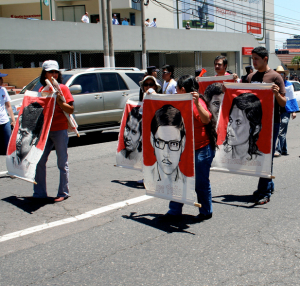
    faces_of_those_disappeared_during_civil_war_el_salvador

    On a march organised by the FMLN, people carry pictures of the faces of those disappeared during El Salvador’s civil war. Source: Flickr | Laura

    A peace agreement reached in 1992 put an end to civil war and initiated a peacebuilding process, which saw rebels of the leftist Farabundo Martí National Liberation Front (FMLN) make a successful transition to civilian and political life. The FMLN finally won the presidency by a tiny margin in 2009, and by an even smaller sliver in 2014, overturning 20 years of rule by the right-wing Nationalist Republican Alliance (ARENA).

    Meanwhile, a complex set of factors triggered a transformation of violence, which became criminal and perpetrated by illegal armed groups, most notably the gangs (maras). A profound crisis of public security has since shaken the country, as well as neighbours Honduras and Guatemala. Successive governments have responded with ‘iron-fist’ approaches focused on crime suppression and militarisation of security. These policies, although of limited effectiveness, have helped to cement the electoral support of a population angered and traumatised by decades of violence.

    Surprise news

    In March 2012 the country was taken by surprise by news of a truce between Barrio 18 and MS-13, facilitated by two mediators (a former insurgent and government advisor, and a Catholic bishop) and tacitly supported by the government of the FMLN president, Mauricio Funes. Imprisoned gang leaders were transferred from a maximum-security prison to other jails in exchange for a reduction in violence. The gangs agreed to end forced recruitment of children and young people, respect schools and buses as zones of peace and reduce attacks on the security forces.

    In the succeeding months, the gangs surrendered limited amounts of weapons and the government acted to address shortcomings in the overcrowded prison system, such as softening visitor searches and removing the army from the task. For the first time since the war, the International Committee of the Red Cross (ICRC) was invited to contribute and in October 2012 it established a special mission to monitor human rights in prison. The drop in homicides was immediate—from 14 per day to five.
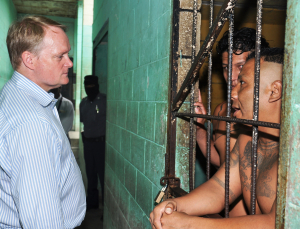
    canadian_oas_visit_to quezaltepeque_prison_el_salvador

    Organization of American States (OAS) visit to a prison in Quezaltepeque, 2012. Source: Flickr | Arena Ortega

    The gangs’ leaderships and the mediators were discussing a list of issues to be included in an enlarged process with a wider pacification agenda. Their Proposal for a Framework Agreement for the Recovery of Social Peace in El Salvador included reform of the prison system, a public-private body with gang participation to oversee rehabilitation and reinsertion, derogation of the anti-gang law and removal of the army from public-security duties. Notably absent was any demand for amnesty or reduction of prison sentences. The proposals included suspension of all acts of violence, voluntary surrender to security forces, decommissioning of weapons and explosives, and an end to forced disappearances.

    As more details emerged, however, public opinion about the truce became increasingly polarised. The main opposition came from conservative sectors, parts of the legal establishment and law enforcement, and the media. Contributing to scepticism were unabated extortion and other violent crimes, such as ‘disappearances’—allied to concern about the potential empowerment and legitimisation of criminal structures and a widely-held perception that violence was being rewarded.

    But a second school of thought saw the truce as a way to reduce violence and reintegrate gang members. This vision was shared by segments of civil society and the Organization of American States, which became an observer and guarantor of the process. A formal agreement with the government resulted in the creation of a Technical Committee for the Co-ordination of the Process of Violence Reduction in El Salvador.

    Nevertheless, the government remained equivocal. Funes and other members refused to admit any participation and delivered contradictory statements, which fed distrust and confusion. But the sustained impact on violence and better understanding of the process gradually legitimised it and allowed the government to acknowledge involvement.

    The government’s ambivalence can be contextualised. This was the first FMLN administration and conservatives controlled the National Assembly. The United States prohibits negotiations between a government and a criminal organisation and in November 2012 it so labelled the MS-13. The US is El Salvador’s main trading partner and co-operation in trade and security has resulted in US support and military and police aid from programmes such as the Central America Regional Security Initiative. In what has been described as the performance of “a trapeze artist”, the FMLN has thus tried to develop progressive policies while not antagonising the US, foreign capital and the Salvadoran establishment (in control of the media).

    Transfer of gang leaders

    The truce was supported by the minister of justice and public security, David Munguía, a retired general and former minister of defence. Although his appointment in 2011 (and the removal of FMLN members from those positions) was largely interpreted as a move towards remilitarisation, he surprised his critics by encouraging the first steps of the truce—authorising the transfer of gang leaders to other jails. According to the analyst of Salvadoran politics Paolo Lubers, he and other generals took the initiative after improved intelligence co-ordination convinced them that most violence was gang-driven.

    Opposition came, however, from the Office of the Prosecutor and, later, sections of the police. They alleged that the truce was an opportunity for the gangs to reorganise, and that the drop in homicides was driving other crimes such as ‘disappearances’ and extortion. Some of this was a legacy of the peace accords, which disbanded the old security forces, established the National Civil Police (PNC) and reined in the armed forces.

    The PNC comprised civilians, demobilised guerrilla fighters and vetted members of the prior security forces—whose most authoritarian members, however, were able to secure the most prominent positions in the new service, particularly during the two decades of ARENA governments. The police force is thus politicised and plagued by poor performance, corruption and authoritarian practices. Meanwhile, the Office of the Attorney-General (as with Supreme Court judges) is marked by political appointments by the Legislative Assembly, which have benefited ARENA hitherto.

    More complex

    In 2013, the process entered a more complex second phase, centred on the creation of violence-free municipalities. These ‘peace zones’ were based on agreement among local authorities, gangs and facilitators, with groups committing to cease violence and crime in exchange for a reduction in police operations and raids and reinsertion programmes. The first four municipalities, presented in January 2013, were soon extended to 11, with a combined population of more than 1m (out of 6m in all in El Salvador) and support from the OAS and the European Commission.

    Mayors from both main parties, the FMLN and ARENA, participated in the initiative. Again, an ambivalent government promised, but then failed to deliver, grants and loans for prevention and rehabilitation. In Ilopango, the first peace zone, reduced violence presented an opportunity for the creation of a bakery and a chicken farm to generate employment, and the local government set up education centres and sports fields in marginalised neighbourhoods. But the mayor complained that the municipality had not received any of the $9 million promised by the government. Other cities were also left to their own devices.

    In May 2013, the process suffered a major blow: the Constitutional Court nullified the appointment of Munguía as minister of justice and public security and forced Funes to restructure the security cabinet. The new minister, Ricardo Perdomo, proved a sharp critic of the truce. Amidst a polarised debate leading up to the February 2014 presidential election, his hard-line discourse and the restrictions placed on the mediation mechanisms weakened the process. The downward trend in murder rates began to reverse, amid a turf war between two factions of Barrio 18.

    Support discontinued

    At the beginning of 2015, the new president, the former rebel Salvador Sánchez Ceren, said he would discontinue support for the truce. Leaders of the gangs were returned to the maximum security prison of Zacatecoluca.

    In March 2015 481 homicides were reported by the PNC (16 per day), a 52% increase on a year earlier. There were six massacres and on average 4.5 persons ‘disappeared’ each day.

    A recent report however suggests that the truce has had a lasting effect on the geographical distribution of violence. Murder figures remain lower than average in regions where the truce was strong and coalitions of local actors (such as mayors, churches and NGOs) took advantage of the opportunity to promote new policies. The trend is even more striking in the ‘peace zones’: in seven the drop in murders has been sustained in spite of the setbacks.

    But in other areas violence is soaring and tough positions are gaining a foothold. Sánchez Ceren has announced the creation of three battalions, with more than 1,200 troops, to fight crime in areas most affected by violence. And the rightist business association ANEP has hired the former New York mayor Rudolph Giuliani as an adviser.

    Particular problems

    This truce can be counted among so-called second-generation security promotion activities, which depart from conventional top-down approaches and are forged on “formal and informal cooperation with existing (including customary) sub-national institutions”. But making peace with criminal (as against political) actors poses particular problems.

    As James Cockayne put it, these cases are fraught with moral and political hazards, and there are critical questions. What is the desired end-state of negotiation? Is it a reduction of violence, a reduction of all criminal activities or dissolution of the illegal actor? The response to these questions will largely determine the contours of any negotiation in El Salvador and elsewhere.

    Despite its flaws and shortcomings, the experience can however provide invaluable lessons. Apart from a drastic reduction in homicides, it contributed to a recognition of the social contours of the gang phenomenon and opened discussions at national and international levels about prevention, reintegration and rehabilitation.

    The truce also demonstrated that a vast proportion of the violence afflicting the country was due to inter-gang confrontation. It revealed gang leaderships with a capacity for command-and-control and a sophisticated understanding of their role in society. Their ability to articulate demands surprised many, and to some extent changed conventional thinking.

    But exploitation of public security in electoral politics tends to favour hard-line approaches. As criticism and polarisation grew to politically untenable levels, the government adopted contradictory statements and policies and later distanced itself from the process. An overall lack of planning and co-ordination hampered effectiveness—not least because the civil-society actors with more experience in working with gangs and communities were not involved.

    Fear that the gangs might use the truce to rearm and reorganise, and anger towards perceived preferential treatment, is common in countries in transition from war to peace and with schemes of disarmament, demobilisation and reintegration (DDR) of former combatants. The accumulated experience of the global peacebuilding community can provide useful insights, including the adoption of community-based approaches to reintegration. Similarly, adaptation and use of mechanisms of transitional justice can help find a balance between security, justice and reconciliation.

    The truce in El Salvador has been a lost opportunity to take advantage of reduced violence to strengthen the institutional presence in communities affected by gangs and implement comprehensive approaches to prevention, reintegration and reconciliation. Any future attempt will need stronger political commitment, a long-term strategy and engagement with civil society and public opinion. Given the scope of the problem and an estimated gang membership in the tens of thousands, socio-economic programmes and opportunities are also imperative for sustainability. But, for the time being, the horses of war are riding again.

    Mabel González Bustelo (@MabelBustelo) is a journalist, researcher and international consultant specialising in international peace and security. She is author of Narcotráfico y crimen organizado: ¿Hay alternativas? (Narco-trafficking and Organized Crime: Are There Alternatives?), Icaria, Barcelona, 2014.

    Featured image: Salvadoran police officers. Source: Flickr | Paulien Osse