Blog

  • Global militarisation

    On the anniversary of Barack Obama’s inauguration as United States president, the al-Qaida movement invites the respected SWISH management consultancy to assess its prospects.

    Read more »

  • Iran

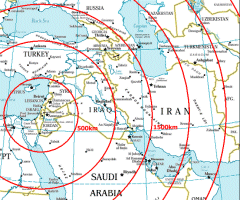
    Excerpt: Most of the international attention on Iran in the second half of 2009 focused on the political turmoil following the presidential election of 12 June. The discussion of Iran’s nuclear capabilities and plans receded from the foreground, though it continued behind the scenes among all the states and international agencies involved. The signs are that, whatever the outcome of the domestic confrontation between the Mahmoud Ahmadinejad regime and the opposition, the coming months will see a sharpening of tension over the nuclear issue. This raises the question of whether there will be a military assault on Iran’s nuclear facilities – most likely by Israel, since there is little likelihood that the Barack Obama administration would countenance direct United States military action against Iran – in an attempt to stop the country from acquiring a nuclear weapon.

    Image: Globalsecurity.org

    Read more »

  • Sustainable Security

    Losing control over the use of force: fully autonomous weapons systems and the international movement to ban them

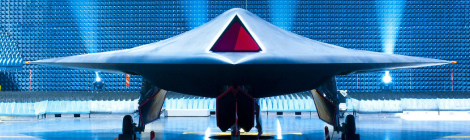
    Later this month, governments will meet in Geneva to discuss lethal autonomous weapons systems. Previous talks – and growing pressure from civil society – have not yet galvanised governments into action. Meanwhile the development of these so-called “killer robots” is already being considered in military roadmaps. Their prohibition is therefore an increasingly urgent task.

    Read Article →

  • Sustainable Security

    Mexico’s Conflicting Migration Policy Goals: National Security and Human Rights

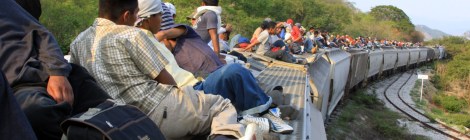
    Mexico has rapidly become a major site of transmigration from Central America to the United States, as people move in search of employment opportunities or escape from social violence. This rise in migrant flows from Mexico’s southern border overlaps with problems of control of contraband, organised crime, and the trafficking of drugs and arms. However, the government’s militarised approach to the phenomenon means that the use of force and human rights violations go unresolved and military approaches to preserving public order go unchecked. As long as migration remains a security issue, instead of a developmental and human rights matter, it will not be tackled appropriately. Instead, the government must start to view the matter through a citizen, not national, security lens.

    Read Article →

  • Sustainable Security

    Mexico’s Conflicting Migration Policy Goals: National Security and Human Rights

    Mexico has rapidly become a major site of transmigration from Central America to the United States, as people move in search of employment opportunities or escape from social violence. This rise in migrant flows from Mexico’s southern border overlaps with problems of control of contraband, organised crime, and the trafficking of drugs and arms. However, the government’s militarised approach to the phenomenon means that the use of force and human rights violations go unresolved and military approaches to preserving public order go unchecked. As long as migration remains a security issue, instead of a developmental and human rights matter, it will not be tackled appropriately. Instead, the government must start to view the matter through a citizen, not national, security lens.

    Read Article →

  • Sustainable Security

    The Anthropocene denotes the current geological age, in which human activity has had a significant impact on climate and the environment. The pressing issue of this epoch is whether the global consequences of these interactions between humans and the environment can be governed on a global scale.

    The 1972 report to the Club of Rome on “The Limits to Growth” demonstrated the natural boundaries to human expansion which began in the Holocene era, following the end of the last glacial period around 12,000 years ago. The continued growth of human activities since the industrial revolution has become a driving force of reshaping the face of the planet into a new geological epoch, the “Anthropocene”, associated with multiple global consequences such as climate change, land degradation, resource scarcity and biodiversity loss. The Anthropocene is seen as a new geologic epoch in which humankind has emerged as a globally significant force capable of reshaping the face of the planet. The underlying human-environment interactions raise fundamental questions for global governance: Can nature be controlled and shaped on a global scale? Are human interventions a disturbing or regulating global force, avoiding or creating disasters? What are the limits of human expansion in the Anthropocene?

    Human growth and complex crises

    climate-ice

    Image by klem@s via Flickr.

    In the course of its history, the human population has been growing by increasing birth rates and lowering death rates, leading to the expansion of the human sphere in terms of capital, investments, income, technology, energy and resource flows, political power and violent forces of destruction. Despite Malthusian concerns about population growth causing scarcity of natural resources, intolerable pollution, mass starvation and other catastrophes, humans were able to overcome resource constraints and expand into new spaces through problem-solving capabilities, technical and social innovations that generated more wealth on a shrinking natural resource base. Continued pressure on natural resources and ecosystems challenge planetary boundaries in the Anthropocene, raising the question of whether a balance will be established by increased death rates or the reduction of birth rates. While the first pathway implies crisis, disaster and death, the second path may be associated with a sustainability transformation in demographic, economic and societal conditions within natural boundaries.

    These pathways are part of the “complexity turn” in the Anthropocene which is characterized by globalized networks among people, markets and institutions, accelerated processes and flows in transportation and communication, and manifold micro-macro interactions between natural and social systems. While complex systems are often robust against disturbances in the core region of stability, on the edge of critical thresholds between stability and instability, small variations and uncertainties can make a big difference and decide whether systems break down or create new ones, as symbolized by the famous “butterfly effect” in chaos theory.

    Beyond thresholds and tipping points chain reactions and risk cascades may be triggered which propagate in space and time and induce qualitative system changes. These include complex events such as natural disasters, stock market crashes, revolutions, mass exodus or violent conflicts. A world of ever growing complexity where responsibilities and solutions of crises are hidden behind smokescreens, may provoke over-simplifications, religious, populist and nationalist fundamentalisms, rhetoric against science and intellectuals, or resistance against globalized structures.

    With the chaotic breakdown of the East-West conflict in 1989, actions of individuals and groups triggered a chain reaction that within weeks led to the fall of the Berlin Wall and the breakup of the Eastern Block. A new world (dis-)order emerged in which multiple crises interacted in fractal and fragile international landscapes that continue to be unstable and full of surprises (see van Creveld 1991, Kaldor 1998, Münkler 2005, Scheffran 2008). Numerous factors and actors are interrelated, involving national, subnational and transnational actors in complex networks, crises and conflicts. Tight couplings lead to cascading crises that spiral out of control, including September 11, global economic crises, the Arab Spring, the wars in Iraq, Afghanistan, Libya and Syria, the civil war in Ukraine, the Greek debt crisis, the European refugee crisis and terror attacks in many countries. These events are interconnected through multiple channels that are often invisible.

    Climate change as a risk multiplier

    In this complex chain of crises, environmental change is connected with other problem areas through multiple linkages from local to global levels. More tipping points may emerge in the nexus of environmental degradation, climate change, poverty, and hunger which affect the living conditions in many parts of the world and could turn into severe security threats. Climate change is considered a risk multiplier, which disturbs the balance between natural and social systems and amplifies the consequences through complex impact chains. Among key pathways, climate change can affect the functioning of critical infrastructures and supply networks; intensify the nexus of water, energy and food; lead to production losses, price increases and financial crises in other regions through global markets; undermine human security, social living conditions and political stability; and induce or aggravate migration movements and conflict situations.

    In the most affected regions the erosion of social order and state failure may trigger a spiral of corruption, crime and violence. Particularly critical is the situation in fragile and failing states with social fragmentation, weak governance structures and inadequate management capacities. Human insecurity and personal instability interacts with social and political instability. The impact of environmental change could undermine the ability to solve problems and further dissolve state structures, possibly leading to their collapse.

    The Darfur conflict in Sudan has served as a prominent case where climate change is suggested as a threat multiplier in the complex nexus of population pressure, exploitation of land and forests, declining agricultural productivity, food insecurity, and the spread of diseases. While in some studies drought and desertification exacerbate the competition for resources between herders and sedentary farmers, others point to the long-term political roots of instability and violent conflicts, reinforced by national power games, regional struggles and global geopolitics that marginalized the Darfur region and fueled a spiral of violence.

    Similarly, several authors found devastating droughts in the years before the Syrian rebellion that hit the main growing areas of the country and forced many people to move to the cities. These changes combined with many other conflict drivers rooted in the country’s economic, social and demographic conditions, political failures of the Assad regime as well as the events following the US invasion of 2003, the Arab Spring of 2011 and the emergence of the Islamic State which question the role of climate change as a dominant factor.

    Limits to the Anthropocene

    In this complex nexus of overlapping crises and interconnected problem areas, the world may continue on a slippery slope of escalation, running full speed into natural boundaries and their forces. The challenge is to anticipate and avoid risky pathways by counteracting forces that slow down and change course towards a more sustainable, peaceful and viable world which avoids dangerous pathways and interventions (such as risky climate engineering),  allowing for a timely and self-organized system transformation that takes the limits of the Anthropocene into consideration. These include finite natural resources and limits to growth; ethical, social, political and legal constraints; limits of scientific knowledge and uncertainty. In an increasingly interconnected world, stabilization of human–environment interactions under conditions of climate change needs an integrative and interdisciplinary understanding of human–environment interaction to assess destabilizing developments that threaten survival and adapt to changing circumstances to ensure their viability.

    Social systems are not determined to aggravate crises situations but also have the ability to cope with problems like climate change and develop alternative pathways. To succeed, human responses and actions need to be timely and adequate compared to the speed, intensity and complexity of change. Concepts of anticipative and adaptive governance are needed to influence critical decision points and adjust actions along multiple causal chains to protect human security, strengthen societal resilience and sustainable livelihoods, and to develop collective adaptive strategies driving the planet through the complex and foggy landscapes of the future where information is limited and uncertain, but continuously updated. A lack of agreement on the underlying causes, on the risks to be expected and on the actions required is impeding progress.

    Governing transformations to sustainable peace

    Concepts of resilience, security, viability and sustainable peace can strengthen people’s social and economic capabilities in their effective, creative and collective efforts to handle the challenges of the Anthropocene. In a resilient social environment, actors are able to cope with and withstand the disturbances caused by climate change in a dynamic way that will enable them to preserve, rebuild, or transform their livelihood.

    Sustainable development seeks to balance economic, social and ecological issues for present and future generations and integrate the human sphere (socio-sphere) into the boundaries of the natural environment (eco-sphere), making conflicting objectives compatible:

    1. Sustain refers to preservation and upholding of natural resources as the life-enabling base of society and precondition for human existence.
    2. Development means the unfolding of opportunities and abilities to improve human well-being and promote societal progress.

    Peace rests on similar principles regarding the existence and development of human rights:

    1. Preservation and protection of the existence, integrity and identity of each individual by excluding violence.
    2. Self-fulfillment and unfolding of the individual through equal distribution of development opportunities.

    Thus, upholding and unfolding of humans and nature are common principles of sustainable peace, which addresses both the negative interactions between armed conflict, environmental destruction and low levels of development (vicious cycle) as well as positive linkages between human development, environmental protection and peace-building (virtuous cycle).

    In addition to preservation and development (upholding and unfolding), a third task includes the shaping of a viable world, aiming for its “conformation” to fit the current state into  a  proper  shape,  form  or  design,  creating a balanced relationship between the real and the desired world, between human society and nature. In the triangular relationship between sustainability, development and peace, upholding current abilities serves as a basis for unfolding enabling opportunities to facilitate the conformation of human–environment interaction pathways towards a viable world. This approach is compatible with the multi-level-perspective of socio-technical transformations that describe micro-macro transitions between regimes, niches and landscapes.

    Key viability strategies, supporting a “new climate for peace”, include climate mitigation and adaptation; the building of networks, the cultivation of diversity, flexibility and justice; migrant networks that facilitate the exchange of knowledge, income and other resources; new capabilities to manage disasters; arms control, non-proliferation and disarmament; regional security concepts, crisis prevention, conflict resolution and confidence-building; as well as innovative institutional frameworks and legal mechanisms.

    The 2015 Paris Agreement offers a first framework of opportunities through setting boundaries of global warming and national commitments of emission reductions as well as instruments for financial and technology transfer between industrial and developing countries. While the scope and effectiveness of these measures may not yet be sufficient to prevent dangerous climate change, they could lay the foundations and attract political support from local to global levels for a sustainable and peaceful transformation towards governing the Anthropocene.

    Further readings by the author

    Brauch, H.G., Scheffran, J. (2012) Climate Change, Human Security, and Violent Conflict in the Anthropocene. In: J. Scheffran, M. Brzoska, H.G. Brauch, P. M. Link, J. Schilling (Eds.) Climate Change, Human Security and Violent Conflict, Springer, 3-40.

    Lüthje, C., Schäfer, M., Scheffran, J. (2011) Limits to the Anthropocene. What are the challenges and boundaries of science for the post-normal age? Geophysical Research Abstracts, 13, EGU2011-11795.

    Maas, A., Scheffran, J. (2012) Climate Conflicts 2.0? Climate Engineering as Challenge for International Peace and Security, Special Issue, Security and Peace, 30(4): 193-200.

    Scheffran, J. (2008) The complexity of security. Complexity 14(1): 13-21.

    Scheffran, J., Brzoska, M., Kominek, J., Link, P.M., Schilling, J. (2012) Disentangling the Climate-conflict Nexus: Empirical and Theoretical Assessment of Vulnerabilities and Pathways, Review of European Studies, 4(5): 1-13.

    Scheffran, J., Ide, T., Schilling, J. (2014) Violent climate or climate of violence? Concepts and relations with focus on Kenya and Sudan, The International Journal of Human Rights, 18 (3): 369-390.

    Scheffran, J. (2015) Complexity and Stability in Human-Environment Interaction: The Transformation from Climate Risk Cascades to Viable Adaptive Networks. In: Kavalski (ed.), World Politics at the Edge of Chaos, 229-252.

    Scheffran, J. (2016a): Der Vertrag von Paris: Klima am Wendepunkt?, WeltTrends, Nr. 112, 24(2): 4-9.

    Scheffran J. (2016b) From a Climate of Complexity to Sustainable Peace: Viability Transformations and Adaptive Governance in the Anthropocene, in: Brauch et al. (ed.) Handbook on Sustainability Transition and Sustainable Peace, Springer, 305-346.

    Jürgen Scheffran is professor in the Institute of Geography at the University of Hamburg and head of the Research Group Climate Change and Security (CLISEC) which is part of the Excellence Cluster Integrated Climate System Analysis and Prediction (CliSAP) and the Center for Earth System Research and Sustainability (CEN). After his PhD at Marburg University he worked in interdisciplinary research and teaching at Technical University Darmstadt, Potsdam Institute for Climate Impact Research, and the University of Illinois. His fields of interest include: climate change, resource conflicts and human migration; energy security and water-energy-food nexus; land use, rural-urban interactions and river-coastal regions under sea-level change; governance in the Anthropocene (mitigation, adaptation, climate engineering, sustainability transition); technology assessment, arms control and international security; mixed methods in complex systems research (agent-based modelling, social network analysis, field research). He was a Visiting Professor at the University of Paris (Sorbonne), consultant to the United Nations, the Technology Assessment Office of the German Parliament, the Federal Environmental Agency, and the German delegation to the climate negotiations.
  • Sustainable Security

    Drugs and Drones: The Crime Empire Strikes Back

    Ever advancing remote warfare technology is being increasingly used by law enforcement agencies to counter drug trafficking. In response, drug cartels are also adopting new technology to smuggle and distribute drugs. However, the technological superiority of law enforcement-military actors is also causing criminal and militant groups to adapt by employing the very opposite tactic, by resorting to highly primitive technology and methods. In turn, society is doing the same thing, adopting its own back-to-the-past response to drug trafficking and crime.

    Read Article →

    From Surveillance to Smuggling: Drones in the War on Drugs

    In Latin America drones are being used as part of the War on Drugs as both regional governments and the US are using surveillance drones to monitor drug trafficking and find smuggling routes.. However, as drones are increasingly being used by drug cartels themselves to transport drugs between countries, could Latin America find itself at the forefront of emerging drone countermeasures?

    Read Article →

    Losing control over the use of force: fully autonomous weapons systems and the international movement to ban them

    Later this month, governments will meet in Geneva to discuss lethal autonomous weapons systems. Previous talks – and growing pressure from civil society – have not yet galvanised governments into action. Meanwhile the development of these so-called “killer robots” is already being considered in military roadmaps. Their prohibition is therefore an increasingly urgent task.

    Read Article →

    Too Quiet on the Western Front? The Sahel-Sahara between Arab Spring and Black Spring

    While the world’s attention has been focused on the US-led military interventions in Iraq and Syria a quieter build-up of military assets has been ongoing along the newer, western front of the War on Terror as the security crises in Libya and northeast Nigeria escalate and the conflict in northern Mali proves to be far from over. In the face of revolutionary change in Burkina Faso, the efforts of outsiders to enforce an authoritarian and exclusionary status quo across the Sahel-Sahara look increasingly fragile and misdirected.

    Read Article →

    Drone-tocracy? Mapping the proliferation of unmanned systems

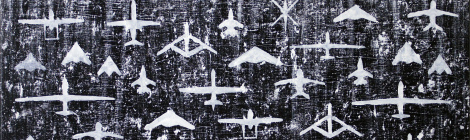
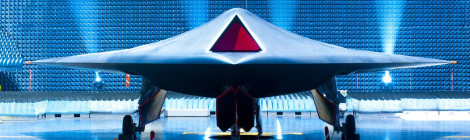
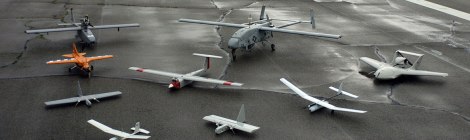
    While the US and its allies have had a monopoly on drone technology until recently, the uptake of military and civilian drones by a much wider range of state and non-state actors shows that this playing field is quickly levelling. Current international agreements on arms control and use lack efficacy in responding to the legal, ethical, strategic and political problems with military drone proliferation. The huge expansion of this technology must push the international community to adopt strong norms on the use of drones on the battlefield.

    Read Article →

  • Sustainable Security

  • Sustainable Security

    One year on from the French intervention in Mali, Saharan jihadist groups continue to threaten not only Mali but Algeria, Libya, Niger, Nigeria and Tunisia. Will French and US plans to expand their military presence in the Sahel combat, contain or exacerbate the threat from militants displaced from Mali?

    Fragmentation, Displacement and Reconsolidation:  The AQIM Threat in 2014

    French General Pillet, Chief of Staff of the MINUSMA Kidal, during the visit of the Joint Security Committee in charge of the observance of the cease-fire between the Malian army and armed groups from the north. Source: MINUSMA (Flickr)

    French General Pillet, Chief of Staff of MINUSMA, Kidal, during the visit of the Joint Security Committee in charge of the observance of the cease-fire between the Malian army and armed groups from the north. Source: MINUSMA (Flickr)

    Last January, the French military, supported by African troops and 10 non-African air forces, intervened militarily in Mali at the request of its transitional government. Over the following four weeks they recaptured all of the towns in the northern half of Mali. This vast desert region had been seized by Islamist and separatist militia in March-April 2012 and declared independent as the ‘State of Azawad’, the Tuareg name for their homeland in northeast Mali. Since then, French troops have continued to conduct security operations across northern Mali to locate and ‘neutralise’ militants associated with Al-Qaida in the Islamic Maghreb (AQIM), a jihadist group of Algerian origin, and its West African splinter groups. Reduced numbers of French forces now support Malian and African forces within the United Nations Multidimensional Integrated Stabilization Mission in Mali (MINUSMA).                                                                                                                                                                                                                                                                                                                                                                                                                                                                                                                                                                                                                                                                                             However, the final quarter of 2013 saw an increase in violence in northern Mali, including terrorist attacks, violent protests and inter-communal violence. Moreover, the French advance into northern Mali displaced rather than destroyed AQIM and its two local allies, the Movement for Unity and Jihad in West Africa (MUJAO) and Ansar Dine, a Tuareg Islamist group. Their impact has been particularly felt in Niger and Libya and may also have bolstered jihadist groups operating in northern Nigeria, Tunisia and Egypt’s Sinai. The lawless desert of southwest Libya is believed to be the new stronghold of AQIM.

    A new group, al-Murabitun, combining MUJAO and the most active elements of AQIM’s Saharan front, now appears to pose more of a threat to western and West African interests than AQIM. This is because its strategic direction is towards the weak states of West Africa, including Niger, Mali and Mauritania, where critical infrastructure and individuals are more difficult to protect. It is also better connected to the kidnapping and trafficking enterprises that fund Saharan militancy, and more deadly. During 2013, its militants were behind frequent raids on Gao (northern Mali’s main town), on a prison, garrison and French-owned mine in Niger, and on the Algerian gas plant at In-Amenas. These audacious operations attest to its range, training, discipline and cosmopolitan membership. If it finds common purpose with the larger jihadist groups in northern Niger, as some analysts suggest, it could represent a severe threat to stability in the already shaky regional power.

    French Repositioning in the Sahel

    In recognition of the expansion of jihadist groups, France announced a major repositioning of its forces in Africa in January. The new French military posture will refocus from large coastal bases, designed to train, transport and supply African Union and regional rapid reaction forces, to smaller forward deployments in the Sahel and Sahara. 3,000 French troops will now be based indefinitely in Mali, Niger and Chad.

    U.S. soldiers and French commandos marine conduct a reconnaissance patrol during a joint-combined exercise in Djibouti. Source: Wikipedia

    U.S. soldiers and French commandos marine conduct a reconnaissance patrol during a joint-combined exercise in Djibouti. Source: Wikipedia

    The new posture is heavily influenced by US ‘War on Terror’ strategy in Africa, Yemen and south-west Asia, relying heavily on Special Forces, air strike capacities and unmanned aerial vehicles (UAVs). French and US forces (including contractors) already share facilities in Djibouti, Niger, Burkina Faso and Mauritania, and there is a small US liaison detachment with the French Combined Air Operations Centre in Chad. The French repositioning is explicit about confronting Islamist terrorist groups and the threat to regional security posed by the security vacuum in southern Libya. While the repositioning focuses on Mali, Niger and Chad, supplied via a coastal base in Côte d’Ivoire, it will actually include deployments to over a dozen small bases and elite detachments in the Sahel and Sahara, covering at least seven countries. In some cases it will mean French Special Forces reoccupying desert forts long abandoned by the Foreign Legion.

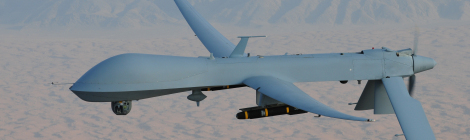
    There will also be greater use of aerial reconnaissance and targeting. French Navy patrol aircraft already criss-cross the Sahara and two MQ-9 Reaper UAVs arrived with French forces at Niamey airport in December after the US fast-tracked French acquisition of and training on these ‘hunter-killer’ drones. These double the effective range of the Harfang target-acquisition UAVs formerly used by the French in the Sahel, bringing all of Mali, Niger, almost all of the rest of West Africa and much of Algeria, Chad and southwest Libya into range.

    France also makes greater use of combat aircraft in the Sahel-Sahara, deploying fighter aircraft from its long-term base in N’Djamena, Chad to Bamako and Niamey airports. This brings northern Mali into range. Since October, French fighter-reconnaissance aircraft have deployed to Faya-Largeau in northern Chad, which brings southern Libya well within range. French Special Forces and armed helicopters have also operated from Burkina Faso, Niger and Mauritania in pursuit of AQIM.

    US and China Extend Their Presence

    French and US Reapers now operate from the same facility at Niamey airport, set up by the US in February 2013. While US UAVs in Niger are unarmed, it is unclear if French Reapers will be used for strike missions. US armed UAV bases in Djibouti, Ethiopia and Seychelles currently bring all of the Horn of Africa, East Africa and most of Arabia within range. US private military contractors have also flown unarmed, unmarked light aircraft on surveillance flights all across the Sahel belt since at least 2007. Using covert hubs in Burkina Faso and Uganda and smaller airfields in Mauritania, Niger and South Sudan, they have sought AQIM and the Ugandan Lord’s Resistance Army (LRA).

    Since 2011, US Special Forces have established small bases in the Central African Republic (CAR), South Sudan and the Democratic Republic of Congo (DRC) to assist Ugandan forces seeking the LRA there. They also provide training to several African militaries countering the LRA. As with programmes in Mauritania, Mali, Niger and Chad, these programmes have focused on creating elite counter-terrorism units. Unfortunately, all of these countries plus the CAR and South Sudan have experienced coups d’état or major army mutinies since this assistance began.

    In order to combat Boko Haram, a Nigerian Special Operations Command was announced on 14 January with the US military providing advice, training and equipment. Massive attacks by Boko Haram since December suggest that the Nigerian army’s use of indiscriminate force in the northeast has not weakened the insurgency. Rather, the state of emergency is likely to have strengthened the recruitment base of Boko Haram since May.

    China and Japan are also increasingly active in the Sahel. Chinese parastatals are the dominant actors in the oil industries of Sudan/South Sudan, Chad/Cameroon and Niger. They also mine uranium in Niger, and China is the primary buyer of iron ore from Mauritania’s vast desert complexes. So far, China is the only non-African state to deploy more than a few dozen troops with MINUSMA.  Japan, which saw ten of its nationals killed in the January 2013 militant attack on Algeria’s In-Amenas gas plant, has pledged $1 billion to stabilise the Sahel, including training of counter-terrorism units.

    Compromised Alliances

    This expansion of deployments and offensive operations relies on the status of forces agreements between western powers and’ friendly’ states such as Algeria. France, for example, depends on an air corridor across the Algerian Sahara. Securing such access puts host governments in a position of greater power. The highly authoritarian regime in Algiers – the world’s fifth or sixth largest arms importer – no longer faces western pressure to improve its dismal human rights record. Indeed, it has received friendly visits from the leaders of France and the UK and the US Secretary of State since late 2012. Mauritania’s military-based government faced little criticism over its unfair elections in November.

    Chad, Uganda and Ethiopia may be the biggest regional beneficiaries of the militarisation of the Sahel. Each has been governed for a quarter-century by a former armed movement. They face little censure of their authoritarian and undemocratic internal policies and have become more assertive as regional military powers. Ethiopia has forces in Somalia while Uganda now has combat troops in operation (by agreement) in Somalia (under AU command), South Sudan, the DRC and the CAR.

    Boosted by expanding oil revenues, French alliance and the demise of Libya’s Gaddafi regime, Chad has greatly expanded its military reach into Mali, Niger and the CAR, where its troops and citizens now face a violent backlash. It is also a Security Council member for the next two years and will be expected to help guide decisions on UN peacekeeping operations in Mali, South Sudan and potentially the CAR and Libya.

    Burkina Faso, long relied on by Paris to negotiate with armed groups in francophone West Africa, is also facing unaccustomed turbulence in 2014 as its president seeks to permit himself an additional term of office. Algeria, which is wary of France’s military deployments on its southern border, is set to take over from Burkina the mediation of talks between Mali’s government and secular Tuareg and Arab rebels.

    Foundations in Sand

    In some respects, the eviction of AQIM and its allies from northern Mali has made the wider Sahara a less safe place, without obviously impeding the capacity of jihadist groups to threaten Europe. In 2014, southwest Libya and parts of Niger are not necessarily less safe havens than northern Mali was in 2012. The insurgency has moved closer to the Mediterranean and closer to critical European energy infrastructure in Algeria, Libya, Tunisia and Niger (uranium). Unlike heterodox Mali, controlling Libya’s chaotic state is likely to be of interest to Arab Salafist groups, including AQIM.

    As elsewhere, the western military approach to countering Islamist insurgency in the Sahel rests on very unsteady foundations. This applies to the political legitimacy of allied regimes, the stability and security of locations hosting French and US bases, the traumatic historical legacy of France as the former colonial power, and the potential for counter-insurgency tactics to provoke wider alienation and radicalisation. However asymmetric its military technology, reinforcing a new line of castles in the Saharan sand may be as futile a gesture in France’s long retreat from empire as the UK’s last stand in Afghanistan.

    Richard Reeve is the Director of the Sustainable Security Programme at Oxford Research Group. He has researched African peace and security issues since 2000, including work with ECOWAS and the AU. Richard’s most recent security briefing ‘Security in the Sahel (Part II): Militarisation of the Sahel is available here.

  • Sustainable Security

    US Drone Strikes in Pakistan: ineffective and illegitimate

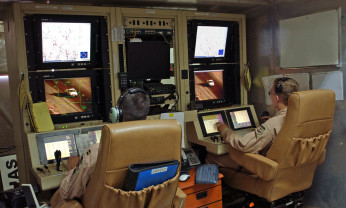
    Strikes by unmanned combat air vehicles, or armed drones, have become the tactic of choice in US counterterrorism efforts in Yemen, Somalia and, the topic of current controversy, Pakistan. The lack of transparency, dubious effectiveness, civilian casualties and negative consequences for US national security being highlighted by current debate means that Washington needs to re-evaluate its approach.

    Read Article →