At the beginning of February, ISAF sources announced that a major military offensive was about to be mounted in Helmand Province in southern Afghanistan. This was Operation Moshtarak (“together”), involving 15,000 US, British and Afghan National Army troops, and would concentrate on clearing Taliban and other paramilitary groups from two areas, one of them centred on the town of Marja. The publicity given to the operation appeared designed partly to encourage civilians to evacuate areas under Taliban influence, but would also serve to highlight the capabilities of coalition forces at a time when support for the war in the United States and Britain was fragile.
Given the size of the operation, it is likely that it will provide a major focus for western media attention for some weeks, but to get a full measure of its significance requires seeing it in the wider context of the conflicts in Iraq and Pakistan, and of the Status of the al-Qaida Movement. There have, in particular, been significant developments in both Iraq and Pakistan, with each likely to have an impact on what is now happening in Afghanistan.
Iraq
The additional deployments of US troops to Afghanistan will take the overall numbers of NATO forces up to about 140,000 by the latter part of the year, with many thousands of private security personnel operating in the country as well. The ability of the Pentagon to maintain the US commitment of over 100,000 troops for any length of time will depend heavily on the rate at which forces can be withdrawn from Iraq, with this in turn depending on the levels of violence there.
The main independent assessment of Iraqi civilian casualties, Iraq Body Count, has reported that overall numbers of civilian deaths due to violence fell in 2009 compared with the five previous years, but the in-year decline that was evident in 2008 did not continue through to the end of 2009. Moreover, the pattern of violence showed distinct trends during the year, indicating an insurgent capability that remained potent and dangerous. During the early part of the year, there were many attacks on Shi’a communities, with mosques and markets being targeted, but in August and October there were two major sets of attacks on government ministries in secure parts of Baghdad. The ability of paramilitary groups to penetrate secure zones caused great concern, especially as one of the main effects was to kill scores of civil servants and injure many hundreds.
The change of emphasis in the attacks appeared to indicate a specific plan to demoralise the civil service and thereby destabilise the Malaki government in the run-up to the planned March elections. There were further major attacks in Baghdad in December and January. Most recently these have included the bombing of the forensic science laboratories of the Ministry of the Interior and the coordinated bombing of three large hotels frequented by western journalists and business people. The hotel attacks, in particular, were on very well-protected and supposedly secure buildings and were further evidence of the capabilities of the insurgents.
Of added concern during January and early February, was a series of attacks on Shi’a communities. These were mostly centred on pilgrims going to the Imam Hussein shrine in Karbala. In the first week of February, more than a hundred were killed in three attacks, with hundreds more injured. The combination of parallel operations against government offices and Shi’a communities suggested a capability and determination on the part of the insurgents that gave little sign of them being in retreat.
The Obama administration intends to remove all US combat troops from Iraq by the latter part of this year, but this is somewhat misleading in that many of the remaining forces, likely to be in excess of 50,000, are being reconfigured into “advice and assist” brigades (AABs) that may have as their main function the cooperation with Iraqi Army and police units as they expand their capabilities, but also retain full combat capabilities. If the current levels of violence persist and quite possibly escalate, then it will be very difficult for the Pentagon to maintain its intended timetable for withdrawal. That, in turn, will have an impact on the ability of the US Army and Marine Corps to maintain their enhanced deployments in Afghanistan.
Pakistan
The Obama administration’s policy towards Pakistan has three components:
- encourage closer relations with India,
- encourage the Pakistani military to be far more aggressive in controlling paramilitary groups, especially in the Federally Administered Tribal Areas (FATA), in Baluchistan and North-West Frontier provinces, and
- engage much more heavily in its own military activities within Pakistan.
Washington recognises the Pakistani security context in which India, with more than six times the population and a far stronger military, is seen as the constant threat to the integrity of the state. There is, moreover, a pervasive fear of encirclement as India increases its commitments to Afghanistan. Last month, the Director of Indian Military Intelligence paid a visit to the Karzai administration in Kabul, a visit that received little media coverage in India but was seen in Islamabad as further proof of interference in its own sphere of influence. In difficult circumstances, the Obama administration is trying to ease Pakistan’s fears, but this may prove problematic, not least because of an India domestic perception that paramilitary groups in Pakistan represent a serious threat to the country. The prolonged attack on Mumbai over 15 months ago still resonates in India and there is a widespread assumption that those behind the attack had a degree of official backing.
In encouraging the Pakistani Army to be more active in controlling paramilitary groups, the United States faces three difficulties. One is that the Army is not geared to sustained counter-insurgency operations, and in recent operations it has not devoted sufficient forces to do more than limit the influence of the groups. Secondly, the elite Army establishment is not willing to engage in operations within the country that might limit the capabilities of the Taliban and related militias across the border in Afghanistan. Against this, the United States is aided by the antagonism of many influential Pakistanis to the numerous bombing and other attacks within Pakistan. During 2009, there were around 3,300 people killed within Pakistan as a result of such attacks, and this lost the Pakistani Taliban and other groups much domestic support. However, this is complicated by the persistent opposition within Pakistan to more US military involvement within the country which brings us to the third problem relating to US policy.
During the course of 2009, the United States substantially increased its military involvement in Pakistan. One aspect was an intensified programme of counter-insurgency training, one result being a recent attack on a US training unit near Bajaur Agency, killing three US soldiers and injuring two others. A far greater involvement in Pakistan has been the rapid increase in the use of armed drones in attacks on al-Qaida and Pakistani Taliban leadership elements. In 2009 there were 53 drone attacks, the largest number in any one year, and there were 12 more in the first five weeks of 2010. Many of the attacks now use multiple armed drones – in a single incident on 2 February, nine armed drones fired a total of 19 missiles in an attack on a village in the Degan area of North Waziristan. This was close to the border with Afghanistan’s Khost Province, where Taliban militias have successfully filled a security vacuum, left when US forces vacated some of their more remote military outposts. The attack was the largest use of armed drones so far and is reported to have killed 31 people.
From a US perspective, the use of drones in Pakistan has been one of the very few examples of successful counter-terrorism activities in the region in recent years, and there is evidence that it has had an effect in weakening both the al-Qaida movement and the Pakistani Taliban. Because of this, such attacks are likely to be maintained at a high level and may even increase. There is, though, a substantial problem in that such attacks are seen by many sectors of public opinion in Pakistan as direct threats to the sovereignty of the country. This means that there is a difficult balance of political risk in that the large-scale use of armed drones, however effective from Washington’s perspective, may overturn the domestic opposition to internal paramilitary attacks and thereby prove counterproductive. What may further upset this balance is evidence of increasing Indian involvement in Afghanistan, including the activities of numerous Indian construction companies, the extensive training programmes for the Afghan judiciary and public administration, and the close links between the Afghan Army and the Indian military.
Afghanistan
Developments in Iraq and Pakistan may both have influence on the war in Afghanistan in the coming months, and that war is already taking on an unusual course. One aspect is the intensity of the fighting throughout the winter months, in contrast to the usual pattern of recent years where there has been a lull in the fighting. The change is in part due to the determination of coalition forces to increase pressure, now that more troops have been deployed, but it is also due to the versatility and adaptability of the Taliban paramilitaries. They have become far more adept at avoiding open conflict where they would face the greatly superior firepower of coalition forces, but they have also become far more proficient at the use of roadside bombs and, on occasions, taking the war to major towns and cities, including Kabul.
This is significant, because in the past six months, coalition forces have redeployed units away from some of the more remote areas, concentrating more on larger urban populations. Taliban responses have therefore included urban attacks to demonstrate their capabilities while they have also sought to extend their control of rural areas in the absence of western forces. They have been aided in this latter move by corruption and maladministration by the Kabul government, often to the extent that Taliban governance in a particular district receives a guarded welcome because of its ability to impose order, however rigid and even brutal that order may be. The coalition’s current Operation Moshtarak may actually involve relatively little contact with Taliban paramilitaries and may therefore be seen as a success as troops slowly move into areas previously under Taliban control, albeit hindered by large numbers of roadside bombs. This could actually be a misleading impression given the capacity of Taliban elements to melt away and reform elsewhere from western troop concentrations.
More generally, it remains clear that the Obama administration is keeping to its twin-track approach of attempting to put much heavier military pressure on the Taliban and their associates, while simultaneously being willing to negotiate with some elements. It is here that the US domestic dimension is highly relevant. The view from Washington is that serious progress must be made in Afghanistan in the next 12 to 18 months, or else the already weak domestic support for the war will ebb away still further. This time constraint has two implications. One is that there will be an assumption in Pakistan that the United States will not maintain its military forces in Afghanistan so that Pakistan must look to a post-American future. From Islamabad’s perspective, that future must include substantial Taliban involvement to ensure Pakistani influence, and that can result either from a negotiated settlement or a marked degree of Taliban success in the conflict. Thus, whatever Pakistan does about its internal paramilitaries, it will tend not to assist in the defeat of the Taliban across the border.
The second implication is that Taliban planners may now have come to recognise that time is on their side – indeed the massive increases in US forces in Afghanistan should best be seen as indicators of Taliban prowess. This view is supported by recent reports that more foreign fighters, from right across the Middle East and beyond, are willing to join the conflict alongside the Taliban. If the view from Washington is that a way out of the mire is negotiating an acceptable settlement from a position of military strength, it is certainly possible that this is precisely the same view held by the Taliban leadership, except that the Taliban definition of “acceptable” may be very different from that in Washington.
This article is also available as a PDF and can be downloaded here.
 Delicious
 Digg
Digg StumbleUpon
 Reddit

 Delicious
 Digg
Digg StumbleUpon
 Reddit
 Delicious
 Digg
Digg StumbleUpon
 Reddit
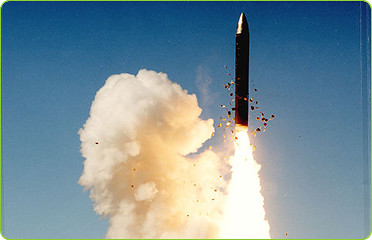 148 states have supported a United Nations General Assembly resolution calling on state users of depleted uranium weapons to reveal where the weapons have been fired when asked to do so by affected countries.
 Delicious
 Digg
Digg StumbleUpon
 Reddit
 Delicious
 Digg
Digg StumbleUpon
 Reddit
 One aspect of the global economic crisis that is rarely discussed is the hole in government budgets caused by the ongoing wars in Iraq and Afghanistan and by the mind-boggling expense of weapons systems like Trident or advanced combat aircraft or aircraft carriers. In the United States, the War on Terror enabled President Bush to double the military budget;
 In a piece for the International Movement for a Just World, William Rees maps out a vision for what he calls ‘Survival 2100.’ The goal of such a strategy would be “to engineer the creation of a dynamic, more equitable steady-state economy that can satisfy at least the basic needs of the entire human family within the means of nature.” The alternative, Rees argues is to “succumb to more primitive emotions and survival instincts abetted by cognitive dissonance, collective denial, and global political inertia.”
 Delicious
 Digg
Digg StumbleUpon
 Reddit
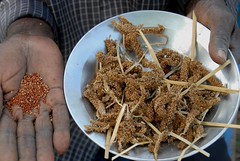 The United Nations Development Programme (UNDP) defines food security as “all people at all times having both physical and economic access to the basic food they need”. However, due to a complex range of interconnected issues from
  Delicious
 Digg
Digg StumbleUpon
 Reddit
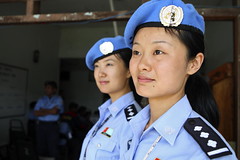 There will be no sustainable security if we do not equally value the needs, experiences and input of men and women. A new report published by the Institute of Development Studies (IDS), funded by ActionAid and Womankind Worldwide, examines the role women play in local community peacebuilding in Afghanistan, Liberia, Nepal, Pakistan and Sierra Leone. The report states “despite the increased international attention to women’s participation in peacebuilding, the achievements and challenges facing women building peace at the local level have been largely overlooked”.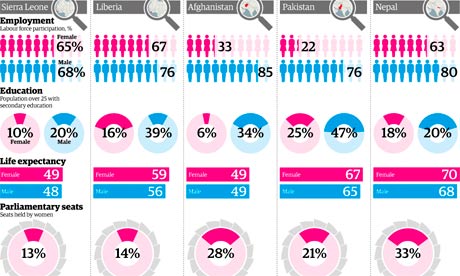
 Delicious
 Digg
Digg StumbleUpon
 Reddit
 A recent
  Delicious
 Digg
Digg StumbleUpon
 Reddit
 The Norwegian Peacebuilding Resource Centre (NOREF) recently published a Policy brief by Tani Marilena Adams, proposing and outlining the concept of “chronic violence” to “characterise the crisis of escalating social violence that currently affects about one-quarter of the world’s population”.
 Delicious
 Digg
Digg StumbleUpon
 Reddit
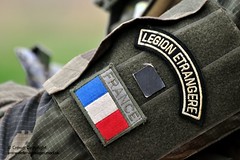 Britain is on standby and the US is already transporting French troops into Mali. But a new paper says the west is “betting on the wrong horse” by intervening in the region.
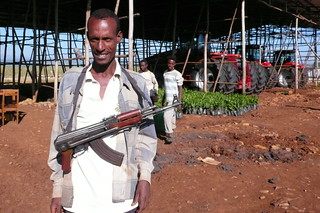 On May 11, the UN approved new international rules to govern how land is acquired abroad. These Voluntary Guidelines (VGs), the outcome of several years of protracted negotiations, are a response to growing global concern that nations and private investors are seizing large swaths of overseas agricultural land owned or used by small farmers and local communities for food, medicinal, or livelihood purposes. FAO head Jose Graziano da Silva describes the VGs as “a starting point that will help improve the often dire situation of the hungry and poor.”
 Delicious
 Digg
Digg StumbleUpon
 Reddit
 Delicious
 Digg
Digg StumbleUpon
 Reddit
 Delicious
 Digg
Digg StumbleUpon
 Reddit
 Delicious
 Digg
Digg StumbleUpon
 Reddit
 The closing weeks of 2009 have seen an intensive focus among western policy-makers and media on the war in Afghanistan. The long-awaited surge in American troop deployments ordered by President Barack Obama, whose effects will be seen as 2010 unfolds, sets the scene for increased combat. The new United States strategy is mainly a response to the increased activity of Taliban and other militias; there are even claims by Mulla Sangeen that 80% of Afghanistan is under Taliban influence (see “Taliban claim control of over 80pc of Afghanistan”, PakTribune, 22 December 2009). This may be an exaggeration, but the many elements opposed both to the Hamid Karzai regime and the foreign military presence in Afghanistan have undoubtedly increased the movement’s influence (see “Afghanistan: from insurgency to insurrection”, 8 October 2009).
 As the long running tensions over the set of islands in the East China Sea appear to be coming to a head, the time for thinking through the alternatives to the militarisation of this conflict seems to be well and truly upon us.
 Delicious
 Digg
Digg StumbleUpon
 Reddit
 Living in an era plagued by a nuclear threat and arms race, wherein nations continue to nurse the ambition of producing nuclear weapons or acquiring the means to do, nuclear disarmament is possibly the most vital issue in the field of global security.
 Delicious
 Digg
Digg StumbleUpon
 Reddit
 Delicious
 Digg
Digg StumbleUpon
 Reddit