Category: Article

  • Why Here, Not There? Investigating emerging nonviolent movements

    The International Peace & Security Institute (IPSI), in collaboration with The Johns Hopkins University School of Advanced International Studies (SAIS) Conflict Management Program, hosted a high-level panel discussion and networking reception on Wednesday, August 17.  The event, “Why Here, Not There? Investigating emerging nonviolent movements,” examined the dynamics that enable nonviolent movements to occur in some regions and not others at specific moments in time.  The event was broadcast live nationwide and on the internet by C-SPAN.

    Watch the video here: IPSI

    Image source: Al Jazeera English

  • World Not Prepared for Climate Conflicts

    Accelerating climate change and competition for limited supplies of water, food and energy are poised to ignite long-simmering conflicts in fragile states, monopolising the world’s military resources and hampering development efforts, security experts say.

    Defusing these new 21st century conflicts – or at least preparing governments and citizens to cope with them – will require a broad range of innovative interventions, a gathering at Britain’s Department for International Development (DFID) heard earlier this month.

    Mitigation measures include borrowing business risk-management strategies, getting military officials to talk publicly about the constraints they face, building capable institutions in unstable countries, and ensuring billions in climate aid go to the right places and aren’t lost to corruption, experts said.

    Putting the right strategies in place will require bringing together disparate groups – economists, military strategists, aid workers – and working out fresh approaches to the emerging problems, they said.

    Climate change and resource scarcity are “setting a new challenge that we are not very good yet at handling”, said Dan Smith, secretary general of International Alert and one of the organisers of the “Dialogue on Climate Change, Conflict and Effective Response”.

    In Yemen, for example, severe water shortages – the result of water mismanagement and changing climatic conditions – are hurting crop production and feeding into growing political strife that could unseat longtime ruler, President Ali Abdullah Saleh, and even break the country apart.

    The pressures have important military implications, not least because Saleh has cooperated with Washington to dismantle an arm of Al Qaeda in Yemen, and because food and water shortages appear to be contributing to recent violence.

    TIPPING POINTS

    Worsening climate impacts and resource shortages could similarly aggravate simmering conflicts from Pakistan to fragile regions like the Niger River basin, which includes parts of Mali, Niger and Nigeria, said Smith, whose independent organisation works on peace and conflict issues.

    “Twenty-first century conflict will be different from 20th century conflict, and our institutions are set up for 20th century conflict,” he warned.

    One problem with dwindling resources, experts at the discussion noted, is that they push countries to put their own needs first, making them less likely to cooperate with neighbours and more likely to conflict with them. Resulting political tensions make international institutions less effective, just when they are most needed to tackle international problems like climate change.

    Another problem countries face is growing uncertainty stemming from climate change. There could be potential “tipping points” that threaten to abruptly increase sea level or global temperatures, or wipe out food crops, forcing up prices.

    Countries – particularly fragile ones – need to develop greater resilience and capacities to deal with unexpected problems, the security experts said. That usually involves things like creating state institutions that work and giving people new skills.

    “Understanding how to strengthen national institutions is crucial,” said Neil Bird, a researcher on environmental policy and international funding mechanisms at the London-based Overseas Development Institute.

    ‘CLIMATE FINANCE ORPHANS’

    But money to help countries prepare – including a planned $100 billion a year for climate-vulnerable nations by 2020 – could miss those that need it most precisely because they don’t have capable institutions in place to handle the funds in a transparent and accountable way.

    Fragile states could end up as “climate finance orphans”, Bird warned.

    Addressing all these looming problems will require a high degree of innovation, as well as input from diverse fields, the experts said. Business people and market traders, for instance, are usually good at assessing risk and hedging things like commodity prices – skills politicians and others may need to adopt too.

    Persuading military officials to “tell the world what they cannot do, even if they have a gazillion-pound defence budget” may also be useful, Smith said. They may be best placed to explain how spending on climate mitigation and adaptation could be cheaper and more effective than trying to control resource-driven conflicts or large-scale environmental migration further down the line, he added.

    Both rich and poor countries have a stake in limiting conflict driven by climate change and resource scarcity, not least because it will likely be costly to lives, budgets and development efforts, the security experts said.

    Climate change, together with associated shortages of food, water and energy, “are one of the gravest threats to our security and prosperity”, warned Sarah Cullum, head of the climate change and energy group at Britain’s Foreign Office.


    This article originally appeared on AlertNet. 

  • Boiling point

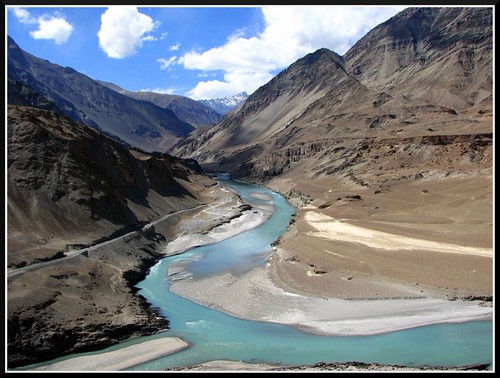
    If Pakistani householders look carefully at their electricity bills, they will find they have been charged an extra amount for NJP – the Neelum Jhelum Project. It has been going on for years and is an attempt by the Pakistani government to raise money for a hydroelectric project on the Neelum River, a tributary of the Jhelum in Kashmir.

    But while Pakistan – unable to get loans for the project from international agencies due to the ongoing terrorism problem – is still raising money, India is diverting the water upstream, meaning there will not be enough of it in the Neelum for Pakistan to build the project it wanted.

    India is within its legal rights to do this. Under the 1960 Indus Water Treaty (IWT), it is allowed to build run-of-the-river projects as long as it delivers all the water to Pakistan at the end of it. And that is exactly what India is doing; channeling the water for its own hydroelectricity project, before releasing it directly into the Jhelum further downstream. Pakistan is so incensed that, in late April, it announced it would approach the World Bank, which is the arbitrator under the IWT, in an effort to stop the Indian project.

    Water is rapidly overtaking the territorial dispute over Kashmir to become the biggest bone of contention between India and Pakistan. And the rhetoric in Pakistan is getting uglier by the day. One of the first questions this Indian reporter faced in Islamabad in late March was: “Why is India stealing our water?” The question came from a Pakistani journalist at the start of a workshop on precisely this topic, which brought together journalists from India and Pakistan as well as water experts. After two days of discussion, the Pakistani journalist said: “Now I know India is not stealing our water and that it is sticking to the treaty. But does it not realise we need more water? How can we survive without it?”

    Much of the reportage in the Pakistani media is not so nuanced, and charges of water theft by India – the upper riparian country – are bandied about regularly. There is no doubt that India has built and is continuing to build hydroelectric projects in the upper reaches of the rivers that flow into Pakistan. But it has been scrupulous in sticking to the IWT, which says India can build run-of-the-river projects on the Indus, Jhelum and Chenab rivers, as long as the quantity of water that flows into Pakistan through these waterways is not reduced. The treaty also allows India to store 3.6 million acre feet (MAF) of this water, before the rivers flow into Pakistan.

    Whenever Pakistani government officials are asked about the water dispute, they agree that India is sticking to the IWT. But that is not the way it is reported in much of the Pakistani media, and even one of Pakistan’s Islamic fundamentalist groups recently said its ire against India was partly a result of it “stealing our water”.

    This perception has grown due to “lack of transparency and lack of timely data from India”, said Danial Hashmi, senior engineer at Pakistan’s Water and Power Development Authority (WAPDA). “That leads to lack of trust. We have to keep asking them for water flow data that should be coming to us automatically, and without delay.”

    The origins of the water dispute lie back in the nineteenth century, when Britain ruled the subcontinent and British engineers started to build what became the world’s largest canal irrigation system in the Indus river basin. That became a huge issue when Pakistan was carved out of India in 1947, splitting the river basin and its canals. As it was located upstream, India had control of the rivers and there were repeated disputes over water flow until the World Bank mediated the IWT, giving the three eastern rivers – Ravi, Beas and Sutlej – to India and the other three to Pakistan.

    India’s High Commissioner to Pakistan, Sharat Sabharwal, has repeatedly said: “The IWT has served both countries well and has been operational even in times of war. It assigned to Pakistan 80% of the water in the Indus system of rivers.”

    John Briscoe, a water expert who has worked in the subcontinent for 35 years, was the World Bank adviser involved in choosing the neutral expert to adjudicate between India and Pakistan on the Baglihar dam in the Indian part of Kashmir. (Read John Briscoe’s article for chinadialogue here: “Bankrolling change”). Briscoe says that the IWT could be a “stable basis for cooperation if India and Pakistan had normal trustful relations. [Then] there would be a mutually-verified monitoring process which would assure that there is no change in the [water] flows going into Pakistan.”

    Since both countries agree that India is sticking to its part of the IWT, why is less and less water available to farmers in Pakistan? Daanish Mustafa, an academic in the geography department at King’s College, London, said it was partly because the planners had not foreseen how there would be less water flowing down these rivers due to changes in the Himalayan environment.

    Deforestation in the catchment area of the Indus basin means more and more silt is flowing down these rivers, choking the channels and reducing water flow. Another key issue is the dependence of these rivers on the Himalayan glaciers. While it has now been established that these glaciers are in no danger of disappearing in the next few decades, there is no doubt that they are receding due to global warming. A detailed satellite-based study by the Indian Space Research Organisation came to the conclusion this March that Himalayan glaciers have shrunk by 16% in the last 50 years.

    In the entire Himalayan ranges, glacier melt is responsible for less than 10% of the annual flows in these rivers. But that is not the case in the Indus basin. As the westernmost of the river basins formed by the Himalayas, it gets much less of the monsoon rain than the eastern Himalayas and is consequently far more dependent on the glaciers.

    So Pakistan is asking India for water in an environment where the total water flow is shrinking all the time. This had not been foreseen when the IWT was signed 50 years ago, but today it threatens to become the major flashpoint between the two nuclear-armed neighbours in south Asia, despite conciliatory messages from parts of the Pakistani establishment. “This is a problem that can be solved only through cooperation and not confrontation,” Pakistan’s environment minister Hameed Ullah Jan Afridi pointed out at the March workshop, which was organised by the voluntary organisation LEAD Pakistan and sponsored by the British government.

    India is the upper riparian country in the Indus basin, but the rivers do not start in India. They start in the Tibet Autonomous Region of China. Unless China is brought to the discussion on how to control deforestation in the basin’s catchment area and how best the dwindling water supplies can be shared in a situation where glaciers are retreating due to global warming, the water-related tension between India and Pakistan can only get worse. Eminent Pakistani lawyer Tariq Hassan recently said: “Water is the most strategic issue facing the subcontinent. If there is a war here in the future, it will be over water.”

    Independent experts like Briscoe say that, while India is sticking to the IWT, it needs to be more generous because of the “great vulnerability and legitimate concern of Pakistan” over water scarcity, which has already ensured that the Indus, the mother river of the subcontinent since pre-history, no longer even flows to the Arabian Sea but instead trickles to its death in the sands of Sindh.


    About the author: Joydeep Gupta is a director of the Earth Journalism Network at Internews and secretary of the Forum of Environmental Journalists of India.
    Source: China Dialogue

    Image Source: Sanju

  • India’s 21st-century war

    A year on from the election of Barack Obama as United States president, the conflicts that dominated Washington’s concern under his predecessor are still raging – and even increasing in intensity. This is particularly true of the arc of insecurity that stretches from the middle east through to southwest Asia, where – from Afghanistan and Pakistan to Israel-Palestine and Iran – the reality and potential of violence have hardly been diminished as a result of the change of administration.

    Moreover, alongside the high-intensity conflicts where Washington is directly or by proxy involved in this region, there are other slow-burn insurgencies that often receive less attention than they deserve. The persistent rebellion in India of the Maoist guerrilla movement known as the Naxalites is one such. A reason for paying more heed to this issue is that the evolving nature of the Naxalite conflict – including the Indian government’s approach in attempting to combat the movement – may represent a more accurate indicator of future trends in global insecurity even than the al-Qaida network.

    A potent legacy

    The internal United States debate about its future strategy in Afghanistan and Pakistan in particular has as much of its specific focus the current status of al-Qaida, and whether it still represents a major threat to US security interests.

    The argument over whether (and by how much) to increase US deployments in Afghanistan – prompted by General Stanley A McChrystal’s request for at least 40,000 more troops – is now complicated further by the political fallout of the now aborted rerun of Afghanistan’s presidential election. The effect of the confirmation of Hamid Karzai as the election winner and thus president for a third term in office (after the withdrawal on 1 November 2009 of his rival, Abdullah Abdullah) makes it even harder for the pro-”surge” advocates to make their case (see Charles A Kupchan & Steven Simon, “Pull the Plug on the Afghan Surge”, Financial Times, 3 November 2009).

    Many of those who oppose such a move argue that the US is making a strategic mistake by seeing the Afghan and Pakistani Taliban groups as the main focus of its efforts. These are so embedded in local societies on either side of the border that they cannot, so the argument goes, be defeated in the conventional sense. It is far more important in this view to concentrate specifically on the al-Qaida leadership and that movement’s most determined adherents. By doing so, the US military will lead the task of defeating terrorism and making the world a safer place.

    This argument, though yet to be won, can be seen as a significant departure from the dominant thinking of George W Bush’s “war on terror” – especially its tendency to describe any radical paramilitary group anywhere in the world as “terrorist”. The logic of this view, embraced with glee by the neo-conservatives that provided the Bush administration’s ideological fuel, was the radical division of the world into two absolutely polarised sides: with us or against us, there is no room for doubt or compromise.

    The search for a more nuanced and targeted approach reflects a degree of new thinking from Barack Obama. The problem he faces is that the mentality of the “war on terror” has proved so influential, including by other states facing their own domestic insurgencies, that it is very difficult to change course.

    A hidden rage

    A case in point is the New Delhi government’s developing assault on the Naxalite rebels in India.

    The Naxalite movement has its origins in a land dispute near the village of Naxalbari in the northern part of West Bengal in 1967. This lasted several years and appeared to have been brought under control. But later, a number of leftist groups fired by a Maoist ideology made links with disadvantaged peoples in parts of rural eastern India; in the early 2000s, this coalesced into a renewed movement (see Ajai Sahni, “India and its Maoists: failure and success”, 20 March 2007)

    Since then, the Naxalites have grown in power and influence. They are often brutal in their methods but have managed to win support from huge numbers of marginalised people, in part because of the great brutality inflicted by security forces in the areas the guerrillas control. The Indian authorities are increasingly concerned at the threat the movement poses to the country’s internal security – and even its much-vaunted economic miracle. For the state, and much of the economic elite, the Naxalite/Maoist rebels are simply terrorists who must be put down with whatever force is necessary (see “A world in revolt”, 12 February 2009).

    Since then, the Naxalites or Maoists have grown in power and influence, as part of a conflict with the authorities in which there has been great brutality on both sides. They are reported to be active in 220 of India’s 602 districts across fifteen of India’s twenty-eight states.

    Much of the activity is spread across India’s so-called “red corridor”, which stretches from the Nepalese border down to the southern state of Karnataka. A current report says: “With a force of 15,000 armed cadres, they control an estimated one-fifth of India’s forests. They are also believed to have 50,000 underground activists. Around 100,000 people, including the intelligentsia, are associated with various front organisations in different parts of the country” (see Prakash Nanda, “India’s deadly war within”, UPI Asia Online, 4 November 2009).

    The problem with this view is that the guerrillas draw on the genuine injustices inflicted on poor Indians in rural areas, including (for example) the many thousands dispossessed of their lands and livelihoods by mining corporations and new industries (see Arundhati Roy, “The heart of India is under attack”, Guardian, 30 October 2009). These injustices are part of the entrenched and increasing disparities in wealth and poverty that India’s breakneck race for growth has created.

    The war between the Indian state’s security forces (including the armed militias it has organised) and the Naxalites is taking place amid this landscape of desperate poverty and inequality. The rebels’ tactics include the use of roadside-bombs and ambushes, which have helped them kill over 900 Indian security personnel in 2006-09. In the period from April-June 2009 alone, they killed 112 security personnel in four key regions of combat: Chhattisgarh, Bihar, Jharkhand and Orissa; over three days in early June, twenty police lost their lives in two attacks (see Divy Khare, “Naxalites strike again, kill 10 cops in Jharkhand”, Times of India, 13 June 2009). In Maharashtra, two Naxalites lured a police patrol into a trap and in an hours-long fight, seventeen policemen died (see Jim Yardley, “A growing Maoist rebellion vexes India”, International Herald Tribune, 31 October 2009).

    The authorities are now being shocked by years of accelerating conflict into raising the level of their response. New Delhi is mounting a large-scale operation – Operation Green Hunt – that is expected to involve some 70,000 paramilitary forces. The aim is partly to counter the spread of Naxalite influence beyond the most densely forested areas that have been their core domain into open countryside; Operation Green Hunt seeks to force the rebels back into the forests where they can (it is supposed) be more easily contained (see Anuj Chopra, “Jungle lair of the Maoist rebels”, 5 November 2009).

    The carefully planned operation could take several years to complete. At its root is the firm belief that the target groups, however strong their support, constitute a threat to the emergence of the new India as a global economic power. In such circumstances, strategic ores must be mined and factories built on suitable land. Those in the way – leftist rebels or local villagers – simply cannot be allowed to interfere with India’s onward march to western-style modernity (see “China and India: heartlands of global protest”, 7 August 2008).

    It is especially pertinent to note that this rebellion has caught India somewhat by surprise. At the very time that India has finally embraced the consumer society, when burgeoning cities are replete with shopping-malls, entertainment venues and gated communities – violent extremists appear, as if from nowhere, to wreck the party and threaten the future (see Manmohan Singh, “’A Systemic Failure’”, OutlookIndia, 4 November 2009). The fact that much of what is happening can be understood as a desperate response from intensely marginalised people is discounted.

    A warming conflict

    The import of the Naxalites and other Maoist groups in India may go far beyond the major internal-security problem they pose. From another perspective, they represent an early example of the kinds of radical response that could – if present dominant policies continue – become far more widespread in the coming decades (see “A world on the edge”, 29 January 2009).

    In the 2010-40 period, climate change will affect the tropical and sub-tropical regions of the world in ever more pervasive ways. As the continents warm up much faster than the oceans and the croplands dry out, the consequence will be a sharp decline in the land’s ecological “carrying-capacity” (see Shanta Barley, “A World 4 degrees C warmer”, New Scientist, 3 October 2009)

    This is also a world where there are enormous gaps in living-standards, life-chances and access to resources; where 10% of the world’s people have over 85% of the household wealth; and where hundreds of millions of people in the global south (and north) are marginalised and resentful. The results, if such trends are allowed to continue, will be a combination of more fragile and failing states with intense migratory pressures; in turn this will reinforces the tendency of the world’s elites to seek to “close the castle gates” (see “A tale of two towns”, 21 June 2007).

    In this perspective, the rational approach would be led by an awareness of how the dangers of socio-economic divisions and environmental limits make a new definition of security essential (see “A world in need: the case for sustainable security”, 10 September 2009). A continuation of the current path may mean that al-Qaida will be seen as a short-term problem that withered away – and the Naxalite rebellion as the prototype conflict for the 21st century.

  • Global Climate Change Vulnerability and the Risk of Conflict

    In a study from the Center for Sustainable Development at Uppsala University in Sweden titled “Climate Change and the Risk of Violent Conflicts in Southern Africa,” authors Ashok Swain, Ranjula Bali Swain, Anders Themnér, and Florian Krampe examine the potential for climate change and variability to act as a “threat multiplier” in the Zambezi River Basin. The report argues that “socio-economic and political problems are disproportionately multiplied by climate change/variability.” A reliance on agriculture, poor governance, weak institutions, polarized social identities, and economic challenges in the region are issues that may combine with climate change to increase the potential for conflict. Specifically, the report concludes that the Matableleland-North Province in Zimbabwe and Zambezia Province in Mozambique are the areas in the region most likely to experience climate-induced conflicts in the near future.

    Article source: The New Security Beat

    Image source: The City Project

  • Gorbachev – Twenty years after the fall of Berlin wall the world is no fairer

    Twenty years have passed since the fall of the Berlin wall, one of the shameful symbols of the cold war and the dangerous division of the world into opposing blocks and spheres of influence. Today we can revisit the events of those times and take stock of them in a less emotional and more rational way.

    The first optimistic observation to be made is that the announced “end of history” has not come about, though many claimed it had. But neither has the world that many politicians of my generation trusted and sincerely believed in: one in which, with the end of the cold war, humankind could finally forget the absurdity of the arms race, dangerous regional conflicts, and sterile ideological disputes, and enter a golden century of collective security, the rational use of material resources, the end of poverty and inequality, and restored harmony with nature.

    Another important consequence of the end of the cold war is the realisation of one of the central postulates of New Thinking: the interdependence of extremely important elements that go to the very heart of the existence and development of humankind. This involves not only processes and events occurring on different continents but also the organic linkage between changes in the economic, technological, social, demographic and cultural conditions that determine the daily existence of billions of people on our planet. In effect, humankind has started to transform itself into a single civilisation.

    At the same time, the disappearance of the iron curtain and barriers and borders, unexpected by many, made possible connections between countries that until recently had different political systems, as well as different civilisations, cultures and traditions.

    Naturally, we politicians from the last century can be proud of the fact that we avoided the danger of a thermonuclear war. However, for many millions of people around the globe, the world has not become a safer place. Quite to the contrary, innumerable local conflicts and ethnic and religious wars have appeared like a curse on the new map of world politics, creating large numbers of victims.

    Clear proof of the irrational behaviour and irresponsibility of the new generation of politicians is the fact that defence spending by numerous countries, large and small alike, is now greater than during the cold war, and strong-arm tactics are once again the standard way of dealing with conflicts and are a common feature of international relations.

    Alas, over the last few decades, the world has not become a fairer place: disparities between the rich and the poor either remained or increased, not only between the north and the developing south but also within developed countries themselves. The social problems in Russia, as in other post-communist countries, are proof that simply abandoning the flawed model of a centralised economy and bureaucratic planning is not enough, and guarantees neither a country’s global competitiveness nor respect for the principles of social justice or a dignified standard of living for the population.

    New challenges can be added to those of the past. One of these is terrorism. In a context in which world war is no longer an instrument of deterrence between the most powerful nations, terrorism has become the “poor man’s atomic bomb”, not only figuratively but perhaps literally as well. The uncontrolled proliferation of weapons of mass destruction, the competition between the erstwhile adversaries of the cold war to reach new technological levels in arms production, and the presence of the new pretenders to an influential role in a multipolar world all increase the sensation of chaos in global politics.

    The crisis of ideologies that is threatening to turn into a crisis of ideals, values and morals marks yet another loss of social reference points, and strengthens the atmosphere of political pessimism and nihilism. The real achievement we can celebrate is the fact that the 20th century marked the end of totalitarian ideologies, in particular those that were based on utopian beliefs.

    Yet new ideologies are quickly replacing the old ones, both in the east and the west. Many now forget that the fall of the Berlin wall was not the cause of global changes but to a great extent the consequence of deep, popular reform movements that started in the east, and the Soviet Union in particular. After decades of the Bolshevik experiment and the realisation that this had led Soviet society down a historical blind alley, a strong impulse for democratic reform evolved in the form of Soviet perestroika, which was also available to the countries of eastern Europe.

    But it was soon very clear that western capitalism, too, deprived of its old adversary and imagining itself the undisputed victor and incarnation of global progress, is at risk of leading western society and the rest of the world down another historical blind alley.

    Today’s global economic crisis was needed to reveal the organic defects of the present model of western development that was imposed on the rest of the world as the only one possible; it also revealed that not only bureaucratic socialism but also ultra-liberal capitalism are in need of profound democratic reform – their own kind of perestroika.

    Today, as we sit among the ruins of the old order, we can think of ourselves as active participants in the process of creating a new world. Many truths and postulates once considered indisputable, in both the east and the west, have ceased to be so, including the blind faith in the all-powerful market and, above all, its democratic nature. There was an ingrained belief that the western model of democracy could be spread mechanically to other societies with different historical experience and cultural traditions. In the present situation, even a concept like social progress, which seems to be shared by everyone, needs to be defined, and examined, more precisely.

  • US Security Establishment not Prepared for Climate Change

    In a three-month investigation, a team of Northwestern University student reporters has found that the US security establishment is not adequately prepared for many of the environmental changes that are coming faster than predicted and that threaten to reshape demands made on the military and intelligence community. This is despite the fact that the Defense Department has called climate change a potential “accelerant of instability.”

    The 10 Medill School of Journalism graduate students interviewed more than 200 current and former national security officials and experts and reviewed scores of official documents and reports. While reporting, they used social media to create a community of people interested in the intersection of national security and climate change, informing them of their work through Tweets, blog posts and an e-newsletter.

    Among the project’s findings:

    • The government lacks critical information about where and when climate changes will happen and what effect they will have on the U.S. military, intelligence and national security communities.

    • In a major strategy review last year, the Pentagon acknowledged the challenge that climate change poses to its operations, including a dramatically increased need for intervention in future humanitarian crises. While military branches have begun global assessments of their vulnerabilities, many security experts say the work lacks senior level support in Congress and the administration and that military service preparations are not keeping up with environmental changes.

    •  Work by the CIA and environmental scientists during the Clinton administration was largely ignored in the years of George Bush’s presidency. Although the CIA is now spearheading intelligence assessments to determine where climate change could affect global stability, that work may be in jeopardy as Republicans skeptical of climate control take control of key congressional committees.

    • The nation’s satellite system, which provides the lifeblood of climate information, is in disrepair after years of inadequate funding and, in the past two decades, the intelligence community has struggled both internally and politically to respond to the challenges posed by climate change.

    •  At home, critical infrastructure along the Gulf of Mexico is vulnerable to the stronger storms and more frequent flooding that are predicted due to climate change.

    Stories in the series also explore how the U.S. defense and intelligence community is preparing for a melting Arctic, shifting disease vectors, altered glacial melt in the Andes and rising seas in South Asia.

    In addition to traditional print and online pieces, the project allows audiences to explore the impact of climate change through creative interactive graphics that:

    • demonstrate the impact of rising seas on domestic military installations;

    •  visualize the cascade of consequences that could turn climate changes into national security threats and crises;

    •  cast users as decision makers in a war game that plays out the consequences of climate change in four regional scenarios;

    •  convey the interrelated history of scientific findings, extreme weather events and  political and defense policy as they relate to a changing climate through an interactive timeline;

    • let users hear from the experts themselves and engage in the conversation; and

    •  provide an online library of dozens of government, academic and think tank documents related to climate change and national security.


    For more information on this timely initiative please visit the project’s Global Warning website. Further information about the Medill National Security Journalism Initiative can be found here.  

  • The New Insecurity in a Globalized World

    A new conceptualization of insecurity and instability is needed in a world with greater and freer movement of goods, services and people – both legal and illicit – greater demands on weakening governments and the internationalization of local conflicts. The new insecurity is fundamentally derived from the responses of people and groups to greater uncertainty in an increasingly volatile world. Governments, and increasingly other actors need to recognize this in order to promote sustained stability in the long-term, locally and internationally.

    Security of persons and property is absolutely necessary for economic, social, or political development on any large scale; people must have a reasonable belief in their own physical safety and that tomorrow they will be able to capture the fruits of their labor today. This extends not just to people in underdeveloped countries. Insecurity is a global and natural phenomenon – although admittedly undesirable – experienced by all people to varying degrees. The financial crisis has brought a large amount of uncertainty to people in the United States and the European Union about their futures and has seen a surge in political mobilization and social upheaval across the Atlantic. In an age of globalization where borders are more open, people and goods more mobile, which simultaneously facilitates the spread of prosperity as well as risk; i.e., there is greater opportunity for everyone, not just those engaged in legitimate activities. Furthermore, global openness also requires that events in one part of the world are necessarily felt in other parts. We learned this lesson all too well during the financial crises of 1998, and are still learning it after the 2008 crisis.

    Fundamentally, the question is still: how can we make lives and livelihoods better? The question is not restricted to the poor anymore, although the poor generally face much higher levels of risk and insecurity than the wealthy. The question is now focused on the creation and sustainment of secure, stable environments where people can exercise personal authority to improve their own outcomes. The answer is that lives are made qualitatively better when people’s environments are relatively stable, and they have the power to exercise autonomy over them.

    The absolute rise in risk and insecurity resulting from an open, global economic system has reshaped the nature of insecurity in two ways. First, people internalize more risk. The 9/11 attacks and the 2005 London bombings, in addition to news stories of “home-grown” terrorists or uncovered attack plots that came close to being enacted, remind people in the developed world that they are not entirely protected against international threats to their security. Second, the rise in risk creates demand for greater state interventions to curb the proliferation of insecurity. It does this first by placing demands on states by its constituents, and second by other states’ demands that they take action against persons or groups that promote violence or insecurity elsewhere. As demands on the state to provide greater security and stability increase, the ability of the state to establish and maintain sole authority over the use of force is constrained. In many places the state is incapable or unwilling to establish, maintain and consistently deliver a fair and impartial rule of law – i.e., provide a stable environment in which people can go about their daily lives with the reasonable expectation that the integrity of their persons, family, and property will be secure.

    As a side note, the inclusion of the term “unwilling” is deliberate here. Some states are unwilling to undertake necessary measures to establish secure environments, perhaps because they lack the resources, the opportunity cost of those resources is too high, or there is insufficient political will to allocate the necessary resources. In general, establishing authority over a space is a difficult task requiring huge amounts of money, manpower, experience, and a credible commitment to maintain those efforts into the long-term. To illustrate, in 2011 the United States Department of Defense spent an estimate $159 billion USD on operations in Afghanistan, most of these to train police and maintain security. If this number were the GDP for a nation, it would be the 58th largest economy in the world, far ahead of countries like Iraq, Angola, Ethiopia, Sudan, South Sudan, Uruguay, Bolivia, Cote d’Ivoire, Democratic Republic of Congo, Chad, Mali, and many other nations that are being increasingly asked to take on greater roles of governance and responsibility within their own borders. Aside from a lack of resources, states have other agendas and demands on political energy. This has been the case in Rio de Janeiro since the 1960s. The favelas around Rio are mazes of ad hoc buildings and streets built up on hilly terrain – very easy to defend and very difficult to infiltrate for outsiders. That is essentially what the state has become for many in the favelas of Rio – outsiders. In Rio and other cities, poor areas are run by local “informal” authorities” who provide a form of governance in the absence of the state. Donos provide public security, dispute resolution mechanisms, and a clientelistic form of service delivery that acts in part as a substitute for government functions. While there have been actions taken to combat the control of the favelas by narcotrafficking donos, the government of Rio has been, in general, tolerant of their control of these areas even if vocal about their disapproval of the donos.

    That “informal” groups provide some semblance of order is not to say that the lives of everyday people is secure in these areas. They are not. Yet, there are very few places in the world where there is absolutely no form of social control or order – someone is calling the shots practically everywhere. What is ultimately at the heart of growing local and regional insecurity are the dynamics at play between individuals who are seeking to reduce their personal insecurity, groups that promote or engage in illicit and/or violent activity, and states or other sovereign authorities. The social contract is being renegotiated as states compete with other groups for public authority, either because other groups are expanding into spaces formerly occupied or controlled by the state, or because the state is trying to expand into spaces formerly occupied or controlled by other groups.

    This dynamic inevitably creates insecurity for individuals at the micro-level. People come under competing jurisdictions, and have to learn to negotiate blurry lines of authority and safety.  As security increases, the incentive to take sides rises. This happens globally. The aggregation of personal responses to insecurity generates the instability that policy-makers seek to mitigate. When the state cannot provide protection or opportunity, unemployed, disenfranchised young people join street gangs across the globe – Chicago, Mumbai, Johannesburg, Kinshasa. They join organized criminal networks that will offer employment and protection throughout Latin America, Asia, and Africa. They join rebel movements, taking up arms against a state that cannot make credible promises of opportunity, equality, or personal security. They join terrorist groups that can offer them immediate protection, access to resources, and a sense of belonging and identity – a buffer against an uncertain world and a framework for organizing and making sense of one’s environment.

    Moreover, these decisions also have implications for conceptions of personal identity. Personal identity is a fundamental human need. People seek a sense of self, a way of organizing their world and the environments in which they find themselves. Instability necessitates changes in how people view themselves and their place in the world. As group, ethnic, regional, and national identities are redefined in the face of conflict or altered sovereignty, people are forced to renegotiate personal identities to incorporate these changes. In the face of dissonance between how they see themselves and the opportunities they have, people often adapt different identities to reduce this disconnect. This renegotiation comes through practice; as people practice new behaviors, they adopt their new identities. Hence, as people in areas of contested authority or beyond the reach of the state practice informality or criminality, this becomes a part of their identity over time.

    Even for those that are not willing to commit to sides, the insecurity caused by ill-defined or blurry lines of authority within a political, economic or special space leads civilians to hedge their bets against a clear victor and pay tribute to both sides, to the extent that they can. Civilians must learn to talk out of both sides of their mouths, so to speak, to appease one authority without offending the other. This must necessarily weaken the ability of the state to exert authority in contested spaces and confound efforts to establish authority in these spheres.

    The presence of criminal groups absolutely promotes this dynamic. Illicit, violent or other criminal groups have benefitted from the freer movement of goods and services at least as much as those in legitimate business. They have large stores of cash that they can use to buy favors and loyalty, as well as power and weapons to enforce order within their spheres of influence. In some parts of the world, illicit groups are the only groups with public authority – Jamaica, some of Rio’s favelas, most of Sinaloa, Mexico, the shantytowns of Mumbai, Nairobi, and even today, after a huge effort on the part of the Colombian government, parts of Calí and Medellín. These groups benefit from this kind of uncertainty on the part of civilians. They offer employment and an identity to young men, and favors, medication, and even some public services to the community. In return, they receive support – sometimes tacit, sometimes explicit – which builds legitimacy, which translates into authority. The more a non-state group can make state forces appear inept, corrupt, or unwilling to provide basic security to the people, the more people will turn to the group to provide it.

    The result is that, in the course of trying to promote their own personal stability – access to resources, a sense of identity, employment, safety –people either actively engage in activities that promote instability for others, or they acquiesce to a system that sustains insecurity.

    Furthermore, as boundaries become more fluid, formerly local or regional conflict takes on an increasingly international flavor with some unintended consequences.  Global supply chains for illicit goods and services imply an opportunity for many new types of illicit groups to participate. Hence,  the lines between types of violent destabilizing actors, activities, and events are blurry and becoming more so. Local street gangs in Latin American countries are being used by transnational drug-trafficking supply chains to enforce order in their zones of control and move drugs, people and weapons throughout the region. Similar gangs in megacities in India, Africa and Asia are being used like Tammany Hall-style political coercion delivering votes for local bosses. Formerly local gangs in the United States and elsewhere are adopting increasingly organized, hierarchical structures as their focus grows and their range of activities extends from local protection to drugs, prostitution, extortion and weapons trading. Some of them now resemble the top-down tiered structure of organized crime syndicates. Rebel groups use youth gangs in countries from Colombia to Nigeria as mercenary fighters, who then take their skills learned back to their neighborhoods with them. Rebel groups also are becoming less distinguishable from terrorist groups, and vice versa. As well, all of them are becoming indistinct from organized criminal networks and organizations as they turn to the movement and sale of illegitimate goods and services to finance their operations. Paramilitary groups and other violent non-state groups from across the globe convene in the Tri-Border Area of South America to laundery money and trade expertise and illicit goods. The Irish Republican Army (IRA) had well-known ties to the Cartagena and Medellin Cartels in Colombia, as well as the FARC, during the 1990’s. Previous demarcations between types of violence and insecurity as well as their perpetrators no longer apply as neatly as they used to.

    The second consequence is that local, regional, or national crises have spillover effects across borders. There is little true “global” insecurity. Rather, local, national, or regional instabilities have spillover effects that affect people beyond the area where the instability originates. Porous borders, low state capacity, and poorly guarded information can cause leakages of weapons, people, and goods that can decrease security everywhere. Regional conflicts create power vacuums where local, violent terrorist groups can set up operations and perpetrate instability not only in their own areas of operation, but also far-off targeted countries. Intrastate conflicts in Africa directly affect the probability of war in neighboring countries. Drug trafficking and violence in Central America filter through even the heavily guarded US-Mexico border. However, these sources of instability are not, in themselves, global in origin. Rather they are the organizational, and in some cases societal-level, responses to insecurity and instability locally that contribute to global insecurity.
    Third, insecurity breeds insecurity. Insecurity motivates people to take steps to reduce the insecurity to themselves – to exercise, or regain, control over their environment. Sadly, this often manifests itself in competition rather than cooperation, resulting in zero-sum approaches to reducing instability. If groups cannot cooperate effectively to reduce risk, which is often the case where insecurity exists, then one’s actions to reduce one’s own insecurity generates insecurity for others. As a simplified example, a man who burgles a home has generated insecurity for the homeowner even as the sale of the stolen items generates income for him.

    Fourth, unless credible commitments can be made on the part of all groups involved, the third issue cannot be overcome.  In the absence of credible commitments, the actors fall into a classic Prisoner’s Dilemma. None of them can credibly commit to provide security for one another. This can be the case between any combinations of states and non-state groups or actors.  In some parts of the world, there is no actor who can enforce societal contracts in which all sides agree to cooperate. States may not have either the capacity or the willingness to police their borders, ensure fair and enforceable dispute resolution, provide a fair and uncorrupt police force, or ensure tight control of the movement of goods and services – legal and illegal – within and beyond its borders. Partly, in an age of globalization, the sheer magnitude of movement and the increase in demands on the state makes this near impossible. Partly, despite rhetoric to the contrary, some states have not taken effective steps to try and a globalized world has made these places even more dangerous. However, the fact remains that without either a mechanism between competing parties, be they individuals, groups or states, or a third party who can credibly commit to enforcing contracts of cooperation over competition, it seems difficult, if not impossible, to overcome the problem of the third observation noted above.

    Fifth, many things promote insecurity, and they cannot all be thought of as separable. Environmental degradation and pollution, climate change and constrained natural resources, porous borders and weak state capacity, social or economic exclusion, and structural or institutional exclusion all exacerbate problems of insecurity and incentivize individuals to seek alternative situations that increase their short-term security and stability. Groups in resource-depleted areas can often also face ethnic or sectarian violence over access to resources. People in areas where unemployment is high turn to illegal or informal modes of income generation. Additionally, these problems all exacerbate one another. Lack of state control over resources or their distribution permits poor custodianship of those resources. Porous borders make illegal economies more lucrative. Conflict weakens state capacity. Globalization itself worsens insecurity by amplifying its effects across borders.

    Sixth, responses to insecurity can be seen as rational attempts to reduce insecurity. If a neighborhood has a high rate of crime and no police protection, it makes sense in the short-term to join a gang for protection. Unemployed, young men who face challenges in securing legitimate livelihoods join gangs to traffic drugs, or join rebel armies for a steady supply of food and pay. Socially excluded groups with no political means of securing access to resources will organize rebellions and wars to gain access. Related to this, steps to crack down on groups that cause insecurity may generate new problems, as the insecurity for the groups itself is increased. A notable example is that, as a result of the Mexican government’s crackdown on narco-trafficking groups, some groups have splintered off and begun extorting schools and other local officials. These are rational, if awful, responses to increased instability in the lives of the former traffickers. Attempts to crack down on insecurity should be ready for its expression in alternate forms.

    While it is undoubtedly the case that policy-makers and academics have begun to prioritize efforts to mitigate the spread of the kind of insecurity discussed here, too much emphasis is still placed on actions and reactions at the group and national level. Daily insecurity happens at the micro-level, beginning with individuals’ perceptions of and reactions to the environment in which they find themselves. While insecurity and conflict are all connected at the micro-, meso-, and macro- levels, there needs to me more analysis of risk and insecurity that recognizes the effect of these societal dynamics in individuals as well as groups, and understand how the effects at one level aggregate or disaggregate to levels above and below.


    Image source: bass_nroll


  • The economic relationship of armed groups with displaced populations

    One of the ways that non-state armed groups get their funding is by exploiting displaced populations.


    Practically all armed groups are heavily dependent on external support. Armed groups primarily seek support from both other states and from the diasporas, displaced populations and other armed groups, in order to prevent the burden of  the war effort from falling entirely on the civil population they claim to protect, a situation that has its own political costs. States too need external support to deal with outbreaks of instability and violence; during the Cold War this was normal and it still continues today in most current armed conflicts.

    The violence, discrimination and poverty that follow armed conflicts lead to forced displacements of population that often help to maintain the original conflict. Armed groups frequently use IDP and refugee camps as a source of supply and recruitment, as well as for refuge for themselves. Although the armed groups have no legitimate power, they can depend on the refugee population on two essential fronts: fighters and income.

    Armed groups have been formed or have recruited members (voluntarily or forcibly) and resources from the IDP and refugee camps in regions and states neighbouring conflict zones. In some cases these camps have become important refuges and logistical bases for the armed conflict. Most of the Afghan armed groups originated in refugee camps in neighbouring countries. The Taliban, for example, emerged from the madrassas (Koranic schools) of the Afghan refugee population in Pakistan. The Karen refugee population – mainly on the Thai-Burma border – supports the Karen National Union armed group against the Burmese government. The Hutu and Tutsi communities that left Rwanda and Burundi during the successive waves of violence following independence in the 1960s settled in large refugee camps in Uganda, Rwanda, Burundi, the Democratic Republic of Congo and Tanzania which later spawned the insurgency that destabilised both countries. Other cases of similar effects can be seen in Ethiopia, Iraq, Turkish Kurdistan, Chechnya, Sri Lanka, Sudan, Tajikistan and elsewhere.

    The refugee populations provide support for insurgent groups as a way of establishing protection mechanisms in host countries. Without any such protection, refugee populations are frequently extremely vulnerable given the potentially hostile local population and/or state authorities, and are thus at the mercy of other armed groups and criminal gangs.

    Coercion is another important factor in eliciting contributions from the refugee population, particularly when armed groups are in control of refugee camps. The groups are easily able to take over as they are both armed and organised, whereas the displaced populations tend to be disorganised, weak and unarmed. In these circumstances it is easy for the groups to demand money, provisions and recruits from these populations, even where they are unpopular and are not supported by the populations they claim to represent.

    The most extreme example of this situation occurred following the genocide in Rwanda in 1994, when the remnants of the former Rwandan Armed Forces, officials from the previous Rwandan government and the Interahamwe militias organised resistance in the refugee camps in the former Zaire. They created a de facto government within these camps, exploiting international aid to continue their armed struggle against the new government in Rwanda, forcibly abducting and training new recruits, controlling and distributing humanitarian aid, and appointing themselves as camp managers, giving the refugee population no alternative but to let them do so.

    A similar situation is happening with the displaced populations in the Sudan region of Darfur. These people have suffered repeated attacks and abductions in recent years, becoming immersed in a spiral of militarisation by insurgent groups, pro-government militias and the Sudanese Armed Forces.

    The economy of armed groups

    There can be varying forms of economic relationship between armed groups and displaced populations. Some armed groups persuade the populations under their control to provide resources, while others force them to. The relationship between the parties may be symbiotic, parasitic or predatory, and may move from one type to another depending on how the war develops.

    In a symbioticeconomic relationship the armed group promotes certain types of activity in exchange for a share in the derived benefits. In such cases the economic development of the area and the economic well-being of the population may become dependent on the armed group for security and infrastructure; the group establishes a degree of social and economic order in the areas it controls in exchange for support and income, emulating a government and providing security, infrastructure and a rule of law that allow economic activities to continue in exchange for some form of taxation on the civilian population.

    In a parasitic arrangement the armed groups provide protection and guarantees of security in exchange for collaboration and economic retribution through extortion or the establishment of taxes and charges, charges for permission to access resources, looting of international aid, or payments known as ‘revolutionary taxes’. The degree of extortion may be more controlled and regulated if it stems from the leadership of the armed group, or it may be totally arbitrary where individual combatants establish the level of abuse and extortion.

    In a predatory economic relationship the armed groups are unconcerned by relationships with the civilian population, intimidating and terrorising them through the use of force in order to increase their power or to gain access to resources.

    Conclusions

    It is important to be aware that the relationships that emerge between armed groups and civilian populations in the economy of war do not always correspond to the standard victim-victimiser model. These relationships may be far more complex and may generate new forms of protection, authority and rights over the distribution of resources that may then play a decisive role in the outcome of the armed conflict. Understanding the economy and funding mechanisms of non-state armed groups is essential if we are to fully understand their nature. Greater understanding is needed of how these groups operate and where their funding comes from if we are to be in a position to facilitate humanitarian action in contexts of violence and to promote the respect for and fulfilment of human rights.

     is a political scientist and since 2000 has been a researcher on the Programa de Conflictos y Construcción de la Paz (Programme on Conflict and Peace-building,http://escolapau.uab.cat/) at the Escola de Cultura de Pau (Faculty of Peace Culture) in the Autonomous University of Barcelona.

    Image source: Gustavo Montes de Oca

    Article source: Forced Migration Review

  • The silent crisis: Global water scarcity reshaping future foreign policy

    Understandably, the world has become increasingly preoccupied with risk and insecurity. The uncertainties produced by global challenges such as financial crises, economic slowdowns, health pandemics, the international narcotics trade, terrorism and conflict and indeed the impact of climate change are just a few pressing examples causing concern. However, the earth’s environmental resources are increasingly under enormous strain and nowhere is this stress more apparent than in the case of the earth’s finite supplies of freshwater.

    WHY WATER? WHY NOW?

    Less than three per cent of the earth’s water is potable and 2.5 per cent of this freshwater is inaccessible, locked up in Antarctic and Arctic ice sheets and glaciers. In addition, fewer than 10 countries hold 60 per cent of the world’s available freshwater supplies: Brazil, Russia, China, Canada, Indonesia, U.S, India, Columbia and the Democratic Republic of Congo. The uncertainties, insecurities and scarcity produced by insufficient access to water and its poor management extends beyond national borders, generations and population groups, albeit in different ways. Without decisive collective action, access to freshwater will become increasingly limited and the growing risk of water scarcity more widespread.

    Water, which is such an integral part of the planet’s social, economic, political and environmental wellbeing, has for too long been overlooked as a major cause of global uncertainty and insecurity. This is despite the fact that its increasing scarcity has led to a silent crisis, which although many argue is preventable, continues to be ignored.

    THE CHALLENGES

    How can access to freshwater be secured when and where it is needed, and how can the competing demands for freshwater from the environment, agriculture, industry and households be more effectively managed? More importantly, in an increasingly interconnected world where co-operation is not just an option but an absolute imperative, how can future foreign policy tackle the challenges thrown up by the world water crisis?

    In a collection of essays recently published by the Foreign Policy Centre (FPC) in partnership with WWF-UK, a diverse range of authors endeavoured to explore the most significant foreign policy impacts created by water scarcity under the aegis of three overarching themes.

    1. TACKLING 21st CENTURY CHALLENGES

    WATER, PEACE AND SECURITY

    The potential disputes over shared water resources may not have produced outright conflict, but tension is often masked by cooperation between unequal powers which can fuel social and political instability and violence within and between states. All of this will be compounded by increasingly acute climate constraints. There are particular high risk regions such as Darfur, Yemen, Nepal and Bangladesh where the effects of too much (floods) or too little (droughts) water are testing peoples’ resilience and ability to adapt. In such cases good water management is an important part of peacebuilding and can only be delivered through insightful political leadership.

    WATER SCARCITY AND ENERGY SECURITY

    There is an inextricable link between energy and water. Water cannot be secured without employing energy and energy cannot be produced, transported or distributed without water. The interdependence of energy and water exists in a world confronted by an age where natural resources have become increasingly scarce due to pressures from the explosive growth in the earth’s population, as the world becomes rapidly industrialised and urbanised. The implications for securing affordable, reliable and sustainable access to water is momumental but not beyond reach with the help of new investment strategies to improve water use.

    FARMERS AND LIVELIHOODS

    About 70-80 per cent of freshwater taken from rivers or aquifers in the developed world is used for irrigation. In other words, the amount of water required for one hectare of irrigation in hot climates is about one litre per second every second of the day. Farmers are the main managers of water world-wide, employing 80 per cent of the water used by society. How can irrigation knowledge and affordable investment strategies be developed to produce more food with much less water? In addition, in regions such as West Africa where nine countries depend on the Niger River, the availability of water is not necessarily scarce, but effective governance is. Therefore an urgent priority is to identify how the most optimal water management investment choices can be made.

    2. GOVERNANCE AND INVESTMENT IN WATER MANAGEMENT

    WATER SECURITY AND TRADE

    In examining the economic imperative for managing water wisely there are a number of critical issues. Can international trade in food commodities deliver food and water security for the rural and urban poor in the developing world and does this process improve access to international markets and ultimately providing an exit out of poverty for poor people? Current evidence suggests this is not the case but the question is could it?

    WATER SCARCITY AND BIG BUSINESS

    Water scarcity has particular relevance for big business. The uniqueness of water as a natural and irreplaceable resource that is impossible to substitute, underlines a shared risk to business and other water users and a collective business case for better water managementpPrivate sector investment in a new approach to water stewardship needs to look beyond volumes of water used to consider the impact of water use on natural and economic systems. Such an approach supports the development of an locally-appropriate, equitable and transparent regulatory framework to help allocate water to different users. Above all however, such a stewardship ethic demands strong and autonomous political water management institutions that not only have the technical capacity to secure greater outputs for every litre of water used, but can also rigorously enforce fair and sustainable water allocation for all.

    3. WATER AND HABITATS FOR PEOPLE AND NATURE

    SHIT MATTERS!

    Every US$1 spent on water and sanitation yields a return of US$8- US$10 in economic development in poor countries. The impact of improving the provision of safe drinking water and appropriate sanitation facilities in poor countries is a cornerstone for economic development transformation. Yet, while the controversy surrounding the public and private sector provision of water and sanitation is complex, such issues need not be allowed to hijack the debate when improving provision for those most in need is an urgent challenge.

    WOMEN AND WATER

    The central role women play in tackling the crisis in global water management cannot be underestimated. Yet, women’s rights are often conspicuously absent from water management decision-making, be it on a local, national, regional or global level. The challenge is, how can women be supported to have a greater voice, commensurate with their knowledge and expertise as primary users of water resources in many communities around the world?

    GLOBAL MEGACITIES

    By 2030 water supplies will only satify 60 per cent of global demand. This will be compunded by the fact that by this year over 60 per cent of the world’s population will live in urban areas. The realities of water scarcity in the sprawling megacities that have sprung up across the developing world accelerate the need for better sustainable water management in emerging urban areas.

    THE NATURAL ENVIRONMENT

    Nature is being squeezed by humankind’s increasing demand for freshwater. In essence, the impact of water scarcity on species and on natural river, lake and aquifer systems is a phenomenally neglected priority requiring urgent action. After all, these rivers, lakes and aquifers are the very sources of our water. If they dry up, we do too.

    As Hilary Clinton has said, the challenge of tackling management of freshwater supplies in an age of growing scarcity will increasingly be a front-burner issue. The question is, can future foreign policy be reshaped and recasted to tackle this challenge?

    Dr David Tickner, is Head of Freshwater Programmes, WWF-UK.

    Josephine Osikena is Director of The Foreign Policy Centre.

    Article Source: The Foreign Policy Centre

    Image Source: darkpatator

  • Facing up to Global Insecurity: New Frameworks and New Tools

    Max G. Manwaring, a Professor of Military Strategy in the Strategic Studies Institute (SSI) of the U.S. Army War College has written an interesting piece on what he calls the “new security reality” in which business-as-usual approaches are of little use.

    Manwaring focuses particularly on the changing nature of threats posed by non-state actors (insurgents, transnational criminal organizations, terrorists, private armies, state proxies etc.) who are able to exploit trends and circumstances such as poverty, social exclusion, environmental degradation, and political economic-social expectations for violent ends. He argues that from a US military point of view, “the enemy has now become a state or nonstate political actor that plans and implements the long-term multidimensional kinds of indirect and direct, nonmilitary and military, nonlethal and lethal, and internal and external activities that threaten a given society’s general well-being and exploits the root causes of internal and external instability.”

    Such a change in the global security environment must surely result in changes in our risk analysis and threat assessments. In a piece for the International Relations and Security Network, Myriam Dunn Cavelty writes that “In order to identify risks, elaborate scenario-based approaches combining expert-knowledge from various fields are used. The aim of these undertakings is to develop a concrete basis for political action by ranking the identified risks by their estimated probability and severity: the more likely and the more damaging, the more urgent the response.” Yet while many governments around the world have begun to place a greater emphasis on understanding the factors that drive conflict (rather than just the instances in which conflicts are expressed in forms of violence around the world), not enough is being done to bridge the gap between threat analysis and policy response. It is one thing to accurately identify new drivers of insecurity, but quite another to find ways of mitigating them through preventive public policies. Central to this must be a greater emphasis on prevention in civil service training and recruitment programmes across a number of areas.

    For example, a report by the Center for American Progress released last year noted that “While there have been a number of well-received conflict prevention trainings by and for U.S. government officials, they are too few in number and insufficiently available to all interested foreign affairs officials.”

    Of course, for militaries, the changed threat environment that Manwaring and others are pointing to means not only a need for new training but also for a cultural shift in the way they think about the utility of their traditional tool – the use of force. For Manwaring, “…power has changed. It is no longer combat firepower. Power is multidimensional, and more often than not, is nonkinetic (soft). It is directed at the causes as well as perpetrators of violence.”

    Addressing the causes of insecurity requires what groups such as Saferworld and others refer to as ‘upstream conflict prevention.’ This can easily become a catch-phrase used by governments and NGOs with little effect on actual policies, a point picked up on by Saferworld in their excellent new briefing on what upstream prevention actually looks like in practice.

    Thinking through the consequences of the changing nature of global security, both in terms of threat assessments and policy responses to those threats (military and non-military), will certainly require new approaches at the broad conceptual level. The fact that this is being touched upon by think tanks, NGOs and even army war colleges is surely a good sign – is sustainable security an idea whose time has come?

    Image source: Utah National Guard.

  • Risk of extreme weather events highlighted by the Intergovernmental Panel on Climate Change

    The UN Intergovernmental Panel on Climate Change has produced a draft summary of a report that warns of a predicted increase in the number and intensity of extreme weather events.  As outlined below by Marlowe Hood for Agence France Presse, the 800-page report goes some way to addressing a subject largely untouched by their landmark 2007 report on climate change, and adds to the growing body of evidence outlining the potential security implications of a warmer planet.  Their findings, such as more frequent summer heat waves in Europe, and flooding in South Asia are supported by the findings of other climate monitors such as the UK Met Office Hadley Centre (2010).

    The report gives weight to the argument for climate change mitigation out of concern for human security, with its most troubling conclusions predicting major shocks for regions already vulnerable and ill-equipped to provide for the security of their inhabitants, such as West Africa and South Asia.  It also cites the probability of extreme weather impacts as ‘very likely’ – at 90% or greater – thereby tackling some of the uncertainty faced by security planners.


    Regions must brace for weather extremes: UN climate panel

    By Marlowe Hood (AFP)

    PARIS — Southern Europe will be gripped by fierce heatwaves, drought in North Africa will be more common, and small island states face ruinous storm surges from rising seas, according to a report by UN climate scientists.

    The assessment is the most comprehensive probe yet by the 194-nation Intergovernmental Panel on Climate Change (IPCC) into the impact of climate change on extreme weather events.

    A 20-page draft “summary for policymakers” obtained by AFP says in essence that global warming will create weather on steroids.

    It also notes that these amped-up events — cyclones, heat waves, diluvian rains, drought — will hit the world unevenly.

    Subject to modification, the draft summary will be examined by governments at a six-day IPCC meeting starting on Monday in the Ugandan capital of Kampala.

    In the worst scenario, human settlement in some areas could be wiped out, the report warns.

    “If disasters occur more frequently and/or with greater magnitude, some local areas will become increasingly marginal as places to live or in which to maintain livelihoods,” it says.

    “In such cases migration becomes permanent and could introduce new pressures in areas of relocation. For locations such as atolls, in some cases it is possible that many residents will have to relocate.”

    Three years in the making, the underlying 800-page report synthesises thousands of recent, peer-reviewed scientific studies.

    The authors expresses high confidence in some findings but stresses uncertainty in others, mainly due to lack of data.

    They also emphasise that the vulnerability of human settlements depends as much or more on exposure, preparedness and the capacity to respond as it does on the raw power of Nature’s violent outburts.

    Average global temperatures have risen by nearly 1.0 degree Celsius (1.8 degrees Fahrenheit) since pre-industrial times, with forecasts for future warming ranging between an additional 1.0 C to 5.0 C (1.8-9.0 F) by 2100.

    But these worldwide figures mask strong regional differences.

    Among the findings:

    — Western Europe is at risk from more frequent heat waves, in particular along the Mediterranean rim.

    Record-busting temperatures in 2003 responsible for some 70,000 excess deaths across Europe may become closer to average summer peaks by as early as mid-century, the report suggests.

    — The eastern and southern United States and the Caribbean will probably face hurricanes amplified by heavier rainfall and increased wind speeds.

    Greater population density in exposed areas, rising property values and inadequate infrastructure will boost vulnerability, the draft warns. Hurricane Katrina, which hit New Orleans in 2005, is seen by some scientists as an example of just such an confluence.

    — For small island states, the top threat is incursion from rising seas, which not only erodes shorelines but poisons aquifers and destroys farmland as well.

    Already measurable, these impacts are “very likely” — a 90-percent or greater probability — to become worse over time, even intolerable, the report concludes.

    “In some cases, there may be a need to consider permanent evacuation,” it says.

    — Climate models hold out the prospect of more droughts for West Africa, raising the spectre of famine in regions where daily life is already a hand-to-mouth experience for millions.

    Factor in the biggest population boom of any continent over the next half-century and the danger of food “insecurity” in Africa becomes even greater, it cautions.

    — In South Asia and Southeast Asia, computer models see a doubling in the frequency of devastating rainstorms. In East Asia, exceptional heatwaves will become hotter, and less exceptional.

    By mid-century, temperature peaks in East Asia will be around 2.0 C (3.6 F) more than today, and by 2100 some 4.0 C (7.2 F), even under scenarios that see some efforts to reduce greenhouse-gas emissions.

    The IPCC co-won the 2007 Nobel Peace Prize after publishing a landmark “assessment report” that sparked worldwide awareness about climate change and its impacts. That document made only a brief reference to extreme weather events, leaving a gap that the panel hopes to fill with the new report.

    The draft summary for policymakers will be reviewed, line-by-line, during a joint meeting of the IPCC’s Working Group I, which focuses on physical science, and Working Group II, which examines impacts. It is set to be released on Friday.

    Article Source: AFP

    Image Source: NASA

  • Iraq’s shadow over Afghanistan

    The current surge in United States military forces in Afghanistan part of a strategy designed to bring the war to an end from a position of strength. The great strains within the US military mean that the deployment of 30,000 troops to Afghanistan can be sustained only if forces can be withdrawn from Iraq at the scheduled rate: that is, all combat-forces out by August 2010 and the remaining (approximately 50,000) personnel by the end of 2011. The dynamics of violence in Iraq present a serious challenge to this strategy.

    Washington is thus engaged in a delicate balancing-act: managing disengagement from Iraq while ensuring that the United States will retain a significant military presence in the country well beyond 2011 in order to exercise a maximum degree of influence. 

    A new label

    The US forces remaining in Iraq after the substantial withdrawal of August 2010 – which follows the evacuation of troops from Iraqi cities at the end of June 2009 – are intended to perform a variety of roles. Some may be engaged in training Iraqi forces; others in guarding the huge embassy-complex in Baghdad; and still more in what will be described as support-roles at Balad and other air-bases that have acquired a distinct air of permanency. In addition to these core military contingents, there will be many US security-contractors, themselves mostly ex-military. 

    What will happen in the sixteen months between August 201o and December 2011 is pivotal. It is probable that at some point the remaining 50,000 American troops in Iraq will be designated “non-combat” – a wordplay that barely conceals the establishment by the US army of a new type of unit known as an “advise-and-assist” brigade (AAB). A new report explains their role:

    “These brigades are to have traditional strike capabilities, as well as advisory roles, the ability to augment local forces with ‘combat enablers’ and command and control (C2) tools to support its own manoeuvre units and indigenous units” (see Daniel Wasserbly, “US forces analyse future role of advise-and-assist brigades in Iraq”, Jane’s International Defence Review, January 2010).

    In effect, army units are both taking on new roles but retaining their existing and full combat-capabilities. It follows that their phased withdrawal will depend very much on the extent to which Iraq becomes a more peaceful state in which the interests of the United States and other western interests are secured.

    An evolving strategy

    The pattern of insurgent activity in Iraq suggests that this outcome is uncertain. In the course of 2009, the levels of violence across Iraq tended to stabilise after an initial decline. Around 5,000 Iraqi civilians were killed, and it was the first time since 2006 that there was no significant slump during the period (see “Civilian deaths from violence in 2009”, Iraq Body Count, 31 December 2009). 

    There were, moreover, significant changes in the types of violence. The first few months of the year were dominated by major suicide-bombing attacks on mosques or crowded markets in Shi’a areas. The intention was most likely to provoke sectarian antagonism and then encourage fearful members of the Sunni minority to see the insurgents as their defenders, leading in turn to a violent destabilisation of the government in the run-up to the Iraqi elections on 7 March 2010.

    In the second half of 2009, paramilitary groups began to target large government ministries in suicide-attacks. These naturally were located in high-security zones, but the assailants found ways of penetrating the cordons; in a series of attacks in August, October and December, five sets of government offices and ministries were hit and scores of civil servants killed (see “Iraq: the path of war”, 18 December 2009).

    These attacks in particular caused deep unease among the American and allied agencies, not least because of the levels of security that had to be breached (see Roger Hardy, “Violence returns to Iraq”, BBC News, 8 December 2009). By the end of 2009, there were serious concerns as to whether the Iraqi security forces were capable even of protecting government buildings, and deep suspicions that the insurgents had access to inside information.

    The operations extended beyond Baghdad, and they included frontal-assaults on Iraqi security forces. In Anbar’s provincial capital of Ramadi, for example, two suicide-bomb attacks in early January 2010 in a part of the city regarded as safe killed twenty-four people (mostly police-officers) and wounded around sixty, including the provincial governor Qassim Mohammed.

    Even this surge left the overall degree of violence in Iraq much lower than it had been in 2007.  In this respect, a further shift in the focus of activity in the past ten days is notable: namely, towards hitting “symbolic” targets and a return to the mass killing of Shi’a civilians.

    The biggest coordinated actions in several months were launched on 25 January 2010, when in the space of nine minutes coordinated blasts targeted three major hotels frequented by foreign visitors (and western journalists). Again despite high security, bombs were detonated close to the Ishtar Sheraton, the Babylon and the Hamra hotels, killing thirty-six people and wounding seventy-one (see Anthony Shadid & John Leland, “Baghdad Blasts Shatter Sense of Security in Capital”, New York Times, 26 January 2010). On the following day it was the turn of the Iraqi interior-ministry’s forensics offices, where at least seventeen people were killed and many more wounded.

    The hotel incidents aroused most international comment, but the interior-ministry attack caused the greatest domestic worry, especially from civil servants (see Anthony Shadid, “Latest Bombings Add New Layer of Anxiety and Suspicion in Baghdad”, New York Times, 27 January 2010). Indeed, the fact that a great escalation of security since August 2009 has had little apparent effect is creating pervasive fear among government officials (see Khalid al-Ansary & Hadeel Kamil, “Civil Servants Fear More Attacks”, Institute for War and Peace Reporting – Iraq Crisis Report 320, 21 January 2010).

    The spate of attacks on government targets has been accompanied by the targeting of Shi’a citizens – in this case, pilgrims taking part in the major religious festival centred on Karbala, 80 kilometres southwest of Baghdad. On 1 February, a female suicide-bomber killed more than forty people among a large crowd of pilgrims; and on 3 February there were three more attacks, including a huge car-bomb in Karbala itself which killed twenty-three people and injured scores more.

    A stressed project

    This combination of events and trends indicates that powerful paramilitary groups in Iraq (including al-Qaida) retain their ability to organise, plan and coordinate a deadly campaign. Their success in targeting some of the most heavily protected districts of Baghdad and other cities is a sign of a rooted influence among some sections of the Sunni population. Washington’s military and political analysts are deeply concerned that the campaign reflects a reorganisation of the insurgency that could further weaken official Iraqi security forces at the very time that US troops prepare to reduce their own role and depart the scene.

    The worry from the Pentagon’s perspective is that the forthcoming “advise-and-assist” brigades may have to do much more than these bland terms suggest: namely, remain in Iraq in large numbers and even engage in direct combat-operations against insurgents. That, in turn, implies that further stresses will be felt throughout the US military just as the surge in Afghanistan reaches its peak later in 2010. 

    Most Americans and citizens of other western countries may think that the Iraq war is more or less over, and that whatever remains of the conflict has nothing to do with Afghanistan. It seems probable that both beliefs are wrong. The implications for the United States, and other foreign powers waging the Afghanistan war, are serious.

  • Reimagining Development

    Do recent crises in food, finance, fuel and climate – and the way that people are responding to them – present us with an opportunity to rethink or ‘reimagine’ what international development means and how it needs to change?

    A new initiative of the Institute of Development Studies at the University of Sussex brings together 34 research projects exploring crises and responses to crises. The initiative aims to identify new thoughts and ideas on international development from across the globe and to bring them together to build a new consensus on the conduct and performance of international development in the 21st century.

    The Reimagining Development initiative will focus on the following questions:

    What is the evidence of the impacts of the multiple crises (financial, energy, food, confidence) on lives and livelihoods?

    What is the evidence that significant shifts in values, relationships, ideas, methods, and behaviors are taking place?

    What are some alternatives to the status gap that a particular place/space proposes in terms of ideas, values, relationships, methods, behaviors and knowledge?

    Based on accumulated knowledge in the place/space what specifically has to change (or not) to support any alternatives emerging? And what are the best strategies and tactics for effecting change?

    More information on the initiative is available here.

  • WEF examines the Risks of Global Marginalisation

    A new report from the World Economic Forum highlights the increasing importance of marginalisation as a security issue over the coming decades. The seventh edition of the WEF’s Global Risks report describes what they see as the ‘seeds of dystopia’ threatening both social and political stability across the world.

    The report describes dystopia as “the opposite of a utopia, describes a place where life is full of hardship and devoid of hope.” The reality is that after years of unequal growth and a growing divide between elites and non-elites both between and within countries, this description has become a reality for the majority of the world’s population. It would seem that the neoliberal economic consensus which has dominated the WEF’s own discussions for years has finally caught up with the long-term consequences of a global free market unable to effectively price externalities be they social, environmental or even strategic.

    The report’s analysis of the interconnections between a number of risks reveals “a constellation of fiscal, demographic and societal risks signalling a dystopian future for much of humanity.”

    Yet this is not just a problem for the developing world which the West can view from afar. The report warns that the states that could make up this dystopian future could be “developed economies where citizens lament the loss of social entitlements, emerging economies that fail to provide opportunities for their young population or to redress rising inequalities, or least-developed economies where wealth and social gains are declining.”

    The report is part of a growing awareness of the linkages between seemingly unrelated events and flashpoints such as the Arab Awakening, the “Occupy” movements worldwide and civil unrest in countries from Thailand to Chile, to Israel to India. The link according to a report is a common and “growing frustration among citizens with the political and economic establishment, and the rapid public mobilization enabled by greater technological connectivity.” The importance of this is that what appear to be simply isolated national problems may in fact be the symptoms of a much larger global trend (or more accurately a series of interlinking trends). This means that ad-hoc national approaches are insufficient for genuinely addressing the challenges of a marginalised majority world, as the WEF report puts it, “A macro and longer-term interpretation of these events highlights the need to improve the management of global economic and demographic transformations that stand to increasingly define global social trends in the decade to come.”

    Perhaps the most worrying finding of the report is that “As the world grows increasingly complex and interdependent, the capacity to manage the systems that underpin our prosperity and safety is diminishing.” As the tagline of this website says, we need global responses to global threats. 

    The full report can be read here. 


    Image source: ectopic (ibandera). 

  • The Geopolitics of Climate Change


    In a speech to Future Maritime Operations Conference at the Royal United Service Institute, London, Secretary of State for Energy and Climate Change examines the security implications of climate change:

    “We cannot be 100% sure that our enemies will attack our country; but we do not hesitate to prepare for the eventuality. The same principle applies to climate change, which a report published by the Ministry of Defence has identified as one of the four critical issues that will affect everyone on the planet over the next 30 years.

    Around the world, a military consensus is emerging. Climate change is a ‘threat multiplier’. It will make unstable states more unstable, poor nations poorer, inequality more pronounced, and conflict more likely. And the areas of most geopolitical risk are also most at risk of climate change.”

    Read the full speech here: DECC

    Image source: DECCgovuk

  • East Africa’s Albertine Rift: Competition for land and resources in one of Africa’s most fertile and densely populated regions.

    As the global population soars toward nine billion by 2045, this corner of Africa shows what’s at stake in the decades ahead. The Rift is rich in rainfall, deep lakes, volcanic soil, and biodiversity. It is also one of the most densely populated places on Earth. A desperate competition for land and resources—and between people and wildlife—has erupted here with unspeakable violence. How can the conflict be stopped? Will there be any room left for the wild?

    The mwami remembers when he was a king of sorts. His judgment was sovereign, his power unassailable. Since 1954 he, like his father and grandfather before him, has been the head of the Bashali chiefdom in the Masisi District, an undulating pastoral region in eastern Democratic Republic of the Congo (DRC). Though his name is Sylvestre Bashali Mokoto, the other chiefs address him as simply doyen—seniormost. For much of his adult life, the mwami received newcomers to his district. They brought him livestock or other gifts. He in turn parceled out land as he saw fit.

    Today the chief sits on a dirty couch in a squalid hovel in Goma, a Congolese city several hours south of Masisi. His domain is now the epicenter of a humanitarian crisis that has lasted for more than a decade yet has largely eluded the world’s attention. Eastern Congo has been overtaken by thousands of Tutsi and Hutu and Hunde fighting over what they claim is their lawful property, by militias aiming to acquire land by force, by cattlemen searching for less cluttered pastures, by hordes of refugees from all over this fertile and dangerously overpopulated region of East Africa seeking somewhere, anywhere, to eke out a living. Some years ago a member of a rebel army seized the mwami’s 200-acre estate, forcing him, humiliated and fearing for his safety, to retreat to this shack in Goma.

    The city is a hornet’s nest. As recently as two decades ago Goma’s population was perhaps 50,000. Now it is at least 20 times that number. Armed males in uniform stalk its raggedy, unlit streets with no one to answer to. Streaming out of the outlying forests and into the city market is a 24/7 procession of people ferrying immense sacks of charcoal on bicycles or wooden, scooter-like chukudus. North of the city limits seethes Nyiragongo volcano, which last erupted in 2002, when its lava roared through town and wiped out Goma’s commercial district. At the city’s southern edge lies the silver cauldron of Lake Kivu—so choked with carbon dioxide and methane that some scientists predict a gas eruption in the lake could one day kill everyone in and around Goma.

    The mwami, like so many far less privileged people, has run out of options. His stare is one of regal aloofness. Yet despite his cuff links and trimmed gray beard, he is not a chief here in Goma. He is only Sylvestre Mokoto, a man swept into the hornet’s nest, with no land left for him to parcel out. As his guest, a journalist from the West, I have brought no gifts, only demeaning questions. “Yes, of course my power has been affected greatly,” the mwami snaps at me. “When others back up their claims with guns, there is nothing I can do.”

    The reign of the mwamis is finished in this corner of East Africa. The region has become a staging ground for violence of mind-reeling proportions over the past few decades: the murder and abduction of tens of thousands in northern Uganda, the massacre of more than a million in the genocides of Rwanda and Burundi, followed by two wars in eastern Congo, the last of which, known as the Great African war because so many neighboring countries were involved, is estimated to have killed more than five million people, largely through disease and starvation—the deadliest war since World War II. Armed conflicts that started in one country have seeped across borders and turned into proxy wars, with the region’s governments each backing various rebel groups, a numbing jumble of acronymed militias—the LRA, FDLR, CNDP, RCD, AFDL, MLC, the list goes on—vying for power and resources in one of the richest landscapes in all of Africa.

    The horrific violence that has occurred in this place—and continues in lawless eastern Congo despite a 2009 peace accord—is impossible to understand in simple terms. But there is no doubt that geography has played a role. Erase the borders of Uganda, the DRC, Rwanda, Burundi, and Tanzania and you see what unites these disparate political entities: a landscape shaped by the violent forces of shifting plate tectonics. The East African Rift System bisects the horn of Africa—the Nubian plate to the west moving away from the Somalian plate to the east—before forking down either side of Uganda.

    The western rift includes the Virunga and Rwenzori mountain ranges and several of Africa’s Great Lakes, where the deep rift has filled with water. Called the Albertine Rift (after Lake Albert), this 920-mile-long geologic crease of highland forests, snowcapped mountains, savannas, chain of lakes, and wetlands is the most fecund and biodiverse region on the African continent, the home of gorillas, okapis, lions, hippos, and elephants, dozens of rare bird and fish species, not to mention a bounty of minerals ranging from gold and tin to the key microchip component known as coltan. In the 19th century European explorers like David Livingstone and John Hanning Speke came here searching for the source of the Nile. They gazed in awe at the profusion of lush vegetation and vast bodies of water, according to the scholar Jean-Pierre Chrétien: “In the heart of black Africa, the Great Lakes literally dazzled the whites.”

    The paradox of the Albertine Rift is that its very richness has led to scarcity. People crowded into this area because of its fertile volcanic soil, its plentiful rainfall, its biodiversity, and its high altitude, which made it inhospitable to mosquitoes and tsetse flies and the diseases they carry. As the population soared, more and more forest was cut down to increase farm and grazing land. Even in the 19th century the paradise that visitors beheld was already racked with a central preoccupation: Is there enough for everyone?

    Today that question hangs over every square inch of the Albertine Rift, where the fertility rate is among the highest in the world, and where violence has erupted between humans and against animals—in a horror show of landgrabs, spastic waves of refugees, mass rapes, and plundered national parks, the last places on Earth where wildlife struggles to survive undisturbed by humans. For the impoverished residents of the region, overcrowding has spawned an anxiety so primal and omnipresent that one hears the same plea over and over again:

    We want land!

    The suspected lion killer sits near the shore of Lake George and plays a vigorous board game known as omweso with one of his fellow cattlemen. He looks up, introduces himself as Eirfazi Wanama, and says he cannot tell me his age or the number of his children. “We Africans don’t count our offspring,” he declares, “because you muzungu don’t want us to produce so many children.” Muzungu is slang for whites in this part of the world. Wanama offers a wry smile and says, “You don’t have to beat about the bush. Some lions were killed here, and the rangers came in the middle of the night and arrested me.”

    In late May 2010 two rangers in Uganda’s Queen Elizabeth National Park saw vultures hovering over a field in the park about a mile from Wanama’s village of Hamukungu and discovered the dead bodies of five poisoned lions. Nearby were two cow carcasses that had been laced with a bluish pesticide called carbofuran. Early intelligence pointed to Wanama; another suspect fled the area. “They held me for a day,” Wanama says. “They have released me from their investigation. I am not running away.”

    Hamukungu is located within the boundaries of the park, whose predominant tourist attraction is its population of lions, which has dwindled by about 40 percent in less than a decade. “The number of villagers has increased,” says Wilson Kagoro, the park’s community conservation warden, “as has the number of cattle. And this has created a big conflict between them and us. They sneak into the park late at night to let their cattle graze. When this happens, the lions feast on the cows.” Given that parkland grazing is illegal, the aggrieved pastoralists are left with no legal recourse. But that does not mean that they are without countermeasures. “We are surviving on God’s mercy,” Wanama says when I ask how so many people manage to survive on so little land. “The creation of this national park has made us so poor! People have to live on the land!” It’s a common complaint in the overcrowded villages that ring the region’s networks of parks and reserves.

    Queen Elizabeth Park was established in 1952 with the growing recognition that this region had the highest biomass of large mammals of anyplace on Earth, according to Andrew Plumptre, director of the Albertine Rift Programme of the Wildlife Conservation Society. But social and political upheaval made it difficult to protect the wildlife. Over the decades poachers and desperate villagers raided the parks and decimated the populations of elephants, hippos, and lions. By 1980 the number of elephants had dropped from 3,000 to 150 in Queen Elizabeth.

    Virunga National Park in eastern Congo—Africa’s oldest, founded in 1925—is among the most imperiled, with many people already settled inside its boundaries. The countryside, once teeming with charismatic megafauna, is eerily vacant. The park’s tourist lodges are gutted. Since the Rwandan genocide of 1994, much of the park has been closed to tourists.

    The park is a war zone. Rodrigue Mugaruka is the warden of Virunga’s central sector, Rwindi. He is a former child soldier who participated in the 1997 overthrow of Mobutu Sese Seko, the longtime dictator of the DRC (then called Zaire). In eastern Congo the vacuum created by Mobutu’s exit led to fierce competition among proxy armies and various militias for its gold, charcoal, tin, and coltan. Now Mugaruka is doing battle with militias—called Mai-Mai fighters—who control illegal fishing and charcoal production in many of the villages that have cropped up inside the park on the western shore of Lake Edward. He recently regained control of his sector from thousands of Congolese soldiers stationed there to fight off the militias. Since the government rarely paid the soldiers, they resorted to killing the wildlife for food.

    Mugaruka’s efforts to enforce park regulations do not sit well with the tens of thousands of Congolese who have fled areas of conflict and taken up residence in the villages. In the fishing hamlet of Vitshumbi the warden orders park rangers to chop up, douse in kerosene, and set fire to several unlicensed fishing boats, illegal nets, and bags of charcoal, while the villagers look on bitterly. In a fishing boat dented from gunfire he ferries us to Lulimbi village, from which we drive to the Ishasha River bordering Uganda, where 96 percent of the park’s hippo population has been slaughtered since 1976 and sold for bush meat by militias. Later we head to the park’s Mount Tshiaberimu subsector, where an armed patrol provides round-the-clock protection to 15 eastern lowland gorillas from militias and from villagers who have been encouraged by politicians to claim parkland.

    Rodrigue Mugaruka knows that he’s a marked man. The Mai-Mai—and the Congolese businessmen who fund them—have made him a target. “Their objective is to chase us out of the park for good,” says the warden. “When we seize a boat and a net, the businessmen tell the Mai-Mai, ‘Before we put another net in the water, you must go kill a ranger.’ Three of mine have been killed in the lake. If you consider the whole area, more than 20 rangers have been killed.”

    Last January, Mugaruka’s men were ambushed with a rocket-propelled grenade by militia fighters along a road that goes through the center of the park. Three rangers and five Congolese soldiers were killed. Government officials soon received a petition signed by 100,000 villagers demanding that Virunga National Park be reduced in size by nearly 90 percent. The petitioners gave the government three months to release the land, which they claimed belonged to them. After that, warned the petition, the villagers would all grow crops in the park—and defend their activities with arms.

    “We want land!”

    The speaker gives his name as Charles, a 24-year-old sitting on a freshly cut log in a forest, a machete in his hand. He does not belong here, in Uganda’s Kagombe Forest Reserve. Then again, maybe he does. No less than a presidential order has stopped the evictions of those who’ve encroached on forest reserves and wetlands. Charles says a government minister recently visited the Kagombe inhabitants. “He told us we can stay,” he says, grinning. The minister’s cronies have an election coming up, and the best way to placate voters is to promise them land.

    Charles and a few other pioneering young villagers moved into the forest in 2006. “We’d been living on our grandparents’ property, but there were too many people on the land already,” he says. “We heard people talk about how there was free land this way.” A migrant group, the Bakiga, had already begun to settle in Kagombe, and when the National Forestry Authority tried to evict them, Uganda’s President Yoweri Muse­veni—himself facing reelection—issued the executive order forbidding evictions. Thereupon a few local politicians urged the native Banyoro people, who include Charles and his friends, to grab some forestland as well, lest all of Kagombe wind up inhabited by nonlocals.

    Charles and his friends each claimed about seven acres of timberland and began slashing away. They built grass-thatched huts, feed-storage sheds, a road, and a church. They planted corn, bananas, cassava, and Irish potatoes. Then they sent for their wives and began to have more children. Today Charles is one of about 3,000 inhabitants of the forest reserve and has no desire to leave. “We’re very well off here,” he says.

    The forest, meanwhile, sometimes looks like a smoky wasteland, as people use fire to clear the forest for crops. The damage goes beyond the aesthetic: Kagombe serves as one of a series of connective forests that make up a wildlife corridor for chimps and other animals. As Sarah Prinsloo of the Wildlife Conservation Society observes, “The health of the wildlife population in these parks is dependent on corridors like Kagombe.” The habitat destruction has contributed to a plunging animal population throughout the region. In Kagombe itself most wildlife has been hunted out.

    The forestry authority’s sector manager, Patrick Kakeeto, contemplates the devastation with a despairing smile. “They’re cutting all of this down,” he says. “And we can’t touch them. For us, it’s a kind of psychoprofessional torture.”

    How did this land of plenty descend into a perilous free-for-all? Dig deep into its history and it turns out the Albertine Rift has been shaped by mistaken ideas about its ethnic identities. The archaeological and linguistic evidence indicates that by as early as A.D. 500 various peoples had migrated into the region and forged a heterogeneous society that spoke similar Bantu languages and supported itself with both farming and herding. In the 15th century centralized kingdoms such as Bunyoro and Rwanda arose, along with exclusive classes of pastoralists, who distinguished themselves from farmers by their dress and a diet of milk, meat, and blood. Over time these pastoralists became distinct from the rest of the population, and their influence grew.

    By the time European explorer John Hanning Speke arrived in the late 19th century, he was astonished by the highly organized kingdoms he encountered, complete with courts and diplomats. He assumed the elite pastoralists, known as Hima or Tutsi, were a superior race of Nilotic people (from what is now Ethiopia) who had invaded the Great Lakes and subjugated what he regarded as the lowly indigenous Bantu farmers, such as Iru or Hutu. “The states of the Great Lakes challenged derogatory racial beliefs about African intellect and ability,” says archaeologist Andrew Reid. The idea of a Nilotic invasion was a way to explain away the existence of sophisticated kingdoms in the heart of Africa. The only problem: It wasn’t true.

    That didn’t stop the Tutsi and other elites from embracing the story of their exotic origins to better differentiate themselves from the majority Hutu. And after East Africa was divided between European powers in the late 19th century, the Germans and then the Belgians were only too happy to co-opt what appeared to be the natural social hierarchy and give preference to what they believed to be the superior minority of Tutsi.

    Despite the oft-cited physical differences between the two groups—the Tutsi are supposed to be taller, lighter skinned, and thinner lipped than the Hutu—it was so difficult to tell the two apart that by 1933 the Belgians had resorted to issuing identity cards: The 15 percent who owned cattle or had certain physical features were defined as Tutsi, and the rest were Hutu. (Members of one family sometimes ended up in different groups.) These identity cards, officially codifying a caste system that separated one people into two, would be used during the Rwanda genocide to single out who would live and who would be murdered. By the time the colonizers granted the countries independence in the early 1960s, ethnic hostilities between Tutsi and Hutu had already led to waves of killings and retaliatory murders. Today tensions between these two groups continue to play out in the Congo.

    But clearly the Rwanda genocide was the result of more than Hutu-Tutsi ethnic hatred. The latter years of the 20th century had brought a sobering recognition that there was in fact not enough for everyone in the Albertine Rift—and with that, catastrophe. An alarming rise in population coincided with a slump in coffee and tea prices in the 1980s, leading to great deprivation; poverty led to an even greater strain on the land. Although it’s true that a country like the Netherlands had a population density as high as Rwanda did at this time, it also benefited from mechanized, high-yield agriculture. Rwanda’s dependence on traditional subsistence farming meant that the only way to grow more food was to move onto ever more marginal land.

    By the mid-1980s every acre of arable land outside the parks was being farmed. Sons were inheriting increasingly smaller plots of land, if any at all. Soils were depleted. Tensions were high. Belgian economists Catherine André and Jean-Philippe Platteau conducted a study of land disputes in one region in Rwanda before the genocide and found that more and more households were struggling to feed themselves on little land. Interviewing residents after the genocide, the researchers found it was not uncommon to hear Rwandans argue that “war is necessary to wipe out an excess of population and to bring numbers into line with the available land resources.” Thomas Malthus, the famed English economist who posited that population growth would outstrip the planet’s ability to sustain it unless kept in check by starvation, disease, or war, couldn’t have put it more succinctly.

    André and Platteau do not suggest that the genocide was an inevitable outcome of population pressures, since the killings were clearly instigated by the decisions of power-hungry politicians. But several scholars, including French historian Gérard Prunier, are convinced that a scarcity of land set the stage for the mass killing. In short, the genocide gave landless Hutu the cover they needed to initiate class warfare. “At least part of the reason why it was carried out so thoroughly by the ordinary rank-and-file peasants … was the feeling that there were too many people on too little land,” Prunier observed in The Rwanda Crisis, “and that with a reduction in their numbers, there would be more for the survivors.”

    The eastern Congo village of Shasha has become a grim crossroads between major destinations in North Kivu for armed groups seeking land, minerals, and revenge. Mines holding eastern Congo’s abundant tin, coltan, and gold are almost exclusively under the control of these roving bands—Hutu and Tutsi paramilitaries, Mai-Mai militias, army soldiers—each descending on Shasha in a macabre rotation, one after another, month after month, in a wave of mayhem.

    A woman named Faida weeps quietly as she recalls what happened to her a year ago. She is petite, with fatigued eyes and a voice just above a whisper. In her hands is a letter from her husband, demanding that she leave their house because he feared she might have contracted HIV from the men who raped her.

    On that fateful day Faida was on the same road she always took after working in the peanut fields. She would walk an hour and a half to the market at Minova with the peanuts on her back, then return home with firewood. Faida was 32 and of the Hunde ethnic group, married with six children, and for 16 years this had been her routine. She believed no one would attack a woman in broad daylight.

    The three men were rebel Hutu. She tried to run, but the load on her back was heavy. The men told her to choose between life and death. Then they dragged her into a cattle field. She lost consciousness.

    Today she and her children live with neighbors, and she cannot work. Her husband took another wife. The physical damage done is extensive. “I’m really suffering,” she says. “Please help me with medicine, I beg you.”

    Shasha’s population is about 10,000, twice what it was in 1994, and its story is, writ small, that of eastern Congo. A Hunde stronghold since antiquity, Shasha saw an influx of Hutu in the 1930s, when the Belgian occupiers brought them in to work their plantations. Later, in the wake of the 1994 genocide, thousands more Hutu came as refugees. Land disputes became overheated and were frequently resolved at the point of a gun. The area’s vast mineral wealth only made things worse. Scarcity and abundance exist here side by side, fueling grievances as well as greed, both spiraling into inexplicable violence against innocents.

    Goma women’s advocate Marie Gorette estimates that more than 800 females in the village have been raped. They ranged in age, she says, from nine months to 80. One afternoon we sit in a hut while women enter one by one to tell their stories. Odette is strong shouldered and wears a blue print dress. It happened to her just ten days ago. Her 12-year-old son found her unconscious in the cassava fields where she had been working. Justine looks much younger than 28 and has lively eyes. The Congolese Tutsi warlord Laurent Nkunda (under house arrest in Rwanda since 2009) sent CNDP troops into Shasha in 2008. Justine was far from the only one—many of her relatives and neighbors were raped as well. Another woman, 42, tells how Congolese Tutsi rebels barged into her house four years ago, took all the family’s money, and raped her. “It’s a secret,” she says, and I sadly realize she’s told me her story only because she thinks I can help her.

    Some 200,000 females in the Congo were raped between 1996 and 2008, and more than 8,000 in the eastern provinces of North Kivu and South Kivu in 2009 alone. And despite international attention following a 2009 visit to the region by U.S. Secretary of State Hillary Rodham Clinton, the rapes continue. Just as the “Hutu power” Rwandans sought to eradicate the Tutsi in 1994 by massacring women and children, Shasha’s invaders are human heat-seeking missiles aimed at the village’s women. “Because it’s the corridor, Shasha is the worst place in the region when it comes to mass rapes,” says Gorette. “They use rape as a weapon to destroy a generation.”

    I am somewhere in Rwanda when my car breaks down. A man pulls over to where I’m hovering over the smoking engine and offers to drive me the remaining 70 or so miles to Kigali. “If this were the Congo, you would be in big trouble,” he says laughing.

    The 41-year-old man’s name is Samuel, and though he is from the farming community of Rwamagana, his vocation is carpentry. By the region’s standards, Samuel’s family is small. “Only four children,” he says. “I think that’s the ideal size.” Schools cost Samuel about $650 per child each term. “But I think education is the solution. Otherwise people have no work. They just resort to having lots of children and stealing to survive.” The broad-faced man smiles and says, “I’m very optimistic about our country. The future is indeed bright.”

    It is no small miracle that the country where the Albertine Rift’s anxieties and resentments metastasized into genocide would, less than two decades later, emerge as the region’s beacon of hope. Rwanda’s President Paul Kagame drove out the Hutu leaders of the massacre and helped set up a Tutsi regime that has been in power ever since. While many credit Kagame with bringing stability and economic growth to this troubled region, several historians have come to view his regime as a repressive autocracy that favors the Tutsi minority. He’s come under harsh criticism for human rights abuses against dissidents and for using paramilitary groups to divert mineral riches from eastern Congo to Rwanda. Though Rwanda has largely stopped the direct plunder of resources that occurred during and after Congo’s last war, Kagame’s plans to build up his country undoubtedly depend on covertly exploiting Congo’s mineral wealth.

    Still, there’s no denying the long list of successes Kagame has piled up in an incredibly impoverished place. Rwanda is now one of the safest and most stable countries in this part of Africa. The roads are paved, the landscape is tidy, and the government has launched an ambitious campaign to preserve what little forest is left in Rwanda. Government programs train poachers for alternative livelihoods. An event known as Kwita Izina has raised awareness of wildlife conservation with an annual ceremony to name every newborn mountain gorilla in Rwanda. A law passed this past June provides compensation for any livestock—or humans—hurt or killed by wildlife. And hundreds of thousands of acres owned by wealthy landowners in the country’s Eastern Province were shrewdly redistributed to citizens in 2008, before Kagame’s reelection—though the president and other influential cronies continue to own sprawling estates.

    Unlike Uganda, where President Museveni has declared its high fertility rate a tool in building a productive workforce, Rwanda is tackling its high fertility rate with aggressive family planning. “When I look at the problem of Rwanda’s population, it starts with the high fertility rate among our poor women. And this impacts everything—the environment, the relationship between our people, and the country’s development in general,” says Jean-Damascène Ntawukuliryayo, the deputy speaker of parliament. “For all the visible progress Rwanda is making, if we don’t address this matter, then it will create a bottleneck, and our development will be unsustainable.”

    Yet even if Rwanda’s fertility rate falls below replacement level, as it’s projected to do by 2050, its population will still triple beyond what it was before the 1994 genocide. Forty-three percent of Rwandans are under the age of 15; 30 percent are illiterate; 81 percent live in rural areas. To feed its burgeoning population and protect the wildlife still left in its parks, Rwanda will need to figure out how to produce much more food on much less land—a tall order in this part of the world. Even Kagame’s strongman government can do only so much so fast.

    “The average family of six has little more than half an acre here,” says Pierre Rwanyindo Ruzirabwoba, director of Rwanda’s Institute of Research and Dialogue for Peace. “And of course those children will have children. Where will they grow crops? That small piece of land has been overworked and is no longer fertile. I’m afraid another war could be around the corner.”

    Another full-scale war in the heart of the Albertine Rift? It’s an awful thing to contemplate. Ruzirabwoba fretfully ponders the way out. High-yield farming techniques, of course. Better job opportunities in the city. And “a good relationship with our neighboring countries.”

    Then he shrugs and says, “Perhaps some of our people can migrate to the Congo.”

    This article originally appeared on National Geographic

  • Climate Funding: Creating a Climate for Conflict? Insights from Nepal

    Exclusively written for sustainablesecurity.org
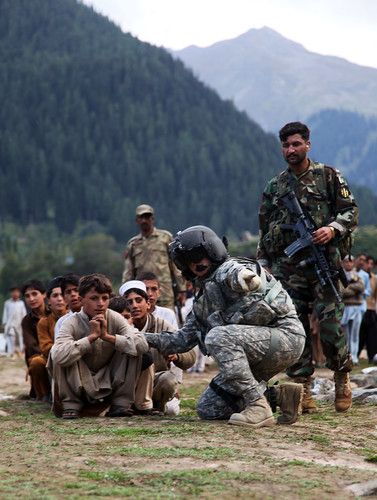
    During a recent field trip to mid-monsoon Nepal, stories of floods affecting vulnerable communities across the country dominated the daily headlines. At the same time, international donors are pouring in funds in an attempt to help the vulnerable cope with the impacts of climate change we are already feeling. Last week, the Adaptation Fund, a fund set up by the UN to help poor countries cope with the impact of climate change, became operational. But are these funds helping – or are they contributing to the problem?

    With less than two months to go until the next global summit on climate change in Mexico, the issues for agreement are about reducing carbon emissions and – more importantly for poor countries – how much money the developed countries, who have the main responsibility for global warming, will put on the negotiating table to help people in poorer countries cope with the consequences. But these are not the only important issues.

    One issue that is barely acknowledged is the heightened risk of political instability and conflict related to climate change. Factors linking climate change to an increased potential for instability and conflict include water scarcity, accelerated land degradation, decreased food production, and indeed the management of the climate funds themselves.

    The risk will be greatest where governance is weak. Nobody will dispute that this is the case in Nepal. 

     ‘A Climate of Conflict’, a report by International Alert, estimates that just under three billion people live in 56 conflict-affected countries, where climate change could increase the risk of political instability. Nepal is one of the 56 at risk.

    Climate policy makers, however, are largely silent on the matter. International Alert’s latest research finds that new funds, already coming into the country’s coffers with more still in the pipeline, could make the situation worse if they don’t take account of the complex linkages between environmental change, security and governance.

    What should inform climate responses?
    Responses to climate change have to respond to the political and social realities of fragile contexts such as Nepal or they will not work.

    Climate change is not only a climate issue. Climate change will affect political stability, development, government, equity, trade and the national economy. And these issues all affect the ability of people and the governments to respond constructively to the challenges climate change generates. The problems are interlinked, so the responses must be too.

    At a meeting of the South Asia Network on Security and Climate Change (SANSaC) co-hosted by International Alert and the EU on 3rd September, SANSaC recommended that in post-conflict situations like Nepal, adaptation strategies should address the broader dimensions of community resilience.


    Resilience is multi-dimensional.

    Adaptation strategies should be defined not only by the nature of the natural hazard that is faced, but also on the basis of understanding the systems of governance and power. This must involve a deep understanding of the local context, and avoid pitting groups against each other. They must also address broader risks to resilience such as security. For example, a new Government of Nepal pilot project to address energy security and reduce deforestation through promotion of biogas plants is being rolled out in nine districts. The switch to biogas aims to curb deforestation for fuel wood thereby decreasing risks of soil erosion and landslides. But the pilot implementation was halted in three districts – Saptari, Udayapur and Siraha – due to the security situation in those places. Such decisions leave these communities doubly vulnerable: to the lack of sustainable energy sources, and to pre-existing insecurity.


    Who are the ‘most vulnerable’?

    Donors often speak about targeting the ‘poorest and most marginalised’ but base their programming on a generalised conception of who these people are. Speak to people in the villages and they’ll tell you. ‘A poor person is a poor person, regardless of whether he is Brahmin or Janjati. Ethnicity is a political construct. The local context is socially and culturally complex. It is social and cultural factors that determine economic activity – not ethnicity’ a local from Sunsari explained. ‘It’s not so simple that because you are a Brahmin you have all the resources and rights, and because you are a janjati you don’t’. Local organisations must understand the local reality and they must make central governments and international actors aware of this complex reality.


    A further problem already giving rise to local community level grievances is a culture of dependence on funds. ‘Everyone’s happy to get funds from donors but when they run out of donor funding, they come back to local government’ stated a local municipality employee in Dhankuta. This dependence on donor assistance usurps local authorities’ roles and responsibilities and undermines the social contract between communities and local government. This relationship between government and the governed is already fraught and may not be able to take the strain of well intended but ill-advised interventions.


    Likewise, peace and reconstruction efforts need to be climate-proofed by paying attention to the availability of resources for livelihoods such as agriculture or returning ex-combatants or people displaced by conflict. These could be under pressure because of climate change. For example, possible future plans to reintegrate ex-combatants from cantonments into villages where they may hope to make a living from agriculture could cause and face future problems. Farmers struggling with changing rainfall patterns and only getting one harvest per year rather than two are seeing their rice yields falling. The prospect arises of returned fighters becoming resentful unemployed farmers, and thus potential recruits, with their combat experience, in instability.


    More broadly, direct access to large-scale adaptation funding combined with low capacity and high corruption within government will limit the ability to effective use it. It is highly likely that funds will be diverted into the hands and pockets of one faction or another in the political elite. With public awareness of these funds coming in, people’s expectations for support – for example compensation for flood victims – are rising, and where they are not met, we are likely to see an increase in protests and political instability. In Nepal’s Koshi basin, recent experience shows that community protests are easily hijacked by political and criminal gangs who promote violence for their own ends. Misuse of funds may thus be the primary factor exacerbating instability.

    If responses to climate change take account of the broad dimensions of what makes people resilient – not just drought-resistant crops and embankments to protect them from floods – but also the interlinked factors of livelihoods options, good infrastructure, social inclusion and effective governance, there’s a good chance that responses to climate change could yield a double dividend: increasing resilience to both climate change and conflict.


    Failure to take account of the linkages however could result in the billions of dollars of funding for adaptation actually becoming part of the problem.


    Janani Vivekananda is a senior advisor on climate change and security at international peacebuilding organisation International Alert

    Image Source: TheDreamSky

  • New Report: Britain Needs Full International Security Review

    The new British Defence Secretary, Dr Liam Fox, has now announced the beginning of the long-awaited Strategic Defence Review and the indications are that the process will be completed before the end of 2010. Given Britain’s role in the European Union and NATO, and its close links with the United States, the outcome of the review will be watched with interest in many countries.

    The incoming Conservative-Liberal-Democrat coalition government believes that a Strategic Defence Review is urgently required for a number of reasons, including

    • the inability of the UK Ministry of Defence to maintain current commitments and programmes on present-day funding levels;
    • the high cost of existing and future programmes;
    • the recent experience of wars in Iraq and Afghanistan and how far the methods that have been employed, have achieved their goals; and
    • serious constraints on UK public spending that are likely to persist for up to a decade.

    The new government has also set up a cross-departmental National Security Council that will further develop the trend to a national security strategy established by the Labour government. While this is a welcome move, it comes in the context of recent programme decisions made ahead of the review that, if not reversed, will direct the defence posture in such a narrow manner that a wider and much-needed reappraisal of Britain’s security will prove impossible. Instead, questions need to be asked about what is needed to limit conflict and create a more peaceful environment in an era of new global security challenges.

    The two most significant programmes are:

    • The aircraft carrier/F-35 strike aircraft programme
    • Like-for-like replacement of the Trident nuclear system

    These are very substantial in terms of costs, but their greater importance is in the manner in which they will dictate a particular role for the UK defence posture – what is in effect a scaled down version of the much larger US global power projection capability. Essentially, they will determine a role for Britain in international security which is out of date and more related to the Cold War, bearing little relation to the issues of global insecurity and conflict, which will be dominant in the next two to three decades. 

    Britain’s National Security Strategy

    In the last two years of the Labour government, some interesting attempts were made to inject some new thinking into UK defence policy. The first was the National Security Strategy of March 2008, and more recently, there was a Defence Green Paper published earlier this year. Following the Green Paper, the Conservative Party, then in opposition, published its own national security Green Paper, A Resilient Nation.

    While the National Security Strategy of 2008 was published in an environment in which the war on terror, Iraq and Afghanistan were hugely prominent, it did seek to look well beyond the immediate circumstances:

    “The Cold War threat has been replaced by a diverse but interconnected set of threats and risks, which affect the United Kingdom directly and also have the potential to undermine wider international stability. They include international terrorism, weapons of mass destruction, conflicts and failed states, pandemics and transnational crime. These and other threats and risks are driven by a diverse and interconnected set of underlying factors, including climate change, competition for energy, poverty and poor governance, demographic change and globalisation.” (NSS para 1.3)

    This wider approach with its recognition of the underlying trends of climate change, marginalisation and energy insecurity, also comes through to a more limited extent in the recent Green Papers, albeit with more of an emphasis on national security in the Conservative contribution. It goes some way towards the analysis of global challenges, developed in recent years by Oxford Research Group and other organisations that see the need for a radical re-thinking of the approaches of countries such as Britain to international security (see Global Security After the War on Terror).

    While ORG is not arguing against the maintenance of defence forces per se, it places much more emphasis on long-term conflict-prevention. It argues that the more substantive problems that will be faced in the coming decades, stem from a dangerous combination of severe environmental constraints, especially climate change and energy shortages, and an increasingly divided world community in which the benefits of globalised economic growth have been excessively concentrated in about one-fifth of the global population. In such circumstances there is the very strong risk of societal breakdown as well as desperate responses from within the majority of the world’s people who are marginalised and will be under increasing environmental constraints.

    There is the further risk that the main emphasis for security policies will be on suppressing such actions and maintaining the status quo, rather than responding to the underlying drivers of insecurity. ORG has long argued that the much more appropriate response is to embark on a transition to low carbon economies to combat the fundamental problem of climate change, while developing a socio-economic system that acts to reverse the dangerous trend towards the marginalisation of the majority of the world’s people. It also argues the need to shift resources to the development of conflict resolution techniques to deal with radical disagreement.

    What is significant about some of the thinking in the National Security Strategy and the two Green Papers is that the analysis of future dangers, implicit in an environmentally constrained and economically divided world, is present and the risks are acknowledged. What is not done, however, is to follow this through in terms of what it means for an integrated strategy, involving major aspects of economic and environmental policy. Moreover, the timing of two major military projects that are in the early yet crucial stages of their development means that unless decisions are reversed, the possibility of entering into a genuinely far-sighted strategic security review is greatly diminished, if not rendered impossible.

    The first project is the planned replacement of the Trident nuclear force with a broadly similar system and the second is the building of two very large new aircraft carriers deployed with a maritime variant of the US-produced F-35 strike aircraft. The carriers will be the largest warships ever to see service with the Royal Navy and will give the UK a global strike capability that it has not had for close to forty years, harking back almost to the days of Empire.

    The sheer scale of the two projects – the planned nuclear force replacement and the carrier procurement – will inevitably determine the UK defence posture. In essence, the UK’s ability to intervene in conflicts in the Persian Gulf and elsewhere will be much increased, and it will have a nuclear strike capability that could, in extreme circumstances, be available in support of operations in overseas theatres.

    However, the cost of constructing and deploying such systems will be so high, especially at a time of financial stringency, that there will be relatively little left for other programmes. What is more, the whole tenor of the defence posture will be one of maintaining control in a fragile and uncertain world, rather than addressing the underlying trends likely to result in that fragility and uncertainty – a matter of keeping the lid on problems or “liddism” as it has been termed.

    Trident

    Britain’s current nuclear force comprises four Vanguard-class ballistic missile submarines, each capable of deploying with 16 missiles. While these are usually fitted with three independently-targetable warheads of about 100 kilotons of explosive power (8x the Hiroshima bomb), some are deployed with a much smaller single warhead for what has variably been called tactical or sub-strategic use. Neither term is now used, not least as they give the impression of a willingness to use nuclear weapons in less than extreme circumstances of national survival. – UK governments prefer to avoid acknowledging this aspect of the UK nuclear posture.

    Britain maintains its nuclear force with at least one missile submarine at sea at any one time – what is termed “continuous at-sea deterrence” or CASD.

    The Trident system is due for renewal by the 2020s and current plans involve a broadly like-for-like replacement. Given that the Aldermaston/Burghfield nuclear weapons development and production complex in Berkshire costs around £1 billion a year, and given the cost of the new submarines and the high cost of deploying them with numerous support facilities, the likely life-time cost of replacing Trident will approach £100 billion, much of it front-loaded to the next 10-15 years. The intention of the previous Labour government was to exclude the Trident replacement programme from a post-election Strategic Defence Review. That was also the intention of the Conservatives when in opposition and is likely to remain the case, in spite of some Liberal-Democrat concerns over the Trident replacement issue.

    Given the commitment of significant world political figures, including President Obama, to the idea of moving towards a nuclear-free world, there are major steps that the British government could take to further progress in that direction. They include:

    • Cutting the UK nuclear stockpile from the present size, estimated at 160 warheads, to under one hundred;
    • Ending continuous at-sea deterrence and mothballing one of the four submarines; and
    • Ruling out the hugely expensive like-for-like replacement of Trident and including the options of going for a much more limited nuclear system, or even considering phasing out nuclear weapons altogether.

    Such moves do not in themselves involve the UK giving up its nuclear forces in the short term but they would signal a strong commitment to substantially lower nuclear forces while also leaving open the possibility of going further, should the international and domestic political environments allow. They would also make it easier to have a comprehensive security review which would not be possible if the nuclear question is excluded.

    The Aircraft Carriers

    The second major issue is the carrier programme. The two new carriers, the 65,000-tonne Queen Elizabeth-class ships, each nearly three times the size of the current Invincible-class ships, are large vessels capable of a range of uses, but the reality is that they are intended as force-projection warships equipped with an extremely expensive new strike aircraft. The combined total order for the carriers and the RAF is expected to be 130 planes at a cost per plane of £94 million, although this cost continues to rise. Along with escorts and support ships, maintaining and deploying the carriers will dominate naval capabilities for the lifetime of the ships.

    The Lockheed F-35, in particular, is already a greatly troubled project with substantial cost overruns and long delays. In some ways, the problems facing this project are reminiscent of the Eurofighter project, a Cold War-era plane that should have been cancelled in the early 1990s but had built up too much momentum for politicians to take such a decision. Famously described in 1997 by a former defence minister, Alan Clark, as “essentially flawed and out of date”, he commented on its role in job creation thus: “we must find a less extravagant way of paying people to make buckets with holes in them”. Eurofighter survived – as the Typhoon – in smaller numbers than planned, and was eventually adapted at great cost, to fulfil some new roles. at great cost, to fulfil some new roles. It was, though, very much an example of a project overtaken by events. The US F-35 programme is also essentially a project of the 1990s.

    The planned British purchase of F35 strike aircraft in combination with the carrier programme will be more of an imperial throwback than a real contribution to Britain’s security.

    The entire UK carrier/F-35 programme should be cancelled. Replacements might include two much smaller sea control ships utilising the rapidly developing UCAV (drone) technologies, with a much scaled-down purchase of one of the F-35 alternatives currently available.

    The real problem here is that a serious review of Britain’s security cannot be done if the future defence posture is already dictated by Trident replacement and the carrier/F-35 programme. The right option therefore is to scale down the existing Trident force, review its replacement and cancel the carrier/F-35 programme before much more money is wasted.

    The Issue of Procurement

    Perhaps the most serious financial issue facing the Ministry of Defence is the persistent failure to control the cost of individual programmes. Among current programmes that have hugely overrun their original estimates, the most extreme is the replacement of the Nimrod MR2 maritime patrol and surveillance aircraft with the Nimrod MRA4. This was due to be deployed in 2003, was subject to innumerable delays and cost increases and will not now enter service until 2012. Only 9 aircraft will be procured instead of the original 21, largely because of the huge cost increases currently estimated at around £400 million per aircraft.

    Because of many problems with the current MR2, including concerns over airworthiness, these planes were withdrawn from service two months ago, leaving the RAF to try to fill the gap with a mix of other aircraft and helicopters, none of them remotely comparable in the maritime role to the MR2. The MR2/MRA4 saga is one of many examples of delayed programmes and cost overruns that have plagued defence procurement for many years.

    Successive governments have sought to bring costs and programmes under control but with very little success, mainly because of the nature of what was described by President Eisenhower, more than fifty years ago, as the military industrial complex. For Britain, one of the key issues is that the complex is essentially self-organising but not self-regulating. Very few companies operate in the advanced defence sector, and there is little competition as well as a pervasive climate of mutual interest. Thus, senior civil servants and senior military, especially those concerned with procurement, are frequently able to acquire lucrative consultancies not long after they retire, and independent oversight of large programmes is effectively absent. Successive defence select committees have had little impact and the National Audit Office concentrates on individual programmes and is liable to be constrained by issues of secrecy and restricted terms of reference.

    Any serious defence/security review has to address the procurement issue, even though it will be singularly difficult to come up with any effective measure of oversight. At the same time, there are lessons to be learnt from the evolution of the Police Complaints Authority and, perhaps more significantly, the Financial Services Authority, especially as the latter has recently shown itself willing to take on major financial institutions.

    A viable option would be to establish a Defence Procurement Authority, outside of the control of the Ministry of Defence, which would provide the continuing scrutiny of defence procurement as a whole which has been so singularly lacking in the past.

    Conclusion

    Britain is beginning to embrace the idea of looking at international security in a manner that goes beyond a traditional defence review, with the National Security Strategy, the Green Papers and the new National Security Council being evidence of this. In the face of current financial constraints and the carrier/Trident issue, though, there is every sign that the forthcoming defence review will be very limited in its remit, and therefore fundamentally inadequate.

    Instead:

    • The review should be inter-departmental and overseen at Cabinet Office level.
    • It should address the issue of defence procurement.
    • It should be wide-ranging and able to develop integrated policy on broadly-based global security issues, such as climate change, economic marginalisation and conflict-prevention.
    • It will not be able to do this effectively, unless the carrier/F-35 programme is cancelled and replaced with a smaller and much more versatile option, and the Trident force and its replacement are substantially scaled down.
    • Each constrains an effective and far-sighted review – together they make a genuine review well-nigh impossible.

     www.oxfordresearchgroup.org.uk

  • Holding Libya Together: Security Challenges after Qadhafi

    The structure of Libyan society under the Qadhafi regime, as well as during its demise and aftermath, was and remains peculiarly fragmented. The former dictator deliberately kept state institutions weak (in particular the army) in order to prevent the formation of an organised opposition and to create a cult of leadership centred on himself and his family. The consequence for the nature of the uprising was that rebel forces were fragmented, their control over the country was acquired piecemeal, and the internationally recognised National Transitional Council has had tenuous legitimacy outside its base in Benghazi and the east.


    Now that the regime has fallen, the process of rebuilding should be underway; but Libya has many autonomous, disconnected and heavily armed militias, all of whom have independent claims on their country’s liberation as well as the fire power to back those claims. The following Crisis Group Report examines the tricky path that the authorities must navigate in order to successfully disarm, demobilise and reintegrate into society Libya’s rebel fighters, without plunging the country back into violence. Many of the young men who took up arms and joined the rebellion found in it a dignity long denied them by lack of economic and employment opportunities. So while the number of weapons in circulation must be dramatically reduced, the status that they bestow needs to be met by other means.


    Executive Summary and Recommendations

    As the recent upsurge of violence dramatically illustrates, the militias that were decisive in ousting Qadhafi’s regime are becoming a significant problem now that it is gone. Their number is a mystery: 100 according to some; three times that others say. Over 125,000 Libyans are said to be armed. The groups do not see themselves as serving a central authority; they have separate procedures to register members and weapons, arrest and detain suspects; they repeatedly have clashed. Rebuilding Libya requires addressing their fate, yet haste would be as perilous as apathy. The uprising was highly decentralised; although they recognise it, the local military and civilian councils are sceptical of the National Transitional Council (NTC), the largely self-appointed body leading the transition. They feel they need weapons to defend their interests and address their security fears.

    A top-down disarmament and demobilisation effort by an executive lacking legitimacy would backfire. For now the NTC should work with local authorities and militias – and encourage them to work with each other – to agree on operational standards and pave the way for restructured police, military and civilian institutions. Qadhafi centralised power without building a central state. His successors must do the reverse.

    A dual legacy burdens Libya’s new authorities. The first was bequeathed by Qadhafi in the form of a regime centred on himself and his family; that played neighbourhoods and groups against one another; failed to develop genuine national institutions; and deliberately kept the national army weak to prevent the emergence of would-be challengers. The second legacy stems from the way in which he was toppled: through the piecemeal and variegated liberation of different parts of the country. A large number of local forces and militias volunteered to take part in this fight. After Qadhafi’s fall, all could legitimately claim to have sacrificed blood and treasure for the cause, and all could consider themselves national liberators.

    To much of the world, the NTC was the face of the uprising. It was formed early, spoke with authority and swiftly achieved broad international recognition. On the ground, the picture was different. The NTC was headquartered in the eastern city of Benghazi, a traditional base of anti-regime activity that provided army defectors a relatively secure area of operations, particularly after NATO’s involvement. The eastern rebellion was built around a strong kernel of experienced opposition and commanders who found friendly territory in which to defect at relatively low cost and personal risk. But it could only encourage western cities and towns to rise up, not adequately support them. At key times, army components that defected, stuck on the eastern frontlines, by and large became passive observers of what occurred in the rest of the country. In the eyes of many, the rebel army looked increasingly like an eastern, not a truly national force. As for the NTC, focused on obtaining vital international support, it never fully led the uprising, nor could it establish a substantial physical presence in much of the rest of the country.

    In the west, rebels formed militias and military brigades that were essentially autonomous, self-armed and self-trained, benefiting in most instances from limited NTC and foreign government support. Some had a military background, but most were civilians – accountants, lawyers, students or labourers. When and where they prevailed, they assumed security and civilian responsibility under the authority of local military councils. As a result, most of the militias are geographically rooted, identified with specific neighbourhoods, towns and cities – such as Zintan and Misrata – rather than joined by ideology, tribal membership or ethnicity; they seldom possess a clear political agenda beyond securing their area.

    The situation in Tripoli was different and uniquely dangerous. There, victory over Qadhafi forces reflected the combined efforts of local residents and various militias from across the country. The outcome was a series of parallel, at times uncoordinated chains of command. The presence of multiple militias has led to armed clashes as they overlap and compete for power.

    The NTC’s desire to bring the militias under central control is wholly understandable; to build a stable Libya, it also is necessary. But obstacles are great. By now, they have developed vested interests they will be loath to relinquish. They also have become increasingly entrenched. Militias mimic the organisation of a regular military and enjoy parallel chains of command; they have separate weapons and vehicle registration procedures; supply identification cards; conduct investigations; issue warrants; arrest and detain suspects; and conduct security operations, sometimes at substantial cost to communities subject to discrimination and collective punishment.

    They also have advantages that the NTC and the National Army lack, notably superior local knowledge and connections, relatively strong leaderships and revolutionary legitimacy. In contrast, the NTC has had to struggle with internal divisions, a credibility deficit and questions surrounding its effectiveness. It has had to deal with ministries still in the process of reorganisation and whose employees – most of them former regime holdovers – have yet to cast off the ingrained habit of referring any decision to the ministerial level.

    But the heart of the matter is political. The security landscape’s fragmentation – and militias’ unwillingness to give up arms – reflects distrust and uncertainty regarding who has the legitimacy to lead during the transition. While the NTC and reconstituted National Army can point out they were among the first to rebel or defect and were crucial in obtaining international support, others see things differently. Some considered them too eastern-dominated and blamed them for playing a marginal role in liberating the west. Civilians who took up arms and who had been powerless or persecuted under Qadhafi resent ex-senior officials who defected from the army and members of the regime’s elite who shifted allegiances and now purport to rule. Although they are represented on the council, many Islamists consider the NTC overly secular and out of touch with ordinary Libyans. Above all else, militias – notably those in Tripoli, Zintan and Misrata – have their own narrative to justify their legitimacy: that they spearheaded the revolution in the west, did the most to free the capital or suffered most from Qadhafi’s repression.

    Formation of a new cabinet was supposed to curb militia-on-militia violence as well as defiance of the National Army; it has done nothing of the kind. Instead, violence in the capital if anything has escalated, with armed clashes occurring almost nightly. Regional suspicion of the central authority remains high as does disagreement over which of the many new revolutionary groups and personalities ought to be entrusted with power.

    The problem posed by militias is intimately related to deeper, longer-term structural issues: Qadhafi’s neglect of the army along with other institutions; regional friction and societal divisions (between regions, between Islamist-leaning and secularist-leaning camps, as well as between representatives of the old and new orders); the uprising’s geographically uneven and uncoordinated development; the surplus of weapons and deficit in trust; the absence of a strong, fully representative and effective executive authority; and widespread feeling among many armed fighters that the existing national army lacks both relevance and legitimacy.

    Until a more legitimate governing body is formed – which likely means until elections are held – and until more credible national institutions are developed, notably in the areas of defence, policing and vital service delivery, Libyans are likely to be suspicious of the political process, while insisting on both retaining their weapons and preserving the current structure of irregular armed brigades. To try to force a different outcome would be to play with fire, and with poor odds.

    But that does not mean nothing can be done. Some of the most worrying features of the security patchwork should be addressed cooperatively between the NTC and local military as well as civilian councils. At the top of the list should be developing and enforcing clear standards to prevent abuses of detainees or discrimination against entire communities, the uncontrolled possession, display or use especially of heavy weapons and inter-militia clashes. The NTC also should begin working on longer-term steps to demobilise the militias and reintegrate their fighters in coordination with local actors. This will require restructuring the police and military, but also providing economic opportunities for former fighters – vocational training, jobs as well as basic social services – which in turn will require meeting minimum expectations of good government. Even as it takes a relatively hands-off approach, the international community has much to offer in this respect – and Libyans appear eager for such help.

    Ultimately, successfully dealing with the proliferation of militias will entail a delicate balancing act: central authorities must take action, but not at the expense of local counterparts; disarmament and demobilisation should proceed deliberately, but neither too quickly nor too abruptly; and international players should weigh the need not to overly interfere in Libya’s affairs against the obligation not to become overly complacent about its promising but still fragile future.

    RECOMMENDATIONS

    To the Transitional National Council (NTC):

    1.  Strengthen the legitimacy of central authorities by ensuring greater transparency in decision-making and in identifying and selecting Council representatives and members of the executive.

    2.  Ensure all decisions relating to disarmament, demobilisation and reintegration (DDR) are taken in close consultation with local military councils and militias, by appointing a credible personality to liaise and coordinate with such local bodies.

    3.  Enhance opportunity for involvement by community and religious leaders in sponsoring and supporting DDR initiatives.

    4.  Back local DDR initiatives financially in cooperation with local councils, including weapons registration, improvement of detention facilities and support for young fighters.

    To the Revolutionary Brigades, Local Military Councils and Local Civilian Councils: 


    5.  Seek to reintegrate armed rebels, notably the youngest among them, inter alia by identifying and registering those who wish to pursue careers in the police and military; offering alternative civilian employment; and sponsoring civic improvement initiatives with city funds.

    6.  Disclose all sources of funding.

    7.  Agree on and enforce codes of conduct and mechanisms for dispute resolution, especially where several militias operate in the same area.

    To the NTC, Revolutionary Brigades, Local Military Councils and Local Civilian Councils:

    8.  Agree on and enforce a common set of rules and behaviour for all armed fighters; implement a single procedure for weapons registrations; and ban the display of heavy weapons in town centres and the bearing of arms at checkpoints and key installations.

    9.  Transfer as quickly as possible responsibility for detainees to central authority and, in the meantime, ensure respect for rule of law and international standards in arrest and detention procedures; release persons whose detention is not consistent with such practices; and bring to justice, speedily and in accordance with international law, those accused of criminal acts.

    10.  Agree on a process for NTC inspection of arms depots, detention centres, border posts, checkpoints and other militia-controlled facilities.

    11.  Implement initial steps toward DDR by:

        a) focusing at first on heavy weapons;

        b) through a joint effort by the government and local councils, providing support for young fighters in particular;

        c) establishing an NTC-funded mandatory training program covering rules of engagement and discipline for militia members who wish to pursue careers in the military or policing; and

        d) providing vocational training for militia fighters as well as necessary financial incentives.

    12.  Establish and implement criteria for appointment to senior posts within the defence ministry and army on an inclusive basis.

    13.  Create at both the central and local levels a non-par­ti­san, inclusive committee to review and refer candidates for recruitment into the police and national army.

    14.  Institute an appeals procedure for rejected candidates.

    To the UN Support Mission in Libya and other International Stakeholders, including Arab countries, the European Union and the U.S.:

    15.  Offer the NTC assistance in, inter alia:

        a) undertaking quick assessments of security, DDR, and related needs;

        b) police training, including possibly establishment of a gendarmerie function;

        c) security force professionalisation, including specifically on human rights and civilian oversight; and

        d) border control.

    Tripoli/Brussels


    Article Source: Crisis Group. To read the full Report, click here

    Image Source: United Nations

  • Climate Change and Security

    The consequences of climate change for human security are profound, but much of the last decade has been lost in avoiding those consequences. The implications for human security are serious. Today, with the consequences of climate change being increasingly recognised by military analysts, there is a risk of the “securitising” of the climate change agenda leading simply to military responses rather than a more preventative course of a rapid shift to a low-carbon society.

    A World Blowing Cold and Hot

    In 2009-10, the United Kingdom and much of the rest of north-west Europe experienced one of the coldest and most prolonged winters for several decades. In the minds of many people this seemed to confirm the view that the evidence for global warming was limited at best, and that the views of climate change sceptics were to be taken seriously. Furthermore, the winter’s experience came after the Copenhagen climate negotiations made little progress, and was also in the aftermath of a major controversy concerning climate change research at the University of East Anglia in the UK.

    In this context- of suspicion over the reality of climate change – many people in Western Europe found it difficult to believe that the month of January 2010 was actually one of the warmest on record. This was the case when expressed in global rather than European terms – while the north-east Atlantic had been experiencing severe cold, parts of North America had warmer than average winters, and temperatures were high in many other parts of the world.

    As 2010 progressed, two other weather events and one oceanic development added further to a sense of uncertainty. For much of the mid-summer period, Russia experienced exceptionally high temperatures which, in the case of the greater Moscow region, resulted in numerous forest fires leading to smog over the city. At the same time, further south in Central Europe, there was widespread flooding across 8 countries. In addition to this, there were appalling floods in Pakistan as the monsoon season was marked by some of the heaviest rainfall in decades. The full scale of the losses in Pakistan is still not clear.

    Few climate scientists sought to claim that these weather events were direct indicators of climate change, but an indirect connection was certainly suggested. While it may be a common mistake to confuse “short-term weather” with “long-term climate”, it has been widely predicted that as the atmosphere of the entire planet slowly heats up, then weather systems should be expected to become more energetic, leading to extremes of weather events such as intense tropical storms, exceptional monsoons or continental heat waves. The experiences in Russia and Pakistan could be no more than equivalent to some of the extreme events that have been witnessed in the past, but their conjuncture at least reminded many people of other aspects of climate change.

    The final element for 2010 was not a weather event as such, but a report that the Artic Ocean was experiencing one of the most substantial losses of mid-year sea ice on record. What seemed particularly surprising was that this should be happening within a matter of months of such a severe winter in the north-east Atlantic. In fact, the loss of sea ice was within the predictions that climate change models have produced in recent years. The overall impact of the loss of sea ice and the extreme weather experienced in Russia and Pakistan meant that by early September there was a widespread sense, once again, that climate change should be taken seriously.

    Climate Change in Context

    The possible impact of increased carbon dioxide levels in the atmosphere was well recognised over 40 years ago, and by the end of the 1980s there was serious concern that there would be substantial changes in the planet’s climate if carbon emissions were not curbed. Although not directly related to climate change, the potential destruction of the ozone layer through the release of CFC pollutants was recognised in the mid-1980s as being the first clear example of human activity having an impact on the entire global ecosystem. The ozone problem was relatively easy to counter, since CFCs could be replaced, and phasing them out through the Montreal Convention was agreed in 1987. Partly because of the sudden and serious nature of the CFC issue, climate change research was attracting far more attention by 1990.

    At the same time, there was one aspect that limited the extent of the concern. This was that studies of natural climate change in prehistoric times have indicated that most of the impact was in the north and south temperate latitudes. If this was repeated with human-induced climate change then at least the countries most likely to be affected would be wealthy enough to be able to adapt. With the tropics and sub-tropics buffered against excessive impacts, poorer people across the world might have less to contend with.

    By the early 1990s, advances in climate change science showed that the pattern of natural climate change would not be repeated by human-induced change, and that those parts of the world least able to cope would be seriously affected. By the early part of the 2000s, further work was actually showing that there would be an asymmetric impact. In broad terms, large parts of Antarctica, the southern oceans and the southernmost parts of the continental land masses would experience the smallest increases in temperature, whereas the Arctic region and most northern, sub-tropical and tropical land masses would experience above-average increases. There were also indications that rainfall would tend to increase over the oceans and Polar Regions but decrease over the tropical and sub-tropical land masses.

    The implications of this more recent understanding are profound, since those populations and societies least able to cope with the impact of climate change will have to contend with substantial changes. Decreases in crop yields and consequent food availability will be among the factors likely to make societies much more fragile and unstable, one effect being very substantial increases in migratory pressures, with these being strongly resisted by wealthier countries. When seen in combination with the persistent socio-economic divisions that already exist across the world, the potential for serious social unrest and political instability is considerable.

    The Recent Politics of Climate Change

    Among those resisting the implications of climate change have been large trans-national oil companies and oil-exporting countries. The former have funded policy institutes and others to promote critiques of climate change research and the latter have been deeply reluctant to support international protocols limiting carbon emissions. Beyond these forces, which may be powerful and well-funded, a much more serious issue in the first decade of the 21st century was that the world’s largest emitter of carbon, the United States, had an administration in power that was deeply suspicious of climate change. The United States withdrew from the Kyoto Climate Change Protocol within months of George W Bush assuming office in 2001, and throughout the next eight years, the United States played little part in climate change negotiations.

    While this altered with the election of Barack Obama in 2008, by the middle of this year, part of the opposition to his administration was coming from the Tea Party Movement and other right-wing elements in the Republican Party, one feature of their outlook being a deep suspicion of climate change combined with strong opposition to any limits on carbon emissions. November’s mid-term elections to Congress may determine whether these views solidify in Congress, – a major risk, if the Democrats lose control of either house.

    Climate Change and the Military

    We are at a point where a combination of factors, including the attitude of the Obama administration, means that the risks emanating from climate change are being more generally recognised. This coincides with a significant change in attitude among military planners. In military planning units and security think tanks across the western world climate change is now seen as one of the key future drivers of insecurity. It is an outlook that stems partly from a tendency for military analysts to look long-term. Unlike most political and commercial institutions that tend to focus on 4-10 year time spans, military planning is frequently much longer term, to a certain extent because military forces depend partly on the development of systems involving development and procurement processes that stretch over decades.

    Much of the analysis on climate change coming from military sources produces results that coincide with the ideas of radical environmental analysts, pointing to the social and political consequences, the risks of state failure and the rise of radical oppositional movements. However, when it comes to responses, the primary military focus is on maintaining the security of the state, either on its own or in alliance with others. This is to be expected and is legitimate from the perspective of a military organisation – its reason for being is to keep the state secure. Thus, the emphasis may be on increased border security and the patrolling of potential migratory routes, and the intervention capabilities necessary to stabilise failing states and ungoverned space that may be a consequence of the impact of climate change. What this almost never involves, is advocating the primary preventative measure that is required for responding to climate change – a rapid move towards an ultra-low carbon economy.

    The Military Complication

    Discussions with military analysts, including those who are engaging with Oxford Research Group’s Sustainable Security Programme, frequently focus on issues concerning climate change and security. There is sometimes recognition by some in the military that there should be a role for senior military officers in advocating a low carbon transition as part of a process of conflict prevention. The complication is that the loss of a decade at the start of the current century means that there will inevitably be numerous impacts of climate change, even if a low carbon transition can be achieved in the next two decades. From a military perspective it can therefore seem reasonable and legitimate to plan for security consequences. The problem is that this can have the negative effect of providing a political excuse to slow down the rate of transition. If “we”, in a rich country, can maintain our well-being by protecting ourselves from the security impacts of climate change, then engaging in the huge changes involved in a low carbon transition can assume a lesser political priority. This is an attractive proposition for most politicians given the likely electoral unpopularity of the transition.

    The response to this “securitising” of climate change is that some adaptation is undoubtedly going to be required, but that little of this has to do with the military. There will need to be a far greater focus on issues such as improving water management across the tropics and sub-tropics, breeding more drought-tolerant crops, preparing for more severe storms and protecting low-lying regions, but these are not the ultimate answer to climate change. That involves addressing the problem at root – controlling and minimising carbon emissions.

    A substantial element of Oxford Research Group’s Sustainable Security approach is the recognition that conflict prevention is at the root of society’s response to climate change, and that the next five years are crucial in moving towards a more emancipated and environmentally sustainable world. Where there is much work to do is in convincing those in the international security community that it is essential to prevent climate change and that responding to it by protecting elite societies is fundamentally inadequate. It is a huge task but it is at least aided by the manner in which military analysts do have the ability and willingness to think long-term. That is a welcome asset in difficult circumstances.

    Author: Oxford Research Group’s Security Consultant Paul Rogers

    Image Source: DVIDSHUB

  • UK Trident renewal

    In the UK, the Conservative-Liberal Democrat coalition government continues to pursue the renewal of Britain’s Trident nuclear weapon system amidst criticism of the opacity of the procurement process and concerns over the substantial and increasing costs of the project. Adding fuel to public anger over widespread government cuts, the Defence Secretary Liam Fox’s long overdue announcement in May 2011 that the Initial Gate for the project had been approved was accompanied by the revelation that when inflation is taken into account the price tag for just the new submarines (excluding missiles, warheads and running costs) is likely to be £25 billion, as opposed to the £11-14 billion announced in 2006. With the defence budget already curtailed by the October 2010 Comprehensive Spending Review (CSR) and under strain on account of a projected deficit of £36 billion over the next 10 years, these latest figures have prompted further concerns that Trident is being replaced at the expense of conventional military capabilities. Moreover as the Ministry of Defence (MoD) is now locked in yet another battle with the Treasury pressing questions are being asked about the costs, benefits, priority and opportunity costs of Trident replacement as compared with other areas of government expenditure. On 3 August, the Defence Select Committee – a cross-party committee of MPs -criticised the government over its “rushed” and “badly done” Strategic Defence and Security Review (SDSR). Responding, Jim Murphy, the UK’s Shadow Defence Secretary said “events have exposed the mismatch between policy ambition and the resources provided by ministers”.

    Originally scheduled for September 2009 the Initial Gate announcement, which gave the green light for the next stages of procurement to be undertaken (up to 15% of the budget), had been postponed numerous times whilst decisions were made regarding design, particularly over which type of nuclear reactor to use in the new submarines. The Defence Secretary’s Initial Gate statement in the Commons revealed that the new PWR3 reactor would be used, which will increase costs further. The decision to install the PWR3 instead of the currently used PWR2 reactor in the new subs was based on the results of a safety assessment which was accidentally made public by the MoD when anunredacted version of the report was posted on the internet. This led to criticisms of the MoD as well as of Parliamentary Under Secretary of State for Defence Equipment, Support and Technology, Peter Luff, who contradicted the report in Parliament. Anxieties over safety were amplified when an MoD report was published that assessed that government funding cuts are likely to jeopardise the safety of the UK’s nuclear weapons. Likewise, an official inquiry into the August 2010 fire at Aldermaston Atomic Weapons Establishment (AWE) contained strong criticism of the private management consortium (AWE plc, comprising US arms dealer Lockheed Martin, SERCO and Jacobs Engineering) that runs this publicly-funded nuclear weapons plant, particularly with regard to fire prevention and response. The report led the government’s Health and Safety Executive to investigate whether to take legal action against the AWE Management group. Nonetheless, despite a catalogue of problems associated with private sector management of AWE and other UK nuclear sites, in May the Scottish Herald revealed that the nuclear warhead storage base at Coulport is to be sold off to a consortium of private companies also led by, Lockheed Martin.

    The statement on the Initial Gate was accompanied by the publication of areport describing work on the Trident renewal programme to date, the decisions taken at Initial Gate and around £3 billion of work scheduled to take place in advance of the Main Gate. Dr Fox also identified spending on long lead items that would cost a further £500 million. Alongside the announcement came the news that, in line with the Coalition Agreement under which it was agreed that the Liberal Democrats could continue to make the case for alternatives, an18-month study to review the “costs, feasibility and credibility of alternative systems and postures” would be undertaken. The study will be conducted by the Cabinet Office and overseen by Armed Forces Minister and Liberal Democrat Nick Harvey who is more open to exploring alternatives to Tridentthan his senior colleague, Conservative Defence Minister Liam Fox, who hasmade it clear that he is absolutely opposed to change. By way of compromise, the study will consider only nuclear weapons options for replacing the role assigned to Trident in the UK’s nuclear deterrence posture, with no consideration of non-nuclear options for deterrence and security. In Scotland meanwhile, following the May 2011 elections which gave the Scottish National Party (SNP) a strong working majority in the Scottish Parliament, a resolution is to be tabled calling for the removal of UK nuclear weapons from Scottish territory. If successful, such a resolution could have far-reaching implications for the storage of nuclear warheads at Coulport and the deployment of Trident, currently homeported at the MoD’s naval base at Faslane.

    In spite of his unswerving commitment to replacing Trident, Liam Fox was keen to stress the UK’s disarmament credentials on the occasion of the ‘P5 follow-on meeting to the 2010 NPT Review Conference’, using the opportunity to confirm that part of the warhead reduction announced by the UK’s most recent Strategic Defence and Security Review (SDSR) has been completed. Not long afterwards, former UK Foreign Secretary Margaret Beckett reignited the debate over the policy of Continuous-at-sea-deterrence (CASD) when she raised the possibility of “not necessarily needing four boats”.

    Article source: The Acronym Institute

    Image source: UK Parliament

  • Increasing Competition Over the Indus

    Water managers in the Indus Basin will have to overcome a host of overlapping socio-economic, environmental, and policy pressures as they strive to fulfill their society’s future water needs. The Indus sustains some 200 million people and nourishes the breadbaskets of both India and Pakistan, countries where the agricultural sector provides almost a fifth of national GDP and employs roughly half the labor force. But demands on the river have risen to the point that it no longer reaches the sea year round. Nearly 90 percent of the Indus’s resources are already allocated to supply the subcontinent’s growing populations and expanding economies, with little to no capacity to spare.

    Even as they increasingly exploit the Indus, India and Pakistan also are draining their underground aquifers. Water tables have plummeted throughout the region as overdrafts exceed rates of recharge. Satellite data indicate the Indus Basin lost 10 billion cubic meters of groundwater annually between 2002 and 2008, a yearly depletion equivalent to half the available water storage in all the reservoirs of Pakistan.[1]

    Consequently, numerous studies foresee increasing water scarcity there. The consulting firm McKinsey and the International Finance Corporation project supply deficits will top 50 percent on the Indian side of the Indus Basin by 2030. The situation is equally alarming across the border. The World Bank figures Pakistan already has hit the limit of its available resources, yet will require 30 percent more water by 2025 to meet rising agricultural, domestic, and industrial needs.

    Climate change will exert additional, chronic pressures on freshwater supplies in the region. The Indus headwaters rise in the Himalayan range where snow and glacial melt contribute some 45-60 percent of the river’s annual flow. In recent decades, glaciers worldwide have retreated as global average temperatures have warmed. Initially, greater glacier melting will boost river runoff, increasing the danger of seasonal flooding. As de-glaciation continues, however, melt water flows will subsequently wane, diminishing downstream supplies. According to one study, receding glaciers could pare water supply in the upper Indus more than eight percent by 2065. Reverberating through irrigation demands and crop yields, this drop could ultimately reduce the number of people that basin resources could feed by 23 to 30 million.[2]

    Left unaddressed, such strains could sow increasing competition over dwindling water supplies, potentially fueling destabilizing international tensions. Water has been a consistent flash point between India and Pakistan since their partition. The international boundary that set the two nations apart also set them at odds over water. As the downstream neighbor, Pakistan feared Indian withdrawals or diversions could deprive it of its water supply, throttling its agriculture and undermining its food security. Up-river, India worried that according all flows to Pakistan would curtail possibilities for developing the Indus for its own benefit.

    Since 1960, the river has been governed by the Indus Waters Treaty (IWT). The IWT physically divided the Indus, allocating use of the three western tributaries that feed the main river entirely to Pakistan and the three eastern tributaries to India, while also controlling the type and features of projects that India can establish on its portion of the Indus. The IWT has stood through three wars and countless clashes. But the accord has no provisions for how the parties should respond to variations in water flow that climate change could engender. Nor does it address water pollution, though deteriorating quality cuts into available quantities as sources become too degraded for many uses. And while consumers across the basin rely on groundwater to supplement or substitute for surface water, there is no agreement for sharing supply or even sharing data on shared groundwater resources. Finally, though the Indus in fact begins in China and receives 10 percent of its discharge from Afghanistan’s Kabul River, the ITW includes neither of these other two riparians.

    Indeed, the IWT may now hinder India and Pakistan’s abilities to face emerging realities. Both countries, for instance, lack adequate water storage capacity – a serious vulnerability as climate change threatens to disrupt future water availability. Both also suffer significant power shortages. New dam construction could potentially furnish them with reservoirs to buffer prospective shortfalls, flood control against the projected rise in extreme monsoon events, and hydropower to reduce their carbon emissions. Developing such projects, though, would heighten the need for enhanced cooperation as the ends of irrigation, electricity generation, flood protection, and ecosystem maintenance do not necessarily coincide. Multiple works on the same river cannot be effectively managed in isolation; the operations of those upstream also affect those downstream. But the IWT restricts the types of dams, and caps the amount of storage India can install on its tributaries, thereby limiting the type and amount of benefits – flood protection, hydropower – that more coordinated management of the river could offer.

    In the wake of continuing controversies, voices in both countries have suggested revisiting the IWT terms – or even scrapping the accord and starting over. Ultimately, some mutually agreed alterations to the IWT might improve the scope for effective international cooperation and integrated resource management across the basin. Presently, though, moves to renegotiate the IWT would almost certainly prove more contentious than current confidence levels between the parties could bear. Before seeking to revise or reconstruct the accord, India and Pakistan could make better use of collaborative mechanisms it already offers. Article VII requires the countries to share hydrological data, but neither India nor Pakistan publish information on the Indus’s flows, making it that much more difficult for public interest groups, academic analysts, local stakeholders, or even decision-makers in other policy departments in either country to constructively participate or contribute to policy formation. Similarly, Article VII expressly envisages the two states could undertake cooperative engineering works, a possibility they have never pursued.

    Under the IWT, “East is East and West is West.” Contra the poem of Rudyard Kipling, however, the ‘twain must meet if they are to effectively manage their shared water resources.


    [1] V.M. Tiwari, J. Wahr, and S. Swenson, “Dwindling groundwater resources in northern India, from satellite gravity observations,” Geophysical Research Letters 36, L18401 (2009).

    [2] Walter W. Immerzeel, Ludovicus P.H. van Beek, and Marc P.F. Bierkens, “Climate Change Will Affect the Asian Water Towers,” Science 328, no.5984 (2010).


    This article originally appeared on Stimson Center’s website. 

  • A tale of two cities: Durban and Brussels

    The UN climate change negotiations in Durban began under a cloud of low expectations, which have been partly dispelled by the last-minute agreement to extend the legally-binding Kyoto Protocol on greenhouse gas emissions. And while Canada, a major emitter, has pulled out of the Protocol, a new environmental divide has emerged that contrasts with the traditional paradigm of developed versus developing countries: the new faultline pits the United States, Canada, China and India, who oppose legal limits for a variety of economic reasons, against the European Union, African, Latin American and island states who favour binding measures – often for reasons of national survival.

    The following article from the Director of the International Institute for Environment and Development contrasts the dynamics that have driven both the climate talks in Durban and the debate on European financial regulation that ended with a British veto. While market forces guide the decision-making process in the world of finance, progressive decisions on the world climate have little to recommend them beyond moral appeal. While welcoming the achievements of the Durban talks, she stresses that governments are unwilling to take the steps necessary to curb carbon emissions that they are currently implementing in the name of austerity – but if we address the two problems together, then there is potential for optimism.


    Camilla Toulmin | 13 December 2011

    The media has been telling a tale of two crises: they are complex, interconnected and have much in common. The common threads include richer countries living beyond their means and racking up high levels of financial and ecological debt over several decades leading to an economic and financial crisis. In Europe, we are due for a substantial adjustment in living standards, to get back into balance. Analysts reckon that in the UK, families will only regain their 2002 incomes by 2016 – and that’s if all goes to plan.

    On the finance side, it’s the “markets” which provide the heat that forces politicians to act. Bond buyers will only continue to purchase what the government offers if they feel confident in their commitment to public debt reduction and re-structuring of the economy to generate growth and productivity. These actions are often divisive; Prime Minister David Cameron’s decision to veto a new EU treaty has led to fears that the UK will become isolated if we don’t fully engage with Europe.

    If it’s the markets that force us onto the financial straight and narrow, there seems no such force at work to push international leaders to take prompt and effective action on climate change. Unlike the fear and respect of governments for brokers and credit rating agencies, there is no baleful higher power that forces a common approach to safeguarding the planet’s future. The climate vulnerable have no power to press for change, save the moral argument.

    But, despite the earlier despondency about potential outcomes from the UN Climate change negotiations, there is some room for optimism. The crucial outcome from Durban is an extension of the Kyoto Protocol. Although only the European Union and a few countries will commit to it, and the time frame for the second commitment period has yet to be decided, it’s extension re-establishes the “principle that climate change should be tackled through a framework of international law.” The agreement also:

        * refers to the current emissions gap – the gap between commitments made and commitments needed to meet the 2 degrees Celcius target;
        * starts a process for a post 2020 climate treaty which will require emerging economies, such as China, to commit to targets as well;
        * establishes a Green Fund which could provide the financial and technical support necessary for the poorest countries to adapt to the effects of climate change, if properly financed.

    The threat of bankruptcy has so focused the minds of politicians in Europe, that Greece and Italy have put in place technocratic governments to carry out the difficult and unpopular economic measures that most people recognise need to be taken, but for which no-one has the political courage to take responsibility. Would we be willing to do the same to get real cuts in greenhouse gases?

    On both climate and finance, we need a credible plan for the next 10-20 years that people can buy into. This needs to be clearer about the shape of the economy we want. Crisis can be a spur to generate major structural change, as was seen in many countries like Argentina and Brazil in the 1990s. Greening the economy could provide a new narrative for growth. London could use its primacy as a global financial centre to generate the finance for new investments and green infrastructure.  Many companies are cash-rich. A firm commitment to a long-term credible plan to shift to a low carbon economy could generate sustainable growth, and create much-needed jobs.

    Camilla Toulmin is the Director of IIED.


    Article Source: International Institute for Environment and Development
    Image Source: European Parliament

  • Warfare and Limits: A Losing Battle?

    Dangerous pressures are pushing international warfare in the direction of the absolute, imperiling the future of mankind. Undoubtedly, the foremost of these pressures is the emergence, use, retention, and proliferation of nuclear weapons, as well as the development of biological and chemical weapons of mass destruction.

    Since Hiroshima and Nagasaki there have been several close calls involving heightened dangers of nuclear war, especially during the 45 years of Cold War rivalry. None of these was more frightening than the Cuban Missile Crisis of 1962, when it took Soviet willingness to reverse their decision to deploy missiles in Cuba to avert a slide into catastrophic nuclear war.

    To entrust such weaponry to the vagaries of political leadership and the whims of governmental institutions seems like a Mount Everest of human folly. Yet there is little outcry against nuclear weapons today, despite the collapse of the deterrence rationale that seemed to make reliance on the weaponry somewhat plausible during the decades of confrontation between the Soviet Union and the United States. Even under Cold War conditions, deterrence was seen by peace activists as a form of geopolitical insanity widely known by the descriptive acronym “MAD”, short for “Mutually Assured Destruction”.

    Underneath the tendency of powerful governments to develop whatever weapons and tactics technology can provide are the fragmented political identities of a world divided into sovereign political actors. The inhabitants of these states of greatly varying size, capabilities, vulnerabilities, cultural and political traditions have long been indoctrinated to approve blindly of the actions of their own state. The idolatrous eyes of nationalism treat the extermination of an enemy as an acceptable goal if necessary for national security, and even desirable, if it is seen as furthering national ambitions.

    Beyond this, defending the security of one’s own state is viewed as an unconditional prerogative, vindicating even a suicidal reliance on nuclear weaponry. The ideology of nationalism, nurturing the values of unquestioning patriotism and militarism in the modern West, have led to an orientation that can be described as secular fundamentalism, embodying imperial worldviews, however dysfunctional, given the risks and limits associated with continuing to seek desired political ends by relying on military superiority. The crime of treason reinforces these absolutist claims of the secular state by disallowing citizens of democratic states any right to claim conscience, law, and belief in support of their deviant behaviour.

    ‘Militarist frustration’ since WWII

    Any objective study of international history will show that the militarily superior side has rarely prevailed in an armed conflict since the end of World War II unless it has also been able to command moral and legal legitimacy. The political failure of the colonial powers despite their military dominance provide many bloody illustrations of this recent trend toward militarist frustration, starting in the middle of the 20th century.

    Because of entrenched bureaucratic and economic interests (the “military-industrial-media complex”), the evidence of the decline of hard-power geopolitics has been ignored. As a result, dysfunctional military solutions for conflicts continue to be relied upon in the West, especially by the United States, and costly and futile recourses to war are repeated over and over without lessons of restraint being learned. Experience, which might provide a rational limit on militarism, has been neglected; instead, old habits persist.

    Another check on the excesses of warfare is supposedly provided by the inhibiting role of conscience, the ethical component of the human sensibility, that is supposed to be a hallmark of citizenship in liberal democracies. This sentiment was vividly expressed in a Bertolt Brecht poem, “A German War Primer”:

    General, your bomber is powerful
    It smashes down forests and crushes a hundred men
    But it has one defect:
    It needs a driver.

    A driver is both a human cost, and maybe a brake on excess, as Brecht suggests a few lines later:

    General, man is very useful
    He can fly and he can kill
    But he has one defect:
    He can think.

    Of course, military training and discipline are dedicated to overcoming this defect, especially when complemented with nationalist ideologies. International humanitarian law has vainly been trying to impose limits on combat behaviour in wars, but almost always yields in practice to considerations of “military necessity”.

    The Nuremberg Trials decided that “superior orders” were no excuse if war crimes were committed, a breakthrough in establishing responsibility for adhering to law in relation to war, but flawed by its character as “victors’ justice”. Although beset by double standards, this Nuremberg tradition of imposing individual accountability for political and military leaders has persisted, and has recently been revived through the establishment of the International Criminal Court in 2002.

    In the nuclear age, this process of dehumanising the military machine went further because the stakes were so high. I recall visiting the headquarters of the Strategic Air Command (SAC) at the height of the Cold War. SAC was responsible for the missile force that then targeted many cities in the Soviet Union. What struck me at the time was the seeming technocratic sensibility exhibited by those entrusted with operating the computers that would fire the missiles.

    This amoral posture contrasted with the ideological zeal of the commanding generals who would give the orders to annihilate millions of civilians at distant locations. I was told at the time that the lower-ranked technical personnel had been tested to ensure that moral scruples would not interfere with their readiness to follow orders.

    I found this mix of politically and morally driven commanders and amoral subordinates a most disturbing mix at the time, and still do, although I have not been invited back to SAC to see whether similar conditions now prevail. I suspect that they do, considering the differing requirements of the two roles. This view seems confirmed by the enthusiasm expressed for carrying on the “war on terror” in the aftermath of the 9/11 attacks. Although my remarks here are confined to the United States, I would suppose they apply to other major governmental bureaucracies dealing with national security and war/peace issues.

    Use of drones dehumanises war

    Now, new technological innovations in warfare are underlining these concerns. American reliance on drone attacks in Afghanistan (and elsewhere) removes the human altogether from the war theater, except in the geographically remote roles of programmer and strategic planner. And even then, reliance on algorithms for targeting removes any shred of personal responsibility. When mistakes are made, and innocent civilians are killed, it is treated as an unfortunate anomaly.

    The tragic event is deprived of its human quality by being labeled “collateral damage”, and a formal apology is usually made. But nevertheless, the practice goes on: the US is investing heavily in more and better drones for future wars. Eliminating the presence of human soldiers from the battlefield is a chilling development: historically, the fact that war put soldiers’ lives at risk forced citizens to think about whether a war was morally right, or worth fighting. The anti-war sentiments of American soldiers in Vietnam exerted a powerful influence that helped over time finally to bring the war to an end.

    Ultimately, what is at stake is the human spirit, which at the moment is being squeezed to near-death by technological momentum, corporate greed, militarism, and secular fundamentalism. The ultra-sophistication of the new weaponry and the accompanying military tactics create a new divide in the military sphere, giving rise to an era of virtually “casualty-free” and one-sided wars where the devastation and victimisation are shifted almost totally to the technologically inferior side. Examples include The Gulf War of 1991, the Kosovo War of 1999, and the Gaza Attacks of 2008-09. In the background, however, is the persisting threat of a use of nuclear weapons either by a state or an extremist non-state actor that could in a flash change this ratio of comparative vulnerability.

    This web of historical forces continues to entrap major political actors in the world, and dims hopes for a sustainable future, even without taking into account the growing threat of climate change. Scenarios of future cyber warfare are also part of this evolving capacity to destroy distant societies without any human interaction. The cumulative effect of these developments threatens to make irrelevant the moral compass that alone provides acceptable guidance for a sustainable political future. Because international institutions remain too weak to provide global governance, reason and prudence remain the best hope to guide human destiny.

    Richard Falk is Albert G. Milbank Professor Emeritus of International Law at Princeton University and Research Professor in Global and International Studies at the University of California, Santa Barbara. He has authored and edited numerous publications spanning a period of five decades, most recently editing the volume International Law and the Third World: Reshaping Justice (Routledge, 2008) and Achieving Human Rights (Routledge 2009).

    He is Chair of the Board, Nuclear Age Peace Foundation and Director, Global Climate Change Project, UCSB. He is currently serving the fourth year of a six year term as a United Nations Special Rapporteur on human rights in the Occupied Palestinian Territories.

    This article originally appeared on Al Jazeera’s English website. 

  • Yemen: state fragility, piety, and the problems with intervention

    Summary

    The issue of state fragility and the presence of radical religious movements in Yemen have occasioned misperceptions and confusions in recent debates about the country. This report argues that the language of “failed states” arises nearly exclusively in relation to countries deemed threatening to US security interests. Moreover, this language obscures rather than reveals how regime incentives to build state institutions can be incompatible with regime interests in survival. The result is that a seemingly neutral analytical category misrepresents local realities even while it is used as a warrant for policy initiatives that are likely to be counterproductive.

    The full report  is available here.

  • Beyond “liddism”: towards real global security

    The strategic nuclear-arms treaty agreed between the United States and Russia on 26 March 2010 entails substantial and welcome cuts in the two countries’ nuclear arsenals, and leaves the way open for further reductions before Barack Obama’s first term in office is tested in the presidential election of November 2012. This bilateral deal is a healthy prelude to the quinquennial review conference of the nuclear non-proliferation treaty (NPT) in New York on 3-28 May 2010, of its nature a much broader intergovernmental endeavour (see “The nuclear-weapons moment”, 5 March 2010).

    These two arms-related events reflect an important part of the way the present world-system operates: that is, via cooperation, competition and negotiation between states. These forms of interaction appear so powerful and ever-present that they can appear almost to define the political world as it exists and is “managed”. Yet stand back, look more widely and deeply, and other realities – even more fundamental and more potent – can come into view.

    A future of growth

    The perspective on nuclear-arms diplomacy outlined in the first paragraph exemplifies a worldview that has become the norm among most international-relations specialists; it can be found in relation to many other issues and case-studies. This identifies states and governments as the key global actors, and thus the essential explanatory variable for making sense of the contemporary world. The core argument that tends to follow is that an enormous global reassembly of state-centred wealth and power is occurring: China, India and Brazil are among those countries making a great leap forward while those in the north Atlantic are entering an era of retreat.

    In this view, the world’s destiny is being and will be shaped by the interaction of states which depend on continuous economic growth for their survival and ability to secure consent. Globalisation is a fact; transnational corporations may wield great power; citizen groups may occasionally exert influence – but the root of world politics remains a globalised state-system, and this will endure.

    Many analysts warm to this theme by examining the changing status of the European Union and the United States within the context of an evolving “multipolar” world. They see the EU as a huge economic entity which has however become unwieldy and over-extended, thus limiting its potential for security cooperation. The resort to Nato as guarantor of security for many European states follows, but the alliance too faces serious problems (not least in Afghanistan). The conclusion is that Europe’s pre-eminence – if not its prosperity – is a thing of the past; the continent is going to be overtaken by players now arriving into the global arena.

    The United States, according to the same diagnosis, remains a superpower; but its experience of the 2000s – the wars in Afghanistan and Iraq, the enormous burden of debt, and the failure to match the dynamism of key Asian economies – presages its eventual decline. The “new American century” may have looked feasible a decade ago, but it cannot be sustained by fighting $3-trillion wars amid the financial sector’s implosion (see “The costs of America’s long war”, 8 March 2007).

    The logic of this approach is to foresee in the 2010-40 period the relative decline of the north Atlantic community and the even further rise of Asia (and a few large states elsewhere). This will entail a degree of adjustment by the older powers, but the guarantee of economic growth will assuage the pain. The realities of inter-state domination and ever-further economic expansion, albeit with variable elements, will remain over the next three decades the only game in town.

    A world of difference

    There is however another way of looking at the world that is both radically different yet equally – and arguably more – grounded in underlying realities and trends. It holds that the implantation of the neo-liberal market model from the late 1970s onwards has nurtured the growth of a trans-global elite of around 1.5 billion people, and that this minority has been able successfully to entrench its wealth and power so as to leave the rest of humanity far behind. Most of this elite is concentrated in the countries of the north Atlantic (living amidst its own impoverished minorities), but with the spread of the economic model has come to include perhaps 300 million people in India and China and 100 million across Latin America (see Losing Control: Global Security in the 21st Century, Pluto Press, 3rd edition, 2010).

    This “minority-world” elite has in little more than a generation secured an unparalleled ownership of the fruits of the world’s labour and resources: it commands around 85% of global income and an even greater share of household wealth. At the other end of the scale is a marginalised majority of 5 billion people, at least a billion of whom are malnourished (a figure that has doubled since 1975); around 830 million people live in slums, mostly on the edges of the world’s megacities; and 3 billion survive on the equivalent of less than $2 per day (see Göran Therborn, “The killing-fields of inequality”, 6 April 2009).

    It is significant, however, that huge numbers among the excluded  “majority-world” are more educated and literate than in the 1970s, and thus far more conscious of their own marginalisation. The “revolution of rising expectations” beloved of market analysts in the 1960s-1970s is being replaced by a “revolution of frustrated expectations”. This liable to erupt break in high urban-crime rates that justify gated communities, but also in radical and insurgent movements such as the Zapatistas in Mexico and the Naxalites in India (see “India’s 21st-century war”, 5 November 2009).

    This divided world is now facing the added issue of environmental constraints, especially resource conflict and climate change. These potential “limits to growth” were first discussed in 1972 in the book of that name, whose analysis was at the time widely scorned by economists (amongst others) for its supposed “doomwatch” approach. It is worth noting, then, that the team at MIT  (Dennis L Meadows, Donella H Meadows, Jørgen Randers, and William W. Behrens III) actually predicted that the major problems would arise from around 2015 onwards; forty-eight years on,  Limits to Growth appears uncomfortably close to target (see “Wanted: a new global paradigm”, 8 November 2007)

    Those limits will affect everyone but will hit hardest the 75%-80% of the world’s population excluded from the fruits of wealth and enduring endemic human insecurity. The reactions among them will vary from the desperate to the violent; in turn, much security thinking among elites across the world will focus on how to maintain the status quo – and how best to cooperate in doing so (see “After war, security”, 10 December 2009).

    A choice of futures

    This overall elite response can be characterised as “keeping the lid on things” – or “liddism”. The strategy is both pervasive and accumulative, involving an intense effort to develop new tactics and technologies that can avert problems and suppress them should they arise (see “A tale of two paradigms”, 28 June 2009).

    This is currently one of the defence-industry’s biggest growth-areas. A telling example is the “alternative weapons summit” to be held in Washington on 24-26 May 2010. The event, with a price-tag of $1,999 for industry representatives and $999 for military (the latter asked to come in uniform) has much to offer to current or potential “liddites”. Its presentations include:

    • Beyond the Bullet: Adapting to 21st Century Warfighting
    • After Rubber Bullets & Teargas: What Can Really Work in the Alternative Weapons World
    • Chemical Immobilising Agents for Non-Lethal Applications
    • Less-Than-Lethal Lessons Learnt in Corrections and Law Enforcement.

    Perhaps most revealing of all is Managing Crowds in the Middle East. This session, led by a principal scientist from Applied Research Associates, has crystal-clear intentions:

    “While assumptions can be made about the behaviour of Westerners in response to law enforcement actions, we cannot say it is the same for non-Western cultures. Tactics used for crowd control in the U.S. can be interpreted and responded to much differently in diverse cultures.”

    The spreading tools of the trade are “non-lethal”, “less-than-lethal” and “I-can’t-believe-it’s-not-lethal” weapons, not least because these help replace the mess of killing with more clinical means of control. The fundamental purpose, however, is the same as in overtly brutal repression: to maintain control, if in a way that is more acceptable to the protected, massaged and (it is hoped) more contented classes (see Global Security and the War on Terror: Elite Power and the Illusion of Control, Routledge,  2007).

    The first decade of the 21st century has been dominated by wars that have killed or injured close to half a million people, wars that arose after determined paramilitaries used parcel-knives to exploit the weaknesses of the world’s most advanced state. That incident might in principle have been a lesson in the impossibility of preserving the status quo – and that, as a consequence, “liddism” will not work. That indeed was the conclusion when the first edition of Losing Control was written and published in 2000, not long before 9/11. What has happened since has reinforced the argument. The search for a different, sustainable future is more urgent than ever.

  • Conflict Minerals in the Democratic Republic of the Congo: Aligning Trade and Security Interventions

    Mineral resources have played a crucial role in fuelling protracted armed conflict in the east of the Democratic Republic of the Congo (DRC). This Policy Paper examines the the prospects for and interactions between various trade- and security-related initiatives that are aimed at demilitarizing the supply chains of key minerals. It also describes the changing context in which such initiatives operate. Finally, it offers policy recommendations for how the Congolese Government and international actors can coordinate and strengthen their responses in order to break resource–conflict links in eastern DRC.

    Read the report here: SIPRI

    Image source: Tim Pearce, Los Gatos

  • Climate Change, Nuclear Risks and Nuclear Disarmament: From Security Threats to Sustainable Peace

    On 17 May the World Future Council released its latest report entitled Climate Change, Nuclear Risks and Nuclear Disarmament: From Security Threats to Sustainable Peace. It is the outcome of groundbreaking research by Prof. Dr. Jürgen Scheffran of the University of Hamburg.

    The report examines the linkages between nuclear and climate risks, noting that these two clear threats may interfere with each other in a mutually re-enforcing way. It also acknowledges that finding solutions to one problem area could lead to solutions in the other: “Preventing the dangers of climate change and nuclear war requires an integrated set of strategies that address the causes as well as the impacts on the natural and social environment.” Prof. Dr. Scheffran offers an approach to move away from these security threats to building sustainable peace.

    The study brings to light the multidimensional interplay between climate change, nuclear risks and nuclear disarmament, and its critical implications for the strategic security environment. In addition, it explores prospects and openings to tackle these key challenges, stressing the role played by institutions to “strengthen common ecological and human security, build and reinforce conflict-resolution mechanisms and low-carbon energy alternatives, and create sustainable lifecycles that respect the capabilities of the living world.”

    Read the full report here.

    Image source: GreenDominee

  • Why START is only a beginning on the long road to nuclear disarmament

    Why START is only a beginning on the long road to nuclear disarmament

    Andrew Futter

    The ‘New START’ Treaty signed by Barack Obama and Dmitry Medvedev in Prague on 8th April 2010 is an important first step in the renewed drive for nuclear disarmament, but its overall contribution towards the goal of a world free from nuclear weapons should not be overstated.  In many respects the treaty merely codifies the current status quo, and is arguably more about symbolism than it is about substance, and in this respect much of the hard work in reducing and potentially eliminating the vast stockpiles of nuclear weapons held by nations across the globe is still to be done.  Perhaps most importantly, before any meaningful multilateral talks and possible agreements on abolition can seriously begin, the US and Russia will need to go much further in reducing their nuclear ordinance.  Moreover, it will only be after US and Russian weapons stockpiles have been reduced to numbers in the low hundreds that the push for more widespread reductions, and possibly abolition, can seriously and credibly begin.  As such, and while many are aware of the problems of going from only a few nuclear weapons to zero, this article argues that many of the toughest problems are likely to come in the first phase of the disarmament process, a phase that will involve reducing US and Russian nuclear stockpiles down to numbers more in line with that of other nuclear weapons states.

    The New START treaty is certainty important in a number of political, diplomatic and strategic ways.  First, it commits both the US and Russia to reduce their deployed strategic warheads to 1550 and deployed delivery vehicles to 700 within seven years – representing a 65% reduction from the numbers contained in the original 1991 START treaty negotiation signed by George HW Bush and Mikhail Gorbachev, and a 30% cut in numbers from the Moscow Treaty negotiated by former President’s George W Bush and Vladimir Putin in 2002.  Of equal importance is the fact that the treaty ensures the continued verification of both nations nuclear stockpiles (that had expired with the first START treaty in December 2009), which in turn allows for transparency in measuring both governments compliance with the new agreement as well as ensuring the security of each nation’s nuclear sites. This is particularly important in Russia.  On top of this and perhaps in many ways the most important part of the agreement is its political symbolism and significance, and more broadly its importance for US-Russian strategic dialogue, international cooperation and a predictable relationship.  Politically, the treaty cements previous work by the Obama administration to ‘reset relations’ with Russia and from the administration’s perspective, should help enlist Russian support with other US foreign policy objectives.  Diplomatically it establishes a link between the two sides from which to push on and attempt to negotiate further arms control agreements.  For Russia it is also an important chance to be involved in international policy at the highest levels as the country tries to mitigate its declining strategic world role.

    Militarily however, the treaty really changes very little.  It is likely that regardless of the new agreement the US would have made further (possibly unilateral) reductions in its nuclear weapons stockpile – and indeed may continue to do so even if the Senate does not ratify the treaty in the coming months.  Moreover, it is likely that the US – through NATO – may choose to withdraw its tactical nuclear weapons from Europe, and possibly from other regions across the globe – especially in areas where ballistic missile defences are beginning to play a larger role in strategic deterrence.  On the Russian side the treaty essentially codifies the current state of the Russian nuclear arsenal, which after years of underfunding and neglect is now essentially in a state of disrepair.  It is therefore likely that despite the vast stockpiles of nuclear related material still in Russia, only a percentage of this nuclear ordinance is actually serviceable and usable.  When economic pressures in both countries – but particularly Russia – are added to this, much suggests that a renewed drive to service or embark on a large-scale plan to build new nuclear weapons by either nation is highly unlikely.

    However, and whilst the provisions contained in START are important, and indeed mark a notable diplomatic achievement, far deeper cuts in US and Russian nuclear stockpiles will need to be made before any serious multilateral nuclear reductions can be contemplated.  However, because both strategic and political pressures will make further significant reductions in US and Russian stockpiles far harder to agree, it is arguably in this pre-nuclear abolition stage that most of the short-term problems with the disarmament agenda reside.  Fundamentally, without significant further US and Russian reductions – perhaps reducing warhead numbers to the low hundreds – it will be very difficult to multilateralise the push for disarmament and consequently begin making meaningful strides towards possible nuclear abolition.  Making things more completed is the fact that nothing in the recent START agreement prevents the modernization and testing of US or Russian warheads or delivery vehicles, or provides any official constraints on ballistic missiles defences.  Additionally the treaty does not include any reductions of the several thousand tactical nuclear weapons still deployed by both the US and Russia.  Moreover, and although President Obama has suggested that negotiating a tactical nuclear weapons treaty with Russia is a key priority, and despite rumours that US tactical weapons may be removed from Europe, continued and indeed increasing Russian reliance on these types of weapons will make the pursuit of such an agreement an arduous task.  What is more, because dismantling and destroying nuclear weapons takes a long time, and because both countries already have huge stocks of weapons awaiting destruction, the number of operationally inactive US and Russian stockpiled warheads will remain in the high thousands for many years to come.

    The first big hurdle to further reductions is going to be the increasing political and strategic reliance by Russia its nuclear weapons complex.  Politically Russian leaders feel that the countries substantial nuclear weapons ordinance is one of the few things that allows it to retain ‘great power status’ and thus enables it to pursue a role at the forefront of global politics, whilst militarily, Russian nuclear weapons are gaining increased importance because of the declining size, capability and professionalism of Russian conventional forces.  As such, nuclear weapons are becoming more, not less, important components of Russian security thinking, and this suggests that further Russian agreements on nuclear reductions will be far harder than has been the case with START.  The second big hurdle will be overcoming the political and bureaucratic pressures in the US, where one of the biggest problems facing any administration will be how to gain acquiescence from hawkish members of Congress and the Joint Chiefs of Staff about where the cuts should be made, and how low stockpiles can go before the concept of a three part nuclear deterrence posture becomes unfeasible.  What is more, the continued spread of nuclear weapons and their proliferation and acquisition by so-called ‘rogue states’, added to Russian intransigence and general disinclination to disarm beyond a certain point, is also likely to make it far harder politically for any US President to push ahead with unilateral nuclear disarmament measures.  Strong criticism from many conservatives in Congress concerned about America’s ability to protect itself are equally likely to make reductions in nuclear weapons capabilities politically challenging, especially if – as in the current case – they are pursued by a Democrat President.  More broadly the rising price of energy is likely to see both nations expand their domestic civilian nuclear infrastructures, further entrenching a reliance on nuclear power, and providing both with a substantial ‘virtual’ weaponization capability.

    Lastly, there is the issue of the offense-defence balance that has surrounded the nuclear arms race almost from its inception, and which since George W Bush’s abrogation of the Anti Ballistic Missile Treaty in 2002, has become an even more important component of international stability.  Under the Bush administration, and now under Obama, the US ballistic missile defence programme has grown substantially and seems well on its way to becoming a ‘normalised’ component of security policy.  Moreover, and although questions remain over the technology being deployed, and regardless of the fact that the stated goal of the system is protection against a limited rogue state attack or accidental missile launch from an established nuclear power, and not in defeating a strategic strike by Russia, the expansion of the system has caused concern in Moscow.  Indeed, missile defence – particularly in Europe – was one of the main stumbling blocks that prevented the START agreement from being concluded far sooner.  Consequently, strategic logic suggests that the more the US and Russia reduce their nuclear arsenals the more important, and potentially destabilising, missile defences may become, thus creating something of a ‘disarmament paradox’.  Both nations, but particularly Russia (and subsequently China) will want to ensure they maintain a credible nuclear deterrent that can overcome any US (or NATO) missile defence system.  Moreover, the opposition to US missile defence plans remains a key way to garner domestic support and score rhetorical points for Russian leaders.

     
    The New START agreement is an important first step on the road to nuclear disarmament but its actual relevance and importance in the larger quest for nuclear abolition should not be overstated.  This is because the US and Russia will need to go far further than the agreements reached in the current treaty before they can credibly begin calling on other smaller nuclear powers to eliminate their own nuclear stockpiles.  Although there will be pressures making further disarmament difficult in the United States, particularly for a Democrat President, it will be in Russia that the greatest stumbling blocks to this process will be found.  Growing Russian reliance on nuclear weapons, not just for security but also for political and diplomatic reasons, will make further substantial reductions in the Russia nuclear arsenal very difficult to achieve.  Moreover, such Russian intransigence, coupled with a potential growth in the number of states – many of them unstable or hostile – seeking to acquire nuclear weapons will make any unilateral disarmament moves by the US equally difficult to achieve.  Consequently, and while much attention is paid to the latter stages of the problem of how nuclear weapons can finally be abolished or how to deal with securing fissile material, we may in fact need to concentrate far more on the significant problems of US-Russian nuclear reductions that must necessarily precede this.

    Andrew Futter is a PhD candidate in the Department of Political Science and International Studies at the University of Birmingham.

    Image source: PhillipC<!–[endif]–>

  • The climate peril: a race against time

    The approach to the United Nations climate-change summit in Copenhagen on 7-18 December 2009 is mired in controversy as blocs of states vie with each other to determine the real agenda.  The multiple interests involved range from elite trading-networks and powerful oil-producers to small-island states in the global south. The underlying reality is a deep-seated inequality in bargaining-power in which the United States and leading European Union member-states can assemble delegations of a hundred or more specialist advisers, whereas the poorest states may have two or three diplomats with no special help. The stark injustice is reinforced by the fact that the climate dynamics of the world’s environment put the majority world most at risk.

    The beginning of progress in redressing current dangers and unfairness is accurate information and sound analysis. There have great advances here since the significance of atmospheric carbon- accumulation was registered in the mid-1970s, around the time of the original study of The Limits to Growth. At that time, most analyses predicted that climate change would have its dominant impact on the temperate latitudes of north and south. In part this was because very long-term natural changes in climate (across millions of years) appeared to have had little impact on the tropics and sub-tropics. When the British land-mass was covered in ice and snow around 11,000 years ago, for example, the climate of sub-Saharan Africa was not greatly different to what it is today. The conclusion reached was that the regions likely to experience the largest climate- change impacts were also among the world’s richest – and thus would be best able to adjust.

    The next generation saw improvements in climate-change modelling that by the early 1990s had overturned this thinking. There was now a recognition that the tropical and sub-tropical land- masses would indeed be greatly affected, though less by a process of warming than by major changes in world rainfall-distribution; the expectation being that more of the world’s rain would fall over the oceans and the northern and southern polar regions, and far less over the tropics and sub-tropics (see David Rind, “Drying out the tropics”, New Scientist, 6 May 1995). This “drying-out” of the tropics would – if not prevented by radical cuts in carbon-emissions – drastically reduce crop-yields. With two-thirds of the world’s people dependent on local food- production, the consequences could be disastrous.  

    The sinking road

    Some current analysis on climate change also predicts increasing variations in rainfall distribution, part of a damaging global asymmetry in temperature-related trends. A study by Britain’s Met Office made public on 28 September 2009 assesses several recent climate-change models in terms of the consequences of a 4ºC overall rise in temperature (using 1980 as the baseline of comparison). This may seem alarmist; but since average temperatures in 1980-2009 have already risen around 0.7ºC, and since there is a very long time-delay between cutting carbon-emissions and containing climate change, the approach is actually realistic. The projection is quite properly indicative of the world as it could look in 2055, unless there are radical cuts in carbon-emissions that go a very long way beyond current plans (see Shanta Barley, “A World 4ºC Warmer”, New Scientist, 3 October 2009).

    The asymmetry of impact predicted by this recent modelling is very significant. Many parts of the world will warm relatively slowly; much of the southern ocean will become only marginally warmer; most other oceans (the Arctic excepted) will warm by 2-3ºC compared with 2009 levels. Some continental land-masses will experience a slightly below-average rise; in this category will be the southern part of south America, parts of southern India, and southeast Asia and Australia. Even so, these regions still face temperature increases of 3ºC or more, leading to dangerous shifts in climate, while the ocean-warming will intensify tropical storms and lift sea-levels.

    This is serious enough, but the modelling should cause even greater concern in relation to the projected impact on other land-masses and the Arctic. Much of Amazonia, and central and north America, is expected to warm by around 10ºC on average on current trends; as will southern Africa, central and eastern Europe, much of the middle east, and central and north Asia right through to the Pacific.  The temperature increases across the Arctic could even exceed 12ºC, leading to wholesale melting of the Greenland and Canadian Arctic island icecaps and major increases in sea-levels across the world.  These are potentially catastrophic changes.

    It is possible that further modelling will lead to some modification of these results, and there is no pretence that climate-change predictions made at a single point in time are immutable. But the work that has been done suggests with reasonable certainty that the continuation of present trends will carry two major consequences.

    The first is that the impact of climate change will be highly variable across the world. Its effect on land-masses will be massive, on the oceans (apart from the Arctic) slightly less so. The most worrying in ecological terms among all the expected outcomes would be the  destruction of the Amazonian rainforest, a process that would accelerate the existing impacts of human activity. 

    The second is that many of the poorest regions of the world, those least able to cope with climate change, will suffer the most (see Camilla Toulmin, Climate Change in Africa [Zed Books, 2009]). The severity of the effects can be gauged if it is recalled that the world’s tropical and sub-tropical land-masses are home to a majority of the world’s people and produce almost all of their food.

    The saving pressure

    What are the implications of this analysis for the Copenhagen summit? It is important to emphasise the context of the meeting, namely that it is part of a process rather than an isolated event. This in turn means that not everything depends on its outcome alone – but the larger picture is such that the process does need to be accelerated in 2010-12 in order to prevent catastrophic impacts by 2040-50. The radical action required includes a reduction in carbon- emissions by industrialised and industrialising states amounting to 40% by 2020 and 80% by 2030.

    This may seem from the perspective of the present – including the widespread low expectations of the Copenhagen meeting – impossibly idealistic. But there are also many hopeful indicators, both at grassroots and government levels. The emergence of a new generation of determined and organised climate-change activists in a number of western countries, prepared to take non-violent direct action is one such; the embrace by some politicians of the need for bold action, after the “lost decade” of George W Bush, is another. The developments in China are especially interesting; the official Chinese stance may foreground demands that western states curb their emissions while allowing China’s economy to catch up, but on the ground there are signs of an embrace of wind-power, photovoltaics and solar-thermal systems, as well as efforts at least to curb the increase in carbon-emissions.

    But for large-scale and comprehensive progress to occur, nothing less than a reworking of the structures of the global economy that addresses the issues of socio-economic divisions and environmental constraints is needed.  Here too there are positive signals, such as the support by British prime minister Gordon Brown (at the G20 finance ministers’ meeting in Scotland on 7 November 2009) for a Tobin-like tax on financial transactions. This, from the leader of one of the world’s larger economies, represents a near-astonishing breakthrough whose impact among financial analysts is just beginning to be felt (see Saskia Sassen, “A global financial detox”, 3 September 2009).

    Beyond this, the economic shift of the coming generation must be grounded in a serious analysis of the essentials of the new green economy. The work being done by the London-based New Economics Foundation (NEF) – for example, in its new “great transition” project – is just one welcome indicator. Much more research is needed, but even the initial analysis by the NEF is enough to show that “blue-sky” thinking can also be deeply practical.

    Copenhagen may not achieve much, but this itself may not be fatal; for in terms of preventing the extremes of climate change, what happens elsewhere may well turn out to be more vital. The work of independent think-tanks (such as Sustainablesecurity.org) and dedicated activists could, in combination, become a singularly powerful force; the response of enlightened political leaderships could prove invaluable. But these agencies will  need an infusion of more energy and broad-based support to enable the pressure for fundamental change to reach a tipping-point.


  • Marginalisation and Political Violence: Understanding Boko Haram

    The Nigerian militant group Boko Haram has become one of the most potent examples of the ways in which underlying structural inequalities can drive political violence. The brutal attacks on 25 December last year are only the latest in a number of violent events linked to the group and fighting has continued over the last two months. Writing for Consultancy Africa Intelligence, Ronan Farrell discusses the emergence of Boko Haram against a backdrop of economic growth in Nigeria (on the back of high oil and gas prices) but extreme inequality.

    Farrell focuses particularly on the concentration of profits in the south of the country at the expense of the north and the effect of an overly militarised response to the popular protests against inequality and corruption. This he says gave rise to a set of conditions, characterised by repression and marginalisation, out of which Boko Haram have emerged and grown.

    The analysis notes that “Although religious identity and extremist beliefs are often cited as the main factors contributing to inter-communal violence in Nigeria, many of these clashes are in reality more rooted in political and economic tensions. Longstanding battles for control over political power, as well as economic rivalries between various ethnic groups often underline this violence.”

    Importantly, there is increasing pressure in the United States to add the organisation to the US list of foreign terrorist organisations. Yet as Farrell argues, “Whilst doing so would give the Nigerian Government access to significant resources and funding, the military actions which might follow are unlikely to deal with the underlying reasons for the growth of the movement, including the high level of support it undoubtedly has amongst northern Nigerians given the economic disparities and perceived social injustices in the north.”

    The full article can be accessed here.

    Image source: pjotter05. 

  • Climate science: a peace studies lesson

    The doubters of global warming are emboldened by their new ability – as in the “climategate” affair – to put climate researchers on the defensive. But the experience of comparable assaults on the discipline of peace studies in the 1980s suggests that hostile scrutiny can have longer-term benefits for the target.

    The articles in this series try to throw light on recent or current developments in international security. Just occasionally an element of personal experience creeps in. This is one of those.

    The last weeks of 2009 were difficult for the public face of scientific research into global warming. The failure of the climate-change conference in Copenhagen, the identification of minor flaws in the International Panel on Climate Change (IPCC’s) published documentation, and the exposure of email exchanges centred on the Climatic Research Unit (CRU) at England’s University of East Anglia – all raised doubts about those charged with presenting scientific evidence about climate change and renewing efforts to address the phenomenon. In the case of the email affair – given an extra conspiratorial frisson by being called “climategate” – the careful selection of damaging details by an evidently well-resourced group made it possible to erect a narrative of deception that found an uncritical welcome among climate “sceptics” and “deniers”.

    Soon after the furore, Associated Press tasked a team to examine 1,073 emails from the CRU material in order to provide an independent view of what had happened. The result showed no evidence that climate change was faked (see “’ClimateGate’ Doesn’t Show Global Warming Was Faked, AP Reports”, Huffington Post, 12 December 2009); but amid a deluge of negative comment this attracted little attention, and the impression persists that the whole case for human-induced climate change has been severely hit.

    For many of the researchers involved, the period of late 2009-early 2010 has been traumatic; they may have had to contend with controversy over the years, but this is something outside their experience.

    The intensity of the coverage, and the zealotry of many sceptics in pressing their case, stem in part from changing global circumstances. There has long been deep opposition to any international move towards a low-carbon economy, from reasons both ideological (free-market true-believers) and commercial (the more retrograde transnational corporations, especially fossil-fuel companies). There was no great risk of such a move as long as George W Bush was in the White House; but the election of Barack Obama and the prospect of Copenhagen agreeing a successor to the Kyoto protocol made 2009 potentially a dangerous year. In this context, “climategate” has been a gift.

    The peace benefit

    The lesson of my own experience in the 1980s suggests that the longer-term impact might be rather different from what the architects of this affair intend. I got into working in the field of international security from teaching environmental science and resource-conflict at Huddersfield Polytechnic, west Yorkshire, in the early 1970s (and recently came across some of my thirty-five-year-old lecture notes dealing with rising atmospheric CO² levels!). I moved to Bradford’s department of peace studies at the end of the decade, just as the cold war was entering a particularly tense period; from around 1980 onwards, several of us there saw the need for independent research and writing on nuclear issues.

    An early outcome (with co-authors Malcolm Dando and Peter van den Dungen) was a book about the risks and consequences of nuclear war: As Lambs to the Slaughter: The Facts About Nuclear War (1981). It struck a chord; 25,000 copies were sold in a few weeks, and that year around 500,000 people purchased an accompanying leaflet published by the environment group Ecoropa.

    As Lambs... was part of a wider body of writings, much of it for an academic rather a general readership. This was the case with A Guide to Nuclear Weapons (1981) which ran to several editions and led eventually to a reference work: The Directory of Nuclear, Biological and Chemical Arms and Disarmament 1990. The core purpose of this writing was to be as accurate as possible; this meant (for example) always analysing Soviet as well as western systems and postures, and having a particular focus on the actual consequences of a nuclear war.

    What strikes me in retrospect – and when thinking about the problems that climate scientists now face – is how widely varied were the reactions to our work. Military officers, for example, were actually very interested in it and very ready to engage in intensive debates. I was first invited to lecture at the Royal Air Force staff college in 1982 and have continued frequently to lecture at defence colleges to the present day. Senior civil servants in Britain’s ministry of defence were also willing to discuss our work.

    The reaction on the political right – then very much in the ascendancy during Margaret Thatcher’s long premiership (1979-1990) – was very different; it was bitter and sustained opposition to what we were doing. In the Thatcherite view of the world, peace studies was “appeasement studies”, indulgent to official enemies and undermining of the nation’s moral fibre. Many articles and pamphlets were written about the Bradford department’s dangerous and subversive nature; one noble member of the House of Lords (the upper chamber of Britain’s parliament) even described us as a “rest home for urban guerrillas”. Some critics preferred a more personal touch: I was called “Dr Death”, and we regularly got abusive mail (which, on one or two occasions, went as far as death-threats).

    It was known that Margaret Thatcher wished “something to be done” about peace studies; but this was politically difficult, since universities still retained considerably more independence (a situation that subsequent governments have done much to redress) than now. But the University Grants Committee (UGC) came under pressure to investigate us and to its credit agreed to do so only if Bradford’s vice-chancellor allowed it; he too was prepared to say yes, but – also to his credit – only if the peace-studies staff gave their consent. We certainly would! What followed was the equivalent of today’s “subject review”. It was thorough and exacting, and the UGC made public its verdict – that the department was maintaining high standards.

    That outcome lifted the pressure off peace studies for the rest of the 1980s. With the end of the cold war by the end of the decade, much of the other work our staff and research students already did – on peacekeeping, environmental conflict, and mediation, among other issues – came to the fore; this created the foundation for an expansion of our work in the 1990s.

    The landscape after battle

    How does this relate to “climategate”? A key factor is that we were exposed to intensive criticism and persistent scrutiny of our work virtually from day one, and this in direct consequence made us hugely aware of the need for very high levels of accuracy and impeccable referencing of sources. Access to a wide range of military and defence journals, and a huge amount of information in the public domain, meant that this was actually not so difficult; but under so much external pressure we learned to be very cautious in our analysis at a time when exaggeration on the issues we addressed was common enough.Many of us now think that the experience made us better academics. If almost everything you write is going to be exposed to detailed examination by relentless and often politically-motivated critics, then you have to set unusually exacting standards for your work. The likely – and beneficial – implication is that climate researchers who have gone through their own test-by-fire will in future take even greater care over published assessments and analyses.

    In many ways we were luckier than today’s climate researchers: for there was an intense focus on our peace-studies work from the very beginning – whereas critics of climate science are able to retrieve work published a decade and more ago, when the issue was far less controversial, in order to pinpoint a minor laxity and use it to great effect to damn the whole enterprise.

    The overall effect of the setbacks to climate-science’s public face may amount to the loss of a year in the transition to a low-carbon future, but the good work being done in this area offers many grounds for optimism. The New Economic Foundation’s The Great Transition project, and Tim Jackson’s book Prosperity Without Growth: Economics for a Finite Planet (Earthscan 2009) are but two examples. Alongside the evidence that continues to emerge about the accelerating impact of climate change, the flow of impressive research and compelling argument based on even more rigorous standards will ensure that the refusenik stance will in future become harder to make.

    In the end, peace studies was made stronger by those who sought to expose it. In a similar way, the travails of climate researchers may well end up reinforcing the integrity of the science and the necessity of the low-carbon transition.

  • Conflict, Climate Change, and Water Security in Sub-Saharan Africa

    Climate Change and its variability is a phenomenon that cannot be pushed aside because of its potentail consequences and global scale. Its impacts have been suggested at different times by researchers to have favorable and unfavorable implications in different parts of the world.

    Sub-Saharan Africa is home to about 635.2 million people (cited in Oduaran & Nenty, 2008), and is always in the world’s news, being the hot zone of the African continent that has been noted for its volatility and instability. Some of its countries are in protracted conflict. Climate change has been implicated by many literatures to multiply these tensions.

    Natural resources are supposed to be the economic backbone of Sub-Saharan African countries. Some of these natural resources are also expected to be vulnerable to climate change. Experiments have suggested that conflict can be driven by natural resource degradation, scarcity and by competitive control of areas where resources are abundant (Myers 2004). Several researchers and authors have corroborated this position, with particular emphasis on water resources. Water is a natural resource of immense importance for every facet of life. Therefore, its potential distortion by climate change may interfere with human security, which has been proposed to be connected to water security.

    This conflict tendency of the imminent effects of climate change in the world was also supported by the statement made by United Nations Secretary General, Ban ki Moon in March 1, 2007, when he said:

    “The majority of the United Nations’ work still focuses on preventing and ending conflict, but the danger posed by war to all of humanity and to our planet is at least matched by the climate crisis and global warming… [the effects of climate change are] likely to become a major driver of war and conflict.”

    This statement shows why climate change should be given utmost research and policy consideration in every facets of our society.

    This paper identifies poverty as a threat in Sub-Saharan Africa countries that will be exacerbated by water scarcity, analyzes the conflict implications of the supposed effects of climate change on water security in Sub-Saharan Africa, and advocates for sustainable water management as an ameliorative and mitigation approach to water security in Sub-Saharan Africa.

    Poverty, Water Security and Climate Change in Sub-Sahara Africa

    Many countries and its people in Sub-Saharan Africa are regarded as poor. These poverty levels are in variations. Poverty is a threat that affects every facets of human society, including water security. Poverty and conflict are sometimes linked together by researchers, conflict having been seen as both a cause and a consequence of poverty (Brown and Crawford, 2009). At the same time, human dignity and development have at most times been hindered in Sub-Saharan Africa by continued conflict.

    The World Bank (2010) Poverty Data gives the statistical data of the Sub-Saharan Africa poverty headcount ratio in 2005 as $1.25 a day (PPP): 50.9%, and $2 a day (PPP): 72.9%. This data attetsts to the extraordiary level of poverty being witnessed in the region. The conflict atmosphere in some of the nations in the Sub-Sahara Africa has visible socio-economic implications on sustainable development and invariably exacerbates the impoverishment of the people.

    Laplante (2009) surmised that there is existing empirical evidence clearly demonstrating a positive correlation between poverty (or economic development) and the impacts of climate change. Several researchers have also interlinked poverty to climate change vulnerability and adaptation (Mckee and Suhriki, 2005 cited in Confalonieri, 2005, Watson et. al., 1997 cited in O’Brien and Leicheko 2002, AFP, 2007). This poverty and climate change nexus may have implications for water security, thereby instigating stress on the people.

    As I have argued in previous papers, “Water is practically an issue tied with the existence of life because of its importance in nearly every area of development including sustaining life on the planet earth” (Akiyode, 2010). Water security is important to environmental sustainability and paramount to the sustenance of societal peace. Therefore, the goal of human society and challenges of the world’s poor countries including Sub-Saharan Africa must be to achieve water security (Grey and Sadoff 2007).

    Read the rest of the article at peace and conflict monitor

    Image source: Abdurrahman Warsameh for the International Relations and Security Network

  • A War Gone Badly Wrong – The War on Terror Ten Years On

    The atrocities in New York and Washington on 11 September 2001 led to protracted wars in Afghanistan and Iraq. Ten years after the attacks, this briefing assesses the consequences of the response from the United States and its coalition partners. It questions whether the response was either appropriate or wise and whether the results so far have been counterproductive and may indicate the need for a changed security paradigm.

    Such a fundamental rethink of the way western governments respond to insecurity must go beyond the current approach in which intelligence, counterinsurgency and counter-terrorism are all beginning to merge into a seamless web of a single security posture. Such a posture is likely to be no more successful than the policies adopted in 2001.

    The Context of 9/11

    Prior to the Bush administration being formed in January 2001, the Republican Party had become strongly influenced by neoconservative thinking, much of it embodied in the Project for the New American Century. This saw the United States playing a role of sustained world economic and political leadership in the unipolar world of the 21st Century. With the fall of the Soviet Union and with China embracing many elements of a mixed economy, the view from Washington was that free market democracy was the only way forward and that the United States had a duty to lead.

    After the election, the administration made a series of decisions that demonstrated that in foreign and defence matters there would be a strongly unilateral approach when this was considered in US interests. In the early months of 2001, it became clear that there would be no ratification of the Comprehensive Nuclear Test Ban Treaty, the United States would withdraw from the Anti-Ballistic Missile Treaty and there would be reduced support for strengthening the Biological Weapons Treaty. Caution over negotiations on preventing the weaponisation of space and establishing an International Criminal Court were evident, and, in a move that surprised many European governments, the US withdrew from the Kyoto Climate Change Protocols. By September of that year, the determination of the Bush administration to pursue the idea of a New American Century was clearly established, and there seemed little to hinder what was honestly seen as a noble aim that would benefit the world community.

    In such a context, the 9/11 attacks were particularly visceral in their impact and there was little doubt that the administration would respond with great vigour, including large-scale military action against the defined enemy of the al-Qaida movement and its Taliban hosts in Afghanistan. Those few analysts and organisations that counselled caution, including Oxford Research Group, received scant attention. Their view was that the 9/11 attacks should be seen as appalling examples of transnational criminality, the response being rooted in policing and international legal processes aimed at bringing to justice those behind the attacks. Furthermore, to see the attacks as requiring a major military response – a “war on terror” – would be assigning to the perpetrators precisely the attention that they sought, and would likely prove deeply counter-productive.

    Military Responses

    The initial intentions of the coalition military action in Afghanistan were to terminate the Taliban regime and destroy the core of the al-Qaida movement, with the Taliban leader, Mullah Omar, and the head of al-Qaida, Osama bin Laden, being key targets. While neither was killed nor captured during the successful termination of the Taliban regime, the early fall of that regime and the dispersal of al-Qaida meant that considerable success had been achieved by the end of 2001. In his first State of the Union address, in January 2002, President Bush was able to point to this success as proof of the rightness of US policy, and he went on to extend the war on terror to encompass an “Axis of Evil” of three states. These were Iraq, Iran and North Korea, with all three seen as sponsors of terrorism and seekers of weapons of mass destruction. In this address and in his graduation speech at the West Point Military Academy five months later, President Bush argued forcefully that the United States had the right to pre-empt future threats, with this even including further regime terminations.

    In March 2003, coalition operations to terminate the Saddam Hussein regime in Iraq commenced and the regime fell within three weeks. Once again, some independent analysts, including Oxford Research Group, warned of the dangers of enforced regime termination, and there was much public opposition in Europe, but the determination of the Bush administration, aided by support from some allies, notably the Blair government in Britain, ensured that the war would proceed. By 1 May 2003, the combination of the success in Afghanistan and the apparent military victory in Iraq meant that President Bush could deliver his “Mission Accomplished” speech on the flight deck of the USS Abraham Lincoln.

    War Aims

    By the middle of 2003, there were clear US policy aims in terms of the military action to respond to the 9/11 atrocities. These can be summarised as follows:

    • Maintain control in Afghanistan, including the development of two large military bases at Bagram and Kandahar.
    • Facilitate Afghanistan’s transition to a pro-western developing society while expecting most of the support for this to come from European allies.
    • Consolidate basing arrangements established during the Afghan War with Central Asian republics, ensuring a US military presence in a geo-strategically important region.
    • Continue counter-terror operations against the remnants of al-Qaida and similar movements.
    • Develop a long-term military presence in what would become a peaceful pro-Western Iraq, not least to limit Iranian influence in the region.
    • Ensure that the Coalition Provisional Authority in Iraq oversees the development of a free-market economy with wholesale privatisation of state assets, especially oil facilities, a flat-rate tax system and minimal financial regulation.

    Three elements of these aims deserve elaboration. One is that there was a confidence in Washington that the Afghan War was over, that the Taliban would not re-emerge and that European allies would bear the brunt of reconstruction and development. The second was the emphasis on creating a model free market society in Iraq, an ideological project that was seen as providing an example that would prove so successful that other states in the region would surely follow suit. The third, and possibly most important, was that by maintaining a substantial military presence in Iraq and Afghanistan and controlling the Persian Gulf and Arabian Sea through the US Navy’s Fifth Fleet, Iran would be thoroughly constrained. Given that Iran was seen as the most serious of all threats to US interests in the region, this would be a hugely positive outcome.

    The 9/11 attacks had a deep and persistent impact within the United States, and many of the subsequent actions, including regime termination in Iraq, could be presented as utterly necessary responses to the atrocities. The confidence of the administration in mid-2003 stemmed from the belief that the terrible setback for US security demonstrated by the attacks had been turned round. Indeed, the Middle East and South-West Asia were being made safe in a manner which would clearly get the New American Century back on track, an outcome that was sure to prove very positive for world security.

    Consequences

    Al-Qaida. For the first five years after 9/11, the loose affiliates clustered around the al-Qaida movement were actually far more active than in the five years before. As well as many incidents in Pakistan, Afghanistan and Iraq, the movement was involved in attacks in Istanbul, Jakarta, Bali, Sinai, Amman, Mombasa, Casablanca, Saudi Arabia, Yemen, northern Tunisia, Madrid and London. There were failed attempts at major attacks in France, Italy, the UK and the United States, and many of the actual attacks involved overseas US interests, especially hotels. The death of Osama bin Laden in May of this year was seen in the United States as marking the end of a long war, but there are still active paramilitary groups with regular attempts at attacks on western interests. Islamist paramilitaries based in Pakistan and Yemen are of particular concern, and the Mumbai attack nearly three years ago had a profound effect on Indian perceptions of security. Groups linked loosely to the al-Qaida movement have been particularly active in Iraq in recent months, and the attack on the UN offices in the Nigerian capital, Abuja, by Boko Haram paramilitaries is an indication of the growth of yet another movement, as was the attack on the Algerian Military Academy at Cherchell in August.

    Iraq. Far from seeing Iraq make a transition to a peaceful pro-western state, the outcome was a bitter seven-year insurgency combined with persistent inter-communal violence. At times during the war coalition forces had close to 200,000 troops in the country with many thousands of private security contractors also deployed. While the violence lessened in 2009 and 2010, recent reports, in mid-2011, point to a deteriorating security environment, with increased losses among US troops and the likelihood that a substantial military presence will have to be maintained. Moreover, the war has left a potent legacy of large numbers of young paramilitaries with experience of insurgency in urban environments against well-trained and well-armed professional US troops.

    Afghanistan. By 2006, Taliban and other armed opposition groups (AOG) had re-emerged and established control of substantial parts of the country, leading to a steady increase in NATO forces from a base figure of around 30,000. By mid-2010, numbers had risen to 140,000, all but 40,000 being US troops. In spite of this massive surge in troops, Taliban and other AOG paramilitaries maintained control of substantial parts of the country and, when pushed back, turned to other tactics including assassinations of Afghan government officials and security personnel. The extensive use of Special Forces in night raids and of armed drones both in Afghanistan and Pakistan became tactics of choice for the US forces. While many paramilitaries were killed or captured, both tactics were deeply controversial, not least because of civilian deaths and injuries. With the 2012 re-election campaign approaching, the Obama administration declared a willingness to negotiate with Taliban and AOG elements in order to draw down force levels, but by mid-2011 it was far from clear that the opponents were serious about such engagement. Moreover, there were reports that some senior US military commanders were critical of troop withdrawals, fearing another Taliban resurgence.

    Iran. Perhaps the most significant aspect of the post-9/11 wars has been the increased influence of Iran. Far from being constrained by US actions in Afghanistan and Iraq, the problems that arose in both countries have meant that Iran has more freedom to exert influence. While this is noticeable in western Afghanistan it is far more prominent in Iraq where the Shi’a majority has sought close links with Tehran. It is not a case of Iran dominating Iraqi politics since nationalist and other attitudes limit that. What is clear, though, is that the current Iraqi government is happy to maintain substantial economic and political relations with Iran and is almost certain to continue to do so in the coming years.

    Costs of War

    In addition to these outcomes – wholly unexpected by the wars’ architects – there is the issue of the direct human and economic costs of the wars. In mid-2011, the Eisenhower Research Project at Brown University in the United States published an assessment of these aspects of the post 9/11 conflicts. Among its conclusions were the following:

    • The overall death toll, including civilians, uniformed personnel and contractors is 225,000.
    • If the long term care of thousands of maimed US personnel is included, the wars have so far cost between $3.2 and $4.0 trillion dollars. This includes the estimated $600 to $950 billion federal obligations to veterans, a cost rarely included in other analyses.
    • There have been 7.8 million refugees created among Iraqis, Afghans and Pakistanis.
    • The wars are being funded substantially by borrowing, with $185 billion in interest already paid and another $1 trillion likely by 2020 (Source: Brown University Press Notice, 29 June 2011).

    Conclusion

    This briefing has sought to compare the original war aims of the Bush administration in the aftermath of the 9/11 attack with the actual outcomes. Only by doing that is it possible to get a clear idea of the unexpected consequences in terms of the longevity of the conflicts, the human costs, the financial implications and the political developments.

    While the original war aims may be explainable, given the horror of the attacks and the attitudes of the Bush administration, the unexpected consequences of the decisions taken have been remarkable.

    A brief war in Afghanistan is shortly to enter its second decade, seven years of war in Iraq have yet to bring a lasting peace, and Pakistan remains deeply unstable. Meanwhile, groups linked loosely with the al-Qaida movement make progress in Yemen, Nigeria, Algeria and the Horn of Africa.

    Unless a comprehensive assessment of the wars is made, along the lines of this brief review but in much greater depth, it is not at all clear that lessons will be learnt in a manner likely to increase caution in responding too readily and rapidly to difficult circumstances in the future with military force.

    It has become increasingly clear over the last decade that the United States and its partners must learn from the evident failure of the “war on terror” by paying more attention to the underlying causes of the conflicts, especially the factors motivating young paramilitaries to take extreme action.

    Such a shift in thinking about global security should lead to efforts to avert “revolts from the margins” amid a divided and ecologically constrained world at the root: via emancipatory social-economic action, and making a transition to low-carbon economies and other forms of what is now known as ‘sustainable security.’ The anniversary of the 9/11 attacks provides an important opportunity to engage in exactly this kind of honest reflection and long-term thinking.

    At present, the outlook is somewhat bleak. The United States and its coalition allies have indeed started to learn from a decade’s failures; but the lessons they are drawing show them still to be rooted in a “control paradigm”: keeping the lid on conflicts (“liddism”) rather than preventing their emergence. The control paradigm still dominates, albeit in a slightly different form. Rather than a reliance on “boots on the ground” and troop “surges”, and the sustained use of air-power and precision-guided munitions, we are likely to witness a blurring of the roles between the military and agencies such as the CIA; an assumption of paramilitary roles by intelligence agencies; and a deployment of the military’s special forces in “taking out” threats whenever and wherever they arise.

    In the context of an increasingly fragile and uncertain world, and of a situation where radical groups and individuals from marginalised communities are capable of probing the innate weaknesses of advanced industrial states, these measures are seriously misconceived in terms of finding solutions to the problems western states are facing. This new way of attempting to “control” global insecurity, exemplified in the reaction to Osama bin Laden’s death, may initially prove popular. But so, once, were the wars in Afghanistan and Iraq. It is difficult to imagine that the newer type of “transnational” warfare will be any more successful than the failed policies of the last decade.

    Paul Rogers is Professor of Peace Studies at the University of Bradford and Global Security Consultant to Oxford Research Group (ORG). His international security monthly briefings are available from www.oxfordresearchgroup.org.uk, where visitors can sign-up to receive them via email each month with the ORG newsletter. These briefings are circulated free of charge for non-profit use, but please consider making a donation to ORG, if you are able to do so.

    Photo credit: Brian Boyd

  • A New Military Paradigm

    The interlocking relationship between the United States’s military-led strategy in its global conflict and the violent opposition to it from al-Qaida and related groups is a persistent theme of this series. This is again evident in a number of incidents at the start of 2011, in ways that reinforce the need for fresh ways of thinking about the endless war.

    The bombers who killed twenty-one worshippers and injured scores more at a Coptic church in Alexandria early on 1 January 2011 may not be directly connected to the al-Qaida movement. But there is evidence that they, like individuals and small groups responsible for comparable attacks elsewhere, do justify their actions by invoking the enduring narrative – strongly articulated by al-Qaida – that Islam is under siege from the west.

    The most potent reference-point and driver of support today for actions such as the assault in Egypt are the United States-led wars in Afghanistan and Pakistan. The reverberations of those wars (as with the one in Iraq) are felt across the Muslim world, and decisions taken in Washington about the way they are conducted also become part of the calculations of those in other regions of “greater west Asia” and beyond.

    It is becoming ever clearer that the US military is intent on intensifying the “AfPak” wars. It is less obvious whether the core purpose is to negotiate a withdrawal from a position of strength or to demonstrate the military’s capacity to defeat the Taliban outright – but the effect is the same, a more violent campaign in which night-raids and drone-attacks are increasing.

    In Pakistan itself, the assassination on 4 January of the governor of Punjab, Salmaan Taseer, by one of his own security guards highlights the deep tensions in that country. In northern Mali and elsewhere in the Sahel, the authorities are struggling to contain al-Qaida’s influence. Somalia and Yemen are riven by deep insecurities, and the intelligence agencies in western states are in overdrive to counter threatened attacks.

    These incidents and trends suggest that – as the tenth anniversary of 9/11 approaches – the focus on military solutions to the global conflict is exhausted, and the need for different ways forward is urgent.

    A Different Mindset

    A most significant contribution in this respect is a joint study by the LSE professor (and openDemocracy’s human-security consultant) Mary Kaldor and the United States army colonel Shannon D Beebe: The Ultimate Weapon is No Weapon: Human Security and the New Rules of War and Peace (Public Affairs, 2010).

    The authors cite a remark made by Condoleezza Rice (then George W Bush’s advisor on national security) a year before 9/11 which emphasised the need for the military to concentrate on winning wars in the traditional manner, rather than engage in peacebuilding. That the latter is not “proper soldiering” was encapsulated in Rice’s memorable phrase: “We don’t need to have the 82nd Airborne escorting kids to kindergarten”.

    Shannon D Beebe and Mary Kaldor use multiple experiences drawn from the two post-war decades to argue that this kind of neo-realist attitude to security is obsolete and must be replaced by a more human-centred approach. In building a strong case for conflict-prevention, they argue that military structures and mindsets have to change radically; this will entail being prepared to engage fully in human security – and, yes, that could well mean “escorting kids to kindergarten”.

    A graphic illustration of their approach relates to the cost of the latest US strike-aircraft, the F-22 Raptor.The cost of developing this, the world’s most advanced warplane, and of manufacturing just 183 models, is nearly $70 billion. By contrast, expenditure on global peacekeeping amounts to barely 0.55% of the US defence budget – and a fraction of what this single weapon-system costs. Yet almost all the emphasis in current approaches to international security, especially within Nato in general and the US in particular, is on military power.

    What makes the Beebe-Kaldor analysis of particular interest is that it moves beyond the familiar (civilian-orientated) soft-power vs (military-focused) hard-power division. Instead, they make the case that modern-day conflicts rarely conform to traditional state-on-state models but tend to be variable and complex. Thus the military has to transform itself to cope with this reality by developing a mindset concentrated less on “winning” against an opponent and much more on human security. In turn this requires necessary adjustments in civilian engagement in peacebuilding, and integration of these elements into altogether different approaches.

    A Text for the Times

    A possible reaction is to see this analysis as a recipe for western military intervention to secure hegemonic policy objectives. The authors acknowledge the risk, but insist that the dominant security paradigm remains so stuck in the cold-war era that a radical reappraisal of current attitudes is essential.

    Shannon D Beebe and Mary Kaldor conclude:

    “The strategic Cold War algebra of counting planes and tanks and ascertaining military budgets must be swapped for a discrete calculus based on the conditions underlying instability, in which there is no smart bomb or bomber that will offer a solution, and no room to squabble over traditional roles. There is no ultimate weapon of war in twentieth-century terms that will defeat the hybrid threats of the future. The ultimate weapons of the twenty-first century are, in fact, not weapons in the military sense at all.”

    A near-certain prospect for the still-young century is that a dangerous conflation of socio-economic divisions and environmental constraints will trigger fragility, instability and conflict. To understand what is happening and to provide solutions, there is an urgent need for the kind of analysis that The Ultimate Weapon is No Weapon provides. If prophecy is indeed “suggesting the possible” then this book is a much-needed example.


    This article originally appeared on openDemocracy where Professor Paul Rogers writes a regular column on global security.  

  • Climate conflict: how global warming threatens security and what to do about it

    Climate change has been a key factor in the rise and fall of societies and states from prehistory to the recent fighting in the Sudanese state of Darfur. It drives instability, conflict and collapse, but also expansion and reorganisation. The ways cultures have met the climate challenge provide object lessons for how the modern world can handle the new security threats posed by unprecedented global warming.

    Combining historical precedents with current thinking on state stability, internal conflict and state failure suggests that overcoming cultural, social, political and economic barriers to successful adaptation to a changing climate is the most important factor in avoiding instability in a warming world. The countries which will face increased risk are not necessarily the most fragile, nor those which will suffer the greatest physical effects of climate change.

    The global security threat posed by fragile and failing states is well known. It is in the interest of the world’s more affluent countries to take measures both to reduce the degree of global warming and climate change and to cushion the impact in those parts of the world where climate change will increase that threat. Neither course of action will be cheap, but inaction will be costlier. Providing the right kind of assistance to the people and places it is most needed is one way of reducing the cost, and understanding how and why different societies respond to climate change is one way of making that possible. 


    ‘Dr Mazo authoritatively tackles a much overlooked, yet pivotal dimension of the broader climate change debate – the security implications of evolving climate trends. He makes a strong case, anchored in both contemporary developments and historical analysis, that climate change can serve as a “threat multiplier”, contributing to instability, exacerbating conflicts and complicating foreign-policy decision-making. This book is a must read for foreign-policy professionals.’

    Ambassador Paula J. Dobriansky, former US Under Secretary of State for Global Affairs

    Available here.

  • Articles EXCLUSIVELY written for sustainablesecurity.org

    To browse a list of all of the articles EXCLUSIVELY written for sustainablesecurity.org – follow this link

  • South Sudan: Enhancing Grassroots Peacebuilding

    South Sudan’s referendum has come and gone. What lies ahead post-independence in terms of peace, development and security is however still to be determined. The 15 years of war left over one million people dead and more than three million displaced. Negotiations led to the Comprehensive Peace Agreement (CPA) in 2005, which included provision for a referendum on independence for the Southerners.  The referendum was held in January, with overwhelming support for succession. But serious challenges face South Sudan as it prepares for independence on 9 July 2011.

    The challenges facing a new nation

    A range of challenges are present themselves with this new nation attempting to stand on its own. Aside from the issues of governance and poor service delivery, the most serious is the seemingly unending internal conflicts. Hence, the government of the new South Sudan should consider:

    • Embracing pluralism by allowing political participation of the citizenry. To do otherwise could pave the way for more conflicts through insurgencies, militia activities, army defections, and latent grievances within the security sector.

    • Post-referendum negotiations between the Sudan People’s Liberation Movement (SPLM) and National Party Congress (NCP) should focus on ensuring a peaceful separation and a constructive North-South relationship based on mutual benefit from the oil resources, averting the ‘resource curse’.

    • South Sudan has to cooperate with its neighbours to overcome security threats by the Lord’s Resistance Army (LRA) and other militia, as well as cross border conflicts. The state of Western Equatoria is particularly suffering under rampaging LRA troops, displacing farmers, and potentially leading to a humanitarian crisis due to heightened food insecurity. Communities will increasingly turn to militia groups for protection if government security is absent.

    • At the national level, the significant role of opposition parties and civil society in the forthcoming transition needs to be acknowledged. There is thus a need for an inclusive constitutional review committee adhering to the agreements of the CPA.

    The gravity of violence needs further deliberate and integrated efforts. The 2010 Human Rights Report: South Sudan noted the abuses and internal conflicts South Sudan faces at independence. Inter-ethnic fighting, post-election militia attacks, cattle rustling, and LRA attacks, all resulted in deaths and displacement in the South since the referendum.

    Coupled with the violence, 2 million Internally Displace Persons (IDPs) and 350,000 refugees have returned to the South since 2005. Given the lessons learnt from the returnees of Liberia, there is a need to find ways of enhancing co-existence between host communities and returnees.

    What role can grassroots peacebuilding play here?

    Enhancing grassroots peacebuilding

    Grassroots peacebuilding encompasses efforts of enhancing localised structures and mechanisms of constructively responding to violence, aiding relief, and conflict transformation. This vital approach is the social fabric that builds durable peace. It is the people at the grassroots who have suffered most from the war, and continue to suffer through displacement, grief, trauma and day-to-day community clashes. Peace is a common good that we must promote and guard.

    March was characterised by community clashes in Mvolo between the Jur and the Dingas in Western Equatoria. Over 60 died and many more internally displaced. With a history of tribal clashes, cattle rustling, and growing insecurity, one would ask: what can be done at a grassroots level to enhance peacebuilding?

    Improving accountability of security forces

    One option for grassroots level work is the improvement of security forces. There are several cases where security forces were blamed for instigating or participating in violence. As illustrated by these incidents, it becomes imperative for a new country to respect the rights and rule of law. It is through the promotion and protection of human rights that peace among the people is enhanced across all sectors and levels.

    When looking at peacebuilding and security reforms in prior post-conflict zones, three lessons are obvious:

    • A lack of governance of the security sector is often a source of conflict and forms a key obstacle to peacebuilding.

    • Security institutions can play an effective, legitimate and democratically accountable role in society.

    • If law-breakers face prosecution and social disapproval, people will be discouraged from engaging in armed violence. This is underlined by the 2011 Word Development Report, with the call for citizen security and justice in order to break the cycle of violence. Indeed, there is need to improve accountability among the security forces and fostering restorative justice in South Sudan so as to prevent and manage a relapse into violence.

    Realise the role of religion

    A second option for grassroots engagement is to work with and through religious communities and structures. In many cases the Church seems to have greater leverage than almost anybody else in brokering peace talks between warring factions. The historical, cultural and traditional embeddedness of the Church has credibility and relevance to the community. It’s extensive network reaches even into the most remote areas. Further, the Church has an integration of social and pastoral work focusing on the psycho-social and spiritual dimension of conflict transformation, although the church is at times blamed for exlusionist tendencies. As an indicator for church influence, around 40% of the population of South Sudan regard themselves Catholics and 30% Anglicans.

    Quiet diplomacy

    A third grassroots option is quiet diplomacy. Influential civil society leaders, among them high profile religious leaders, have the potential of applying preventative diplomacy mechanisms in cooperation with the government.

    This back door approach is suggested because the state is still young. It is further backed up by the cultural background, suggesting that a leader should not be degraded in public. Instead of undermining transparency, this approach acknowledges the huge expectations of a new nation. Normal and open confrontation may be acceptable to the public, but may not bring about the desired democratic state.

    Conclusion and recommendations

    Grassroots peacebuilding has to be enhanced across South Sudan. This can be done through holding the security forces and leaders accountable; realising the essential (commending, condemning, correcting and coalescing) role of the Church, and the application of quiet diplomacy. It is hoped that localised and indigenous peacebuilding efforts can consolidate peace, stability, security and development. Therefore, I would like to make the  following recommendations:

    1. People, parties and civil society to:

      • strengthen women, youth, and community participation in peacebuilding;
      • empower local government structures;
      • invest in education and especially adult literacy;
      • adopt a comprehensive security framework of human security;
      • continue applying corrective and commending public figures through quiet diplomacy.
    2. The government of South Sudan to:

      • build supporting impartial partnerships towards grassroots peacebuilding;
      • enhance trauma healing across all sectors and levels of the country;
      • establish and empower local government structures so as to enhance accountability among county and state executives;
      • deploy security personnel, especially the police, to actively protect the citizenry from community clashes, militia attacks, and the LRA;
      • invest in education in every village;
      • retain and emphasise the rule of law across the country.
    3. The international community:

      • to support grassroots peacebuilding through partnerships;
      • to encourage and facilitate continued dialogue and cooperation between the governments of Sudan and South Sudan.
      • to build impartial supportive partnership with the people of South Sudan and its government, while drawing a clear line between the government and the SPLM.

    Article source: Insight on Conflict

    Image source: United Nations Photo

  • New Research Highlights the Role of Climate Change as a Threat Multiplier in Fragile Regions

    The role of climate change in exacerbating conflict situations has been confirmed by various recent studies, as reported by Theresa Polk at New Security Beat. Studies include research into the effects of the short-term weather systems El Niño and La Niña, which have shown to increase the risk of conflict in troubled areas such as Somalia. The first conclusion to draw from these studies is that climate change acts as a threat -multiplier in places that are already affected by issues such as poor governance or ethnic division; conversely, countries and regions that do have effective conflict-prevention mechanisms are generally able to withstand the extra stresses caused by climate change. The second conclusion is that there is no one-size-fits-all policy that can be applied to different communities coping with climate change and conflict risk, thereby showing the need for further context-specific research.


    New Research on Climate and Conflict Links Shows Challenges for the Field

    “We know that there will be more conflicts in the future as a result of climate change than there would have been in a hypothetic world without climate change,” said Marc Levy, deputy director of the Center for International Earth Science Information Network (CIESIN) at Columbia University’s Earth Institute, although existing data and methodologies cannot predict how many additional conflicts there will be, or which causal factors will matter most.

    Levy spoke at a December 19 panel at the Wilson Center on new research on the linkages between climate change and conflict. He was joined by Joseph Hewitt, technical team leader for USAID’s Office of Conflict Management and Mitigation; Joshua Busby, assistant professor at the Lyndon B. Johnson School of Public Affairs, University of Texas at Austin; and Solomon Hsiang, postdoctoral research associate at Princeton University’s Woodrow Wilson School of Public and International Affairs.

    Linking El Niño to Civil Conflict

    Princeton University’s Solomon Hsiang recently co-authored a study published in Nature that used statistical analysis to link observable changes in the global climate to conflict outcomes on the ground. The researchers looked at countries strongly impacted by the El Niño/Southern Oscillation and compared the onset of civil conflict in those countries during El Niño, relative to the La Niña state.

    “[El Niño] is the single dominant pattern of the entire planet’s climate on annual timescales,” said Hsiang. “So what is convenient here from a statistical standpoint is that the climate is going back and forth very rapidly…so there haven’t been major socio-political changes over that time horizon.”

    The study found that conflict risk for a given region doubled during the hotter and drier El Niño state, from an average of around three percent to six percent. “You can make a variety of different assumptions about what kind of statistical model you are using and you generally always get the same estimate,” said Hsiang. “The correlation between the global climate and conflict seems to be very, very robust to a variety of choices…It’s one of the most robust results I have seen in any of the statistical literature.”

    Nevertheless, “our study doesn’t say anything about why El Niño might be linked to conflict,” Hsiang clarified. “We are just showing an association. Climate is not the only thing driving conflict in these countries…it exacerbates an existing problem.”

    Identifying Chronic Vulnerability in Africa

    Working at the University of Texas at Austin, Josh Busby presented the Climate Change and African Political Stability program, a composite index mapping climate security vulnerability in a region with rising strategic significance and low adaptive capacity. The index incorporates not only physical exposure but also demographic, socio-economic, and political indicators.

    “We focus on situations where large numbers of people could be exposed to mass death from climate-related hazards,” said Busby. He identified southern Somalia, South Sudan, and much of the Democratic Republic of the Congo as among the most vulnerable regions, relative to the rest of Africa.

    These areas might not necessarily appear as the most vulnerable from a strictly climatic point of view, Busby said, but the composite analysis brings them into focus. For instance, many factors, including governance and a strong La Niña year, contributed to the famine Somalia experienced this year. Although the precise role of climate change is unclear, from a chronic vulnerability perspective, southern Somalia remains an area of concern, he said.

    Understanding Pre-Existing Conditions in Vulnerable States

    The Office of Conflict Management and Mitigation at USAID has commissioned research looking at the relationship between countries that are conflict affected, countries that are fragile, and countries that are highly vulnerable to climate threats, said Hewitt: “We wanted to better understand which countries are likely not to have the capacity, or likely not to have the ability, to manage the stresses and strains of climate threat.”

    “[Fragile states] are already characterized by many, many different challenges that contribute to causes of conflict, just aside from climate change itself,” Hewitt pointed out. “Any understanding of the relationship between climate change and conflict needs to understand how climate change is in some sense filtered through all of these existing characteristics.”

    On the other hand, many countries identified as highly vulnerable to climate change are not necessarily considered fragile. Despite the predicted changes in climate for these places, they have sources of conflict mitigation and resilience that will likely be able to handle the strains posed by climate change, Hewitt said. “We really want to try and understand what is happening in these countries. How are those countries positioned to confront those stresses, identify coping strategies, and adapt?”

    “Any programming that is done to address the consequences of climate threats needs to be attentive to the connections between the program and any pre-existing characteristics that either mitigate conflict or in some sense make the society more vulnerable to conflict” said Hewitt.

    Projecting Into the Future

    Columbia University’s Marc Levy noted that a strong case for linking climate stress to increased risk of conflict can be made by better explaining the causal chain that leads from environmental change to societal stress. According to the 4th IPCC Assessment, climate change will increase stress on a number of biophysical processes and systems relevant to human societies, such as agriculture, water, ecosystems, and disease. A body of research shows that these natural stresses make societies more vulnerable, consequently increasing their risk of conflict.

    Nevertheless, these conclusions are limited by data, according to Levy. Referencing Hsiang et al.’s study, he noted that “there are very few other things that you could measure in a large-end statistical global time series test than inter-annual variability and civil war.” And, importantly, climate change will alter the conditions that the study focused on. “By focusing on variability we know what happens to societies when you get variations around a mean, but we have almost no basis for figuring out what happens when the mean changes,” he said.

    “I think we need to firm up our knowledge base by looking more explicitly at how these things operate in high-risk countries. And perhaps start thinking about some customized approaches that might be relevant in high conflict risk countries that wouldn’t necessarily be on the radar outside of those countries,” Levy concluded.


    Article Source: New Security Beat

    Image Source:CMagdalin


  • A New Strategy for the US: From the Control Paradigm to Sustainable Security

    The United States needs a new national security narrative, agreed a diverse panel of high-level discussants last week during a new Wilson Center initiative, “The National Conversation at the Woodrow Wilson Center.” Hosted by new Wilson Center President and CEO, Jane Harman, and moderated by The New York Times’ Thomas Friedman, the inaugural event was based on a white paper by two active military officers writing under the pseudonym “Mr. Y” (echoing George Kennan’s “X” article). In “A National Strategic Narrative,” Captain Wayne Porter (USN) and Colonel Mark Mykleby (USMC) argue that the United States needs to move away from an outmoded 20th century model of containment, deterrence, and control towards a “strategy of sustainability.” 

    Anne-Marie Slaughter of Princeton University, who wrote the white paper’s preface, summarized it for the panel, which included Brent Scowcroft, national security adviser to President Ford and President H.W. Bush; Representative Keith Ellison (D-Minn.); Steve Clemons, founder of the American Strategy Program at the New America Foundation; and Robert Kagan, senior fellow for foreign policy at the Brookings Institution.

    Framing a 21st Century Vision

    We can no longer expect to control events, but we can influence them, Slaughter said. “In an interconnected world, the United States should be the strongest competitor and the greatest source of credible influence – the nation that is most able to influence what happens in the international sphere – while standing for security, prosperity, and justice at home and abroad.”

    “My generation has had our whole foreign policy world defined as national security,” said Slaughter, “but ‘national security’ only entered the national lexicon in the late 1940s; it was a way of combining defense and foreign affairs, in the context of a post-World War II rising Soviet Union.”

    As opposed to a strategy document, their intention, write Porter and Mykleby, was to create a narrative through which to frame U.S. national policy decisions and discussions well into this century.

    “America emerged from the Twentieth Century as the most powerful nation on earth,” the “Mr. Y” authors write. “But we failed to recognize that dominance, like fossil fuel, is not a sustainable source of energy.”

    It is time for America to re-focus our national interests and principles through a long lens on the global environment of tomorrow. It is time to move beyond a strategy of containment to a strategy of sustainment (sustainability); from an emphasis on power and control to an emphasis on strength and influence; from a defensive posture of exclusion, to a proactive posture of engagement. We must recognize that security means more than defense, and sustaining security requires adaptation and evolution, the leverage of converging interests and interdependencies. 

    Prosperity and Security a Matter of Sustainability

    The “Mr. Y” paper is similar in some respects to other strategic documents that have promoted a more holistic understanding of security, such as the State Department’s Quadrennial Diplomacy and Development Review, which was partially authored by Slaughter during her time in State’s Policy Planning Office. But there’s a markedly heavy focus on economics and moving beyond the “national security” framework in Porter and Mykleby’s white paper. They outline three “sustainable” investment priorities:

    1) Human capital: refocus on education, health, and social infrastructure;
    2) Sustainable security: use a more holistic, whole-of-government approach to security; essentially, expand the roles of civilian agencies and promote stability as much as ensuring defense; and,
    3) Natural resources: invest in long-range, sustainable management of natural resources, in the context of expanding global demand (via population growth and consumption).

    “These issues have come in and out of the security debates since the end of the Cold War, but they have not been incorporated well into a single national security narrative,” Geoff Dabelko, director of the Wilson Center’s Environmental Change and Security Program, told The New Security Beat. “This piece is a positive step toward achieving a coherent and inclusive national security narrative for the United States.”

    To provide a “blueprint” for this transition, Porter and Mykleby call for the drafting of a “National Prosperity and Security Act” to replace the national security framework laid by the National Security Act of 1947 (NSA 47) and followed by subsequent NSAs.

    A New Geostrategic Model?

    The panel unanimously praised the white paper’s intentions, if not its exact method of analysis and proposed solutions. All agreed that globalization and technology have helped create a more interconnected and complex world than current foreign policy and national security institutions are designed to deal with. Scowcroft called the 20th century “the epitome of the nation-state system” and said he expects an erosion of nation-state power, especially in light of integrated challenges like climate change and global health.

    Kagan disagreed, saying he’s less convinced that the nation-state is fading away. “If anything, I would say since the 1990s, the nation-state has made a kind of comeback,” he said, adding that the paper lacks “a description of how the world works, in the sense of ‘do we still believe in a core realist point that power interaction among nation states is still important?’” In that sense, he said, “I’m not at all convinced we’ve left either the 20th century or the 19th century, in terms of some fundamental issues having to do with power.”

    “I think there are three things that really are new,” said Slaughter. “The first [is the] super-empowered individual…the ability of individuals to do things that only states could.” We saw that with 9/11, with individuals attacking a nation, and we’re seeing that with communications as well, she said. “I can tell you, Twitter and the State Department’s reporting system, they’re pretty comparable and Twitter’s probably ahead, in terms of how much information you can get.”

    Second, there is a “whole other dimension of power that simply did not exist before and that is how connected you are,” Slaughter said. “The person who is the most connected has the most power, because they’re the person who can mobilize, like Wael Ghonim in Egypt.”

    Third, there are a greater number of responsible stakeholders. “What President Obama keeps telling other nations is ‘you want to be a great power? It’s not enough to have a big economy and a big army and a big territory, you have to take responsibility for enforcing the norms of a global order,’” Slaughter said. Qatar’s willingness to participate in the international community’s intervention in Libya, she said, was in part an example of a country responding to that challenge and stepping up into a role it had not previously played.

    These new dimensions to power and security don’t entirely replace the old model but do make it more complex. “It’s on top of what was,” Slaughter said, and “we have to adapt to it.”


     This article originally appeared on The New Security Beat. 

  • Climate change and conflict: lessons from community conservancies in northern Kenya

    The devastating drought that affected large areas of Kenya in 2009 and the upsurge in inter-community violence in the north of the country highlighted an apparent connection between climate change and conflict. However, the evidence-base for this connection is limited and it is therefore imperative to analyse how these factors interact in reality rather than to make assumptions.

    This report is based on the findings of research carried out in two community wildlife conservancies in northern Kenya in 2009. It illustrates how climate change is affecting the distribution and prevalence of natural resources in Kenya but makes clear that this is not the only factor contributing to resource scarcity.

    It emphasises that competition for natural resources is a key driver of conflict, but also that it interacts with a range of other factors, and that violence is not inevitable. The research finds that local governance mechanisms, especially natural resource management, are crucial in determining whether competition over scarce resources will turn into violent conflict.

    Based on the research findings, the report makes a series of practical policy recommendations targeted at relevant Kenyan Government Ministries and other stakeholders. The recommendations focus on conflict-sensitising Kenya’s climate change response strategy, as well as related policies concerned with natural resource management, peacebuilding and security.


    The full report is available here.

  • Defense Department Reports Project Mixed Impressions of Climate Threats

    The 2010 Joint Operating Environment report, recently released by the U.S. Joint Forces Command, rightly recognizes climate change as one of 10 trends “most likely to impact the Joint Force.” The JOE is a periodic planning document created by USJFCOM, the military command responsible for developing ideas to better integrate and coordinate the work of our nation’s individual armed services. The report does not have the stature of the Defense Department’s Quadrennial Defense Review, but it does serve as “an intellectual foundation” for future force development. It is therefore heartening to see the report draw attention to this serious and understudied national security concern. Yet in this case the old aphorism isn’t quite true: well begun isn’t nearly half done.

    Including climate security issues is important, but the new report does not reflect the Defense Department’s own progress in mapping out the national security consequences of climate change since the last JOE was released in 2008. This is serious cause for concern for an issue as potentially wide-ranging as climate security that will push our military beyond traditional operations and familiars notions of national security, and DOD should have a consistent strategy to move forward in this 21st century operating environment.

    The Defense Department’s Quadrennial Defense Review acknowledged for the first time this year that climate change is an “accelerant of instability.” This essentially means that planning for climate security challenges requires understanding and anticipating a wide spectrum of the second- and third-order effects of climate change. For example, a climate event will likely not cause conflict in itself, but it might worsen food shortages, drive people to migrate internally or internationally, and consequently exacerbate existing conflicts or political instability. This idea is already accepted wisdom in the United Kingdom. As Rear Admiral Neil Morisetti, the U.K.’s climate and energy security envoy noted in a recent op-ed with U.S. Deputy Assistant Secretary of Defense Amanda Dory, “climate change will amplify the impact of some of the world’s most difficult and common challenges.”

    Yet the 2010 JOE climate section appears to be just an elaboration of the ideas outlined in the 2008 report—in some cases whole sentences were transferred verbatim. The 2010 report recognizes climate change as a threat because of “global warming and its potential to cause natural disasters and other harmful phenomena such as rising sea levels.” And it notes several potential consequences of the changing climate, including resource competition in new areas as arctic ice recedes, pressure on coastal populations as saltwater threatens fresh water supplies, and the potential for natural disasters to overwhelm already weak states. But it overlooks the essential recognition of climate change as an accelerant of instability, or threat multiplier.

    This designation is important because it would demand than the JOE offer a broader vision for how climate change will interact with a wide variety of security trends, as well as examine how climate-induced challenges may influence and build on each other. This missing perspective is particularly evident in the case of two issues, pandemic disease and migration.

    The Center for Naval Analyses called in 2007 for the next QDR to “examine the capabilities of the U.S. military to respond to the consequences of climate change, in particular, preparedness for natural disasters from extreme weather events, pandemic disease events, and other related missions.” And the New York Academy of Sciences last month held a symposium to examine “emerging infectious diseases in response to climate change.” Yet the JOE report misses this key causal connection. Unlike the QDR, it addresses infectious diseases and pandemics entirely in isolation of its discussion of climate security challenges.

    The JOE report also seems to miss the depth of the connection between migration and climate change. It acknowledges that coastal populations are growing quickly and that “local population pressures will increase as people move away from inundated areas and settle farther up-country,” but the section on climate change misses the essence of why these movements should influence the way we structure our armed forces.

    The demographics section gets the idea right: migrations, particularly those in already troubled areas, not only cause population pressures, but can “disrupt patterns of culture, politics, and economics and in most cases carry with them the potential of further dislocations and troubles.” Some estimates predict that the world will see 200 million climate migrants by 2050 in places like Northwest Africa, Bangladesh and India, and China—areas that the Center for American Progress will explore in a series of upcoming reports on climate security issues. But the rest of the report misses the extent of this connection.

    It will be increasingly important as the Pentagon continues its work on climate security issues for reports such as the QDR and JOE to consistently reflect the latest thinking on the issue within the Defense Department. Such consistency and clear messaging are particularly important because DOD cannot and should not handle climate security policy alone. The State Department and the U.S. Agency for International Development will have leading roles to play in managing and mitigating the effects of climate change, and DOD should speak with one voice in this vital interagency conversation. Our armed forces will be better prepared to deal with the security implications of climate change in the future if they can institutionalize meaningful, clearly defined cooperation with interagency partners now.

  • South Sudan: Conflict is ‘fact of life’

    In a radio interview for the BBC, Dr Sara Pantuliano of the Overseas Development Institute highlights a tribal conflict in Jonglei State that has grown particularly violent. The conflict between the Murle and Luo-Nuer groups has traditionally centred on cattle-raiding (cattle being a vital element of the region’s economy for centuries), but recently it has taken on the character of a ‘military assault’ along ethnic lines. Dr Pantuliano attributes this change to both the sheer number of weapons flooding the region, and to the anonymity and consequent remoteness of modern warfare. Compounding these factors is the diminished status of chiefs and elders and the effectiveness of the traditional checks and balances that they enforce, compromised as they have been by the protracted civil wars of the past.

    This case is symptomatic of the general lack of security in South Sudan, which is overwhelming the small UN security presence put in place after independence last summer. It is therefore extremely important that the causes of insecurity are targeted because the symptoms are already causing serious damage in this young country.


    BBC Radio4 Today Programme, 03 January 2012

    Tens of thousands of South Sudanese people are fleeing from their homes, after inter-ethnic clashes around the town of Pibor.

    The United Nations is warning villagers to run for their lives ahead of advancing fighters from a rival tribe.

    Parthrsary Rajendran, head of mission for Medecins Sans Frontieres in South Sudan, speaks on the phone from the capital Juba.

    Dr Sara Pantuliano, Sudan analyst at the Overseas Development Institute, says that this is part of a “long-standing conflict” in the region.

    Conflict is a “fact of life” between these two social groups, she adds, but the cattle wars have now become more like “military assaults” as the authority of the elders and chiefs has diminished as a result of the “massive proliferation” of weapons in the region.

    To hear the interview, click here


    Article Source: BBC

    Image Source: Oxfam International

  • Monitoring disaster displacement in the context of climate change

    Climate change is already increasing the frequency and  intensity of natural hazards, and the numbers of natural disasters reported and people affected are rising. Although it is clear that natural disasters are one of the principal causes of forced displacement, data on disaster-related displacement has not been consistently collected and analysed. The lack of reliable baseline data on disaster-related forced displacement has prevented adequate evaluation of the scale of the phenomenon and the patterns of displacement. It also makes it difficult to extrapolate potential human mobility based on existing climate change models or scenarios, or to develop realistic assessments to be taken into account in climate
    change adaptation policy formation.

    This study looks at natural disasters and forced displacement in the context of climate change. It has two aims: firstly, to provide an estimate of forced displacement related to disasters in 2008, specifically climate-related disasters; and secondly, to propose a methodology that could be applied to monitor disaster-related displacement on an ongoing basis. The study uses existing data sets on the impacts of natural disasters in 2008, crossreferences various sources, and individually investigates a number of events to estimate the numbers of persons displaced by disasters in 2008.

    The findings show that at least 36 million people were displaced by sudden-onset natural disasters in 2008. Of those, over 20 million were displaced by sudden-onset climate-related disasters. As a reference, the total population of people living in forced displacement due to conflict, including IDPs and refugees, was 42 million in 2008, with 4.6 million having been newly internally displaced during the year. It is likely that many more are displaced due to the other climate change-related drivers, including slow-onset disasters, such as drought and sea level rise; however the study does not present an estimate of their number.

    The methodology proposed in this study could be applied with relatively limited additional resources to monitor disaster-related displacement on an ongoing basis. Monitoring of disaster-related displacement could be significantly enhanced through additional steps to collect data on the duration of displacement, returns, local integration and relocation and the needs of displaced populations.

    The full report can be downloaded here.

  • The US Navy in a Warming Arctic

    A new report by the U.S. Naval Forces Naval Studies Board about the implications of climate change for the US Navy finds that “many changes are already under way in regions around the world, such as in the Arctic, and call for action by U.S. naval leadership in response.”

    The report and its findings and recommendations are organized around six discussion areas—all presented within the context of a changing climate: 

    1. Disputes of boundaries and exclusive economic zones as a result of new maritime transits and competition of new resources;

    2. Strains on naval capabilities—given continuing first responder missions, and the opening of new international and territorial waters;

    3. Vulnerabilities to naval coastal installations due to sea-level rise and increased storm surges;

    4. Demands for establishing greater U.S., allied, and/or international maritime partnerships;

    5. Impacts on the technical underpinnings that enable, in part, naval force capabilities, particularly those that operate and train in the Arctic; and

    6. Investments for additional research and development that have implications for future naval operations and capabilities and might not be met by other groups pursuing climate-related research.

    One of the most interesting findings of the report is that “The ability of U.S. naval forces to carry out their missions would be assisted if the United States were to ratify UNCLOS.” According to the report:

    The committee has studied the implications of the failure of the United States to ratify the 1982 United Nations Convention on the Law of the Sea (UNCLOS) from the standpoint of potential impacts on national security in the context of a changing climate. As climate change affords increased access to the Arctic, it is envisioned that there will be new opportunities for natural resource exploration and recovery, as well as increased ship traffic of all kinds, and with that a need for broadened naval partnership and cooperation, and a framework for settling potential disputes and conflicts.

    The report is available from the National Academies Press website.

  • Human Security and Marginalisation: A case of Pastoralists in the Mandera triangle

    This paper seeks to bring out the relevance of human security in pastoral areas of Mandera triangle and the relationships and contradictions that exist between it and national security. The “Mandera Triangle” encompasses a tri-border region of Ethiopia, Somalia, and Kenya that exemplifies, in a microcosm, both a complex and a chronic humanitarian crisis that transcends national boundaries. The resident Somali pastoral population is highly vulnerable to periodic droughts and floods; high levels of poverty; long-term disruption to the traditional systems of livelihood; ongoing inter-clan conflicts and border tensions between states. Human security can be said to have two main aspects. It means, first, safety from such chronic threats as hunger, disease and repression. And second, it means protection from sudden and hurtful disruptions in the patterns of daily life – whether in homes, in jobs or in communities.

    Violence in the Mandera triangle is often viewed narrowly as a symptom of inter-tribal conflict over cattle and other common property resources. This line of thinking is questionable given that an important issue in understanding insecurity among pastoralist groups is their distant and often oppositional relationship to the state. As with other peripheral groups, pastoralists in the region have suffered systematic marginalization by central authorities and have a history of rejecting the authority of the state, which they view as threatening to their distinct nomadic way of life. Pastoralist violence must therefore be situated, in terms of these forces of mutual opposition and exclusion as well as the struggle for control of resources. Ultimately, pastoralists do not partake in the nation’s so-called ‘public goods’. They are often denied government services and since formal legal and police services are usually nonexistent in pastoralist communities, the state seldom plays a role in guaranteeing their security. When they do become an object of state interest and intervention, it often involves forced settlement and other coercive efforts which only strengthens their resolve to remain apart.

    Until rather recently there was a pronounced “blame the victim” approach in discussions about the pastoralists. The searing images from the famines of the 1970s and 1980s, much of it from the Sahel, reinforced the notion that the pastoralist was largely responsible for these immense difficulties. This understanding spurred much inappropriate development that is only now beginning to be fully understood and reassessed. The human security dimensions of the pastoralist plight are now more clearly understood as being attributable to a combination of population growth, immigration, conflict and specific government policies. Yet if we are to move beyond blaming the pastoralists, neither will simply victimising them suffice.

    An adequate conceptualization of human security for Mandera triangle states and other states in Africa should ‘link human security with human development’. Economic development will have to be at the top of the institutional agenda, since development and security are ‘two sides of the same coin’. Non-state actors do not have the power to bring about large-scale development or to resolve the new security threats alone, without any state assistance. In the final analysis, studies of internationalized pastoral conflicts in Mandera triangle suggest that interest in these conflicts is justified on a number of practical grounds which have been summarized by Peter Wanyande as follows:

    “First is that the conflicts are very costly to the governments and the peoples of the region as a whole and the individual countries in which they occur. The costs are in terms of loss of human life and property and the destruction of public infrastructure. Hundreds of thousands of people have been killed in many of the countries in which the conflicts occur. Many others have also suffered and continue to suffer untold psychological trauma associated with conflicts. Second, these conflicts drain the scarce resources available to the affected countries. Once conflicts occur, scarce resources are inevitably diverted to the purchase of military equipment at the expense of socio-economic development. This is not to mention the fact that the conflicts disrupt normal economic activities such as agriculture and trade. Third, the conflicts and violence they generate in any one country creates insecurity and related problems far beyond the countries in which they originate. Conflicts in the region have also caused diplomatic tensions between neighbouring countries in the region. Fifth, most of these conflicts have resulted in large numbers of refugees and displaced persons.”

    This implies that states in the region must invest a substantial effort in trying to understand, and abandon the current relative indifference to, the complex interconnections between regional political instability, poverty and lawlessness.

    Image source: TURKAIRO

    Abdul Ebrahim Haro is an employee of Practical Action Eastern Africa (an international NGO) in the Reducing Vulnerability Programme, and is the Area Coordinator for Somali Cluster Region in the tri-border areas of Kenya-Ethiopia-Somalia. Abdul Haro has a masters in International conflicts management and is a consultant in Pastoralism and security matters in pastoral areas.

  • Aid and the Middle Income Countries Dilemma: UK Aid to India

    The UK parliament’s development committee begins its inquiry into UK aid to India next week with a question mark over the future of UK aid to a country where there are 450 million poor people – a third of the world’s poor -living below US$1.25/day. In fact, 8 Indian states alone have more poor people than the 26 poorest African countries combined.

    This is emotional territory – on both the UK and India side – during Cameron’s autumn 2010 visit sparks flew with the Indian finance minister calling UK aid ($700m) ‘peanuts’ in an angry response to the suggestion that the UK might end aid to India.

    An Indian official’s memo leaked to the BBC largely concurred with the ‘who do you guys think you are?’ line.

    It might be that the Indians got mad because DFID signaled it wanted to direct more aid to individual states rather than the central government. More recently the idea of an emerging power, that is a foreign aid donor itself, accepting aid has raised substantial debate within India itself.

    DFID’s Secretary of State, Andrew Mitchell is said to be open to discussion either way but was persuaded so far by Cameron that the UK can’t be seen to be cutting aid to a country that British people think is a poor country even if it isn’t.

    Donors have a somewhat tangled logic on middle income countries (MICs):

    1. The mission of donors is poverty reduction

    2. 72% of the poor live in MICs

    3. Donors are withdrawing from MICs, where the poor live

    4. Oops…

    Currently, India receives about $2bn of aid/year from donors and the UK makes up about a third of this. Since 1998, India has received more UK overseas aid than any other country. Further DFID works in 27 MICs and spends about a third of bilateral programming in MICs in 2008/9. In contrast, almost a half of EU ODA is to MICS.

    The paradox is India, like many other countries was ‘graduated’ out of ‘poor country’ status by the World Bank in 2009 to middle income status (more than $1000 per person per year) but is still home to a third of the world’s poor or 450 million people. India is still IDA (World Bank) eligible but will likely graduate three years from now.

    Of course this is a good news story of India getting richer but with an underside. Recent research suggests the level of inequality in India is at ‘Latin American type levels’ but the capacity for redistribution by taxation is limited as it would mean prohibitively high levels of taxation.

    So sound like these’s still a case for UK aid?

    The debate on UK aid to India is polarised but clear enough –

    The case against UK aid to India is based on the large resources of the central government in India and that UK aid is small compared to: $300bn forex reserves; the Indian space programme and nuclear programme and India’s own aid programme estimated at at least $550m+.

    Of course Pakistan also has a nuclear programme but no one in the suggesting cutting aid to Pakistan that is also now a middle income country and home to perhaps up 90 million poor people…

    The case for continued UK aid to India is those 450 million poor people, most of whom live in India’s poor states in a decentralised system where some Indian states have been compared to fragile states in Africa.  Also the poor in India are lower caste, tribes, etc and so very marginalised – not just a bit poor but very poor. Which makes reducing poverty much harder due to entrenched marginalization.

    UK aid currently focuses on national-led level poverty programmes and 4 ‘focus states’ – Andhra Pradesh, West Bengal, Orissa and Madhya Pradesh. Of course only one of these is on the BIMARU (in hindi, sick) states group that are often thought to be the poorest states in India. By conventional reckoning Andhra Pradesh wouldn’t be poor, and West Bengal, while not poor, has certainly had some economic hard times as of late. The other two, most people would count as poor states.

    If UK aid was ended there is no guarentee that the poorest states would be ‘topped’ up central government. Central allocations to states are based on the “Gadgil formula” which the Indian central Planning Commission uses to determine the allocation of central funds to the states. This is how it goes – feel free to correct fiscal experts if I’ve got this wrong – allocations are largely (60%) based on population size, with the rest accounted for by income per capita, tax collection, irrigation and power projects and ‘special problems’. There are also transfers under centrally sponsored and central sector schemes and a third category of transfer that is known as the ad hoc transfer and is non-formulaic. In short, remove aid from the poorest states and there is no guarantee of a top up.

    What could DFID and donors do differently?

    i. Focus on poor people, not poor countries

    If the focus of aid is poor people not poor countries then the low income/middle income country way of looking at the world needs a rethink. DFID could switch its aid allocation metrics to fit DFID’s mission – ie from poor countries (low or middle income countries) to poor people. The new Oxford University and UN multidimensional poverty index (MPI) measure might be one alternative tool. But there are many others.

    ii. Think beyond traditional aid

    Maybe aid is no longer about money transfers with MICs. There is the ‘do no harm’ agenda – designing favourable and coherent development policies on remittances and migration, trade preferences, climate negotiations and climate financing, as well as tax havens – and a case for making aid increasingly about global public goods (and the importance of MICs support to these) and multilateralism, especially in middle-income countries and where aid might be channelled through the United Nations Children’s Fund, for example, or a new global fund for cash transfers to households as a direct poverty and redistributive measure.

    OR maybe MICs may not want traditional aid at all.

    iii. See equity and shared prosperity as a global and donor concern not just a domestic issue

    More equitable countries reduce poverty faster, and stubborn asset, gender or identity inequality (ie caste systems) might begin to explain persistent poverty amid wealth in MICs. This entails some thinking on what aid is for and it’s role perhaps in supporting political voice of the poor and marginalized in policy processes. Any attempt to discuss inequality will be viewed as an infringement on political sovereignty but is domestic inequality solely a domestic issue if it hinders the effectiveness of aid? And it’s not just UN agencies such as UNICEF talking about equity even the IMF thinks inequality is now real concern as it slows down poverty reduction.

    What is more of a mystery is why India accepts aid that amounts to 0.1-0.2% of GNI. Could it be:

    Path dependency – it’s always happened so why stop now?

    Or foreign policy relationship maintenance – why rock the boat?

    Or is it that aid is doing good in the poorer states so why stop even if the central government could fund it?

    Or something else?

    And a final thought, after India, what about aid to Ghana?  Which is due to graduate to middle income status next year…

    This article originally appeared on Global Dashboard. 

  • Drones Don’t Allow Hit and Run

    If You Use Drones You Must Confirm and Report Who They Killed, Says Legal Team

    International lawyers have identified an existing but previously unacknowledged requirement in law for those who use or authorise the use of drone strikes to record and announce who has been killed and injured in each attack.

    A new report, ‘Drone Attacks, International Law, and the Recording of Civilian Casualties of Armed Conflict’, is published on 23 June 2011 by London-based think tank Oxford Research Group (ORG).

    Speaking at the Geneva Centre for Security Policy, Dr Susan Breau, the report’s lead author and Professor of International Law at Flinders University, said:

    It is high time to implement a global casualty recording mechanism which includes civilians so that finally every casualty of every conflict is identified. The law requires it, and drones provide no exemption from that requirement.

    THE REPORT’S KEY FINDINGS

    • There is a legal requirement to identify all casualties that result from any drone use, under any and all circumstances.
    • The universal human right which specifies that no-one be “arbitrarily” deprived of his or her life depends upon the identity of the deceased being established, as do reparations or compensation for possible wrongful killing, injury and other offences.
    • The responsibility to properly record casualties is a requirement that extends to states who authorise or agree the use of drones, as well as those who launch and control them, but the legal (as well as moral) duty falls most heavily on the latter.
    • There is a legal requirement to bury the dead according to the rites of the religion to which they belonged, and this may not be in mass or unmarked graves. The site of burial must be recorded, particularly in the event that further investigation is required.
    • A particular characteristic of drone attacks is that efforts to disinter and identify the remains of the deceased may be daunting, as with any high explosive attacks on persons. However, this difficulty in no way absolves parties such as those above from their responsibility to identify all the casualties of drone attacks.
    • Another characteristic of drone attacks is that as isolated strikes, rather than part of raging battles, there is no need to delay until the cessation of hostilities before taking measures to search for, collect and evacuate the dead.

    PAKISTAN, YEMEN, AND BEYOND

    The report also provides a set of specific recommendations addressing the current situation in Pakistan and Yemen, where the issue of drone strikes by the United States and the recording of their casualties is of real and practical urgency. According to the report, while legal duties fall upon all the parties mentioned, it is the United States (as the launcher and controller of drones) which has least justification to shirk its responsibilities.

    The implications of these findings go well beyond the particularities of these weapons, these countries, and these specific uses. The legal obligations enshrined as they are in international humanitarian law, international human rights law, and domestic law, are binding on all parties at all times in relation to any form of violent killing or injury by any party.

    Elaborating on the report’s implications, Dr Breau said:

    States, individually and collectively, need to plan how to work towards conformance with these substantial bodies of law. Members of civil society, particularly those that seek the welfare of the victims of conflict, have a new opportunity to press states towards fulfilling their obligations under law.

    This is not asking for the impossible. The killing of Osama Bin Laden suggests the lengths to which states will go to confirm their targets when they believe this to be in their own interest. Had the political stakes in avoiding mistaken or disputed identity not been so high, Bin Laden (and whoever else was in his home) would almost certainly have been typical candidates for a drone attack.

    Commenting on the report, Paul Rogers, ORG’s Consultant on Global Security and Professor at Bradford University Peace Studies Department, said:

    Armed drones are fast becoming the weapons of choice by the United States and its allies in South Asia and the Middle East, yet their use raises major questions about legality which have been very largely ignored. A key and salutary finding of this report is that drone users cannot escape a legal responsibility to expose the human consequences of their attacks. This hugely important and detailed analysis addresses some of the most significant issues involved and deserves the widest coverage, not least in military, legal and political circles.

    Article source: Oxford Research Group

    Image source: Official U.S. Navy Imagery

  • In Asia, an Opportunity to Strengthen Long-term Relationships though Natural Resource Cooperation

    China is experiencing one of the worst droughts in 60 years experts say, in part a consequence of the Asian giant’s insatiable appetite for energy and water resources that are needed to sustain economic growth and newly accustomed standards of living. Beijing appears to be working to alleviate these conditions, spending more than a billion dollars on agricultural subsidies and farming irrigation to counter food shortages, deploying weather modification teams that cloud seed the atmosphere to generate precipitation (despite potential consequences from this and other geoengineering activities) and “moving heaven and Earth” to divert water from the south to bring it north to Beijing. But one thing Beijing should do is look for opportunities to cooperate with regional partners to help the country deal with its water woes. And with the Obama administration increasingly elevating water issues in bilateral relations with key partners around the world, Washington could use this as an opportunity to strengthen ties with Beijing.

    Last month, Circle of Blue reported on the cascading effect that China’s energy demand is having on water scarcity. “Underlying China’s new standing in the world is an increasingly fierce competition between energy and water that threatens to upend China’s progress,” Circle of Blue’s Keith Schneider wrote. As Schneider pointed out, China’s history is fraught with challenges stemming from scarce fresh water resources, writing that it is nothing new for a state where “80 percent of the rainfall and snowmelt occurs in the south, while just 20 percent of the moisture occurs in the mostly desert regions of the north and west.” But what is different, Schneider noted, is the expanding industrial sector that consumes 70 percent of the nation’s water, and the need for the government to tap into its coal reserves in the north in order to feed this growth. The problem is that mining coal and coal-fired power plants themselves are water-intensive, and according to government officials, “there is not enough water to mine, process, and consume those [coal] reserves, and still develop the modern cities and manufacturing centers that China envisions for the region.”

    In January, Schneider published a related story arguing that, with the United States experiencing similar challenges related to what he refers to as energy demand and water scarcity choke points, the United States and China have an opportunity to share technologies and policies that could help mitigate these challenges.

    Indeed, natural resources should play a more integrated role in our diplomatic relations with Beijing. The United States already cooperates with China on a range of energy security and environmental sustainability initiatives, but these initiatives could be more evenly integrated into our diplomatic relations and given greater and more sustained attention at the senior levels of policymaking. Meanwhile, water scarcity is an area that is ripe for more robust cooperation between Washington and Beijing. Secretary of State Hillary Clinton has acknowledged the potential for water and related issues to foster greater collaboration with international partners. “In the United States,” she told an audience last March, “water represents one of the great diplomatic and development opportunities of our time.”

    Of course, there are many hurdles to greater engagement on these issues, especially on the energy side where concerns regarding intellectual property may chill potential cooperation. Nevertheless, high level engagement around natural resource challenges, including on energy demand and water scarcity, could help pull these issues from the periphery and signal that these challenges merit greater attention from Washington and Beijing in foreign policy discussions, fostering a greater sense of urgency while expanding opportunities for further collaboration. Framing these issues as foreign policy and security challenges– given that the actions by one state can have consequences for regional neighbors, especially with transboundary water resources– would be a tremendous leap forward in integrating natural resources into broader foreign policy considerations rather than treating them as environmental issues that might not otherwise make it on to the radar of senior foreign policymakers. And efforts such as these should extend beyond just the United States and China. In fact, natural resources should be given greater attention in multilateral discussions with other regional actors, including Japan, as well as integrated into high level ministerial meetings at ASEAN and APEC.

    It won’t be easy to integrate natural resources into higher level foreign policy discussions, given the range of seemingly more pressing foreign policy, security, and economic challenges that plague the United States, China and other states around the region, including a nuclear North Korea and a still fragile global economy. Nevertheless, pulling these issues front and center will not only help give them the attention they deserve, but offer additional avenues to strengthen bilateral and multilateral relationship in Asia, perhaps even helping tip the U.S.-China relationship more towards long-term cooperation than competition.

    This article originally appeared on the Center for a New American Security website.