Blog

  • Interview – Aidan Hehir

  • Myanmar: peaceful transition to democracy or storm clouds on the horizon?


    MyanmarPublished last week, Myanmar: Storm Clouds on the Horizon is International Crisis Group’s latest Asia report. It focuses on the potential for political violence and social instability as Mynamar’s leaders are undertaking reforms “to move the country decisively away from its authoritarian past”. For most of the past 50 years, the government of the Republic of the Union of Mynamar (also referred to as Burma) has been under direct or indirect control by the military. Since independence in 1948, the people of Myanmar have suffered civil wars which have mainly been struggles for ethnic and sub-national autonomy. The country has consistently been in the news for human rights violations. Perhaps one of the world’s most well-known political prisoners, the Nobel Peace Prize laureate and opposition politician Aung San Suu Kyi, also chairperson of the National League for Democracy (NLD) was released in 2010 after 21 years under house arrest.

    Thein Sein, current president of Myanmar, has put in place a far-reaching and radical reform agenda. The ICG’s report focuses on what reforms have been achieved and what this may mean for a possible resurrection of violence because “political prisoners have been released, blacklists trimmed, freedom of assembly laws implemented, and media censorship abolished. But widespread ethnic violence in Rakhine State, targeting principally the Rohingya Muslim minority, has cast a dark cloud over the reform process and any further rupturing of intercommunal relations could threaten national stability.” With former political prisoners being released, 2,000 high-profile activists and opposition politicians being allowed to return home, and further liberalization of the media, “social tensions are rising as more freedom allows local conflicts to resurface”.

    The report notes that “The easing of authoritarian controls has created the space for the population to air grievances, the ability to organise in a way that was not possible before, and the opportunity to have a real influence on government policies and decisions” which has led to an “exponential growth in civil society activity”. In order for the transition from authoritarian rule to democracy to be stable, and for peace and security to be sustainable, the government of Myanmar will have to face and resolve major challenges. Widespread militarization and the political and social marginalization (past and present) of ethnic and religious groups will have to be addressed. For example, it has been estimated that the recent 2012 violence between Rohingya Muslims and Rakhine Buddhists in Rakhine State led to an estimated 90,000 displaced people in addition to dozens of casualties. It will not be sufficient to react to past and present violence by allowing more freedom of speech and liberalizing the press. Trying to contain the violence and reducing state repression alone will not address the underlying drivers of insecurity. The government will have to take a sustainable security approach and make great efforts in order to actively address the causes of long-standing grievances. Addressing only the symptoms cannot lead to long-term stability and the rebuilding of trust between communities.

    The ICG offers several options to minimize the risks associated with single party dominance during Myanmar’s political transition. These include changing the electoral system to some form of proportional representation, building coalitions between the NLD and other political parties, and building bridges between the NLD and current president Thein Sein as well as other political forces- particularly the old guard. The ICG recommendations underscore the importance of all parties, and the majority of people, to feel involved in the political process. The marginalization of any political or ethnic/religious groups will most probably lead to further violence and insecurity in the future.

    ICG’s full report and details of the policy recommendations can be read here.

    Anna Alissa Hitzemann is a  Peaceworker with Quaker Peace and Social Witness. She currently works with Oxford Research Group as a Project Officer for the Sustainable Security Programme, with a focus on our ‘Marginalisation of the Majority World’ project.

    Image source: Rusty Steward

  • From Surveillance to Smuggling: Drones in the War on Drugs

    From Surveillance to Smuggling: Drones in the War on Drugs

    In Latin America drones are being used as part of the War on Drugs as both regional governments and the US are using surveillance drones to monitor drug trafficking and find smuggling routes.. However, as drones are increasingly being used by drug cartels themselves to transport drugs between countries, could Latin America find itself at the forefront of emerging drone countermeasures?

    Read Article →

  • A top-down approach to sustainable security: the Arms Trade Treaty

    A top-down approach to sustainable security: the Arms Trade Treaty

    2012 has been hailed as a potential landmark year in the push for greater regulation of the global trade in conventional arms. After more than a decade of advocacy to this end, negotiations took place throughout July towards the world’s first Arms Trade Treaty (ATT), which is intended to establish the highest possible common international standards for the transfer of conventional weapons. However, although significant progress was made during the month of intense negotiations, the ATT is not yet open for signature. In this article, Zoë Pelter explores what role a potential treaty – if reopened for further negotiation – could play in a move towards sustainable security.

    Read Article →

  • Denmark’s Foreign Fighters – An Interview with Jakob Sheikh

  • About the blog

    Sustainablesecurity.org is space to debate, discuss and develop understandings of modern insecurity within a  ‘sustainable security’ framework, which realises the interconnected underlying drivers of challenges to global security and seeks to counter them with preventive policy solutions.

    The blog is a project of the Sustainable Security programme of Oxford Research Group, originally launched in September 2009, and re-launched with a new look in 2013.

    Sustainablesecurity.org is space to debate, discuss and develop understandings of modern insecurity within a  ‘sustainable security’ framework, which realises the interconnected underlying drivers of challenges to global security in the 21st century. Through topical discussion pieces, we aim to explore the integrated, preventive policies that are needed to solve these threats at source.

    As well as covering a range of pertinent modern security challenges, the website highlights four key interconnected drivers of global insecurity:

    Articles and resources are allocated to one or more of these headings, but the overall emphasis is on the interconnected nature of these threats and the need for comprehensive, multilateral approaches to them.

    The views and opinions discussed do not necessarily reflect the views of Oxford Research Group or the Remote Control project, which collaborates with us on the Remote Control Warfare series.

    Editorial Staff

    Alasdair McKay is the Communications Officer for ORG.

    Alasdair is available at [email protected]

  • Fatal Attraction: The Lure of Islamic State

    Islamic State is one of the most revolutionary and dangerous political movements of modern times, but its attraction it often highly misunderstood. How and why does Islamic State appeal to some?

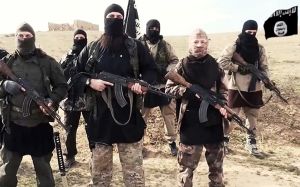
    The Islamic State (also known as ISIS and Daesh), seemingly enjoyed a meteoric rise to power and infamy. ISIS was simultaneously an entity that was admired and/or feared, as this new force attracted vast media attention and reporting. It appeared an unstoppable force, sweeping aside armed forces opposing them in Iraq, Syria and Libya. During 2015, 15 vast tracts of territory in Iraq and Syria were taken. But there was another side to ISIS, some kind of attraction that lured a wide variety of people, including those from the West, to their cause. It was something that many found difficult to understand, let alone adequately explain. When trying to analyse this from the point of view of competing norms and values, between the West and ISIS it may superficially  seem to be an ‘obvious’ choice between the projection of freedom and liberty in the West, and oppression and violence by ISIS. However, the realities of this case, both actual and perceived, are more complex. Understanding the lure of ISIS requires some critical self-reflection from the West, and not only on what has been done by ISIS. How and why does ISIS appeal to some Western publics?

    ISIS as a Brand

    A brand is a psychological and emotional short-cut that creates immediate associations and expectations in an audience with a product, service, person or organisation. Although the brand aspect of ISIS is not totally ignored, it is still under rated by many. Viewing ISIS not simply as an illegal terrorist organisation that needs to be wiped out, or extreme nihilists, but as something more than its tangible form and deeds is necessary. Otherwise, the task of understanding and ultimately countering ISIS becomes more problematic as it ignores the intangible and emotionally significant aspects of ISIS’s appeal.

    In a recent global brand rankings index, there was a great deal of surprise and shock expressed by those that had compiled the index. The 2016 rankings showed that ISIS was a more recognised brand than the Vatican! In 2016, ISIS stood at 107 on the Western Perception index, which was up 56 places from 2015. This does not mean that the ISIS brand has a better reputation than other country and organisation brands, but it does mean that it is more widely recognised. Even though ISIS is shown to be mostly hated in countries with large Muslim populations, there are sufficient potential recruits there and in the West to lure with different grievances or causes. This process will be made easier if a backlash against Muslims in general is precipitated as a result of various terror attacks that have been occurring in Belgium, France and other countries. Some other polls seem to contradict the mentioned trends and show that there is support for the terror group, which was shown in an Al Jazeera poll, where 80 per cent of respondents seemed to support them.

    Signature atrocities and war crimes by ISIS are widely disseminated in video format by media outlets that are associated with or sympathetic to ISIS or by Western media covering a ‘newsworthy’ soundbite that is given in an infotainment format. The ISIS logo has been used widely to increase brand recognition and association. It is full of political and social (such as an equal and ideal society in the making) symbolism, which places and positions the organisation within an environment of competing jihadist organisations. Part of ISIS’ means to project itself in terms of its brand and reputation, to attract attention, supporters and recruits is through one of its means of public relations, the Internet-based magazine Dabiq. This magazine is produced in a very familiar glossy magazine format that is commonly found in the West, yet the content is extremist in nature, attempting to appeal to a variety or discontent or angry individuals and groups. Its message may not only appeal to Muslims, but those isolated and discontent individuals or groups that find the ISIS messages of revenge , building a new society or becoming socially significant appealing. This is the means of public outreach to turn its propaganda of the act into the propaganda of the word, to rhetorically publicise what it stands for and against, and to convert the idea of ISIS into some form of political movement.

    ISIS as a Political Movement

    Currently the nature of politics and political relationships is evolving. Traditionally politics has been measured by using a left-right political scale. This is a now somewhat obsolete way to accurately understand the events and processes that are currently taking place in global political environments. Politics in its current form is the result of a culmination of time periods of discontent and disconnection with mainstream political and public policy. Various people and groups have gradually become increasing discontent, frustrated and seek alternatives in political movements, something that breaks the status quo. Those political movements are able to offer something different and situate themselves as being opposed to the incumbent political elite that can resonate with some of those groups and individuals. This does not mean that ISIS is ‘simply’ a political movement (which is the basis for forming its political relationships), but it is also a revolutionary one that seeks to alter existing political, social and economic relationships through violent means. They are attracted to messages that offer an alternative, pledge resistance to the current political environment, and offer a new and inclusive society. These messages and visions of a promised utopia attract many, and these groups and individuals create what they believe to be mutually reinforcing and ‘beneficial’ political relationships with the likes of ISIS. The realisation of the ISIS Caliphate gave tangible visualisation to a previously intangible set of ideas and ideals. Underlying reasons can be found in human needs for self-actualisation, esteem and a sense of belonging that is explained in Maslow’s Hierarchy of Needs.

    Events and Processes that Influence the ISIS Appeal
    isis-again

    Image by Wikimedia.

    There are a mixture of internal and external influences – processes and events – that combine to influence the level of appeal of ISIS to different individuals and groups. These form a mixture of push and pull factors that can make an organisation with such a brutal track record as ISIS appealing. In the sum of things, it is not only a matter of what ISIS says and does that makes it attractive to some individuals or groups, but also what the West says and does. This is an example of negative politics and political interaction at its worst. ISIS has made very effective use of the Internet and social media to spread its message and influence around the globe, rendering the old geopolitical constraints of time and space ineffective. This has enabled them to bypass the traditional gatekeepers of the information space. It has also enabled them to enact three significant geopolitical shifts: 1) from states to individuals/organisations; 2) real world to virtual world mobilisation and power; 3) old media to new media.

    In the West

    Politics and policy in the West has had profound, and often negative, effects on the issue of equality of its citizens. There is a growing disparity of economic and political opportunity in many countries, which is problematic when there is a growing sense of alienation and outrage in society, and those higher human needs that Maslow discussed remain unfulfilled. The United Kingdom received a shock on 7 July 2005 when domestic terrorists attacked. It was not the first time the UK had been attacked by terrorism, the IRA ran a long campaign. Within the Global War On Terrorism that the UK joined the United States after the September 11, 2001 attacks, it was assumed that any kind of Islamic-based terrorism was simply happening somewhere else.

    However, the New Public Management policies had created an ideal environment. Social services (such as health, education and policing) were gradually withdrawn from marginalised communities. The British state withdrew its presence and care of these people in the name of budget cuts. This political and social vacuum was soon filled by non-state actors, including some radical ones, which offered basic health and ‘policing’ services, educated children in madrassas. This is not to say there is necessarily a link between madrassas and violent extremism, but when one form of government vacates territory the resulting vacuum is soon filled by other forms and sources of social and political order that move in to occupy that space. The social and political relationships were created, which can also form mutually reinforcing trends, such as the rise of right-wing populism that feeds sets of radicalisation (in the Muslim and right-wing groups).Thus the different forces try to politically mobilise their constituent audiences through fear of the other. However, some research shows that there has been little impact so far.

    In a similar tone to the Western understanding of the practice of Hearts and Minds, there are the five aspects of Jihad. There is Jihad of the sword, hand, tongue, knowledge and heart. Jihad of the Sword (combat) carries the least weight, of more importance are Jihad of the Tongue (including propaganda) and Hand (humanitarian operations).

    When looking at recruits that have fought and died for ISIS, it has included some ‘surprising’ individuals, drawn from very non-Islamic backgrounds. There are those that have been recruited to fight for the ISIS cause. From 2011 onwards, an estimated 27, 000 – 31, 000 foreign recruits have gone to Syria and Iraq. There are those that have gone for a sense of ‘adventure’, because they feel there are personal opportunities for them or to be part of a community and to build something significant and special. In their home communities they felt left out, isolated, marginalised, held back or somehow insignificant. Audiences from Western countries have followed the news in disbelief as various stories of young men and women have been leaving, what they believe is a comfortable life, straight to the dangers of joining ISIS in Syria and Iraq.

    ISIS makes a sustained and deliberate effort to attract youth to its cause. The attraction has not been only about destruction and death, but the promise or hope to build a special community. This has been spread by some very slick advertising and public relations, such as the example provided by someone claiming to be an Australian doctor recruiting professionals to join him.

    When one thinks of Islamic-based terrorism, immediate associations normally revolve around concepts of brutality and violence as being the key elements. However, this is not the case. In terms of how information is used by these organisations, military operations are subordinate to information operations. The importance is found in the value of the information that is derived from an action. This differs from most Western governments, where information operations are secondary to military operations, information is used to try and legitimise those military ventures.

    In the Middle East and North Africa

    One of the now seemingly defunct stereotypes of ISIS recruits from the Middle East and North Africa was that they were poorly educated and highly religious. However, field research conducted by Dr Noha Bakr from Cairo, reveals that they are in fact well educated and from well-to-do families in the Middle East/North Africa region. Research also confirms this trend among Western recruits. Those factors that motivated them to join ISIS included a deep rooted sense of different injustices (political, social and economic inequalities) experienced in the Middle East and North Africa. It should be noted that ISIS attempt to project themselves as fighting a defensive war, in the defence of Islam and Muslims, which more likely appeals to those dispossessed and disconnected individuals and groups. This narrative differs greatly from the Western narrative of an aggressive and offensive ISIS.

    Those senses of injustice have been further compounded by decades of self-destructive US-led foreign policy in the region. Regime changes that were nominally fought in the name of peace and freedom have brought anything but these qualities. Some of those dictators, as brutal as they were, kept terrorism in check and generally people enjoyed a greater level of collective human security, with Iraq and Libya providing good examples. A lot of anger has also been generated in the Muslim world concerning the occupation of Muslim lands by Western armies. To some extent, the damage done by Western foreign policy and its long-term effects have been privately spoken about, but rarely publicly acknowledged. An example of this was found in the August 2012 report by the US Defence Intelligence Agency that gave a confidential assessment of the security situation in Iraq and Syria that was (and still is) very much at odds with what key political and military officials publicly stated. The regime changes have also unleashed massive waves of refugees and ethnic cleansing and persecution in those newly ‘liberated’ areas. This in turn is likely to create fertile grounds for further disconnected and vulnerable groups that are susceptible to the subversive propaganda of groups, such as ISIS. Not to mention the gradually escalating counter-reactions from citizens in the West.

    What Does the Future Hold?

    When ISIS transformed itself and its way of waging war, moving from irregular warfare to regular warfare and declaring a Caliphate after the capture of Mosul, it was both a tangible and intangible symbolic change. It was likely intended to signal itself as an emerging power with a physical state-like structure. In the long-run this seems to have been a strategic miscalculation as the tangible military power of the multiple military forces arrayed against ISIS is much stronger.

    Since the Russian military began their direct involvement in Syria from September 2015, ISIS has become increasingly pressured and their territory held is shrinking. It is likely that they may very well be defeated in this regular style of warfare, however, it is unlikely to be the finish of ISIS. There seems to be a move back towards irregular forms of warfare and an increasing reliance on the use of terrorism in core Western countries as a means to offset their tangible disadvantage, and to try and create a political demand among Western publics to cease military action against them.

    ISIS’s strength is found in its intangible qualities and abilities and not in the tangible world where it is challenging a much stronger opponent, and where it is very likely to lose an openly fought military-style of conflict. Thus reverting to an intangible basis in order to create doubts in the publics concerning their confidence in their political and military leadership, and degrading the will to fight seems to be a logical path to follow. They are also likely to continue exploiting any forms of existing weaknesses or divisions that are to be found in Western society or even to create new ones in order to attract the next generations of recruits, supporters and sympathisers.

    Currently, the number of foreign recruits to ISIS seems to be declining. This may well be a reaction to the military setbacks that ISIS has been experiencing recently. The territory it had previously gained is now shrinking under increasing military pressure from different forces arrayed against them which has shattered their reputation as an unstoppable force. Success breeds greater operational possibilities and popularity, and the reverse seems to have an opposite effect. Assad’s fall in Syria would have rapid and significantly negative consequences for political and security developments in the region, Europe and the wider world. It is too early to say if the soft strategies employed by the coalitions against ISIS have been successful as these means usually are medium to long-term enterprises. The military defeats inflicted upon ISIS, which have shaken the brand and reputation of the group, have also made it more physically difficult to join them. Therefore, a continued combination of hard and soft strategies need to be maintained.

    Associate Professor Greg Simons is a researcher at the Centre for Asymmetric Threat Studies (CATS) at the Swedish Defence University. He specialises in research on Information Operations and hybrid warfare.


  • In Deep Water: China tests its neighbours’ patience

    In Deep Water: China tests its neighbours’ patience

    Control of water, including navigation rights, resource extraction and the exploitation of shared watercourses is at the heart of today’s geopolitical tensions in Asia. China’s recent actions in the South China Sea and Himalayas have given rise to further—and at times violent—conflict over the region’s natural resources. So will water insecurity lead to greater partnership in Asia? Or will it lead to a revival of China’s traditional sense of regional dominance and undercut efforts to build a rules-based approach to growing resource conflicts?

    Read Article →

    Deforestation: REDD-y for peace or fuelling conflict?

    REDD forestry efforts don’t pay enough attention to their influence on local conflict dynamics. For REDD+ to be an effective mechanism to curb deforestation and strengthen peace opportunities, it has to pay more attention to pre-existing land and forest conflicts linked to tenure, take into account the interests of the local communities and be more sensitive to the local context

    Read Article →

    US Drone Strikes in Pakistan: ineffective and illegitimate

    Strikes by unmanned combat air vehicles, or armed drones, have become the tactic of choice in US counterterrorism efforts in Yemen, Somalia and, the topic of current controversy, Pakistan. The lack of transparency, dubious effectiveness, civilian casualties and negative consequences for US national security being highlighted by current debate means that Washington needs to re-evaluate its approach.

    Read Article →

    Can the Nuclear Non-Proliferation Treaty outrun its double standard forever?

    The recent walkout by Egyptian negotiators at UN talks have demonstrated that, like a building with rotten foundations, the nuclear non-proliferation regime is far less stable than many believe it to be. Egypt’s actions make clear that anything less than a regime specifically geared towards addressing the reasons why some states seek nuclear weapons is a regime existing on borrowed time.

    Read Article →

    Bay of Bengal: a hotspot for climate insecurity

    The Bay of Bengal is uniquely vulnerable to a changing climate because of a combination of rising sea levels, changing weather patterns, and uncertain transboundary river flows. These problems combine with already existing social problems like religious strife, poverty, political uncertainty, high population density, and rapid urbanization to create a very dangerous cocktail of already security threats. Andrew Holland argues that foresight about its impacts can help the region’s leaders work together to solve a problem that knows no boundaries.

    Read Article →

  • Interview – Sascha Dov Bachmann

    This interview was conducted by the Remote Control project. 

    Sascha Dov Bachmann, Assessor Jur, LLM (Stel) LLD (UJ), is an Associate Professor in International Law (Bournemouth University, UK), Extraordinary Associate Professor in War Studies (Swedish Defence University, Sweden) and Guest Speaker at NATO School. Outside academics, he served in various capacities as Lieutenant Colonel (German Army Reserve) taking part in peacekeeping missions in operational and advisory capacities. Sascha acted as NATO’s Rule of Law Subject Matter Expert (SME) in NATO’s Hybrid Threat Experiment of 2011 and in related workshops at NATO and national level. He would like to thank Brigadier (Rtd) Anthony Paphiti, former ALS officer, for his insightful comments and discussions.

    In this interview, Dr. Bachmann discusses hybrid warfare, its use in Ukraine and Crimea by Russia, and whether NATO is adequately prepared to formulate effective responses to this method of warfare.


    Q. What is ‘hybrid warfare’?

    Hybrid warfare as a warfare concept is not new among those practising the art of war. However, contemporary events lead us to argue that today’s hybrid warfare “has the potential to transform the strategic calculations of potential belligerents [because it has become] increasingly sophisticated and deadly”.

    Hybrid war is a concept that has emerged shortly after the end of the Cold War and sums up the complexities of modern warfare, which go beyond conventional military tactics, often involving cyberwarfare, propaganda and a fluid, non-state adversary.

    The concept of hybrid warfare has been discussed by (mostly US) military writers since the beginning of the 21st century and its recognition as a theory in formal military doctrinal thinking is still not settled. Hybrid warfare may use elements from four existing methods and categories of full spectrum warfare, namely:

    • conventional warfare;
    • irregular warfare (such as terrorism and counter-insurgency);
    • related asymmetric warfare (unconventional warfare such partisan warfare);
    • and compound warfare (where irregular forces are used simultaneously against an opponent while being employed by state actors to augment their otherwise conventional warfare approach).

    Hybrid warfare builds on existing doctrinal elements and adds the following: evolving war-fighting capacities in the fifth dimension such as “cyber-warfare”; and activities in the so- called information sphere.

    Q. Who were the first actors to utilize hybrid warfare and why?

    According to Hoffman’s seminal work “Conflict in the 21st Century: The Rise of Hybrid Wars”, it was Hezbollah in its 2006 war with the IDF. Here, a non-state actor (NSA) did utilise war fighting capabilities normally not used by non-state actors such as blending conventional warfighting on the ground and activities in the information sphere. Other examples are Islamic State/Daesh which show a blend of capabilities which blur the line of traditional warfighting: such as the use of suicide bombers, improvised explosive devices, and the use of ‘ground troops’ in a conventional manoeuvre context augmented by strong propaganda/information sphere activities.

    Why: because these capabilities are available. Hezbollah (and IS) had and has a substantial potential of rockets/military hardware and is aptly using the possibilities available through social media in the information sphere unknown before. Both non-state actors are also utilising the opportunities of informing public opinion in the West thanks to a growing Muslim population in the West who have cultural and lingual access/connection to these conflicts/the nature of the conflict.

    Q. Is hybrid warfare something that states have used?

    Russia has used hybrid warfare.

    How:

    In a Keynote speech at the opening of the NATO Transformation Seminar on 25 March 2015, NATO Secretary General Jens Stoltenberg remarked:

    “Russia has used proxy soldiers, unmarked Special Forces, intimidation and propaganda, all to lay a thick fog of confusion; to obscure its true purpose in Ukraine; and to attempt deniability.  So NATO must be ready to deal with every aspect of this new reality from wherever it comes. And that means we must look closely at how we prepare for; deter; and if necessary defend against hybrid warfare.”

    Michael Kofman and Matthew Rojansky described Russia’s 2010 Military Doctrine of modern warfare:

    “…… as entailing “the integrated  utilization of military force and forces and resources of a non-military character,” and, “the prior implementation of measures of information warfare in order to achieve political objectives without the utilization of military force and, subsequently, in the interest of shaping a favourable response from the world community to the utilization of military force.”

    The employment of hybrid methods has been evident from Russia’s activities in Crimea and the Donbas region of Ukraine, with its deployment of “little green men”, namely, soldiers wearing unmarked uniforms that make direct state attribution difficult. According to Mark Galeotti, Professor of Global Affairs at New York University’s Center for Global Affairs:

    “The conflict in Ukraine has demonstrated that Moscow, in a bid to square its regional ambitions with its sharply limited resources, has assiduously and effectively developed a new style of ‘guerrilla geopolitics’ which leverages its capacity for misdirection, bluff, intelligence operations, and targeted violence to maximise its opportunities.”

    While there may be limitations to the way in which these methods were used in Ukraine, the use of non-attributable military personnel provides expert assistance to an enemy and, even if not directly engaged in hostile acts, provides advice and assistance to those who carry out such acts. Nevertheless, the seriousness of the threat posed by such forces should not be under-estimated. General Breedlove, currently Commander, US EUCOM and the Supreme Allied Commander Europe (SACEUR), is reported as saying,

    “if Russia does what it did in Crimea to a NATO state, it would be considered an act of war against the alliance.”

    In Ukraine, Russia employed a hybrid strategy by combining irregular warfare and cyber warfare to achieve its strategic objectives. Reuben F Johnson, writing in IHS Jane’s Defence Weekly, on 26 February 2015, considered that “Russia’s hybrid war in Ukraine ‘is working’.” They had combined a substantial ground force of 14,400 Russian troops supported by tanks and armoured fighting vehicles, backing up the 29,300 illegally armed formations of separatists in eastern Ukraine.

    Q. Does hybrid warfare hold military advantages for states over conventional warfare?

    Russia is winning the hybrid war in Ukraine: it has successfully annexed Crimea, and effectively turned Ukraine into a state on the brink of wider failure. In the process, Russia has successfully divided Western countries on how to respond to this act of aggression. Russia also successfully reactivated its Cold War disinformation mechanisms, successfully blurring reality and fiction for global observers. Russia has uncovered the West’s inability to find a common policy to respond to the unfolding events in Ukraine.

    Q. How does hybrid warfare relate to international law? Is this way of waging war covered in current international legal paradigms?

    Generally speaking, hybrid warfare does not change the international legal paradigms such as Article 2(4), 51 UN Charter and in the context of NATO, Article V of the NATO Treaty. Whether any form of hybrid attack, alone or cumulatively, amounts to a use of force and, if so, reaches the threshold of an “armed attack” to justify a military response under Article 51 – and what form that response would take – are very difficult questions to answer. They are situation/fact specific. Moreover, attribution may be problematic. In addition, hybrid warfare – with its possible elements of cyber, terrorism, asymmetric warfare etc. – might not reach the threshold of such an attack and hence allow affected states to ‘deny’ the existence of such warfare in order to continue with their diplomatic relations, trade  etc with the ‘aggressor’ state. Such behaviour might undermine existing alliances and weaken international comity.

    Q. How prepared, or perhaps unprepared, are NATO for formulating effective responses to hybrid warfare?

    NATO is in my opinion well prepared to formulate effective responses given its substantial work undertaken in the context of hybrid threats. NATO recognized as early as 2010 hybrid threats were a new security risk and designed a new NATO Bi-Strategic Command Capstone Concept, describing hybrid threats as emanating from an adversary who combines both conventional and unconventional – military methods to achieve its goals.

    In the two years following 2010, NATO drew up a specific threat catalogue, which identifies security-specific risks beyond conventional warfare threats: nuclear proliferation, terrorism, cybercrime and cyber-war, organized crime and its role in drugs, arms and human trafficking, migration, ethnic and religious conflicts, population conflicts due to resource scarcity and globalization.

    NATO recognized that these may amount to a concrete threat to the alliance or that it could be authorized by the United Nations, because of their capacity, to intervene. Recognizing this, NATO worked on a related global approach (Comprehensive Approach) in order to counter these risks. This approach envisaged involving state and non-state actors in a comprehensive defence strategy that combines political, diplomatic, economic, military technical and scientific initiatives. Despite intensive work on this approach as part of a “Countering Hybrid Threats” experiment in 2011, the NATO project work in 2012 had to stop due to lack of support from their members. (From our submission to the UK DC)

    Given this existing framework/ capstone on how to respond to hybrid threats and the inter-related nature of hybrid threats and warfare, I would like to argue with some confidence that NATO has the capability to formulate an effective doctrinal approach, notwithstanding the initial discontinuation of the work on the hybrid threat concept.

    Q. Do you think that hybrid warfare will be the main method of waging war in the future and how do you see the use of this form of warfare evolving?

    Hybrid warfare with its various forms such as cyber-attacks, the use and abuse of the information sphere, the use of a holistic mix of conventional and irregular warfare, the exploitation of country specific vulnerabilities, law fare etc, is here to stay due to its obvious benefits to the using power/state/actor: deniability and the possibility of staying under the threshold of an armed attack which would in a likeliness trigger a military/kinetic response. I am convinced that the elements of hybrid warfare will evolve further and will eventually be used by state and non-state actors alike. Whether the overall term “hybrid warfare” for such multi-modal forms of warfare/threats is to stay we will see. Hybrid war’s impact on international law and comity is significant and it will question some of our established doctrines/concepts.

  • Militarising Conservation: A Triple ‘Fail’ for Security, People and Wildlife

    The Ukraine conflict’s legacy of environmental damage and pollutants

    One year after violent conflict began, information is now emerging on the specific environmental impact of war in Ukraine’s highly industrialised Donbas region. Although obtaining accurate data is difficult, indications are that the conflict has resulted in a number of civilian health risks, and potentially long-term damage to its environment. In order to mitigate these long-term risks, international and domestic agencies will have to find ways to coordinate their efforts on documenting, assessing and addressing the damage.

    Read Article →

    DU-turn? The changing political environment around toxic munitions

    Is the US backpedalling on its use of depleted uranium (DU) rounds? There are indications that the use of these highly toxic munitions could increasingly be a political liability for the US, with countries affected by DU, like Iraq, other UN Member States, and populations in contaminated areas all expressing concerns over its use and impact. But stigmatisation, although important, is not enough on its own – in order to make sustained progress on accountability and in reducing civilian harm, a broader framework that addresses all toxic remnants of war is needed.

    Read Article →

    Losing control over the use of force: fully autonomous weapons systems and the international movement to ban them

    Later this month, governments will meet in Geneva to discuss lethal autonomous weapons systems. Previous talks – and growing pressure from civil society – have not yet galvanised governments into action. Meanwhile the development of these so-called “killer robots” is already being considered in military roadmaps. Their prohibition is therefore an increasingly urgent task.

    Read Article →