Blog

  • Strategic Thinking in a Resource-constrained World

  • Pre-Colonial Institutions, Conflict and Peace in Africa

  • Conflict, Poverty and Marginalisation: The case of Curvaradó and Jiguamiandó (Urabá, Colombia)

    by Amira Armenta

    Colombia 2011 article smallIn Colombia there are many regions where poverty and the absence, or weak presence, of the state has facilitated the emergence of violence by armed groups. Among these are the Afro-Colombian communities of the Curvaradó and Jiguamiandó in the Urabá region

    The Urabá is located in the Northwest of Colombia, near the border with Panama. It is a region of great biodiversity, rich in minerals, oil, water, and timber, amongst other natural resources. Urabá is also one of the regions with the highest poverty rates, and lowest rates of schooling in the country. The region is inhabited by many indigenous peoples and Afro-Colombians, who are the traditional owners of hundreds of thousands of hectares of land. Collective ownership of these territories is supported by Colombian Law 70 of 1993.

    With the rise of drug trafficking in the country in the 80s, the region became a point of export of illegal narcotic drugs. At the same time, the illegal import of weapons soared to meet the growing demand of Colombian armed groups. Various increasingly powerful criminal groups (known as ‘paramilitaries’) began to invest money earned from their illegal activities in profitable lawful sectors such as the agribusiness – palm oil, bananas and cattle. In a few years Urabá went from being a marginal and sparsely populated region to a place where settlers converged, and multinational corporations and armed groups of all stripes were vying for control of territory and a stake in the business.

    In this context, poor rural communities such as bold”>Curvaradó and Jiguamiandó were sucked into the violence unleashed between the different armed groups. As the collective ownership of land was an obstacle to the economic interests of the new sectors (farmers and landowners whose funds often had an illicit origin), these groups used threats and harassment to banish the native people and appropriate their land. This violence and banishment was possible given the state of marginalization of the population, totally unprotected by the central government. Large palm oil plantations installed since then in the area have been financed largely with the laundered drug money. They use land violently obtained by the forced displacement.

    Since the 1990s, the Curvaradó and Jiguamiandó communities have specifically been the target of violence and subsequent displacement. They have lost their few belongings and have helplessly seen the powerful economic groups systematically seize their land.

    The Colombian government has recently begun a process of returning land to the inhabitants of the river basins of Curvaradó and Jiguamiandó and reparation for victims of violence. The move is encouraging, but it might not be enough to solve the problems. The history of violence can repeat itself any moment, as long as the causes that led to the banishment and violence are not addressed and those responsible are not punished. Standards of justice must apply, not just to those still operating outside the law, but also to those who now operate legally but whose past is murky.

    Whilst the Colombian government fails to fully develop social development programs (including education, health and infrastructure) and sustainable economic development policies to assist marginalised communities, the people of Curvaradó and Jiguamiandó will remain poor, uneducated, vulnerable, and at risk of lose their territories once again.

    Amira Armenta is a Researcher with the Drugs & Democracy Programme of the Transnational Institute (TNI), with a particular focus on Colombia.

    Image source: Yuliam Gutierrez

    Some Useful References

    Murder in Curvaradó: http://www.cipcol.org/?p=682  Bajo Atrato

    UNHCR on the situation of Colombian Afro Descendants: http://www.acnur.org/t3/fileadmin/scripts/doc.php?file=t3/fileadmin/Documentos/RefugiadosAmericas/Colombia/EN/Colombia_Situation_-_2011_International_Year_of_Afrodescendants

    Alternative Developments, Economic Interests and Paramilitaries in Uraba : http://www.tni.org/sites/www.tni.org/files/download/brief27fin.pdf

    El caso de Jiguamiandó y Curvaradó: http://www.lasillavacia.com/historia-invitado/22660/yamile-salinas-abdala/el-caso-de-jiguamiando-y-curvarado-estrategia-criminal

    Coca y violencia en el Chocó BiogeográficoL: http://www.tni.org/es/archives/archives_armenta_cocachoco

    Comisión Intereclesial de Justicia y Paz – Jiguamiandó y Curvaradó: http://justiciaypazcolombia.com/-Consejo-comunitario-de-Jiguamiando-

    Las tierra de Curvaradó de nuevo invadidas – Verdad Abierta : http://www.verdadabierta.com/paraeconomia/tierras/2944-las-tierras-de-curvarado-de-nuevo-invadidas

    Bajo Atrato se resiste a la violencia y a la pobreza: http://www.elcolombiano.com/BancoConocimiento/B/bajo_atrato_se_resiste_a_la_violencia_y_a_la_pobreza/bajo_atrato_se_resiste_a_la_violencia_y_a_la_pobreza.asp

  • Carefully Managing Water Resources to Build Sustainable Peace

    Carefully Managing Water Resources to Build Sustainable Peace

    Carefully planned interventions in the water sector can be an integral part to all stages of a successful post-conflict process, from the end of conflict, through recovery and rebuilding, to […]

    Read Article →

  • Trident – Why I Changed My Mind About the UK’s Nuclear Weapons

  • From The Great War to Drone Wars: The imperative to record casualties

    From The Great War to Drone Wars: The imperative to record casualties

    The centenary of the First World War also marks the anniversary of the practice of recording and naming casualties of war. But a century on, new forms of ‘shadow warfare’ limit the ability to record casualties of conflict and thus threaten to allow states a free hand to employ dangerous new tactics without threat of individual or international accountability. Without verifiable casualty figures, – including information on who is being killed and how – we cannot evaluate the acceptability, effectiveness or impact of ‘remote control’ tactics as they are rolled out among civilian populations.

    Read Article →

  • Is Trident Influencing UK Energy Policy? Part 2

    This concluding part of a two-part article series continues the discussion on the UK’s naval nuclear power programme and its potential impact on Britain’s energy policy. Read part 1 here.

    In Part 1, we described the intensity of UK commitments to new civil nuclear power and why this is so hard to fully explain. The proposed 16GWe of new nuclear capacity is a difficult policy to justify based on economics, energy security and conventional approaches to understanding innovation and technological transitions. There are serious problems with the UK nuclear power programme, including significant delays, rising costs, and uncertainty surrounding essential foreign investment. The UK government’s own figures show renewables, including onshore wind and solar, to be cheaper than nuclear. As the prospects of resolving underperforming nuclear plans get ever more distant and unlikely, increasingly favourable renewable projects remain ever more threatened by cut-backs. This has led to serious problems in that sector. Taken at face value, these patterns are very difficult to explain.

    What drives these counter-intuitive trends? Many factors will be at play, but, as discussed in Part 1, there is a particular major driver that remains almost entirely unexamined in analysis of UK energy policy. This concerns the pressure to sustain UK nuclear submarine infrastructures by maintaining  more general national reservoirs of specialist nuclear expertise, education, training, skills, production, design and regulatory capacities.

    Could these pressures to maintain capabilities, perceived to be necessary for the country’s naval nuclear propulsion programme, be influencing the intensity of UK commitments to new civil nuclear power? We now examine a crucial period in UK civil nuclear policy during which concerns around defence-related nuclear skills came to the fore shortly after a key policy moment when, for the first time since 1955, UK policy was considering an energy trajectory that did not include new nuclear.

    2003–2006: the unexplained nuclear ‘U-turn’
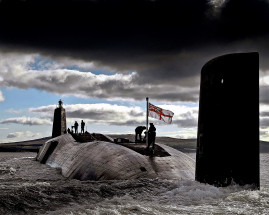
    Image credit: Thomas McDonald/Flickr.

    For a brief period between 2003 and 2006, nuclear energy seemed to fall out of high-level favour in the UK. The nuclear firm, British Energy was bailed out and brought back into state control in 2002 and nuclear privatisation was widely recognised to have failed. The UK civil nuclear industry was dogged by scandals and cases of costs overrunning. . Meanwhile, New Labour’s earlier efforts to democratise decision-making helped free one initially minor policy initiative from the shackles of bureaucratic inertia and industrial interests. For the first time, nuclear energy strategy escaped the domain of the dedicated ministry.

    Approaching energy policy by the indirect route of “resources”, the new Performance and Innovation Unit (PIU) – reporting directly to the Cabinet Office – was charged with undertaking an extensive reappraisal. This marked a significant departure from the traditional practice where energy policy assessments were closely guarded by the relevant ministry. The PIU review was staffed entirely by civil servants, with half of the review team comprised of leading independent energy analysts recruited from outside government. Freed from the incumbent pressures which constrained earlier UK energy reviews, the 2002 PIU study found that unresolved nuclear waste and economic problems meant that the UK should move towards a more decentralised electricity grid based around renewables and energy efficiency. The February 2003 White Paper Our energy future: Creating a low carbon economy upheld these recommendations. While it did not entirely rule out future investment in nuclear energy, it did find nuclear power to be economically and environmentally “unattractive” for Britain.

    What came next was one of the most abrupt policy turnarounds in UK history. For reasons never officially declared, Prime Minister Tony Blair launched another energy review in November 2005. This second review was not conducted in a transparent and independent way like the PIU process. Instead, it was undertaken by a few partially identified individuals inside the Cabinet Office under the leadership of Blair’s close personal associate, John Birt. According to nuclear advocate Simon Taylor, this involved a select group that most other civil servants in the Cabinet Office did not know even existed, working “in secret” to “re-examine” the case for nuclear energy. Managed by the former Atomic Energy Authority, the consultative part of this exercise was much shallower and shorter than before. Amid other widespread criticism, Greenpeace successfully took the Government to the High Court, where this second review was declared “unlawful” and “deeply flawed”. Yet Blair’s reaction was that this court ruling would “not affect policy at all”. With a further round of consultation, again alienating NGOs, the January 2008 White Paper Meeting the Energy Challenge duly announced a British ‘nuclear renaissance’.

    Among those questioning these events was the Parliamentary Environmental Audit Committee, which in March 2006 asked (without receiving an official answer) why a second energy review was deemed necessary so soon after such a comprehensive predecessor. Four months later, the House of Commons Trade and Industry Select Committee branded the second review a “rubber stamping” exercise designed to give legitimacy to a pre-ordained decision rather than being an ‘open’ consultation.

    It still remains unexplained what (or even who) could have driven this rethink. It is in this light that nuclear expert Steve Thomas has highlighted the ambiguities around exactly what ‘the UK nuclear lobby’ consists of.  With the UK civil nuclear engineering industry so weak and historically unsuccessful (as discussed in part 1), it is unclear where in this languishing domestic sector sufficient political-economic capital might have accumulated to force such an unprecedented and poorly justified national policy turnaround.

    Investment and skills concerns around the UK’s Naval Nuclear Propulsion Programme

    This is where the  imperatives around national submarine capabilities comes into play. It is in exactly this same critical juncture between 2003 and 2006 that an unprecedented intensification can be observed in concerns around the UK’s nuclear submarine capability. Significant problems emerged with the construction of British ‘Astute’ class of submarines. Policies related to nuclear submarines were unveiled in rapid succession – with the December 2003 Defence Review White Paper followed by the December 2006 White Paper on the Future of the UK’s nuclear deterrent, leading up to the ‘initial gate’ House of Commons vote to proceed with a replacement to the nuclear-powered Vanguard-class ballistic missile submarines in March 2007. Inconveniently, it was just prior to this marked intensification of activity on the military side, that civil nuclear power was officially acknowledged to be “unattractive”.

    One notable development emerging at the beginning of this period was an intense lobbying campaign started in March 2004. The well-funded Keep Our Future Afloat Campaign (KOFAC) emanated from the Barrow shipyards, BAE Systems’ construction site for all UK submarines. Trade unions, local councils, county councils and KOFAC relentlessly targeted politicians, party conferences and governmental consultations. Closely connected with KOFAC and lobbying in support of the submarine industry at this time was then MP for Barrow-in-Furness and close ally of Tony Blair, John Hutton, also one of the most significant supporters of civil nuclear power. KOFAC’s lobbying campaign was recognised by parliamentarians as being “one of the most effective” ever seen.  Focusing resolutely on how to protect UK nuclear submarine manufacturing interests, KOFAC highlighted the importance of supporting integrated civil and defence-related nuclear capabilities. For its part, BAE Systems was also evidently busy in other ways behind the scenes – positioning itself (rather extraordinarily) in a memorandum of understanding of 2006 with the ailing US civil reactor vendor Westinghouse to extend its own military submarine focus to a role in civil nuclear supply chains.

    Although internal government reactions to this pressure were invisible, the public response was strikingly accommodating. In 2005, the MoD funded the RAND Corporation to conduct an in-depth two-volume report: “The United Kingdom’s Nuclear Submarine Industrial Base”. The report endorsed crucial links between key skills and capabilities relevant both to submarine and civil nuclear industries. A series of Select Committee consultations and reports ensued, with influential stakeholders in the nuclear submarine supply chain raising many concerns. Lead submarine nuclear propulsion contractors, Rolls Royce, claimed that the depletion of nuclear skills in the civil sector would reduce the support network available to the military programmes. The Royal Academy of Engineering noted that “the skills required in the design, build, operation and disposal of Naval Nuclear Propulsion Plant … are in short supply and increasingly expensive… Overall, the decline of the civil nuclear programme has forced the military nuclear programme, and in particular the nuclear submarine programme, to develop and fund its own expertise and personnel in order to remain operational”.

    Recognising that links between the civil and naval sector need to be encouraged” , a key witness to a 2008 Parliamentary Innovation and Skills Select Committee inquiry noted: “The UK is not now in the position of having financial or personnel resources to develop both programmes in isolation”. In a rare acknowledgement of this relationship from the civil energy side, a detailed low-key Government consultancy report later amplified the same message: “the naval and civil reactor industries are often viewed as separate and to some extent unrelated from a government policy perspective. However, the timeline of the UK nuclear industry has clear interactions between the two, particularly from a supply chain development point of view.”  It was apparently in this crucial period 2003-2006 that this longstanding but under-appreciated industrial dependency between military and civil nuclear sectors finally commanded intense – albeit undeclared – attention at the highest political levels.

    It is remarkable that these patterns were so obvious to see on the military side of UK policy making, but so virtually invisible on the energy side. Yet this selective discretion is hardly surprising. There are strong incentives to keep these kinds of links as invisible as possible. As the National Audit Office has ominously noted of the costs of Trident: “[o]ne assumption of the future deterrent programme is that the United Kingdom submarine industry will be sustainable and that the costs of supporting it will not fall directly on the future deterrent programme.” Acknowledging this – and reflecting implied industrial practice in the military sector – a seconded BAE Systems Submarine Solutions employee writing in a 2007 report for the Royal United Services Institute, discussed the desirability and difficulty of absorbing or ‘masking’ costs of submarine construction in ostensibly civilian supply chains.   Connections between civil and military nuclear infrastructures are also sensitive internationally, with serious tensions surrounding global nuclear proliferation regimes. This is why one Parliamentary witness emphasised that civil-military nuclear links must be carefully managed to avoid the perception that they are one and the same”.

    It was arguably for such reasons that the UK Government response to the nuclear policy crisis of 2003-2006 was so fast and energetic – with the reasons well acknowledged on the defence side, but virtually invisible on the energy side. Corresponding with the unprecedented U-turn on civil nuclear power was an equally unprecedented intensification in efforts to preserve nuclear skills for the military sector. In 2006, a key suppliers group was set up by BAE Systems involving firms in both military and civil nuclear supply chains. The following year the Department of Trade and Industry expanded the National Nuclear Laboratory (NNL) and established a new National Nuclear Skills Academy.

    Since then, the UK Government has gone on to reserve key parts of the HPC contracts for Rolls Royce. BAE Systems has consolidated its interest in civil nuclear construction as well as defence. A huge programme of publicly-funded research has been announced in small modular civil power reactors to build on Rolls Royce’s experience with submarines. And most recently – against a backdrop of massive overcapacity among global nuclear power vendors in what is evidently one of the most economically perilous of sectors – Roll Royce has announced an especially remarkable initiative. Notwithstanding strong pressures for international integration in this overcrowded sector – and a national history in this field of sustained industrial failure – Rolls Royce is now seeking to lead an entirely new industrial consortium branded as distinctively British and dedicated to an untested submarine-derived civil power reactor design. Despite the acknowledged incentives for concealment, these clear linkages between submarine and civil nuclear reactor construction interests provide a key missing link to decipher the otherwise unexplained abrupt reversal in UK nuclear power policy in 2006.

    Submerged drivers of UK energy policy?

    So, what is the role of UK military nuclear commitments in driving a national low-carbon energy strategy that is manifestly more costly and less effective than it otherwise could be? The complexity and secrecy in this field inevitably makes it difficult to be definite. Nevertheless, the wealth of official documentation on the military side and the remarkable conjunction of events around and beyond the period 2003-2006 do seem to present a plausible case. The UK Government’s commitments to military nuclear capabilities do seem to be a significant (albeit undeclared) factor in civil energy strategies, and of industrial policy more generally.

    There are broader questions here over what the military influences on wider British Government policy say about the current state of the UK’s democratic system. It is not necessary to invoke simplistic “conspiracies”. Just as iron filings line up in magnetic fields, so these kinds of institutional pressures can – without any single controlling actor – instil exactly these kinds of patterns. If massive UK civil infrastructure investments really are being shaped to the degree implied by these kinds of perceived military imperatives, then the most important issue is why they are almost completely absent from any kind of discussion or scrutiny – let alone accountability – either in energy policy literatures, or in wider political and media debates. If these institutional forces are as powerful and concealed as they seem, then very serious questions are posed for the health of British democracy in general.

    Phil Johnstone is Research Fellow at the Science Policy Research Unit (SPRU),  the University of Sussex. His current research is focussed on disruptive innovation in the energy systems of Denmark, the UK and Germany. Previously Phil worked on the Discontinuity in Technological Systems (DiscGo) project and is a member of the Sussex Energy Group (SEG). 

    Andy Stirling is a professor in SPRU and co-directs the STEPS Centre at Sussex University. An interdisciplinary researcher with a background in natural and social science, he has served on many EU and UK advisory bodies on issues of around science policy and emerging technologies.


  • Brexit or Bremain for British Security?

    It should come as no surprise that David Cameron and the campaign for the UK to remain in the EU have argued that Britain’s continued membership of the EU will benefit the UK’s security. Britain’s EU membership has always had a security side to it. Membership has never been entirely about trade or jobs. And whatever the result of the referendum, the security relationship with the EU will remain vital for the UK.

    Those campaigning for the UK to leave the EU do not dispute that relations with the EU, along with European security in general, are not of central concern for the UK. For them, however, not only does the EU make the UK and Europe less safe (for example by allowing free movement of criminals and terrorists), but putting international relations ahead of domestic politics, especially economic and democratic needs, weakens Europe’s nation states and their ability to combat the full range of problems facing them.

    The UK government itself is clear that traditional security threats to the UK do not figure as highly as they once did, although they have certainly not disappeared. As successive national security strategies and strategic security and defence reviews have made clear, security challenges to the UK range from nuclear war to environmental disasters, with many not recognising the borders of nation states. While British governments are often reticent to admit to the EU playing a positive role in security cooperation, or admit that the UK has led in such cooperation, there is no denying that tacking these security challenges has been an important part in UK-EU relations.

    From the start, European integration has had a security side to it, whether this be about managing the reintegration into Europe of West Germany and later a united Germany, or integrating former Eastern European Communist or Southern European Fascist states into a liberal European mainstream. The EU itself has not been sufficient to keep the peace. The argument by some Eurosceptics that it has been NATO that has kept the peace in Europe is as selective a reading of history as any pro-European that claims it has all been down to the EU. Nevertheless, for successive British governments, especially at the height of Britain’s retreat from empire in the 1960s, Britain’s declining ability to shape the world and the security challenges it posed meant membership of the European Economic Community and later EU was a necessary step for both British, European and transatlantic security cooperation.

    Today, Cameron and others in the Remain campaign trumpet Britain’s ability to use the EU to boost Britain’s still substantial but reduced economic and military capabilities to give it the full range of tools and opportunities to face the full range of security challenges. Whether in facing a newly assertive Russia, dealing with Iran or tacking climate change, the UK’s EU membership has been cited as crucial to allowing the UK to shape its security. This is not to argue that EU cooperation is without its problems. Finding consensus amongst 28 states is never easy, even when you have the institutions and familiarity that EU membership offers.

    jeffdvevdit

    Image by Djevdet via Flickr.

    The referendum poses the question of what options the UK has beyond working through or with the EU. Talk of the UK rebuilding the Commonwealth is often oblivious to how strategically marginal that organisation can appear to most of its members. Britain’s NATO membership will remain important to it and Europe. NATO, however, is not the whole story when it comes to European security and the UK should not bet on the alliance being as solid as it was once. Close bilateral relations with the likes of the USA or France will remain, not least in the military fields. But this should not blind us to how the US and European states will continue to cooperate through a range of EU-US forums and that this could leave Britain outside the EU as something of an awkward in-betweener in the transatlantic relationship.

    The US in particular is aware of the wider implications of a Brexit for Europe’s geopolitics. As Condoleezza Rice, former Bush Administration Secretary of State and National Security Advisor, told Chatham House: ‘It is a very different Europe if it is a continental one’. Accusations that the UK is a US ‘Trojan Horse’, sent to weaken EU cooperation from within, display an ignorance of how the USA – a European power since 1945 – has had a hand in European integration and security from the very start and doesn’t wholly depend on the UK for relations with the rest of the EU.

    Britain’s departure from the EU could change the Union in any number of ways, with far-reaching geopolitical implications that will shape Europe’s security. That some Leave campaigners such as Michael Gove have spoken of Britain setting an example that could lead other states to follow gives a hint to the wider geopolitical changes to Europe some Eurosceptics hope a Brexit will bring about.

    Such disintegration or radical reconfiguration of the EU has not been set out or anlaysed in any document or strategy. As such this half-baked approach risks a dangerous case of strategic overreach by the UK. Any changes to Europe would rely less on Britain’s willingness to offer the ways and means of managing such changes and more on encouraging a collapse of the EU. Losing control of such a development should not be overlooked. An uncontrolled collapse of the Eurozone, for example, would inflict significant costs on the UK, Europe, the USA and the wider world economy. As HM the Queen warned in June 2015 during a state visit to Germany, Europe’s division is in nobody’s interests.

    It is possible that a Brexit will cause the opposite reaction, with an EU rid of ‘an awkward partner’ going forward by unifying further. One of Britain’s longest standing international aims has been to prevent any single power dominating Europe. The EU would be a benign power compared to previous attempts, but such an outcome warrants careful consideration by the UK. Whatever the outcome, the EU’s status quo is unsustainable. The question for those concerned with Europe’s security is whether changes – whether triggered by Brexit of not – can happen in a stable, cooperative way or bring about a collapse into nationalism and parochialism.

    The best hope for UK and EU security is that whatever the result of the referendum both sides seek ways of cooperating, if only to rebuild trust. The initiative here will rest with the UK whose recent approach to the EU in the eyes of many elsewhere in Europe has been an unwanted distraction from the many other challenges facing the EU. A UK in search of cooperation with its European neighbours will find it can offer little to help with the problems in the Eurozone or Schengen. Instead, whether in or out of the EU, it will find itself playing its only trump card: security and defence cooperation.

    Whether in facing a resurgent Russia – and therefore the continued relevance of hard power in European and international relations – or the more nuanced but potentially far more catastrophic global environmental challenges, the UK and EU could find common ways forward that help both sides realise their mutual interdependence. The UK and the rest of the EU must appreciate that instability or division in Europe limits their options to shape security in the wider world.

    Last, but not least, we should not overlook that if the first priority of any state is its own survival then alarm bells should be ringing about how the referendum could lead to the end or weakening of the UK itself. The vote could throw into doubt the place in the Union of Scotland and Northern Ireland, both bringing with them a host of traditional security concerns whether they be terrorist related or the future of the UK’s nuclear weapons. Tensions within England should not be overlooked. Immigration and economic changes have made London the UK’s undiscovered country, much to the chagrin of some elsewhere in England and Britain who feel a Europeanised and globalised capital city has left them behind. Arguments over identity, immigration, radicalisation, race, equality and standards of living rumble beneath the surface of the EU referendum. A reminder, if any were needed, of how sustaining the UK’s own stability and security will be no easy challenge after the 23 June.

    Dr Tim Oliver is the Dahrendorf Fellow for Europe–North American relations at the London School of Economics and Political Science. He is also a non-resident fellow at the Center for Transatlantic Relations of the Johns Hopkins University Paul H. Nitze School of Advanced International Studies, Washington DC. He has worked in the House of Lords, the European Parliament, the German Institute for International and Security Affairs (SWP), RAND Corporation, and taught at the Royal Military Academy Sandhurst, the London School of Economics and University College London. 

  • Challenges Facing Women in Peacekeeping

  • VIDEO – Transforming Food Systems in a Global Context

    The United States, Niger & Jamaica: Food (In)Security & Violence in a Globalised World

    due to a complex range of interconnected issues from climate change to misguided economic policies, political failure and social marginalisation, over 2 billion people across the world live in constant food insecurity. Anna Alissa hitzemann takes a sustainable security approach to look at the importance of “physical and economic access to basic food” by exploring the links between food insecurity and violence.

    Read Article →

    The Global Land Rush: Catalyst for Resource-Driven Conflict?

    Michael Kugelman of the Woodrow Wilson International Center, argues that the factors that first sparked many of the land acquisitions during the global food crisis of 2007-08 — population growth, high food prices, unpredictable commodities markets, water shortages, and above all a plummeting supply of arable land — remain firmly in place today. He writes that land-lusting nations and investors are driven by immediate needs, and they have neither the incentive nor the obligation to slow down and adjust their investments in response to the wishes of distant international bureaucrats. This, he argues, has serious consequences for global security.

    Read Article →