Blog

  • Sustainable Security

    The French Front National is now one of the most successful political protest forces in Western Europe. The party is preparing to participate in the April 2017 Presidential election where the migrant crisis and the capacity of the government to provide security from terrorist attacks will be pressing issues.

    According to some scholars, such as Cas Mudde, the French Front National (FN) now appears to be one of the most successful populist radical right parties in Western Europe. Since the mid-1980s, the FN has established itself as a permanent force in French politics. Nowadays, the party appears to offer strength in a climate where European security appears weak and vulnerable. Flourishing in a France characterized by strong concerns about the migrant/refuges crisis and recent terrorist attacks by Islamic extremists, the party is currently placed in a European ideological space of extreme right protest, often dominated by racism and xenophobia. The FN supports a concept of “Europe of Nations” and protectionism. These ideas have been encouraged by the recent winning of the “leave” campaign in the UK referendum and the Donald Trump’s rise in the USA. What are the origins of the FN, its current strategies and its role in the contemporary political landscape (at national and supranational level)?

    From Jean-Marie to Marine: a family party
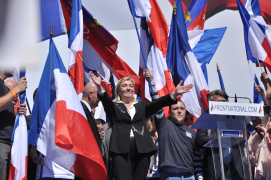
    meeting_1er_mai_2012_front_national_paris_46

    Image credit: Blandine Le Cain/Wikimedia Commons.

    Since Marine Le Pen took over party leadership from her father in 2011, the FN has entered a new stage of its political development, which demonstrates its adaptability and an ability to survive its founding leader: Jean-Marie Le Pen. However, the party has an even longer history in French politics. It was founded in 1972 from a small neo-fascist organization, Ordre Nouveau, as an electoral umbrella for nationalist groups to run in the 1973 legislative elections. The FN remained electorally irrelevant during the first decade of its starting phase. Its turning point was the 1984 European elections where it obtained about 11% of the vote. From the mid-1980s, the party maintained a sort of electoral stability (between 11 and 15% of electoral support). Since 1984, the FN has also fielded candidates in all local and regional elections, winning representation in regional, departmental and municipal councils, as well as in the European Parliament.

    The change of leader in 2011 reinforced the party’s electoral appeal: the FN under Marine Le Pen has enlarged its base of support, reaching new heights in the 2012 Presidential election with about 18% of the vote. The FN also topped the 2014 European election winning a quarter of the national vote and 24 seats, which allowed Marine Le Pen to establish leadership over the pan-European nationalist right. Success at the national level has been corroborated locally. In the 2014 municipal election, the party won 11 municipal councils and 1,544 councillors, outperforming its previous record (1995). The departmental elections of March 2015 showed another surge in FN support at 25% of the vote, with 62 local councillors. In 2015 again (December) the party participated in the regional elections and it obtained a new record. In particular in two regions (Provence-Alpes-Côte d’Azur and Nord-Pas-de-Calais-Picardie) the FN arrived at 40% of the vote during the first round of elections.

    Under Marine Le Pen’s leadership, party change has been embedded in the concept of “de-demonization” (dédiabolisation). As Gilles Ivaldi suggests, de-demonization is primarily characterized by the attempt to detoxify the party’s extremist reputation, while simultaneously preserving its populist radical right potential for voter mobilization. The current FN seeks to improve its credibility through party modernization and professionalization. Whilst the 2011 leadership election represented a first notable step towards greater intra party democracy, there is little evidence of a more substantial move towards a party “normalization”, neither ideologically nor organizationally. Instead, the party has taken a process of “Marinization” (personalization) whereby Marine Le Pen has successfully replaced her father as charismatic leader, both inside and outside the party.

    The 2011 congress represented probably the most important change in the French Front National organizational path, with Marine Le Pen taking over the party. Following Jean-Marie Le Pen’s decision to step down, the party had initiated an internal leadership campaign. During the same campaign against Bruno Gollnisch, Marine Le Pen had indicated that she would turn the party into a professionalized and more effective party organization: “I want to create a renewed, opened and well-functioning party”, she said. In 2011, the FN had experienced its first change of leader since 1972, together with a new executive team and a new logo. The “new” FN has pushed an agenda, which aims primarily to shed its extreme right profile and to achieve agency credibility.

    A “Europe of Nations”

    The FN articulates a strong populist anti-establishment agenda. It opposes European integration, exemplifying the “hard Euro-scepticism” defined by Aleks Szczerbiak and Paul Taggart as “a principled opposition to the EU and European integration”. Its opposition to Europe concerns a wide range of institutional, economic and national identity issues. The FN’s concept of a “Europe of Nations”, argues that institutional cooperation should only take place between sovereign nation-states, opposes the EU as a supranational entity, and criticizes the EU as elitist and bureaucratic. A pledge for a return of competences and powers to the national level has been central to the FN electoral platforms since the early 1990s. The 2014 FN ’s programme featured primarily the promise to shed the Euro which was portrayed as “ a jail” serving the “sole interests of bankers and the wealthy”, and from which the French people “should free themselves”.

    The FN’s distrust of European integration revolves around immigration and issues of national identity, and it is often linked with welfare-chauvinist positions. The FN’s hostility towards the EU is underpinned by the party’s traditional ethno-nationalist policies. As Mudde suggests, the FN’s anti-EU positions are incorporated into a typical populist radical right agenda, which combines nativism, authoritarianism and anti-establishment populism.

    The party is notorious for its politicization of immigration issues. During the 1980s, Jean Marie Le Pen laid out the basis for a potent ethno-nationalist and welfare-chauvinist “master frame”, which later diffused throughout Europe. In 2014, the European campaign by the FN was marked by the continuation of xenophobia and welfare-chauvinism, showing no significant departure from the party’s traditional ethno-nationalist ideology.

    The FN committed to “defending, in all circumstances, France’s values, identity, traditions and way of life” against what would be stigmatized as a “sieve Europe”. The party’s 2014 platform lashed out at the Schengen agreement, campaigning on withdrawal, and claiming that the FN would close France’s borders to “stop uncontrolled immigration and put an end to the free movement of Roma and delinquents across Europe”. In line with its 2012 manifesto, the FN proposedpolicies, which would remove the possibility within French law to regularize illegal migrants. The party’s 2012 presidential platform featured a range of nativist policies, including the FN’s traditional “national preference” scheme, which seeks to give priority to the French people over foreigners in welfare, jobs and housing.

    A product of France’s political system and climate?

    French political parties are characterized by their instability, organizational weakness and fragmentation. As one of the oldest parties in France, FN has shown greater signs of stability over time. Since 1972, it has experienced only one change at the top and it has retained its name. The Parti Socialiste (PS – Socialist Party), currently the most important centre-left party in France, underwent important organizational changes since 1971 as it opened itself to other political forces. Parties of the right exhibit an even greater degree of volatility over time. In 2002, the loose electoral alliances of the 1980s and the 1990s between the Gaullists and the Centre-Right gave way to organizational merger with the creation of the Union pour un Mouvement Populaire (UMP – Union for a Popular Rally), which was an attempt by the centre-right to consolidate its identity.

    In 2007, the new president of the UMP, Nicolas Sarkozy, was elected in the presidential election. In 2011, however, disgruntled liberals and Christian Democrats left the UMP to form an independent party, the Union des démocrates et indépendants (UDI). Following Sarkozy’s defeat in 2012, the UMP entered a period of high ideological, leadership and strategic factionalism. In November 2014, Sarkozy returned to the UMP and won the leadership election with a large internal consensus. He pushed important changes to the party statutes, including a renaming of the party to Les Républicains (The Republicans). Recently, the party reorganized itself around a new right-wing leader, François Fillon, who became the Presidential candidate in view of 2017 appointment and after a victory during an open primary election.

    The same event has generated a new political and social weakness in France, also fuelled by the election of Donald Trump as US president in November 2016. In current context, France is faced with another crucial battle between populist radical right and establishment (right again) forces. The unexpected victory of Fillon in the Republican primary, Socialist President François Hollande’s decision not to run again, may be complicating Le Pen’s efforts to turn her political success into an electoral victory in the two rounds of voting scheduled for April 23 and May 7, 2017. In fact, there are themes, such as Islam, insecurity and immigration, with which the FN is able to rule the debate in general and worry public opinion.

    The FN has been able to aquire a new agenda, a sort of “cultural hegemony”, a “vocabulary” even more used also by other traditional party from the centre-right area. France remains, therefore, pervaded by a strong wave of right-wing extremism. In this changed and menacing context, the FN maintains a high appeal and it is ready to prepare its battle in the 2017 Presidential election and probably it is going to reinforce its campaign and its strategies. In any case, it has become (and  remained) a constant presence in the French political system.

    Maria Elisabetta Lanzone, PhD, is Research Fellow and Teaching Assistant at University of Genoa (Italy). She is expert in comparative populism, Euro-scepticism and migration policies. She is the author, with Gilles Ivaldi, of the book chapter From Jean-Marie to Marine Le Pen: Organizational Change and Adaptation in the French Front National (2016, Palgrave Macmillan). From April 2015 she is also member of the ERMES Laboratory at University of Nice-Sophia Antipolis (France).
  • Al Qaeda

    Al Qaeda

    Yemen: Latest U.S. Battle Ground

    Stephen Zunes | Foreign Policy in Focus | January 2010

    Issue:Global militarisation

    Tagss:Al Qaeda, Yemen

    Excerpt: The United States may be on the verge of involvement in yet another counterinsurgency war which, as in Iraq and Afghanistan, may make a bad situation even worse. The attempted Christmas Day bombing of a Northwest Airlines flight by a Nigerian apparently planned in Yemen, the alleged ties between the perpetrator of the Ft. Hood massacre to a radical Yemeni cleric, and an ongoing U.S.-backed Yemeni military offensive against al-Qaeda have all focused U.S. attention on that country.

    Read more »

  • Sustainable Security

    Research from social media accounts suggests that Western women who travel to join Deash do so for largely the same reasons as male recruits – the ideological pull of extremist Islam. But this radicalization does not happen in a vacuum.

    Since Daesh (ISIS) emerged in 2014 as a meaningful threat, policymakers have lambasted the organization’s treatment of women. The group’s dogmatic enforcement of its interpretation of ‘Islamic’ law has created harsh restrictions on women’s dress, movement, and public life, and the horrific enslavement and extensive sex trade of Yazidi women has drawn international condemnation. Despite this violence, Daesh has been surprisingly successful in recruiting both local and foreign women. Nearly 600 women from Western countries have left reasonably gender equitable states to join Daesh in Syria and Iraq. Women compose approximately 12 percent of all Western recruits, and French intelligence officials estimate that 35 percent of French Daesh fighters are female. What explains this unprecedented flow of foreign female recruits? Why are middle-class, educated, Western women voluntarily joining Daesh?

    Explaining recruitment

    hani amir

    Image by Hani Amir (cropped) via Flickr.

    Western women in Daesh pose an uncomfortable tension for feminist and international relations scholarship: they pursue paths and laud virtues which keep women subjugated and they do so from comparatively progressive and gender-equitable societies. Unable to reconcile Daesh’s patriarchal, religious, and political ideology with Western women’s desire to participate, researchers assume that female recruits are irrational, deluded, love-struck, and naïve. Western commentators infatuated with the idea of ‘jihadi brides’ emphasize sexual motivations and reduce female recruits to sex objects for male insurgents. Intelligence officials in Australia, Britain, Malaysia, and Tunisia accuse women of performing a “sexual jihad,” migrating to perform sexual favors for Daesh fighters. Counterterrorism experts and government officials almost exclusively view women’s participation as the result of deception by online recruiters. This explanation treats female participants as peripheral actors and assumes that no woman would willingly join Daesh if she fully understood the organization’s true nature.

    Nevertheless, data from the social media accounts of Western women who have moved to Iraq and Syria to join Daesh suggests that women travel to join for largely the same reasons as male recruits. Western women are pulled by an ideological commitment to Daesh’s brand of extremist Islam and pushed by violence and isolation in their home countries. However, while their motivations may track with male fighters, female recruits are using social media to articulate explicitly gendered spaces for themselves within the organization. Daesh’s radical beliefs are tied closely to a rare and fundamentalist interpretation of the Islamic faith that calls for believers to make hijra (migration) to the Muslim world. Western women’s mobilization in Daesh results from religious commitment to a certain form of piety and the radical and physical move that it embodies. For women, the hijra mandate intertwines general requirements of faith with a gendered call to support the caliphate from infancy as its mothers, reproducers, and historical couriers. Much scholarship and Western commentary on women in Islamist movements emphasize that this participation is patently not feminist. However, Western women in Daesh feel agentive, valued, and essential in their supportive roles. Evidence suggests that marrying fighters, witnessing their martyrdom, bearing children, and educating others about Daesh are roles enthusiastically embraced by female recruits. These women view their contributions as political actions that are vital to the organization’s survival.

    But Western women do not become radicalized to these ideas in a vacuum. Instead, they are often pushed towards Daesh propaganda by feelings of isolation and anti-Muslim violence in their home countries.  Although many claims about Muslim radicalization highlight the ease of finding likeminded communities, many women actually have difficulty identifying Daesh sympathizers in Western states. Many recruits believe Western Muslims are not properly pious and that there is a lack of opportunity to follow a deeply fundamentalist strain of Islam in Western countries. Women further feel a particularly gendered form of oppression linked directly to wearing hijab or niqab and openly practicing their faith in the West. They report feeling isolated and discriminated against in their home countries because of their public displays of Islamic piety. Many believe that non-Muslim society ‘contaminates’ women with sexualized expectations and public feminism. Reclamation of modesty is a key concern for female recruits, and many express feelings of safety and belonging after moving to Daesh-controlled territory where veiling is strictly enforced.

    Muslim women in the West also face uniquely gendered forms of violence. Civilian violence often aims to forcibly remove women’s headscarves or threatens their reproductive capabilities. In 2015, a London woman was convicted after calling two women ‘ISIS bitches,’ accusing them of having ‘bombs up their skirts,’ and threatening to kick one, who was 34 weeks pregnant, in the uterus. Legislatively, countries like France enforce anti-veiling bans that target Muslim women and illegalize their displays of religious devotion. Western women in Daesh reference this violence on social media and contend that their home states make them feel alone, unsafe, and discriminated against. It is in this isolation that they seek out online and non-contiguous communities, creating a breeding ground for radicalization through acceptance on Daesh platforms.

    Gender and counterterrorism

    Recognizing both the ideological pull of Daesh and the isolating and violent push of anti-Muslim sentiment in the West has key political and social implications. First, we believe that by victimizing and infantilizing these women, Western policy makers are overlooking vital political actors sustaining Daesh and spreading Islamic extremism. Second, these accounts force us to reevaluate the central role of anti-Muslim discrimination in radicalizing Westerners. Therefore, we advocate for political and social change – we must consider these women real political actors and we must work to shift the social attitudes that isolate them from their Western communities in the first place.

    Many policy makers view women who travel to Daesh controlled territory as naïve or confused. This perceived deception leads legal actors to treat female recruits as peripheral. While Western states are preemptively stripping citizenship from male foreign fighters and imposing heavy sentences on online supporters, judges and legislators are often taking a more sympathetic approach to women. When Shannon Conley, a 19-year old woman from Colorado, was convicted for conspiracy to support Daesh, her attorneys stressed that she is a ‘wonderful person,’ who had been mislead by falsities about the Islamic State. During trial, the prosecutor labeled her ‘pathologically naïve.’ Even though the judge ruled she was not mentally ill, he also noted that she was ‘a bit of a mess…not a terrorist.’ This type of treatment reinforces the idea that these women are not fully aware of what they are doing, despite the fact that social media data suggests otherwise.

    In a second case, the Anti-Terror Chief of London’s Metropolitan Police offered immunity to Amira Abase, Shamima Begum, and Kadiza Sultana, three young women who left for Syria in February 2015. He noted that the police have no evidence that these women are responsible for terrorist offenses despite joining the organization. This marks the first time the police have offered immunity from prosecution to a returnee from Daesh and is a stark divergence from increasingly harsh punishments for male recruits from Western countries. An immunity deal suggests that policy makers and legal counselors think of these women as less dangerous domestically than their male counterparts. However, if we view these women as real Daesh sympathizers, motivated by a deep ideological commitment and purposefully acting on political goals, it is necessary to reevaluate this approach. This is not to say that women are never victims of manipulation or deception, or to say that they should be convicted and sentenced in every case. Rather, this critique begs Western policy makers to more equally consider the agency, choices, and political efficacy of these actors.

    In addition to these political implications, our analysis emphasizes the importance of anti-Muslim sentiment in alienation. Openly considering the ways in which stigma, overt discrimination, and sexual harassment of Muslim women are connected to Daesh recruitment should be a central part of counterterrorism strategies. U.S. president Barack Obama recently acknowledged that responding to Daesh attacks by stirring anti-Muslim fears was ‘doing the terrorists’ work for them.’  Despite the fact that policy makers and counterterrorism experts agree there is ‘no place for bigotry in effective counterterrorism,’ levels of Islamophobia and violence against Western Muslims – particularly women – continues to rise. Such treatment creates a space of isolation, alienation, and resentment. Therefore, broader social acceptance of Muslim women in the West may foster a sense of inclusion and alleviate the need to seek community abroad or with terrorist organizations.

    Moving forward

    This argument is certainly not exhaustive.  There are complex motivations behind the movement of Western women to Iraq and Syria, and our work only begins to explore this phenomenon. Nevertheless, even an initial exploration of social media data shows that these women must be taken seriously as social and political actors. They appear to have a deep understanding of Daesh and its ideology, they are willing to take extreme action to support this cause, and they are motivated in part by perceived hate, abuse, and rejection within their home communities. Taking these factors seriously will be an important step in stemming the flow of female recruits to Daesh and counterterrorism policy more broadly. Future research must incorporate scholarship and data on discrimination and Muslim social identity into theories of Daesh recruitment. At baseline, researchers should interview and reach out to Muslim women in Western states about the isolation and violence they experience. Other critically undervalued resources for understanding why Western women join the organization are defectors and women who are apprehended during their journey to Daesh-controlled territory. Most importantly, academics must genuinely take into account these women’s voices and explanations instead of relying on theoretical narratives or media assumptions.

    Meredith Loken is  a Ph.D student in the Department of Political Science at the University of Washington. She was the 2015-2016 Chair of the UW International Security Colloquium, the Richard B. Wesley Fellow in International Security, and is an affiliated researcher with the Missing Piece Young Scholars Network on Conflict-Related Sexual Violence. Her research focuses on the intersections of gender and political violence in domestic conflicts. Meredith has conducted fieldwork in Sri Lanka, Croatia, and at the International Criminal Court for the Former Yugoslavia. She is actively involved in data collection efforts concerning women in the Islamic State and female combatants in civil wars.

    Anna Zelenz is a PhD student in the political science department at the University of Washington, Seattle. She studies international relations, comparative politics, and public law. Anna’s work focuses primarily on violence, criminalization, state repression, insurgency formation, and the Middle East.

  • Reimagining Development

    Reimagining Development

    Issue:Marginalisation

    Do recent crises in food, finance, fuel and climate – and the way that people are responding to them – present us with an opportunity to rethink or ‘reimagine’ what international development means and how it needs to change?

    A new initiative of the Institute of Development Studies at the University of Sussex brings together 34 research projects exploring crises and responses to crises. The initiative aims to identify new thoughts and ideas on international development from across the globe and to bring them together to build a new consensus on the conduct and performance of international development in the 21st century.

    The Reimagining Development initiative will focus on the following questions:

    What is the evidence of the impacts of the multiple crises (financial, energy, food, confidence) on lives and livelihoods?

    What is the evidence that significant shifts in values, relationships, ideas, methods, and behaviors are taking place?

    What are some alternatives to the status gap that a particular place/space proposes in terms of ideas, values, relationships, methods, behaviors and knowledge?

    Based on accumulated knowledge in the place/space what specifically has to change (or not) to support any alternatives emerging? And what are the best strategies and tactics for effecting change?

    More information on the initiative is available here.

    Comments

    Post new comment


  • Sustainable Security

    Beaux Gestes and Castles in the Sand: The Militarisation of the Sahara

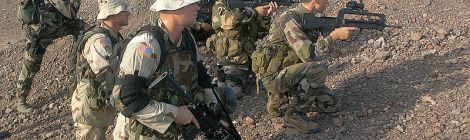
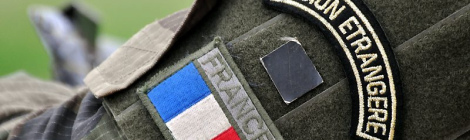
    Whatever the benefits for Mali, the French-led eviction of jihadist groups from northern Mali may have made the wider Sahara a less safe place, and has done little to lower the capacity of such groups to threaten European interests.. In 2014, France is implementing a major redeployment of its forces in Africa into the Sahel and Sahara. Meanwhile, the US has been quietly extending its military reach from Djibouti to Mauritania. However, as elsewhere, the western military approach to countering Islamist insurgency in the Sahel rests on very unsteady foundations and the potential to provoke wider alienation and radicalisation is strong.

    Read Article →

  • Mutually Assured Destruction: Fifty Years and Counting

    Mutually Assured Destruction: Fifty Years and Counting

    Tom de Castella | BBC News Magazine | February 2012

    Issue:Global militarisation

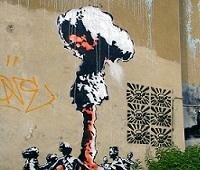
    Writing for the BBC, Tom de Castella explores the reasons why the fear of a nuclear exchange has receded in the public imagination. Marking the fiftieth anniversary of Robert McNamara’s speech to the American Bar Foundation that outlined the official US position on mutually assured destruction (MAD), de Castella talks to a number of experts about the continuing threat from nuclear stockpiles around the world.

    Christopher Laucht from Leeds University reflects on the importance of the fact that under MAD (as opposed to a conventional war), the public had no control. “You were at the mercy of political decision makers. Apart from the fear that one side would do something stupid, there was also the fear of technology and the question of ‘what if an accident happened?’.”

    Professor Paul Rogers from the University of Bradford notes that the most serious stand-off today is “the prospect of a nuclear exchange between India and Pakistan in which tens of millions would die.”

    The article notes that “the end of the Cold War hasn’t removed the nuclear warheads. Relations between Russia and the West have deteriorated in recent years. China, whose nuclear programme is little understood in the West, is doubling its military spending. India and Pakistan remains a potential flashpoint. So why don’t people fear nuclear war as they used to?”

    The full article with some associated data is available here.

    Image source: Leeks.  

    Comments

    Post new comment


  • Sustainable Security

    Chemical Weapons Use in Syria: a Test of the Norm

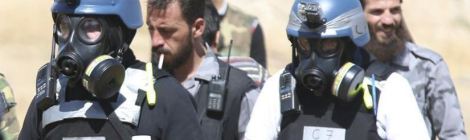
    Recent events in the Syrian civil war have proved an unparalleled test of the norm against the use of chemical weapons. At its core this was a test of the willingness of countries to uphold the norm, in this case in the face of a flagrant violation, and a response that in the end stumbled upon a satisfactory conclusion—reaffirming the special category of chemical arms—but which in the process said a great deal about current attitudes to the use of military force as a means of humanitarian intervention.

    Read Article →

  • Hello world!

    Welcome to WordPress. This is your first post. Edit or delete it, then start writing!