Blog

  • The Power of Sport for Youth in Conflict

    Action sports are increasing in popularity in the Middle East. For youth in conflict zones, these collaborative projects provide space for local voices and means of empowerment.

    In 2001, Kofi Annan founded the United Nations Office on Sport for Development and Peace (SDP), advocating sport as having ‘an almost unmatched role to play in promoting understanding, healing wounds, mobilising support for social causes, and breaking down barriers’. Since then, the SDP movement has continued to proliferate with groups and organizations using sport and physical activity to help improve the health and well-being of individuals and communities around the world.

    Of the 1000+ organizations currently working under the SDP umbrella, many are focused in sites of war and conflict with the aim of peace building, with growing interest in the potential of sports programmes as psycho-social interventions following natural disaster.

    SDP organizations such as Football 4 Peace, Right to Play, Hoops 4 Hope, Skateistan, and Peace Players International have been acclaimed as making valuable contributions to the quality of many individual’s lives in contexts of war, conflict, and poverty.
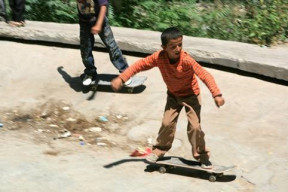
    Afghan boy on a skateboard. Image credit: Skateistan.

    Despite the best intentions, however, too many SDP programmes adopt a ‘deficit model’ that assumes poor youth in war-torn or disaster stricken contexts need ‘our’ western versions of sport for their empowerment. Sport sociologists Douglas Hartmann and Christina Kwauk, for example, are concerned that officials of sport-based intervention programmemes tend to “ignore the ways in which youth interpret and actively and creatively negotiate poverty and inequality as well as the ways in which their sport-based interventions actually commit symbolic acts of violence while reproducing conditions of marginalization”.

    Instead, they advocate a more critical alternative to youth development that pays attention to “local practices, local knowledge, the sociocultural and political-economic contexts as well as the needs and desires of communities themselves”.

    My research (funded by a three-year Marsden, Royal Society grant) has been a direct response to this call by focusing on the multiple and diverse ways youth are actively and creatively engaging with recreational, non-competitive sports in their responses to conditions of war, conflict and post-disaster. The case study of Gaza provides an interesting example of the grassroots approaches being developed by youth in contexts of conflict.

    Youth Engagement with Sport in Conflict Zones: The Case of Gaza
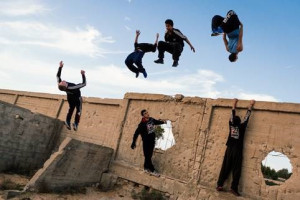
    Youths doing parkour in Gaza Strip. Image credit: PK Gaza.

    Parkour (also known as free running)—the act of running, jumping, leaping through an urban environment as fluidly, efficiently and creatively as possible—reached Gaza in 2005 (shortly after the withdrawal of the Israeli army and the dismantling of Israeli settlements), when unemployed recent university graduate Abdullah watched the documentary Jump London on the Al-Jazeera documentary channel in his over-crowded family home in the Khan Younis refugee camp. He promptly followed this up by searching the Internet for video clips of parkour, before recruiting Mohammed to join him in learning the new sport. Continuing to develop their skills, they soon found parkour to be so much more than a sport, “it is a life philosophy” that encourages each individual to “overcome barriers in their own way”.

    To avoid conflicts with family members, local residents and police, members of PK Gaza (the name chosen by the group) sought out unpopulated spaces where they could train without interruption. Popular training areas included cemeteries, the ruined houses from the Dhraha occupation, UNRWA (United Nations Relief and Works Agency) schools, and on the sandy hills in Nusseirat, formerly an Israeli settlement now deserted in the centre of Gaza City. The latter is particularly meaningful for the youth who proclaim that by practicing parkour in the space, “we demonstrate that this land is our right”.

    As part of the younger generation of technologically savvy Gazan residents, the founders of PK Gaza are explicitly aware of the potential of the Internet for their parkour practices, and for broader political purposes. “We started filming ourselves with mobile phones and putting the videos on YouTube”, explains Mohammed, and have continued to develop more advanced filming techniques using borrowed cameras and editing the footage on a cheap computer.
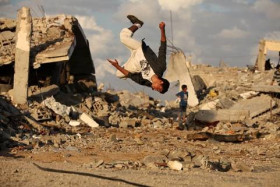
    Boy doing parkour in Gaza. Image credit: PK Gaza.

    The PK Gaza Freerunning Facebook page has thousands of followers from around the world, their Instagram account has almost 3000 followers, and the group also posts regular YouTube videos that can receive upwards of tens of thousands of views. Each of Facebook, Instagram and YouTube are key spaces for interaction and dialogue with youth beyond the confines of the Gaza strip. In so doing, “we contribute very significantly to raising international awareness of what is happening in Gaza. We offer video clips, photographs and writings related to the situation in which we live in the Gaza strip and deliver the message to all the people’s that’s watching online that there are oppressed people here”, proclaimed Mohammed.
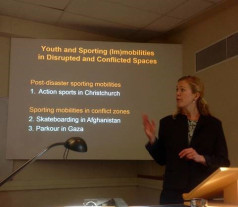
    Professor Holly Thorpe giving a presentation on research findings. Image credit: Holly Thorpe.

    As well as raising awareness of the conditions in Gaza and offering a temporary escape from the harsh realities of everyday life, the PK Gaza team strongly advocates the socio-psychological benefits of their everyday parkour experiences. They proclaim the value of parkour for their resilience and coping with the frustrations, fears, anxieties and pains of living in the Khan Younes refugee camp. As Abdullah explains, “I have witnessed war, invasion and killing. When I was a kid and I saw these things, blood and injuries, I didn’t know what it all meant … this game [parkour] makes me forget all these things”. As the following comments from Gazan psychologist, Eyad Al Sarraj (MD) suggest, some medical and health professionals also acknowledge the value of such activities for young men living in such a stressful environment:

    Many young people in Gaza are angry because they have very few opportunities and are locked in. An art and sports form such as free running gives them an important method to express their desire for freedom and allows them to overcome the barriers that society and politics have imposed on them. It literally sets them free”.

    Such observations are supported by a plethora of research that has illustrated the value of physical play and games for resilience in contexts of high risk and/or ongoing physical and psychological stress (e.g. refugee camps), and the restorative value for children and youth who have experienced traumatic events (e.g. natural disaster, war, forced migration).

    Conclusion

    To conclude, a key finding from my research to date is the need to move away from the ‘deficit model’ that assumes poor youth in developing or war-torn contexts are victims needing ‘our’ versions of sport for their empowerment. If the SDP community can begin with a recognition of the agency, creativity and needs of local youths, then we can better work with them to achieve their self-defined goals in contexts of conflict.

    Dr Holly Thorpe is Associate Professor in the Faculty of Health, Sport and Human Performance at the University of Waikato. As a sociologist of sport and physical culture, she has published widely on youth sport, action sports, and critical sport for development, including six books and over 60 journal articles and chapters. In 2016, she founded Action Sports for Development and Peace (www.actionsportsfordev.org), and gave a Ted talk ‘Action Sports for a Better World’. She continues to work on a Royal Society funded project—Sport in the Red Zone—examining the power (and politics) of sport in sites of conflict and disaster, including Afghanistan, Gaza, New Orleans and Christhcurch. She welcomes your feedback, so please feel free to get in contact:


  • Countering Militarised Public Security in Latin America: Understanding the trend in Venezuela

    Countering Militarised Public Security in Latin America: Understanding the trend in Venezuela

    Across Latin America, governments are sending their militaries into the streets to act as de facto police forces in the face of disproportionally high crime and violence rates. This trend has been going on for several years, but has accelerated in 2013. With the move to deploy over 40,000 troops for citizen security in Venezuela, President Nicolás Maduro joined a growing list of leaders throughout the region that have relied on their militaries to carry out police duties. In the first of our two-part discussion ‘Countering Militarisation of Public Security in Latin America’, Sarah Kinosian discusses the conditions that are causing the trend to thrive.

    Read Article →

  • ‘Petropolitics’ and the price of freedom

    ‘Petropolitics’ and the price of freedom

    “As the price of oil goes down, the pace of freedom goes up… As the price of oil goes up, the pace of freedom goes down…” So says New York Times columnist Thomas Friedman, who argues that the first law of ‘petropolitics’ is that the price of oil and the pace of freedom are inversely correlated in countries “totally dependent on oil” for economic growth. However, the correlation between recent oil price spikes and anti-authoritarian action – particularly in the Arab Spring – challenges this assessment. But if this pattern of change is to continue, Western states must curb their hypocritical dependence on authoritarian oil-exporting governments by developing more sustainable sources of energy.

    Read Article →

    Sustainable Finance and Energy Security

    General volatility in financial markets – fuelled by irresponsible lending and trading practices, as well as evidence of market manipulation – have had an effect on oil prices. Although the specific effects of the finance sector on oil prices requires further investigation, we can already understand that a sustainable and secure future will require the development of a wider energy mix to meet rising demand. To this end, more sustainable financial systems must be developed to service the real needs of citizens

    Read Article →

    National security and the paradox of sustainable energy systems

    The transition away from a centralised global economy built around conventional energy sources to a decentralised global economy mostly fuelled by renewable resources is one we must make for the sake of our children’s futures and that of our planet. Writing for sustainablesecurity.org, Phillip Bruner asks if national security is at present, deeply concerned with preserving access to conventional energy, then how would national security for a decentralised renewable energy Internet be managed? Who would manage it? And what role, if any, could the public play in helping to alleviate some of the burdens of 21st century threat mitigation?

    Read Article →

    Environment, Energy, Economy: a threefold challenge to sustainable security

    Whether it’s the economy, energy or the environment which you value most, when it comes to security, each holds equal weight. If security can be defined in terms of what is or isn’t sustainable, then it must evolve to incorporate additional elements that transcend more traditional views on geopolitics.

    Read Article →

  • UN Peacekeeping and Counter-Terrorism

    Losing control over the use of force: fully autonomous weapons systems and the international movement to ban them

    Later this month, governments will meet in Geneva to discuss lethal autonomous weapons systems. Previous talks – and growing pressure from civil society – have not yet galvanised governments into action. Meanwhile the development of these so-called “killer robots” is already being considered in military roadmaps. Their prohibition is therefore an increasingly urgent task.

    Read Article →

    Nuclear Weapons: From Comprehensive Test Ban to Disarmament

    Despite not yet entering into force, the 1996 Comprehensive Test Ban Treaty has succeeded in almost eliminating nuclear weapons testing and in establishing a robust international monitoring and verification system. A breakthrough in its ratification by the few hold-out states could have important positive repercussions for the Nuclear Non-Proliferation Treaty or nuclear disarmament in the Middle East.

    Read Article →

  • Losing control over the use of force: fully autonomous weapons systems and the international movement to ban them

    by Elizabeth Minor, Researcher at Article 36

    RC_long_logo_small_4webThis article is part of the Remote Control Warfare series, a collaboration with Remote Control, a project of the Network for Social Change hosted by Oxford Research Group.

    Later this month, governments will meet in Geneva to discuss lethal autonomous weapons systems. Previous talks – and growing pressure from civil society –  have not yet galvanised governments into action. Meanwhile the development of these so-called “killer robots” is already being considered in military roadmaps. Their prohibition is therefore an increasingly urgent task.

    From 13-17 April, governments will meet at the United Nations in Geneva to discuss autonomous weapons – also referred to as killer robots. The week-long meeting will be the second round of multilateral expert discussions on “lethal autonomous weapons systems” to take place within the framework of the United Nations’ Convention on Certain Conventional Weapons (CCW).

    Urgent and coordinated international action is needed to prevent the development and use of fully autonomous weapons systems. Such systems would fundamentally challenge the relationship between human beings and the application of violent force, whether in armed conflict or in domestic law enforcement. Once activated and their mission defined, these systems would be able to select targets and carry out attacks on people or objects, without meaningful human control. As states with high-tech militaries such as China, Israel, Russia, South Korea, the UK, and the US continue to invest in aspects of increased autonomy in weapons systems technologies, consideration of this issue is increasingly urgent. Campaigners are calling on states to tackle this issue by developing a treaty that pre-emptively bans these weapons systems before they are put into operation, by which time it may be too late.

    The issue

    Taranis stealth UAV

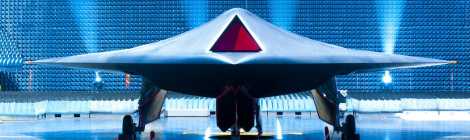
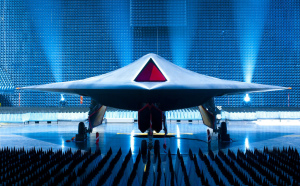
    The UK’s Taranis stealth UAV. The Taranis exemplifies the move toward increased autonomy as it aims to strike distant targets “even on other continents”, although humans are currently expected to remain in the loop. Source: Flickr | QinetiQ

    Weapons systems that do not permit the exercise of meaningful human control over individual attacks should be prohibited, due to the insurmountable ethical, humanitarian and legal concerns they raise. The governance of the use of force and the protection of individuals in conflict require control over the use of weapons and accountability and responsibility for their consequences. This principle, rather than any particular piece of technology or format of weapons delivery, is at the heart of the issue of autonomous weapons systems. Some have argued that fully autonomous weapons systems might reduce the risk of conflict or be able to better protect civilians. However, the focus must remain on these systems’ overall implications for the conduct of violence, rather than on a small range of hypothetical possibilities.

    Tasks can be given to hardware and software systems. Responsibility for violence cannot. The process of rendering the world ‘machine-sensible’ reduces people to objects. This is an affront to human dignity. Computerised target-object matching such as shape detection, thermal imaging and radiation detection may enable the identification of objects such as military vehicles, though in complex and civilian-populated environments, not necessarily with accuracy. However, assessment of information about these objects and the surrounding environment, including the presence of protected persons such as civilians or wounded combatants, is also essential to uphold the principles that govern the launching of individual attacks under International Humanitarian Law. These are not quantitative rules, but considerations that require deliberative moral reasoning and contextual decision-making. As such, they could not be translated into software code. Based on the principle of humanity, they implicitly require human judgement and control over the process of decision-making in individual attacks.

    Other concerns about the development of fully autonomous weapons systems include the dangers of proliferation among state and non-state actors, hacking, and the use of these systems in law enforcement or other situations outside of warfare.

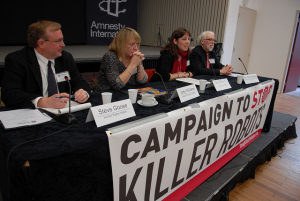
    Campaign to Stop Killer Robots campaign launch in April 2013

    Campaign to Stop Killer Robots first NGO conference in April 2013

    A preemptive ban as a solution

    Whilst the Campaign to Stop Killer Robots is calling on states to move with urgency towards negotiations on a treaty to outlaw fully autonomous weapons systems, previous talks in Geneva have not yet galvanised governments into action.

    Some states have suggested that existing law is sufficient to tackle this issue. Existing international law, which was developed prior to any consideration of autonomous weapons systems, implicitly assumes that the application of force is governed by humans. This body of international law is now inadequate as a reliable barrier to the development and use of fully autonomous weapons systems. A pre-emptive ban through an international instrument would not only halt any progress on these systems amongst states parties, but would help to stigmatise development by others.

    Some states have argued that this issue can be dealt with by conducting individual reviews of their weapons technologies to ensure they continue to uphold current international law. States are already obligated to do this however, and whilst it is important, it will not be sufficient in preventing the development of these systems internationally. A clear legal standard and norm needs to be set, and this is best done through new international treaty law.

    A ban based around prohibiting systems that operate without meaningful human control over individual attacks should be the starting point in international discussions among states, and so the elaboration and agreement of the elements of this principle are required as a next step.

    International response so far

    To date, autonomous weapons have been raised at the Human Rights Council in 2013 and considered by governments in dedicated discussions held at expert meetings of the CCW in 2014. The UN Special Rapporteur on extrajudicial, summary or arbitrary executions, Christof Heyns, called in 2013 for national moratoria to be imposed by all states on the “testing, production, assembly, transfer, acquisition, deployment and use” of these systems, until an internationally agreed framework on their future has been established. The CCW could be a possible venue for developing this, having previously produced a pre-emptive ban on blinding laser weapons. One should note, though, that previous attempts within the CCW to deliver the responses needed to certain weapons systems have occasionally failed, often hampered by operating under the consensus rule and a tendency to defer to military considerations rather than focus on humanitarian or ethical imperatives.

    Promisingly, the need to ensure meaningful human control has already been a prominent feature of the debate at the CCW, with several states recognising the importance of this approach. In upcoming discussions, governments should elaborate their policies for maintaining meaningful human control over existing weapons systems in individual attacks. Such an exchange would advance consideration of how human control can be ensured over future systems. This would in turn help clarify what practices and potential systems must be prohibited and the standards that states must demonstrate that they are meeting in their conduct. Elements to consider could include the need for adequate information to be available to commanders using any weapons system, positive action from a human being in launching individual attacks, and ensuring accountability.

    Few states have elaborated any policy on human control over weapons systems. Current US policy on autonomous weapons systems stresses that there should be “appropriate levels of human judgement over the use of force”, but does not define what these should be. The policy leaves the door open for the development of fully autonomous weapons systems, whilst recognising the harm they could cause to civilians. The UK government has stated that it has no intention to develop fully autonomous weapons and that “human control” over any weapons system must be ensured. However, it has not given sufficient elaboration of what exactly this means and how it will be ensured.

    States may see different types of operating, supervising or overseeing systems to constitute acceptable control. Agreement between states on the concept of meaningful human control is therefore an important element of international progress on the issue of fully autonomous weapons systems.

    Work by states on an international framework should be supported by input from civil society and draw on the views of a range of experts. Ultimately, negotiation processes will determine the definitions of key concepts. If discussions do not advance towards a binding framework within the CCW, a freestanding treaty process may be required, as was the case previously in the processes to outlaw both anti-personnel landmines and cluster munitions.

    The upcoming meeting of experts at the CCW in April is unlikely to result in particular concrete actions due to the nature and format of the meeting. It could pave the way for a decision in November that states continue to discuss this issue in 2016 and put it on the agenda for the CCW’s 2016 Review Conference. At that point it could be flagged as a subject on which States Parties should develop a new binding protocol. No clear group to lead this process has yet emerged. So far Cuba, Ecuador, Egypt, the Holy See, and Pakistan have endorsed a pre-emptive ban on autonomous weapons systems. France secured consensus for the CCW mandate in 2013 that established its work on lethal autonomous weapons systems, and Germany will be chairing the upcoming meeting, with the aim of seeking consensus on further consideration of the subject. However, the development of fully autonomous weapons systems is already being considered in military roadmaps. This makes their prohibition an urgent task.

    Elizabeth Minor (@elizabethminor3) is a Researcher at Article 36, and was previously Senior Research Officer at Every Casualty, and a Researcher for Iraq Body Count (IBC). 

    Featured image: The UK’s Taranis stealth UAV. The Taranis exemplifies the move toward increased autonomy as it aims to strike distant targets “even on other continents”, although humans are currently expected to remain in the loop. Source: Flickr | QinetiQ

  • Human Rights as Conflict Resolution in Northern Ireland

  • Limited Nuclear Wars – Myth and Reality

  • Self-Defense? Mexico Gambles on Vigilante Security

    A new alliance between the Mexican security forces and citizen ‘self-defence’ groups in Michoacán state has brought some short term success in the fight against the Knights Templar cartel. But what will be the long-term consequences of legitimizing heavily armed vigilante groups in Mexico?

    The Rise of Las Autodefensas

    Michoacan 1

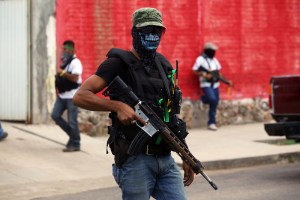
    Defense groups in Michoacan take-over the town of Tierra Caliente Churumuco, gathering 28 munucipios under their control. Source: Esther Vargas (Flickr)

    In the western Mexico state of Michoacán, federal security forces carried out their first joint operation with citizen “self-defense” groups in early February, marking a new phase in the state’s ongoing fight against organized crime. Since February 2013, these militias, made up of armed farmers, businessmen, ex-military, former gang members and others fed up with high levels of rape and extortion, have been capturing one town after another from a powerful cartel that the federal government has been unable to remove from its seat of power.

    Mexican President Enrique Peña Nieto initially condemned these militias, calling for them to put down their arms. But the groups, known as vigilantes or “self-defense” groups, say they have little choice given local governments’ failure to protect their communities from the Knights Templar (Caballeros Templarios) drug cartel due to incompetence and corruption.

    Vigilantes have cropped up in about 13 states including Veracruz, Guerrero and, most prominently, Michoacán, a stronghold of the Knights Templar and an important economic hub between Mexico City and the Pacific coast. Aside from being a key agricultural exporter, the state has become a center for narcotrafficking, as precursor chemicals for crystal meth (methamphetamine hydrochloride) arrive from Asia, before being manufactured and shipped up to North American markets. Since May 2013, the government has been deploying thousands of soldiers and federal police forces to Michoacán to target the cartels, but the security situation has continued to deteriorate.

    At the same time, the vigilantes, now estimated to number 20,000 fighters, have grown in size and popularity, and have posed quite the public relations quandary for the Mexican government. Peña Nieto’s administration has grappled between a) coordinating with the vigilante groups, which carries the risk of being accused of protecting paramilitaries, and ultimately admitting its own failure to protect its citizens, and b) fighting against them, which risks accusations of protecting the cartels while becoming locked in a three-way battle.

    In mid-January the government sent soldiers to Michoacán to disarm the vigilantes, which led to violent clashes and citizen deaths. Due to a strong pushback, the government has since moved to legalize the self-defense groups, rolling them into security forces in hopes of overtaking the cartels. This decision has the potential to bring success against the Knights Templar, as the vigilantes are poised to put up a formidable fight.

    Armed with an intimate knowledge of the terrain and high caliber weaponry, which fighters claim was purchased on the black market or confiscated from cartel members, vigilante groups have now taken over several municipalities across western Mexico and have developed a semi-military structure. They even have accountants to help manage the funding coming from wealthy ranchers and businessmen within Mexico, many of whom have been displaced because of the violence. Immigrant workers in the United States also fund the vigilantes; about 1 million people in California alone have family in Michoacán.

    In late January the government signed an eight-point agreement with various self-defense groups that allowed them to become recognized as part of an existing community force under military control, known as the ‘Rural Defense Corps’. These little-known government-recognized volunteer militias have a history in Mexico, but have never reached this scale. The vigilantes must now submit a list of their fighters to the Defense Department and register their weapons.

    A Dangerous Gamble

    Many observers have heralded this decision as a pragmatic way to harness the movement’s momentum. But, as several analysts have noted, it is not without its risks and flaws. As InSight Crime noted, the groups’ mandate in the agreement is vague. It says the military will give the groups “all the means necessary for communications, operations and movement,” but does not say for which activities. The government has said the groups’ status is temporary, but has put no time limit on operations. Fighters must register their weapons, but it is unclear if this includes handguns, which Mexican citizens may already carry. The Mexican Congress will eventually need to clarify these items.

    Latin America’s dark history with other government-sanctioned paramilitarism has also raised concerns about using this model. As one Guatemalan human rights activist warned: “the cure is going to turn out worse than the sickness.”

    This has certainly been true in Colombia, where state-approved militias became the region’s largest paramilitary group (the United Self-Defense Forces of Colombia or AUC), which went on to commit more human rights abuses than the leftist guerrillas they had risen up to fight. Ultimately it morphed into Latin America’s most powerful drug trafficking organization and developed strong ties to the government. Successor groups continue to traffic drugs, terrorize Colombians, and pose the greatest security threat to the government currently. Guatemala and Peru share experiences of state-backed paramilitaries that carried out human rights abuses, including mass killings, torture and kidnappings alongside those armies during their civil wars.

    There are already signs the vigilantes are headed for a dangerous future. Some have been linked to the Jalisco New Generation Cartel, a rival of the Knights Templar, an accusation they deny. Also worrying is that mining companies are now reportedly paying them protection fees to ward off drug cartel extortion. In Colombia, businesses looking to protect their economic interests provided much of the funding for the deadly paramilitaries, and in certain instances coordinated with the government to establish their own. The situation in Mexico has not reached these heights, but it is a cautionary tale.

    Even the origins of the vigilantes and the Knights Templar are not wildly different. The cartel, started three years ago by remnants of the Familia Michoacana cartel, claimed to be protecting citizens and enjoyed a fair amount of public support before they turned to violent tactics, alienating much of their following. Today, the leader of the Knights Templar still describes the group as a ‘defender of communities,’ telling residents if it was not them there, it would just be another criminal group. While the vigilantes may stay on their intended path, the government should keep in mind the trajectory of previous “community defenders.”

    What now?

    Apart from creating more structure for these groups, the Mexican government will also need a plan for how to address the crimes they have already committed, and will likely commit going forward. While some of the vigilantes have technical fighting training, the majority has little or no human rights training. Given the Mexican armed forces extremely poor human rights record, this is another point of concern.

    Locals are worried about what the future holds as the Mexican government scrambles to bring order to a lawless state overrun with various armed actors. The battles between the cartel and vigilantes have caused numerous deaths and upset commerce throughout Michoacán and Guerrero, but vigilante group leaders say they will continue to fight until the government captures key members of the Knights Templar.

    The conflict in this region has already endured for almost a decade. It was Michoacán where former President Felipe Calderón first deployed the military marking the start of “The Mexican Drug War” in 2006. Since then the territory has fallen under the control of various organized crime groups that have battled their way to dominance. While some hope that this new level of coordination will eventually bring some peace, many are worried it will just usher in a new stage of the conflict.

    Sarah Kinosian is a program associate for Latin America at the Center for International Policy, a nongovernmental organization based in Washington D.C. that promotes transparency and accountability in U.S. foreign policy and global relations. She works on their Just the Facts project, monitoring U.S. defense and security assistance to Latin America and the Caribbean.


  • Governing the Anthropocene: Complex Crises and Transitions to Sustainable Peace

    The Anthropocene denotes the current geological age, in which human activity has had a significant impact on climate and the environment. The pressing issue of this epoch is whether the global consequences of these interactions between humans and the environment can be governed on a global scale.

    The 1972 report to the Club of Rome on “The Limits to Growth” demonstrated the natural boundaries to human expansion which began in the Holocene era, following the end of the last glacial period around 12,000 years ago. The continued growth of human activities since the industrial revolution has become a driving force of reshaping the face of the planet into a new geological epoch, the “Anthropocene”, associated with multiple global consequences such as climate change, land degradation, resource scarcity and biodiversity loss. The Anthropocene is seen as a new geologic epoch in which humankind has emerged as a globally significant force capable of reshaping the face of the planet. The underlying human-environment interactions raise fundamental questions for global governance: Can nature be controlled and shaped on a global scale? Are human interventions a disturbing or regulating global force, avoiding or creating disasters? What are the limits of human expansion in the Anthropocene?

    Human growth and complex crises

    climate-ice

    Image by klem@s via Flickr.

    In the course of its history, the human population has been growing by increasing birth rates and lowering death rates, leading to the expansion of the human sphere in terms of capital, investments, income, technology, energy and resource flows, political power and violent forces of destruction. Despite Malthusian concerns about population growth causing scarcity of natural resources, intolerable pollution, mass starvation and other catastrophes, humans were able to overcome resource constraints and expand into new spaces through problem-solving capabilities, technical and social innovations that generated more wealth on a shrinking natural resource base. Continued pressure on natural resources and ecosystems challenge planetary boundaries in the Anthropocene, raising the question of whether a balance will be established by increased death rates or the reduction of birth rates. While the first pathway implies crisis, disaster and death, the second path may be associated with a sustainability transformation in demographic, economic and societal conditions within natural boundaries.

    These pathways are part of the “complexity turn” in the Anthropocene which is characterized by globalized networks among people, markets and institutions, accelerated processes and flows in transportation and communication, and manifold micro-macro interactions between natural and social systems. While complex systems are often robust against disturbances in the core region of stability, on the edge of critical thresholds between stability and instability, small variations and uncertainties can make a big difference and decide whether systems break down or create new ones, as symbolized by the famous “butterfly effect” in chaos theory.

    Beyond thresholds and tipping points chain reactions and risk cascades may be triggered which propagate in space and time and induce qualitative system changes. These include complex events such as natural disasters, stock market crashes, revolutions, mass exodus or violent conflicts. A world of ever growing complexity where responsibilities and solutions of crises are hidden behind smokescreens, may provoke over-simplifications, religious, populist and nationalist fundamentalisms, rhetoric against science and intellectuals, or resistance against globalized structures.

    With the chaotic breakdown of the East-West conflict in 1989, actions of individuals and groups triggered a chain reaction that within weeks led to the fall of the Berlin Wall and the breakup of the Eastern Block. A new world (dis-)order emerged in which multiple crises interacted in fractal and fragile international landscapes that continue to be unstable and full of surprises (see van Creveld 1991, Kaldor 1998, Münkler 2005, Scheffran 2008). Numerous factors and actors are interrelated, involving national, subnational and transnational actors in complex networks, crises and conflicts. Tight couplings lead to cascading crises that spiral out of control, including September 11, global economic crises, the Arab Spring, the wars in Iraq, Afghanistan, Libya and Syria, the civil war in Ukraine, the Greek debt crisis, the European refugee crisis and terror attacks in many countries. These events are interconnected through multiple channels that are often invisible.

    Climate change as a risk multiplier

    In this complex chain of crises, environmental change is connected with other problem areas through multiple linkages from local to global levels. More tipping points may emerge in the nexus of environmental degradation, climate change, poverty, and hunger which affect the living conditions in many parts of the world and could turn into severe security threats. Climate change is considered a risk multiplier, which disturbs the balance between natural and social systems and amplifies the consequences through complex impact chains. Among key pathways, climate change can affect the functioning of critical infrastructures and supply networks; intensify the nexus of water, energy and food; lead to production losses, price increases and financial crises in other regions through global markets; undermine human security, social living conditions and political stability; and induce or aggravate migration movements and conflict situations.

    In the most affected regions the erosion of social order and state failure may trigger a spiral of corruption, crime and violence. Particularly critical is the situation in fragile and failing states with social fragmentation, weak governance structures and inadequate management capacities. Human insecurity and personal instability interacts with social and political instability. The impact of environmental change could undermine the ability to solve problems and further dissolve state structures, possibly leading to their collapse.

    The Darfur conflict in Sudan has served as a prominent case where climate change is suggested as a threat multiplier in the complex nexus of population pressure, exploitation of land and forests, declining agricultural productivity, food insecurity, and the spread of diseases. While in some studies drought and desertification exacerbate the competition for resources between herders and sedentary farmers, others point to the long-term political roots of instability and violent conflicts, reinforced by national power games, regional struggles and global geopolitics that marginalized the Darfur region and fueled a spiral of violence.

    Similarly, several authors found devastating droughts in the years before the Syrian rebellion that hit the main growing areas of the country and forced many people to move to the cities. These changes combined with many other conflict drivers rooted in the country’s economic, social and demographic conditions, political failures of the Assad regime as well as the events following the US invasion of 2003, the Arab Spring of 2011 and the emergence of the Islamic State which question the role of climate change as a dominant factor.

    Limits to the Anthropocene

    In this complex nexus of overlapping crises and interconnected problem areas, the world may continue on a slippery slope of escalation, running full speed into natural boundaries and their forces. The challenge is to anticipate and avoid risky pathways by counteracting forces that slow down and change course towards a more sustainable, peaceful and viable world which avoids dangerous pathways and interventions (such as risky climate engineering),  allowing for a timely and self-organized system transformation that takes the limits of the Anthropocene into consideration. These include finite natural resources and limits to growth; ethical, social, political and legal constraints; limits of scientific knowledge and uncertainty. In an increasingly interconnected world, stabilization of human–environment interactions under conditions of climate change needs an integrative and interdisciplinary understanding of human–environment interaction to assess destabilizing developments that threaten survival and adapt to changing circumstances to ensure their viability.

    Social systems are not determined to aggravate crises situations but also have the ability to cope with problems like climate change and develop alternative pathways. To succeed, human responses and actions need to be timely and adequate compared to the speed, intensity and complexity of change. Concepts of anticipative and adaptive governance are needed to influence critical decision points and adjust actions along multiple causal chains to protect human security, strengthen societal resilience and sustainable livelihoods, and to develop collective adaptive strategies driving the planet through the complex and foggy landscapes of the future where information is limited and uncertain, but continuously updated. A lack of agreement on the underlying causes, on the risks to be expected and on the actions required is impeding progress.

    Governing transformations to sustainable peace

    Concepts of resilience, security, viability and sustainable peace can strengthen people’s social and economic capabilities in their effective, creative and collective efforts to handle the challenges of the Anthropocene. In a resilient social environment, actors are able to cope with and withstand the disturbances caused by climate change in a dynamic way that will enable them to preserve, rebuild, or transform their livelihood.

    Sustainable development seeks to balance economic, social and ecological issues for present and future generations and integrate the human sphere (socio-sphere) into the boundaries of the natural environment (eco-sphere), making conflicting objectives compatible:

    1. Sustain refers to preservation and upholding of natural resources as the life-enabling base of society and precondition for human existence.
    2. Development means the unfolding of opportunities and abilities to improve human well-being and promote societal progress.

    Peace rests on similar principles regarding the existence and development of human rights:

    1. Preservation and protection of the existence, integrity and identity of each individual by excluding violence.
    2. Self-fulfillment and unfolding of the individual through equal distribution of development opportunities.

    Thus, upholding and unfolding of humans and nature are common principles of sustainable peace, which addresses both the negative interactions between armed conflict, environmental destruction and low levels of development (vicious cycle) as well as positive linkages between human development, environmental protection and peace-building (virtuous cycle).

    In addition to preservation and development (upholding and unfolding), a third task includes the shaping of a viable world, aiming for its “conformation” to fit the current state into  a  proper  shape,  form  or  design,  creating a balanced relationship between the real and the desired world, between human society and nature. In the triangular relationship between sustainability, development and peace, upholding current abilities serves as a basis for unfolding enabling opportunities to facilitate the conformation of human–environment interaction pathways towards a viable world. This approach is compatible with the multi-level-perspective of socio-technical transformations that describe micro-macro transitions between regimes, niches and landscapes.

    Key viability strategies, supporting a “new climate for peace”, include climate mitigation and adaptation; the building of networks, the cultivation of diversity, flexibility and justice; migrant networks that facilitate the exchange of knowledge, income and other resources; new capabilities to manage disasters; arms control, non-proliferation and disarmament; regional security concepts, crisis prevention, conflict resolution and confidence-building; as well as innovative institutional frameworks and legal mechanisms.

    The 2015 Paris Agreement offers a first framework of opportunities through setting boundaries of global warming and national commitments of emission reductions as well as instruments for financial and technology transfer between industrial and developing countries. While the scope and effectiveness of these measures may not yet be sufficient to prevent dangerous climate change, they could lay the foundations and attract political support from local to global levels for a sustainable and peaceful transformation towards governing the Anthropocene.

    Further readings by the author

    Brauch, H.G., Scheffran, J. (2012) Climate Change, Human Security, and Violent Conflict in the Anthropocene. In: J. Scheffran, M. Brzoska, H.G. Brauch, P. M. Link, J. Schilling (Eds.) Climate Change, Human Security and Violent Conflict, Springer, 3-40.

    Lüthje, C., Schäfer, M., Scheffran, J. (2011) Limits to the Anthropocene. What are the challenges and boundaries of science for the post-normal age? Geophysical Research Abstracts, 13, EGU2011-11795.

    Maas, A., Scheffran, J. (2012) Climate Conflicts 2.0? Climate Engineering as Challenge for International Peace and Security, Special Issue, Security and Peace, 30(4): 193-200.

    Scheffran, J. (2008) The complexity of security. Complexity 14(1): 13-21.

    Scheffran, J., Brzoska, M., Kominek, J., Link, P.M., Schilling, J. (2012) Disentangling the Climate-conflict Nexus: Empirical and Theoretical Assessment of Vulnerabilities and Pathways, Review of European Studies, 4(5): 1-13.

    Scheffran, J., Ide, T., Schilling, J. (2014) Violent climate or climate of violence? Concepts and relations with focus on Kenya and Sudan, The International Journal of Human Rights, 18 (3): 369-390.

    Scheffran, J. (2015) Complexity and Stability in Human-Environment Interaction: The Transformation from Climate Risk Cascades to Viable Adaptive Networks. In: Kavalski (ed.), World Politics at the Edge of Chaos, 229-252.

    Scheffran, J. (2016a): Der Vertrag von Paris: Klima am Wendepunkt?, WeltTrends, Nr. 112, 24(2): 4-9.

    Scheffran J. (2016b) From a Climate of Complexity to Sustainable Peace: Viability Transformations and Adaptive Governance in the Anthropocene, in: Brauch et al. (ed.) Handbook on Sustainability Transition and Sustainable Peace, Springer, 305-346.

    Jürgen Scheffran is professor in the Institute of Geography at the University of Hamburg and head of the Research Group Climate Change and Security (CLISEC) which is part of the Excellence Cluster Integrated Climate System Analysis and Prediction (CliSAP) and the Center for Earth System Research and Sustainability (CEN). After his PhD at Marburg University he worked in interdisciplinary research and teaching at Technical University Darmstadt, Potsdam Institute for Climate Impact Research, and the University of Illinois. His fields of interest include: climate change, resource conflicts and human migration; energy security and water-energy-food nexus; land use, rural-urban interactions and river-coastal regions under sea-level change; governance in the Anthropocene (mitigation, adaptation, climate engineering, sustainability transition); technology assessment, arms control and international security; mixed methods in complex systems research (agent-based modelling, social network analysis, field research). He was a Visiting Professor at the University of Paris (Sorbonne), consultant to the United Nations, the Technology Assessment Office of the German Parliament, the Federal Environmental Agency, and the German delegation to the climate negotiations.

  • Q&A: Boko Haram in Cameroon